Loading summary
Transcript39 lines
- [00:01]
A
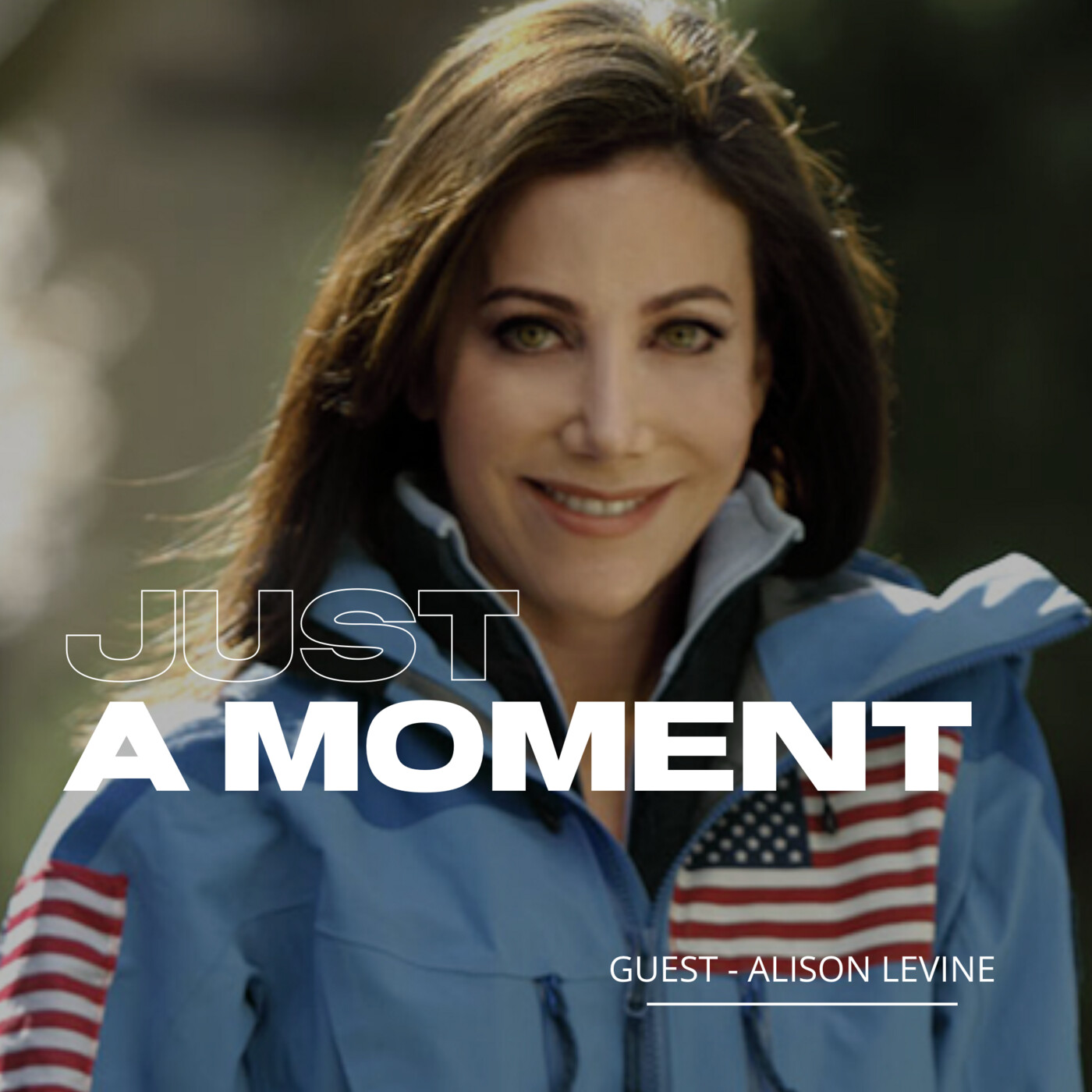
Hi, I'm Brant Menzwar and welcome to my show. Just a moment. As a former world touring musician turned keynote speaker and author, I've experienced my share of life altering moments that have both broken me and propelled me forward. How you leverage those moments or push through them will define your destiny. Each week on my show, I'll provide tools on how to maximize those moments as well as interview some of the most successful entrepreneurs, entertainers and athletes on how the power of a single moment changed their life. Join me to learn how to change what's possible for your life. It'll take just a moment. Hey friends. Our guest today is Alison Levine. Listen. She is a history making polar explorer and mountaineer. She served as team captain for the first American Women's Everest expedition. She's climbed the highest peak on each continent and and skied to both the north and south poles. This is a feat known as the Adventure Grand Islam, which only 20 people in the world have ever achieved. She also happens to be my dear friend, Allie. This mountain is yours.
- [01:14]
B
I'm Allison Levine and this is my moment. I grew up in Phoenix, Arizona, one of the hottest places in the country. And when I was younger I was obsessed with stories about cold places because it felt like an escape from the extremely oppressive summer heat. I grew up just loving stories about the early Arctic and Antarctic explorers, the early mountaineers. So I'd read books, I would watch documentary films. I feel like for whatever reason, any everything in my life revolved around the heat and the temperature because there was no escape from it when I was a kid. I always thought when I grew up that I wanted to be an air conditioning repair woman because I felt like there would always be high demand and job security. So that was always my dream.
- [02:10]
A
Alison and her two brothers had a challenging upbringing.
- [02:15]
B
So my dad was actually an FBI agent who was one of the first agents to publicly speak out against J. Edgar Hoover and the Bureau. He spoke out against Hoover, which at the time was, you know, unheard of because Hoover was such a powerful person and left the FBI. And then Hoover basically made his life miserable. He had gone to law school at NYU and Hoover blocked him from the New York bar. So my parents drove cross country to Arizona, trying to escape the reaches of J. Edgar Hoover because Arizona at the time in the 60s was still relatively unsettled and was still sort of thought of as the Wild West. And so then Hoover blocked my dad from the Arizona bar. My dad sued the bar for free speech, First Amendment, he said, speaking out against J. Edgar Hoover, you Know, you can't punish him and ruin his career for that. So he actually sued the state bar, went to the Supreme Court, he won, was admitted to the bar, tried to practice law unsuccessfully. Because the other half of the story is that my dad was bipolar and suffered from severe manic depression and oftentimes was just unable to really work with other people. Or when you're in a manic phase, you think you can do anything right. You draw a stick figure and you're convinced you're Picasso. He was obsessed with continuing to bring down Hoover and bring down corrupt politicians and people in powerful places. And so he would write all these letters to mainstream media and send letters to power for people. And he was always getting in trouble for that kind of thing and losing jobs, and nobody wanted to hire him, which I could understand. So he really, his entire life since leaving the FBI, has never been able to earn living. When someone's bipolar, though, when they're telling you the stories of all the incredible things they're gonna do, if you don't know that they're ill, you believe all the stories, right? So he always had these incredible stories about, I'm this whistleblower who's gonna win $500 million in the biggest whistleblower lawsuit that anyone's ever seen in this country. And he really believed it, but drove him into financial ruin. So. So I had a great role model and a mom who figured out that she was going to need to pick up the pieces and figure out how to support her family and keep a roof over our heads. And so she was an entrepreneur and started a business and was able to kind of keep the family afloat. And I think I got. I really learned a sense of resilience from her.
- [05:00]
A
Alison's challenges went well beyond the home, as she was also dealing with a significant physical condition that affected where she could devote her time.
- [05:10]
B
I was born with a hole in my heart that got bigger as I got older. I've actually had three heart surgeries, and I had my first one in high school. That one did not work so well, but I had another one when I turned 30 and one more when I was 42. So I wasn't sure. Super athletic as a kid, I was in student government. That's where I started to learn about leadership and also really liked improv and theater. When I was in high school,
- [05:42]
A
theater became an outlet for Alison that allowed her to express herself and planted the seeds for becoming one of the country's most popular keynote speakers.
- [05:52]
B
I really loved theater, theater so much. Also I think part of it too was playing a character on stage was an escape for me, an escape from the mental illness in my house and just feeling like I could be anyone and I could tell a story. I could be on stage telling somebody else's story, being a different character and just making people laugh and making people smile. I loved that, I think, because I felt like there were so many times I couldn't make my parents laugh or smile because of their mental illness, but I could do it for other people. And so I think that's really why I gravitated toward theater. But I thought, oh, I, you know, I don't think I could make a living doing this because it's so competitive. And I was good, but not that good. And so I wasn't Broadway bound or anything like that. But that was always my dream. And it's funny because when I do hope to finally get back to that dream, because my bucket list item is to write a one woman show and perform it in theaters across the country. And I'm actually working on that show right now. So I feel like my life is finally coming full circle where maybe I'll get to do that thing that I always wanted to do.
- [07:11]
A
The time spent in theater and improv would pay off as she found herself in a unique moment in college while
- [07:18]
B
studying marketing through a weird series of events. I was waiting tables at a restaurant, and there was one night where a group from Mattel Toys came into the restaurant for dinner. And I knew they were coming in because somebody from the hotel, the hotel concierge had called the restaurant and said, I'm sending a big group from Mattel Toys in for dinner. Can you accommodate them? So I knew they were coming in and I. I had also seen these commercials on TV for he Man Masters of the Universe Slurpees. Seven Eleven was selling Slurpees in he Man Masters of the Universe plastic cups. And Masters of the Universe was one of Mattel's most successful toy lines. I think it did $800 million in its best year. And so I thought it would be really funny if I went to 711 and I got the He Man Masters of the Universe cups and, and set them on the table for the Mattel people when they came into the restaurant. So they came into the restaurant, they saw the he man cups, they started laughing hysterically. And they said, wait, who did this? Who did this? And I came over to the table and I said, I did. I'm Alison and I'm a marketing minor at the University of Arizona. And started talking to them, and they thought it was so great. They invited me to their convention that they were having there in Tucson. It was called, Called Pre Toy Fair, which was in advance of the big Toy Fair convention in New York. They invited me to come to Pre Toy Fair. I ended up parlaying that into a summer internship at Mattel Toys during college. And that really helped me understand the art of marketing. And after that, I knew I wanted to work in marketing, so. So that's what I did after college. I worked in marketing and worked in sales. Ended up going back to get an MBA at Duke University. Worked in finance very briefly. I worked on Wall street for a couple of years. Left Wall street to go work in politics. I was deputy finance director for Arnold Schwarzenegger during his bid to become governor of California. So that was my short stint in politics. And I love politics. I'm fascinated by it. But from that experience, I learned that I never want to work in politics again from working on a campaign. It's amazing, but there's so much negativity in politics, as everybody knows, and I just don't have the stomach for that. So, anyway, that's kind of my career story before I became a speaker and started working on the faculty of the Thayer Leadership Group at West Point.
- [10:09]
A
In spite of all of Alison's accomplishments, there's still something left unfulfilled in her life. She begins to think back to her childhood in her dream of becoming a mountaineer and explorer.
- [10:22]
B
A few months after my second heart surgery, this light bulb went on in my head because I was thinking about all these stories I loved about the early Arctic and Antarctic explorers and these incredible mountaineers going to climb these big peaks. And having read all the books and watched all the documentary films, and I had this light bulb moment where I thought, wait a minute. Now that I'm in good health, if I want to know what it's like to be Reinhold Messner and ski across Antarctica for a couple of months, then I should go to Antarctica and ski to the South Pole. If I want to know what it's like to be these mountain climbers going to these remote mountain ranges, and I should go to the mountains instead of watching films about other people going to the mountains. And if these other guys can do this stuff, you know, why can't I do it, too? So I climbed my first mountain when I was 32 years old and haven't stopped since.
- [11:20]
A
Allison worked through her initial fears and learned an incredibly important lesson that would bring her to the legendary Mount Everest.
- [11:29]
B
I, I didn't see a lot of people that looked like me in the mountains at the time. Not a lot of women. And I'm also 5 foot 4, 110 pounds, so much smaller in stature. But what I realized, so I, I was initially very intimidated and kind of scared and thinking, oh, these big tough guys that have done all these things. Reinhold Messner. The guy holds nine Guinness World records. First guy to summit Everest solo and without oxygen. First guy to climb all the world's. The 14 highest peaks without oxygen. This guy is one tough bastard for sure. Reinhold Messner, that was probably his nickname in elementary school for all I know. But I thought, this guy is so brave, you know, and, and I'm feeling all this fear. And what I had to do is just embrace this mindset that you can be scared and brave at the same time. You can, you can be scared and brave at the same time. And that's really what I had to keep in mind all the time when I'm doing these adventures.
- [12:38]
A
That lesson would be tested as Alison soon found herself facing an impossible situation at 28,000ft as the team captain for the first American women's Mount Everest expedition.
- [12:52]
B
Well, the most challenging climb I ever had was of course, Mount Everest. And I've been to that mountain twice. The first in 2002 as the team captain for the first American women's Mount Everest expedition. And I had never turned back from a summit, from a big summit until that climb. And during that expedition in 2002, our team got caught in bad weather at 28,750ft above sea level, far up into the death zone, just a couple hundred feet from the summit of Mount Everest. And we had to turn back because of bad weather. That was a gut wrenching decision because you're on that mountain. For two months we had scrounged for sponsorship funding. The Ford Motor Company had stepped up and sponsored us. We had trained, you know, we were on the mountain, we had tons of media coverage because we were the first American Women's Everest expedition. So we had hundreds of media outlets following our climb from all over the world. And, and then we didn't make it. So to have such a high profile failure where everybody's talking about the fact that you didn't make it, right. We did all this media before we left for the mountain. And then after our failed attempt, we had to come back, go to all the same TV shows again, talk to all the media outlets again, and just talk about this failure over and over and over and it's hard to have a public failure like that, especially to be the butt of Jay Leno's opening monologue. Joke made me so self conscious and just feeling like I let everybody down, right? We let people down because we really wanted to achieve this incredible goal and we didn't do it. And I very much internalized that failure for a long time.
- [15:05]
A
A long time turned into eight years of building up the confidence to try to summit Mount Everest again. After weeks of climbing, Allison found herself once again at 28,750ft. And that is where she experienced the moment that. That changed everything.
- [15:26]
B
There was a situation I had on my second Everest attempt. I'm at the South Summit again. The South Summit is where I turned around in 2002. I'm approaching the South Summit again. Weather comes in, clouds come in, it's dumping snow. Teams were turning back and calling it quits. And I'm thinking, how is it possible I am back here in the summer, same exact situation, trying to go for the summit. In comes the storm. There was a Canadian mountain guide named Michael Horst that waited for me at the South Summit. He knew my story. He knew I had turned around at that point eight years prior. He waited for me there. I'm approaching the South Summit. I hear this voice saying, allison. Hey, Allison. Somebody's calling me. I'm like, what the hell? Like, I'm thinking, I'm hallucinating. I'm hearing things. You know, your brain is so oxygen starved that it's. It's not unusual for people to hallucinate at that elevation. I must be hearing things. The voice gets louder. Allison. Allison. I'm thinking, what the hell? I see it's this guide, Michael Horst. I said, michael, what? What do you want? And I'm super annoyed. This guy is distracting me. I am on this summit ridge that is an 8,000 foot drop on one side, a 10,000 foot drop on the other. And some guy is trying to get my attention, to talk to me. What? And I'm like, what? What do you want? He said, I need you to make me a promise. And I said, what do you want? And he said, I need you to promise me that you're gonna go further than this. Like this, meaning the South Summit, this being the point where I had turned around eight years prior. And he knew my story. He knew that I had turned around there in 2002. And he anticipated that I might be feeling some anxiety about going further in that storm. And those few words of encouragement, he said, you promised me. And we shook on the promise, like I said, I never break a promise. I come through. That encouragement just gave me so much more energy and so much more confidence. And I have never forgotten that. And that's why I say a few kind words of encouragement shared with somebody who is having some doubts can completely change an outcome of a situation, and that's what changes the world. Little human interactions is what changes the world.
- [18:03]
A
When Allison finally reached the summit of Mount Everest, she had a realization that brought everything into perspective.
- [18:11]
B
When I did make it to the summit of Everest in 2010, I had this crazy epiphany because it wasn't this big climactic moment where I thought, this is it. This is amazing. I did it. I thought, wait a minute, I'm on the top of Mount Everest. Mount Everest is just a pile of rock and ice. That's all it is. When you put it in perspective, standing on top of a pile of rock and ice doesn't really seem like something that important. And so it was really incredible moment of clarity for me in realizing that standing on top of a mountain doesn't change the world. Right. It's the lessons you learn along the way about resilience, about perseverance, about dealing with unpredictable environments, about being able to use fear as something to propel you forward instead of letting it be something that holds you back. So it was all the incredible lessons that were so pivotal for me on the mountain.
- [19:21]
A
Looking back now, Alison has some advice for her younger self.
- [19:26]
B
First is that you have to have a sense of failure tolerance, because I let that failure from 2002 hold me back for eight years because I was so afraid of what happens if I fail again. What will people think? What will my reputation be in this industry? Will I ever be able to find another sponsor for a trip? Or what will the perception be? And I was so worried about what other people would think, so I let that hold me back. So I would tell myself, do not let that fear of failure or do not let what other people think of you hold you back from doing anything you want to do. And the other thing I would tell myself is there were. You know, there were so many times where I was on the trail where these big, tall guys would just blow past me. They were faster, they were stronger, they had better lung capacity. And I would question myself, and doubt would fill my head. Am I cut out for this? Is this the sport for me? Look at how much better and stronger and faster all these other people are. And what I would tell myself is that you do not have to be the fastest, strongest climber. To get to the top of a mountain, be it literal or figurative, you just have to be the person that will not quit when it gets hard. You be the person that will put one foot in front of the other no matter what. Even when the clouds come in and visibility is horrible and you cannot see very far down the trail. You don't have to know what's coming at you down the trail in order to put one foot in front of the other. And if you have clarity in your intent, you do not need clarity in your environment. If you wait for clarity in the environment, you could be waiting around forever.
- [21:25]
A
Gosh, Alison, you have lived an extraordinary life. I'm reminded of one of my favorite quotes from Martin Luther King is, you don't have to see the whole staircase. You just have to see the first step. Right? That's. That's it. I love that. So let's. Let's switch gears here for a second. You're. You're like a member of the Justice League at this point. You have accomplished so much that you make most people. You don't make you, because you've done so much. You're a sweetheart, which is even crazier that you are this incredible of a person, and you've accomplished all these things, and then you look and you go, gosh, she's had three heart surgeries. She's, you know, grown up and sort of basically having to be the parent in a household where she should have been the kid. All of these challenges that you have faced in your life, is there a moment? I'm sure there are tons, but is there a moment that stands out that you wish you could get back?
- [22:29]
B
I don't know really, if it's. It's not necessarily a moment, one exact moment, but I think it was as a kid not understanding mental illness and so not understanding why my parents behaved the way that they did and just being so resentful of them. Like my dad being on, like, wearing an ankle monitor, like, he got himself into so much trouble, wore an ankle monitor, house arrest. Feeling so embarrassed and judgmental and anger at him for doing all the insane things that he did, but not understanding it was all rooted in mental illness. I wish that I had had more of an understanding as a young person about mental illness, because I think I could have helped more instead of being so resentful and so angry. So that's one pertaining to my family. But I think also, like, for myself, the do over I would want would be just not beating myself up. So Much after that first Everest climb and just offering myself some grace and thinking about the fact that we were the first American women's team to even try something like that. It was an altitude record for every single member of the team. But just focusing on the fact, feeling. Feeling like I let so many people down and feeling like people were so disappointed in me and really internalizing that and letting it bring me down for so long. Because I really pride myself on being a person that comes through when I say I'm gonna come through. So I have a chapter in my book called what's yous Mantra? Where I want everybody to think about three or five words or a phrase that describes who they are at their core. And my mantra is count on me. I place a high value on coming through for people. And when I'm dead and gone, I want people to remember me as somebody that always came through for people that did what I said I was going to do, that never broke a promise, that never broke a commitment, that always over delivered and showed up. And so to feel like I disappointed so many people just destroyed my core. Like, it just was felt so crushing to me. Like, the weight of it felt so crushing that I really sunk into, like, quite a deep depression afterward and having to do all the media and get out there and smile and then just like, get off stage and break down crying, you know, I wish that I had offered myself more grace back then.
- [25:19]
A
I totally can understand that feeling. I look at it, though, and I go, it obviously fueled your incredible rise as a keynote speaker. I mean, you've been doing this for so many years at the very top. You're the. You are the summit of. Of. Of keynote speakers.
- [25:41]
B
I'm just a pile of rock and ice.
- [25:43]
A
Yeah, well, I will say that.
- [25:48]
B
No, I know what you mean. For.
- [25:50]
A
For those of us who have been doing this for a little while, you've set. You've set the bar so high of not just going out and telling a story, but doing it in the way that you do. Of somehow inspiring everybody but having such a huge heart for empathy and knowing what people are going through, but still inspiring them to take those extra steps. You get people who think they're in an impossible situation to take a couple of more steps. Girl, if I thought that I could climb a mountain right now, I would do it.
- [26:32]
B
Let's go.
- [26:35]
A
Listen, you know, I absolutely adore you. You're one of my favorites.
- [26:39]
B
Feeling is mutual. I find your whole story and the things that you talk about fill my heart. I know they fill a lot of people's hearts, but I know what it feels like for me. So I know what you're doing for so many people out there and just the encouragement to be who you are and to find your own energy and to find your passion and to do what feels fulfilling to you instead of what other people think you should be doing. Like, these are just a few of the messages that I get from your work and I just. It's so powerful. So thank you for all that you do well.
- [27:13]
A
Listen, thank you for encouraging, mentoring, all of the things that you've been for me for years and years. Again, you're one of my favorite people in the world, you know that. And I just.
- [27:26]
B
Mutual admiration.
- [27:27]
A
Sorry.
- [27:28]
B
Virtual hug.
- [27:29]
A
How if other people want to listen. The thing with you is you have so many incredible stories of things that have happened to you in your life. If somebody wants to follow along on your journey as you get into these new chapters of your life, what's the best way for them to do that?
- [27:47]
B
Well, I have a website which is just alisonlevine.com I'm not a big social media user and usually it's just maybe a post about my dog or something. So I mean, who knows, maybe I'll get better at it in the future. But I want to also encourage anyone. You can reach out to me through my website. There's a contact form there. If anyone has questions or wants some advice or wants to just reach out and connect. Please feel free to reach out on my website. I promise you I will get back to you. If you're a listener of Brandt Menswear, you're part of his community. You're family to me, so reach out. I'm on LinkedIn too, so if anyone wants to connect there, feel free. That's probably LinkedIn's probably the platform I'm on the most. I'm still not even on that very much, but more, more so than the other places.
- [28:35]
A
Truth. This is true. Well, listen, thank you so much for being on Just a Moment and sharing yours with us. I love you dearly and I look forward to seeing you soon. Thank you for joining us on this episode of Just a Moment. Make sure to subscribe to our podcast and tell a friend or two about it that to help spread the word so everyone can find a moment that inspires them. Don't forget to leave us a review and check us out on the web at justamomentpodcast. Com. Just a Moment is produced by Natalie Von Rose and Brandt Menswear for more inspiring shows like this, visit surroundpodcasts. Com.