Loading summary
Transcript26 lines
- [00:01]
A
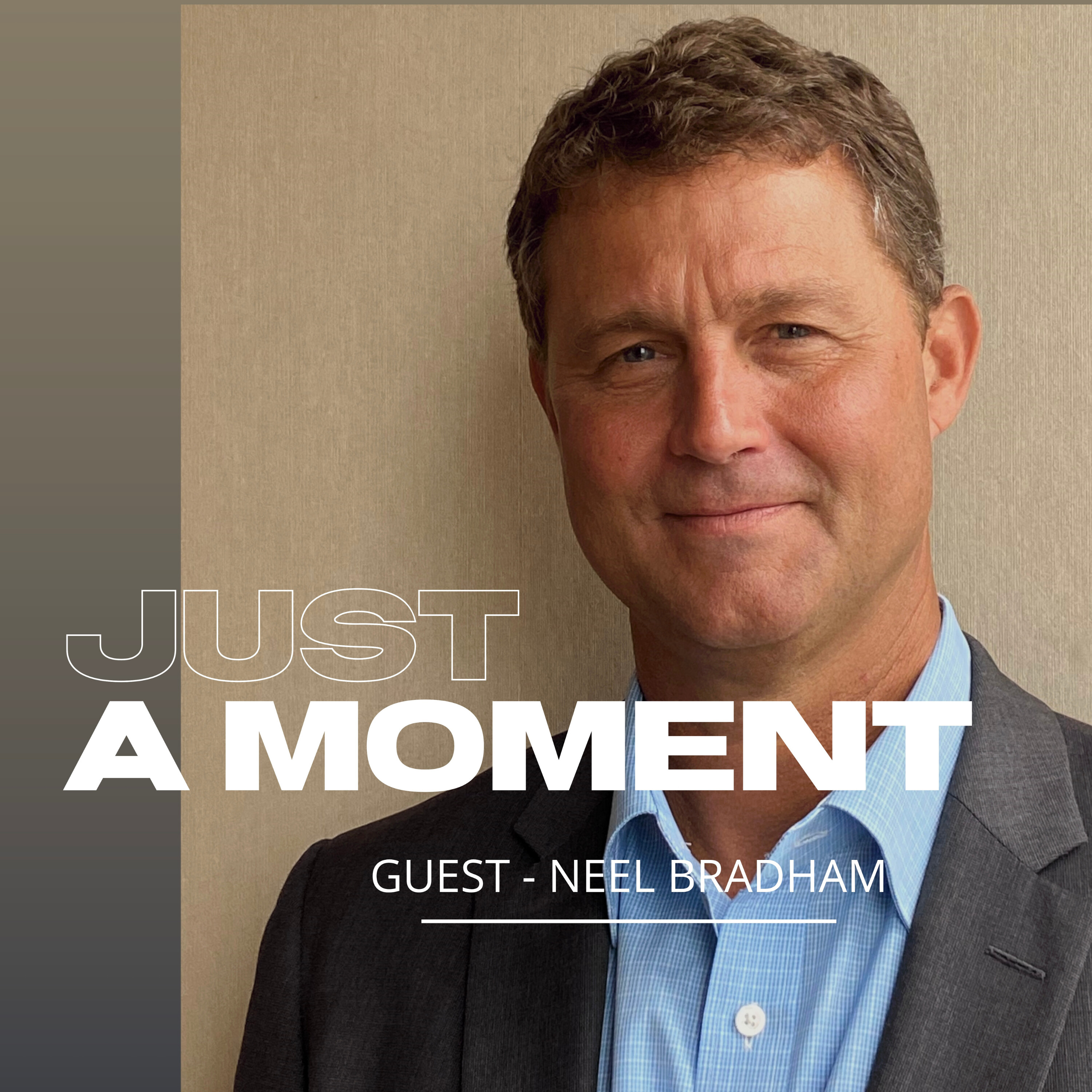
Hi, I'm Brant Menzwar and welcome to my show. Just a Moment. As a former world touring musician turned keynote speaker and author, I've experienced my share of life altering moments that have both broken me and propelled me forward. How you leverage those moments or push through them will define your destiny. Each week on my show, I'll provide tools on how to maximize those moments as well as interview some of the most successful entrepreneurs, entertainers and athletes on how the power of a single moment changed their life. Join me to learn how to change what's possible for your life. It'll take just a moment. Today's guest is Neil Bradham, a people centric CEO with 25 plus years building strategy and scaling organizations across Europe, the Americas, Asia and the Middle East. He now leads the legacy heritage brand Parador where he's driving design led growth through innovation and sustainability in the world of premium flooring and interiors with his educate, inspire and empower mantra. But this isn't the story of a typical corporate climb. It's the story of a kid from a small town in Georgia who believed in possibility, brought a can do attitude to the game and proved that vision, grit and execution can take you from humble beginnings into global boardrooms. This is Neil's story.
- [01:27]
B
My name is Neil Bradham and this is my moment. I grew up in Thomasville, Georgia. Pine trees, home of the big oak and I think relevant for me, home of the Thomasville High School Bulldogs, the football team there and had a great environment growing up. My dad was in sales his whole life but also aspirations to be a farmer. So we had a farm. My mom did a variety of things, whether it was from working in women's clothing stores to also working at the church. And I think one of the valuable things that I saw with my parents is they both worked. I came from a long line of educators. My dad's mom was a wintering schoolhouse teacher, third grade teacher during integration in Delta, Mississippi. My grandfather was a high school football coach, principal and my grandmother was a social worker. So grew up with an environment of education but not really elite ivy type educations, but public school fundamental education. If you grow up in an environment, in a rural environment like we grew up with a farm or access to the farms and all your families from around those types of areas recycling, the Ziploc bag in a dishwasher was normal and when the disposal broke you didn't call a plumber and you just crawled under there and fixing yourself. Something that really instilled itself for a long time in me is for that can do attitude, I have more hours of holding flashlights for my dad than I can count. Whether it's sitting on the Mustang, fixing the transmission or doing the plumbing or wiring a house for electricity. I think those are very influential moments. So when you ask, what did my dad do? He did everything he got paid to sell. But the way I saw my father just did everything.
- [03:14]
A
Like his father, Neil would grow up to be a jack of all trades, equally adept at leading a room or fixing up an old motor. Versatility, perseverance and above all, independence were instilled in him from a very young age.
- [03:28]
B
Growing up, I had a very fierce sense of independence, and rest was a bad word. I never saw my father asleep, not one time. He was up at the sun, he's out doing something. And I remember going as a kid, I'd sneak into the side room with my mom to watch the Falcons play football. But it was almost like watching a game was like, you're taking time off, can't do that. There's something to be done right? There's wood to be chopped. In this environment where you spend time outside. I spent a lot of my life in the Mississippi Delta. And from the time I was eight years old, I was running around with a 14 foot job, five and a half Johnson, and it was like the world was my playpen. It's not that there wasn't discipline. There was, I think from my parents, hard work, respect, trust, first love, a lot all came from them. But there was also this sort of healthy respect for the renegade, the Tom Sawyer type of stuff. And the stories that were told around the dinner table were about that kind of thing. There was a healthy respect for those that went off on their own.
- [04:42]
A
Independence lent itself well to leadership, an ability multiple people in Neil's life demonstrated a rare gift for.
- [04:50]
B
There was a lot of curiosity, I think for me growing up around how to lead. I watched it. My dad's a great leader. He said to me one time, don't ever pass up an opportunity to lead. And I think what he meant by that was, anybody can do that. I had some great role models in my life. Whether it was my grandmother that was a social worker, she gave her life to basically the underprivileged. Or my grandfather who was just like John Wayne type personality. He was a chemist, but I remember riding with him on a chase horse and we'd hunt deer and we had Scabbard, 30, 30, cowboy hat. He was like God to me. Superhero, but also my best friend. Growing up in Thomasville, his dad was a high school football coach. And from the time I was 8, I was running malls up and down the sidelines, and I'd get to go into the film sessions. And one of the biggest interesting things about doing that, you get to watch men at work, right? And they're leading other young men, right? And you hear how they talk. You hear how they motivate, the stories they tell, accountability. They drive through the film sessions and they talk football. They talk how to coach. But they also talk about life. They talk about how to build a team, how to get everybody on the same page, how to collaborate, how do you work towards something a little bit bigger than yourself? And growing up in an environment where you had a lot of access to the world at large, the closest grocery store is 30 minutes away, right? You can get lost out in the Mississippi river bottoms in no time, and you feel small. And I think there's a lot of wonderment out there that I got to got to go try to find a man.
- [06:33]
A
Neil credits much of his success to his upbringing, which gave him a sense of confidence, founded or unfounded. That led him to discovering his greatest strength, his willingness to take risks.
- [06:46]
B
Had somebody reach out to me that was doing an interview with some CEOs out of of Europe, and they asked two questions. They said, first question is, have you ever had a relationship that's been compromised in your drive to success? Easy answer would be, did my marriage suffer because I got 4 million miles on Delta? I was in over 70 countries on an expense account and put in situations where I may have made bad decisions. That's the easy answer, I think also, I have a great relationship with my children, but did I miss birthdays? Did I miss events? I did. But I think the real answer to that is the relationship that was probably compromised was the most important one, as that was the one with myself and how you support your growth. And that leads into that next question. And the next question was, what do 100 CEOs know but never talk about? Which I think what everybody knows is you'll never be successful. The goalpost always gets moved. And we ask our people to make peace with the fact that aspirations got outstrip capability. We ask them to get comfortable with that because that's what growth companies do. But we also, as a leader in the position that I sit in, have got to get comfortable with it, too. It's hard to do because it's like the pursuit of perfection is real. And one of the things that I really appreciate about the environment that I grew up in was there was a general expectation of excellence every day, no doubt. But what I also appreciated was it wasn't about the scoreboard, our family. It didn't matter how many championships I won, what my batting average was, whatever I did in a play, I was always brought down a peg, right? I couldn't walk in with my feathers blossomed. It's not about what you do, it's who you are. That was where it got acute. And I never ever believed that I wasn't great from them. I was born with them saying to me, you can do it and you're good at it. There's a story my parents tell about second grade. We had this assembly and there was a piano there and they said, hey, does anybody play the piano? And I am not musical at all. But every time I played the piano in my grandparents house, they told me it was great. I said, man, that's beautiful, sounds like Mozart. So nobody's raising their hand, nobody's raising hand says of course my hand shoots up. And in self reflection, two things happened there. Number one, I felt a responsibility to speak up, okay, somebody's got to do this, I'll do it. And number two, I know. And I remember thinking as I walked down that aisle to go to that piano, I don't know how to play the piano, but I'm going to figure it out. It was that kind of confidence and whether you call it hubris, whether you call it being cocky, I don't know, say hey, you know what, you'll figure it out. And I played Chopsticks or whatever I did and I got up and I walked back like I just played the best thing ever. That's the story that gets told. The story didn't get told of the guy that says, I know I can't play the piano so I'm gonna keep my hand down.
- [09:51]
A
Before leaving the south and becoming the corporate success story he is today, Neil had one final lesson to learn from his father. One that came in a moment that not only showed him a glimpse of his future, but demonstrated the three principles he would need to utilize in order to achieve it.
- [10:10]
B
I didn't grow up a lot of money. I didn't know that because I had abundance. I had a gas tank with a boat and I could go anywhere. I'd show up in the summers at the farm and my grandfather would give me a brick of 22 bullets, a box of Twinkies and a box of Ding Dong and that's all I needed. Now they're all gone by the end of the summer and I got one tank of gas and I had to.
- [10:35]
C
Work for the rest.
- [10:36]
B
But I didn't think. I didn't have anything. I thought I'd grow up with great abundance. I knew people that had big houses in great abundance, and I didn't see any difference. So I didn't really go into my 20s thinking, I gotta go make a bunch of money. That wasn't it. I had a great opportunity coming out of college where I got to work for two guys. I think fancy word would be private equity, but really it was two individuals that had good balance sheet and they were looking to do some investment. They asked me to come on board to work with them. And that job was in New York. And for me, growing up in South Georgia, except for when I was in college, and we would go places to play in different universities, the farthest North I went was Chapel Hill, North Carolina. And then the farthest West I went was the Mississippi Delta. That was my world, and I knew it. And it was predictable. Going to New York was not predictable. And it was scary. And it's really interesting. I take something that I think I learned as a youth, and I say to my kids all the time, I said, look, it's okay to be scared. It's okay to have fear. It's not okay if it keeps you from doing something great. And I know that, right? And I confided in my dad. I said, dad, hey, I'm going to New York. I got this job. He said, you ever been to New York? I said, no, I haven't been to New York. He said, okay. He said, well, if you're going to go work for these, you know, these finance guys, you need a suit. My dad always dressed well. He always did. And I think he recognized, as I learned to recognize, that my sports coat and my khakis weren't going to cut it. And so my parents had moved at that point up into South Carolina. And so he said, look, let's go to Atlanta. And Atlanta had always been a special place for us. We would go every summer and we drive up from South Georgia into Atlanta and we go to Braves game, and then we go eat at, like, the Peachtree Plaza Hotel. And so Atlanta was the big city, right? It was the closest thing to New York that I knew. So I met him over there, and we went to Nordstrom or Saks or whatever the equivalent is back then. And we walk in and he introduces me to the clothier and this guy, you can tell by the way he's dressed the Way he's put together, he gets it. So I go off and we go, and we talk about fabric, we talk about hand, we talk about color. Hey, what kind of shoes work with this? Let's make sure your belt matches your shoes. And what type of thread count do you want on your shirt? And we gotta make sure we got a tie here that's pretty versatile and universal. And we get all this kit together and we come back and I try it all on. And I walk in and I'm standing in front of the mirror and I've got the whole thing on. And my dad comes up and I look at myself in the mirror and I said, I look good, man. Who can't look good? 22, I'm tanned. I just came off being in university. I'm fairly fit. I said, man, I look good. My dad said, yeah, you do look good. And I said, this is great. So I look at the clothier and I said, hey, I love it. I'll take it. How much is rummy? So he gets his little calculator out and he starts banging around. He said, I'll give you a discount. I said, great, I really appreciate it. Boom, boom. And he comes back, he said, ah, give or take $8,000. And I said, $8,000? He said, yep. And I said, man, my truck's not worth $8,000. And so I look at my dad and I said, dad, I can't afford that. And he said, no, you can't. But now you know what it feels like. And that incident right there, you talk about moments that shaped a lot about sort of three words that I use a lot in teams that I try to lead. It's educate, inspire, empowerment. If you can educate, inspire, and empower your stakeholders at every interaction, you're going to win. And so what happened right there? I got educated, right? I learned about hand, I learned about thread count. I learned that your belt needs to match your shoes and you need two ties.
- [14:19]
C
There's one.
- [14:20]
B
And the inspiration came because I got a tried on, right? And I knew looking in that mirror that I can wear this. I can wear a suit like this. It's not beyond me. Georgia boy can do this and he can go to New York and he can look at doing it. And the empowerment came, really, when my father didn't buy it. And he looks at me and he goes, no, you can't afford it. But then in his eyes, I read, now you go get it, bud. You go get it, big fella.
- [14:56]
D
Feeling lost in the noise of social media inspo cuts through the clutter, connecting you directly with real insights from real experts and industry leaders. It's a new social network dedicated to knowledge sharing, industry insights and thought leadership. Get the latest from top minds in your field or build your own thought leadership portfolio on inspo, already trusted by thousands of professionals worldwide. Be part of the conversation and download Inspo Experts today on the App store or visit www.inspo.expert.
- [15:28]
C
Neil Bradham, welcome to Just a moment, brother. We've been close for a number of years. I've wanted you on this podcast and it took a little bit of tequila to get you here. Listen, one of the things I love most about getting the hang is you have the greatest stories of your childhood and growing up in South Georgia and then seeing the world through South Georgian eyes. But my question that I've got for you now is you've had a lot of roles. You've built companies, you've taken apart companies, you've put them back together in your current role. It might be one of the biggest challenges since we've known each other. And you're dealing with different cultures, you're dealing with different skill sets, different expectations, language barriers. You're dealing with what I would call mentality, competitiveness, that, that sort of inherent American go getter stuff, which doesn't always play well overseas with all of these incredible lessons. How is that paying off for you now? Because I don't know that I've ever.
- [16:38]
A
Seen you in a bigger challenge.
- [16:40]
B
Yeah, fun question, Fun question. First, what a great opportunity we all seek. Resistance. Resistance is a form of a launch pad, right? I've gone into an opportunity where I can launch. I realize now that the way that I grew up, the people that were influential in my life, my education, the experiences I've had, have all put me in a position to do this job. And this is a perfect fit. Perfect fit doesn't mean it's not hard, doesn't mean it's not a challenge. And I think I attack it very similarly to the way that you would go about attacking anything. You got to be you. Number one. Do I try to not be myself? Do I take out the coach speak, take out the high energy? No, of course not. I just got to be me. It's a big change movement and change is difficult. Organizations are not built to change. They're built for structure and stability and predictability. And we have this interesting challenge where we have this heritage legacy company coming up on almost 50 years now. Brand's very well known, but we gotta go be startups in different part of the world, and that takes a different mentality. And it's easy to say, oh, we can go be a startup in the United States, but all the people that gotta make that happen are all sitting back here in the big environment. And that heritage legacy can be a foundational jump point, but it also can be a big anchor. And if you study the big change movements in the world, the Martin Luther King, so I'm a big fan of, or the Gandhis or the Mandelas, they led these change movements through the world, they talk about two main things. You got to change the environment, but you also have to change the people, the hearts and the minds. And that's where we really focus. But we talk a lot about accountability. How do you have a conversation where both parties can hold each other accountable and one can be wrong and one can be right, but you do it out of love and with the one that's wrong and say, yeah, my bad, I missed it. That's skill that has to be built. You talk about environments of quick looping. The three words we talked about, educate, inspire, and power. How do you put decision making at the point of attack? You've got to communicate in a more dynamic fashion. You got to change your processes. Not everybody's ready for that. Strategy is not set behind a desk in somebody's chair. Strategy's set on the street, closer to the point of attack, as I would like to say. And we've got to put people in a position to be educated and inspired and empowered to make that decision. That's part of our job. That's our aspiration. But that aspiration does outstrip our capability today, and our people don't all know that. And you've got to put them in a position to grow into that type of a concept.
- [19:30]
A
We love to sort of wrap things up by talking about a moment we'd like to revisit. Is there a moment for you that you'd love to get another shot at?
- [19:38]
B
That's an easy one for me. I was offered a command job to go in and run an organization in France and run in Europe, Middle East, Africa. The people in the company, they called me the golden boy. I was in the box, and I made a decision to leave. Now, why did I make that decision? I don't know. I thought about it multiple times. I think it was a combination of hubris. A little bit about that rebel. I need something different. I need a challenge. Growing up in an environment where you do watch all the game film and you're around coaches and you hear a lot of that speak. You recognize that resistance is what defines your shape. It gives you your style, and you need it, right? How you choose that resistance is very important because you don't want to create your own. And I think sometimes you got to look back, go, I'm making a good run right here. Let me run. Let's don't stop it. And maybe I was at a point in my life where I wanted to create some resistance. Maybe that was it. And I was getting bored of what I was doing. And in about six months, I realized that I'd made a mistake. And I wish I could have it back. But it really led as well to what I would call my moment. And when I chose to leave, I decided to go in and do some venture capital work. And I started to try to create my own private equity type company. And I was trying to buy a market maker out of New York and set that up and put everything I had into it, all the money I had into it. And I had two years where I didn't have a paycheck. It was bluebird day in the fall, and I had school duty, so I'm going to go pick all the kids up from school. And I had already sold my Audi A8 because I had to make school payments. I had three kids in private school, and I was driving around basically an old farm truck. So I go out and I get in the truck and I crank it up and I realize I need some gas. And normally that's not a big problem, right? But at this point, my credit cards are maxed out, I'm in debt, I got no paycheck, and I got no money in the bank account. Not $1, $1. And so I turn it off and I go back inside. I start looking around, I'm scrounging around the drawers, like, there's gotta be some money somewhere around. And I go into my daughter's bedroom and I. She's got a desk there, and I open her drawer up and I see a $50 gift card. Thank goodness. And I had two thoughts when I saw that gift card. Number one, thank God it was a Visa, right? Not like some 50 Sephora card. And then the next thought I had was this, like, convergence of imagery, thoughts, all kinds of. Just like a mashup of things that came into my brain. And it was basically, you had made a lot of mistakes at this point, and you're not gonna make another one. So I close the door and so I walked back out and I got in the truck and I rolled windows down, turn air condition off, and I hit the dashboard. And I said, all right, chief, I've been leaning on you for a long time, man, and you got me out of a bunch of trouble. And so I looked up and I said, all right, give me one more time. So crank it up. Go on school run, make it back. And so kids pile out, backpacks everywhere. They're running into the house, and they're going to get a snack. And I said, hey, give me a moment. So I walked back to my ring, I sit down, and I just like, I bald. It was like ugly crap. Yeah. And I hadn't cried like that since my grandfather died. And I was like, all right, what am I going to do here? I'd already sold Audi, but I got to get lawnmower. I got some good tools. I got some stuff I can liquidate. And again, go back to how you grow up. And can't was not a word that was used. It was, this is a challenge. It wasn't. I can't. Don't tell me you can't fix the disposal. Just get down there and fix it. Don't tell me you can't fix the motor when you're out there in the middle of nowhere. Fix it. When you grow up in a farm environment, that's what you did. Yeah. You wash your Ziploc bags and you fix stuff. And so it is fixable. There is a solution. So I stood up, got myself to go a little bit, and poke my chest out and said, all right, let's go figure this out. And I walk out in the hall, and as I'm walking out, I look up and I see the attic, and I just bust out laughing because I realized that tucked in the corner is a shoebox with a thousand dollars attached. I had totally forgotten about it, about that. And so I climb up matic and I get that thing. I'm like, oh, my God, there it is. And so I'm sitting there barefoot, and I look at it, and I go, all right, all right, we got to change. And what I had to do was reshape what success meant to me. I had to reshape what success meant to me. And so I took some time, and I do what I always do, and I went out to the farm and get somewhere where the stars are, like, on your shoulders and you feel little and got back in that job boat. And I thought about a sermon that I had done, and I had that opportunity to do a sermon in front of the church in Atlanta and talked a Little bit about growing up, how I grew up. And I made a comment and I said, if I wasn't such a coward, I'd be a high school football coach. And what I meant by that was I had this general guilt about going after a corporate money when I knew that God gave me a gift to coach and to lead and influence, and he had put me in a position in my life with all these different people, that it showed me what it means to do that. And I knew that inspired me. But then I also brought it back and said, you know what, though? I get to do that every day. And I thought about that and I said, I got to get back to work. And you drive for success, for profit, right? But not all profit's good. And I had to redefine what profit meant. And for me, it was about putting myself in an opportunity where I can help people grow, where I can lead teams and where I can take challenges head on, turn companies around, create a growth mindset, and can do attitude. And so that's when I put my hat back in to get back into corporate America. And it led me into the opportunity to have.
- [26:04]
C
Today, before we have to part here, I'd love for you to give a little bit of advice. So your three words, I love them. Educate, inspire, empower. For some of our younger listeners who are just getting out of school, they've got to educate. Maybe they even have some inspiration of what they want to do. But the job market sucks. How do they empower themselves now when everything that they've planned for their life, there's no opportunity, or at least very little opportunity for them to maybe get into that role that they've had their eye on for the last four, five, six years of college. How do they empower themselves or empower the moment to maybe find a solution?
- [26:50]
B
It's a. It's a good question, and I think it's what a lot of people struggle with. I think very oftentimes we want to take a bigger step, but the first thing you gotta say is, get in the boat and crank it up. Get in the boat and crank it up. There's the famous scene in Forrest Gump where he's out tripping and the storm hits and everybody else goes in, but they stay out and they just bring in gobs of shrimp. He becomes the best shrimper out there. Stay in the storm, get in the rain, and be open for opportunity. You never know when the Mayflowers are going to hatch. Get there early, stay late, go to lunch with somebody, when they invite you because you never know that person you're going to meet that's going to put you in that position to do it. And I think for the youth of today, they are more educated than the youth of yesterday, no doubt. Whether they are inspired in that they know they can do it, I don't know. But you don't know until you have to put yourself in a position to fail before you really get acute with the need. The empowerment comes in the frameworks and you gotta have all three. If you educate and inspire but don't empower, you're gonna be waiting on somebody to do it for you. If you educate and empower but don't inspire, you may never get off the couch. If you inspire and empower but don't educate, you're going the wrong direction. And you got to understand, you got to have all three of them. That's the biggest piece of advice. I would get it, brother.
- [28:12]
C
Thanks for joining us on Just a Moment, Pal. We'll see you soon.
- [28:15]
B
Enjoyed it. Thanks.
- [28:17]
A
Thank you for joining us on this episode of Just a Moment. Make sure to subscribe to our podcast and tell a friend or two about it to help spread the word so everyone can find a moment that inspires them. Don't forget to leave us a review and check us out on the web at justamomentpodcast. Com. Just A Moment is produced by Natalie Von Rose and Brandt Menswar. For more inspiring shows like this, visit surroundpodcast.
- [28:43]
C
Com.