Loading summary
Transcript38 lines
- [00:01]
A
Hi, I'm Brant Menzwar and welcome to my show. Just a moment. As a former world touring musician turned keynote speaker and author, I've experienced my share of life altering moments that have both broken me and propelled me forward. How you leverage those moments or push through them will define your destiny. Each week on my show, I'll provide tools on how to maximize those moments, as well as interview some of the most successful entrepreneurs, entertainers and athletes on how the power of a single moment changed their life. Join me to learn how to change what's possible for your life. It'll take just a moment.
- [00:39]
B
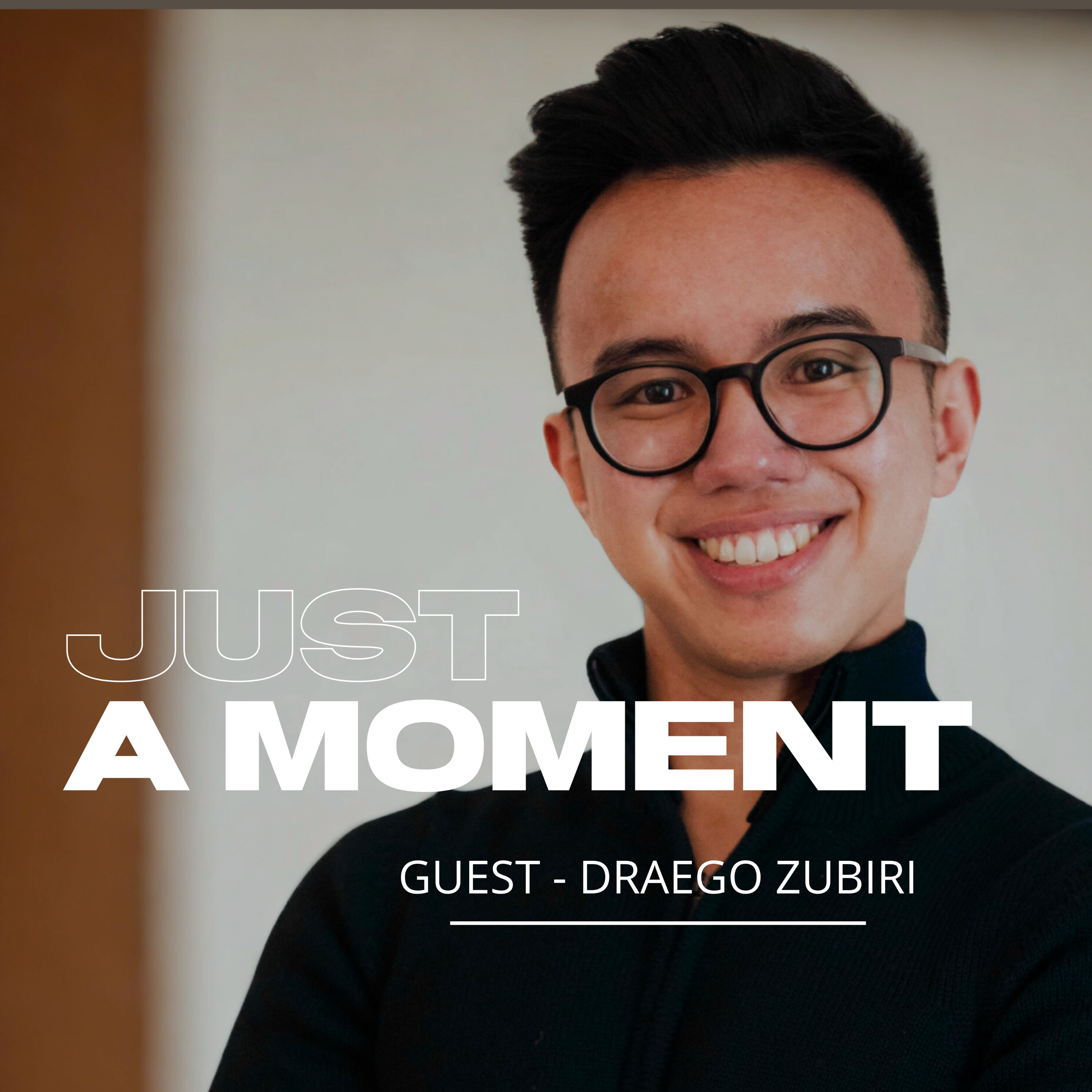
Today's guest is Drago Zubiri, forward thinking founder, edtech innovator, and creator of Inspo, the leading app for thought leadership content. With an Oxford graduate degree and a career built across multiple startups, Drago hasn't just watched the future of learning unfolding, he's helped build it. His story reveals how remembering your roots can clarify your purpose and how small, intentional risks taken over time can create extraordinary momentum. This is his moment.
- [01:11]
C
My name is Drago Zabiri and this is my moment. I grew up in the Philippines. I spent most of my life there actually all the way till I was in university, moved to Spain for a year and following that ended up moving to the UK permanently. So it's been quite a journey. My parents were actually building a school together. It was quite an entrepreneurial backdrop. My parents, who were very driven and very ambitious to not only obviously build the business, but also make a mark on the world, the community beyond them, and really the lives of other families as well. That really instilled a lot in me in terms of being hard working and also being values driven and mission driven as well. When you do something, obviously do it well, but also ask yourself, why are you doing what you're doing? I was an overachiever, very active in terms of the student clubs. Whether that was like a writing or poetry society, or whether that was sports or football, it was reflected in the home environment. It made me quite comfortable or confident to just maximize my own education. Because of that, I really enjoyed life at school.
- [02:15]
B
Aside from strong academic influences at home, Drago found inspiration in the world outside of his home. Island media and popular culture gave him a lust for traveling and inspired him to move abroad at an early age.
- [02:30]
C
I was always curious about the world beyond where I grew up and where I was raised, right. So I grew up in the Philippines. It was still a city, it was like an hour north of the capital. But I was always curious about what was out there? The world grows up with Western pop culture. The Philippines itself, obviously, was a previous American colony. And where I grew up, incidentally, was previously an American air base, actually. So there was a lot of these external influences, which made me just wonder what was out there, what was out there in the world? And I became really curious to discover it for myself. It led to me having dreams of traveling, dreams of seeing what other cultures were like, what other people were like. I was satisfied with where I came from, for sure, but I knew there were things out there that could inspire me. I knew there were things out there that could push me, that could challenge me. Growing up, that dream got bigger and bigger, and the rest is history. I'm here.
- [03:29]
B
Despite enjoying school and seeing success in his academic life and extracurricular activities, there was something else going on under the surface that made Drago feel less in with the IT crowd. Caught between cultural expectations and being his authentic self, Drago struggled to feel understood.
- [03:49]
A
In his teen years.
- [03:51]
C
Having grown up in the Philippines, which is quite a conservative Catholic country. When I was young, I knew I was gay, and so that was a journey I had to go through, which at the beginning was not very easy, to say the least. Knowing how to navigate that in a wider society or culture that didn't know how to have those conversations, or at least I felt the conversations weren't the most constructive. That definitely fed into my sense of self or identity. There were lots of things I felt like I did well, and that definitely made me like in. But there was always a part of me that just felt like, just different, really. And I think that was something that pushed me, for various reasons, to just prove myself and to show people who I was, what I brought to the table. And also that was something to be proud of and something to be celebrated over time. Definitely became louder. Definitely became prouder in who I am as a person. I think having that bit of an outsider mentality or just knowing what it's like to be put in a box that wasn't necessarily reflective of who you were or what you had to offer. I think that's really shaped the kind of work ethic that I developed over time.
- [05:07]
B
Drago's sense of self, inner confidence and skill set flourished when he moved abroad. Even so, moving on felt a bit like leaving a piece of himself behind.
- [05:18]
C
There was definitely an element where it felt like I was starting afresh. Obviously, the UK is a much more liberal society in that sense, more socially progressive than, say, the discourse that there is back at home in the Philippines. And I think for a moment in the beginning of the journey, I tried to erase where I'd come from, and that was a painful time, or there were parts of me that I had to hide and therefore I should just move on from that. That strategy worked for a while, but then eventually you realize, like, where I come from, for all its limitations in terms of acceptance or openness to certain people, it is still a good place. People still meant really well, whether that's society, people in my community, friends or family or whatnot. I think people might not necessarily have the tools to see things a certain way or accept people a certain way. So on the one hand, yes, it felt like I was starting afresh. On the other hand, and I think there was a journey there to go through for myself in terms of accepting and also just being understanding to people back at home who might have held different views to me, but actually can still have been good people and have meant well. At the end of the day, the UK has been great in that regard in terms of me being able to openly be myself and accept who I am, but then also looking back and then seeing that there has been a lot of change and progress as well in the discourse around this conversation back at home that I might not have had years ago. So I think it's quite heartwarming to.
- [06:49]
B
See that at university, Drago discovered not only himself, but his true passions in life. The more he studied and learned, the clearer the vision of his future became. With every new lesson came a new tenant in the values that would make his entrepreneurial endeavors thrive.
- [07:10]
C
What is it that would give my life meaning and purpose? That was a question I asked myself from a very young age, again with my upbringing, seeing my own parents being very purpose driven in their work. When I asked myself that question, I knew I wanted to give back. I knew I wanted to make the world a better place. So it started with that, from there you go the next step down, which is, what is it that I enjoy, what is it I am passionate about? And how can I turn this into a career, Right, Something I can do for the rest of my life. I've known I was always passionate about media. When I was young, I was very much interested in graphic design, web design, web development. And then I also knew I was very passionate about education, obviously because of my upbringing with my parents. Bridged the two together. The entertainment, the ability to engage, to captivate, to inspire audiences. How can we use the power of media to educate, to facilitate discourse, to allow for critical conversations and discussions, and allow for people to be inspired. So I found myself in the edtech world, which bridges technology and education. We harness the power of technology to create rich multimedia experiences that would allow for people to develop personally and professionally. I felt like doing this would make people's lives better, make people happier, improve their life chances by being more educated or more equipped for the world of work. But I also felt like it was something that was true to my own passions and skill sets and it was something I could do in my sleep, so to speak. It was just something that was so natural to me. I could just like, do it forever.
- [08:53]
B
Draco's moment came on a day like any other, on a normal weekend in a normal cafe in the charming town he had come to know and love. But his epiphany was anything but normal. He saw a problem, he saw potential, and he created not only a product, but a solution.
- [09:14]
C
It was a gorgeous day in the uk. I was in Letchworth, I was in one of my favorite cafes sipping my Americano and I was scrolling through my phone as people do. And then it hit me that there was no platform that was dedicated to thought leadership content. Thought leadership is basically an intentional act that people do to demonstrate their knowledge, their know how, their expertise, their skills, their experience through content. And I was scrolling through my LinkedIn, I was looking at my feed and seeing what people were sharing. And it screamed at me that everyone right now was wanting to be seen, wanting to be heard, wanting to be recognized for the value they brought to the table, for all the knowledge and experience that they brought to the world of work. And this was so obvious in what people were posting on their LinkedIn regularly. They were sharing knowledge, they were sharing insights. But at the same time there was this huge frustration with the platform itself being quite close, cluttered. So I felt like there was this palpable both opportunity and problem where the sort of zeitgeist is gearing towards using media to establish themselves as experts in their space, but they're not being a dedicated space to find and discover that kind of content. So that was a big eureka moment for me, where the problem seemed so obvious, but so did the opportunity and also the solution. I felt like everything went full circle. All the experiences I'd had in my upbringing, in my own interest in media, to then entering the world of edtech and online learning, to now realizing there was this huge gap in terms of there being a space where professionals and experts and industry leaders could easily share their thoughts, their knowledge, their insights in a very accessible, immediate, timely democratized and social way. And that was a moment of realization that I needed all those other moments in my life of questioning what it is I'm passionate about, of my career path, dabbling in all sorts of different things. I needed all of those experiences to have that moment of realization of epiphany that led to me building Inspo.
- [11:41]
D
Feeling lost in the noise of social media, Inspo cuts through the clutter, connecting you directly with real insights from real experts and industry leaders. It's a new social network dedicated to knowledge sharing, industry insights and thought leadership. Get the latest from top minds in your field or build your own thought leadership portfolio on inspo, already trusted by thousands of professionals worldwide. Be part of the conversation and download Inspo Experts today on the App store or visit www.inspo.expert.
- [12:12]
A
Drago, my brother, welcome to just a moment. It is so good to have you here.
- [12:17]
C
Thank you. Thank you for having me. Very happy to be on the podcast.
- [12:20]
A
Putting all the cards on the table. Drago has developed this incredible platform for people to share thought leadership. I went on and started to look and signed up for it and started to post and we connected and both of us share this same desire to better people's lives. And I think we have a shared vision as to inspiring people to find the courage to do the things necessary to move themselves forward. I just became a brand ambassador of inspo, happily so proud to be, because I believe in the work that you're doing and what you've created. So thank you for doing that.
- [12:58]
C
Absolutely. And it's very amazing to be able to work with you and to be featured on this podcast. So thank you for having me.
- [13:05]
A
Once again, for me, when you have these thoughts at times, whether it's an innovative thought, a oh wow, I can't believe that doesn't exist thought a lot of people leave it at that. What was it for you that drove you to actually create it instead of just leaving it?
- [13:22]
C
I'm someone who's been working on startups for most of his career in the London tech scene and the edtech scene in particular, mainly focused on companies where content is the product. I think it was a lot of frustration having played the corporate game and rat race a bit, with always wanting to have done more than my role or the organizational structure or the politics ever allowed for. Right. So I think that's a lot of sentiment that lots of people would share who's ever worked in a 9 to 5 job. So I think there was always this part of me that wanted to take the steering Wheel and for once actually drive the thing right. But I couldn't in the various roles that I had. And it was a series of experiences that just made me think to myself, I want to do this. I want to do it myself and my way and just demonstrate how it should be done. When that epiphany moment happened, and I thought the idea of inspo obviously didn't happen overnight, I just kept building on the concept. Me doing my own research, talking to potential customers, potential users of the concept. I played it safe. I still had a full time job. It was very much like an evening project or a weekend project kind of thing. Eventually I felt like there was enough legs to it, it had enough traction. I could see myself doing it as a full time job. When you reach that point as an entrepreneur or whatever career transition or pivot you might be making, it could even just be from one industry to another, one job to the other. When you reach that point of having that confidence that yes, you can do it, like it's no longer just an idea, you look at yourself and you say, hey, I'm actually already doing it.
- [15:07]
A
A lot of people have this spark that happens with being an entrepreneur and thinking about how amazing it would be to build something themselves. You seem to me to be a very pragmatic person and I would love it if you would tell the listeners, when you have an idea like this, did you write a plan down so that you could follow the plan and judge your progress based on this plan? Or did you wing it until you got to a point where you were like, okay, maybe I can do this.
- [15:38]
C
So I am the kind of person who loves a plan and that's just how I've always been wired. So I will always have a plan for something. That being said, I don't think plans are always useful or always go according to plan. And it's something I'm extremely conscious of and very much accept. So sometimes I'll put the plan together and 20 minutes later the plan is no longer valid or valuable in any shape or form. And I accept that. That's of the process and things just unfolding, especially when you're doing something that's simply never been done before. There is no rulebook, There is no plan or structure or a handbook to success. If a plan helps you even to just give you a false sense of control, and sometimes I do that just so that I feel like I've done everything I absolutely can, and if it fails, I know I still did everything I can, then absolutely go for it. But I think part of that journey is embracing the chaos, embracing the lack of certainty, embracing just the complexity that goes with that journey. Again, if you're doing something that's never been done before, you're going from 0 to 1, then expect things to change overnight, pretty much all the time. If you are at the stage in your journey where you actually figured out what's working, then absolutely build a plan around that, optimize it, improve it, see what you can get out of it, but then still be aware that the rules of the game can still change at any point. Innovation is growing at a phenomenal rate. The rate of technological advancement is so quick, more than we can even comprehend right now. And that presents both risks and opportunities, right? For businesses, for entrepreneurs, or for anyone who's trying to do something new. Embrace the chaos. Embrace, if not leverage the chaos if you can, in a way that works for you and what you're trying to build.
- [17:32]
A
I'd love to know your opinion. Where do you stand on the role of AI with regards to thought leadership?
- [17:41]
C
Everyone is just trying to understand where does AI fit in the wider conversation of content creation and authenticity and obviously the rights to the work and all that? I can't actually say I have a definitive answer to, to that question. I do recognize all the wonderful things generative AI in particular is doing for us in the world and also for content creators. Right? Like I, I use AI to support me when I'm creating a post or I need ideas or even just refining my language, right? If I put a draft together, I might use AI to polish it up and then make sure it's still within my tone of voice and still feels real to me and my person. So in terms of AI and content creation, I would definitely not be opposed to using AI entirely. But I prioritize authenticity over anything else. And I think that's something that gets lost when you use a rather misused AI. The content is all starting to look alike with the exact same tone of voice, with the exact same style and format. AI can be helpful, but you might inadvertently be losing yourself as the creator, as the person, in using AI perhaps too liberally, or not critically enough.
- [19:02]
A
Part of the challenge is AI shortens that path. Perceivably for someone to say, oh gosh, I could just use this to put out content instead of having to develop my voice, instead of having developed my own opinions and how I want to approach things as somebody who is developing something that, that didn't exist before, knowing that you're first to market and there's a big plus of being first to market in something like this, because you are going to grab the eyeballs first and the chances of it being successful become greater. If you are first to market, what is your advice to the person looking for the shortcut?
- [19:37]
C
First and foremost, I think if you have spotted a legitimate gap in terms of whatever it is you're putting out there in terms of the market or the content creation space, I think for one, that is a win in itself. Obviously, how you then get there first and quick is completely up to you. And there are obviously a lot of tools you could use, including AI to get there. Obviously, you want to do your due diligence first. You want to make sure that what you're doing is actually filling that gap. But AI is definitely a tool that can support that process. I would say, like, for me, and building inspo and building something that possibly hasn't been done before and getting to market quicker, AI has actually very much supported that process. That being said, I'm also very aware that AI, especially generative AI as it currently stands, also has its limits. Right. It can also hallucinate and tell you all sorts of things which might not be helpful. AI has helped to accelerate a lot of the work that we've been doing across all areas of the business. That being said, is it AI on its own? Definitely not. There is a human there that is looking at every single output and making sure that what's delivered is actually correct. It's actually representing us well. But that being said, very good to be critical of the tools you use.
- [21:01]
A
We love to wrap things up by talking about a moment we'd like to revisit. We have this conversation a lot with our guests about knowing what you know now, living as much life as you've lived with the lessons you've learned. Is there a moment for you that you'd love to get another shot at?
- [21:16]
C
I think for me, that moment may have been moving to the uk. It was all new to me, obviously. I had an idea of what the culture and life would be like. But I think I stepped into this world with a lot of insecurity, with a lot of doubting my abilities, my potential, what I brought to the table. And if I could go back to that moment and tell myself that you are a rock star, you are awesome, and you've got so, so much talent in you that the world would love to see.
- [21:49]
A
I love that advice. I love going back and thinking through that now. I think there are a lot of people in that scenario, right? Whether that's you worked for a small company and you might have been a big deal at that company. And all of a sudden you join this large company and you feel like you might be starting over, growing up, being able to be an overachiever in everything you decided you wanted to do. Your parents with the providing opportunities and encouraging you to be the best version of yourself. I love that. But when you go to the uk, you end up going to Oxford, right? One of the most, if not the preeminent institution in the world. There is obvious concern of putting yourself into that scenario where even if you were the star, the smartest kid, that all of those things now all of a sudden you're in a pool where everybody's had that experience is where it is. What's your advice to the kid who is feeling unsure right now of putting themselves in this new environment?
- [22:56]
C
A lot of my insecurity definitely fed into this sort of, oh, I used to be a big fish in a small pond and now I'm a tiny fish in this giant ocean. And that's very palpable. And being there, actually, you quickly realize everyone feels that way. There was literally not a single person there who didn't feel that way. I would have reminded myself and also remind others. You made it to that table. You got the seat in that table for a reason. You were asked to be there. That you didn't just slip and somehow end up in this random, weird new.
- [23:28]
A
World, snuck into Oxford's campus and just decided you were going to attend.
- [23:32]
C
Yeah, like I definitely didn't sleepwalk into that. Like it was this whole lifetime of working hard and being diligent and knowing how to read the room and chasing opportunity which led to that moment.
- [23:46]
A
Yes, I love that, brother. What is for people who want to follow you, number one, but also how do we get them to download the Inspo app and start to experience what we are both enjoying on a daily basis.
- [23:59]
C
Absolutely. So if you want to learn more about Inspo, you can definitely go to our website, which is www.inspo.expert. or you can simply download the app, which is now on the App Store and Google Play. It's Inspo Experts. So if you just look up Inspo Experts, you will find it. It's absolutely free to join. Anyone can join Inspo and start building your own professional thought leadership profile. I'd encourage anyone at any stage of their career to begin practicing thought leadership as early as possible. I think it will be a game changer for careers. For anyone who wants to follow me, you can simply add me on LinkedIn, look up my name and connect with me there and send me a message.
- [24:37]
A
Awesome brother. Thank you so much for joining us and sharing your moment here on Just A Moment.
- [24:43]
C
Thanks so much Bryant. It was great to be here.
- [24:47]
A
Thank you for joining us on this episode of Just A Moment. Make sure to subscribe to our podcast and tell a friend or two about it to help spread the word so everyone can find a moment that inspires them. Don't forget to leave us a review and check us out on the web@justamoment podcast.com just a moment is produced by Natalie Von Rose and Brandt Menzoir. For more inspiring shows like this, visit surroundpodcasts.com.