Loading summary
Transcript1 lines
- [00:01]
A
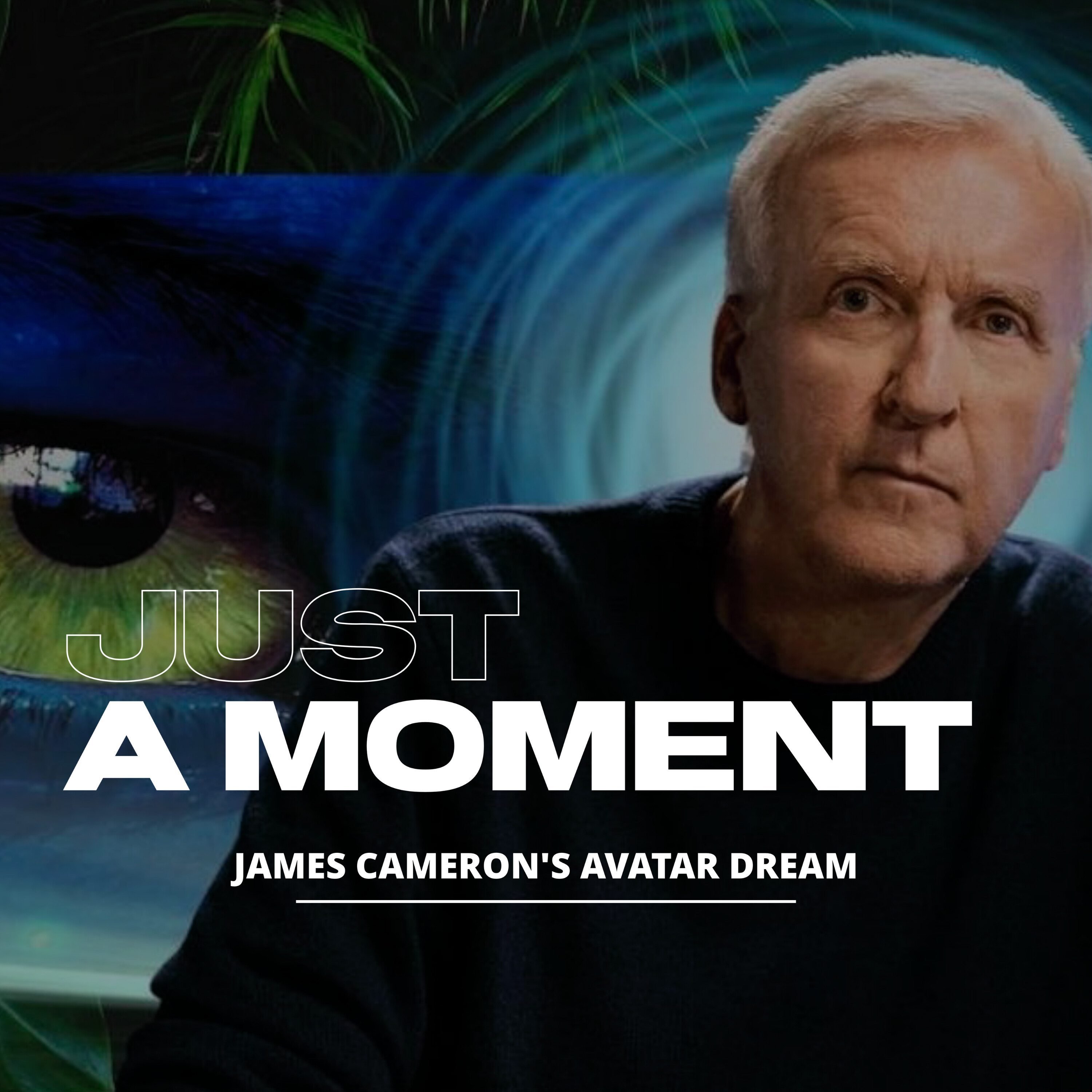
Hi, I'm Brant Menzwar and welcome to my show, Just a moment. As a former world touring musician turned keynote speaker and author, I've experienced my share of life altering moments that have both broken me and propelled me forward. How you leverage those moments or push through them will define your destiny. Each week on my show, I'll provide tools on how to maximize those moments as well as interview some of the most successful entrepreneurs, entertainers and athletes on how the power of a single moment changed their life. Join me to learn how to change what's possible for your life. It'll take just a moment. I'm going to start this one just a little differently because if I don't, well, it just sounds impossible. Before the awards, before the big budgets, before James Cameron became the guy studios trusted with the impossible, he was just a 17 year old kid who had a dream he couldn't explain. And it wasn't metaphorical, it was literal. When James Cameron was 17 years old, he had a vivid dream about a world that didn't exist. A glowing planet, bioluminescent forests, blue skinned beings. A deep living connection between nature, consciousness and identity. When he woke up, the images didn't fade, they stayed. And that's unusual, but not unheard of. What is unheard of is what happened next. Most of us have dreams like that and file them away. Teenage imagination, late night, sci fi. Something you grow out of when life shows up. Cameron didn't. The dream didn't become a fun story he told at parties, it became a companion. It followed him through film school, through truck driving jobs, through early failures, through the grind of learning how to make movies at all. That world stayed intact in his mind. Detailed, specific, alive, waiting. Years later, Cameron becomes James Cameron. The Terminator. Aliens, the abyss. He proves again and again that he can do the impossible on screen. And finally, in the mid-1990s, he thinks maybe now he starts developing the movie that came from that dream. The one that had been with him since he was 17 years old. And then reality hits hard because the movie he sees in his head isn't just ambitious. It's dependent upon technology that doesn't exist yet, not needs improvement. It doesn't exist. The characters can't be created convincingly. The world can't be rendered believably. The emotional impact collapses. If that illusion breaks and Cameron understands something most people refuse to accept. If he makes this movie now, it will betray the dream. So he makes a decision that looks insane from the outside. He walks away. Not from filmmaking, from that film. He shelves the project not for a year, not for a couple of years, but for more than a decade. And here's the part that separates obsession from calling. He doesn't wait passively. He doesn't say someday. He starts preparing. He pushes motion capture technology forward. He invents virtual camera systems. He experiments, builds, fails, refines. Not because studios are asking for it, but because the dream demands it. While Hollywood chases trends, Cameron is quietly building the future required to hold the vision he's been carrying since he was 17. Years go by, people assume Avatar was a phase, a passion project that didn't pan out, a great idea that reality killed. Even Cameron has moments where he has to ask himself, am I holding on to something that will never be real? But the dream doesn't loosen its grip. Then finally, the technology catches up. Not perfectly, not comfortably, but enough. And Cameron makes the call. Now, when Avatar is released in 2009, people don't just watch a movie, they enter a world. They leave theaters. Quiet, disoriented, emotional. Some describe a strange sense of loss, like they had visited a place they could never return to. And the film becomes the highest grossing movie of all time. But here's the part that matters more than the box office. A 17 year old's dream survived 30 years of reality without being deluded. Because Cameron understood something most leaders never learn. You don't rush a vision that arrives before its time. You steward it. And that is where this becomes a leadership story. Because we live in a culture that doesn't just reward speed anymore. It demands it ship faster, iterate instantly, respond in real time. And now with AI, that pressure has multiplied. We can generate ideas in seconds, draft strategies in minutes, build things before we've even decided why they should exist. AI has made execution cheap, but it hasn't made judgment easier. And that's the trap. Because when speed becomes the goal, we confuse movement with progress. We mistake possible now for right now. James Cameron is a reminder that just because you can build something today doesn't mean you should. Some visions don't need acceleration. They need protection. You see, this wasn't procrastination. It was patience with conviction. What idea, dream or vision did you have early on, before practicality told you to let it go? And what if the reason it still tugs at you isn't because you missed your chance, but because it was too early? Because some things don't fail because they're wrong. They fail because they arrive before the world is ready. And the leaders who change the world aren't always the fastest. Sometimes they're the ones who know when to wait without letting the dream die. I'm Brant Menzwer and this is Just A Moment. Thank you for joining us on this episode of Just a Moment. Make sure to subscribe to our podcast and tell a friend or two about it to help spread the word so everyone can find a moment that inspires them. Don't forget to leave us a review and check us out on the web@justamomentpodcast.com Just a Moment is produced by Natalie Von Rose and Brandt Menswear. For more inspiring shows like this, visit surroundpodcasts.com.