← Just A Moment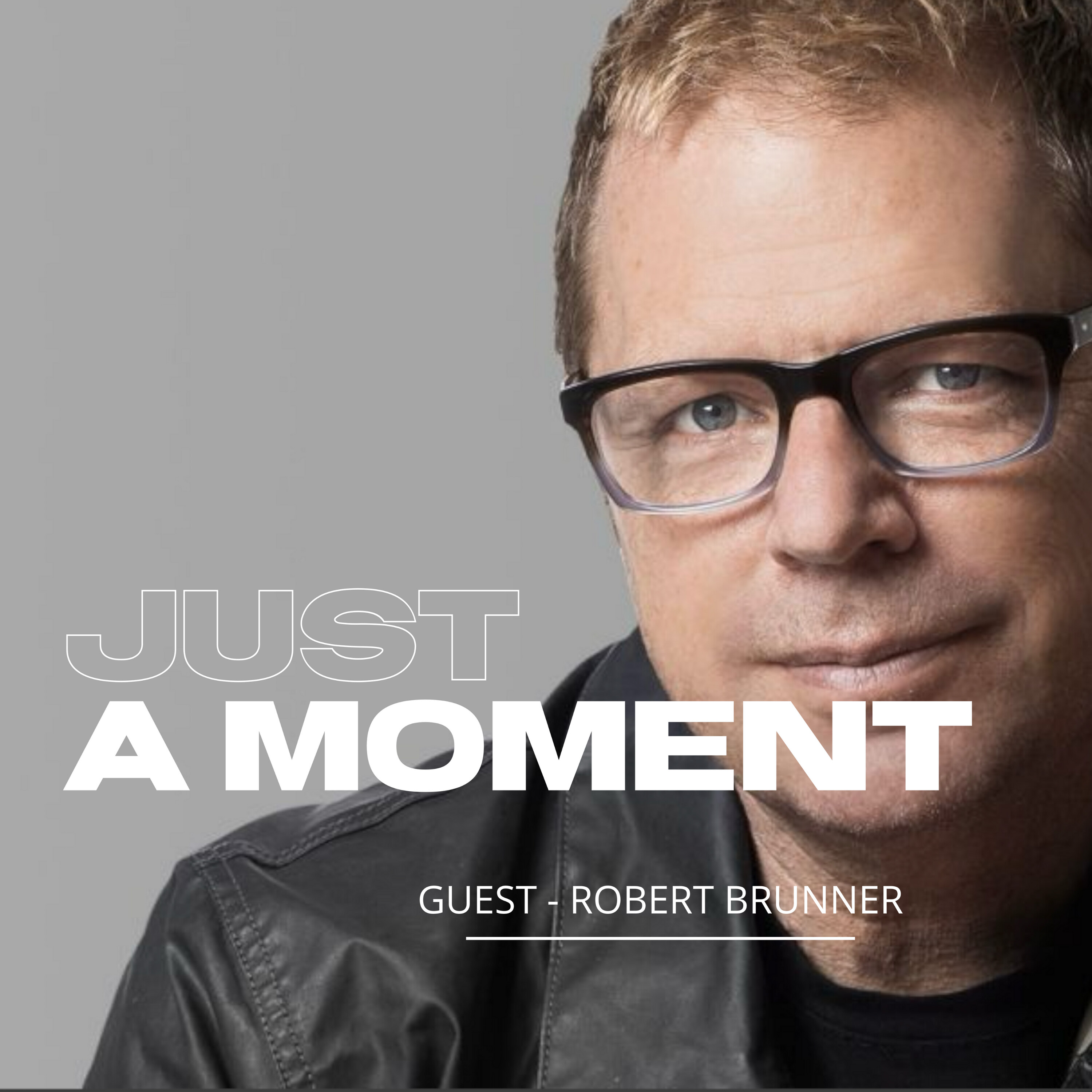
Loading summary
Transcript29 lines
- [00:01]
A
Hi, I'm Brant Menzwar and welcome to my show Just a Moment. As a former world touring musician turned keynote speaker and author, I've experienced my share of life altering moments that have both broken me and propelled me forward. How you leverage those moments or push through them will define your destiny. Each week on my show, I'll provide tools on how to maximize those moments as well as interview some of the most successful, successful entrepreneurs, entertainers and athletes on how the power of a single moment changed their life. Join me to learn how to change what's possible for your life. It'll take just a moment.
- [00:39]
B
Feeling lost in the noise of social media, Inspo cuts through the clutter, connecting you directly with real insights from real experts and industry leaders. It's a new social network dedicated to knowledge sharing, industry insights and thought leadership. Get the latest from top minds in your field or build your own thought leadership portfolio on inspo, already trusted by thousands of professionals worldwide. Be part of the conversation and download Inspo Experts today on the App store or visit www.inspo.expert.
- [01:10]
A
Today'S guest is Robert Bruner, one of the most influential industrial designers of our time. As founder of Ammunition and former director of industrial design at Apple, Robert has shaped the way we interact with everyday objects. From groundbreaking consumer tech to category defining products like Beats by Dre headphones, his work blends beauty, function and storytelling, reminding us that great design isn't just about how something looks, it's about how it makes us feel and live.
- [01:43]
C
I'm Robert Bruner and this is my moment. Originally I was born in San Jose. When I grew up, it was pretty much orchards. This thing called Silicon Valley evolved from farmland into what it is today. My father relocated to California because he was a mechanical engineer at IBM. He invented the mechanical technology in the first disk drives at IBM. So back in the 60s, it's always wild to me, first of all, that he did it with a slide rule and pen and ink drawings, but he invented a certain aspect of the disk drive mechanism that still exists in any disk drive that's made today. The original mechanisms, they have these very high speed disks and the heads that read the disk have to fly at a very specific distance off the disk head. And so to maintain that, they would have to spray it from different angles with compressed air to get the situation just right. And he had this idea that what if we shaped the disk drive head like a wing so it actually created its own lift? Unfortunately, IBM owned the patent, so he always complained for a long time about that My mom was a homemaker, but she started as a fashion model. She was always an artist and craftsperson and also an entrepreneur, whether it was Mary Kay cosmetics or whatever. Eventually she started her own children's clothing business. She was always doing something right, and so that's the environment. I grew up with this crazy inventor dad and my mom, who was just always making stuff. I'm the youngest of three and we were all pretty far apart. Both my sister and brother left the house, by today's standard, at a relative early age. And so I was alone a lot. And it shaped who I was between this sort of maker's household and always having a lot of time with myself to fool around in the garage or draw or do paintings or whatever that was. I think that was an important part of my development. I was very curious about how things worked. I built a number of bicycles. I always was tearing things apart just to see what was inside. My parents would have probably been pretty upset if they knew some of the things I was doing out in the garage. I was always just very curious about things. And I suppose I got that from my dad. I think if I was around 11 or so, I had bought with my own money, a bicycle pump. One of the cylindrical ones you attached to your frame, right. And I go looking for it and I can't find it. And there it is in the workbench, like screwed to a piece of plywood with a wheel on its shaft tied to a motor and all these wires and duct tape. And my dad had used it to prototype an idea he had for a disk drive mechanism where the wheel would drive on the shaft and make the shaft go in and out. And I was so freaking pissed at my father. He ruined this thing I bought with my money. But I was witnessing this creative process and prototyping and so forth. I went through high school and I got decent grades. What was really good was in art and shop class at that time, and probably today too. A lot of those aren't necessarily valued. So I didn't really identify with it as a career path. But I just was always drawn to the. The creative side of myself.
- [04:57]
A
Even though Robert liked to indulge his creative mind and showed talent in the arts, the school system was quick to redirect his passions towards something more practical and pleasing to one of his parents.
- [05:09]
C
At the end of that four year period of high school. You go to the guidance counselor, right? And I didn't know what to do. I wasn't sure. And he looked at my transcripts and said, you've got good grades in math and science and your father's an engineer, so you should be an engineer. Yeah, great. I looked into it. That civil engineering sounds cool. Like I could go work on bridges in like the Alaska pipeline and things like that. That sounded amazing. My sister had gone to San Jose State University and I all enrolled there. It's still not too far from home. After I enrolled, someone told me that all the money was in electrical engineering, which was true. And so I thought, I'll switch to that. And then went through a year of the sort of core curriculum in engineering school, which was brutal. And I really didn't like it at all. You know, high school, maybe you have one to two hours homework in ida, but to all of a sudden having six, seven hours of studies every night just in physics and calculus and trigonometry, it didn't fit with my soul at all. There were aspects where I understood that engineering at its best is a creative profession. But in the beginning, I think they actually tried to weep people out by just dumping on these really heavy duty academics to just see if you're not really committed. Which I think was my case.
- [06:31]
A
As Robert struggled to find enjoyment with his academics, he allowed himself to find comfort in camaraderie closer to home. But this, much like his counselor's suggestion for his college major, would serve to distract him from true success.
- [06:47]
C
One of the reasons I wanted to stay close to home is I had a really tight circle of friends from high school and everybody was doing different things, but we were always doing things together. I was able to be with my crew, so to speak, and that part of life was good, although it wasn't necessarily meaningful, but it was fun. But then I'm working my ass off. Studying at that point in engineering school was like, okay, here's a problem, here's some books. Go find the solution in these books and come back and tell us what that is. That's not who I am. So I had this sort of split of feeling in neutral because even though I was enjoying the time with my buddies, we were just always doing the same thing over and over. And then at school it was just going to putting in the time and doing my best, but not feeling like I'm really getting anywhere.
- [07:39]
A
Robert's moment came by complete chance. At the apex of a dead end road. One decision to explore somewhere new, to open a different door, would lead to Robert finding his calling.
- [07:52]
C
It was near the end of the second semester of the core engineering school. And it's one of those things when you Know something's in your gut but you're coming to terms with it it right. Of course. My father loved it that I was in engineering school. He loved like helping me with my calculus homework. He just thought that was so great and taught me how to use the slide rule. Even though at time we were using scientific calculators, I knew it wasn't right and I didn't quite know what to do at the time. My other extracurricular was still painting and drawing. I think one day I just listened to that. I told everyone that's trying to figure out what doing they're to do is say, figure out that thing that you're doing at 2 in the morning and you don't want to go to bed. You don't even realize it's 2 in the morning. Except for gaming. Find that thing that's just you're in a flow about and examine that. It was like this is what I love and I'm compelled to do it. So I decided to go over to the art department. I'd heard about this thing called graphic design. I didn't know much about it. I knew it was some form of commercial art and I thought I'll go check that out and just see I. Beside this certain door, I walked in the hallway and there was this display case full of industrial design work. I'd never heard of industrial design. I didn't know it existed. And there were models and sketches and mock ups and renderings all down the hallway of student work. And I just, I don't know how long I was there. I could have been 10 minutes, could have been an hour. I don't know. I was just looking at everything going back in my mind and building bicycles and building doing paintings and doing drawings. I'm building models of cars and putting in the spark plug wires and everything that I did to make them detailed, right? And saying okay, there's apparently a profession out there where you can do that and get paid. But I never knew about it. When I go back to that guidance counselor in high school, he had no idea, right? He had no idea that was a viable profession. So I literally left our building, walked over the administration building and changed my major, which without hesitation. And it understandably pissed my father off when I told him. He said the industrial designers are usually the guys who specify the paint. And most of the time it peels off. But then fast forward. One of the first products I designed that ended up being put in the Museum of Modern Art in New York. My father and my mother took a trip to New York and saw it sitting there in the display case. And he admitted to me finally that maybe I didn't make a bad choice. But that was the moment. I often joke, what if I went another door? It's fate. The universe, guidance happens. Whatever. You go through this path and it shapes you and in some ways, the world, because you made this choice to go in that door that day.
- [10:26]
A
Robert, thank you so much for being on just a moment. Been a big fan of your work for a long time, and it's amazing to me to have you here with us. We hear this moment. You have this shift where you thought engineering was going to be the route you were going to take, and all of a sudden industrial design is introduced to you and you pivot. Understandably, your dad's a little upset. I'm curious, how did mom feel about the switch?
- [10:51]
C
I think she was neutral on it. She being a mom, she wanted me to be happy. I don't think she understood what it was either. She knew dad wasn't thrilled about it, but she was the artist. I think her main concern was, can you make a living at this? It's because to her, art and crafts were a pastime and a passion. She was always doing something else to make money.
- [11:12]
A
So I guess I'm curious from the engineering point, where it's so structured. Right. And the artist in you. I believe there's freedom in structure, and when you define the edges, it helps you know where the edges are so you can stand on them.
- [11:29]
C
Yeah.
- [11:29]
A
I'm curious for you, was it like that? Was it the artistic side of you that maybe liked the freedom of being able to do whatever you wanted, but melding that together with maybe some of the structure of engineering that attracted you to industrial design?
- [11:46]
C
Yeah, I think it was. Yeah. The way I would put it, it was. I. As I mentioned earlier, I always had this fascination with things, right. And how they work and where they came from and so forth. What I really loved about it was about blank slate. Figure this out. My first class, I remember, and this impacts me to the day. The first real design class, we walked in, they had the lecture, and then the instructor says, I want you to go home to your apartment and draw 60 ideas of ashtrays. You just keep drawing them and coming up with ideas and trying to figure out another way to do it, and that's really exhausting. And then come back to the next class and everybody puts up their stuff, and he says, okay, I want you to go home again and for next class, come back with 60 more ideas for an ashtray. What he was teaching was looking at everything from every possible angle and being very exhaustive. And you may come back to that first idea that was maybe your best one. How do you know until you've looked at the world? Right. Yeah. In many possible ways, as you can. It was a lot of work. It was actually more work than engineering. So you had this sort of aspect of. There was process, you know, as you got into understanding or how things are made and how you go about designing something to be made. There's a lot of process and a lot of discipline and regimen about how you do that effectively and get something out in the world that won't fail or blow up or you can be manufactured and so forth. Had that. But then there was this other aspect which was very soft and very much about the human experience and understanding it. And you know what? What started to really fascinate me and still does today, was this realization that we as a species have an interesting relationship with things, with objects. Right. Just looking around your studio behind you, you have a collection of things that define yourself. Right. Define moments in time or who you are and the shoes you wear and the car you drive and all this stuff. Right. The glasses you wear, all these things. You have all these choices, and you pick these ones that define who you are or have what you have a connection to. And I always found that really fascinating.
- [13:51]
A
You famously designed Beats, and I'm curious of the lessons learned of 120 Ways to Design an ashtray. Does that. Do you find yourself with that sort of approach helping you in that moment when you went to design the headphones?
- [14:08]
C
Yeah, that's the way my team works, and we produce a lot of work. And I've had to actually just recently explain to one of my clients, because they were like, we just want one thing. Why are you doing so many? And I'd say, when we're showing you all this work in the beginning, we're not here to pick one. We're here to have a conversation. Right. And so we can all learn more about what this thing needs to be. And it is funny. I've probably worked on a thousand things, and I should be the most confident person in the world at doing it. For me, a lot of that confidence comes from, all right, I've looked at this. I've played with this. I know this one is right because I've look at it a bunch of different ways, and this is the right thing to do. That goes back to that first classroom. The instructor's name was Jack Prist and he was a drill sergeant. But it was really impactful.
- [14:53]
A
We always like to circle back at the very end here and talk about a moment that we wish we could revisit. Is there a moment for you that sticks out in your head that you would love to go back and knowing what you know now, maybe approach a different way?
- [15:08]
C
Oh, there's a lot of things, right. I don't have many regrets. I'm not going to get all spiritual on you. But I've always felt there's something that's just been guiding my pathway. The hard things that I go through or I meant to go through, and the great things happen because they're supposed to happen. I don't have many of those. One I can think of is when I was at Apple, I was pretty young to be a director. I was like 30, I think. As I rose up in the corporation, I was attending more high level meetings with the C suite level meetings. And I remember this one in particular where the head of the desktop division was presenting product strategy. And I just sat there and I thought, this is a bad idea. This is wrong. Not really looking, understanding what this brand, what it will do to this brand to take this approach. And I'm sitting there around this table and thinking, okay, my art school grad, I'm going to call out this senior vice president in front of the CEO. I'll just, just keep my mouth shut and be a good soldier and go with the plan. And I was right. It was wrong. It was totally wrong and it totally didn't work and didn't do company much good. That was a really valuable lesson. I shouldn't have been discounting my point of view simply because I didn't have a business education or I didn't have much experience in these guys or the title that they had. I let all that intimidate me. I was doing my company a disservice by keeping my mouth shut. So what if nobody agreed with me? They'd probably respect me anyway. I learned an important lesson and I still feel challenged by it at times. I'm a positive person. I'm a kind person. I don't like to make people look bad, but sometimes you have to.
- [16:46]
A
There was a meme on LinkedIn that I, that I put out recently after a conversation with a client. And I just, I put it out to say, I accidentally asked my boss why today? And I'm starting a new career as a barista, right? Like, it's this idea that depending on the culture that you're in. Why is often looked at as being subordinate, and it's not. If you really have a question you're trying to understand, you should be able to ask, why? What are you doing now running your own ship? That allows for people to ask, why?
- [17:20]
C
Our studio, we're very cognizant of the culture that we have as being one of our biggest assets. And one of the things that's important to us is supporting our team, supporting them in their efforts, and supporting them in taking risks. One of my favorite things that I like to say is risk is not a four letter word. It's to be understood, but not to be avoided or mitigated. You don't innovate without risk. We like to create a culture where people can try things right? And if you fail, it doesn't work. That's okay, we'll figure out something else. But that they feel very supported by the leadership of our company, but also their peers. I was doing a big project for Volvo recently and we were working on some ideas based on the brand equity of the company, which has a lot to do with safety. And we're like, oh, this is safety. That's boring. But then I had this realization that safety is the underpinning for confidence, right? When you feel safe, you can put yourself out there. It's safe in yourself, safe in your environment, safe in your position, whatever. And so I think that we try and create a situation where people feel safe to be. Be creative and innovative. We don't shoot down many ideas. We might say that's not the one we want to do right now, but there's no such thing as a bad idea. And I think that's really helped us continuing to really drive the level of design that we do in our company.
- [18:39]
A
What advice would you give to the. The freshman sophomore now in school who thought they knew what they wanted to do with their life and they've had a little taste of it and now they're going, I don't know that that's the path I want to go down. What advice do you give to that young designer?
- [18:54]
C
It is a cliche, but it really is about following your heart, following your momentum. And like I said earlier, I really love this idea of flow in the sense that when you're in a flow, things just happen and the work is flow. And it's because you're just so tuned into that space, you're working. And I think you really need to listen to your heart. I'm actually working on my second book and it's the title is Making Great and it's arguably about work on a lot of stuff. It's all good. Smaller percentage turned out great, like beats or whatever and what happened, right? And one of the things I've seen is that people you work with have what I call the non negotiable purpose that most of the time sits above financial. It's just like, we believe in this and we're going to make it happen. And that is, to me, part of this thing of figuring out what's right for you is what is your non negotiable purpose, right. In making something. The other piece of advice, I give a lot to design students and it shocks them. Sometimes they'll say, what should we do? What would you recommend we do at this time? And I just, I say go take a public speaking class. Go take an acting class. Right? Go take a comedy class. Right? Learn how to communicate in front of people. Because the reality is if you want to build something, you're not going to do it by yourself. You have to convince an army of people of your vision. So learn how to do that. Right? But it's not taught in design school. No one really teaches you storytelling. The one really teaches you how to present an argument. If you do that and you're good, you'll be successful. Sometimes half the battle is getting people to understand and buy into what you want to do.
- [20:32]
A
So if someone wants to continue to follow you on your journey, what's the best way for them to do that?
- [20:37]
C
My Instagram or my company Instagram. My Instagram is at Robert Dannis Bruner and then our company one is Ammunition Group and that's right now is where we tend to put the most work up and things like that. We do some LinkedIn and our website, ammunition group.com is usually pretty good. Every time something new comes out, we do a pretty in depth case study there.
- [20:56]
A
Listen, brother, thank you so much for spending some time with us on Just a Moment and looking forward to see what the next great thing you create is.
- [21:03]
C
Well, thank you. I really enjoyed it.
- [21:06]
A
Thank you for joining us on this episode of Just a Moment. Make sure to subscribe to our podcast and tell a friend or two about it to help spread the word so everyone can find a moment that inspires them. Don't forget to leave us a review and check us out on the web@justamomentpodcast.com Just a Moment is produced by now Natalie Von Rose and Brandt Menzoar. For more inspiring shows like this, visit surroundpodcasts. Com.