Loading summary
Transcript39 lines
- [00:01]
A
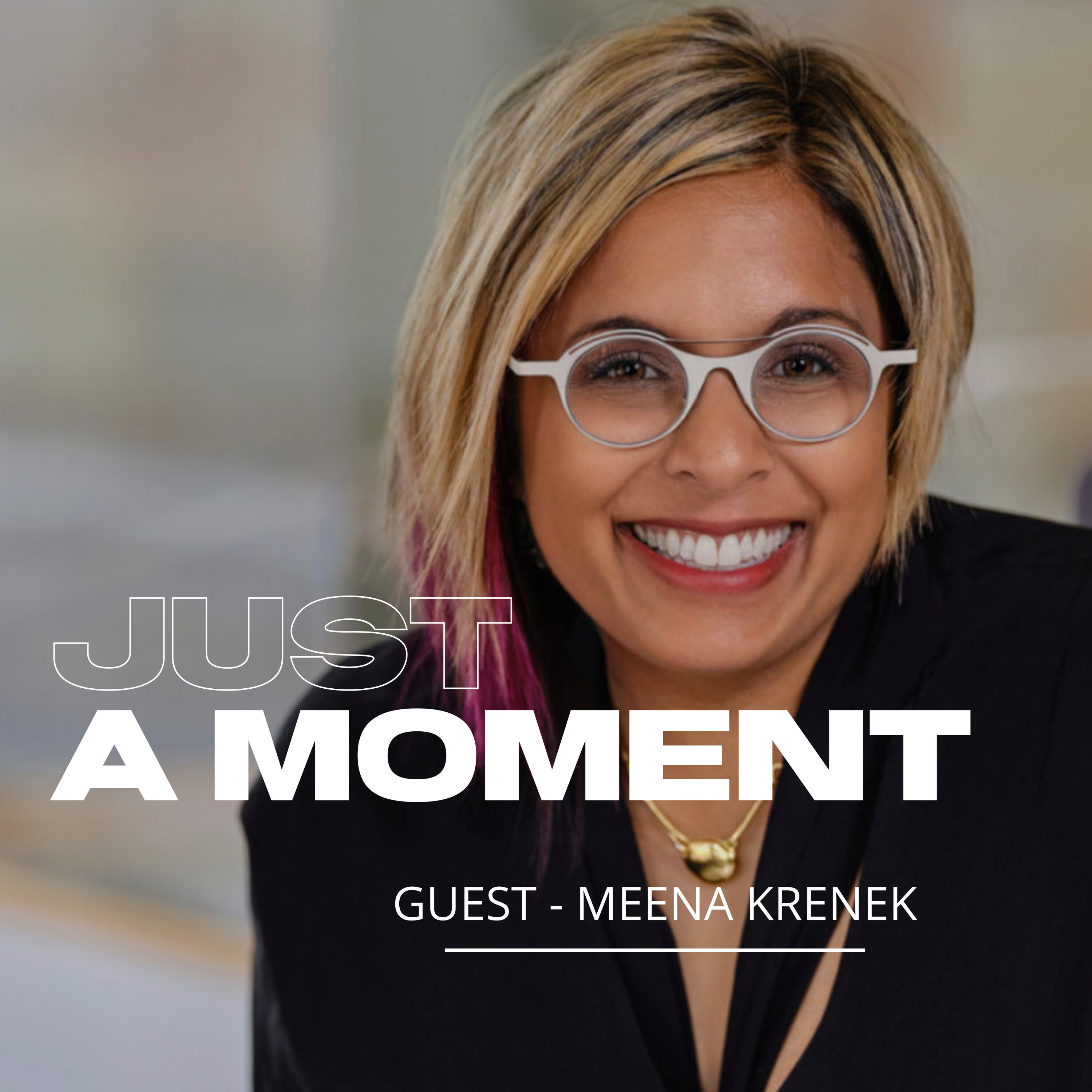
Hi, I'm Brant Menzwar and welcome to my show. Just a moment. As a former world touring musician turned keynote speaker and author, I've experienced my share of life altering moments that have both broken me and propelled me forward. How you leverage those moments or push through them will define your destiny. Each week on my show, I'll provide tools on how to maximize those moments as well as interview some of the most successful entrepreneurs, entertainers and athletes on how the power of a single moment changed their life. Join me to learn how to change what's possible for your life. It'll take just a moment. Today we are joined by Mina Krennic, an award winning architect and designer whose gift is turning spaces into stories. As the global practice director for Venues Interiors at hks, she's leading projects that don't just shape environments, but they shape culture and connection. Just as you'll discover in her unforgettable moment.
- [01:02]
B
I'm Nina Krennic and this is my moment. I grew up in Reading, Pennsylvania. Redding is on the Monopoly board. Small town, outskirts of Philadelphia. I remember when I was little we would go to a farm to pick up our milk and our eggs like it was definitely Amish country. Reading is really a small town. There wasn't a lot of people that look like me there. I grew up with very tight knit friends in a tight knit neighborhood. My dad is an engineer and my mother was a stay at home mom but then went back to school for being a medical lab technician. I have an older sister and I have a younger brother. I'm in the middle. My sister is seven years older than me and my brother is seven years younger than me. So I really consider us like actually only children because we're like so separated. I would definitely say my sister had an influence on me because she was my older sister. She kind of treaded the way for like me being able to do certain things. But my brother was the boy of the family. Always seemed to get to do whatever he wanted to do, but loved being a middle child. I felt like I seemed to grow into my independence. I came from a very conservative family. Education was really important to my immigrant parents. Both my parents are from Trinidad. Growing up in my household, I think because my parents were quite conservative, I rebelled a lot as a child. I would definitely say I'm the flag sheep of the family. I remember at one time my parents were like, there's only certain science degrees that they wanted me to go into. And then when I said I wanted to go into architecture, they were like, oh that's out of their realm. They just didn't like that concept. They just didn't know anybody that was in architecture and they were very hesitant for me to go into the program.
- [02:56]
A
Despite her parents hesitance towards her dream career path, their emphasis on education, strangely enough, put Mina on the path to pursuing her dreams.
- [03:06]
B
Every Saturday, like when all of the other kids were watching cartoons, they would put me in the reading library and I would get these books and I would draw inside the books with a piece of paper. I would draw like all the Dr. Seuss characters. And I do remember opening up these books and I really felt like all of the drawings became 3D. Like everything came off of the page. So I do think I had a very huge imagination. I used to get really excited. I think like every child, I'd go under the kitchen table, the dining room table, and I'd create a shelter and make up stories. Then there was this whole stage of the Smurfs and the whole world of imagination of Smurfdom. And so I started drawing all of the Smurf world and the world of imagination of like mushroom homes and so forth. So yeah, I think I had a really wild imagination as a child. And so I was very much into creating shelter even before I was an architect.
- [04:05]
A
Abstract ideas and an affinity for designs slowly began to solidify itself into a clear dream. As Mina got older, threads of her interest started to weave together.
- [04:17]
B
When I was younger, I saw a home where it had a bridge that took you to was a suspended home on piers. And I just thought that was the most fascinating thing. As a child I really enjoyed this whole concept of buildings and homes. So I think like I've always been drawn to structure and creation of space. I loved legos. I think that was a common thread of building things and making things. Even if I look at some of my writings from Montessori, like it always says, I love blocks. The other big thing that I think was always in me is illustration and graphics. So when G. Whiskers the store came out with hello Kitty stuff, I would always draw all the graphics and the fonts. If you think about what I do today, design and voice came together. I gravitated towards that as a child as well.
- [05:13]
A
With her childhood at an end and her college years at the University of Tennessee about to begin, Mina completed a rigorous five year architecture program. At its end, she hit the ground running with opportunities that took her to foreign shores and and fast paced studios.
- [05:30]
B
So I fall in love with an architect, he's from the Cayman Islands. I spent some time in the Cayman Islands, had a great ride in the Caymans, worked for a small design firm down in the Cayman Islands. Wasn't a good fit. But then I came back to the States and was in Washington, D.C. working for a big design firm and just fell in love with design. I was fascinated with the big ones, the Genslers, the Perkins and Wills. Like, always thought of them as the Harvard of designs. And so went and worked for them all. And so I think that's where it all started, my love for creativity and design and working with some of the most creative leaders in the world. So that's where I started. I started at Gensler, and it's just been a great ride since then. You know, I think about architecture and design and it's such an apprenticeship world of thinking, right? You're always in this kind of world of learning from others and growing from others and wanting to be around individuals that can help you evolve and grow. And I think at the time, in my early points in my career, I wanted to be around designers and. And other colleagues that I could learn from. I just wanted to absorb and be in the right places to just be challenged and just learn. Cause there's so much in our industry, and at that time, you don't know what to specialize in, and you just want to be around people that excite you about the business and excite you about creativity. I guess I was just taking every opportunity I could, and I was just immensely in the work. At point that. That time in my career, there was this tool, Revit and AutoCAD, and was getting big into modeling. And so one of the skill sets I got really into was rendering. I was really good at this skill. I just got so involved in competition work for the firm that they would send me around the country just to model for competitions. And so they just knew that, like, Mina could model any interior space in 3D. And so I would just be doing that for different competition projects. And that became my kind of superpower. And I loved it because I was so empathic that I felt like I was in the model with the people. And just I felt like the project was already built before it was built. So I was geeking out about it and I was in my own world and I was just doing project work and I got to meet all these great designers. Through the process leading up to her.
- [08:06]
A
Moment, Mina spent her time at her company as a conceptual superstar, winning competitions for her designs and her ability to render them digitally. However, an opportunity would soon arise. For Mina to take charge of something a little more concrete.
- [08:22]
B
At that time, the firm I was with, because I was working on so many projects and I was just doing so much conceptual work, I wasn't actually on one project, running a project from A to Z. And this project came up and they said, hey, Mina, you're selected to lead this very massive project and you're going to run it from A to Z. Also, at the time, the woman that was expected to run it had gone on maternity leave. I wouldn't have got the opportunity if she had not had the child at the time. Also, it was 2019 and a lot of things in the south weren't getting built. A lot of huge headquarters projects were on hold. A lot of layoffs were happening within our industry. And it was a really strange time. But at this time, 450,000 square feet of corporate headquarters were getting built and never done something like this $42 million project. And had a huge team that was just like super excited about it. And it was really exciting. It was 14 floors in the outskirts of Atlanta, and it was for Cox Communication. And it was a company called autotrader.com and let me tell you, I don't know a lot about automobiles. And so I remember we all went to an auto parts store store and we collected a series of automobile parts and we placed them in the studio. So we were looking at like the details of trims of cars, the leather, the interiors of cars. We were analyzing the parts of how a car ran the. The engine block of a car, like every aspect of a car. And how can that translate into social components of an employee? Employees experience in the day, in the life of an employee. For autotrader.com and so we met with all these teams within autotrader.com we met with the CEO of AutoTrader at the time and we analyzed every aspect of their business and every aspect of automobiles. It was just amazing experience within their facility. They had a fitness center and they had a swag store and they had the media center. And then they had an innovation area where they had actual automobiles represented. And like they just had series of floors with different departments in it with different needs. And there's every experience was quite unique within each of the floors. I think all of that process was really interesting for us as a team to learn about, but I also think, like, for the employee to feel connected to the brand, those were the things that we had to learn about. It's one what they do every day, like what they get to touch, what they get to see what are the divergent things that they get to connect with the brand with. But then at the end of the day, what are the things that are going to make them feel like what they get to do has meaning and purpose? And so whatever we can create in that space that is visually stimulating, inspiring, that makes them feel like they're part of something bigger than themselves, is what we wanted to draw out of everything we learned. So it really involved a great level of detail and thinking.
- [11:49]
A
With her project completed, Mina took a moment to reflect on her accomplishment and ultimately realized what made designing matter to her, answering a question that has forever fueled her fantastic career.
- [12:02]
B
This project's about 25 minutes from where I live. And so for weeks on end, going through the construction administration phase, we would be up there every week working with the gc, going up all these floors and contractors and subcontractors on every floor, working with everybody to button it up. And so I saw all these floors get built, and every day there would be tons of questions that would come your way and, like, it just learned so much. So much. Anyone that's gone through the CA process realizes how intense that process could be. I do this every time after we finish a project. But the very last day, when we were doing the last punch, going through the building with the client and so forth, and then I was leaving the building and had gotten in my Jeep, and I was driving out onto 75, and I was looking up at the building, and all of the floors were still lit. And what we had done at the core of the building was we created this engine block, which is related to cars, but it was illuminated. And we had created a gradient wall covering that went up the whole building, so it actually looked like speed of a car and an automobile. It's like having a child. Right. Like, you have just given this to your client, and you've spent 18 months talking and building up this vision for him, and then you're leaving the building after the punch, and you've given the child to the client, you're giving it away, and you're looking up. And that idea came from a team of people and a vision that came out of our heads. And it's a pretty profound moment in your mind, and you've given it to your client as a gift. Right, right. And the world as a gift, and all those employees as a gift. And it was just like a very powerful moment for me personally, because I had designed a lot of things before, but I had not designed something from A to Z like that with every aspect and level of detailing like that project. And it was just like a very profound moment for me to believe in myself.
- [14:24]
A
Feeling lost in the noise of social media, Inspo cuts through the clutter, connecting you directly with real insights from real experts and industry leaders. It's a new social network dedicated to knowledge sharing, industry insights and thought leadership. Get the latest from top minds in your field or build your own thought leadership portfolio on inspo, already trusted by thousands of professionals worldwide. Be part of the conversation and download Inspo Experts today on the App store or visit www.inspo.expert. mina Krennic. Welcome to Just a moment. It is so good to have you here.
- [14:59]
B
Thanks. It's great to be here.
- [15:02]
A
Listen, what I love about this is I can actually like, visualize this moment and sometimes it's hard to do that, but I can see you, like crouching down, looking up through the windshield at 14 stories of your creation. And I think that, you know, especially when it's a project this large and it's something that when you're dealing, it's so compartmentalized, you know what I mean? In a way of each floor is its own thing. But to see it all together as one and to see it come together as one as, as you had designed it, as you had imagined it in your head is such a powerful thing to see the sum of the parts, right? I'm curious for you now that I know that you'd spent so much time in the rendering game of helping other people visualize what it is that they wanted to see and you're doing it, but now you get to do it for yourself. What is that feeling when it's not just in your head, it's not just in the computer now, it's actually real life that you can physically walk through it.
- [16:11]
B
It's probably the most, like, surreal thing in the world, right? It's probably the most exhilarating thing I've ever done. The one thing that drives me in life is just to be able to have those things happen, right? Like everything we do, like paper architecture, anything that comes out of our brain. I recently passed the IIDA Future certification like a certified design futurist. And everything I dreamed about in that class, I was thinking to myself, like, I want to just build all those things. That's all I want to do in my lifetime. And so having something built that comes out of your head, that's all you want to do in life. If you could get those things to happen, it just feels like you just feel so Accomplished. The coolest thing about all of it is this. When you see people in it, you're like, oh, my God. They're acting and behaving the way we thought they would do. Like, socializing or they're bonding. I love it. Meeting in there, that's amazing.
- [17:13]
A
So I guess I'm curious where the creativity for you, like, when you approach a project like this is not. Hey, look, here's a little something for you to sink your teeth into. This is a massive project with hundreds of people involved in it and so many moving parts that it's daunting. There's no question. But I'm curious for you. Do you approach things like this by setting boundaries first to have a structure in place to go, we can go here, but we can't go there? Or do you just go, let's just dream something up, and then we'll worry about if it's possible later?
- [17:51]
B
That's interesting. I have to hear the meter of the client. Like, the client has a concern or a problem or a design brief. Right. Client comes to us with, oh, thinking about this, we got to figure out, like. Like, where's their extension?
- [18:08]
A
Yeah.
- [18:09]
B
So I guess I'm always, like, wondering, like, I trying to figure out, like, how far can we take them? And then I want to test it.
- [18:19]
A
If you look back at your career and look back at some of your earlier work, do you look at that and go, that's 100% me. Or do you look at that and you go, God, I can really tell what I was influenced by at that time.
- [18:31]
B
I think younger work, I was definitely influenced, yes. Because it was like I was searching. Then I found my, like, thing where I was like, I have to get this message out that has to be said, or a voice that needs to be heard. It could have been the client's voice, but it had to be a reflection of how I said it or a representation of how, like, I would use lighting that way to reflect their voice, or I would use sensorial things.
- [18:58]
A
I'm always curious when I see different designs of how much they are reflections of what was happening in that moment for that designer. And it's why I think it's so important that designers learn how to be intentional with what they're putting into the world, because it is a reflection forever, not just for now. So to be able to go back to those things 10 years, 20 years later, to be able to look at it and go, gosh, I was really deliberate with what I did here as opposed to, wow, I really jammed that puzzle together. Not exactly how it was designed to go, But I hammered it hard enough that I made the pieces fit.
- [19:37]
B
Yeah. Not to be negative, but then there's people that shouldn't be designing because then they're putting this thing in the world that isn't the truth, or it's not quality, or it's not representation of something. And I would want our people or patrons or guests or anybody that experiences our spaces or experiences your music to feel something.
- [19:59]
A
Yeah.
- [20:00]
B
Walk away with something.
- [20:02]
A
My wife and I took my parents on a trip last year. We did a Viking river cruise, the Castles and cathedrals tour. Right. From Amsterdam to Switzerland. And we had an opportunity to go into some of these basilicas and cathedrals that were built 900 A.D. just insane. I'm curious for you, what comes over you when you walk into a building that's a thousand plus years old and it's just stunning?
- [20:32]
B
I don't know. Even just you saying that gave me goosebumps. I'm like, what's happened here? Think about all the things that have happened in those spaces. If you could try to imagine and put yourself into people's shoes, like what happened in these environments. And it's fascinating. You want to feel what those people felt in those spaces. And just. It's amazing, right? All the detailing sometimes, and those tile work, or it's pretty. Blows your mind. You're like, what did people see? What did they feel? What did they smell? What did they taste? What did they put in their mouth? Like, all of that stuff just blows your mind.
- [21:05]
A
This is why you're amazing at what you do. Do you know why? Because I think there are a lot of people that, in your shoes, with what you do for work, that would walk into a place like that. Your first thing is think about all the people and everything that's happened here, all the experiences that have taken place. I think most people would go, I wonder how they did that. How did they build that a thousand years ago? Because they didn't have the cranes and the this and the that and all the tools that. That we possess today. But I think what makes you incredible is that you start with the experience, and that is what people care about. And remember, they don't care about the. How they care about the experience. And I think that's unique to you, and it's why you're as amazing as you are.
- [21:57]
B
Oh, that's what you say? No, it's just. I. Thank you, Brett. You have the ability to. The fact that you said that about me and we're just getting to know each other. Thank you. That's incredibly kind.
- [22:12]
A
It's blindingly obvious to me, like, blindingly obvious, that this is what separates you, is that when you think about experience and the things that have happened in a space before, you think about the space. It's a unique view that you take. It's about what it feels like and all the things that are going to happen in that space for you. And that's. To me, I wish more architects would think through that and more designers would think like that. Because when you lead with the experience, you lead with the emotion of the experience, and it's the emotion that. That matters. Like you've said before, I've been into buildings. You walk in, you feel nothing. I've walked into other buildings and been so overwhelmed emotionally for nothing. I can't even put my finger on what it is that's doing it. But I just feel emotionally overwhelmed. God, that's the magic, right? That's the secret sauce.
- [23:10]
B
It is the secret sauce.
- [23:12]
A
So, real quick, before I let you go, moment you wish you could get back.
- [23:17]
B
I had mentioned this to you earlier, but I've had some amazing, amazing, unique, profound individuals that have impacted my career. And I feel so fortunate. And I had a gentleman. He was the CEO of a previous company I worked for, and I was making a decision to go to another company, and he had given me an incredible offer, like an incredible financial offer, incredible role offer. But for some reason, at that time in my career, I decided to leave the firm I was with and go to another firm. I remember, I think now, back to the importance of when people understand you and understand your drives and the way you tick and the way you work and just like your unique sauce, I think it's really important to be aware of that because I don't think everyone gets that, that about you and your specialness. And I think at the time, I didn't know that the CEO understood me that deeply. And I think about that offer sometimes that he provided. It was so long ago, but I thought that other company was like the Harvard of the design. It was the biggest firm in the world. And I thought, oh, I must go try it. But I realized that at the end of the day, regardless of size of company or all these great design firms in our industry, it's all about the people. There's good people at all these great firms, but you want to be around people that, like, are, like, in it with you and just give you the energy to just want to do great things together. And like, collab with you and just like meeting people and connecting with people is just what makes life rich. And I just think about that moment sometimes and I'm like, what if I did take that gentleman's offer?
- [25:18]
A
That's amazing. If someone wants to continue to follow you on your journey, what's the best way for them to do that?
- [25:24]
B
Yes, please, please befriend me on my Instagram page, Mina Krennic. And also feel free to connect with me on LinkedIn at Mina Krennic.
- [25:35]
A
Amazing. Listen, thank you so much for spending some time with us on Just a Moment.
- [25:40]
B
Thank you so much, Brett. This has been great. I really love our conversation and this was so special. So thank you.
- [25:47]
A
Of course. Thank you for joining us on this episode of Just a Moment. Make sure to subscribe to our podcast and tell a friend or two about it to help spread the word so everyone can find a moment that inspires them. Don't forget to leave us a review and check us out on the web at Just a Moment. Podcast Just a Moment is produced by Natalie Von Rose and Brandt Menswear. For more inspiring shows like this, visit surroundpodcasts.com.