← Just A Moment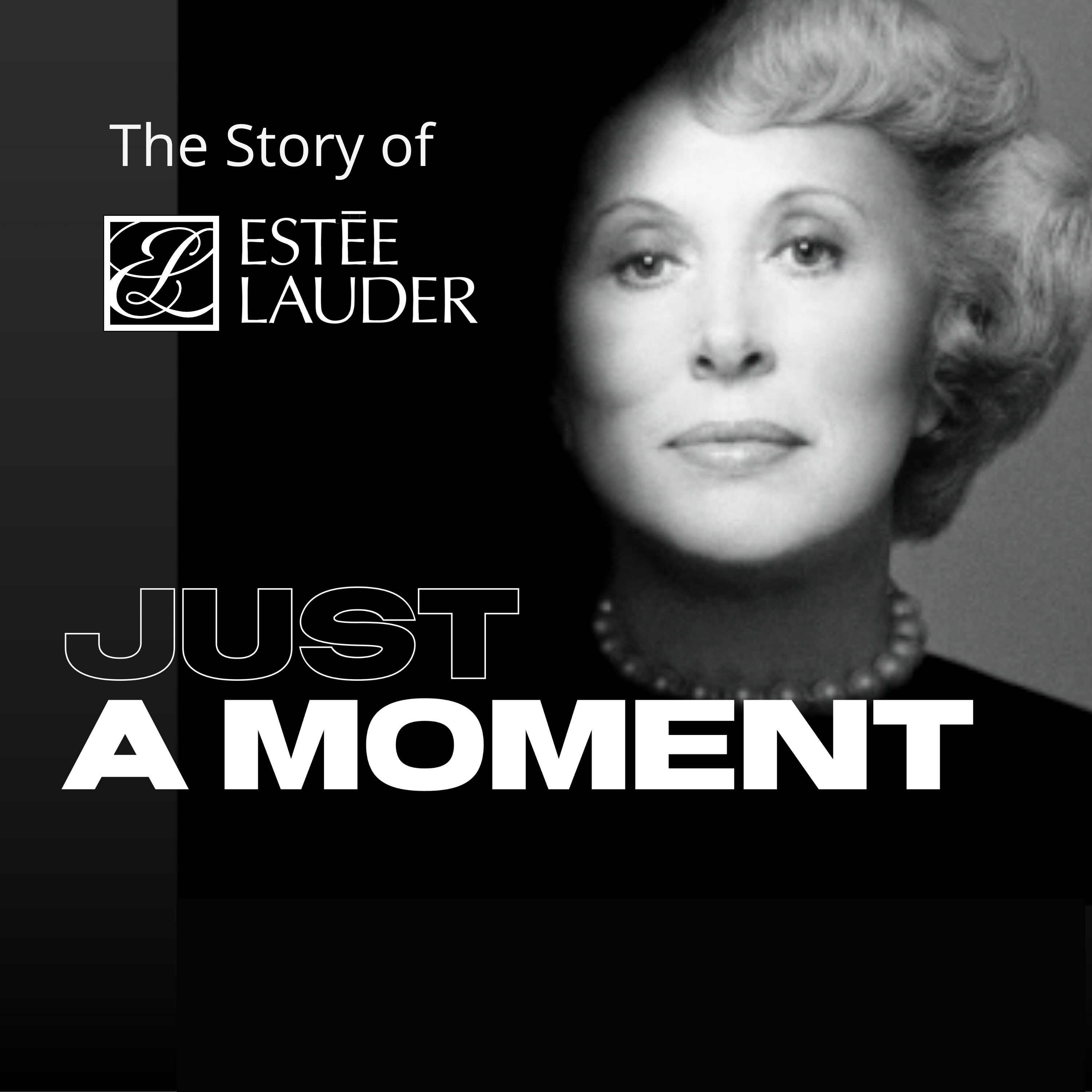
Loading summary
Transcript7 lines
- [00:01]
A
Hi, I'm Brant Menzwar and welcome to my show. Just a moment. As a former world touring musician turned keynote speaker and author, I've experienced my share of life altering moments that have both broken me and propelled me forward. How you leverage those moments or push through them will define your destiny. Each week on my show, I'll provide tools on how to maximize those moments as well as interview some of the most successful entrepreneurs, entertainers and athletes on how the power of a single moment changed their life. Join me to learn how to change what's possible for your life. It'll take just a moment. Today's guest isn't a person, but a brand whose boldness rewrote the rules of beauty. Estee Lauder did not come from elegance. She invented it. The glamorous European backstory she became famous for wasn't lineage. It was construction. A deliberate rewrite of her origins so she could enter rooms that would never have opened for a working class girl from Queens. She wasn't born Estee. She wasn't born. Louder. She wasn't born into luxury. She built all three before she sold a single product. She sold a Persona. And the world bought the story before it ever bought the cream. She understood something brutally true about the era she lived in. Beauty wasn't just sold to women. It was sold through women. And only a certain kind of woman was allowed to be the face of luxury. So she became that woman by fabrication first, then by force of belief. No aristocratic childhood, no salons, no marble halls. Just a girl from Queens who realized that in order to be accepted as luxury, she had to pretend she had always belonged to it. She was born Josephine Esther Menser in Queens, New York. Her parents were not aristocrats. They were Jewish immigrants, Hungarian and Czech, running a modest hardware store. And not a dynasty. There were no governesses, no chandeliers, no European summers. There was steam heat, shared bedrooms, and the texture of ordinary life. She didn't grow up around luxury. She grew up wanting proximity to it. And here's the part history books sand down. In the mid 20th century, who you claimed to be mattered more than what you could create. The American beauty industry wasn't run on innovation. It was run on pedigree. A woman selling luxury was expected to come from luxury. Estee didn't. So she built a new origin. She began speaking of herself as if she were European born. She leaned into old world mystique. The accent, the refinement, the continental aura. She positioned herself as arriving, not climbing, because she understood something brutally honest about her Era. If she walked in as a girl from Queens, she'd be dismissed. If she walked in as a woman of European sophistication, the door opened. The myth was the ticket. She performed with origin as legitimacy. She made luxury look like her natural habitat, so no one would question how she entered the room. This wasn't vanity. It was survival inside a rigged system. She read the room and built the woman the room was built to accept.
- [03:56]
B
Feeling lost in the noise of social media, Inspo cuts through the clutter, connecting you directly with real insights from real experts and industry leaders. It's a new social network dedicated to knowledge sharing, industry insights and thought leadership. Get the latest from top minds in your field, or build your own thought leadership portfolio on Inspo, already trusted by thousands of professionals worldwide. Be part of the conversation and download Inspo Experts today on the App store or visit www.inspo.expert.
- [04:29]
A
Once the myth was in place, she had to make people feel it. A story on its own is fragile. A Persona fully lived becomes believable. So she didn't just claim sophistication. She rehearsed it until it read as origin instead of aspiration. She adjusted her voice. She studied posture and pace. The stillness of a woman who expects to be seen, not one trying to be noticed. Slowly, perception caught up. People didn't say she is presenting herself as refined. They said she is refined. The myth had crossed over from invention to embodiment to credibility. She didn't trick the world. She out evolved the expectation of who was allowed to have authority and beauty. Every other brand at the time came from lineage. Estee came from strategy. She understood something crucial. She no longer needed to act as if she belonged in the world of luxury. She had already entered it psychologically, and the market would eventually follow. Her presence became her marketing. Her Persona became her proof. And once presence was established, her final obstacle wasn't belief. It was institutional permission. She could make people want her now. She had to make the gatekeepers realize they were already behind her. That is where her moment really begins. It begins with a woman walking into a place that told her no, carrying the certainty of someone the world was already responding to. Saks Fifth Avenue in the 1950s was not just a store. It was the gate. The place where luxury was anointed. If you were on those counters, you were prestige. If you weren't, you were invisible. Este had already been turned away once. By their standards, she wasn't born of the world she wanted to enter. Most people would have seen that as a closed door. She saw it as the wrong angle of entry. So she returned not to negotiate, but to stage inevitability inside the very temple that had rejected her. She walked through the revolving doors and onto the polished marble with the calm of a woman who had already decided to outcome. The women browsing that floor were the arbiters of taste, the ones who signaled what the rest of the country would chase months later. Este positioned herself near the counter, not as a petitioner, but as if she already belonged in their reflections. Then came the moment she lifted a bottle of her Youth Dew. Youth Dew wasn't just another perfume. It wasn't even sold as perfume in the 1950s. Women didn't typically buy their own fragrance. Perfume was something men gifted to them. It was romantic, ceremonial, patriarchal. Estee wanted to break that rule. Youth Dew was technically a bath oil with a concentration strong. Strong enough to linger like a fine fragrance, which meant a woman could purchase it for herself without violating social etiquette. It was a workaround in a quiet revolution. Instead of waiting to be adorned, a woman could choose her own aura. It was priced to be reachable, but it smelled like generational wealth.
- [08:28]
B
Bold.
- [08:28]
A
Where other scents were delicate, warm where they were powdery, assertive where they were ornamental, Youth Dew wasn't just a product. It was permission. So with the bottle of her bath oil held high, she hesitated just long enough for intention to turn into suspense and let it fall. Fall. The sound echoed, small but piercing. Then came the scent. Not a polite whisper of perfume, a flood. Warm, lush, irrefusable. It traveled across the marble like a rumor too powerful to contain. Heads turned not toward the broken glass, but toward desire. It turned the room. The women didn't recoil. They leaned in. What is that? Where can I buy this? Who makes it? Not a single person asked. Who? Brock a bottle. They were already shopping. The crowd kept forming. Women weren't browsing anymore, were asking to purchase. And Sachs didn't have it. That was the break the buyer rushed over. Not to remove her, but to secure supply before the moment slipped away, right there in public view. Not behind a desk. Not in a contract meeting. Not after corporate review. Sachs gave her a counter. Not next week. Not. We'll be in touch in that moment. Because prestige isn't what a retailer believes about a brand. Prestige is what the customer demonstrates. She already believes. Estee did not get approved. Sachs capitulated to demand. She walked into that building as someone who had been dismissed. She walked out as someone the most important retailer scrambled to claim before anyone else did. That was the true inversion of power. She didn't need to be chosen. She forced recognition. And from that instant on, everything about her trajectory changed. She didn't enter the beauty world. The beauty world rearranged itself around her. I'm Brent Menzoir, and this was Just A Moment.
- [11:11]
B
Foreign.
- [11:17]
A
Thank you for joining us on this episode of Just a Moment. Make sure to subscribe to our podcast and tell a friend or two about it to help spread the word so everyone can find a moment that inspires them. Don't forget to leave us a review and check us out on the web@justamomentpodcast.com Just a Moment is produced by Natalie Von Rose and Brooklyn at Menswear. For more inspiring shows like this, visit surroundpodcasts. Com.