Loading summary
Transcript57 lines
- [00:01]
A
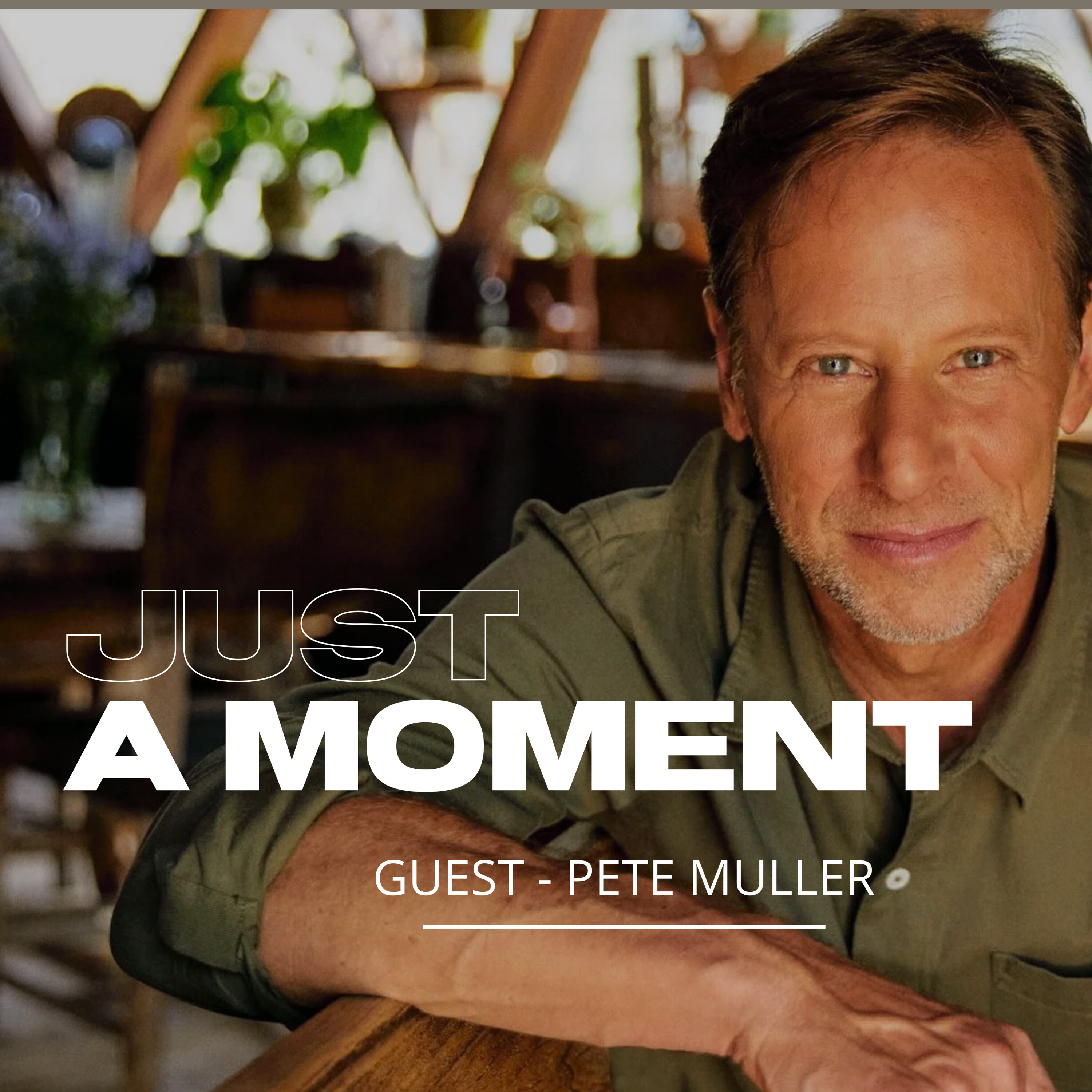
Hi, I'm Brant Menzwar and welcome to my show Just a Moment. As a former world touring musician turned keynote speaker and author, I've experienced my share of life altering moments that have both broken me and propelled me forward. How you leverage those moments or push through them will define your destiny. Each week on my show I'll provide tools on how to maximize those moments as well as interview some of the most successful entrepreneurs, entertainers and athletes entrepreneurs on how the power of a single moment changed their life. Join me to learn how to change what's possible for your life. It'll take just a moment. Today's guest is Pete Muller, a rare kind of multi hyphenate, Princeton trained mathematician, pioneering quantitative hedge fund leader and working singer songwriter who's just as comfortable at a piano as he is inside a trading model. He founded PDT Partners and became known for blending deep pattern recognition with a quietly relentless curiosity. But Pete's story doesn't live in one lane. He's released multiple albums and charted on Billboard's Adult Contemporary rankings while also building big second life impact in music through philanthropy, including helping bring Power Station at Berkeley NYC to life and founding the Live Music Society to support independent venues. And because his brain apparently refuses to pick a single playground, Pete also creates crossword puzzles and helped invent the Washington Post mini meta format. So if you've ever wondered what happens when math, music and meaning collide in one human this is his moment.
- [01:44]
B
I'm Pete Muller and this is my moment. I was raised in Wayne, New Jersey. Both my parents were foreigners. My mom was born and raised in Brazil. She was a medical doctor in a small town and she came to the states in her 30s. My dad was from Austria and went through some tough stuff with the war, eventually found his way to the States and they met and they had a couple kids. My dad spoke six languages. He was a very introverted engineer. We played a lot of ping pong and chess as a kid and now I play ping pong with my son. So we've passed that tradition down. And my mom, she took over from her dad who after she went to medical school had a heart attack. So she became the town doctor for a while and then when she came to the States we required people to do residencies again. So she switched from being a GP to a psychiatrist and she practiced psychiatry for many years, retired in her 70s.
- [02:49]
A
While academic pursuits were encouraged in Pete's childhood home, an appreciation for the arts blossomed alongside a gift for mathematics.
- [02:58]
B
I discovered the piano When I was 10 I took classical lessons and it was okay. And I quit. My life was changed as a teenager when I found a jazz teacher who taught me how to improvise. That changed my life. It was once I realized that we all have music inside us, we just have to figure out a way to get it out and that it's a never ending journey. That's wonderful. I was also very into math. It just came very easy to me. I went to a public high school and by 11th grade I had my own math class because it was just one of those things where I was intrigued by it, I was interested in it. I loved math. I loved games, Scrabble, words, anything that involved creative structures. And that really related to the music too, because I spent so much time on math and the mathematical structures really do apply to music. Music is math. It's all about patterns.
- [03:55]
A
Pete's two great loves, math and music, would come colliding together in his college years under the tutelage of two experimental and innovative Ivy League professors.
- [04:06]
B
It took me the longest time to figure out how the practical stuff in the world worked. I was drawn to beauty and beautiful ideas, and I was in my head a lot. And the only reason I applied to Princeton is someone said to me, hey, Pete, you're really smart, you should apply early to Princeton. And I said, okay, sure. And I applied early. And I remember the alumni interviewer met me and he said, you're pretty smart, but there are a lot of smart kids. You're not getting in, so you should have some backup plan. And for whatever reason they picked me. I had a lot of confidence. I think that really helped. And I looked back at my essay that said something that outside of a 24 hour day, I see no limitation on what I can accomplish, which is arrogant as hell. But I actually really believed it. And they took a chance. It worked out all right. I got there and the math still came pretty easy to me. There were two people that really influenced me. Robert Gunning, who became a D later. He was an amazing math teacher. And he said, come to my lectures and come to class or don't do the homework or don't. The final exam is take home. And if you ace the final exam, you're getting an A film course. If you don't do great on the final exam, I'm going to grade your homework, I'm going to grade your participation and all that. I thought, okay, sounds great. His lectures were amazing. I would go to the lecture. I didn't do one bit of homework, didn't do well, on the midterm, and I take home, I learned the entire course in a couple days and did fine. And that was great. So he was one inspiration. And there was a fellow named Paul Lansky who was a composer, and he taught music. And you couldn't do a minor in music at Princeton, but I took music composition, and I remember Paul would have us write these pieces, and you had to score it for whoever was in the class. And there was a clarinet player or a singer or whatever. You have to do it. And it was really fun. And he loved the Beatles and all that. And I grew a lot studying with him. And I remember one point we asked him, play us something that you wrote. And he was very into early experimental music. And it was just this bizarre stuff that I. I couldn't get a handle on. Then I'll have to go back and look at it. But back then I was like, whoa, here's this brilliant man that understands all this stuff about harmony and how things go together. And, oh, wow, this is what he creates. I'm like, okay. I'm sure if I listen to it 20 or 30 times, I would have been like, oh, wow, this is really cool and intricate, but it was, if you will, cerebral music to me. It didn't touch my heart. So he did. He didn't as a person.
- [06:35]
A
Princeton opened other doors for Pete, but not the ones you might immediately think. He didn't head straight to Morgan Stanley or land directly in a corner office after graduation. First, he sated his creative side.
- [06:50]
B
When I was in at Princeton, there was a friend of mine and she was trying out for the U.S. olympic team in rhythmic gymnastics. And back then, rhythmic gymnasts were allowed one instrument to accompany them. And if you could, you would have a live pianist play for me. So she came to me one day and she knew I played. And she said, will you write me a piece? And I said, sure, It's a minute and a half piece. And I went and I wrote this piece. It's called Happy Fruit. It was jazz inspired. And I worked hard and I was really proud of it. I think I still had to shoot music somewhere. And I can remember the opening riff. I gave it to her and I was all excited and recorded and played it for her. She was like, oh, oh, okay, I'll try it. And I'm like, oh. And I was so bummed because I put my heart into this. You know what that's like? So she came back a week later and she said, oh, my God, it's the only song that I'VE never gotten sick of. You have to come accompany me when I go try out for the Olympics in Atlanta. And I thought, okay, sure, why not? This sounds like fun. And it turns out that if she had been number one in the country, I would have been the Olympic pianist. So that was my shot at the Olympics. She came fourth. But when I was there, I ended up meeting a gymnastics coach in California who thought, wow, I really love your style. This is great. If you're ever in California, come do music for my girls. I'm graduating soon. Trying to think of what I want to do. I had a couple summer jobs as a programmer because I knew how to program. The math made it easy. And I'd worked for this German computer firm named Nixdorf. I had worked for them in Germany and then la. And they gave me a full time offer in New York. They loved me. It was all set. It was for a lot of money. My heart just said, no, no, no. I put them off a little bit. And then I decided to drive across the country. And I show up in California and I call up this gymnastics coach and I say, hey, remember we met in Atlanta and you said, if I'm ever in town, you know your girls need music. And she said, oh, that's great. Where are you staying? And I said, I haven't thought of that yet. And she said, you can crash at our place. I did and ended up moving in. And she became a good friend. She was a former New Zealand Olympic athlete and had a daughter who was on the team. And I started doing music for the girls and thinking, okay, I need to live in California. This is beautiful. I have to live here. And so I started doing that, playing music for the team, and quickly realized I needed the money. I had this great job offer. I didn't want that back east, but maybe I could figure out something. So I looked around for a job and I found a programming job. I found this tiny company called Bara, and it was run by a Zen Buddhist econometrics professor from Cal Berkeley named Barr Rosenberg. He'd been on the COVID of Institutional Investor in a Lotus position. Who the hell is Barr Rosenberg and what is he talking about? And he had started this firm and I had no interest in finance. I didn't know anything about it. I just thought, Wall street, boring money. I needed a job programming, and they were willing to pay me something close to what was offered in New York. And I'm like, I can live in California. This is great. I can still play for the gymnastics team. Fantastic. I Took the job. And then I realized that finance was all math and I was good at it. And I just dove in and I learned everything I could and I quickly got pretty good at it. For the first year, I was playing for the gymnastics team and doing the finance, but then eventually realized, okay, I'm really good at this. And so I switched musically to having a jazz band. I played with some friends once a week. I had a wonderful girlfriend. We lived in the Berkeley hills. Bike was good.
- [10:22]
A
The good life just kept getting better. With his California adventure coming to a close, at the apex of a new opportunity, Pete embraced change and turned his creative mind to the financial applications of his penchant for pattern recognition.
- [10:36]
B
When I get into something, I get into it and I obsess over it and I just dive in. That stuff at Borrow worked really great. The relationship was a bit of a struggle. We became more friends as opposed to partners, but it was comfortable. And I think I am wired in a way where I need to have something I'm trying to achieve or trying to get better at. So that's why I picked up poker and I got, I got good at poker because I just needed something. And then the big shift in my life happened when a couple of my poker buddies and I decided, we're consulting to all these people in finance, we're helping them. Why not see if we could actually figure out trading strategies and trade our own money and kind of do that? That's the pinnacle of figuring out how to make money in the markets yourself. And we pitched the company we worked for and they said, nah. And then a big bank in York, Morgan Stanley, came looking for somebody to do what I was already doing, which was building these models and talking to people and writing articles and saying, come do this. And I gave them the pitch and I said, hey, I think I could probably figure out how to beat the market overconfidence. And they said, sure, come try it. And I ended up doing that, moving to New York, and that was a big struggle. That was really hard. This turned out to be way harder than I thought. And it was a six year period of my life. I'd never worked harder just building this. And I had clear ideas of the kind of culture I wanted, which was very academic, very collaborative, and trying to build that in the middle of a Wall street culture, which was meritocratic, but, yeah, a little more ruthless, a little more competitive, if you will, somehow trying to figure out how to beat the markets, which turned out to be much harder than I thought. And I found some Great collaborators. That really helped, and that did it. The thing that suffered during those six years was the music.
- [12:21]
A
Pete would get a chance to have more moments with his music, but first he had to let go of the aspects of his life that were no longer serving him. His chance to do so came after a close friend did exactly that.
- [12:34]
B
And eventually we figured out how to beat the markets, and we figured out how to scale it. And we were early pioneers in a lot of this mathematical trading. And it worked so great that by the late 90s, I was the highest paid guy in Morgan Stan. But get this. I wasn't happy. I was really happy along the way. But then once I achieved this prize, I realized, wait a second, what am I doing? Just trying to make more money? That is. That's not what it's about. And there was a good friend of mine who's still a good friend. Her name was Kendall Sesser. She helped me build the business, and she came to me one at the end of one year, and she said, I'm done. I've made enough money. I want to move to California. Here I am living in New York. I want to live by the beach. I'm like, oh, man, I want to get a dog. I want to study psychology. I realized that three quarters of the fun was building it with her. And I'd already achieved my goal. And then, because I wasn't happy, my relationship fell apart. And I realized I'm not happy at all. And here I am. I've achieved this thing that I set out to achieve, and that was my biggest struggle. But the great part about that is that led to songwriting, because when my relationship ended, I started writing songs about it. Oh, my God, my heart is broken. This has never happened to anyone. And I realized, okay, it has happened to other people, and they've written a lot of songs about it. But I like the songwriting thing. I want to get better at it. And I dove into that, and that was the biggest transition of my life. And that was the early 2000s, and that's when I was starting to seriously making music. And I thought I was going to leave the mathematical finance behind. I had. I created a deal with my group and the firm. Everything was great. And I was going to phase out over five years and more and more get into music. And I did. I put out a couple albums. I started a songwriter circle, and that was great. And then I realized I needed both in my life. I still have both in my life. So that was a big moment. That was a big change. When I Look back, if I could live both, which one would be better? You don't really know. I just know that it turned out great. And I think the trick in life is whatever happens, always look at it and say, okay, what are the positive things about this? Why is this so great? Like, how is it benefiting me? Even if it's a tragedy, even if it's something that breaks your heart?
- [14:54]
A
Pete, welcome to Just a moment. Brother. It is so great to have you and thank you for spending some time with us today.
- [15:02]
B
Brian, thanks for having me. We got to talk a little bit before we started, and I feel a friendship beginning because we have a lot in common. This is really cool.
- [15:11]
A
We really do. So much in common. I want to talk about a couple of different things. You've had some incredible moments in your life. So the interesting thing to me is I was doing the research on you. I was first introduced to you as a musician. And so all of my sort of initial research and thoughts was all around your music and what you've done and the albums that you've put out over the years and your journey as a musician. And then I'm like, wait a minute. This guy is like, one of the most successful hedge fund managers of all time. And that. It's so funny to me that it's almost a side note to the success you've had and. And just how much you love music and what it means to you. And as I dug into more of the hedge fund stuff, you're like Batman. Like, there's nobody quite sure how the hell you do what you do. I don't know if you disappear at night and put on some suit and write all the code to figure out how to beat the market. Even past articles I found about you, nobody knows how you do what you do. You are this enigma of trading.
- [16:20]
B
I'm going to give you the secret in terms of how I do so many things. When I get into something, I obsess. I go really deep. My wife would disagree with this next statement. But I like to be wrong, because when you're wrong, you learn something. And I like to be around the smartest people around. It doesn't have to be my idea, and I. And I just obsess. And I get to this point where I figure it out. And then once I figured it out and it's working, the thing that I'm really motivated to do is to teach somebody else how to do what I do and keep it going. And I've managed to do that with my businesses. And I Have a lot of people who. Where we have deep collaborative trust. We really get each other. And they're hungry, they want to grow and they learn and they're doing it better than I did and figured out how to align incentives so people feel like it's fair and I get it right a lot more than I get it wrong. And so I can keep that going and then use my wisdom and my experience to help guide. But then I can put my energies into something else. And so when I'm diving into writing an album or writing a song, I'm just obsessing over that. I have this other sideline. I don't know if you stumbled upon the fact that I create these crossword puzzles. I invented a new type of crossword. It's the mini meta in the Washington Post. And I have a monthly music puzzle that I do. So I obsessed and I built these things, but then found people that I could teach a little bit about them. And in fact, you know, one was a kid from Princeton who was doing some crosswords. And we collaborated and we actually invented the mini meta thing together. And then now I have probably the best gravel player in the country. His name is Mac Meller, and he collaborates with me on the crosswords. And so I can delegate a lot of those things. And he's learning and he's doing it and probably is going to end up doing it better than I did. So that's the secret for me is that. That I. I love the teaching. I could have been a professor in a different way. Maybe I could have been a therapist like my mom or my sister. But instead, I love helping people grow and learn and put the incentives there. I think that's a really important thing. But first I start by trying to understand it deeply myself.
- [18:21]
A
I am the same way. Once I. Once my brain is set on something, I can't sleep until I figure it out. I'm absolutely obsessed with it until I feel like I know enough about it or feel like I'm at that point where I can manage it in some way, have some sort of control. I use that word very lightly.
- [18:40]
B
I gotta ask you this. When you're in that obsessive mode, is it hard to get along with you?
- [18:44]
A
It is in the sense that I don't pay attention to much anything else. I don't mean to ignore people, but my brain just has to be in this one mode. And I think very linearly. When I'm writing a book, I can't write a chapter that's halfway through or I Can't Tarantino this and start at the end and work myself back? Like, I have to start at the beginning and I have to continue to work sequentially to get to the end, just because that's just how my brain processes information. And I want to make sure that I am referencing things and I'm setting things up for what I'm going to say in the next chapter or two chapters away. And so it's weird in that way, but I'm curious with you, because I'm not a math guy.
- [19:28]
B
I'm an.
- [19:29]
A
I'm a words guy. I'm very much. My dad was an English teacher for 35 years in. In public high school. And so I grew up my whole life being corrected as to speaking incorrectly. He's a combination of an English teacher and a driver's ed instructor. Pete, you can imagine what my childhood look like out here. Don't say this. And you. You did that wrong. And with your brain in the way that. That it works, does it influence everything in your life or is it confined to certain aspects or certain things that you're doing? Is it like, I think this way when it comes to music, but when I'm trying to do deductive reasoning or critical thinking, it's different. Is it. Does it permeate your entire life or is it segmented?
- [20:16]
B
I think it's more the former that I think in terms of processes and values. And, okay, if I'm trying to make this decision, what are the values that matter? How do I think about this if the circumstances were reversed or if it. Like, how is this going to apply if this happened or that happened? I will tend to overthink things from other people's perspectives, that it tends to lead to great solutions. I really. I love to create harmony, you know, and make sure that every. Everyone feels a voice, they feel heard. And I'm really okay if someone has a better handle on how to do something, to give up control and go, okay, you got this. But if I feel like I've got a better handle on it, I'm going to want to do it that way. And so I really am a huge fan of accountability and rationality and being able to argue to get to the best idea or even argue to get to what the best question is, to understand something. I think that's really important. So I would say it permeates everything I do.
- [21:22]
A
So one of the things that I talk about a lot in the keynotes that I do when I'm talking to leaders, we talk about defining the edge, right? And so what I'll say is, if you and I were 10ft from the edge of the Grand Canyon, you and I could walk right next to each other, hang our toes over the edge and look out and see. See it for all that it is, the wonder of the world that it is.
- [21:42]
B
Right.
- [21:42]
A
Or if I backed up 10ft and I blindfold you, how many steps are you going to take before you stop? And I ask the question to people all the time, what is it that's going to make you stop? And they always say fear, but they're never specific. And so I'm like, fear of what? And we get to this point where we talk about it's fear of not seeing the, the edge. And as a leader, I believe it's our jobs to define the edge because I believe there's freedom in structure. Once you define the edge, people will walk right up to the edge. They may even dangle their toes over the edge. But if you don't define the edge, they rarely approach it because they don't know how far they can go without getting in trouble. And so that can.
- [22:28]
B
You will if you're leading, right?
- [22:30]
A
Yeah. Yeah. So I'm curious how you feel about that with, with regards to defining the structure. Because all the great things, at least in my opinion, innovation, best practice, all that stuff lives on the edge. And you're not going to find it until people get right up to it. Otherwise they'll send 10ft back where it's comfortable. And that's where mediocrity lives.
- [22:53]
B
Okay, I'm going to give you two. Ancestors stimulated this, this memory in me and, and when I was 10 years old, we visited the Grand Canyon and I was one of those kids that I hopped over the railing and went out on this jutting rock and you know, like the most amazing view and totally freaking my mom out and my dad actually took a picture of it and you know, because I was completely comfortable there, right. And I knew there was no way I was going to fall. Right. He kind of, you know, what's his name? Alex Honnold, the, the, the free climber. You know, I, I was really confident and I mean I didn't fall. But does that mean I was right? I don't know. But, but I've always explored things like that. I will go hella skiing, but, but I'm, I'm pretty good and I'm very good at understanding where the limit is and, and risk managing. It was like. So I, I think, you know, you get a lot of thrill when you Push the boundary. But kind of understanding what you have is really, really important, too, and just, like, edging. Edging forward. So. But the Grand Canyon thing brought back that memory as a leader. Yeah. For me, what I. What I do with. With the people that work for me is I. I clearly articulate what our values are and what we're trying to achieve and what kind of behavior works. And I think the biggest thing is I want you to be intense, and I want you to do the best you can do, and I want you to be very competitive. But the one thing I never want you to do is do something for yourself. That is to do the disadvantage of somebody in the group. Right. That's the only thing that I'm going to, you know. You know, you're trying. Like, if you're competitive, I want to do better than that guy. No, no, you want to do the best you can. You want him to do the best you can. You want to beat him at the end. But. But that. That's the main thing. I also encourage people to fail. Go try something. I don't care. I mean, one of our biggest innovations with one of our guys, you know, somebody said, I want to do this, and I'm like, I don't think it's going to work, but you've earned the right to explore it. Go do it. And he went and spent six months doing it. Completely didn't work. And I said, you know, not a problem. It's okay. Well, we'll pivot to something else. You know, he's like, no, no, I still think it's going to work. I want to spend another three months. And I'm like, okay, you could do it. Guess what? He spent the three months and it worked. And it was transformational, but it worked because he felt completely safe doing that. Right. Like, having the confidence and knowing that, okay, I want to try it again. I want to try it again. And so I really reward persistence, and I try to be fair and transparent. I think that's the main thing. I like your description of creating the boundaries and having people feel like it's fair, but I'll stop feeling like they can help change the rules if they have. Right. Like. Like. Like, if you want to feel like you have agency wherever, whatever you're doing, humans need. Yeah. And. Yeah.
- [25:47]
A
Responsibility without authority. Right. Like, that's the worst thing you can do to somebody, in my opinion, is give them responsibility without authority. And. And then get angry when they don't achieve what you expect them to achieve.
- [26:00]
B
Right, exactly. And here's the thing. And I, I don't know if you'll do this, but we're all human and if we're really frustrated, we're gonna, we're gonna do stuff like that sometimes, right? We're just gonna, and, and being able to be self aware and go, oh, yeah, sorry, I screwed up, I shouldn't have done that. Like being able to own your stuff, that I think that's really, really important.
- [26:19]
A
I'm just, I'm, I'm curious. Just as we sort of become fast friends and, and, and having conversation with you, you seem to be a pretty even keel guy to me, like, but I would expect people who are incredibly gifted at something, there's a little bit of volatility that comes, that comes with that. And you know, it's, this is a conversation that I've always said it's a difficult one to have with people who don't understand where you're coming from. But when you're good at a lot of things, sometimes it's really hard to find the thing. Like, I, as, as someone, when I grew up, when I was younger, I grew up with this competitiveness sort of just. It was in me my whole life. It was mostly. It started in sports and, and I just, I always wanted to win. I'd get really mad if I didn't win, but I wanted to win, right? That was, that was the thing. And I think it's helped me a lot as I've, as I've gotten older and so I've been competitive no matter what it was that I was trying to do, because that was just in my nature. But when you're good at a lot of things, if you try a lot of things and you're pretty good at them, there isn't that one thing that just stands out. Like, gosh, I'm great at that. I'm good at this stuff, but I'm great at that. I'm curious for you, was it always. Did you have like a New England kid? You know, all I think of you, I think of Good Will Hunting. Like you, you were working as a janitor somewhere and all of a sudden you figured out this math problem and went on to become a billionaire? So, you know, has it been like that for you where you had just this light bulb moment that it was like you knew that math was it, or was it like, gosh, I'm actually, because of the way your brain works, I'm really good at a lot of things. And that finding that one thing that you're extraordinary at was a little more difficult.
- [28:12]
B
Interesting. You know, like you, I'm very competitive. Right. And when you're competitive and you're trying to learn that stuff as a kid, you know, and you have to learn to channel your frustration when you don't win. I mean, I still remember Roger Federer, who was one of the most impressive athletes of all time. So gracious and so polished and so admirable and so many things that he does as a 16 year old kid, he was smashing rackets. He was, he had like, he had real anger issues that he had to get over. And I think that's true of a lot of competitive people. You have to, you have to figure out how to channel that thing and, and, and as, as opposed to smashing the rackets, just figure out how to become better and to have more discipline and more work. Matt was always easy to me, but you know, I, I liked winning, but I also liked living in my head and like beauty and creativity right there. There was a real side to me that was kind of hippie. And I ended up, you know, the, the company that I worked for that I told you about, Bara, they were in Berkeley, California. And I felt really at home there, you know, in nature and, and you know, it's, you know, so I have that really competitive side, but I also have that community building side. I remember reading Watership down as a kid and thinking, this is really cool. Everybody can contribute and it's so important.
- [29:26]
A
I can't believe you just said that's like literally my favorite childhood book.
- [29:30]
B
Is it really? What?
- [29:30]
A
It really is my favorite childhood book. Yes. I used to get. So, you know, and then when it came out as a, as a movie, the whole, you know, the mongoose, the whole, like it was just, it was good.
- [29:43]
B
But the book.
- [29:43]
A
Book, fantastic. Yeah. Yeah.
- [29:46]
B
We're friends. I could tell. This is awesome. You know. You know, it's funny. You, you, you've talked about my wealth a few times and mentioned it. So, so the one thing I'm, I'm like, when you, when you get to that point.
- [29:59]
A
Yeah.
- [30:00]
B
And you realize, okay, you know, money doesn't matter, what do you do with it? The challenge is giving back. How do you, how do you use that money to do good in the world? And so, so that, that is another thing that is actually one of the things I'm trying to do, which is figure out how to approach philanthropy, especially actually related to music in a cool way.
- [30:20]
A
Yeah, I, I love that. So, you know, you and I talked just before we, we had jumped on And I told you that I'd lost my oldest son, Theo, to a combination of COVID and cancer. And he had battled for about nine years. He was diagnosed when he was 14. And so when you lose a child, as you can imagine, it just. It sort of sucks the hope out of you. And so I disappeared, you know, for a good 18 months. I just sort of removed myself from society and lived in my head, as you. As you said, for almost two years. And at about that 18 month mark, I had someone in my inner circle come to me and basically have a really hard conversation with me. And. And because I love this guy, and he sort of earned the right to say whatever he wants to say to me. What he said was, brandt, look, I know you've been through something horrible. I'm really sorry that you had to experience that. But I want to tell you what I believe. He said. What I believe is this. When you die, you really die twice. The first is when you take your last breath, but the second is when your name is spoken for the last time. So what I want to know is, what are you doing to make sure Theo's second life outlives his first? Because the wallowing is not going to get it done.
- [31:38]
B
Wow.
- [31:39]
A
And that was some tough love, brother. It didn't sit with me too well in the moment, but when I had some time to sit with it, I realized that my purpose in life now is. Is what I call second life impact. It's. What are you doing to make sure that your second life outlives your first, that. That the. What you give back? How many people. In my case, what I talk about is how many people you help move forward. It's not what you leave behind. It's how many people you help move forward. Yeah, that's that legacy that will outlast lifetimes. And. And. And what are you doing to do that? And so as you think of it and frame it that way, how. How do you approach that someone who is ex. Sort of achieved the success you have? What is it to you when you think about helping others move forward, that is going to sort of lend itself to your second life impact?
- [32:41]
B
Well, okay, so you triggered one thought in me, and I'm gonna. Then I'll answer the question. But. But the. That premise is the movie Coco, right? The animated movie Coco is exactly that. And it was so brilliant. It's like you die. You really die once the last person spoke in your name. I actually. I wrote a song when my mom passed and called Alive in Me, which was kind of addressing that. And it is. I don't play that often. It shows, but when I do, people start crying in the audience. It just. It resonates up.
- [33:16]
A
But.
- [33:16]
B
But I really believe that thing, and it's a great paradigm. I really. I don't know what happens when we actually die. You know, I'd like to believe that somehow we merge into some consciousness that I don't know. But. But leaving a legacy behind, I think is great. I draw two things that I'm proud of, and I'll tell you about them. Know. So I made my third record in. I guess it was 2014, and I made it with a fellow named Rick DePoffy who worked with John Laventhal. And I. I had actually. I was on the. The board of the Berkeley School of Music, and I. I wanted John Laventhal to make my record. I love the Sean Colvin record he made. I was just like, okay, this is. I want. And so I found my way to him and I said, hey, John, I. I would love for you to make my third record. And, you know, he was. I mean, his first question, who the hell are you? Nisifully, which is a very fair question. And second, he's like, you know, you know, I'm. I'm so booked out for the next year. Then he said, but the person I make my records with, who is my partner in crime, is a guy named Rick depoffy, and maybe he would be interested in doing this. And it turned out that was actually a much better fit for me. I think John and I would have killed each other very quickly. I've gotten to know him, but. But Rick was perfect. And Rick was actually a surfer, and on the side, he was actually learning how to trade options. So we became very, very quick friends, and he came out to California and surfed, and we made this record together. He really helped me a lot musically. And I sat in the same chair where Roseanne Cash and Sean Colvin and Michelle Branch and all these other great people sang. And. And we worked together. And I'm like, okay, this is great. Now I want. I need a studio. I want to build my. A little studio. So. And Rick had built John and Roseanne Cash's studio in New York. And so I said, maybe we can find a studio or one bedroom apartment and I can build a studio out there. And he started looking. And around that time, he was diagnosed with a glioblastoma, which is a horrible form of cancer. And he's no longer with us. It's a thing that John McCain had. It's a death sentence. You get it? And if you're familiar with cancer and pain and all that. And it was just. He was 60, but he had a lot of good years left. So he started looking and came back to me. And we had recorded some of that record at Avatar, which is a studio in New York that had previously been called Power Station. It was a great place. It was in the Bruce Springsteen biopic, because he made a lot of records there. Tons of wonderful records were made there. And Rick told me, he said, you know, I just heard that they're going to sell Avatar and they're going to turn it into condos. And, I mean, we're looking for a studio. And I just had this dream that you bought it and made it Berkeley, you know, New York City, and put your studio on the fifth floor. And I said, you know, I remember that building. And I remember they had this leak on the. On the fourth floor. And the way they dealt with it was kind of like in the movie Brazil. They ducted it, you know, the water all the way down, and there's gotta be asbestos everywhere. And then, you know, the mammoths, I mean, they think they've been breaking even or losing money. This is a nightmare. No, there's no way I could possibly do that. And then I said, you know, it's the brain tumor. It's kicking in already. You're crazy. And of course, I went home and I thought about it, and I was like, well, you know, what else am I going to do with my money? Why not do something really great? And I went to the president of Berkeley at the time, Roger Brown, who was a friend, and I said, I have this crazy idea. And I said, I don't have any time to run this, but if you found somebody that could run this, that we both like, that could make this happen, sure, I'll do it. And he did. The first person he introduced me to was a guy named Steven Weber. And Steven jumped into it and spent five years of his life and, you know, dealing with the asbestos and the leaks and New York City. I got New York City to kick in some money, too. And. And yeah, I have my studio there. And it was a really great thing. And it's thriving. It's a graduate program for 100 some Berkeley students every year. Master's program. And, you know, that'll live beyond me for sure. And so I'm really, really happy with that. There's another thing that I did when once I farted, my wife at one point said to me, you know, you're getting really serious about music and you're playing in front of our friends. You know, if you want to see if you're any good, you should play in front of strangers. And I thought, okay, I think she regrets saying that. But I ended up signing up for an open act tour and we talked about this with Stephen Kellogg and we did 20 dates and went around the country and it was really wonderful. And I just remember going to these tiny little venues, you know, 100 cap or 200 cap venues and, and you know, opening for Steven's wonderful audiences and just going, oh my gosh, how do these people make a living? This is, and this is right before the pandemic. And I thought, my God, you know, they're wonderful to the musicians, they took great care of us. I mean, home cooked meals sometimes they're great to their staff. They treat people really well. The community really loves it. And it's so important for artists who are up and coming. Like I was doing like trying to find a foothold and get a place to play. So I thought, let me start a charity, get some friends together and see if we can give money to people. And we started this thing and funded it. I, I guess I funded it. And then the pandemic happened and all of a sudden, you know, instead of maybe barely breaking even, they were going out of business and we ended up saving a number of clubs. And it, this thing is called the Live Music Society. It's still going strong. We give away seven figures every year. And you know, people apply for grants. I, you know, we have a great independent jury that evaluates what they do. And so after the pandemic, now it's kind of helping them build a better speaker system or get ticketing right, or build a bathroom for the green room or whatever it is and just helping that ecosystem be the small independent music venues. That's atthelive musicsociety.org but that's been the other thing that I've done. And next up actually will be to, in my hometown of Santa Barbara, I'm building a music club which is not going to make money. It, if I can come close to breaking even, I will love it. But it will be this amazing thing for the community. So I'm excited about that. And also I'm trying to build a studio and a place where musicians can come and record and kind of make that available to people in the world kind of on a grants basis. So to be able to create that and to use my organization, brain and capital to do that. That's my giving back. But for me, I like finding people that can run that and do that. Well, for me, because for me, I love the creating the music and the playing of the music, the collaborating, that. That part's really, really fun. So it's. It's a marriage to try and do both.
- [40:14]
A
I love that, brother. Listen, if people want to continue to follow your journey, what's. What's the best way for them to do so?
- [40:22]
B
Well, the petemuller.com is my website that's a great, you know, great place to. To get the new music that does a new record out. We were just talking about it earlier called One Last Dance. You can find me on Instagram @Petemulder Music. Those are. Those are the main places to go. I love hearing from people. If my music has touched you or the story has touched you, the one thing I. Yeah, yeah, I'll just leave it at that.
- [40:48]
A
Listen, I can't thank you enough, man. Like, this has been a dream for me to have this conversation with you. It's rare that I meet somebody who is as talented as a musician as they are a business person. And that's. That's a. That's a rare commodity these days. And so it's just been an absolute pleasure to have you on. Just a moment.
- [41:10]
B
Thank you so much, Brent. I really appreciate it. I really appreciate it. It's been really fun to be here. You know, I just. I thought of one story. I don't know if you guys. No, let's do it. Bring it. So when I was working with. With Rick Depoffi, you know, and. And, you know, I was. I was really honing my craft, which is a euphemism for saying that I wasn't that good yet.
- [41:31]
A
Winging it. Yes, I.
- [41:35]
B
My piano chops were always pretty good, but I was still really working on the songwriting and my vocal, you know, my. It wasn't where it is now. I really, you know, people, they come and hear me now. I hear more comments about my voice than I do about the piano. But back then, that was not the case. And Rick really worked with me, and it was great. But he told me, and I'm not going to mention the person's name, but he said, you know, there's this guy who is super rich, and he goes around and he opens for established rock bands and he flies them around on his jet, and he kind of like, you know, gets to play rock star. And he's like, don't do that. Do it for real. Do it. Create Music you're proud of, Pay the dues, do the stuff. And I'm so grateful for him. And I told him, I was like, that's the only thing I want to do. I mean, playing Rockstar, yuck, that sounds horrible, right? You know, I want to, you know, I can travel a little more comfortably when I go around, I can finance playing my shows, but I want to earn my audience members. I want people to love what they're hearing and I want to speak for my soul and tell, you know, do the singer songwriter thing. And, you know, to me that's the. It's hard, right? I mean, could be much easier to, you know, be a cover band, right? You know, and just. Yeah, this is really fun, you know, but, you know, the, the hard work is the joy too. And that's. That really butter it.
- [42:58]
A
Listen, I can't agree with you more. The hard work is the joy. And that is. I love that you, you did this the right way. Like as somebody who, you know, toured in the Kia Soul with the handmade trailer, pulling back to 100 dates a year and, you know, taking the. The cheap Motel six room at two o' clock in the morning because you've wanted to try to get four hours sleep before you have to be the next gig. You know, I think everybody that's been down that road appreciates you doing it the right way and not just saying. It would have been easy for you to skip the line and, and find yourself by yourself onto different tours and audiences, but you did it. The thing that comes through to me the most with your music is your humbleness, which is, I mean, now that I've had a chance to talk to you some, I mean, you got a lot to not. You have every reason to not be humble with the success that you've had, but it really comes through it. There's an earnestness to your voice and a warmth to the music that, that is just really, really humble. And that, I believe, is what your audience connects with. For someone who's had the amount of success you've had, it is still. You are still very approachable as an artist and your music is very approachable as well, which is. It could. You could have gone the. Your, you know, your old teacher's way of doing something a little avant garde. Rachmaninoff. Nobody really gets it, but, you know, it's. The critics would think it's amazing, but you made some really approachable music that speaks to the heart as well as the head. And that's a difficult task.
- [44:40]
B
Oh, no, thank you so much. Thank you. I think that's actually the reason that I do it, is that I think if we live in ego and success and having everybody come around and go and wanting to talk to you or wanting to be with you because you're wealthy or successful and they want to learn, that's not fun. Being in a place where you're humble and trying to earn it, that's actually fun. That it's energizing and it. And it's very hard to do. And you see so many people, not all wealthy people, but you see so many wealthy people kind of go out there and, you know, they got to do the ego flex, right? And that's just okay. I mean, you know, do I splurge occasionally? Yeah. Yeah. I could have a good time, but I'm most alive when I. And just this morning, I'm. You know, I've got my song circle today. I'm struggling to write a song that I. But it's like, okay, I want it to be good. I want them to like it, and, you know, I want to. I want to love it and. Okay, got it. No, that. Not that word. No, not that chord. But that whole process. Even you know that process.
- [45:39]
A
I do. I know it well. I know it well. I feel the struggle. Well, again, man, thank you so much.
- [45:45]
B
This is really fun. Yeah, yeah. Appreciate it.
- [45:49]
A
Thank you for joining us on this episode of Just a Moment. Make sure to subscribe to our podcast and tell a friend or two about it to help spread the word so everyone can find a moment that inspires them. Don't forget to leave us a review and check us out on the web@justamomentpodcast.com Just a Moment is produced by Natalie Von Rose and Brandt Menzoir. For more inspiring shows like this, visit surroundpodcasts.com.