← Just A Moment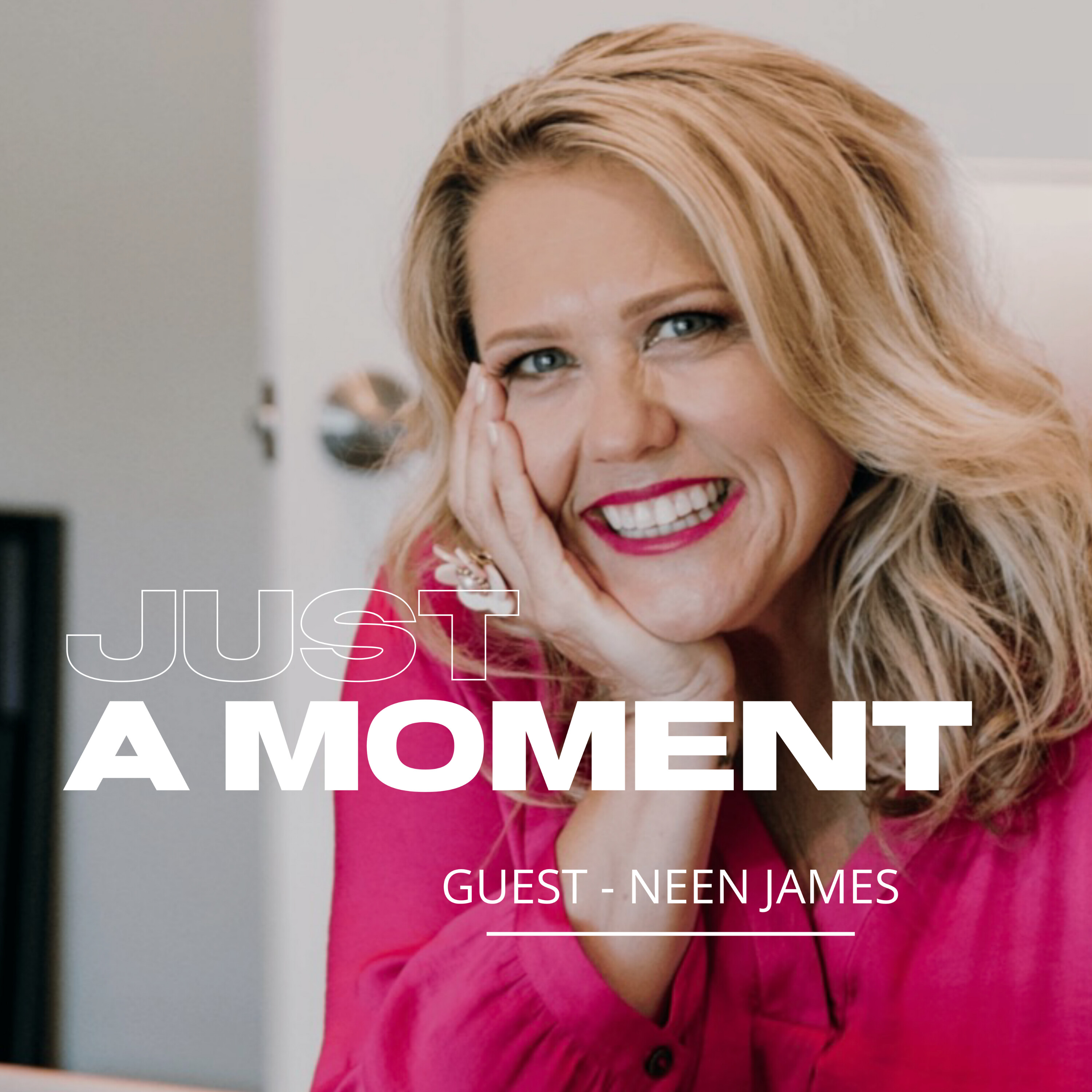
Loading summary
Transcript28 lines
- [00:01]
Brant Menzwar
Hi, I'm Brant Menzwar and welcome to my show. Just a moment. As a former world touring musician turned keynote speaker and author, I've experienced my share of life altering moments that have both broken me and propelled me forward. How you leverage those moments or push through them will define your destiny. Each week on my show, I'll provide tools on how to maximize those moments as well as interview some of the most successful entrepreneurs, entertainers and athletes on how the power of a single moment changed their life. Join me to learn how to change what's possible for your life. It'll take just a moment. Today's guest is Neen James, a speaker, author and luxury consultant who's got an eye for curating experiences. However, despite her high end resume, Neen's big wide world started off a whole lot smaller. This is the story of how a girl from a tiny town in New South Wales would conquer the world.
- [01:01]
Neen James
I'm Neen James and this is my moment. I'm from this really tiny town in Australia and when I was little there was like one traffic light. But I think what's interesting about that little town is it made the news in America because of the flooding and I remember the floods that we used to have there, which were devastating. The more recent flood definitely devastated that town. It's just a shell of itself now. I was raised by a single mom and there was me and my little sister. My mum would clean houses, she picked fruit, she sold fruit on the side of the road. In America we have a term of being on welfare and in Australia that's the dole. I don't even know what that's short for. We were welfare kids as well and so we lived in a caravan. A caravan in America gets called a trailer park. The fun thing about living in a caravan as a kid, you have instant community. My mum had feedback. Fifteen brothers and sisters. Auntie Carol, who is probably one of the biggest influences of my life, we would split our time between mum and Auntie Carol's place. My Auntie Carol is larger than life. She's big personality, best laugh in the whole wide world. Always cheeky, always naughty, always mischievous. And I've always admired that about her. Everyone loved her. She'd walk into a room and everyone would gravitate to her. So my childhood is a lot of memories in Auntie Carol's backyard, climbing the trees, walking around town. Auntie Carol had a massive influence on me and some of my best childhood memories were at my Auntie Carol's house.
- [02:33]
Brant Menzwar
Nene was always fascinated by human connection. And in a town as tiny as the one she grew up in, someone's business is everyone's business. From a young age, she was learning things big beyond her years in implementing them as soon as she could.
- [02:50]
Neen James
I used to love listening to adult conversations. So when I'd be sent off to bed, I would sneak out and listen to the adults talk and I would sit on the step and I would just think about the world they lived in. I was fascinated with people that were older than me. I always chose to have friends that were older than me. I would help out like the little old ladies next door just so they'd tell me stories. So I think I was always fascinated with the conversation that people had because I wanted to be like the grownups. I always wanted to have this perspective, to look at something. And Annie Carroll had all these big trees. I would climb the trees. I always wanted to be higher. And so it was very cool for me as a kid to be able to look at the world from a different angle. I think whether it was as an older person or whether it was literally through the perspective of a bridge or a tree.
- [03:41]
Brant Menzwar
This yearning for new perspectives would lead Nene to embrace academics as a form of escapism. While she didn't have top marks, she was an eager student and saw her studies as an extension of her world.
- [03:55]
Neen James
I loved school. When I was little, I wanted to be a teacher and so I thought that would be like the coolest job ever. And back then there was a lot more respect for that amazing profession than perhaps it is now. But I was a good student. I wasn't the smartest kid in school, but I definitely worked hard and I love to read. You would find me hiding in the library and reading. A big investment my mom would make in us. Even though we had no money, she would buy us books. So I read all of the Nancy Drew story, like the Sweet Dreams novels. It was such a big deal. We'd go to what we call a news agency in Australia and I'd get like the next edition. That was like a big spend. I thought you could lose yourself in a book. There was this whole other world that existed outside of this tiny town that I was from. And so books were my escape at school. What I found was I was like the welcome committee. We don't have formality around that when you're in Australia versus the American system. But if there was a new kid, I would be the self appointed person who would make them feel welcome. We had exchange students and I just thought that was the coolest thing in the world that we would have people from another country come to my tiny little schools, right?
- [05:03]
Brant Menzwar
And.
- [05:03]
Neen James
And so I would always get to know the exchange students when they came and make them feel welcome. So from an extracurricular activity, definitely the creative. I love art photography. I was in theater. I would do the dance group. But I tried to skip as much of science as I could. In Australia, we have this term wagging school, meaning like you skip school. And I would wag science as much as I could as a teenager. I'd do anything to get out of that subject. So math, science, not my brain. Ancient history, they were my subjects.
- [05:34]
Brant Menzwar
Neen's path to academic accreditation was far from conventional. Always a go getter, she favored practical experience over sacrificing her interest and values to pursue a degree that wasn't her passion. This choice would ultimately put her on a path towards the career she truly wanted.
- [05:53]
Neen James
My education, it wasn't traditional like people have here, where you go off to college and you party and you join some. Some sort of frat or like, some sort of like, sorority. The school system for after high school is different in Australia than it is in America. In America, people, like, invest all this time and attention and energy in finding the right university. There's so much status around what school you go to. There's this application process. You spend summers shopping around all these schools. We don't do that in Australia. And in our university system, we have public health, public education. People don't necessarily live on campus. They commute from their home. And so you tend to go to school close by. And I didn't get the score I needed to get into the course I wanted. And so I wanted to get into journalism and I wanted to do a communications course, but I was 20 points short. And so what you do in Australia is you submit for the courses you want to do and you have backups. And all my backups were teaching schools. I got into the teaching schools, but I didn't get into the communications school that I wanted to. So I decided to take a year off. And I had a friend of a friend who was some sort of big deal in the banking system. And I had met him at a wedding, and he said, if you ever want a job, let me know. And so this little young upstart like me was like, okay, you said, if I want a job, I do. So I started working in the bank straight out of school, and I wasn't even allowed to talk to a customer. I think my first job was counting coins manually in the bank, like literally bagging coins because the bank was too cheap to pay for them, like pre rolled or pre bagged. Then I learned a roll coin. Then I was allowed to be a bank teller. And so in that first year after high school, I did so many jobs within the bank and I was moving through pretty quickly and making money. Now when you're a kid, you're like, okay, I could go back to school of these courses I didn't really want to do well. I could just keep making money. So that's what I decided to do. So I didn't go to university after school. I went to a community college part time at night I did my associate diploma in business management. And then I stayed with the bank for quite a while. And then one of the leaders of the bank was offering to fund MBA programs for high performers. I was so fortunate because what I realized was people who got things done, got promoted. And so when you learn that young, I'm like, okay, then I'll just be the chick who gets things done. And so I was very focused on, I want that job next. I want that job next. I think that's what also helped my career move so fast in the bank. So the CEO asked, would I like to do my MBA now? I didn't have an undergrad. I was like, sure, if you're going to pay for it. And I don't have to do it with an undergrad. So that's how I did my mba.
- [08:39]
Brant Menzwar
Unlike many of our previous guests, Nene's moment didn't happen at the height of her career traction or at a point of crisis. Her radical change in perspective, or rather the moment that affirmed her desire to seek new perspectives, was something that happened in her childhood. A moment of generosity that would inspire everything.
- [09:01]
Neen James
I was maybe 10 or 11, I remember sitting on the floor and I was wearing this blue cable knit sweater. We'd call it a jumper in Australia. And the reason I remember that is because my mum had made it from some wool that someone had given her. So I was pretty proud of wearing this jumper. And I was sitting on the floor and my Auntie Carol handed me this book. It was an orange book and it was all about Greek mythology. Now remember, I'm a reader, I love books. But what was fascinating about this book was it had pictures of all the Greek gods and goddesses. So Zeus and Athena and Aphrodite and all of these people. And when she handed me the book, she said, I'm going to go to Greece now. I'm from a small town, one traffic light. Here's a woman who doesn't have the means to do that, by the way. And she just decided not only was she going to go to Greece, she was going to learn Greek. This is before the Internet. This is when you're borrowing books to understand how the world works. And I remember sitting there thinking, is that an option, honey? Carol always had the sense of adventure. And so I would sit and I would trace with tracing paper these Greek gods and goddesses. And then I would read about them and understand and thought, there's a whole world out there. There's a mythology which represents all these things that are happening in the world world. But then there's this other world that my aunt is going to go and see. And I remember being so inspired about the thought that you could see the world in a bigger place and this little girl from this tiny little town could do something like that. And that book definitely inspired my love of Greece and my love of adventure, but it showed me a role model that wasn't confined to circumstance. And I think that for me was a massive, massive inspiration. And she has to this day still been a big inspiration. That was my moment, was receiving that orange book on Greek mythology.
- [11:06]
Inspo Advertisement Voice
Feeling lost in the noise of social media, Inspo cuts through the clutter, connecting you directly with real insights from real experts and industry leaders. It's a new social network dedicated to knowledge sharing, industry insights and thought leadership. Get the latest from top minds in your field or build your own thought leadership portfolio on inspo, already trusted by thousands of professionals worldwide. Be part of the conversation and download Inspo Experts today on the App store or visit www.inspo.expert.
- [11:37]
Brant Menzwar
Neen James, my dear friend, I love you so much. Thank you so much for being on Just a moment.
- [11:43]
Neen James
Are you kidding? What a privilege it is for me. Thank you for what you're doing in the world. These podcasts are phenomenal. Each time I listen to a new one, I'm more inspired.
- [11:53]
Brant Menzwar
Listen, my cheeks hurt already just from smiling that I'm recording this. So you always have. I'm gonna say this either words of inspiration or a 4 foot 10 kick in the ass, depending on what you think I need in the moment. You have no problem giving me either and I'm fine. I love you for that. We've had many conversations over the years where you've given me both in the same conversation. Yes. So I love this. I love this moment of opening your eyes to what's possible. And when you grow up with your circumstances being what they were, oftentimes people just accept that, as that's the best it's going to be. That's the truth that you have to live. I'm curious, knowing the work you do now, honestly, knowing how much you consult in the travel industry, is this. Do you think this moment has ingrained itself so much in you that the idea of you going to different places and learning about different cultures and doing all those things that I know you love doing, was that the impetus, do you think that continues to drive you today?
- [13:00]
Neen James
You don't know when you're going through whatever your moment is, that it's going to have a ripple effect across the rest of your life. But I do believe that through the role modeling of Annie Carroll, who saw the world in a bigger way, it allowed me to do that too. I've always had that desire to be inclusive and more global and more focused on what's really out there. And I think that shows up in my work today, and that's an influence from her. In high school, I studied Egypt, Greece and Rome. Two years solid. Like, we. I had the best teacher and we did deep dives. I got to Egypt, I got to Rome, but I'd never been to Greece until last year. At the time of recording, I'm like in my 50s. So all of these years and to see it in person was mind blowing, Right? So I think, yes, it definitely informed what I do today. My love of travel, my desire to see the world and experience the world, but also to bring the world back into whatever world I'm in. If my husband and I, if we would travel, I would bring a piece of that world back into my home. And so you were in my home. When we lived on the east coast, there were artifacts everywhere of all of our travels. And so I think it gave me this love of art and culture and expression. And if you think of the language we speak, if you think of the theater that we attend, so much of this is really grounded and the foundations are from these ancient civilizations. But I think it's also about knowing that there is a world that is bigger, that is outside of you, and bringing that world in to your everyday. I'll also never forget something that I learned from Myani Carol, which is very related to this. She was very generous. And my mom didn't have money, but our fridge broke down. And when you live on welfare, a fridge breaking down or a car breaking down or not being able to make your rent, that's like a part of what happens. But you don't quite know how to solve for that. And I remember I used to eavesdrop on adult conversations. I watched my Auntie Carol open her checkbook and write $100 check to my mom. And I remember thinking, now, a hundred dollars then is a million dollars today. Like, in my world, a hundred dollars was, like, insane. And I remember thinking to myself, and I think about this, even today, I want to be able to do that. I never want to worry about money. I always want to be able to help someone out. I want to be able to create money in the world so that I can then gift that money back into the world. So many lessons from Annie Carroll. But I think role modeling, that generosity and how important generosity is to me in the way that I show up in the world. You don't know what's always happening to you at the time, but the ripple effect across your life and the choices you make sometimes go back to that one moment that you saw something.
- [15:45]
Brant Menzwar
I'm curious what your advice would be to a young person who is the victim of circumstance right now in their life. Like, they are looking at their life, thinking, this is as good as it's going to get. What do you say to. To that person to encourage them that maybe life's a little bit bigger and the opportunities are bigger than what you.
- [16:07]
Neen James
Realize at this point, it's really easy for someone like me on the other side of that to say that you can make some choices that will get you into a different place. What I would say is find someone in your immediate circle that does inspire you. It might be an external neighbor. It might be someone in a book that you haven't even met yet, but find something that is going to inspire you. Because if you can, find someone, preferably a human that you can talk to, ask them about their journey. Because when we start to peel back what has happened to people, we are so inspired learning. You're doing that on this podcast by sharing what's happening. So the first thing I would say to young people is, go find someone who inspires you, and you can have your pity party. I get it. But maybe you set a timer, let yourself have a pity party for 10 minutes, and then choose. Okay, let's. What do I need to do to get out of that? What I never wanted as a kid was to stay in a small town. What I didn't want was to never be able to afford things. I didn't want to be on welfare. I love my mom deeply, but I didn't want that life for myself. And sometimes knowing what you don't want is as good a driver as knowing what you do want. So if you don't want to be the victim of the circumstance that you're in, you have to say, this is what I don't like about that. How could I fix that? That one of the things that I think is really easy for people on the outside to say, oh, do this, do that, but you're the one who's in it, so start somewhere really easy. Another thing that I would also do is I'm very visual. So I would tear pictures out of magazines I would collect. Nowadays they call it vision boards, and it's very modern and a thing. But I remember when I was in my twenties, creating my version of all of these pictures of things I wanted to do, and then finding them on my 40th birthday and looking back and saying, oh, my gosh, like, I did that. I own that. I've been there. That's amazing. So sometimes it plants itself in your subconscious and then you find a way of making it happen. So find a visual image that inspires you and just always think, keep that at the front of your mind and then do what you gotta do. I made sandwiches in a bakery. I would sell things. I worked in retail. I would do whatever I could to collect money. I spend money really well as making money, but I just always wanted to make sure that I could control that. So do something that makes it feel like it's in your control is what I would say.
- [18:43]
Brant Menzwar
I love that. It's interesting. I think a lot of us think that, gosh, if you're born with a silver spoon in your mouth and you just have things handed to you, then life is easy and you can have these opportunities that are given to you. But the overwhelming thread through all of these podcasts has been a couple of things. One has been that most everyone who has achieved an extreme level of success have overcome something really significant in their life, like not a bump in the road, like something really significant. So you continue to prove that's true, not allowing your circumstances to determine your success. The second thing that we've noticed is the presence of a strong motherly figure. And it might not necessarily be your mother, it might be a grandmother, might be just another woman in your life that has that motherly presence, but that idea that not only were they providing for the family, they were providing proof of what you need to do to make it so. That make sense?
- [19:48]
Neen James
Yeah, it 100% does. I don't know if I've ever Told you this. When I was born, I didn't have a hip. And so I spent the first two years of my life in a body cast, like, from plaster from, like, my chest down to the bottom of my legs. And then they had this big bar between my legs. And I was suspended above a hospital bed because no one was allowed to touch me because they were trying to get my bone to grow back in my hip. We're talking a long time ago now. It's much more modern, and that's not the way that it works. But what's fascinating, I think about that is I sometimes ask my mom, tell me how old I was when this happened. I remember all these balloons around my hospital bed. And she was like, you were two. And I was like, that's crazy what our brain remembers. But I think, too, for me, like, being little, I don't want to be underestimated. I, like, want to prove to you that I can do it. And having role models like Anna, Carol, and like, my mom, to some extent, saying, okay, underestimate me, because that's going to be so fun for you. I want to be able to do this. And I'm always competing against that, that version. I never want to be stuck. And, like, I was stuck for so many years as a kid. And so I think when you think about that combination of seeing something that is inspiring or trying to go against something that has happened to you, you get to choose what you make that mean. So when I ran my first marathon, I was like, this is the same chick who, like, didn't have a hip. But the other thing that I've realized, I don't have my own kids, but I have been that version of so many people's lives where they come and, like, when their heart is broken, they come to my house to talk about it. So I've had this privilege of having young people in my life that I've had the opportunity to talk to who's not their parent. I think every kid needs someone who's not their parent. Some sort of motherly figure that can be really honest with.
- [21:38]
Brant Menzwar
Yeah, I couldn't agree more. Experienced it with our own kids and their aunts and uncles, who aren't actually aunts and uncles, but provided an outlet for some truth, for all the other things that come along when you don't want mom or dad to know what the hell you're doing or what you're thinking. So it really works well in those cases. I think it's great. So before we end, we always like to talk About a potential moment that we wish we could revisit. And it's funny, we talk a lot with people who are like, I don't have any regrets. And I understand that. It's not about regrets. That's not it. But the idea here, is there a moment for you, knowing what you know now, all the things you have learned through your life, that you look back at that moment, you go, gosh, you know what? If I would have just known this at that point, maybe I would have made a different decision. Is there a moment like that for you that exists?
- [22:29]
Neen James
Yeah. I was very fortunate in my corporate career to move through corporate very quickly. And then when I decided to leave corporate and then become a full time speaker, because who knew that was actually a real job? Once I discovered it was a real job, I had sought out a mentor who was like one of the best speakers in Australasia, very well known. And I had for literally six months told him that he was going to be my mentor. And for six months he said, no. He was like, you're not ready, I don't want to mentor you. Eventually I must have worn him down because he did agree and I presented him with an agreement that said, you're going to be my mentor. Here's what I'll do, here's what you'll do. And what was really amazing was he gave me the good, the bad and the ugly of the speaking business. I traveled with him, I saw books at the back of the room, I would absorb everything that he would ever teach me. There comes a point in a mentor and a mentee relationship where the mentee is ready to go out into the world and then mentor others. And for me, I think I was so clinging to, I still have so much more to do, I have so much more to learn that I think I needed to step out of that relationship sooner and take much more of a proactive role. Instead of just sitting back and thinking, there's so much I don't know. I'm not making that kind of money yet. I don't know if I'm worth that kind of fee. Who am I to be talking about this? Who's going to buy my book? Who's going to buy my speech? That self doubt that I had, even though my mentor was saying, you're ready, you can do this. And I look back on that and now I actually mentor people as part of my practice and so I see in myself sometimes their self doubt. I pretty much might be one of the most confident people I know. I literally Walk into a room and assume everyone wants to play with me. I always have. But I look back on that situation and think I should have really stopped that mentee mentor relationship so much sooner. And eventually I was helping consult and we built a business together. He became my business partner, and we created some really fun, amazing products in the world. But I think sometimes your self doubt for me gets in the way. And you have these people that you look up to and you're like, I'm so far from that in my journey. Who am I to be saying I can do this or achieve that? So I think for me, what I would have done differently is I would have trusted myself sooner. I would have believed in myself sooner. I wouldn't have listened to all the people who said I'd never make money speaking because everyone told me, like, with my voice, if you're listening to this, I know I sound like I'm five. Every single person except my mentor said, you need to get voice coaching. You need to learn to lower your voice. You have to slow down. No one will take you seriously. No one will pay you for that voice. But it was because of that same mentor. He was the only person in the world who said, no, that's you. That's authentic. Yeah, I think I just. I wish I'd really believed in myself earlier than I did in the speaking profession. Now. I don't care. Like, I love what I do. I get paid, like in a lovely way. I get to see the world. I work with people I love in places. I love doing what I love. So I feel very spoiled. But, yeah, that's a time where I think that I could have stepped out of it sooner.
- [25:44]
Brant Menzwar
Wise words from one of the wisest people I know. No, I know you've got big stuff happening right now. Your book is about to come out. Exceptional experiences. I've already been fortunate enough to grab a pre copy and have read it and love it and have already been implementing everything that I have learned, learning how to give that concierge experience to all of the clients that, that we work with. We have you to thank for that. If people want to continue to follow you, maybe pick up a copy of the book, what's the best way for them to do that?
- [26:16]
Neen James
Come and find me@neemjames.com and that's a great place to connect. You can follow my adventures every day on Instagram or reach out to me directly on LinkedIn. And if you do reach out on LinkedIn, tell them it's because Bryant sent you, because that will be instant connection for me.
- [26:31]
Brant Menzwar
Listen, you know I love you dearly and I can't thank you enough for spending some time with us here.
- [26:36]
Neen James
Absolute privilege. Thank you for what you do in the world.
- [26:41]
Brant Menzwar
Thank you for joining us on this episode of Just A Moment. Make sure to subscribe to our podcast and and tell a friend or two about it to help spread the word so everyone can find a moment that inspires them. Don't forget to leave us a review and check us out on the web@justamomentpodcast.com Just a Moment is produced by Natalie Von Rose and Brandt Menzoar. For more inspiring shows like this, visit surroundpodcasts.com.