← Just A Moment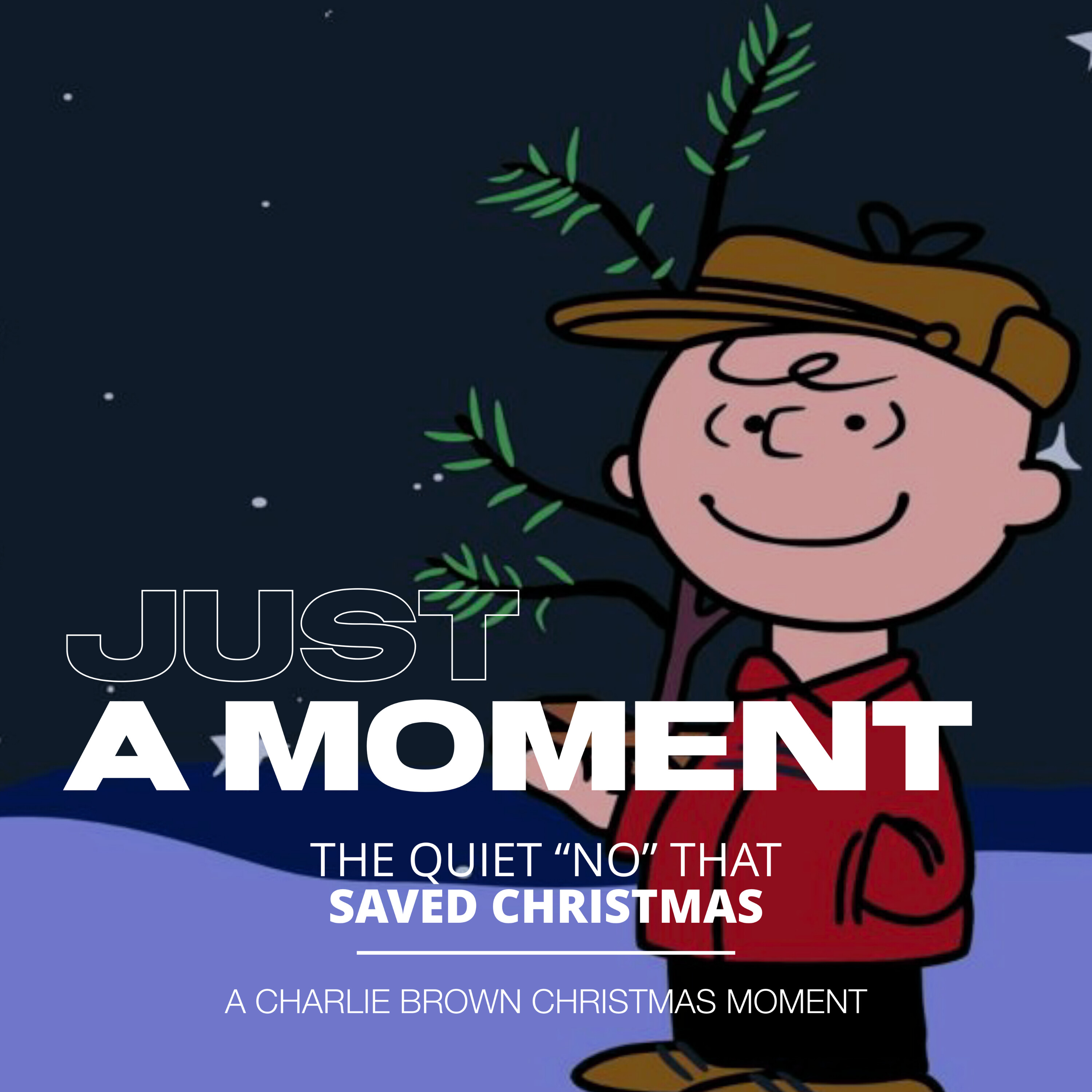
Loading summary
Transcript1 lines
- [00:01]
A
Hi, I'm Brant Menzwar and welcome to my show, Just a Moment. As a former world touring musician turned keynote speaker and author, I've experienced my share of life altering moments that have both broken me and propelled me forward. How you leverage those moments or push through them will define your destiny. Each week on my show, I'll provide tools on how to maximize those moments as well as interview some of the most successful entrepreneurs, entertainers and athletes on how the power of a single moment changed their life. Join me to learn how to change what's possible for your life. It'll take just a moment. Picture this. It's December 1965. Millions of televisions are about to turn on. And sitting in a network boardroom is a Christmas special so quiet, so awkward, so wrong by every television rule of the era that the executives airing it are already preparing for failure. They don't think it will just underperform. They think it could actually damage the network. They believe one man made a catastrophic mistake. And they're about to find out live whether protecting the truth with worth risking everything. This is the moment a Charlie Brown Christmas almost disappeared forever. CBS didn't want to risk. They wanted something safe, something cheerful, something loud enough to keep families from changing the channel. What they got instead was long pauses, kids who stumbled over their lines, a melancholy jazz score, a main character openly questioning the meaning of Christmas, and absolutely no laugh track to save them. Executives watched the final cut and froze. No one laughed. No one smiled. Someone finally said what everyone was thinking. This is depressing. Another executive followed with the unthinkable. Kids aren't gonna understand this. But the real problem hadn't even landed yet, because buried near the end of the special was a scene that terrified them. The man at the center of all this controversy was Charles Schulz. Charles wasn't chasing trends. He wasn't trying to provoke. He wasn't trying to make a statement. He was a quiet, deeply introspective cartoonist who had built Peanuts into one of the most widely read comic strips in the world by telling the truth about how people actually feel. Shultz believed children were far more emotionally intelligent than adults gave them credit for. He believed sadness wasn't something to fix, it was something to acknowledge. And he believed faith, doubt, loneliness, hope and joy could all exist in the same frame. Charlie Brown wasn't a character he invented for laughs. Charlie Brown was a reflection of Schultz himself. Anxious, earnest, searching, and perpetually trying to do the right thing in a world that didn't always make space for that. So When CBS asked him to make a Christmas special, Schultz didn't see it as entertainment. He saw it as a responsibility. Which is why what came next mattered so much. Linus walks onto the stage. Spotlight. Silence. And instead of a joke, instead of music, instead of something safe, he begins reading directly from the Gospel of Luke on national television in prime time. No one had done this before. Executives demanded it be removed. Advertisers were uneasy. Affiliates were nervous. Standards and practices were pacing. CBS was crystal clear. Cut this scene or this airs once and never again. This wasn't a creative note. This was an ultimatum. Charles Schulz was not a loud man. He wasn't theatrical. He didn't posture. He listened. And then he said no. Not dramatically, not defiantly, just no. He told them calmly, if we don't say it, then what are we even doing? That was the moment. Because at that point, Shultz understood something the network didn't. If he removed that scene, the entire story collapsed. Charlie Brown's sadness wouldn't resolve. The tree wouldn't matter. The silence would mean nothing. The special would become exactly what CBS wanted and exactly what no one needed. It's December 9th, 8:30pm no edits, no laugh track, no last minute fixes. When the broadcast began, executives reportedly sat in silence, convinced they were watching a slow motion failure. Too quiet, too slow, Too strange. And then the Linus scene arrived. The one they begged to cut. A child standing alone, reciting scripture. No music, no jokes. Nothing to hide behind. And then something happened that CBS did not expect. People didn't change the channel. They leaned in. Phones started ringing. Not with complaints, but with gratitude. Parents thanked the network. Viewers said it felt real. Different, Honest. By morning, the ratings were undeniable. A Charlie Brown Christmas was the second highest rated show on television that week. The thing CBS feared the most was silence. Turned out to be its greatest strength. The special didn't just succeed. It became a cultural reset. It told the world something radical. That Christmas could be reflective, that sadness wasn't failure. That meaning mattered more than spectacle. And because one man refused to blink, because he held the line when everyone else wanted comfort, a single moment of truth became a tradition passed down for generations. At some point, every leader faces this moment. The room wants safety. The spreadsheet wants certainty. The system wants predictability. And then the truth shows up. Inconvenient, quiet and risky. The question is, never is this popular. The question is, if I remove this, does the story still stand? Shultz knew the answer. The reason this story still works is because it gives people permission to feel what the holidays actually feel like. Not perfect, not loud, not always joyful, but real. And sometimes the bravest thing you can do is refuse to fill the silence. So here's your moment today. What part of your story are you being asked to protect? Even if it makes people uncomfortable because the thing you're afraid will lose the room might be the very thing that finally makes them listen? I'm Brant Menzwar and this is Just A Moment. Thanks for spending a moment with me. Thank you for joining us on this episode of Just a Moment. Make sure to subscribe to our podcast and tell a friend or two about it to help spread the word so everyone can find a moment that inspires them. Don't forget to leave us a review and check us out on the web@justamomentpodcast.com Just a Moment is produced by Natalie Von Rose and Brandt Menzoir. For more inspiring shows like this, visit surroundpodcasts. Com.