← Just A Moment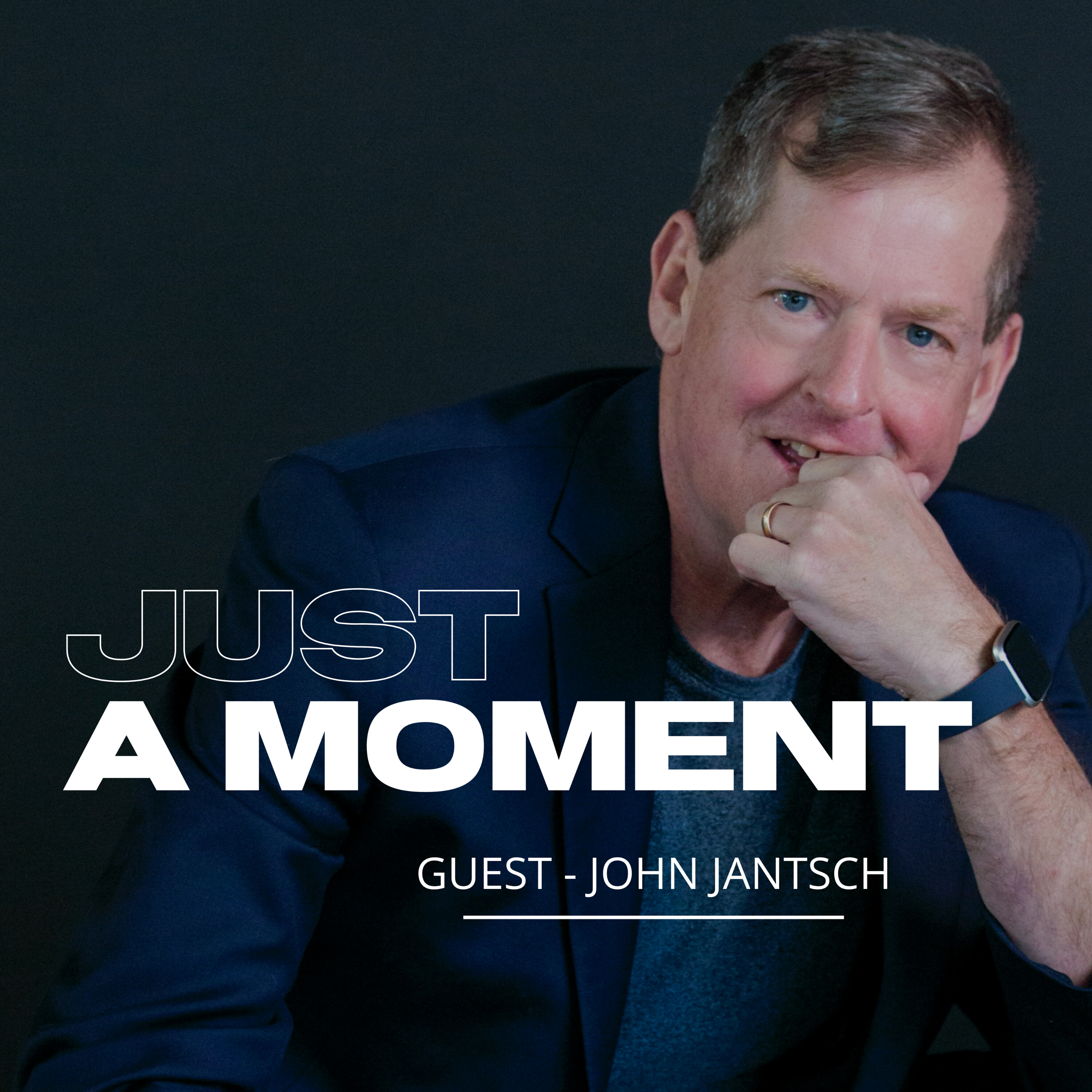
Loading summary
Transcript31 lines
- [00:01]
A
Hi, I'm Brant Menzwar and welcome to my show. Just a moment. As a former world touring musician turned keynote speaker and author, I've experienced my share of life altering moments that have both broken me and propelled me forward. How you leverage those moments or push through them will define your destiny. Each week on my show, I'll provide tools on how to maximize those moments, as well as interview some of the most successful entrepreneurs, entertainers and athletes on how the power of a single moment changed their life. Join me to learn how to change what's possible for your life. It'll take just a moment. Today's guest is John Janch, best selling author and founder of Duct Tape Marketing. Though he spends his days inspiring CEOs and consulting companies to build formidable marketing engines, John's beginnings were far from the realm of corporate celebrity he inhabits now. This is his moment.
- [00:58]
B
I'm John Jantz and this is my moment. I grew up in a little farm community south of Kansas City. It was a township. We had a rural route for our mailbox. We had a party line for our telephone. So this is not only where, this is like how long ago that I grew up. The closest town to us was a town called Bucyrus. My father was a manufacturer's rep, so essentially he had the companies he represented. It was back in the days when he would go from town to town, go around the square and hit the variety store and the hardware store and sell them stuff and. And my mom was pretty much full time homemaker. You'd have to have somebody on staff full time for that many kids. There were only 14 years between the two of us. We were close. It was like having kind of three small groups. If you imagine the typical three or four kid family or two or three kid family, it was kind of like three of those. I think in a lot of ways there's six older than me, three younger, and there's eight boys and two girls in the lot over the years, Memorial Day was a big holiday for us as we grew up. We'd invite our friends, all of us, and there'd be 2, 300 people at this event we did every year. And one of the highlights of it was that we had our own softball team and we would take on all comers. Of course, it was our field. We knew where all the holes were and that kind of thing. So yeah, we did have our own team. My grandfather, I think, really was regimented more than strict, if that makes sense. Every Saturday, if something was broken, you fixed it. If it wasn't broken, you painted it. And that was how my father certainly was when something, you know, wouldn't go right. His big saying was, fix the problem, not the blame. I don't care what happened. What's the solution?
- [02:35]
A
A rural upbringing with a strong work ethic and a large family made John's childhood something out of a Norman Rockwell painting. However, in the picture perfect idyllic outskirts of Kansas City, John had to fight to figure out who he would become at the younger end. In a family of 10 children, John's curiosity and can do attitude set him apart.
- [02:58]
B
That's a really common business question. What's your superpower? And I've always just immediately said curiosity. That was my superpower. I think. You know how families have these stories that they tell for 50 years. Half of them are true, half of them are completely made up. But I remember my mom telling a story that we'd go to the grocery store and I would just wander off and be talking to people and getting into things. And the running joke was my mom would say to my, my dad, you watch the other night and I'll watch John. I was one of those people that took stuff apart because I wanted to see what was inside of it. And if something's out of place, I gotta know why. It could certainly be a superpower. In business, half of what we do is figure out how to do things. By the time the seventh kid comes along, I'm not sure if they know where I went to college. My dad, he said there was always a guy in the unit that you needed something done and you didn't really care how it got done or didn't need to hear the details. You just wanted it done. There was a guy and he used to always say, I was that guy in the unit. And I think it ingrained in my brand. I figure stuff out and I can hustle. And when it comes to business, the only thing I knew when I started my business was I could get work. And I think that that part price stuck with me more than you should. The best schools and be a doctor. I think probably anybody who's grown up in a family with that many siblings struggles to be a pleaser, struggles to get attention. A lot of times I feel like I started a business not because I had this amazing idea and I just knew it was going to be successful. I wasn't sure I could do anything else.
- [04:26]
A
Out of adolescence, John followed a familiar path. College, marriage, kids, and a growing business that brought a comforting sense of stability. Until the day that stability was Unexpectedly shattered.
- [04:38]
B
I got married a year out of college, had a child two years out of college, and then three more after that. So that was a lot of what we did in the twenties. Out of college. I worked for an ad agency for about five years and then said, any dummy can run a business and did my own thing. I had owned my business at that point for about six years. So I was starting to figure things out. I was starting to generate significant revenue, had employees, and again, I was a good hustler and was able to find work. I can't say there was any, like, vision for what the business was going to be. It was, let's see what next month brings. Outwardly and on paper as well, things look like they were going quite well.
- [05:17]
A
Looks, however, can be deceiving. John's moment arrived just when everything seemed settled and routine had taken root. Then came a reality that would ultimately reshape the way he saw his entire business.
- [05:31]
B
1994. And as I said, I'd had my business about six years at that point and had some big clients, some small clients. It was a marketing agency, so it was doing marketing the way I'd seen it done to that point. Back when you had offices and people would actually drop in unannounced and call on you. So somebody came to the office, said, I need to see John. And so my colleague at the time came back and said, hey, there's somebody here to see. And I was like, do they have an appointment? Who is it? I don't want to talk to anybody. And she said, I really think you need to talk to him. So she hands me the card. Chris Davis, special agent, Federal bureau of investigations. Kind of wished it was a copy or salesperson at that point. And so he was there to serve me with a summons to appear before a grand jury, which, not fun. I had a client that we had been working with that we weren't doing anything illegal, but I was pretty sure they were. They paid us and we did the work, and that part of it was fine. So again, I go and appear before the grand jury. It's like white plastic chairs, fluorescent lights. It's very unglamorous. The real kind of lesson I took from it was, first off, I want to ever do that again. Secondly, it was a moment to say, how did I get here? And I think it was probably the first time or the moment really where I started taking my business seriously and really kind of saying, look, I have to decide who I'm going to work with. I get to decide who I'm going to work with and it completely changed everything I was doing. I completely changed the client base, completely changed my approach. It was was really the birth of duct tape marketing and what I've been doing the last 30 years. But you know that, that idea that if you don't take your business seriously, if you don't think about where you really want to go, regardless of you have these personal values, it's really easy to get pushed off of that path. If the whole goal is this idea of just hustling, let's see if we can get work. And so it was a real.
- [07:28]
Wake up moments. Like a lot of people, I think that it didn't kill me and came out of it better, but it was very much a defining moment.
- [07:40]
Feeling lost in the noise of social media, Inspo cuts through the clutter, connecting you directly with real insights from real experts and industry leaders. It's a new social network dedicated to knowledge sharing, industry insights and thought leadership. Get the latest from top minds in your field or build your own thought leadership portfolio on inspo, already trusted by thousands of professionals worldwide. Be part of the conversation and download Inspo Experts today on the App store or visit www.inspo.expert.
- [08:12]
A
John, thank you so much for being with us on just a moment. Welcome. We've known each other for years. Love your organization, what you do. You've written so many books that have been so valuable. I want to talk a little bit. I love hearing you talk about hustling. In my head, it's that pure salesmanship. It's the Glengarry Glen Ross. But hustle culture has gotten a little bit of a bad rap the last decade or so. I'm curious to know what your thoughts are on downplaying of hustle culture. The last few years when I talk.
- [08:46]
B
About hustle, it was get up every day, go out and see if you can figure something out. If somebody asks you to do something, figure out how to do it. Never say no was really it. I think what it's turned into is this. And we can bash social media and society and all the things, but I think it's turned into this look at me kind of thing as opposed to, hey, I'm going to make something of myself. I'm going to get out there, work. Nobody's going to hand it to me is how I viewed Hustle. And I think it's got bastardized into this idea of I can tell people I'm busier than they are and I think that's the real difference. And I think that's the thing that, you know, when people started using it as a badge as opposed to earning their stripes, I think that's when it probably started turning people off.
- [09:34]
A
Yeah, yeah, I agree. And I think it's part of it is also hustle in a negative way if you're trying to hustle somebody out of their money. Right? Yeah, yeah, that is.
- [09:43]
B
It's a shame because it used to be that that guy really hustles. Yeah, I used to be a compliment. Right.
- [09:49]
A
I can remember I had a coach playing baseball when we took the field. If you didn't sprint from that dugout to your position, you didn't play the next game. It was that mentality of, you need to hustle, you need to get out there. You might be the worst player on this team, but you don't have to be the best player to hustle. And that was the whole bit. And So I agree 100% on that. I love this moment for you of this sort of the shock and awe of having the FBI come for a visit. Obviously it puts you in a position to ask some questions about how you conduct your business, making sure something like that never happens. But I'm curious, what changed from the type of clients, like, from that point of view, how did it change what you were looking for in a company you wanted to do business with?
- [10:37]
B
I can't say that I was immediately pure about this or even am today to a large degree, but I put a lot of stock in. Do I share beliefs with this person? Do I value what they do? Do I get along with them? At the end of the day, especially in the work that we do, we spend a lot of time with clients. And so that. I'm not saying I have to like every single person that, that. That we're going to do business with, but there definitely are some red flags that will have me say no. And, you know, to some degree, people you think, oh, this person calls you up and they want you to come out and then propose to do some work. Like, how can you really get to know them? People leave clues everywhere. And especially now. It used to be harder. Now, I can probably tell you what you had for lunch today, Brandt, if I spent much time. Right. So people leave clues about who they are, about what they value, how they treat their people, how they participate in the community, in their industry. And so some of those kind of public cues are something that we'll lean on pretty heavily.
- [11:37]
A
Coming through this now, having this business for decades and the success that you've had, how important is the plan for you now, because back then I get it and you're out there. Anyone? That's it. The answer is yes. And then we'll figure out how to do it. How important is the plan as you've gotten older?
- [11:55]
B
I'd like to say a lot more important because that would be the mature answer. But it's just, I am who I am. What I have done is I now have an amazing team that is doing that part and keeps me out of being the wrecking ball. And I think that's. That's the lesson that I don't think everybody needs to become something they're not, but they definitely need to recognize where they have weaknesses and blind spots. And there's lots of ways to fix that and still bring the magic that you bring. As long as somebody's got the brakes.
- [12:27]
A
Yeah. I think that one of the most difficult lessons for an entrepreneur to learn is sometimes the people who get you where you aren't the people to take you where you want to go. And that requires a lot of self awareness. Very much like you. I'm a creative. I like starting things. I don't want to be the person responsible for the nuts and bolts to take it over the finish line, but, God, I love that creative process of something new. When you were first doing this, before you had those people in place, how did you deal with the getting people over the finish line when you knew that you were really more about. I'm really good at convincing somebody to do business. And yes, now the business is here. How long was it before you had people in place to really take that on?
- [13:16]
B
I've been doing this over 30 years. I've definitely had a rock solid team for 10 years. First 10 years, it was a lot of me hiring people that were more doers that could do things. So it was a longer process than I'd like to admit, quite frankly. I like doing the work that we do, and I'm good at it. And so that's probably one of the hardest things for a founder to extract themselves from is the work that they like to do, even though it no longer really serves the business. And so I probably went at least 10 years too long doing.
- [13:50]
A
Yeah. Wow. Yeah. Especially when you're the founder. Like, when it's your blood, it's your sweat and tears that have built this. What was the real lesson for you? And I'm sure it wasn't like a, hey, I've decided next Wednesday I'm going to let go of this. It's been a very Long process. What's that big advice for the person struggling to let that go?
- [14:10]
B
One of the things that amplified it in the type of business that I'm in is that I wrote books that sold well and so that made me a mini celebrity in some people's eyes. And I think that the harder part there was people gave you the impression they wanted you and I think that made it even harder. So really the lesson was, first off, I couldn't do it anymore, so how do I solve this? And the lesson was, when you started seeing people not only do it, but quite frankly, certainly do it as well, if not better than you, then it was like, I need to bring those people in right away. People realize, no, they don't want me, they don't mean me. But again, I think, I don't know if it was so much ego probably that played a role, but some of it was just that I thought that's what they needed.
- [14:55]
A
I can see it even in my music, at least. When we first started our first record deal, we weren't a Christian band. They wanted to put us in that market. We always joked that we didn't have the jpms, which is the Jesus per minutes, to make any Christian radio whatsoever. But in my sort of observations of being able to play some of the biggest, most influential churches in the world, from Rick Warren to Joel Osteen to Hillsong out in Australia, the challenge with personality driven churches is that it's the reason people show up, because they want that personality. But it also is an incredibly dangerous position to be in when it's not supposed to be about that. That's not what you're actually providing. It's just one of the vehicles that are providing the message in business. I find it the same way right where you, you said it so perfectly, is that when you become the celebrity, people expect you to be the one that they're going to deal with, but you're not necessarily the one producing all of the results for your clients. How do you balance that with a client who has come maybe specifically because they're a huge fan of your books and now they expect you to be the one who kowtows to them.
- [16:20]
B
Yeah, So I struggled with that for a long time. And first off, you've got to get confident people that you can show them, hey, you're in good hands. Right? But where we finally cracked a nut is I think where the mistake a lot of people make is they call me, I want to talk to John, I want to tell him about my business. And so I go meet with them and we'd be halfway down the journey of them saying they wanted to be a client and they'd never met anybody but me. And so where we really cracked that nut is like, our people are there from the get go in the sales call. They're conducting the questioning. I'm there. But they're realizing, oh, there's a couple people involved here. And ultimately what it did is instead of saying, you're getting the B team, it's not the team.
- [16:58]
A
Yeah.
- [16:58]
B
So bringing that in from the get go really helped us crack that nut because they saw, oh, I'm getting more than John as opposed to I'm getting handed off by John.
- [17:08]
A
Yeah, yeah. So in this last book that I wrote when I did a bunch of research into generating momentum and how is momentum actually generated? And can you generate momentum within a single moment as opposed to following this long, drawn out plan? And the very first thing that stood out in the research was belonging. And how if you can create a sense of belonging in its simplest form, it's when you're having a meeting. I asked two questions. Is everybody here who needs to belong in this conversation? Number one. But number two, is there somebody here who doesn't belong that is going to slow the process down or there's no reason for them to be at this juncture quite yet for them to be a part of the conversation. But by doing so, you're not only helping the client, you're also including your team and making them feel like they're valued and what they bring to the table is valuable from day one. Not just in the little tiny niche that they function in a hundred percent. Yeah. Yeah. Listen, I can't thank you enough, man. Thank you so much for joining us. Is there for people who want to follow, Continue your journey, know what's going to happen on your next book. Or a little bit about duct tape marketing. What's the best way for them to follow?
- [18:20]
B
So it's everything we've been doing for the last couple decades is a duct T A P E M A car marketing. They don't have to spell marketing. Don't they? Duct tape marketing.com so it's-U C T T A P E marketing dot com.
- [18:34]
A
Perfect. Brother, I can't thank you enough. We really appreciate you spending the time, sharing your moment with us.
- [18:39]
B
My pleasure.
- [18:40]
A
Brand thank you for joining us on this episode of Just a Moment. Make sure to subscribe to our podcast and tell a friend or two about it to help spread the word so everyone can find A Moment that inspires them. Don't forget to leave us a review and check us out on the web at justamomentpodcast. Com. Just a Moment is produced by Natalie Von Rose and Brandt Menswear. For more inspiring shows like this, visit surroundpodcasts. Com.