← Keep it Positive, Sweetie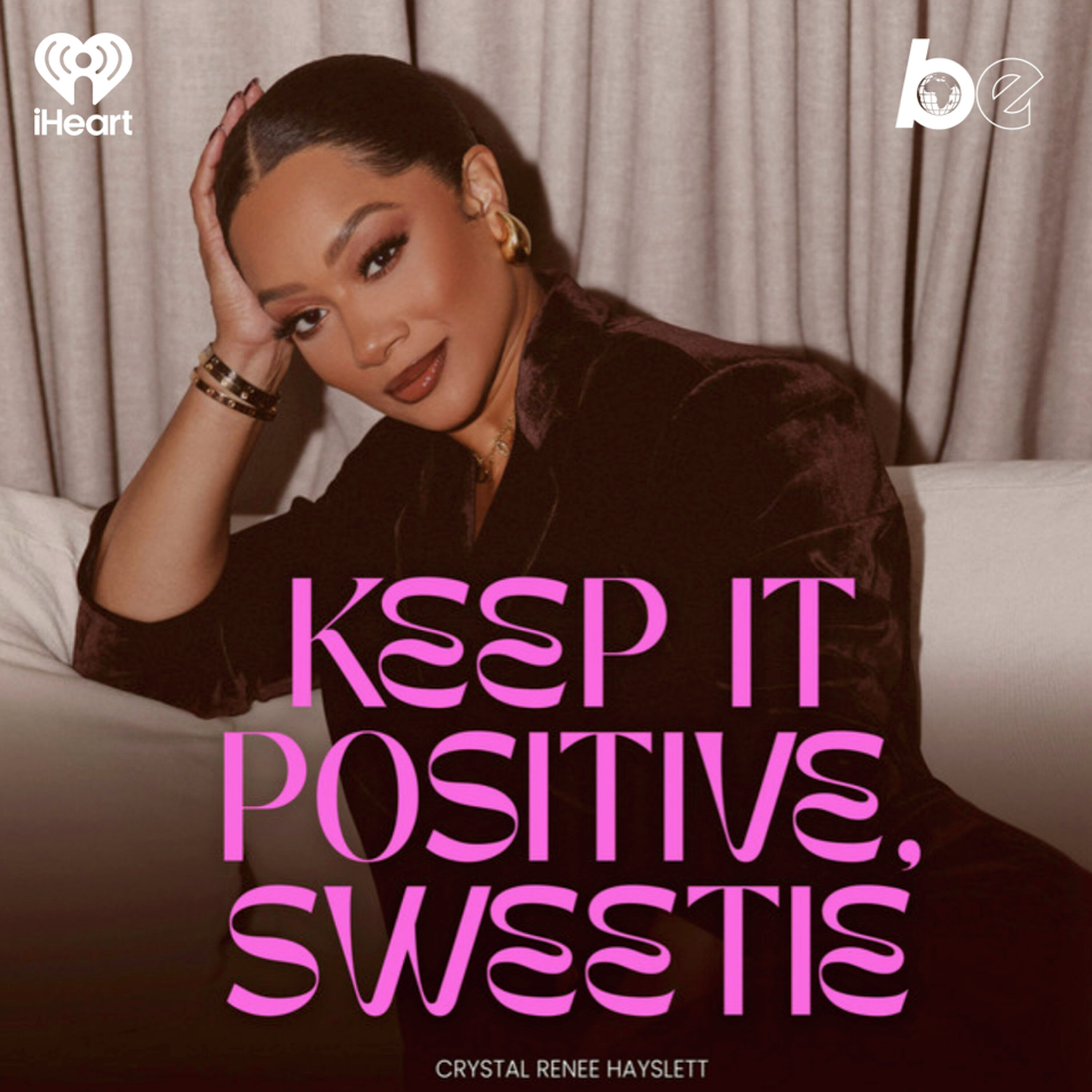
Loading summary
Transcript289 lines
- [00:01]
A
Calling all my sweeties to the forefront. I'm your host, Chris Renee Hazel, and this is the Keep It Positive Sweetie Show. Hey, sweeties. You already know what time it is. It's your weekly dose of joy, real talk, and a little soul work on the side. I have been so excited about every single guest that we've had this season. We've had nothing but gems, drops every single episode, and today will be no different. He is a writer, director, producer of work that has spanned over different generations. We all love his characters, we root for them, we've cried with them, and we've grown with them. You may know him from films like Best Man, Girls Trip, Night School Kids, Family, Please give a very warm welcome to Malcolm D. Lee. Malcolm, how are you feeling?
- [00:52]
B
I'm well.
- [00:53]
A
Good. You? Fresh off a flight?
- [00:55]
B
Fresh off the flight. Very glad to be here.
- [00:57]
A
Yes. So this is the second stop on your book tour. Yeah, the first one was amazing. So I guess I got some big shoes to fill for tonight.
- [01:04]
B
Oh, you'll be fine. It's gonna be good. No pressure. Just, you know, let's just. Let's just have a conversation.
- [01:10]
A
I love it. So let's. Everyone knows you from your best man film and the television series Girls Trip, which was one of my favorite. Oh, my gosh. And then I heard they may be doing another one. As soon as I heard, I was like, I need that.
- [01:24]
B
We're working on it.
- [01:25]
A
Working on it. Yes. And Space Jam, the Legacy people know you from that, but I want to know who Malcolm is. Where are you from? Tell us your journey to get to the best man that has a movie that we've all grown up to and watched for years.
- [01:38]
B
Yeah. I was born in Queens, New York. I was raised in Brooklyn. I grew up with both my parents and my brother and predominantly white private school since the 5th grade, 12th grade I went to and. And I was the only black male in my class from 5th to 12th grade. Ended up going, yeah, yeah, that was. It was interesting. Existence. And then went to. To Georgetown University undergrad, uh, went to NYU Film School and always had a love for the fine and performing arts, you know, from a very early age. And what those, you know, prep schools did for me was exposed me to film and television very early animation, video making. And I always like to act and write and draw, you know, create little scenarios with, you know, action figures and things like that. So, yeah, that's. That's, you know, grew up. I grew up like that and participating in many different arts endeavors. And I think it was Certainly encouraged by my family. I think they kind of said, let me explore. My mom would put me in art classes and things like that. And she was a medical records administrator. She transitioned to be a college professor later on. My father was a school teacher and musician and. Yeah. And so we grew up in a limestone in Crown Heights, Brooklyn.
- [03:21]
A
Very nice. I love that. So. Wow. It's similar to me, my childhood, I grew up predominantly white community. Was one of the few black kids from kindergarten all the way to the 12th grade and then moved to D.C. you went to Georgetown. That's when I was like, whoa, a whole new world.
- [03:39]
B
Yeah, yeah, yeah, absolutely. Yeah. No, I mean, even going to Georgetown, like that was more black people than I've been around in my, in my life. And you know, it was how it was right across the, you know, right across town. So yeah, if I wanted to, you know, see more, I could, I could, I could, you know, experience. And it was all, at the time it was still known as Chocolate City.
- [03:55]
A
Yeah, exactly.
- [03:55]
B
You know what I mean? So, yeah, I would say primarily good, good, happy childhood, you know, pretty well adjusted and you know, kind of felt like I knew what I, what I wanted to do when I was an undergrad. I mean, I got to work with my cousin Spike very early on.
- [04:12]
A
Spike Lee.
- [04:13]
B
Spike Lee.
- [04:13]
A
That's your cousin?
- [04:14]
B
That's my cousin, yeah. Wow. You didn't know that?
- [04:16]
A
No, he's in the bloodline.
- [04:17]
B
All right now, you know. Yeah. So I got to work with him very early on. He was in film school in the early 80s and living in my parents basement.
- [04:28]
A
Wow.
- [04:29]
B
And so I got to see very early on the emergence of the school, you know, great American and now world renowned filmmaker who I didn't know at the time was going to be that.
- [04:37]
A
Right.
- [04:38]
B
And, but he demonstrated that it was possible to have a career in this industry and you know, I got to work with him really from She's Got to have it on through Malcolm X and Clockers and Girl six. And so that was, you know, great education and a great encouragement from him to, you know, be creative and write black film and you know, and, and really trying to demonstrating how powerful the moving image was, particularly when it came to, to black people. So it's not something you, we, that should be taken lightly because that, you know, movies, television shape attitudes and culture and, and can affect people's views of, you know, humanity. So I've always taken it very seriously and the legacy of my family has come from, has very much been that, you know, my father's Side of the family. He had six brothers and sisters, and they all went to HBCUs. They all played instruments. The instruments skipped. My generation, I don't play anything but the radio. Um, and so, you know, that was a legacy that, that, that. That was. That I came from. The education was important, and because they had seen one filmmaker come out of the basement, they were like, well, you know, why don't you pursue that?
- [06:07]
A
Yeah.
- [06:07]
B
And, you know, and I was encouraged to do so.
- [06:10]
A
Okay, I love that. That is fascinating. Wow. So Spike Lee is in your basement. I wanted to ask you, growing up around predominantly white people in a predominantly white community, where. Where did you find the inspiration to write the way you write for our culture and our community? Because it is. It hits home every single time I tell you.
- [06:28]
B
Well, you know, I was living. My neighborhood that I lived in was black, you know, and I, you know, I'd play ball, you know, down at the local playground, you know, and there's plenty of, you know, I had plenty of black experience. And it was like. That was the. That was like the duality that I was living, you know, like, you know, being, you know, black, you know, trying to be black enough for my neighborhood and trying to be, you know, at least a model minority for the white folks, you know, and so that was the kind of the. The, you know, this, you know, you talk about code switching. That was doing that very, very early on.
- [07:01]
A
Yeah.
- [07:02]
B
But, you know, what I. What afforded me and what it allowed me to think was like, you know, I saw, you know, a lot of different sides of the world, you know, Jewish kids, Christian kids, WASPy kids, whatever, and, you know, you know, and also wealthy kids. And so haven't experienced that not only in 5th through 12th grade, but also in college gave me a wealth of experience. And then also going to college, you see different kinds of black people, too. Right. Like, so. Like brothers from Texas and Atlanta and from California and, you know, the D.C. area. There's lots of different dialects and lots of different, you know, mores and the way people speak. So, you know, I observed all of that and became friends with lots of different kinds of people and different kinds of black people, which, you know, and my experiences at Georgetown definitely influenced and was inspired by my relationships that I made at Georgetown. And so what I was finding, particularly in movies about black people, or not even about black, they had black people in it. You know, it was very, kind of very, very narrow depictions. Yes, right. You know, so there was the, you know, there's the hood brother, there's the the quirky friend, or there's always the sassy girlfriend. And it's like. And then, particularly when it came to educated brothers, they just, like, forgot they were black. They had no cultural specificity of blackness. So they would, like, check their ethnicity of the door. And that somehow that meant because you're educated, you're speaking the king's English. You are, you know, one way. You have a bat up your behind, and you're just like. You know, you just. You just aspire to be white.
- [08:51]
A
Right.
- [08:52]
B
Which is, like, not my experience and not the experience of the people that I went to school with. So I was like, this is not. This is not real or not authentic to me. And so I drew on my experiences to create characters that I thought were more authentically, you know, presented. And, you know, movies that. That preceded the best man, like Love Jones and Soul Food, even Waiting to Exhale, at least for the women, you know, were truer depictions of the black people that I interacted with.
- [09:30]
A
Yeah, I love that. Take us to when the idea of best man came. Where were you?
- [09:39]
B
That's an interesting question. Now, I had done. After film school. I'm sorry, before film school, in between film school and undergrad, I went to do a screenwriting program at Disney. I got a fellowship. I wrote two scripts, my first two screenplays there when I went to film school, did a couple of shorts. I wrote three more screenplays. That fifth one I was determined to make. Right. It was called Feast and Famine. It was a, you know, romantic comedy very much in the vein of, like, an Annie hall or When Harry Met Sally, a classic New York love story. And, you know, I wanted to make the movie. I was trying to raise money for it, right? And so when I couldn't do that independently, it was really difficult. And I was just like, you know what? I'm gonna write something so commercial that I'm gonna sell it, and I'm gonna use the money that I sell that with to make Feast and Famine.
- [10:40]
A
Yeah.
- [10:41]
B
And that script was the Best Man.
- [10:43]
A
Wow.
- [10:43]
B
And so I was in the midst of writing it, and I was just like, oh, I can direct this. And. But. And I will say, I knew how it was going to be. Commercial was. I knew that there was was, you know, a dearth of movies about black or a wedding. Right. Like, the wedding moves are very popular at the time. And so I was like, okay, I gotta do a movie, a wedding movie with black people in it. And because there hadn't been one to date at that time, and I love ensemble movies. And I wanted to have a very clear three act structure. And there was built in set pieces.
- [11:23]
A
Yeah.
- [11:23]
B
Your bachelor party, you're the fellas hanging out one night. The, the, the rehearsal dinner, the you know what all. And the wedding itself.
- [11:32]
A
Yeah.
- [11:32]
B
And then I knew that was going to have a magic prop in there that was, which was the book that keeps getting passed around.
- [11:39]
A
Yeah.
- [11:39]
B
So I, I, I, I, I, I made sure that I had all of the, the ELE commercial movie before I wrote it.
- [11:50]
A
Right.
- [11:50]
B
And so when I wrote it I was like, okay, this feels right.
- [11:53]
A
Awesome. Now how long did it take from writing the Best man to it actually getting greenlit?
- [12:00]
B
I remember finishing the script. It was, you know, I was up early one morning and I was. And I, I just finished it and I was in my parents basement and I walked upstairs, I said if this ain't it, I don't know what they want.
- [12:12]
A
Yeah.
- [12:13]
B
And I was gonna be like, either become a teacher or go to law school. And because you know what, what to make, they weren't trying to make. So I, I would say that was, I knew I would, what I wanted to do was time it, I'm trying to remember now, I wanted to time the finishing the script by the time the movie Soul Food came out. Got it now also being strategic about how I was going to approach it. And, and I thought if Soul Food would going to be successful is I'd read about, you know, the, the, the movie in a trade magazine and I remember thinking, yeah, like it's. Even though what I'm writing is not Soul Food, they'll be looking for the next Soul Food type of thing.
- [13:02]
A
Right.
- [13:02]
B
That where black people are just do we doing more than just, you know, being in the hood and running from danger? You know what I mean? So I was like, okay, if this movie is successful with Nia Long and Vivica Fox and Vanessa Williams and Babyface is going to be doing a soundtrack, this could do well.
- [13:19]
A
Yeah.
- [13:19]
B
And if that does well, this might, that would bode well for my script. So I think I was done with it by the time Soul Food premiered at Urban World in New York. And I think that was fall or late summer of 98. No, 97. Sorry. And then we went around to a couple different studios. Spike had read it, he was like, this is the one. And so we met with Columbia. We had a deal there at the time. There's a funny story behind that, but I'll get to that later.
- [13:52]
A
Okay.
- [13:53]
B
Then I would say that was late mid fall. And then by the Time the Academy Awards came around. We landed at Universal.
- [14:03]
A
Oh, wow. Okay.
- [14:04]
B
In March of 98. And they said, we like this. We want to try to develop it and make it.
- [14:14]
A
Wow. How did that feel in that moment when they said, finally, someone's like, we.
- [14:17]
B
Like, well, it was funny because it was. It's not that it doesn't happen like that, because what happens is because in. In fact, the first few studies we went to, they were like, we like it, but it's not for us. Okay, Right.
- [14:30]
A
Yeah.
- [14:31]
B
We need to do some development. And Spike is. Being who he is, is like, all right, later for y'. All. We're going someplace else, Right? So I'm like, maybe we should listen.
- [14:41]
A
Right?
- [14:42]
B
But he was like, nope, we're gonna find somebody. This. This movie's gonna get made. So. Okay, fine. So we go to Universal, and he says, okay, look, we're gonna tell them they gotta pay you for a rewrite. If they wanna do any notes, they'll pay you for a rewrite, and if they don't like it, we're taking it away. I said, great, so we're gonna listen to their notes.
- [14:59]
A
Yeah.
- [14:59]
B
So that's what happened. So, you know, there was. There were notes, and they said, here's a little money. And at first I was excited, but when you get, like, the money that they offer, it's great. But, like, you see where Uncle Sam really comes in and just. I was like, that's what I'm. That's. That's what I got.
- [15:19]
A
Right.
- [15:20]
B
Okay. But fine. I was living in my parents basement. It was all fine, and did the rewrite, and in about two months. And then I was greenlit.
- [15:29]
A
Wow.
- [15:30]
B
So that was exciting. The night that I found out that we were greenlit at a budget, I think we were asking for seven or eight, and they said, you can have it for nine.
- [15:41]
A
Oh, wow.
- [15:41]
B
Yeah. Because they looked at it and said, you're gonna need nine. And then we actually needed more, but we were like, great. So that was very exciting. I remember where I was. I was in. I was in New York. My girlfriend, who's my. Who was my wife at the time now, and. And another couple, and we just came from a restaurant, and I got the. Did I have a cell phone then or was it a beeper? I don't. I'm. I'm trying to remember if I was on a payphone or if I was on a cell phone. I think it was a cell phone, though. Yeah. And I got a call from my executive at the studio, says, yep, you're Greenlit. Let's go with Best man. Though we did, we did become number one at the box office.
- [16:27]
A
How much did that one gross after getting for 9 million?
- [16:30]
B
Then you first weekend, it made its budget back okay, perfect. And then it grossed about 34 or 35 million. Yeah.
- [16:37]
A
Wow. And that's a huge.
- [16:38]
B
Yeah, it was big. It was big. It was very big.
- [16:40]
A
Was that even for that time for a black film?
- [16:43]
B
Oh, it's very big. Even the fact that we. We were number one that weekend was huge.
- [16:47]
A
Yeah.
- [16:48]
B
I mean, no, nobody makes. Nobody gets $9 million and like, oh, you're number one. How you get to be number. That's unheard of today to be like, yeah, whatever, $9 million. But it was. And we beat out Fight Club and a Martin Scorsese movie and this. This very popular movie that Ashley Judd had done called Double Jeopardy.
- [17:11]
A
Oh, that was a good one. I remember that.
- [17:12]
B
Yeah, yeah, yeah. So it was. It was. It was. It was a great, great story.
- [17:17]
A
Yeah. How did that shift, like, where you were in your life at that point?
- [17:23]
B
It was everything, man. Like, I was like, that was that. That after you become. What I like to say is the prom queen. Everybody wants to dance.
- [17:33]
A
Yeah, Right.
- [17:33]
B
Everybody wants to meet. Everybody wants to, you know, like, you know, give you projects. They all want to say, hey, would you consider this? Yada, yada, yada. So it was. It was pretty fantastic. And you, you know, your head can get, you know, swole and you. And blow up and stuff. And you. And again, you know, I'm young. I'm, like, just new to this business. But when you start getting accolades and you think, oh, my stuff don't stink, I'm good.
- [17:58]
A
Did you go through a phase of that?
- [18:00]
B
Oh, yeah. I mean, it's. It's impossible not to, right? At whatever age you are or when you're first coming in the business, you know, it's tough to. To, like, you know, navigate all of that.
- [18:13]
A
Yeah, absolutely.
- [18:14]
B
Because they. They will. They will. They. You. I'm sure you've heard the saying, they'll build you up and they'll tear you down. And it happens, you know, and sometimes that can be your own doing. Like, I wanted to be an auteur. I wanted to be a writer, director. So if they were coming to me with a script that they were like, well, we'd love you to direct this, I'd be like, well, I didn't write that. So that's not. I do better than that, you know, or if they want you to write something that you Know, but they don't want you to direct it. I was just like, I'm not doing that either.
- [18:43]
A
Right.
- [18:43]
B
But that's shortsighted.
- [18:46]
A
Right.
- [18:46]
B
I learned that now.
- [18:48]
A
So now you would take the opportunity to like, well, now.
- [18:51]
B
Now I know I'm post 50 now, so I'm just like, no, I'm going to do what I want. But at that age, you have to be much more malleable. You have to feel like you had to. You got to kind of, you know, look at the entire landscape and, you know, because what's. What is popular today, what is working now ain't gonna work in a couple of years. Yeah, Right. So you have to, like, really kind of read the tea leaves. You have to, like, you know, learn to say, well, maybe I can do something with this. I mean, at certain points, you're gonna. You know, there's something that they'll give you to be like, I don't know what the heck I'm gonna do with this. Right. But I think that's the balance, right. Of trying to figure out one's career. But at the same time, it's like, if you don't go through certain things, you're not gonna learn.
- [19:40]
A
Absolutely. Absolutely. You said, what works now may not work 10 years from now.
- [19:46]
B
You created something five years from now.
- [19:48]
A
Right. But you actually created something back then that still works today. How does it feel that you created something that is still so relevant and resonates from me being in my teens at that time, to me being an adult where I can watch it and still like, oh, my goodness, I still get it.
- [20:04]
B
You know, I feel very fortunate. You know, my intention. This is no. This is no lie. My intention in making the Best man was to make a classic.
- [20:13]
A
Yeah.
- [20:14]
B
Was to make a movie that, you know, would stand the test of time, that would resonate for decades and generations. And thankfully, that happened, you know, thanks to. I mean, I think in large part to the. Where the script. You know, where we started with the script. You know, I wrote a good script, and it was the right script at the right time. You know, a lot of times when, you know, films, the Zeitgeist, they're like, oh, like, that strikes a nerve, and it's nostalgia, you know, from then on, so people can't really see any other thing. And so that was the intention. It was never the intention to do a sequel or do a television series or now even a book. You know, it was just like, let me just make a movie that's going to. That's be a One off. Because I don't want to. I did not want to repeat myself second time around. You know what I mean? So, you know, so there was talk of a sequel very early on, but I was like, no, I don't want to do that. I don't want to be a one trick pony. And these characters need to live some life. I need to live some life before I decide I want to tackle this again. So it just so happened that, you know, as they would have it, as I. And as I said around 2010, 2011, business for me was very slow. And what was the big thing then? Branding.
- [21:32]
A
Yeah.
- [21:33]
B
What was my brand? The Best Man. Everyone knew I had done four of the movies, right. But they weren't as popular or as, you know, kind of like memorable as the Best man. And I was like, I think it's time to start doing it. And I started, like, doing little notes and things on the sequel for years after that, but never really committing to paper. But I was like, okay, now's the time to try to do a sequel. And I pitch it to the cast, and they were like, let's do it.
- [22:03]
A
Yeah. When you look back from over the years and you see the impact that you've made on our community, what is a part of your legacy that means the most to you?
- [22:13]
B
You know, look, I love that black folks in particular love these depictions. Yeah, right. Like, it. It is my mission. I firmly believe it's my mission on earth to show the humanity of black people and to normalize black life in America. You know, I've always wanted to tell a universal story with black people because we all experience the same human emotions, you know, and so with this all, though, the stories are very universal. There's a lot of cultural specificity, and I always want to do that with my work. And I'm glad that people get it. It resonates. People, you know, feel it in here. They don't just, you know, laugh and smile and cry, whatever. Like, they. It's. It's a part of who they are and their, you know, their. Their DNA. And, you know, that. That it. That it resonates. And it's great that, you know, every time Candy from Cameo comes on, everybody does the electric slide. I find that pretty amazing.
- [23:19]
A
Right? For sure. I love that. When it comes to your creative process, do you wait on something to spark or what. What moves you? And then how do you really go through that whole process when it comes to writing?
- [23:32]
B
It's. It's a mixed bag, you know, And I would say it's changed, it's evolved over the years. You know, sometimes, you know, I wait when I'm writing something, I'm like, oh, you gotta wait till the muse hits me. Around three o' clock is when the muse is gonna hit me and play a visit and I can start, you know, really getting creative. But then it gets to a point where you realize, like, this is a job and, you know, you're always going to write the crappy draft. You have to write the crappy draft that's so good. You have to, because you have to. You gotta get to the end. Because screenwriting and I'm. And now I've found out novel writing is all about rewriting, you know, you gotta get to the end and then look back and say, okay, oh, that's terrible. Oh, well, that's not so bad. And that's. And then you just make it better.
- [24:20]
A
Do you find joy in that process? Huh?
- [24:24]
B
He said, yeah, sometimes. Oh, sometimes it's fantastic. Sometimes it's like I find myself laughing when things are supposed to be funny. I find myself crying when they're emotional, you know. Yeah. So that's very joyous, you know, but it's hard. It's a hard process to get there. Right. But the thing I have to keep reminding myself is you guys got to keep plowing forward. And even if you're gonna not write what's, you know, the, the, the. The story that you're working on, you gotta write something.
- [25:03]
A
Yeah.
- [25:03]
B
You have to, like, you know, I. I've learned recently from a writer friend of mine, like, just the beginning of the day, start your brain dump. You know, I meditate first. I do a meditation, and then you try to, Try to clear my mind and then go ahead and write what's. What's. What's on my brain, what's on my head. So I can just get rid of that. And then, okay, now I can get back to the page that I write. And then, like, just. And it ain't gonna be great. It might be great, it might not be. And some days are better than others.
- [25:35]
A
Yeah, for sure. I think that's with everything you talked about for some years. There was a time where it was really slow for you. What were those moments, like, when you realized you had to play the long game and it wasn't just gonna come like you thought, like it was coming in 1999.
- [25:51]
B
That was a long game too, you know, I mean, I knew I wanted to be a filmmaker this time. I was 19, so by the time I was 25 and in my third year of film school, I was like, this ain't working. Like, I. You know, John Singleton made Boyz n the Hood by the time he was 22. Orson Welles made Citizen Kane by 25. Like, what am I doing?
- [26:12]
A
Wow.
- [26:13]
B
Right?
- [26:13]
A
Yeah.
- [26:13]
B
So it is a longing. You have to just. You know, what I've learned is you have to be a little patient. You have to have perseverance, stick to itiveness, you know? And like I said, you gotta. If something comes along, sometimes it's ridiculous. My agent will give me a script, and I'm like, they want to make this. What? Why? What?
- [26:37]
A
Right.
- [26:37]
B
Why do they?
- [26:38]
A
Huh?
- [26:39]
B
And so I remember there was one script, there was a star that was circling it, and he was like, supposed to be a Kirk Franklin type, right? And he. And he's like, you know, he was very much kind of a taskmaster and not a good guy.
- [26:56]
A
Yeah.
- [26:57]
B
And he ends up in purgatory. He gets into a car accident, ends up in purgatory. And they're like, well, you can go to either heaven or hell, or you can go back to this little white town and teach these white people gospel music. And I was like, they want to make this. They want to make this. They're like, yeah. I was like, they want to make this. And so, like, you get. Those things happen, you know, and during those dry patches, it's like, you just got to try to reinvent yourself. Like, I. And during that time, that's when I started to move towards television. I'd written a spec script that didn't get sold, and then I said, okay, let me see if I can make a television show. And that kept me afloat for a bit because I was able to turn television, get a little bit of money. And then that's when I came up. When. With the branding thing with Best Man Holiday.
- [27:51]
A
Yeah.
- [27:51]
B
And after that, I was like, I ain't saying no to nothing, but when a script comes in and they want me to do it and it's going, and the train's about to leave the station, all right, give me a week or two, and I'll just go and do it. Because you can't. You can't just squander these opportunities. When you're hot, you gotta, like, you know, keep hopping on, but at the same time, you have to have a life balance as well.
- [28:15]
A
Right, let's talk about that.
- [28:16]
B
It's. It's. It's. It's not. It's funny, too, because, you know, my wife keeps me in check very much. You know, in terms of, like, making sure that I'm present, right? And like, at the same time, she's like, yo, you gotta go make that money, too. Right? And I remember it was so funny. I had just done Girls Trip, and it wasn't coming out yet, but they had tremendous buzz, right? And Universal wanted to make this movie, Night School with Kevin Hart. And I was like. And they gave me a script, and I. I read it twice. I fell asleep. But I'm like, I can't do this. Like, this is not a good script, right? And. But they were like, oh, it's very important to the studio.
- [28:55]
A
Blah, blah, blah.
- [28:55]
B
And they were going to make an analysis, like. And I talked over my wife, and she was like, well, look, you got to do what you feel, right? And they were going to pay me, you know, a good salary.
- [29:04]
A
Yeah.
- [29:05]
B
But I was like, you know, girlship was so hard. I had a very hard year between girls from the barbershop, and I'm not going to do it. So I tell Will Packer, you know, I'm going to pass. And then I hung up the phone. I was in my office and I called my wife and she was like. I said, yep, I passed. She's like, all that money, huh? I was like, but you said. I said I should call my heart. I said, let me call him back. So I called back and I was like, yeah, yeah, yeah, yeah, yeah, yeah, I got his point. Hey, yeah, call me back. I'm in.
- [29:42]
A
That is hilarious. This one. Like the saying when she says one thing, but she really means another.
- [29:47]
B
No, actually, you know, she just, you know, again, she keeps me checking. It's like, you know, it's. It's all about checks and balances.
- [29:54]
A
Yeah.
- [29:54]
B
It's like, okay, you know, think about it. But what is it going to mean?
- [29:58]
A
Yeah.
- [29:59]
B
Long term.
- [29:59]
A
Right.
- [30:01]
B
And again, when you, when you say no. And that was the other thing, too. Having done that movie that was very important to the studio. I got my deal at the studio. There's a whole. But, you know, there's relationships that are very important that need to be absolutely, you know, preserved and cultivated. So it's. That's the long game.
- [30:22]
A
Yeah. Did that, in turn. That deal with them. Did that in turn, help you with the peacock deal for.
- [30:29]
B
I was already in a, a, a, a, a,. Right. I'm sorry. A television deal with Universal Television.
- [30:36]
A
Right.
- [30:36]
B
Universal Studios is different, but I have a deal with. With both of them right now. So it's. I'm one of their soldiers.
- [30:44]
A
Love that. Love that. And that's. Working out good for y'. All.
- [30:46]
B
See, could be better.
- [30:48]
A
But, you know, I think that's. Let's talk about that too. Just the state of Hollywood. You know, we had, the writers had a strike, then the actors had a strike, and then transo, they almost had a strike. How has that one affected you? And then when you say it could be better, I think everybody in the industry feels like that's their answer. It could be better.
- [31:10]
B
Yeah, I mean, it's, it's a tough time right now, I think, especially the past two years. And then, you know, if you even count the pandemic, you know, before that, that was very, very tough. A lot of people are losing jobs. The industry is shrinking, especially after the writer strike. There it is. It is, it's a, it's a business that's contracting and it, this happens. It goes through ebbs and flows.
- [31:31]
A
Yes.
- [31:32]
B
And so I would say that, yeah, I mean, it's a tough time and they're very much running scared. You know, they're not just saying yes to everything. They're not, you know, like taking chances on a lot of things. They want this surefire thing. There's no such thing, by the way. But they're relying very much on intellectual property that's been successful in the past.
- [31:56]
A
Right.
- [31:56]
B
So that's why you see it in the Jurassic park being made, Mission Impossible being made. You know, if, you know, they fail, people are gonna go to those, people are going to show up, you know, so that's what we're, we're doing that and a number of other things that we're trying to do, original content, trying to do, you know, you know, things like, like, you know, book adaptations to, to the screen and things like that too. So, you know, if it has a following, if it has a built in audience, it's easier for them to say yes.
- [32:25]
A
Right.
- [32:27]
B
But even that, you know, the development process, finding the right writer, finding the right producer, finding the right actors, finding the right talent, trying to find the, you know, the schedules that will line up. It's not easy.
- [32:37]
A
It's not. It's so true. Yeah, that's true. Talk about book adaptations. One of the questions we all had was like, is he gonna make, turn this book into a series? Because, you know, it's a truck. You're gonna do three books.
- [32:50]
B
Three books.
- [32:50]
A
Three books. This is the first one of the three. How is the writing process for a script and a book different? I think.
- [33:00]
B
You know, they're similar in that you, you got to have character, you have to have Story, you have to write scenes, you have to write dialogue.
- [33:08]
A
Right.
- [33:10]
B
You have to create a world. However, with a screenplay, it's a lot more contained and a lot more restrictive.
- [33:20]
A
Gotcha.
- [33:22]
B
But something great can come out of that. Right? Um, but it, it, you. You have to have that classic three act structure with your, you know, inciting incident and your engine that pulls you through the second act and you know, the, the denouement and the third act crisis or the end of second act crisis and then the resolution and all the. These are, these are part of movie law. You have to do these things. There are exceptions to that rule. But with a book you can kind of take your time a little bit. There's a lot more expansive storytelling that goes on where you get into these characters brains and psyches and get to know them on an intimate level. I mean, people think they know Harper, Robin and Jordan, but they don't know some of their backstory. They don't know their upbringing. They don't know where they came from really. You know, they might have some idea, but. And what their, their thinking is. I mean, you can only tell what they're thinking when they tell you what they're thinking when they say it on, on television show or a movie or if they're doing voiceover. But with a book, you're able to, to, to, to. To get into their subconscious. You're able to also take advantage of all kinds of the sense, all, all the senses. You know, the touch, the feel, the see, the hearing, the taste. So, you know, it's a fantastic, more expansive way of storytelling.
- [34:54]
A
Absolutely. What made you say it is time to write a book?
- [34:57]
B
I love the written word. From, you know, early on and fantasized about writing a novel.
- [35:05]
A
Really?
- [35:06]
B
Yeah. Because, you know, my screenplays have always been too long. Right. Like, you know, I remember my first draft of the Best man was like 135 pages.
- [35:18]
A
Oh, wow. Yeah.
- [35:19]
B
And the studio was like, you got to cut this down. So, you know, I played with fonts and stuff and we got it down to 120. Big mistake. Once they reset that thing, they were like, oh my God, you've got to cut this. And I was like, well, you know, so I like having the, you know, the breadth of storytelling in writing a novel. So like, that was a beautiful process. And I got to collaborate with a co writer named Jane Allen and she was established in the world. I hadn't had that opportunity and I knew I wasn't gonna be able to do it myself. I do have a day job and so I said, well, I want to try this thing and see how it could potentially work. But it was time and also time to do it with these characters. And this was kind of an easy foray or an easier foray than to create characters from whole cloth. There was a backstory that existed. There's the characters that existed. There were circumstances that, you know, people were familiar with. And even those people who aren't familiar with it, I think can still vibe with the, with the, with the storytelling that goes on here. So, yeah, I mean, it was, it was time to do it. And I knew that, you know, it would be incredibly difficult to mount another television show or movie with the storytelling that I wanted to do do. And to get all those actors back together would be very difficult.
- [36:38]
A
Yeah.
- [36:40]
B
So I was like, well, let me, let me give this a shot and try it. And because the fans wanted more, you know, from these characters, I thought we were done after final chapters. And I think it was mainly because of how difficult it was to wrangle everybody. Different things, get the studio to agree to, you know, this budget, and it's just not easy.
- [37:04]
A
Yeah. Oh, man. So does that mean we may not get any more final chapters? Because we're getting it right there on the written here.
- [37:11]
B
You'll have it there. And it's a very cinematic experience. You know, people are really going to. This is a deeper look at these characters than we've ever experienced before.
- [37:22]
A
I will say that we spoke about this too. When you read a book and then you go watch the TV or film adaptation, the book is always better. So I'm excited to really dive into it.
- [37:31]
B
Yeah. Because, you know, look, when you're reading a book, you have what you envision for. Right. And there's, there's probably millions of people's interpretations of, you know, what that is.
- [37:44]
A
Right.
- [37:45]
B
But when you're watching a movie, television show, that's one person's vision, Right. It's the director, the writer, maybe five people's vision of what that thing should be. And then you have a bunch of other people, like costume designers and, you know, directors of photography and production designers that are all going to, like, put their stamp on it as well. So it's a collaborative process, whereas the book is a singular experience for the reader and for the writer.
- [38:15]
A
Yeah. Which one do you enjoy better if you had to pick?
- [38:21]
B
I, I, I definitely enjoyed this. And I, I enjoyed the screenwriting process too. You know, when it's, when it's flowing.
- [38:29]
A
Yeah.
- [38:29]
B
When it ain't, it's hard it's like, that is.
- [38:32]
A
So.
- [38:33]
B
This is tough. I mean, I, I like them both. I like the creative process and, you know, and especially, you know, in television and in, you know, in this case with the, with the, with the book, I had a collaborator, you know, and the, the television show, we had writers. So it's always good to like, you know, get input, and that's, that generates good, healthy discussion.
- [38:56]
A
Right.
- [38:56]
B
And that generates ideas when you're, you know, singular and writing your own screenplay. That's great also.
- [39:02]
A
Right.
- [39:03]
B
And I do enjoy that too, but.
- [39:04]
A
You know, I love that. What part of being a storyteller do you think that people don't get to see? We see the, the finished outcome. We see everything that you do on tv, but we don't really see, see the ins and outs. What is something that you could share with us that we really don't get to see?
- [39:20]
B
I mean, it's, it's, it's, it's a lonely process.
- [39:24]
A
Wow.
- [39:24]
B
It's a, it's, it is, you know, it's a singular, you know, process that, that requires discipline and perseverance. And because it. Every day is not going to be a banner day when you write something, you know, you mean, oh, my God, this sucks. Why, who would care? Who even cares that I. About these characters? I've got, I've got to end up a screenplay being like, who's gonna care? Right. And, but then you gotta say, okay, wait a minute, you wrote it for a reason. The idea was, it was inspiration behind it. Okay, so what's good about it? Yeah, and so it's lonely. It's, it's, it's, it takes, it takes a lot of discipline. Because no one's just telling you like, oh, like, you gotta reach this many pages in a day.
- [40:08]
A
Right, Right.
- [40:09]
B
I mean, you, if you're getting paid, you, you know, you do. You are supposed to, like, you know, hit some deadlines, and that's a lot of pressure.
- [40:16]
A
Yeah.
- [40:17]
B
And, you know, it doesn't always, you know, work like that.
- [40:20]
A
When you say discipline, can you take us through a day with Malcolm D. Lee? Like, what that discipline looks like? Cause I'm sure some people don't even understand the discipline it takes to be a storyteller. What does that look like from your lens?
- [40:32]
B
You know, every screenplay has been different. You know, first you can't just start writing interior, you know, Max's house day, you know, setting the scene. You, you have to, like, do pieces. You gotta do a lot of pre writing. You have to like, who is this Character. What does he, where does he come from? Where does she come from? What does he like? What is, what's the, what, you know, and so character first, that's where I always start with character and just, you know, try to like first what story are you telling? Right, right. And then how is, and what's the interaction going to be? Is it a, what's the tone? Is it a comedy, is it a dramedy? Is it a drama? Is it a tragedy? You know, you have to figure out tone, character, story, plot, inciting incident, you know, what's, and what's going to keep this going? Like why, why, why are we going to be watching?
- [41:27]
A
Right.
- [41:27]
B
Or, or, or reading.
- [41:29]
A
Reading. Yeah.
- [41:30]
B
You know, so there's a lot that, that goes into it and some of it at this point I think is a little bit intuitive. Other, other things are just that they, they take some, some discussion or you know, looking, reading other things like reading other books, doing research. You know. For instance, in this book here we have a, a huge section of it that takes place in Ghana.
- [41:58]
A
Yes.
- [41:58]
B
And you know, I had to go there for like 10 days to like, just get myself immersed in the culture so I could speak authentically about what an American woman's experience might be there. Somebody's trying to open a restaurant.
- [42:14]
A
That's good. How was that experience going there?
- [42:17]
B
Great. I love, I love Ghana.
- [42:18]
A
Yeah.
- [42:19]
B
Yeah. You know, it's just very like traveling the world gives you a definitely a different perspective on America and the world, right?
- [42:30]
A
Absolutely.
- [42:31]
B
About like where we've come from, what was taken from us, what we've endured. It's, it's, it's a, it's, and what's still going on. So it's eye opening.
- [42:44]
A
Yeah. That's so good. When it comes to your book and you've grown with these characters, how do you approach them now as an adult? Different than what you did as a, a 20 year old.
- [42:58]
B
That's interesting. I don't know. You know, look, I, I, I, I look at their commonalities and their, and their humanity and what they're going, what, what are, what did 20 year olds go through? Is all, you know, was all the experience that I had.
- [43:14]
A
Yeah, right.
- [43:16]
B
And then, you know, what would happen if like, you know, you've got kids and you know, one of your friends was dying? Like, what is that going to be? Like, what if one's having financial trouble? What is that? You know, what, what if the, you know, this same group of friends has something, you know, that, that, that, that comes up from There from your past that is affecting your future. So these are all questions you ask and then, okay, let's put it in the holidays and see what happens. Right. And so, you know, same thing with, with the, with the final chapters and with this book here you say what's life like for, you know, post divorce, you know, for somebody who's very successful like Harper is, who is like, you know, a Pulitzer Prize winner. You know, he's financially independent. He's, you know, not. And kind of flush with cash and like getting a little, you know, he's, he's outside. You know, you get, you know, trying to find companionship.
- [44:13]
A
Yeah.
- [44:15]
B
But it's not really working. What is it? What is life for life for. For Jordan who's finally given up the grind and gone into self care. What does that look like for a woman who's, you know, black woman, a professional black woman who's approaching her 50s, you know, saying. And what does it look like for a woman who's raising. They're very American child, you know, over in Accra, Ghana.
- [44:42]
A
Yeah.
- [44:42]
B
And trying to open a restaurant and you know, the little child is like, you know, having their own opinions and you know, becoming a teenager and dealing with that and you know, so. And then new love and rebirth and all these things that like we explore in the, in the novel and then things that, that have happened in the past that affect you now. So it's all, you know, those are all themes that you just kind of like, you know, want to tackle. And then on top of it, you know, I'm a better writer now than I was then. I know like what has to happen.
- [45:14]
A
Right.
- [45:15]
B
And what the expectations are and where we're leading. But at the same time you have to trust the material and the characters because they will tell you where it's going to go.
- [45:26]
A
That's good.
- [45:27]
B
It's the truth.
- [45:27]
A
Yeah.
- [45:28]
B
I mean I will say same thing happened in the Best man, the first best man that happened in this book. I was going along a path. I'll give you an example. Robin was never, that's the Sonata Lathan's character. She was never coming to the wedding in the original draft.
- [45:45]
A
Really?
- [45:45]
B
That's correct. It wasn't until I was doing the rewrite for the studio and my producer was like, well, what if she came to the wedding? Because all was going to happen was Harper was going to get his, he's like his ass beat. He was going to, you know, have his, his lesson learned and he was going to be like, you know what I need to make a stronger commitment to my relationship. He goes home, he's trying to make a meal for Rob, and he's messing it up. And he's like. She's like, what happened? And he's like, here. He gave her a key to his place, but it's not what it needed to be.
- [46:25]
A
Yeah.
- [46:26]
B
Once she got there and once you understood you must put pressure on your main character in order to see what they're going to do.
- [46:38]
A
Right.
- [46:39]
B
That is how you tell story. It's conflict. It's. You know, it's like, okay. So I was like, God, what's gonna happen? Right? You know, and you write it and you say, oh, this is good. This is better. She does calm him down. She. First, she's pissed off and she wants to leave, but he tells, I need you. Please don't leave me. And that's a real thing. That was okay. Like, she can help and she's the woman for you.
- [47:05]
A
Yeah.
- [47:06]
B
Right. Same thing in this. I'm not going to tell you the ending, but I was going along a path, and Jane and I were talking, and Chelsea, our editor, was like, well, this is the way this is happening. And, you know, you really got to think about what's what, this choice and what that choice and what he should do here and what she should do there. And I'm like, man, yeah, we gotta do that.
- [47:27]
A
Yeah.
- [47:28]
B
Because that makes sense.
- [47:31]
A
That's so good. I love that. How much of your storytelling mirrors your life.
- [47:37]
B
Well, some elements, yes, but not. Not a ton. I mean, look, I'm going through, you know, things that, like a lot of these characters going through, like, midlife metamorphosis, you know, like, what My body is changing, like, you know.
- [47:55]
A
Yeah.
- [47:55]
B
You know, do it. Do. And I do feel like. Like the best I felt in years. But at the same time, like, your body's like, you ain't. You ain't 25 no more. You ain't 40. You know, and so, like. And you see friends who. You know, we have friends who have. Were together for a long time. They got divorced. Especially around this age.
- [48:14]
A
Yeah.
- [48:15]
B
So there's a reflection for sure that we're seeing. You know, fortunately, unlike Harper, I am still married.
- [48:21]
A
Amen.
- [48:23]
B
And, you know, I'm. I'm as much as. As I've been on the grind and want to be on the grind and know the grand. I want to push for the grind. Like, you know, I. Like, Jordan has. Trying to find, like, a balance. Right. So, like, that's been, you know, healthy as well. Just trying to you know, figure all those things out. And, you know, Robin being in Ghana, I get that. I get that she's like a she choosing herself. She chose herself and she chose her happiness. And she wasn't going to be, you know, supportive of a man that wasn't going to give a reciprocal, a reciprocity to the relationship. And so, you know, I, I, I don't know if I fantasize about being in Ghana, but when I was there, I was like, could I do this? Yeah, maybe if the things keep going the way they're going here, maybe.
- [49:21]
A
Yeah. That's so true. That's so true. Readers, I've heard the books are flying off the shelves.
- [49:27]
B
Yeah, yeah, I was, I just, just yesterday, my, my co writer, Jane, you know, she went, she, she has a ritual where she, like, she goes, she goes, she, when she's in New York, she gets a little hot chocolate from a certain place. She goes to a Barnes and Noble in midtown and, you know, signs books. So she did, she went and got the hot chocolate yesterday, went to Barnes and Noble. Sold out.
- [49:51]
A
Wow.
- [49:51]
B
And I was like, word. She was like, yeah. So. And then we had the Schomburg last night. All the books were sold out. You know, the house was packed. It's fantastic. So, like, I'm glad that people are taking to that. They care about the store and they want to know the story. Even though it's not on the big or the small screen, they can have their own small screen or big screen experience, you know, and what everyone tells me, and I believe it and I think it's true, it feels like a movie.
- [50:22]
A
Yeah.
- [50:22]
B
Because you see, you see who the, who the actors were. You don't have to picture who they are. There's a few new characters that you might say, oh, who would that be? You know, and that's fair. Go ahead and do that.
- [50:32]
A
Yeah.
- [50:33]
B
And so, you know, and the social media has been pretty robust as well, so we're very excited.
- [50:37]
A
That's amazing. For people who are looking forward to diving in the book, what can you tell them to look forward to?
- [50:46]
B
More of the same. If you love Best man, or if you even like Best man, you're going to love this book. You know, it's more the same. The humor is there. You know, there's a depth of emotion that's there. There's going to be some surprises. I definitely think people are going to laugh and they're going to talk out loud to the book. You know, they're going to, you know, get angry at characters they're going to, you know, be sad for characters. They're going to, you know, they should, they should be. You know, when the songs get referenced in there, they should play the playlist for themselves.
- [51:17]
A
Yeah.
- [51:19]
B
I think there's going to be a lot to expect. They're going to have a great time. It's a great journey. And I'm hearing that people just, like, they binged final chapters. People like. I mean, they watch it, like, multiple times.
- [51:31]
A
Yes.
- [51:32]
B
And they watched it, like, from, like, beginning to end in one setting.
- [51:36]
A
That's an avenger.
- [51:37]
B
That is what I'm hearing. People are finishing this book in two days.
- [51:39]
A
Wow.
- [51:40]
B
And this book is almost 500 pages.
- [51:42]
A
Oh, yeah.
- [51:42]
B
And the people are like just. It's a page turner. They're. They're just voraciously reading it.
- [51:47]
A
That's amazing. Congratulations on everything. I'm so excited. Excited for you. Much success. Before we get out of here, I do want to play a little game with you.
- [51:56]
B
Oh, playing games?
- [51:57]
A
Yeah. Okay. It's a rapid fire game. So just the first thing that comes to mind.
- [52:03]
B
Oh, boy. I'm terrible at these things. I'm an over.
- [52:06]
A
Some of these you would know because these are like, some of them are direct.
- [52:09]
B
Okay.
- [52:10]
A
What is the first script you ever wrote?
- [52:13]
B
Oh, Morningside Prep.
- [52:16]
A
Favorite film that you didn't direct?
- [52:22]
B
I was gonna, I'm gonna say Parenthood.
- [52:24]
A
Okay, let's do it. Okay. A book that changed your life.
- [52:30]
B
It changed my life, but I would say Native Son.
- [52:34]
A
Most surreal moment in your career so far.
- [52:41]
B
I'm sure it has to do with Girls Trip. Probably shooting at Essence of Girls Trip.
- [52:46]
A
Yes. That was. Yeah, that was crazy that y' all did that. Your favorite author.
- [52:54]
B
Probably Richard Wright.
- [52:56]
A
Okay. And favorite fictional character. Do you have a favorite in your, in your world? Like a favorite character?
- [53:08]
B
Oh, boy. No, I, I, I, I love all these, I love all my characters. Right. Maybe Quentin, but he's like. That's very selfish to say my own character. I'm sure there are others, you know, in, in the movies and television that I can't think. Nobody's coming to mind. And my mind's a blank.
- [53:28]
A
All right, last one. What is bringing you the most joy right now?
- [53:34]
B
I think life in general. Like, I got a very good balance. Kids are healthy, wife's behind in my corner. I got a book coming out. I got. My career is doing well. I'd like to make a little bit more money, but other than that, I'm, I'm good.
- [53:51]
A
I love that. Malcolm, thank you so much. Thank you. Hit the book. It's on the shelves right now. Or maybe not because they're selling out.
- [54:00]
B
They're selling out.
- [54:01]
A
Order it.
- [54:01]
B
Better get that book.
- [54:02]
A
Yes.
- [54:03]
B
Don't be left out the chat.
- [54:05]
A
Listen, do not be left out the chat. Thank you so much.
- [54:08]
B
Thank you.
- [54:08]
A
This is amazing. Today on the shoes, I am wearing a heart Alaia pump. My skirt is leopard print by Zara, T. Shirt is Christian Dior jewelry, Van Cleef Schiaparelli. And my earrings are also by Schiaparelli. Get into it. Wow. It feels like maybe the sweeties need to start a book club and call a meeting because we need to discuss this book and these characters. Make sure you guys, like, subscribe and tell a friend to tell a friend. And make sure you hit that notification button. Until next time, keep it positive. Sweeties.