← Keeping It Real: Conversations with Jillian Michaels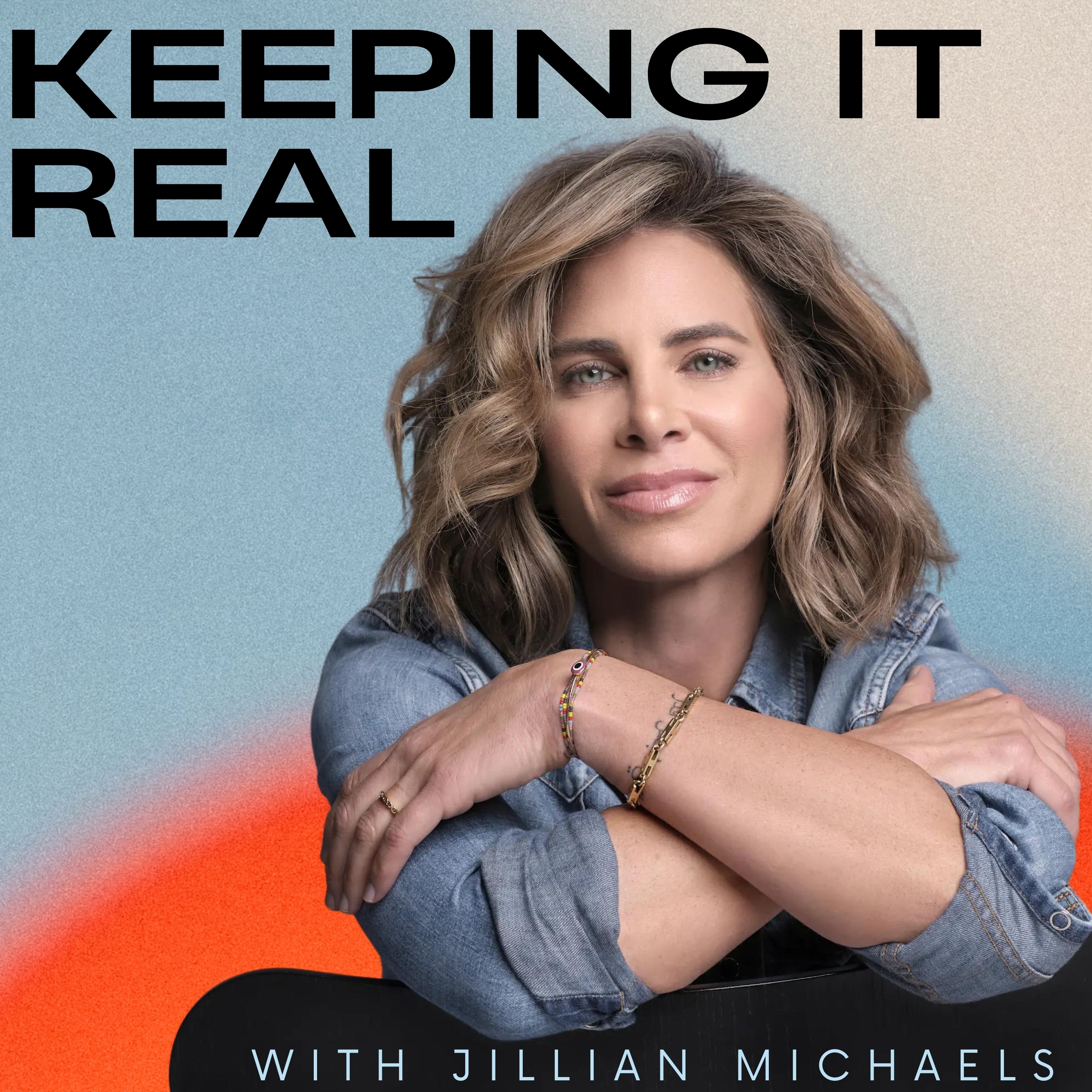
Keeping It Real: Conversations with Jillian Michaels
Kelsi Sheren EXPOSES the System Profiting From EUTHANASIA: Inside the MAiD Crisis Horrors!
01:17:14
Loading summary
Transcript448 lines
- [00:11]
A
The proceeding was brought to you by Zipa. With over half a million sold, Zipa is the only FDA approved mouthpiece that has a 91% success rate in silencing snoring. For a limited time, go to zipa.com and use the code HAPPY or text HAPPY to 511511 and get the absolute best solution guaranteed to stop your SN with the Happy Z pack and save over 24% off. Plus, Zepa will donate $10 to breast cancer research. Visit zyppah.com use code HAPPY or text Happy to 511511 and save over 24% off with the Happy Z pack and start improving your sleep health. Remember, ZPA is happy Z spelled backwards. Save over 24% off by going to ZPA.com and using the code Pappy today. Text fees may apply.
- [01:02]
B
Today's guest is Kelsey. She's a Canadian combat veteran, an author and an advocate. We're gonna go straight to the hard stuff. We're talking about the little known horrors of maid medical assistance in dying, which I thought was an amazing thing until today's conversation. Prepare to be stunned. We're talking about the dirty secrets of how veterans are treated when they most need help. The realities of war the public never sees. Kelsey explains why she's taking on the government of Canada and why she believes some of their most alarming policies are being exported to America. Let's get started Keeping it Real with Jillian Michaels.
- [01:44]
C
All right.
- [01:48]
B
Where do we begin?
- [01:49]
C
I don't know.
- [01:50]
B
I want to begin here.
- [01:51]
C
Okay.
- [01:53]
B
You've told me you're banned in Canada. What does that even mean, Kelsey? And why?
- [02:01]
C
A lot of us who do this job, who are outspoken against the current administration and the past administration, which was the Justin Trudeau, you know, saga that everyone saw and watched from afar as we embarrass ourselves on the global stage time after time after time. And now you're a great president because I do like him, whether people enjoy him or not. He has replaced Mark Carney with a tree often at the G7 summit. At the G7 summits because he's. That's more useful than the current prime minister. So what ends up happening is they start sending things like cease and desists. They start doing little threats. Government. Yeah, they did it to a friend of mine as well, Dallas Alexander, a sniper who went on Shawn Ryan. They sent him a cease and desist after he spoke openly about an operation. This isn't the first time. They will cancel you. They will do whatever they can if you are Speaking against their policy or against them themselves as individuals. The new Veterans affairs minister just blocked me on social media because I've been calling her incompetence and her lack of ability to do the do the job. Not because she's not. She's like a, you know, people say, well, she's a woman maybe. Is that why? No, no, no. It's because she owned a clothing boutique and now she's the Associate Minister of National Defense and the head of Veterans Affairs. So I look to my leaders for leadership. I look to my leaders for genuine ability to do the job and be competent in said job. That's not what we have in Canada we haven't had since 2015.
- [03:28]
B
Okay, now let's take a step back.
- [03:30]
C
Okay.
- [03:31]
B
How did you even get in a position where you are a critic of the government?
- [03:37]
C
Yeah.
- [03:38]
B
And the people who run Veteran affairs, for example. Obviously I have the book here. I have no idea how I missed this when this came out. You were on everybody's show. Lex Trig peers. So take me to the beginning. How does a kid that is so critical of her government enter the military to fight for her country?
- [04:02]
C
Was that naivety, that, that younger mentality? I was 18 when I joined the military. I'm 36 now, so I was 18 when I joined the Canadian Armed Forces. I joined as an artillery gunner. And so if those don't know what that means, it's just basically we ran those big cannons that would shoot over top of people and they go about 40, about 40 kilometers. So whatever that is in American and American in American. So we'll figure out the math. We'll figure out the math. But so I joined as an artillery gunner. And I wanted to join because we were in the active war during Afghanistan. This was at the height of Afghanistan where Canada really became no longer UN participants, but now we were isaf. So we were fighting in the fight. And so I was in college, met a lady on a bus. I tell the story in the book. It's very movie esque. It's like you meet this person you see almost like a. A moment. And it changed the, the path of my entire career, my entire life. I was in college playing soccer. Met this lady at Remembrance Day, which is your Veterans Day, November 11th. And I said, you know what? I think I'm going to join the Army. I literally found the first recruiter's office, asked if I could join. They said, yep, these are the three positions we really need. Artillery, infantry and armored tanks. People up front and people supporting with artillery said, okay, great. So I joined, I got, I got brought in right away. I swore in like a month later, went to basic training right away and I went to Quebec, did basic SQDP1, all your courses, your weapons systems, everything in the military. And then they said, okay, we're going to post you to Quebec. It's an all French speaking unit. You're going to be one of the only females in that unit and that's where you're going. And you're also deploying in April. So I went in September to vaccine and then from September until April we did workup training and got ready to go to Afghanistan. And then I had to learn everything in French and learn all of everything I just learned in English, but now flip it and learn it into French. And then we deployed in April of 2009.
- [05:54]
B
Okay, so something, and forgive me, I'm taking notes while you're talking so I don't interrupt you and I don't want to forget these questions that I have for you. Something obviously changed in the government for you to be so gung ho. You'll die for a cause in a country and now you're an activist speaking out about the things that you feel have gone south. So you're clearly a true patriot in the worst sense.
- [06:19]
C
I'm like, to my own fault.
- [06:20]
B
Explain.
- [06:20]
C
Yeah, so after I got injured in Afghanistan, so I served with the Americans and the British forces. I was an artillery gunner for Canada. We got brought to an American unit. I shot artillery for Americans, the 101st out in the middle of nowhere. And then I got picked up by the British military and I got to be there. Now they're called CST's, but at the time they just called us female searchers. So my job was to go outside the wire with the men, take the women and kids, kick the doors in, go through the firefights. And I was in charge of the women and children. They are just, if not more violent than the men. I learned that very quickly. And on that operation we lost a bunch of friends. I ended up doing body collection. I go in depth into the book about what happened, into the people that I lost and how it affected me. And then I ended up sustaining severe post traumatic stress disorder and a traumatic brain injury on that deployment. When I came home from Afghanistan, right before I left, my major said, you know, it would have been easier if you died. Less paperwork, this would have been less to deal with. I went home to an empty unit and told I was going right to the hospital. So at that point I went 6 months with no contact. Hyper suicidal on 11 different drugs at the age of 19. All psychoactive compounds with no real support. And then they decided that I was no longer fit for service and they medically released me in 2011, and I was deemed 100% disabled at that point. They said, you're never going to work again. You're never going to be a productive member of society. So I went through. I would say, can I ask, forgive me.
- [07:41]
B
No, I just interject for a second here. How common is this? Because I'm under.
- [07:45]
C
It's just whether or not it's caught and it's recorded and whether or not you say the truth out loud, how badly you want to keep your job. That's what it is. The amount of people I actually, no exaggeration, a friend of mine from one of those operations messaged me for the first time in 15 years this morning. Colin messaged me and he said, hey, I wanted to reach out to you. I saw my name in your book and I saw you told our story. And I have been struggling with alcoholism and I was in rehab and I'm finally clean and my wife stayed with me and my children and I were finally doing well. I just wanted to let you know that that helped me a lot and it gave me hope. I had no idea because apparently it was in my messages and you know how that works. So I actually touched base with him this morning for the first time in almost 15 years, which was really wonderful. So.
- [08:30]
B
So forgive me.
- [08:31]
C
You're.
- [08:31]
B
No, you're disabled.
- [08:32]
C
You're unemployable. That's it.
- [08:34]
B
You're damaged goods.
- [08:35]
C
You're broken.
- [08:36]
B
321.
- [08:37]
C
Yeah. Yeah, it's super great. So from then on till about 2016, I was hyper suicidal. I couldn't function, didn't get out of bed, didn't brush my teeth. Just. It was that very.
- [08:46]
B
25. And 2016.
- [08:48]
C
No, in 2016. Yeah. I must have been. I had my son in 2020, 2016. So I was just 26. Was 25.
- [08:56]
B
So he's gone on for five to six years at this point.
- [08:59]
C
I didn't actually start getting better until 2019.
- [09:03]
B
Okay.
- [09:03]
C
Yeah.
- [09:03]
B
Okay.
- [09:04]
C
So what had happened was. And that's why the book is called Brass in Unity. What had happened was I had this crazy dream and I'm a very woo woo person. People, you know, you can tell by the hand tattoos.
- [09:15]
B
You don't strike me as woo.
- [09:16]
C
Really? Oh, I'm super woo. Oh, I'm the most woo. But in like a controllable. Way. And I had a dream and this dream was like, you're gonna start a jewelry company. And I was a tomboy. I make jokes often that I know it's not a joke, but it is to me. If I was in this age now, as a child, I would have been transitioned. My hair was this short. I was a high level international taekwondo fighter from the age of four. I was a high level rugby player. I raced national motocross. I was the tomboys tomboy tomboy. I didn't wear jewelry, I didn't wear makeup. All I did was fight and then wake up, go to school, do sit ups so I could see my abs and fight. Like that's all I did till I was 19.
- [09:57]
B
Can I clarify?
- [09:58]
C
Yeah.
- [09:58]
B
You are exceptionally heterosexual though, to be clear.
- [10:01]
C
Yeah, I'm stiffer with a dude. Six foot. Six foot tall, black man. Yeah, got it real there.
- [10:05]
B
I have to admit that if I was to change teams, I could definitely see the appeal.
- [10:09]
C
Yeah, I can too. Yeah, it's great. He's wonderful. He's a great human. That football player lifestyle is for real. So I'm really fortunate because I'm glad I wasn't. My mom just kind of embraced that tomboy lifestyle. I wore the snap tearaway pants with the white tank tops with the slides. Like you would have thought this girl's gonna be gay with for sure. Which obviously no problem. But also at the same time, for sure. So I called some friends back in Ottawa and I was like, I need a box of old spent casings. And they're like, okay, cool. So they send me the 7,000 piece of old spent casings. And I got a pipe cutter, a handheld pipe cutter and a drill and a hammer. And I would cut the casings, hammer them smooth, pop out the firing pins, and then put beads on them. Because somebody told me crystals could help me heal. That's how desperate I was. Like 11 different drugs. All I wanted to do was kill myself every waking minute of the day. And I was like, okay, if I can sit down and do something, then maybe I can get myself out of my head.
- [11:02]
B
Is that. Did that coincide with 2019?
- [11:05]
C
Is that so brass and unity? Yeah. So brass and unity started in 2016 on the kitchen table of my tiny little townhouse. And in 2017, I took the company from the kitchen table to over 200 retailers. And we were on Ellen and we gave. We've now donated about almost $750,000 to veteran organizations. And I thought, off of a jewelry company. Yeah. And so I thought if I could. I didn't want to start another nonprofit. There's 46,000 active nonprofits in America and about 1 to 2% do anything.
- [11:36]
B
Yeah.
- [11:37]
C
And so my idea was, well, I don't want to be a non profit. I don't know how to raise money, that's for sure. So what if I get a product and I was made it the vehicle to put the money in the hands of these organizations and then I partner with them and I partner with other big names and then I take that money and I donate it out, then at least I know I'm funding the programs of the people that know how to fix us. Right. So that's what I did. And in we went from, you know, we grew so fast. Then we got factories, then we started producing, then we had employees. And then I went from only going to college to running this big company trying to figure out how to get partnerships and, you know, move. And now I'm in the fashion world and having to learn about fast fashion and long term fashion and diamonds and do we want to go here? And all of this craziness. And we were in Elle, we were in fashion magazine. We were nominated for a fashion award for philanthropic work. 2019 Cubs. I have my son, I'm doing well on the outside and can I ask one question? Yeah, you can ask whatever you want.
- [12:37]
B
There is in unavoidable irony. I mean, there's no way to miss the irony, right? That you were tormented by the horrors of war, but then you make jewelry out of bullet casings.
- [12:49]
C
Why? Because I think there is always something positive to be learned from every lived experience. So I was thinking about. We were having a conversation, you and I. Like I said, you've been beyond gracious with your time. You are out of the 10 years I've done interviews, I've been in rooms with people that I call people. You're one of those people, people I've looked up to from the outside. Trust me, I don't. If I don't like you, I'll tell you.
- [13:11]
B
I believe you.
- [13:12]
C
I'm. You have been so beyond gracious with your time and not in just with your time. Your kindness and your empathy. And I think that is what's missing in this world of this. We step on people to get to the next level. You are so the opposite of that. I've never experienced it, so it was really cool.
- [13:28]
B
It's mutual.
- [13:29]
C
No, you're so welcome. But it was really cool when, you know, we were kind of talking about, okay, what do you want to Kind of talk about the show. And I was thinking about that question a lot because no one's ever asked me some of those questions before. So I really had this, like, I need to think on these. And I'm a person who works thought through words. I have to, like, talk it out. And so I sat in my hotel room last night, like, just talking to myself, like, talking it out. And I thought to myself, do you notes?
- [13:53]
B
Absolutely.
- [13:54]
C
Yeah. Just. You're a voice messager when you voice message.
- [13:56]
B
Oh, my gosh, I'm so sorry. My wife's like, honey, this is a nightmare. Nobody is in a place where they can play your message.
- [14:03]
C
Yes, they are. Yes, they are. Yes, we are. You're. Yes, everyone hates me, but it is my greatest gift to them is my voice. And so I was sitting there thinking. So what I figured out is this. There is always dangers to creating companies and corporations based off of trauma. But that's one view. You can look it at the other. Everything that happens to you, every experience you have, every moment in your life, every trauma, every bad thing, every good thing, shapes exactly who you are and exactly where you are in that moment.
- [14:29]
B
Right?
- [14:30]
C
And I loved my job more than. More than air. I can't tell you how much I loved waking up in the middle of the night to fire mission and just sending rounds down range and smelling the burn of the HE rounds and just hearing the explosions. And just like, I loved my job more than anything. And so to be able to have a touch piece from that job and wear it on my wrist not just as a memory, but as a suicide prevention tool is why I created the company. I don't want people to feel alone. And I'm so sick and tired of these awareness weeks that don't do a goddamn thing. And I want people to have a touch piece. And it was the moment when I had a special operator after I gave him this. That paracord rope on there. They're called buddy Check. And he said, I went to grab my Glock in the middle of the night and put it in my mouth. And I saw the bracelet on my wrist, and it gave me a moment of pause. Because we know suicide is an impulse. So if we can give somebody a moment of pause, we can save their damn life.
- [15:28]
B
Can I ask you another question? I'm gonna get back to 2019.
- [15:31]
C
Ask me whatever you want, honey.
- [15:34]
B
This makes me so sad. And I remember I did a USO tour years ago for my kids, and there was a statistic that I'm gonna botch here.
- [15:44]
C
But it's okay.
- [15:45]
B
Some tiny percentage of our country in America that joins the military and takes this hit for the rest of us, not only are they not appreciated, they're completely shit upon and forgotten.
- [16:00]
C
Yeah.
- [16:02]
B
Question one, why do you think veterans become suicidal and have so much trauma? I'm sure it's obvious, but I would love to put it in words. Question two, why do you think they're tossed aside?
- [16:13]
C
Okay. Number one, you're gonna have to probably repeat number two by the time I'm done. Done.
- [16:17]
B
All right. I'm gonna make a note because my brain's the same. Okay, so why tossed aside?
- [16:21]
C
Yeah. So I think, well, I know you're always going to have. When you go through traumatic situations, every person's chemical makeup of their frontal lobe is going to respond different. Right. So if we take it from a neurology perspective, what I learned going through brain treatment in Texas, through there's this organization called Defenders of Freedom. Nobody would treat me in Canada, but this organization saw my podcast and saw that I looked concussed all the time. And my ex husband was there for brain treatment and said, are you Kelsey, Sharon's husband? We think she's got a tbi. We want to help her. So this organization, I was the first Canadian they ever treated and I was the first female they ever treated and they funded me completely to go to Resiliency, Brain Health and Copeland. Wow. And so what happened was I went there and I learned that every brain is so radically different that the response to trauma is going to be different. I know. Guys, friend of mine, Paul De Gelder, who's been half eaten by a shark, he's the host of Shark Week. Paul doesn't have PTSD from sharks. That boy still swims with them every day. Because he's a psychopath, it doesn't affect him. But people who have been bitten by a shark before may never go back in the water. It is how your brain chooses to respond. Dallas Alexander, dear friend of mine, he is part of the team that did the longest kill shot in world in military history. Okay. Incredible dude. He's now a country singer. Guy's a badass six foot five, country singing dude who was a sniper in the Canadian military. He was a JTF2 special operator, same as our SEALs and your guys SEALs. So I talk to Dallas all the time. I'm like, how are you so calm? He goes, because I dealt with it right when it happened. I would meditate and I would do breath work after every op and I would cope with it. But we're not given the tools.
- [17:58]
B
Right.
- [17:59]
C
We're not given the tools, actual support, and we don't allow the military to acknowledge mental health issues or traumatic brain injuries, because if you do, you're now a liability and you're no longer deployable.
- [18:12]
B
Ah, got it.
- [18:14]
C
Right.
- [18:14]
B
Yes.
- [18:14]
C
So I understand. So Dallas is a beautiful example of how to transition properly when you have the right tools and the right network around you into something that's healing. Music is healing. It helps heal the body, helps heal the mind. So it makes sense that he's now into country music. Now, for me in particular, I was trained to do a job. And then when I was in Afghanistan, I was not doing that job. I was doing a different job that I was not prepared for mentally, physically, or ready for, but I did the job anyway. And because of me doing that job, that's what caused the injury for me. I didn't have the tools in the toolbox.
- [18:45]
B
Body reclaiming.
- [18:46]
C
I was. I did body collection for a friend of mine. After we witnessed the app, we went through firefights and things like that, and ultimately there was an ied. He stepped on it, and all hell broke loose. And so that was the first of the week that was like, day two. Hi. Nice to meet the Taliban. Wow.
- [19:03]
B
Okay. A body collection, I'm guessing, is exactly what it sounds like.
- [19:06]
C
You leave nothing behind. And it doesn't matter what it looks like or how it comes, but it goes on stretchers. And if there's no room on the stretchers, it goes in your pockets.
- [19:16]
B
That's real.
- [19:17]
C
Super real.
- [19:20]
B
Okay.
- [19:21]
C
The movies don't depict it for no reason.
- [19:24]
B
It's that time. It's skims time. If, like me, you have had the hardest time with underwear that creeps up the center of your rear end so uncomfortable, or the panty lines that you see through clothes, or those inserts that come in certain bras that when you wash them, they roll up like little hot dogs. It's just. I'm sorry, but I. I know you know what I'm talking about. Bras that give you the little armpit bulge right here, but don't give you the boost where you need it. I. I could essentially go on and on. I love skims. The Fits Everybody T shirt bra. The Fits Everybody Boy short are my go to. I live in them. Literally. And you can shop my favorite bras and my favorite underwear@skims.com after you place your order. Do me a favor and please be sure to let them know that I sent you. Just select podcast in the Survey and be sure to select my show in the drop down menu that follows. And just remember, fits everybody T shirt bra, fits everybody boy shorts. You're going to Love it. At skims.com, select podcast in the survey and be sure to select my show in the dropdown menu that follows that sound. That is the sound of an idea turning into income. If you got a business dream or even just a great product name in your notes app, Shopify can be the catalyst to make it real. So many of my personal companies and the companies I invest in use Shopify. From Alaya Naturals to my own Jillianmichaels.com, shopify is the commerce platform behind millions of businesses worldwide, powering about 10% of all E commerce in the U.S. they meet you where you're at. What if you can't design a website? Shopify's got you. They got beautiful ready to go templates that match your brand's vibe. What if you need a hand? I mean, you can use all of Shopify's AI tools that are built for commerce to enhance product photos, write product descriptions and even generate discount codes. What if no one's ever heard of you? Well, guess what? You can find customers with easy email and social media campaigns all in one place. And what if you get stuck? Well, there's an award winning 247 support from real humans who've seen it all. So if you've been waiting for a sign, this is it. Build the store, launch the product, ship the first order, turn those dreams into and give them the best shot at success with Shopify. Sign up for your $1 per month trial and start selling today at shopify.com Jillian go to shopify.com Jillian that's shopify.com Jillian. What else are we not knowing about?
- [22:06]
C
We're not giving our military the right tools to heal themselves. And then you have people like me and others who have to go outside the country to get support outside so they don't lose their jobs and so they don't also do anything illegal in the country. And that would be psychedelics for me, of course.
- [22:26]
B
Yep, we're seeing that obviously here. And there are some beautiful and brilliant people. The Texas Ibogaine initiative that Brian Hubbard and Rick Perry helped champion and Shepherd. We're all very hopeful with regard to Kennedy and Dr. McCary with the FDA being able to get these drugs off of schedule one. It's highly controversial as to how they got there in the first place.
- [22:52]
C
I mean, it's not a shock.
- [22:53]
B
You know, you think about what is a Schedule 1 drug? It's highly addictive and it has no benefits whatsoever. Psychedelics are the exact opposite.
- [23:02]
C
If you've ever sat with a macro dose of psilocybin, ayahuasca, 55 MeO, DMT, ibogaine, any of them, you'll know how non, non addictive.
- [23:11]
B
Oh yeah, they will kick your shit in.
- [23:14]
C
It's not something you want to do on a regular, ongoing basis.
- [23:17]
B
Have you done them all?
- [23:18]
C
I have done. I. So I'm a psychedelic integration coach now. I went to school for that afterwards. Heroic Hearts Project, before ibogaine was in the media, like this. Heroic Hearts Project is run by Jesse Gould, a former Army Ranger. And when I was struggling and started my podcast in 2020, I interviewed a guy named, we call him Griff. He owns a company called Combat Flip Flops. And at the end of the interview, I was doing the mask thing really, really well still. This is like end of, you know, end of 19 going into 20.
- [23:48]
B
We're getting into 19 next.
- [23:49]
C
Yeah, so. And this is where it went. So he offered me a spot to go do ayahuasca with this group and Jesse happened to be in the group. And then I've been doing nonprofit work for them ever since. And so they have helped change legislation. You know, they have done so much in America lobbying, like the stuff that Heroic Hearts Project, Vet Solutions, all of these former special operators organizations that have kind of come forward to say, hey, we've got the research, we've got the studies, we've got the veterans. Let us help our veterans. And our government does what I often what the Canadian government does, except we're a little bit worse, is we tie your hands behind your back, tie your feet, slap concrete bricks to them, throw you in the ocean and say, oh my God, no wonder they kill themselves. And then we act shocked when the suicide numbers skyrocket and they don't go down.
- [24:38]
B
Talk to me a little bit about the success rates of these kinds of psychedelic therapies. Is there one in particular you think is better than another? Like ibogaine over psilocybin, for example. Where could somebody go? Mexico, I assume. South America. Yeah, that's off. An awful shame. I'm just saying. And, and it's extraordinarily expensive.
- [25:02]
C
Very expensive. Yeah. For the average person, especially if you're on a disability, it's not feasible. That's why organizations like Heroic Hearts exist.
- [25:08]
B
Got it.
- [25:09]
C
They're non profits. And so I can speak to what I know personally. I don't like to go through stats and numbers over research because it's always conflated, as you can see. You can tell somebody. Don't take Tylenol when you're pregnant. And someone's going to down a bottle of Tylenol if you don't like the person saying it. So, you know, for me it's. Yeah, the banana pants. Well, the heartbreaking story about that one side tangent is now that mother's in organ failure. One of the mothers that did this is actually in. Or it was reported today, she's an organ failure. And the baby looks like she's. The baby's going to pass. And the mother's going to pass. What? Yep. Because she made a video. It's. It's all over. Yeah.
- [25:42]
B
You're sure this is real?
- [25:43]
C
I wouldn't say it if I didn't know.
- [25:47]
B
Okay. So I just feel like crying all the time.
- [25:49]
C
I know. Welcome to my life.
- [25:50]
B
I feel like crying all the time.
- [25:52]
C
I do every day.
- [25:53]
B
I just start crying all the time lately.
- [25:56]
C
Okay, you know what? But that. Maybe that's good. That's your body saying it needs it.
- [25:59]
B
I don't know, dude.
- [26:01]
C
So we're back to psychedelic.
- [26:03]
B
Which psychedelic you think is optimal for. For help with trauma.
- [26:08]
C
So here's the thing about psychedelics is they're not a one size fit all and not everybody. So this is. I'm very clear to say this, especially in my practice, not everybody's a candidate. And we need to stop pretending that everyone is.
- [26:20]
B
Explain that.
- [26:21]
C
Well, if you have a history of mental health disorders in your family, schizophrenia, bipolar, you should never be touching a psychedelic.
- [26:27]
B
Got it?
- [26:28]
C
Right. Now, that being said, there's extreme cases where I've known people. Now, that doesn't mean it's the right answer. So for me, Heroic Hearts does a radical screening. So I have my own practice that I work with, my own coaching practice, and then I do my nonprofit work to give back to the people who've helped me. That's how I work. So what I have seen, for me personally, when I was dealing with my traumas and the things from overseas, Ayahuasca. She was there for me in the way that I needed her to. She's a heart opener. It's a very intensive experience.
- [26:59]
B
You say she. I want to clarify for. Everyone's done it. Right. It is. It is been said, yes, that this medication, this plant based medication has a female energy and she's the reason they call her mother. Got it?
- [27:14]
C
Yeah. And so I was never somebody who used drugs or cannabis, excuse me, in high School, college, never. That wasn't me. So it's not like this was like, oh, I'm gonna go do a psychedelic. Like, I never had any interest, but I was so desperate and I was dying. I was actively dying. And I knew it. And it was a matter of time that I wasn't gonna be able to do it anymore. So when I was given the opportunity, I went and sat with a group of 10 people. These are all guys that were operators, special operators, Blackwater, otherwise. And they welcomed me in. And one of the things that's healing about the process is we put you in a group. You're in a group of like 10 people. And now you become family and you kind of become one. So that helps fill the void of community and the loss. When you leave the military. When you leave the military, you're leaving identity and community support and this whole who you thought you were. And then we don't really help people land in civilian world very well. We make the joke, you know, dirty civvies, right. It's like, we're not the same. We're not the same. We don't experience the same. So for me, the first psychedelics I sat with was ayahuasca. And I did. It was three days in a row with the proper, you know, maestros and mistras. These were people who trained with the Shipibo tribe from Peru. These were. Some of the people were from Peru. And. And we did, at the time, we did that in America. And I won't say where. Cause it's not allowed.
- [28:34]
B
I understand.
- [28:35]
C
So I walked out of that a very different person. And everything shifted neurologically. It shifted because it changes your brain chemistry. Right. Your frontal lobe, your prefrontal cortex, and I integrated properly. And that is your key right there. Everybody thinks that psychedelics are, oh, I'm going to go do this trip. And then afterward, I'm just going to be fine. I'm going to be totally healed. Couldn't be further from the truth. There is an integration process that needs to happen on the front end and on the back end, and then the plant medicine in the middle. That front end needs to look like a minimum of three sessions with somebody who knows what the hell they're doing.
- [29:07]
B
Right?
- [29:07]
C
Right. And that's where people go wrong. There's a dieta. A diet that means everything that goes in your ears, your mouth and around you. Meaning stop watching the news, cut out red meat, start lowering sodium, things like that, right?
- [29:20]
B
Yeah.
- [29:21]
C
And then you go to the medicine and then you come out and then you have an integration where we ground you back into reality. How do we take what you went through and learned and integrate it into you now? How do we help you become the person you want to? Because now you've either gone through or let it go. And then there's psilocybin. So I did the very first. I was very fortunate to be given the opportunity to do. To be a part of the special access program of Canada, which is like one of the rarest, most difficult programs. To get in, you have to be almost like terminally ill or what's called treatment resistant. I had done 11 different psychoactive drugs for 10 years. Every SSRI in the book, everything you.
- [29:58]
B
Can say, like Prozac, everything, everything.
- [30:00]
C
We tried everything with me, and nothing worked. It just made me worse. And then finally Health Canada said, okay, we're going to. This company was going to help me through it. They asked me to do the clinical trial for a regulated psilocybin, synthetic psilocybin. I said yes. We went through the process. It took almost a year. Tens of thousands of dollars, which the average person couldn't cover. I only got covered because the pharmaceutical company that was doing it for Health Canada covered it for me. And then finally Health Canada called and said, okay, we're going to finally give her access to psilocybin, but we want her to do electroshock therapy first.
- [30:35]
B
Jesus. What, they still do that?
- [30:37]
C
I just had a client do it two weeks ago, and it was infuriates me, this depression management.
- [30:46]
B
I thought that was like a 1950s thing, like alongside lobotomies.
- [30:49]
C
It's the Health Canada standard for last resorts.
- [30:51]
B
No, no.
- [30:52]
C
Yes. Yes.
- [30:53]
B
Is there data behind this? And I'm just an idiot?
- [30:55]
C
No, there's no data because we can't control how it affects the brain. And here's what's wild, right?
- [31:00]
B
Electroshock therapy?
- [31:02]
C
Yes, ma'. Am.
- [31:02]
B
Like 1950s with the thing on the side of your.
- [31:05]
C
They offered it to me in 2023.
- [31:07]
B
No.
- [31:07]
C
Yes, ma'. Am.
- [31:08]
B
Why am I so naive?
- [31:10]
C
You're not naive. I think that you want the best for the world and you hope that these draconian ideas and medical practices would no longer. They would cease to exist. But that's not how. As you can see recently, science doesn't work that way.
- [31:23]
B
And so this is what they are offering out.
- [31:26]
C
Like, that was my last resort because I was treatment resistant to ssri.
- [31:31]
B
So, Kelsey, I'm really sorry. Let me make sure I'm following you real quick. I just want to make sure I'm following you. You're telling me they put you on 11 different drugs like a Prozac, a Zoloft, a Xanax, an Ambien, so on and so forth.
- [31:45]
C
And high doses. I was on 150 milligrams.
- [31:47]
B
Okay. So you're resistant to these drugs.
- [31:49]
C
Yeah.
- [31:49]
B
Which is quite common and they have significant side effect. I'm not saying don't do it. In my life I have taken two, twice two pediatric doses of Zoloft and it helped me get through two.
- [32:01]
C
That's what they're supposed to be for though. Triage emergency basis on a short term base.
- [32:05]
B
Right. Of. Right. And so they end up, people end up going on these as legacy drugs forever. They may or may not work. When they don't work, they don't work. You're now recommended electroshock therapy. But plant based medicine was a hard.
- [32:23]
C
No.
- [32:26]
B
Bananas, dude.
- [32:27]
C
So bananas. It was beyond bananas. Bananas. We got the phone call and the doctor says, you're never going to believe what they asked me to ask you. Will you do electroshock therapy? I said, did they see that I have a traumatic brain injury? And they said, yes. They acknowledge your traumatic brain injury and they want to shock you anyway. But what they said is she'll be out cold so we can control when she goes into an epileptic fit.
- [32:45]
B
Holy.
- [32:48]
C
Yes.
- [32:48]
B
Well, no wonder you're livid. No wonder you've taken on the government. Yeah. No wonder you're taking on the woman who runs Veteran Affairs. It's unbelievable. No wonder you are infected.
- [32:59]
C
Gee. Well, I'm taking her on because they're offering medical assistance and dying instead of helping people. So that's why I keep saying, I'm.
- [33:07]
B
Getting back to this. Let's finish your thought and let's get to 2019. And I want to get to medical assistance in dying.
- [33:12]
C
Okay. So I, we said obviously no because that was obnoxious. And they said, okay, we're going to let her have access anyway. So I go and I did the very first. I was the very first person in Canadian and medical history to sit with a regulated psilocybin outside of a clinical trial. I got special permission. I'm the only Canadian who's ever been given that. Right. And I flew in a friend of mine who works with the Kutanawa and we have it all filmed and I did a ceremony and they let it do it my way and it was beautiful. And so my, the plants that I coach on that I work with are five MEO DMT Ayahuasca and Psilocybin, ibogaine is fantastic for brain injury and for addiction purposes.
- [33:50]
B
I've seen that. I've heard it, like, takes one to five years off the brain. I covered this with Brian Hubbard. I'm gonna botch it now. But there. There's a robust amount of data to talk about how it helps with cognition and brain health and traumatic brain injury, drug addiction, trauma.
- [34:08]
C
I've seen magic worked with. With drug addiction. As long as they're proper integration on both end and front end.
- [34:14]
B
Got it.
- [34:14]
C
I've seen. I've had clients who were 13 years on some of the hardiest opioids and never touched it again. So I believe as long as you are ready and you are willing and you have the right supports and network, front end, back end integration plus the medicine, I think you're going to be quite all right. But again, I'm always careful to say it's not for everyone. Not everyone's a candidate. And we have to stop pretending like all the backyard shamans are safe and like all the websites are safe, because they're not.
- [34:38]
B
Well, they force you into it, though, and they force you into it with things like peptides and stem cells.
- [34:42]
C
Yes.
- [34:42]
B
You know, you're buying peptides off of a taco truck somewhere.
- [34:45]
C
That's too much.
- [34:46]
B
It's like. It's insane because the FDA has yet to make them legal. Like, there's.
- [34:51]
C
There's a. I love peptides. I use them for injuries.
- [34:56]
B
I bet you do.
- [34:57]
C
Yeah.
- [34:57]
B
There. There are fantastic peptides for brain injuries.
- [35:00]
C
Yes.
- [35:00]
B
Have you heard about cerebralizing? They use it in Russia for decades now for people with brain injuries and strokes.
- [35:08]
C
Dr. Mark Gordon is who you need to talk to.
- [35:10]
B
No kidding.
- [35:11]
C
Dr. Mark Gordon has worked for decades. He's been on Joe a million times. And I'll connect you with him. He's brilliant. He's National Peptide Institute, brilliant guy. We. We talked about it with my. I've had a lot of shoulder, knee injuries, and he's also the doctor who helped treat me with my brain injury as well. He's an American guy. Brilliant, brilliant, brilliant around peptides. Understands it like nobody's business. And traumatic brain injury. He was one of the first to start to look at it outside of PTSD, because 11 of the 13 symptoms overlap, and that's why we often miss the TBIs and we go right to PTSD. Wow. Yeah.
- [35:43]
B
Wow.
- [35:44]
C
Yeah. It's crazy stuff.
- [35:45]
B
Why do you think the average civilian is completely unaware of this? Or aware. I hate to say this, I don't want to assume the worst, but let's assume willfully ignorant. Thank you.
- [35:58]
C
Well, it's very simple. I think if you look at Canada. Let's just talk about North America. If you look at North America right now, because I served with Americans and 80% of my listeners in my base are in America. When you look at America, you look at Canada, especially from the VA system. Yes, we have a va, and yes, there are amazing caseworkers that work their absolute ass off that just are collapsing trying to get people help. But then you have a system that ties their hands on their feet. So what ends up happening is two things. Gas is really expensive. Food is really expensive. Mortgages are really expensive. Now the threat of war is here. Now the threat of this, now climate change, now this, now that. Every day it's something, something, something, something, something. People's brains aren't meant to be absorbing this kind of data. People were not meant to see somebody shot and killed, like Charlie Kirk. People were not meant to see. We talked about this. People were not meant to see, you know, people blowing up in Israel. People are not meant to see this. Soldiers are meant to see this. If we had video cameras or GoPros during Fallujah in Iraq, it would make. Oh, my God, it would make Israel and Palestine look like a joke. People have no idea what they're talking about when it comes to war because we just didn't have film. Like, we just didn't. If we had cameras, like, real, full on, like GoPro level cameras, iPhone cameras in Vietnam, do you really think Vietnam would have lasted that long? There would have been, yes, there was protests, but it would have been something very different. Same with Afghanistan. Same with Iraq. Same with, like, now you guys are seeing footage of drones dropping bombs on people in Ukraine and you're like, you're. You've. Everyone's become desensitized to it. So what happens is you're either so overwhelmed you shut down and all you can think about is, you know, what if I just keep my head down and I focus on my family, that's okay. Then life is good. So it's. I think willful ignorance comes from survival. I think our lifestyle in North America is so toxic right now, people can't fathom paying attention to anything else other than within their four walls. It would break them psychologically.
- [37:52]
B
What I want to understand is how did we get from psychedelic therapy? I completely now get why you're an activist against the current government. Um, but how did we get to your. What is the word I'm looking for? Your Your. Your resistance. I can't find the exact word here. Against maid.
- [38:13]
C
My opposition.
- [38:13]
B
Your opposition. Thank you. Good Lord. You think I was the one with the traumatic brain injury? So what is maid?
- [38:19]
C
Yeah.
- [38:19]
B
How did you come to a place where you so emphatically oppose this?
- [38:26]
C
Like, on my radar at all. Which was weird.
- [38:27]
B
Yes.
- [38:28]
C
Yeah, it's weird because it's medically assistance and dying. Medical aid and dying.
- [38:32]
B
I think that's awesome.
- [38:34]
C
No, it's not.
- [38:35]
B
I would think that is awesome.
- [38:36]
C
Of course. Because we. We would. We brand it that way.
- [38:39]
B
What if I have terminal cancer?
- [38:41]
C
Okay. So that's what palliative care and proper hospice and medical support is for.
- [38:45]
B
What if I have dementia?
- [38:46]
C
That's what proper medical care hospice is for. And ketones are for next.
- [38:50]
B
What if I want to die, though?
- [38:51]
C
Then you have every right to go jump off a bridge anytime you want. The government does not get to come in and make laws, okay. That make the vulnerable population become a burden on society and then be told to quit. What if I'm.
- [39:04]
B
What if I literally have stage four cancer?
- [39:06]
C
I've. Yeah.
- [39:07]
B
And I want to go.
- [39:08]
C
Okay, cool. That's. Okay, so here's what's going to happen, right?
- [39:11]
B
Because I would actually love that. I have terror. I'm terrified of the day I poop my pants.
- [39:16]
C
Yeah.
- [39:17]
B
And I've had to tell my son when I don't remember your name. And you need to change my diaper, grab the pillow and put it over my face.
- [39:24]
C
Okay. That's not made though, right?
- [39:26]
B
But. But I don't want to put my son through that. I'd rather have someone else do it professionally.
- [39:29]
C
Oh, but you think professionals are immune to killing people?
- [39:32]
B
What do you mean?
- [39:34]
C
Okay, let's start with medical school. No doctor is taught how to kill someone. What is the Hippocratic oath?
- [39:38]
B
State do no harm, Right? What if it's harmful that I suffer?
- [39:42]
C
What is it? Okay, so let me ask you this, Jillian. You're stage four. You're gonna die in the next three months, right?
- [39:49]
B
Yeah.
- [39:49]
C
We can provide you hospice, which is a 50, and palliative care, which is a 50 year science. We're gonna have you so under control, pain management wise. You're gonna be conscious, you're gonna be surrounded by your loved ones, and one day you're just gonna fall asleep and slip away.
- [40:02]
B
Okay? Don't buy it, Mom. I've seen too much suffering.
- [40:04]
C
So have I. But here, wait. Just go with me. Okay, so there's your option, right?
- [40:06]
B
Okay.
- [40:07]
C
This one is supported by your loved ones. Supported by people. Supported by death doulas. Supported by real, actual people that want to see you go through a painless, natural end to your death. Right?
- [40:17]
B
But they keep you frigging alive.
- [40:19]
C
Wait for it. They don't have to. That's the whole thing. That's how you keep beds fill and money going, right? It's all money going.
- [40:24]
B
Agreed.
- [40:24]
C
Agreed. So now, or would you like this, we're going to go put you in a hospital room or, you know what, a park. Because we can do that now. And. Or just like, I don't know, Dr. Ellen Weebs, Office downtown in Vancouver. In just a chair. Okay. I'm going to put two IVs in your arms. But one's probably going to fail, by the way, because I'm going have to put so much drugs into your system. Here's what we're going to do. We're going to do this thing called the maid kit, and we're going to advertise it like a peaceful, painless way to die. And you go, of course. Anybody wants a peaceful pain? Hell yeah, I do. Cool. That's a fun lie.
- [40:58]
B
Come on.
- [40:59]
C
I talked about on Jordan Peterson. Let me explain what happens. I'm gonna explain what happens. So we're gonna give you these drugs. We're gonna give you three to four drugs, okay? We're gonna give you one that's gonna make you sleepy first, but we're gonna give you such a dose that it actually burns your veins. Burns your veins to the point where you're actually gonna feel this before you start to slowly slip away, okay? Number two, we're gonna give you a paralytic. We're gonna paralyze you, darling. We're gonna paralyze you. So if you change your mind or you want to scream or you want to say stop, you're paralyzed. Number the three to four drug is gonna actually start to slow your heart rate. But here's the kicker that nobody wants you, like dying with Dignity Canada, to know that drug causes your lungs to go into a pulmonary edemic state. And because we give you a paralytic, you won't see the person seize or move. But you will. You will. You will hear the lungs and the gargling because it's their lungs filling with fluid and you drown to death. It's akin to water pouring, waterboarding, or drowning to death. And do you wanna know how we know this? A brilliant doctor named Dr. Joel Zivit did the largest postmortem, postmortem autopsy on lethal injection patients. Guess what he found. Over 82% of the people postmortem showed a set of heavy lungs. Guess what happens? Heavy lungs are only possible when you're dying. And it's akin to waterboarding and death by drowning. So cool. You want to go be paralyzed and drown to death. Fucking have at it. But here's what I'm not okay with. Okay. 2016, Carter versus Canada. We lobbied the Supreme Court. Girl wanted to die. Stage 4 cancer. NBC, with the help of the most corrupt, just backwards organization, Dying with dignity, lobbied because they're paid by the government to, you know, be these awesome people around. Pro death cults lobbied the government. So they said, okay, you know what? Track one, terminally ill. We're going to give people who have a foreseeable death with a grievous and irremedial condition. These words are important because this is where the law comes in. We're not going to make a new law. We're only going to amend the criminal code so doctors will no longer go to prison for murdering you.
- [42:56]
B
Gutsy. I think all of this is wonderful.
- [42:58]
C
No, it gets worse. So, okay, terminally ill. Cool. You want to check out? You want to do the maid process? Just know that you're going to be paralyzed and drowned to death. And here's the kicker. None of those drugs are FDA approved for killing. That's number one, since you guys all love the fda. Number two, we've never measured the pain center of the brain. So to claim that it's painless is a lie, because you can't prove it. And if I were to say Starbucks claims cures cancer and I put it out there and it doesn't do that, who's getting sued for liability? So how dare you make a claim that it's painless? Because we know it's not, because we've had people wake up in the middle of it.
- [43:32]
B
No, no, no.
- [43:34]
C
Oh, here it gets so much better. 2021 comes around.
- [43:37]
B
Chelsea.
- [43:37]
C
Track two.
- [43:38]
B
No.
- [43:39]
C
Yep. Track two.
- [43:40]
B
How?
- [43:40]
C
Here's your slippery slope. Welcome to Eugenics. Track two.
- [43:43]
B
Eugenics.
- [43:44]
C
Oh, honey, this is eugenics. I'm gonna show you how we get there.
- [43:47]
B
How?
- [43:48]
C
Okay, so we determinately ill. We think it's compassion and not eugenics. Let me One race is better than another race.
- [43:53]
B
Eugenics. What?
- [43:56]
C
You ready? Okay, track two comes right. This is now for non foreseeable death. Okay, you're not dying, Jillian. You just have an irremedial and grievous condition. Jillian, you just had two knee surgeries. And I know that you can't run. And that really is affecting your ability to live a happy, fulfilled life. So, you know what? Let's take a look at any other underlying conditions you have. What about diabetes? Do you have diabetes? Okay, perfect. We're going to name this one as your first and your comorbidity. And you know what? Between two weeks and 90 days, we'll have you mated out. What about the homeless that are being mated? What about the veterans that are asking for help and are being mated? What about those that can no longer afford their homes? What about my friend Roger Foley, in a hospital in Ontario who can't look after himself, but they've offered him MAID every day? He's been in the hospital for two years. What about my friend Kayla Pollock, who was literally. Literally and provable and has been proven as one of the only quadriplegics due to the COVID vaccine, who has been offered MAID every day of her life since? What about my friend who called to ask for help for PTSD and Veterans affairs said, you should use maid? It's easier than blowing your brain out on the side of the wall. What about 2027, Jillian, when mental illness alone qualifies you?
- [45:07]
B
Are you kidding?
- [45:07]
C
What about the mature minors down to the age of 12? Oh, wait, never mind. It's not an age. It's only based on the doctor's idea that you're mature enough to make the decision to kill yourself.
- [45:16]
B
Wait, stop, stop, stop, stop. This can't be. Hold on. Are we. Are we. Is this conjecture or are you telling me there's going to be a law in play?
- [45:24]
C
2027. March 2027. It was supposed to start in March 2024.
- [45:27]
B
15 year old.
- [45:28]
C
Yes, ma'. Am.
- [45:29]
B
Who's suicidal.
- [45:30]
C
Yes, ma'. Am.
- [45:31]
B
Can take their life.
- [45:32]
C
Yes, ma'. Am.
- [45:33]
B
No. Kelsey, are you sure? 100%.
- [45:36]
C
Do you think I would be going on Piers Morgan, Jordan Peterson, trigonometry, trying to get Joe to have this conversation if I was not consciously aware that We've killed over 77, 000, 341 last year. We're on track to do over 16,500. I. My mom's. My friend's mom, who was a psych nurse who had a tbi. Okay. Went in for help, tried to kill herself one day, two days later. Was it two or three days later they mated her. Mental illness alone should never qualify you to kill yourself. Now, in 2027, if you have depression, you can walk into an ER and say, I want mate. What do you have? Bipolar. You can Walk into an ER and say, I want maid. Quebec is now making it. So you have. They're trying to get. Well, they have it now. It's illegal and federal, but they're doing it anyway because it's fucking Quebec. They're doing this thing called advance request. You could say, you know what? I know I'm going to have dementia. So I want to sign a form now that when I start to have dementia, you can kill me. What happens if I change my mind? Well, I'm sorry, you signed a document a long time ago, so. Time to die.
- [46:36]
B
You're telling me that the medical experts can say, like, if I'm in a hospital and I have Alzheimer's.
- [46:42]
C
Oh, honey, it's already happening.
- [46:44]
B
I change my mind.
- [46:45]
C
Yes. Do you want to hear about the story in. Oh, is it Switzerland? I'll give you a quick overview. I did a subset on it, the death pod. So he's. He's. Yes, it's like the death pod, but it's a different. It's called Dignitas over there. So here's what it is. It's the same drugs, right? Same process. This is, by the way, the same process we do the lethal injection patients that everyone say they don't want the death penalty, but you're okay with your loved ones being murdered with it, because that's what it is. It's the same drugs, it's the same process. Are we not grabbing the. Like, we'll kill you over here, but we won't kill you over here, but now we'll do the mentally ill. So, like, what if I fall on hard times? Like people in Toronto who were offered maid because they couldn't afford housing anymore. You think this is a Canadian problem?
- [47:22]
B
Oh, sweetheart, wait, Kelsey, hang on.
- [47:25]
C
Yeah, I told you.
- [47:26]
B
Wait, wait, wait, wait. I'm sorry. No, hold on.
- [47:28]
C
Oh, I have proof.
- [47:29]
B
You're telling me that people cannot. Who cannot afford housing have been offered made in Toronto? Are we sure of this?
- [47:36]
C
Do you think I would risk my entire reputation? I have been trying evidence of it. Yeah. Yes, I have reports on reports on reports. I have. I have an entire maid group of over 50 people and this is all we do. On my other phone in the other room. I'll show it to you when we leave. I'm dead serious. I'll show it to you all.
- [47:51]
B
Is there a place people can go to learn more?
- [47:53]
C
I have an entire maid series on my podcast called the Kelsey Sharon Perspective Maid series. I've been covering this for years. The reason I covered it is because A friend of ours who was a veteran had an audio recording of Veterans affairs offering into him in 2021. And that's when I lost my other liver. Just lost my mind. Okay. So let's just back up. Slippery slope. Ready for this? So we go from terminally ill only to now if you just don't have enough right conditions.
- [48:20]
B
Okay.
- [48:21]
C
To now. The mentally ill in 2027 and children. The College of Physicians head of College of Physicians in Quebec has stated in 2022 in the National Post.
- [48:31]
B
Okay, okay.
- [48:32]
C
Multiple different outlets. And I have all of the documents to prove it. I'll give you every piece of paper I've given trigonometry. When my episode went viral with them. I provide receipts for anything I say. States we should be able to euthanize between 0 to 1 if the child is born with down syndrome or spinal bifida or any other medical issues that would deem them a burden on the medical system.
- [48:55]
B
Who. Who makes that decision? The parents or the state?
- [48:58]
C
So here's the thing.
- [48:59]
B
So if you have a child born with down syndrome, you're. And let's just presume. I obviously, I think both of these are hideous. But, but, but I just want to.
- [49:08]
C
Understand if I'm a parent that's like, give me hypotheticals.
- [49:10]
B
This is my beautiful bundle of joy.
- [49:12]
C
Right.
- [49:12]
B
Which honestly, I think if I had a Down syndrome child, I think I would feel that I'd be like, okay, there's gonna be some challenges. I've got a lot to learn, but God gave me this baby.
- [49:21]
C
And the world's not made for. For people with disabilities. We know that it's harder.
- [49:26]
B
And, and I, and I, I luckily would have the resources.
- [49:29]
C
Right.
- [49:29]
B
You know, I would think, like, if I, if, if God gave me this baby, God meant to give me this baby. I gotta. There's lessons for me here. This is my, this is my journey.
- [49:37]
C
Right.
- [49:38]
B
My destiny, my karma. You're telling me that state would be.
- [49:41]
C
Like, we're taking the kid. They're not going to take it, but they're going to give you the option they're trying to right now. Mature minors so can map the Canadian assessors of maid assessors or practitioners. I don't respect them, so I don't give a shit to learn their proper names. They're the ones who are making the protocols for the nih. I will give you the screenshot of the maid kits from the nih. The amount of drugs in there will blow your mind.
- [50:03]
B
The NIH is us.
- [50:04]
C
Cool. Yeah. So we're advising you on how to kill people. Do you know why? Because I sat with the United States State Department recently. You have 10 states and one jurisdiction already doing this and you have just lobbied for more. And Montana. And the Republicans in Montana voted in favor of it. And I have been screaming at the top of my lungs and no one will hear me.
- [50:27]
B
Oh my God. I would have thought you were insane.
- [50:29]
C
Yeah, totally, but.
- [50:30]
B
Except I would have thought it was the best thing ever. Would have voted for it.
- [50:32]
C
Yeah, absolutely right. Because what happens when you open the door to killing? You don't get to close or decide what walks through.
- [50:39]
B
But Kelsey, what would be the incentive? What is the motive?
- [50:43]
C
Ready? I got one for you.
- [50:44]
B
Because you gotta have a motive.
- [50:45]
C
Money. Let me show you how someone dies, it's over.
- [50:48]
B
Chronicity is big business.
- [50:50]
C
No, no, this is where you're wrong here, darling. End of life is money time. Okay, so Canada, a new journal on the Sage Journal, on the Omega website. You can go find it on Sage. You know the medical journals that are peer reviewed papers from universities, which I have. I can to you. It's called the Journal of Death and Dying. It came out this year and they did an estimate of what Canada looks to save once they turn the mental illness into the MAID protocol. So from 2027 to 2047, which is a 20 year period, that is when mental illness, meaning anybody can qualify. You don't have to be dying anymore, sweetheart. You can just have a hard time. And once you're in the system, you're in it.
- [51:27]
B
So it doesn't cost them money to treat you through the government, so they save money.
- [51:32]
C
You ready to find out how much? 2027 to 2047. They're expected to use maid on roughly. This is the journal's. They've done the math. This is The Journal's estimate. 14.7 million Canadians. Okay? They're going to save to a tune of $1.273 trillion instead of providing palliative care. This is 9 million elderly. This is roughly 300,000 indigenous. This is mental illness was roughly around 4 million people. But they do a full breakdown in the sage. Death of the Journal of Death and Dying. This is a peer reviewed paper. Now if this is just a rough estimate, I'd be like, okay, cool. But I can see how it gets there. Because once you turn on made for mental illness, that's honey, that's everybody. And Mature minors has already been lobbied into government. Do you know how I know this? Because canmaps own conferences. Because they're dumb enough to make it public. They were advocating the head of Sick Kids. Toronto Children's Hospital was on the panel last year advocating for mature minors to be mated as an option for health care. Reason I know this is a friend of mine's daughter was at Sick Kids. He was the head of her Sick kids pick you team. And that little girl was poisoned with 15 times the amount of potassium. Veya has since passed away because she had medically complex down syndrome and it needed a liver transplant. And we got her transferred out of the hospital because it was no longer safe for her there. So here's what's even a little more. If this wasn't enough for people. I hear you. I have a 30% chance higher of dementia and Alzheimer's than most people because of my brain injury. Yeah, we understand that Alzheimer's dementia a lot of times is diabetes number three.
- [53:12]
B
I'm just checking the. Dude, keep going.
- [53:14]
C
No worries.
- [53:14]
B
It's 11:30. You tell me. Yeah, I'm going to keep going.
- [53:16]
C
And what we know about that is we understand that when you start treating yourself in your 30s and your 40s and your 50s, you can elongate or even not end up having it. If you use things like ketones, if you use things like proper health, if you're moving and you have community and you have support, your brain will act differently. It will heal itself. Psychedelics heal the brain. Lion's mane heals the brain. There are so many things we can be doing, but we've given up because we've said, why treat them? Why come up with research? Why even bother doing cancer research if we're going to kill you anyway? Why even bother doing Alzheimer's research if we're already gonna maid you? What is the point? My point is, when you start targeting the vulnerable population, the mentally ill, the disabled, the quadriplegics, my friends, my community, they did this in World War I. It's called the Eugenics program. How do you think they got so good at killing? They tested it on disabled children, the mentally ill, the difficult eaters. This is not a new playbook, sweetheart.
- [54:14]
B
The difficult E Eater.
- [54:16]
C
Yes.
- [54:17]
B
What is a difficult eater?
- [54:18]
C
Mentally disabled people who struggle to eat.
- [54:21]
B
No.
- [54:22]
C
Yes. I did a whole on the back end of Daily Wire. Jordan Peterson asked me that. I broke down, literally. We talked about this. Dr. Joel Zibbett talked about it in the Senate of Canada. And the Senate of Canada told him to shut up.
- [54:33]
B
The difficult eaters.
- [54:35]
C
My point is, this is not a Canadian problem. This is happening in America. And I hear little bits. I'm supposed to talk to Brendan Schwab, the comedian next month about it.
- [54:44]
B
It.
- [54:44]
C
Because people keep tagging him in my clips because him and Joe and Brian do this, like, Fight Night show or whatever, the UFC Fight Night show. And they keep bringing up, did you see that Canada killed 15,000 people this year? Last year? And I'm like, this isn't a lot. No, you don't understand. Your own states are doing it. You guys had a doctor in Hawaii last year who was in the middle of doing a MAID procedure, and the guy screamed, stop, I don't want to die. And he kept going. There was a person in over and was in Switzerland or Denmark. The grandmother, I wrote about it in my substack. She applied for euthanasia a long time ago, and she was starting to lose her mind. She went in to see the doctor. The doctor put it in her coffee, a sedative in her coffee. And then in the middle of the procedure, she kind of came to and screamed, stop, I don't want to die. I don't want to die. And her family held her down while they finished the procedure. So if you think that MAID is this, like, beautiful thing, I'll tell you right now. I know more people who have lost their family members to MAID that are just. You're talking about sanctuary trauma, you're talking about abandonment, you're talking about survivor's guilt. You're talking about the. The biggest advocates against MAID are people who watch their loved ones be taken by the system and couldn't stop it. WV and MV in Ottawa and. Sorry. In Alberta. Friends of mine, his daughter was 27, she was autistic, went in and applied for MAID and they qualified her even though she doesn't qualify. And the father and the mother have spent every dollar fighting up against the government to stop them from killing her. Once you're in the system, they have you.
- [56:14]
B
This is the scariest shit I have ever heard.
- [56:17]
C
Yeah. And for some reason, you can't opt out. Once you're in, you're in. Sweetheart, that file's on record.
- [56:26]
B
There's no opt out.
- [56:28]
C
We haven't seen one. So.
- [56:30]
B
So hold on. I. I opt. Okay. I opt in for me.
- [56:33]
C
Yep.
- [56:34]
B
I no longer want to do it. Are they showing up to my door and taking me to the hospital?
- [56:37]
C
No, no, no. But what they're going to do is so, like. Because she is over the age of 18 with this particular case, okay? She's still on a list. Other doctors are trying to. Other people are trying to get her qualified so that Then they can go in and do the procedure. And the father's saying, she doesn't qualify. She's autistic. She can't make these decisions. She lives at home. And you know how you go from track two to track one? So, like, say you don't actually qualify to die right away. Right? You're in track two. You're just like, foreseeable death. We had a guy who was depressed who got depression and hearing loss. I also wear two hearing aids, so this one hit me hard. Depression and hearing loss. They made it him. So this is how you go from track two to track one. This is what the death cults don't want you to know. All you have to say is, I'm no longer eating and drinking. And you automatically move to track one because that means your death becomes foreseeable.
- [57:24]
B
Track one, obviously, is like a DEFCON one. It's the last.
- [57:27]
C
That's your. Yeah, you're on your way out. But here's the thing. I would much rather die surrounded by my loved ones, pumped full of morphine and fentanyl, hugging my family, even if I'm falling apart and slowly walk out, then be paralyzed and drowned to death, darling. Because if anybody knows what actual waterboarding looks like or drowning looks like, it ain't something you want.
- [57:48]
B
Kelsey, given all of this, if you could look back, because, I mean, I can see very clear reasons. You've walked the path. You have, and you're. It's brought you to fight the fight you're fighting. I don't know of anybody else that's as vocal. I mean, correct me if I'm wrong. I'm sure there's. There's others, but is that relentless as me?
- [58:09]
C
No, there's not. There's people that are doing the work. Don't get me wrong, but they don't swear, and they speak at pro life conferences, and they're a lot calmer. There's a reason why I don't get offered to go to the universities anymore, and I don't get offered to go speak on the platforms. I. I'm definitely would be better suited for, like, you, Rogan, tpsu. I'm definitely not up the alley of, like, the churches and the people who are against this because I curse, and they don't like that. And I try really hard to.
- [58:38]
B
To curse. I know. I try to. It's exceptionally difficult.
- [58:40]
C
It is exceptional.
- [58:41]
B
It is actually hard once it's a part of your vernacular, you know?
- [58:45]
C
And, you know, what I've learned is my life and God have made me the way I am. You don't have to like it, but I have a voice for a reason. And my mom told me that in grade one when my teacher said she talked way too much. But don't stop her. She's going to do something with it. And so I've decided you don't have to like my delivery. But the hard reality is this. And if we don't do something about it now you guys are already starting to do our playbook. You guys are expanding. I've tried to talk to rfk. I've got all the way to the State Department. I don't get paid to do any of what I do. Of course not.
- [59:14]
B
And it costs you money and it incurs death threats. I know all that's my favorite. But I'm like, oh, yeah, you're in it for the money. And you're like, I don't make idiots.
- [59:23]
C
I don't make a penny. I fly on my own dime. I do everything on my own. I just want in the room. So people are aware. Because when the United States State Department said they had no idea this was happening, I said, you guys have a wave coming for you that you can't see. I went to Ark and I said, please let me talk about this, because you guys have no idea. And that's right when the UK is putting in their new laws. Australia is one of the gu. Just got caught buying drugs and selling them illegally. Now 20 people are dead. Kenneth Law was buying maid kits and selling them on Amazon. And we have hundreds of young children that are dead because they believed they should kill themselves. My thing is, look, I've been suicidal. I've sat in the dark. I know the dark. I'm friends with the dark now. I have the voice. Every other page in that book is the voice that came into my head, told me I should kill myself. I wrote everything down. Here's what I'll tell you, is nobody deserves to die. Everybody deserves to live. We don't have a healthcare system that treats life. We have a health care system that treats death, that promotes unhealthy behavior. We have a healthcare system that wants you to die because it's cheaper and way easier to manage. But this is not a Canadian issue. This is why I'm trying to get Americans to hear me. Ten states, one jurisdiction, and you guys are expanding by the month, by the month. And I'm telling you, once this starts, there's no stopping it. Once it's in law, it becomes God. Your doctors are getting paid A lot to do it. The pharmaceutical companies are making wild money on their kits because you need to. And I promise you, the longest death we have on record is in America. And it's 137 hours to die. So don't tell me it's painless. Don't tell me it's beautiful. We know people who have woken up halfway through the procedure and had to go through the rest of it to be killed again. So like, I'm sorry, you have always had the right to end your life, but you don't have the right to make a law in the government to say that if you're weak, tired, financially struggling, homeless, mentally ill, a veteran, that we're gonna kill you. We deserve treatment, we deserve support, and we deserve people who actually want to see life, not death. And that's why I'm this about it, because I've been there. Nobody deserves to die before their natural foreseeable death. Nobody.
- [61:25]
B
No, you've been there. We know why you've been there. Would you do it again?
- [61:30]
C
Yes. In a heartbeat.
- [61:31]
B
You would?
- [61:31]
C
Yes. It made me who I am and I am very proud of who I am, regardless of how people view the way I move.
- [61:37]
B
Are you anti war?
- [61:41]
C
At the end of the day, bad dudes will always exist. They will. Bad dudes will always exist and bad dudes will need to be taken off the face of the earth. Unfortunately, we have a lot of asymmetrical warfare going on and I don't believe the war is going to be boots on the ground anymore anyway. It's going to very much shift to cyber war, chemical war, you know, dealing with like networks like your, you know, the LA county's electricity or like the water services, like they're going to start targeting different things.
- [62:13]
B
When though we're watching Gaza, we're watching Ukraine.
- [62:15]
C
Yeah, but that's an asymmetrical war. You're dealing with something different there. Let's be very clear. What you mean by that asymmetrical is this.
- [62:21]
B
It's where like I'm getting asymmetry and imbalance, but I'm not seeing the balance.
- [62:24]
C
Right? So like for example, when we were fighting in Afghanistan, The Taliban had AK47s that, you know, you know, we fought the Soviets, then we left the weapons, now they're fighting us with our weapons. Is that kind of conversation?
- [62:34]
B
Right.
- [62:35]
C
But look at Ukraine right now we're using drones. Drones didn't exist in my warfare, okay? We're taking mortar rounds and strapping them to drones, going over top people and dropping the Mortars. It's different now when you have like people say, well they're committing a genocide. You and I can argue about that. We could do a nine hour episode on that.
- [62:53]
B
Yeah, this is not my friggin area.
- [62:55]
C
No, no, no, this is my point, right?
- [62:56]
B
You, you know far more than me.
- [62:58]
C
Me, if they wanted to level Gaza, that would have been done. Week one, look at me. Week one without effort. Boop. What do you think artillery does? Levels of city block. You send up a few artillery rounds, round, sound range, go all day, that thing wouldn't even have existed. Stop it, you're being dramatic. War is messy, war is nasty. And what happens when you use, start to use people and civilians? Asymmetrical warfare is this. We're going to embed in your hospitals and your schools and then, oh no, they hit the hospitals and schools, they're committing a genocide. Well no, it's the same thing the Taliban did. They embedded themselves amongst the Somalians, the civilians. We had dudes in burkas come out with AK47s. So like if you don't have the firepower and the weaponry, you're gonna find a way to win. Why do you think the Taliban beat us? Because don't think Afghanistan was a win now. I know, but you see what I'm saying. It's like they can beat us with shitty weapons and they were blowing us up with old garbage and then taking tinfoil and then taking wires and slapping between batteries that we threw out that were last long and they would get like a single charge out of it and then you step on and go boom and set off a 500 pound bomb. They will win by any means necessary. Kids, women and children, period. They'll use them. People need to stop with that because they don't know what the hell they're talking about. When you have an ideology that's fundamentally incapable of being in a western ideology, they're going to use women and kids and they're going to make you the bleeding heart liberals go oh my God, the women and kids don't start a war you don't want to fight. It's that simple. I don't care what side. Ukraine, Russia, don't care. Palestine, Israel, don't care. If you start a war, you're going to get something back. You don't get to scream, you're killing our people after. Don't invade then. Don't start a war then. It's that simple. So no, I don't support war. I don't. But we have too many egos in places of power that can't sit down and have a real conversation. That's what it comes down to.
- [65:01]
B
It also seems like there's just, there's so many financial incentives for this.
- [65:06]
C
There's always financial incentives in war, sweetie.
- [65:09]
B
Of course.
- [65:09]
C
Yeah.
- [65:10]
B
You know, I guess when you think.
- [65:11]
C
Of where's a racket?
- [65:12]
B
If I had to look back throughout history, okay, we had to go get Hitler, right? Like, you got to get him. That seems moral. My point is, I'm not going. It's the military industrial complex that forced us into this. We didn't want to do it.
- [65:27]
C
Right. Ultimately, war, different time, different thing, different ideology.
- [65:31]
B
Right.
- [65:31]
C
You weren't talking about an ideology. That is stating in their own books, in their own schools, and their own speeches and their own leaders, we will not stop until every single one of you is dead. That's a different conversation. When we fought up against the Taliban, my God, recognizing them as a, as a government was insane. It's just as bad as Carney recognizing Palestine as a government. We're about. Canada's about to give him $43 million in aid to start building stuff in Palestine, which is insane, by the way.
- [66:01]
B
Give to who?
- [66:02]
C
You mean Hamas?
- [66:05]
B
See, I.
- [66:06]
C
Do you remember when our leaders used to pretend they don't support terrorism and then only took your taxpayer dollars and did it behind your back? Now we' in front of your face and saying, there's nothing you can do about it.
- [66:13]
B
They're giving it to Hamas.
- [66:14]
C
They're giving it to Palestine. And what is Palestine, Sweetie, to be.
- [66:18]
B
Honest with you, I, I, I have. This is so freaking complicated. And it's horrific to me on both sides.
- [66:25]
C
Yeah. Killing is bad on any front. No one should.
- [66:27]
B
I find the whole thing horrific. I have both. I am Arab and my grandmother ran from the Nazis. Like, I'm 70% Arab. I'm 30% Ashkenazi Jew. Like, I. The whole thing is horrific. I am not an expert. I want it to stop. That's all I know.
- [66:43]
C
Right? And the only way things stop is by communicating. And when we're unwilling to communicate and you have an ideology that comes to the table that says fundamentally, nobody can exist but us, do you really think that they're going to stop? And here's the thing. I've always said this, and I'll say it again. When the enemy shows you who they are, the real time, the first time, believe them. How many more times do we need to be told it's not complicated? I'm not religious. Part of my family's Jewish. Part of my family's Catholic, part of my family's Baptist. I don't give a what you believe in. Stop killing people in the name of a book. It doesn't work. It's never going to stop. You cannot look at the Middle east and go, it's been a peaceful place for a few thousand years. My thing is, you know, Palestinian people aren't the problem. The ideology and the voting in of a known terrorist organization as your government is the problem.
- [67:38]
B
They're gonna say, I mean, I don't have the bandwidth to push back on you, but I, I, I have listened to a lot of it, and still, it's very confusing and hard to understand, but it's like these kids didn't vote them in. They were too young to vote in Hamas, and they're, you know, all of these atrocities are occurring, and you just want to stop.
- [67:58]
C
So then it comes down to both sides, right?
- [68:00]
B
You know, the, the, the hostage in the tunnel who's emaciated, digging his own grave, and has been there for two years. You're like, please, God, just make this stop.
- [68:10]
C
So then look at it this way.
- [68:11]
B
What needs to happen?
- [68:12]
C
So then look at it this way. It's not the Palestinian people that are the issue, darling.
- [68:16]
B
Right?
- [68:16]
C
It's the ideology. And the ideology is propagated by a terrorist organization. That's the truth. Forget all, forget left, right, center. Just forget all of it. A known terrorist organization is running a government, right? So we saw this in Afghanistan, the Taliban running the government. What happened when we left, when, when we were there, girls had education, could go to school, could run in government, could be government officials, could leave the home, could have children, could work out, could listen to music, could dance, could leave the home without a man. That was 2021. We're now 2025. What does Afghanistan look like? Women are not allowed to leave the home.
- [68:51]
B
Sharia law.
- [68:53]
C
You already have Sharia law in America. Have you seen Minneapolis lately?
- [68:57]
B
I have. My point is Dearborn, Michigan.
- [68:59]
C
Oh, that's.
- [69:00]
B
It was.
- [69:01]
C
Yeah. The prayer five times a day is insane. So here's my thing.
- [69:03]
B
You know what's weird about that? I just want to say one thing about that, and we're getting back to you, is that when I am in the Middle East, I'm like, this is so cool. And, and because you feel like you're experiencing their culture, right? And it plays and it's like, I love it, and I love the food and I love the people. But when it starts to you, when you see a flag that Is not your flag. And. And tens of thousands of people in the streets. And. And you just start to think, okay, hold on. Are we. Are we celebrating? You know, are we. Are we integrating properly?
- [69:37]
C
No, we're not.
- [69:38]
B
Or are we bringing an ideology that is anti Western civilization?
- [69:42]
C
It's anti.
- [69:43]
B
That's where you're like, wait, wait, wait, wait, hold on. If you're coming here, are you adopting our way of life or are you bringing Sharia law?
- [69:53]
C
Yeah, you're bringing Sharia law.
- [69:54]
B
So many Muslims are beautiful. Beautiful. That's the other concern.
- [69:57]
C
I wrote about a friend of mine, that was my neighbor that was Muslim in there, and we talked about it when I got home from overseas.
- [70:01]
B
It's like, how do you not create a prejudice against people who are Muslim? As you mentioned, you know, prior to us having this interview, that wouldn't kill a fly.
- [70:11]
C
But then you have an extremist sect, just like any other religion has an extremist sect. You'll have to look. And that's the point. Point. This is not an Israel Palestine issue. This is very simple. It's an ideology we're fighting up against, okay? This ideology, whether people like it or not, is incapable. Incapable to be integrated with Western civilization. Why? Because that ideology, perfect example. Look at Afghanistan right now. Women can't leave their homes anymore. Women can't talk in public anymore. Women now have to wear one eye patch because the Taliban believe they only need one eye to see. Girls can't go to school past six. Girls are being married at the age of nine. You can have slaves. You can have multiple wives. You want to be polygamy, I don't give a. You have many wives you want. They're a problem. Women are. I don't want many wives. That's too much.
- [70:52]
B
Oh, man.
- [70:53]
C
Right?
- [70:53]
B
I would know.
- [70:54]
C
Right?
- [70:54]
B
One is enough.
- [70:55]
C
One is enough. But that's my. But you see, my point, though, is like, Western ideology dictates a certain behavior. Women go to school, women have kids, women allow their hair out. Women are allowed to go do whatever they want. Unfortunately, that's not how this really works. When you're looking at an extremist sect of things.
- [71:10]
B
Things.
- [71:10]
C
And that's kind of why you're seeing that this happen. If we were just fighting another war, okay, cool. Like, that would be a different duck. But we're fighting an ideology. That's a different conversation.
- [71:22]
B
Do you fight or do you not?
- [71:24]
C
Well, well, look, what happens if you. If you kind of don't. How did October 7th work out? That's all I'm saying it's like just take a look at the broader picture. These people in Palestine are bad people. They have a bad government. Same way that Canada used to be a great place. Look at Canada lately I wrote a sub stack on this. I've been writing a lot on this. It's starting to mimic Mao, it's starting to mimic Mussolini. They're just putting in new Sean Fraser just put a new hate laws, hate symbols. If you don't like what I say, I can go to jail now for 10 years. You can't protest anymore. You gotta understand slippery slopes like maid coming in the door for grandma who has Alzheimer's now turn into your 0 to 1 child. No longer qualifying to live because they're gonna be a burden on the system. Or your friend who is depressed now can go kill themselves with a doctor because it's a doctor. So it's fine. Suicide leaves a void that no one can ever fill, that no one can ever help. And the family members are there to left. Why couldn't I stop it? War is the same thing, more war. The Palestinian people that are being killed right now, guess what's going to happen? They're going to see dad and uncle killed. Guess what they're going to become when they grow up?
- [72:29]
B
Radical terrorists.
- [72:30]
C
Right. So this is what we're doing. If we don't stop and we put real leaders at the table who can sit down and have a non egocentric conversation about I need to be the strong one and have a real conversation. But you also have to have other people on the other side of the table who are not ego driven ideological maniacs. We're not there right now. We need more communication, we need more research. We need to stop killing people with non FDA approved drugs for killing. We need to stop telling people that they're better off dead. And we need to actually start supporting people through their journeys and saying it's okay. We're going to stop importing a whole population to replace you. Because 96% of people using made in Canada Canada are white.
- [73:11]
B
But then we get into that whole like racist conversation.
- [73:13]
C
Not racist. We imported 800000 Indians in Q1 and 2 of Canada. Our hospitals are collapsing and closing. Our schools are overpopulated. We have no support, no mental health care. We have the worst opioid epidemic. Fentanyls flowing in through China, through Canada. 1% of our ports are checked. Where do you think all your drugs are coming from? It's not the southern border. So all I'm saying is like nothing is What? It seems until you start diving, most people don't have the capacity, the mental support, the ability to sit down and absorb this content. I understand my podcasts, when I do shows are not easy to listen to, but they're necessary.
- [73:50]
B
Can I ask you a question? And this would take us down another rabbit hole.
- [73:53]
C
It's fine.
- [73:54]
B
But here's. Here's my concern, right? So you have 800,000 people who are Indian.
- [74:00]
C
That's just Q1.
- [74:01]
B
And now, historically, in America, immigration, we are the great melting pot, right? And we have integrated all of these cultures, and we have the food and the fashion and the history and the tradition, but they have assimilated.
- [74:19]
C
My grandfather came from Hungary during the Nazis. I'm like, no one here is Native American team.
- [74:24]
B
Like, at least in our household, nobody's Native American.
- [74:28]
C
Right?
- [74:28]
B
You're not from here, you know, so, you know, wife's Italian, daughter's Haitian, son is Brazilian. Like, there's. So, like, how then do we have this conversation without seeming like we're. We're. We're racist. We only want white people. We only want a white society.
- [74:50]
C
It's not about white people. It's about intent. It's about intent.
- [74:54]
B
Explain.
- [74:56]
C
Nothing I ever say comes from a malicious intent. It comes from statistics, reading papers, knowing people, being on the ground, understanding geopolitics, understanding asymmetrical warfare, understanding ideology, reading the books. If I wanted to be hateful, I'd start throwing slurs. We had this conversation. My partner's black.
- [75:15]
B
I know.
- [75:16]
C
My ex husband's Jewish.
- [75:17]
B
Apparently, though you could have. You could be Jewish and have a black kid. And you bought the black child.
- [75:23]
C
I bought the black.
- [75:24]
B
To buy a slave for your household. That's just to be clear.
- [75:27]
C
And that was our conversation.
- [75:28]
B
The Jewish. Yes.
- [75:29]
C
I remember telling you, because I made a joke. Yeah, because I'm gonna one day.
- [75:34]
B
Fact that you have a black partner simply means that you are sexualizing black people.
- [75:41]
C
Totally.
- [75:41]
B
And that's how you are expressing your racism. I have a black daughter, so I may have a home slave, apparently.
- [75:50]
C
Clearly, I. That's what you bought her for.
- [75:51]
B
Why do I run around this up after this child and driving her around all wrong? I was like, wait a second.
- [76:01]
C
Totally.
- [76:02]
B
Gosh, I did not know that.
- [76:03]
C
So that's a projection of people's own insecurities, lack of knowledge and lack of research and lack of understanding that maybe for a second, if they looked outside themselves and stopped projecting their own hatred outward, we wouldn't have this problem. You have to call a spade of spade. Say it what it is. If it's. If I want to be racist, I'll be racist. I'll tell you I'm being racist. Here's my comment. No, no, but I'm going to be serious. Get it. I'm never going to sugarcoat it. If I. I am going to say something, I'm going to say it from a place of always. And this is how I check myself. Do I believe this to be true? Is this how I actually feel? Or is this a reverberated thought that somebody said that resonates with me? Do I need to sit down and think about this? Normally, yes. The next one is, do I not like this person because of their skin color? The answer is always no, because that's obnoxious. Do I not like this person because of a lived experience? Probably. Yep. I have some of those. And I'm okay to say that I have a biase towards. Towards not loving. Going up against Islamic extremists. I have a real thought with that. I mean, the whole book explains why you can all go and enjoy. Yeah. The reality is this, people, just like in my coaching practice, people will always project. It's called the mirror theory. Right. I am always going to trigger something in you that you are not seeing in yourself, and then that will come out and bring itself forward, Right?
- [77:15]
B
Yes, of course.
- [77:16]
C
So what do you think you are seeing on social media? What do you think you're seeing in the media? People are angry and are projecting and are projecting their own insecurities and their thoughts where they're deep down feeling some form of racism or some form of hate towards it, and they don't want to say it out loud. So they go, you're the bigot. You're the racist. And I go, doesn't feel right. It feels like a little bit of a projection going on here.
- [77:37]
B
Yes.
- [77:37]
C
So understanding and taking what everybody says on the Internet with a grain of salt and realizing that we all come from different lived experience. And those lived experiences are going to dictate how we move, think, and breathe. Breathe. And that is okay. We're not all supposed to be alike. We're just supposed to talk. And when we stop talking, violence happens. It's that simple.
- [77:58]
B
Kelsey, you're fantastic. I hope this is our first. Our first solo conversation of many. Can you please tell everybody about the podcast, the book, the jewelry.
- [78:10]
C
Yes.
- [78:11]
B
The things, the advocacy, everything. Where do we get more?
- [78:15]
C
Yeah. I really appreciate you having me on. Like I said, it's been very hard to be able to talk about these things out loud for one reason or another, our world is a lot more gatekeepy than people want to admit. So the difference is I'm a psychopath. I'll just keep kicking at your door.
- [78:28]
B
Till you see it's the algorithms. So what happens is that the algorithms punish you for certain dialogue and they reward you for violence.
- [78:38]
C
Yeah, they do. So I try really hard to check myself and again come from a place of intention. Like if it's not not good here, then I won't say it out loud. I have to really believe it and stand in at 10 toes. So everything is. I have a book, it's called Brass and Unity. The company is also called Brass in Unity, but you can get that at. It's with Simon Schuster, you can get it with anywhere. But those are our suicide prevention buddy check bracelets. You buy a pack, you call a buddy, you save a life. They come in twos. The books you can get on Amazon or you can get them at any of your your bookstores. I have signed copies on my website@brassinunity.com but I'm also a performance coach and a professional coach. So I work with everyday people wanting to change their lives. With NFL, CFL athletes, PGA athletes who want to up their game and do what they do. You can get that@kelseysharon.com and then everything else is on social media. You can kind of see it there. To be honest with you, I've changed up what I'm doing because the only thing my algorithm promotes is when I do green screen reaction videos. But all of my other contents really is really solid. I also am a writer, as you can see, but I have a substack that I'm really proud of. I started, I started this year and I put articles up once to twice a week about things that I care about and everything I say comes with a receipt. Nothing I say doesn't have some backing that can come with a piece of paper. Because I understand what I'm saying is going to rock people to their core, make them question their own ideologies and their own mentality around death, around life and around suicide. So I'm always very clear to say you never need to end your life. There are plenty of ways, like psychedelic assisted therapy, proper community, proper movement, proper water, proper support. You just need somebody to walk alongside you and not tell you what to do, but to hold your hand through the process. And literally everything I went through is designed me to be able to do that effectively. And that's what I've been doing since and these are all of the things I do now. And then, anytime anybody wants to sit down and have a conversation, I just say, shoot me a message and I'll get on the plane.
- [80:28]
B
I hope you make it. On Rogan, I'm. I'm the farthest thing from even a sloppy second, but.
- [80:33]
C
Oh, stop.
- [80:34]
B
But you are. You're wonderful. Thank you. Keep doing what you're doing.
- [80:38]
C
Thank you. I appreciate you for having me me.
- [80:39]
B
Thank you so much for watching. If you enjoyed the podcast, please, like, comment, subscribe and share. And make sure to let me know what guests you want to see on in the future.