Loading summary
Transcript255 lines
- [00:00]
A
Foreign.
- [00:10]
B
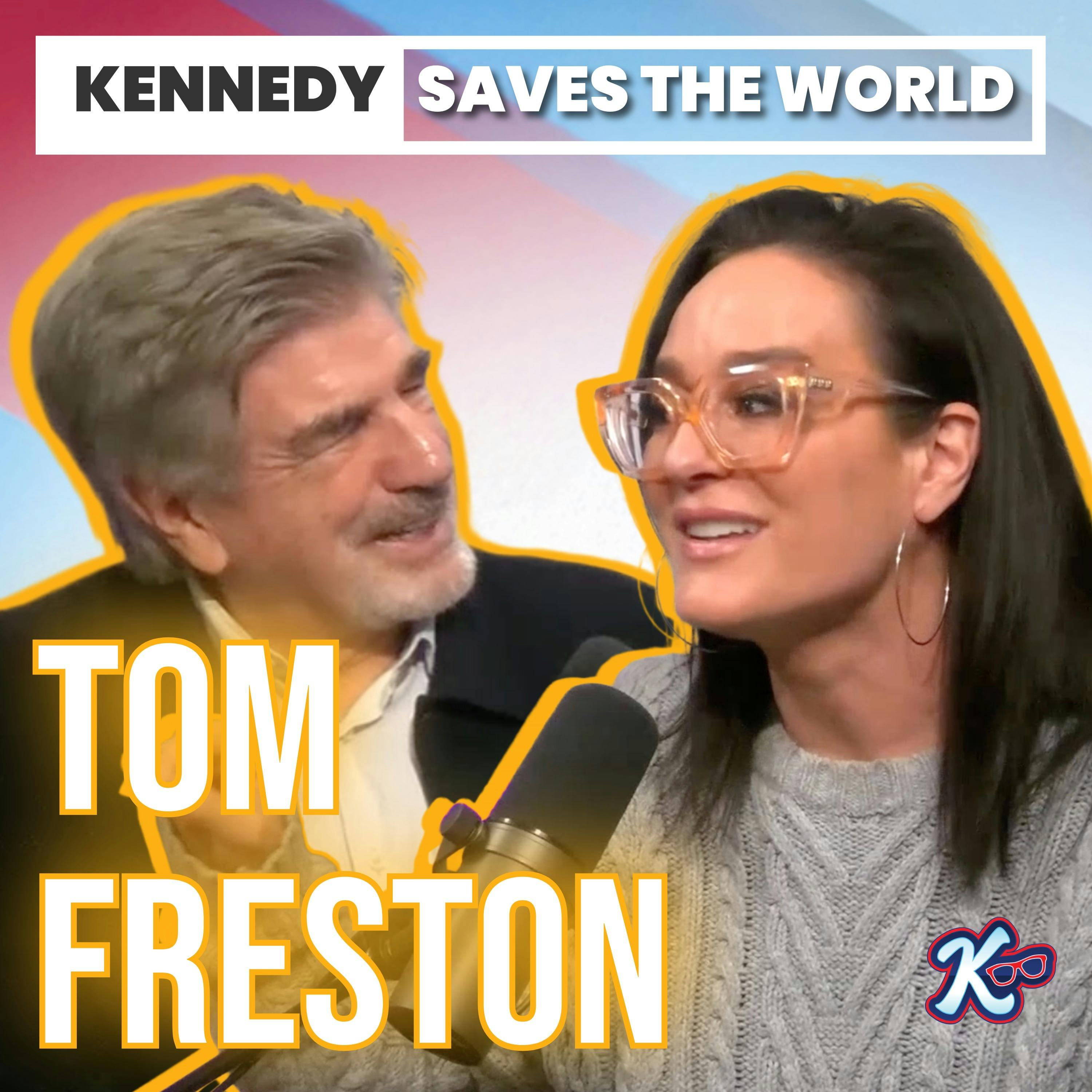
Welcome to this episode of Kennedy Saves the World. I'm about to interview my former bosses. Bosses. Bosses. Boss. Tom Freston was the CEO of MTV Networks when I was there. He went on to become the CEO of all of Viacom, Paramount. Everything under Sumner Redstone was Tom Freston's. And he has written a book about his adventures. Unplugged adventures from MTV to Timbuktu. Tom Preston, my old boss. Welcome to Kennedy Saves the World, my old employee.
- [00:45]
A
It's great to be here.
- [00:47]
B
Cheers to you. This is a strawberry Paloma.
- [00:49]
A
Yeah.
- [00:50]
B
Made with strawberry, simple syrup and love. Mmm.
- [00:56]
A
Yeah.
- [00:56]
B
Damn, that's good.
- [00:59]
A
One more sip.
- [01:00]
B
Can't even taste the liquor. That's my specialty. Tom, you actually. So I. I want to go back to the early part of the book, but what really intrigued me, and I almost had you make a drink because you were fired twice in your life. Once, Sumner, the fickle, mercurial former head of Viacom, Paramount, whatever the conglomerate was ultimately called before it sold to Skydance. He shiv'd you, harpooned you. And you were also relieved of duty. You were a bartender in the U.S. virgin Islands.
- [01:35]
A
Yes.
- [01:36]
B
And you learned how to make great tiki drinks.
- [01:38]
A
Yes, we made a lot of rum drinks down there. And I got fired because the guy who ran this resort, his. His best friend had gotten out of prison in Atlanta.
- [01:47]
B
Yeah.
- [01:49]
A
He said, you know, ex cons, they needed. They need another chance. So that was it. I had to move on.
- [01:55]
B
And you couldn't have been mad at him? I mean, given your.
- [01:58]
A
No. You know, And I'd been bartending all that year. I had worked in Aspen. I had worked in a couple of other Martha's Vineyards, so I was a professional bartender there.
- [02:07]
B
You have drifting around a great quote about Aspen. No one has been to Aspen and skied less than I.
- [02:16]
A
That's right.
- [02:18]
B
But I want to start at the beginning. I was very intrigued by your dad's service, and I think how he internalized being a war hero, which he probably didn't consider himself. He sounds like a pretty humble guy during World War II. And, you know, he saw a. A lot. The real harshness of war, that men came back and they were the greatest generation because they really didn't share their feelings. And in the book, what I got from you is what I've known about you is you're incredibly smart. You're a great conversationalist. You don't take any bull from anyone. You're good at hiring people. But you also. What I learned here, which I wish I had known was when I worked with you at mtv. I wish I had known your background. I wish you had. I wish I had known. You have this incredible wanderlust, and you were also a hustler. So you've got a homemaker mom and a World War II veteran dad who kept things pretty close to the vest. How did you develop those two qualities from your upbringing in Connecticut?
- [03:25]
A
Well, the wanderlust part was easy. I mean, somehow I just. First of all, we never went anywhere. My dad kind of had, I guess, what you'd call ptsd. He used to drive, though. He was a lieutenant in the Navy, and he'd drive those boats where the door went down and people would run out and half of the people would be killed immediately invading these islands in the South Pacific. He never once said one word to me or my brother about his war experience. You know, it was just quiet. He never wanted to go anywhere. So we only took one little trip, like 50 miles away when I. You know, by the time I left to go to college, so I was anxious to see the world.
- [04:00]
B
Yeah.
- [04:00]
A
And I. Excuse me, my phone's ringing. That's very Spam Risk. Spam Risk is calling.
- [04:07]
B
Is that a new band you're breaking?
- [04:09]
A
He calls all the time. But I was, you know, I was drifting towards the. The. I was very interested in the Beats, the writings of the Beats and the error of the time about freedom and travel and experience and that kind of. I realized I could hitchhike in those days. You could hitchhike, and I could kind of go anywhere safely. Yeah, safely. No one ever thought about, cross the country, across Europe, a single girl. You could hitchhike. It was not a problem.
- [04:33]
B
Yeah.
- [04:34]
A
It wasn't until Charles Manson rolled around, things got a little dodgy.
- [04:37]
B
Yeah.
- [04:37]
A
He ruined it for all of us.
- [04:39]
B
But you, you grew up in this kind of sweet spot before the Vietnam War, and then you came of age in college during the Vietnam War, and you said that. Which. Another thing that I also love, that you really identified with the libertarians of the time. Milton Friedman and Barry Goldman, Milton Friedman.
- [04:58]
A
And Anne Rand and Barry Goldwater. And they were against the draft.
- [05:03]
B
Yes.
- [05:04]
A
The other group that was against the draft were sort of my new literary heroes, you know, Ginsburg, Ferlinghetti, Kerouac. They also were, you know, conscription, it was like, for servitude. So the two of them, though they were unlikely to hang out together, were both on the same page with regards to the draft.
- [05:21]
B
Now, were you philosophically opposed to it? If there had not been a war, do you think you would have been opposed to conscription? Or like most young men, were you facing your own mortality prematurely?
- [05:32]
A
I would have probably gone. And it wasn't just like the mortality, because maybe you think, well, I'm going to go, but I'm not going to get killed. It was the idea of having a couple years taken away from you for a venture that seemed rather foolish.
- [05:46]
B
Yes.
- [05:46]
A
Which turned out, in fact, to be just that.
- [05:48]
B
Yeah.
- [05:49]
A
So, you know, it was, you know, you would avoid it if you could.
- [05:53]
B
Yeah, well, the conscientious objectors, you know, with history as a guide now, they were right. And did you think it was interesting that your father, who had served with a generation that was held in such high esteem, were you surprised that he was on your side in terms of doing whatever it took to avoid the draft and avoid the war?
- [06:16]
A
Well, when I first went to college, he was very much pro war. I think a lot of people were. You know, we didn't know much about it, but, you know, by the time 1969 rolled around, he was firmly in the anti war camp, as were most Americans. You know, how do we get out of this war? That was the promise on which Richard Nixon was elected. He was going to get us out of the war. But it dragged on, you know, till 74. So he was. He understood, I don't think he didn't want his son going over and losing his life for what would end up being kind of nothing.
- [06:45]
B
Yeah, no, it's understandable. And it's very interesting how history changes over time and how your generation and your dad's generation saw the war. And I've always been very intrigued by that time, especially 1968. But then the wanderlust really took hold. And that's when you went east after college and, and you started going to places that, to me, reading your book are unimaginable. And you. What was going through your mind in terms of get this adventure into my veins?
- [07:20]
A
Well, I was working in an ad agency and an old girlfriend called me and said, I told her I just been. I was getting assigned to charman toilet paper.
- [07:27]
B
Mr. Whipple, three kinds of toilet paper.
- [07:30]
A
Users, a whole other level.
- [07:32]
B
The folders and the crumplers.
- [07:34]
A
That's right. And we know the crumplers use 20% more toilet paper than the rollers of the folders.
- [07:39]
B
And your job was to. Was to get as many crumplers as possible using the Charmin.
- [07:44]
A
Let's get those crumplers into the store.
- [07:46]
B
That's right.
- [07:47]
A
Start squeezing the Charmin. Well, she said, why don't you quit? You can't do that. Quit your job. Come with me. We're going to go across the Sahara Desert. I was on a plane like a week later. I'd been in School for 18 years. I had this job. They first had me working on GI Joe. Now I'm going to work on Charmin toilet paper. And then we went down through parts of the Sahara Desert, and I kind of realized, boy, this is great. This is exotic. This is fun. Far cry from the lux Morocco of today. It was pretty close to the ground. I realized, this is really interesting, Exotic. I felt more alive than I ever had, and I realized I could go anywhere.
- [08:23]
B
Yeah. When you got to Tangiers, you talked about the joy of disorientation, which. That was another thing that I think separates you from a lot of people, because that's the thing that keeps people from traveling far, far away is the fear of disorientation.
- [08:39]
A
Well, disorientation was just sort of what I sort of wanted. It sort of put me in a new world that everything. You look at everything a lot more clearly. Time seems to slow down. Everything seems kind of enjoyable. And then when you realize, when you get adjusted, it's like, I can survive in this new world, and I could improvise my way around. I can learn some language. I could. You know, even. I could even hitchhike around here if I wanted to, which I did.
- [09:01]
B
And you got to see parts of the world that are so vastly changed. Tell me about your early experiences in Afghanistan.
- [09:09]
A
Well, I. I was. I traveled all around. North Africa, Greece and Europe. And then I met a woman. She said, you know, you ought to go to India. India was like the spiritual center in the early 70s. That was the. That was considered to be the greatest show on earth. So I went over land from Istanbul, worked my way into Afghanistan, and that was the first day I got there. I kind of fell in love with the place. I. Tremendously beautiful. The people were warm and kind, and you felt like you were in another century. It was almost intoxicating to be outside the modern world. No advertising, no cars. And did you feel welcomed? Yeah, the people were great. You know, they get. Afghans get a bad rap these days because, of course, they've had, like, 40 years of war. But when I was there, it was on the tail end of, like, we were 60 years of peace. And they were excited to be entering the modern world. And, you know, you would actually. The cliche was you could see women in miniskirts and Cobble in those days, it was all before the Islamic revolution and jihadism and all that, and ingrained in their culture, was to be kind to foreigners and visitors. So, you know, no matter how poor they were, they'd love that. They'd be happy to have you in your home. In their homes and give you food, whatever. So I love their sensibility. And they had a sense of humor. They'd never been colonized, the Afghans, so they really had a sense of humor and a lot of integrity, and they. They love to make fun of some of the crazy things that were going around them, so they. They were easy to fall in love with. In fact, the. They had a tourist poster that used to say, visit Afghanistan. See Afghanistan. Visit the world's friendliest people. Oh, that would be, like. You would believe it then, but these days, that would be the last thing people.
- [10:48]
B
No, people. People think of Afghanistan, and they think of a society that is homophobic and misogynistic and in the Stone Age, you know, that's what people think based on the images that they see. And, you know, my partner is an Afghanistan combat veteran, and he was there in 2004 and 2005, and, you know, left a piece of himself there.
- [11:12]
A
Did he? He was wounded there.
- [11:13]
B
Well, not physically.
- [11:15]
A
His heart.
- [11:16]
B
Yes.
- [11:17]
A
His mind.
- [11:17]
B
Yes. And a lot of people that he loved and fought with.
- [11:22]
A
Well, I stayed for eight years there, but then I went back again after I left Viacom, and I stayed for 11 years working on a TV station that was. Kind of revolutionized the place. It was about gender equality, tolerance, connecting Afghans to each other. First television they'd ever really had. And that was really was a thrill for me. I brought in some MTV people to work there, but it was a far cry from what your husband was or your partner was doing. I was in Kabul. It was a bit of a bubble, you know, not on the front lines.
- [11:51]
B
Yeah. But tell me about. You have this great story about goat polo.
- [11:58]
A
Oh, yeah?
- [11:58]
B
Yeah. Is it called buzkashie?
- [12:01]
A
Buzkashi, yes. That's the national sport. That's like the pro football. They take a goat and they decapitate it, and they put it in a circle. Then you have two, three, or four teams of people on horseback, and they dress up, they have uniforms, and they charge and beat each other. You have to pick up the goat and race down to the other end of the field, which could be far away in a big cloud of dust, and drop it in another pit. And then if you do that, you win a point, and yeah, that was a national sport. And the people who supported these, they called them Chopin Dahs. That was the name of these big powerful riders. They were sort of like the NFL football team owners. They would be supported. These warlords would own the teams. So they were always fun to go see. And it was like a real throwback to, you know, you could think you're back in the days of Genghis Khan.
- [12:46]
B
When you'd watch them and you had the governor of Mazar e Sharif who welcomed you in and was like, Americans, you have to see this. You're not gonna believe what we have. And what did they unveil?
- [13:00]
A
Yeah, he invited us into the only stands that were there and he was fascinated. I was with a group of Afghans and some foreign, you know, foreign friends. And they yelled, you gotta come to the palace tonight. We're making a big. Because it was New Year's, we're making a big ceremony. And I got a surprise for everybody. Now this was in Afghanistan, was poised to really try and go modern. And we went and we drove our bus in. No security check. They put us on a platform. Next to us down were all these Afghans and tribal people and they wheel in this dolly that was covered up with carpets. And everyone's hushed, what's under there? It's going to be a big surprise. They whip it off and it's a television. This is 1976. No one's ever, this might be the only television in the country. And they turned it on and it was black and white and it was like these marching bands from Uzbekistan. We had, they got a signal from Tashkent over the border in Uzbekistan and people were just like slack jawed. You know, this was seeing the marvel of television. He was saying, this is one of the things the government's going to do to try and modernize the country and bring us forward. This is television. It's called television. And I was really struck by looking at the Afghans watching television and how, you know, there were a few cinemas in the country, but no one had really seen live action in like in a little box. And I would return some years, you know, 30 years later to work on really the first commercial television station that really was a big positive force in helping civilize the country, promote tolerance and all of that. So I always remembered that day being there.
- [14:33]
B
Speaking of remembering, I mean, there's so much incredible detail in your book, particularly, you know, the era after business school when you're going back and forth to all these countries, having all these adventures Some of them terrifying, you know, some of them not knowing if you're going to cross the border. Being with a guy who had a brick of hash. If you had a single joint, depending on where you were, you get thrown in prison for six years. And this guy's like, no, this is going to set me up for life. You're like, I like his moxie.
- [15:02]
A
He, he was an amateur smuggler. He pulled it off, actually. Yeah, he pulled it off. I hired him years later when I had a business in India because he was. This was the guy who could improvise and get by and take odd risks and sort of pull things off. He wasn't a smuggler then. That was his one shot at it.
- [15:19]
B
Yeah. But he's like, hell, I got this brick of hash. This is worth something. And you're like, you're looking at these shawls and ornate drawstring pants. You're like, those are going to be worth something at Bloomingdale's.
- [15:30]
A
That's right. We were, we were making real, real legal things.
- [15:34]
B
Yes. Although you did have to after, and this was fascinating, after Jimmy Carter put the kibosh on US Imports, especially from India. Do you had to smuggle your remaining inventory because you had a multimillion dollar clothing import business at that point. You had to smuggle it through Canada.
- [15:54]
A
I was thinking, I'm either going to go, I know I'm going to go bankrupt anyway, but at least I could salvage a little bit off the top. So you could still ship stuff to Canada. And you know, I knew these smugglers from living in Asia. There was a lot of them in those days. It was very different from today. And so these long haired goofballs can do this like, so what do you think? So this guy's dad was.
- [16:12]
B
And you had, you had a business, you had your MBA from nyu. I wasn't programs in the country.
- [16:18]
A
I wasn't thinking straight. But I was thinking, I've been wrong. How can they announce this one day?
- [16:23]
B
Yeah.
- [16:23]
A
And it just happens. And there's no warning or anything. I see this happening now with tariffs. I have such a, such a. My heart goes out to so many of these young business people who, you know, they're importing furniture from Asia or something and suddenly they can't pay the tariffs and they just go bankrupt. I was in that situation.
- [16:39]
B
Yeah. If we knew more about our sleep, what would we do differently? Would we go to bed at a consistent time or take steps to reduce interruptions to our sleep? With the all new sleep score, Apple watch Measures your bedtime consistency, interruptions and sleep duration. Then every morning, it combines these factors into an easy to understand score from 1 to 100. So you'll know how to take the quality of your sleep from good to excellent. Introducing the new sleep score on Apple Watch iPhone 11 or later required.
- [17:10]
A
It's Will Kane Country. Watch it live at noon Eastern Monday through Thursday@foxnews.com or on the Fox News YouTube channel. And don't miss the show. Listen and follow the podcast five days a week at Fox News Podcasts or wherever you download your favorite podcasts. So we brought a little bit over to kind of like, kind of take the top off some of my debts. And I was out of business. And that was it. I had built an empire and lived like a pasha. And now it was. I was back broke, tail between my legs, in debt, and I was saved by MTV.
- [17:42]
B
Yeah. So that's when you got your $300 Armani suit.
- [17:45]
A
So you read the book?
- [17:46]
B
Absolutely, yes. And you, you went to this very building right here.
- [17:51]
A
Might have been in this room. I know. It was on the 8th. We were on the 18th floor where I had my interview. Yep.
- [17:55]
B
And so you come to mtv and they talk about something called narrow casting. So what was it? What was the first iteration of mtv? And I didn't realize that because there was no Wikipedia at that time, because everyone was like, oh, Bob Pittman, Bob Pittman, he created mtv. But you were there before Bob Pittman.
- [18:14]
A
Yes, I was there before Bob Pittman. I interviewed this guy named John Lack and his. He had been. This is a company that had been started by Warner Communications and American Express called Warner Amex. And their vision was we were going to. We were going to create these specialized networks. At that point in time, there was only NBC, abc, cbs, and some pbs. And these guys all came from radio, where they had created FM radio. So instead of, you know, these kind of AM stations, each radio station had a different music format. This idea of narrow casting is we're gonna do that to television. We're gonna have all news, all sports, all music, all kids programming. So we were on the tip of the spear of, like, what became what they called the television revolution. And, you know, and I was really enthralled with the idea. I knew about music videos. I told him this was the greatest thing, one of the greatest ideas I'd ever heard. And he said, we're looking for people with no experience.
- [19:06]
B
Yeah. Because they didn't want people who were already, like, preconditioned or too slick, like Too fancy. Who had been in these like corporate systems. So, you know, it's like when I'm this and reading about the genesis of all that, I was wondering like how much of the unveiling of the TV and like the awe and the mystery, like how much did that impact you when you were starting MTV and like naming MTV and staffing mtv.
- [19:30]
A
I just. People would react to MTV in the early days. It's easy to not know that now, but in its day it was that revolutionary. People never seen that kind of editing style, that kind of music format. People would look at it with awe and wonder. Wasn't a flying car, but it was sure a odd looking television station. I don't know what they're doing there. And so it was sort of the same thing. And wonder, yeah, new people developed sort of a new visual vocabulary. So I was in, on the ground floor of that with a team of six or seven people working for Bob Pittman, who was six years younger than me, became a mentor.
- [20:04]
B
Oh, wow. And then he, he started iHeartMedia essentially.
- [20:09]
A
Well, he did a bunch of things between that. I mean he ran Six Flags. He. He had his own private private equity company. He had a. Who. He's had. He's done a lot of things. But now he's running iHeart. Yes.
- [20:19]
B
Yeah, I know.
- [20:20]
A
The KROQ included in the iHeart family.
- [20:23]
B
I don't think so. Because they were. No, they're not. Because they were. When I worked for them, they were Infinity. And then they were bought by CBS and Viacom. And Mel Carmezen, before he worked with Sumner, he ran Infinity. And I remember being 18 and Mel Karmazin walked in and he was like, give me a cup of coffee. I was like, you get me a cup of coffee. I was like, I'm going to be your boss one day. He was like, who the hell are you?
- [20:49]
A
He probably did get you a cup of coffee.
- [20:51]
B
And then he's like, I like her. He told Andy that I loved.
- [20:54]
A
I loved Mel. He was a character.
- [20:56]
B
Was he one of your favorite, like kind of corporate C suite entities that you.
- [21:01]
A
Yeah, because he wasn't really a standard suit. He had a real spunk and he was a. He was sort of a buccaneer in a way. And he went, he built these companies like an entrepreneur as if it was his own company. And he conglomerated all these radio stations into Infinity, got CBS to buy it, then he kind of took over cbs. Kind of displaced all the people above him. And then he got some to Redstone to do a. You Know, to purchase him. Purchase it.
- [21:27]
B
So when you describe Mel, it's very similar to the way you describe Sumner. I didn't realize Sumner, I knew he was like kind of weird. I didn't know he was that eccentric. Was Mel Karmazin just a huge threat to Sumner because they were so similar and because they were buccaneers in their own way?
- [21:46]
A
Well, I think at the heart of it, when Mel began to get credit for some of the good things that were happening to Viacom and this happened to my prior boss, between him, Frank.
- [21:54]
B
Biondi, who you also had great.
- [21:56]
A
I had great respect for both of these guys that, you know, Sumner saw them getting all the credit, yet they worked for him. And I think he got a bit jealous of. Sooner or later they were out.
- [22:07]
B
Yeah. And. And you were trying to talk Sumner out of firing. I believe it was Mel. And what did Sumner say to you?
- [22:17]
A
Well, I said, you know, Summer said, he's doing a horrible job. I said, we've never been. We've never done such a good job. Things are really hitting on all cylinders. And he just says, you know, I forgot what he said.
- [22:28]
B
No one in my mouth.
- [22:29]
A
No one in my mouth. Yeah, that was a new one. It still is. I don't think I've ever used it on another person.
- [22:39]
B
Did you keep a diary from all these periods in your life?
- [22:42]
A
I had diaries from when I was living in Asia and then when I went back in 07, I kept periodic diaries and I do traveling and when I worked there, I didn't keep a diary, but I had a lot of notes. But when I, when I was fired, I thought I just, I had to leave. I didn't take one piece of paper with me. It was just, get out of here.
- [23:00]
B
I love that you took the anthrax chainsaw.
- [23:02]
A
They said, hey, son, I can use this. I had one of those bankers boxes. Like, you see these people on TV now, they're getting laid off. They're all carrying around these bankers boxes out of the office or out of government agency. So I put in the chainsaw, some photos and that was it. But I had diaries. My assistant Diane, she kept diaries of, you know, where I was every month.
- [23:24]
B
So that's how you kind of piece that.
- [23:25]
A
And then, you know, you can look at that and then you can remember what, what the hell you were doing.
- [23:28]
B
Did you call Doug and Judy, Doug herzog and Judy McGrath, who were absolute, like wonderful geniuses when I was there. Like, I, I had such a great relationship with the executives that, that you had chosen there because they did not put themselves in ego above the people who worked there. And they, they knew people's names they loved. Like Judy McGrath lived for creative people. She really, really respected the creative process.
- [23:56]
A
We never would have become the sort of eccentric and were without Judy McGrath or Doug Herzog. They had great way with talent. They had sort of a left brain, right brain thing going. People wanted, would line up to work for them.
- [24:08]
B
Yeah.
- [24:08]
A
And yeah, they were humble, operated close, got in the trenches and they were joyful, they loved what they were doing and we were taking risks and we were being successful most of the time.
- [24:18]
B
So my, the guy who changed my life, he was my program director at KROC in Los Angeles and he was one, I was an intern and I used to bug him all the time. Be like, you should put me on the air, you should put me on the air. So he did and he made me a radio DJ with absolutely no experience. And then you found out about Andy Schoen because he had done a promo the Bonobono Weekend because you two was playing. And so he was going to do some sort of a collaboration with Sonny Bono. And Bono. And you heard about that. You're like, we have to have this guy.
- [24:54]
A
And he was fantastic. He still is fantastic. He's still a friend, you know. And I heard, you know, he was exactly the kind of spark plug of a guy we needed at the time. We'd kind of run through a cycle. We were trying to get up there. KROQ was the coolest radio station in the country. And really a lot of that was due to Andy and people like you. He would take chances. Oh yeah, some didn't work. You know, he'll do something else tomorrow.
- [25:15]
B
The second biggest market in the country isn't going to hire an 18 year old Internet. Like it just doesn't happen.
- [25:20]
A
But I mean it was also was like an alternative rock station. But it became one of the biggest stations in Los Angeles where there must have been 50 other stations.
- [25:27]
B
Yes.
- [25:27]
A
Just due to like smart promotion.
- [25:29]
B
It's like, I'm sure you knew this when you were commuting into the city when, when you lived in the outskirts and your father certainly did. Like radio was everything. Like, that's that's all. And that's where car culture and radio culture sprung up. And you know, for. It's not always easy to switch mediums. Like it's not always easy to go from importing clothes from India to running, you know, a massive media conglomerate. And for Andy it was not easy going from radio to tv. And there Was a pretty steep learning curve. And I remember, like, he was intimidated by you and Doug. He was like, they're just so, like, east coast and smart.
- [26:08]
A
And we didn't really know what we were doing either. And he was a quick study.
- [26:13]
B
Yeah.
- [26:13]
A
And, you know, I mean, he hired people like you. All the people on kroc, they all had this certain spirit about them. It was like not. You were not the norm. Normal DJs.
- [26:22]
B
Yes.
- [26:23]
A
So you kind of jumped off the air on television, too. So Alternative Nation for I don't know how many years we were on there.
- [26:28]
B
Yeah, I was on for five years. So. Do you remember the night you almost fired me?
- [26:32]
A
Yes.
- [26:33]
B
It wasn't in the book.
- [26:35]
A
No, I. I didn't want it profane. I didn't want to include that from.
- [26:41]
B
The guy who visited sex communes and was, I know. Smoking hash on Camelback.
- [26:47]
A
I know. It was you and your buddy Rudy Giuliani.
- [26:50]
B
Oh, yeah.
- [26:50]
A
He was then the mayor of New York and you insulted him.
- [26:52]
B
He was the new mayor of New York.
- [26:54]
A
Right. He just started cleaning up the year before.
- [26:59]
B
You were at Pauley Pavilion. And there's a really funny picture of you and Sumner, like, with an MTV scum. Repent. MTV scum at. At the 93 Video Music Awards. So 94. Rudy Giuliani, brand new mayor of New York, lobbies MTV to come back to New York City, rolls out the red carpet right here at Radio City. And so we go there. It's the first time they let VJs be a part of the show. And so Bill Bellamy and I get to be presenters. That means, like, our name is in the opening credits. That had never happened. I couldn't believe it. And then so we're. We're up on the balcony, you know, with the. The pov, looking down into the packed house to the beautiful stage. And Roseanne comes out and says, I just saw Kennedy backstage blowing Rush Limbaugh. And I was like, no. And then the three of us, Bill Bellamy, Rudy Giuliani and me, like, we go up on the big screen and everyone starts booing. And I don't know if they're booing me or Giuliani. So I think it's because of Roseanne's joke. So I start licking the microphone like a crazy person. Rudy Giuliani has no idea what's going on. What is going through your mind when you're seeing that?
- [28:10]
A
I said, oh, my, my. He's a new mayor. He's going to have. He's going to give us a good talking To. I admired your, your carelessness and spirit of the moment.
- [28:22]
B
That was my 22nd birthday.
- [28:25]
A
I don't know what the proper use word to use is here on the air, but fellating.
- [28:29]
B
Yes, I was fellating a microphone.
- [28:31]
A
Fellating a microphone in front of the.
- [28:33]
B
New mayor, in front of the world.
- [28:35]
A
But he's thinking, what a classy operation this is. I'm sure glad I came to this show. Yeah.
- [28:40]
B
Thank God I lobbied them to New York City. That was also the show where Lisa Marie Presley and Michael Jackson opened the show and said. They said it wouldn't last and they kissed and that like set the stage for the whole thing.
- [28:54]
A
Yeah, those were the days. The 90s were wild. Yes.
- [28:57]
B
I remember seeing you afterward and I was like, good working with you, Tom. Haha. And you're like, you said to Andrew, there's that disgusting lady we saw earlier.
- [29:08]
A
Where did you find her?
- [29:09]
B
Yeah, but, but somehow I kept my job.
- [29:11]
A
You survived, you know.
- [29:12]
B
Was it Andy who lobbied you to keep me, Andy? Well, because I know Sumner wanted me.
- [29:17]
A
Gone that night and Sumner and Doug said, oh, you know what, it was kind of funny. Let's, let's go light on the young lady.
- [29:22]
B
Yeah.
- [29:23]
A
Didn't mean any harm. She was just thinking out loud with her hands and her mouth and mouth.
- [29:29]
B
Yeah. Oh, my mom was so proud. Don't go anywhere. More Kennedy Saves the World right after this. This is Ainsley Earhart. Thank you for joining me for the 52 episode podcast series the Life of Jesus.
- [29:41]
A
A listening experience that will provide hope, comfort and understanding of the greatest story ever told. Listen and follow starting November 30th on.
- [29:49]
B
Foxnewspodcasts.Com Were the 90s the heyday of MTV?
- [29:55]
A
Yeah, I mean we had the scrappy 80s and then by 90s, we were like a household world. We were all over the world. We were everywhere. And then. And the music scenes that came up in the 90s, you had the, the Seattle scene and then you had the sort of the boy band pop things. Britney Spears and the Backstreet boys, hip.
- [30:14]
B
Hop, Dr. Dream, let's not forget.
- [30:16]
A
Yeah, let's not forget Dr. Dre and Snoop Dogg and Tone Loke and the whole gangload of them. Missy Elliott. We were very colorful people were making great videos. We were, we were riding on top of the world. The digital thing hadn't really showed up yet, which would ultimately sort of disseminate not just mtv, but a good part of the legacy media business. So that was our heyday. Yeah.
- [30:39]
B
And so, you know, a lot of people blame Reality tv for the demise of mtv. I would argue that animation, you know, that you could say the Beavis and Butthead and south park were the tent poles of MTV Networks. That that really boosted it and gave it a factor that I don't think anyone realized that cartoons could. But MTV did have a lot of animated stuff.
- [31:01]
A
We did, we did. We had a whole animation department and we started off doing those clever animations even back in 1981 with the Logos. And then, you know, there was this animation movement that was sort of underground, not the mainstream thing they would make in Burbank, like Hanna Barbera, where there was like a Cartoon Factory and Nicktoons, you know, SpongeBob and Rugrats and all of them. Really. That was the biggest thing the company had.
- [31:20]
B
Yeah.
- [31:21]
A
And we would find these young animators and, you know, give them freedom and license and, and do work for them, you know, do their work for them essentially. So it was a good thing. But I don't, you know, if anything kind of took MT's mojo away, it was the Internet.
- [31:33]
B
Yeah.
- [31:34]
A
Because if music videos were our primary, you know, sort of program element, if you could get it online, if you could get, you know, Missy Elliott by clicking your mouse rather than sit around and sit through, you know, some hair band before they turn up, that would win almost every time. So that began to take away the mojo of MTV and you know, as the digital revolution continued, all the basic linear cable networks, you know, it's hard to fight the on demand application.
- [32:06]
B
Yeah, I mean, it's one of the things that, you know, here, working at Fox, just trying to figure out like how much emphasis do you put on your digital product? How much emphasis do you keep on the traditional?
- [32:20]
A
Yeah, well, Fox has an advantage because they have exclusive programming. I mean, their programming isn't. Music videos are all over the Internet. They weren't exclusive. So sports and news, you know, can fare better in this new world as an old line linear network than a lot of other, you know, cable stations.
- [32:39]
B
Although MTV Sports was also revolutionary. Like it brought before the X Games there was MTV Sports.
- [32:46]
A
We tried a lot of things. We're on the forefront of a lot of things. I mean, the culture of the company was always put creative people in charge, not business people. And let's always try and push the envelope and be creative and take chances and if it doesn't work, we'll take another chance.
- [33:01]
B
I never knew how the I want my MTV campaign started. And I was delighted that it started from a best practices of a children's cereal Campaign. So explain how that came to be.
- [33:14]
A
Well, there was a. When we started mtv, nobody wanted to take it. Cable systems then, like, were monopolists in a certain geography. And they didn't like the idea of MTV because it was going to cost them 10 cents a home a month. We were going to cut into their profit margins. They didn't think anyone was going to watch music on television. And I would know because I was like, the marketing guy. I would go out to Tulsa in places actually had cable.
- [33:37]
B
I love that story. And the girl at the car rental place sees John Sykes MTV pin. She's like, can I get one of those? And you finally, like, you couldn't get MTV on the coasts. Like, it was only in the middle of the coast.
- [33:50]
A
No one who worked there had ever seen it.
- [33:52]
B
That was wild.
- [33:53]
A
So we go out to a place that had had it for, like, two and a half months, and she says, oh, how do you know about mtv? Everybody knows about mtv. And you go to a bar and they'd have it up on the screen like it was a sports.
- [34:03]
B
What was that feeling? Like?
- [34:04]
A
I was like. I was shivering. I was. I couldn't believe. They took me to this bar, this radio station guy who's telling me MTV's really affected their playlists. And we go to this bar, and everyone's sitting around like they're watching this super bowl standing around and their music. MTV's on, and people are transfixed, just like those afghans were way back, you know, in 1976. And that was like, okay, I know we're working. If we could connect with the customers, the ultimate customer. We got a business here, but no one would carry us anyway. So we decided we had. We were running out of money and we needed to go for broke. So the Hail Mary pass was we hired this guy, George, Lois and Dale Pond. They had an ad agency, and George had done the I want my Mapo campaign at one point.
- [34:45]
B
And for people who don't know what.
- [34:46]
A
Maple is, maple was like an oatmeal cereal you had to cook. And they realized they couldn't sell it to. They couldn't sell it to parents. So they would go directly to kids and say, I want my maple. Some brats would do it. But then they had Mickey Mantle, Wynne Chamberlain and all these people. And he says, we're gonna do that. Like, he's a. Those cable operators. Let's go right to the fans. And they would all. We would go out and get rock stars, Mick Jagger, David Bowie and so forth to say, I Want my mtv, hold the logo. Legitimize us. Call your cable company and say, I want my mtv. They'd all call, and the cable operators would collapse.
- [35:23]
B
And you ended up in a sauna with David Bowie.
- [35:26]
A
I did. That was one of my great stories. I'll tell it.
- [35:29]
B
Yes.
- [35:30]
A
Okay. So one guy, Les Garland, he was told to get Mick Jagger. John Sykes was told to get Pete Townsend. I was told, you go get David Bowie. I called David Bowie's manager and she said, yeah, he can't do it. He's skiing in Stad, Switzerland. And they said, but, you know, if you want to go to Staad, Switzerland, he might want to do it. He was a. You know, David was the first guy to ever give us permission to use his photo.
- [35:53]
B
Awesome.
- [35:54]
A
So I said, we'll go anywhere. We're like, mission impossible. So we went to Staad on a train and a plane and all this equipment. We went to a little some side hill and David came out. He was really looking. He was in a let's dance phase. Look really sleek and gritty. He had it all in his head. He was going to ski down and swish and say, I want my mtv. Then we'd hold up, and then we'd animate a logo in afterwards. And we did that. And he said, hey, when we're finished, it didn't take long. Anyone want to go skiing? You know, want to hang out? And he was like, yeah. And then he says, at the end of the day, well, what are you doing later? You want to take a sauna at the Palace Hotel, which is like the Grand Dom Hotel.
- [36:32]
B
Wow.
- [36:33]
A
So I, like, went back to our youth hostel where we were sort of staying and said, I'll see you losers later. I'm going to take a sauna with David. Boy, I can't believe this is happening to me. So I go there. I go down into the spa. He's waiting, you know, get undressed, put towels around us, and we go into the steam room. It was a steam. No, it was a sauna. Excuse me. And there's only one other person in there, and he's up on a back bench. You know, it's a ski resort. And I look, I squint through the steam, and it's Paul McCartney.
- [36:59]
B
Oh, my gosh.
- [37:01]
A
I'm in a sauna now with David bowie and Paul McCartney just wearing a towel, throwing water on the rocks. And they just were shooting the. They wanted to know what MTV was about, what we were doing.
- [37:13]
B
Were they skeptical?
- [37:14]
A
No, they were. They wanted to Hear they wanted to get information. I was telling them how we were doing, why we were doing this campaign, how great this was going to help us. You know, in the end, we had a good relationship with Paul McCartney, too. He made the first unplugged record that came out years later. Yeah, so, yeah, that was. That's maybe, you know, that's top five story.
- [37:33]
B
That was incredible that all of those artists were on board because that was what really created this critical mass that forced the cable operators to take it because they were inundated with these calls. Like it was that. That sort of brilliant guerrilla marketing.
- [37:49]
A
And we never miss. We go town by town, city by city, run a lot of advertising. You know, three weeks later, all the cable operators would put up the white flag. I'll take it. So we added millions and millions here. We went up to like 60 million subscribers from like 3 million.
- [38:02]
B
That's insane.
- [38:03]
A
And then we just built up from there. I thought of this idea the other day when they took Jimmy Kimmel. This dropped off the air, and I said, you know, they were thinking about what this means to the FCC or what it might mean to the administration or whatnot. And the forgotten element, what it might mean to the fans. You know, if you disenfranchise some fans who like somebody and if they're young and they got time on their hands, they could. They. They also have a voice in this. So they think they canceled a lot of.
- [38:29]
B
I mean, that's a worry with Gayle King. If CBS pulls the plug on her contract and she's not part of the morning show, that the fans who love her and have been watching her and who have been connected because, you know, morning television is a different animal. There is an emotional connection there that people have. They have their favorites.
- [38:45]
A
Exactly. You have your favorite with Gayle King, and she's one of the key favorites. So if you take her off, they just might migrate to NBC. You know, they might cancel their streaming service on Paramount.
- [38:54]
B
What do you think of the Skydance merger? Because I know that. That you write in the book that you were asked more than once to come back to Viacom as a CEO.
- [39:03]
A
Yeah, well, come back and be on the board.
- [39:05]
B
Oh, okay.
- [39:06]
A
But I. And I wasn't. That. That was before Skydance showed up. And, you know, when they, you know, Viacom went through various trip, you know, tough times, and Skydance showed up and there was. Was the Skydance gonna buy it or some private equity companies? I was rooting for Skydance. I said, I don't really even know Them. But I do know that, that he likes movies. He likes to create a product. David Ellison, he's young, he's smart, he's got money. He's going to, you know, take this company somewhere. If a private equity company comes in, they're probably going to harvest it, sell it off for parts, and the whole thing will disappear. And here it is. It's a legacy movie studio. You've got these great TV brands and so I was happy to see them win.
- [39:44]
B
Yeah. Do you think that Sumner made a mistake splitting the CEO job between you and Les Moonves?
- [39:52]
A
Yeah, that was not the time to do it. That was a time when you wanted to kind of double down and get bigger, not make yourself smaller.
- [40:00]
B
And if you were running Skydance today, what would you do?
- [40:04]
A
Oh, boy. I mean, the idea that they want to buy Time Warner sounds pretty sexy. You know, on one hand, you'd hate to see the another movie studio kind of get consolidated, like Fox was consolidated into Disney. But it would give them some heft. And in this world, heft is important. You want to go worldwide, compete with Netflix and everything else, because it would give them a lot. So I kind of think that that's a deal that, you know, makes sense. I don't know if they're going to be able to do it. And once you were to do that, there's a lot of interesting things you could do. One of the things they're going to have to do is try to reimagine what MTV was, for example, or Nickelodeon.
- [40:46]
B
What do you think will happen to the remnants of mtv?
- [40:49]
A
Well, I hope they. The remnants would be they have an amazing library of music news going back to 1980. They've got all these specials and, you know, the unplugs and all these video music awards. They have a huge library and they've got a logo that. And they got a brand that's worth something and they could reimagine how to do it in a digital world, you know, and I'd say we'll get someone like John Mayer or Rick Rubin and put them in a room with 25 year olds for a couple weeks and they'll come up with some great ideas. You know, don't ask some old people to do it. So hopefully it would live on.
- [41:24]
B
Yeah. And maybe the model that you guys created could give it a new lease on life. That might look different to us and might have been something that was unimaginable to us during the golden era. But you know, to young people who are looking for videos like A digital platform is where they would naturally go.
- [41:41]
A
So much of the music today, if you're looking to discover music, is all done by algorithms. Yeah, it's kind of impersonal. So there's a corner of the music business you might be able to capture by having something smartly curated. Have people like you on the air talking about music. No one really does that. You don't see any sort of intelligent music conversation if you're a real music fan. There's no real place to go to these days.
- [42:01]
B
Yeah. And, you know, there are some good music documentaries, but you've always been such a music fan. There was a rumor when I was there that there were fots, friends of Tom, that could get their videos on the air without the approval of the TAR board, which was talent and artist relations. And that was like the. The secret, you know, conglomeration of the. The music executives at MTV who would decide which videos went on the air. And if they chose your video, like, you would have a platinum record. Like, that was a fast track to success. But there was a rumor that one of the fots was John Mellencamp. Would you get John Mellencamp's videos on the air and tell Talent, artist Relations they had to play it?
- [42:46]
A
No.
- [42:47]
B
Really? No.
- [42:48]
A
I mean, I could nudge people, but I would never told them what to do. And, you know, so people like John Mellencamp or Don Henley, they would do favors for us, and they would expect some favor in return, and that's only fair. And, you know, I mean, at one point, like Guns N Roses, the. You know, remember, welcome to the Jungle, one of the most seminal clips of all time, Talent, Artist relations didn't want to play it. I don't know what they were thinking. Yeah. So David Geffen called me, who we did a lot of business with, and he said, what. What's going on? We, like. We think this band is going to blow up.
- [43:20]
B
Did he threaten to start his own music channel after that?
- [43:23]
A
He just said, come on, can you put it somewhere? So they. I called up the TAR people and I said, you know this. By the way, this video is pretty good. You ought to look at it again. And they put it on, like, at 3 in the morning. And then Kevin will call up, you know, you put it on at three in the morning, like once every day. And we're selling records now. You ought to step it up. And they. Andy would say, well, the research says, you know, this is a good thing. So next thing you know, they're selling 10 million records, and they're in every rotation and they become this iconic group. So I would never force myself on anybody. You know, maybe there was one or two exceptions. There was the Macarena, of course, the Forbidden dance.
- [44:01]
B
Oh, I remember that.
- [44:02]
A
They didn't want to play that.
- [44:05]
B
I remember we did a spoof of that. All the VJs did. And it was one of the funnest times at the beach house. And I remember at the first beach house in Quag, your family had a house like right down the road and your ex wife would come over every once in a while in her black bathing suit and she was very mad at us because the music was quite loud.
- [44:24]
A
Yeah, you were never invited back. Mtv, we go to Daytona beach for spring break one year, they paid us to go. Never invited back. Then we move out to Arizona. Not invited back.
- [44:33]
B
Panama City Beach, I remember that they were lobbying, so Steve Isaacs and I, one year had to go by ourselves while everyone else was at Daytona beach because they're like, please, we'll pay for everything.
- [44:43]
A
So we went there and then we got thrown out of there.
- [44:46]
B
We're like bad tenants at the MTV beach house. One year in Malibu, you know, we had this incredible house overlooking the Pacific Ocean. Lots of room to shoot. There was a Slurpee slide and just giant pools and a tennis court. It was amazing. But of course there were snooty neighbors who, you know, had worked hard to have their own multi acre property beachfront in Malibu and they would call the sheriff all the time. So at the end of the summer, Joelle Charlo, who was in charge of production and per diems, and she was a woman you'd always go to for money. She was so just beaten down after nearly getting arrested by the LA county sheriff so many times. So as a joke, they had a guy in a police uniform come up and put her in cuffs and she started crying. And then he whipped off his clothes and pulled out a beatbox and did a little strip tease on her lap.
- [45:48]
A
Oh, that was. Those were the days. We'd be the worst neighbors imaginable. If you had a beach house, have us move in next door. I mean, how could it even be legal, you know? But in those days we just did it. We didn't know any. No one asked for permits or anything. No, let's just rent this house as me and my family. And then all of a sudden the production crew comes in.
- [46:07]
B
Do you know what they paid the kids on Club MTV in the summer to dance?
- [46:11]
A
Oh, don't embarrass me.
- [46:13]
B
Two Slices of pizza and a bottle of Snapple.
- [46:17]
A
Well, we were low cost operators, as we like to say.
- [46:22]
B
I loved every minute of it and I'm so. It was so much fun reading your book because mostly for the parts of your life that were a total mystery and, you know, you've shone a light on your adventurousness that you, you still have this desire to make the world a better place, you know, and, and to go to the far corners of the world. And you tell people in the book, like, anyone can change their life.
- [46:48]
A
You can, you can improvise your life. You shouldn't be afraid to step off a job you don't like. And, you know, I mean, the world's the best classroom and you can pick up a lot, you pick up a lot of qualities if you travel. Empathy, humility. I mean, you, you certainly have a more nuanced view of life, tolerance. So I would, I think, you know, people today that I see these kids today and they all have, they're worried about panic attacks, they're in college and they're having their levels of depression. I don't know if it's social media or what it is, but, you know, we never had that. That was not very prevalent that. And then they get out of college and, you know, a week later they're working at Goldman Sachs or some kind of place and they will, you know, give yourself a break.
- [47:27]
B
Yeah.
- [47:29]
A
Check out for a while.
- [47:30]
B
Then you realize you did not want to be on that track. You did not want to be early on. I'm that Mad Men corporate track. And that's when Suzanne was like, bro, you're done with the Charmin.
- [47:39]
A
Life was a little more interesting. Off the track.
- [47:41]
B
Exactly right.
- [47:41]
A
And, you know, MTV was off the track, off the mainstream track. So in a way, all of that training I had working hard in Asia all those years was a perfect fit for having, like this eccentric, edgy company, you know, where you would tolerate outsized personalities and, you know, people like you.
- [47:58]
B
Yeah. Outside the box, thinking.
- [48:00]
A
Outside the box thinking.
- [48:01]
B
And it would work at any other point. Like, I would never have been given that opportunity. And it absolutely changed my life. And I can't believe, you know, it's like 33 years later, I'm, I'm still doing what I love and talking to people and, you know, finding wonder in the world. And you, you can't imagine when you're 20 and you start somewhere at MTV that when you're 53, the world is going to be as joyful as it was back in your late adolescence.
- [48:30]
A
Yeah, well, it's a gift.
- [48:31]
B
Yes.
- [48:32]
A
We all had a gift. I. My closest friends today still are people I work with back then. Maybe the same for you. We're still in touch with them. When I see people, because we had this amazing alumni association, they're all over the place because people would be young, they get a, they get a job and then they leave. And I'd see them and I'd say, you gotta say, hey, Tom, I used to work for you, man. I go, yeah. How was it? He goes, those were my best years.
- [48:55]
B
Yes.
- [48:56]
A
People always say that. I go, me too. Yeah, me too. That was. We really had a special, you know, time period.
- [49:03]
B
Well, thank you for writing all this down. Unplugged Adventures from MTV to Timbuktu. Tom Freston, my old boss's boss's boss's boss. And now he's bossing it up in Africa and saving the planet. Thank you, Tom.
- [49:16]
A
Thank you. Thanks for plugging the book. Nice to be here. Great to see you.
- [49:19]
B
Cheers.
- [49:20]
A
Cheers. Let's finish our drink. You didn't drink much. Not enough. Because you're going on the air.
- [49:23]
B
I know, it's true. Oh, it's so good when it hits the lips. This has been Kennedy Saves the World along with Tom Freston. I'm Kennedy. Listen ad free with a Fox News podcast plus subscription on Apple Podcasts and Amazon Prime. Members can listen to this show ad free on the Amazon music app. Oh, go ahead and leave me a review while you're there. I'd love to hear what you have to say. You've been listening to Kennedy Saves the World on the Fox News podcast network. Hey, Ryan Reynolds here wishing you a very happy half off holiday because right now Mint Mobile is offering you the gift of 50% off unlimited. To be clear, that's half price, not half the service. Mint is still premium unlimited wireless for a great price. So that means half day.
- [50:17]
A
Yeah.
- [50:18]
B
Give it a try at mintmobile. Com Switch upfront payment of $45 for three month plan equivalent to $15 per month required new customer offer for first three months only. Speed slow hundred thirty five gigabytes of network spizzy taxes and fees extra cmntmobile.
- [50:28]
A
Com.