← Kennedy Saves the World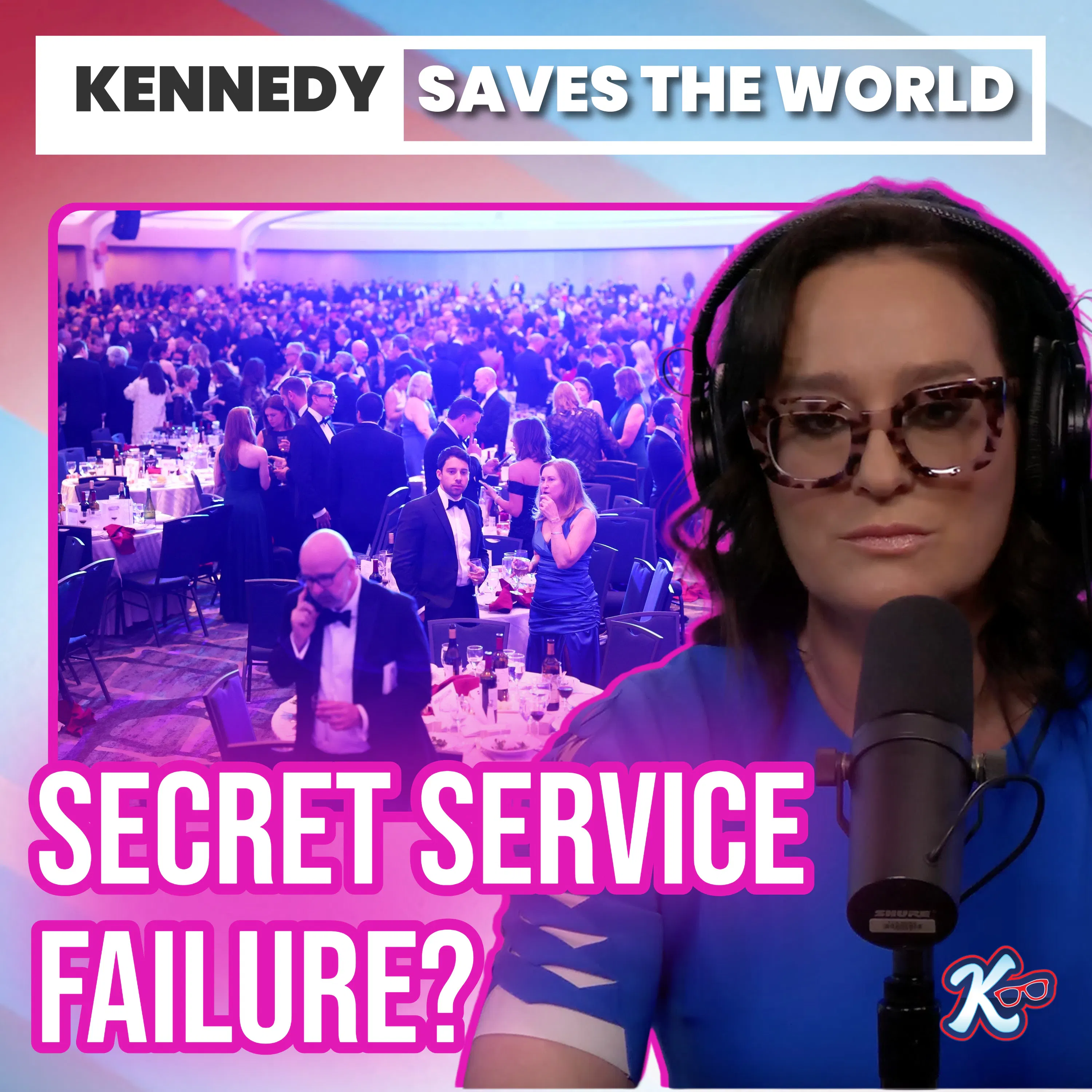
Kennedy Saves the World
Secret Service Failure? Retired Secret Service Agent Examines WHCD Shooting
00:39:21
Loading summary
Transcript82 lines
- [00:00]
A
Foreign.
- [00:10]
B
Hello and welcome to this episode of Kennedy Saves the World. After the correspondence dinner on Saturday night, a lot of people have questions about security at the event. And the Secret Service has taken a big hit in terms of blame. A lot of people blaming the agency for the security failure. One wondering how a deranged and angry person got a gun that close to the President. And from what I saw, the Secret Service agents that I witnessed, the interactions that I had, the video that we've all seen since the dinner from my interface, the Secret Service did a pretty amazing job. And you know, what I want to know is what are they tasked with? What level of security are they expected to provide? Where were the gaps? How did they communicate with the in house security and other law enforcement? Because you know, it is Washington D.C. so it is going to be, I'm assuming federal law enforcement. And joining me now, John Constantine. He is a retired U.S. secret Service agent and he hosts a podcast. He was an agent for 23 years. So I figured there's no one better to talk to than John. John, welcome to Kennedy Saves the World.
- [01:34]
A
Thank you for having me.
- [01:35]
B
So let's talk about this a little bit. Why do you think people are blaming Justice Secret Service and is that blame appropriate?
- [01:47]
A
I listen to a lot of the media, I listen to a lot of information. I've been into that hotel many times doing protection assignments for many different people. One of the things I believe that needs to be understood is at that event specifically the Secret Service is primarily focused on the President, the Vice President. Anybody that they had details on, people have to understand. I heard a lot of, well, the lobby was like this and the outside was like that. And the Secret Service in the end, in this event is primarily focused on the people that they protect who have security details, meaning that that was a restricted area where the magnetometers were. I'll talk about that in a second. However, when something happened, the event happened, they were primarily focused on the President to vice president and everybody else. Everybody in that ballroom that was protected, that had details, they were the ones that were going to be taken away. And if the Secret Service had to choose between the general public and those people, they would choose those people. The general would not receive the same level of security because it's not a national special security event. And the protected area was in fact, one layer of security compensated for another one because everybody saw the videos, they saw there was complacency there. There was, there were issues at the magnetometer checkpoint.
- [03:12]
B
But the were those Secret Service agents or was that Other law enforcement, from
- [03:16]
A
my understanding, and it's just from all open source and what I could identify, there were Secret Service agents and officers at that magnetometer. If there were other agency members there, I can't identify them from, from the video, which is a little hazy.
- [03:30]
B
Okay, so if Secret Service is there to protect the people for whom they are details or detailed, who is supposed to provide the other security that keeps bad guys out?
- [03:46]
A
The hotel will provide whatever security that they normally provide. And they liaison with, with the Secret Service. And, and then there are areas as the, the everything expands. There's the Metro PD that's going to handle the partial portions of the exterior. There are other agencies that may be involved. I understand just watching, looking at the videos and the pictures, there was FBI, there was, I believe maybe army cid, just from the badges that I saw. But so they coordinate with the Secret Service. Everybody else is subject to the same laws as normal outside of that restricted area. And understand, and I'll emphasize this, and again, some of the complacency is indefensible and I'll agree to that. But just understand that as the protected zone expands, if it included the lobby, if it included, let's say, a city block, as it expands, that comes at a cost. And those costs are not just financial compensation to the hotel if we have to buy off a block of rooms because they're security related. But the cost is also the freedom of movement. The cost is also just restricting people to have access if they're guests at the hotel. And it's more than just we can shut everything down and just expand that perimeter and just keep going. And everything that I explained before about that the Secret Service is primarily focused on the individuals specifically at this event than they were at then just cordoning off just an entire city block or something like that.
- [05:29]
B
No, I understand that, but I will tell you this from my experience. So I've been to this event as I've talked about on this podcast. First one was with President Clinton. Then I've been with Presidents Obama, Biden and now President Trump. I also went in the years of the Trump presidency where the President did not attend and this was the most lax security that I've seen in the hotel lobby. And getting to the event, I was kind of surprised by that because, you know, it's like no one was checking IDs. The hotel keys, which were never asked for, could have been from a completely different Hilton. People could have had, you know, forged tickets. I was really surprised that the, the key readers in the, in the Elevators were not necessary. Like normally you have to, you know, tap the key reader in order to access your floor and it only sends you to your floor. Those, you know, you could just walk in and press any button you wanted. You can make a Christmas tree like Will Ferrell did an elf out of the elevator buttons if you wanted to. So that was kind of alarming. And you know, the pre parties which were on the dirty side of the magnetometers, like anyone could get in there. And I'm wondering was there not enough coordination between the Secret Service and you know, the FBI, Metro PD hotel. I mean hotel security. After the shooting, we were all in the hotel bar and I said to the person I was with, there is no security in the lobby. That feels really creepy and weird. And you know that's on the Hilton. And that I thought was unusual unfortunately.
- [07:18]
A
And again there's some things that are indefensible. The complacency, the laziness. If that is something was lax, that is should be normally done in a certain way. And if that was the case. And again I've been part of events. I've been at White House correspondence dinner before previous administrations many times. So I don't know because I wasn't there as the level of competency that the advanced process at the planning, planning stage of the whole thing was done. But that is if that was the way people feel. I think that is something that must be addressed with the Secret Service leadership on down to make sure that I, I agree.
- [08:04]
B
I mean, but I, I thought that was the kind of stuff that they addressed after Butler. But this is what a lot of people were saying after the shooting. They were like has nothing changed? Like did we not learn anything? Because you would, you would assume. Because when you, when you've gone to the dinner in off years there's not as much security because the President's not there and you have a President who had already survived two assassination attempts. Like I would assume that it would be far less penetrable than it was. Having said that. Are you hearing that they are going to have the event again at the Hilton? That is, that is what I have heard from some of my sources.
- [08:48]
A
He said at that night as part. As far as anybody that I've spoken to, they haven't started any planning or anything. So I haven't heard that they're, that they're.
- [08:58]
B
Would you be surprised if they held it at the Hilton again?
- [09:02]
A
No, no, because it, it's there would probably whatever the footprint was this time, they would probably just put make it a larger footprint. And a lot of these things that people are talking about would probably be rectified.
- [09:20]
B
Like, like what, what is a larger footprint entail in your.
- [09:23]
A
They would probably expand that perimeter that I talked about before that, that secure zone and things would be a little bit more. It would cost more. It would cost more to the government, it would cost more to the Secret Service. It would cost more as far as like the things that I said, freedom of movement. So it's typically there. And I'll say this after Butler too, there's going to be a knee jerk reaction to this is what's going to happen. And it's going to result in people doing way more work than before. Maybe that work is necessary and that's the work that should have been done initially. So they're returning to what should be the standard. But there will be a reaction to this where there will be more work done and hopefully it's not going to. Because there's a lot of things that the Secret Service is doing now that they need people traveling in all parts of the world doing whatever it is that they do. And then after a certain point they just.
- [10:20]
B
Well, yeah, especially, I mean you've got, you've got the World cup which is coming to North America, it's coming to the United States and you know, you've got big 250 celebration that's going to be happening in Washington D.C. united Nations.
- [10:33]
A
There's a whole bunch of stuff.
- [10:35]
B
Yeah, the UN just move it out of New York. That's all I ask.
- [10:39]
A
It used to be in France. It used to be in France.
- [10:41]
B
France. They've got great wine and cheese. It's, it's fun. They love when their cities shut down. They'll probably have some union protests that week just, just for fun, just to gum everything up even more, which I celebrate and wholeheartedly endorse. Tell me a little bit about the Counter Assault team, because those guys look pretty cool. They were the ones in the black helmets with the M4s and the nods jumping on the table. What, what was their job? How were they trained?
- [11:14]
A
As you know, I was on the Counter Assault team for a long time. I spent 15 years out of my 23 year career in special operations on the Counter Assault Team as an instructor team leader. So they are my favorite part of the service. Obviously their job is to make sure that. And without giving anything, without giving anything away too much more. But their job is if somebody is there trying to do harm to any of the people that we protect, they will Take the fight to that person. Their job is not to rescue everybody else. Their job is to take the fight to that person. Counter the assault with an assault. So those guys are trained to be assaulters. They are trained in ways that they are not Special Forces guys. They are something entirely different and unique.
- [12:10]
B
What makes them different? How are they different than Special Forces?
- [12:13]
A
One of the major things that these guys do is they operate in civilian environments in order to be able to do this. So those guys are trained to a higher standard, especially when it comes to marksmanship and target discrimination and just understanding how protection is done around them.
- [12:32]
B
Was it a Counter Assault Team member who took out the shooter in Butler?
- [12:37]
A
That was a Counter sniper. Those guys on the roof.
- [12:40]
B
So are they Secret Service as well? Are they military? They law enforcement?
- [12:45]
A
The Counter Snipers are also Secret Service. They're part of the uniform division.
- [12:49]
B
Oh, interesting. So they are not. They're not Counter Assault. Do they have the same level of marksmanship?
- [12:57]
A
The Counter Sniper team is extremely proficient with their marksmanship and they've won many competitions and still continue to do so up to this day across the country, interacting with military agencies and such. So they are very. They're highly competent in terms of their marksmanship.
- [13:13]
B
So the Counter Assault Team, are they, are they like really good marksmen who also are good at wrestling?
- [13:21]
A
Oh, I think they're primarily. Their primary mission has to deal with weapons and tactics. So their hand to hand prowess, it becomes a little bit more individualistic. I love that stuff too, Jiu jitsu wrestling and all that. But it becomes a little bit more individual. But they are primarily weapons experts with weapons and tactics.
- [13:43]
B
Do they train differently than other Secret Service officers?
- [13:48]
A
The Counter Assault Team guys you're talking about?
- [13:50]
B
Yeah.
- [13:51]
A
Yes, they have specialized training.
- [13:54]
B
Like what? Tell us everything.
- [13:56]
A
Well, they do interact with a lot of our military Special Forces and Naval Special Warfare and they'll travel around and they'll train with all these different entities and they'll take the parts of their tactics and their abilities and integrate them into what they do and it forms this. Like I gave an example in my career. I got to train with Army Special Forces, Naval Special Warfare, Marine Force Recon, a whole bunch of different SWAT entities, a bunch of organizations all over the world, a bunch of shady organizations that we won't talk about. So I got to steal and take from all of those to turn it into what I became as a Counter Assault Team agent. And it's the same thing that these guys do now. So.
- [14:45]
B
And where, where are they deployed throughout the Secret Service. Is it mostly with the President? Is it mostly at large events?
- [14:55]
A
They're with the President primarily. And then they have special assignments. And the special assignments is usually when there is an austere environment or a terrible situation that they call or they assign Counter Assault team guys to go. And it could be something where the Secretary of Homeland Security will go to someplace overseas or will go somewhere terrible and then they'll assign a CAT team, CAT Counter Assault Team to him and will travel with him. So there I got to go to a lot of terrible places in the world. Still to this day have not been to Ireland or Italy, so. But I've been to about 20 something countries in Africa. If you, if it gives you any
- [15:40]
B
kind of indication, yes, I'm imagining you weren't on safari, but I wish. But no, yeah, there's some, there's some gnarly stuff that happens in that part of the world. And you know, I can only, I can only imagine some of the stories that you have to tell about your time there and what you've seen. So if, you know, it's like try and put yourself in the President's shoes and in the First Lady's shoes, which I'm sure are very beautiful pumps. They have to be going again. What's going on? How do you comfort the President?
- [16:22]
A
That's the job of the detail leader and the upper level management. Now, what I will say is that for all of these events that occur, understand the thousands we're talking since Butler, the thousands and thousands of events that have gone on without any issues and then also, and admittedly so, that there has been situations that have occurred where people have been stopped that nobody knows about, that has also occurred. And one that was in the media that people do know about, and I mentioned it briefly, I believe it was during the campaign. There was a man with a gun in Arizona and he was stopped before he positioned himself. And that was in the media. And I just use that as an example because there are thousands and thousands of missions and operations that have occurred that the Secret Service has done their job and they've done it well. So I understand that we do. What is Occam's Razor? When something becomes complacent like this, that, like that magnetometer checkpoint. My questions are, why were they breaking it down? Because it looked like they were breaking it down. The event was you guys, were you guys just being served hors d'? Oeuvres?
- [17:39]
B
Hadn't even gotten dinner yet, so the salads were on the table. The salads were pre Positioned on the table. The military honor guard came out, presented the colors, the military band played the national anthem, and then they left the ballroom and people were seated and eating their lovely burrata salad. And that's when. Yeah. So I was two tables from the main aisle, the aisle that leads to the dais where the President was seated. And there is an upper level, kind of a concourse of tables on the perimeter of the ballroom. And then I was on the main floor, about two tables off of that concourse. And that's when we heard something. It sounded like someone banging on a drum. And then what was very clearly gunshots. And then as soon as the doors opened, I knew exactly what was happening. And that's when we got under the table. And, you know, I looked over and saw a lady filming everything. I was like, I have no desire to film right now. I have a desire to cover myself. Yeah. And get under the table and preserve my own life until I have a greater understanding of what's happening. And I was like, this is a live televised event, and there are plenty of people who will get it from just about every angle.
- [19:04]
A
And I'm sorry you had to experience that.
- [19:06]
B
It was intense. But I was talking to Sandra Smith today and the elevator, and we both agreed that we both became very calm in that situation.
- [19:17]
A
I don't want to say the next time, but I think you'll be better prepared should something happen again. Hopefully it never does. So.
- [19:25]
B
Yeah, but, you know, it's like in this world we live in, look what happened to Charlie Kirk. It's terrible. Don't go anywhere more. Kennedy Saves the World. Right after this, we see people, you know, threatening the President all the time on TikTok and Instagram. And how does a Secret Service deal with those individual threats? And how can you tell if it's just some lefty, purple haired, nutty preschool teacher who just gets lots of likes and engagement for saying bat crazy stuff, and someone like Cole Allen who is really intent on killing the President. And as many people in the. The upper level of the administration and in the Cabinet as possible.
- [20:15]
A
There's a lot. When these people go online and they make these threats, I would say the majority, if not all of them are looked at in some way, and they're evaluated based on the ability they'll look at the individual. There's a lot of background that goes into it. And sometimes in the case of Cole island, he didn't have a criminal history. So I don't believe that he was. He had propaganda on there threatening the President.
- [20:47]
B
I don't think there's anything that. That he had liked or that he had said that would rise to the level where, you know, it would warrant an investigation or.
- [20:56]
A
So he was it. So he wasn't on any radar. But people who are people who outright make threats, they will be looked at, and there's some validation that occurs of whether they are significant threat. And then it escalates depending on what they find. It just keeps escalating. And there are agents who are dispatched to go and either interview these people, find out what they're doing, see if they have access to weapons, see if they have access. Are they going to. If somebody is in somewhere in the west and they make threats, do they have the capacity to travel east? Do they have the capacity to purchase weapons? Are they. Did they have a history of mental illness? Who are their affiliates, though? Those things happen, and they look into those, and there are a lot that they find and stop before it gets to that point. And this has been going on forever, since the Secret Service started doing any kind of investigative, protective investigations, let's call it so. But then there's the people that don't say anything, and they're obviously hard to track. And Cole Allen is one of those people. He didn't have this background where, although he was making some questionable statements to his family, admittedly so when they interviewed. But understand that there is a big process that the server that the Service. The Secret Service tries to track down these people. And they do. And they do a lot. And it's what the public doesn't see them doing. That obviously you don't know. But there are. I talk to my friends all the time like, hey, what are you doing? Well, I got somebody threatened, you know, the vice president. I gotta drive and talk to the police department and do X, Y and Z. So they do all these running around trying to track these people down. The public doesn't see it. And it's probably better that the public doesn't see it, because then if it was somebody like me, I'd be trying to figure out how to bypass all of that. But all those things occur. It's the people that don't say anything, that are in the dark, that are planning. Obviously. Those are the hardest ones to figure out.
- [23:06]
B
Yeah, I mean, does. Does Cole Allen. Does that create a new kind of terrifying archetype? Does that create a new type of profile that, you know, you're like, oh, great, now we're dealing with this.
- [23:22]
A
I believe those profiles already exist that says, this is not a new thing.
- [23:26]
B
And how would you describe that? Like. Like what. What kind of personality is that? How would. How would that type of person, that type of threat, be described in the Secret Service?
- [23:38]
A
Cole Allen is just an unknown. An unknown person. He was of no record with the service prior to this event. So this is the first time that they had contact with him. Other people may have. May say something, even if it's. If it's silly or dumb, and they'll be of record with the service. Somebody from Oklahoma. I just pulled that up because I was talking about Oklahoma before. Somebody from Oklahoma makes a threat or says something, not even a direct threat, an indirect threat, that person may be put in the system where now he's a record of somehow. And then now every time he escalates and he starts saying more and more disparaging things towards the president or the vice president, that just compounds the attention towards that person. Cole Allen, from everything that I've read, was. He was an engineer, he was a teacher, he was teacher of the year. He was an intelligent guy. And then all of a sudden turned and everything became politics. So that's the tipping point. And people giving their political preferences on social media, online, obviously, that's First Amendment, first of all.
- [24:50]
B
That's not. That's not actionable. And that's, by the way, like, 100 million people doing that every single day. On the right.
- [24:57]
A
Both sides.
- [24:58]
B
Yeah.
- [24:59]
A
Yeah, on both sides. So it's very difficult. That's why the physical security has to be. And. And again, I talk about the complacency. This is. This is more true. Every time I had. I did an operation, so especially when I was a team leader, because I was reevaluating, I would constant reevaluate the situation, the terrain, what the president was doing, where the president was, where the detail was, where the civilians were. And at the end of every operation, the stress would just pour off of me, and I would just lapse into this coma. My wife would make fun of me. She'd just like. She's like, you're in a coma now for like, 12 hours. So. And I was up the entire time. And when you relax and you become complacent, that physical part of the security. We talked about the identification of people prior to. To. To the point that it gets to where Cole Allen's running up the stairs or somebody's trying to take a shot up to that point. But the physical security has to stay switched on from lack of a better word. And it is. It is exhausting. And I don't condone or I don't give them any excuses for being complacent. But I do understand the exhaustion.
- [26:11]
B
Is it a lack of training? Is it a lack of agents? Is there. Are they not recycled through enough to give people rest who have been on the job for too many days or too many hours?
- [26:23]
A
There's a sense. There's a sense that they're. That they're. That I say sense. There's. Part of it is that they're overworked. Part of it. Part of it is that they're overworked. Part of it is. Might be training, because when you go train, the instructors will just build it back into you that something bad is about to happen, and you better be ready. So if the. These people lack training or haven't been to training for a long time. And I remember we were. It was during the Obama years. There was a presidential campaign, and we were gone for like 10 months. I traveled for 10 months. I wasn't home. I was home, like, intermittently. Come home, do laundry, and leave again. So there was no training. It was all just constant travel. Now, I was on the Counter Assault Team then. So I was around Type A personality meatheads that. That were ready to do everything that they had to do, right? Yeah, they were ready to.
- [27:14]
B
I feel. I feel safer in the hands of Type A meatheads, frankly.
- [27:19]
A
So it's like, I'll. I'll come. I'll come follow you around whenever you want. You'll be safe. So, like, so just tell me. You'll need. All you got to do is.
- [27:28]
B
I'm sleeping with a Ranger, so I'm in.
- [27:31]
A
You're in good hands then. So I'll protect both of you. You guys are good. You guys can have a good time, and I'll just watch both of you. So. But. But, you know, all jokes aside, there's the training component to it, there is the exhaustion component to it, and there's the complacency, and it's human nature. And again, like Occam's razor, they became complacent. That guy ran through the checkpoint, and luckily, the way the Secret Service plan was, and the guy was about a floor and a half away from the ballroom, so everybody thinks it was right outside him and he was feet away from the door. That's not the reality of that. One layer of security compensated for the other one. So one layer of security that may have been switched on compensated for the one that was whatever. Right? The one that we all saw in the video. And however he was stopped, I don't I didn't see out past the frame. I didn't see any videos, so I
- [28:24]
B
haven't seen that either. Do you know that if he was tackled, if he tripped, why, why was he not shot?
- [28:31]
A
I asked the same question. When a Secret Service agent discharges his or her weapon, I believe that those rounds need to go to where they're intended to. A Secret Service agent must, must, must a counter assault team agent 100% have 100% the ability to discriminate a target, which in this case was. We can all do that. And secondly, to surgically put those rounds where they need to go, especially when we operate in the civilian environment. So I completely agree with that. And where those rounds went, I can't answer. I don't know. But that is also something that is concerning to me as I see this video, as I listen to some of these other things that have occurred. So that is also a concerning item from my perspective at least.
- [29:24]
B
So, yes. And. And we were hearing today that the Secret Secret Service agent who was shot, it was with that 12 gauge Mossberg. It was with around a buckshot. Yeah. And it was not friendly fire.
- [29:42]
A
Okay. And that was the rumors too.
- [29:45]
B
Yeah. And a lot of people were like, oh, it was friendly fire. And you know, others saying, oh, the whole thing was staged. What do you say to people who claim that Cole Allen was just a patsy and it was all staged.
- [29:58]
A
Knowing what I know, Secret Service been through so many situations like this. You're giving. I'm going to say this in good and bad way, all administrations. You're giving the government too much credit that to stage this and what I said before, the complacency and the Occam's are perfect. The Murphy's Law and everything. That is 99%, I'm sure, the 1%. I'm not saying because there's always a chance, but I believe you're giving the government too much credit. You're giving to set something like that up where we were going to discharge weapons and it's going to be hit in the body armor and there's going to be no loss of life. And it was like this perfect storm. Now you're talking about great precision with their weapons. Now we did it on purpose. Right. So I know people want to be conspiratorial with these things. And they see from the outside, they look in and they see everything that happens. And it's very difficult to explain to somebody that doesn't know the way the security works, because from my perspective, I'm watching It like, come on, guys, you know, like just. It drives me crazy. But for somebody on the outside, I understand how they can see it as conspiratorial. However, you're, again, you're giving them too much credit. Unless somebody walks down there, a supervisor says, hey guys, why don't you, for the next five minutes just take off and walk away.
- [31:28]
B
Yeah, let this guy through. He's just practicing his wind sprints.
- [31:32]
A
That didn't, just that, that didn't happen. And people come up with that with Butler also. There's a lot that, that went on in Butler and, and I was still on the Secret Service when Butler happened. So I.
- [31:42]
B
What did, what went through your mind when, when you saw the footage from Butler, what were you thinking?
- [31:50]
A
That we were lucky. So, because there was. There's a lot to break down. I don't much time you have, but there from Butler, at least from my perspective. But it, there was the same thing that occurred then. This lacks in certain areas, certain aspects, not the whole thing. Because again, the response of everybody jumping on the stage in Butler, the response of people coming out, you know, bringing. Taking their vice president and the President off the podium, off the stage in the White House Correspondents Dinner. And that happened. Some people didn't, it didn't happen to their liking as fast as it should have been. I understand that. But there was no danger at that point when they were evaluating the President to move him out, he was gone in about 10, 15 seconds. It wasn't like he said.
- [32:46]
B
I also believe, like, I believe the President stayed out there. I really do. I believe that he was looking around and you know, let's go, it's go time. And the President's like, no, no, no, let's just give me a second.
- [32:58]
A
If you let him and you gave him a pistol, he would just try to go deal with it himself. Right? Because he, that is, that, that is who he is. But the agents, the Counter Assault Team guys, they were all there. Let's say Cole Allen made it another 50 yards and then got into the ballroom and then made it down the main aisle. He would have a lot of lead flying towards him. And even if the President was still there, and I would say that would have taken another minute or so if he was unobstructed, at least if he was just kept running at the same pace. So there was a lot of good that was done. The response, the response in Butler, those guys jumping up there, shielding him, but everything leading up to it, the complacency, it echoes similarly to what happened Here the right place at the right time. That kid in Butler got up to the roof. Right place, right time. And it is a major. It is very difficult to defend. And I understand from the services perspective, from my perspective and I say we. I'm not going to point fingers and say that the service is messed up. I'm still part of the service. I want them to succeed. I never want these things to happen. It's. These are my friends also that I'm talking about that in our elected officials. I don't condone violence of any kind and wars and we can just get into that if you want. But it's, it's. It's very difficult to defend from somebody on the outside. And security is sloppy. Security is not this perfect thing with yellow footprints that everybody stops and there's a force field and you can't get through. And, and if people are intent on hurting someone else, that's when we have to do our job. And I take it back to like that mental and emotional exhaustion that you must have at the end of every operation because you're so invested in what you're doing. And that's, that's how I was for a long time.
- [35:02]
B
So those complacent agents who were in the hotel who were breaking down the magnetometers and just kind of standing around, what happens to them? Are they relieved of duty? Do they. Are they given paid time off for a little while while they are assessed? Are they fired? Like what typically happens?
- [35:21]
A
I don't have the answer to that. I wish I could, I could tell you. But I think they also need to be. I know that they're also again not making excuses for them. You saw the same video I did. They're going to be their own worst enemy at this point. They're going to feel like failures and if we bury them, they become completely ineffective moving forward. So they should be remediate it somehow. Hey, you know, this is unacceptable, whatever the case might be. And then give them the opportunity to redeem themselves and put them back into a position where they can make a difference again. Because they were all trained, they all passed the school for whatever reason. If the standards are too low by everybody's estimation. I've heard it all right in the last few days. If the standards are too low, we can raise the standards. That's up to did the director and on down and but the right now how those agents are treated. They should be held accountable for what happened and then give them the proper remediation because we can't just start firing people left and right every time something goes wrong. Nobody left. That's after a certain point.
- [36:40]
B
All right. Well, John Constein, you have a book coming out, Hallways and Stairwells, Unhealthy Egos, Broken Identities and Our Journey for Self Worth. Best of luck with the book. Hopefully I'll talk to you when that comes out. I can't wait to read it. And, you know, thank you for your service and your time in the Secret Service, keeping the president, others safe and making this country a better place. Thank you, John.
- [37:06]
A
Thank you, Kennedy. Thank you for having me.
- [37:07]
B
Absolutely. This is a great conversation. This has been Kennedy Saves the World along with John Constantine. I'm Kennedy. Listen ad free. With a Fox News podcast plus subscription on Apple Podcasts and Amazon prime, members can listen to this show ad free on the Amazon music app. Oh, go ahead and leave me a review while you're there. I'd love to hear what you have to say. You've been listening to Kennedy Saves the World on the Fox News podcast network.