← Kermode on Film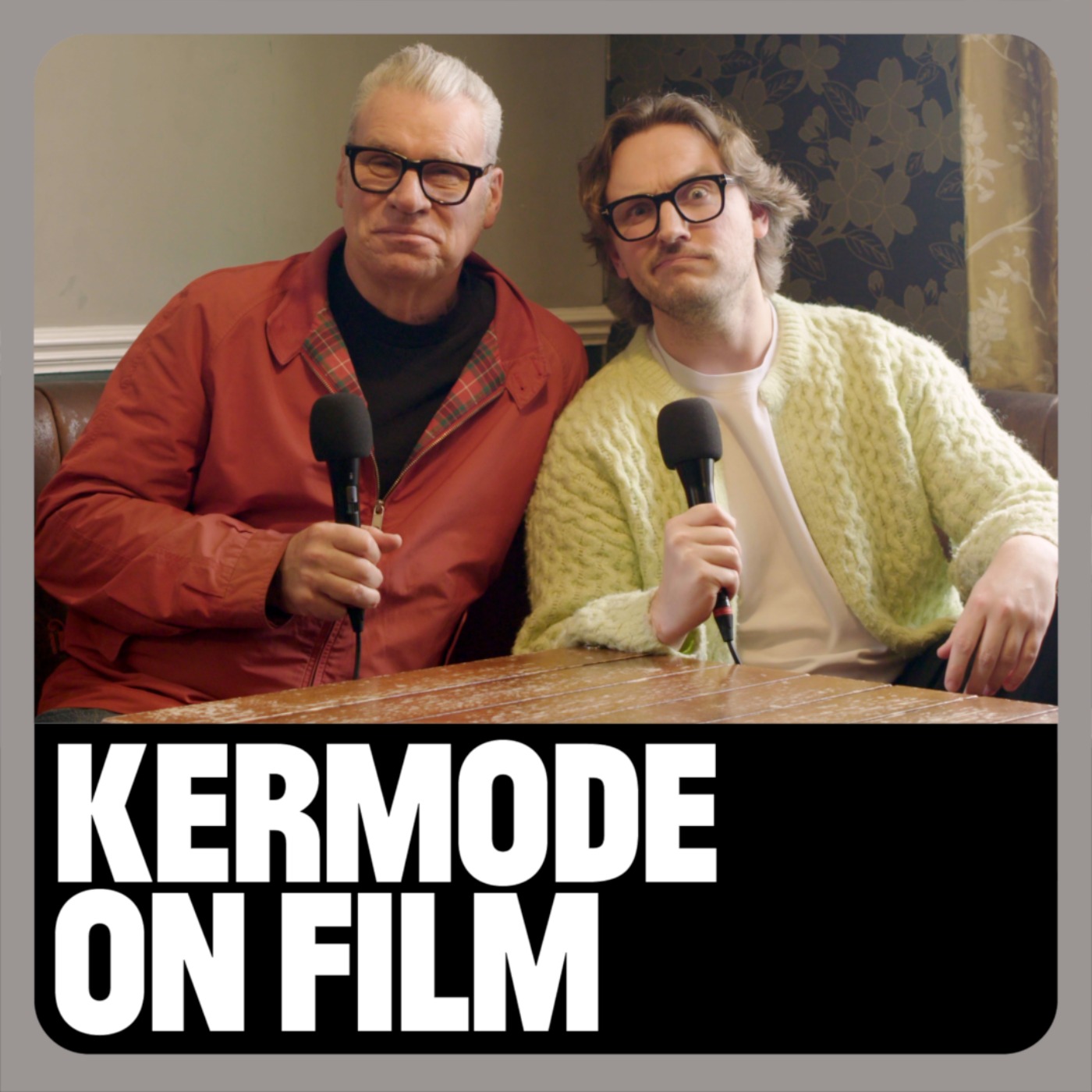
Kermode on Film
Part 2 - Eyes Wide Shut Rewatch
00:26:01
Mark Kermode and Jack Howard expand on Eyes Wide Shut
Loading summary
Transcript123 lines
- [00:00]
Advertisement/Announcer
A better help ad. Hold on one second. I just need to. What if you had a room where no one interrupts, no notifications, no expectations, just space to talk with. BetterHelp therapy happens in a space that's yours. Visit betterhelp.com randompodcast for 10% off your first month of online therapy.
- [00:34]
Mark Kermode
Hi, this is Mark Kermode. Thanks for downloading this Kermode on Film podcast or if you're watching on the YouTube channel, thanks for watching us. I am joined once again by Jack Howard.
- [00:41]
Jack Howard
Hello.
- [00:42]
Mark Kermode
We are upstairs at the glamorous Sun Pub in London's busy West End. And this is episode two of our Eyes Wide Shut special. In the last episode, when we'd both gone back and watched the film again, we established that actually, neither Jack nor I like Stanley Kubrick's last film.
- [00:57]
Jack Howard
Yeah, it wasn't a particularly balanced argument. We very much on the same team in this one.
- [01:01]
Mark Kermode
But what we decided for this episode, we're going to answer the question of why don't we like it? So, Jack, I am relieved that having both revisited Eyes Wide Shut, we are on the same page. I mean, I have to say, watching it again, as I said, I just found it immensely reassuring that I hadn't completely fudged it the first time around. I stand by all the criticisms I made of it the first time.
- [01:24]
Jack Howard
I don't think I hate it quite as much as you do.
- [01:26]
Mark Kermode
I don't hate it.
- [01:27]
Jack Howard
Okay.
- [01:28]
Mark Kermode
I don't hate it. And actually, in order to be balanced, let me tell you a few things that I think are good about it, okay? I think that the use of music is pretty remarkable. And I think that Jocelyn Pook's work on it is astonishing. I just wrote a book, Surround Sound the Stories of Movie Music, which I wrote with Jenny Nelson, available wherever you get your book, wherever you get your books. And actually, one of the films that we use as a soundtrack selection is Eyes Wide Shut and specifically Jocelyn Pook's work on it. I'll tell you a story that we repeat in that book, which I think is kind of a way into the film. When Jocelyn Pook got the assignment, what happened was that they were shooting the party scene, the Masine, and Stanley Kubrick had heard a piece that Jocelyn Pook had written and recorded called Backwards Priests, which was the sound of Romanian Orthodox priest service being played backwards, like really kind of weird and sort of chanting. So he had got in touch with her and said, I'd like you to work on the film for me. And she said, you know, Great. You know, Stanley Kubrick. And so she did some work on that piece, and then she wrote some other music, including the. The Naval officer piece, which is very, very important. And obviously he used other music as well, as Kubrick always does. Ends up using existing pieces of classical music. But what happened was that Justin told this story that she was only allowed to see the scenes that her music was being used in. So they would send a car with a videotape, as it was back then, of the scene that she would be writing for, and she would have to write for it. And as always was the case, she wrote more music than got used. But, you know, a fair amount of her music gets used. I think it is the backbone of the school. And at some point, she had many conversations with Kubrick and she found him a brilliant collaborator. Said he knew classical music inside out. He really knew what he was doing. She said to him at one point, you have to. You have to let me see the context of these things. Firstly, I need to know the context of them because I need to know the context within the story. And secondly, I need to know what other pieces of music you're using because I need to know how my. My music relates to it or counterposes it or mirrors it. Gradually, over the course of a long relationship, Kubrick sort of relented and allowed her to see more of the movie. But at the beginning, the lockdown on it was so total that literally she was only allowed to see the individual pieces that she was working on.
- [04:04]
Jack Howard
And there's some part of me that thinks that's interesting, just to sort of give that to a composer and be like, just do this and let me worry about how it's fitting in. But another part is like, well, you're kind of like locking her out creatively.
- [04:15]
Mark Kermode
Yes.
- [04:15]
Jack Howard
To figure out, like, how she's fitting into all of that.
- [04:17]
Mark Kermode
And Jack, I think that that is a kind of key to my understanding. One of the reasons why I don't like Eyes Wide Shut is it is a selection of sequences that may individually have value. Like, for example, the very opening scene when the couple are in the apartment together. They're getting dressed or undressed. They're preparing themselves. This piece of music is playing that you don't realize until they leave the apartment and turn it off on the. On the. On the hi fi. That that's what you're doing.
- [04:44]
Jack Howard
That is an interesting moment.
- [04:45]
Mark Kermode
Interesting moment. And that sequence is. Is beautifully choreographed. Then the sequence when they arrive at the high class party and the camera follows them Around. And again, you know, it's very, very. I mean, obviously the way that, you know, Kubrick used Steadicam on Shining, kind of defined the use of Steadicam. And there are individual sequences that you can. That you can say, okay, I, you know, that that was interestingly done. But in terms of it as a whole coherent piece, I think, firstly, it makes no sense. Although part of the argument is that everything that happens after a certain moment is a dream. It isn't. But there we go.
- [05:22]
Jack Howard
It's at least using dream language. And that's kind of a sort of get out of jail free card. Sort of. Oh, yeah, it's. It's. The streets are empty, it's midnight. He goes into a cafe and it's full.
- [05:33]
Mark Kermode
That's right, yes.
- [05:34]
Jack Howard
Okay.
- [05:36]
Mark Kermode
And that's. That same taxi keeps coming around. So it's the Truman Show. But then. So I think that's. That says something to me about one of the reasons why it's not making sense is that the collaboration isn't happening and that it's absolutely in the director's head and not in everyone else's head. The other broader problem that I have is that I think, as I said before at the end of the last episode, I think it. It is silly. I think the whole thing about. He is so traumatized by this. By this revelation that you men, you never susp. That us women might have these fantasies. Okay, all right. You know, there are plenty of straight to video erotic thrillers that have got a similar setup. But then the palaver of him going out to find sex and ending up at an out of town mansion and having to. No, I'm sorry. Which world are you living in? Have you. Have you been outside recently? Have you been to a video store? Have you watched Night rhythms, animal instincts 3? Anything. But have you. Have you got any idea of what's going on? And I think the honest answer to that question is no. And I know there were stories about Stanley Kubrick calling in all these movies to see how far he could go in terms of pushing the R rating. The answer is a lot further than he went. And also that sort of stylized. Everyone on screen is a model. Everyone on screen is. Looks like a Barbie doll or a Ken Action dollar. Nothing, nothing about it has any sense of reality. It just looked silly to me. And once that happened, I didn't believe in any of it.
- [07:22]
Jack Howard
Yeah, and I think that's totally fair. I think at the beginning of it, I was going with the stylization of all of that. Like, after that first high society party, you see glimpses of Tom Cruise's doctor life contrasted with Nicole Kidman's home motherly life. And I was expecting the contrast to be greater. You know, are you expecting it to be like he's living this kind of high profile life and she's just sort of like an exhausted stay at home mom, but actually she's still sexualized when she's at home. Like the shots of her getting dressed in the morning and she's still very heavily sexualized and then there's also like a model looking type woman getting her breasts examined and that's laced with sexuality as well. And but at the beginning of it I was like, I'm kind of into what it's doing because it's living in this kind of heightened, weird, dreamy kind of place and it's not making the obvious choice of like the contrast of the home life and the work life and his life and her life. So I'm like, what are you going to do with all that? And my point from the last episode again was like, what, what are you going to do with all that? And it doesn't really do much. It doesn't really like, not that I needed it to answer any questions or anything, but it doesn't, after provoking something, doesn't then do anything with the provoking.
- [08:34]
Mark Kermode
It's also worth remembering that by the time that film came out, the erotic thriller video genre had. It had come and gone and it had. There were. There are things in. And I'm not just you know, saying this because to be provocative, but it's always the case. There are things that happen in low budget horror movies that are really strange and subversive and weird and then they get bought up by Hollywood and turned into very, very ordinary, boring and uninteresting ideas. And there are things that happen in low budget exploitation movies and they're. Heaven knows there's enough straight to video exploitation movies that are about weird sex lives that it's just so much more genuinely challenging than anything that happens in Eyes White Shut. I mean for a start it's aesthetic as I think you were sort of suggesting. There is kind of prurient in a very masculine gaze way. I mean there's, there's almost nothing about it that subverts that whatsoever.
- [09:28]
Jack Howard
There are no dicks.
- [09:29]
Mark Kermode
No, there are. Thank you.
- [09:33]
Jack Howard
Did you, did you need me to say it?
- [09:34]
Mark Kermode
I did. I'm really sorry. That was just. But yeah, but there aren't.
- [09:37]
Jack Howard
There are no dicks. And that is a shame.
- [09:40]
Mark Kermode
And it's, and it's absolutely the kind of, you know, let's talk a little bit about the R rating. One of the things in America that makes the American rating system so absurd is that the, for a long time the strongest rating in America was R, which means anyone can see it. As long as they go with a grown up. You go, okay, so the strongest rating is anyone can see it. Sorry, how is that? So here in the uk we had the X rating, you know, they had the double a and then 15, then 18, 18. You have to be a grown up to see it. That didn't mean it was pornography, it just meant it was a grown up film. But in America, because they've got this ridiculous compromise with the R rating, anyone can see it, except you go with a grown up. So consequently they end up reining in R rated films because there's the possibility that someone under the age of, you know, and then what they had was the NC17, no children under 17. And this was like a really, really big deal in America, okay? And this was going to pioneer a change in the whole face of American cinema. What happened? Showgirls happened and it died a death. And cinemas couldn't, wouldn't take NC17 films because newspapers refused to advertise them. And the NC17 was specifically invented to distinguish adult cinema from adult cinema from pornography. And it just didn't work. So if you made an NC17 movie, it was the commercial kiss of death. So people would either release them unrated if it was a lower budget movie or they'd cut them for an R rating. Which was why the version of Eyes Wide Shut in America was digitally altered to get it through as an art. So the whole thing about it's so edgy. No, it's not. It's got an incredibly conservative, from a visual aesthetic point of view, an incredibly conservative mindset that is completely in keeping with the MPAA's ridiculous R rating. So it's inherently compromised from the outset. This is the director that made Clockwork Orange, right? This is the director who, whose work was considered so controversial that, you know, the Festival of Light were picketing it here at the same time as Ken Russell was doing the, you know, the Devils and Sam Peckinpah was making Straw Dogs.
- [11:51]
Jack Howard
Well, I think this is quite different, but four years earlier, David Fincher had made seven.
- [11:55]
Mark Kermode
Four years earlier than Eyes Wide Shot.
- [11:58]
Advertisement/Announcer
Yeah.
- [11:58]
Jack Howard
And I think there are things in seven that I find to be like more disturbing, that it doesn't show, but it talks about. And there's characters that, you know, the
- [12:10]
Mark Kermode
bit with the guy with the knife and the knife.
- [12:14]
Jack Howard
Yeah. And you don't see anything, but you feel like you have.
- [12:17]
Mark Kermode
It's still what. That is still one of the most shocking ideas in cinema I've ever come across.
- [12:21]
Jack Howard
And that was four years before this. I guess what I'm kind of leaning towards here, what I was kind of thinking about when you were talking about how all this stuff had kind of been done in better ways and whatever else, and then Hollywood had taken it and sanitized it. Is it only a. A lasting thing, not only because it's Kubrick, but because it's starring Tom Cruise and Nicole Kidman? And they were a big deal at the time as well as. Like, he's cast this real married couple to play this married couple. Like, is it only that as to why it's kind of still talked about alongside, you know, all the other ones, the other erotic thrillers that don't get talked about?
- [12:53]
Mark Kermode
I think the answer that is, yes. I think that had this film been made by any. But. Well, two things. Firstly, it wouldn't have been made by anybody else because nobody else would have been given the leeway to spend this much time. And with stars this big to make a movie this bland, it's just inconceivable that it would have happened. I remember when the posters were first released and it said, Cruise, Kidman, Kubrick. Yeah. And I remember all my friends going, surely Kubrick, Cruise, Kidman. You know, how dare you. But of course, it was a Cruise, Kidman project as far as most of the world was concerned. And I. You know, there's that.
- [13:32]
Jack Howard
That's three brands. Like, is especially late 90s.
- [13:35]
Mark Kermode
Like name, name, name.
- [13:37]
Jack Howard
Yes.
- [13:37]
Mark Kermode
Like, you've got your.
- [13:38]
Jack Howard
Across the board, you get a ticket.
- [13:40]
Mark Kermode
That's right. And that. And that was it. And they had a very cool trailer with the baby. Did a bad, bad thing. And just those words coming up. And then eyes wide shut. And you were thinking, wow, this. This is so out there. I mean, interestingly enough, it was one of those things in which the trailer showed you so little that you thought. And I've compared this before to one of the most terrifying trailers ever saw was the trailer for the Exorcist, which was just the cab pulling up outside the house and Max Vaughn sit out getting out. Because the implication of it was, this film is so scary, we can't show you anything other than a guy getting out of a car.
- [14:15]
Jack Howard
Everything that happens in that house, we
- [14:16]
Mark Kermode
can't show nothing at all. And There was a similar thing. It was like the baby did a bad thing. It was like, whoa, where's this going to go? Is it going to be bad? Bad? No, Baby didn't do that bad of a thing.
- [14:27]
Jack Howard
Baby didn't do much.
- [14:28]
Mark Kermode
No, no.
- [14:29]
Jack Howard
Baby walked around a lot.
- [14:30]
Mark Kermode
Walked around a lot and moped, you know, and then, and then there's a. So I think firstly, nobody else would have got it made. But yes, it absolutely had the life it had because of that. Also, there's been a lot of writing about the film, about how personal it was to Kubrick and you know, how, how interesting it is his stage in life was making this film. And therefore it was
- [14:56]
Rippling Ad Speaker
most all in one hr. Systems are a patchwork of disconnected and manual tools. Rippling is totally automated. If you promote an employee, Rippling can automatically handle necessary updates from payroll taxes and provisioning new app permissions to assigning required manager training. That's why Rippling is the number one rated human capital management suite on G2 TrustRadius and Gartner. If you're ready to run the backbone of your business on one unified platform, head to rippling.com acastbiz and sign up today. That's R-I-P-P-L-I-N-.com acastbiz to sign up.
- [15:33]
Advertisement/Announcer
Have you ever been stuck on a weight loss plateau? Trying everything and anything you can to lose that extra weight and reach peak health? We've all been there. But Noom's unlocked a secret to reaching the mountaintop goin Microsoft. The Noom GLP1 microdose program starts at $99 and is delivered to your door in seven days. Start your microdose GLP1 journey today at Noom.com that's n o o m dot com Noom micro changes big results. Noom GLP1 RX program involves healthy diet, exercise and support. Individual results may vary. Meds and personalization based on clinical need. Not reviewed by FDA for safety, efficacy or quality. No affiliation with Novo Nordisk, Inc. The only US source of FDA approved semaglutide. Not available in all 50 US.
- [16:20]
Mark Kermode
You can say that about any filmmaker's film. You know you made a short film, you know you lived with that short film for a couple of years. You know, of course it's personal. Of course it's personal. Every film that our director makes, unless they're absolutely a gun for hire, is personal. And when you're Stanley Kubrick and you are literally calling the shots and not allowing anybody to see anything at all until, of course, it's personal. That doesn't mean it's good.
- [16:43]
Jack Howard
It can be interesting to kind of look into it and wonder what it was that he was kind of intending and like to analyze it in that way is. Is, you know, completely valid and. And enjoyable. But it doesn't mean the experience of watching the movie is also enjoyable because it kind of. This actually the biggest insult, and this is maybe kind of a bit reductive, but the biggest insult I think I have for it is for all of its kind of promise of provocative provocateur and like, you know, edginess. It's kind of dull. Yeah, it's kind of boring.
- [17:16]
Mark Kermode
It's kind of. It's kind of long. It's kind of dull. It's kind of boring. And I find that after a while it's frustrating. When you said, I don't hate it as much as you, I said, I don't hate it. If I hated it, I'd actually probably feel more engaged. I mean, like, for example, I hate the idiots. I actively hate that film. And I remember having a conversation with Lars von Trier about it when I was interviewing him for Melancholia. And I said, I have to tell you that I hate this film. And he went, but do you. Do you really hate it? And I went, yeah, Lars, I really hate it. But not just dislike it. You really hate it. And I said, lars, I really hate it. And he went, good, we'll get on fine. The thing he couldn't stand was. Yes, all right.
- [17:55]
Jack Howard
Yeah, yeah.
- [17:55]
Mark Kermode
And the worst thing about Eyes Wide Shut is.
- [17:57]
Jack Howard
Yeah, sorry, yeah, like it's competent. Like it's.
- [18:02]
Mark Kermode
Of course it's. Of course it's competent. Look at the people involved in it. You know, the guy who made 2001 and Clockwork Orange and Dr. Strangelove and Barry, Linda and the Shining, and of
- [18:15]
Jack Howard
course it's competent, but it should be more than that.
- [18:17]
Mark Kermode
It should be so much more.
- [18:19]
Jack Howard
Yeah.
- [18:20]
Mark Kermode
And there's also, I think, this thing about judging filmmakers by their final film. There was a book that I came across recently which was a book looking at a number of filmmakers last film. You know, there's this great thing about what was somebody's last words was the last thing somebody said. And there's that, you know, the great joke in Monty Python, the Holy Grail, the Castle of. So that was the last thing he said. So I don't think he would have written it. But that thing about, you know, somehow the final truth is. Is revealed in the last thing you Do.
- [18:54]
Jack Howard
Last moment of wisdom.
- [18:55]
Mark Kermode
And I think that that is one of the reasons why the nuts. Conspiracy theories that you talked about in the previous episode, if you haven't listened to it, please do. But also, the desire to find meaning in Eyes Wide Shut is so strong because people are desperate to believe that the last film that Stanley Kubrick made somehow told you something about him that hadn't previously been revealed. And I think the greatest disappointment is that it didn't. The only thing it demonstrated was that unlike the demonstration of most of his career, I suppose, with the very exception of the very early films, he was capable of mediocrity.
- [19:36]
Jack Howard
Yeah. I mean, it's not. It's not surprising that. It's not surprising that that did happen. Also, he didn't know it was his last film.
- [19:46]
Mark Kermode
No. And that's the point. Of course he didn't know that.
- [19:49]
Jack Howard
And so there's. There's certain things that happen. Like more recently, when Scorsese made the Irishman, that almost felt like a last film. Like it could have been a last film. And then he made Killers of the Flower Moon. And that him being at the very, very end of it and sort of kind of literally casting himself to kind of go, I am also responsible for all of the things that I've discussed in this film. I am part of it. And I. No one else could be in this film other than me. Feels almost like a last act thing to do in the last act. And now he's making another film, and I wonder if that will feel almost like it could be a last film. Feels like all the time that Scorsese's trying to wrap things up in a really lovely little bow. And Kubrick can't do that and didn't do that. And so there's nothing. I don't think it even makes sense to kind of look into Eyes Wide Shot, as did he. But did he know?
- [20:39]
Mark Kermode
Of course not. But then this is. This is the thing, is that he. His movies look like puzzle boxes, even when they're not. And a lot of it, I think, is to do with the fact that, you know, he could choreograph a scene. The.
- [20:53]
Jack Howard
The.
- [20:53]
Mark Kermode
The symmetry of his composition was. Was astonishing. And, you know, he started out as a photographer. There was that book of the photographs that he took on the New York subway with. With the hidden camera, which is really kind of weird and creepy anyway. But, you know, he had a. He had a photographer's eye.
- [21:10]
Jack Howard
Yeah.
- [21:10]
Mark Kermode
From the outset. And so none of those things fail him. And that's why I Say it's perfectly possible to. To go. But also appreciate that Kubrick wasn't gonna make a film that didn't look great.
- [21:24]
Jack Howard
Yeah, but there are some clumsy things in Eyes Wide Shot. Like, really clumsy, like edits. And like, even I.
- [21:32]
Monday.com Ad Speaker
Even.
- [21:32]
Jack Howard
And I know it's probably intentional, but, like, the way that the dialogue is delivered a lot of the time with this very, like, slow. Lots of pauses in between people saying things. And I was like, can we get on with it, please? But, like, all of that stuff, to me, feels like, do these people know what they're doing?
- [21:51]
Mark Kermode
Yeah.
- [21:52]
Jack Howard
Does Tom Cruise and Nicole Kidman. Do they. Do they know? Or are they just going, it's in Stanley's hand. This is take 60. Like, I'm just gonna keep doing stuff. Like it sort of. Some of it smell well. Oh, God, I can't believe I'm about to say this either. Some of it had the kind of stench of a student film. Like. Like watching. Watching Cruz come in and go into his kitchen and sit down. I was like, this is the kind of stuff a student would leave in shoe leather.
- [22:19]
Mark Kermode
Yeah, Shoe leather, yeah.
- [22:21]
Jack Howard
Cut, cut. This also the scene where he goes back to the prostitute's house, and then he's gonna sleep with this other prostitute that lives there. And then she's like, I don't know if I should tell you this. Sit down. She got. She a lot of that. And then she goes, she had Ha. She got diagnosed with HIV this morning. And he goes, okay, I'm gonna leave now. And I'm watching that scene going, this whole thing could have been taken out because there's no consequence. He didn't sleep with her, so there's no consequence for him. This conversation, we've learned nothing. Like, what's. What's this for?
- [22:55]
Mark Kermode
When you said this whole thing could have been taken out. This whole thing could have been taken out by produce, by producer, going, Stanley, yes. 90 minutes.
- [23:02]
Jack Howard
Yeah, come on.
- [23:03]
Mark Kermode
Exploding helicopter seen in a strip club. After that, you're on your own. Yeah, but that is the whole, you know, as I said, people do their best work when under pressure, and they don't do their best work when. When all those restrictions are taken off. Let me ask you one other thing, because I think this is important. The great argument for, you know, Ice watchers, Cruise, Kidman, working with Stanley Kubrick, because between them, what they're demonstrating is that they are. That they're, you know, they're top notch. Okay? It's not just that they're great box office. Okay? They're you know they're top notch.
- [23:39]
Monday.com Ad Speaker
Close your eyes. Focus. Listen to work getting done with Monday dot com. Relax as AI does the manual work. While your teams are aligned on a single source of truth. Feel the sensation of an AI work platform. So flexible and intuitive it feels like it was built just for you. Notice you're limitless. Limitless, limitless. Now open your eyes. Go to Monday.com. start for free. And finally breathe.
- [24:10]
Carvana Ad Speaker
Hey, sweetie. Your mother showed me this Carvana thing for selling the car. I'm gonna give it a try. Wish me luck. Me again. I put in the license plate. It gave me an offer. Unbelievable. Okay, I accepted the offer. They're picking it up Tuesday from the driveway. I haven't even left my chair. It's done. The car is gone. I'm holding a check anyway. Carvana, give it a whirl. Love ya.
- [24:33]
Advertisement/Announcer
So good you'll want to leave a voicemail about it. Sell your car today on Carvana. Pick up. Fees may apply.
- [24:42]
Mark Kermode
I don't think their performances are very good either.
- [24:44]
Jack Howard
No, I don't think so either. That's why I just said that. Like, I don't know if they know what they're doing.
- [24:48]
Mark Kermode
They look like they're being directed. They, they look like Stanley Kubrick is standing off screen going, move your elbow. Move. Think that. And then now look up. Yeah, and it's. I don't whether you remember this, but one of the criticisms that was lodged at Ridley Scott. Of course, Ridley Scott was a great Stanley Kubrick admirer. And of course, you know, they, they, they collaborated on. Because he took Shining on the Shining. And. Yeah, but, but you know, one of the great arguments about Ridley Scott, original. He's not an actor's director. Right? Because, you know, he'll spend five hours setting up a shot and then go, go. And that was always why, you know, Harrison Ford was apparently unhappy with Blade Runner. And talking about Blade Runner. I'm sorry, but Eyes Wide Shut. I mean, Tom Cruise is a very decent actor. Nicole Kidman is a very decent actor. They're both very decent actors. Neither of them do anything like their best work in Eyes Wide Shut because they both look like they're being moved around by, like, marionettes. And that is not conducive. And okay, it's the air of artifice. It's the air of theatricality. Of course, it doesn't look like a real street. Of course it doesn't. You go, I'm sorry, that is what you said about it being a dream for that is a get out of jail Free card. That does not work, particularly when you are making a drama that, at least on one level, is meant to be about the limits of intimacy.
- [26:04]
Jack Howard
Yeah. Yeah. And that's actually, I think, what I was craving when I was, like, setting up all this stuff. Like, okay, every interactions laced with, like, a sexual kind of energy. What are we.
- [26:14]
Mark Kermode
So what are you doing?
- [26:15]
Jack Howard
What are we doing with it? Like. And I actually think a big flaw of the film is how little Nicole Kidman is in it. And there's all these things about, like, actually, no, she is at the party. Like, she's under one of the masks, actually. Okay. But, like, in the story, I'm not feeling like their marriage is being challenged at all. It feels like he just goes off and does something, comes back, goes, sorry, I did all this. And she goes, don't worry about it. I had a dream.
- [26:37]
Mark Kermode
Well, I mean, as I said, I. My. The. The thing that this mainly gives me is a sense of. And I'm genuine. I'm not being sort of sarky about this. I am genuinely pleased that, having gone back to it, that not only do I feel the same way as I did about it, not because it's kind of one of the things that you discover as a critic if you do this for any time at all, is that you make mistakes and then you go back and you think, wow, I misjudged it. And the classic example of me is Spielberg's AI Which I just got completely wrong the first time.
- [27:02]
Jack Howard
Well, that's interesting as well, because isn't that the film that Spielberg made because Kubrick wanted to make it?
- [27:08]
Mark Kermode
Yeah, well, they were, but they were. It was originally. It was. You know, Kubrick was meant to be directing it. And then the story that Spielberg tells is, in the end, it was with Spielberg producing. And then Kubrick said, you need to do this, and we'll have to draw this to a close. But there was a very funny story that Spielberg told about when he and Stanley Kubrick were both working together on AI and one of the things that Kubrick wanted to do was to see whether it was possible to build an artificial child to play the artificial child. And turns out, it's not. Who knew? But they had a fax machine so that Stanley could fax Steven Spielberg in the middle of the night with the mad ideas and Steven Spielberg.
- [27:52]
Jack Howard
Hang on. Was it a specifically Stanley Kubrick fax machine? It was like, this is only faxes from Stanley Kubrick.
- [27:58]
Mark Kermode
Stanley Kubrick and Steven Spielberg told this very funny story about how he'd be in bed in the middle of the night with his wife and the fax machine would go off and she finally said to him, stephen, we have to get Stanley out of the bedroom.
- [28:16]
Jack Howard
And that's my review of Eyes Wide Shot.
- [28:19]
Mark Kermode
And there we are. Well, there we go. That's the end of our two parter dedicated to Stanley Kubrick's final film, Eyes Wide Shut. I hope you enjoyed listening to it as much as we enjoyed talking about it. If people have enjoyed this, what can they do?
- [28:31]
Jack Howard
Jack, you can subscribe on the podcast wherever you listen to your podcast. If you're just listening to this or on the YouTube channel, make sure you hit the like button. Leave a comment telling us what you think. I'm sure that a lot of you will disagree. If you do, it's fine. Like, yeah, yeah, Opinions. Like, what are they say? Opinions are like.
- [28:46]
Mark Kermode
Opinions are like, everyone's got one. Everyone thinks that theirs is the only one that doesn't stink.
- [28:52]
Jack Howard
Thank you very much for joining us. If you would like more Mark Kermode movie reviews, where they. Where can they go?
- [28:56]
Mark Kermode
Kermod and Mayor's Take, wherever you get your podcasts.
- [28:58]
Jack Howard
Thank you so much and we'll see you again very soon.
- [29:08]
Tim Spangler
Leadership used to mean having all the answers. But today's best leaders embody a more human approach.
- [29:13]
Jack Myers
I'm Jack Myers.
- [29:14]
Tim Spangler
And I'm Tim Spangler.
- [29:15]
Jack Myers
Tim and I have spent our careers inside media, marketing and culture and we
- [29:20]
Tim Spangler
partnered with the ACAST Creator Network to start Lead Human to answer one simple question. What does it really look like to lead in this AI dominated world?
- [29:29]
Mark Kermode
The biggest tip for being a creator. It's a job. What I learned from Michael Jackson, Here's a man who understands precision.
- [29:37]
Jack Myers
It's about answering the questions that are hard, not about answering a bunch of teed up questions that are fake.
- [29:42]
Tim Spangler
What we're looking for are real stories and practical advice that you can use with your teams right away.
- [29:48]
Jack Myers
Subscribe to Lead Human with Jack Myers and Tim Spengler wherever you get your podcasts.
- [29:55]
Simon Mayo
Hello, this is Simon Mayo.
- [29:57]
Mark Kermode
And this is Mark kermode.
- [29:58]
Simon Mayo
He's the UK's best and most trusted film critic.
- [30:01]
Mark Kermode
He's a best selling writer, broadcaster and national treasure.
- [30:04]
Simon Mayo
Far too kind. Kermod and Mayo's take has all the reviews you need and star guests such
- [30:09]
Mark Kermode
as Sir Ian McKellen.
- [30:11]
Jack Howard
Nice to be with you.
- [30:12]
Simon Mayo
Emma Stone.
- [30:13]
Advertisement/Announcer
That sounds like something I would love to be a part of.
- [30:15]
Mark Kermode
Ewan McGregor. I'm very good. How are you doing?
- [30:17]
Simon Mayo
Cate Blanchett? What was that word you used Cattywampus Comedomyers. Take all the film you need. Available wherever you get your podcasts.