Podcast
Kessler Foundation Podcasts
Hosted by Kessler Foundation · EN
Kessler Foundation - Changing the lives of people with disabilities through research in stroke, brain injury, multiple sclerosis, spinal cord injury and by funding innovative programs that promote employment for people with disabilities. Podcasts are from various consumer and professional lectures presented by our researchers and guest lecturers.
20episodes
Episodes
Newest firstAll episodes
Empowerment and Healing Through Recovery after TBI
Mar 3000:10:46Tap to summarizeIn this episode of BrainWaves, hear the powerful story of Craig Philips who overcame a brain injury sustained in childhood to find purpose and hope. Learn practical tips on acceptance and recovery. Discover how simple home changes can boost safety and independence. Understand the importance of balance and where to find free resources. Finally, explore the science behind music therapy and its role in healing the brain. This episode is brought to you by the Northern New Jersey Traumatic Brain Injury Model System and Kessler Foundation. Articles 00:00:00 - Welcome and Introduction 00:00:45 - Finding Second Chances 00:03:48 - The Road to Empowerment 00:04:46 - Change Your Space to Change Your Life 00:07:06 - Safety in Balance 00:08:05 - Music as Medicine 00:09:22 - Musical Approach to Treatment 00:010:02 - Episode Wrap Up For more information: READ this TBI Brainwaves newsletter (https://kesslerfoundation.org/newsletter/brainwaves-spring-2026-finding-second-chances) LISTEN to past Brainwaves audio newsletters: https://soundcloud.com/kesslerfoundation/sets/brainwaves-audio-newsletter LEARN MORE—TBI Facts Sheets from the Model Systems Knowledge Translation Center msktc.org/tbi/factsheets PARTICIPATE: Interested in participating in our research remotely or in-person? Go to kesslerfoundation.org/join-our-research-studies Production Notes This podcast was recorded, produced, and edited by Joan Banks-Smith , Creative Producer at Kessler Foundation (March 2026). Accessibility Kessler Foundation uses AI voices and narrators to make our media more accessible. These tools help ensure people with visual or cognitive impairments can access our materials. Automated voices may not always capture intonation or pronunciation as clearly as the accompanying text. If you experience issues with our AI narrators, please contact us at communications@kesslerfoundation.org.
Transcribe →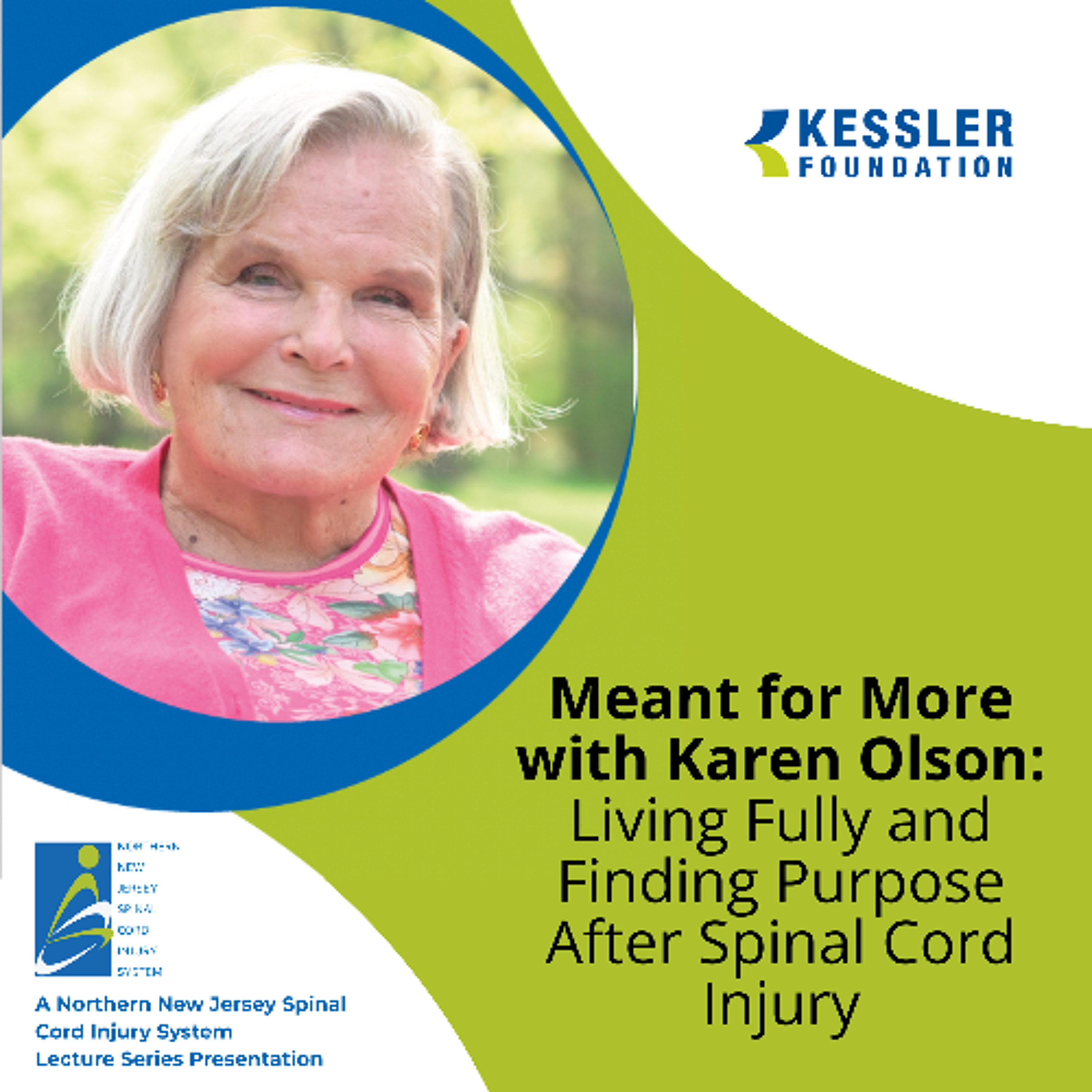
Meant for More with Karen Olson: Living Fully and Finding Purpose After Spinal Cord Injury
Mar 2600:18:31Tap to summarizeIn this episode, Karen Olson shares her deeply personal journey, marked by early tragedy and perseverance. Following a fall that resulted in spinal cord injury, her life became significantly more challenging, requiring her to adapt to new physical and emotional realities. These challenges built on earlier hardship, including the loss of her mother to suicide at age twelve, which had already shaped her resilience and compassion for others. Despite these obstacles, Karen found ways to move forward. With determination, a positive outlook, and specialized therapy, she rebuilt her life. She learned to paint with her non-dominant hand and completed her book, Meant for More, a reflection of resilience and renewed purpose. LEARN MORE about Karen, https://www.karenolsonauthor.com/ LEARN MORE ABOUT OUR RESEARCH: https://kesslerfoundation.org/research/center-spinal-cord-injury-research EXPLORE our spinal cord injury research, https://kesslerfoundation.org/research/spinal-cord-injury LEARN MORE about the Northern New Jersey Spinal Cord Injury System (NNJSCIS), https://kesslerfoundation.org/northern-nj-sci-model-system PARTICIPATE: Interested in participating in our research remotely or in-person? Go to https://kesslerfoundation.org/join-our-research-studies Production Notes This podcast was recorded, produced, and edited by Joan Banks-Smith , Sr. Creative Producer at Kessler Foundation (March 2026). Accessibility Kessler Foundation uses AI voices and narrators to make our media more accessible. These tools help ensure people with visual or cognitive impairments can access our materials. Automated voices may not always capture intonation or pronunciation as clearly as the accompanying text. If you experience issues with our AI narrators, please contact us at communications@kesslerfoundation.org.
Transcribe →
How Your Neighborhood Can Affect Life After Spinal Cord Injury
Mar 2400:04:20Tap to summarizeIn this episode, we explore Kessler Foundation’s latest research revealing how neighborhood economic status, physical environment, and access to healthcare influence quality of life after spinal cord injury. Discover how these environmental factors affect health, independence, and participation. Learn why this matters for improving rehabilitation and community support for people with disabilities. READ the full study, Development of Composite Measures of Neighborhood Economic Factors for Use in Spinal Cord Injury Outcomes Studies: A Spinal Cord Injury Model Systems Database Study (2024), pubmed.ncbi.nlm.nih.gov/39151747/ LEAD INVESTIGATOR: Amanda Botticello, PhD, MPH, https://kesslerfoundation.org/about-us/foundation-staff/amanda-botticello-phd-mph LEARN about our Outcomes and Assessment research, https://kesslerfoundation.org/research/center-outcomes-and-assessment-research READ all our Real-Life Science summaries, https://kesslerfoundation.org/newsletter/real-life-science LISTEN to all our Real-Life Science summaries, soundcloud.com/kesslerfoundation/sets/real-life-science EXPLORE our spinal cord injury research, https://kesslerfoundation.org/research/spinal-cord-injury PARTICIPATE: Interested in participating in our research remotely or in-person? Go to https://kesslerfoundation.org//join-our-research-studies?field_research_categories_target_id[302]=302 Production Notes This podcast was recorded, produced, and edited by Joan Banks-Smith , Sr. Creative Producer at Kessler Foundation (March 2026). Accessibility Kessler Foundation uses AI voices and narrators to make our media more accessible. These tools help ensure people with visual or cognitive impairments can access our materials. Automated voices may not always capture intonation or pronunciation as clearly as the accompanying text. If you experience issues with our AI narrators, please contact us at communications@kesslerfoundation.org.
Transcribe →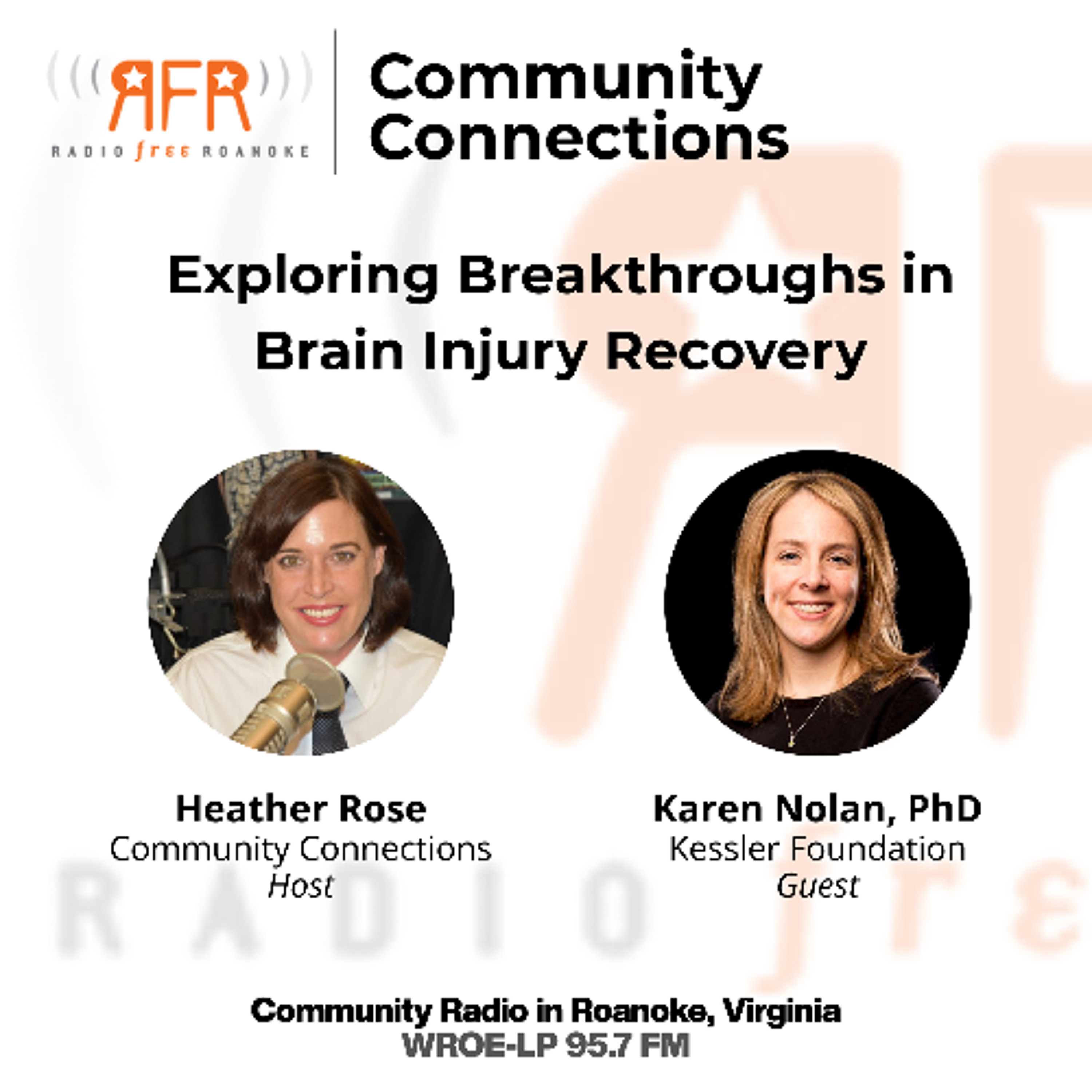
Exploring Breakthroughs in Brain Injury Recovery
Mar 1200:30:53Tap to summarizeKaren Nolan, associate director in the Center for Mobility and Rehabilitation Engineering at Kessler Foundation, sat down with Heather Rose of Radio Free Roanoke for a powerful conversation on her work in traumatic brain injury research and her role as a professor at Rutgers New Jersey Medical School. LEARN more about Kessler Foundation, https://kesslerfoundation.org/about-us Make a Gift, https://kesslerfoundation.org/?form=GiveKessler Used with permission: @radiofreeroanoke
Transcribe →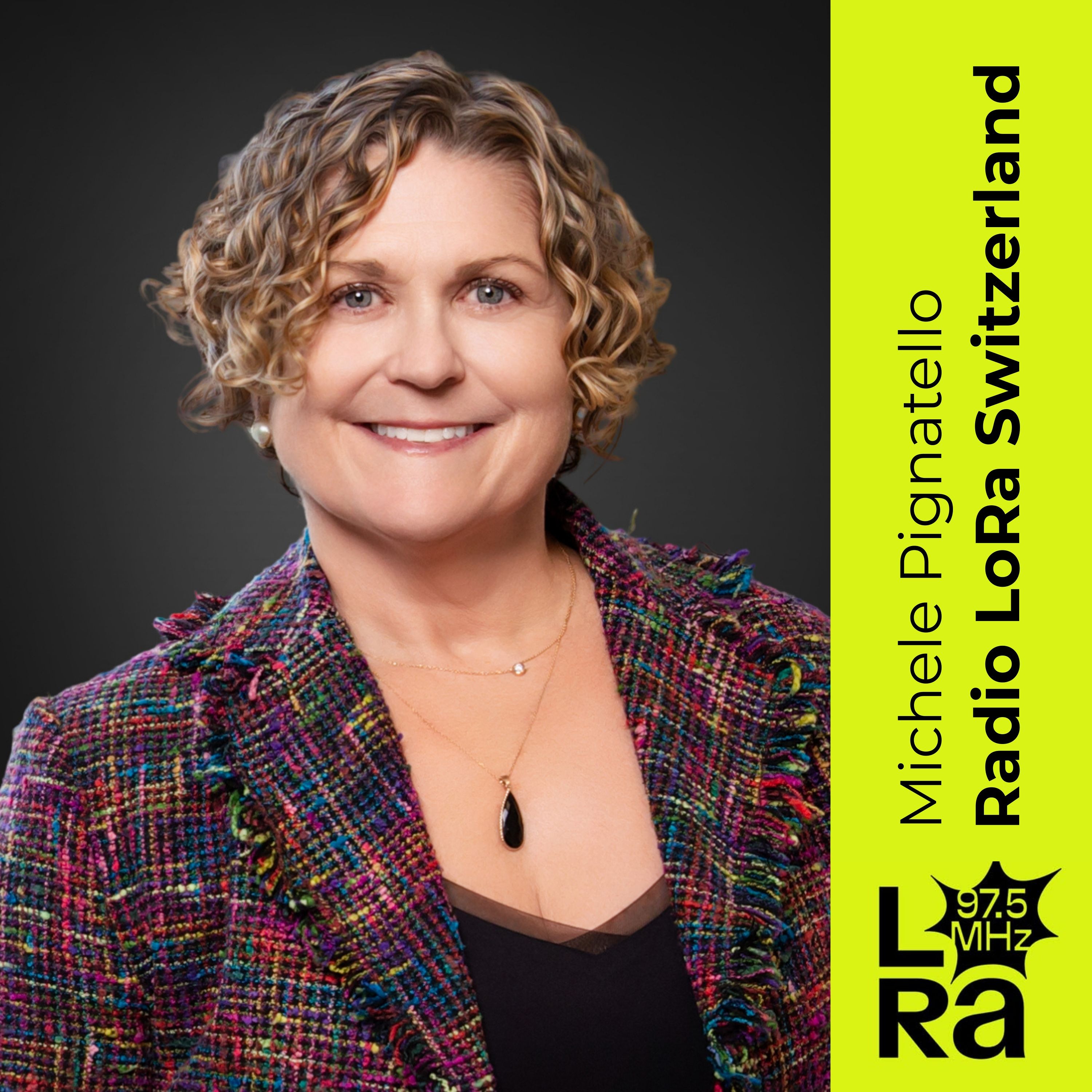
Kessler Foundation Highlights Innovations in rehabilitation Research
Feb 2600:15:30Tap to summarizeMichele Pignatello, Chief Development Officer and Vice President, Development and Communications at Kessler Foundation, spoke to Radio LoRa Switzerland about our work to improve quality of life for people with disabilities through discovery, innovation, demonstration, application, and dissemination. LEARN more about Kessler Foundation, https://kesslerfoundation.org/about-us Make a Gift, https://kesslerfoundation.org/?form=GiveKessler Used with permission: Radio LoRa Switzerland www.facebook.com/LoRa97.5 www.instagram.com/radiolora97.5
Transcribe →
Who Benefits Most from Brain Training and Exercise in Progressive MS
Feb 2600:03:58Tap to summarizePeople with progressive multiple sclerosis often experience slowed cognitive processing speed. Researchers from Kessler Foundation analyzed data from the international CogEx trial, involving over 300 participants using brain training and exercise over 12 weeks. They found that improvement in cognitive speed varied, with better memory and higher pre-symptom IQ predicting greater gains. Factors like age, gender, or disability status did not affect outcomes. These findings highlight the need for personalized rehabilitation tailored to individuals’ cognitive profiles, moving beyond one-size-fits-all treatments. ===================================================================================== Kessler Foundation Investigators: Lead: Brian Sandroff, PhD https://kesslerfoundation.org/about-us/foundation-staff/brian-m-sandroff-phd ===================================================================================== READ this journal article: “Correlates of Processing Speed Change With Combined Cognitive Rehabilitation and Exercise in Progressive MS: Secondary Analysis of the CogEx Trial,” was published in Neurorehabilitation & Neural Repair (2025), https://journals.sagepub.com/doi/10.1177/15459683251331586 PARTICIPATE: Interested in participating in our research remotely or in-person? Go to https://kesslerfoundation.org/join-our-research-studies LISTEN to more Real-Life Science Summaries: https://soundcloud.com/kesslerfoundation/sets/real-life-science This Real-Life Science summary is part of our series that translates peer-reviewed research into practical, real-world understanding. ===================================================================================== LOOKING FOR MORE PODCASTS? Join our listeners in 90 countries who enjoy learning about the work of Kessler Foundation. Subscribe to our SoundCloud channel, “KesslerFoundation,” for more research updates. This podcast was recorded, produced, and edited by Joan Banks-Smith, Sr. Creative Producer at Kessler Foundation in December 2025. ===================================================================================== Kessler Foundation uses AI voices and narrators to make our media more accessible. These tools help ensure people with visual or cognitive impairments can access our materials. Automated voices may not always capture intonation or pronunciation as clearly as the accompanying text. If you experience issues with our AI narrators, please contact us at communications@kesslerfoundation.org.
Transcribe →
Improving Workplace Communication for Autistic Adults
Feb 2600:05:40Tap to summarizeNearly two-thirds of autistic adults face unemployment, often due to workplace misunderstandings around communication styles rather than ability. This episode explores research from Kessler Foundation that uses a novel voicemail elicitation task to assess polite language use among autistic youth in mock work scenarios. Discover how perceived impoliteness arises from pragmatic differences in language and what this means for job interviews, teamwork, and employee relationships. Learn practical tips for autistic individuals preparing for employment and strategies employers can implement to foster better understanding and inclusion. ===================================================================================== Kessler Foundation Investigators: Lead: Heba E. Elsayed, MD https://kesslerfoundation.org/about-us/foundation-staff/heba-elsayed-md ===================================================================================== READ this journal article: “Voicemail Elicitation Task: Potential workplace communication assessment tool for autistic individuals” (Research in Autism, 2025) doi.org/10.3389/fresc.2025.1539887. EXPLORE our autism research: https://kesslerfoundation.org/research/center-for-autism-research LEARN more about KF-STRIDE, https://kfstride.org PARTICIPATE: Interested in participating in our research remotely or in-person? Go to https://kesslerfoundation.org/join-our-research-studies LISTEN to more Real-Life Science Summaries: https://soundcloud.com/kesslerfoundation/sets/real-life-science ===================================================================================== LOOKING FOR MORE PODCASTS? Join our listeners in 90 countries who enjoy learning about the work of Kessler Foundation. Subscribe to our SoundCloud channel, “KesslerFoundation,” for more research updates. This podcast was recorded, produced, and edited by Joan Banks-Smith, Creative Producer at Kessler Foundation in December 2025. ===================================================================================== Kessler Foundation uses AI voices and narrators to make our media more accessible. These tools help ensure people with visual or cognitive impairments can access our materials. Automated voices may not always capture intonation or pronunciation as clearly as the accompanying text. If you experience issues with our AI narrators, please contact us at communications@kesslerfoundation.org.
Transcribe →
Opinion: Why Cognitive Care in MS Needs a Team Approach
Feb 2600:05:00Tap to summarizeOpinion: Why Cognitive Care in MS Needs a Team Approach By John DeLuca, PhD, Senior Vice President, Research and Training, Kessler Foundation This episode shares expert opinion on how cognitive changes in multiple sclerosis should be understood and treated. Changes in thinking and memory are complex and can be affected by many factors, such as mood, heart and blood vessel health, and daily lifestyle habits. Based on the work and clinical perspective of Dr. John DeLuca and colleagues, the episode argues that an interdisciplinary care approach where professionals work together as one coordinated team may be more effective than traditional multidisciplinary care. This type of teamwork supports a fuller understanding of each person’s cognitive needs. ===================================================================================== Kessler Foundation Investigators: Lead: John DeLuca, PhD, https://kesslerfoundation.org/about-us/foundation-staff/john-deluca-phd ===================================================================================== READ this journal article: “Controversies in Multiple Sclerosis: An interdisciplinary approach is necessary in the treatment of cognitive decline in multiple sclerosis,” published in Multiple Sclerosis Journal (2025). doi:10.1177/13524585251315357. PARTICIPATE: Interested in participating in our MS research remotely or in-person? Go to https://kesslerfoundation.org/join-our-research-studies LISTEN to more Real-Life Science Summaries: https://soundcloud.com/kesslerfoundation/sets/real-life-science This Real-Life Science summary is part of our series that translates peer-reviewed research into practical, real-world understanding. ==================================================================================== LOOKING FOR MORE PODCASTS? Join our listeners in 90 countries who enjoy learning about the work of Kessler Foundation. Subscribe to our SoundCloud channel, “KesslerFoundation,” for more research updates. This podcast was recorded, produced, and edited by Joan Banks-Smith, Senior Creative Producer at Kessler Foundation in December 2025. ===================================================================================== Kessler Foundation uses AI voices and narrators to make our media more accessible. These tools help ensure people with visual or cognitive impairments can access our materials. Automated voices may not always capture intonation or pronunciation as clearly as the accompanying text. If you experience issues with our AI narrators, please contact us at communications@kesslerfoundation.org.
Transcribe →
Imagery and Storytelling Strengthen Memory in Older Adults
Feb 2600:04:54Tap to summarizeIn this episode, we discuss research exploring how storytelling and mental imagery techniques can improve memory in older adults with mild cognitive impairment or normal aging. A 5-week study with 30 participants showed that specialized memory training led to significant improvements in lab-based tests and everyday recollections. These findings suggest non-pharmacological strategies could help older adults maintain mental sharpness and independence. We also explore whether this training could delay dementia and the benefits of earlier intervention. READ the full study, Dementia and Geriatric Cognitive Disorders Extra (2025), https://pubmed.ncbi.nlm.nih.gov/40093355 LEAD INVESTIGATOR: Nancy D. Chiaravalloti, PhD, https://kesslerfoundation.org/about-us/foundation-staff/nancy-chiaravalloti-phd LEARN MORE ABOUT OUR RESEARCH: https://kesslerfoundation.org/research/center-neuropsychology-and-neuroscience-research READ all our Real-Life Science summaries, https://kesslerfoundation.org/newsletter/real-life-science LISTEN to all our Real-Life Science summaries, https://soundcloud.com/kesslerfoundation/sets/real-life-science EXPLORE our cognition research, https://test-kessler-foundation-https://kesslerfoundation.org/research/cognition PARTICIPATE: Interested in participating in our research remotely or in-person? Go to https://kesslerfoundation.org/join-our-research-studies Production Notes This podcast was recorded, produced, and edited by Joan Banks-Smith , Creative Producer at Kessler Foundation (December 2025). Accessibility Kessler Foundation uses AI voices and narrators to make our media more accessible. These tools help ensure people with visual or cognitive impairments can access our materials. Automated voices may not always capture intonation or pronunciation as clearly as the accompanying text. If you experience issues with our AI narrators, please contact us at communications@kesslerfoundation.org.
Transcribe →
Breakthrough Technologies Transform Lives: From VR Games to Robotic Rehab
Jun 9, 2025Tap to summarizeRead the transcript, https://KesslerFoundation.org/sites/default/files/2025-06/Breakthrough%20Technologies%20Transform%20Lives_rom%20VR%20Games%20to%20Robotic%20Rehab-2024%20Impact%20Report%20Transcript.pdf In this episode, we explore how Kessler Foundation is transforming the future of rehabilitation medicine through groundbreaking research and innovative technology. Discover how virtual reality is helping stroke survivors recover at home and how robotic exoskeletons are helping people regain mobility. We also dive into the Foundation supporting people with spinal cord injury and their families through the SCI Navigator program, empowering neurodiverse individuals through Kessler Foundation's Strength Identification and Expression web-based training curriculum, and enhancing cognitive health in aging adults with the modified Story Memory Technique. From robotics to vocational training, these advancements are paving the way to greater independence and improved quality of life. Tune in for inspiring stories of resilience and the remarkable breakthroughs reshaping neurological rehabilitation. =========================================== Article Timestamps: 00:00 - Welcome 01:28 - Your impact: accelerating breakthrough 05:03 - Your impact: moving the goalposts 08:40 - Your impact: easing the journey 12:09 - Your impact: targeting strengths 15:57 - Your impact: Advancing Mobility 19:24 - Your impact: Aging Well 22:29 - Your impact: Challenging the status quo 25:11 - Episode Wrap-Up =========================================== Kessler Foundation researchers mentioned by order of articles: Gail Forrest, PhD, https://KesslerFoundation.org/aboutus/Gail%20Forrest Claudia Angeli, PhD, https://KesslerFoundation.org/about-us/foundation-staff/claudia-angeli-phd Enrico Rejc, PhD, https://KesslerFoundation.org/about-us/foundation-staff/enrico-rejc-phd Steven Kirshblum, MD, https://KesslerFoundation.org/about-us/foundation-staff/steven-kirshblum-md Christina Dandola,https://KesslerFoundation.org/about-us/foundation-staff/christina-dandola-pt-dpt-ncs) Peii Chen, PhD, https://KesslerFoundation.org/aboutus/Peii%20Chen Denise Fyffe, PhD, https://KesslerFoundation.org/aboutus/Denise%20Fyffe Helen Genova, PhD, https://KesslerFoundation.org/aboutus/Helen-Genova Karen J. Nolan, PhD, https://KesslerFoundation.org/aboutus/Karen-Nolan Nancy Chiaravalloti, PhD, https://KesslerFoundation.org/aboutus/Nancy%20Chiaravalloti Elaine Katz, https://KesslerFoundation.org/aboutus/Elaine%20Katz =========================================== Newsletter website links: Ways to give - For more information, please contact us at (973) 324-8430 or Development@KesslerFoundation.org Read this issue at https://KesslerFoundation.org/2024-impact-report ========================================================= Kessler Foundation uses AI voices and narrators to make our media as accessible as possible. These tools help us ensure that individuals with visual or cognitive impairments are not prevented from accessing the materials that Kessler Foundation uses to change the lives of people with disabilities. These automated voices may not correctly capture intonation or pronunciation that may be clearer in the accompanying text. If you encounter any issues related to Kessler Foundation's use of AI narrators in our multimedia content, please reach out to Communications@KesslerFoundation.org ========================================================= Tuned in to our podcast series lately? Join our listeners in 90 countries who enjoy learning about the work of Kessler Foundation. Be sure and subscribe to our SoundCloud channel “KesslerFoundation” for more research updates. Follow us on Facebook, Twitter, and Instagram. Listen to us on Apple Podcasts, Spotify, SoundCloud, or wherever you get your podcasts. This podcast was recorded in June 2025 and was edited and produced by Joan Banks-Smith, Creative Producer for Kessler Foundation.
Transcribe →