← Killer In The Code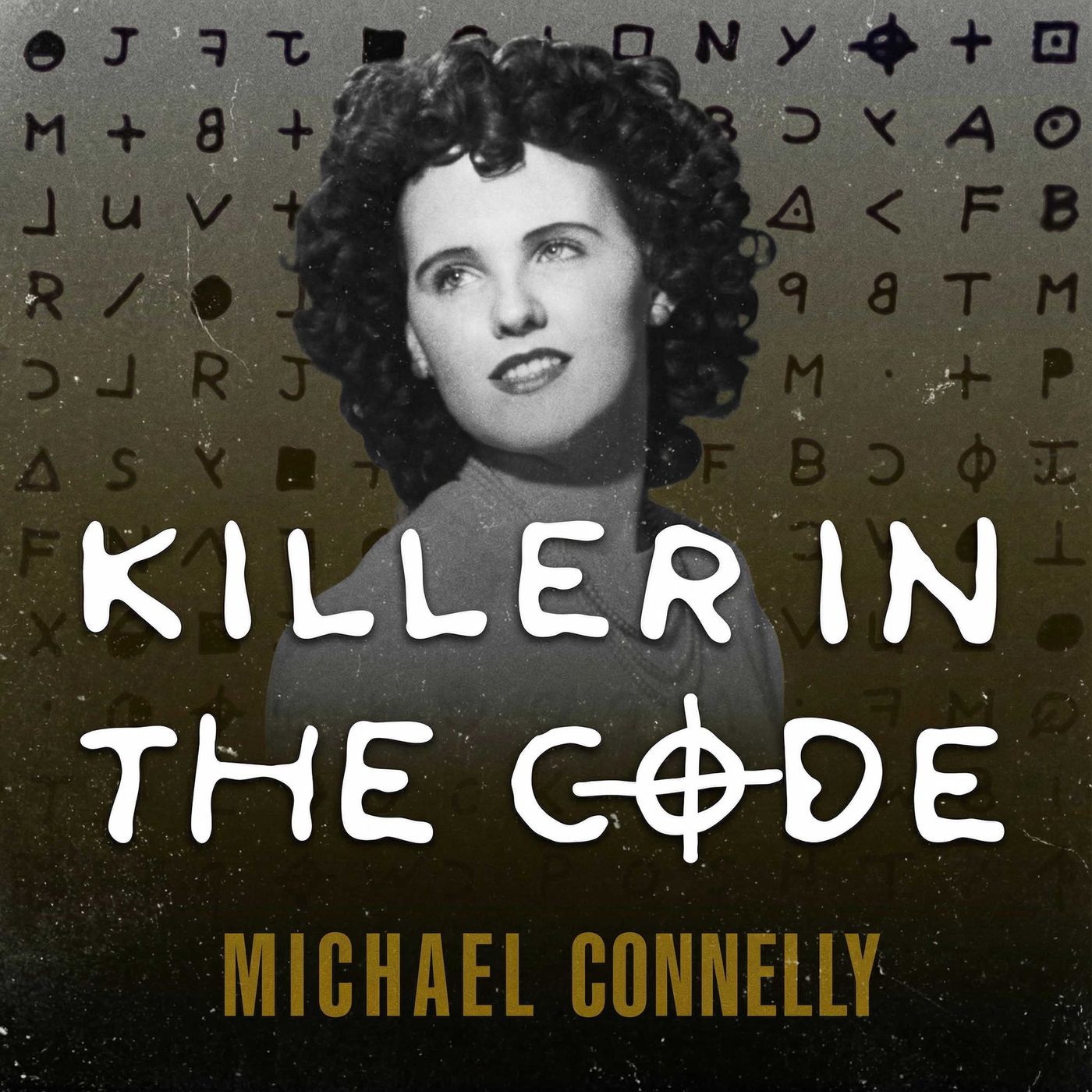
Killer In The Code
Chapter 10: New Age Sherlock
00:23:54
Inspired in equal parts by Alan Turing and Arthur Conan Doyle, Alex Baber is a citizen sleuth who believes no case is unsolvable. A profile of this unconventional investigator. https://killerinthecode.com/
Loading summary
Transcript27 lines
- [00:00]
Commercial Announcer
The new Wegovy pill is now available through weight watchers. Powerful GLP1 results in a simple pill at the lowest price available and with Weight Watchers you can get doctor support and personalized nutrition programs. See if you qualify@weightwatchers.com adnot reviewed or approved by Novo Nordisk if you're the
- [00:17]
Grainger Representative
purchasing manager at a manufacturing plant, you know having a trusted partner makes all the difference. That's why hands down, you count on Grainger for auto reordering. With on time restocks, your team will have the cut resistant gloves they need at the start of their shift and you can end your day knowing they've got safety well in hand. Call 1-800-GRAINGER Click grainger.com or just stop by Grainger for the ones who get it done
- [00:45]
Commercial Announcer
this precedence day, upgrade the look of your home without breaking your budget. Save up to 50% site wide on new window treatments@blinds.com blinds.com makes it easy with free virtual consultations on your schedule and samples delivered to your door fast and free. With over 25 million windows covered and a 100% satisfaction guarantee, you can count on blinds.com to deliver results you'll love.
- [01:07]
Michael Connolly
Shop up to 50% off site wide plus a free professional measure during the President's Day Mega Sale. Last chance happening right now@blinds.com terms apply. Hello, I'm Michael Connolly and you're listening to Killer and the Code Solving the Black Dahlia and Zodiac cases. This is chapter 10, and since we began this podcast eight weeks ago and exposed the suspect behind two of the most infamous crimes of the last century, one man has emerged as the villain in the investigation. And it's not Marvin Margolis. The suspect we name it is the investigator who first named him. Ironically, it is citizen sleuth Alex Baber, who is the focus of upset and anger in the online communities dedicated to these crimes and the many theories about who perpetrated them, we're going to take a hard look at Baber and retrace his path to what might be the greatest cold case solve of the century. 50 year old Alex Baber is not a law enforcement officer and never has been. He's an amateur and never denies it. He describes himself as an autistic genius with a gift for finding, quote, the hidden beneath the hidden. He has a company called Cold Case Consultants of America and offers his skills free of charge and to those who need answers in their loved ones cases. He also conducts his own investigations into some of the greatest mysteries of our time, bringing with him a Unique sense of perception, logic and confidence. One of those mysteries was the long unsolved Zodiac case. Baber's skill set allowed him to do what most claimed was undoable at his break. The Z13 cipher. Left behind by the Zodiac and more than 50 years ago. The Z13, so named for its 13 digits, is also known as the My name is cipher because in the letter sent to the San Francisco Chronicle that contained it, the Zodiac claimed that the code contained his name. With the help of a self written AI program, Baber broke the code after a months long project to weed through more than 70 million possible names that fit the cipher, including the requirement that the solution contain three letters twice and one three times. The resulting solution, the name Marvin Merrill, turned out to be the alias for Marvin Margolis, a prime suspect in the 1947 murder in Los Angeles of Elizabeth Short, better known as the Black Dahlia. Baber then enlisted a team of investigators to help carry his discovery forward. These were not amateurs. They included Rick Jackson and Mitzi Roberts, both recently retired from the Los Angeles Police Department where they worked homicides for decades. Roberts had just retired as supervisor of the Cold case unit where she was custodian of the Black Dahlia case for 15 years. Baber's announcement of a solution to decipher and his linking of the Zodiac and Black Dahlia case and set off a firestorm of debate and pushback, most of which was aimed personally at Baber. His motives were questioned, his honesty was questioned. And despite the independent confirmation by three veteran code breakers formerly with the national security agency, his Z13 solution was questioned as well. Did I say questioned? That is probably too polite a word. Weber has been attacked by the naysayers most often with misinformation and no shortage of vitriol. So what is it about Alex Baber that upsets so many people? Obviously, many of his critics are well invested in competing theories as to who committed these crimes. If Baber is right, then they're wrong. But there's more to it than that.
- [05:19]
Alex Baber
And even Baber knows that I'm easy to dislike. And I think it's my personality and it's not intentional. I come across sometimes arrogant and conceited. It's confidence to me. But there's also a degree that I don't necessarily show the public of me being humble behind the scenes because if people could see me at two in the morning when I get frustrated because you know, I'm, I've almost, I'm almost there, I'm almost identified. I feel it and I know, it's there, but I'm just not able to reach it yet. And, you know, while I have to represent the agency and my people as being, you know, strong and good at what we do, we're still human and we make mistakes. And, you know, it's, it's, it's hard for me to sometimes admit that because I feel like I failed. But I've also learned that failures what got me where I'm at today, had I not failed at Z18, I would have never approached Z13 the way that I did. And, you know, that's one of the things that I'm grateful for, is that with age, I've learned to, to allow myself to be more human and not so insensitive to people or to what they see me as or what they want to see me as, I should say.
- [07:05]
Michael Connolly
Rick Jackson has worked closely with Baber for almost a year. I point blank asked him what the deal was with Baber, how come so many people line up against him.
- [07:16]
Rick Jackson
His personality can come off sometimes very impatient. It can come off arrogant. And I think part of that is the way he's described how his autism has affected his personality style, his, his directness at times, sometimes his maybe moodiness a little bit. But with all that being said, you know, I mean, I been working criminal investigations for, you know, four decades now, 36 in homicide, and you work with all different types of people. We as investigators look at evidence. And when Alex presented this, despite him coming off a little bit cocky at times, I couldn't just kind of walk away from this. I, I was compelled with the evidence to move forward. And Mitzi Roberts, when I explained my interest in having her come on board, has told me the same thing. I have to add another thing is when he has met with other law enforcement, some of the feedback I've gotten is he's so arrogant. And I again, I explained about his background and such, and I said he's just so driven and determined. When he gets on something, he does not let it go. And that's part of his personality and part of his autistic nature. And it's also given him the drive to put together what he's put together, which to me again, is very, very, very compelling evidence. I don't care what anybody says, I'm compelled by it.
- [09:06]
Michael Connolly
Baber is a high school dropout who grew up in rural Florida. People online like to claim he grew up in Ohio and finished high school there. But they've got the wrong Baber. Imagine having to defend yourself as a High school dropout even further. Imagine having to defend yourself against allegations that there weren't killers in your family, as you have claimed. That's how upside down the Internet can get. But unfortunately for Baber, it is true. On Christmas Eve 1969, his uncle murdered his aunt and her husband, a double killing witnessed by a sheriff's deputy. Family lore also held that his grandfather was a killer as well, a man who went unprosecuted because of his standing in the community and the lack of standing of the migrant workers. He may disappear. Diagnosed with autism as a teenager, baby retreated from school and disappeared into reading. The fictional hero that inspired him was named Sherlock Holmes.
- [10:08]
Alex Baber
I stumbled across a Sherlock Holmes book one time, and I really had no interest in it at first, but once I started reading it, you know, about a chapter or two in, it kind of, you know, had my attention to the point to where I couldn't put the book down. So I ended up reading the book straight through. And I kind of related to him having, you know, this desire to want to. To help people and to believe that no case is. Is unsolvable. And, you know, his books, there's. No matter how difficult, how complex a murder may be or disappearance, he always figures it out. You know, he never, never gives up. He believes in himself, he believes his abilities, and he always finds a way. He was in all likelihood probably autistic long before the term ever existed. He was definitely ocd. And I think that his brain was not wired the way that your average individuals would be, or as mine is. I've been told many times by my doctors, as well as people who know me, that I don't necessarily think the same way everybody else does in the Ring.
- [11:34]
Michael Connolly
The next hero that captured Baber's unsettled mind wasn't a fictional character. It was Alan Turing, the English mathematician and cryptanalyst known as the father of computer science and who played a crucial role in decrypting intercepted messages from the Germans during World War II and helped the Allies defeat the Axis powers.
- [11:57]
Alex Baber
Alan's more of a hero to me than he is an inspiration alone. You know, what he did for during World War II, taking the Enigma machine, which was used to be uncrackable, right? Believed to be. And he wouldn't take no finance here either. You know, he. When everybody resisted his vision, they. They literally. I mean, the guy went through a degree of abuse, to be honest with you. If you ever watch the documentary and read some of the literature on him and he, he never wavered, just the idea of tackling a problem of. Of that magnitude and then achieving the objective to where he. They say he shortened the war by two years. And I believe that he saved probably millions of lives. His way of thought was. Was just not your traditional means. Whenever he looked at things, he looked at like he was the father of AI, you know, I'm 0 and ones. He was. He was the beginning of what we have today.
- [13:04]
Michael Connolly
Weber said he became fixated on the Zodiac killer ciphers, including the Z13, nearly 20 years ago. From the moment he walked out of a movie theater where he had seen the David Fincher directed film Zodiac, it led him down a path that was fraught with amateur missteps and false moves he would later regret, and that would provide misunderstood fodder for his detractors today. Like the boy who cried wolf, Baber had been crying, I solved it for years. Only it hasn't been the same suspect each time. Though it was a trial and error process, the Internet has been unforgiving in this era of Internet sleuthing, where expert status is granted to people who have never investigated a single crime, let alone a cold case murder. Baber ironically finds himself facing Internet denizens defending the man he is accused and whose own family has worked with Baber and turned over the most compelling evidence gathered in his investigation. He has faced the scorn of amateur cryptanalysts who say Baber and the independent team of cryptanalysts with more than 100 years of combined code breaking for the NSA are wrong. To me, this is the flip side of the Golden State Killer case, where the work of an amateur sleuth inspired law enforcement to identify a serial killer who had escaped justice for decades. This time, it is the amateur sleuth who's the villain. I sat down to talk to Baber about all this and discussed the crooked path he took to the Z13 solution. And Marvin Margolis. AK Marvin Merrill.
- [14:50]
Alex Baber
Yeah. In the beginning, having no understanding of cryptography outside of the average individual, I attacked the or attempted to decrypt the Z18, which is the final 18 symbols of the Z408 that the hardens were unable to to identify the key for. And I tried to make a suspect fit a letter, frequency or character count. And I used anagrammy. And while the name fit it, later I realized that that's not how cryptography works. You know, if you go in with a suspect in mind, you can make just about anybody's name fit if you. If you've been the rules and you don't stick to the, the methodologies that you need. And it took me over a decade to realize that, you know, to me, almost 15 years realize it, to be honest with you.
- [15:53]
Michael Connolly
The suspect he pursued all those years was Lawrence Klein, who many to this day believe was the Zodiac killer. Like Margolis, he moved around often and employed several aliases, including variations of the last name Cain. Baber fixated on him because his high intellect and training made him the perfect author of the Zodiac ciphers. Going down this rabbit hole allowed Baber to put him in proximity to other infamous unsolved cases. And Baber wasn't shy about going to the Internet with his findings. Klein died in 2010 in Nevada. But before that, Baber reported that a man had called him on a phone with a Nevada area code to discuss that case just two days after he posted his Z18 solution online. Baber believed at the time it was the Zodiac. Lawrence Klein. There are many Baber detractors on the Internet who conflate his activities regarding Klein with his more recent findings and point out inconsistencies. For example, asking how could Marvin Margolis have called Baber in 2007 when he died in 1993? Well, the short answer to that is that he didn't and Baber has not claimed. So Baber continued to name Klein as the Zodiac until as late as 2022. Before coming to terms with having gone down the wrong path, I realized that
- [17:29]
Alex Baber
there's no way he was a Zodiac. I was able to eliminate him as a suspect.
- [17:34]
Michael Connolly
All the while, Baber was refining his knowledge of cryptology, being self taught and most of his life skills, he started over.
- [17:43]
Alex Baber
Once I understood how cryptography worked from a scientific point, it was a different journey for me because then I had to go back to square one. And I tackled the Z13 believing that he did in fact provide his name. And in order to do that, I took a different perspective. Anybody before me in history, I wanted to get every possible solution and eliminate them until I only had one man standing. And that was a very long, difficult road. It's hard for people to grasp that or comprehend that. You know, they, they say what they will, but they didn't. They weren't there. With me working, you know, 18, 20 hour days, six, seven days a week. And I failed many a times before I got to where I was at. It wasn't just, you know, all go and butterflies and lollipops. There was times that I thought about giving up, to be honest with you.
- [18:41]
Michael Connolly
We've tried to explain this or I Think we have, but as you just said, it doesn't register with a lot of people. Can you talk about how you created a list of 71 million possible names that would fit that cipher, that 13 digit cipher? And people must keep in mind there were some rules to those 13 digits where I think three symbols were repeated twice and one was repeated three times. And that creates rules for what names can fit in there.
- [19:19]
Alex Baber
Well, we had to have some assumptions in order to even consider tackling it the way that I had envisioned. We had to assume that the key to the Z13 would be mono alphabetical, meaning one letter to one character, not a homophonic. When you add in a homophonic, then the z13 would be impossible to crack because you could have multiple alphabetical letters representing one symbol. So that cut down considerably the potential candidates, as I refer to them. Secondly, I had to identify an established methodology. We couldn't use anagram. And I Learned that from 2007 with the Lawrence Klein King solution that I developed from the Z18. So taking taking that into consideration and realizing that we couldn't go down that road again, I had to approach it with every possible solution based on the number of characters and letter frequency possibilities. So I had to go and get every possible name that was out there. And the best route to do that was the SSA Social Security Administration. I get every male first and middle name and then every documented surname and upload those and start pairing them together, whether it be a first name only, that's 13 characters, first name, middle name, combination, first name, middle initial, last name, first initial, middle name, last name. I had to have every possibility in order to be be sure that I covered, because I couldn't leave any open doors, because I knew that when we shared this with the public, they would come with pitchforks and torches. And I wanted to make sure that I at least had every possible variable covered.
- [21:16]
Michael Connolly
Baber used an AI program to wade through the massive database and whittle it down.
- [21:22]
Alex Baber
Once I had the grouping of the names, meaning the possible quote unquote candidates, at that point I had to eliminate them. And that's where AI came in. AI allowed me to crawl the web.
- [21:36]
Michael Connolly
The program eliminated candidates based on parameters of race, gender, age, geography and many other factors. When the database was reduced to double digits, a more intense forensic examination of each candidate occurred. The last man standing was Marvin Merrill. The digital pitchforks and torches Baber mentioned did indeed come and continued to come. But Baber remained undaunted. He says the mistakes of the past have made him a better and smarter investigator. Smart enough to bring in professional homicide investigators like Jackson and Roberts to backtrack his work. And honest enough to turn his work over without hesitation to the team of NSA code breakers led by Ed Giorgio. The only man in NSA history to serve as the agency's chief code breaker and code maker. Giorgio put together a team with more than 100 years experience in code breaking for the government agency. They back checked Baber's work and came up with the same result. They also attacked Decipher from the standpoint of the author the Zodiac, and discovered keywords that further confirmed the work. Yeah, there's vanishingly small odds that Marvin Merrill is not the guy. Giorgio told me that Baber belongs on the Mount Rushmore of Zodiac code breakers. He added that his team's conclusions withstand the popular Internet claim that a cipher as short as 13 digits is unbreakable. So a short cipher about which nothing is known often cannot be broken. But the fact that such a cipher sometimes cannot be broken is not the same as saying it can never be broken. Especially when real world constraints are involved. And for some ciphers, under sufficient conditions, a solution can nearly always be found. Bieber is continuing his investigation of Marvin Merrill. And with the backing of professionals like Giorgio and others who have actually done the work, he remains undaunted by the pitchforks and torches these days. He is often reminded of his hero, Alan Turing.
- [23:56]
Alex Baber
He's here today. He's present. You know, every day I get up, I log into my computer. He's here because without him, I wouldn't be doing what I'm doing. I wouldn't be able to achieve what I've achieved with the Z13. When you have the world telling you that you can't do something and you believe in your heart of hearts that you can, and that you refuse to take no for an answer, does ring on. Whenever you look at somebody like him who, you know, saved so many lives and, and did what he was able to, to do at the time, you know, I just, I would. I'm inspired by him.
- [24:37]
Michael Connolly
You have been listening to Killer and the Code, solving the Black Dahlia and Zodiac cases. This episode was written and produced by me, Michael Connolly, and was edited by Terrell Lee Langford with music and post production services by Mark Henry Phillips. Be sure to subscribe to the podcast so you can be informed of future episodes when they come out. Many thanks for listening.
- [25:08]
Commercial Announcer
You know that wellness goal you set at the start of the year? It's not too late to stick with it and make your future self proud, especially with the all in One Nutrition Shake from Cachava with 25 grams of protein, 6 grams of fiber, greens, Adaptogens and more. No fillers, no nonsense, just the highest quality ingredients. Stick with your wellness goals. Go to cachava.com and use code NEWS for 15% off. That's K A C-H-A-V A.com code NEWS
- [25:39]
Grainger Representative
if you're the purchasing manager at a manufacturing plant, you know having a trusted partner makes all the difference. That's why, hands down, you count on Grainger for auto reordering. With on time restocks, your team will have the cut resistant gloves they need at the start of their shift and you can end your day knowing they've got safety well in hand. Call 1-800-GRAINGER Click grainger.com or just stop by Grainger for the ones who get it done.
- [26:08]
Commercial Announcer
If you're an H Vac technician and a call comes in, Grainger knows that you need a partner that helps you find the right product fast and hassle free. And you know that when the first problem of the day is a clanking blower motor, there's no need to break a sweat. With Grainger's easy to use website and product details, you're confident you'll soon have everything humming right along. Call 1-800-GRAINGER clickgrainger.com or just stop by Grainger for the ones who get it done.