← Killer In The Code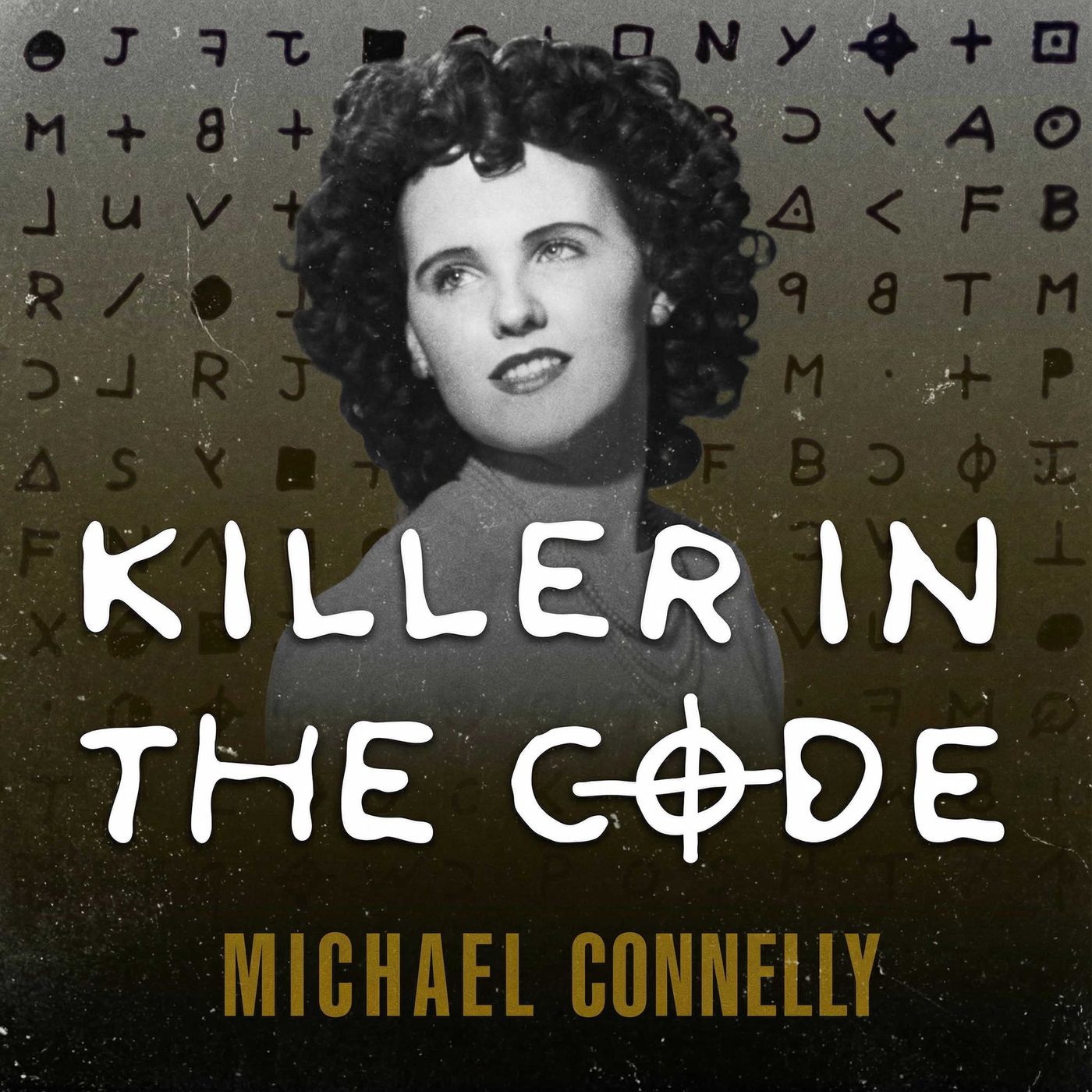
Killer In The Code
Chapter 2: The Smoking Gun
00:23:12
Alex Baber’s gumshoe work leads to the discovery of undeniable physical evidence linking two of most infamous murder cases in history. https://killerinthecode.com/
Loading summary
Transcript44 lines
- [00:00]
Kerrygold Advertiser
This holiday season, reach for the one butter that never disappoints. Kerrygold. Made with milk from grass fed cows on Irish family farms, it's rich, creamy and perfect for baking. Whether browning butter for cookies or crafting the flakiest pie crust, Kerrygold's high butterfat content makes all the difference in flavor and texture. Holiday treats will taste extraordinary.
- [00:27]
T Mobile Advertiser
Everyone deserves to be connected. That's why T Mobile and US Cellular are joining forces. Switch to T Mobile and save up to 20% versus Verizon by getting built in benefits they leave out. Check the math@t mobile.com switch and now T mobile is in US cellular stores.
- [00:45]
Alex Baber
Savings versus Comparable Verizon plans plus the cost of optional benefits. Plan features and taxes and fees vary. Savings with three plus lines include third.
- [00:51]
T Mobile Advertiser
Line free via monthly bill credits.
- [00:52]
Alex Baber
Credit stop if you cancel any lines. Qualifying credit required.
- [00:57]
SpinQuest Advertiser
Spinquest Social Casino the presents are open and you're over the in laws. It's a perfect time to grab your phone and play spinquest.com with live dealer blackjack, craps and a ton of slots. And here's a great deal for the holiday, a $30 coin pack for $10. And if you're hearing this ad, you can play right now on SpinQuest.com SpinQuest.
- [01:22]
T Mobile Advertiser
Is a free to play social casino void where prohibited. Visit spinquest.com for more details.
- [01:30]
Michael Connolly
Citizen sleuth Alex Baber believed he had identified the killer responsible for two of the most infamous crimes in history, the Black Dahlia and Zodiac murders. But his case was built on circumstantial evidence, the breaking of a code left behind by the Zodiac more than 50 years ago. Baber knew that over the decades there have been many like him, people who claim to have solved these cases, only to have their theories be dismissed or ignored for lack of evidence. He knew that unraveling the Zodiac code was one thing, getting hard evidence to go with it would be another. Baber had built what he called the forensic linguistic Database, containing the largest collection in the world of the writings of serial killers and other infamous murderers. Btk, Son of Sam, the Atlanta Child Murder, and so on. He had handwriting exemplars, as they call them, from both the Zodiac and Black Dahlia killers in the database, and a program using artificial intelligence to compare the two had found linguistic similarities in terms of the use of words and phrases. For example, the Zodiac had promised in a letter to a San Francisco newspaper to supply even more quote, material in regard to the murders he had committed 20 plus years earlier. The so called Black Dahlia events Avenger had promised a Los Angeles newspaper editor that he would assist by providing additional material about the horrific murder of Elizabeth Short. It's just one simple word, but odd and significant when used in context to describe the giving of forensic evidence in two seemingly unrelated cases. Still, it was proof of nothing. It was what would be considered circumstantial evidence at best. And the more linguistic connections that could be made was all the better. But still not good enough. To make his case and persuade the skeptics he knew would come out of the woodwork once he made his claims. Baber knew he would need direct evidence. He would need to find a smoking gun if he were to credibly connect the two cases to the same killer. I'm Michael Connolly and you're listening to Killer in the Code Solving the Black Dahlia and Zodiac Killer Cases. This is chapter two. Let's recap where we are. On the morning of January 15, 1947, the desecrated body of 22 year old Elizabeth Short was found in a vacant lot in Los Angeles. She had been mercilessly tortured and murdered. Her body had been neatly cut in two, severed at the midriff and drained of blood. It was a crime that horrified the world and has remained unsolved for nearly 80 years. In death, Elizabeth Short became better known as the Black Dahlia. Her killer, calling himself the Black Dahlia Avenger, sent a package to a local newspaper following the murder that contained the property she carried with her, including her birth certificate and an address book. 22 years after her murder and almost 400 miles north of Los Angeles, the self proclaimed Zodiac killer took five lives in a spree that terrorized Northern California. With seemingly random murders committed across a wide swath of geography. The Zodiac stoked the terrorist with repeated written communications with newspapers claiming more victims in the past and future. In four of the notes, the Zodiac provided coded messages, three of which remained unbroken for a half a century. The most tantalizing of these was the My name is cipher in which the Zodiac boldly claimed to reveal his name in a 13 character cipher because of his brevity. And the so called Z13 code was believed to be unbreakable. That is, until 50 year old Alex Baber came along. Baber is not a cop and not a private detective. He's the founder of Cold Case Consultants of America. He devised a computer program that used artificial intelligence to weed through 71 million possible names that fit the Z13 cipher and knock it down to a handful of manageable possibilities. Traditional gumshoe work followed and Baber focused on one man whose name fit the cipher. Marvin Merrill, an alias that belonged to a man originally named Marvin Margolis, one of the prime suspects in the Black Dahlia case. Now, to be clear, this was not the first time the Dahlia and Zodiac cases have been linked. A retired homicide detective for the Los Angeles Police Department named Steve Hodel had connected the cases through his father, Dr. George Hodele, who was also a suspect in the murder of Elizabeth Short. O' Dell wrote a book about it that I felt at the time was so convincing that I even endorsed it with a blurb put on the back cover. I live to regret that. Because a subsequent investigation by the LAPD Cold Case Unit determined that the son's investigation of his father was flawed and the conclusion was not valid. So now, had Alex Baber wandered down the same wrong path as he connected the two infamous cases to a different suspect? He believed in the cryptography that identified Marvin Merrill, but he knew that as groundbreaking as it was, it wasn't enough.
- [07:35]
Alex Baber
The Z13 solution was never viewed as a piece of evidence and was always viewed as a investigative tool. And looking at it from that standpoint, I knew that I would need some additional evidence to confirm the solution, because I couldn't. I couldn't expect experts to support my findings based on a possible solution has numerous variables. Like there's. You could. Literally, there's thousands and thousands of possible solutions. We needed to have something that was physical that could confirm it. Ultimately, I needed to have something that I can say, okay, let me show you what I have that shows that this name can be associated with a real world individual that we can attach to the case not by speculation, but by physical evidence.
- [08:23]
Michael Connolly
He started with the fld, the forensic linguistic database he had created. He had the handwritten notes from both the Zodiac and Black Dahlia Avenger in the fld. The handwriting in the messages is very distinctive, and you can go to killerinthecode.com to see them. Baber knew that if he could locate writings authored by Marvin Merrill, then he could have an expert handwriting analyst do a comparison to see if they had come from Merrill's hand. And I have to say, the use of handwriting analysis and investigation is on the wane. But still, it would be a start. Problem was, Marvin Merrill was long gone. He died of cancer in 1993 in Santa Barbara. Would it be possible to even find an example of his handwriting after so many years? Baber had made a deep dive into the life of Marvin Merrill after the name was identified as fitting the Z13 cipher. While it was documented that Merrill, using his real name Margolis, had shared an apartment with Elizabeth Short three months before her death, he had gotten married shortly after and had started a family, becoming a father in 1948. Baber uncovered marriage and birth records indicating he had been married twice during his lifetime and had fathered four children. Not all the children were still alive. Baber focused on Merrill's youngest surviving child, a son born in the early 1960s who he had located at an address in Southern California. Baber decided to reach out, but knew that contacting someone out of the blue and saying your father was a serial killer was not the best way to gain cooperation and a handwriting example.
- [10:15]
Alex Baber
In order to get him to respond, I had to present myself from a different perspective than an investigator or a investigative consultant. What I did was I reached out and I said, hey, you know, I'm doing some background into World War II, and the battle of Okinawa is a turning point in World War II that your father was involved in. And I was able to come to this conclusion based on a 1945 Chicago interview where he gives details about his experiences in Okinawa. And I opened the door that way, hoping that he might be able to provide me some additional background on Marvin. And he was open to that.
- [10:57]
Michael Connolly
The son agreed to meet Baber and a member of his team, but he was not in Southern California. He was in upstate New York. They set up a meeting in a local restaurant near his home. There, Baber went to the meeting with his partner, Lori Halstead, and they recorded the conversation. The restaurant was loud, and the recording was not so good, but the surprises as they exchanged information were clearly audible. And by the way, we're not going to name Marvin Merrill's son on the podcast because he eventually agreed to cooperate with Alex and his investigation if his privacy was protected. But Baber quickly came clean and revealed the real reason for the meeting. Marvin Merrill's connection to the Black Dahlia and Zodiac murder cases.
- [11:44]
Alex Baber
Can you send me a picture of it?
- [11:46]
Michael Connolly
It became clear in the conversation that while the son grew up with a worldview that was quite different from his father's, he had no idea about the depth of the darkness in which his father dwelled. Baber had brought a binder with him that contained copies of the 22 different letters sent by the Zodiac to newspapers during his reign of terror. The son started flipping through, and he.
- [12:11]
Alex Baber
Immediately recognized the handwriting as that of his father's. There was a point where he reached across the table and actually grabbed my hand and Made the statement that, you know, it's going to be all right. We're going to be all right. His reaction was not that of a normal individual looking at a letter that they did not recognize the handwriting of. You know, he definitely zoned in and identified it, and it moved him.
- [12:41]
Michael Connolly
The son revealed he had a storage location in Southern California where he kept the things left to him when his father died. He said this included letters and journals and business documents, such as handwritten checks that could be compared by experts to the Zodiac letters. He agreed to turn it all over to Baber.
- [13:00]
Alex Baber
And I actually exposed the connection to Elizabeth Short, the Black Dahlia that we had discovered. And I said, are you aware that your father was the last known boyfriend of Elizabeth Short? She says, elizabeth. I said, yes, Elizabeth. He said, I have something I need to show you. So he pulls out his phone and he starts flicking through it. And my mind went to the fact that his father had a background with art. And I said, in the audio, I'd say, do you have a painting? He said, no, a sketch. And at that point, he pulled it up on his phone. Oh, my God.
- [13:35]
Michael Connolly
Wow.
- [13:36]
Alex Baber
Looking at a sketch of a nude woman. You know, from the waist up, it appears to have puncture wounds to the torso area with smeared blood. And it has Elizabeth in bold writing. The biggest writing on the entire sketch. It says, elizabeth. This was a piece of evidence, and it was the smoking gun I was searching for.
- [13:55]
Michael Connolly
The sketches clearly dated 1992, the last full year of Merrill's life, when he was dealing with a diagnosis of terminal cancer. It is signed Marty Murrell, which was one of the aliases he was known to have used along with Marvin, Skip and Skipton. Among his many different avocations in life, Merrill was both an artist and an art dealer. The sketch is, as Baber described it, a striking image of a nude woman from the waist up, eerily mirroring the bisection of the Black Dahlia. There are contour lines on the torso and smear marks that also mirror some of the injuries Elizabeth Short suffered. It is titled Elizabeth in large letters that cross the entire piece. The mutilation of her mouth and breasts are not evident, but it would stand to reason that including such tortures would have been an immediate and major giveaway, engendering automatic questions of the dying artist. Alex Baver believed he had found a piece of evidence that was a game changer, and Marvin Merrill's son was willing to take him back to his residence, where he had the sketch framed and hanging on a wall.
- [15:09]
Alex Baber
Well, I Couldn't believe what we're staring at. It was a smoking gun. We knew that this sketch was a piece of evidence. It was physical evidence for the first time since the package was mailed to the local newspapers in LA on January 24, 1947. Since then, there's been no physical evidence discovered in her case. And here I am looking at it with the offer to go back and physically see it myself or, you know, in. In his residence, knowing that it's there, that it's. It still exists. It's not a photo of something that's been destroyed. It was a moment where I. I knew at that point that it was game over. There's nothing. There's nothing that can refute that sketch being signed and dated by Marvin Margolis under his alias that contains guilty evidence. If Marvin Merrill was alive today, we could prosecute him based on the evidence within that sketch. We were caught in a moment of almost disbelief. What we were looking at when he handed the hand, this phone to me, and I zoomed in on it, on. On the torso area in particular, and to see the stab wounds and the smeared blood image. At that moment, I knew what I was looking at. And as soon as I turned the phone to Lori, Lori knew what she was looking at as well. It was instant, and it was almost like, in all honesty, it's almost like time froze for a moment and everything around us just went mute. It was one of those moments in your life where you realize what you're looking at shouldn't be there, but you know it's a reality. Like it's in your hands. You know it exists. We arrived to share the Zodiac's letters with him, to see if he recognized him, which he. Which he did.
- [17:04]
Michael Connolly
And.
- [17:05]
Alex Baber
And then all of a sudden, we get the smoking gun that's in our hands. At that moment, we knew it was game over. I do believe that the term that I used with Lori, when we exited the restaurant, I said to her, this is game over. Do you do realize what we have? Lori said, absolutely.
- [17:27]
Michael Connolly
You can go to our website, killerinthecode.com to view the sketch of Elizabeth and other documents and photos relating to Alex Baber's investigation. We are not providing autopsy photos for comparison to the sketch because they are extremely graphic and available elsewhere on the Internet. I have to say, when I first saw this sketch, I felt a chill go down my spine. And I was not alone. Missy Roberts, the former LAPD homicide investigator who ran the Cold Case Unit until her retirement last year, was the keeper of the Black Dahlia case for the last 16 years of her career. She believes the sketch is direct evidence of Marvin Merrill's culpability in the murder.
- [18:16]
Kerrygold Advertiser
If I was still at the lapd, I would have been in New York already knocking on the door and retrieving that evidence because it's. We don't have a lot of physical evidence in this case, and that is crucial evidence.
- [18:31]
Michael Connolly
Robert's former partner and longtime cold case investigator, Rick Jackson agrees.
- [18:38]
Alex Baber
It's almost like a calling card, something left behind. A deathbed confession, if you will.
- [18:45]
Michael Connolly
Robertson Jackson were part of the team Baber assembled after the discovery of the sketch. This included a retired FBI supervisory agent, several seasoned cold case homicide investigators, and a prosecutor. One by one, they were briefed on Baber's code breaking and follow up investigation. One by one, they were turned from skeptics to believers that after all these decades, two of the greatest crime mysteries in history had finally been solved.
- [19:19]
Alex Baber
It's totally overwhelming circumstantial evidence, and now it has become mixed in with some physical evidence that supports Alex's suspect as being the Dahlia and Zodiac killers.
- [19:37]
Michael Connolly
I need to say here that after Marvin Merrill's son agreed to cooperate with Alex Baber's investigation and even turned over the sketch as well as two boxes of his father's documents, he is not convinced his father is the infamous Zodiac and Black Dahlia killer. And of course, that is the son's prerogative. Moving on, the value of the Elizabeth sketch went beyond it being evidence that connected Meryl to the Black Dahlia murder. Remember what Alex Baber said to me the first day we met? He boldly claimed that he had the ability to find the hidden beneath the hidden. And now as he studied the Elizabeth sketch and thought about that long history of the Zodiac's cryptic clues and the I'm smarter than you taunts to the public and the police, Baber started thinking about the hidden beneath the hidden.
- [20:29]
Alex Baber
If Marvin was who we suspected he was, then that sketch itself wasn't just something he created, it was a message. It was a means to an end for him. He knew his life was short. He knew that he wouldn't be on, on the face of the earth much longer. And it was. In my eyes, it was a deathbed confession. It was his way of really releasing whatever guilt or whatever that was in him, if there was guilt, by putting it out there, knowing that one day somebody would come along and discover it and say, look, this is a piece of history that connects directly to his former girlfriend who was murdered and that's the idea. Once I knew that the Zodiac was connected through the Z13 and the sun, identifying some of the evidence, I knew at that moment that this, there could be something more to this guest than just Elizabeth. And at that moment, that's when I decided that we would, we would look at the sketch from a different perspective and run it through, you know, a light spectrum and contrast, you know, peel off layers so I could see if there was anything beneath that.
- [21:43]
Michael Connolly
This non invasive imaging is technically known as infrared reflectography and is a technique used by art historians to study the layers of paintings and sketches, to find what is hidden below the surface, to identify the creative steps and changes made by the artist. When Baber applied this technique to the Elismus sketch, using color and contrast filters, he found a single word hidden beneath the dark shading that outlined the central image of the woman. That hidden word was Zodiac.
- [22:22]
Alex Baber
I just think that it was his way of saying, you know, here I am, I'm dying. I got, I got away with it. But I'm hoping someday somebody will come along that will discover this sketch and identify me as the perpetrator. One thing that we're absolutely sure about is the fact that the Zodiac was egotistical and he was a genius level intellectual. That being said, there's no way that the individual that committed these crimes would have left this planet without leaving behind some source of identifying him. He couldn't do that. It's like Jack the Ripper, right? Whether it's ever solved or not, Jack the Ripper will go down, you know, as being probably the most infamous serial killer with the exception of this case, once we're done. But he'll never be identified. There's just no DNA left. There's no evidence there with Zodiacs, the different circumstances. He wants to be known. In order to be known, you have to give him a name and a face. And I believe that's what the sketch represents.
- [23:22]
Kerrygold Advertiser
It 100% concretely ties the two cases together.
- [23:28]
Michael Connolly
In case you were wondering, the Elizabeth sketch has been secured for further analysis by an independent art expert. We will have a report on that in the episodes that follow. The sketch, of course, energized the whole investigation. But Alex Baber did not drop his focus on the angle of investigation that led him to the sketch in the first place. The handwriting analysis. We'll have more on that in future episodes of the podcast. We will be back with the continuing story of the investigation on January 15th. The 79th anniversary of Elizabeth Short's murder will tell you then about breaking the final Zodiac code and its direct connection to the Black Dahlia. For more information, go to killearnthecode.com this podcast was written and produced by Michael Connolly. It was edited by Terrell Lee Langford and Mark Henry Phillips, with sound design and scoring by Mark Henry Phillips as well. Thank you for listening.
- [24:32]
Alex Baber
Foreign.
- [24:39]
T Mobile Advertiser
Deserves to be connected. That's why T Mobile and US Cellular are joining forces. Switch to T Mobile and save up to 20% versus Verizon by getting built in benefits they leave out. Check the math@t mobile.com switch and now T mobile is in US cellular stores.
- [24:57]
Alex Baber
Savings for cell comparable Verizon plans plus the cost of optional benefits, plan features and taxes and fees vary. Savings with three plus lines include third.
- [25:03]
T Mobile Advertiser
Line free via monthly bill credits.
- [25:04]
Alex Baber
Credit stop if you cancel any lines.
- [25:06]
T Mobile Advertiser
Qualifying credit required.
- [25:09]
SpinQuest Advertiser
Spin Quest Social Casino the presents are open and you're over the in laws. It's a perfect time to grab your phone and play spinquest.com with live dealer blackjack, craps and a ton of slots. And here's a great deal for the holiday a $30 coin pack for $10. And if you're hearing this ad, you can play right now on Spinquest.com Spinquest.
- [25:34]
T Mobile Advertiser
Is a free to play social casino prohibited. Visit Spinquest.com for more details.
- [25:38]
Kerrygold Advertiser
This holiday season, reach for the one butter that never disappoints. Kerrygold. Made with milk from grass fed cows on Irish family farms, it's rich, creamy and perfect for baking. Whether browning butter for cookies or crafting the flakiest pie crust, Kerrygold's high butterfat content makes all the difference in flavor and texture. Holiday treats will taste extraordinary.