← Kitesurf365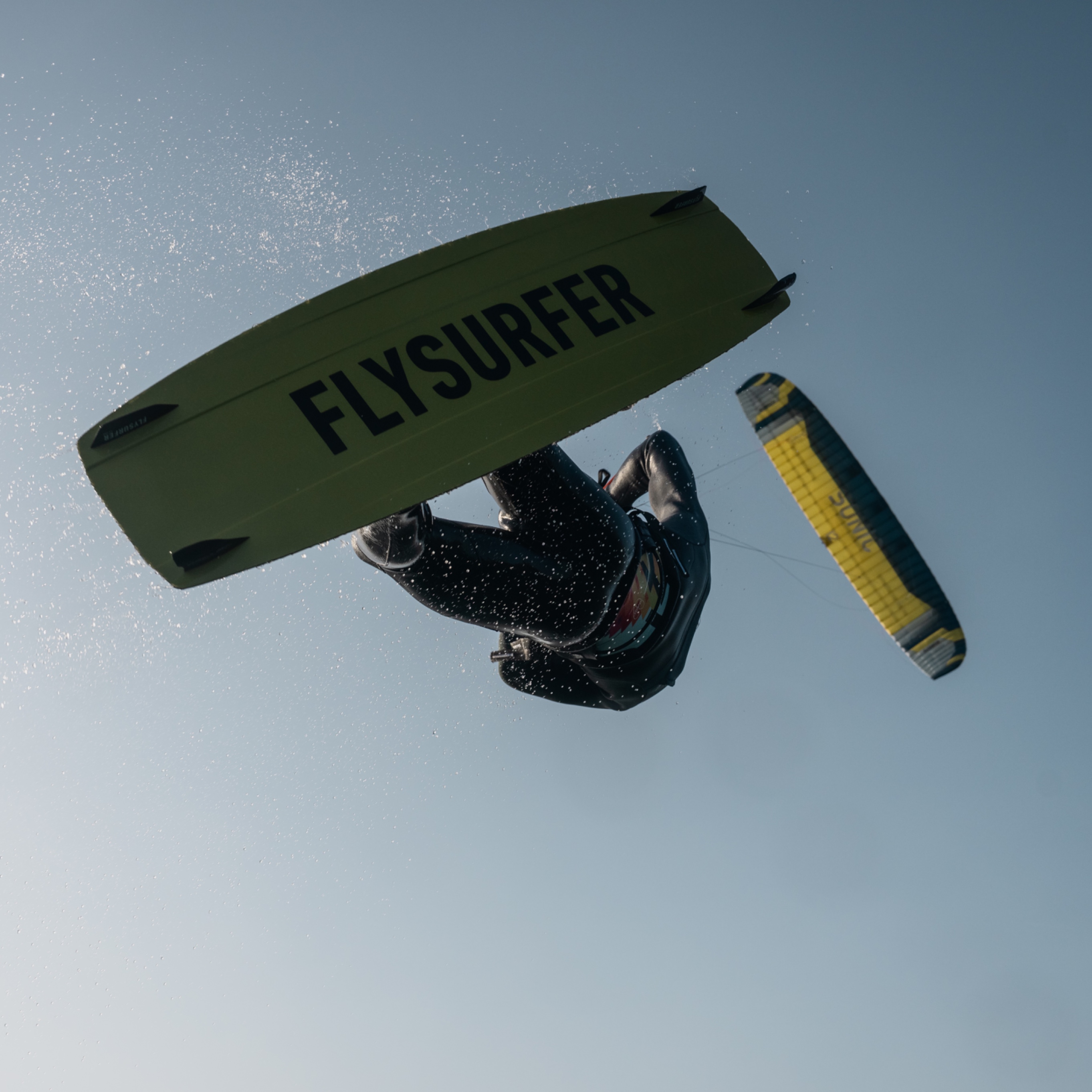
Kitesurf365
2nd Lift For Days | Sonic5 | The Megapod
00:39:14
On today’s episode Adrian and Colin talk about the new Sonic 5 from Flysurfer. We also hear from the designer Benni Boelli and rider Luca Ceruti. The Foil Academy: Portrait: Woo Sports:...
Loading summary
Transcript116 lines
- [00:00]
Adrian
And the thing's got so much lift.
- [00:02]
Colin
You know, many, many riders out on foil kites.
- [00:04]
Benny Bolly
We are really excited about this kite.
- [00:06]
Adrian
Because it is a different. It's completely different design to lai. They have to think about different parameters.
- [00:09]
Colin
I'm actually really excited. Benny got me excited, Luca got me excited.
- [00:12]
Luca Ceruti
He just lifted me back up and I was like, cap, this is the future.
- [00:18]
Colin
Catastrophic equipment failure.
- [00:20]
Adrian
Going for the boogaloo double just to get the landing had a couple of.
- [00:24]
Colin
Strings and it was extremely dangerous.
- [00:26]
Adrian
Guys, I sent the trap and it.
- [00:29]
Colin
Is gold for Ellie Aldridge and for Great Britain.
- [00:34]
Adrian
Big episode, this one, Adrian.
- [00:36]
Colin
Huge episode.
- [00:38]
Adrian
Sonic 5 is released right now. Well, technically not. We're recording this one hour and 11 minutes before it does under strict instructions from the Fly Circle Bros. In this episode, you're going to hear from the designer, Benny Bolly. And it's right. And the big dog rider, Luca Ceruti. You're just going to learn a lot about foil kites in general. Not necessarily this one too. I really think we've seen a big uptake in foil kites at all the beaches we go to, but I think this one could really be kind of the standard because it's the one that you can loop it. In the small sizes, sure, but in the bigger sizes it seems to give like way more second lift than other foil kites have. And I think that as more pros use it and are going to be using this one for sure. I just think the uptake is going to continue and they're going to become more and more popular around the world.
- [01:37]
Colin
Absolutely. I mean, the Big Air guys talk about it as a training tool, but I think they're going to be talking at it as a serious option for competition soon. Especially, you know, you'll hear Benny and Luca talking about the wind range of these kites coming up. So we saw Charles on a foil. We've seen Stratus riders, the king of the air. They like things to be a little bit different. So, you know, Luke is pretty adamant that he's going to ride this stuff. I know we've seen Hugo winning the hydrofoil Big Air on this kite. We've seen lots of people training. If you're in Cape Town, you'll see, you know, many, many riders out on foil kites. Let's get excited.
- [02:10]
Adrian
Just before we cut to the, to the interviews, I rode the day after Megaloop at the event site at KSN in Nordvik, who are very welcoming and it was nice of them to, to host us. You know, we're not members of the club. But they, they, they, they had us in there. We were in their bibs and yeah, enjoying this, the spot and their hospitality. The conditions. Adrian didn't write ride, so let me just describe them to you, Adrian. It was half the wind of Megaloop and probably half the wave height. Yet the conditions were just like. I could not believe that people were riding competition level stuff in that. I just, there was no opportunity to take off on a clean kicker. And if you were coming down, there was no opportunity to have a safe landing. It just properly humbled me and I really thought, I don't know how the fuck anyone was riding in this, right? And I was testing a few different 9 meters. There's a guy there on an 11 meter, no, I think it was a 10 meter foil kite and he was having the most fun. Why? Because if there's a nasty bit of white water coming for your ankles as you're coming into land, you just sheet in again and the thing's got so much lift, you just drift, you just bob over it. You're like, nah, I don't fancy that. Okay, I'll just chill up here for three more seconds, let that nasty fucking thing go under me. I'll just pop down safely. Amazing. And I was looking at him being like, yeah, okay, that is all makes sense.
- [03:47]
Colin
Let's hear from Benny Bolly, who is the designer of the Sonic 5. How long have you guys been working on the Sonic 5? I mean, this seems like I, I, I kind of feel like this. Or you guys are more excited about this kite than any other kite.
- [04:00]
Benny Bolly
Yeah, we are really excited about this kite and we, I think we started around two years ago, so kind of one year after we launched the Sonic 4 to basically, you know, just gather some feedback from customers from the broad audience on what they would like to have different on the new kite. Because that's not always easy to know really what to work on. Because basically we were happy with the Sonic 4 at the point we launched it, otherwise we would have not launched it. But then, you know, the customers and the riders, they always find something to, you know, something to improve. So basically after a year, year and a half of after the release, we started with the Sonic 5. Yeah.
- [04:49]
Adrian
And let's face it, the thing that those riders must have said is, I want to loop it.
- [04:55]
Benny Bolly
Yes, but the riders looped it already. The Sonic 4. But in the meantime, we also made the Soul, the Soul 3. So especially the small sizes, especially the 6 meter, we focused on looping. But it was still, especially for Luca, it was pulling too much in the loop. Basically what you want from a looping kite, or at least from a good catching kite, is that it's not yanking you like crazy, that you not lose the line tension after loop, that it catches you really nicely. And the saw kind of does this a bit at least too much for Luca to do his tricks. So he really needed to adapt too much from the era to the sole to be able to really use it in competition. And that feedback basically went into the small 7 meter sonic 5.
- [05:48]
Adrian
And what have you done? How have you achieved a less Yankee foil kite?
- [05:55]
Benny Bolly
Well, there are so many parameters which play together on the foil card. And in the end it was a combination of higher arc. So it's more C shaped, but it's also higher aspect than the Sonic 4. So I wanted to keep the same projected span. So the distance between the wingtips, which is kind of giving you the. The turning radius. You know, if you have a high span, your turning radius will not be super tight because otherwise you would just pivot to kite. So the lower aspect ratio the kite is, the tighter you can turn in general. Can turn the kite in general. But I did not want to go down in aspect ratio because that's also the performance side of the Sonic. So we did not want to go too close to the sole. We did not want to make a good looping sole, but we wanted to have the spiciness of the Sonic but with the easiness, kind of a tube kite for looping. And yeah, there were other parameters, but that would be just too much.
- [07:02]
Colin
Now Benny, it's interesting. When we were in Egypt last year, we had Yannick Dzagozyci on the boat and Maxwell Dahl had never ridden foil kites. We gave them the Sol 2, those two obviously very, very good riders. I think maybe 10 to 15 minutes, they were sort of struggling. Then they came in after about 20 minutes and basically said, can I buy this kite? It was, it was so interesting to see their excitement once they had. I mean there's a learning curve for them because they used to fly in the flying Ali. But it was amazing to see. Both of them instantly were like, I need a foil kite.
- [07:35]
Benny Bolly
That's what also we experience at testables. You know, the step to even try for kite is, is really hard for, for most of the, of the people. But if they tried and they have a good session, you know, if it's a session, you will always blame it. It's. It's the kite and whatever, you know, it's always the equipment, it's never the conditions. But if they have a good session with some good jumps, they're totally sold, you know. And then they would basically go into oh, how do I actually launch this kite? And how do I pack it? And whatever. So everything around comes after that. But when you hook them in and they have a good session, they're sold. But this hurdle of trying the kite is really big for most of the people. But the biggest point to adapt to is the timing. So it's the timing for the takeoff, it's a timing for when do I steer the kite forward, doing the jump and so on. And that's a huge learning curve. So when you've never felt the feeling of a foil kite, your first jumps will not be great, basically, unless you're a really good kiter. Like if you really know how to jump high on a tube kite, you will get into it quick.
- [08:49]
Colin
How does this new Sonic 5 differ from the Soul? I mean, that might be quite a good thing for people to hear.
- [08:55]
Benny Bolly
So the Soul, as we launched it was always kind of our entry level foil kite. So when you want to step in the foil kite world, the the Sol would be your first first card to use because really user friendly for especially for for launching. So inflation is really easy. You can depower it during the inflation and the wing tips will just basically pop up by themselves. And then the relaunch from the water is really easy with one steering line. And just. It's just the overall usability is so much nicer on the on the sole. But if you can handle the sole, there is something to step up and that's the Sonic. So the Sonic is basically also the same construction. So it has three levels. Top, bottom, sail, everything more or less the same. But it's higher aspect ratio which gives you more performance, shorter bar travel. So it's really explosive. So explosive lift really rips you off the water. Basically the Soul is more of a gradual lift, gradual float and yeah, so that's kind of the key differences. And the Sonic is a bit harder to launch, but if you know how to. It's also not hard.
- [10:06]
Colin
Can people get into foil kites and go straight to the Sonic? Is that something? Or would you encourage them to buy the sole first?
- [10:12]
Benny Bolly
I think you can go straight to the Sonic, especially if you really have a lot of experience in normal cutting. So also if you're really good Kiter itself, you can go straight to Sonic. But I would basically really try launching it in, you know, low wind conditions first and watch some tutorials and really make sure you know all the rules what to think about before you launch a 7 meter in 30 knots plus you know, because if you have 10 knots on a 12 for example, there's not much to go wrong. But in 30 knots it's a different story. So if you go step by step you can go straight to the Sonic.
- [10:55]
Adrian
Has this Sonic been designed to be ridden in higher winds?
- [10:58]
Benny Bolly
The 7? Yes. The 10, 12 and 15. So we'll have it in four sizes. Maybe 7, 10, 12 and 15. And the 7 especially is designed for the competition riders especially like we talked before with the less yank in the loop. But you still have the nice float after the loop which is. Which is great. But yeah it's. It's designed to. To be used in. In 30 knots plus basically Benny Fall.
- [11:33]
Adrian
Kite'S notoriously slower than Leis. What have you done to make this fast? Because presumably it must be bloody fast.
- [11:42]
Benny Bolly
A tube kite would turn really fast. So it basically turning speed is like how long do I need to fulfill one full loop basically and that's for sure also slower on the new Sonic than the same size tube height. And mainly that's because of the higher span like we said before. So the outer wing tip will just need to go way a longer travel to fulfill one full turn than on the on the same size tube kite. And that's basically how you could think about the loop. If you pin the inside wingtip and then outside wing tip needs to go around it. The higher the span the longer it will take. But then the flying speed comes in. Because if the flying speed is really high, it can basically fly this longer travel faster. And that's where we really worked on on the Sonic 5 to have this outer wing tip flying really fast.
- [12:39]
Adrian
Is it your belief that the Sonic 5 could break a woo world record?
- [12:45]
Benny Bolly
I think so. It's just. It's just you. You need to be lucky with the conditions because if you have this 55 knots or 50 knots whatever wind, what you need to break this. I would say 40 meter barrier and jumping height. Let's say most of the time it's very humid if not raining and rain is just not nothing. What folk heights like that's something where the conditions or the range of conditions really narrow to really find this one spot with the perfect wind direction which is floaty. It's not raining or not to humid. I mean humidity is not that crazy. But rain is really bad because the water droplets will form on the leading edge and Then basically destroy the airflow behind the drop. So on the, on the profile, which is totally screwing up the whole airflow behind it. And which is also happening on tube kites. But on tube kites do anyway, because you don't have a bottom sail, the airflow is anyway not that clean. So the tube kite basically creates lift a little bit different or not that efficient as the foil kite. And then the water droplets will just harm the airflow way more on the foil kite than on a tube kite.
- [14:02]
Colin
You designed the vmg, it was a gold medal winning kite at the Olympics. How much of that technology came into this kite? Or they completely different because they have different requirements?
- [14:12]
Benny Bolly
They are pretty different. But what we, what we used is some swing technique. So we really optimized the BMG to really reinforce it on only the spots where it really needs to be reinforced to have it as light as possible. Which also goes for the Sonic, basically. So we also want to have it as light as possible. But the Sonic needs to be durable. And we tried to have the top sail surface really, really smooth, so without any wrinkles. And we used a special cut which is called the CCB cut cord cut cord cut below, which just makes the top sail really smooth. And that's something we took also from the BMG to the Sonic, but also to the SOL3 already. So the SOL3 has this cut also implemented. And otherwise, I mean it has more levels than the vmg. So it has. No, no, no glass fiber sticks. It is, it is very different to the bmg. So it's can't take much.
- [15:20]
Colin
You always hear it. Oh, if you crash a foil kite, you know, it's, it's over. How do you get these kites up? What's the technique to get these kites up? Or they sort of design that they won't fill up with water.
- [15:31]
Benny Bolly
So what foil clients really hate is waves, especially waves breaking on them. That's depending on the wave size. But if you have a proper 2 meter wave breaking on the foil cut, it's pretty much game over. It's not game over. The full kite is broken, but it's game over to get it relaunched. But in normal conditions or between, between the waves, the most important thing is that the kite does not lose line tension. So when you go full speed towards the kite and the kite can flip over, then it will invert like a tube kite also would do. But that's really hard to get out again. But if you drop the kite and you keep line tension, especially line tension on the back lines, the kite will Basically kind of float on the leading edge and then you can just take both, both steering lines or just one steering line which is working on the sole a bit better than on the sonic. So on the Sonic you would take both steering lines, let it fly backwards, release one, and then just let it go up again.
- [16:33]
Adrian
I want you to dumb down what changing the arc or the aspect ratio of the kite does.
- [16:41]
Benny Bolly
So the aspect ratio is the ratio between the center length of the kite regarding to the span. So basically how often can I fit the center of the kite into the span? So aspect ratio of 7 would more or less mean that I can fit the center length of whatever 1 meter in this 7 meter of span. That's kind of this ratio. There is a formula behind it which is a bit more, more accurate because of the outline change. But if you would have a rectangular wing, that would be the definition of the, of the aspect ratio. And the higher the aspect ratio is, the lower the chord is. So the smaller the distance between ABC and the break level would be. And that relates into shorter bar travel. So that means you can basically have within your, let's say whatever, 55 of the power range, 55 cm of D power range on the bar, you can basically get the full D power of the kite within this range, but also the full power of the kite within this range. So you can hold the edge longer before the jump and then get the full power out of the kite. When you want to jump on a really low aspect kite, this bar travel or this, this travel to get the full D power into full power would be whatever, let's say 75 centimeters. So you would need to pull the adjuster to get the full D power. But then when you want to jump, you have, you know, lack of backline tension. So you would not get the full power out of the kite. And that's why a high aspect wing or high aspect kite in this case is high performance, because you can just get the full D power range out of the kite. So the higher the aspect ratio, the higher the span, the bigger the turning radius. Like we talked before, big turning radius, really, really low heli loops, we don't like that. So basically we need to arc the kite again to reduce the span because we increased the span with the high aspect ratio already. So we need to pull it down to basically have a tighter turning kite. But if you do it too much, you would end up with a tube kite basically which has a kind of bad relation or ratio between the flat area and projected area. So when you basically have a 12 meter kite and you pull it down to a SE, he would only have like 6 square meters facing the wind. But if you don't do that too much, you will have whatever 10 meter, 10 square meters of, of area which is pulling you. So yeah, that's also the, the balance between aspect ratio and, and arc.
- [19:30]
Colin
Hugo posted a video at the start of the year. I think he was at 1 minute 20 seconds in the air. How do these kites get that continuous loop that creates that lift? How is that happening and how can riders do that? I mean. Or is that just incredible skill or is that the kite?
- [19:51]
Benny Bolly
It is, it is a lot of skill. The skill behind it, first of all, to feel the magic gust if it is a magic ghost or not, and then to stay in the magic cast. So kind of need to navigate through the air with your looping direction. So if you feel the loop to the left side is lifting you more, you know, you would not put your next loop to the right side and fall out of the magic cast basically. And that's how you kind of navigate to stay in this magic gust. And that's the skill word where it really comes into, into play.
- [20:27]
Colin
I mean, are these kites, especially the Sonic 5, is that the best opportunity that most people are going to have to to catch a magic gust?
- [20:35]
Benny Bolly
I think so, yes. So first of all, the biggest improvement on the Sonic 5 or the biggest advantage on the Sonic 5 over tube kite is that it has really vertical lift. So when you take off, the car is really flying far above your head. So you have really vertically takeoff. Then you have a lot of area, projected area which is lifting you. Plus you have this gliding performance due to the high aspect ratio. So it's very efficient for the air so it does not create too much drag. So drag is always basically just a loss of energy. So we want to keep this energy, this energy we need for the lift basically. And yeah, so this vertical lift, this hang time because of the high aspect ratio and the the area is really great. And now with the Sonic 5, we even in proved the turning behavior of the kite so you can turn it tighter without really losing too much lift and pivot the kite. And this combination just gives you the tools to navigate those magic gusts the best way.
- [21:49]
Adrian
The last time we saw you was when you were walking along the street in Tarifa just outside B area with a Sonic five under your arm and like all your pro riders kind of giggling like little girls on school trip because presumably you just had a session where you'd looped things for the first time. Did it. Did that surpass your expectations as well? Were you expecting them to be able to do that on the kite and were you expecting that reaction from them?
- [22:19]
Benny Bolly
Um, that was basically the. The photo shoot we had for the Sonic 5 in Tarifa, and it was kind of the first session where we had Luca and Hugo and Evan riding the more or less serial product for the first time together. And Hugo especially, he was never really into looping foil cards. He used his fault kites as a training tool, especially the 12 and the 15, also the 10 sonics as a training tool for the smaller eras, smaller leis. But we know Evan loves to loop the folk heights, especially on. On short lines. And Luca is really also loving the folk heights, especially for looping for big scene loops, but not that technical because of the yank they had. But now to see kind of the final product. So I had two versions at the photo shoot, especially from the 7 meter, which were kind of different. And to see Hugo witnessing Luca doing all his tricks on a foil height with just 5 meters to 8 meters more height than everyone else on the spot. He was like just going. Going nuts and going crazy and just changed into his wetsuit and, you know, went for it. And yeah, this session was really kind of also eye opening for me to see, okay, they really can do their stuff, what they do on leis on the foil kite now, but you have this extra height and hang time on the folk height, which is. Which is or which was really, really nice to see. And that's why we were also really, really happy when we met you.
- [24:15]
Colin
I mean, we saw Hugo riding that a few weeks back at the Hydroflow Big Air. I mean, you know, we were saying he bought a knife to a gunfight. He just looks so much better than everyone else getting so much more height. I mean, that must have been pretty awesome for you to see that. I know it was an unreleased kite and people have been talking about it, but you must have felt really proud to see how well that kite performed in those conditions.
- [24:33]
Benny Bolly
Would have been interesting, you know, if. If Finn got the same kite, if it would have looked different. But the Sonic 5 really like this. This turning radius helps so much to get the. To get a hel in, especially on the 15, which then gives you the second lift and just adds whatever five seconds of flight time to your. To your jump, which is great, but if you just can't fit this heli loop in, or the heli loop will just end up with the kite really Low in front of you. It gets really technical where you need to really navigate the kite or concentrate on the kite too much and not on the trick. And now with the Sonic 5, you know, if, if you start the heli loop with the kite a little bit behind your head, you will be fine, you know, and you can focus on the trick on some board rotations or rodeos or whatever. So that's a big advantage of the Sonic 5.
- [25:28]
Colin
Maybe a silly question. On an lei, you can helle loop with the front hand or the back hand. Is that similar to a foil kite? Can you heli loop both ways or. It seems like, I think on the video it always looks like it's a backhand heli loop. Is there something in that you can.
- [25:44]
Benny Bolly
Loop them both directions? Doesn't matter. But with the or why there are many backhand loops, heavy loops is because we basically pull the kite forward again before the heavy loop. So when we take off, the kite is behind us, we move it forward, get the second lift and then we loop it the opposite direction, which is then with your backhand to basically get the third lift or maybe the fourth lift. So yeah, that's the reason. But you can go straight into a heavy loop with the forward hand. Yeah, no issues. You can also do contra loops like with the, with the Sonic 46 meter. I remember in Cape Town a few years back, basically I put. I put Luca on the. On the 6 meter prototype and the first jump he did was like a 3 meter high transition coming in, going out. And the second jump was a contra port of. I was like, I have never seen a contra loop for cut. That was the second jump, actually, the first jump. So it is, it is really cool to see what's possible on the fault card.
- [26:59]
Adrian
Are we gonna see a Sonic 5 in King of the Air, do you think?
- [27:03]
Benny Bolly
I would say everything below 35, 40ish knots, the chances are really high. And I think we will not see only a Sonic. Maybe. So let's see if something else is coming from other brands. Not from us, but from other brands. So our riders looping for cards from other brands also could be that it's not the only foil card. And King of the Air.
- [27:31]
Adrian
All right, Benny, thanks so much for your time and for dumbing it down adequately for us. I feel much smarter. I don't know whether I could actually regurgitate anything you've said.
- [27:41]
Colin
I'll tell you what, I'm excited to go get my four kite back out now.
- [27:44]
Adrian
Yeah, that's cool. That's cool. Thank you for your time, Benny. And yeah, pleasure will we see at King of the Air. You'll no doubt be there.
- [27:52]
Benny Bolly
Tuning depends on wind forecast. If it's 50 knots plus and the chances of having a fall cut there. I'm not really help on the beach, but if it's. If it's not ballistic, I will be there.
- [28:05]
Adrian
All right, Benny, thanks very much. And we will talk again in the future, no doubt.
- [28:11]
Benny Bolly
Goodbye, thanks for having me and have a good one. Bye. Bye.
- [28:15]
Adrian
So it's all well and good hearing how marvelous something is by the guy that made it, isn't it? That's easy. Sure, we think our videos are good as well. Doesn't mean they are. But what you really want to hear is from a rider. Yes, he's paid to ride it for sure. Saw. Okay. But the look on their smug faces in Tarifa, which is where they did the. The shoot, I think does say it all. So let's hear now instead of looking at their smug faces, let's hear from his smug face. Luca Ceruti.
- [28:47]
Colin
I'm sitting here with a Luca Trutti. We're actually in, I guess this is.
- [28:52]
Luca Ceruti
An indoor pool, like a sauna. Got our T shirts off, but outside.
- [28:56]
Colin
Is very, very windy. So, Luca, we're here today, today to talk about the Sonic 5, which is being released today. Before we get into it, what is your history with four kites? When did you start riding for kites? Do you remember or is it just recently?
- [29:08]
Luca Ceruti
Yeah, so it actually going back four years ago when I stole north, I was given a foil kite by Benny and Luke McGilloui and I said by them to go and ride it. And I saw the down loop on it and it just lifted me back up. And I was like, cap, this is the future future. Long story short, left north and here I am today on F kites.
- [29:29]
Colin
What. What's the sort of learning curve and what can people expect if they jump on a foil kite for the first time?
- [29:34]
Luca Ceruti
For me, when I first had this experience on this foil kite, I saw this down loop lift me up. And I think that's an experience that anyone else can do. So finding the down loop and learning how to do it and then getting that lift back up is honestly the one of the best feelings from a foka. But not only that, like just doing a straight jump, taking the kite past 12 and then bringing it back down. You get like three extra seconds more than a normal kite. So I think that's quite a big advantage to any other kiter kiting on an inflatable, let's say 12, 15 meter with the Sonic. 15, 12, 10 meter, you just get like three more seconds in there. And I think that's quite a good thing to know if you just want to progress in general.
- [30:17]
Colin
Do they react the same? Do you have to be a little bit more patient? Can someone just jump on a four kite straight away and be good? Or does there. Is there a bit of a learning process?
- [30:25]
Luca Ceruti
There is a little bit of a difference. I mean, in the big picture, it's still the same. You take it to 12, you pull in the bar, you jump, you send it back forward. But then there is a few more key things that will enhance your jump. But it's honestly not to say that if I. I give someone who's never in a full card a full kite to go jump with it, they'll be totally fine. So it's, it's so simple in that aspect that you don't need an extra lesson to use this guide. But yeah, obviously if you pushing and you really want to get the most performance out of it, I would just ask someone who's been riding full kites, like myself, like, hey, what do you think of this? Where should I keep the bar? On the down loop. And then it's can be easy.
- [31:10]
Colin
I remember, you know, seeing that famous video from Hugo in New Zealand when it's I think it's 1 minute 20 in the air, which is kind of, kind of crazy, right? Yeah, it just. It's doing big slow loops, but it's almost like creating its own lift every time.
- [31:23]
Luca Ceruti
Yeah, literally. It's like the flare paragliders. Yeah, just literally staying in there for ages.
- [31:28]
Colin
I assume it's a valuable training device for you.
- [31:31]
Luca Ceruti
Yeah, literally. I mean, honestly, like I said, three more seconds in the air. Any kite surfer that wants to kite and float in jump, it's the best thing to have. Like floating for longer is what you need for kiting and. Yeah, that's it.
- [31:47]
Colin
How does the Sonic range differ to the other foil kites that fly server bring out?
- [31:52]
Luca Ceruti
The goal for the Sonic this year was to get the down loop flowing. And last year I thought that the Sonic 4 was doing the down loops really well, but it wasn't doing it well enough. So I really felt that if you want to progress with a fall kite in the future, you need to have it jumping with as much hang time, but then as well as doing the down loop. And this is what we really focus on this year. So I was going on the test trips with the boys with Benny and Taylor, and we were like, okay, cool, let's not lose height, let's not lose hang time. And then it's get a good downloop. And in the past we had the heights and the hang time, and now we've got the downloop included. So that's like the really big goal that we're focusing on. And this is. Yeah. What I believe the Sonic 5 is going to show once the person or the customer buys it, is going to be like, oh, wow, this kite's actually super easy to use. And I'm going to be able to progress way further than I thought.
- [32:52]
Colin
I know you like to do low loops. Can you low loop the Sonic 5? Can you get it really low like you can an lei?
- [32:58]
Luca Ceruti
I reckon. So I think if you can do it on the soul, like, Evan can do it and I've already seen him do it on the Sonic 5. The video will come out today. So, yeah, I mean, it's all going to be there with video evidence and, yeah, there's some pretty gnarly loops coming.
- [33:16]
Colin
I guess the next question is, is, is. Is there a place for it in competition? I mean, we, we always talk about it, we always say, oh, is Luca going to bring out the foil kite? Is Hugo going to bring out the four kite? Are they going to. I mean, I know you've tried it a couple times, you know, to varying degrees of success, let's be honest. Do you think this new Sonic 5 actually can compete at the highest level with the Leis?
- [33:36]
Luca Ceruti
Yep, that's a very good question. So that was my goal. We've been working on a 7 meter. That is going to be the V5 Sonic 7 meter, and that is the replacement of the 9, 10 meter inflatable kite. And honestly, this is gonna be something that I am really gonna push because the hang time you get after the loop on that, like, second lift, it's unmatched to any other kite in the market. And I know that's a bold statement, but it's true because I've experienced it and time's gonna tell.
- [34:10]
Colin
When I look at the brightling, it's. It looks very complex. Is that something that people shouldn't get nervous about? And do you learn that fast? And obviously, the quicker you get at pulling it together, I mean, you don't have to pump. Right. Is the setup time as fast as an lei?
- [34:22]
Luca Ceruti
Yep, for sure. So flights of.
- [34:24]
Colin
So you can get the. You can get. You can get the kite up in the air faster than if you had to pump the Pump the kite and.
- [34:28]
Luca Ceruti
Run the lines 100.
- [34:30]
Colin
Wow.
- [34:30]
Luca Ceruti
If, if you do the correct pack up technique. Okay, so fly survey has come out with Academy which luckily, luckily enough I've had the opportunity to be a part of and the past five years I've been riding foil kites and I've been like, okay, cool, this is how I launched a foil card and this is how not to launch a foil card. And I've been the test dummy for myself. So these videos in this foil card academy is really going to show everyone how to launch a foil card this safe but fastest way possible.
- [34:58]
Colin
So yep, let's say, say I'm on a 12 meter lei, what size 4 kite would you be on?
- [35:04]
Luca Ceruti
I'll be on a 10.
- [35:05]
Colin
Okay. So you can ride two size around two sizes smaller.
- [35:08]
Luca Ceruti
Yeah. So the, my rule of thumb is if I see a 12 meter inflatable card then I will go on a 10 meter full card.
- [35:15]
Colin
Okay.
- [35:16]
Luca Ceruti
And that's with the same weight kite obviously.
- [35:20]
Colin
So talking about your quiver, you obviously have leis in the small sizes. When do you change to foil kites? Because I remember we were in Egypt and Jamie was talking about, you know, he was talking about I have this, this and this. And then from, I think he said from 10 up it's only foil kites.
- [35:35]
Luca Ceruti
Yep, exactly. So same with me. I've got 18, 15, 12, 10 foil kites and then I've got 10, 9, 6, 7, 6, 5 inflatable kite.
- [35:48]
Colin
Obviously you know we want people to go out and try this kite. I mean if they were going to buy one size kite, what would you recommend? Let's say for the average size rider, would you say a 10 or a 12?
- [35:59]
Luca Ceruti
I would say the average size rider is like a 75, 80 kg person. And I would recommend let's say man.
- [36:10]
Colin
Yeah. So you're 12.
- [36:12]
Luca Ceruti
Let's go men. I'd recommend 12. And let's go female. I recommend 10.
- [36:16]
Colin
Okay. And what wind range can you expect on those?
- [36:18]
Luca Ceruti
Oh, I've taken my 10 into probably 30 knots.
- [36:24]
Benny Bolly
Wow.
- [36:25]
Luca Ceruti
And then coming down to 15 and still like jumping training. So it's really got a big win range. And then the 12 is just a step down to that and the 15 is like really good for low end. And then for a female, I mean I'd even recommend getting the new seven that's coming out. It's really, really, really been really beneficial. So yeah. Any females listening to this? I'd get them.
- [36:48]
Colin
I guess the. Everyone's going to want me to ask you. This is when Will we see you riding this kite in competition? Because we always thought, yeah, I've got. I've got it packed away, I'm going to do it. I. I agree, you're right. I don't think we've ever had the perfect opportunity. Maybe King of the this year, because King of the air can be great, but most of the time it's, let's be honest, marginal.
- [37:05]
Luca Ceruti
Yeah.
- [37:06]
Colin
Do you think that's a kite? You're going to change that?
- [37:08]
Luca Ceruti
You're going to take 100? I think the. The technology and the work that's been put into the fall kites this year has stood out a lot more than what has happened in the past. And now I feel like with the work we've all been putting into it, we're really going to see this kiting comps.
- [37:25]
Colin
Well, look, Luca, thanks for the time, buddy. Again, congratulations on yesterday. I hope you enjoyed the day. It was a pretty epic event, right?
- [37:31]
Luca Ceruti
Thank you. Yeah, it was a super epic event. Really cool to see the girls and boys pushing it and yeah, I'm really excited for the next one.
- [37:38]
Colin
Luca was speaking about the academy, actually. If you now go to the bio. I actually have a link for the academy in the bio. So if you are interested in how to launch and set up these foil kites, they've gone to great lengths to. To create this academy. It's going to be in the bio, so definitely go check that out. Colin. I'm actually really excited. Benny got me excited. Luca got me excited. I'm going to go get my old soul out. And it's not an old soul, it's a soul too. I'm gonna get that solo when I get home. I'm. No, no, no, no, no.
- [38:01]
Adrian
Adrian, Adrian, Adrian. You're the host of kiteboarding's leading podcast and fly surf for work with us. Go and get a Sonic 5.
- [38:10]
Colin
I will.
- [38:11]
Adrian
Okay. Don't use a product that they have updated once already. Yeah, that's not useful for them whatsoever.
- [38:18]
Colin
I need a Sonic 5. I need it now.
- [38:20]
Adrian
Okay, good Christ. See what I have to part with, people, honestly, Sonic 5 episode. I'm gonna go and get as kite. They don't make anymore out.
- [38:29]
Colin
Should I do that part again?
- [38:30]
Adrian
No, I keep it in the people need to know. But I feel like I learned. Yeah, Again, I always learn when I talk to kite designers, but particularly Benny Bolly, who really approaches because it is a different. It's completely different design to Lei. They have to think about different parameters for sure. But just thinking about how ARC affects it and, like, the compromise you have to make was really interesting to me as well. And all the no doubt kind of bleed into our reviews going forward too, so.
- [38:58]
Colin
Absolutely.
- [38:59]
Adrian
Yeah. All right. That's probably enough for today, isn't it? We're still in Holland, about to leave, but. Blank height test next. You'll be hearing all about that next week. Until then, thanks to us, as always. See you in the next one.
- [39:11]
Benny Bolly
Goodbye.