Loading summary
Transcript44 lines
- [00:01]
A
Welcome to the kitesurf 365 podcast.
- [00:04]
B
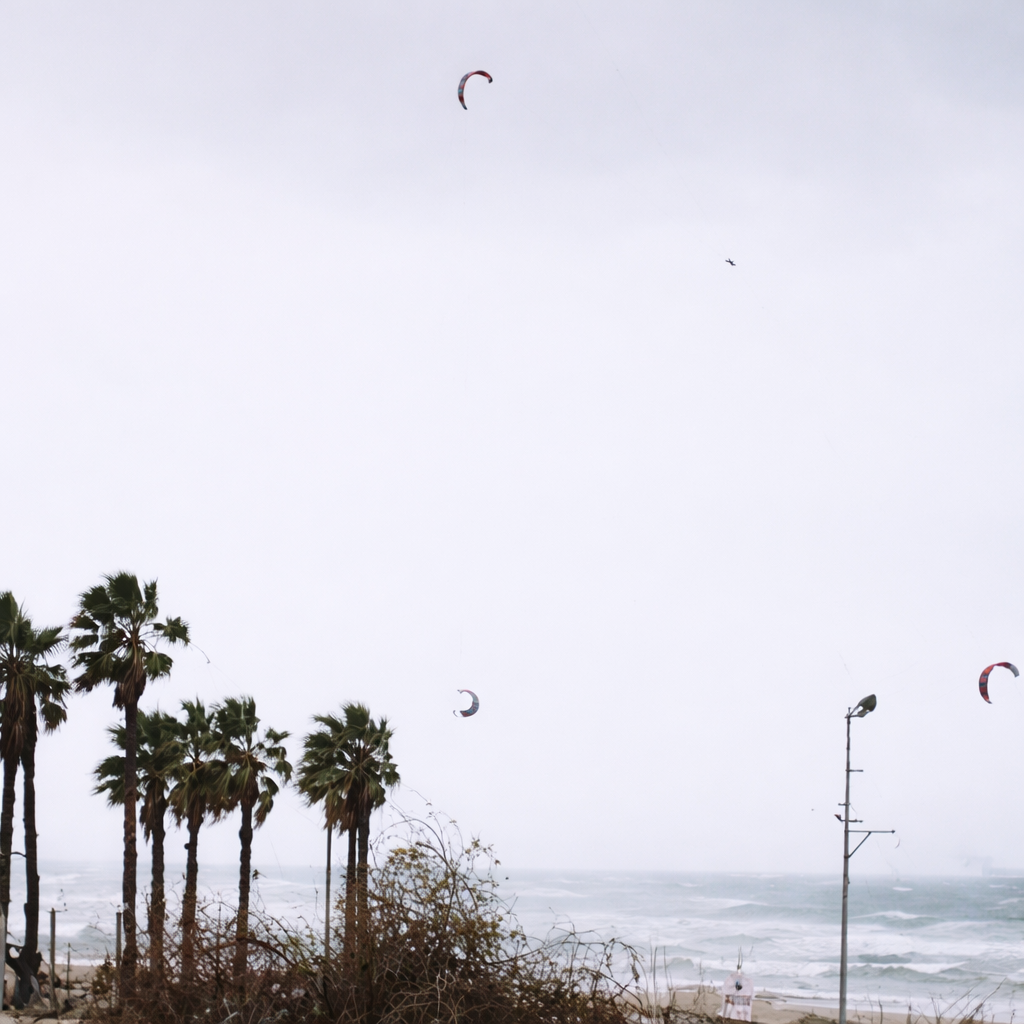
Welcome back to the show. This is a very special episode. Doran Bas was kite surfing in Israel when a sudden and powerful gust of wind violently lifted him into the air. Through his experience, skill and a lot of luck, he managed to survive the incident. Tragically, on the same day, the Israeli kitesurfing community lost a friend. Just a quick note, the audio does break up for a few minutes in the middle of this podcast, but it quickly settles down. Don't forget to follow me kitesurf365 for all the latest episod. Ladies and gentlemen, Doran Bas. Doran. First of all, thank you for coming on the show. I know it's been a pretty crazy few days. Why don't you tell us a little bit about yourself and how long you've been kite surfing and a little bit about that spot in Israel, because it's not a kite surfing destination that a lot of people know about.
- [00:58]
A
Yeah, I've been surfing in Israel since the end of 2003. I am 46 years old and most of the time I work. I surf about once every two weeks. I think if you make all year. I've been with the F1 Laguna in Israel from since 2005. I'm helping them. I'm one of the riders. I've been competing a little bit, but only in Israel when I was younger. And this is the most. This is our place near home where we work. You know, it's easier to come surf near your house. We can drive three, four hours. When you work and go surfing, come back, work. It's not that easy. So it was also a weekend for us, so it was easier. I was working in the morning for two hours and in 10 o' clock I went to the beach, all our friends together and started kiting.
- [02:10]
B
What's the conditions mainly like at the spot? Because you know, to a lot of people, we know, we know Shahar Sabri, we know a few Israeli riders, but we don't really know much about the spot there. What type of conditions do you normally get?
- [02:23]
A
Look, usually we have only winter condition or how do you say, winter and summer changing. We have all south winds or north winds. Mostly we are waiting for the storms. Usually in the winter because this time you can surf sometimes two, three weeks and suddenly you have winter coming and storm forecast and 25, 30 knots and then you want to go surf. Mostly we don't have too much days, if you count the days, we don't have too many days surfing in our spot, we mostly travel around, only winter time, you know, winter all around all Israel. Usually there's wind mostly in the center, you know, center, Tel Aviv, Haifa, Ercelia, you know, no problem in the summer, no wind.
- [03:19]
B
So you're saying it's 15 to 25 knot place. Is that about the wind speed that you guys regularly get in the winter?
- [03:26]
A
Yeah, sometimes a little bit more. Sometimes it's about 30 and 35 maybe.
- [03:32]
B
Doran, how were the conditions that day?
- [03:35]
A
Half hour before, we had a cloud that came in and it was from 20 knots to 35 knots, even a little bit more. Everybody put the kite down, slowly went out, it started raining, started to be a little bit stronger. We stand, all of us outside waiting. The cloud went past, the wind went down, no wind. And half hour later it started going up and up and up. And even in the beginning I got in with 11 meter kite because before that it was only 18 knots. So I got in and then I thought it was a little bit stronger. So I opened my new 9 meter F1 kite trigger. It was first time in the water. The kite? Yeah, first time the water in the kite. I didn't open it yet because I, I got back from an injury. It was the first time for me to surf after my last injury and it was, I felt it about inside. It was 25, 26 knots. So 11 meters is too big height.
- [04:47]
B
So you went out on the 9 meter and at that stage you're saying it's around 25 to 30, right? That was the win.
- [04:52]
A
You can see people in the sides. 25 knots, not more. 25, 26, no, 30. Even though only in the middle suddenly came mini tornado. Only whoever was in the way of the mini tornado got cut. Who was in the side, left, right, didn't feel nothing. Unfortunately I was exactly in the middle in the beginning and he sucked me up to the sky. Crazy. In the beginning I didn't understand what happened. I thought somebody got me in the back with a kite because suddenly I feel my kite pull me up and I didn't do nothing. I only make transition because somebody turned around without looking. So I made, I wanted to make a transition. It was a little bit fast transition and I got sucked up into the sky. And the second I realized how high I was and I wanted to pull my chicken out, I couldn't. It was already 30 meter high and the water was very low. So I decided to keep holding the bar. I don't know how I did it, I don't know. I'm still Amazed maybe because I'm used to every time when I go up to make a downloop or kite loops. So I don't know how I pulled the kite to kite loop. And it took me out of the turbulence. And I think that's what saved my life because you can see we have one of the videos that there was a kite cut in the turbulence and it got up to 200, 300 meters without nothing. And the second I went after the turbulence, I think I was about 100 meters, my balls were shaking. I thought I would die. I told myself, I can't believe it's happening. It's a dream, it's not real, you know. And everything was silent for that second. And I started going down very fast. And I couldn't make too much things because I didn't have too much room playing because rocks and you know, road. And I was managing to exactly where I landed. It was a little bit hard sand. And luckily, even in the last second, I pulled myself the kite a little bit to the left because if I was a little bit higher, it was rocks. And the second I realized that I was going down, I felt a little relief because I started to understand that maybe I will survive, maybe I will make it. And I pulled the car to the left. I was ready to take the chicken out. As soon as I landed, the kite wanted to went up. And then I, you know, you landed so hard on the floor, all your body, your hands going, you can't control them. And when I got up, I pulled the chicken out, you know, the quick release out. And took my right hand and put the leash out also. I didn't want to take any risk. And I was looking back, I was looking back at the water and you see kite to the left, kite to the right. And in the middle, everything's clean, no kites, no nothing. Like somebody pass in the middle and open the sea crazy.
- [08:32]
B
After you hit the sand, you released the kite. People came over to you. Then what did you do? Were they checking you for injuries?
- [08:40]
A
We didn't take for injuries. I always ask if anybody got else injured. I said, no way. It happened only to me. No way. And then everybody, they told me to relax, I'm okay. And we started going down from the mountain. And when in the beginning I was walking with them with hands on the side, you know, and I told them, I feel something moving, I felt something moving. And then, and then we got inside the club in Richon and everybody were very helped me because I had a little bit hypothermia you know, all the bodies was, you know, vibrating and cold and put me covers and I think about 10 minutes. The first ambulance arrived. And the first thing we ask, is there any more injuries? Any more injuries? He said, there were many colds, but you are the worst injury. Everybody's light. And the first time it was a little bit relief that hurt it. And then even he started cutting my suit to check if there's any bone out or anything. And even we started. I started to make everybody less nervous. I want to say when he got cutting the suit, I said, everybody remember it's cold. You know, that's why everything shrinks, because it takes minutes. And he started. He saw that nothing broken outside. And he put until the stretcher comes. And suddenly one of the guys came. Somebody's unconscious, unconscious. And I told him, go, I'm okay, go. And he went. And 15 minutes later we heard the name that making, you know, trying to make him alive. And after, I don't remember how much time they took me inside the ambulance and they cut all my suit, saw nothing outside. Everything was okay. And I was asking what they say, what they say, what they say is okay. Is it okay? And suddenly I heard from the ambulance, you know, we need a doctor to say the time of death, the hour. And then I realized that he passed away. And that was the hardest thing I had in all of it. To found out that I lost a friend.
- [11:14]
B
So you made a transition and then it whipped you up in the air. You said at first, did you actually think about releasing your kite and pulling the safety, just jumping and dropping into the water just for safety. But you were too high at that stage. Is that what you were think in.
- [11:27]
A
The beginning I wanted to understand what's happening. I look up, I see that nothing touching my kite. What is happening? It was. It was an instant second. You couldn't even when I realized that I was stuck in, I already was very high. And we. Because it was a little bit mostly west wind. We are surfing in very low water. So from 30 meters, no matter what, I'm dead because it's only one meter water and no way to save myself. And I understand that I need to hold on. I can't pull the chicken. I can't do nothing. And even the beginning, it was crazy because when I looked down, I didn't saw. I saw the waters going up because of the turbulence. You saw the waters going up. It was crazy. And when I look up, I saw my kite shouting. It's like was very, very hard wind like 50, 60 knots at least. And going up and not side. It feels like. I can't explain the seconds.
- [12:45]
B
Did you have your twintip with you or you. The twin tip was gone.
- [12:50]
A
He got sucked out in a second after I saw myself. After five meters it went out.
- [12:59]
B
Let's go back to the mega loop. Because you whip the loop around and that whips you up again another 10, 20 meters maybe. Was that mega loop just. Was it automatic or was it fair?
- [13:09]
A
It was both. Because we are usually. When we jump high, we usually to make a downloop, not mega loop. And it was also in my head one time somebody make a show about when you got sucked in turbulence. You need to do mega loop, kite loop to get out of it. And probably in the deep of my mind, it was inside. So it was. I can't even remember the second. I only remember that I pulled the kite and got sucked up even higher. But when I see everything, I understand that this thing saved my life, probably.
- [13:48]
B
Have you ever seen those conditions before in Israel? Have you seen those little mini water spouts or tornadoes or strange gusts of wind?
- [13:58]
A
We never seen that. Never. Never that close to the beach. Never. Always. You see many. You know how he said in Israel, it's. It calls. Yeah, but I don't know how you say in English. You usually don't see it very close. You only see it far away. Yeah, you never see. This time it was. It only started 200 meters above us and it was only down and it was very, very wide. Very wide. And after that I talked to some people that know the forecast and everything, and he said it was very. How do you say? It doesn't ever happen because day before it was hot and the day after was cold. It's. That condition never comes. And it's only matter of luck if you be in the way or not. And while my luck maybe it was bad and good because I survived. You understand? If not. Yeah. When I see the videos of how high I was, it was still crazy.
- [15:06]
B
I know you're still in the hospital.
- [15:08]
A
I got free yesterday. I'm home.
- [15:10]
B
Oh, that's great news.
- [15:11]
A
They got me free yesterday. I have a pelvic fracture. You know, pelvic fracture. I broke it, but it's stable in the. In the beginning of the two days I have also internal bleeding and I was in. I wasn't allowed to eat for two days because I almost was supposed to make a surgery if the bleeding does stop. And they waited for two days to see if the bleeding stopped. And luckily the Bleeding stopped, so I didn't need to make any surgery. And they say I can free home, bro.
- [15:49]
B
I know some people weren't as lucky as you. Crazy that you got away so lucky. I know that there was a. Was. Unfortunately there was a fatality as well.
- [15:58]
A
Yeah, yeah.
- [15:59]
B
By the way, there's. I've seen a couple of videos. There's one video from the car park, which is the first one I saw. Then there's another video, looks like from the water where you're flying over the top of a kite. Have you seen that one as well? And it looks like you're going into a construction. How you walked away from that is actually, it's. It's a blessing really. I mean, I can't think of any other way to say it.
- [16:19]
A
Amazing. Yeah, it's lucky and amazing. And everybody asked me how do I feel. I tell them sometimes million dollars because I'm alive. I went up 100 meter above the beach and I talking to you now. But still I have a very, very bad feeling in my heart because we lost a friend. And it only matter of luck that I went out and he didn't. He got sucked also. But he got. If you see the videos, you can see he got triangled with another kite in the way when he got up. And that's what make him. Instead of flying up, making flying forward, he hit the pavement and he broke in his head. And we hope that he didn't suffer and we are very, very sorry for the family. It's very hard. It was fucking hard day. I already knew even before I got to the hospital that he wasn't alive. Because I heard the news all the time in the vehicle when I was on the way. I heard all the time they were talking about and I started when I heard it, I started crying like a little boy because you know, I lost a friend. And also to understand that that almost was me.
- [17:44]
B
How's the feeling in the community now? I mean, obviously to lose a friend and a colleague is horrible. Do you think people are still going to kite surf there? Or people are going to just take a little bit more careful and be a little bit more sort of aware of the situation these days.
- [18:01]
A
Some of the people will already kited yesterday and today they are kiting now. But some of them, they say I don't know, fuck, why should I go in in this wind. One of my friend that was near me that he also got sucked but his equipment failed very fast and he got survived. He only throw up in three meters and everything fell and he said he wanted to go serve, but he said, why should I need it? I mostly foil. I don't need this kind of waiters. I rather stay home. He saw also, he saw me flying and he was very panic. He said, I will stay home in these days for now. But everybody is today surfing, most of the people surfing, because I believe that Leo, the guy that was passed away, still want us to surf and have fun. He always came to the beach smiling two minutes before the crash. He also, before it happened, before we got into the water, we saw him. We say, hi, Doron, how are you? Have a great day. And we got ready to go inside the waters and he went in with a smile. And also when they found him, they said that he was half smiling.
- [19:24]
B
I've never seen anything like this in kiteboarding. You know, it puts it in perspective, right? We always push ourselves. We all go out in these conditions and I want to go on these strong winds, but when you see what happened to you and the fatality that happened there, it sort of puts it in perspective. And, you know, we need to respect the conditions more. Right. I mean, I think as kite surfers, we've got a bit casual with. With the wind and the conditions.
- [19:46]
A
Yeah. But most of the people want the adrenaline, the rush and the height and to go jump as high as we can and feel free. This is. You don't see it. How many times, how much time do you in kite? You almost never saw that thing coming. You know, it's one time. It's like you in the car, if somebody pass a red light, you can forecast it.
- [20:09]
B
And Doran, how long before you'll return to the water? I assume you're going to get back on the water. You know, I know all kites have the same. They want to get back on the horse as to say, how long before you can ride again and before you can get out and do what you love?
- [20:22]
A
I think it would take me about almost two months to go back. They say about six weeks to go back to for the injury. And I think it would take me a little bit time to go back in the water because still, you know, it's. In the first day, it was. I'm not going back there anymore. It was very hard experience, Very hard experience. Nobody want to see death coming to his way. It was 25 seconds plus, minus all the. The height. But it still comes to your head every time.
- [21:04]
B
Do you still think about it? Do you still think about those moments or is it. Have you sort of blocked it out now? Because I know the body when it goes through such trauma can easily block it out. Right.
- [21:15]
A
I still think about the moment. I still think that I was thought I was dreaming and I can't believe it's happening. It's not real. I want to wake up in the first second I felt like a dream. I want to wake up. But still there are some moments that I realized that I will make it. And I had a little bit. I remember the moment that I was going down and I started to see the ground closer. I had a little bit relief that I started to say to myself, maybe I will make it. I will survive. And still thinking about every time if one thing didn't went well, the bar, the lines, the kite, one thing everything could change. My friend near me, he was. He's not jumping, he's not doing mega loops. He only like waves and foil and things like that. But I like big air and I like things like that. And his equipment went back, went down like this and wine stay and took me up and stay all the way to the landing.
- [22:23]
B
If anything was going to go wrong, it's when you did that loop. I know you said before it's like a fair sort of like an out of control sort of movement. But I mean that could have easily put that kite and lines under immense pressure.
- [22:37]
A
Yeah, I still don't know. It's. It was like natural. Everybody said every time I jump I do heli loop or something like that for landing. And it got inside my head. And we saw also a movie one time that somebody said if you got stuck in the turbulence, you need to make heli loop to get out. So it was probably got stuck. And I'm. Every time when I'm landing I make heli loop. And somebody asked me why didn't I make heliloop before the landing? Because the landing was very small area. So you didn't know what to do. It was if you see the landing, if you make a zoom, you can see rocks and rocks and rocks and sand. If I thought to myself I can send, I can land. Maybe it was a little strong sand, but there I can land on. If I make a lally bow and I hit the rocks, I will break something even more. And I didn't want that. My legs will hit the floor. And I don't know what happened because the landing was very, very dangerous. The landing was. And even though that I thought this was land when after that in the hospital I had the marks on my. On my ass from rock a little bit because under the under the sand there were rocks.
- [24:02]
B
Look, Doran, thank you for coming on the show and talking to me about this. I'm very happy to hear that you're alive. Number one, I'm happy to see you smiling and talking about it. And we're all very sorry to hear about your friend and his passing. But I think you're right. He would have wanted people to go back out on the water and wanted to be part of kiteboarding and not quit. Speedy recovery, brother. And I'm gonna check on you over the next few months, and maybe in a few months, we'll get you back on the podcast and give us an update of how you're feeling and, and if you got back on the water, our condolences go out to the families.
- [24:32]
A
Thank you very much.
- [24:33]
B
I hope the community can come together and realize that, you know, kite surfing's a safe and cool and, you know, great sport and events like this shouldn't stop us from kiting.
- [24:43]
A
Thank you very much.
- [24:44]
B
Hey, guys. I hope you enjoyed that episode. Don't forget, if you want to support the show, the easiest way is to support us for free. Rate us on Spotify, share them in your local WhatsApp or kite surfing groups, or just simply tell your mates. If you want to support us more regularly, head over to portraitkite.com what is portrait? Portrait is an independent media company trying to tell the stories of kite surfing the way we believe they should. These projects are funded by people just like you, and if you believe in what we do and you want to support us, check out portraitkite.com the podcast will always be free. And if you want to find more episodes just like this one, use the search button@kiteserf365.com to search your favorite writer or topic, and we'll see you next week.