← Kitesurf365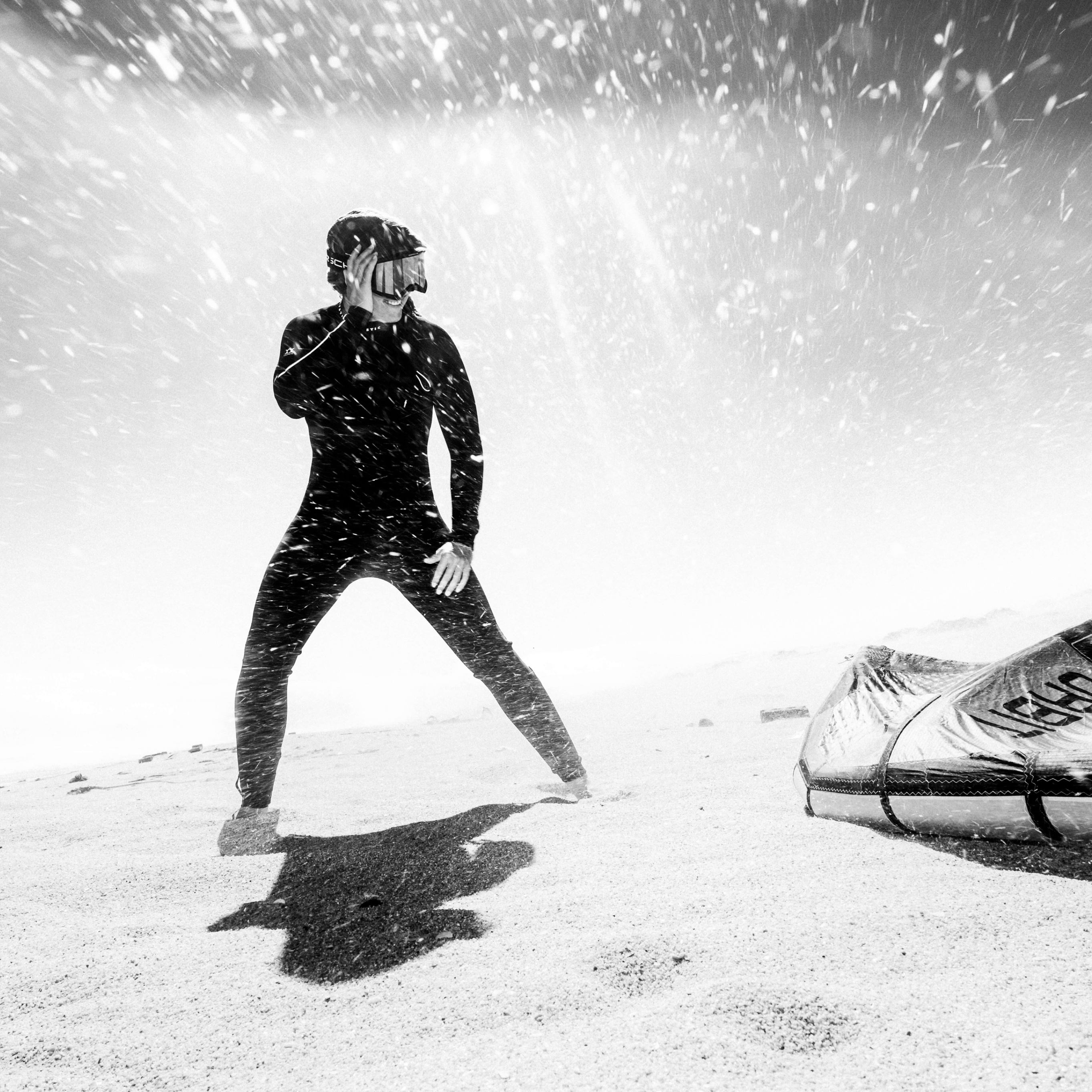
Kitesurf365
Jason Broderick | Episode # 407
00:59:21
Jason Broderick has taken some of the most recognisable photos within kiteboarding. Jason’s style perfectly captures the rush of extreme sports. Checkout his website below. WOO Sports: Support...
Loading summary
Transcript98 lines
- [00:01]
A
Welcome to the kitesurf 365 podcast.
- [00:04]
B
Welcome back to the show. I hope you all had a great weekend. As you all know, it's been a crazy few weeks and on the last episode we did the Road to Makani. This one is a little bit like leaving Makani because we're on the road to Cairo. We've just finished an amazing blank kite test shoot and I think this is going to be one of the most interesting blank kite tests to date. So make sure you stay tuned for more information on that. On this week's Megapod, Colin and I will deep dive into the Woo Worlds, talk to some winners and highlight some amazing performances. But today's podcast was recorded the other day. Jason is a friend, a colleague, and has been highly requested. Jason has taken some of the most recognizable and unique photos within kiteboarding. He's got a very unique style and that style really catches the rush of extreme sports. Don't forget to follow me, Kaitso365 for all the latest episodes. Ladies and gentlemen, Jason Broderick. Jason, I hope this makes you feel a little bit uncomfortable, but welcome to the podcast.
- [01:08]
A
Adrian, what's occurring, mate? This is slightly uncomfortable.
- [01:12]
B
I've been getting quite a few requests, I guess, over the last sort of two years about getting you on, and I was probably waiting for the right time because I know we've started to do these fantasy podcasts and I actually think you're very, very good at that. So I thought it would be a good time to get you on. Before we get into photography, let's go back to the beginning. How did you get involved in kite surfing? And when was the first sort of time you discovered kite surfing?
- [01:39]
A
Wow. So kiteboarding came in my life pretty early on. It must have been around the age of 12, 13.
- [01:49]
B
Wow. A long time.
- [01:51]
A
When I first saw. When I saw my very first kite, we always had a holiday house in Cape Town, on the more unexplored side of Cape Town in terms of Strand, Gordon's Bay, Somerset west, that area. And we were in Blouberg for something. And I remember seeing this kite in the air and this was at Kite beach, maybe blowing 20 knots. And there was a single kite. Can you imagine a single cart in that whole stretch of beach?
- [02:24]
B
What year was this?
- [02:26]
A
This must have been 4 and 2003. So 2005, 2006. So super early, super early on.
- [02:37]
B
But that's the kind of time that Aaron Hadlow sort of started coming down here, right? I think on headlo20, sort of coming around that sort of time spending his summers here.
- [02:44]
A
Yeah, this probably would have been out of season. I don't remember going down that side in season. So it probably was around like the spring or the autumn, you know, so the pro scene would have not been there. And there was a single carton. I just remember seeing it and being like, this is what I want to do. I had a big affiliation to skateboarding, a big affiliation to snowboarding. Even as a kid coming from South Africa, I watched a lot of snowboard films and a lot of like, so snowmob snowboard magazines. And yeah, my dad went up to the guy and he offered to teach me. It was a guy called Martin Prest. And yeah, that was. And I think a week later there I was learning to kite. So it was quite a incredible opportunity in that sense.
- [03:39]
B
So you took the lessons. Did you fall in love with it straight away and. And buy gear and become a regular kite surfer? I mean, you said you used to holiday in Cape Town. Where were you based? Did that sort of slow your progression down a little bit?
- [03:51]
A
Yeah, completely. So I was. I was in boarding school in the other side of South Africa in Durban. And that, I would say was the biggest hindrance to what I imagined to be a professional carporting career. You know, we all start these things at a very young age. You're like, oh, that's where I'm going to be. You know, I remember having photos of. I had posters of Reuben lantern on my wall in my boarding school room, you know, so it's. It definitely was a part of my life where I was very torn. And this comes back even when I was older, where it was always study or kite board or school and cardboard. And they were always very separate entities. And it's not like I had the opportunity ever to really do both at the same time.
- [04:43]
B
I mean, because there is kiting in Durban. I mean, Josh Emanuel's from there, Stuart Downey's up there. I mean, was there kiteboarding in Durban at that time or was literally the only people riding in Cape Town?
- [04:54]
A
No. So there was. There was a small community of kiteboarders. When I say I went to school in Durban, I was probably an hour to an hour and a half inland. Actually went to the same school as Stuart Downey, really. So I remember I had a really good friend, a best friend at school, a guy called Fergus Kelly, and we started our kite boarding careers at the same time, pretty much. And we used to bring our kite surfing gear to school. And it was a boarding school. We Made friends with the rowing coach who actually used to sneak us out of school in the back of his, what we call Bucky, most people know it as a pickup. And we used to go to one of the dams where he used to coach rowing and he would let us muck around and try kiteboard whilst he would take the rows out. So we did what we could. We flew land boards on the rugby pitches. You know, we did a bunch of things, but it was not enough and not consistent to really see progression like the other guys. You know, I remember being really good friends with the likes of Luke McGillowy, Oswald Smith, the. That whole crowd in Cape Town, Carl Ferreira. And every time we would come back to the South African tour, which there was a South African tour at that stage, it was just always we were one step further behind. These kids from Cape Town were on the water almost every single day. And I was just distanced from all of that in a sense.
- [06:29]
B
You mentioned Stuart. He's how many years younger than you?
- [06:32]
A
I think he's two or three years younger than me.
- [06:35]
B
Was he kiteboarding then?
- [06:36]
A
He was carbon then. He was actually carboning before I started. Back in the era of what we called McDonald's trades. I don't know if you ever saw photos of him, but he must have had a board that was literally 35 centimeters long.
- [06:52]
B
Yeah, like the Lou Wayman style.
- [06:54]
A
Exactly, yeah, yeah.
- [06:56]
B
Well, what sort of style were you first interested in? I guess it was freestyle. Was it wave riding then? Was it freestyle? Was it a combination of both or were you just doing anything to ride at that stage?
- [07:06]
A
So I learned on what was then the North Rebel was actually my very first kite 6 meter north rebel. And I think in those days Big Ed didn't really exist. There wasn't really necessarily a division in Kite Boney. I think everyone was trying to.
- [07:31]
B
Explore.
- [07:32]
A
And experiment at that stage still. I think of course there was freestyle, but that was almost rarely seen as the Formula one side of the sport, you know. And obviously I was there in Le Mercy Lagoon trying dangle passes and trying all these, you know, the old school kung fu's etc. And falling out of the sky. And we were all mucking around and unhooking and trying things, but I never really connected to freestyle. It was something that maybe other people were better than me at from the beginning. And I'm not a very competitive person by nature. If I look at competition, it's always been about myself and almost competing against myself than others. And yes, I did the South African tour I had a fair amount of success on the South African tour. I became this, this was wave riding, right? Yeah. So no, actually the very first year I did the South African tour, I think I beat, I was, I was rookie. I won the junior South African tour which would have been up against Stuart Downey, Oswald Smith, but these guys were tiny. Jason Van der Spee. Jason van der Spee must have been.
- [09:01]
B
Like 8 years old.
- [09:02]
A
8 years old with Dave, his dad pulling him around. And we were, it was a pretty full on tour. I think we. There was five stops around South Africa.
- [09:12]
B
Wow, that's crazy.
- [09:13]
A
In my first year on the South African tour and if you think about five stops for a national tour, we don't even have that on the world tour right now.
- [09:23]
B
I don't think any places have a five stop domestic tour.
- [09:26]
A
Yeah, it was a quite an incredible. I think it maybe ran for two years. There was a guy called Taro Neal House where I think all the South Africans listening will really remember Taro. And it was a wild time. And tour was pretty crazy. You know, the pro section at that stage had the likes of Colin Heckeret. Yeah, it was just, it was just a crazy time in the South African kiteboarding scene. And I didn't connect to that at all. You know, when I watched kiteboarding online, I was drawn to the more adventure side of cardboarding and I came from a more surfing background and I transitioned more to a free riding, wave riding approach. My heroes went from Reuben Lenton and shifted over time to someone called Ben Wilson, which I don't think many people.
- [10:22]
B
Even he's been on the podcast before.
- [10:24]
A
Yeah, completely. But I mean I was, yeah, we were trying to wave ride unhooked on slingshot fuels. You know, that was the era I came from.
- [10:37]
B
Was wave riding quite a new discipline at that time? I mean, because you know, you said there was no styles really. I mean I know there was the freestyle tour, but you said it was like the Formula one, the, the elite of the elite. When did that sort of wave riding become an option for you? Were you riding on surfboards then? Were you riding on twin tips or what were you riding on?
- [10:54]
A
Yeah, so I, I remember specifically the world, the South African tour was just freestyle and racing at that stage. There was no wave riding at all. The first wave riding I think didn't even come onto the tour at all. It wasn't an option until the likes of Luke McGillowee pushed that later on a couple years later when strapless really took over. But for me, I was in the early days, I was just riding pure surfboards. The brands didn't make directionals, what we called them then, directionals. In that sense, those weren't an option that you could buy from a brand, and specifically not in South Africa. Maybe in Europe, maybe in America, but they weren't around. So I was just on normal surfboards, playing in the waves, and no one else was really doing it. Luke was doing it in Cape Town, I was doing it in Durban, but it wasn't. I wasn't almost comparable to others in that journey. And that made me kind of feel safe in that sense. You know, I wasn't. I was just competing against myself and not the others. And not being put in a box of this is what you have to do to succeed.
- [12:17]
B
Would you consider Luke to be the pioneer of wave riding in South Africa? Would that be fair to say? I mean, I know Carl Ferreira. He's a. He's a wave rider. Who was the guy who sort of pushed that the most there.
- [12:29]
A
There was a guy called Rolf Bakusta who came before Luke. And we were. We were quite lucky in the sense that Cape Town was at that stage quite a playground for a lot of pro riders. And a lot of people were experimenting with things. So we did see a lot of waveriders come down. There was a brand called Accelerator Kiteboards who used to do the race boards, and he moved across to making surfboards and directionals. He was one of my first sponsors back in the day, and there were a couple guys doing it. Luke was. I think Luke felt very similar to me back then, where he didn't really fit the mold and. And I think wave riding and strapless allowed him to not compete with the guys locally, but find a space that made him excel and feel good on the water. And obviously I've chatted to Luke about this in the past, but in South Africa, it's. It's really hard in sense of, like, if you don't fit the mold, you don't really fit in, in a sense. And I think we were both just looking for something different in that stage.
- [13:44]
B
When you think of South African riders now, you just think Big Ear. I mean, I know guys still ride waves. When did those styles sort of die off? And then Big Ear became the major discipline in Cape Town. Was that when the Europeans started to come down?
- [13:58]
A
I think the Lenten Challenge and the rebirth of the King of the air.
- [14:06]
B
10, 11, 12. That sort of.
- [14:08]
A
That sort of time completely. And I think up until that stage, South Africa just really doesn't have the conditions to become a world champ freestyle rider. It's really hard for South Africans to leave the country to travel, to get constant wind. You know, going to Cape Town, you would have to go to Langebaan, to Shark Bay, those kind of areas to train freestyle. You know, we used to ride in the lagoon in front of Milnerton in winter on a northwest wind to try get flat water. And it's just not a easy place to progress. I think in freestyle we had Blue Rock, the cable park where back in the day all the pros used to be. You would see Aaron Hadlow, Sam Light, Reuben Lenton, that's what. Where they would be training on the no win days, you know, so there were opportunities. But the nature of being South African is to follow those dreams and to follow those opportunities is difficult. Costs a lot of money and unfortunately the passport's not always the easiest.
- [15:14]
B
I think South Africans by nature, I think the extremity and the wildness and those types of things, I think Big Air is more suited to that. Just in the nature of the way South Africans are, you know, I think South Africans in general and the countryside, the wildness, the ruggedness, the craziness, I think it always suited Big Ear. Maybe it was meant to be totally.
- [15:35]
A
I think even I always explain it as South Africa's a country of extremes, extreme highs and extreme lows and there's no middle ground. Almost, you know, we sitting here now after the Mega loop in Holland and I've always explained Holland as that perfect middle. There's nothing too exciting, but nothing too bad. You know, you always just going to be okay. And it's surprising to me that South Africa is so extreme in those ways. And I do agree, I think it's that extremity and that call it, yeah, that wildness that almost breeds South African Big Air riders.
- [16:22]
B
Let's get into photography. When did your first interest in photography start? It was just something that came from a young age. When did you first pick up a camera? When did you first think, this is something I want to do?
- [16:34]
A
I can't necessarily remember the exact first camera I picked up or where I was, but from about the age of 12, 13, I ready. I had an uncle who actually came back from Taiwan and for my birthday he brought me this underwater video camera actually back then and it took stills. And I remember me and Fergus, that friend that I used to carboard with in the early days, being in, yeah, being in Durban. And I remember me actually spending more time behind the video camera than on the water. We had a magazine Back in the day called Gust, which was quite an iconic South African magazine.
- [17:19]
B
It's a cool name, by the way.
- [17:21]
A
Completely. And at the age of 14, 15, I was having images published in the Gust magazine. So there was an opportunity, there was space for growth and creativity from a really young age. In terms of kite boarding and photography.
- [17:39]
B
Were you always creative or did that come along with your passion for photography?
- [17:45]
A
I think I was first and foremost creative even before I started kiteboarding. I think that is probably why I even shifted away from the rigidity of freestyle and back then, wanting to explore different things. I just felt like I didn't fit the mold of freestyle. All those riders and wanted something different, wanted a different way to express myself. And back then, the riders who I looked up to and the riders who were on the scene were incredibly creative. You know, that generation. The riders I also looked at was riders like Patrick Rebstock and they had a very creative, anti establishment approach to kiteboarding. The videos back then were loud, they were wild. And that, I think is something that really drew me into the more creative side of kiteboarding.
- [18:45]
B
Before we continue on, you said something that was interesting. You started to spend more time behind the lens. And I think, you know, we work at Portrait. I think we've all found that, right. That, and that's. It's kind of sad, but it's part of the job, right, where your work actually takes preference over your riding. People say, oh, you must go to all these places, you must be riding. I'm like, we do, but works first. Did you notice your passion changing for wanting to take those photos versus being on the water?
- [19:12]
A
Even today, I find I would rather be behind the lens than on the water. For 98% of the sessions or conditions we go to, there's a 2% range where I'll. We'll really be itching to get on the water. You know, unfortunately, we follow a lot of the big air. We follow, we go to freestyle. Wave riding has died off. You know, it's not really a scene anymore. We've got strapless, which is something I just don't connect to at all. And yeah, I think being behind the lens allows me to actually experience cardboard in a completely different way to being on the water. And I actually enjoy that.
- [19:59]
B
Did you ever do any classes or did you take any courses in photography? Or did you just pick the camera up and just play around with it and learn your own way?
- [20:07]
A
Yeah. So from the very first moment I picked up a camera, I never went for any sense of formal training or Coaching or anything like that. I am a person who is naturally curious and naturally wants to learn more. And I think that was from the very moment I had a camera. It was researching, talking to people, looking online, experimenting, for me was always a huge thing. And I think today we are afraid of making mistakes. But I think at the age of 13, 14, 15, where I was really starting to pick up a camera, making mistakes is part of the process and you're not ashamed of it and you don't realize the power of making mistakes, because I think that is where we learn.
- [21:05]
B
Would you recommend people who want to get into photography now to do a course? I mean, I guess YouTube is a great resource as well. I mean, what advice would you give to someone who wanted to pick up a camera and get into this?
- [21:18]
A
I think the most important thing is to understand what feels right to you. You know, I'm, as I said, I'm naturally curious. I am someone who loves to experiment and try different things. But that might not be the same for everyone if someone's more rigid or feels more conservative or wants to have all the information before they start to play. Yeah, there's online courses, there's in person courses. I think everyone has an understanding of what works for them. And I'm not necessarily here to say do this or don't do that. I think the most important thing is to stay true to what feels good to you. And I think that is the biggest thing I see today is people trying to be a certain way or a certain style or create certain images because they believe that is good or they've been told that is good, rather than doing what feels right to them. And I think that goes hand in hand with learning photography.
- [22:30]
B
Who are some of your early mentors or who did you look up to in the photography world?
- [22:35]
A
Yeah, if I look at Kite Born in specific, there's no doubt in my mind that IDVA was almost the person I looked at to from day.in that sense. Like, his imagery was just so powerful and so important in my life at that stage that he had a massive impact on my life. He also spent a lot of time with riders I connected to, such as Reuben. You know, like, he. He captured a lot of Reuben's earlier life in terms of the Storm G's era and the posters I may have had on my wall. But also just seeing the way he photographed Cape Town and spent a lot of time there, it was always like he had a very specific way of approaching Cape Town. And to me, it was more his connection. He had to the riders. He had this way of always being around and in tune with what the riders were doing and what they felt and being able to connect with them and go on these missions. And that, to me, was like something I really longed for at an early age was to go on these adventures and document the sport and capture the world of kite boarding.
- [24:06]
B
I know you're a fan of the movie the Bang Bang Club, and the style of the Bang Bang Club is to get up and get close and get personal, you know, not to shoot on the long lens. Will that style ever change in you?
- [24:18]
A
I think that style only came later on. You know, I said Idvil was a huge inspiration and later in life became a mentor and now a close friend. But back then, I wasn't following the advice I had just said. You know, I was trying to imitate other people. I was trying to be the next adver. I was shooting longer lenses, really trying to imitate what he was doing or what other people were doing. I took a big break from the world of kiteboarding at around. At 18. I had that hard decision between following kiteboarding at a more professional level and trying to make that a career or going to university. I was pushed into university from my parents in that sense. And it's not something I regret at all. And I went to film school. I studied motion pictures, and that changed the way I saw the world. It actually gave me a much broader understanding of storytelling. And when I think about photography, it is an opportunity to tell a story. And for me, the storytelling is not in the action. It's in the emotions and the people and to capture the emotions, to capture the people. I wanted to be up close and personal. I didn't want to be standing 400 meters down the beach. I wanted to be side by side with them so I could feel what it felt like to be in that moment, in those conditions and capture an image that represented that I have. If you look at my website, the first thing you see is a quote that I came up with and something I really believe in. And it says, I don't want to capture reality. Reality can be left to those who see it the way it is. And for me, I want to capture the emotion of the moment. I want to capture the feeling of the moment. I don't care about the perfect sharp image if my photo is blurry, but that is what that moment felt like. That, to me, is more important than it being sharp.
- [26:51]
B
Wow, that's pretty crazy. And I'll link your website in the show notes. You know, you shoot on a variety of different cameras, but if a random person came and saw these cameras lying on the table, they wouldn't think these are cameras of a professional photographer. First of all, let's talk about those type of cameras that you like to use and why have you chosen those type of cameras over these modern digital, you know, high end cameras which you do use as well.
- [27:21]
A
I think there's a space and a time for everything. And the early days of my career, I always believed that having a newer camera, having a better camera would make me a better photographer. And I was just never someone who was really obsessed with technology. You know, I firmly believe the best camera is the camera you own. And that is something that is really important to me because I don't want people to feel like there is a massive barrier to entry to get into photography. In cardboarding, you know, we are now seeing people making complete 40 minute movies on cell phones. The best camera is the one you have and the one you know how to use. And I think what's important is understanding the style and the emotion of what you want to get across and then slowly, over time, using the tools that make you excited to do that. Digital cameras unfortunately bore me. They don't excite me. Maybe it's because the challenge of the camera is not necessarily there, but it's too perfect for me, it's too real. And maybe I'm just hiding away from the comparison of other photographers. Again, you know, can go back to my early life where I said I moved away from the freestyle crowd because I didn't want to be compared to what they were doing. I want to be an individual, I want to be myself and I want to try and experiment and try different things.
- [29:14]
B
What's your favorite camera to shoot on and what, what type of cameras do you like to use?
- [29:21]
A
So recently I've been shooting a lot in film and that journey has been really, really special. I think to understand photography and to understand capturing a moment, to do that on film, kind of highlight that to the most extreme because you only have 32 frames on a single roll of film. You know, most digital cameras now capturing 32 frames a second. So you're approaching it in a, in a very different way. And even when I shoot action, I don't hold down the trigger. I don't shoot in sequence. I wait, I wait, I wait and then pull the trigger for that moment that I know is going to happen. And there's pros and cons to that. Yes, I miss maybe if there's A massive crash. I don't necessarily see it because I'm not interested. I'm waiting for the peak of the action and then hitting the photo and film, you know, where a lot of photographers, from the moment they take off or their fingers down on the trigger till the moment they land back on the water. So it's just a really a different approach. As you said about cameras, if you had to walk into our portrait accommodation at any stage, there's generally I probably arrive with five to six different cameras, different styles from film cameras to Polaroid cameras to underwater film cameras to digital cameras to point and shoots. And it's about what excites me that day. It depends on how I feel and what I believe is best for that moment.
- [31:14]
B
Do you think by taking a one click shot, you talked about capturing the motion and capturing some essence of that moment. You know, if you are just holding down the button, you know, maybe it doesn't feel deep enough. Maybe with one shot, do you, do you capture some of that moment more in the shot because it's just that single flash of time. Do you think there's something in that?
- [31:37]
A
Yeah, completely. Someone once told me you shoot film to remember a moment. You shoot digital to destroy it.
- [31:45]
B
Wow, that's crazy.
- [31:46]
A
And when I approach photography and I approach moments, it's hard to. And I'm sure you've, we've worked together on so many projects now. But how I think my approach to taking a photo is very different to other photographers in the scene and yes, editing and things can be compared. You can put my images next to other photographers images and you may see the style to look the same in terms of color grading or image quality. But I think we see very different moments and, and I think that's because I really am waiting instead of creating. In that sense, how do you feel.
- [32:38]
B
When you see other photographers trying to imitate or copy the way you're shooting? You know, let's be honest, maybe you didn't start that. I mean, I don't, I think there's, you know, there's probably not many new sort of styles around. How does that make you feel? I mean, I know, I know you're a passionate guy and you're very proud of your work. Do you feel proud that people are copying you or does sometimes you're like, man, this. I feel like I'm being challenged here.
- [33:08]
A
At first I think it's really hard to see specifically because I tried so hard to create an image and a style and a mood that represents how I see the world, how I live my life in that sense. Like, if you have to open my suitcase, sitting next to us, the only items of clothing in there is white and black. That is just me. And then in other senses, I'm like, how can I be so incredibly selfish is maybe the wrong word, but arrogant to believe that I am the only person who created this essence of black and white, grainy, moody imagery and cardboarding, you know, that's a very arrogant way of thinking. But to be honest, in the beginning, it was really. It was something I struggled with a lot because I was like, this is what I want to create. This is who I want to be, and this is the image I want to put out there. And no one was really doing that at the time. You know, I did feel like an individual. I did feel like I was doing something different. And there's a lot to be said about constantly wanting to do something different and constantly pushing the boundaries and being creative. But at some stage, I also want to create a body of work that stands and spans across 20 years. And you can see my style progress. I'm quite a perfectionist in some essences, and I want to be able to stick on a specific style and develop it over time. A lot of people have said, like, why don't you just photograph in color? If everyone's doing it black and white now, why don't you, you know, go to color? And it just doesn't feel like who I am. It's something I do. We've seen specifically last year's King of the Air photos. I went the complete opposite way to who I normally am. I went crystal sharp, high saturation flash photography. And that was exactly fighting that scene because everything we were seeing was black and white, grainy, out of focus, long shutters. And I felt like I had to rebel against that once again. But at a certain stage, I just have to be like, this is who I am. And if people want to copy that, if people want to explore that, that's okay. You know, like, don't. Don't let that affect me too much. But yeah, it is something I battle with.
- [36:00]
B
If I'm honest, maybe it's a compliment, too. Is that hard?
- [36:06]
A
It is hard. I think it's hard because I never feel I'm really bad at accepting compliments or believing my work is worthy enough of that. And maybe that is why I constantly push to be better or to create a specific look and feel that is who I am. But it's a difficult thing for me because to be creative, to be A creative. I feel like you want to create your own identity, you want to be yourself, you want to express what feels good to you. And yeah, in such a small sport and in such a small space, it's quite, it's quite hard to then be like, oh, I'm gonna photograph this style because I see it's doing well. That's not necessarily something I would do because I don't feel like that connects to who I am.
- [37:09]
B
Looking back at the body of work and let's talk about kiteboarding, are there two shots that come to mind or are there a few shots that come to mind that you look back and think, man, it doesn't matter what time it is, how old they are. I'm super proud of those shots.
- [37:25]
A
It's very funny because if we speak about a body of work, I've only really been, for lack of better word, professionally taking photos for the last three to four years, maybe four years in that sense, in cardboarding. So my span of work only goes around three years of professional carboarding. And there are images in there that I'm like, wow, this will stay relevant and, and. But for me, what's more important is that I really believe I am in such an amazing opportunity that we've been following the likes of Andrea, Jeremy, Lorenzo over these last three years and I've been able to photograph these guys, journey through the highs and the lows. The photo that maybe most people will recognize of me of mine is Andrea winning the Mega Loop with his wetsuit halfway down and just that scream of emotion. I think that's what a lot of people will remember or have seen of my work. But I have photos of Andrea in a container away from everyone else, battling the emotions of losing. And I think that to me is more important. Is this like being able to document these guys careers and their lives in such a personal way. I don't think there's a lot of photographers that they feel comfortable enough to be themselves around. And I've been in the fortunate position to have grown those working relationships where they understand what I want to photograph, they understand the power and the essence in that. But there's also mutual respect between I know when to turn the camera away and they know I won't make them look bad in a sense of destroying or harming or hurting their career in that sense. And I think that to me is more incredible is that I have that mutual respect with the world's best.
- [39:54]
B
The cool thing about those photos, well, let's talk about the Andrea one at the Megaloop it actually doesn't even have kite boarding in it. And it is that, that raw emotion. And you know, the funny thing is I've always been, I've always said, ben and I've been working together for many years and now been working with you for the last few years. I always say I want to sell the writers. If we sell the writers, the sport will come with it. And that's almost what you're doing, right? You're, you know, you're selling the images and that images. People will fall in love more with the writers through seeing that emotion than their riding style or what they do on the water. I think that's secondary to the rider completely.
- [40:35]
A
I think if you look at my body of work, you could almost take the sport completely out of it. I'm just following people and their journey. I think what is really special to me and I think cardboarding really lacks it a lot. And I think that has a lot to do with the industry. But we don't have culture within cardboarding. If I look at surfing, if I look at skateboarding, if I look at snowboarding, it's full of artists, it's full of creatives, it's full of musicians, it's people who are allowed to be free, it's people who are allowed to be creative. Notoriously. If a pro rider rights on their board, if they spray paint their board, the brands get really upset. It's. I feel like we are killing the culture in our sport and not allowing riders to grow and to be creative. And I feel like it's my responsibility to try, photograph and show the emotion, the culture, the moments that the brands, the tour that everyone else really disregards.
- [42:01]
B
You know, sitting down, doing this podcast in person, it's made me realize that, you know, I do 90% of the podcasts via video. And I think sitting down with you now made me realize that I need to do more podcasts for me, like this, because this moment is so much more powerful to me because I can see your emotion. Even though I hear and see of a video, you don't feel it. There's something in that. And I realize that maybe I need to do more podcasts in person. Maybe I need to be more disciplined and backlog them all up. Of course, I'm always going to have to do them online just because that's the nature of the sport. Right? We're all over the place. But even I'm learning from what you're doing by doing this now completely.
- [42:46]
A
And I think it, once again, it depends on the person. You know, I. You've created the space that feels safe and comfortable and we know each other well. Right. It's not like this is our first interaction, but there is something about being able to sit across from one another and have a conversation and share something that's important. And once again, digital destroys that moment for me. And this is exactly what you feel and I think is what I see in photos and shooting digitally.
- [43:25]
B
What advice would you give to young photographers? And by the way, we see all these young guys come into the sport, you know, these young creators, I think most of them are creating video. I think I don't see many young photographers coming in. But what, what advice would you give to those young creators who are coming in and wanting to carve out a job in this industry? Because I always feel like we see these maybe talented kids we hardly know, but they get into this corporate scene too early and they get put into a box. This is what we want, this is what we want to see. We're only going to pay you this much and maybe it kills that creativity and kills their style and kills their opportunity to, to flower and find their.
- [44:06]
A
Their look, their optics completely. I think it's important to not be creating content. Content to me is kind of like a swear word. It feels like cattle fodder in a sense of you just create to feed an algorithm and everything in that to me is wrong, you know, like do what feels right to you. And I had the privilege of having a full time career outside of carporting and outside of photography that allowed me to make the mistakes, that allowed me to develop a style, develop a skill whilst not being on, on the paycheck. And I think that is super important because the moment you get on the paycheck of a brand, the moment you are paid to do a job, they determine what you are photographing. They are saying this is what we want. Here's the brief, here's the style. Deliver XYZ and.
- [45:19]
B
But you've been in those roles as well, right?
- [45:20]
A
100%. And I think this is the important part is that I did a lot of jobs to pay the bills and I regret not following my heart and following my style earlier. It took a year and a half of me saying no to a lot of jobs, a lot of campaigns, a lot of advertising work, event work and focusing on myself and focusing on my own style. I was at the very first Tarifa Big Air event on the GK Tour. I photographed that whole event on Polaroids. Which brand, which company is going to be like, hey, please go out and shoot the biggest stop of the calendar and do it on Polaroids. No one's going to allow you to do that until you have proven yourself or you've created your own style. I've recently had a mentor, and he was explaining that when he used to step onto photo shoots, the photographer was the creative lead. The photographer was the person who said, this is what it should look like. Because brands are paying a creative. They are paying for the way a creative thinks, a way a creative sees the world, a way the creative approaches that moment. He said, that's all changed within the last five to six years. Where people with business degrees are telling creatives what is a good photo, what is a good artwork, where there's no such thing as a good photo, a good artwork. It's how it's perceived and it's what makes you feel a certain way. And I think people are too afraid of failing in the eyes of brands, failing in the eyes of athletes to really stay true to what they think is good.
- [47:40]
B
You said to me yesterday, it's not about the camera, it's. It's me. That sounds arrogant, the way I'm saying it. But you didn't say it that way. I'm trying to paraphrase, but the camera is allowing us to see the way you see the world. Right. And can a creative director who's a marketing agent know that or see that? I don't think so.
- [47:59]
A
Yeah, I think. I think that conversation came up in the sense of, like, we notice it all the time, where from one event to the. To the next, someone's style or someone's approach to taking photos might change completely. And I have no problem sharing with people what cameras I'm using, what settings I'm using, how I edit my photos, because I firmly believe that that doesn't matter. You know, if you want to know what cameras I'm using, ask me. I have no problem sharing, but I can't teach you and I can't give you the knowledge of where to stand or when to stand or how to approach that moment. You know, photography, at the end of the day, I fully believe anyone can take a good photo. It's about a moment in time, and that moment in time has to be. You have to be in the right place at the right time to get lucky. And I. I probably just have a higher percentage or a higher chance of being lucky because I've been unlucky more times than I have been lucky. And by being, by making those mistakes by being in the wrong place. It's experience. Right. You then learn to know where to stand, when to stand, when to take the photo, when not to. And more than that, it's also about knowing the riders you are photographing, knowing their emotions.
- [49:45]
B
Jason, I mean, that's incredible, man. I mean, I'm gonna say this is one of my most favorite interviews I've ever done. I hope this comes across in the podcast. You know? You know, we're talking about being in this moment and feeling this, and I hope. I hope that emotion and your passion for this, for photography and the sport and for the people we shoot comes across in this podcast. Guys, I will put the links to Jason's social media, his website, in the show notes. Should we talk about the book that we've got coming out? I'll let you talk about that, because I think that this is. I. I don't think this has ever been done like this in kiteboarding. Yeah, just tell us a little bit about what's going to be available coming out soon.
- [50:28]
A
Yeah, I think if you've watched the pre show, I think yourself and Ben spoke about our trip to Mykonos. Right. And we. We spent 10 days in Mykonos with. Once again, this is wild to say because it comes down to the people, comes down to how special these moments are, but it was the 23, the 24, the world champs, all in a single house. Jeremy Belando, Lorenzo Casati, Andrea Principe, the trap as we now know them. And. And I had had the privilege, as I always do in all the portrait jobs, to photograph and capture those moments. And I think Ben's eyes, when I rocked up with no digital cameras and just two film cameras was. He was rather unsure of what the process must be. But I must admit, and I. And I feel incredibly grateful, and I feel incredibly. Lucky is the wrong word, but I feel incredibly grateful that we work in a space of media where we are allowed to be different, we are allowed to be creative. You know, no one within portrait is saying, do this or do that. If it excites one of us, we do it. We believe in it, you know, And I think that is why the work feels the way it does, because it is special. But I arrived in Mykonos with two film cameras, 11 rolls of film, and documented the 10 days of this journey completely on film. And I had no idea. This is something I didn't tell Ben. I had bought both those film cameras with about a week before they. Before the trip, had never tested them, have never shot a Roll of film through them. And here we were like documenting what may be one of the most special trips of my career. And I think these images speak for it on cameras. I had no idea were gonna work.
- [52:41]
B
I'm only hearing this now for the first time, guys. By the way, I sort of did a bit of shock.
- [52:45]
A
No, and I think, and I think that just goes to the space of pushing the boundaries, risking, risking things and being okay with making mistakes. Because at the end of the day, if none of those photos turned out, that's part of the trip. Right? There's, there's something in that as well.
- [53:07]
B
Oh, we would have been upset.
- [53:09]
A
Yeah, I think, I think I would have been out of a job very fairly soon. But no, I mean, you know, of course there's, there's calculated risks and I had an idea that it was all going to be okay. But for me, if I knew it was going to work perfectly, I don't think I would have been as excited as I was to capture those moments. But we are. To cut a very long story short, I only took 320 photos, let's say on the whole entire 10 days in Mykonos. 320 photos to document 10 days. I think when I shoot a Red Bull event, I shoot more than that within the first hour of the event. And it's really special to be able to be allowed to approach these things in a different way. And I think we see that in the book. What we're creating is a photo book or what most board sports would be called a zine. So an independent magazine. It's about, I think we increased the pages last night because there was May.
- [54:16]
B
We couldn't choose, we were struggling.
- [54:19]
A
So we sitting at about, let's call it, for lack of better words, a 90 page, a five book with some of the most memorable moments of my photographic career in the sport. And we're only making 50 of them. That's it. That's all. So yeah, it's, it's going to be this really limited edition run of photo books. It's going to be documenting a time and space in these three boys careers. Wrong to say boys. These three men's careers. And they saw the book for the first time at Megaloop. We're all sitting around a dinner table after the podium and they were excited. They were completely. Yeah. I don't think they actually knew what the images or what the book was going to turn out like. And the funny thing is how many action photos are there in that book? It's probably Two. Yeah, two or three. So yeah, it's really capturing and documenting the behind the scenes of these trips. It's trying to show the culture of kite boarding at the highest level and it's trying to, it might give an.
- [55:39]
B
Insight to these kids personalities a bit more as well. Just to show what it's like to.
- [55:42]
A
Be a rock star completely. And I think this is something after this first one, it's something I want to do more of. It's something I think it's such a beautiful way to once again document the sport and not create content that just disappears down, down the algorithm. It's something that can sit on people's coffee tables for the rest of time and represent a moment in our sports history with three of the greatest that have ever done it.
- [56:13]
B
At some stage I'll leave kiteboarding, but I think this item will be something that I will keep forever. And I'm not saying that I can, I actually can feel the emotion in me. But as I say that. But there's many things that I'll keep. But this is something that I'll treasure.
- [56:30]
A
Completely and I hope, you know, I hope over the next three or four years that becomes a collection of these zines. It's so funny. We create these photos that go into Instagram and disappear the next day, you know, and it, and it's almost, it's almost a crime that these moments in time just get replaced five minutes later by the next image that pops on your algorithm, you know, and we have to take conscious effort to consume media differently. It's something I really think is important to stepping away from the screen and looking at art galleries, looking at photo books, looking. And that is something I want to leave behind in the sport is a sense of documenting the culture in a way that can't be replaced in five minutes.
- [57:25]
B
Jason, thank you very much for today. As I said, this has probably been one of my favorite interviews I've ever done. And I know you don't like to be in this position, but you're actually really, really good at it. I know you like to almost hide behind the camera, but man, thank you again. And I don't even know how to finish it off.
- [57:44]
A
I think just thank you for the space and thanks for being part of doing things differently. You putting out 30 minute interviews weekly. And it's not just a social media story that gets disappeared. You have you as your own kitesurf365 have a catalog and an archive of some of the most important conversations ever been had in cardboarding and I hope these books, these photos leave behind us documenting the sport through history and that's something we can thank you for. So yeah, thanks for having me. Thanks for having me on the show. And yeah, I'm sure there's going to be more books and hopefully we have more conversations around them in those moments.
- [58:28]
B
Hey guys, I hope you enjoyed that episode. Don't forget, if you want to support the show, the easiest way is to do it for free. Rate us on Spotify, share the podcast in your local wallet, WhatsApp or kite surfing groups, or just simply tell your mates. If you want to support us more regularly, head over to portraitkite.com and check out all the madness there. Portrait is an independent media company and we're trying to tell the stories of kiteboarding the way we believe they should be told. The projects are funded by people just like you, and if you believe in what we do, head over and check out everything at Portrait Kite. Don't forget, the podcast will always be free. And if you want to find more episodes just like this one, use the search button at kitesurf365.com, to search your favorite rider or topic and we'll see you this Thursday for the Megapod.