← Kitesurf365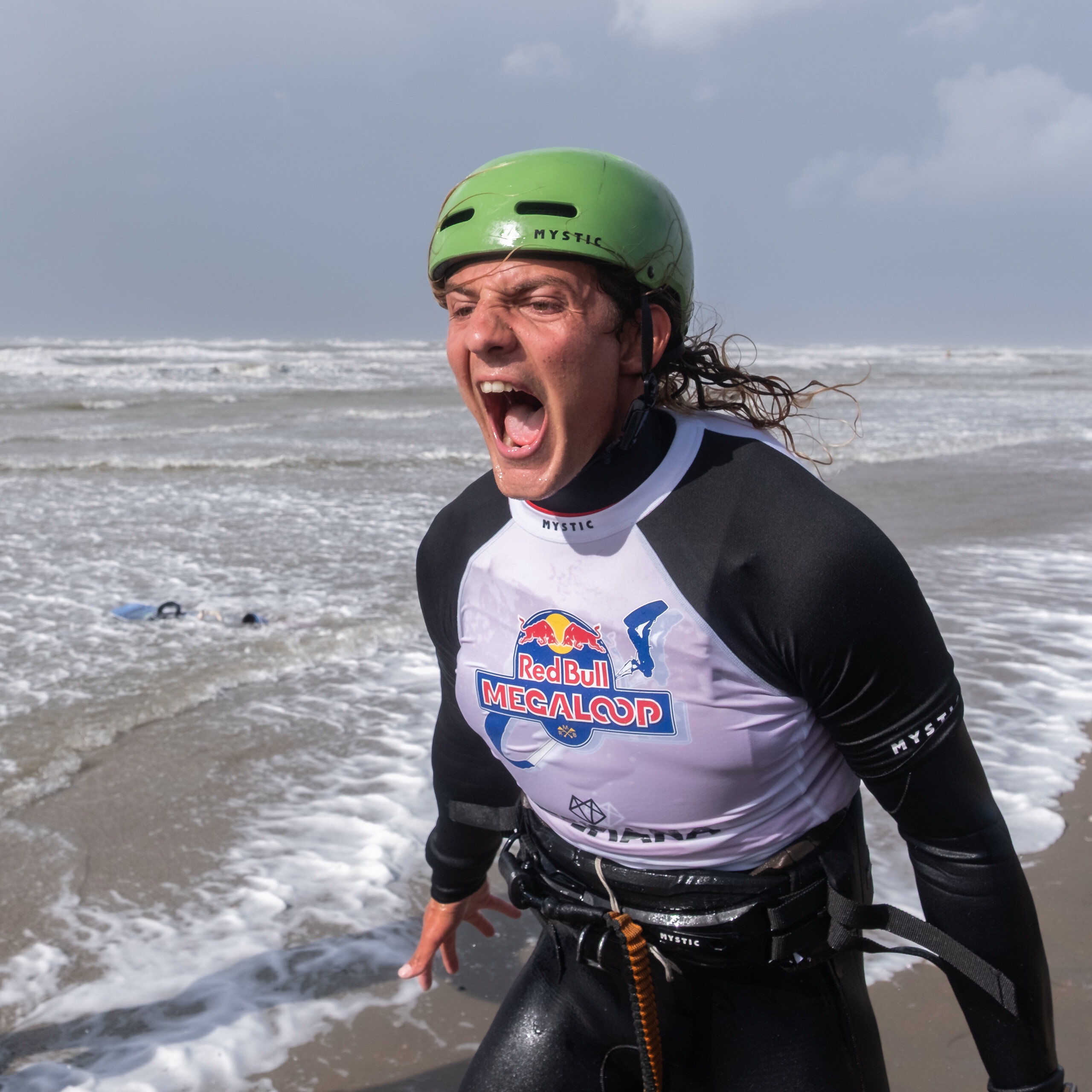
Kitesurf365
Lorenzo Casati | Episode # 406
00:27:10
On today's episode, I'm joined by Lorenzo Casati, one week after he won the 2025 Red Bull Megaloop. We hear about his strategy and set-up for this competition. WOO Sports: Support the show: Contact...
Loading summary
Transcript62 lines
- [00:01]
A
Welcome to the kitesurf 365 podcast.
- [00:04]
B
Welcome back to the show. I hope you all had a great weekend. On today's episode, I catch up with Lorenzo Casati. Just one week after he won the 2025 Red Bull Megaloop. Don't forget to follow me at kaitsuur365 for all the latest episodes. Ladies and gentlemen, Lorenzo Casati. Lorenzo. What a performance. What a result. That must have felt pretty amazing to win the Mega Loop.
- [00:36]
A
Yeah, man. For me was just insane feeling to win the Red Bull Mega Loop. You know, I think together with King of the Year, it's the biggest competition there is. And you know, it's always been there on my mind too, because I got the King of the Year, I got the world Championship and it was. It was missing the Red Bull Mega Loop. And then you know, also like the fact that I couldn't go the year before and I actually never competed in my life was like, it really missed it, you know. And going there on the first to try and get it was just. Yeah, man, just one of the best feeling ever.
- [01:08]
B
Let's start calling that the big three, right? King of the Year Omega Loop, a world championship. I mean, it's a very small club, right?
- [01:14]
A
Yeah, honestly, just me and Andrea that have won three of them. But I would say also like only like King of the era and world Championship or Mega Loop. I think nobody have won already two and then like win all three. It's. Yeah, but still like this year the goal, it's King of the Air, you know, to get King of the Air in the same year as well.
- [01:35]
B
Absolutely, bro. That'd be incredible. What did you think of the 18 meter lines? Was that a setup that you liked? Because to be honest, you guys looked like you had the height extremity was crazy. The kite position was awesome. Do you want to see more of that or do you want to go back to the 22s?
- [01:49]
A
I mean, was quite different, honestly. And I still didn't got so much training going into it, you know, a couple of weeks before the competition, but was actually pretty fun. And I like that we had some good power, like way more power going with the kite lower. I don't know for like King of the Year and like a world championship if it's the best thing. Like for me, I would still go probably on 22 and you know, try to get a little bit more of a fight, a bit more of technically as well and still try to go low with 22. But for sure, like for this Kind of competition where like the. It's like more of a storm chase and just waiting for a perfect storm and power like this. It really makes sense and it's actually also like unique. So I really agree on that.
- [02:32]
B
You know, how are the conditions out there? What did you sort of think the wind speed was on the water and how was the current? Because those are the things everyone's been talking about.
- [02:41]
A
So yeah, I think like it was around maybe I saw some gusts around 55 as well. But then the thing like compared to other spots like to Cape Town or to Tarifa or Gran Canaria or all the spots that I normally kite to, there was like the biggest difference was like really the current, you know, so there was I don't know how many knots of current, but like you could feel that while you were riding. We're also going down. So that was like taking you out a little bit of line tension. And also like with the wave was super messy, was like really breaking, like no period between which waves. So it was really hard to get the right takeoff. So that's the main difference. But you know, I trained a lot in Tenerife, Gran Canaria and Cape Town with the waves. So I kind of know how to read the sea. So for me, you know, was really different. I really first time kind of riding these different condition. But yeah, I kind of managed to make it work. Always like really looking for a wave to which one to get. But yeah, for sure, really different, you know.
- [03:39]
B
Did you find that you were a lot more patient when you're riding because you don't have to put multiple tricks on the board? Did you find that you maybe didn't hit as many kickers as you normally would?
- [03:49]
A
Yeah, I mean, honestly, I think I was. I did quite some good jumps. Also, like in the final, I had like six or seven jumps and all of them like pretty high good score on them. But for sure, like having only one trick, it really makes you wait more and really go for the right kicker. You don't have to force to go for multiple trick because there is no overall impression. You don't have to jump to the right for it. You know, you just can wait for that perfect kicker. But still was hard because like also the wind was a little bit gusty. So like sometimes you were going full power for the wave and then as soon as you take off on the wave, like you were feeling you were not getting the power and sometimes you maybe didn't tell him, but then you still get the wave and you just Fly super high. So, you know, it's like three conditions. But, you know, this is also what I like at the end. You know, it's like Red Bull Mega Loop is extreme. It's tough condition. You know, it's like, yeah, you know.
- [04:43]
B
What was your strategy going into the final? Because, you know you're up against Andrea and Cohen. Andre had been doing quite different. He'd been hitting quite far out the back looking for the big waves and more wind. Was that something that you considered going into that final?
- [04:57]
A
Honestly, not really because I kited a couple of days before the competition and I tried to go more in the outside as well to see how it was the wave. But for me, it was, I don't know, just a bit far out in general as well, like, for the judges to see. And then, you know, they could have missed the jump. But as well, like, I didn't really find the wave so steep out there. I felt like the one close to the beach, they were like breaking more vertical. So then if you get the right timing on the wave, you could just fly way better. And yeah, for me, like, the strategy going to the final was just the same of the other round, but just try to go higher, more power, kite lower, and also try to get some technical intrigue like the truby loop, that one. But, yeah, just height and kite low.
- [05:44]
B
I think with about four minutes to go, Andrea took the lead. Did you know that he had got a big score on the board? Were you told on the beach that you needed another big score?
- [05:52]
A
So, yeah, I saw. I saw the trick from Andrea and I was like, okay, he's going to score. But then, like, on the final, I had all the other hits. I had the watch, like, because there was a watch with the live scoring. But at the final, I don't know why it was not working. So I could not see my position. And like me or Andrea and Koan, I think both of us didn't have the score, so nobody knew nothing. And then, yeah, I just went to the beach and they told me the score and they told me Andrea is in front. But then I know, like, Andrea did that trick and then straight after I did, I think the true beloved with another front roll, like, pretty high, kind low. So I was like, okay, this is going to score for sure. But then still I went to the beach and he told me, you're behind. So I was like, okay, maybe this was scored really well. But still, I didn't know maybe they scored already and it was down. So I know I had to push more, you know. And then I went for another doobie, put the kite super low. And then as well for a tornado. The final. And at the end, like those last three trick, I think they were all three over Andreas one. So I really had to push more at the end, you know, because I was not sure and I really wanted to get it. So I had. Yeah, just go full send at the end, man.
- [07:00]
B
Do you find that Mega Loops a bit of a lucky comp because of that? You know, you can crash every trick and just hit that one trick in the last minute to win.
- [07:08]
A
I mean, for sure there is a. It's a bit different to the King of the Air and the other competition because the other one you really need to do more like a show performer. Like really land almost all of your trick. Jump both side. More variety after a trick. Three big ones and this one. Yeah, you can technically crush everything. Just. Just get that lucky guy. Just go super high. But at the same time, I feel like, especially like in the final, like the best rider arrived there. Like, you know, I was being super consistent throughout the day. Always. I think I got always the highest score in all the rounds. So for sure you can get lucky. But I would say who is more used to that condition or who is riding better that day and going higher and putting a kite lower is still going to make it to the final then for sure. You never know. Someone can get the crazy gas and jump 30 meter and pull a loop and you won. But I would say at the end, like, consistency still win, you know?
- [08:02]
B
Yeah, I love that. That's so true. Consistency always wins. I love that Harlem is pushing and. And I know that you guys have your weekly meetings where you talk about stuff and you're working as a group. And I really see that coming out in the kite and with your riding. I think it's just a perfect match.
- [08:19]
A
Yeah, I would say the same. We work a lot together with my father as well and Aaron and Ralph, how to, you know, tune the kite as well for especially this condition and the 18 meter lines and you know, how to get the maximum performance out of it without, you know, losing the height but still putting the kite super low and that it wouldn't backstall. So, you know, there was a lot of work behind it. And yeah, I think we make it work.
- [08:45]
B
Did you do any tuning on the bridle? Did you ride your kite on the low V? What was the setup that the Harlem guys were using?
- [08:52]
A
No, actually was the peak on the 18. We put the V a Little bit lower. But then, yeah, no big turning on the bridle. We use the same bridle and yeah, nothing special. But yeah, just for me, it's super important. Also in this condition, like the way you're riding to, it's a little bit different because losing like line tension from the wave. Because when you're like riding in South Pole, like Cape Town or Balniario, you have a lot of line tension, you know. So then the kite is not really back stalling. But while you are riding with this condition, also with the current, when you're taking the wave and taking off maybe a little bit, not super vertical, then the kite, maybe it's more. You gonna be back stall more, you know, because you are going out of the way with a lot of speed and going kind of horizontally sometimes. Then maybe you pull the loop and then you just stop there. So super important as well to know how to pull the loop, you know, not sometime with the bar all the way shooting, otherwise the kite would backstab way more. So that's something that also, you know, you can train on and get used to it.
- [09:53]
B
So you had to change your riding style to suit the current, is that that's what you're saying?
- [09:58]
A
A little bit? Yeah. Like in some tricks, I was like pulling the bar a little bit slower also on the loop to make it go more low, but as well not pulling the bar all the way in just to make sure the kite is not backstalling when it's going down and the loop is there. So try to ride with the bar a little bit shit out, you know.
- [10:17]
B
Were you riding with the orca fins?
- [10:19]
A
Yeah, I was riding on the orca fin. I've been riding for them for a little bit and I like how they perform with the waves and as well with the flat. And I think, you know, they give me a little bit more of grip. So that's always good, you know.
- [10:32]
B
Lorenzo, where do you think your advantage is? What's your advantage at the moment? Why are you so consistent?
- [10:38]
A
It's a good question, bro. I mean, I think, like, I really always try to train, you know, to be consistent on the water. So, you know, I'm trying a lot of new trick and a lot of new variation as well. But then I'm more focusing on really have my trick. The water that I'm going to bring to the competition really, you know, like steady and always there in every condition, you know, like, it's not probably if it's 25 knots or 50 knots, I can kind of do the same tricks obviously like the more high you go, the more you can do more rotation, tic tac, flip and that stuff. But then like the bass trick, like tornadoes, the doobies, all that stuff. For me, I can do it in like every condition. Onshore, offshore waves, no waves. And then I think that really help with the consistent when you're riding in different conditions. You know, I only had like one session in, in Holland and I was like already landing all my tricks straight away. So I was like, okay, feeling super ready for the mega loop. And you know, I also now started training really, really hard outside of the water together with my dad. And you know, that also I think really helped me on, on my style especially more like on the power. And you know, I, I can feel like way more fit on the water, you know, go with more speed, more power. Never having like, how do I say, like losing your breath when you're riding on a heat. Really back to back trick, you know. So I think that's also, that's something that I feel I really improve my performance to be way more fit and then for sure, yeah, I always work with, you know, new trick, new variation.
- [12:14]
B
So you think this extra fitness is helping you and making you a better rider?
- [12:19]
A
Yeah, I would say for sure. You know, like I can feel, I mean already on the training I feel much more strong and then I can like train for more time. Always feel like I have more control of my body and I'm not getting tired so, so fast. But then also in the competition, I can especially feel it on the riding. Like the power you can get before the takeoff and then you know, also on the landing. Straight after a landing, you're already back on the upwind and already going for the next trick. You know, I can really feel that super improved with like training axe of the water.
- [12:55]
B
You know, how hard was it to get back up when with that current and I mean, I guess that fitness helped, right?
- [13:01]
A
Yeah, I mean it was actually quite hard. Like there was so much current like for me kind of blew my mind away because I'm never used to this condition. It was my second time riding in Holland and it's just, yeah. Crazy. And then was super strong. The car was like almost pulling me away for how strong was with the eight plus you had the current. So I had to go. Actually the best strategy to go upwind for me because I studied a little bit the current and how to do it was to go more outside because I felt like outside there was like the waves were not breaking. So There was like, yeah, the first bang, really, really at the back. Then it was kind of choppy, but no waves. And then there was more wave. So I feel like all the waves breaking on the inside, they were creating all the current. So then there was super hard to go upwind. Meanwhile, if you go a bit more outside and then you were going where there was like no wavy breaking, you could actually go upwind much faster. So then when I know I did a big trick and I was really downwind, I would just go outside, you know, take a little bit more of time at the same time, prepare and think for the next trick and just, yeah, try to go as upwind as possible to do more jumps, you know.
- [14:08]
B
I think it was pretty shallow on the inside at Parts A. Yeah, man.
- [14:12]
A
For sure, I was really shallow. Like, I don't know how much, but I feel like if you pin drop from 20 meter, it would not have been good. So I had it in my mind. I was like, okay, I'm gonna crash. I need to go first with the feet straight, but then straight away put all the weight on my back. Otherwise I'm maybe gonna break my legs. Because it's actually hard to see. You know, the color of the water is like kind of. Yeah. Not. You don't know what you did, bro.
- [14:43]
B
I think the key, Lorenzo, is just not to crash. I think the final was the first time I saw you crash.
- [14:47]
A
I think so. I think. Did I crash in the final or in the semi final? One trick? I'm not sure.
- [14:54]
B
Yeah, but. But not many. I think maybe one. I think I can remember one only or maybe two. But I mean, was part of the strategy not to get stuck down when. Because we saw in the final Andre get stuck down. He's sort of quite out of position. In the. The ladies final, we saw, you know, r get stuck down when it was that the main strategy was to, you know, stay upwind and try and control that top half of the box.
- [15:15]
A
Yeah, for sure. I mean, I don't want to end the really downwind and then it's far from the public, far from the judges, and, you know, you're always down there and, you know you're okay jumping maybe still close to the people, but then the more you're going downwind while you're like traveling on the air, so maybe they miss a rotation, they miss something. So for sure, was my strategy always, okay, I do one trick up, then maybe I'm in the middle. I can do another one if there is a perfect kicker. Otherwise I'm already trying to go upwind for the next and try to kind of keep always that space, you know? But then at the same time, like, at the end was super hard to know how much time it was missing because the watch was not working. So I was like, okay, maybe even if I'm Darwin, I should just go for a jump, because maybe then the it is going to finish. So that was a tricky part at the end to understand when it was going to finish and if I had time to do one more, just go upwind or not.
- [16:11]
B
You know, when people ask me about Lorenzo Casati, I say, he's the complete rider. Where do you want to improve? Where do you think you can improve?
- [16:21]
A
I mean, yeah, there is always room for improvement, I would say. I think I'm gonna try now. I mean, still work super hard outside of the water. I think that's one main factor that I work together with my dad super hard and, you know, with his special technique for this kind of workout. So I will keep pushing that. But I also want to try to bring a bit more of technicality. So, like, really flips and all that stuff, but then not with the kite high, but with the kite low. So really try to get super technical with flips, Tic Tac, but then having the kite super, super low, because it's something that now, okay, I can do, like, you know, a lot of, like, rotation and some tic Tac as well, and put the kite low. But still, I think there is a lot of room for improvement in that side and then, like, in general, like, for everything I'm doing. So, like, hydrofoil, strapless, and all the other discipline. I mean, I would say now my main focus is bigger. But then still now I'm gonna go, I think, two weeks for tudakla, for the wave riding, then Abu Dhabi hydrofoil. So I'm also gonna try to push a little bit these two. But then, yeah, king of the air is the main objective now. So as soon as it's some strong wind in Tarifa Gran Canaria or somewhere in Europe, I will just give priority for that. And, yeah, just keep going for it.
- [17:45]
B
Back in the day, you know, the old guard used to say, oh, Lorenzo and Andrea, they're so technical. The kite's not in the right position. What I love now is that you guys are doing even more technical stuff with better kite angles, and I. I think that's just you guys continuing to push the sport forward. And I. I think that's just so cool, you know, I mean, because you've won over those guys. None of those guys will say anything more ever again.
- [18:08]
A
Yeah, for sure. I mean, I remember it as well at the beginning, but you know, I think it's just, you know, the progression of the sport and the way we're pushing it that, yeah, with the time the kite go lower and you understand how to get more technical. Having the kite lower, you know, just more rotation the board of the tick tack, the flips and having the power. So I think we're really combining it really well.
- [18:33]
B
You know, is this the death of doubles? Is singles the way people want to see the sport ridden? Because I kind of. I mean, I think we saw two doubles. I think Leo did one and I think Sara Siddiq did one one as well. Is doubles gone?
- [18:49]
A
I mean, for my way of riding, I really love double and triple a lot. And I actually wish when there is the right win condition, they actually would consider them more because I feel like, you know, with the single you can do a lot of stuff, but with the double there is some trick that are really technical, they're really powerful and they're, you know, super hard. So I feel like these are good progression for the sport in mega loop. I also thought about going for some double, some S loop, but then Leo went for them and I mean, he didn't get a super bad score because he got like seven and a half and didn't went super high. So I feel like if you went proper high with the double, you could still get some proper score. But then the most hard thing I think was like with the current that was super hard to get speed and really get that vertical lift that you want for the double. So the kite is not really back stalling. So that's why I also decide, okay, I'm not going for it. But then, yeah, if we have more competition like now in Tarifa, the full power or even in thinking of here, it gets strong enough, I will for sure push on some double again in the competition and even some triple if it's strong enough. Because I also worked a little bit on them and had some really nice variation with the kite. Super low, some technical. So I'm definitely keen to push them in the competition.
- [20:06]
B
You know, I assume the next big air competition will be cold Hawaii. That's a place that, you know, you guys have really pushed it there. But there can be quite a lot of current in cold Hawaii. Right. When that water wraps around that pier and flows down, it can take away something from you guys.
- [20:20]
A
Yeah, for sure. It's. There is Current, but honestly, I would say like nothing compared to the one that was in Holland, because I feel like the pier that it's there, it's like kind of stopping the current. And I also feel like it really depends from the wind direction. If it's a bit more onshore, then the waves are kind of coming a bit more on, and then there is not really the pier stopping them. So then, yeah, you feel a lot more of current, but still it's kind of pushing you towards the beach. And the one from Meghal was like going the same way on the beach, like downwind. But then if the wind is side, then it's not gonna be so much current. And it's actually the waves are really nice, like close to the pier. There is a couple of sandbar and. And there is like perfect steep wave and no current. So I really hope the wind is really sighed and then it's just amazing.
- [21:08]
B
You know, as we're recording this, it's one week since you won the event. How come you decided not to ride the Spanish Nationals? I saw Jeremy beat your brother in the final. Was that a decision by you not to ride that event?
- [21:20]
A
Yeah, for sure. I decided not to do this one.
- [21:23]
B
Because it looked like amazing conditions. Right?
- [21:25]
A
Yeah. Honestly, it was like saying, I don't know, 20, 25, the first day when they called the competition. And then, you know how it's Tarifa, it just got like stronger and stronger. Bastille was like 24 to 28 on Winguru. And then, yeah, we show up to the beach and then it was like 40 knots, like crazy power and eight. But then still, you know, I wanted to take a small break after the mega Loop. You know, it was quite intense. Also, I've been traveling so much this summer. I was in Egypt. Then I had to go to Holland and then straight to tariff again for this competition. And honestly, they didn't even call green light when I came here. So I was not coming for this. Just, you know, to do some stuff and already back to training Tarifa. But then, yeah, I felt like I needed a little bit of, you know, relax and I didn't want to push too much. Also knowing that now it's coming cold Hawaii, full power. Then I have wave riding king of the air. So I just wanted to take it a little bit more relaxed. But then, yeah, my brother and Jeremy went for it and honestly was, man, just an amazing. An amazing final, like the whole event. But like the final was just insane. Like, both of them were like pushing so hard. I Think on the last streak they both got 10 for it.
- [22:37]
B
It's crazy. Yeah, I actually, I'm going to go and rewatch that final scene. You know, you mentioned your workload going into King of the Air and you know, now taking a break, they're still talking about maybe doing this qualifier in Port Apollo. Is that something you probably give a miss now considering you want to do the wave event, the hydrofoil cold Hawaii. And you know, you still need to take time to get to Cape Town and prepare for King of the Air as well.
- [23:01]
A
Yeah, I will think about. Honestly, I'm not sure because I probably going to go to Cape Town after Abu Dhabi. That's like the end of October. So I'm going to try to be at least like three weeks before King of the Air to get a bit of training in. But then I would say this event of Porto polo is not in between the other competition. I'm maybe gonna do it as well. You know, at the end it's like preparation for King of the Air. I wanna ride the spot there and maybe, I don't know, it's four or five days or really good win. So may I just go there, train a little bit, do the event as well to get, you know, the feeling back for. For King of the Air with the same criteria of three, trick the variety, but then at the same time, yeah, if the one in Abu Dhabi will go with the foil, I will go because I'm actually third in the world now. So if I do really well, I can still have a chance to be world champion. Hydrofoil is not easy, but I will train for it. But yeah, it's just a lot of competition, a lot of planning, a lot of training, but I will work for sure, man.
- [24:03]
B
How was your time in Mykonos? Tell us a little bit about that trip.
- [24:06]
A
Yeah, man, Mykonos was super fun. Honestly, it was me, Jeremy and Andrea as well. And, you know, like, the conditions were there. Like the first day we got there was probably, I would say, one of the strongest day I ever ridden. For sure, the strongest day in Mykonos. I jumped super high, got the grease record there and, you know, was super good for training. We had really cut four or five days of proper win and that was really amazing time, you know, with Jeremy and Andrea. We had a lot of fun there. It was just good to stay with the boys, kite together, have some fun. You know, it was a good summer treatment.
- [24:41]
B
How often do you three do a trip like that? Was that the first time you've really done a Trip by yourselves.
- [24:48]
A
Kind of. I mean, there were some time. We're in Tarifa together for like almost a month and even like sharing a house or like in Cape Town, Brazil. But I don't know, this one felt like it was really more prepared as a trip, you know, really like, you know, we were planning it for months and they were like, okay, we're going, we're going together, we're getting the house. The other one were a bit more, yeah, just spontaneous. We're just happened to be in the same place and then just hanging out. But this one was really more like a cool trip with the boys, you.
- [25:20]
B
Know, part of the Mykonos trippers. We're making an amazing movie and we're making an amazing book. You've seen some of those. What do you think of the stuff you've seen so far, man?
- [25:29]
A
It's actually super epic stuff. Like you guys gonna love it. Yeah, we did some nice photo, but then the video, when it's gonna come out, it's gonna be something just crazy, you know, a lot of kiting, a lot of fun, a lot of love together with the boys. It's gonna be one for the history, man.
- [25:48]
B
I agree. I don't think this has ever really been done before in kiteboarding. The project that's coming out for me is a first.
- [25:53]
A
Yeah, for sure. I would say same hundred percent.
- [25:57]
B
Lorenzo, congratulations again, dude. You are incredible. I'm so happy. I mean, you're the deserver winner and I'm looking forward to Cape Town, man, because this year's king of the year is going to be unbelievable.
- [26:08]
A
Yeah, man. Thank you so much for sharking away. It's gonna be one for the book. I hope. The wind is there and it's gonna be amazing, man. Thank you so much for having me and see you on the next one.
- [26:18]
B
Hey guys, I hope you enjoyed that episode. Don't forget, if you want to support the show, the easiest way is to do it for free. Rate us on Spotify. I'm loving those five star reviews. Keep them coming in, share them in your local WhatsApp or kite surfing groups, or just simply tell your mates. If you want to support us more regularly, head over to portraitkite.com and check out all the madness there. Portrait is an independent media company and we're trying to tell the stories of kiteboarding in the way we believe they should be told. These projects are funded by people just like you. If you believe in what we do, definitely go check us out. The podcast will always be free and if you want to find more episodes just like this one, use the search button@kitesurf365.com to search your favorite writer or topic, and we'll see you this Thursday for the Megapod.