Loading summary
Transcript108 lines
- [00:01]
A
Welcome to the kitesurf 365 podcast.
- [00:04]
B
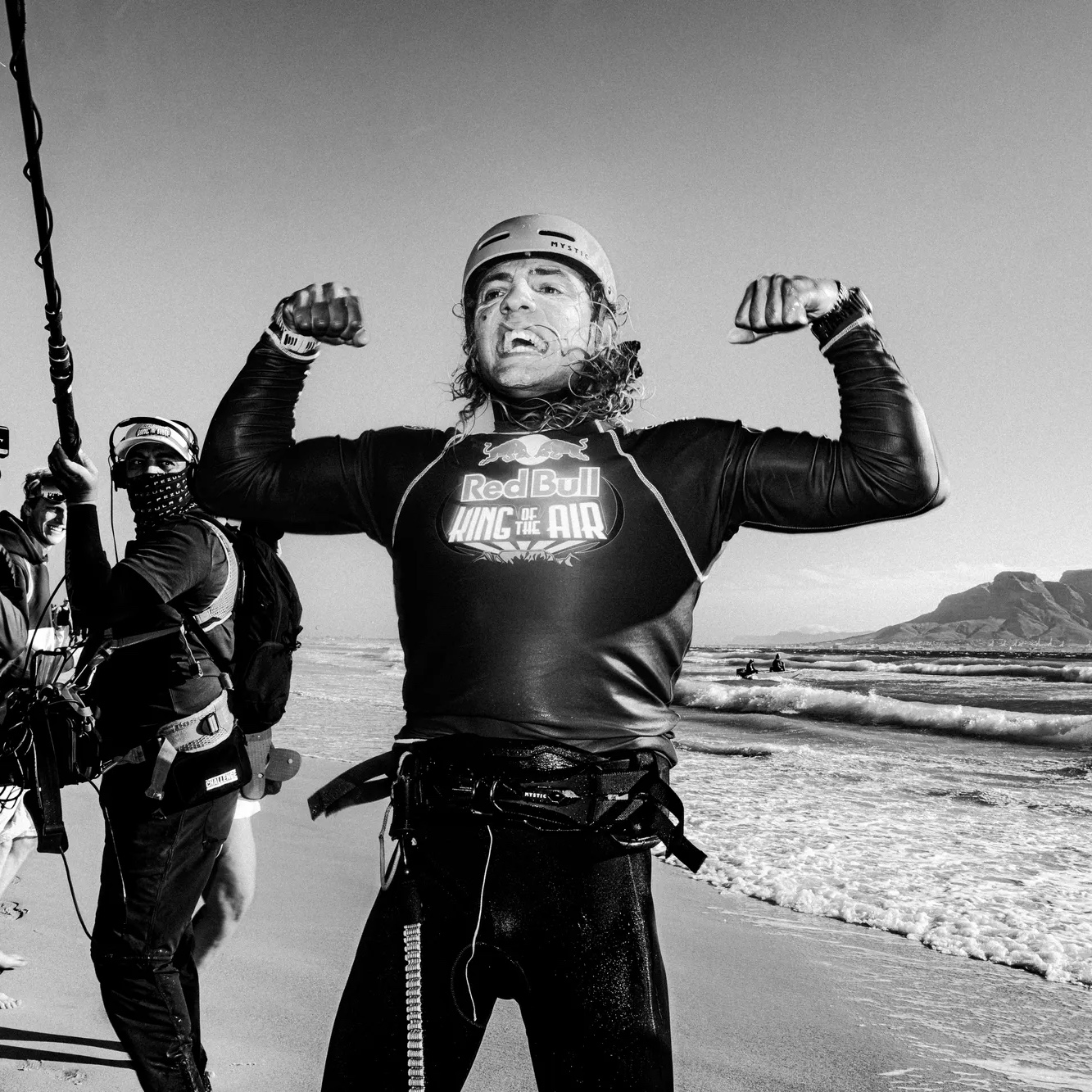
Welcome back to the show. I hope you're enjoying all this content coming out this week. Today I catch up with the sixth king and winner of the 2025 Red Bull King of the Year, Lorenzo Casati. This win completes the trilogy after winning the World Championship, the Megaloop, the Red Bull King of the air, three majors and three different formats. Don't forget to follow me at Kaitsuur365 for all the latest episodes. Ladies and gentlemen, Lorenzo Cas.
- [00:33]
A
Just picking.
- [00:33]
B
Up now and I'm pretty ready, man. This one is probably a bit more nerve wracking.
- [00:40]
A
Kevin Langry, three time winner.
- [00:42]
B
This is like a heavyweight boxing match. This isn't the featherweights. There's no dancing around.
- [00:49]
A
Sponsor kicker first move.
- [00:51]
B
The rebel from the air for a woman is super clean. That is yet another innovation move.
- [01:04]
A
Marc Jacobs heading out towards the iconic Robben Island. Highest trick scorer in all Red Bull Kingliers, Janek Tikachuski.
- [01:12]
B
Kevin Langley has taken it for the third time. Way more than a dream come true. That is massive. Meanwhile, out the back and that has to be Kasati.
- [01:27]
A
It's an all our teenage affair.
- [01:33]
B
Well, we're sitting at the event site where a days ago, Lorenzo, you won your second King of the Year. Fourth final in a row. Finished the trilogy. Pretty incredible.
- [01:43]
A
Yeah, bro, super happy. I mean, what do you want more.
- [01:47]
B
You know, was it excitement or relief in the end? Because it's a lot of pressure to do all the three big ones in a year.
- [01:54]
A
I mean I was super excited about it, but for sure also you have kind of relief after you winning all of three and you know, there's like less pressure on yourself and everyone is like, yeah, they see you can do.
- [02:08]
B
It, you know, World Championship at the start of the year, the Megaloop, a massive win and then this, it's difficult to do, right? I mean, only you and Andre are doing it. But is that the goal, to go back and do it back to back now and just cement that trilogy as something that special?
- [02:20]
A
For sure. I mean for next year I will keep pushing and yeah, that's the idea to get another trilogy done in the row. I mean, it's not really easy, but for sure I will try to get it or if I cannot get it this year, then next year, the following year, you know, because nobody have done two. So that's something new as well, mate.
- [02:41]
B
Looking over the year, emotionally, physically, how you feeling?
- [02:45]
A
I honestly feel not bad. Like actually I've been traveling so much this year, training so hard and, you know, competing bigger in hydrofoil, in strapless. But even now, like one day after King of the Air, I went for a session straight after, back on training, you know, like, this is what I love to do. So for me, it's not. I don't feel burned out from it, you know.
- [03:07]
B
Let's talk about that move in the final. You went back roll, half cab, board spin, tornado. Where do you think these ideas from and how do you sort of go about putting a move like that together? Because I know that was an mbd, it didn't really get recognised because of the magnitude of the event and going on to win, but. Pretty crazy.
- [03:24]
A
Yeah. Actually, I thought about that move for a while ago. I probably started training like two, three months ago already in Tarifa. But then the first TD I chosen with the Tornado. And actually I call it not the half cup, but the full Cub. Because, you know, the half cup is like, you're doing like the. The back. Back flip, but then your leg are kind of bent and, you know, like, Jeremy does it and Maya try, like, really to extend them and like, be full, you know. So I say full cab and then I was like, I train it, I could do like back roll, full cab and then like two rotation the way down. And then like a week before a competition, I, like, I figured it out. It's like, why don't I do a tornado after? You know, and then you need, like to get the line tension, so you just need to do the loop a little bit earlier and yeah, just back roll, you go inverted loop and then tornado.
- [04:11]
B
And the board spin.
- [04:12]
A
And the board spin. Yeah, you just grab it on the other side and. Yeah.
- [04:16]
B
Does starting with the back roll help keep the momentum for all those rotations?
- [04:20]
A
I think so, actually, yeah. Getting the back roll, you can get a bit more of line tension out of it as well. That's super important for a tornado. And then after, like, the. The rotation that you go inverted, you get a lot of, like, speed rotation when you're coming down. So actually sometimes it's harder to stop the rotation and land because you're like, there is like too much spin, you know, and then you really have, like to. Yeah. Stay strong with your bike to land it. Sometimes I do like five or four after because it just spin, you know.
- [04:51]
B
What's your trick to stop rotation? I've seen Zach Adams, he sort of extends his arm out like, you know, that classic science experiment to slow himself down. How do you stop your rotation? How do you stop the spin because to most people it would be out of control. But you guys seem to land perfectly every time.
- [05:05]
A
I mean, for me, what I do the most to like stop rotation is really use my abs and my core. I really, you know, when I start and coming down, just like kind of make force on them and then my body stays stable, you know.
- [05:19]
B
Is there a trick that you've been thinking about for some time that's still a little bit out of reach, but something that you want to work towards? Because I know that, you know, you know, there's only a few people like, you know, you and Andrea and Jeremy to some extent are really sort of thinking forward in the sport. A lot of people and most people are sort of kind of following the trend. Right, but is there a trick that you foresee in the future where you're not quite there yet?
- [05:43]
A
Yeah, for sure. I have a lot of trick in mind. And you know, also together with my dad, we study the videos and you know, we see what we can do next to improve and yeah, 100% there is plenty of them that I would love to bring, especially when it gets strong and you get, you know, more opportunity to go high and add stuff in.
- [06:04]
B
Do you look at other sports for inspiration on that or is it just basically looking and thinking, hey, we can bring, you know, like that half cab to tornado. You're sort of combining tricks. Are you looking to combine tricks or looking to do something that's different?
- [06:18]
A
I mean, I think you can get a lot of inspiration for like gymnastic, you know, like the way they do the flips also, like with the styles, you know. But yeah, mostly I try to, to take them from kiting, you know, I think, what can I add here? You know, board spin, board flip, rotation in this way. Yeah, you just need to have a good imagination and work on it.
- [06:39]
B
Let's talk about Renato, the master planner. You know, he's been telling me about these master plans for years and years and, you know, it sort of all came to fruition. It was awesome to see you and Leo pick him up and carry him up there. And this wins as much as his as it is yours. Right? Because I mean, he's been working towards these moments for many years.
- [06:57]
A
Yeah, for sure, 100%. You know, like without my dad, nothing of this would be possible for me, but as well for Leo. And I think like, he really proved, especially with Leo at just 16 and like his first time king of the year, he got second. Like how his hard work and all, his coach really Work and as well if like for half an afternoon he teach Lana a little bit and she made it straight to the final. So. Yeah, that was amazing too. But yeah, I mean all our program, you know, with training on the water, outside of the water, the lamentation, the workouts, you know, it really paid off.
- [07:32]
B
You know, I mean we can see that in how well you guys tapped into that variety score. No one else, no one else got it right. You know, getting the seven points and then, you know, whatever the judges gave you outside of you and Leo, I don't think anyone did that very well.
- [07:46]
A
Yeah, I think maybe they got five or six maximum. I got two times seven. But yeah, I mean it's super important to also train on both side and bots trick, you know, because you control loop on the left, contra loop on the right, kai loop on the left, kylo on the right. And then. Yeah, I just need to figure it out, make a strategy. It's not really easy actually. It's quite hard. But if you make it work, then it makes you win, you know.
- [08:15]
B
Do you wish you guys had been told about that a little bit earlier? Because most of the riders found out really this at the riders meeting. It's like the day before the comp. Right. It's not ideal prep for. Not so much you guys who have a lot of tricks in the bag, but like for the younger guys coming in who first time here now, now having this thrown at them, it's. It's kind of not cool.
- [08:34]
A
Yeah, I think it definitely would have helped if we knew before because then, you know, we could have planned a little bit in advance. For me it didn't really matter because anyway my trick are there. So I just figured it out like one after, okay, I'm gonna do this, then that and. But yeah, for sure. If you got more preparation behind for everyone, it would really help a lot, you know.
- [08:53]
B
Is there any chance we can get a copy of that radio communication between Renato, you and Leo for the final? Because I think that would be hilarious to hear.
- [09:00]
A
I don't think so. I don't even know if there is like. Yeah, a lot of it, you know.
- [09:07]
B
But can you hear him talking to Leo as well? Is the radio connected to all three of you? Is he talking to Leo so you can hear the information he's given Leo?
- [09:14]
A
Yeah, it was connected to everyone. So, you know, at the same time it's like maybe he's giving you an advice but then Leo can hear it, you know, so it's double sided.
- [09:21]
B
Yeah. Was that Confusing to hear double bits of information in the head or. Not too bad.
- [09:26]
A
No, no, no, not too bad.
- [09:27]
B
I remember Leo coming in one time and it almost looked like he didn't even get to that sort of first line of kickers. He stopped and turned around and then went straight back and hit a wave. And I thought he must be getting information that there's a set of kickers behind, because he turned around instantly and went back and hit one of the biggest kickers in the set.
- [09:42]
A
No, honestly, about the kicker, he wasn't telling nothing. You know, it's just me and Leo, like, I spent a lot of time, like, especially kiting in the ocean, so I can kind of know when they're coming. So, you know, sometimes. Also did the strategy, maybe even two. I remember in a fight, like, one time I did one jump and there was another kicker, two, and they're like three in a row. So, you know, when there is a kicker, you just need to get it. But no, Renato wasn't saying this. I know you can do it, like, in the wave riding, and they can call, ah, it's coming a big set. But here, no, no, no. Just for the scores.
- [10:13]
B
Where does this consistency come from? I mean, I think you only crashed one trick in the whole event. I mean, where do you find this consistency? And, you know, people would question, oh, Lorenzo's not pushing hard because he's not crashing. Because that's generally the sign, right? When you push hard, you crash. But I know you're pushing hard, yet you're not crashing.
- [10:28]
A
I mean, for me, I always, like, try to. To train in my way as well. And, you know, the. The method of my dad. So it's like, I'm trying a lot of new trick, especially in the training days, but then I do some days that I'm, like, just trying to land the trick that I'm. I know I'm gonna push for a competition, you know, and then, like, even, like, the flips or, like a double flip or this stuff, you know, like, once I land a few times, then I get it, like, consistently I can land it, like, in any condition for, like, 20 knots to 40 waves. So I really try to push that consistent, you know, because I've seen, like, throughout the years, it is super important, you know, like, all the guys that always won a King of the Air or their competition is also because they've been really, really consistent, you know, because you can be, like, trying a lot of different tricks, but then you come here and maybe you have. You land one out of 20, you know, and then what's the sense of bringing it if you are almost sure you're not gonna land it? You know, maybe you can get that time right and then it can save your hit. But then, yeah, it doesn't really make too much sense for me, you know.
- [11:34]
B
When was the last time you scared yourself doing a trick and training? I mean, that's surely happened, right? You've given yourself a real fright and thought, whoa.
- [11:43]
A
Actually I think the biggest like scared of this year, I would have to go to the one in Lord of Tram. I mean, I land the trick, but I didn't. The heads looked like so big and then I had like so much free fall, man. And that one, I felt like really, really scared.
- [11:59]
B
Is there a stage in there where you think, oh, maybe I'll just kick the board off here? Or do you think I'm going to try my very best to land it? Because it comes down to the pilot skills, right? When's that decision?
- [12:08]
A
Wow. You need to be there like with the mind and it's just. Yeah, not even half a second. You need to decide. I mean, in training, like if you're doing especially doubles, I would say, because then you're free falling way more. Yeah, it doesn't really matter like 3, 4 and meter to go down and then still he didn't catch you, then you just leave the board. If it's like competition, then you're like teed the last 10 because you don't want to crash that. Yeah, with training it doesn't really matter. You know, it's better to keep it safe.
- [12:35]
B
It's funny, like I've seen you training and seen you riding a lot and when you do crash, I always like how you guys sort of kick the board but then take the kite right to the side so you don't have to body drag too far. Because I think a lot of people will make some mistakes here. I mean, I've seen people get stuck in the water 30, 40 meters from their board and they're pretty screwed. But with you guys, it's almost like bring the kite to the side, drop straight down, get on the board straight away. Is that something that you guys work on as well? Does that just feel natural to you now?
- [13:03]
A
I mean, it feels natural, but for sure also it's super important to know how to crash. That's why also, I actually never get injured for now and hopefully never.
- [13:13]
B
Yeah, yeah, cool. Touch wood.
- [13:14]
A
But yeah, I mean, I see some people, you know, they jump, maybe they do some mistake doing tic Tac and stuff. And then they start, like, pulling those big Ellie loops and downloop, and then they get, like, miles away from their board. And, yeah, for me, as soon as I lose the board, I just try, like, to. Don't even download the kite. Move it a little bit to the side. Just. Yeah, to make a parachute. Don't crash too hard. But, yeah, try to stay as close as possible to the board. And then, you know, if I'm doing a loop and I cannot get it back, then I just try to keep it out with the arm straight till the last second, not throw it in the front, because otherwise you can land on it and break yourself just on the side. And then you just leave it, like, one second before dropping.
- [13:51]
B
Which of the losses this year has taught you the most? Because I know it's heartbreaking to lose, especially in finals. And, you know, you had that loss with Jeremy and Andrea at Lords of Tram. Did you learn from those losses? Did you guys go back as a team and think, hey, this is. I can take some positivity out of this loss because I know you. I know your father's very big on taking the positives out of everything.
- [14:11]
A
Yeah, I mean, for sure. It's super important. Actually, I think the losses teach you much more than victories. I think the biggest one was the one in France. I mean, I actually only got second this year. I mean, yeah, in bigger. In nature, foil and strap is different, but in bigger, I got second in France. And I think I really need to work hard on that spot, especially because I always have been struggling a little bit. And, yeah, like, the flat water, the wind there is a little bit different compared to, you know, Cape Town or Tarifa and, like, cold Hawaii, I actually had one of the best heat of my life. So I actually think I couldn't do better than that. But, yeah, I need to work. I know what I need to work for next year, you know?
- [14:55]
B
Yeah, let's talk about laws of tram, because that could be the first competition back. Also, Jeremy's also said to me that he doesn't really like that spot. He doesn't really like the flat water. Why do you find that spot hard? Because most people associate flat water as easy takeoffs. You know, preload pop, you can get it right every time. But I know you really thrive in the waves. I mean, that's your specialty, right? To ride in the sea. Why have you struggled there? I mean, going back a few years, you had the gear issues there. It's not been a spot that's always Been favorable to you?
- [15:22]
A
Yeah, that's why it's always been a tricky spot for me. I mean, I think like the gusty wind there, you can like really get a nice gust, but sometimes it can really, you can feel like super power. You go for a takeoff, then you have nothing. You know, it's like so up and down. The wind, like, not necessarily is a bad wind because if you get the right gas, you just fly. But it can be super gassy. And then for me, also the landings there are quite hard, you know, because it gets, especially when it's strong, it gets like so choppy, like even more than terrifying. Then it's like landing. Yeah, like so choppy.
- [15:59]
B
Yeah, yeah, sure. I've seen it. I don't like the sequence riding. I know there's strength, there's benefits and positives to that, but there especially because, you know, one guy can get all the Gus and then you can be waiting your turn and there's absolutely nothing. Do you think you could ride like a 15 minute timed heat at that spot, or do you think that would also be too dangerous because you've got guys jumping all over top of each other? Because here you've got a lot of area to work right there. You've got basically one line.
- [16:25]
A
Probably. If it's two parts on the heat, then I think it could be fine. But then the thing is like, the spot is so small that imagine your opponent crash right in front of where everyone needs to jump. And then I think the it is stop, you know, because it is only like that place you can jump. And yeah, you don't want to jump if someone is down losing your board. And then, yeah, if it's like even 2, 3, 4 person, then there is a possibility of the judges, like losing your trick or really having to give a score super fast. And don't really reflect on that, you know, and then being like the GKA and the world champion, I think. I mean, I know it's maybe longer and a bit more boring, but I think it have his advantage, you know.
- [17:05]
B
Yeah, yeah.
- [17:05]
A
To write this format as well.
- [17:06]
B
I mean, they do ride time. I mean, full power Traefer is a bit time dried as well. And I understand because by the way, Tarif is also a small spot, but, you know, it. It sort of solidifies that trilogy having one in three different formats as well. That's something that people don't talk about. You know, the longer GK format, where it's the sort of run sequence, the single trick format, and now this new freshened Up King of the air format. That.
- [17:28]
A
That.
- [17:28]
B
That's something that I think people should. People should take notice of as well, you know, because it is all different.
- [17:33]
A
Yeah, it's actually super interesting.
- [17:35]
B
Yeah, I never thought about that. Yeah, same.
- [17:38]
A
Let's.
- [17:38]
B
Let's talk about Harlem. I mean, I'm always hearing about sort of the connection of the gear with having the ball. I mean, it's. It's never have I ever approached a brand that said, no, you want to ride our kites, you have to ride our board, too. You've got to ride our bar. And I kind of like that. It's. It's all about the connection. Everything's working together. That's the way it's been built. That's where it's been tested. Is that awesome to be with a brand that's so focused on every single aspect of not just the sport, but the gear as well?
- [18:03]
A
Yeah, for sure. 100%. You know, I'm super happy how things are going with Harlem now. It's been already two years, and I honestly wouldn't expect this to happen, you know, And I mean, but I see how much hard work they're putting into everything, you know, Alex, Victor, Aaron, Ralph, you know, and also when I thanks them so much for all of this, without them, it wouldn't really possible, but, you know, yeah, especially Aaron and Rav, they are working super hard in gear, getting. Because it's super important to have the right board with the right kite that can take out from every condition, the 100, you know, because maybe you can have a good kite, but then if the board is not really fitting the way the kite fly, then it's not going to be the same.
- [18:48]
B
You know, it's not just on the water. It's off the water. I mean, the Harlem family, they're almost pissed. They're purple. They're purple everywhere. They've got their singlets. They're, you know, whether it's their big jackets or their. You name it. If you come to an event, you can see the Harlem team. It's. Yeah, we love you guys, but seriously. But do you feel that energy that that sort of group brings?
- [19:08]
A
For sure. For sure. I mean, they were here on the beach, like, 50 people, all with, you know, the goggles, the shirt, the stuff supporting for me, like, I could hear them, you know, cheer for me on every trick. And, you know, that's something nice that give you more positivity and more. Yeah. Strength to go through and send it even bigger, you know, they're a great.
- [19:27]
B
Bunch I mean, they bring in all the aspects of what people like kiteboarding, a family feel off. And they're bringing that fun feeling as well. Right? Okay. They're super competitive, but they're bringing that, hey, we want to have fun here. We're having fun all the time. And that. That's. That's awesome.
- [19:40]
A
Yeah. And also, what's the best thing is, like, it really feel like a family, you know, it's not like a brand, like a business. And, you know, like, the owners, they don't care and just want to make money and stuff like this. You know, it's just really. You can go to, like, the owner and he's gonna be super flair with you, and everyone is, like, super close, you know, like, really family meaning, you.
- [20:01]
B
Know, let's speak about the hydrofoil a little bit as well. I mean, that's an event that, you know, I know you're excited about it. I would kind of like to see yourself and Hugo and Leo and Charles and Jamie really push that discipline. I think that discipline actually has some legs. I feel like it's never really been done very well.
- [20:19]
A
Yeah, I mean, I think it has a lot of potential, especially, like, from an event organizer perspective because, like, you don't really need so much wind. So, you know, they can run events everywhere with just like, few knots or maybe something to also bring kite surfing outside.
- [20:35]
B
Not six knots.
- [20:36]
A
Come on, man. There was. There was one. It. Where in. In Abu Dhabi. There was like 6 knots and a 15 I couldn't almost ride. And they. They like, okay, we're starting now. But, yeah, I mean, it's. I think it's something that have a lot of potential, especially when it's light. I think if it gets strong, then big air with a twin tip is just. Yeah. Another feeling and the best thing there is. But, yeah, I mean, I think it's something that should be pushed more.
- [21:01]
B
You know, let's talk a little bit about Leo. I mean, he's in your position as you were a few years ago. He's going to get stronger soon. He's already getting bigger. He's already growing, you know, I mean, he's already getting that height that you are, and he doesn't even have that, like, let's say man strength or that physical strength. Where do you see his ceiling? And how's that going to impact you two training together? Is it going to come to a stage where you'll want to train differently to him? Have you guys spoken about that? Or is it going to be, hey, we're Going to keep pushing each other to greater things?
- [21:33]
A
No, for sure we're going to keep pushing each other for greater things, you know, also because we're always kiting together, always kiting in the same spot. Sometimes it's just actually me and him going for a session in Gran Canaria. So yeah, if you're alone there, it's not really possible. But I mean Leo also have like his own at the end visions like everyone else does. Like there is some stuff that Leo does that I actually really struggled to do. Some kind of leaps and some stuff and you want to push a bit more of that. But yeah, I mean Leo, I think he showed everyone how good he is already at 16, you know, even to me, like I actually got pretty scared sometimes.
- [22:15]
B
But it was cool seeing, you know, Aaron made that post. You know, just saying, hey, congratulations and having Aaron in your team as a guy who's developing stuff, it's pretty awesome to have. Let's be honest, he is considered to be the goat at the moment. You know, with all those success he's had, how's his influence been on you two? I mean he's, he's a man of few words at times, but when he does give you the information, it's. It's pretty awesome, right?
- [22:38]
A
Yeah. Yeah, for sure. I mean Aaron is a goat, you know, and I always look up to him first since the first day I started kiting and you know, having him on the same team, like when I, when I knew about it, I was like so happy because I know like he. You have so much knowledge and experience and really can help us in, you know, in tricks or even and especially like in kite design, you know, having that perfect fine detail, you know.
- [23:02]
B
Are you going to get one of the, the freestyle kites? You've got a bit of. I know I've seen you do some freestyle before.
- [23:07]
A
Actually I want to try a317.
- [23:10]
B
If there is one weakness in your riding, it's, let's say it's the unhooked big ear. Is that something that you want to develop and something that you want to get better at or is that something you don't you. You're only doing for those, those extra points.
- [23:22]
A
When it comes to variety, it's not an easy one. Like I think I do it more for the variety. I'm not sure if I want to like go 20 meter, do a Kylo pender pass. I know if you did it, probably a good score. But yeah, I don't really see. Especially when it's strong. You Know, and it's not something that I enjoy too much, you know, Like, I prefer to stay hooked and just fly higher and rotation flips and stuff, you know. I think it's sick, but. Yeah, I'm not sure.
- [23:50]
B
People always say to me, you know. You know, these moves are so good. I say, hey, listen, Jesse's. The stuff Jesse was doing, you know, back that 2019, that stuff would still score big today. I mean, what he did was absolutely crazy. I mean, he's built like a little rocket. It's crazy to see what he was doing back then. And that's probably one of the only moves that would probably hold up still today.
- [24:10]
A
I think that's Kylo kgb. And maybe that trick of Jesse, like, the big dangle pass on the left, I think those would actually score really big today. And, I mean, they show how hard they were because nobody has ever done them again since him, you know.
- [24:24]
B
Well, not to that magnitude. Not to that high.
- [24:26]
A
Yeah. No. And not at that height. And with so many rotation, you know.
- [24:29]
B
Yeah.
- [24:29]
A
You know, there is every year, like, some kung fu on the inside and stuff. I also did one in the final, last second, but not as close as big as Jesse's one, you know.
- [24:39]
B
You know, I always remember that scene in 2022 when you knocked Jesse out of that first GK World cup, and he came up to you and he said, hey, just keep doing what you're doing. It was awesome to see him. It was like he was handing over that mantle to the younger guys, you know, and that. How did that feel for you at the time? I know we've got it on camera, but I never really spoke to you about that. What was that like to have someone of Jesse's influence inspire you that much? You went on to win King of the Year at the end of the year, and, you know, you changed your career.
- [25:04]
A
Yeah, it was amazing, you know, because I always, like, was watching King of the Air and see all these guys competing and always, like, dreamt about competing with them. And when you're, like, on the water and I was seeing him flying, doing dangle pass, and that was even. I don't. I wasn't even sure if I was gonna beat him, you know, and then when I found out and he come to me and. Yeah, you know, it's just an amazing feeling, you know, to beat one of your leaders and that he actually talk to you and inspires you to push even harder.
- [25:35]
B
You know, you already are that person to this next generation of kids, you know, because, by the way, these Kids are already here. I was thinking that we're going to be seeing, you know, this group of four for a long time. But, you know, Shah, I mean, let's give him a shout out. I know you ended up winning that, but at one stage I was like, oh, shit, something's going down here.
- [25:54]
A
He was riding amazing.
- [25:56]
B
I saw your father. I'd never seen him pacing out of it so much. I mean, these kids are already here.
- [26:00]
A
Yeah. 100, Zach, you know.
- [26:02]
B
Yeah. Amazing. Parker, everybody. Yeah, awesome.
- [26:07]
A
They're coming. They coming.
- [26:08]
B
I guess that is exciting because you're a competitor, right? You've got, you know, it's not like going to events thinking, okay, I'm gonna at least make the semi final. No matter now you have to be careful from round three on.
- [26:17]
A
Yeah, I mean, it's, it's better, I think. I think keep the sport more evolving, more, you know, and also myself, like, if you, if you know this gun next year is going to be even harder, then you have more motivation to push even more, you know, because if it was always, I guess, the same two, three guys always arriving to the final, like a really big difference to everyone else, then I don't think it would be the same and it wouldn't keep the sport the same way.
- [26:41]
B
You know, Is Cape Town still the place for big air? I mean, it's kind of like become the light wind, the light wind event now. But does Cape Town still have that sort of special place that is always great to win here, even though it's not the windiest event?
- [26:54]
A
Yeah, 100%. And I think we actually have been pretty unlucky with the wind because like the week before King of the Air, it was crazy. Every day, 40 knots, like best Cape Town condition ever. And actually some of, if not the best condition ever kited in, you know, big waves, 40 knots. Like you would easily go every trick over 25 with like big loops. So. And then, yeah, I mean, the energy like you have here, all the like history and background of this place for this competition, I think it definitely is.
- [27:24]
B
A place, you know, well, look, Lorenzo, incredible year. Wish you all the best for 2026 because I'm just loving what you and the family are bringing to the table. And mate, dude, good luck. Congratulations, man.
- [27:35]
A
Thank you so much, bro. See you soon, guys.
- [27:37]
B
Hey, guys, I hope you enjoyed the show. Don't forget, if you want to support the show, you can do it for free. Rate us on Spotify, share them on your local WhatsApp or kitesaving groups, or just simply tell your friends. If you want to support us more regularly, head over to portraitkite.com and check out all the mad there. Portrait is an independent media company trying to tell the stories of kiteboarding the way we believe they should be told. These projects are funded by people just like you. If you believe in what we do and you want to support us more, check out everything@portraitkite.com the podcast will always be free, and if you want to find more episodes just like this one, use the search button@kitesurf365.com to search your favorite writer or topic. And we'll be back on Friday to cover all the events from woo's Battle Radio Royale.