← Kitesurf365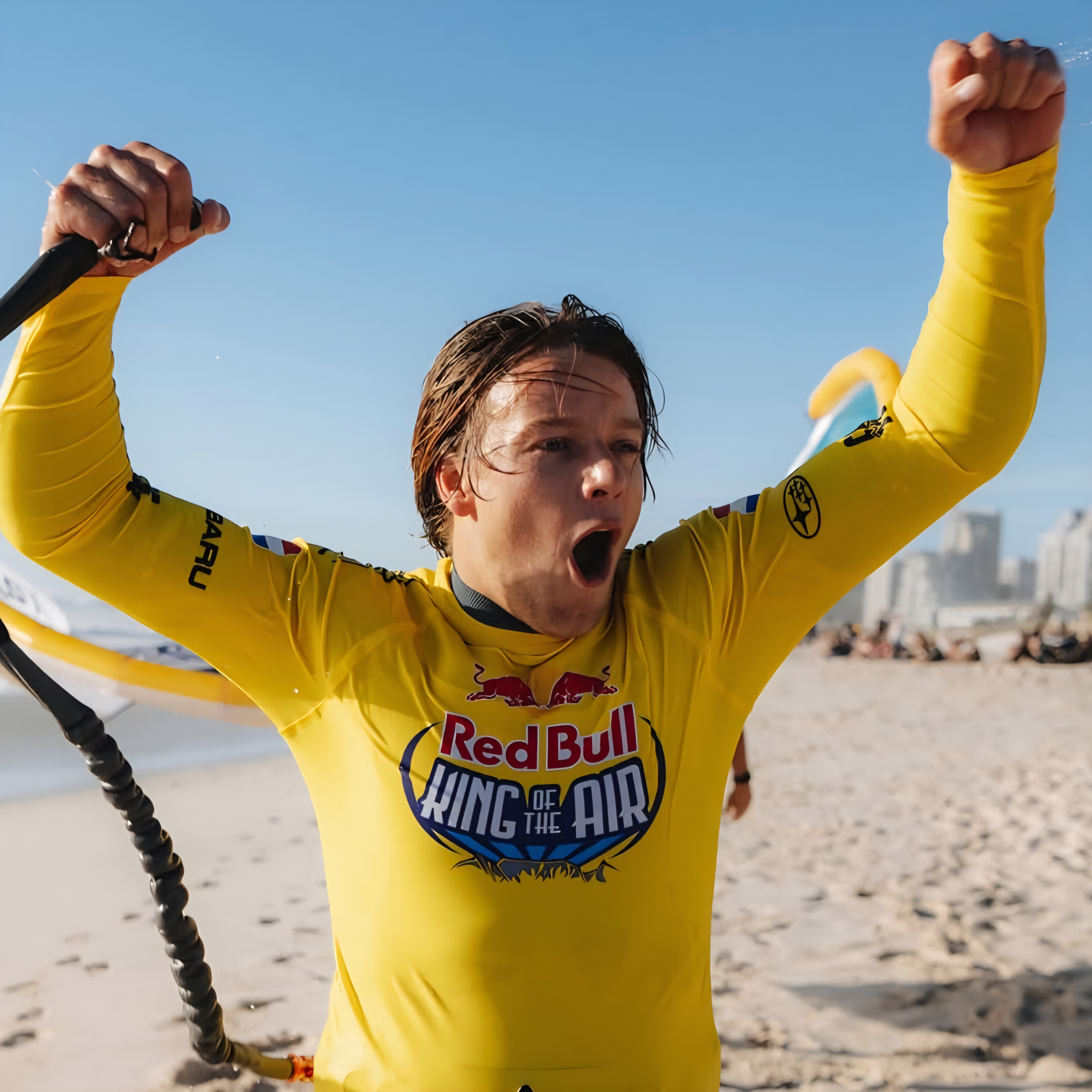
Kitesurf365
Stijn Mul | Episode # 403
00:27:01
On today's podcast, I'm joined by Sijn Mul. Stino has been amazing in fantastic form and has recently joined Harlem Kiteboarding. This has been one of the major signings of the year, and he is a significant addition to the Harlem team. ...
Loading summary
Transcript64 lines
- [00:01]
A
Welcome to the kitesurf 365 podcast.
- [00:04]
B
Welcome back to the show. I hope you all had a great weekend. On today's episode, I'm joined by Steinmull AKA Steno. Stino's been in amazing form this year and recently joined Haarlem kiteboarding. This has been one of the major signings of the year and he's a significant addition to the Harlem family. Don't forget to follow me at Kite Surf365 for all the latest episodes. Ladies and gentlemen, Stein Mul Stino. Good to see you, man. How's things going?
- [00:39]
A
Yeah, great. Great. Yeah. Big news last week.
- [00:43]
B
Yeah, I was surprised. Yeah, mate, I mean, congratulations, dude. Was that. Was that a big decision?
- [00:50]
A
Yeah, of course. I mean, for. For me, leaving Cabrina after three years was quite a big step to take. We had a good contract, we had a good partnership, but for me, I was looking for a bit more even. So that's why the Harlem. Well, I was in contact with Harlem anyway already for a few years because I am from Blumenau, which is a village next to Harlem. And there, that is how I met all the guys through the kite surf shop. And we've been always kiting together and I know the owner, so we've been always chatting about like, hey, it would be nice to ride together or do something together. And after a few years I thought like, maybe put those promises into actions and that's what happened.
- [01:39]
B
You know, normally, Stino people fall out of love with their gear. You know, they can't connect, they're struggling in competitions, they can't sort of get the rhythm going. But, mate, if I look back at your last four results, you went grand canary, you made the final. Kota, you made semi final. I mean, every year you're getting pakota lords of tram. You made the final Red bull qualifier. Made the final. I mean, that doesn't sound like a guy who's not connected to his gear.
- [02:02]
A
No, exactly. I. I was pretty good connected with my gear, especially the 8 meter. You've probably noticed the 8 meter was the kite that I've worked the most on with Cabrina, together with Pat. So that Alula 8 meter Moto X was really my go to kite. So that was also the kite I was riding every training session, every competition and most of the times. And that, yeah, I really had a good connection with that aid. And now I have the opportunity or the options as well to go ride with the six, which is incredible for double loops, and the seven, which is also incredible. Not that Cabrina doesn't have that. But now with Harlem, there's way more opportunities to learn new tricks, do better with all sort of different kites in one comp. So yeah, maybe that's making it harder for me as well that I have to choose like a kite, like new strategy with different kind of kites. But I feel like that I'm not like really stressing about that. The 8 is still my favorite size. My. Still my go to go to size. So that's still the strategy.
- [03:15]
B
I mean, you are one of the guys who were. Let's just. Let's say this way, you're one of the guys who sort of stayed with the singles, right? I mean, I've seen you doing doubles. I know you can do it. But you were the one who pushed the big powered single loops. I guess you and Jeremy went that sort of direction together. Are you going to dip away from that style? I mean, you have that famous style, right? You know the. The board of kite loop from the fin, the front. Now you bring in that front from the fin. You had a very noticeable style which maybe suited a Lula frame of that kite. Was that something that you considered going across to a Harlem and a brainchild which is very different to what you're flowing?
- [03:54]
A
Well, I think my style will be the same because I really like to do those tricks. And that's also like. I mean it's. The Harlem Peak 8 meter for example, is really comparable. Comparable in how it maneuvers through the sky as the Cabrina 8 meter, for example. I'm quite used already to the Harlem Peak 8. So I have to. I think, I mean my strategy will now be depending on the wind and the wind strength mostly. So if there is 30 knots, I will be riding a 9,35 knots, I will probably switch to the 8th. And then from like every level I will change kites. Wait, I have to show you this. There's coming both. You have to see it, man. Look, it's a tiny boat, dude.
- [04:47]
B
Look at that. That dude looks like he's having the time of his life, mate. I'd like to see that guide in King on King's Day in that boat.
- [04:57]
A
Sorry, sorry, but I.
- [04:58]
B
It's okay.
- [04:59]
A
From tomorrow there is sale in Amsterdam. So that's probably why all the different boats are coming. No, but about my strategy during the competitions I will just decide on the wind what kite I will ride. And I know that there are some comps, for example on flat water where double loops are scoring a bit higher like Tarifa or Lord of Tram. So then I might do like a kite swap after a few of my big tricks. And then of course my new goal is to do the same kind of tricks, but then with the double loop. So the fin board off double loop, laid back, border fin, double loop, boogie fin, double loop.
- [05:40]
B
So yeah, how was the learning curve going over to the peak peaks of 5 strut? You've come off a Lula 3 strut. Was there a bit of learning curve? Did it take some time to get dialed into that kite or you jumped on it? You're like, man, I like it.
- [05:53]
A
So in Tarifa, that was actually the first time where I tried the peak on flat water with a little bit of a kicker coming into the wind. And there I didn't really have to adjust much to my timing or take off, for example, but then I rode the kite in a wave spot, for example, in Grange area. And there it you. I mean if you. You will just notice a bigger difference if the wind or the conditions are shitty. So the better the conditions, the. The easier both kites are to ride and the less differences there are. But I felt like with softer wind or with little kickers or choppy water, I had to change a few things like timing before the takeoff or timing before you loop. I feel like with, with the peak I can wait a little bit longer before I have to loop the kite. But those are like very small differences. But yeah, I had to get used to the kite a little bit. But after I had like a few very nice sessions in Denmark, I can say that I really felt warmed up on the new gear.
- [07:06]
B
How was that Denmark trip? I know a bunch of you rushed up there, maybe didn't get the wind you really wanted, but was that a great opportunity for you to go there and ride on that kite, considering cold Hawaii is just around the corner?
- [07:18]
A
Yeah, exactly. So we've been planning to go to Denmark for a long time because it is actually one of the sickest spots maybe around the world where you have conditions that go crazy like this. So we were heading there with the whole SpaceX squad. So we were with six guys with a cameraman and a photographer. So we had a very good time. We had one good session with I think gust up to 40 knots. So not like the 50 knots that was promised on the forecast. But still with all of the guys, we had an insane time. And that was also a good start for me to really feel comfortable on my new gear. Exactly. So especially with the cold Hawaii games in my back, in the back of my head, that Was a good warming up trip for me to have the new gear on my side.
- [08:12]
B
Mega Loop, Cold Hawaii. They're very similar windows. Is your focus going to be that you're going to be fully ready for the King of the Air, or you think you're going to be ready for these events no matter what? I mean, it's kind of like Casino. You've been making three of the last four finals. If you don't make a final now, people are going to say, oh, what's he done? I mean, that's the natural sort of narrative that's going to come out. Do you feel some pressure on that?
- [08:35]
A
Well, I don't really feel the pressure because for me, still competing is for me to have fun. I mean, for the brands and for the sponsors, it is important to have their athletes inside of the competition. But I mean, content creation is part of my job. Product development is part of my job. I don't know. There are some much more things going on than only the competition. So for me, I feel, of course, a little bit of pressure, but at the moment, I'm not, like, so sort of stressed, like, oh, shit, there's a comp coming up. No, I'm just. If I have a good feeling with my gear, which I have right now, then I'm not very stressing at all, actually. So, of course, King of the Air is the biggest competition that is going to happen this year, hopefully. So the Rebel Megalop Challenge and the cold away games are good warming up. So, yeah, what can I say? Maybe there's more pressure on Harlem than on me, to be honest.
- [09:41]
B
I mean, what. What's it like to be in Harlem with, you know, Lorenzo and Leo and Aaron and. And I mean, there's just. It's a bit of a superstar team now, right? I mean, it's kind of exciting to. To see where this team's going. Have you been. Is there some team rules in there? Are the Casadis getting the pick of the bunch or it's just, hey, here's all the gear, you know, to see what you can do.
- [10:01]
A
No, it is actually some. There are some new things for me. So every Monday we have a team call with all the riders, with Aaron, with the marketing lady. So there's actually a bit of structure inside of the brand. I can really feel the motivation that the whole company has. So the owner, but also all of the other riders, Aaron as well. Like, I can really feel that they're, like, hungry to grow. And that is, I think, the same mentality that I have I'm really motivated to work hard, create unique kind of content also with my, my friends, of course, but also for, for Harlem. So I, I feel like that is a great fit for the two of us and that is also the, the biggest reason why we partnered up.
- [10:49]
B
You've been working with Pat, right? You worked with Pat for three years helping design the kites. Is there an opportunity for you to go and work with Ralph and work and bring some of your experience that you have with Pat over to what you're doing with Ralph? Or is that something potentially for down the line?
- [11:06]
A
I think that is more for down the line because we have been speaking about it. But it's not that I will be like the main guy for testing. That's still going to be Aaron and Ralph. But they said like, yeah, if you're in Cape Town and they're doing a session, they would love to hear your feedback as well. So of course I will help as much as I can to the performing of the kites. But for me that is not the main priority of my partnership with them. For me is like I want to ride good gear, create good videos and do well in competitions. And also I like, I mean the prototyping and stuff, it's a long process and I've done that now for two and a half years with Pat. And also it's nice to just focus on my own riding for now.
- [11:51]
B
I feel like you mentioned SpaceX. I mean, you guys are amazing, you know, content creators and brand guys. I mean, I guess the natural progression is that everyone in SpaceX is going to go to Harlem and you're going to get some awesome, kick ass kites made. Am I jumping the gun here or are you going to give us a little bit of insight to what the future of SpaceX looks like?
- [12:12]
A
Yeah, it is, that is one of the goals of course that I have at the moment. We have a few branded products, so we have a branded Leewa board for example, which the whole team is riding. I'm not riding that because I have the Harlem board. But we have also been working on some new products, but that will be launched very soon and I will be working on getting the whole team to Harlem side of course. But some of the guys, they have their own sort of kind of structure with sponsorships. My Rhines are still riding for north. So yeah, I will do what I can. But a few guys are already like interested in getting a SpaceX Harlem kite. Of course. Yeah, yeah, yeah.
- [13:01]
B
Let's talk about the Mega loop. What's your thoughts on the 18 meter lines? I know you've done some short line stuff. You think this is a positive move for that event to freshen it up and just give it a slightly different look than the other Big Air Big Air products we see around?
- [13:15]
A
Well, I, I, I think it's a very creative way of saying like we want to have it extreme because the shorter your lines are, the more extreme the kite's gonna fly through the air. More power in the loops, maybe a little bit less height. But I feel like that if you ride, for example, on 18 or 16 meter lines, it doesn't like it will impact your height a little bit. But still people are jumping as high as for example, maybe a few years ago. So for the Megaloop, I feel like this is a great move. All the riders are going to be pushed into a new lane to practice their tricks on a new setting. For me as well, it's, I can do all my tricks on 22 meter lines. I've done a few comps in Cape Town, for example, on 12 meter lines and I was pushing some of my tricks over there as well.
- [14:10]
B
I was going to say that high five comp. I, I remember you getting 20 meters, getting 20 meter jumps and you are on 12s. I mean I think Aaron, I think Aaron last year has ridden 16s and 9 meter cuts in competition or 18s and 9. So there is the opportunity to ride a slightly larger kite on the shorter lines. Right? You're sort of trying to counterbalance it.
- [14:29]
A
Yeah, exactly. So I'm not, I still have to decide what, what line length I will ride. So now you have, for example, you can put your 6 on 18 meter lines and still do doubles, put the 8 on 8 meter 18 meter lines and do big singles. But there's more like more ways of tying your bar to your kite with 12 meter lines or even shorter. I feel like Jet is going to ride maybe with even shorter lines and 10 meter. So the whole fleet is going to. Also because this is the first time this event is held, so nobody knows what's scoring good, what's like easy to land. I mean if there's 50 knots of wind and you're riding on 12 meter lines, there's almost no way to take off your board mid air because there's going to be so much power inside of your bar. I mean, I will have to see what my strategy will be. I, I have the feeling that 18 meter lines will suit me the best. But still I have to do some training before the event is going to.
- [15:26]
B
Start, how do you mix up training for that with preparing for cold Hawaii, which is, you know, look, I always tell people forget the word qualifier. I as a Red Bull King qualifier. But cold Hawaii is a. A legitimately a proper comp to win. Right? It's a big comp. How do you mix up riding to 18 meters when preparing for like the cold Hawaii event? Do you do. Do you have like bars set up and you. You chop and change without throughout the session? Is that the best way to do it?
- [15:53]
A
So that's the way to do it. You just have to prepare two bars, for example, with 18 meter lines. The rest of your bars maybe on 22 and maybe one on 12 and just go to a training. Like really plan a training session, ride 30 minutes with this kind of setup, then 30 minutes with that setup. But yeah, all riders, they. Yeah, we all have to order, for example, new line sets. Because 18 meter is not something a regular bar has. So we all have to make sort of custom bars. So at the moment I will put just extensions to my bar to make it up to 18, for example. And yeah, I think that if there are some wind, I will just train with the 18 meter lines. Because I know that with 22 meter lines, it's gonna happen anyway. Or I can do it anyway. But with the shorter lines, it's still hard to know what's gonna like what I can land.
- [16:49]
B
For example, I've heard about the motivation behind Haarlem at the moment and these team meetings. You know, it's all exciting. Is Ralph wary of this 80 meter line length? I mean, I know he's. I know he's aware of it, but has he spoken to you guys about the 80 meter line length, his kites? Because obviously he designs the kites. And you know, the way Ralph is very particular about the boards and the lines and stuff that how it's all written. Has he spoken to you guys about the setup for 18 meters?
- [17:15]
A
I've. In the last meeting, we've requested with Aaron on how to set up the bar. So we will have a meeting very soon on where, for example, to put the splitter on the line length or which bar size even will work the best. So yeah, we. We've been. We will get told by Harlan what will be the best setup. So yeah.
- [17:35]
B
Do you think the 18s takes out doubles though?
- [17:37]
A
No, not more. But I feel like it's the same almost. It will be more aggressive, more radical.
- [17:44]
B
It was funny though, Steno. When I think back to the high five short line, you know, Watching you and Cohen, and I was only watching on the live stream. It was a terrible live stream. I was pretty much watching on people's Instagrams. I mean, it seemed like you two, particularly, you two just took what you were doing on 22s to the shorter lines. Like, I felt like. I always thought, oh, man, the short line guys are going to mop up here. But you guys came down and just basically did what you did anyway. Is that the same?
- [18:10]
A
Exactly. I. Yeah, I think that me and Kohen, we never ride short lines. So that comp, or, like, day one of the comp, I practiced because that day it got canceled. So that was like, I had my bar connected. I was like, okay, maybe now I should train a little bit. And I was starting to train some of the tricks and felt where the power was at. And then I managed to land some of the tricks, indeed. With the fin, for example. So the bortles. And then I think what. What helps is that Cohen and I have experience inside the competition. So we, for example, know. Okay, land three tricks first and then push it. And I feel like the other guys were so excited to show their biggest tricks and that maybe made them crash, for example, in the critical moments.
- [18:58]
B
Yeah, a bit of experience. Yeah.
- [18:59]
A
Yeah.
- [19:00]
B
Well, I'm excited for it. It's going to be. It's going to be super cool. Yeah, it's going to be good. So do you get that feeling with Harlem, like it's a real family? Is that a different feel than what you felt at Cabrinha, which was maybe more corporate?
- [19:11]
A
Yeah, maybe. Yeah. I mean, every brand says, of course, that they are family, but for me, it. With Harman, it even feels more like a family because also, everyone is almost Dutch. So the headquarters of Harlem is 20 minutes away from my house. So last week, I went to pick up some gear, talked to the team manager, Victor, and had a lunch over there with the guys. And that feels more like a family. Yeah. Because you speak the same language. You're literally living in the same country, maybe 20 minutes away from each other. So that helps by saying, yeah, this is called a family. But of course, I still like work, so.
- [19:53]
B
But I mean, Stino, you're the only Dutch rider of the. Of the international riders. Right. The rest of them are. There's no other Dutch riders in the team at the moment, is there?
- [20:00]
A
Yeah. Elsin is Dutch.
- [20:02]
B
Oh, yeah.
- [20:04]
A
Yeah.
- [20:05]
B
On the men's side, International.
- [20:06]
A
The team riders are international. Yeah.
- [20:08]
B
Stina, are you going to stick to the peak? Because I do know, and I have Heard the Casadis talking about mixing between the Thrive and the peak for, for different things, especially for the speed of the, of the three strut for doubles. Is that something you thought about as well? And have you tried both of those kites and can you feel where you can get strengths out of each of them?
- [20:26]
A
Yeah, yeah, yeah, exactly. So I have a very good setup right now. I have the six and the seventh thrive for the double loops. So I ordered also the 7 because I feel like the 7 will double loop. I forgot about the 5 because I think it has to be like 70 knots if I will ride the 5. But the 6 and the 7 are for the double loop. So that's the Harlem Thrive. Then I have another 7 of the peak and another. And I like 7, 8, 9 peak for the single loops. So I can, I can swap between inside of one heat between the six and the eight, for example. So the six will would mean double loops and the eight single loops, of course. So that's my strategy. That, that was also one of the big reasons because I've tried the Harlem Thrive and it was so easy to double loop that I felt like, okay, this will make me progress a bit faster with the double loops and maybe that will mean that I can put them or perform them inside of the. The competitions as well.
- [21:28]
B
Do you feel like the. The double loop game is not as popular now? And I kind of feel it doesn't get scored as much. The only, the only reason why I say that is, you know, when we're all at Lords of Tram, you know, you're riding the double loops, especially with the speed of that thrive are so fast, it's almost looks safe. I mean, I know that sounds kind of crazy to maybe the layman, but when you look at those big single loops, you're getting that huge free form and it's just like, you know, the crowd gets into it. Do you feel like the sport is in that direction a tiny bit?
- [22:02]
A
Yeah, I feel like. And I feel like that, that I mean exactly what you're saying. So the double loops are looking like less powered, for example. Not there aren't less powered, but it looks like it from, from the side. So that's maybe also why the scores are a bit lower. But I for sure when the wind is like 50 knots. So then you can really go big on the seven for single loops. But you can also go really big on the seven for double loops or on a six for double loops. I mean normally the, if, if people change to a smaller kite, that meant that they were jumping lower as well. But nowadays the kites are so well developed that on the 6 meter you reach to 20 meters as well. Really easy. And then the only thing that is missing is a little bit of power because the kite is just spinning so fast. But if, if the riders can perform like a really highly powered double loop. For example, if you pulled a bit earlier or if you really go big and you send it low, then I think we'll have the same reaction towards a single, big, single loop with a freefall.
- [23:08]
B
Do you notice the difference in the vertical takeoff between A, the thrive, B, the peak and lastly the motor design works. Do you notice the vertical takeoff in the difference between all three of those?
- [23:19]
A
Yes, of course there is a difference because it's mostly about the timing. If you have the timing right, all of the kites will have a vertical takeoff. But it will be easier with the three strut kite than with the five stroke guide because it's just faster to position in the sky. The Alula is maybe a bit more stiff, so there's a different or faster reaction. That's why I pump hard my kites very hard nowadays as well. That helps a lot. But yeah, there, the, the, the vertical takeoff on the peak, if you have a right take up, it's just insane. It's like two fingers in the nose and you will go up. Yeah.
- [23:59]
B
What, what do you pump your kites to? What's your psi?
- [24:02]
A
Yeah, so the meter says 12, so that's, that's hard. I don't, I, I don't know if that's recommended but I have the feeling that like you can do it a bit less psi, but I have the feeling that the more strong it is the, the better. I did that with Alula as well.
- [24:24]
B
Yeah, that's the same psi between Alula and Brainchild. You're putting the same pressure in.
- [24:29]
A
Yeah.
- [24:30]
B
Do you hand pump that or you got one of those fancy new pumps?
- [24:32]
A
You just run 12 and.
- [24:35]
B
What is that stuff? They're trying to put those. I never trusted those electronic ones. You've got a hand pump, right? It's a good warm up.
- [24:41]
A
I've. Yeah, you have to warm up. Of course you have to warm up the knees, the, the arms. I mean everything you warm up. But the hand pump is, I mean if it's precise then it's also maybe nice for pros to use because then you just know perfectly how many psi there is in your kite. So it has some pros and some cons. I mean it looks a little bit stupid. If you just. It looks a little bit lazy, maybe even, I mean, it's just like, okay. But I know that some of the designers, they use the electrical pump as well to just make sure if you test a kite, it has the same PSI every time.
- [25:19]
B
Well, Stino, I wanted to get you on quickly to say congratulations on joining Haarlem. We were super happy when we found out. I know on the podcast we played it up a little bit like we didn't know what was going on. We were like pitching with these other teams. But mate was an awesome decision. I love what Haarlem's doing there. You know, as I say, to have a Dutch rider in a Dutch team is a great idea. Mate, good luck. You've been on unbelievable form this last year. I mean, I'll tell you what, on Fantasy Mate, you've been picking me up points left, right and center. So I hope you can continue doing that. Good luck for Cold Hawaii, Megaloop and King of the Air. And I'll see you in Europe very soon. Dude.
- [25:53]
A
Yeah, nice. That, that sounds fun. Hope to see you soon. Thank you so much.
- [25:57]
B
Hey guys, I hope you enjoyed that episode. Don't forget, if you want to support the show, the easiest way is to do it for free. Rate us on Spotify. I'm loving those five star reviews. Keep them coming in. Share the episodes in your local WhatsApp or kite surfing groups or just simply tell your mates. I Every week I talk a lot about Portrait Kite, but let me tell you a little bit more about it. We're an independent media company that creates digital media for you. The dream is to be fully independent from all kitesurfing brands and that's gonna allow us to create digital content that shares and documents and covers the sport the way we believe it should. If you wanna support us or believe in what we do, go check out portraitkite.com and have a look around. It's something that we're super proud of. The podcast, of course, will always be free, so if you only wanna enjoy that, that' if you want to find more episodes just like this one, use the search button@kiteserve365.com to search your favorite writer or topic. And we'll see you next Thursday for the Megapod.