← Kitesurf365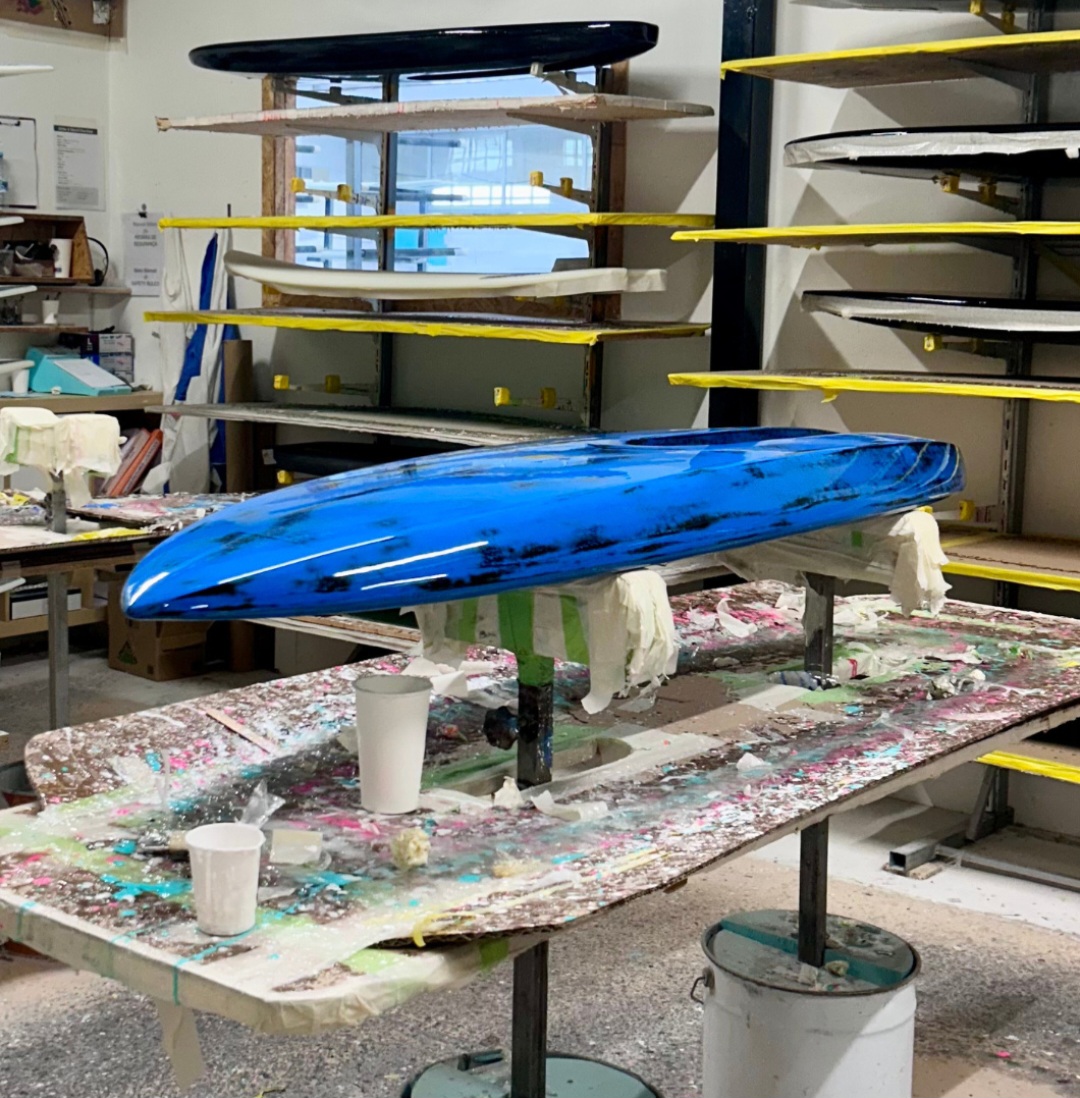
Kitesurf365
TechCast #23 Directional Boards | Episode # 401
00:43:34
This is part three of "Where Your Gear Is Made". DK breaks down the construction process for all your favourite directional boards. Cobra Factory Tour: WOO Sports: Support the show: ...
Loading summary
Transcript40 lines
- [00:01]
A
Welcome to the kitesurf 365 podcast.
- [00:04]
B
Welcome back to the show. I hope you all had a great weekend. DK returns today for another TechCast. This is part three of where your gear is made and today we cover directionals. Don't forget to follow me at kaiserv365 for all the latest episodes. Ladies and gentlemen, Dave K.
- [00:29]
A
All right.
- [00:29]
B
Dk, we are back for part three of where your board is made. We've done twin tips, kites first and.
- [00:36]
A
Now we've done twin tips and now it's on to directionals. So which is pretty cool. I did not actually think that this, that this would blow out to a three part series when I started sketching it out.
- [00:48]
B
When you sent me the notes, you're like, this is, I was like, this is one episode. This is going to be bigger. This is going to be too long.
- [00:54]
A
It's all good. Though I will say for this one, I am the least involved now with these type of boards and this technology than I am with everything else that we've been talking, talking about. I was very hands on, involved with all of the what we're calling directional boards or high volume board production when I was product manager at Cabrina. I was involved a little bit with this when I was a designer at Air Rush. But Clinton Filon, he was, it's, this was his product range and so he, he managed this day to day with, with Air Rush and then we don't with Lacuna and actually my current client, third party clients, I'm not really involved in this day to day. So this side of things is a little bit more of a. Yeah, a little less hands on and a little bit probably older information, but it's probably still relevant to the listeners and still of interest.
- [01:58]
B
Well, let's get straight to it. You know, interestingly, when we look back at those last two podcasts, you know the kites were made in one area. The boards are slightly different. Does directionals sort of fall into one of those two groups or are they different factories again?
- [02:12]
A
Yeah, they're mostly different factories again and actually different like the end in different parts of the world. And this is part of the logistics nightmare or the logistics problem when it comes to being a kite or wing or foil brand is that your, there isn't one location where everything is being made. It tends to be the best supplier for a particular technology tends to be in quite a different global location to where your best supplier for another technology is. And that's as part of being a brand. It's Selecting, you need to select where that equipment's being made. Not just on sort of the cost that you can get that product for, but also the cost of getting that product to your end client. And some of what we're going to be discussing in this techcast actually relates very much to the sort of logistics costs of the product in recent years has seen quite a dramatic shift in the, the location of where those products are being made. So yeah, it's, it's, it is different. It's different parts of the world. It's different factories. Give or take that. There's, there's one here. Oh well, the first one we're going to talk about also does some twin tip products but for the most part it's different factories in different parts of the world.
- [03:48]
B
Before we get into it, especially when it comes to directionals, we mainly talk about surfboards. Right. And that type of equipment.
- [03:56]
A
Yeah, Foil surfboards and like and foil boards. There's kite foiling still a thing though. Winging is, has sort of taken most of that. Yeah. Most of the people who were kite foiling are probably now winging. But wing boards and kite surfboards tend to be made in the same locations.
- [04:19]
B
But there must be thousands and thousands and thousands of surfboard makers out there and surfboard designers and independent designers. Why doesn't or why don't the brands tap into the bigger surfboard makers? Or are they. I know the construction is completely different because obviously it needs to be a lot stronger. And is there any brands tapping into where surfboards are made?
- [04:41]
A
Oh yeah, completely. And in fact that's so what we're talking about here, where the differentiation between this and these products, the sort of surfboard foil board products and what we were discussing in the last techcast, which was the twin tip products, the sort of underlying technology is we're dealing with a lightweight foam core rather than a, a sort of high density or higher density harder wood core. So, so twin tips up and that the, this, there's. Yeah, that, there's that predominantly and sort of process difference is this, this lighter weight foam core and then then typically these larger, these boards that are using a lighter weight foam core have a different finishing that they tend to be. They tend to have wrapped rails, maybe painted, maybe sanded and polished. But it's a different construction technique and as you say, that's very much related to traditional surfboard construction. Traditional. Yeah, I'm. It's very interesting. We could go off on a very long tangent with me in my opinion of traditional surfboard construction. And even the, the attitude of the surfboard industry to their materials choice and their construction. But for the most part, traditional surfboard construction I describe as disposable. So the surfboard industry is basically built on the concept of the boards are designed to have a very short lifespan and the surfboard industry gets away with that because for the most part if you go surfing for two hours, you're very lucky. If you've spent two minutes actually standing on that board riding it, you spend the other 1 hour and 58 minutes paddling around trying to find a wave to catch. And so you're sort of the total number of rideable hours that you get on a surfboard over its lifespan is pretty low. In fact, it's to the point where like a sort of off the shelf, I'm talking polyurethane core with a, with a polyester laminate surfboard construction. Your average kite can, or your average surf kiter can grab one of those off the shelf. And for as long as they choose correctly they'll be able to go out and ride that board with a kite in waves and have a great time on it. But they're going to put in one or two sessions. They're going to put all of the expected lifespan of that board's riding lifespan on that board in that, in that sort of four hours of. Four hours of kiting. And yeah, so yes, the kite industry has looked. Oh and does still actually gears boards out of the traditional surfboard shaping industry. But we tend to, if we're doing that, what we tend to do is bring in other. We either need the, we need to sort of greatly increase the strength of the laminate on those boards or we've got to bring in some other technology which isn't like, isn't the stock technology or stock process that's going through that factory. So there's problems there. So yeah, there are some, some kite brands, not so much these days, but definitely when, when surfing with kites was kind of the premier discipline in our, in our industry, there were quite a number of brands who would have sort of very traditional hand or semi hand shaped polyurethane polyester surfboards in their lineup. That's pretty rare these days. They're a bit of a, they can be a bit of a warranty nightmare.
- [08:56]
B
So are the top surfboards still hand shaped?
- [09:01]
A
This again, we could come off, I.
- [09:03]
B
Mean to some, let's say, let's, let's say to some extent. Right. I mean I, I just don't think that, you know, let's say the directionals in our sport are ever been hand shaped?
- [09:11]
A
Right.
- [09:12]
B
They're just coming out of CNC machines and then going into the next phase.
- [09:16]
A
So, so this again, this brings up a very interesting, very interesting philosophy. My surfboard shaper, this is probably the very, a very good reference to this story. Okay, so my surfboard shaper is a good friend of mine called Roger Hall. Roger owns a surfboard brand from my hometown in New Zealand called Surfline Surfboards. Though I think in this day and age he actually just brands all of his boards with his name. So the Roger Halt surfboards. So Roger, I first met Roger when I was probably 11 years old. He's. So we're coming up on him and I have known each other for like 40 years now. So Roger is the, for the longest time I would describe Roger as the quintessential old school surfboard shaper. And I'd also describe him as one of the world's most avant garde surfboard shapers. He, he is willing to explore different designs that other people probably wouldn't even think of. But for the first, for the first 30 odd years that I knew Roger, he hand shaped his boards and saying hand shaped, he also had his shapes were, had some amount of repeatability in that. He had jigs that allowed him to set rockers. He has a process where he would put in, put in his own stringers. There was a lot of. He would do his best to do the sort of bulk of the shaping repeatably and then hand finish. But it was for all intents and purpose what you would describe as a hand shaped board. In the late 2000s, sue and I shifted our kiteboard manufacturing facility to Rurakaka. And there's a very old podcast that we did with you discussing all the history of our business. But we shifted our from Christ, we shifted our business from Christchurch to Ruakaka and actually set ourselves up on the same street as Roger's facility. So this is probably 2006 and I think in 2008 our business bought our, bought its first CNC machine. Now Roger, that being the hand shaper and especially in the 2000s, the surfboard industry had a fear of CNC machines, that there was going to be some loss of the CNC machines were going to the art. We're going to kill the art of surfboard shaping. Now if you know Roger hall and you know the type of boards that he does and the reputation he has in his industry, he would, he would have been almost front of the ranks of traditional surfboard shapers with a fear of CNC machining. Like removing the artisan side of surfboard shaping. Absolutely. But he happened to have the. We were in the situation where our business, our kiteboard building business bought its own CNC machine, and we installed that into our factory. And we were a few hundred meters walk from his factory, and he could see the process. And Roger and I could sit down and we could have long discussions about how I was approaching that problem. And I had to teach myself 3D CAD to actually be able to create board designs and then we could start making boards. And there is a thing with CNC machining in the surfboard industry. At the time, CNC machining was about, we can shape a board in eight minutes. We can shape a board in eight minutes. We can make boards as. We can punch out as many boards as we like because we can shape a board in eight minutes. That was kind of like the selling point of CNC machines. The reason DK kite boards got a CNC machine was not to make boards faster. It was to be able to make boards more accurately and to be able to record what we were making. And once we had something that was really. Oh. And then do very, very known changes, and then once we had tuned a board to exactly how we wanted it, we could make that one again. It wasn't about speed. Yeah. The machine was not about making faster. It was about being more accurate and more incremental repetition. Well, repetition, but incremental change. So we can do exactly the same thing as last time, but change it by half a millimeter. Like, that's the power of CNC machining. Now, Roger saw this, and it changed his perception entirely on CNC machining. Now, this is a guy that's the most avant garde surfboard shaper, traditional hand shaper. He could see the value in it. And he invested in CNC shaping not to make a board in eight minutes, but to make the same board as last time with a 1 millimeter change. And so that. That is where the power of CNC machining can come in. Yes. Traditional surfboard shapers. Or there is still a thing that says you lose some of the art. I don't believe you lose the art. What you gain, you can still be artistic. And Roger hall is artistic now. His tools allow him to take the previous design and move it forward by an incremental amount or take the previous design and make it again. It's. It's a change in the whole. Yeah, CNC machining. The end of the day, it doesn't change it doesn't change the. If you approach it in the right way, it doesn't remove the art of making a board. It makes you a more powerful board shaper. So, yeah, that's a bit of an offshoot, but it is, it is, it is a really good question when it comes to these style of boards.
- [15:56]
B
Let's get straight to it. We're going to go back to Taiwan Playmaker. We've heard about Playmaker already. They've been making a bunch of boards over the years. What's their role in making directionals?
- [16:06]
A
Well, yeah, Playmaker are actually really fantastic here. So in their previous techcast, we talked about how Playmaker shifted from being a making rackets to making boards. Thanks to, thanks to being given a technology by Herb o' Brien of doing this expanded polyurethane core with plastic outer skins. Well, over the history of that company, they looked at directional boards. Now directional boards have an expanded polystyrene core. And so they looked at their process and went, well, there's no reason why we can't. If we're expanding polyurethane foam to make a core, there's no reason why we can't expand polystyrene to make a core. So they have a process which they, using machined aluminium molds and steam, they can actually create their own expanded polystyrene core, which is much lighter than both wood and polyurethane. And it is the same core that's used in all these other factories, except the last one that we're going to talk about. But that expanded polystyrene, they take that core and then they also have a very thin version of the plastic top and bottom sheet that's used on the twin tips. And they actually thermally form that into molds and then compress it like, like they would a, like they would a wakeboard and then have an interesting finishing process to actually finish the rails off. And now I'm a really big fan of that process. It's kind of like, it's this perfect mix for me between what I love about my, about twin tip process and compression molding and the printing processes that we can do on the outer skins when it comes to twin tips, but with a much, with a much higher volume, lighter weight core and also makes a really durable board. And, and notably F1 and Nash have, have used that process for, for quite a. Yeah, quite a range of their, their directional boards.
- [18:21]
B
F1's had some awesome directional boards through their time. Right. So the, the bamboo metoos and all types of Stuff They've had a whole bunch of cool stuff come out of F1 when it comes to directional especially because I think because of MeToo.
- [18:32]
A
Yeah yeah. Though those this process is not generally used for the high performance end of the range. So you can usually spot the. These. These Playmaker Taiwan boards are usually the more usually the the better value for money more robust slightly heavier end of the market rather than the customs like the the MeToo board very likely to is made in one of the other factories that we're going to talk about in a slightly different process. Yeah I don't think either of those companies that are either Nash or F1 use this as their across all of their boards but they do actually. But they use it specifically because well one they're also making twin tips in that factory. So it makes sense that they can make directionals there and ship them together with the other boards. But it's a good value for money process. It produces a board with a really good graphic process graphic capabilities at a really good price. So yeah. So that's Playmaker is the. That's the only only company on this list that I know that makes both that is going to appear on both last or last techcast list. And this one.
- [19:50]
B
Okay, let's go back to China because there's the Hey1 factory there actually not that many factories in China actually there's not that many factories at all doing these type of these type of products. But what's so good about hey one.
- [20:05]
A
There'S a lot of factories doing these products specifically for foiling and wing foiling and the surfboard industry. So surfboards especially big like big box store can get a hold of relatively low cost surfboards out of China that are done in this the process of and what we're going to discuss with Hey1 is a machined core. There are probably a very large number of factories doing that process. They just tend to not be of a quality and a strength that's suitable for the kite industry. And the kite industry is actually this is a very small part of your average kite brand until you've sort of there's probably one kite surfboard sold for every 10 twin tips is how it normally runs. So the kite industry tends to not be actually so spread out with this sort of stuff because we're just not looking it's sort of quality and service is probably more important than trying to get the lowest price because we just don't make enough to actually get the lowest price. So there's probably a lot of factories but the Headline act, at least for the kiting industry in, in China is the Heiwan factory in Zhuhai, which is the, the other side of the, the Pearl River Delta from, from Hong Kong. So the, the new bridge across to the, across the Pearl River Delta from Hong Kong to Zhuhai would be how you'd get to this, this one these days I used to actually to get there I used to have to take the ferry across to Macau and then go into China from that side. But yeah, they are. Yeah. So hey one are a specialist in CNC machined EPS cores. So we know it's a EPS that's expanded polystyrene and that's the all the listeners will understand what EPS foam is. It's the beaded white foam that's typically used like packaging around refrigerators and televisions. And basically anything that gets shipped needs a protective foam foam around it. But specifically the beaded foam and EPS is made from little plastic beads that get heated up usually with steam and allowed to expand inside a mold. Now for a company like hey one what they do is they buy big blocks of foam that's pre expanded and then they cut that down, put it onto a CNC machine machine, the top and the bottom and that produces the coin core. And then they've got a lamination process, typically vacuum bagged, maybe for higher volume stuff. They'll do, they'll make some molds and press it, but usually vacuum bagged and then there's a lot of hand finishing on top of that. So filler, sanding, primer sanding, painting, sanding graphics, clear coat, maybe polishing or maybe some sanding, then some polishing, but a lot of sanding. So actually I think the owner of hey one would laugh if I said he owns a sanding factory because that's probably 90% of the work that goes on in that style of factory tends to be sanding of some sort. The core will be CNC machined, but then it'll be sanded before it's laminated. After it's laminated, there'll be some sanding before it gets some filler on it. After the filler gets put on it, there'll be some sanding and then they'll get. Yeah, it's just a lot of sanding. So but they, but hey one probably make for a majority of kiteboard brands or at least, at least have done at some point in the past. So I, yeah, I used to go there because we were looking at using them for Cabrinha's production. I know, yeah, I know a bunch of other brands that are either in that factory now or have been through that factory. They're a reasonable price, reasonable quality and they have the capacity to make boards for our industry.
- [24:29]
B
Well, we're going to probably go to the two most well known factories that I think most people have a general idea. The first one's in Bangkok and Thailand called Cobra. Now Cobra has fingers into many parts of the kiteboarding industry. Right. Including brands.
- [24:46]
A
Yeah. So yeah, Cobra is, Cobra is massive. And so. And Cobra is not only massive, but it's been around a very long time. Actually originally started in the late 70s as a. In making windsurfing boards for the local Thailand market. So they, I think they even had the, a license to the original windsurfer, but they were producing those boards in Bangkok. Selling to, selling to the local, the local Thai market that expanded in the 80s to being a British producing yeah, quite a large number of boards for their own brand, but also they started to contract manufacture boards for, for other companies. And then at that time in the late 80s, the windsurfing industry was mostly built around a, a, an oversized version of the traditional wind wakeboard construction technique. So what we talked about in the last Techcast, which was the plastic top and bottom skins with an expanded polyurethane core pressed in big aluminium molds. That was for at least through the later half of the 80s. That was the, and the early 90s, that was the, the most windsurfing boards that were sold were built basically like a large wakeboard and they're very easy to spot. They've got a pinched seam on the outside and this hard plastic skin. But the windsurfing industry was moving forward to much more high performance equipment than that process could allow. And especially the, with windsurfing boards there was the concept of making a sandwich where that. When windsurfing is talking about sandwich construction, what they're talking about is an expanded polystyrene core. And the very high end. Well, expanded polystyrene core with a very specific type of lamination on the outside of it. And towards the end of the 80s, all of the custom board builders, so everyone who was making high performance boards for racing wave riding, these guys were getting into making sandwich boards where they would take a very, very low density expanded polystyrene core hand hand shape it because it wasn't really any machine shaping at that time. And then they would do a multiple lamination scheme where they would first wrap the board in a very thin fiberglass or carbon fiber laminate and then wrap a 3 millimeter layer of very high density PVC foam over top of that first fiberglass or carbon laminate and then finally finish the outside of that board in another layer of fiberglass or carbon or a mixture. So what you had was this very, very lightweight foam core with a sandwich around the outside of it that was fiber, foam, fiber, with that interior foam being very strong, very high density. And that was, that was called, or colloquially was called custom construction or custom sandwich construction in the surfboard industry. Sorry, the windsurfing industry and the windsurfing industry wanted to ramp that up as well. They wanted to be able to supply to, to their customers the same performance that you would get out of or same lightweight high performance boards that were coming out of custom board builders with the sandwich construction, but in a production quantity, a production delivery. And Cobra was the company that stepped up to the mark when it came to production of like high volume production of custom sandwich construction. And this ramped up I believe, in the early 90s. And what they, what they were able to do was sort of create this system where they could mold their cores, wrap them in these layers of foam and foam and fiber and do the finishing in a. And because it was a molded process, they were able to produce the same board over and over again. And being the first company in Asia that could do this, in fact probably the first company globally that could do this in volume, the windsurfing industry just flooded to Cobra. And since that time there are now other players in that industry, but Cobra is still the dominant player when it comes to, globally when it comes to sandwich construction in windsurfing. Sup? And if you, that construction is also like the high performance construction when it comes to kite surfboards. So Cobra, Cobra is where probably where if a company is looking for the best quality, highest performance they can get out of an Asian factory, they will go to Cobra to get their, their kite surfboards and their kite foil boards made.
- [30:31]
B
Is there newer constructions coming out now that have broken away from what Cobra can do?
- [30:37]
A
Yeah, there is, yeah. What I must say, I, I need to, if we're talking about construction, there is, there is one part of Cobra's construction which is, which is absolutely unique. Actually, I've got a little bit of a side story here as well. So I, I've been to Cobra many times. They were, they were a significant supplier to, to many brands that I've worked with. And every time I've been to Cobra, I've been shuffled into a little office Just off the side of reception and that's where I stay. I've never been out onto the factory floor in Cobra and for very good reason. I wouldn't let me out onto my factory, out onto the factory floor at Cobra because they have been incredibly secretive of their process and incredibly protective of their process. They're, they're and what they're, they're their technology. The thing that has always had Cobra more attractive than than any of their competitors is Cobra have a technology where they can expand EPS foam into molds made of composite so made of fiberglass and resin rather than being made machined from metal, machined from aluminium. It's traditionally the only way you could get a molded EPS core was to actually invest in tens of thousands, if not hundreds of thousands of dollars of getting a, a set of matching metal molds made that the foam beads could get expanded inside of. At some point in Cobra's past they had some clever person working with them that worked out how to, how to expand the polystyrene foam inside of low cost, quick to make composite molds. And as far as I know, Cobra to this day are still the only company that has that, that process but that ability to make their own foam to net size. So it doesn't need any machining, doesn't need any sanding. It basically comes out of the mold with a minimal amount of finishing and goes straight into lamination. That is a very, that, that is a very unique part of their process and has been completely secret. We've known it's existed but had no idea at how that works until only a couple of months ago. And there is actually a video now on YouTube that, that walks through the. That's basically a walkthrough of the Cobra factory including some very, very in depth technical. A very in depth technical look on, on how they're or at least the not sort of like this is the machine settings. But definitely a very, a very interesting video showing one of their cores being expanded in a composite mold. Absolutely fascinating. Like I said, I never thought in my lifetime I would ever see that knowing what Cobra, how Cobra have not even allowed me onto the factory floor. But now it's a video on YouTube.
- [33:59]
B
I'll put that video in the show notes because I think that'd be super cool for people to check out and also reference back to this podcast.
- [34:06]
A
Oh absolutely. That's a very, very cool process and, and just just amazing to see especially with, with having so much like I've, I've known of the Cobra factory long Before I even made my first kite surfboard. It's like they are. They've been like this. They were, yeah, they're like this cornerstone of the windsurfing industry for. For decades and decades. So, yeah, very cool to watch. So, yeah, that's the Cobra factory. They've had that technology forever and they do a really good job at that. Again, they tend to be a quality supplier rather than the cheapest supplier. But if we come back to what we said right at the very beginning of this techcast about, hey, there are surfboard shapers all over the world and also the fact that there is manufacturing all over the world, we can't talk about directional boards in the kite boarding industry and not talk about the influence and impact that Apple Tree Surfboards has had on our industry. Apple Tree got started in a garage in Holland, but is now a significant. A significant facility in Portugal. And you asked about technology. Apple trees technology starts with the foam. So everything we've talked about up until now when it comes to directional boards has been about expanded polystyrene. So the beaded foam, so little plastic beads heated with steam and popped like popcorn inside a mould to get the shape or expand it into a block and then machined down. Apple Tree use a different style of polystyrene called extruded polystyrene. Now, this is the same plastic, but instead of being expanded as little beads, it's extruded as a block. Well, it's actually extruded as just a continuous process, but it's typically, typically sort of 600 millimeters wide, 100 millimeters high, and just continually comes out of an extrusion machine and just cut off to length. Now, that foam has a distinct advantage over expanded polystyrene. And that is expanded polystyrene can absorb water. The beads themselves are watertight, but the space, the beads between the beads are gaps and water can get in. So if you damage an EPS cord board, it can suck in water and get really heavy and be very difficult to repair. Extruded polystyrene does not have the gaps, it isn't made from beads and it cannot absorb water. So it's significantly significant technical advantage over expanded polystyrene. It is more difficult to work with. And what Apple Tree have done is they've developed an entire process based around the superior characteristics of this foam and working out all of those, all of those process difficulties and turned that into a production process. So they, firstly, they use a really interesting foam foam and secondly, they use a really interesting lamination technique where they vacuum and fuse the, the lamination onto the board. And with vacuum infusion, what you do is you lay all of the, all of the cloth, all of the carbon or fiberglass reinforcement onto the core of the board dry, usually tacked down with some, like some spray adhesive. But everything's loaded onto the board completely dry. You then put it into a vacuum bag and you allow the vacuum to pull the resin through the laminate. And this, this produces a, this is a really interesting process. I really enjoy it. I've made a few boards in this process myself. What it, what it does is you, you laminate the top and the bottom of the board all in one hit. There isn't, it isn't a process of sort of laminate one side, let that cure and then laminate the other. So all of your laps across your rails are all chemically fused together. Very good for strength. But you also get a very, very good resin ratio to the amount of reinforcement. Basically it can only create the perfect ratio between the resin and the reinforcement which makes the board very light, makes the board very strong. It also is void free so you don't have pinholes. It's much easier to finish. Amazing process. And really Apple Tree were the first company to commercialize that and now quite a number of brands are. Well, Apple Tree make and sell their boards under their own brand, but their factory also produces boards under this process. A number of different kite brands. Basically. If you, if you see your boards made in Portugal, it's most likely come out of the factory.
- [39:34]
B
Does that process leave a good finish? Let, let me use sort of fiberglass, fiberglassing as a, as a sort of reference here. You know, when you're doing fiberglass, often you'll put a peel ply on the top and that peel ply takes off, you know, 90% of the finishing work. Right. Is it very much the same when it comes out of the, out of the vacuum bag? Has a very, very smooth finish as well.
- [40:00]
A
It's, it's not ready to go. Like the, the only one of these processes where it's like it gets a perfect finish out of the lamination. Almost perfect finish is the playmakers process out of their, out of their aluminium molds with their plastic skin. The Apple Tree boards still need finishing, but they, they. Yeah, if you go and look at their videos on, on their YouTube, they, they have perfected some techniques that have like, that are relatively low labor but give very unique finishes and really nice, and a really nice finish to the board without too much Sanding. So is it that the. The team at Apple Tree have developed a process that's unique to them but works exceptionally well. It doesn't know you're not getting a perfect finish out of the vacuum bag, but I would say like well, vacuum infusion compared to vacuum bagging. I'd say there's, there is less finishing needed out of a vacuum infused board than a vacuum bagged board. But it's, it's still, it's. There's still finishing to be done compared to a. A molded process.
- [41:16]
B
Well dk, I mean again after I finish these I always, I always sit back and think w. How am I going to have to. Well, I always listen to again because I do the edit. But yeah, look man. Incredible. I think we'll have a break from the where to stuff is made before next techcast. We have had a few questions that have come in that we should probably address and we can probably do a bit of an AMA on that because I think I've tagged you in some stuff and I've got a collection of. Of questions that we can probably answer for next time. But dk, thanks again for all the effort and all your time to put into these tec. They're proven to be super popular. I'm glad you guys are enjoying them and you know, keep the questions coming in. If you have anything you can drop it in quite forum. You can send it to us direct through our Instagrams and yeah, I'll see you next month dk.
- [41:59]
A
Oh thanks very much Adrian. Thanks very much to the listeners and I think yeah, an AMA for next month I think would be excellent. Like there's tariff stuff that's come back up swear stuff's been made. There's yeah kites boards, the whole lot if anyone.
- [42:15]
B
Factory updates.
- [42:16]
A
Factory updates. Any particular questions about like processes, how any of this stuff is made? Ah this. There's been new kites released with. With new printing processes. Maybe we should if there was any questions about that please fire them through. Like I said, either kite forums are really good one or track Adrian or I down on our Instagrams. We will stack up a list of questions and yeah maybe we can and see if we can answer them next month.
- [42:48]
B
Thanks mate.
- [42:49]
A
Thanks guys.
- [42:50]
B
Hey guys, I hope you enjoyed that episode. Don't forget if you want to support the show the easiest way is to support us for free. Rate us on Spotify. I'm loving those five star reviews. Over a thousand five star reviews. It's crazy. Don't forget to share the episodes in your local WhatsApp or kite surfing groups or or just tell your mates on the beach. That helps keep the momentum of the podcast going. If you want to support us more regularly, head over to portraitkite.com and check out all the madness there. Episode 4 of Road to Pro is out, so follow the journey of Jetto, Jason and Pete and check out what's going on there. If you want to find more episodes just like this one, use the search button@kitesurf365.com to search your favorite rider or topic, and we'll see you this Thursday for the Megapod.