Loading summary
Transcript44 lines
- [00:01]
A
Welcome to the kitesurf 365 podcast.
- [00:04]
B
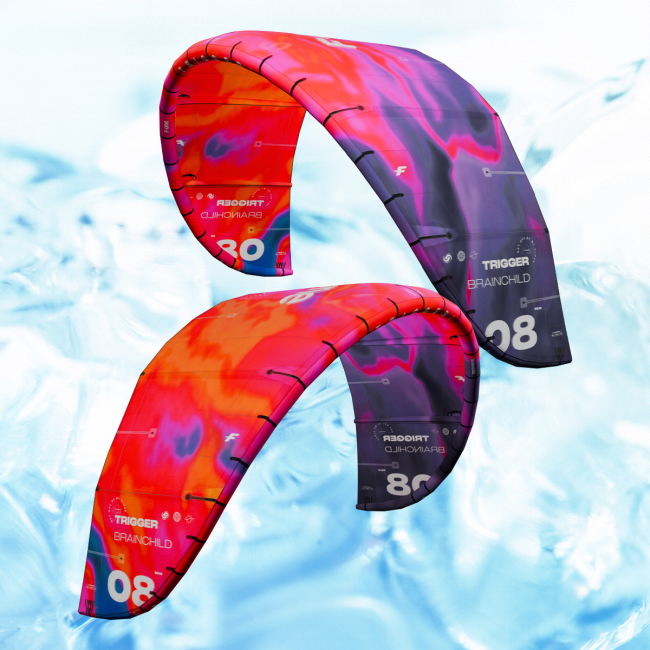
Welcome back to the show. I hope you all had a great weekend. DK joins me for the first Techcast of 2026, and we are going to talk printing, from screen printing to sublimation, it's all there. Don't forget to follow me at kitesurf365 for all the latest episodes. Ladies and gentlemen, Dave K. Well, DK, we're back with TechCast 26. We still have TechCast 25 to finish off, which is the AMA. And I think we're only about a third of the way through those questions, but there has been a lot of sort of developments in kiting, led by what's coming out of Brainchild, let's say. And now with other kites like Nash coming on the market, where the printing is very similar, a lot of people have been messaging me and probably you as well, saying, is this Brainchild you and I got talking about the printing? And we thought it might be a good, good idea to jump in and talk about different types of printing options because this might be something that we see more of in the industry. And yeah, I'll be interested to hear what you have to say about it.
- [01:07]
A
Yeah, yeah, thanks, Adrian. And yeah, happy New Year to all the. To all the listeners, what this is our first one, first one into 2026 and Techcast 26. That's actually pretty. That's a interesting set of set of numbers. The whole printing process thing has been something that's been. That's like very much at the fore right now because of specifically what Brainchild are doing. Really, if there was a goal for this TechCast, it's like, let's expand everybody's knowledge about just the impacts of printing on design decisions, the impact of printing on our whole industry, because it kind of runs through every single product. There isn't a product that we use that doesn't go through some sort of process to actually apply logos or technical details or the graphics, like, to make it look beautiful. So it's definitely something that, like, it's a theme that runs all the way through our entire industry. There's major considerations. And actually, as a product manager, I tell you that probably things like the graphics on graphics and graphics processes on, say, twin tip boards can sometimes take many, many times longer than actually sorting out the engineering of the board. So, yeah, it's definitely a big part of the, the industry and a big part of the product development in this industry.
- [02:30]
B
I think arguably it's a big part of everything Right. Unless you're talking about whiteware where it's like the traditional is just to have like a, some white, you know, appliance in the house. But I mean the printing and graphics and optics are, are a massive part of every single. I mean I hit almost everything.
- [02:47]
A
Yeah, completely. And it's. And the probably if there's a, the goal out of this is to sort of just get our listeners to realize that printing is non trivial. Like it's actually, it's an integral part of the design and build process. Like there are some types of printing process that can have like physical effects on the kite. So which seems ridiculous that hey just the graphics but it is your ability to put one type of graphic versus another type of graphic can be greatly influenced by the physical properties of the materials or of the product or the physical design of the product. So it's much more critical than probably most of the listeners will, would, would appreciate. And yeah hopefully they will a little bit more after the, after the end of this. So.
- [03:45]
B
Well, let's go back to what we've been doing originally in this industry. I think it's the best way to start and then obviously we can lead up to what Brainchild is doing and now Nash is doing what's the, the standard printing that we have in kite surfing at the moment?
- [04:00]
A
If there is a standard like or if there is a, like a. If there's, there is a tradition or if there's like the go to it is screen printing. So screen printing as a process is relative. Like describe it. It's relatively low tech. In fact I, the first, the first screen printing I ever did personally myself was as a teenager. I think I was like 13 or 14 years old in like a tech like a workshop class. In workshop and art classes at high school I actually made my own screens and made my own screen like patterns and printed my own T shirts. So it's. As a teenager you can actually just like this is something that can just be done and it, it's the, the way screen printing is sort of the. It hasn't really evolved or really changed in probably hundreds of years. But it is a, it's a, a frame. Usually it can be a wood frame looks a bit like a picture frame but these days generally aluminium frames for a bit more stiffness. So just a rectangular frame that's a little bit bigger than the print that you want to do and then stretched over that frame is a fabric. Now it's called silkscreen because that fabric used to be silk. But in this day and age, it's usually much more high tech fabrics. It's a polyester or a nylon, but that, that fabric is stretched out sort of drum tight. So it's a, it is. And the tighter you can get it onto that frame, pretty much the better. So you have this, this thin fabric stretched over a frame very much like a picture frame or a, a. Yeah, or like a picture canvas. But that fabric is a mesh. So it is, it's not, it's porous. Like there are gaps between the threads in that screen in that fabric. And how that is specified is actually the size of those gaps, which is usually defined in microns. So the sort of tighter the gap, the higher the resolution of the print. But the harder it is to get the ink to go through, the wider the gap, the lower the resolution, but the faster it can print. So so there's just a range of different microns. And then for the actual artwork, traditionally it would be something like a hand cut. Like a very long time ago it used to be like a hand cut piece of paper where you would have the actual pattern would be a piece of paper glued onto the bottom side of that screen which would, where there was paper that would block the ink and where there wasn't paper that would allow the ink to go through. In this day and age, it's a photographic process. So there's a process where you apply an emulsion onto that screen that the, then expose to light. And where the emulsion is exposed to the UV light, it will, in the next process it will wash out and where it isn't, it'll stay and get cured again. It becomes the block for where the ink doesn't go through. So you can have this. You basically end up with a screen with areas which ink can flow through and areas where ink can't flow through. And then the actual printing process just involves having whatever you're going to print be laid down very, very flat. So for our kite fabric in the screen printing part of the factory, there are rows and rows and rows of tables where the, that fabric gets laid out onto those tables. And very, very funny to see as well. Those tables are covered with like a sticky adhesive. Yeah, it's. I don't even know what the adhesive is, but every single one of those tables is, is, has, is sticky. And it's sort of permanently sticky. And you, the, the fabric gets laid down very, very flat, stuck down onto this, the sticky substrate. And then the, the screen has sort of indexing marks on it. So there's a Couple of points on the table where it'll get clipped into, it'll get laid down. That frame with the pattern sort of photographically put into it, that frame will get laid down or connected to the table, laid down over the fabric. And then an operator has a big rubber squeegee that squeegees the width of the screen. And then the ink is kind of thick. It's almost the consistency of like, of cream. So it's not. Or even toothpaste actually is probably a good way to describe it. So it's not a liquid. It is sort of a creamy based version of the ink. And that operator will grab that squeegee and he'll push really hard down on the screen and kind of pull that. A sort of a log or a pool of that ink will get pulled across the screen. And at the point that rubber squeegee is pushing down onto the silk screen or that mesh, that the pressure from the squeegee will actually just push that ink through the screen and apply a sort of measured amount of ink onto the, onto the fabric underneath. There's usually one pass, then that whole screen gets lifted up. And in a factory, in a, in a factory process, that's there'll be maybe 10 or 20 pieces of identical fabric for 10 or 20 different kites laid out across the table. That whole screen will get lifted up by two operators, moved along to the next piece, dropped down, squeegeed, lift up, move along, drop down squeegees. Just a very manual process and very, very low tech. There's nothing. It isn't, there isn't a massive amount of rocket science in the process. But the, yeah, it does have some downsides. And the, the really big ones, it's very low resolution. So 70 printing is usually measured in a thing called dots per inch. And so 75 dots per inch is the, is the sort of resolution that you could expect out of it, which is. Converts to about 0.3 of a millimeter is the tiniest resolution you can get. And it's also single. Every color needs a separate screen. And it's a very manual process. So you're generally limited in the number of colors that you can have. So on kites it's typically one, two, maybe three colors. If you get into four colors, then your graphic artist is writing checks that he can't, that he really can't cash because it's.
- [11:02]
B
But what about duotone? Duotone have, I mean they. Not so much now, but on the kites, maybe the, maybe the 24 kites or 23 kites, dude. There was like, look, even when you have it in the air, it looks like there's patches all over it. It's just like little squares. And I mean, is that all screen printed by hand?
- [11:19]
A
It's all screen printed and interesting. Duotone and their factories have actually done some very interesting things because the inks aren't necessarily. Don't necessarily have full coverage. And so you have the ability to do things where, let's say you have a. You can overlay two screen printing areas over each other, and if the ink on the top is slightly translucent compared to the color that's underneath, then you'll actually get another color for free. So even though the Duotone kites looked like they had maybe 10 different colors on them, a lot of that just came down to clever processing. Your ability to sort of use four different screens, but by overlapping colors in some area and not in others. And then the thing with our kites, at least traditionally, is that a majority of the color of the kite comes from the color dyed into the fabric. And we've done techcasts in the past talking about how the fabrics are made and how the coloring, the dyeing of the fabric is a major part and a major expense in that process. So if you. Let's say you have maybe you could get three or four colors just in fabrics and the way that you arrange the cuts on those fabrics and then add another four colors with your screen printing, possibly with some overlaps. So. So printing different colors on different parts of the kite with different colors underneath, you can actually get a massive amount of. A massive amount of colors with a relatively limited palette. But it takes some cleverness in terms of. Both your designers and the factory need to be able to get into that process. And it's also one of those things that can take a very long time.
- [13:17]
B
I guess there's positives and negatives to using this. Let's call it traditional method. Let's start with the downsides. What are the downsides to that? And then tell us some of the upsides as well.
- [13:27]
A
Yeah, okay. So in terms of downsides for screen printing, especially for. Well, actually, screen printing is perfectly applicable to both kites and boards. So a lot of our. A lot of our twin tips as well. So I sort of covered the process for doing kites, but it's nearly identical for doing twin tip kite boards. Like, the setup is. The setup is nearly the same. It's only a size difference. So it's used both on kites and on Twin tips and things like bags, that sort of thing. Any flat fabric is what it's used for. It's a disadvantage in particular for what we do is that none of our substrates are particularly printer friendly. So if you think about the fabrics on our kites are polyester, generally polyester or some of the newer kites are, have some more high tech materials like Aluther in particular has got a very, very smooth polyethylene based film on the outside of it. These are very, very hard to print to substrates. If you compare it to the cotton T shirts I was printing as a, as a teenager, like those cotton T shirts I was using water based inks and I, and the cleanup was easy. I could just use a hose and it was absolutely fine. With both boards and kites. The inks that we are using are what's described as a two pack ink. So you have the ink itself with the color and then you have a hardener that you add to it. And this is needed because we actually need the cross linking of a, of a, of a, like a much more activated polymer that will physically stick to the, to the kite. If we were just using sort of traditional T shirt based inks and less than an hour flapping in the breeze and all of the, all of the ink would, all of the printing would just fall off your kite. It actually needs to be a, a chemical bond onto those substrates. Now that leads to two things. One, those activated inks, well, they lead to three things. One, they're very expensive. It's a lot of money per kilogram to buy those inks. It's a non trivial cost to do this. It's also a non trivial cost in terms of the amount of labor required. The actual setup's relatively cheap, but the actual, the time and effort is really high. Second thing is they actually have very short pot life. So once they've actually mixed up those inks in the, in the factory, they have to move quick. Like if they leave those inks sitting on the screen they're going to harden and ruin the screen. So you actually have to, you have to use up that ink and then clean the screen off in a very short space of time. So there's some, there's definitely some pressure there to have everything set up and ready to go. So the inks themselves are, they're not, they're not human friendly substances. So inks themselves are. There are inherently. Well before they're cured are kind of inherently toxic. But what's actually way worse is the solvents needed to actually Clean out the screens at the end of the process. And that is not only those solvents are not only expensive, not only expensive, they're quite toxic. And the process of cleaning out the screens is really quite horrible. And then what you end up with after you've cleaned those screens off is a bunch of toxic waste that needs to be disposed of. Now this is. Yeah specifically in China this has led to a problems when it comes to the. The manufacturing of kites. Traditionally all the screen printing would be done in the same factory as the cutting and the assembly of the kites. But many of the Chinese, Chinese based kite factories now can't get a license to do screen printing on site because it's such a toxic. Because the chemicals involved and the disposal of the, the, the waste products is so toxic. The Chinese government is actually very much restricted where that can be done inside southern China and very much licenses the companies that can do it. So a lot of that screen printing now is done is actually outsourced by the factories which causes. Yeah like that adds time and time and to the actual process of, of doing your kite. So yeah downsides mostly like, mostly they're really horrible chemicals. Like that's the, is the, is the big ones. From a design point of view it's the low resolution, the 75dpi and limited colors. It's kind of screen printing gives you. Is really good for big bold single color areas. But it's completely unsuitable for what. What you'd describe these days as like photographic quality. You, you can't, you can't put a picture of your picture of your dog on your board. With screen printing that has to be done another way. And but really the advantages is that totally the advantages is thing is durability and cost. It's a, it's if you're only doing small areas of. Small areas of printing say the, just the small logos, numbers on the wingtip and the like information around the inlet valves, that sort of thing. It's a relatively low. It's a process with a relatively low setup cost and it can be engineered to be very durable. So that's, that's why it's so prevalent.
- [19:24]
B
Why is there such a limited color count? Why can't you just have unlimited colors?
- [19:29]
A
Each color is a separate process. So every color that you do requires a separate screen and a separate path, a separate pass through the factory. Now let's say in particular let's. We wanted to put three colors on our one wingtip panel. When it came to the, when it came to our kite the problem you run into there is you'll put, let's say you set up one line where you put down those, you put down those kite panels onto the sticky table, you set it all up, you do your first color pass and then you clean that screen out. Now what you have to do, it could take eight hours before that ink pass that you've just done, cures. So that whole table has to sit there doing nothing else for eight hours until that's done. Then you grab the next color screen, mix up the colors. It might take 20 minutes to run down that line, put the second color onto those pieces of fabric, but then you've got to clean that screen off and that whole table is redundant again for another eight hours until that color cures and then you can place the next one. So there are very. For a single color, screen printing is incredibly effective, but it's cost to effectiveness ratio just plummets as you start adding extra colors. So, yeah, it can be done. Like there are definitely screen prints, screen printed things out there that have had eight different screens done on it. But the factory and the product managers like tearing his hair out at the cost and the time and the risk because every time you do one of those passes, you actually risk another. You risk a problem and having to write off that particular piece of fabric. What I would like to say at this point though is actually one of the advantages I didn't say about screen printing is screen printing is the only way you can get very special colors. So we're going to talk about some digital printing processes shortly. But let's say you want a gold print or some other metallic color or silver, that is, those types of colors, especially what's described as spot colors, they're only available in the screen printing process. There isn't a digital process that allows you to do those. So screen definitely wins when it comes to that, actually. And also screen printing colors are generally much deeper. Like there is just literally more ink and more tint. And so you get a much bolder, much more vibrant color and much more vibrant print with screen printing than you do with some of the other process going to talk about. So there are. Everything in life is a compromise, including printing.
- [22:23]
B
I mean, it kind of seems a bit archaic to me. I mean, with the industry moving so quickly, this seems like it's a bit almost stuck in the dark ages.
- [22:32]
A
Yeah. That is, I think if you go back and listen to your interview with one of the interviews with Ralph last year, I think he pretty much described it as that as being as being an archaic or an ancient process. The funny thing is, there are industries that are infinitely larger than the kiteboarding industry, where graphics processes and printing are what the entire industry is built upon. And those industries have been looking for a replacement for screen printing for very much longer than what we've been around. Yet they haven't managed to find a viable replacement that ticks all the boxes that screen printing gives you. So I don't think it'll ever be eliminated out of our industry in the near future. I think it's still, especially for the vibrancy of the colors and the sort of durability of the ink, it's incredibly hard to beat.
- [23:43]
B
What's pad printing?
- [23:45]
A
Okay, so pad printing is definitely something we need to talk about in relation to screen printing. Screen printing is incredibly effective, but what you have to have, like, it's not necessarily 100% true, but it's so close to true that for this one of this discussion, it may as well be. Screen printing is only effective if you can hold your substrate that you are printing on perfectly flat. It doesn't work if there's any sort of contour, any sort of 3D on that object. So let's say we can screen print the top sheet of a kite surfboard before we press the board, because it's a flat sheet of plastic, but we cannot screen print that effectively, screen print that board after it's pressed, because there's no way to get down into all of the fancy 3D shaping that we have on the surface of the board. We do sometimes do, like, tiny little prints, a post, like, on the deck of the board on a flat area much smaller than the complete size. But for all intents and purposes, silk screening works on flat substrates for things like fins and handles and a lot of our, like, let's say, binding hardware, that sort of thing. We need to place a logo or some sort of technical information on that on that product, and it's a 3D shape. Now, pad printing is pretty much as it's described. You have a pad, typically a silicon, like a piece of molded silicon, which has the. The logo, the. The negative impression of the logo or what you want to print on the bottom of it. Your item gets held in a nice little jig, and that pad gets dipped into an ink not too dissimilar to what the ink we're using for the. For silk screening. So kind of a thickened, creamy type ink, the pad gets dropped into that, and then just like a rubber stamp that you might use in an office for stamping documents. It just gets stamped onto that. That object. Now because the silicon molding is. Is flexible, it can flex and conform and apply that ink over the 3D surface. So again has. It's very closely related to silk screening in terms of its resolution. 75 DPI tends to be what you can get to. I've never done more than a single color with it, but you can do sort of two colors, three colors. You're starting to get. You need to be looking at something else if you're doing that. But it is very effective for especially things like twin tip fins, surfboard fins. That's where it's actually very. Another very common one is logos on the EVA of our control bars. That's typically pad printed as well. So definitely the go to for any sort of 3D shaped object.
- [26:56]
B
Can you use pad printing to do large objects or is it predominantly on smaller, more technical parts? Is that generally the way it goes?
- [27:04]
A
The pads will just get enormously hard to deal with and it's. You're running the gauntlet with that process of like the actual. If you could think about the. The physical integrity of a larger pad, it's a piece of soft silicon and it would just start to wobble around and it's a problem. So it's typically done on small 3D objects. Larger objects, we tend to be able to do the printing when the materials are flat and then we convert the materials into something that is then not flat. Actually that brings up a very good point. When it comes to printing kites, almost without fail the entire kite is screen printed as separate parts. The. So this is. The screen printing process is not done to the kite after it is assembled. It's done between the cutting process and the assembly process. The only. There's occasionally things like the very. The very large logo in the middle of the canopy. Those panels may be sort of taped together first, but not fully. Like you kind of tape together the flattest part of the canopy and then you do your screen printing and then the final assembly is done a little bit later. So it's definitely all. It's in the process rather than after the assembly.
- [28:37]
B
It's a real testament to these people who sew these panels together. Right. Because if you mess up the alignment of that logo, which is half on one panel and half on the other, it's a problem.
- [28:47]
A
Totally a problem. And it's. But it's. It's not just a testament to the people who are sewing the car. It's the. It's a testament to the People who are actually doing the printing. Because if you think about what, what's going to go on here is you've got a, you've got a, an aluminium or wooden frame with a stretched piece of fabric on it, which is the silk screen, which then a photographic process provides the masking, like where you want the ink and where you don't want the ink. And then that frame needs to be connected onto a table within sub millimetre accuracy of where it's actually connected to the table. There are alignment marks on those sticky tables and those panels need to be laid down on those sticky tables again to sub millimetre accuracy for everything to actually be assembled and look good when you're, when it's actually flying. So yeah, it's. This is one of the things with, with screen printing. It's, it's a relatively low tech process, but it requires some very, very skilled people for all of those things to line up and you're. And those, those prints running across two panels on your kite to not be like centimeters away from each other requires a lot of. Yeah, a lot of skilled labor. And I really appreciate those people. I think they're doing an amazing job to be able to day in, day out produce kites for us that are as well printed as what they are.
- [30:15]
B
Dk, we've been talking about screen printing here at the top and you were talking about it being used on twin tips. Is that still the process? Are they still screen printing onto twin tips? Because twin tips generally have a lot more graphics, actually, let's put it that way, than kites and a lot sharper graphics. You know, you talked about limitations being you can't get an exact photo, but I feel like that twin tips actually provide a lot more of that sharpness. I think that's a good way to use sharpness versus the screen printing option.
- [30:44]
A
Oh, look. Absolutely. So, yeah, so everything we've just talked about was definitely applicable, both kites and twin tips. But the trend on twin tips in the last few years is actually to move away from screen printing. A big part of that is this environmental concern. It's just like, just that limits. The more we can eliminate screen printing out of the twintip process, the sort of. That lessens the impact. We're not having to do the washing out, that sort of thing. So the sort of industry standard process now or like the most common process that I actually set up for any of my twin tip clients is direct digital printing. So that has a. We use a very industry standard top and bottom sheet material. It's clear TPU based and it goes through a very standard digital printing process. So a print, it's a large format digital printer, but it's. For all intents and purposes, it's the same type of printing process that your little inkjet printer sitting on your desk in your office is doing. So this is a. But the ink in particular is what's called eco solvent. So it's a, it's a pigmented based ink that has a, has a solvent carrier. So it's very thin and at the sort of microscopic level, all an inkjet printer is, is actually just a little, it's actually just squirting liquid out of a little hole. Like that's what your print head is doing. So we do direct digital printing onto the inside of a, inside of a clear substrate using a solvent based ink with basically an oversized version of the printer that's sitting on your, sitting on your desk in your office. So just squirting very tiny droplets of different colors directly onto the surface. And that solvent carrier allows that color to sort of get absorbed into the surface of the tpu. And it's a super cool process. What it gives us is the ability to print 16 million colors as opposed to like one at a time. So you, so you can have basically any color you like. And because it's printed to the inside, it doesn't scratch off. So as you wear out your board, you basically have to wear out your entire top sheet of your board before you start scratching the graphics off. So it has a very good durability over the lifespan of the board. It has a downside in that it doesn't. It needs a white backing behind it for the colors to pop. So you. Unfortunately we still have to have one screen printing process when we use direct digital printing, which is a single white flood screen behind the digital print. And that white gives the like, basically gives the colors something to reflect off and gives it its boldness. But that screen can also, we can do very cool things with that where we can reveal pieces of where the wood is. And actually louvier boards does a lot of really cool stuff where they mix the sort of screen printing application and the digital printing to give you a really nice board. So that's the state of the art. Yeah, 16 million colors, typically 1200 DPI. So like 20 times the resolution of the, of what screen printing can do, but basically photographic quality. So it's. If it's, if you, if you can, it's basically any picture you like. Anything you can see on a screen can be printed that way. What you just don't have is spot colors. You can't do a gold or a metallic or a silver or. And the colors aren't. Aren't as rich. You don't get this, this the depth of color that you get with screen printing. But it's, it's definitely. That's most modern. I would say most modern boards are built in that almost modern twin tips are done in a. A direct digital. A direct digital process with a white backing screen. It's just the. It's become the norm. There's a few this and it's when there's a very specific requirement for something a little bit special that you'd actually go to screen printing.
- [35:21]
B
Let's talk about Harlem. And also we can put Nash in that now with the new Nash kites coming out, seeing Jason riding these multicolored kites and people are confusing them for brainchild kites. What's that process called? And is that a process that we are going to see a lot more brands move over to or is that still relatively new? Because there is questions on longevity of some of these products. I don't want. It's not fair for me to say names, but I have heard stuff pop up about the sort of UV protection on some of the kites and I guess this all sort of comes as a pack. Yeah. What can you tell us about their process?
- [36:01]
A
100%. So what we're talking about here is dye sublimation printing. This is going to be a very. The next like, this is a nerdy techcast, but the next few minutes are going to be like we're going to hit peak nerd. I think with what we're taking 40.
- [36:15]
B
Minutes to get to the main part of the main part of this podcast.
- [36:19]
A
Totally. But we're going to hit peak nerd here. So dye sublimation printing to me is like alchemy. This is like this. I cannot imagine how on earth this somebody stumbled across this or actually invented this. So let's take the second word is sublimation. Now, sublimation is the. Is a change of state. Typically it's a change of state from solid to gas, completely avoiding being a liquid in between. The simple definition of a. Of sublimation and all the listeners, one of the most. One of the most common substances in the world that they know sublimates is dry ice. There is no liquid CO2, at least at room room temperature. You have solid blocks of dry ice and that solid block of dry ice evaporates into a gas. There's no liquid in between. That's what the sublimation part of dye sublimation is. This is. And the process works this way. You have a. We have a digital these days it's digital printing. It funnily enough, in the very distant past, sublimation printing was done by screen printing sublimation ink onto a substrate and then doing the heat pressing side of things. But in this day and age, digital printer not too dissimilar to your desktop printer. In fact, some Ipsum desktop printers can be converted to sublimation printers. This is something you can do at home and there's many little home based businesses that do sublimation printing. So it's not a, it's not a new thing. It's been around for a very long time. And so you have a digital printer that prints and prints a very special sublimation ink onto a specially prepared piece of paper. So it's a sublimation paper and it's designed, that paper is sort of engineered specifically for this process which, where you kind of want the ink to not really get absorbed into the paper. You want it to just sort of print and stay on the surface. It's a water based ink. It gets printed onto the surface, the water evaporates and then you have this piece of paper with the image you want in reverse. So you print it mirrored. Then you take specifically a polyester based substrate. So we've talked in the past that all of our kites are both the Jacron and the canopy on our kites are polyester polyester fibers. The, the sublimation printing only works with a polyester substrate. And the first time I used sublimation printing in the, in the kiteboarding industry was 15 plus years ago. We were actually, it was a very common printing process for twin tips. So we have a white top and bottom sheet that we can get for kiteboarding that is a white polyester based material called pbt. You can take that sheet, a white sheet of pbt. You can take your printed piece of paper, you put them together and you put them under very high pressure, like 45 or very high pressure. You put them under a decent amount of pressure, say 45 psi. Because what you want to do is press that piece of paper as tightly and as close to that polyester substrate as you possibly can. And then you heat it up to 200 degrees Celsius. And in the process of heating the substrate and the paper and the ink up to 200 degrees, the polyester actually becomes, goes into a mode where it's like accepting of ink or accepting of the dye. And what happens to that dye? Sublimation ink is at around 200 degrees. It flashes from being a solid sitting on the surface of the, of the paper to a gas. And that gas transfers into the surface of the polyester substrate and then you cool it back down. And that, that print is now thermally infused into the surface of the, of the polyester. It's not even sitting on the surface. It's actually absorbed into the surface. And like I said, I, I think that is just alchemy. I like that is like how on earth was that invented?
- [40:47]
B
So I'll give you an example. You know, ciders in Southern England traditionally had like a lump of meat thrown into the, into the batch before it was before, you know, during the brewing process. I mean, I kind of think that maybe a rat fell in at one time and, you know, and it just gave it this amazing flavor, you know, and that became, you know, I mean, I think a lot of the stuff happens from mistakes, right? People left some stuff on each other and they say, oh, there's some print come off of here. Was this discovered by mistake where they maybe stack stuff together and it was hot, it wasn't quite the temperature, but they, they, they found that the material had some remnants of. And they, oh, let's do this again. Increase the heat. Is that the kind of way they maybe came across this?
- [41:29]
A
Oh, very much so. I, I haven't fully investigated it, but I know the, the process has been around since the mid-50s, but it was, it likely started off with something like that. Now actually, if you think about, probably many of the listeners would understand if they've been packing their kites or if they've ever packed a kite away wet, where one, one side of the, where you've got a white panel on the kite and you put it, say against a, a red panel on the kite and there's a little bit of moisture and a little bit of heat. You'll get a transfer of the, you actually get a transfer of that die from one side to the other. Not exactly this process, but it's in that kind of realm that this was invented. But like I said, this is not like the very first dye sublimation products I ever saw commercially in kiteboarding were like the original Underground FLX, which I think was released 2004. That was, that had a digitally dye sublimation printed top and bottom sheet. So this is not even in our own industry. This is not a new process, but it is a massive process across, across many industries. One of the, probably one of the biggest things that or the most common things that the listeners would have seen that is dye sublimation printed is a lot of professional sports gear, let's say soccer, rugby, NFL, a lot of running equipment, anything. Any of those, any of that kit that you've seen that has lots and lots of very detailed printing on it that's all done with dye sublimation printing. So they're a polyester based substrate and a dye sublimation, it's a paper transfer dye sublimation print is done onto the flat fabric and then it's cut out and sewn up. So it's a. It has been around for a very long time.
- [43:26]
B
It doesn't take a rocket scientist to work out that this is obviously a lot lighter than having some percentage of paint dragged across the surface. Right. That's going to give weight. Is that why Ralph and the Brainchild factory have gone this way this to. To reduce the weight of the, of the whole kite?
- [43:45]
A
Yeah, there's a. That's. That's probably comes into the equation but I don't think it's the like there are many, many, many more other advantages of the process that Brainchild have put together that the weight saving is very minor compared to all of the others. But the, the what? Yeah, there is a. There's definitely some disadvantages to this process and those disadvantages are things that are probably like this is where Brainchild I think have done an amazing job to actually got over those hurdles to actually be able to release a product. Because there's been many kite companies have been playing around with this as a. And many kite factories have been playing around with this as a possibility for many years. The Brainchild factory is just the first one to actually fully dedicate themselves to it. This is the way we're going to build them. And the real disadvantage when it comes to our industry is this is a very effective printing process on uncoated fabrics. So when I'm talking about say the professional soccer kit for is special, that is there is no stabilization, no coating on that. That if you feel those, those fabrics, they're really soft. That's what our kite fabrics feel like. Before we put the polyurethane coating on the leading edge, I'm sorry on the, on the canopy or we put the, the melamine coating on the leading edge fabrics. So we have, we put a coating onto our fabrics to stabilize them and, and they. It's. Those coatings have to be. Are part of end up being part of being in the printing process. And so they have to be compatible with that 200 degrees of heat. They have to not inhibit the inks getting to the polyester fabric. That's a, that's a challenge. And like I think, I think Ralph's worked really closely with his, his French based fabric supplier Porsche to actually get over those side of things. And the other, the, the other thing from a production side of things which is like horrendously hard to get around, is the shrinkage that you get with the printing. So what by when you all, all of the fibers that we have in our kites, they're, they're high performance because they've been pulled. We've discussed this in the past. They've been pulled almost a failure point. They've been pulled out and stretched as much as they possibly can because they're just before the point that they fail. They're the stiffest and strongest for their size that they'll ever be. The problem that you have with a, with a kite fabric anti sublimation printing is when you heat them up to 200 degrees. Those, those fibers are all because they're stretched so close to the tail their limit that heat makes them shrink back. So you have at least a few percentage of shrinkage over that of that material when you print it, when you do that heat pressing cycle. And so you actually need, you need to characterize the fabric and actually make the print a little bit bigger to account for it shrinking back for you then to be able to tuck that in. Yeah, yeah, to be able to. So that's, that's a really hard thing to get around. So they've done a really good job there. The, the other thing. Yeah, it's the, that heat can damage the fabrics if they're not like you have to control that process really, really well. And feedback I've had from other, other kite brands and other kite factories is in all the time that they've ever worked on this process, the, the that heat pressing cycle has, is negatively affects the fabric and the lifespan of the fabric. So. And that's why they haven't gone for it. So yeah, that's where. So there is, there are some questions there. The other question that like one of the things with one of the disadvantages of dye sublimation printing and the reason we don't use really use dye sublimation printing on kiteboarding twin tips anymore is its lack of UV stability. So. Because the, yeah. So the white. There's sort of two things to it. One, the Actual inks themselves are not as stable with UV light as some of the other inks that we've been talking about. And then the unprinted white polyester substrate under UV is not protected in any way from UV light. So it's. There is no. You're not putting any additional coating on and on twin tips. That meant that underlying white substrate would go yellow in the sun and the yellowing of that would then affect the colors. So you'd very quickly, if you left a disublimated twin tip kiteboard out in the sun for a few days, like just say a demo day sitting on the beach, then it would change color. So that's also something that they've probably worked on to resolve with the Brainchild process.
- [49:14]
B
Outside of Brainchild, we've now seen Nash go to this sub automation type printing. Why would they go that direction considering that there is some instability, especially with UV in the printing process?
- [49:29]
A
Firstly, I would assume that the Brainchild factory ralph, they, they believe they've got around the disadvantages. So that's awesome. Yep. That so. And yet time will tell, but hats off to them that they've, they've committed for it. The number one advantage of, of a digital printing process when it comes to architects. 16.7 million colors. We can do anything. The screen printing process. Oh, oh, any at 1200 dpi. So photographic quality printing gives your graphic artist free rein to create anything they like as opposed to being limited within a, within panel cuts and screen printing. And because it's a digital printing process, every single kite can be different.
- [50:19]
B
Well, I remember when Harlem went to the sort of second phase of Harlem, not the traditional. When they started working with Ralph, they were like, hey, we can print anything on the kites. We can do this. We can have. I'm yet to see one kite. Actually that's a lie. I think I've seen one kite in Mykonos that was self, let's say a different print. But that's one kite. In all the kites I've seen over the last three or four years from Harlem, I've not seen one come out that's different. It's just the all looks the same. I saw the 20, 26 kites being tested and they distinctively looked more shiny like the, the actual. The canopy looked more shiny than the other than, than, than the previous kites. I don't know if that's just new, but I remember speaking with Colin and I was like, wow, that actually looks like a different, slightly different type of material.
- [51:06]
A
Oh, highly likely. And Highly likely that the there because development is development is ongoing. The I believe that I see Reuben had ended up one of his sponsors had ordered a kite or two with actually and kite mana have actually ordered I believe have ordered some custom printed kites out of the brainchild process. So it is available. The thing is it's digital. Every kite is like every kite's printed separately. You don't have this limitation of needing the complete setups. I believe it takes a bit of time to set the files up so it's not like a zero overhead. So that it's costly.
- [51:51]
B
The site's costly.
- [51:52]
A
It's costly from. It's not costly from the printing side of things. But the preparation for printing probably costs a little bit that there is a and there's a second side to this that is probably not as obvious in that if you are 100% digitally printing every panel on your kite you only need to stock white fabric. And colors are a real pain when it comes to kite fabric. We're talking minimum order quantities from the likes of Tasian for custom colors are many many kilometers of fabric. And it's many many months to wait before you get it. If you want that color, the whole process can take six to nine months from start before you actually get the fabric and another three months before you get the kites. So that's a very long process. If all you have to do is stock white fabric and you can change the color by whatever the print you put on it. That has a big advantage and has probably has more advantage going forward in terms of manufacturing. Like in terms of having a manufacturing process which is way more adaptable. Even with right now the minimum order per size per color from a typical kite factory is 10. Like if I want to for lacuna. If I want to go and order a batch of kites for every size for every color I have to order 10. I can't order one and 100%. What dictates that is the screen printing process because it's the it's 10 is basically one table set up to be able to do that screen printing. It's just not economically viable. Less than that a digital printing process would eliminate that. The minimum order goes down to one and you can do. Every kite can be different. Every kite can be the same. So it's a. There are long term advantages which are worth like taking the risk right now to actually get this process dialed in. And it's a process of materials and printing and the assembly everything.
- [54:06]
B
Let's go back to why Nash chose It because we started off with that, but then, you know, we jumped in and set you off on another tangent. But why would Nash go this way?
- [54:14]
A
16.7 million colors. They look. Oh, that's a brainchild. Kites are a hot item. They're an item that like, people see a kite from Brainchild and they understand it's from Brainchild and they're prepared to pay a premium for a brainchild kite. And a big part of that is the printing process. They physically look different. Part of the motivation for this podcast is to say, well, that's a printing process and they're not the only people that have it. I've been frustrated actually over the summer that especially with Jason moving across to Nash, people seeing his kites and just assuming that it was a brainchild kite because of the printing process. That printing process is available to other factories. Other people have been working on it. Nash is simply the second, the, the first non Brainchild brand to actually commit to it and actually produce some kites. And I think that's awesome. Absolutely awesome.
- [55:13]
B
Dick, let's wrap this up and I'm going to ask you a question which can be sort of the sort of closing question. Are we going to see other brands go this way or is this an unproven printing at the moment? Because we don't know the sort of longevity of the material yet.
- [55:32]
A
I like if you listen to Ralph's, a couple of Ralph's podcasts from last or interviews from last year, he believes it's the future. The. I believe it's the. I believe the concept of digital printing onto kites is definitely the future, because I think there is that the advantage of actually only having like, white fabric, the ability to do very high dpi, very high color count. That gives, that gives the brands and the graphic artists at the brands amazing flexibility when it comes to manufacturing and production. It's also, if we talk about the environmental costs of screen printing, we're best to be moving away from it. So, yes, I kind of agree. This is probably where we're going to end up. It might not be dye sublimation printing. There are some other printing processes available and there's some stuff I'm working on that could possibly surpass what's available right now. But dye sublimation printing, the. This full in particular digital printing, I think is the future of, of kites. And yeah, Brainchild factory was the first to sort of commit to it. Everyone else is like, everyone else is working on it. I've seen, I've seen, I've Seen pictures go up online of, of test prints being done. Actually there was a, there was a North kite at the last awsi or maybe the one before that had full color sublimation printing from, from Aqua Dynamics. It is something that's being worked on, but it's a whole process. You've got to like, I don't. You can't just take the fabrics we currently have and a sub and a standard sublimation printer and sort of put them together and expect good results. There's a, the, the development of the fabrics and the printers and the ink and the process to assemble it is all going to take time, but I think we're going to see more of it for sure.
- [57:37]
B
Dk, thanks for you again for your time. Great start for 2026. As DK said at the top. Happy New Year to everybody. We've got a full year planned of of techcasts and thanks again for your support guys. I mean it is pretty awesome to see how much this techcast has grown and how many people like it. So dk, great to see you again buddy. Thanks again for your time and I think we'll get back to the AMA next week because I think if we don't, we'll never get through all those questions.
- [58:01]
A
Exactly. And yeah, thanks Adrian. Thanks to all the listeners. And yeah, Happy New Year. I think that was a. I'll see what the edit goes like, but I think that was an absolute doozy of our first techcast for this year. So let's see how, let's see how it goes.
- [58:14]
B
Hey guys, I hope you enjoyed that episode. Don't forget, if you want to support the show, the easiest way is to do it for free. Rate us on Spotify. I'm loving those five star reviews. Keep them coming and share them in your local WhatsApp or kite surfing groups or, or just simply tell your mates. If you want to support us more regularly, head over to portraitkite.com and check out all the madness there. If you haven't heard about Portrait, Portrait is an independent media company trying to tell the stories of kiteboarding the way we believe they should. All the projects are funded by people just like you. And if you believe in what we do and you want to support us, head over to portraitkite.com and check out all the madness there. We do have the 12 meter blank kite test being shown at the moment. Sam Lyte was the tester. Fin Flugel jumps in there for a bit and it's a great series. And of course the podcast will always be free. If you want to find more episodes just like this one, use the search button@kitesurf365.com to search your favorite writer or topic. And we'll be back this Thursday for the Megapod.