Loading summary
Transcript76 lines
- [00:01]
A
Welcome to the kitesurf 365 podcast.
- [00:04]
B
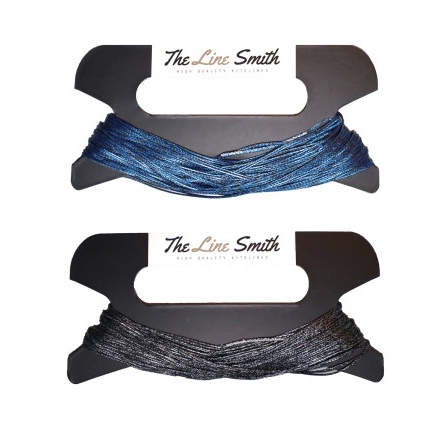
Welcome back to the show. I hope you all had a great weekend on today's guest is Gillian Govea. He is the founder of the Linesmith and he returns to talk how kite lines can directly improve your kite's performance. We are currently in Japan filming for another road 2 series.
- [00:19]
C
Amazing.
- [00:20]
B
When I arrived here, I'd see that Gillian had sent Jeto and Hika of Sandy Vet Kitescored a massive box of nine Beaufort wetsuits. It's an awesome and amazing gift and a testament to the guy he is. Get out and support people like the Linesmith. Getting lines is the best and quickest way to improve your kite's performance. You don't need to use my discount code. He's an awesome team of riders. They all have discount codes. So find the guy you want to support and get involved. Don't forget to follow me. Kitesu365 for all the latest episodes. Ladies and gentlemen, Gillian Govea.
- [00:58]
C
Gillian, Happy New Year, my man. Good to see you. I hope everything's going well.
- [01:02]
A
Thank you so much, man. Yeah, some stuff is going really well, so I'm really happy. And with the Linesmith things are going super, super well. So that's, that's the good news.
- [01:11]
C
I always wanted to ask you how's the Linesmith affected your other two companies because you had nine Beaufort, you have fluid kiteboarding. Has this become like the, the central figure of who you are now? Because I know that you have a lot of work on, a lot of riders are riding your gear and every time I see you posting that, you're measuring lines and splicing lines.
- [01:30]
A
Yeah, yeah, it's, it's the day job, night job. I'm always thinking about lines is day in, day out and, and fluid. It has been down, but it's not been a choice because the, the factory where we were in, they decided to just quit because of Trump's tariffs. So yeah, I had the kite ready and everything ready and then they gave me a, well, two month notice to, to say we are going to close the factory. So I made the choice not to launch that kite because if you make a kite in the one factory and in another, you're going to get two different products. Even if you make everything the same, it's the same with a chef, you know, if you give them a recipe and another one, you're going to get two different dishes. So yeah, it is what it is. But the lights made is booming.
- [02:14]
C
What factory was that? Because I think Cabrino was in that factory. I know DK was in that factory as well and I think Cabrino was there as well. Right?
- [02:20]
A
Yeah, yeah, you are, Arash as well. Cabrina Dave. I was making boards as well there, so everything just came to a standstill. But I do have different factories which I can work with, but it was just too close to the season. You know, if you want to do it, you have to do it. Right?
- [02:37]
C
Well, let's talk linesmith. Are the brands starting to step up their lines with the rise of you as a legitimate third party provider? Other brands seeing what you're doing and trying to, trying to ease, trying to increase the quality of their lines or have they just given up and just, they'll just keep the lines in. People will come to you to buy aftermarket sets.
- [02:59]
A
Some brands have definitely stepped up and well, a lot of them, they have really checked what I was doing. Some of them even copied the layouts or the, the color patterns which we are using or try to copy the, the same amount. Because when you change the colors in a line then you also get different reactions from the line. So there are definitely brands looking at what I'm doing and trying to copy. But some of them are still using their same lines. Some of them are really stepping up their lines. But it's been, I think one of those things that really changed the kite scene for the better. So a lot of new lines are much better than they were before. So I think it's a good thing that I'm around.
- [03:42]
C
Did you see. Well, of course, everyone saw the Israeli kiter DOA, Dora and Bass get whipped up on that F1 kite. Now I'll tell you what, that's when I mean it was all brand new gear. You opened a brand new kite, which was lucky. But situations like that is why you need to check your lines.
- [03:56]
A
Right.
- [03:56]
C
If something went wrong from there, that's death.
- [04:00]
A
Yeah, yeah, for sure. And the funny thing is this brand copied pretty much the line that I have now on their new, new bar. So yeah, they, they checked with the team rider. They had, of course, Jamie and Charles Braudell. They were all riding my line. So they knew and they have checked the lines for sure and now they try to copy, which is great. Which is great news for the, for the riders. I don't mind. It's. But it brings safety. I don't think if he had older lines, I'm not sure if he would have survived that or his lines would definitely have snapped. If it's, well, one year old lines it's something crazy, but still, you know.
- [04:38]
C
So what's new Gilliam for 2026 from you? Because I know every year step up the, the game a little bit. You know, you had the line system last year also introducing the wax. Have you got something that you want to bring to the table in 2026 to increase this sort of momentum of always being at the forefront of, of the industry?
- [04:56]
A
Yeah, for sure. So the wax is going really well and Jamie Overbake is using it quite a lot. He gave me feedback on how, how it works also in different conditions because of course the wax needs to melt. But when he was riding it here with 0 degrees or 1 degree, you know, Celsius, he said yeah, it stays too hard. So I needed to adapt there a little bit. So maybe we do a low temperature wax like with surfboards. But it's easy, there's something small and new lines are coming. I actually was working on that last year. We did some tests with in the factory when I have the batch already. But we did some tests and then the results came in a little bit different than what was expected from the first test. And also the factories were complaining that the lines are hard to splice. This is what I already mentioned. So yeah, that is something. But the lines are so good and Jamie is using them well, has been using them a lot on his rotations and all that sort of stuff. It really makes the difference. So probably that one, it won't replace the one that we are having now. So we will have a premium line and maybe one which is slightly cheaper or different, let's say like that. So you have two options. But I think for the most riders which we are selling product to now, they will stick to the line system because it's so fast. It will take you 10 to 15 minutes to get new lines on your bar. And I need the shops, they, they are coming this year because I've increased a lot on availability. Last year was the first year it grew beyond what I was imagining and now it's time to make it even bigger so people have less downtime. And I think that is, that is the, the most important thing. More shops, more availability to clients so they can directly get what they need. And yeah, growing, growing, growing fast.
- [06:55]
C
Do you look at other braid makers? I'm going to say braid makers because everyone, you know, people hear SK99, SK99 plus. And you know these are actually brand names. Right. Do you look at other Dyneema? Again I'm getting, I'm stuck in a loop Here by saying Dyneema. But do you, do you look at other braids and other options and, and maybe look for something that is the next level after 99 plus?
- [07:19]
A
Yes. So Dyneema is, yeah, it's only a fiber name. So it's not really a braider, it's only the base product. And there are other options of course, with different base materials, which is. Dyneema is a protected name, but it's a specific fiber. Yeah, it's, it's such a common name and Everybody thinks, Ah, SK99, it's like that or SK99 plus is like that. But it's, it's only the base fiber and eventually it, it depends really on what the braider is doing with that line. How are they stretching it, how hot, what kind of coating do, do they put on it, how long, how tight do they pre stretch? So there's a lot of factors there. But the other line is not going to be a Dyneema line, let's say like that. So it's, yeah, it's gonna be similar in the field, but in performance it's slightly different. So if you're a really nerd, nerdy type of guy. Yeah, there are some differences then, but for most riders I think Dyneema is the good balance. What you, what you want, you know.
- [08:26]
C
What'S the difference between SK99 and SK99 plus? Are we just, are we just add, are we just adding numbers to the end just to make it sound more technical?
- [08:36]
A
No, it's a coating process. So it's the same fiber. It's the SK99 fiber from Dyneema, but it's in the coating process. So with the SK99 the braiding is first. So 12 strands, you braid them together, have a line, then you take it to a bath of coating and then the coating is exterior of the line. And with the plus version it's the coating process in the start, so it's on the base fiber. So very thin, hairlike. You coat them individually and then you braid the line. So everything has been coated before. It's also a different type of coating. So you have coating on the inside of the line, coating on the, well outside of the line a little bit. So yeah, it's, there's the difference in the SK99 plus versus SK99.
- [09:25]
C
Gillian, how do you balance production? Because you're a one man band, let's say, versus your own testing. Because obviously, you know, I know you've got Jamie testing and he's giving a lot of feedback. But I guess you want be on the water as well. How do you get that balance? Are you finding that every time you're riding or kiting, you're working on your gear, does and does that sort of start affecting your riding? Because it's an interesting balance right between doing what you love, but also trying to create a product you love means you don't actually get to do the sport you love the way you want to do it.
- [09:55]
A
Yeah, yeah, that's true. But it's. It's worse when you're designing kites because you're not always on the shit product. You know, it's never finished and that's, that's a problem. Always testing bridles, testing lines. But with line testing, it's. It's a hit or miss within maybe five minutes if it's a brand new thing. Now with the new line, it took two years to develop fully, but then it's because of the stretching. So you ride it for a couple days and then you see the lines shrinking or stretching differently and you get unequal front lines and you're like, they were good the last session and now they are not. So it's all trying to figure out what is the. The best option. And I think it's fun. I think it's fun because some of sometimes you're riding, let's say a storm two days in a row with two different bars with the same settings but different lines. And then you can just feel that the kite is sitting either more forward or a little bit more backward. So you're going higher or sometimes you're going further, and you can really see the differences in your jumps. But my jumping is quite balanced and I'm. Yeah, if I'm jumping on range, it's generally 20, 25. And then I can do that the whole session. If the wind picks up, then I'll go a little bit higher. But in general, it's always the same. So the two sessions, even if it's a different day, doesn't really matter. But yeah, it's not always great to have new gear, but it's fun, you.
- [11:19]
C
Know, do you put your lines through different situations? Like, you know, don't wash them, leave them with sand. Did you try and create sort of every option on your line to see how your lines hold up over time? Because longevity is, I guess, something that you want to have as well, right? You want them to be the safest lines, but you want them to have a long life. So do you do different types of testing by le. Leaving them in the, in the elements or leaving them in sand or leaving them wet and, and just keep checking them. And do you do something similar with the lines?
- [11:48]
A
Yeah, but the, the best way to test it is actually in the field. So you have a Jamie or Jason. Jason Vendespa is also a team. Right now with short lines, you get different results than you get on long lines. And we put them in a, in a machine which is, which are rubbing the lines together. Or we take old lines from Jamie, put them in the braking test machine. So we know how many cycles, because people always ask how long can you use a set of lines for? And it's not measured in time, it's measured in cycles. How many cycles can the lines rub on top of each other before one or the two is going too low or on the braking strength front? And also, how are you treating the lines? That is really important. So, yeah, there's always tests going on 24, 7, let's say it like that. And then you have the, the, the lab test and you have the fuel test and they are always different. But there's a middle line, let's say, which. Yeah. Which we see. And then we know about how many cycles we can get. And also with the, the line system, we have a middle section in the front line, so it's a lower and then an upper. And your steering lines is just one piece, so you have three packets instead of two. And these lower sections, you have to flip them around sometimes or, or change them around more frequently. Especially now with mega loops or triple loops or whatever everybody's doing with rotations. That's a lot of abrasion on the lines. And the abrasion is the problem for the line. So by changing the lower sections more frequently, you can make your lines last much longer. But the biggest problem now, as the whole industry, is abrasion.
- [13:34]
C
I want to get to Jason and short lines in a bit because I think there's some interesting stuff in there. But you mentioned lifelong duty. You have a bunch of team riders and we can go into, dive into that in a bit as well. How long do your lines lasts for pros versus amateurs when it comes to the longevity of the line? Because I'm sure the pros are like a normal standard line. They, they're going to go through their lines and bars a lot quicker than the guy who kites every weekend. Right. Who's just a regular, regular sort of weekend warrior. How long is the longevity of the lines versus both of those two groups?
- [14:08]
A
So it really depends on who's using the lines. The guys that are doing more rotations, they need more lines a lot faster than others. So Jamie is a good example. He's rotating so many times and he's. Yeah, he's destroying lines quite fast. But now his dad, of course, is always involved. He requested to also make lowers and uppers for his steering lines because he thinks, well, the lines are still in good shape. On. On the. On the lower four parts, they are in a bad shape. On the upper 16 or 80 meters, they're still quite good. So it's kind of a waste to. Yeah. To replace lines that frequently. I think the pro riders, they need line sets every three months at least maximum. And the. The general guy, I would say once per year, once per two years. Depends a little bit. If you are pushing kite loops, it's really. The cycles is really important. And also if you are waxing your lines or not, so you can prevent abrasion by adding some wax to your lines. And this will make your lines last so much longer. And it's such a small thing, but it's also logical. On a bike chain you put oil. In car engine you put also oil. And it's just to grease it. And just to prevent that you get abrasion and heating up. And it's the same for Dyneema. You just have to put something on top of the lines which helps the lubrication of the line pretty much and which doesn't have sand stick to it. So there are more products than just the glide stick, which we have, but there are enough things you can also use. Candle wax will also work, but you just have to check that it's not too hot in your country because I think paraffin will melt at 45 degrees, which is kind of low when you are in 35, 40 degrees in the sun already, you know, so then send will stick to it.
- [16:09]
C
So when people go to wax their lines, how far should they come up from the bar to wax? Let's say. And does that change between a low V and a high V?
- [16:18]
A
Yeah, yeah. It's the front lines which get most abrasion at the lower 4 meters or lower 5 meters. Even with the high V, it's pretty much the same because the bar still rotating at almost the same height. So the lines are wrapping around it at 3 to 4 meters. And then I also waxed the high V point because then the line is scraping on top of a metal ring or plastic ring or whatever you have. But it's all high abrasion areas. We are Trying always to find the best solution to prevent abrasion to the line. Because that's pretty much the worst thing for kite lines. And I hear a lot of people like, I've used my lines for six, seven years and then I'm like, are you kite looping? They're like, no. And that makes sense because the lines are always straight, almost never crossed, you know, so then you don't have a lot of cycles scraping those lines. But yeah, lower four or five meters wax that. Also the steering lines, it's just when the lines are rotated around each other and you move them up and down, which is the depower throw distance, which is 50, 80 centimeters. Then you, you get. Yeah, the full range, let's say like that. The static lines of course, are getting the most abrasion because you're scraping the ones that are under tension, your front lines, and then you're scraping with the other ones. So your steering lines get a little less abrasion. They still get it, but a little less. And also there's less power on your steering lines.
- [17:45]
C
Anyway, when you go to wax that, should you be waxing at sort of 30 centimeters above that spot and 30 centimeters below, like let's say you're waxing over a 60 centimeter area. Is that the thing? I mean, surely you're not doing a 10 centimeter wax.
- [17:57]
A
You're.
- [17:58]
C
And you're trying to wax a longer part of the line just to be. Just to make sure that you are on that connection point.
- [18:04]
A
Yeah, yeah, exactly. We are saying do the lower 4 meters, but if you know which area it is, then just do the, do that part for sure. And if you have used lines, you can definitely see the difference in discoloration and also in broken fibers. And broken fibers is not per se the reason directly to replace the line, but it's a reason to do something about it. Also, when you have a small broken fibers on the outside of the line, the line is getting a little bit more rough. So the abrasion grows. There's more going to be more abrasion, of course, because they are not gliding on top of each other as easy.
- [18:44]
C
Gillian, how many athletes do you have on the books and how many unofficial athletes do you have on the books that maybe can't say they're working with you due to their sponsorship?
- [18:53]
A
I actually don't know. I was thinking about it just now. There's many, many have used it. Some of them are silently went away maybe because the branch changed their lines and they are now on something similar or trying to get something similar. Yeah, it's a lot. But the ones that are promoting, like Jason, Jamie Matisse, the freshman, Nash Rider, Svenja, she's really important for the girls. They are the most important ones, I would say. Now, Sean Overbake as well, brother of Jamie Stick, is also promoting, but it's like hangs in the balance sometimes because of. Of Nash not being too happy when he promotes too often. But yeah, so it's quite a lot, actually. And some of them are only using the wax, some of them are using the line, some of them are using the pigtails. So it's always something. Yeah. And I don't, I don't really mind. It's more like it's also a passion, you know.
- [19:53]
C
The reason why I asked you if. If brands had stepped up their lines, I kind of feel like the lines have definitely got better in the last couple of years, that every bar I look at looks like the. The lines have made large steps forward, let's put it that way, from maybe where they were or, or what they were doing. And I think that's just because they see the competition in you and they see what you're bringing to the table.
- [20:12]
A
Yeah, yeah, I'm 100% sure. I spoke to the braiding company as well to put a new contract for this year because I always have to tell them in advance how many meters of lines, because the lines that I'm using, I can only order it myself. There's no other brand that can copy this or it's just. It's closed down. So it's not like somebody else can do it. So I have to tell them how many meters of lines I'm going to need that year. And I've heard that there are more and more brands trying to get something similar or, and improving the lines. And it's only good for the consumer in the end. Yeah, if you have better lines, you have better performance. It's that simple. So it's really, really great to see that brands are taking responsibility. It's not really. Of course, they are much more expensive to make because it's really complicated to do the coating first on a thick, very thin yarn instead of doing it on a thick line. It's much easier to make SK99 line lines than SK99 plus, but it's good that they are not looking at only the Euros anymore. How much does it cost? How can I make a lot of money? Bars are super expensive, but if you look at a bar, I would say 80 to 90% is lines or something with A line. So, yeah, if, if it's more about safety and performance, then we're getting better product, which is great.
- [21:36]
C
I just put out the podcast today with dk talking about printing and color runs and color options. Do you, and you mentioned F1 have sort of chosen or gone to similar colors to you on the bar? Can you get your own unique colors and, and, and, and do that? So when people see the, the lines on any bar, they're like, oh, that. Those are linesmith lines. Is, is that an option? Is that something you thought about to identify yourself and stick out from the bunch?
- [22:01]
A
Yeah, yeah, that's what I've already done with the current lines. The black white, which we have, and the blue black. But the blue black is getting used a little bit more. But the black and white is really something I've developed as well. When you change the colors of the lines, you're going to get different type of performance. So if it's 50, 50 on black and blue, you're going to get a different performance than when you're doing 60, 40, let's say like that. Or, or one red and one blue one. I don't really like that because they are stretching differently. They are shrinking differently. The performance is just different.
- [22:38]
C
The colors can actually affect the longevity, flexibility, movement of the Dyneema itself.
- [22:44]
A
Yeah, yeah, for sure. And the funny thing is that I noticed this when I was cutting lines, not SK 99, but SK 60 78. And I was. I always cut it by hand and under load from my hand in the. When, when I was beginning. And then I noticed that my hand was pulling further on the blue than it was on a red. And it was exactly the same line, same manufacturer, same thickness. And I was like, okay, something is off here. And then I did a test with it. What I always do, what I like to do. This is a test you can do as well with your lines is just tying them to a solid object, making two loops at the end, which you already have in your guidelines, and placing a pen in the loop and then just pulling the pen backwards on a piece of paper and you can see the elasticity in the line. And that's what I did. But then I noticed that the red was getting like a 20 centimeter line and the other one only 10. It was the same line was still brand new, same load, but yeah, it's. Yeah, it makes a big difference as well.
- [23:43]
C
Which colors have similar elasticity. Can you just get away with all blacks or all whites?
- [23:50]
A
People are doing all blacks, of course. A lot of Brands are using all black or all white, and then just use a sleeve at the end. Many, many brands are doing it like that. But front lines are getting more load than rear lines. This is standard. So there will be a difference in your lines once you've used them. But this difference in stretching, you can use it as an advantage as well, because if you know blue is stretching more than black, you can already put black in front. So they don't stretch. They are getting more load, but they don't stretch as much. And then on the blue, they will stick. They will stretch a little bit so they stay around the area which you will have them to fly them perfectly. And that's what I've balanced out. Now. Before, we had some gray and white and was mixed with a white and black, and then we got total different results. Then people would get like 5 to 7 to 8 centimeters of difference between the lines after using them for a while. Now we only getting two or three. So it's really a big difference on those colors. It's also the color amount. This is the base thing. But black is super stable. Gray is okay. Ish. And the white, of course, because then you're not losing any pigment is also super stable. So there are three options which are good.
- [25:10]
C
So you prefer to stick with the black and white. I mean, is that what you feel most comfortable using?
- [25:15]
A
Yeah. So it's a black white on the front lines for us in specific balance, because the white and the black, they stretch differently, but they keep each other in check. And then you have on the rear lines, it's a mix of black and blue. So they keep both of them of each other in check. And then with the new lines, which we have, it's kind of chaos. Chaos line, let's say like that. So it's I think, four colors within one line. So it's a very cool effect. But we did a pattern with the same four colors, and it just got bubbly on the side. So it looked like there were dots on the line in the pattern. And then the blue dots came out of the line because the rest stretched, but the blue didn't was so cool.
- [25:59]
C
Do the brands know that colors can affect the elasticity of the lines?
- [26:04]
A
No, for sure. Not for sure. Not. The funny thing is that even factories didn't know. When I started developing this line with, with one of the factories, the new line which is coming now, I told them about the stretching in colors that would be different, but they kind of knew. But we didn't know that we were would run into a problem when we would change the only the pattern so the, the weaving pattern to make, make, make them look cool. We were using the chaos version and then we changed it to a more organized version and we got really bad results on, on the line. So. Yeah, we know. But I don't think, I don't think in the brands that there's somebody who's that far in, you know, maybe DK knows or somebody else who's really into lines. But in general, kite brands, they are not really as far in because you need a specialist and specialists are, in this industry, there are not many.
- [27:02]
C
Let's talk about short lines and, and the amount of pressure that they're under. You know, we saw the high five had their short line compound the other day and you know, Jason is, you know, really, you know, the short line king. And you've got all these other young guys coming up who are starting to push that discipline. How important is it for them to have linesmith lines? Let's put it straight on the table.
- [27:23]
A
You have to ask Jason. Jason that, because I gave him some lines just to try it for himself. You know, I gave him four or five different type of lines when he was still with Eros and I said, just write them and see what the difference is. And then one day he wrote his original lines versus mine and he was like, man, I didn't know that it was feeling so soggy on the other lines and now it's so direct. And this was on long lines. On short lines, I think the abrasion problem, because the lines really, really are scraping each other is the biggest issue. And that's the feedback I'm getting from, from Jason as well. He prefers then a thicker normal SK99 line because the, the drag on the line is not so important on the short line kite because you get less drag when you have less lines in the air. So then he's using longer lines, which are. You coat it on the outside so they can have more abrasion and then they're using some wax. But short line riding is really bad for lines when you cross them. So it's. Yeah, it's just to replace them very quickly.
- [28:33]
C
We know the damage it can cause kites, right? They're under immense pressure. Does one of the lines have more pressure on when. Because predominantly, I know guys are doing short contras, but. But mainly it's a backhand loop, right? That's the general move for the short line. Does that put one of the ster lines under way more pressure or are they Both under the same amount of pressure during that loop. Because you know, as you throw that kite down, like it's actually whipping the rider up, you know, I mean, it's crazy. And then it's freeform. Then the kite comes up and catches. It's immense pressure on those lines the whole time.
- [29:07]
A
Yeah, yeah, that's true. And when you steer a kite, you're steering actually with the opposite wingtip, let's say like that. So when you steer right, your left would be rotating so the left line would be on more tension. The left front, so it's always the one front is getting punished for sure. If you're doing kite loops all the time to the same side, you're also getting the same result. But yeah, I think because the lines are shorter in the end the difference between the lines will be fairly small. Yeah, that's, that's pretty much it. It's thicker lines also give more braking strength, of course, and that's, that's why they are using that. But I wouldn't use a 1.3 millimeters for short line for sure. Not.
- [29:53]
C
How should people check their lines, Gillian? Because I remember when DK and Sue were catting for baby shark, they, you know, they ran, they ran their fingers over every bar and lines. He had checks check for everything. I mean that's preparing for the Red Bull king of the air. Should we be going to that detail and checking our lines and running the fingers along the lines to feel any abrasions, any rough parts? Is that, is that something that we should put into our pre kite boarding checks and routines or our monthly checkup?
- [30:21]
A
I would say yes. And that's also why waxing. It's maybe not even only the waxing, but you're taking time to feel the line, to see your lines, the lower parts which are destroying a lot more. So that's also a checkup which you are doing frequently then and for sure. Always running your lines up and down with your fingers is a good idea. And there are, there are five areas which are very common to break. I have them on, in the, in the blog. So yeah, check that one out. And then you'll see that there are always the same areas. The behind the supply zing, where the, near the kite, the pigtails, where the safety line is connected to the power bracket. On the high feet area, it's always the same parts which are breaking and then of course where you have the abrasion, that's the five main breaking points. So yeah, you have to check those. And I think it's good also to check the, the setting because of the lines are getting stretched a little bit. Just make them straight. It will have a lot of good effects on your sessions, on your jumps, on your kite loops, on the recovery of the kite. So that's very important.
- [31:28]
C
When I started kite boarding, you know, you had to repair your own kites, you had to change your own lines, you had to do stuff. I feel like people have sort of lost that skill and you know, they rushed to put their kite into a kite shop for a bladder repair or leaking valve or a line problem. Should people be scared of changing lines? Should people be scared of, you know, you know, getting your line system and putting it together? I mean, how easy is it? Because I feel like people seem to be terrified of touching something on a kite and it not being as not been like they had it when they bought it.
- [31:58]
A
For sure, for sure. They, they should do it themselves. We have a lot of videos out with pretty much all the bars. Let's say like that it's not all of them, but a lot of them. And you can just see it step by step. It takes 15 minutes to, for me to change the lines and for you as well if you're using the video. And it's also good because then you understand how the lines are connected, you understand how the safety system works, you understand how your, your, your, your, your leader lines are working, how you can adjust things to your bar. So it makes you a better rider in general. And I feel like it's not just the, the, the average Joe which has this problem, but it's also the pros. Some of them, they just do not know how to replace the lines. And you would imagine that they know, but they don't. And then they still go to the shop, they still have the shop check the lines, check the bar, adjust things. And I feel like if you want to be a good rider, you have to understand what kind of materials you are using, why you are using it, and what it does for you. So even the 5 centimeter different knots on your front or rear lines, what are they doing and why are they doing things? It's so, so important. It's not just the lines, it's also the kite. Understanding the settings which you have available, it's a lot of options. And in general it's just, I have a bar, I connect it to my kite, it's not working or it's working. But to understand why it's not working, it's such a big difference in writing.
- [33:26]
C
I'll tell you A funny story, when we were shooting Lorenzo's Blank check, which was a couple years ago after Lorenzo had left Cabrino and he was looking for a new brand, we're giving him all these kites to trial. And one stage we were trying to change the bar and Jeremy was like, oh, I know how to do it. And Jeremy and, and Andrea were like playing with his, with. With Lorenzo's bar. And at one stage I was standing with Lorenzo just looking, and just the ground was just a pile of ropes and. And Lorenzo looks at me and goes, do we have another bar? I said, yeah, I think so, because it was just. Dude, was it just a massive disaster? But dude, it was just so funny. It's like these three world champions and this was like just all them arguing over and this the end, and they stood back and it was just like a bar and just a big pile of lines and they were like, yeah, I think we're going to give up. People get a bar, they pump the kite, they touch it and they just ride with it as it is, I think people should spend more time looking at what that bar can do and adjusting it for you, because like you said, the riding experience should be everything.
- [34:24]
A
For example, if you get a new, brand new Duotone bar, if you would check the lines, then your steering lines would generally be a little bit too loose because they know the front lines are going to stretch within the first 20 hours, which is always a good checkpoint for any line. It doesn't matter. It's not just Duotone, any, any Dynamo line, but they already know that that's going to happen. So. And they also know that the riders or the clients, they generally have that they are not going to adjust anything. But Duotone has a really good adjustability to most of the bars. The click bar, not so so much. But on the Trust bar, you can adjust quite a lot. And if you would take that new bar and you would adjust it directly with one knot more tight on your steering lines, your experience on the new card would be so much better than what it should be in the first four or five sessions. After the five sessions, everything is okay. But you could have four or five better sessions by just adjusting it or checking the new bar as well. On settings, if everything is correct. And we all know bars are made in Asian countries mostly, and we all know that mistakes are being made when humans are doing something. And that's the thing that I have, people are checking the line to the millimeter. But if you get a new bar, nobody's checking anything. So It's a different balance. But if you want to have it right, check the new bars, check your gear, guys.
- [35:50]
C
It's just, it's. It's basics really, isn't it? You know, go over it and run your fingers down the line and get to know your gear. And I think like you're saying if you are going to buy Linesmith products and whether it's the line system or that or the wax, and you know, get, get used to it. You know, work it out, have a play with it. Because it's simple, it's fun, and it's going to improve your experience. I mean, a. It improves safety. I think that's the main thing, but it's going to improve your riding experience, like Jason said. I didn't realize this kite was a lot more direct, a lot more feel. Do we need it to that level? Absolutely not. But everyone knows when a kite doesn't feel right. And a lot of that comes down to the rider.
- [36:25]
A
Yeah, it's a setting. In general, people buying new kites because they think they need a new kite. It's also to convince your wife or your. Or your husband. But, you know, it's one of those things. But in general, it's.
- [36:41]
C
Now you need new lines, bro. You just need new lines. Forget about the kite. You just need new lines.
- [36:45]
A
Oh, you need. You need to set your lines right? Let's say like that. If you need new lines, that's up to you guys. But you set them correctly and your experience will be a lot better. It's just 15 minutes connected to a solid object. Take a leash or something around a pole or lightning light poles outside. Walk the lines, connect them to the leash. Put the bar full power. Pull the barge towards yourself and also pull your chicken loop. You have to pull the chicken loop towards yourself as well. Anything below the bar stick. So between the bar stick and the quick release, there will be some space. It shouldn't be more than 4cm. If it's more than that, you have to adjust the steering line. So two, three fingers. That's it. And on some bars like Norse, they also have this setting already a little bit tight, but you will find up to 20 centimeters. That's almost halfway. So that would mean it's far too tight. That's way too tight. Then you need to adjust and you will feel that the kite is flying faster, it's recovering faster. Kite loops are more smooth. So it's a really small adjustment. And if you don't have any adjustment options in the bar, just use a set of pigtails, which is maybe €20 at your local kite shop or at the Lionsmith. We have many different sets and then you can just adjust it and everything will be so much better.
- [38:02]
C
Well, Gillian, thanks again for coming on, man. It's always super interesting to speak to you. Do I still have an active sales code? Is it Kaito365? Does that styles code still works?
- [38:11]
A
Yeah, for sure. If people want some discount they use capture 365. Yeah. It's been an honor again and hopefully I will see you guys more often this year and then.
- [38:21]
C
Yeah, I think you're too busy, man. I'm expecting to see you at a couple of events this year, Gillian, you know you're always too busy making lines the night before for riders.
- [38:29]
A
Yeah, yeah, you remember, you remember Red Bull Mega Loop? I saw you there. And then people started asking me for lines to adjust them until 12 o' clock, but I was one hour away. But still they called me and said can you make lines bring them here in the morning? It was almost half the fleet, man. But yeah, it's always good to be there.
- [38:48]
C
Gillian, where can people find your videos if they are having problems? Are they all on your Instagram or they on your website?
- [38:55]
A
We have a YouTube or you go to the linesmith EU carecenter or just the Linesmith website and click on the Care center then you will find most of the videos or just on YouTube search under the Linesmith. Most videos are out. If it's not there then send me a message. But it's only gonna be for our lines of course and not for general things which I'm not selling because people are always asking me to make videos about things that I don't have. But yeah, that's something brands you do, they should improve on that as well.
- [39:26]
C
I'll put that in the show notes guys. So if you are looking for that YouTube video and I suggest to go look at that before and that might also help you with what to buy as well. You know, whether you. Whether you go for some lines or you get the line line system and. And the wax as well. So definitely go check that out. Gillian, always a pleasure my man. Hope to see you at Lords of Train which is going to be the first big event this year. An event that puts a lot of pressure on those lines because it's. That is like a super high wind event. And yeah, hopefully we'll see you down there this time, mate.
- [39:54]
A
For sure, for sure. If I have the time. You know some busy stuff is coming now but if I find the time, I will be there. And then I'll bring some lines for you guys as well. Hey, you want to give away some wax as well?
- [40:05]
C
Yeah, let's give away some wax.
- [40:07]
A
Okay. How many? Five.
- [40:09]
C
Again, we're going to give five glide sticks away, guys. So check Instagram, and I'll put that. I'll put the way you can win that out there. And, Glenn, I'll have a plan and make sure that happens. I'm going to be in Japan where this happens, so I will be checking out Jason's gear, since he's going to be there with your lines. And, yeah, looking forward to having go on those.
- [40:27]
A
Awesome. Awesome.
- [40:28]
C
All right, bro. Thanks, man.
- [40:30]
A
Thank you for having me again.