← Know What You Believe with Michael Horton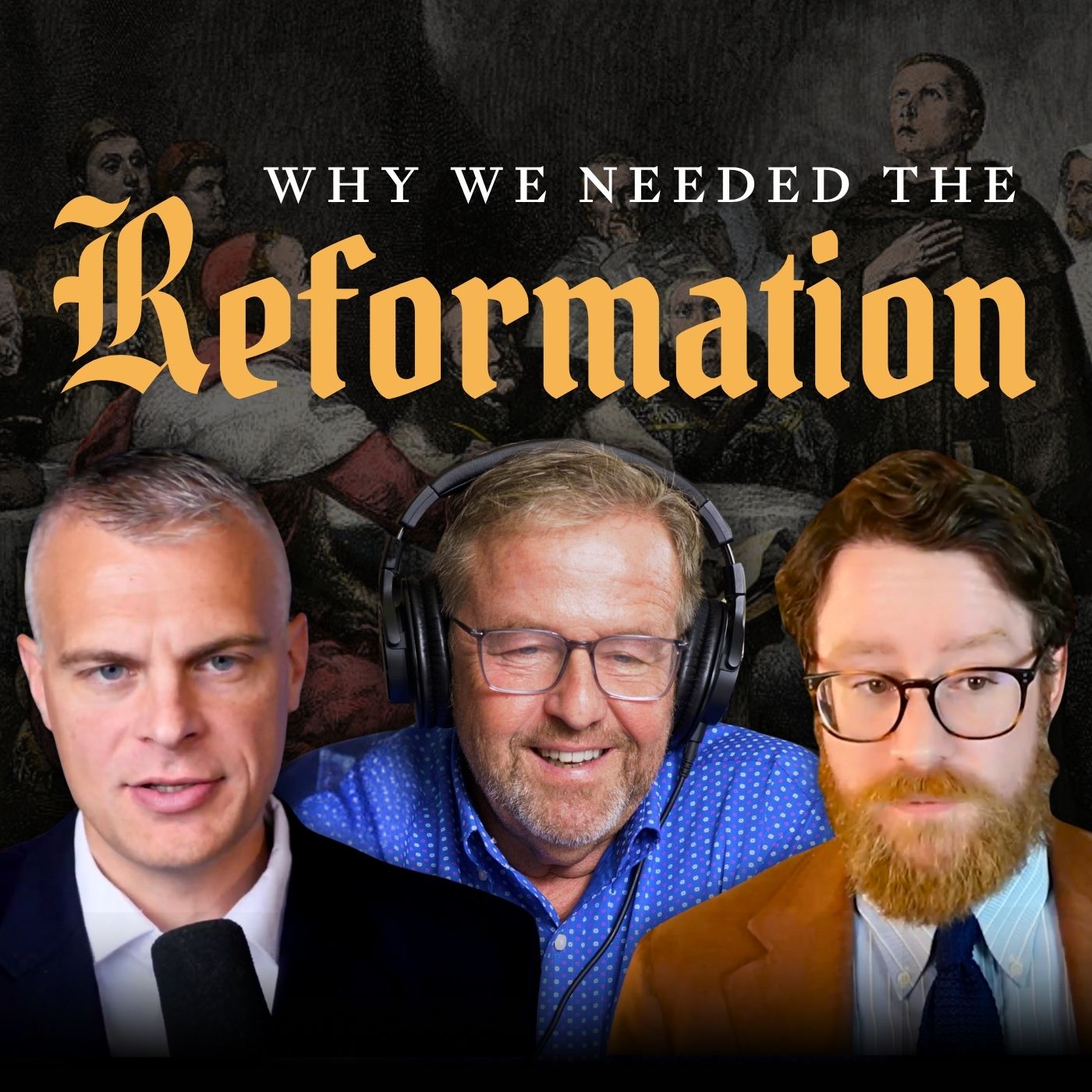
Know What You Believe with Michael Horton
A Triumphant Visible Church or a Weak Invisible Church?
00:43:08
Loading summary
Transcript32 lines
- [00:01]
A
At Sola Media, we're committed to helping Christians deepen their faith through clear, Christ centered teaching rooted in the riches of the Reformation. Every podcast, article and resource we produce is offered free of charge and it's only possible because of generous monthly supporters. When you become a partner Today, you'll receive two remarkable books as our Rediscovering the Holy Spirit by Dr. Michael Horton and Praying with Jesus by Pastor Adriel Sanchez. We believe these books can guide you into a clearer understanding of the Spirit's work and a richer prayer life. To become a partner and receive these two books, visit solamedia.org partner hey listeners, and welcome to episode five of our six part series, Defending the Protestant Apologetics for Today with Gavin Ortlund and Jordan Cooper. As you'll hear in the introduction, this episode is being hosted on Gavin Ortland's YouTube channel, Truth Unites. To watch the full video version, head over to his channel and subscribe.
- [01:18]
B
Hey everyone, I'm here with my friends Dr. Jordan Cooper and Dr. Michael Horton, two great friends and fantastic theologians. And and we're going to talk about the doctrine of the church, especially as this plays out in Christian disagreements today. And a lot of the conversations that happen on the Internet related to how do you know if you're in the church bring up anxiety. And we want to work through what's a Protestant perspective on that? Where do we agree in our different traditions, maybe even exploring some of our different emphases as well. So here's some possible topics we might get into the visible church and the invisible church. What is going on with that distinction? The institutionality of the church, Our posture toward church history. I'm going to bring up a topic called the splendor of the Church, as some Reformed theologians have spoken of that the transmission of the church. How does the church move from one place and time to another and remain still the church? And we'll try to think these things through in a way that serves our viewers. Maybe we can start with just talking about the distinction between the invisible church and the visible church. And I'm going to basically make two comments myself and then I'll kick it over to both of you to help me think this through. Just to think about what is this? What does this mean? Why do we value this distinction? And I'll start by warding off two caricatures that I'm sorry to say I've heard a lot. And the first is that Protestants affirm an invisible church rather than a visible church, as though we simply denied that there is A visible church, which of course is not what we believe. We distinguish between the two and we think there's an absolute necessity to do that. As we'll get into this, another caricature is the conflation of the visible church with the institutionality of the church. But those are distinct ideas and we'll talk about institutionality in a moment. But visibility, of course has to do with seeing. So what do we mean when we make a distinction between the invisible church and the visible church? Maybe both of you can help me think this through. And we want to also help our viewers understand the value behind this. Why does this matter?
- [03:31]
C
I think the writer of the Hebrews, close to the beginning of his Epistle, says, we live by faith, not by sight. The solid realities are not visible, but we hear about it. And when I say in the Creed each Lord's day, I believe in one holy, catholic and apostolic church. I don't see one institution around the whole world that is one holy, catholic and apostolic. So what's going on here? It's not Platonic. When Augustine, we get this distinction not just from Augustine, but he really formulated it. Augustine didn't mean in a Platonic way. There's a Platonic ideal church, a form, a pure form, and then there is a reality called the visible church. It was more eschatological. He talks like that, but he doesn't use the language. It's more already, not yet. Rather than above and below, it's the Church as it is now on its pilgrimage filled with first of all, non elect as well as elect, goats as well as sheep. But also even the elect are simultaneously justified and sinful. You can't have an over realized eschatology where the church of the elect is perfectly visible in the world today. But it's also, the visible church is also not disconnected from that, it's just not pure yet.
- [05:14]
D
So the distinction between the invisible, invisible church is to some extent kind of obvious. You know, I think you know, and everybody acknowledges this to some degree. I mean, even modern Roman Catholic theology recognizes that salvation exists in some sense outside of the institutional church. Right? There are those who are not in the institutional Roman Church who are, who are Christians, who are elect even in Roman Catholic theology. So the distinction is really just to say that there is a difference between those who are part of the external membership of the Church, just external institution, sacraments, those kinds of things that don't actually genuinely have faith are not genuinely repentant. And so we have to make a distinction between the Church as an institution and Then what is the core essence of the Church that is defined really by faith? Johann Gerhard has, I think, a helpful distinction here as he's talking about this. He distinguishes between the internal fellowship of the Church and the external fellowship of the Church. And he says that the internal fellowship of the Church consists in the unity of saving faith, hope and love, by which the truly devout are joined to Christ the Head and to the other members of the Mystical Body. And then he says there's also an external fellowship that's part of the Church, which consists in the confession of faith and the use of the sacraments, to which the exercise of Church discipline can be added to that. So we have these different forms and kinds of fellowship that exist in one and the same Church. They are not two totally separate kinds of things or separate churches. So there's an internal element of the Church which is invisible. You don't really see people's faith, right? You don't see people's repentance. You don't see into people's hearts. But there are also external signs and markers that are essential to the church, things that God has ordained that the Church does that are, you know, very much visible. Now, Gerhard also makes this point when he's talking about the visible versus the invisible Church. He says that by the law of love, we consider as reborn and elect all those who gather together in the external assembly of the Church, who hear the Word, receive the sacraments, and abstain from the more serious outward sins. In other words, they're not just engaging in clear, unrepentant sins. So in other words, when we're making the visible, invisible distinction, we should operate on the assumption by love that those who are. Who belong to the visible church are also part of the invisible church. So in other words, we're not making this distinction to go into visible churches and try to figure out who's a real Christian in the midst of the congregation or something like that. So it's important to, I think, keep that in mind because there are some. Both caricatures, but also some groups or congregations maybe that have unfortunately moved in that kind of direction.
- [08:02]
B
Right? And I think you bring up a great point of just the sort of the inescapability of this, once you start thinking it through, that we all recognize there are hypocrites within the Church who are baptized and yet are not mystically united to Christ. In actual reality, they don't have faith in Christ. Judas Iscariot was a genuine apostle. He was not a junior apostle or a fake apostle. He was duly called he just was a hypocrite and didn't actually love Jesus and so forth. That reality necessitates some kind of distinction like this. Now, one of the things we've brought up already, the word institution has come up several times. Maybe it'd be helpful to talk through some things related to this. And the way I'll introduce this is to say it wasn't the Protestant intent or practice to strip away the institutional character of the church as such. We have institutions, we have offices in the church. We believe in sacraments. We're seeking to go back to Scripture and basically have those institutions that were set up by Christ and the apostles. That's the intent. However, one point of difference among Protestants and what we'll do is leave space for us each from our own standpoint, to tease this out in ways that are authentic to our own tradition. So we may have some points of difference and we can talk those through, and that's fine. But I think, actually, I anticipate we'll have a lot of common ground here too. One common point among us that we agree on is that the Church is not reduced to one singular institution. This is actually a key distinction between the Protestant traditions and our friends in non Protestant traditions who will often say with one implication or another, sometimes it's teased out differently. The church, the one true church, is identified with this particular institution. That is a key distinction for Protestants. And we would simply say, my argument. I'm curious what you both will think about this. My basic argument is sort of a basic empirical argument from the criteria given in the New Testament for where we discern the church. Just to say we see the Church in multiple institutions, we see the fruits of the Church in multiple contexts. And therefore it'd be very narrow to reduce it to simply to just one, particularly when there's no founding in divine revelation for what makes that one institution unique. But I'd love to hear from you both on this. Am I right to press on this distinction between a singular institution versus a more organic and holistic and broad view of the Church?
- [10:33]
C
I think, especially in the case of Eastern Orthodoxy, you simply can't credibly make the claim that there's one institution. Eastern Orthodoxy is a constellation of denominations, and some of those denominations anathematize each other. I was in a room in Cairo with several representatives of them, and they just didn't talk about certain things for that hour because it would have led to violent eruptions. They really consider the other to be kind of outside the faith. Some are chalcedonian some are non Chalcedonian, some are Russian Orthodox, others have excommunicated. The Russian Orthodox Church and don't have any relationship with the Ecumenical Patriarch has basically excommunicated the Russian Orthodox Church. Good grief. It's not as bad as Protestantism, but in principle it certainly isn't one institution. And that has to be. I think that has to be pointed out.
- [11:44]
D
Yeah, I think that that really is the. The core of it is that we don't. Protestantism shouldn't be defined non institutionally, but we don't make the institution absolute. And so we don't make a claim that there is one particular body that you must belong to. And if you belong to this particular church, you're in the true church, you know, within the Lutheran tradition. Just as an example, which is, you know, my own tradition, when you look at what happened after the Reformation, I mean the Lutheran Confessions themselves do just kind of assume continuity. There is an assumption that an episcopal polity is going to be the way that the church functions. And in Germany actually doesn't quite end up like that. You have this office of superintendent that's essentially created, which basically is bishop, but it's not called bishop. But then in the Scandinavian countries you largely do have a continuance of an episcopal kind of structure. But what we have generally said about the nature of the institution per se of the church is that there are things that are necessary in the church. Right. There are elements of an institution which are necessary. And that is the office of the holy ministry, word and sacrament rightly preached and sacraments rightly administered. These things are all essential. The church has to do these things. And within a Lutheran context it's not the case that the office of the ministry is something that's like self chosen. You know, you have to actually be properly and rightly called. And everything else that goes with that, with all of that being said, then we have things like, you know, an episcopacy or we have the external things, the way that the church is exactly structured, the constitution of particular church body. We would say that those things are only instituted by human right rather than divine right. So we would say that those institutional matters aren't like of absolute necessity. They're not of the essence of the church. And so generally Lutherans have had an episcopal structure in some form, even if we just decide to call our bishop something else, but we essentially pretty much all end up there. But we would say that that distinction between the office of the bishop and the office of the pastor is really One of function rather than absolute divine necessity or something like that. What that means is that when I look at the bodies that are in fellowship with my body, you know, we have different bishops and we have different ways that we're structured, even though we have the same confession of faith, but we don't see the need to join the same church. Right. So I'm in a group called the aalc, which is a small American Lutheran church body, Confessional Lutheran Church. We're in a working relationship with the Lutheran Church Missouri Synod, which is much bigger. I get this question all the time, which is, why don't you guys just join them and have a bigger church? There's no reason for you to exist separately. And I don't see the necessity in that. I think our identity is good. And I don't, because of our understanding of the church, we don't all need to have the same bishop. We don't need to in order to have Christian fellowship or even work together in all sorts of ways. We don't need to have exactly the same structure and exactly the same bylaws and all that kind of stuff. It's just not of necessity. And fellowship is, I think, much deeper than that. I don't want to, you know, negate the need for the external fellowship, but there's more to it than that.
- [15:07]
C
Yeah. The Apostle Paul says we're united by one Lord, one faith, one baptism. In other words, the Word and the sacraments. He doesn't mention one pastor. In the Reformed tradition, we have a distinction between the being of the Church and the well being of the church. And I think that there is. Correct me if I'm wrong on this, Jordan, but I think that there is more of an emphasis on the visibility of the Church in the Reformed tradition. Less is adiaphora. There are bishops in the Church of England. There were bishops in the English Reformation, the Hungarian Reformed Church at bishops. But for the most part the tradition was moving in the direction of a parody of ministers meeting in council. And yet Calvin considered that necessary for the well being of the church, not for the very being of the church. And some Presbyterians decided that no, it's essential to the reality of the church, which I think was overreacting in the other direction, from antinomianism to legalism. I think the bottom line is the church is not created by laws. The church is created by the ministry of the Gospel as it is preached and administered in baptism and the Lord's Supper. The church didn't create the Word as Rome teaches. Similarly, Protestants shouldn't believe that our structures legitimize the ministry of the Word. The Word creates its own space. It's not just there's a church that does certain things. The church exists in the first place because God talks.
- [16:57]
B
What you both have brought out there is so important for our viewers to understand. So just to synthesize and re emphasize in agreement with what you're both saying of this distinction between the being of the Church and the well being of the Church. The essence of the Church versus accidental features, however important they may be. I would really love to encourage viewers to think more about these categories. I think they're so important for having an authentic view of the Church stretched out through time. Here's another entry point to this same issue is the significance of Roman emperors in the early church was vast and profound. Roman emperors convoked councils and presided over all seven of the first ecumenical councils were convoked and presided over by a Roman emperor. Roman emperors made huge theological contributions. So that which is not essential to the Church can be very significant in the events of the Church. And but because we wouldn't say, well, you have to have a Roman emperor, no one would say that. And yet it profoundly affected the church. So because we don't have a Roman Empire anymore, the Church subsists outside the Roman Empire. So point is, to think critically about this will help slough off some of the naive views of I'm going to call it ecclesial transmission, which is a very clumsy phrase. But how does the Church get from point A to point B? How is the Church the same thing in the 2nd century as it is in the 3rd century as it is in the 13th century, when it changes so vastly and so profoundly. And to think about that, you have to think about these categories of accidental versus essential. So this is why sacraments are so central. Why we would say a Tuesday night campus ministry can do wonderful work, but it's not a church because it doesn't have baptism and it doesn't have the Lord's Supper and so forth.
- [18:46]
A
The five SOLAs of the Reformation brought essential truths of salvation and purpose into clear focus. These truths are just as critical to Christian life today as they were 500 years ago. Rediscover their meaning and relevance in our newest booklet, the Five Essential Truths for a Modern Reformation. Inside, you'll explore each of the five SOLAs. Grace alone, faith alone, Christ alone, Scripture alone, and God's glory alone, and why they still matter today. Support our work with a gift of any amount and we'll send you a copy. Visit solarmedia.org offers to get yours today.
- [19:31]
B
I think there's a perception that, well, Protestants just don't really have an authentic relationship to the Church throughout history. Protestants cannot be deep in history. And I think it's related in some ways to this question of a very mechanical view of the Church's transmission. The Church is always this obvious entity that's in lockstep from point A to.
- [19:52]
D
Point B. I think just one point there, actually. The early Lutherans do point that out about ecumenical councils and the role of the emperor and often argue that the magistrate is to call a church council because of that. Gerhard even says that an ordination is not valid if it hasn't been approved by the magistrate, which is kind of a strange and impossible take on things. You know, it's impossible today, obviously, in this context. So you find that. But I think that does point to the fact that the Church changes all the time and the way that things function change all the time. And I know that there's that, you know, saying that, you know, to be steeped in history is to cease to be Protestant. And I think when I look at history, at least as a. As a student of, you know, church history, when I really started delving into the writings of the Church Fathers, I remember being a little bit worried. Like, there was part of me that thought, as soon as I start reading the Fathers, I'm going to find that, you know, Newman's right, that I read the Fathers and I'm convinced of, you know, Roman Catholic doctrine. I think a little bit of acquaintance with Church history often leads people to Rome. I think an extensive knowledge of Church history leads away from that. And I think you just see that even in, you know, the best historians within the Roman Church who acknowledge all sorts of development, that on a popular level, among Roman Catholics, just aren't speaking to. So you have this just vast difference between what happens in scholarship and then what happens on a popular level. But I think as we're looking at the history of. Of the Church, there isn't some obvious, clear just through line, right? There's not just this absolute continuity of structure. There's not an absolute continuity of functioning. Just very basic things that change throughout the history of the Church, like the way that bishops are elected. By the time of St. Ambrose, you have the laity proposing that Ambrose gets elected as bishops. So the laity is involved in the deciding of these kinds of things. It works very differently than the kind of developed hierarchical structure, not to say that the structure is not hierarchical at all. At this point, but you can just organically trace throughout history the development of what, say, becomes the hierarchy of the Roman magisterium. And you can see the development of what happens in the east versus the West. And the two are quite distinct. I think it paints a very neat picture to be able to just say, we are the Church. There is this clear continuity. Here's this one identifying feature. And as long as you have this, you know that you're, you know, in the true church. And I think it gives people a lot of assurance or comfort to just have that. But, man, the more you delve into church history, the more complicated absolutely everything is, and the more you realize that, one, there are several points in the early Church. If you're. If you're looking at areas of general agreement, there's not unanimity on hardly anything. But in terms of general agreement, there are areas where it's very clear that the early Church favors what becomes a Protestant distinctive later. But it's also clear that there are some things that seem to be the most prominent views among the Fathers that are Roman Catholic distinctives, too. And I think when you start to really read the early Church, and not just selections, but actually reading entire treatises of the Fathers and taking them on their own terms, you start to realize one, that they don't fit into any of the ecclesiastical boxes we have today, and two, that we all take ideas and thoughts from the Fathers and they all lead in different kinds of streams. In terms of doctrinal continuity, we certainly have it at least as much as Rome does.
- [23:41]
C
Yeah. I think parallels also with the Reformed tradition here actually took over from the Lutherans the idea that only the magistrate can handle church discipline. And so actually, Calvin was kicked out of Geneva. One of the main reasons he was kicked out of Geneva the first time was because he wanted the Church to have discipline and the state not be involved at all in the discipline of Christians or the determination of worship and everything. That the state even paid the minister's salaries, for Pete's sake, and determined what feast days would be allowed and so forth. But Calvin called the Emperor Charles a nursing father, like Constantine and Charlemagne called him to hold an ecumenical council to solve this whole Reformation thing. It was an era of Christian nationalism. It was an era when you actually had Christian nationalism, not the nostalgia for it. And clearly the Church of Rome today isn't a state church anywhere. So you don't have one institution fused with the kingdoms of this world. And I think we'll be really brief here, but, you know, Jerome said If we're going to have bishops, we should see it more as an innovation of men than as a requirement of the Lord. Okay, so was he a Protestant? No, he wasn't a Protestant at all. But even Pope Benedict, the late Pope Benedict, said there is no Petrine succession. There is, in the New Testament, rather, no evidence of Petrine succession. There have been huge, massive changes in the doctrine and piety of all of the churches of Christendom. And Calvin just said, we want to go back to the best example of. Of the ancient Church. He didn't say the Church died after the apostles. He said, we want to get back to the best ancient form of the Church. But he was under no illusions that there would ever be a pure church this side of glory.
- [26:16]
B
And that's so. Right. And that is that the complexity and sea changes of church history are there. What you're both saying about the magistrate, I was going to say the same thing about. In the Reformed tradition, there's some very high statements about the magistrate. Now, I was speaking of Roman emperors, which obviously you can't have Roman emperors after the Roman Empire is gone. And yet you see how significant they were in the early church. And the point that we're trying to belabor here so people don't lose the broader point here is there's tremendous complexity and development and change in church history. And Protestants, I think, are best equipped to be honest about that, as opposed to kind of the veneer of, as you put it, Dr. Cooper, the comfort of feeling like, well, I'm in the one true church. And I think people get disillusioned by that the more they sit with the actual historical data. I want to talk about the splendor of the Church, but I'll pause and see. Is there anything else here we need to cover before, if you have thoughts. I don't want to keep rushing forward.
- [27:14]
D
Yeah, I could just be real quick here. But I think the point that you made, this is really key to me, is that Protestants are the ones that are able to actually be honest with church history and with the Fathers. Lutherans are credited usually with the discipline of patrology as a distinct discipline. And the reason is because we don't have to read the Fathers and squeeze them into a particular line of thinking about the development of doctrine. We don't have to look at the Fathers and say, well, I need to make sure that they prove the overall point that I'm trying to make, that there is this continuity and yet, you know, stick them in the midst of the development hypothesis somewhere it really stops you from the ability to really interact honestly with the sources as they are. And Protestantism, because we don't have to say that, you know, all the fathers agree with us on this or that. We don't need the kind of unanimity in the fathers. We can simply just be honest with the text as they are.
- [28:12]
B
Yeah, that is such a great point. And since you've brought up the Lutherans being credited for patrology, I just want to emphasize that point as well. The Lutheran tradition, I think both the Lutheran and the Reformed tradition have a lot of depth and richness to them, and there's much to unearth and much to discover. But just to honor the Lutheran tradition, some of these Lutheran Scholastic theologians, if someone has the illusion that, well, Protestants don't really go deep, okay, go read the Lutheran Scholastics. I mean, and you could say the same for some of the Reformed Scholastics as well. But some of these 17th century Lutherans left no stone unturned in their survey of the church fathers and even medieval theology, of course, as well. Again, one of the constant dynamics is the equation of what I've witnessed of evangelicals in my context, equal sign, Protestantism. And to them, we want to invite them to discover the riches of these different Protestant traditions, not just Lutheran and Reformed. There are others as well. Do you want to jump in on that?
- [29:15]
C
Well, could just call. Karl Barth was preparing his lectures the night before he had to deliver them as honorary professor of Reformed Theology at the University of Gottingen. And he said, I hadn't read the Reformed Scholastics. I had no idea who these people were. I started turning every page on every page. It was simultaneously dreary and an amazing experience. And he said, I found myself for the first time visibly in the presence of the church. And people have to understand. What the Lutheran and Reformed scholastics tried to do or did do was reckon with the historical ambiguities, but also show the substantial unity of the Reformation as a continuation of, of the best, as Calvin put it, the best of the ancient church and the best medieval scholastics. These are not traditions that threw the baby out with the bathwater.
- [30:25]
B
One topic I'd love for us to touch on before we finish here is this what some of the Reformed have called the splendor of the church. What we're getting into here is to state it succinctly and clearly, we want to ward off any idea that we discern the true church by external impressiveness in a worldly sense. Now, no Christian would say that, okay, we're not attributing that to any tradition out there explicitly, although there have been disagreements that get close to this. I think this comes up because I think actually this is a pastoral need. Sometimes people today are in awe of church buildings and structures. This can happen to Protestants. You know, it's. And of course, we have the pendulum swing in the other direction as well, where we have no appreciation for the beauty and what we would call accidental features of the church, like having beautiful stained glass windows as one example. Well, those are great. Stained glass windows are wonderful. I love stained glass windows. But that doesn't demarcate the true church from a false church. And it should not in our hearts, make us feel like, ah, now I'm in, now I'm. Now I've arrived, you know. But I actually think this is a pastoral need to help people think through. The church is an article of faith. She must be apprehended by the same faith by which we apprehend Christ himself. And that means sometimes the church, the true church, is hiding out in the cornfields because the heretics have taken over and have the beautiful building. And in my video on this, how to Find the One True Church, I talk about an episode where Hillary is accosting another Christian for being so impressed by the buildings and not appreciating the fact that they've been taken over by the semi Arians. And he's saying, you know, your focus is completely wrong. You have a carnal view of the church. You must evaluate the church by spiritual and doctrinal criteria, not merely by worldly structures. Even while we don't want to go so far as to deny the value of things like beautiful buildings and so many other things. I'd love to open this up to you guys. I'll just give one other biblical anecdote that's relevant here, and it's Elijah versus Ahab. Elijah is often hiding. And Ahab says, ah, there you are, the troubler of Israel. Elijah's response to Ahab is, I'm not the troubler of Israel. You are, because you've introduced idolatry. And they're going back and forth. And you think, you know, Ahab has the institutional backing and far greater numbers. He has far greater worldly impressiveness. But he's lacking one thing, and that's the truth. Elijah is the true prophet. And of course, this can be taken in a wrong direction so as to minimize and diminish the importance of institutions, for example. Nonetheless, I think what we want to maybe talk through here at the end is the Importance of a spiritual perception of the church in the best sense of that. Is that making sense? And what do you both want to comment on this? I'm really curious what you want to say here.
- [33:22]
D
Yeah, as I think through this issue, which I have thought about quite a bit, just because there's been so much conversation about this in recent years. You know, I think back to the early Christian apologists like Justin or Titian, and often they face the criticism from the pagans that they don't have any images in worship, that their places of worship are. Well, they're boring. They're young people's homes, the catacombs. They don't have these beautiful buildings like the impressive pagan ones at the time. And the response to that from the apologists is unanimously that those aren't the things that define worship. Right. We worship in spirit and in truth. That's cited repeatedly in the early church. The essence of our worship is not defined by the external things. There's obviously something much more essential than that. And by external things, I'm not including the external things of word and sacrament, which are, yes, external, but I'm talking about more the aesthetic kinds of things. Now, obviously, I'm in a tradition that values beauty in a lot of ways. We have vestments, you know, we have altars. They're not there just for the sake of their beauty. And there are certainly churches that are prettier than others. So there is a valuing of art and beauty that is, I think, right. And good for the church. That is not of the essence of the church. In the best scenario, the beauty of God and the beauty of the Gospel is portrayed in the architecture of the church. Right. That's the ideal. That's what you want. Not something that is just going to portray wealth or something like that in a beautiful church building. But there is something good to aligning the externals with what's really going on spiritually. But with that being said, it is far from the most essential thing in the church. I understand why people are drawn, especially young people today, because they're drawn. They want that which feels transcendent. And pretty buildings help. Like, they help set a certain mood. They help put you in a certain, you know, I think headspace. Same thing with, like, incense. You know, it gives you a certain sense of smell. You feel like the place is different. And there is a sense of, you know, the holy that you do get with images. You know, you get this in, you know, in the temple, you know, for example. So I think there is something that is that is good to that. I think there is an inclination that is right, but it can be significantly distorted so that those are, you know, are the most essential things. It is far more important to be a church that preaches the Word, administers the sacraments faithfully, even if they're, you know, meeting in somebody's home, than it is to be at a beautiful church without the gospel preached.
- [36:10]
C
Amen.
- [36:11]
D
Amen.
- [36:12]
C
Yeah, I think that's. That's a great place of agreement. I do think it's helpful for people to know, too, some of the disagreements. This is one area where there have been disagreements between Lutheran and Reformed churches that, yes, we are embodied creatures, but that is precisely why our worship needs to be regulated by Scripture, because.
- [36:43]
A
Our.
- [36:43]
C
Hearts are idol factories. We love to make idols. We should involve our bodies in worship. We should have singing. We should have a beautiful liturgy. But what we actually do in church, not around the edges, but what we do in church in a kind of instrumental way to lead people is circumstantial. And I think that's what you were saying, Jordan. Also, it's not elements of worship, that which is necessary, word and sacrament, but circumstances of worship where it can actually vary from church to church. You know, you could have some people who have an organ. You got other people who are waving their hands and there's a praise band, but you hear that there's the gospel there. And I think that one of the reasons that the early fathers were suspicious of images in church was because it isn't the temple worship. They even made the argument, as I'm sure you know, that the whole old covenant was filled with many ceremonies and many things that pointed to Christ. Whereas in the New Covenant, you have the fulfillment, you have fewer things. You only have two sacraments. You only have the preaching of the Word where Christ is placarded before people as if on a billboard. We would both say we have to be careful about the human imagination here, constructing circumstances that intrude actually on elements. And at the end of the day, people making decisions about what church they're going to join because of the architecture and everything else, even if, as you say, the Gospel isn't present.
- [38:51]
B
Let me pick on my own Reformed tradition here not to make Dr. Cooper happy by having all our viewers convert to Lutheranism, though maybe it'll happen. Who knows? We won't do an altar call. I think that the issue here we're getting into, and we need to wrap it up in just a second, is when do the external circumstances serve the ministry of the gospel.
- [39:10]
D
Right, exactly.
- [39:11]
B
And then when can they detract from it and what is the focus? And that can be subtle because you could have external circumstances that become a distraction depending on how they're done, whether they be incense and vestments or electric guitars and lights. Okay. So that temptation is not reducible to 1, to the high church side or the low church side or anything like that. But that is a question we need to think about. And I think the deepest burden on my heart here is to encourage our viewers to think critically about that distinction. Whatever our convictions lead us toward Israel, we want the external circumstances to serve the ministry of the Gospel. And historically, for Protestants, that has meant lots of beautiful buildings and lots of intentionality and care in how we go about those things that we don't see.
- [40:02]
C
Necessarily as much of today.
- [40:04]
D
Yeah, I think that's helpful. There are, if you read Johann Gerhard on what is the Reformed second commandment, which we number things differently. But if you read his exposition of, you know, the commandment against idolatry, he actually makes a lot of statements that sounds almost identical to what Calvin would call the regulative principle in terms of the fact that people cannot add anything to what has been divinely commanded. We can't make new forms of worship, you know, on our own, and these kinds of things. And so in some ways, I feel like the distinction maybe really is over that question of what are the better circumstances in terms of what is the best way to order those things that God has commanded? So I think, Gavin, your distinction is very helpful that you made there to say it's more of considerations of like, well, what can we do? And then. Or what can we get away with or something. Right. The question is like, what are the things that God has commanded us to do? And then the question is, what are the. The ways, circumstances, if you want to use that, you know, that's kind of the typical reform language talk about this, but what are the circumstances that you know best emphasize the gospel, that best emphasize the things that God has commanded?
- [41:26]
C
Yeah. Yes. That's fantastic.
- [41:28]
B
Yeah. Fantastic discussion. I want to say thank you to both of you. I admire you both and learn from you both so much. And I'll just sign off to our viewers with this comment to encourage them that let the love of Jesus Christ so fill your heart, the fact that you are forgiven of your sins, you're adopted as the child of God, you have heaven and God himself as your eternal inheritance. Let this reality so fill your heart that now you turn to the study of history and the study of ecclesiology, the doctrine of the church, and so forth from that standpoint. So that you're not tempted to make idols out of these things. Yes, we can make an idol out of theology. We can basically try to use our theology and our position within the church to meet certain needs that actually must be met by God alone. And so that is something we want to be alert to and we want to encourage people to have those needs met through the Gospel and through Christ. So much more to talk about this. I wish we could have a whole other hour on this. Thankfully, we will have another video coming out soon on Dr. Cooper's channel. It'll be the last of this series. I again want to state my gratitude for everyone at Sola Media who helped us with this as well, and to both of you, and we'll see our viewers in the next one. Thanks for watching everybody.
- [42:51]
A
Thanks for listening to this production of Solar Media. If you enjoyed this episode, would you share it with someone you think would benefit from it? Your support helps us spread the riches of the Reformation and apply historic Christian theology to every area of life.