Podcast
Kopi Time podcast with Taimur Baig
Hosted by DBS Bank · EN
Kopi time is a podcast series on insights from markets and economies around the world, hosted by Taimur Baig, Ph.D., Chief Economist of DBS Bank Ltd.
30episodes
Episodes
Newest firstAll episodes
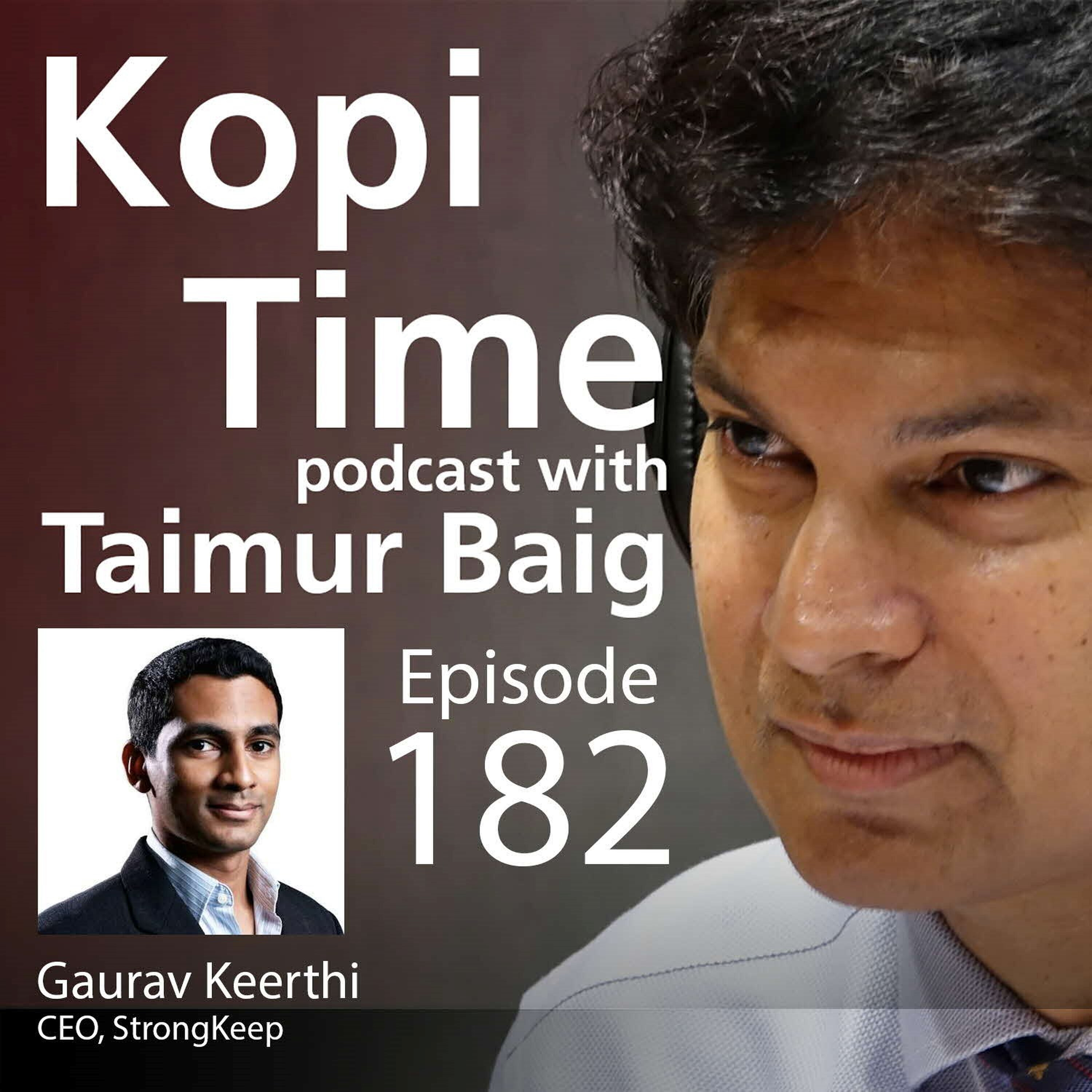
Kopi Time E182 - AI Cyber Risks with Gaurav Keerthi
4d ago00:56:19Tap to summarizeGaurav Keerthi, CEO of StrongKeep, a Singapore-based cybersecurity startup that provides SMEs with AI-driven security and compliance platforms, returns to Kopi Time to discuss the topic of the moment. In this wide ranging conversation, we begin by talking about why secure AI is a fundamentally different proposition compared to traditional software. Gaurav walks us through the essence of an AI-driven large language model, the unintended consequences that can arise even without hallucination or bad actor involvement, and the layers of risks involved. We comb through recent headlines to underscore the quick changing environment around cyber safety and security. We then take stock of the resources needed to deal with this constantly evolving risk, and how that leaves particularly small businesses vulnerable. Gaurav calls for cybersecurity in the AI era to be considered a public good that informs all business and regulatory decision-making. He is also keen to see a fundamental reshaping of cyber infrastructure, with built-in, publicly funded and monitored guardrails and reporting. The silver lining? The well-intentioned efforts toward innovation and safety can keep pace with the pernicious aspects. There is hope.See omnystudio.com/listener for privacy information.
Transcribe →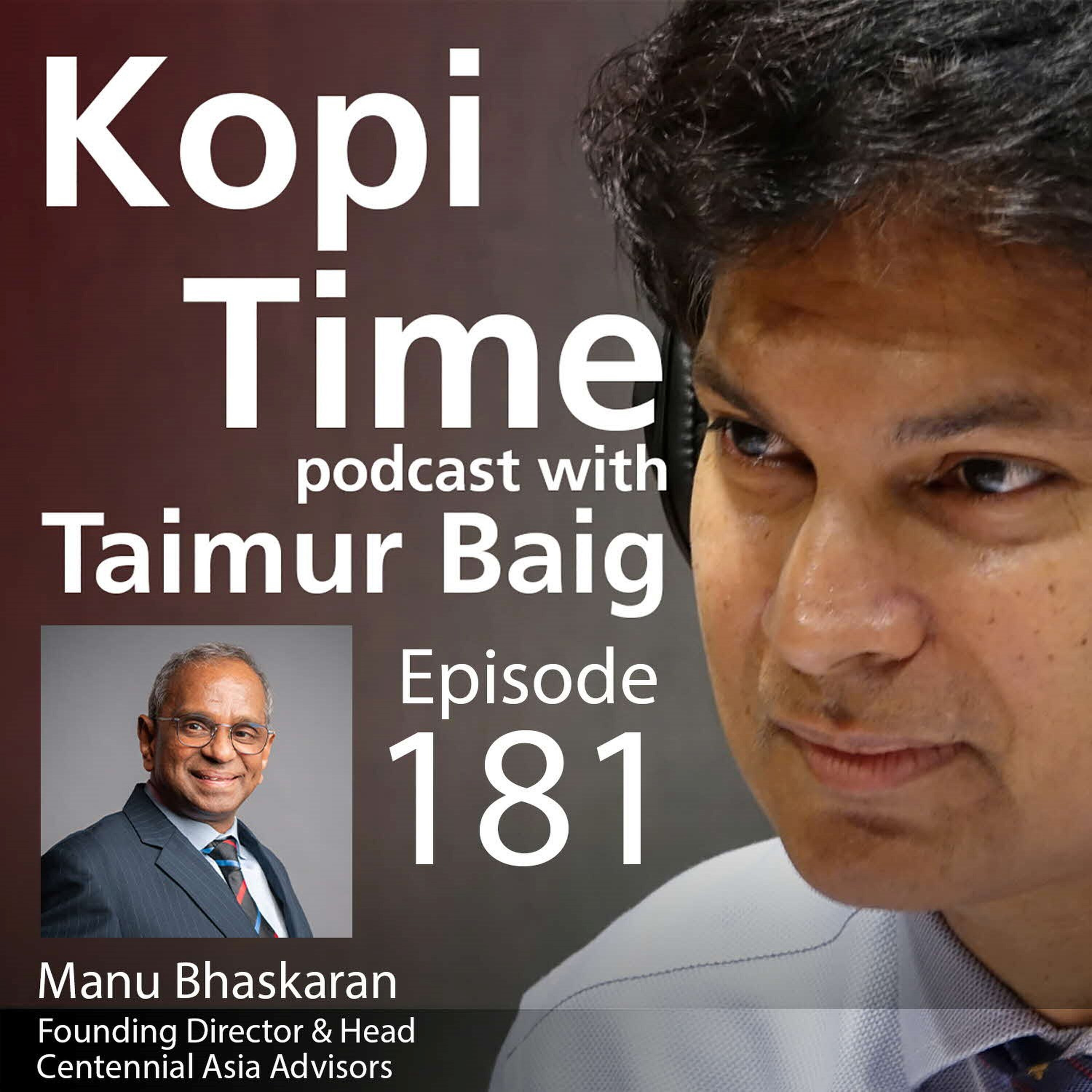
Kopi Time E181 - Singapore's Economic Path with Manu Bhaskaran
2w ago00:36:57Tap to summarizeManu Bhaskaran, founding director and head of Centennial Asia Advisors, returns to Kopi Time ahead of Singapore’s 61st birthday. We begin by taking stock of Singapore’s recent economic performance, with growth accelerating and investments surging. Manu walks us through the sectoral outcomes and productivity developments, noting that while the electronics industry is leading the charge, growth is more broad-based. We then talk about health and education outcomes, demographic challenges, and the thorny issue of inequality. Manu shares his ideas on social safety expansion, especially with respect to the cost of childcare, but also elderly care. We transition to Singapore’s symbiosis with neighbouring jurisdictions, particularly Johor. We conclude with geopolitics, and the challenges of balancing great power rivalry.See omnystudio.com/listener for privacy information.
Transcribe →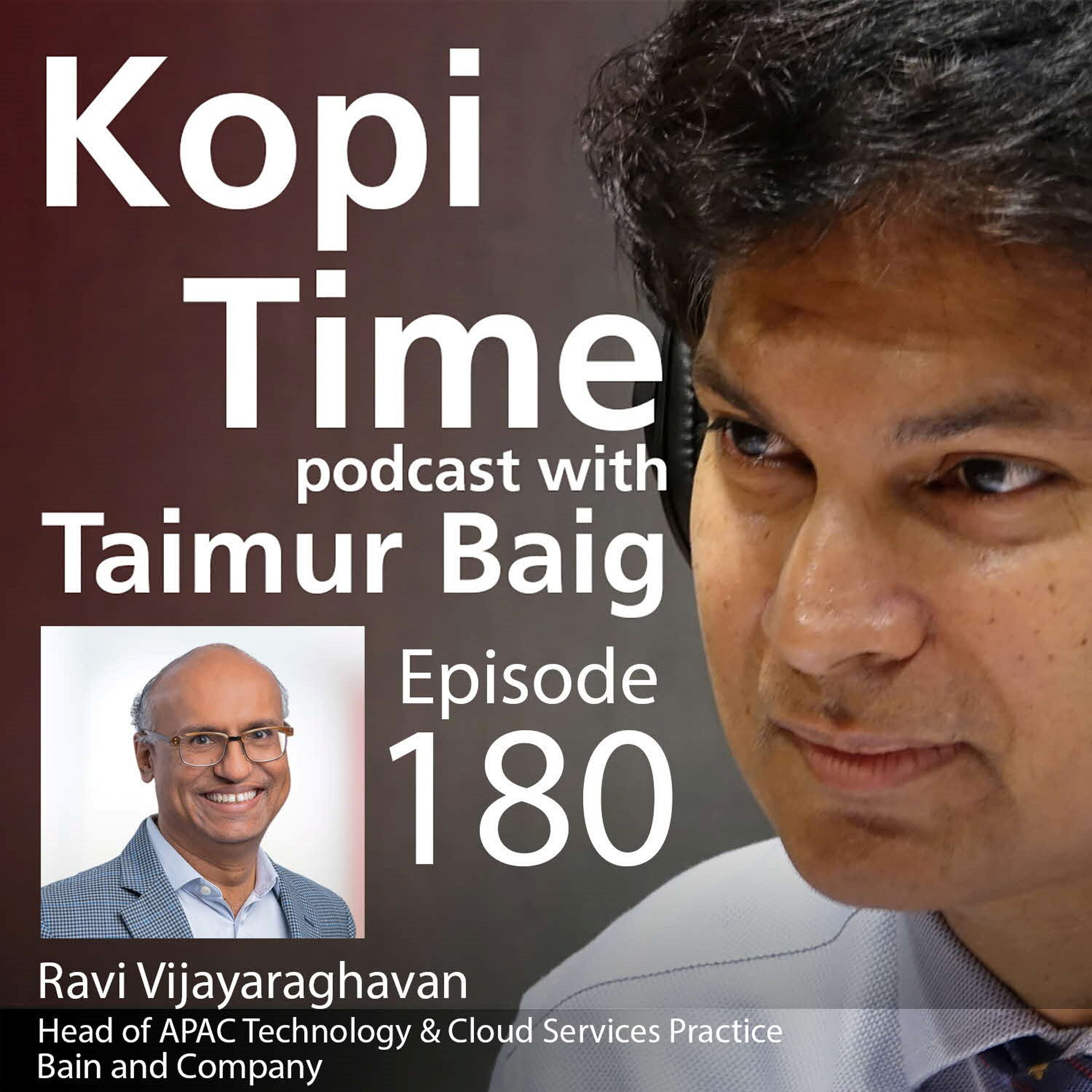
Kopi Time E180 - Tech Wave with Bain's Ravi Vijayaraghavan
Jun 1801:10:45Tap to summarizeIn this episode, we get expert view on the ongoing, historic tech wave. Ravi Vijayaraghavan, head of APAC Technology & Cloud Services practice at Bain and Company, offers a wide range of insights, starting with the implication of the unprecedented scale of capital spending on AI build-out taking place presently. We compare this tech cycle with past ones, consider sectors that are in vogue (hardware) and that are not (software). Ravi shares his observations on the state of high tech in China, US, North Asia, South-East Asia, and South Asia. We also discuss various moon-shot ideas at the frontier of tech. We conclude with the ethics of AI, and regulatory implications. See omnystudio.com/listener for privacy information.
Transcribe →
Kopi Time E179: Energy markets with Vandana Hari
May 2800:46:42Tap to summarizeWe discuss energy market outlook with Vandana Hari, founder of Vanda Insights, a Singapore-based provider of energy market intelligence. We begin with the crude and refined product bottleneck created by the virtual closure of the Strait of Hormuz, and what it means for Asia and Europe. We then delve into the supply and demand responses since the Iran war began, especially with the way China and the US are dealing with the fallout. Vandana is bearish the supply side outlook even if the Strait were to re-open as part of another temporary ceasefire. We conclude by discussing the lessons from this crisis, from strategic reserves to wider supply base, from regional cooperation on resilient grids, storage, and pipelines to accelerate renewable energy production capacities. Vandana does not see the future as either/or; nations have to increase investments in the entire energy stack. Clarification: Vandana notes that crude futures six months out and 12 months out are almost $15 and $20 lower respectively.See omnystudio.com/listener for privacy information.
Transcribe →
Kopi Time E178: AI and National Interest with Dr. Anthony Annett
May 2000:36:32Tap to summarizeShould AI be nationalised, or at least have a substantial part of its equity held by the public sector? I collaborated recently with author and economist Anthony Annett to delve into this issue. The resulting op-ed, published on Singapore’s Business Times (link here: https://bt.sg/g/DyLA), and the torrent of feedback we have received since it came out, is the subject of this Kopi Time episode. Tony and I go over the key arguments—public safety, strategic importance, distributional fairness, and common imperative, and respond to the various lines of arguments against them, from it’s too late, it’s not feasible, it will harm innovation, and the government is the problem, not the solution. By referring to relevant history of economic thought, experience with public ownership of strategic assets in the 20th century, and a common-sense risk management approach, we think our responses are adequate. You can be the judge.See omnystudio.com/listener for privacy information.
Transcribe →
Kopi Time E177 - Deborah Elms on Trade Matters
May 600:51:56Tap to summarizeA year since the reciprocal tariff bombshell, how has trade changed and what realignments are in the making? We invite back to Kopi Time, Deborah Elms, Hinrich Foundation’s head of trade policy, to mark the tumultuous period. We begin by taking stock of the macro impact on the US and rest of the world over the past year, with little evidence of a major change in the import appetite of American consumers or export viability of Asia. Deborah points out that there is nonetheless a substantial realignment in production origins and trade patterns. We talk about the many uncertain aspects related to new rounds of US tariffs, investigations, and deal status for most countries in the world. We conclude with a roundup on the many consequential deals being done outside the US, and the parts of WTO framework still functional. Wars may command headlines presently; trade matters are not going away at all.See omnystudio.com/listener for privacy information.
Transcribe →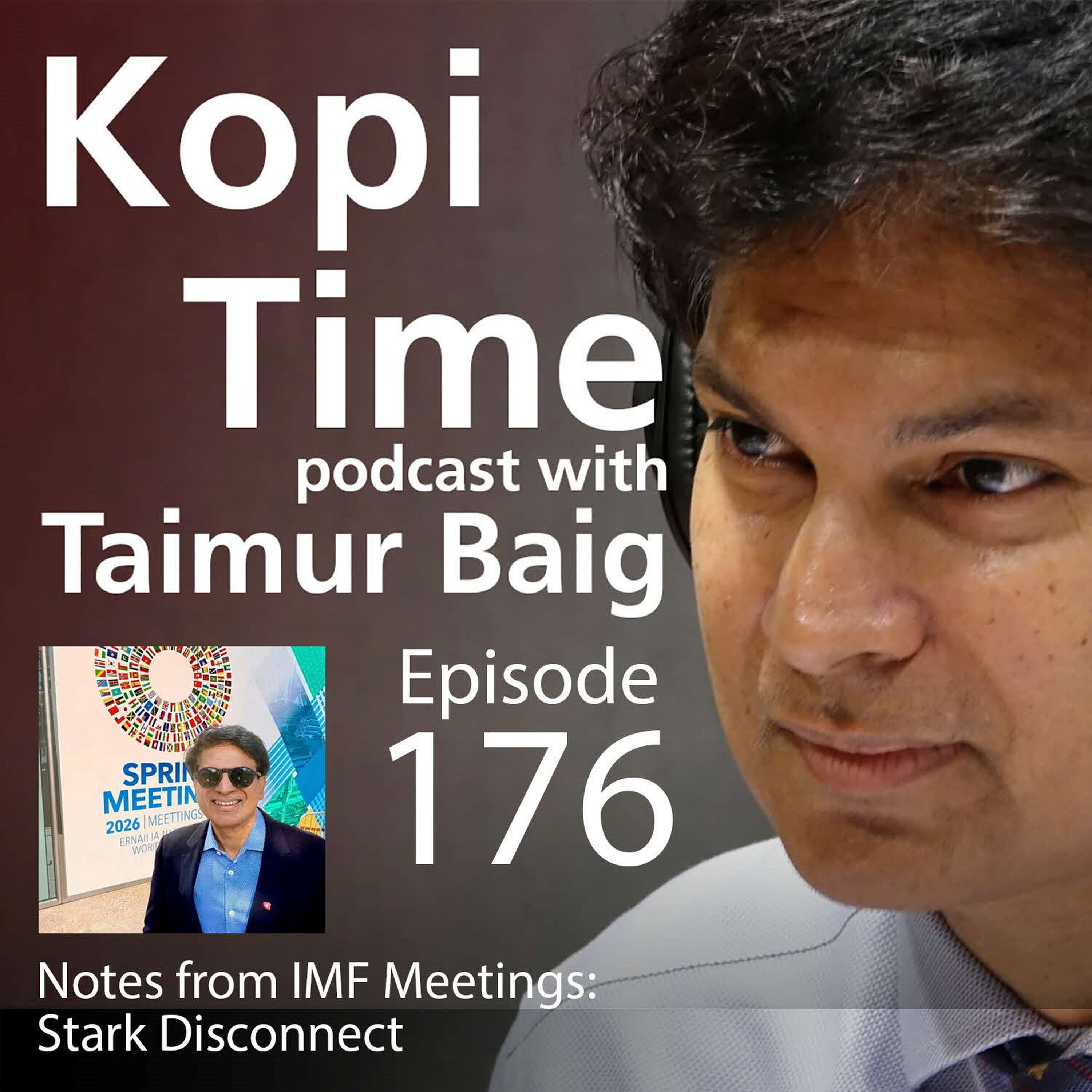
DBS Kopi Time E176- Notes from IMF Meetings - Stark Disconnect
Apr 2000:15:27Tap to summarizeThe week of the IMF Spring Meetings were characterised by a stark contrast. Markets focused on fading war risks and kept rallying. But official sector and analysts’ warnings about public debt, energy security, future of the USD, and Fed leadership risks loomed over the meetings. Commodity price/supply shocks likely to be substantial; growth forecasts are at risk. Energy source diversification, reserves, infrastructure, and renewables under focus. China better positioned via stocks, suppliers, coal, and green energy progress. War worsens debt, deficits and balance-of-payments strains extend to nations beyond the combatants. USD faces trust/payment-system challenges; Fed transition uncertainty is rising.See omnystudio.com/listener for privacy information.
Transcribe →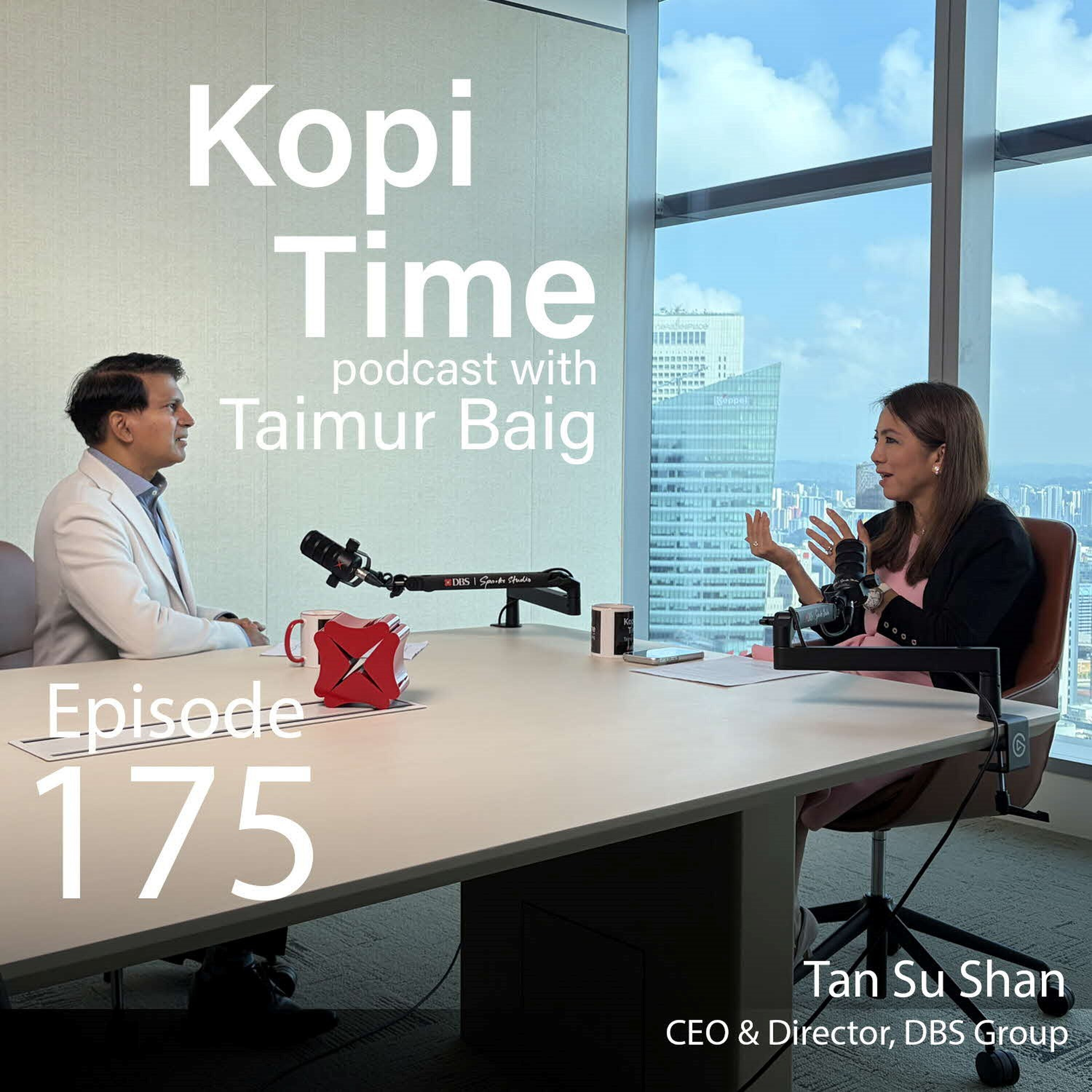
Kopi Time E175: DBS CEO Tan Su Shan on wars, tariffs, AI, and fintech
Apr 800:37:19Tap to summarizeThe first time Tan Su Shan came on Kopi Time, it was right after the war in Ukraine had broken out and energy and food prices were spiking worldwide. Four years later, another war and another bout of inflation and associated risks are to the fore. We begin our conversation with Su Shan comparing the two episodes, with strategies to guide the bank and its clients through the fog of war. It’s also a year since the reciprocal tariff shock, which coincided with her taking over the top job at DBS. We discuss how businesses are learning to live with the chronic uncertainty emanating from trade relations with the US, and thriving nonetheless, especially with trade outside the US. Our conversation then moves on to tech, especially the impact of AI and implication for jobs. Reflecting on her recent trips to the US and China, Su Shan highlights both the promises and challenges of the AI boom. We conclude with a discussion on the future of banking given the spate of disruptions taking place in the fintech arena. See omnystudio.com/listener for privacy information.
Transcribe →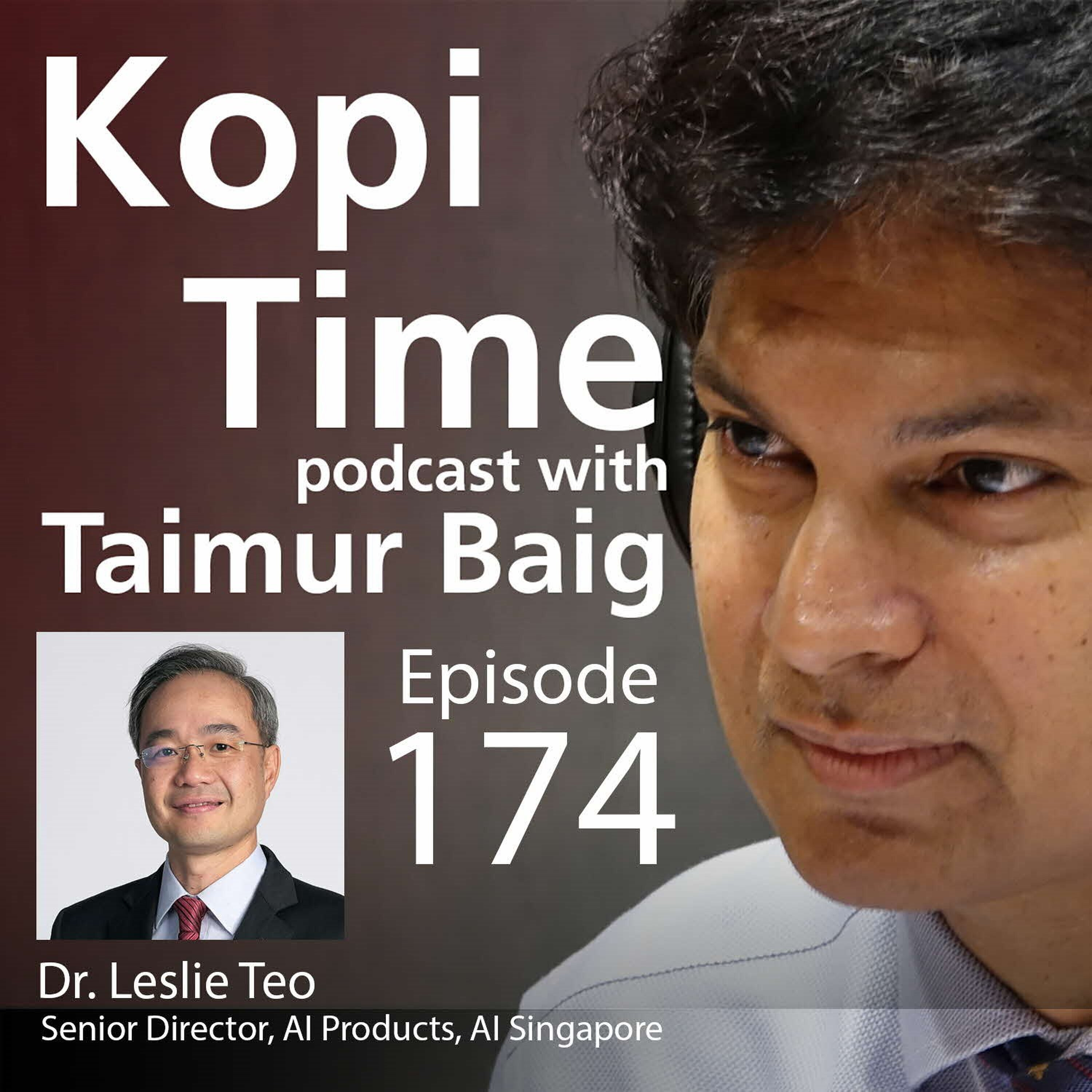
Kopi Time E174 - Future of Jobs and Tasks with AI Singapore's Leslie Teo
Mar 2500:57:42Tap to summarizeIn a recent collaboration with Dr. Leslie Teo, Senior Director of AI Products at AI Singapore, we published an article on redefining jobs and expertise in the AI era (link here). The process of writing the article entailed making several Large Language Models work for many hours, searching through hundreds of top journal articles, establishing key insights from the latest research findings, and carrying out economic analysis (link to our companion piece on the process is here). In this podcast, Leslie and I talk about deploying the ever-improving AI agents, along with the need for human judgment, emotional quotient, and leadership in work. As tasks become more automated and we become more productive, what is the role of educators, firms, and governments in embracing the upside while managing labour market disruptions? Leslie’s sharing on all this should allay the fears of those who see a dystopian future in the making. See omnystudio.com/listener for privacy information.
Transcribe →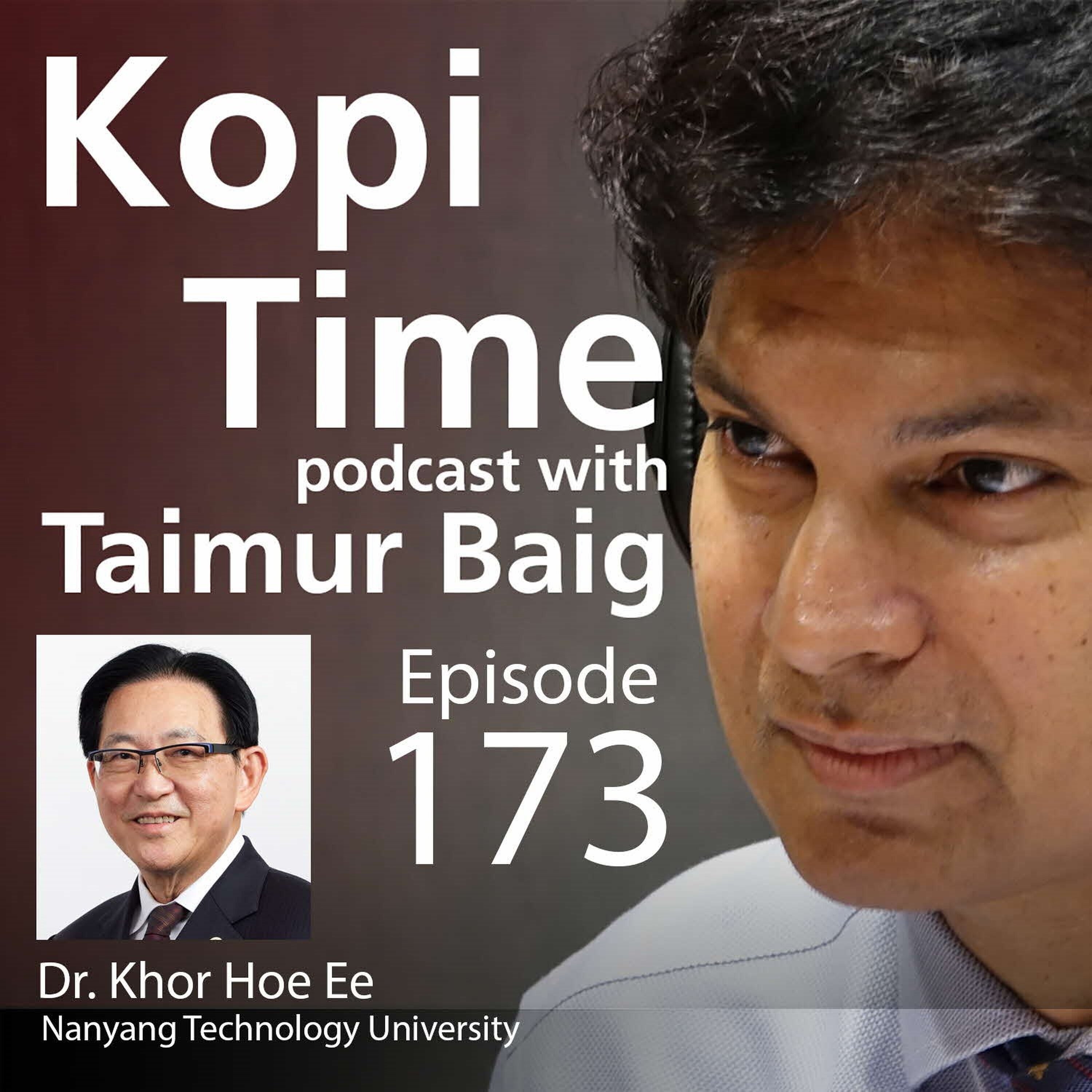
Kopi Time E173 - Dr. Khor Hoe Ee on Asia's Resilience and the Road Ahead
Mar 1100:48:58Tap to summarizeDr. Khor Hoe Ee, presently with Nanyang Technology University, with a long career in multilateral institutions and central banking, returns to Kopi Time. We begin with his recent writings, part of which has analysed the factors underlying the better-than-expected performance of the global economy in 2025, particularly Asia. Dr. Khor explains the role of the AI spending cycle, a powerful green transition dynamic, and an accommodating macro environment as key factors. We then talk about Singapore’s shock absorption capacity and the challenges with respect to the ongoing AI wave. We go over Singapore’s social imperative for inclusive growth and the policy menu. We conclude with the challenges facing Asean.See omnystudio.com/listener for privacy information.
Transcribe →