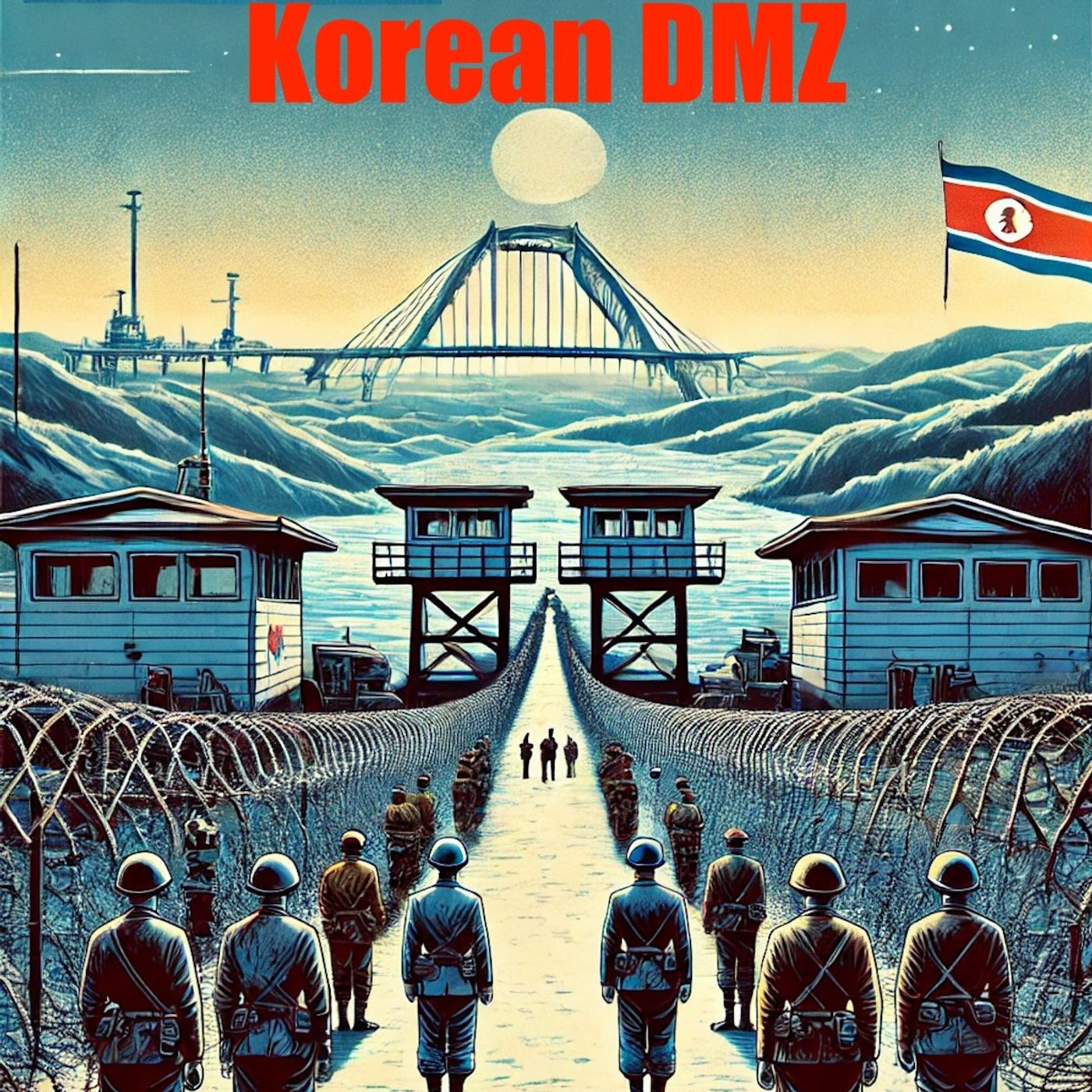
Navigating Tensions: The Complex Challenges of the Korean DMZ
Jun 24, 2024·00:07:53·Tap to summarize
The Korean Demilitarized Zone (DMZ) is a 250-kilometer-long and 4-kilometer-wide strip of land that divides the Korean Peninsula roughly in half, serving as a buffer zone between North and South Korea. Established in 1953 as part of the Korean Armistice Agreement, which brought an end to the Korean War, the DMZ has become a symbol of the ongoing tensions and the unresolved conflict between the two nations. Despite its name, the DMZ is one of the most heavily militarized borders in the world, with both sides maintaining a substantial military presence along the frontier. The history of the DMZ is rooted in the complex geopolitical events of the 20th century. Following the end of World War II, the Korean Peninsula was divided along the 38th parallel, with the Soviet Union occupying the north and the United States occupying the south. This division was intended to be temporary, but as the Cold War intensified, the two superpowers supported the establishment of separate governments in their respective zones of control. In 1948, the Democratic People's Republic of Korea (DPRK, or North Korea) was founded in the north, while the Republic of Korea (ROK, or South Korea) was established in the south. Tensions between the two Koreas escalated, and on June 25, 1950, North Korean forces crossed the 38th parallel, invading South Korea and triggering the Korean War. The United Nations, led by the United States, intervened on behalf of South Korea, while China and the Soviet Union supported North Korea. The war lasted for three years and resulted in the deaths of millions of Koreans, as well as significant casualties among the international forces involved. The Korean Armistice Agreement, signed on July 27, 1953, brought an end to the active hostilities but did not result in a formal peace treaty. The agreement established the Military Demarcation Line (MDL), which runs roughly along the 38th parallel, and the DMZ, which extends 2 kilometers on either side of the MDL. The DMZ was intended to serve as a neutral, demilitarized buffer zone between the two Koreas, but in reality, it has become a heavily fortified frontier, lined with fences, landmines, and guard posts. One of the most iconic features of the DMZ is the Joint Security Area (JSA) located in the village of Panmunjom. The JSA is the only place where soldiers from North and South Korea stand face-to-face, and it has been the site of numerous diplomatic meetings and negotiations between the two countries. The JSA is also a popular tourist destination, attracting visitors from around the world who are curious to catch a glimpse of the heavily guarded border and the tense atmosphere that pervades the area. Despite the DMZ's reputation as a symbol of division and hostility, it has also become an accidental wildlife sanctuary. The absence of human activity in the DMZ for over six decades has allowed nature to flourish, and the area is now home to numerous rare and endangered species, including the red-crowned crane, the Asiatic black bear, and the Siberian musk deer. In recognition of the DMZ's ecological significance, there have been proposals to designate the area as a UNESCO Biosphere Reserve or a World Heritage Site. The DMZ has also played a role in the larger geopolitical dynamics of the region, particularly in relation to the United States' involvement in the Korean Peninsula. The United States has maintained a significant military presence in South Korea since the end of the Korean War, with approximately 28,500 American troops currently stationed in the country. The U.S.-South Korea alliance has been a key factor in deterring North Korean aggression and maintaining stability in the region, but it has also been a source of tension and controversy, particularly among those who advocate for a more independent South Korean foreign policy. In recent years, there have been efforts to reduce tensions and promote dialogue between the two Koreas. In 2018, North Korean leader Kim Jong-un and South Korean President Moon Jae-in held a series of historic summits, including a meeting in the DMZ itself, where they pledged to work towards the denuclearization of the Korean Peninsula and the establishment of a permanent peace regime. These summits raised hopes for a breakthrough in the long-stalled peace process, but progress has been slow, and the prospects for a lasting resolution to the conflict remain uncertain. One of the main obstacles to peace on the Korean Peninsula is the issue of North Korea's nuclear weapons program. North Korea has conducted numerous nuclear tests and ballistic missile launches in recent years, defying international sanctions and raising concerns about the country's ability to strike targets in South Korea, Japan, and even the United States. The international community has sought to pressure North Korea to abandon its nuclear ambitions through a combination of diplomatic engagement and economic sanctions, but so far, these efforts have yielded limited results. Another challenge is the deep-rooted mistrust and animosity between the two Koreas, which have been further entrenched by decades of propaganda and hostility. Many South Koreans, particularly those in the older generation, remain skeptical of North Korea's intentions and are wary of any efforts to engage with the regime in Pyongyang. Similarly, North Korea has long portrayed South Korea as a puppet of the United States and has sought to undermine the legitimacy of the South Korean government through various means, including military provocations and cyberattacks. Despite these challenges, there are also reasons for hope. The younger generation of Koreans, both in the North and the South, are less burdened by the legacy of the Korean War and are more open to the idea of engagement and reconciliation. There is a growing recognition on both sides of the DMZ that the current state of affairs is unsustainable and that a new approach is needed to break the cycle of hostility and mistrust. Moreover, the international community has a vital role to play in supporting efforts to promote peace and stability on the Korean Peninsula. The United States, China, Russia, and Japan, as well as other regional actors, have a shared interest in preventing another conflict on the Korean Peninsula and in promoting a peaceful resolution to the current standoff. By working together and engaging in diplomacy and dialogue, the international community can help to create the conditions for a lasting peace on the Korean Peninsula. In conclusion, the Korean Demilitarized Zone is a complex and multifaceted symbol of the unresolved conflict between North and South Korea. It is a reminder of the tragic history of the Korean War and the ongoing tensions that continue to divide the Korean people. At the same time, the DMZ is also a source of hope and possibility, a place where nature has thrived in the absence of human activity and where the seeds of reconciliation and cooperation can be planted. As the world watches the events unfolding on the Korean Peninsula, it is clear that the path to peace will not be easy. It will require patience, perseverance, and a willingness to engage in difficult conversations and make hard compromises. But with the support of the international community and the determination of the Korean people, there is reason to believe that a brighter future is possible, one in which the DMZ is no longer a symbol of division and hostility, but a testament to the power of dialogue, diplomacy, and the resilience of the human spirit. The DMZ may be a scar on the landscape of the Korean Peninsula, but it is also a reminder of the shared history and the common humanity that binds the Korean people together. As we look to the future, let us hope that the DMZ will one day be transformed from a barrier that divides to a bridge that unites, and that the dream of a peaceful, prosperous, and reunified Korea will finally be realized. Thanks for listening and remember to like and share wherever you get your podcasts.This content was created in partnership and with the help of Artificial Intelligence AIThis episode includes AI-generated content.