← Las Culturistas with Matt Rogers and Bowen Yang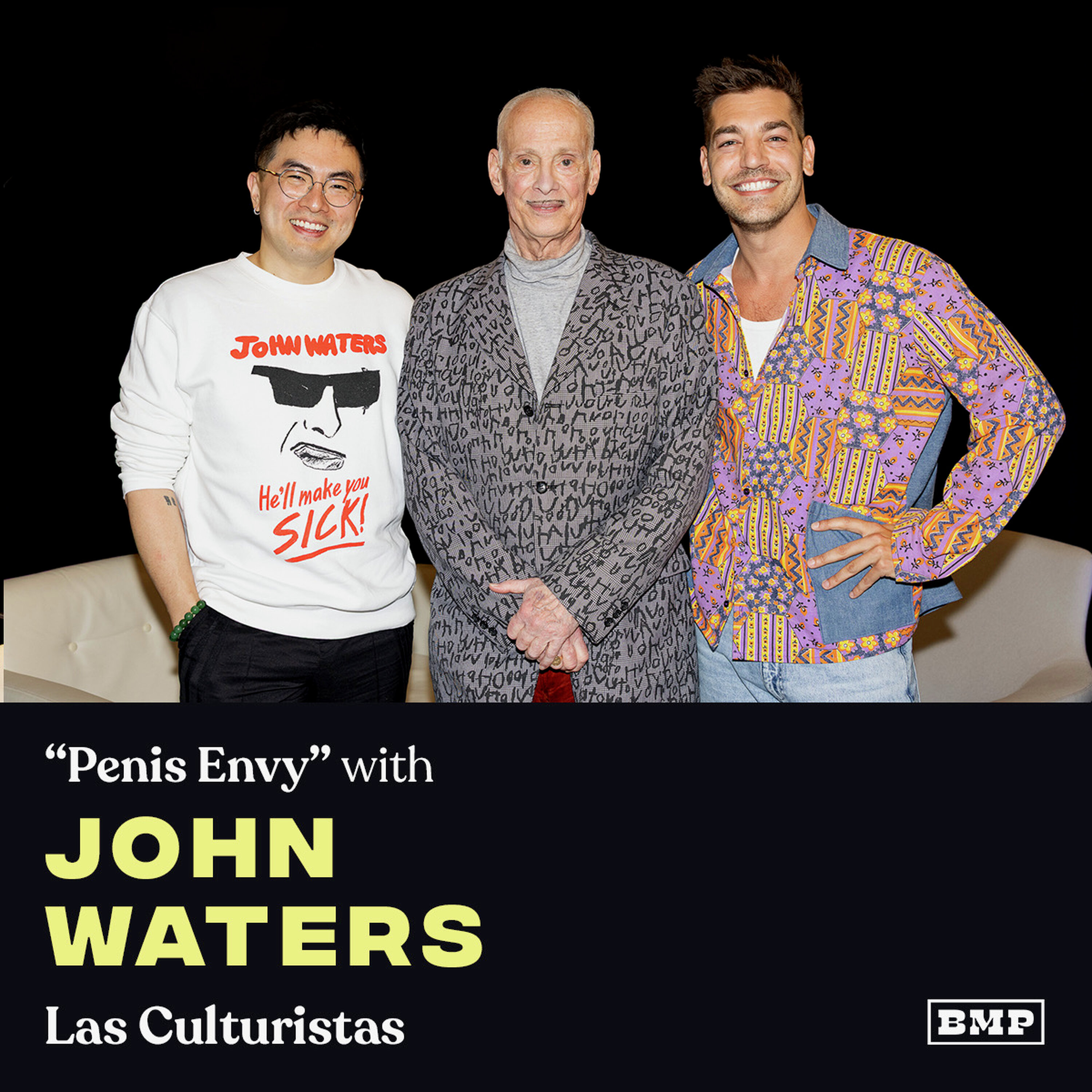
Loading summary
Transcript903 lines
- [00:00]
Matt Rogers
This is an iHeart podcast.
- [00:02]
Podcast Advertiser
Guaranteed human catch the NBA playoffs on Sling TV, the most flexible live TV streaming service, putting consumers in control to watch games their way with flexible subscriptions. Want to catch one game or a full series on espn? Grab a one, three or seven day pass. If you want to catch as many games as possible, get a monthly subscription with our abc, NBC and ESPN combo package. Either way, stream Sling lets you watch the playoffs your way with no long term contracts.
- [00:32]
Podcast Promoter
Learn more@sling.com another podcast from some SNL late night comedy guy not quite on Humor Me with Robert Smigel and Friends. Me and hilarious guests from Bob Odenkirk to David Letterman help make you funnier this week. My guests, SNL's Mikey Day and head writer Streeter Seidel help an acapella band with their between songs banter.
- [00:53]
Matt Rogers
Where does your group perform? We do some retirement homes.
- [00:56]
Podcast Promoter
Those people are starving for banter. Listen to Humor Me with Robert Smigel friends on the iHeartRadio app, Apple Podcasts or wherever you get your podcasts.
- [01:05]
Podcast Advertiser
Catch the NBA playoffs on Sling tv, the most flexible live TV streaming service, putting consumers in control to watch games their way with flexible subscriptions. Want to catch one game or a full series on espn? Grab a one, three or seven day pass. If you want to catch as many games as possible, get a monthly subscription with our abc, NBC and ESPN combo package. Either way, slide Sling lets you watch the playoffs your way with no long term contracts. Learn more@sling.com look man there.
- [01:37]
Bowen Yang
Oh I see my. Oh my.
- [01:40]
Matt Rogers
Bowen, look over there. Wow. Is that culture?
- [01:42]
John Waters
Yes.
- [01:42]
Matt Rogers
Goodness.
- [01:43]
Bowen Yang
Wow.
- [01:44]
Matt Rogers
Las Culturistas.
- [01:46]
Bowen Yang
Ding dong. Las Culturistas calling. Welcome to the Cavalcade of Perversion.
- [01:50]
Matt Rogers
Oh, I'm so excited. I'm wearing my Seth Bogart merch For our guest. This is what they sold at the Academy Museum, which.
- [02:00]
Bowen Yang
Come on.
- [02:01]
Matt Rogers
Which was 18 rooms. Oh my God. How are you up on the Cause I did my research on the exhibit or on the exit.
- [02:09]
Bowen Yang
Well, did you see the exhibit?
- [02:10]
Matt Rogers
I did indeed go to the exhibit.
- [02:12]
Bowen Yang
It was fab.
- [02:13]
Matt Rogers
You went.
- [02:13]
Bowen Yang
Yeah, I did go.
- [02:14]
Matt Rogers
Amazing.
- [02:15]
Bowen Yang
It's a major day and also I feel like the spirit of the guest was on the New York City streets today because I'm walking down the street and I'm wearing sort of a jacket that I didn't realize had holes in it. And so medication I was holding in my jacket fell out. Just beta blockers felt like anxiety meds fell on the street and a woman ran up. A crazy woman with a like A. Like a pin. Like a clothes pin. Ran up and said, do you need a clothes pin? And I was like. And I was like, what? And she goes, for your hole. And I was like, okay. Today is the day John Waters is on.
- [02:48]
Matt Rogers
Oh, my God.
- [02:49]
Bowen Yang
Because a woman just ran up to me with a big clothespin and offered it for me to have for my hole. Beau for your hole. I was like, if this isn't a John Waters film, absolutely it would need to have been a lot bigger. I think everything would have needed to be more outsized.
- [03:03]
Matt Rogers
Did you pick up your meds?
- [03:05]
Bowen Yang
I got them. Don't worry, everyone. We're okay.
- [03:10]
Matt Rogers
This is so wonderful. He just celebrated his 80th birthday.
- [03:13]
Bowen Yang
Happy birthday.
- [03:14]
Matt Rogers
Zan is going to Extremes Tour. He's going to Fire island for the first time in America.
- [03:18]
Bowen Yang
It sure is. You're going to see him at the Ice Palace.
- [03:21]
Matt Rogers
He's now part of the, I guess, turf war, if you want to call it that, between Fire island and Provincetown. But he's a P Town guy.
- [03:28]
Bowen Yang
Oh, yeah, you are. Kind of like showing your cards there.
- [03:31]
John Waters
Wow.
- [03:32]
Matt Rogers
I don't really know what else to say. He's my favorite director ever. I've said this on record. I had a hard time picking between Female Trouble and Multiple Maniacs in the Criterion Closet.
- [03:41]
Bowen Yang
And what did you choose?
- [03:42]
Matt Rogers
I chose Multiple Maniacs because it's the most shocking movie still of all time to me because of what Mink Stolen Divine do in the church. If you know, you know. Oh, my God. And I was watching Serial mom on the plane yesterday for the first time in years. And that is a perfect movie.
- [04:01]
Bowen Yang
It sure is.
- [04:02]
Matt Rogers
Perfect film. Yeah, it's. Oh, my God. And I had a sex dream about Johnny Depp.
- [04:09]
Bowen Yang
Johnny Depp Today, not even from Crybaby.
- [04:12]
Matt Rogers
I had a sex dream about Matthew Lillard.
- [04:14]
Bowen Yang
Well, that's just gonna happen.
- [04:15]
Matt Rogers
That's just gonna happen. But he was like. He had, like, a dark beard, and he was just all muscly, which I always.
- [04:20]
Bowen Yang
I love the Lillard.
- [04:21]
Matt Rogers
I love the Lillard. Well, he's my favorite. He's here. Everyone, please welcome John Waters.
- [04:28]
John Waters
Thank you very much, and happy birthday again. Thank you. I know my birthday. My God. I was so overhyped that people were yelling Happy Birthday to me on the subway. Strangers.
- [04:37]
Bowen Yang
What more could you ask for?
- [04:38]
Matt Rogers
What's the appropriate level of hype for your 80th birthday?
- [04:41]
John Waters
Well, I did 59 shows on the road last year, but I did nine birthday shows, I think, in, like, 10 days or something. So it was. I Was, I'm a carny, I'm on
- [04:50]
Matt Rogers
the road, but the math works out. Eight shows. No. What is it?
- [04:55]
John Waters
Yeah. Well, I think it was seven or eight in nine days. I forget. But I did. I was every day doing a different city. It was great.
- [05:02]
Matt Rogers
But you don't. But I feel like you maybe you're a little bit allergic to, like, over praise.
- [05:08]
John Waters
Right?
- [05:08]
Matt Rogers
And this is mostly what this podcast is.
- [05:10]
John Waters
Well, no, I'm not. I'm just used to. I built a career on bad reviews. Now when I get good ones, I'm shocked. I take them with no irony. Like when the Academy Awards had a museum. How would that ever be possible?
- [05:24]
Bowen Yang
You weren't checking for me before.
- [05:25]
John Waters
But it was so great. It was wonderful.
- [05:27]
Bowen Yang
Amazing.
- [05:28]
John Waters
I don't feel like Janis Joplin when she went back to her high school reunion after she was famous and people were still mean to her footage.
- [05:36]
Matt Rogers
They were still mean to her.
- [05:37]
John Waters
Yes.
- [05:37]
Bowen Yang
No one could get.
- [05:38]
John Waters
Which is kind of funny. They thought she was gonna go in and be like, ha, ha, showed you. And they were still hateful, high ugly, basically. They didn't say that. They didn't say that, but they acted like that.
- [05:48]
Bowen Yang
Yeah, they felt it. They thought it.
- [05:50]
Matt Rogers
But are people still mean to you from back in the day?
- [05:53]
John Waters
Never. The people that were mean to me then didn't matter. We put them in the ads. We put the bad quotes in the ads.
- [06:00]
Matt Rogers
Yeah, but then you'll never put the good quotes now in anything necessarily, Right?
- [06:06]
John Waters
Oh, sure, we would. We would put them on when my screenplay books came out. But we did publish on the back. The only quote was from the New York Times for Desperate Living, which Criterion is putting out in 4K very soon. But the quote was, you can look far and wide and you'll never find. But you could look far and wide to find a film this ugly. But really, why would you. That was the New York Times quote. And that's on the only thing on the back of the screenplay book.
- [06:31]
Matt Rogers
That's wonderful.
- [06:32]
Bowen Yang
Some of the bad reviews are written the most elegantly, I feel. You know what I mean?
- [06:37]
John Waters
It's like sometimes bad reviews mattered. Today, it doesn't really hurt you that much.
- [06:42]
Bowen Yang
Or does it help?
- [06:43]
John Waters
But they just don't have the power they used to like it used to. If you were an art film, you got a rave review in the New York Times. It was a hit.
- [06:49]
Bowen Yang
Yeah.
- [06:50]
John Waters
Today it doesn't mean it's a hit. If it's the bad one. It's still a bomb.
- [06:53]
Bowen Yang
Right.
- [06:54]
Matt Rogers
But then our friends, we have Friends who have made what I think were immediately considered future cult classics. Our friends Josh Sharp and Aaron Jackson made a movie called Dick's the Musical.
- [07:05]
John Waters
Yes, I thought.
- [07:06]
Bowen Yang
Yes, you did.
- [07:06]
John Waters
Yeah, yeah, definitely.
- [07:08]
Bowen Yang
Starring Bowen as God.
- [07:09]
John Waters
But the thing is, a cult classic is the worst thing you can say when you're trying to get financing. That means five smart people liked it and it lost money. Serial mom was a failure when it came out. And the executive, that he doesn't care that it's a hit. Twenty years later, he was fired. Cause the movie didn't make money.
- [07:25]
Bowen Yang
Right? Yeah. That's all that matters.
- [07:27]
Matt Rogers
Do you keep in touch with him?
- [07:28]
John Waters
No, I bought a house with the money he gave me.
- [07:32]
Bowen Yang
There you go.
- [07:34]
Matt Rogers
He got something out of it. He got something. He lost his job, but he wouldn't have been happy.
- [07:38]
John Waters
No, but he was fair. And, you know, it's just like, my movies are weird. They test it. They go to Mid America to test it. Why? That's not where they're gonna play the best.
- [07:47]
Bowen Yang
Yeah, but you know what, though? The person that needs those movies in Mid Americ, like, thank God they went out and tested there. They get to say, I got to really find my freak.
- [07:55]
John Waters
But now it's a different world. When I go everywhere, my audience is. If it's in Iowa or New York, they're the same. They're smart, they dress well, they've seen every movie because you don't have to go anywhere anymore. You can stay where you are and make it better.
- [08:08]
Bowen Yang
Yeah, 100%.
- [08:09]
Matt Rogers
I feel like there is something about maybe hairspray doing so well. That's like the punkiest thing you ever.
- [08:19]
John Waters
It's the most devious because it's snuck in. It plays in Florida in grade schools, and nobody bitches. Two men singing a love song, encouraging interracial dating. Racists even like it. They're so stupid.
- [08:30]
Matt Rogers
Yes.
- [08:30]
Bowen Yang
Wow. So I was reading that you were initially. Were you shocked by the PG rating or were you just like, I can't believe we made something?
- [08:40]
John Waters
No, I was shocked by it just because it was divine. And I. And then Nuala, at the time, was shocked, too. They wanted me to put the word shit in so we'd get a PG13 at least. I said, no, let's keep it. That's the shock that it is pg.
- [08:52]
Matt Rogers
Yeah.
- [08:52]
Bowen Yang
This is the race we're running.
- [08:53]
Matt Rogers
Because I even saw Hairspray for the first time in the seventh grade.
- [08:57]
John Waters
Well, that's fine.
- [08:58]
Matt Rogers
There you go.
- [08:59]
John Waters
Perfectly. You should see it at any age. That movie's fine. I Think it would get a G today?
- [09:04]
Matt Rogers
Yeah, you would get a G today. But I just remember it being. Cause I think that was my first technical exposure. And it was when, like, they're playing. It's when the woman's holding the sign up that says falsies. And I was like, oh, there's something different about this movie.
- [09:21]
John Waters
And Criterion is putting it out now. But we have the side. The scenes that were cut out where Tracy's mean, where she's mean to the kids that work in the drug shop. She gets a hickey in the car and says, hope he doesn't have blue balls, and breaks into Amber's house, reads her diary and dyes her hair in her own house. Stuff that wisely got cut out because it goes so far away from the nice girl that Tracy was. Right.
- [09:45]
Bowen Yang
But now I want to see the movie of Alt Tracy.
- [09:48]
John Waters
Yeah, of alt Tracy.
- [09:49]
Bowen Yang
Hairspray in the Other Dimension.
- [09:51]
Matt Rogers
Do you and Adam Shankman still keep in touch?
- [09:54]
John Waters
Yeah, some. Yeah, definitely.
- [09:55]
Matt Rogers
So Matt's in an Adam Shankman film now.
- [09:57]
John Waters
Oh, good. Which one?
- [09:58]
Bowen Yang
The Stop that Train.
- [09:59]
John Waters
Wow. Great.
- [10:00]
Bowen Yang
It's gonna be really fun. It's real. I mean, it just. You forget about a time when movies just went for the fucking joke in every single scene. That's what this is.
- [10:11]
John Waters
Yeah. Well, I'm looking forward to it. I'll pay to see it. That's what you do for your friends. You pay to see it. The Friday night it opens in a theater.
- [10:18]
Bowen Yang
Absolutely. It's exciting to be excited about a movie coming out.
- [10:21]
Matt Rogers
Absolutely. But on that note, it's like with the Dick the Musical thing, as it came out, as it screened at Tiff Midnight Madness, people were like, this is a future cult classic. And like, you say, Josh and Erin were like, but wait a minute. We wanted this to be, like, a current hit now.
- [10:37]
John Waters
Future cult classic means it bombs.
- [10:40]
Bowen Yang
Yeah.
- [10:40]
Matt Rogers
Yeah. And it will take, like, years of fermenting or whatever or a patina or something.
- [10:45]
John Waters
And you can't make a cult movie happen. I mean, I remember when Mommie Dearest, after it came out, they tried to make it a midnight movie. But why did not drag queens go to the Melania documentary dressed as her and shout out stuff like Rocky Horror? Wouldn't that have been the most hilarious protest?
- [11:01]
Bowen Yang
Take it back from them.
- [11:03]
John Waters
So great. It would have been. Well, Republicans have female. Female impersonators.
- [11:07]
Matt Rogers
Mm. It's drag.
- [11:09]
John Waters
Yeah. It's a gender effort because they're women underneath.
- [11:11]
Bowen Yang
I can't believe what the drag show that happens at every Republican Event now.
- [11:16]
John Waters
Well, they all look the same. They all look like elderly porn stars.
- [11:20]
Bowen Yang
Yeah, yeah, yeah, yeah, yeah.
- [11:21]
John Waters
But I do Fox. Whenever I go on the shows, they're nice to me, and I sell so many books when I do Fox, it's amazing.
- [11:27]
Matt Rogers
Wow. Are you seeing where the sales are coming from? No.
- [11:33]
John Waters
I mean, I don't care, you know, if they bought the book. It's certainly not encouraging what they're saying. And they were nice to me on the show. I don't have any trouble. But all the. Everybody that works there looks the same.
- [11:44]
Bowen Yang
Yeah, yeah. They all look a little odd.
- [11:45]
John Waters
Hot. You know, women that look like. I know. People said to me, did you ever go to Jeffrey Epstein's office? What would I do there? I'd be home. Pussy Island. I would be hiding under a desk.
- [11:57]
Bowen Yang
It would have been duck.
- [11:58]
John Waters
No, I didn't go there.
- [11:59]
Bowen Yang
No shared interests. Yeah.
- [12:02]
Matt Rogers
Do you feel like you have this air of respectability now as you walk around?
- [12:06]
John Waters
Yes. I'm so respectable I could puke. I said that at the Academy Awards Museum. Yes, but it's great. It's n. It's nothing. I'm not. I don't take it as revenge or anything. I think it's just things change.
- [12:16]
Bowen Yang
Yeah.
- [12:17]
Matt Rogers
At what point did things become cult classics to you in terms of certain films? And I know that's a dirty term.
- [12:25]
John Waters
Well, when Pink Flamingos came out, right away, it became a midnight thing, so I could tell then it was working. That was totally by audiences. We went to each city at a separate time and did one city at a time. This was before video, before Internet or anything. So you'd go to a city, would start one day a week, then two days, three days, four days. So it took two years for Pink Flamingos to open around the country.
- [12:46]
Matt Rogers
But is there a rolling timeline with, like, Hairspray doing great as it comes out, but then, like. But then, like, Crybaby and then Serial Mom?
- [12:56]
John Waters
Hairspray was a hit for real?
- [12:58]
Matt Rogers
Yes, yes, yes.
- [12:59]
John Waters
Crybaby was definitely not.
- [13:00]
Matt Rogers
But then was there this, like, delayed sort of like, push of, like, Cryberry, then become that, then becomes a cult hit, and then Cereal mom becomes a cult. Like, do you get what I'm saying?
- [13:12]
John Waters
Yes, but I've never gotten profit participation from Crybaby or Serial Mom. They've never broken even.
- [13:16]
Matt Rogers
Wow. Wow. Interesting.
- [13:18]
John Waters
But they cost a lot of money.
- [13:20]
Matt Rogers
Yes, of course.
- [13:21]
Bowen Yang
I was wondering about. Just because you had you talk about building a career on bad reviews, et cetera. They accumulate, and then suddenly you're working with Johnny Depp on Crybaby. And he was truly like, you know, Leo before Leo, like the. The marquee idol. Does a star at that level seek you out because he liked your work or him you went to?
- [13:47]
John Waters
Because I knew he was like, Justin Bieber at the time was on the COVID of every teen magazine, but he hated that image. Stick with us. We'll get rid of that.
- [13:53]
Matt Rogers
Yeah, yeah, yeah.
- [13:53]
Bowen Yang
We'll fuck it up a little bit.
- [13:54]
Matt Rogers
Yeah.
- [13:55]
John Waters
It's the same way Patty Hearst made a movie with me. She was sick of being a kidnap victim.
- [13:59]
Bowen Yang
You just.
- [13:59]
John Waters
Everything changes. I went to a big, big fancy dinner where she was honored. I'm the man sitting at her table. I said, how do you know Patricia? And he said, well, she robbed the Hiberian bank, which I owned, and he paid $5,000 to have dinner with me.
- [14:12]
Bowen Yang
I love it.
- [14:13]
Matt Rogers
She robbed his bank.
- [14:14]
John Waters
Well, when she was in the sla, I mean, she didn't think it up. She didn't know where the bank was. But still, I mean, it's amazing how things change. It's the same way as what? Me getting picked by the National Registry picked Pink Flamingos as a great American film. What was the scene in that screening that made him decide that? Do my balls, mama. I mean, what line? The singing, asshole. I'm trying to think what particular.
- [14:37]
Bowen Yang
I would think both of those things.
- [14:39]
John Waters
Well, maybe, but that means they've got a pretty good sense of humor.
- [14:42]
Matt Rogers
They place that movie above the Graduate.
- [14:45]
John Waters
That was a variety of hundred best comedies. And I was there with Charlie Chaplin. It was hilarious. Because when Variety, when the movie first came out, we got one of the best bad reviews ever from Variety. And they later said that they were wrong, which was very funny. And I love Variety. I've been reading it since I was 15 years old.
- [15:02]
Bowen Yang
Do you remember what they initially had said?
- [15:03]
John Waters
Oh, yeah. The most, beyond a doubt, the most disgusting film in film history. Something really good.
- [15:09]
Bowen Yang
Yeah. Something very declarative and perfect. Marquee.
- [15:12]
John Waters
Yeah. It wasn't pussy footing around. Yeah.
- [15:14]
Bowen Yang
No, no, no. Direct communication.
- [15:17]
Matt Rogers
I. We. You have to know. I think I even told you this when we first met, but almost every other show at SNL or every table read. We tried Sarah Sherman and I would try to write in me as any character, any old character screaming, no, Gator.
- [15:39]
Bowen Yang
No.
- [15:40]
John Waters
No, Gator.
- [15:41]
Matt Rogers
No. From Female Trouble.
- [15:43]
John Waters
That's Edith. Yeah, that's Edith.
- [15:45]
Matt Rogers
And Lauren just, like, frowning at me, being like, what are you. Why are you screaming? What is this from?
- [15:51]
Bowen Yang
Why? One of our great screamer.
- [15:54]
Matt Rogers
And just Sarah and I bonded for the first time because we each had female children.
- [15:57]
John Waters
Well, that was in Sarah's show recently.
- [15:59]
Matt Rogers
I know.
- [16:00]
John Waters
Which was great.
- [16:01]
Matt Rogers
Did you watch the whole thing?
- [16:02]
John Waters
Of course. And when am I going to host Saturday Night Live?
- [16:04]
Bowen Yang
I don't know. That would be genius.
- [16:07]
Matt Rogers
You would be wonderful.
- [16:10]
John Waters
You lost your income with the crew. I could write. It's the only time I could ever write with somebody else.
- [16:14]
Matt Rogers
Oh, my gosh. I'll come back for that.
- [16:16]
John Waters
All right.
- [16:17]
Matt Rogers
Good.
- [16:18]
John Waters
And you can do Edith.
- [16:19]
Matt Rogers
I can do Edith. Wait. I've always. I've meant to ask, because I think when we met was right before Leslie Van Houten got paroled.
- [16:27]
John Waters
Yeah. I don't talk about that anymore. Because I'll tell you why. And I get why you ask. There's no such person anymore. She's never gonna talk about it again. She's vanished. It's over.
- [16:35]
Matt Rogers
Yes. And this actually goes back to what you're saying about. Everything changes. Like, even something as completely immoral and dark and awful and inhumane about what she was involved in and what she did.
- [16:49]
John Waters
Immoral? When you're 19 and meet the biggest mad men. On this. But she never blamed him. She said it was her fault for making him a cult leader. So all I'm saying is I just don't talk about it anymore. Only because it's over. He's dead. It's not over for the victims. And nobody's saying that. Yes, I get why the victims. You cannot ask for forgiveness. If they give it, it's amazing. Like Charlie Kirk's wife. The next day, she did say she forgave who did it. That is Christian.
- [17:17]
Matt Rogers
It is Christian. For better or for worse.
- [17:19]
John Waters
Well, I'm just saying it's hard to do that. I'm not picking sides. If somebody killed my mother, could I ever forgive them? That's a really amazing thing. But I'm not talking about that. I'm just saying that she was paroled correctly, and she's out. There's no such person. She's never gonna talk about it.
- [17:38]
Matt Rogers
It's over. It's done. And there is like. And you, as a storyteller can understand the. The ending of something. Like the resolution of something where you're like, there's nothing to talk about.
- [17:49]
John Waters
There isn't. The story's been told a million times. It's a terrible story. And what point would it be for her to talk about it? There's no point.
- [17:58]
Matt Rogers
I completely understand. I just was always so curious. Especially because it's. And we're not gonna talk about it anymore. But it's like, oh, it's over, it's done. And like you wrote such a beautiful essay about.
- [18:09]
John Waters
Thank you. And I think that the LA Times editorial we should it is time for her to live amongst us again. Made the governor not turn it down.
- [18:18]
Matt Rogers
Yes.
- [18:19]
John Waters
So the paper that made it the most notorious case in the world also amazingly, and I believe correctly ended it.
- [18:30]
Matt Rogers
And I think through her, you really looked at your own sort of obsession with.
- [18:36]
John Waters
Oh yeah, I was apologized for a while.
- [18:38]
Matt Rogers
Yes, yes, yes.
- [18:39]
John Waters
And now True Crime. I mean, when we made Serial mom, that was a joke on. But now true. That was before True Crime was as popular it is. And now Cereal Mama looks like oj. It was before OJ even, but it
- [18:50]
Matt Rogers
wasn't even meant to be prescient, was it? You were just kind of doing something.
- [18:53]
John Waters
Well, I was parodying True Crime, definitely.
- [18:55]
Matt Rogers
Yes, yes. Introducing Eminem's caramel you already love now popped into a totally new texture.
- [19:03]
Bowen Yang
I'd say M&M's are one of those truly iconic snacks.
- [19:07]
Matt Rogers
They've just launched a brand new freeze dried innovation that brings a whole new vibe to the M and M lineup.
- [19:13]
Bowen Yang
I mean, come on, what's not to love about MM's by itself?
- [19:18]
Matt Rogers
And if it's freeze dried, I feel like I'm in space. M and Ms. Continues to be that girl. The crunch is unexpected in the best way.
- [19:27]
Bowen Yang
Way crisper than you'd think. Like you bite into one and there's this little pop that you don't see coming from something that still tastes like classic M and M's caramel.
- [19:35]
Matt Rogers
Sure, they don't look exactly like the M&Ms. You know, but they are the M and Ms. You love. They're perfect for snacking when watching television, scrolling on your phone, or settling in for a movie.
- [19:44]
Bowen Yang
And I'm already thinking they'll be great to have on hand while watching the Culture Awards.
- [19:49]
Matt Rogers
Yes, the best part is they've got that classic MM's caramel flavor. It's available in stores now.
- [19:57]
Bowen Yang
I'm gonna try one right now. Amazing. Pop. Pop. I really do like them.
- [20:03]
Podcast Promoter
Another podcast from some SNL late night comedy guy not quite on Humor Me with Robert Smigel and friends. Me and hilarious guests from Jim G to Bob Odenkirk to David Letterman help make you funnier this week. My guest, SNL's Mikey Day and head writer Streeter Seidel help an acapella band with their between songs banter. Who's the worst singer in the group?
- [20:26]
Bowen Yang
The Worst.
- [20:26]
Podcast Promoter
Yeah, me. Is there anything to the idea that because you're from Harvard, you only got in because your parents made a huge donation?
- [20:38]
John Waters
The Yardbirds.
- [20:39]
Matt Rogers
Right? That's the name.
- [20:40]
Podcast Promoter
The Harvard Yard.
- [20:41]
John Waters
But they're open.
- [20:41]
Matt Rogers
Do you have a name suggestion?
- [20:42]
Bowen Yang
We're open.
- [20:43]
Podcast Promoter
Since you guys are middle aged, one
- [20:47]
John Waters
erection,
- [20:50]
Podcast Promoter
listen to Humor Me with Robert Smigel and friends on the iHeartRadio app, Apple Podcasts, or wherever you get your podcast.
- [20:57]
John Waters
Humor me. I need some jokes to make me seem funny.
- [21:02]
Cheryl Strayed
Hi, everyone. I'm Cheryl Strayed, author of Wild and Tiny Beautiful Things. I'm excited to share that I have a new podcast called Mind Over Mountain. In each episode, I interview athletes, adventurers, and adrenaline seekers to discuss the inner landscapes and life experiences that informed and inspired their extraordinary feats. I also bring a bit of advice into the mix so we too can better understand how to face our own seemingly insurmountable challenges.
- [21:32]
Matt Rogers
You know what I'm gonna do?
- [21:33]
Bowen Yang
I'm gonna pull out what you already have inside. We're coming into this world fighting for our lives. All I'm gonna do is pull out what you already got inside.
- [21:40]
John Waters
We're there to support and celebrate each
- [21:42]
Matt Rogers
other, and that is not like a
- [21:43]
John Waters
your story versus my story.
- [21:46]
Cheryl Strayed
You're gonna walk up and over that dang mountain. You're not just gonna put your mind over it.
- [21:50]
Matt Rogers
Yep, yep, Exactly.
- [21:51]
Bowen Yang
And if I can't walk up and over it, I'm gonna go through it.
- [21:54]
Cheryl Strayed
Listen to Mind Over Mountain every Thursday on the iHeartRadio app, Apple Podcasts, or wherever you get your podcasts. Hey, I'm Diana Maria Riva. Actress, mother, lover, and a Gen X woman walking through life one hot flash and hormonal, crying jag at a time. You ladies know what I mean. I'll bet you a perimenopausal chin hair you do. So let's talk about it. Join me on my new podcast, How Hard Can It Be with Diana Maria Riva, where I call on my Gen X squads from Ohio to Hollywood as we navigate midlife's most fantastic bs.
- [22:23]
John Waters
All of a sudden, I'd had hanging
- [22:25]
Matt Rogers
ness happening on my own.
- [22:28]
Bowen Yang
I was like, what the hell is that?
- [22:31]
Matt Rogers
I was married when I had her,
- [22:34]
John Waters
so I didn't even consider how empty that nest was gonna be.
- [22:37]
Cheryl Strayed
Mood swings, night sweats, fupas, sex drive. Wait, what? Sex? Dating at 45? How high can it be? Getting naked at 50 with the new guy?
- [22:45]
John Waters
That one's kind of hard. Well, that's lighting.
- [22:47]
Cheryl Strayed
They say we can't polish a turd but we're sure gonna try. So let's get blunt with laughs, tears, or tears of laughter, and dive into it unfiltered and unbothered and asked, how Hard Can It Be?
- [22:57]
John Waters
I cannot believe I'm about to say this out loud in public.
- [23:01]
Cheryl Strayed
Listen to How Hard Can It Be with Diana Maria Riva as part of my Cultura Podcast network, available on the iHeartRadio app, Apple Podcasts, or wherever you get your podcasts.
- [23:10]
John Waters
What's up, guys? This is Clifford Taylor iv, and on my podcast, the Clifford Show, I'm bringing you conversations about all kinds of stuff, like being an Internet famous referee.
- [23:19]
Bowen Yang
We're in the middle of a game.
- [23:21]
John Waters
This linebacker. This linebacker walks up to me. He goes, hey, ref, my mom wants you to wave at her. Time out. Look, quarterback on offense. Blue 42. Hey, ref, my mama wants you to weigh better. What? Where's she at?
- [23:41]
Matt Rogers
Hey, Ms. Parker. Listen to the Clifford show on the
- [23:45]
John Waters
iHeartRadio app, Apple Podcasts, or wherever you get your podcasts.
- [23:49]
Matt Rogers
Do you talk to Kathleen Turner still?
- [23:51]
John Waters
Of course. We're great friends.
- [23:52]
Bowen Yang
Yeah, she's one of the greats.
- [23:53]
John Waters
She just played Gertrude Stein on stage.
- [23:56]
Matt Rogers
Oh, really?
- [23:57]
John Waters
Yeah.
- [23:57]
Matt Rogers
Oh, wow. See, I don't keep. I gotta keep up with Kathleen.
- [24:01]
Bowen Yang
Kathleen Turner, like, that's. She really. That's a signature presence.
- [24:07]
John Waters
Kathleen's great. Good friend, funny. She doesn't suffer fools, but she's smart as well.
- [24:11]
Podcast Promoter
You can tell.
- [24:11]
John Waters
And a really good actress.
- [24:12]
Bowen Yang
You can tell. Yeah. All right, so we have to ask you. You have your preparation.
- [24:17]
John Waters
Yeah, yeah.
- [24:18]
Bowen Yang
And that is perfect. We have a question that we ask every single person that comes on the show. And that, sir, was. What was the culture that made you say culture was, for me, these early influences that made you, when you really look back on it, become John Waters or start.
- [24:33]
John Waters
There was one culture only, and that was being a beatnik. When I read in Life magazine, about 10 years old, I wanted bongos day. Oh, de.
- [24:42]
Bowen Yang
Ooh.
- [24:42]
John Waters
You know, I went to coffee houses where they had poetry. I wanted to wear sandals, dirty sweatshirts.
- [24:49]
Bowen Yang
Girls, girls.
- [24:50]
John Waters
Black nylons with seams in the back. And turtlenecks. I still wear turtlenecks to this day. Poetry. Oh, coffee houses. Interracial Couples Howls. City Lights Bookshop, North Beach. Allen Ginsberg and his boyfriend Peter. That was the first queer beatniks. Junkie. William Burroughs, a junkie queer on top of it. Leroy Jones, I always loved him. And Maynard G. Krebs from Dobie Gillis, the first beatnik. And Malcolm Sowell, the most famous beatnik in Baltimore who was the star of my first movie. And I just had my first poem published in the Atlantic last month.
- [25:27]
Bowen Yang
Come on.
- [25:28]
John Waters
Now I'm officially a beat.
- [25:30]
Bowen Yang
You're a beatnik. You made it. What was your first sort of exposure to this culture?
- [25:36]
John Waters
Life magazine. When I read about beatniks, yeah. Life magazine corrupted me. I read about junkies, homosexuals, beatniks, hip. Everything Life magazine covered. And every family got. Life magazine, yeah. Wow.
- [25:47]
Matt Rogers
Was this what led you to your first LSD Trust?
- [25:52]
John Waters
Certainly. Beatniks became hippies, hippies became punks. Still, now I'm a beat. I went back to being a beatnik. Right? Yeah.
- [26:00]
Matt Rogers
But what was it?
- [26:00]
John Waters
Piazzadora in Harrisbury is a beatnik and reads Howells. And Allen Ginsberg was mad and he was pissed. I asked him if I could use it.
- [26:08]
Matt Rogers
Were you? Cause how old were you? How old were you on the first trip?
- [26:13]
John Waters
The first acid I took was in 1964. It wasn't even illegal until 68, I believe. And they used it in a mental institution for alcoholism. And my friend worked there and he stole it.
- [26:24]
Matt Rogers
And it was. Oh, he was.
- [26:25]
Bowen Yang
Whoa.
- [26:25]
John Waters
It was Sandoz acid. It was so strong.
- [26:28]
Bowen Yang
Was it really? It was stronger then, yeah.
- [26:31]
John Waters
And I never. I did it a lot then. And then I stopped. And then I did it again for my book. When I was 70 years old with Mink Stol, we took acid again. And we hadn't in 50 years. It was still good.
- [26:40]
Bowen Yang
It was still good.
- [26:41]
John Waters
I'd only tell old people to take it. Not young people. Stupid 60s are over. Cause now when your family's concerned, when you're old, you say, I'm not. Have dementia. I'm tripping.
- [26:50]
Bowen Yang
Yeah, I'm just.
- [26:53]
Matt Rogers
And that's the last time.
- [26:54]
John Waters
Yes. I would need to never do it again. And it was no like microdoses these young pussies take.
- [26:59]
Bowen Yang
I know the little spray you see that people have.
- [27:03]
John Waters
Timothy Leary's asshole.
- [27:04]
Matt Rogers
Oh, my God.
- [27:06]
John Waters
It was the best acid I ever took in my whole life.
- [27:09]
Matt Rogers
So I did it for the first time at the tender age of like, 27. And I still feel like I have holes in my brain.
- [27:15]
Bowen Yang
Was that.
- [27:16]
John Waters
Oh, so it wasn't a good experience?
- [27:17]
Matt Rogers
No, we were. Not today.
- [27:18]
Bowen Yang
Oh, yeah, we were.
- [27:19]
John Waters
It wasn't good.
- [27:20]
Matt Rogers
It was a great experience. I still have a fear that I just have. It took a melon ball or to my head, and I'm like, am I less of a person now?
- [27:31]
Bowen Yang
Because he's so much smarter now after it.
- [27:33]
John Waters
I think you're probably better. Although Some people I took LSD with went crazy. They became drug addicts. So it didn't do that to me. I'm not saying that it's for everybody.
- [27:42]
Matt Rogers
No, of course.
- [27:42]
John Waters
And if you ever see even Bill, who was the head of aa, who invented it, he wanted people to take acid. Have you ever seen it online? When he says, can you see it? That's like, the one people in AA don't exactly agree with. Same way Freud was wrong about cocaine. He was right about a lot of things. And penis envy's making a comeback.
- [27:59]
Matt Rogers
Penis envy is making a comeback.
- [28:01]
Bowen Yang
That's a rule of culture number 30. Penis envy is making a comeback.
- [28:04]
Matt Rogers
It's the whole looks maxing thing. Yeah, I connected to that. It's like there's this need for male approval and right wings.
- [28:14]
John Waters
Well, it's also. Now them told me that when you go home with somebody now, you don't know what you're gonna get. They said, whatever it is, it's politically correct to call it a bonus hole.
- [28:23]
Bowen Yang
It is a bonus hole.
- [28:25]
John Waters
How do you talk dirty? Get that bonus hole.
- [28:30]
Bowen Yang
You get my bonus hole, Dick.
- [28:32]
John Waters
Cocksucker. I don't know. It used to be Shut up and Blow Me. That was the best porn title ever.
- [28:37]
Bowen Yang
Shut up and blow Me.
- [28:38]
John Waters
Yeah, but that's Politically Incorrect. You can't say that. And I did a photo piece of that headline, and all women bought it. Powerful women for their office.
- [28:46]
Bowen Yang
Yeah, good.
- [28:47]
John Waters
Which I loved.
- [28:48]
Bowen Yang
No, I love when we get a Suck my dick from a woman.
- [28:51]
John Waters
Yeah.
- [28:52]
Matt Rogers
Did you ever. Did you watch Heated Rivalry, Which.
- [28:55]
John Waters
Oh, yes, I did.
- [28:56]
Matt Rogers
So that I feel like is appealing mostly to women.
- [29:00]
John Waters
To women it is. Which is amazing to me. And I always heard, and I asked butch lesbians if this is true, and they said yes, that butch lesbians like to watch gay men's porn.
- [29:09]
Bowen Yang
I don't get why, literally, my therapist is a lesbian. She every session, without fail, brings up heated rivalry to the point where I'm therapizing her. I keep being like, so you've brought it up again.
- [29:22]
John Waters
And I just want to bring up their personal life.
- [29:24]
Bowen Yang
But the thing is to get your money back at a certain point, I'm like. Cause she always relates in an interesting way. But she is a lesbian who's into heated rivalry.
- [29:33]
John Waters
That's not hardcore. That's softcore. You're gonna watch it. And I asked why? And they said they want to have the big dicks himself and imagine it. I guess I don't know if that's true.
- [29:42]
Matt Rogers
Penis envy.
- [29:43]
John Waters
No.
- [29:43]
Matt Rogers
Well, that's a form of penis envy
- [29:45]
John Waters
for a. I don't know.
- [29:48]
Bowen Yang
I think it has to do with safety, to be honest with you. I think it has to do with watching, like, a love and a sex that has nothing to do with you. And therefore it's kind of like I feel detached from it, and it's kind of nice. I think that's why so many women are fanatical about heated rivalry. Not to say that gay men aren't, but it's different. There is a. There's like a passion towards the show.
- [30:10]
Matt Rogers
Yes.
- [30:11]
John Waters
Good. The new audience, they didn't count on.
- [30:14]
Bowen Yang
No, And I love that. And I love that.
- [30:15]
John Waters
I bet the test screenings didn't predict that.
- [30:17]
Matt Rogers
No. No.
- [30:18]
Bowen Yang
And did you watch Hunting Wives?
- [30:19]
John Waters
No.
- [30:20]
Bowen Yang
See, that was a lesbian fantasia in Texas.
- [30:23]
John Waters
No. It's so hard to turn on the TV that I have to have three assistants there to help me or I'll be duct taped to my bed.
- [30:30]
Bowen Yang
It's. I
- [30:34]
Matt Rogers
need the same. I barely know how to work the remotes either.
- [30:37]
John Waters
I yearn for three channels, rabbit ears and tinfoil. I know, because so many. It's so hard.
- [30:42]
Bowen Yang
It's too much.
- [30:43]
John Waters
Sonos update. When I get them, I have to go to a mental institution.
- [30:48]
Bowen Yang
I have three sonos. Like you're allowed to say them.
- [30:51]
John Waters
I don't think you can say. Is that politically incorrect to say?
- [30:53]
Bowen Yang
You can say, send me to a mental institution. And if you can, then this show is over. If you can say that we're ending the show, we kill. How about that?
- [31:00]
Matt Rogers
I still say I need to be institutionalized. And sometimes I do feel that it's a much.
- [31:04]
John Waters
Bette Davis had the best line about that. When they asked her about Faye Dunaway. She said, she belongs in an institution, and I don't mean marriage.
- [31:13]
Matt Rogers
My favorite Bette Davis quote is, someone asked her, how do you get into Hollywood? She goes, take fountain.
- [31:18]
John Waters
Yeah. Yeah, that's great. Best thing she learned.
- [31:19]
Bowen Yang
And there's always the fountain.
- [31:20]
John Waters
And I do take fountain. And I always think of that when I'm there. She lived on Fountain at the end in a condo. She did, I think, yeah.
- [31:28]
Matt Rogers
Favorite Hollywood star of all time, Lana Turner.
- [31:33]
John Waters
And I'm still friends with her daughter Cheryl, the most famous juvenile delinquent in Hollywood who killed Johnny Stompanato. And I had Thanksgiving dinner one year with Cheryl, her lesbian girlfriend Lily Tomlin, and Lana Turner and myself.
- [31:47]
Matt Rogers
How do you find these bank robbers? Do they come to your. Do you find.
- [31:53]
John Waters
Well, Cheryl was very famous. If you look back on that case, it was one of the most famous cases of the 50s. And in one of my books, I said I wanted to meet her. And her hairdresser read it and showed her. And she called me.
- [32:03]
Bowen Yang
Wow.
- [32:04]
Matt Rogers
And this is just a lesser version of what you probably understood is that through this, like, we'll mention one thing or one person, and it somehow finds its way to them. And I'm like, that is dangerous. I feel like it does not necessarily. It is not necessarily a force for good for me and my mental health,
- [32:24]
John Waters
you know, because it gets. Well, I've always said the only person left I want to meet is Eminem. And he still hasn't called me. And I've said it for two years.
- [32:30]
Matt Rogers
Why? What's the.
- [32:31]
Bowen Yang
What do you think is his. What do you think is his deal?
- [32:34]
John Waters
I'm all for him.
- [32:35]
Matt Rogers
Good.
- [32:35]
John Waters
He's. Maybe he's better than me.
- [32:38]
Bowen Yang
I highly doubt that.
- [32:41]
Matt Rogers
It's because he was.
- [32:42]
John Waters
He's not homophobic. He gave Elton John and David for the wedding matching gold cock rings. He's not homophobic.
- [32:48]
Matt Rogers
He's not homophobic. But is that part of the fascination for you? Like, that he was so rampantly.
- [32:52]
John Waters
That's, like, his record. And I used to go to this redneck bar in Baltimore where it was all white guys dressed like black rappers hung out. And every time I'd walk in, they'd play Pew Duke by Eminem as a tribute to me.
- [33:03]
Matt Rogers
Oh, wonderful.
- [33:04]
John Waters
So every time I walk in here and I go, hi, everybody, and I'd sit down. So it was just a personal thing.
- [33:10]
Bowen Yang
So did you get the Eminem of it all when he had first come out? Because I think as young gays, hearing him on the radio say things like faggot and like, you know, like whatever, like stuff like that, I think it bothered us because we had our guards up. But you at that time, hearing his music, it didn't bother you?
- [33:26]
Matt Rogers
Bother you?
- [33:27]
John Waters
I thought it was entertained. He was just causing trouble like we did. I don't know. Cause it was just a white person. Being a rapper was so new and people hadn't seen that and it was over the edge. But, no, I always liked him.
- [33:40]
Bowen Yang
Yeah.
- [33:41]
Matt Rogers
You love something or someone who chafes
- [33:44]
John Waters
something, who does something first and changes how we think about things, which he did do.
- [33:49]
Matt Rogers
Yeah, absolutely. Puke.
- [33:51]
John Waters
You can play the record. Maybe you can play the record at the beginning of the show. Or put it under me. Put it under.
- [33:57]
Matt Rogers
It'll score.
- [33:58]
John Waters
Blend it.
- [33:59]
Bowen Yang
We will just lightly throughout the episode.
- [34:02]
Matt Rogers
Yes, I think we can make it happen on this show. Eminem If Eminem's team people are getting this, what would you like that encounter to be? Where would you want to be? What are you guys doing?
- [34:13]
John Waters
Oh, just in private. So we're not exploiting it.
- [34:16]
Matt Rogers
Of course.
- [34:17]
John Waters
Come to Pete town, Eminem. I'm looking for them. Yeah.
- [34:19]
Matt Rogers
Yes.
- [34:19]
Bowen Yang
They'll love you.
- [34:21]
John Waters
I always say puke to me.
- [34:22]
Matt Rogers
Please say krune puke. And this is something that you cherish, right? Like, you don't want these interactions to be for public consumption.
- [34:31]
John Waters
No, no. And if he wanted to talk about, you know, it's just the kind of thing. I have met almost every famous person I ever want to meet. And I'm not bragging, but just I've been doing this. I'm 80 years old. I've been doing it for 50 years. And that's thrilling. It's exciting. And they like to meet you too. It's fun. But at the same time, I have great friends that are not famous. Many my closest friends are not famous. And I've had had for 50 years. And I don't trust people that don't have old friends.
- [34:59]
Matt Rogers
Absolutely. I feel like I'm now getting to the point where my old friends are college friends, but I feel like I did a full hard reset once I got moved to New York. I feel like Matt's really good because he grew up in Long island, relatively close. Like, you still have a connection to, like, those people that, you know, I'm still.
- [35:17]
Bowen Yang
I'm still.
- [35:18]
John Waters
But Facebook friend, that's not a friend.
- [35:19]
Bowen Yang
Well, you have to work out, you
- [35:21]
John Waters
have to go out. You have to get your hair done. You have to make. Make see them in person. You have to go to their house. It's not just that it's easy to do that, but to be a real friend is work.
- [35:30]
Bowen Yang
Yeah, it is. And I. What's that? What's that? They say, like, discomfort is. Is a. Is a friend of community. Like, in order to, like, really maintain community, you have to just make yourselves a little uncomfortable sometimes. Like, maybe you haven't seen someone in a long time, get out there to dinner and go see them. I try to see my old friends at least twice a year. And then, you know, it's funny, you say college friends are now old friends. That was technically half our life.
- [35:54]
Matt Rogers
I know.
- [35:55]
Bowen Yang
You know what I mean? Like, which feels like it went by like that. But, you know, I've known you half my life.
- [35:59]
John Waters
I've known you.
- [36:00]
Matt Rogers
Yeah. That's crazy.
- [36:01]
Bowen Yang
That's kind of wild.
- [36:01]
John Waters
My best friend is Pat Moran, who's one. You know, she's cast all my movies. She cast the Wire, she's won Emmys. But. Wow.
- [36:07]
Matt Rogers
Wow.
- [36:07]
John Waters
We met. Cause we had the same boyfriend. And I've known her for 60 years, and we've talked every single day for 60 years.
- [36:13]
Bowen Yang
So was it hard having the same boyfriend at first? Not really, no.
- [36:18]
John Waters
They're both dead and we're friends.
- [36:22]
Matt Rogers
Who had him last?
- [36:24]
John Waters
I'm not gonna say that.
- [36:25]
Bowen Yang
Who had him last?
- [36:27]
Matt Rogers
I'm sorry. I really admire. This is the thing that I maybe took for granted is that you do have this wonderful protectiveness over information and people and lives.
- [36:39]
John Waters
Personal life. Nobody knows.
- [36:41]
Matt Rogers
Interesting.
- [36:42]
John Waters
I mean, I don't hide it, but none of the people, none of the boyfriends I have want to be in the bro.
- [36:46]
Matt Rogers
Exactly. And yet you're still known. You're still in the Agora. You're still like. I do find it. You were also my first exposure into what P town was.
- [36:57]
John Waters
Yeah, this is my 63rd summer there.
- [36:59]
Bowen Yang
I was gonna ask. Yeah. So you've seen it all there?
- [37:03]
John Waters
Oh, yeah. I used to be friends with Norman Mailer. I worked in the bookshop. I waited on Robert Motherwell. I.
- [37:08]
Bowen Yang
You worked in the bookshop?
- [37:09]
John Waters
The Promised Land bookshop was my main job. The old one where the Porthole building is. It's a pot shop now. It's now across the street. But I worked there. And I worked before that for Molly Malone Cook and Mary Oliver. Before she was famous, she was my boss and she was huddled on the back in a pea coat, acting crazy.
- [37:26]
Podcast Advertiser
Wow.
- [37:26]
John Waters
But that's when I. I thought she's turned in her grave. When I had a poem published last week. Aw. No, she was greatnik. I was with her when she won the poll. Pulitzer. When she got her award or whatever award she got. Pulitzer, I think. Yeah. And so I knew him forever. And I worked in both the bookshops there. That was my education.
- [37:45]
Bowen Yang
Yeah.
- [37:46]
Matt Rogers
Did you ever do those? Cause now you have those artist residencies and those shacks on the beach.
- [37:50]
John Waters
Yeah, I don't want to be out there.
- [37:52]
Bowen Yang
We took the.
- [37:53]
John Waters
You know, it's fun for an hour. I'm not lugging water out there.
- [37:56]
Matt Rogers
No, there's no plumbing. You shit in the sand.
- [37:59]
John Waters
No, thank you.
- [37:59]
Matt Rogers
No, thank you.
- [38:00]
Bowen Yang
We did like the Jeep tour out there.
- [38:03]
John Waters
That's good.
- [38:04]
Bowen Yang
I couldn't believe how far out.
- [38:05]
John Waters
No, it's great, but I'm not lugging my stuff out there.
- [38:08]
Bowen Yang
No, no, certainly not. Not.
- [38:09]
John Waters
You Have a coyote come shit on
- [38:11]
Bowen Yang
me at this juncture?
- [38:13]
Matt Rogers
No, but I'm Saying like, you still expose yourself, but you are protective of others.
- [38:21]
John Waters
Yes, yes. I don't tell dirt about people that don't want it. No. I never do. I never say mean things about people. I learned a long time ago. Cause then I sit next to them at a dinner.
- [38:31]
Bowen Yang
Literally. Yeah. It doesn't matter when. Yeah.
- [38:35]
Matt Rogers
And I think. Okay, and thank you for bringing this up. Because I think this is what Matt and I have learned. Cause we used to kind of speak a little too freely on this. You know what I mean?
- [38:43]
John Waters
And then. You don't know. I've had to sit next to critics who gave me terrible reviews. They're uptight too.
- [38:48]
Bowen Yang
Yeah.
- [38:49]
Matt Rogers
And they're nervous to meet you.
- [38:51]
John Waters
Well, they don't want to sit next to me at dinner. It's an irresponsible host that puts you there.
- [38:57]
Bowen Yang
Or it was a devious host that was doing what they want to do.
- [39:01]
John Waters
But I'm fine with it.
- [39:03]
Bowen Yang
Yeah, well, you can handle whatever.
- [39:04]
Matt Rogers
You can handle whatever. I feel like there is this. I have Mr. Know it all, which I bought in Boston. I have my hard copy with me. If you will sign it later.
- [39:17]
John Waters
Of course I will.
- [39:18]
Matt Rogers
Thank you.
- [39:19]
John Waters
But was that when allegianced me to change a flat? And I have a flat, which I couldn't do. If I had to change a flat tire or die. I'd have to die.
- [39:26]
Matt Rogers
Yeah.
- [39:27]
Bowen Yang
That's the thing.
- [39:27]
John Waters
If I had to open the hood of my car or die, I'd.
- [39:30]
Bowen Yang
So have you always chosen partners that this is a thing they can do handy.
- [39:33]
John Waters
They can all do it better than I can.
- [39:35]
Bowen Yang
Right?
- [39:35]
John Waters
Yeah. Yeah.
- [39:36]
Matt Rogers
We've had. We've had conversations here with other. With gay men of all. Of all stripes who are like all persuasions. All persuasions who are like, if I'm forced to do anything manual, like, I choose death.
- [39:46]
Bowen Yang
No, if the grid goes down, we were set. Like, a couple friends of ours, they're talking about getting guns for when the grid goes down.
- [39:52]
John Waters
Well, you know, there's gays against guns, which I'm for. But then I saw somebody with a shirt on and said, give fags guns, which made me laugh.
- [39:59]
Bowen Yang
That made you laugh more.
- [40:00]
John Waters
Yeah.
- [40:01]
Bowen Yang
Well, these gays are like, when the grid goes down, we're both getting guns. I'm like, babe, when the grid goes down, I'm outta here.
- [40:06]
John Waters
I'll shoot myself in my leg if I had a gun.
- [40:09]
Bowen Yang
You're never the only one that's shot.
- [40:10]
John Waters
I've shot a gun once. A biker, a straight biker I know took me in his Cadillac limousine, broken down thing. And we shot machine guns in the woods. And it was fun.
- [40:18]
Matt Rogers
Your first gun was a machine gun only gun.
- [40:22]
Bowen Yang
First and only gun.
- [40:23]
John Waters
Listen, with a real biker too. A straight guy I knew.
- [40:26]
Bowen Yang
And you. So you knew him enough that.
- [40:29]
John Waters
Well, he invited me.
- [40:30]
Bowen Yang
Yeah, sure.
- [40:31]
John Waters
And it wasn't like. No, I blew him. It wasn't like that.
- [40:35]
Bowen Yang
No, it's just machine guns in the woods.
- [40:37]
John Waters
He's in one of my movies. He's in Desperate Living. He plays eater. He has the line, you can suck my royal hemorrhoids, you fat pig. That's his only line in the movie.
- [40:45]
Bowen Yang
The only line in cinema.
- [40:47]
Matt Rogers
And what year was this that you shot the gun?
- [40:50]
John Waters
77.
- [40:51]
Matt Rogers
Okay. So at that point you'd already like, given gun. You'd already used guns in your films.
- [40:57]
John Waters
In Pink Flamingos, that gun shooting is a real gun with real bullets in it that just the unit photographer happened to own. We had no safety. I don't know. We're lucky, you know?
- [41:08]
Matt Rogers
Yeah.
- [41:09]
John Waters
I mean, there was nobody standing in front of him when he shot it.
- [41:11]
Matt Rogers
Sure, sure.
- [41:12]
John Waters
The vine certainly was not pistol safety. It was not one of his top things at the time.
- [41:18]
Matt Rogers
And did you have an intimacy coordinator on that snow?
- [41:21]
John Waters
I always imagine when an int. Do you mind eating shit? Is that okay? And intimacy.
- [41:27]
Bowen Yang
How do you feel eating the shit?
- [41:29]
John Waters
Even in my last movie, a dirty shame. All the extra had to make out and hump with each other for hours every night. They didn't know each other. They just started laughing. I read a thing about Pasolini Salo where they were underage and nude in it. And they said, we had the best time. When he'd say cut, we'd just start laughing. We had the best time.
- [41:46]
Matt Rogers
What I will appreciate intimacy coordinators, let's say on Pink Flamingos they would have said, this is how. This is how I would eat shit. Just so you have a way in and you don't have to second guess.
- [41:57]
John Waters
Did you ever work with.
- [41:59]
Matt Rogers
I've worked with one in.
- [42:02]
John Waters
And what was the scene that they had to advise you on?
- [42:04]
Matt Rogers
Right. So you're gonna love this. It was just two guys making out at the club. And I was like, I've had experience doing this.
- [42:11]
John Waters
Was it a stranger?
- [42:13]
Matt Rogers
It was. No.
- [42:14]
John Waters
Was it an extra?
- [42:15]
Matt Rogers
It was my love interest in the movie.
- [42:17]
John Waters
Oh, so it was someone that you work with every day. That's just called acting, right? Stunt work, maybe.
- [42:22]
Matt Rogers
But they did give, like, actually good, like blocking, like camera, sort of.
- [42:27]
John Waters
That's different than. And this is not a lot of time.
- [42:30]
Matt Rogers
Not a Lot of tongue. And I think this was something that I. Maybe I appreciated that knowledge. Right. And it's. I think I wasn't. I obviously would never wish an intimacy coordinator upon you. I would never want you to.
- [42:47]
John Waters
They'd run.
- [42:48]
Matt Rogers
They'd run.
- [42:49]
John Waters
They'd just run.
- [42:50]
Matt Rogers
They would run.
- [42:51]
John Waters
We had, for my last novel, my only novel, Liarmouth, have to give it to a sensitivity editor. And she never called us back. We could never find her again and she quit. And so we didn't. She didn't exist. No, there was. It was a famous one, and she was a big editor. And she refused to respond after we sent it to her.
- [43:10]
Matt Rogers
But then it got published.
- [43:11]
John Waters
Yeah.
- [43:12]
Matt Rogers
So then it was fine.
- [43:13]
John Waters
I had a great editor, Jonathan Galassi, who had faith in his own filth.
- [43:17]
Bowen Yang
Maybe she was like, if I were to impose sensitivity on this, it would lose what makes it special. So why would I do that? They never think that way.
- [43:25]
John Waters
They wouldn't have a job.
- [43:26]
Bowen Yang
Yeah. And now a quick break from our sponsor, Vital Proteins.
- [43:32]
Matt Rogers
And it is Vital Collagen Peptides is a wellness supplement that supports healthy hair, skin, nails, bones and joints.
- [43:38]
Bowen Yang
When we hit 30, our body's collagen production starts to drop. And that's when Vital Proteins steps in.
- [43:44]
Matt Rogers
Their iconic blue tub is everywhere. People love Vital Proteins, in part because it's so easy.
- [43:53]
Bowen Yang
Just mix it into your coffee, tea or smoothie and you're good to go.
- [43:57]
Matt Rogers
Right now, you can get 20% off your next order by going to vitalproteins.com and using promo code LASCULCHURISTAS2.0 at checkout.
- [44:08]
Bowen Yang
Huge thanks again to our sponsor, Vital Proteins.
- [44:11]
Matt Rogers
These statements have not been evaluated by the Food and Drug Administration. This product is not intended to diagnose, treat, cure or prevent any disease.
- [44:22]
Bowen Yang
One thing. Cause just to speak on the intimacy coordinator. Did you use it for fire, anti violence?
- [44:26]
Matt Rogers
I use them for violence.
- [44:27]
John Waters
Really?
- [44:27]
Matt Rogers
No.
- [44:28]
Bowen Yang
But. But my thing was like, a thing where I was like. The character was drugged and in a sexual situation. So then it became a thing of, like, she was just kind of like, administering, like, safety on it. But I do think, like, it's.
- [44:40]
John Waters
It's.
- [44:41]
Bowen Yang
It's wildly different when it comes to, like, it depends what your film is depicting.
- [44:45]
Matt Rogers
Yes.
- [44:46]
Bowen Yang
You know what I mean. Like the intimacy coordinator. I hear the conversation about it happening, and I think it's a really fascinating conversation to hear when you speak to filmmakers, like, who have been working for a long, long time, this sort of, like, confusion towards it. And now it's so industry standard that I just Wonder how that rubs with people that have been working.
- [45:05]
John Waters
I hated filming sex scenes. I never liked it. It's embarrassing because it's awkward to me. It is. You know, like, do this. You know, I just want to make them comfortable. I mean, in Pink Flamingo's Divine really gives head.
- [45:16]
Bowen Yang
Yeah. Was that real?
- [45:17]
Matt Rogers
Yeah.
- [45:17]
Bowen Yang
Wow.
- [45:19]
John Waters
And to a straight guy. And he started laughing. They were friends. He didn't get hard, but he had to yell, do my balls, mama. One of the rudest lines in the movie.
- [45:27]
Matt Rogers
Rudest.
- [45:27]
Bowen Yang
Do my balls, mama.
- [45:28]
John Waters
Imagine the intimacy coordinator on that. Do you mind saying that?
- [45:33]
Bowen Yang
Yeah. So when I did, what I would say it is.
- [45:36]
John Waters
Yeah, go ahead.
- [45:36]
Bowen Yang
No, no.
- [45:38]
John Waters
I was gonna bet you were gonna give me a line reading. Right?
- [45:40]
Matt Rogers
Do a line reading.
- [45:43]
Bowen Yang
It's just do my balls in the last word. I wish I had. Mama. Yeah, do my balls, mama.
- [45:48]
John Waters
Good. I did my audio books of all my screenplays came up. And I play every role in all six movies. So it's. And I had to yell, do my balls, mama. I'd look over at the technician thinking, jesus, I hope they were prepared for this. Cause when you're reading your own book and it's dirty, it's more mortifying. It sounds filthier when you read it out loud than when you write it or read it.
- [46:09]
Matt Rogers
And then, like, with that much time passing, you're like, I didn't realize.
- [46:15]
John Waters
I know. Well, certainly those lines, you can't. Like, now I can say fuck on national network television, but I can't say fat on pbs.
- [46:27]
Matt Rogers
Which would you rather say?
- [46:28]
John Waters
Both.
- [46:29]
Bowen Yang
Fat. Both.
- [46:29]
Matt Rogers
Of course you'd rather say fat.
- [46:31]
Bowen Yang
Fuck on fucks.
- [46:32]
John Waters
Yeah.
- [46:34]
Matt Rogers
Okay. So, Mr. Know It All, I think. Was that where you coined filth elder?
- [46:38]
John Waters
Maybe. I don't remember. Yeah, I did call myself that, but I did not call myself the pope of trash. William Burroughs.
- [46:43]
Matt Rogers
William Burroughs did.
- [46:44]
John Waters
And all those other titles the press made up. The only thing I ever called myself was a filth elder, which is not exactly bragging, but.
- [46:51]
Bowen Yang
Do you love Pope of Trash?
- [46:53]
John Waters
Sure. Cause that's Burrows said it. It's like being anointed from God.
- [46:56]
Matt Rogers
Of course. I have that shirt, too. I have the John Waters Pope of Trash shirt.
- [47:00]
John Waters
Wait till you see the new stuff we have.
- [47:01]
Matt Rogers
There's new stuff?
- [47:02]
John Waters
Have you seen the come rags? The John Woodards cumrags? I'm the only celebrity cumrag, and we have.
- [47:07]
Matt Rogers
Not for long. I'll get into that.
- [47:09]
John Waters
The only celebrity cumrag and puke bags we have. All through Seth Bogart's company. And he did these but we have a whole new line. Wait till you see what we got coming out soon.
- [47:18]
Matt Rogers
I framed the pukebacks from the 50th anniversary screening of Pink Flamingos from P Town.
- [47:22]
Bowen Yang
Yeah, we were in P Town for that.
- [47:23]
John Waters
That's right.
- [47:24]
Bowen Yang
Yeah.
- [47:24]
John Waters
That's where we met.
- [47:25]
Matt Rogers
That's where we met. And that was. That was one of my favorite nights. I was like, it was my first time in P Town. We were seeing the fifth anniversary, 50th anniversary of pink Flamingos.
- [47:32]
Bowen Yang
They were showing Fire island at the film festival.
- [47:34]
John Waters
They were showing Fire Island.
- [47:35]
Matt Rogers
Yeah, but Filth Elder. Do you feel like there are Filth proteges? Do you feel like there are? Sure.
- [47:41]
John Waters
I mean, there's young people that don't imitate me. They're the ones that do. I don't like. I don't like the work. So they're just trying to be shocking without being funny or witty. But there's certainly young filmmakers that surprise me. They're mostly French, like Gaspar Noe and Bruno Dumond and all these kind of young filmmakers that are. I love Eddington, I loved Seurat. Did you see that movie in the movie? It is so good. So I'm just saying there's still great movies out there. Definitely.
- [48:08]
Matt Rogers
Yes. But none have this kind of like. I don't know, there's just a good heartedness to all your films. Is that fair to say?
- [48:15]
John Waters
Yes. I think I made fun of things I loved my whole life. Not that I hated. And maybe that's why, including I started by making fun of myself by calling my films trash epics and everything.
- [48:25]
Bowen Yang
You know, I think that's one of the things that immediately. So one of the. We asked this question, what was the culture that made you say culture was for you? And one of my answers to that is I was 10 years old and my parents took me to see Hairspray on Broadway and Good Morning Baltimore. I think that what jumped out of the about it the most for me was the fact that she was so joyfully, joyously singing about and playing in her world of filth, even if she's getting flasher who lives next door.
- [48:53]
John Waters
I played Adam Shankman.
- [48:56]
Bowen Yang
Yep, yep.
- [48:56]
John Waters
Type chaos.
- [48:57]
Bowen Yang
Perfect. But there is, there is something about that. It's one of the. One of the things I think is the most unfortunate things in the world is people who take themselves seriously. And so watching her just immediately eschew all of that. But she loved her life. And when she was so self confident, she was so proud of the place she came from. Even Though it was garbage, you know, and in that way, it then wasn't garbage. And she saw hope in it, and she saw possibility and future in it, and she just went for it. That I think it being made into a musical and then into a movie musical. That message keeps getting delivered to kids, and it's important.
- [49:38]
John Waters
You can't screw up Hairspray, even a band.
- [49:41]
Bowen Yang
No. Yeah.
- [49:42]
John Waters
Because the characters Tracy stands for, anybody ever that was hassled for being different in any kind of way, who takes what they were hassled by, exaggerates it and wins. That's all you can do. If they use something against you, own it, grab it, say, yes, I am, and then make it worse.
- [49:57]
Bowen Yang
Takes a long time to learn that, though. And I feel like you know her like that. It's just an important thing. It's like that thing that makes you different is what makes you special. That's like the twee way of saying it, but it's that you said it.
- [50:10]
John Waters
We haven't heard that Terminal.
- [50:12]
Matt Rogers
Yeah, we love saying.
- [50:13]
John Waters
I like it, too. Can you speak that way, though? There's a whole language called something, you
- [50:17]
Bowen Yang
know, I'm so allergic to it. But, like, I'm sure we could do it. We could get all tweet with each other.
- [50:25]
Matt Rogers
John Waters films really break the mold of what legitimately. Like, it's like. It's like. It's that kind of like, I don't know. And we do that all the time. We're guilty of that in earnest. But we love to make fun of it, too. I think that's like our. That's us making fun of ourselves the way that you were making fun of ourselves.
- [50:40]
John Waters
Well, it's important to do that.
- [50:41]
Bowen Yang
We are not we. I am gonna reject this.
- [50:44]
John Waters
No, I don't think you are either.
- [50:46]
Bowen Yang
Thank you so much.
- [50:48]
Matt Rogers
I feel like the beatnik thing, though, is what developed good taste for you. And so then you learned the rules, and then you were able to revel in bad taste.
- [50:57]
John Waters
Well, I was able to realize, like, a dirty T shirt could be great or bad, but I don't know. It was. Beatniks outraged people at the time when they came out. And it was the first thing I saw rebellion, that I wanted to do. I always say the first record you buy as a child, no matter how young, that your parents hate, that's the beginning of the soundtrack of your life.
- [51:20]
Bowen Yang
Wow.
- [51:21]
John Waters
What a terrible thing to like your children's music that stunts your child. If you say, oh, I love that record, you're gonna keep finding one, you until you hate it.
- [51:31]
Matt Rogers
You're so right.
- [51:32]
Bowen Yang
It's true.
- [51:33]
Matt Rogers
You're so right. I. Yeah. And I. I think that bad taste or good taste, whatever side it. It falls on, is. Is just compensating for, like, the thing that you were lacking.
- [51:47]
John Waters
Maybe I was drilled. Good taste. And you have to learn those rules to make fun of bad tastes. So I thank my people.
- [51:54]
Matt Rogers
Like, what did that. Like, how did that show up for your parents? Like, they were like, this is how you wear.
- [51:58]
John Waters
Oh, my God. My mother thought you should die if you wore white shoes after Labor Day.
- [52:03]
Bowen Yang
Really?
- [52:03]
John Waters
I'm still right wing on that.
- [52:06]
Bowen Yang
You're right wing on white after Labor Day?
- [52:08]
Matt Rogers
It is.
- [52:08]
John Waters
You can't wear velvet before Thanksgiving. You can't wear a patent leather before Easter. I believe you should die if you do this.
- [52:14]
Matt Rogers
Like in Serial mom, who was that actress who was also in Crybaby? Like, the woman, the juror who gets murdered in Syria?
- [52:20]
John Waters
Patty Hearst.
- [52:21]
Bowen Yang
That's Patty Hearst.
- [52:22]
John Waters
Of course.
- [52:22]
Matt Rogers
Oh, my gosh.
- [52:23]
John Waters
Just.
- [52:23]
Matt Rogers
Fashion's changed.
- [52:24]
Bowen Yang
No, it has.
- [52:27]
Matt Rogers
Kills her. Kills her.
- [52:29]
John Waters
Patty really takes that hit. Well, even Kathleen said better than any stunt woman I've ever worked with.
- [52:33]
Bowen Yang
Oh, yeah. Really did.
- [52:35]
Matt Rogers
But I think this is. So I was reading something about how bad taste shows up, and it's in these cultures. I'm just gonna throw these out there. People can come for me. But it's like, between, like, Russian gaudiness and, like, some kinds of Asian gaudiness, like Saudi gaudiness. Like, these are all from.
- [52:56]
John Waters
It's hair hoppers. People that spend too much time on their hair without irony. Without irony. And act rich when they're not because. Because they're show labels and look the same as everybody with no irony sells a hair hopper. You should. Swiss people. People know how to be rich. You hide it.
- [53:16]
Bowen Yang
Yeah.
- [53:17]
Matt Rogers
Because it's coming from, like, in. Let's say, like, in all these parts of the world that I just kind of rattled off. It's like, because they were coming from desolate. Really, really just austere places. Right. Where, like, oh, you didn't have the nice. You had no idea. You had no access to anything.
- [53:35]
John Waters
Or maybe the tyranny of good taste they never grew up with. That is sort of an American or British thing, which is what you grew
- [53:43]
Matt Rogers
up with with your parents, this tyrannical sense of, like, this is what you have to do.
- [53:46]
John Waters
Well, they were very opinionated on it, and they taught me what was right and wrong, and I'm not sorry they did. I still use a lot of the Stuff that they taught me.
- [53:55]
Bowen Yang
Yeah.
- [53:56]
John Waters
But yet they were horrified by the movies I made right up to the end. But they supported me doing it. They were. They were. Which is amazing. And my parents had a happy 70 year marriage, so I give them great credit.
- [54:08]
Matt Rogers
Wow. And then that also expands your palette in terms of, like, I have always. I love. I think I got my first, like, sort of written sense of like, Comme des Garcons, like Rei Kawakubo stuff from Role Models where I was like, oh, yeah. Like, you still have this appreciation for, like, the current fashion. Do you still go to metal shows?
- [54:30]
John Waters
Yeah, I went to see Nine Inch Nails just recently.
- [54:34]
Matt Rogers
We went to nine inches.
- [54:36]
John Waters
I saw them in la.
- [54:38]
Matt Rogers
Oh, wasn't it fabulous?
- [54:40]
John Waters
The audience is really. I just like looking at the audience at all these shows.
- [54:43]
Bowen Yang
It's wild.
- [54:44]
Matt Rogers
It was like. It was horrible. It's time for faggots to love Nine Inch Nails again.
- [54:48]
John Waters
Oh, I go to heavy metal a lot. I just like to look at the kids.
- [54:51]
Matt Rogers
What are you looking for?
- [54:52]
John Waters
Cause you're observing something new, some new thing, and I just think they look great and they're having fun and they always. I'm always the oldest person there. Ever since William Burroughs died, I'm the oldest person. Not that I'm the same, but he was always the old and it went anywhere. And so. No, I just like to see the energy of it. I like to see. I hate old people like my age that say, we had more fun. No, you didn't. You just don't know what's going on.
- [55:18]
Bowen Yang
Yeah. Fun adapted.
- [55:19]
John Waters
I would have been a hacker. I would have been a hacker. Except they have bad clothes. They have poor posture.
- [55:28]
Bowen Yang
Yeah.
- [55:28]
John Waters
They're just hunched over.
- [55:29]
Bowen Yang
The clothes. Hackers should be using those. The standing desks with the treadmill they walk on. You're gonna do great hackers.
- [55:36]
Matt Rogers
So hacker clothes like, you can't do.
- [55:38]
John Waters
It's normcore.
- [55:39]
Matt Rogers
Yeah. Because there's no clay on the table for you to molder in.
- [55:43]
John Waters
No, there's no rebellion. Look for a hacker. Cause you gotta blend in. And when you're out, you don't wanna get dark web. You don't dress for it.
- [55:52]
Bowen Yang
What do you think of the people still debating what camp is now that
- [55:58]
John Waters
there are old queens? That the last movie they saw was Rita Hayworth? I don't know anybody that would say the word camp.
- [56:05]
Matt Rogers
Yeah, you've never. You don't say it.
- [56:08]
John Waters
No. That word was over after Susan Sontag wrote about it. It was like sitting in an antique store under Tiffany lampshade. Talking about Betty Grable movies.
- [56:19]
Matt Rogers
Holy moly.
- [56:20]
John Waters
Then it became camp, became, I don't know, trash. Then it became filth. Now it's just American humor.
- [56:27]
Bowen Yang
Yeah. Now it's just Met Gal.
- [56:28]
John Waters
It's just fucking.
- [56:29]
Bowen Yang
Yeah, yeah, yeah, yeah, yeah, yeah, yeah, yeah.
- [56:31]
Matt Rogers
Like, your stuff will always be singular. It will never be, like, even as I'm wearing merch. Even as you're at the Academy, Even though. Even as it's being, like, institutionally recognized, it will always have this like. Like this, this. This. This fingerprint of, like, this.
- [56:47]
John Waters
It's worse now.
- [56:49]
Matt Rogers
You think it's worse now?
- [56:50]
John Waters
Yes. Because of political correctness. You can't even say happy birthday, fatso. You can't say that anymore. Like, the stuff in there. You can't say any of this shit. It's worse than it ever was. And yet still nobody gets mad.
- [57:03]
Matt Rogers
Have you heard about this movie, the drama with Zendaya and Ramona?
- [57:06]
John Waters
I'm dying to see it, though.
- [57:07]
Matt Rogers
Yeah, I think you'd love it. I think you'd love it. I think there's a lot of.
- [57:09]
John Waters
I'm a big fan of him.
- [57:10]
Matt Rogers
He's wonderful.
- [57:11]
John Waters
And he takes chances in all movies.
- [57:13]
Bowen Yang
Yes, he does.
- [57:13]
Matt Rogers
He does.
- [57:16]
John Waters
I'm dying to see it. Isn't it the same. Didn't Ari Aster, executive producer? He did, and I love Ari Aster.
- [57:22]
Podcast Promoter
Yeah.
- [57:22]
Bowen Yang
Yeah. I was gonna say, remember the.
- [57:24]
John Waters
About Sleeping Dogs Lie, where the girl tells her boyfriend, everybody's playing Tell the Truth, and she says she blew her dog? And it's the same kind of genre.
- [57:35]
Bowen Yang
It's the same conceit where I know
- [57:38]
John Waters
the secret don't tell.
- [57:39]
Bowen Yang
Yeah.
- [57:40]
Matt Rogers
But in that way, she confesses to this deep, dark secret. Right. And it's about, like, you know, gun violence. And it's.
- [57:48]
John Waters
No, I know what it's about. I'm dying to see it. That's the next movie I'm paying to see.
- [57:52]
Matt Rogers
I think about Female Trouble all the time, where Divine literally shoots up the audience.
- [57:56]
John Waters
Well, who wants to die for art? That's so politically incorrect. After that happened. For real.
- [58:00]
Bowen Yang
Yeah.
- [58:01]
Matt Rogers
Yes.
- [58:01]
John Waters
That puts it in a whole different world.
- [58:04]
Bowen Yang
That's really what it is. And I almost.
- [58:06]
John Waters
But no one ever complained about that.
- [58:08]
Bowen Yang
Literally, like, 10 years ago, you could make gun violence jokes. We would do it, like, back at, like, UCB and stuff. Like, we were doing sketch comedy. Like, there would be. It was. Maybe this is just young people doing comedy and sketch comedy and, like, doing what they think was funny. But a common thing was for a gun to come out you know what I mean?
- [58:27]
John Waters
Nowadays, mink's ass in Desperate Living. I cringe at that.
- [58:30]
Bowen Yang
It would make people nervous now.
- [58:32]
John Waters
Made people nervous then.
- [58:33]
Bowen Yang
Yeah. Really nervous now, though, that it's like
- [58:37]
John Waters
no likely will happen. Even the. The pink flamingos thing with the vine with the gun, sometimes they exit out and stuff really well, because it's. Yeah.
- [58:46]
Bowen Yang
Literally triggering.
- [58:47]
John Waters
And everybody in the politicians in Baltimore always say, how can we make. I said, don't just put out a bumper sticker. The Wire, it's still like that.
- [58:58]
Matt Rogers
And that's supposed to make it better?
- [58:59]
John Waters
Well, it's a creepy own reality, let me tell you. The Wire in Japan, they love it.
- [59:05]
Bowen Yang
Really.
- [59:05]
John Waters
It's internationally one of the most known and loved things about Baltimore is one of the best TV shows ever now. So why do we hide that?
- [59:13]
Matt Rogers
Why do we hide that? I mean, do you know if your movie play in Japan?
- [59:18]
John Waters
Oh, I've been there with them and
- [59:20]
Matt Rogers
they love it there.
- [59:21]
John Waters
Yeah, they're great.
- [59:22]
Bowen Yang
Oh, they must.
- [59:22]
John Waters
Becker was a huge hit because they love Eddie Furlong. They love hairless, androgynous men.
- [59:27]
Matt Rogers
Yes.
- [59:29]
John Waters
Leonardo to them is, you know, so Sylvester Stallone. They would so gag like the bears. They don't get that there's a very
- [59:40]
Matt Rogers
specific subculture of bears in Japan. They have eagles. They have multiple eagle locations.
- [59:44]
John Waters
Yeah. Oh, okay. Well, the eagles actually everywhere.
- [59:47]
Matt Rogers
You're right.
- [59:47]
John Waters
There's just not a young person ever in1. Because SNM does look stupid on young people.
- [59:53]
Matt Rogers
You think so?
- [59:54]
John Waters
Yeah.
- [59:55]
Matt Rogers
What do you make of pups of these? Of these.
- [59:57]
Bowen Yang
What do you make of pups of these?
- [59:58]
Matt Rogers
Twinks who go around. They're not all twinks.
- [60:00]
John Waters
Lock them up. No, I'm just kidding.
- [60:02]
Bowen Yang
Like the rest of the dogs.
- [60:04]
John Waters
Adult babies. Lock those fuckers up.
- [60:07]
Matt Rogers
Yeah, yeah.
- [60:08]
John Waters
I mean, I don't get it, but you can be whatever you want. But, however, aren't plushies lesbians?
- [60:14]
Matt Rogers
I'm not sure.
- [60:15]
John Waters
I think they can be anything, but I went to plushie night accidentally once in the Eagle in Baltimore, and it was mostly lesbians, and I thought. I didn't know that.
- [60:26]
Matt Rogers
And plushies are different from furries?
- [60:28]
John Waters
No, I think it's the same.
- [60:29]
Matt Rogers
It's the same. I just. I just.
- [60:30]
John Waters
Who wants to get dressed up like a fucking stuffed animal and have sex? It's too hot.
- [60:34]
Bowen Yang
It's so warm. Yeah. But then I think probably something else takes over in the brain that it's satisfying where you don't think about how it's hot. You only think about how it's. It's Satisfying maybe.
- [60:44]
John Waters
Yeah, maybe. There's some things that lose me adult babies when I see them and their fag hags are called mommies and they nurse them. And if you're sitting in a bouncy chair at 60 weighing 200 pounds, lock em up. I ain't marching for them. No.
- [61:00]
Matt Rogers
No one's marching for them.
- [61:01]
John Waters
Yeah, some people are. Some people are the rights of adult babies. Not me.
- [61:06]
Bowen Yang
Well, have you watched. Have you checked in on, I guess the closest thing to. To the chaos Euphoria? Have you watched any of Euphoria?
- [61:16]
John Waters
I haven't and I'm. I should.
- [61:18]
Bowen Yang
You're fine.
- [61:18]
Matt Rogers
You're fine.
- [61:19]
Bowen Yang
Like, but. But we're dealing with adult baby stuff on Euphoria.
- [61:23]
John Waters
I read all about the shows and I don't.
- [61:24]
Bowen Yang
I do the same thing and I'll check in on clips and I'll be like, okay, this is what's happening. But there was some. There was some scene last night in Euphoria where I was watching it for a second and then I was like, this kind of feels like a John Waters movie. It's like, you know, Jacob Elordi getting the. Kicked out of him by the. By the mob. And Sydney Sweeney has a bloody nose. Just her huge tits and her wedding gown just like sobbing like, what's happening? And I'm like, there's something here spiritually.
- [61:49]
John Waters
I feel like one of your movies, I guess. But were you laughing?
- [61:54]
Bowen Yang
I was laughing because I wasn't like, I didn't have it in context. I don't know if I'm supposed to be laughing at home. I don't know what I'm supposed to feel anymore watching the show, which I think is an issue.
- [62:03]
John Waters
Maybe that's why people are talking about it.
- [62:05]
Bowen Yang
I think you're probably right.
- [62:07]
Matt Rogers
Yeah. I think it's time.
- [62:09]
Bowen Yang
It's time. Okay, so this is what else must be on your. On your board there.
- [62:13]
John Waters
We're going. I don't think so. Homework. I had two particular things.
- [62:17]
Bowen Yang
See, I hate being a podcast that gives homework, but it is fun homework.
- [62:20]
John Waters
You know what I mean? That's fine.
- [62:21]
Matt Rogers
That's good homework.
- [62:21]
Bowen Yang
Yeah. So this is.
- [62:22]
John Waters
I don't. Worse when you give it and they don't prepare.
- [62:25]
Matt Rogers
It happens all the time.
- [62:26]
John Waters
Who did the worst?
- [62:27]
Bowen Yang
The worst? I don't think so. Any. Probably us at some point.
- [62:30]
Matt Rogers
No, we bomb every week. We really do.
- [62:33]
Bowen Yang
I don't think that's true. And well, now I watch when I bomb.
- [62:37]
Matt Rogers
No, watch when I bomb.
- [62:41]
Bowen Yang
Anyway, this is out on Think so. Honey, it's gonna Be a one minute segment. It's gonna bomb or it's gonna not. It's gonna be what it is.
- [62:46]
John Waters
It's one minute. Do you mean I have to talk fast? Like the ads of the side effects at the end of a drug ad on the radio.
- [62:51]
Bowen Yang
You know, don't feel pressured to do that. But if you could. All right, here, we're gonna model it for you for first and then you're going to.
- [62:59]
John Waters
It might go a little longer.
- [62:59]
Bowen Yang
Choose your own event. That's fine. All right, so I do have something. It's been a struggle. I've been had this on the brain for a while and I feel like I actually haven't taken to the mic on this. So this is a good opportunity.
- [63:10]
Matt Rogers
Here we go. This, we're, we're breaking new ground. This is Matt Rogers. I don't think so, honey. His time starts now.
- [63:14]
Bowen Yang
I don't think so, honey. You can't buy any medication you want at the CVS cuz it's under the behind the lockbox. Get real. I need mucin xd so it cannot work on, on me by the way. Also I don't think somebody use an xd. They said there's meth in this off like is that why it's behind the glass? Because there's meth in it?
- [63:32]
Matt Rogers
You can make meth?
- [63:33]
Bowen Yang
Okay, that's ridiculous because I, I'm taking it. It's not even helping me get not sick. It's not going to create meth. I every time I'm in the CVS or the Walgreens have to ring the bell. They take their sweet time getting over here. Now you can't even get toothpaste. Can you make meth from toothpaste paste? Because you would think I am really having a hard time when I go into any store and I'm like, why can't I get this? Oh, because if the wrong person came in here and got it, they're going to create meth with it. I don't think so, honey. By the way, I've been not sick for two weeks but having whatever's going on here for two weeks mucin xd. I guess I have to increase the meth in there because it's not working on me. Claridin. Is there enough meth in that? I can't get enough meth to get me not sick? I don't think so, honey. Just let me have the medication that
- [64:18]
Matt Rogers
I need and that's one minute.
- [64:20]
John Waters
Plus you have to check out yourself.
- [64:22]
Bowen Yang
This is what I'm Saying, like, I need your help to come get me the product. And then you're of no help when I'm checking out the hell.
- [64:31]
John Waters
And they act mad. I thought if. If I didn't act, you won't have a job. You should be glad.
- [64:36]
Bowen Yang
Well, by the way, there's only three people working in there at any given time, so this is the battle of the machines.
- [64:43]
Matt Rogers
Ever done meth?
- [64:46]
John Waters
Maybe not. I did. I shot diet pills once, though.
- [64:52]
Bowen Yang
How did that happen?
- [64:52]
John Waters
Cold shake. Oh, it was horrible. A big black bubble rose in my arm. Don't ever.
- [64:56]
Matt Rogers
Oh, my God.
- [64:58]
John Waters
I did crazy shit when I was young, but I never got into it that much. I never liked shooting up. It was like. But I had good veins.
- [65:04]
Bowen Yang
He did meth one time on accident.
- [65:07]
John Waters
I did almost everything else when I stopped taking drugs. Was ecstasy a drug that makes you love everybody? That's not a high for me.
- [65:14]
Bowen Yang
Me. See, I love it. I can't get any.
- [65:17]
John Waters
I would hate it. You would hate it in a cuddle pile. Can you picture me in one?
- [65:21]
Bowen Yang
No, don't. Stay away from ketamine then.
- [65:24]
John Waters
Oh, I wouldn't do that one either.
- [65:25]
Bowen Yang
No, it's bad.
- [65:25]
John Waters
Just drink water all the time.
- [65:26]
Matt Rogers
Yeah, yeah, yeah, yeah, yeah.
- [65:27]
Bowen Yang
Well, the ketamine, that will get you barnacling on someone that you're like. I don't even like you that much, but here I am.
- [65:35]
Matt Rogers
It's what you got to do.
- [65:36]
Bowen Yang
You ready?
- [65:37]
Matt Rogers
I'm ready. Okay. Do you need my phone?
- [65:38]
Bowen Yang
Oh, no, I have my own form. All right, so this will be Bowen Yang's. I don't think so, honey. And get this. If I can get my thing up. Where's my. Where is. There we go. This is Bowen Yang's. I don't think so, honey. As time starts now.
- [65:52]
Matt Rogers
I don't think so, honey. The distance between the beach and the main Dragon province town. This is why I will always still gravitate towards Fire Island. Despite the. Despite the way it changes year to year, despite the.
- [66:07]
John Waters
The crowds.
- [66:07]
Matt Rogers
You never know where you're gonna get p. Town represents wonderful stability and wonderful community. And yet, if you want to sunbathe in any sort of respectable fashion, you gotta go to the public pool. I love a public pool, but sometimes even that gets a little crowded. Yes, I do, John Waters. I don't love riding a bicycle, especially given my family history with bicycles. Three different generations of bike accidents. I'm not going to chance it. There's a curse on the Yang family, so that's why I will never get it up in A sense to go to the beach in Provincetown and you never know where you're gonna get weather wise. And there's just shit in the sand. Cause people, the artists in Residents are taking dumps on the beach. I'm just gonna. I'm just assuming that's what's happening. But I feel like that is. That's the main sort of obstacle I have with P Town.
- [66:57]
Bowen Yang
And that's what minute. Why don't you just go to the small beach on commercial?
- [67:00]
John Waters
It's right on. The Bay beach is right there.
- [67:02]
Bowen Yang
Yeah, go to the Bay Beach.
- [67:03]
Matt Rogers
That doesn't count.
- [67:04]
Bowen Yang
Well, you can't say this boy beach,
- [67:06]
John Waters
where you have to. To walk across the dunes with all the bicycles and all that.
- [67:10]
Matt Rogers
That feels like a real beach to me.
- [67:11]
John Waters
Well, that's cause people are having sex.
- [67:13]
Matt Rogers
But I don't even. That's not even the appeal.
- [67:16]
Bowen Yang
How you get a real beach are people having sex on it? They're not doing that at the Bay Beach.
- [67:20]
Matt Rogers
They're not doing that at the Bay Beach. But that's. I do, as I get older, love P Town more and more over Fire Island.
- [67:27]
Bowen Yang
There's no way it can compete. First of all, in P Town you have restaurants. Just that alone. You don't have restaurants?
- [67:34]
John Waters
No. Well, there's a couple.
- [67:36]
Matt Rogers
There's a couple.
- [67:36]
Bowen Yang
I mean, there's food.
- [67:39]
John Waters
Yeah.
- [67:39]
Bowen Yang
There's not restaurants. Like if you go to Cherry Grove, you can get your restaurants, which is where you'll be when you go. Right. I play both.
- [67:46]
John Waters
The other place too, in the Pines.
- [67:48]
Bowen Yang
You do both.
- [67:49]
Matt Rogers
It's nice. But you are not going anywhere near the Belvedere.
- [67:54]
John Waters
I don't. I mean, I remember that place forever. I stayed there a couple times. It was very, very. Kind of like. Pink narcissus.
- [68:04]
Bowen Yang
Yes.
- [68:06]
Matt Rogers
Just. I mean it is fantastic in that way. Literally where it feels like you're in a fantasy.
- [68:10]
Bowen Yang
I would think you'd love it.
- [68:12]
John Waters
But can you picture me in the baths? I've never gone to the baths in my life. Walking around in a towel is not how I do well.
- [68:18]
Bowen Yang
I feel like you'd go dressed just like this.
- [68:20]
John Waters
I would, but that was a problem somewhat.
- [68:23]
Bowen Yang
You're.
- [68:24]
John Waters
You.
- [68:24]
Bowen Yang
You can do whatever you want, but
- [68:25]
John Waters
I. I'm trying to blend in in between shows.
- [68:28]
Matt Rogers
That's right. That's right. All right, John.
- [68:31]
John Waters
All right.
- [68:32]
Matt Rogers
Are you ready?
- [68:33]
John Waters
I'm gonna talk fast.
- [68:33]
Matt Rogers
Okay. This is John Waters. I don't think so, honey. His time starts now.
- [68:37]
John Waters
I can't stand the way some people talk. I hate it when actors Use the word journey. That's not a fucking journey. Winning a Spirit Award escaping from Ukraine is. I hate airlines. When they say your flight is because of weather. There's always weather.
- [68:50]
Bowen Yang
You mean bay.
- [68:52]
John Waters
Or when the MPA said, rated X for language. There's always language. What are you talking about? A silent film. I hate actions. Say they're humble. We'll go down the S and M bar and get it. Shut up and get smacked around. I hate people who say surreal. If you're talking about Dolly, all right. Not some boring thing in your daily life.
- [69:06]
Matt Rogers
30.
- [69:06]
John Waters
I hate it when weathermen say, wind chill and heat index. That bullshit words. I hate when gay people say, this is my lover. Who are you, Lady Chatterley? I hate it also when gay people say to me, hey, girl, that I don't know. Excuse me, do I look like a girl? I guess it failed. Getting dressed this morning. People say, are you a top or a bottom? It's not a political party. I'm independent. And worst of all, when people say, can I take your picture? No, my picture is home with Kool Aid in it.
- [69:33]
Bowen Yang
That's one minute. Wow. Thank God. That was just about modern life and I love it.
- [69:40]
John Waters
Did I hit the minute? You hit.
- [69:43]
Bowen Yang
In fact, you had 56 seconds and. And the slapping down of the. Of the paper was the final four.
- [69:49]
Matt Rogers
We love picture.
- [69:51]
John Waters
I hate. Gotta take. I've heard newsmen say that. Look at this picture. Oh, my God. You should be fired.
- [69:57]
Bowen Yang
You should be fired.
- [69:58]
John Waters
People say that's a regional thing. No, it's not. It's stupid.
- [70:01]
Matt Rogers
I was just ready.
- [70:02]
Bowen Yang
I'm an. I'm an idiot at pizza. I'm coming up to you. Oh, my God. Hey, girl. It is surreal to see you. Can we have a picture?
- [70:08]
John Waters
I hate when people. Oh, God, it is surreal to see you.
- [70:11]
Bowen Yang
I need a picture.
- [70:12]
John Waters
Hey, girl. Too familiar.
- [70:16]
Matt Rogers
How long would you have to know someone for them to call you girl?
- [70:20]
John Waters
Never. Do I look if I fail. Getting dressed today, sir?
- [70:24]
Bowen Yang
Yeah, yeah. There you go.
- [70:26]
Matt Rogers
Hi, King. What if someone called you King better, girl. Yeah, I guess so. I guess so.
- [70:32]
John Waters
Zaddio. That's what they call old people.
- [70:35]
Bowen Yang
Zadio.
- [70:35]
Matt Rogers
Zadio.
- [70:36]
John Waters
Yeah, Zadio.
- [70:37]
Bowen Yang
Zaddio is interesting. I like savage.
- [70:39]
John Waters
Old chickens make good soup. That's what my friend Pat Moran, when she dated an older man, her mom
- [70:43]
Bowen Yang
said that old chickens make good soup.
- [70:45]
John Waters
Yeah.
- [70:46]
Matt Rogers
What is that supposed to mean?
- [70:47]
John Waters
Like when you're old and young people go after you say, old chickens make good soup.
- [70:51]
Matt Rogers
Yeah. What's the soup? Cum.
- [70:53]
John Waters
No, it's just Girl, you are.
- [70:55]
Bowen Yang
You are sick and disturbed.
- [70:56]
Matt Rogers
Tender, tender.
- [70:58]
Bowen Yang
Old chickens make good soup. It means you want to bathe around in their broth.
- [71:01]
Matt Rogers
Yeah, that's interesting, I guess. Yeah, I guess. I guess old people do. Old chickens make good stuff.
- [71:12]
Bowen Yang
He wants some old people soup.
- [71:14]
Matt Rogers
I want old people soup.
- [71:15]
Bowen Yang
Crazy cannibal ass.
- [71:16]
Matt Rogers
Yeah, well, John Waters, the star of Kevin on Amazon Prime.
- [71:20]
John Waters
On prime, one of the stars. I'm not the star.
- [71:22]
Matt Rogers
I think you're the star.
- [71:23]
Bowen Yang
Aubrey Plaza also involved.
- [71:25]
John Waters
Whoopi Goldberg.
- [71:26]
Bowen Yang
Oh, the whoops.
- [71:27]
Matt Rogers
The whoops. John Waters, any parting words of witness?
- [71:32]
John Waters
I don't know that I would ever preach to anybody. I want to hear your words of wisdom of things that would make me nervous. If you're younger than me.
- [71:40]
Matt Rogers
Are you prompting us right now?
- [71:41]
John Waters
Yes.
- [71:42]
Bowen Yang
What would make you nervous?
- [71:43]
Matt Rogers
Oh, my God.
- [71:45]
Bowen Yang
Hmm.
- [71:45]
Matt Rogers
What would make you nervous? It sounds like I think you should feel completely liberated or whatever about talking about. About this idea of, like, political correctness. I feel like that's the thing that makes everybody nervous. And yet I feel like you've probably earned a place where you can just sort of. You've seen it all, you've done it all. You've shocked everybody up and down. Like, I think you don't have to be nervous about anything.
- [72:14]
John Waters
But I make fun of the rules that we live by, not our parents. I make fun of the liberals Rules.
- [72:18]
Matt Rogers
Yes.
- [72:19]
John Waters
And now there are more rules than my parents had.
- [72:20]
Matt Rogers
Oh, trust me, we understand. Yeah, we do. We understand that completely.
- [72:24]
Bowen Yang
I have thing. Okay, so on every episode, we end with a song. So you're gonna do that this time. You're gonna end this episode with a song.
- [72:38]
John Waters
Hey, hey, set me free. Stupid cupid, start fucking with me.
- [72:45]
Matt Rogers
Las Colduristas is a production by Will Ferrell's Big Money Players and iHeartRadio podcasts,
- [72:49]
Bowen Yang
created and hosted by Matt Rogers and Bowen Yang, executive produced by Anna Hosnier and produced by Becca Ramos, edited and
- [72:56]
Matt Rogers
mixed by Doug Bame.
- [72:57]
Bowen Yang
And our music is by Henry Kamersky.
- [73:02]
John Waters
This is an iHeart podcast. Guaranteed Human.