← Last Podcast On The Left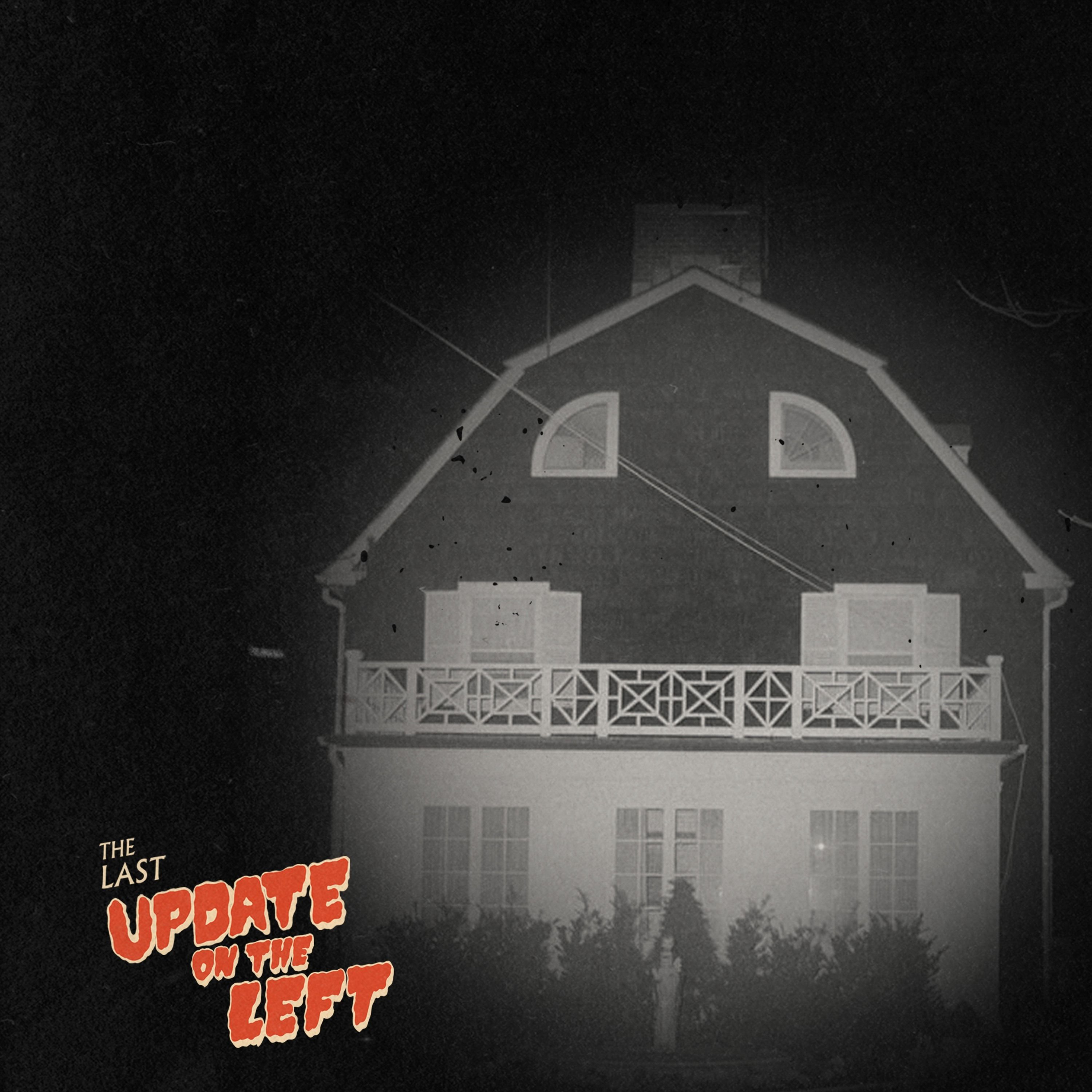
Last Podcast On The Left
Last Update on the Left - Episode 10 - Amityville Reloaded
00:53:31
The boys return for another update, this week focusing on the classic true crime / paranormal tale The Amityville Horror... A little over 50 years ago SOMETHING EVIL happened on Ocean Avenue in Amityville, Long Island, so we're breaking down the many rumors surrounding the story, the cinematic history of The Amityville Horror, and much, much more...
Loading summary
Transcript549 lines
- [00:01]
Travis McElroy
What's wrong with Ben? In Primate, a beloved family chimp suddenly turns everything they taught him, he's now using against them. Primate is smart, intense and packed with jaw dropping moments. Ben is calculating, powerful, and disturbingly human. This is the kind of horror film that shocks you when you least expect it. It's already sitting at 92% on rotten tomatoes and premiered to reviews at festivals worldwide. Go see Primate in theaters January 9th when it hits theaters. Do not wait. Grab a seat and bring someone you can squeeze during the scary parts. America, America, you used to be so.
- [00:52]
Marcus Parks
Fun but now you go to bed.
- [00:55]
Travis McElroy
At night scrolling on your phone.
- [00:59]
Marcus Parks
Well, listen up, America. Carnival is here with words, world class brew and ropes course too. And comedy and snorkeling and dining like everything from the sea to shining sea.
- [01:13]
Ed Larson
Find your fun again@carnival.com. carnival is calling ships registry Bahamas in Panama.
- [01:17]
Ad Read Voice
My name is special agent Rebecca Henderson.
- [01:20]
Ed Larson
Thursday on NBC.
- [01:22]
Ad Read Voice
There was an explosion at a top secret prison. Some of the most infamous killers broke free.
- [01:26]
Ed Larson
The hunting party is back.
- [01:28]
Marcus Parks
We're going in loud.
- [01:29]
Ed Larson
FBI.
- [01:30]
Travis McElroy
The stakes have never been higher.
- [01:32]
Ad Read Voice
The longer they're out there, the more dangerous they're gonna become.
- [01:35]
Travis McElroy
And the kill.
- [01:36]
Marcus Parks
Never seen anything like this before. Not even close.
- [01:39]
Ed Larson
Have never been more twisted. This is Next Level. The Hunting Party.
- [01:43]
Travis McElroy
The thrilling season premiere Thursday on NBC.
- [01:50]
Marcus Parks
That's when the cannibalism started.
- [01:53]
Ed Larson
Last update on the left. Honestly, if I came for money, I think everyone would know.
- [02:05]
Marcus Parks
The rings.
- [02:05]
Ed Larson
Do they talk? Sorry, sorry. My bracelet cut. Your daughter. She shouldn't be trying to get past me in the Starbucks line. It's my bracelet. I don't care. I don't care. I can make coffee at home.
- [02:22]
Travis McElroy
Sure.
- [02:23]
Ed Larson
Better coffee than this because of my $1 million coffee machine. But unfortunately, no. I'm here amongst the villagers.
- [02:35]
Marcus Parks
Welcome to last update on the left. I'm Marcus Sparks with the Nepo baby.
- [02:39]
Ed Larson
Henry Zapraski. Yeah, just me, Sydney Sweeney, hanging out with old fashioned Paris Hilton and Kirk Douglas.
- [02:48]
Marcus Parks
Yeah, you're just sitting there on all your that whacking hut money. Yeah, you're just sitting there. Oh, man. You guys have no idea what kind of inheritance you can get off of NYPD pension.
- [03:00]
Ed Larson
Yep, it's actually not that bad. Well, no, it is.
- [03:03]
Travis McElroy
Yeah.
- [03:04]
Ed Larson
Yeah. Oh, yeah.
- [03:06]
Travis McElroy
Jersey cops pension's pretty good.
- [03:07]
Ed Larson
It's fine. But at least I know thanks to my mom. She says don't worry, your funerals are paid full.
- [03:14]
Travis McElroy
Agree.
- [03:16]
Marcus Parks
And we're here with Ed Larson, who, as I understand, paid for his mother's.
- [03:20]
Travis McElroy
Funeral and my Father's.
- [03:22]
Ed Larson
Wow. You're like an executive producer.
- [03:27]
Marcus Parks
It was. Your mother's funeral was the funniest funeral I've ever attended.
- [03:30]
Travis McElroy
Thank you. It was a good one. I had some jokes, we had some movies, Moves. Had a good time, passed out some Reese's, but Peanut Butter Cups.
- [03:38]
Ed Larson
It was awesome.
- [03:38]
Travis McElroy
Yeah.
- [03:38]
Ed Larson
Yeah, really. Honestly, it was a really good show.
- [03:40]
Marcus Parks
Yeah, bro, it was an awesome funeral.
- [03:42]
Travis McElroy
It really was the best one I've ever been to.
- [03:44]
Ed Larson
Yeah, it really was. You threw a great funeral.
- [03:47]
Travis McElroy
Pizza and shit.
- [03:48]
Ed Larson
I can't wait to get to do another one. And I can't wait till I get to do yours.
- [03:52]
Travis McElroy
Yeah, well, you wait. You wait. There's going to be some people dying soon.
- [03:58]
Ed Larson
Really excited. Really getting into the year. Yeah, I'm ready for 2024.
- [04:04]
Marcus Parks
Yeah.
- [04:04]
Ed Larson
Yeah.
- [04:05]
Marcus Parks
In June.
- [04:07]
Ed Larson
I'm ready. Get me out there. I started at the gym. Nice. Yeah.
- [04:13]
Marcus Parks
Well, today, the subject that we are revisiting, and this is. I wouldn't necessarily say that this is an update. I would say that another way to refer to this show is not just last update on the left, but last expansion on the left.
- [04:27]
Ed Larson
Interesting, because I love the playfully expanded band things with my friends.
- [04:30]
Marcus Parks
Yes.
- [04:31]
Travis McElroy
Well, also, you're explaining it to me, so that's good.
- [04:34]
Marcus Parks
Well, yes, we're also explaining all of this stuff. Much of this stuff is brand new to Ed, so, you know, we're. We're bringing him in. But, yeah, this is. It's kind of a lot like how on no Dogs will do, like, kind of coda episodes to series where.
- [04:47]
Ed Larson
Yeah.
- [04:48]
Marcus Parks
You know, because they'll think there'll be cool things that, you know, we'll have to cut out. Like, for example, like, one of the cool things that we're having I think we might have to cut out of Cannes is that the lead singer of can was also in a German production of Hair with Donna Summer. And Donna Summer's first ever single was a German version of the Age of Aquarius called Das Vossa man, which translates literally to the water man.
- [05:09]
Ed Larson
That's incredible.
- [05:10]
Marcus Parks
It's the. It's a fucking. Dude in this version. It's so fucking good. It's Donna Summer. It's like a decade before I feel love.
- [05:17]
Ed Larson
What?
- [05:18]
Marcus Parks
Yeah.
- [05:18]
Travis McElroy
Oh, wow.
- [05:19]
Marcus Parks
Yeah, it's really. I mean, it's fucking incredible. That's. Actually, if we. I may get a little bit more.
- [05:24]
Ed Larson
Into that already here you have jumped into the thing you were cutting from no dogs, and you're putting it onto this show, and we're probably. And we're gonna have to cut this probably this time from this episode.
- [05:38]
Marcus Parks
No, this is just something that is a little bit. We're just gonna give you a little bit of a freebie. A bit. A freebie? Yeah. Donna Summer, it's already free.
- [05:45]
Ed Larson
I will say no. No dogs is free. We have a podcast. You can get them.
- [05:49]
Marcus Parks
That's right. Donna Summer, her name actually comes because she or the name Summer comes from the German man that she married because she lived in Germany for, like, many, many, many years. She married a man named Sommer. And when her first single was released, it was misprinted as Summer. And so she figured, that sounds a lot better. That looks a lot better. And so she was dawn of Summer from then on.
- [06:11]
Travis McElroy
Oh, I just thought it was because she was hot.
- [06:13]
Ed Larson
So was she shot in the head by Ronnie Defeo?
- [06:18]
Marcus Parks
No, but it's very possible that right before Ronnie Defeo killed his entire family, he may have been listening to I Feel Love. He may have been listening to Donnie Summers.
- [06:28]
Travis McElroy
He could have been on at the bar when he went and was like, oh, my God, my family. I almost defecated.
- [06:33]
Marcus Parks
So.
- [06:35]
Ed Larson
I love Donna Summer, though.
- [06:36]
Marcus Parks
I love Donna Summer's incredible.
- [06:38]
Travis McElroy
Yeah. What's not to love?
- [06:39]
Marcus Parks
Yeah. Well, okay, so let's go through. Why don't we. Like, how do I want to do this? Do we want to just kind of.
- [06:43]
Travis McElroy
Go through the Amityville overview?
- [06:46]
Marcus Parks
Overview.
- [06:47]
Ed Larson
Because when we first.
- [06:48]
Travis McElroy
Surprisingly enough, I've never even seen the movie.
- [06:50]
Ed Larson
Whoa, you've never seen the am.
- [06:52]
Travis McElroy
It's like the one, like, classic horror movie I've never seen.
- [06:55]
Ed Larson
It's wonderful. You should really watch it. It's one of the best haunted house movies ever.
- [06:59]
Marcus Parks
I'll actually say, I think it's a little overrated.
- [07:03]
Ed Larson
I'm better at this. I like it. I think it's good. We'll just know. When we covered the Amityville horror back in the day, we started realizing, as we researched, because just so you. Just to catch you up on before we Catch Eddie up. Is that when we did that series, partially, it was. We were at the time totally convinced that it was one of the most legit hauntings of all time, because that's all we had ever heard. We had heard it from the news, we had heard it from her parents. We had heard from our kids, friends. It was throughout all of pop culture that the look of that house with the two eyes that look like the two windows that look like eyes, it haunted entire generations and then generations after. And we thought, like, oh, this will be great, because we're always looking for good, meaty paranormal stories to tell on the store, on the show. And it was, for us, a very significant story because it was probably one of the first times that we popped open the guts of a story and we realized, like, oh, it's actually not about the haunting at all. It's about the true crime story that's at the center of this.
- [08:01]
Marcus Parks
Yeah, yeah.
- [08:02]
Travis McElroy
Nothing scarier than real estate.
- [08:05]
Ed Larson
Hey, anytunes.com.
- [08:09]
Marcus Parks
But, yeah, we did. Really did. Like, I actually remember, like, starting to look into this story and being, like, flabbergasted that the whole thing was kind of a hoax on the part of the Lutzes. I mean, not necessarily a hoax, but rather was blown out so much by the Lutzes and how this had kind of been common knowledge for many years. But that's one of the things that we sort of find on last podcast again and again, is that the myth often persists so much longer than the truth. But, you know, one myth turns into another, turns into another, and before you know it, everyone thinks Ed Gein's a cannibal when he's not. Yeah. So to give you a little bit of an overview of what happened before the Lutzes moved in, the story that the Lutzes built upon was the murder perpetrated by Ronnie Butch Defeo.
- [08:58]
Ed Larson
I love a Butch. Yeah, Yeah, I know. Uncle Butch.
- [09:01]
Marcus Parks
How was he? He was alive.
- [09:10]
Ed Larson
He was. Honestly. Loved him. Yeah, Loved him. He was great. Super fun. He always gave me a lot of money. Christmas. Yeah. Yeah. He was in the. He was in the sanitation department.
- [09:21]
Marcus Parks
Management.
- [09:23]
Ed Larson
Good money.
- [09:23]
Marcus Parks
Did that mean. Does that mean that he got, like, some fun off of the sidewalk?
- [09:27]
Ed Larson
Yes. He always had free. Weird. I remember he had a big flat screen TV that he fixed. I always remember that. I always, like, he gave us toys that he got out of the dump. That's great. It was awesome. It was all fixed. Yeah, he went and got it fixed. Yeah, he's got stuff.
- [09:40]
Marcus Parks
Got stuff out of the dump. You fix it up. Yeah.
- [09:42]
Ed Larson
But also largely, he was in management by the time he got to management. You make good money.
- [09:46]
Marcus Parks
Yeah.
- [09:46]
Ed Larson
Like six figures. Especially back in the 80s. That was good money.
- [09:49]
Travis McElroy
Especially when you hide bodies.
- [09:52]
Ed Larson
There's nothing wrong with the New York City sanitation department, I think. What an efficient system.
- [09:59]
Marcus Parks
Well, speaking of bodies, at 6:30pm on November 13, 1974, the patrons of Henry's Bar in Amityville, New York, were alerted to Ronnie Butch DeFeo Jr. Yelling, You gotta help me. I think my mom and dad were shot.
- [10:14]
Ed Larson
So One of my favorite act outs I got to do. Yeah. Of him coming in and fighting all the men. Because when we did the original series and he comes at me like, you got happy. And it was like all the guys trying to help him park. Long island is a special, special dumb place, you know, Rob, I love Long Island. Long Island. For me, from being from Queens, Long island was like the Hamptons to me.
- [10:38]
Travis McElroy
Long Islands are in Long island, technically.
- [10:40]
Ed Larson
I know. Don't tell them. Don't tell people in the Hamptons actually.
- [10:45]
Marcus Parks
Being Carolina, like when we got. When we finally bought a car, like after Covid, we would go out to Long island because that's what the good grocery stores are.
- [10:52]
Travis McElroy
That's what fancy.
- [10:53]
Marcus Parks
That's where it was fancy.
- [10:55]
Ed Larson
Yeah.
- [10:56]
Marcus Parks
But the.
- [10:56]
Ed Larson
But now I know it was not. Now I know it's just a working class neighborhood.
- [10:59]
Marcus Parks
Yeah.
- [10:59]
Ed Larson
We thought that was a correction. I'll give immediately. We said the Amityville house was in an affluent neighborhood. And I think that was because we were really, really, really broke.
- [11:07]
Marcus Parks
Yeah.
- [11:08]
Ed Larson
We did the episode and now we're not as broke.
- [11:11]
Travis McElroy
House, bedrooms.
- [11:12]
Ed Larson
Oh, yeah.
- [11:14]
Marcus Parks
I went in like 2022. It was. I thought it was a super nice neighborhood.
- [11:18]
Ed Larson
People got. I got a lot of shade on. I think it's because there's you guys. Long Island. Everybody has a different. Everybody gets to fight.
- [11:24]
Travis McElroy
There is a boathouse. It's nice.
- [11:29]
Ed Larson
Neighborhood. It is a nice neighborhood.
- [11:31]
Marcus Parks
Yeah, it's nice. Now, thank you for coming in. Rob saying that it's nice.
- [11:34]
Ed Larson
It's very nice. Island expert. I've been there several times. Yes.
- [11:37]
Marcus Parks
And it's nice.
- [11:38]
Ed Larson
It's very nice.
- [11:39]
Marcus Parks
All right. It's nice.
- [11:40]
Travis McElroy
Can I. Because the Long island medium. Ever been to the Amityville house?
- [11:44]
Ed Larson
Actually, it's a really good question. Continue on. I'm gonna look it up.
- [11:47]
Marcus Parks
All right. Well, the funny thing about him coming in and saying, like, you gotta help me, everyone help me, is he came in, like, panting, like he just run from his house. Yeah. And everyone's like, all right, great, let's go outside. And he's parked right in front of the bar. So he sat out in front of the bar, psyching himself up and like, okay, how's it gonna look? I need to look as panicked as possible. Yeah. So immediately under suspicion. And so he asked everybody to help come help him. Five guys he brought to his home. And they, of course, discovered that Ronnie DeFeo's entire family was dead. They said they were overwhelmed by the stench of death as they reached the second floor. Because everyone had been dead for a couple of days. They fucking turned on the light switch. Immediately found Ronnie Sr. And Luis dead in their bed. Ronnie Sr. Had a gunshot wound in the center of his back. Luis was face down. They were both shot twice. Luis was positioned where her chest was slightly raised. The medical examiner believes she may have been alive for several minutes after being shot and her position indicated she may have been awoken, raised her body and looked toward the killer before she died.
- [12:55]
Ed Larson
Well, according to. This is the only island. This is the only answer I got from the Long island medium visiting the Amityville said mostly about her having dinner. And so I'm hearing here, recording to her. This was. This is. Before you go, I just want to read this statement from her, which I. Which I love. People ask me that question all the time when I'm over for dinner. Are they getting anything from my house? But nine times out of 10, it's just their loved ones that they are feeling. I have a cousin that passed away and he was a plumber. So when my toilet runs randomly, I know it's him. But sometimes it is more than that. I walked into a home, and all I saw at first was a white light, a flash of blood on the walls, and a priest standing in the corner. I asked about the history of the home, and it turned out that there had been a murder and a suicide there, but the house had been blessed by a priest. It was a beautiful home. It was full of positive energy. It's not haunted.
- [13:42]
Marcus Parks
Wait, so she said that even though it was, but she still saw the blood stain?
- [13:47]
Ed Larson
Yeah, the massacre.
- [13:48]
Marcus Parks
Yeah, the massacre. And she saw. And she saw the priest, too?
- [13:52]
Ed Larson
Yeah.
- [13:52]
Marcus Parks
So what did it. So the priest. All the priest did was add to the haunting?
- [13:56]
Ed Larson
Yes, but. Oh, but it's nice. It's comforting. I just love to see him. I love McCalla.
- [14:02]
Marcus Parks
My God. You know, they had the shag carpeting in there, which I think is sometimes trashy, but when it's white, it's. You can keep it clean.
- [14:10]
Ed Larson
If you could just get this. Damn these animals. These kids. Animals coming in here. Yeah, that's why I got the plastic sheeting on this plastic sheeting? This plastic sheeting over the television. I got plastic sheeting over all the plants. I got plastic seating over the lamp. He said, nice. Did you have plastic sheeting on the lamps?
- [14:27]
Travis McElroy
No, but my family, my grandmother had a bunch of plastic sheeting on a bunch of stuff.
- [14:31]
Ed Larson
It was. The plastic sheeting was on the lamps. It was. I mean, it. There was a plastic cube over the Television. And I don't know what. It's not like we were a bunch of elephant seals. Yeah, like I know what she thought we were gonna.
- [14:43]
Travis McElroy
To the surface of the television, the.
- [14:45]
Ed Larson
Glass cube in the middle of the living room.
- [14:47]
Marcus Parks
Wait, so you had to wa. You had to watch TV through a sheet of plastic?
- [14:50]
Ed Larson
It was like an encasement. It was in this like thing.
- [14:53]
Marcus Parks
But I remember the screen was not obscured by the classic.
- [14:56]
Ed Larson
No, but the thing, the top of it was. It was in this plastic hutch and there was plastic on the couch and there was literally plastic on the car.
- [15:03]
Travis McElroy
There was plastic on everything in those houses.
- [15:05]
Ed Larson
Yeah, pristine.
- [15:06]
Travis McElroy
And all the closets were filled with mothballs.
- [15:09]
Ed Larson
Yes. And it was. Nothing was used. It was good. Plates that couldn't be used because we were good enough.
- [15:15]
Travis McElroy
Rooms you weren't allowed in.
- [15:16]
Ed Larson
Couldn't go into them. Couldn't. That was that.
- [15:18]
Travis McElroy
My grandmother had a room we weren't.
- [15:20]
Ed Larson
Allowed to enter because just of my fat legs, just my shitty little mouth would ruin that place. Yeah.
- [15:28]
Travis McElroy
And all those houses, they also have like a room before you even get in the house.
- [15:31]
Ed Larson
Anteroom.
- [15:32]
Travis McElroy
Yeah.
- [15:33]
Marcus Parks
I am so glad I grew up in dirt.
- [15:35]
Ed Larson
It's just like I just like, just.
- [15:36]
Marcus Parks
Like, just thinking back on just like how fucking and filled our houses were with like sand and dirt.
- [15:42]
Ed Larson
My mom and grandmother would happily have vacuumed me every morning. They would have happily have honestly cleaned my very body inch by inch.
- [15:51]
Travis McElroy
Wow.
- [15:52]
Ed Larson
Yeah. I mean, not even. Not the dick.
- [15:54]
Marcus Parks
I mean, I got hosed off plenty.
- [15:56]
Ed Larson
Yeah, that's different. Oh, we weren't hosed. We were threatened with the hose.
- [15:59]
Travis McElroy
I've been hosed off.
- [16:01]
Marcus Parks
Yeah.
- [16:01]
Travis McElroy
Yeah, it was fun.
- [16:02]
Marcus Parks
Yeah, it's great.
- [16:02]
Ed Larson
It's covered in ants.
- [16:06]
Marcus Parks
So. So they discovered Ronnie's parents upstairs. Dead, gunshot wound.
- [16:11]
Ed Larson
Honestly, how would you even know if a Long island father was planning to kill the whole family if the whole place was covered in plastic? It already is.
- [16:17]
Travis McElroy
Yeah, that's a great idea.
- [16:18]
Marcus Parks
Right.
- [16:19]
Travis McElroy
That's why they do it. Just in case they kill their family.
- [16:24]
Marcus Parks
So they go into the boy's bedroom. They found the bodies of 9 and 12 year old John and Mark Defeo, that's Ronnie Defeo's brothers. They're both lying face down with a single bullet shot wound. And the reason why I'm going through all the, you know, where everybody was found and how they were found, it's very much germane to the arguments that are made later on as to who perpetrated these crimes and who all was involved in these crimes.
- [16:47]
Ed Larson
Yeah.
- [16:47]
Marcus Parks
So those boys were both killed at close range. And then they found the two girls. They found Allison and Dawn. They were both found face down in their bed. Allison, 13, was once shot in the face. Bullet entered the left cheek, moved into her right ear, tore through her brain. The bullet exited, ripped through the mattress, hit the wall, and r. Ricocheted on the floor. Don, 18, was shot in the back of the neck. Bullet entered below her left ear and blasted through the left temple onto the pillow. Left side of her face collapsed, and brain particles and blood saturated the pillow. So they walk in, everybody is dead in their beds.
- [17:27]
Travis McElroy
Yeah.
- [17:27]
Marcus Parks
And they've all been killed the same night. Yes.
- [17:30]
Ed Larson
And he goes, oh, no. Oh, my God. Who could have. Oh, it's me.
- [17:39]
Marcus Parks
Yeah. But.
- [17:42]
Travis McElroy
All right, I have a question. How do you execute six people and no one gets out of bed?
- [17:48]
Marcus Parks
And that's been diamonds.
- [17:50]
Ed Larson
It's a demon.
- [17:52]
Marcus Parks
And that's been the question behind the Ronnie Defeo murders for, you know, going on almost 50 years now.
- [17:59]
Ed Larson
Do you understand how often it happens in family annihilations? It actually happens way, way more often than you think. And partially. I was reading about this. This because I wanted to know. Because recently I read this horrific story about a British multimillionaire who, you know, obviously fucked everything up, had an. You know, was embezzling, all very standard. Was about to lose everything. They all knew it was all coming crashing down. And so he killed his wife and his daughter. And then what he did was that he parked an RV in the driveway to the mansion where you'd have to come in so that the people couldn't come in. And then what he did is he shot all the animals, he shot all the horses. He shot all everything else that lived on. The entire pool thing. He set the whole place on fire. But part. And then he said they burned down a hellacious inferno. Everybody died inside. Same thing. The kids were shot, and not one didn't hear. And the other one were. It was, like, not far from each other. And they talk about. They believe there's a phenomena of something being so far outside of what you experience. Like when you ask a person that has never heard a gunshot what a gunshot sounds like, they say a bunch of different things. They see stuff on movies. That's not what a gun really sounds like. A gun kind of sounds like a clap.
- [19:09]
Marcus Parks
Yeah, Right.
- [19:09]
Travis McElroy
Like crack.
- [19:10]
Ed Larson
Yeah.
- [19:10]
Marcus Parks
It also depends on the type of gun. It's like a. It was a marlin rifle.
- [19:15]
Travis McElroy
Yeah.
- [19:15]
Ed Larson
Yeah. But if you don't know the sound and you've Never thought that this would be something that was something that you would ever experience. You'd actually be very surprised how much just you need your brain, the very brain itself, trying to keep the status quo of your reality together and intact, even when you're asleep. That. That it might. You might ignore something like that because it's so far outside. It's how people, like, accidentally sleep while their house sets on fire and stuff like that. It's because there's all of these. It's just. It's not. You're not expecting it, so you don't even think that it's gonna happen to you. And so it's like you kind of don't see it.
- [19:50]
Marcus Parks
And it also could be, you know, your super mean drug addict brother. You know, you hear a noise like, hey, what was that? And you hear your fucking super mean brother. Go, go back to sleep.
- [20:00]
Travis McElroy
Yeah.
- [20:00]
Ed Larson
And you're like, all right.
- [20:01]
Marcus Parks
Yeah, right? And then you go back to sleep.
- [20:03]
Ed Larson
Because you're a little kid.
- [20:04]
Marcus Parks
Yeah.
- [20:04]
Travis McElroy
Yeah.
- [20:05]
Marcus Parks
Except for dawn, of course. But we'll get to dawn later.
- [20:10]
Ed Larson
This podcast is brought to you by Squarespace. Whether you're just starting out or scaling your business, Squarespace is the all in one website platform designed to help your business stand out and succeed online. Squarespace gives you everything you need to offer services and get paid all in one place, from consultations to events and experiences. Showcase your offerings with a customizable website designed to attract clients and grow your business. The best part about it is it can help you design a funnel in which you can very quickly record commercials so that you can get it done while you were desperately trying to get on break. That's the best part about Squarespace. It can really shorten up the time you spend doing things. You got to get in there. You gotta get in there. Use Squarespace. Man, is it fast. It is absolutely incredible. You're gonna love your experience at Squarespace. Head to squarespace.com left for a free trial and when you're ready to launch, use offer code left to save 10 off your first purchase of a website or domain. Now that the holidays are over, you might be feeling like you've got a big spending hangover. The drinks, the holiday food, the gifts. Luckily, Mint Mobile is here to help you cut back on overspending on wireless this January, with 50% off unlimited premium wireless. All plans come with high speed data and unlimited talk and text delivered on the nation's largest 5G network. Same network, same provider. I'm doing it. It is honestly save money on a mint mobile. It's 15amonth this January. Quit overspending on wireless with 50 off unlimited premium wireless plans. Started 15amonth at mintmobile.com lpotl that's mintmobile.com lpotl Limited time off. Upfront payment of $45 for three months, $90 for six months or $180 for 12. Month plan required. $15 per month equivalent taxes and fees. Extra initial plan term only. Over 50 gigabytes. May slow when network is busy. Capable device required. Availability, speed and coverage varies. See mint mobile.com Ah, yes.
- [22:15]
Travis McElroy
2026. And you know what's still great in 2026? That was awesome. In 2025, that's all your great quince products. That's right. Yeah. Quince is back. It never left. What do you mean it's back? Oh, I tell you one thing. When I'm all cold and I gotta be warm, know what I do? I put on my Quinn sweatpants. Oh, so nice. My knees aren't trembling no more. I'm so warm and happy and wonderful. I got my heated blanket and my nice warm hat and my thick quince socks. And I am a happy, warm, cozy little prince, all dressed up in my quince. And you can be too, this new year. So go on down and refresh your winter wardrobe with quintessential quints. Go to quince.com last for free shipping on your order and 365 day returns. Now available in Canada too. That's Q-U-I-N c e.com last free shipping and 365 day returns. Quince.com/last. You're welcome.
- [23:43]
Marcus Parks
And the thing is, as far as motive goes, you know, everyone knew, like Ronnie Defeo Senior, physically and mentally abusive towards his entire family. Butch kind of inherited that temper. They had altercations throughout his life. Then Butch started abusing both acid and heroin at the same time. And it said that just finally one day, Butch decided to kill everybody. You know, nobody really knows what, like Butch himself has given multiple explanations as far as why he killed everybody in the house. Yeah. He has said that it was a mob hit, that it was some sort of like.
- [24:24]
Travis McElroy
Well, they were connected, the family.
- [24:25]
Ed Larson
Right? Family was super connected. Yeah, dude.
- [24:28]
Travis McElroy
Fucking.
- [24:28]
Ed Larson
He was. Yeah, he was a weirdo.
- [24:30]
Marcus Parks
Yeah. Well, so as far as how Butch started off, like, he told police he was home from work with an upset stomach. The day before, he stayed up late watching a Burt Lancaster movie. I don't know which movie it would have been, though. But do you know much about Burt Lancaster.
- [24:43]
Ed Larson
I'll tell you one thing. I got to tell you because of. I do Dana Carvey's impression of Burt Lancaster.
- [24:51]
Travis McElroy
I know he was in a movie called Atlantic City.
- [24:53]
Marcus Parks
Okay.
- [24:53]
Travis McElroy
Which hadn't come out yet. So you didn't watch that.
- [24:56]
Marcus Parks
All right.
- [24:57]
Ed Larson
Oh, my God. I'm going to tell you what I'm going to tell you straight.
- [25:01]
Marcus Parks
Well, he said that he fell asleep in the TV room around 2am Woke up around 4am with stomach pains, saw his brother's wheelchair outside of the bathroom. His brother had just broken his leg. So he's in a wheelchair. And Butch heard the toilet flush. And the next morning, he decided to go back to work. After work, he saw his girlfriend and some of his friends. He was complaining throughout November 13th to his girlfriend and friends that he was unable to get ahold of his parents. So he's kind of setting an alibi there. Cars are in the garage, but no one's answering the phone. And so he was taken to the police station for his own protection. Because he suggested to the police at first, like, hey, you know, not for nothing, but my family pissed off this Mafia hitman named Louis Philippe Fellini. Maybe you ought to go look into Louis Fellini. I might be in trouble here. I might be in danger.
- [25:49]
Ed Larson
You gotta have to come up with a better fake mafioso name than Louis Fellini. I feel like it's. Like it's essentially called him Theo Spaghetti. Like, that is a very energy racist name.
- [26:01]
Marcus Parks
Well, no, these are real people.
- [26:03]
Travis McElroy
Yeah, he made Americord.
- [26:06]
Ed Larson
Yeah, I know. Also, but also I find that I forget, though, being from Queens, the kids I grew up with were like, Anthony and Moret. Bobby Babarisi. Yeah, I miss those names.
- [26:17]
Marcus Parks
Yeah. Well, Fellini and his family were family friends. They lived with the DeFeo's for some time after their home in Brooklyn burned down and Fellini buried a box of money and jewels in the DeFeo home. Apparently, Butch got into an argument with Fellini after Fellini criticized a paint job that Butch did for him. Butch threw a paintbrush at Fellini, broke a window and called him a cocksucker.
- [26:39]
Ed Larson
Whoa. That's how you get whack.
- [26:41]
Marcus Parks
Yes. And Ronald Sr. Is like, yeah, that's a professional hitman. You don't want to be fucking with that guy. And Ronald Sr. Complained two weeks before the murders that he lost a friend, that he had to tell Fellini that Ronald would murder Fellini's entire family if something happened to Butch. And, you know, so on and so.
- [26:59]
Ed Larson
Forth, Bada bing, Bada boom.
- [27:01]
Marcus Parks
All of a sudden.
- [27:02]
Travis McElroy
No.
- [27:05]
Ed Larson
The guy, he's getting shot, and you. The guy, he's yelling at everybody at the.
- [27:13]
Marcus Parks
And Butch admitted, like, he's on probation. He admitted he was a heroin user. He said, yeah, I burglarized neighbors houses, and I steal antiques. When they asked him how he passed his drug test, he admitted, like, my sister used to piss in a bag, and I'd take that. And so basically, the police are just kind of softening him up. They see immediately, like, oh, this guy killed his entire family. Yeah, they're just trying to soften him up, trying to get him to. Trying to just admit to, like, one thing, and then the next thing and the next thing, and then finally he was like, yeah, if I'm telling you all that stuff, I may as well be honest.
- [27:45]
Ed Larson
Yeah, I murdered my family.
- [27:48]
Marcus Parks
It was me. I murdered everybody. They said that.
- [27:52]
Ed Larson
Killed them all, of course.
- [27:54]
Marcus Parks
Killed them all.
- [27:55]
Ed Larson
Kill them all.
- [27:57]
Travis McElroy
That's good. Yeah, we're good.
- [27:58]
Marcus Parks
No, I've been. It's like, actually been my. I've been doing it, like, with Carolina, like, all.
- [28:02]
Ed Larson
All the. Yeah.
- [28:06]
Marcus Parks
Hi, it's Bob.
- [28:08]
Ed Larson
It's Bob.
- [28:10]
Marcus Parks
I couldn't see who could write something like that. Well, before Butch finally did come out and say, look, all right, I killed my family, he kept telling police, like, look for Fellini. Look for Fellini. And Butch, at the same time, he would start to, you know, he would say his mother was a lousy cook. He'd say his brothers were fucking pigs.
- [28:32]
Ed Larson
Yeah, sure. Yeah. He was not a nice guy. He wasn't a good brother.
- [28:35]
Marcus Parks
No, no. Called his sister a fat fuck who played her music, too.
- [28:38]
Ed Larson
Lo just know it's not a good reason to kill your sister.
- [28:41]
Marcus Parks
Yeah. And when they told Butch, they found the murder weapon and the bullets.35 Marlin rifle. Butch said that Fellini had an accomplice who forced Butch to watch as he murdered his family. So it's. The story just keeps changing, keeps evolving.
- [28:55]
Ed Larson
Yeah.
- [28:55]
Marcus Parks
And they asked if Fellini forced Butch to participate. Butch put his head in his hands, asked for a minute, and then confessed to murdering his entire family. And of course, immediately after, Butch's attorney mounted an insanity defense, claiming that DeFeo heard voices who told him that his family was against him, that he was possessed. And he claimed that he killed them in self defense because the demons were telling him that they were going to hurt him. And that was around the time that this attorney got a hold of the Lutz family.
- [29:26]
Ed Larson
Now, this is when the story was concocted, which is it Is interesting because the Lutz family, they were also strange. They were very religious. I believe that he had, like. Didn't he. George Lutz?
- [29:37]
Marcus Parks
He was. No, he was way into the occult.
- [29:39]
Ed Larson
Well, that was the kind of. It started with that. He got really. George Lutz was kind of. He's a very weird man.
- [29:46]
Marcus Parks
Yeah. Because he was really into, like, transcendental meditation and mantra chanting and shit like that.
- [29:52]
Ed Larson
He had a Christian stripe. It's a very 80s New York version of religion that my mom had, too, where it was like she had a lot of Christian iconography mixed into, like, weird Wiccan stuff.
- [30:05]
Travis McElroy
Oh, yeah.
- [30:06]
Marcus Parks
Like chanting the name. Because that what George Def. Or what George Lutz used to do is, like, he would sit and, like, chant, like, find demon names and, like, chant demon names over and over again.
- [30:14]
Ed Larson
I mean, I take that with a grain of salt, because I think that what he actually did was stuff that like. My. One of my best friends, Jeff Nitzberg, his dad was what they called the Juu, which is Jewish Buddhist. And he went full on into Buddhism.
- [30:27]
Marcus Parks
And then I never heard that.
- [30:28]
Ed Larson
It kind of honestly made him an. Because he started believing that nothing existed. So then he would say stuff like, why are you guys making art and movies? Because it doesn't matter because life isn't real, and stuff like that. It was. It was rough.
- [30:40]
Travis McElroy
That's two Buddhists.
- [30:41]
Ed Larson
Yeah. Two Buddhist. Two Buddhists.
- [30:45]
Marcus Parks
Seems to be just a weird interpreter from my study of Buddhism. It seems to be, like a weird interpretation of it and just an excuse. He doesn't sound like a Buddhist. He sounds like a nihilist.
- [30:53]
Ed Larson
He was. Yes.
- [30:54]
Travis McElroy
Yeah.
- [30:55]
Ed Larson
Yes.
- [30:55]
Travis McElroy
He was Buddhism as a reason. He was poor.
- [30:58]
Marcus Parks
Yeah.
- [30:58]
Ed Larson
Weapon against, you know, he was very rich, actually. He did very, very well. He was using it to attack his children and his children's friends.
- [31:03]
Travis McElroy
Yeah.
- [31:04]
Ed Larson
But at the same time, he had gotten all these mantras. That's what he would do. So he would go and do his meditation all day.
- [31:11]
Marcus Parks
Yeah.
- [31:11]
Ed Larson
So he'd go near the room. You just hear, like, from the other room. So I could see that. I could see George Lutz doing that. Never been. Like, he's an occult master. Meanwhile, like, all he did was go to one weird thing in Queens. Like, he saw some guy. Some. Some weird. Yeah, some guy taught him how to meditate.
- [31:27]
Travis McElroy
All into it in the Northeast. You know, my whole Catholic family. The Catholic side, not the Jewish side, is super ghosts.
- [31:33]
Ed Larson
Oh, yeah.
- [31:35]
Travis McElroy
Mediums to come by the house all the time.
- [31:37]
Ed Larson
And it is a very. It is very. Catholicism is a Very much a slippery slope to the occult.
- [31:44]
Marcus Parks
Yeah.
- [31:44]
Ed Larson
Because it is the occult.
- [31:45]
Marcus Parks
Yeah.
- [31:46]
Ed Larson
It's a fucking grimoire. We talked about this. You do a Catholic exorcism, you arrive with the spell book and you're. You have all the accoutrement and you're doing spells. Yes.
- [31:57]
Marcus Parks
Yeah. You've got your special, like, you know, you have your holy water, which might as, you know, your alcohol alchemist's pouch, you know, like it's. Yeah, it's all the same. It's all the same occult trappings.
- [32:07]
Ed Larson
Yes.
- [32:07]
Marcus Parks
They all use the same thing, but.
- [32:09]
Ed Larson
I feel it's a slippery slope. But that's where it kind of started. He had this kind of fascination with the occult. Now, where did they. Where did they say the actual phenomena began?
- [32:19]
Marcus Parks
Well, they say that it actually began as soon as they moved in. Like, you know, that Father Ray heard the deep voice saying, get out. You know, and then when closing the window after the blessing, the eldest Lady Lutz boy had his hand crushed in the windowsill. Like, the windowsill came down and crushed the boy. And then, you know, and then they started experiencing strange phenomena. The daughter, Missy, she had a. An imaginary friend, they called it a mysterious pig friend named Jody.
- [32:45]
Travis McElroy
Yeah.
- [32:45]
Ed Larson
Oh, everyone. Oh, we love ghost pigs.
- [32:47]
Marcus Parks
We love ghost pigs.
- [32:48]
Travis McElroy
Yes.
- [32:49]
Marcus Parks
And, you know, the ghost pig spoke to her and told her of a little boy who lived in the house, met a brutal death, you know, so on and so forth. You know, they had all sorts of shit where there's, you know, they said a ceramic lions bit George on the cap. Doors and windows would open and close randomly. The boys beds moved on their own, you know, and then after 28 days in the home, you know, very famously, they left with no more than the shirts on their backs. They ran out of the house. They ran out of the house. And as it turned out, all this was, of course, bullshit. We talked about this. We talked about this recently on the Warrens, and this is partly why we're talking about this is because we did just recently cover, you know, Amityville partly on the Warrens, and we can kind of. Of expand a little bit more on what George Lutz did afterwards. Afterwards he went out and recorded a series of 26 cassette tapes, talking about what happened while they were in the house. He was drinking most of the time when he was recording, and he reportedly wanted to have seances in the house. And By February of 1976, the Lutzes were. But before all that, before he started recording shit, like less than a month after, they ran out of the house. They were in contact with Butch DeFeo's defense attorney, William Weber, and he wanted to combine their stories to create a insanity plea.
- [34:06]
Ed Larson
Yeah.
- [34:06]
Marcus Parks
You know, and to make a lot of money in the process because they're.
- [34:09]
Ed Larson
Setting up for the fucking.
- [34:12]
Travis McElroy
The.
- [34:12]
Ed Larson
The sale of. The story of the haunting of the Amityville house.
- [34:16]
Marcus Parks
Yeah. And because that's the thing is, I do believe that the Lutzes experience something like something happened in that house.
- [34:23]
Travis McElroy
I mean.
- [34:23]
Marcus Parks
Yeah.
- [34:24]
Travis McElroy
Six people were brutally murdered.
- [34:26]
Marcus Parks
Yeah. I mean, it's. It's got There.
- [34:27]
Travis McElroy
It's got bad juju.
- [34:28]
Marcus Parks
Yeah. It's got bad vibes.
- [34:29]
Ed Larson
We talked about this recently when we did the Herbaumeister series, about how, like, it's one of those places that if there. If there were going to be a place where there was going to be paranormal activity would be here. Yeah.
- [34:42]
Travis McElroy
But I don't want to skip ahead too much. But no one else has felt paranormal in the house since.
- [34:46]
Marcus Parks
No, no, no, no. Everyone who's ever lived there. And they also. They refuted a lot of George Lutz's claims where he said, like, you know, window shutters would fly off the walls, doors would fly off the walls. And these are like, every single thing in here looks original. None of this was, you know, like, this door looks like it's been here on these hinges for 20 years. None of that shit happened.
- [35:07]
Ed Larson
And I also think when it comes to paranormal activity, we could look to. We talked a little bit about the lead poisoning, the. How lead poisoning in the boomers is probably what led to the serial killer, like, fucking epidemic of the 1970s.
- [35:21]
Marcus Parks
We're pretty certain in 80s and 90s.
- [35:23]
Ed Larson
It's got something to do with lead poisoning. I actually blame a lot of paranormal stories from this time period on the goddamn Exorcist. They look at immediately. The exorcist happened in 1973. So once the exit, that. That's when that came out. The Amityville murders happened in 74. And everything happened after the fact. So as soon as they saw this, it was already still Exorcist fever. Like, technically, when the. The tech. Technically, I believe the Oscars had just happened, which I believe the Exorcist was nominated.
- [35:50]
Travis McElroy
It was nominated for best Picture.
- [35:52]
Ed Larson
And so it got huge. A huge amount of attention.
- [35:56]
Marcus Parks
Yeah. And so demons made me do. It was pretty popular.
- [36:00]
Ed Larson
Sound like it was going to make some money.
- [36:02]
Marcus Parks
Yeah.
- [36:02]
Travis McElroy
But also, it's like, I mean, obviously these people have no moral compass, but, you know, as much as you want to, like, sell your new House that you probably, you know, needed to unload because you couldn't afford to buy it in the first place.
- [36:13]
Ed Larson
Yes, that is what happened with Lutz. Yeah, that's what.
- [36:17]
Travis McElroy
That's what it seems like to me.
- [36:18]
Ed Larson
It is utterly. That is, you are sort of jumping ahead. But. Yes, he does. He completely destroyed his finances and he. The house was like three times upside down.
- [36:26]
Travis McElroy
Yeah, but in order to do that, you have to free a six time murderer.
- [36:30]
Ed Larson
Yes, but you see, we. As we noticed, sometimes you got to go all the way to the top to make it all work out.
- [36:37]
Marcus Parks
Well, I mean, the kids who were a part of the Amityville story, a couple of them have come out and spoken publicly. Specifically Christopher Lutz, who changed his name to Christopher Quarantino, which is a fun name.
- [36:52]
Ed Larson
Christopher Quarantino.
- [36:53]
Marcus Parks
Christopher Quarantino.
- [36:55]
Ed Larson
What?
- [36:55]
Marcus Parks
Yeah, I think it's. Quarantino was the name of his mother's first husband.
- [37:00]
Ed Larson
Oh, okay. It's a real name.
- [37:02]
Marcus Parks
Yeah, Quarantino. It was the.
- [37:04]
Ed Larson
Yeah, yeah. It sounds like an. An Italian special. During COVID He stayed six feet over there.
- [37:16]
Travis McElroy
I throw carrots on and open mouth.
- [37:19]
Ed Larson
Don't you cough. Don't you cough. You don't do make my sick. Really fun stuff. Really top tier material for me today.
- [37:29]
Travis McElroy
Quarantino special is nice, but yeah, this.
- [37:32]
Marcus Parks
Guy, he changed his name for anonymity, but it said that he took a lot of flack when he was a kid because everyone's like, your mom's a liar, your dad's a liar. All this stuff is bullshit. But this all happened to him when he was seven years, which is kind of interesting. Yes, because the age is very interesting because I don't know about you guys, but my memory from when I was seven is hazy to say the least.
- [37:55]
Ed Larson
Well, I remember my seventh birthday because that's the story I had from when Michelangelo came and then from the Ninja Turtle.
- [38:02]
Marcus Parks
Yeah.
- [38:02]
Ed Larson
And Michelangelo came to my seventh birthday party.
- [38:04]
Travis McElroy
It's not real, Henry.
- [38:05]
Ed Larson
No, I know, I know. But the thing that was more remarkable about it was that I'll always remember because, like, I grew up in New York at a fairly diverse group of friends. We're all like, kind of careful.
- [38:16]
Travis McElroy
I remember first, like one was even a Ninja Turtle.
- [38:21]
Ed Larson
But then Michelangelo showed up, and April o', Neill, that was accompanying Michelangelo, was being portrayed by a black woman. And we were all like, really confused as kids. And it really created this very interesting conversation about colorblind casting and. And race where she had just trying to explain because, like, all these kids are all like, excuse me, ma'.
- [38:42]
Ad Read Voice
Am.
- [38:42]
Ed Larson
April o' Neal's white. And she was like. Literally. You got to understand. See, sometimes April o' Neal can be black like she was. And we're all like, did she have red hair?
- [38:54]
Travis McElroy
What? Did she have red hair?
- [38:55]
Ed Larson
No, we were just like. But we just went with it. They taught us karate, and those are the last thing I remember.
- [39:01]
Travis McElroy
At least she's wearing.
- [39:03]
Marcus Parks
As long as she's wearing the costume.
- [39:04]
Ed Larson
Costume on.
- [39:06]
Marcus Parks
Didn't show up wearing a pantsuit.
- [39:08]
Ed Larson
Yeah, yeah, it showed up full tits out. It was awesome. Yeah. Then she started stripping.
- [39:14]
Travis McElroy
That's amazing.
- [39:15]
Ed Larson
She gave all the kids a lap dance. My dad. You'd be crazy. What cops used to get. Yeah, that's what I remember from being seven.
- [39:23]
Marcus Parks
Well. Yeah, I don't remember a whole lot. I remember being paddled by my teacher at seven.
- [39:31]
Travis McElroy
Yeah, I was it.
- [39:34]
Marcus Parks
I mouthed off. I mouthed off a lot when I was a kid. And I got. And I got paddled a lot as a result because I had a. I had a big mouth.
- [39:42]
Ed Larson
Do you think it made your butt big? Strong?
- [39:46]
Marcus Parks
Is that why. Is that why my butt's big is because when I was a kid, I got paddled a lot, and then my. And my body, in order to protect itself, made my butt. Made more butt. Made my butt bigger? Yeah, that's probably it. You fucking idiot. Yeah, that's probably the reason why I got a big butt, is because I got paddled a lot when I was a kid because I had a big mouth.
- [40:04]
Travis McElroy
You know, I was hit by a teacher at seven.
- [40:06]
Ed Larson
Really?
- [40:06]
Travis McElroy
In second grade.
- [40:07]
Marcus Parks
But was it part of the punishment, or was it, like. Did she just fly off the handle and smack you?
- [40:12]
Travis McElroy
I dropped my pencil box. She said it was on purpose. I said it wasn't. And she hit me. Wow.
- [40:16]
Marcus Parks
Like, in the face.
- [40:18]
Travis McElroy
She slapped my arm.
- [40:19]
Marcus Parks
Oh, okay.
- [40:20]
Travis McElroy
No, no, I got Sister Dolores.
- [40:22]
Marcus Parks
No. Okay, That's. And that's a nun. That's totally different. No, for me, it was a full wooden paddle by a public. By a government employee. Oh, yeah.
- [40:31]
Travis McElroy
No, no, no. It wasn't like that. It was a rash decision.
- [40:34]
Ed Larson
No, I was celebrated by my school.
- [40:36]
Marcus Parks
No, that's nice.
- [40:37]
Ed Larson
Everywhere I went.
- [40:39]
Travis McElroy
That's why I got the public school. In private school, they hated me.
- [40:42]
Ed Larson
Yeah, I could see.
- [40:43]
Marcus Parks
Yeah.
- [40:43]
Ed Larson
Yeah. You look like you look like a child prisoner. I've seen those pictures. Right. You look like. You look like you'd be currently fighting Ukraine.
- [40:50]
Travis McElroy
Oh, my God.
- [40:51]
Ed Larson
And if you were born in Russia at that time as that child, man.
- [40:54]
Travis McElroy
The day I Found out that I can just kick the shit out of anyone who badmouthed me. It was a great day.
- [41:00]
Ed Larson
Oh, I bet. Oh, wow. These hands. These hands.
- [41:07]
Marcus Parks
See, I kind of found out the opposite, that anyone could kick the shit out of me if I badmouth.
- [41:11]
Ed Larson
Yeah, yeah, really bad.
- [41:14]
Marcus Parks
I was a really tiny child.
- [41:15]
Ed Larson
But that's why you'll become razor quick with your wit. Oh. Because you'll see that actually a few barbs are just as well effective as a few well placed kicks, my friend.
- [41:25]
Marcus Parks
My audience was not that smart. All he had to do is funny voices and impersonate Jim Carrey.
- [41:32]
Ed Larson
Yeah, it worked out. Somebody, a stunt man that helps a lot of people beat up. I remember.
- [41:38]
Travis McElroy
I know this is way off topic and we should probably cut it, but I remember I. I beat up one kid because I was shaking a tree and he's like, hey, don't shake that tree. And I just beat the out of him.
- [41:47]
Ed Larson
Wow. Incredible lesson.
- [41:49]
Marcus Parks
Actually, the only kid that I like could beat up, but yeah, the one kid that was weaker than me is that he was stomping on ants and I told him, hey, stop stomping on the ants. He told me to shut up and I beat the out of hell.
- [42:00]
Ed Larson
Yeah.
- [42:00]
Travis McElroy
Jesus Christ.
- [42:01]
Ed Larson
I just made him laugh. I just sang songs and I did impersonations of the teachers.
- [42:08]
Marcus Parks
Oh, no, I did impersonations of the teachers too. But yeah, no, impersonations were big. Okay, so back to the defense.
- [42:18]
Ed Larson
That was quite a side jump.
- [42:21]
Travis McElroy
From your grave.
- [42:23]
Ed Larson
Sling is changing the way live TV works by putting viewers in charge of their entertainment payment, pay only for the months when TV is actually needed and skip the ones when it's not. For short term needs, Sling passes provide live TV access without commitment. A day pass for 4.99 offers 24 access. A week pass, blah, blah, blah, who cares? Unsling is the only place that you can watch your pretty faces going to hell on an app. It's the only place you see where.
- [42:48]
Marcus Parks
You can do it.
- [42:48]
Ed Larson
And so therefore it has become my favorite app. So you go to wherever the Sling is, find Sling, and you can go to see your pretty faces going to hell on it. And that's all that matters. We're show people your pretty faces going to hell. Okay? So go get Sling. Great app. How I've organized my channel lineup is I've put your pretty faces going to hell five times on it. So go check it out. Choose and customize your channel lineup or pause and watch for free. Sling lets you do that. Visit sling.com to learn more Get a.
- [43:21]
Ad Read Voice
Jump on next summer with Verbo's early booking Deals. Don't wait to claim your dream summer spot, whether that includes a good porch swing or a poolside lounger. When you book early, you get the best places at the best prices. But back to the poolside loungers. With vrbo, you don't have to reserve any loungers. They're all yours. In fact, the whole private home is yours. Book with early booking deals and you can lounge around all summer long however you please@vrbo.com this is an ad by BetterHelp.
- [43:53]
Ed Larson
A new year is a new opportunity to feel lighter and you don't have to become a new person to do it. Signing up for therapy with better help can shine a light on what's been weighing you down and illuminate possibilities for the year ahead. BetterHelp handles the initial therapist matching work for you. You don't have to do the hard work like I did trolling the streets of skid row looking for a therapist. Just take a short questionnaire to share your needs and preferences. And thanks to BetterHelp's industry leading match fulfillment rate, they usually get your match right the first time you know it. You know how I know my therapist, my match? By looking him dead in the eyes. I look him dead in the eyes and I see if he can handle it right as we both feel the bolus of excrement inside of me.
- [44:39]
Travis McElroy
Right?
- [44:40]
Ed Larson
But I hope that better help can provide you an unbiased perspective on your life. Life. So you can head into the new year taking only what truly serves you. You can't step into a lighter version of yourself without leaving behind what's been weighing you down. Therapy can help you clear space. Sign up and get 10 off@betterhelp.com LastPod that's better. H lp.com LastPod so Christopher, I guess.
- [45:07]
Marcus Parks
We'Re back on the Lutzes.
- [45:08]
Ed Larson
Yeah, Christopher here.
- [45:09]
Marcus Parks
Yeah, a seven year old's memory of all this is interesting because you know, you don't want to tell this guy that he's a liar. Of course not. But memory is very fallible. And when you're a kid dealing with something so insane, especially when your father is kind of insane too because you know, George Lutz had, he had a reputation for also being a very abusive person. Very, very insane, very physically abusive, very emotionally abusive. And it is kind of freaky when your dad's sitting in a room for hours alone chanting the name of a demon over and over and over again.
- [45:41]
Ed Larson
It doesn't set you up maybe. Great. I mean, I don't know if he explained what was going on. He was cool about it, maybe it would be awesome. But he's haunted. This kid's haunted. I. It's. I find it.
- [45:52]
Marcus Parks
Man is haunted.
- [45:53]
Ed Larson
Man is haunted. I find it interesting that he. Yes, it's not about what he directly remembers, but also remember then the narrative not just is created by your father to you alone in a home, but then it's written in a book, and then it's written, blown out into a movie, and then it's turned to nine movies and it's in. This story has become so ubiquitous with haunted houses. And the house, your childhood home, is the picture of haunted houses that eventually, whether or not you like it or not, you've made that memory real. That is just. There is no way around it. That is how memory works. You tell yourself your memories are just the stories you tell yourself that you've decided are the way it has ended. That is how you. You're the final dragon craft of the stories you tell about yourself.
- [46:38]
Travis McElroy
Imagine being a teenager and seeing that Simpsons episode about your house.
- [46:45]
Ed Larson
I think it otherizes you. I think it makes you something else. I think you walk around all day saying, like, I'm supposed to be this sort of purveyor of a secret knowledge. I'm supposed to have experienced something that most people don't experience until they die. A touch with the paranormal. But I'm supposed to be that. But I'm now what he actually, he.
- [47:04]
Marcus Parks
Says he didn't read the Amityville Horror until 1999.
- [47:08]
Ed Larson
I'm just saying it everywhere. It's just in the air. It's in the air everywhere you go. It's very much so. It's the context with which you arrive everywhere.
- [47:15]
Marcus Parks
But what's most interesting about his story, and this is what I find fascinating about it, is that he read the Amityville. Like he. For his whole life, he's like, yes, like, absolutely happened there. Paranormal activity happened there. And he read the Amityville Horror and he was like, that's not how it happened. Yeah, he was like, his memories of it were completely different from how it was portrayed in the Amityville horrors. Like, that's not how it happened at all. He's like, they added some shit and then completely left other things out. He's like, they left out the story of, like, how our dog almost fucking was almost hung because it was thrown over the fence and it was hanging by its fucking leash and almost choked it.
- [47:55]
Ed Larson
Death.
- [47:55]
Marcus Parks
Like, you know all these. He's like, yeah.
- [47:57]
Ed Larson
And whether or not it just jumps because it was freaked out itself, honestly, that's enough for me. Like, what if it just saw something? This poor cat.
- [48:04]
Marcus Parks
That is actually what he said is that he. The dog was so scared it jumped the fence and choked itself. But they rescued it, thankfully, yes.
- [48:11]
Ed Larson
Because cats, dogs see there. They see all the ghosts.
- [48:16]
Marcus Parks
Yep. And like, he said that he saw like a dark human, like, figure appearing in his bedroom doorway. Didn't see the feet. All this shit is very, very scary to him. But that's what's fucking fascinating is that there was a paranormal. According to this guy, there was a paranormal story here. It's just not the one that they told. It's not the one that Jay Anson told. Because I think he had his own narrative in mind. Because George Lutz did record over 20 hours of testimony of like, shit that he said happened in the house. But the thing is that through all the lawsuits that came afterwards that we talked about in the Warren series, like, including lawsuits that involved his own family members, like, George Lutz was forced to say again and again, like, no, most of it was fiction. Most of it was made up. Wow. Yes.
- [49:02]
Ed Larson
He had to. It is interesting, but we did it. When we just talked about the Warrens. There's so many of these where there's something at the core, which is why we don't trust these stories. It's why we are as a whole, like, both as a society, it feels like we're more quote, unquote, open to it than ever before. But the skeptic side of it, like, I guess it's cringe, I think is the term to be too much of a believer. Everybody has to have a foot outside the door to kind of feel cool and good and of normal society. I try to at least, but.
- [49:40]
Travis McElroy
Well, that's how you actually become a believer, is you are a skeptic and you're proved wrong.
- [49:44]
Ed Larson
But these stories, the problem is that all the lies on top of these stories are what makes people not belief is that it's. They. It's all of the monetization. Again, capitalism kind of it up because it takes what is supposed to be this beautiful. I. I don't know. I think it's interesting, like the way they talk about the haunted house that we covered, where they talked about how they were happy with the ghosts before they left, where they were just. They created a relationship with the. The poltergeist. I think it was in the Warren series.
- [50:17]
Marcus Parks
The Peron.
- [50:18]
Ed Larson
Yeah.
- [50:19]
Marcus Parks
The parent family.
- [50:20]
Ed Larson
They knew the ghost, and they were fine with it. And there's something about that. But I feel like that used to be way more common, that this. The. This type of phenomenon would kind of happen quietly in. In your home, basically, your family.
- [50:33]
Marcus Parks
Basically the end of Beetlejuice.
- [50:35]
Ed Larson
Yes.
- [50:35]
Marcus Parks
Yeah.
- [50:35]
Travis McElroy
Well, yeah, you hear that story a lot. We're like, you know, someone will be in the kitchen, and, like, the bread flies off the counter, and they're like, all right, Jerry, stop it. You know, and it's like. Then it stops.
- [50:45]
Ed Larson
I love Sit. Like, I love shit like that.
- [50:49]
Marcus Parks
Well, this guy Christopher, he says that what he was most frustrated with is that the book, Jay Anson's book, the Amityville Horror, it portrays George Lutz as a victim of the house. It portrays him as, like, this paternal hero. And how Christopher remembered it, what he believed happened, is that George Lutz invited a demonic entity into the house. He turned it into this entirely different kind of story where George Lutz was, like, kind of an occult dabbler who put his hands into some shit that he shouldn't have put his hands into.
- [51:22]
Travis McElroy
Why else would he buy the fucking murder house?
- [51:24]
Marcus Parks
There you go.
- [51:25]
Ed Larson
There you go. Because it sound like he was. Didn't have as much cash as he wanted, and he got a house that. For a great neighborhood, which was huge.
- [51:36]
Marcus Parks
And a good price. I mean, for very cheap. Yeah, 80 grand.
- [51:39]
Ed Larson
But he still couldn't afford the 80 grand. So.
- [51:41]
Travis McElroy
Yeah. And if you're a big fan of this kind of stuff, you're like, oh, I can get this house. I'll get a story out of it.
- [51:45]
Ed Larson
Or make a book maybe, or maybe. Or you just want to be in it. I'm one of those. I just want to be in it.
- [51:51]
Marcus Parks
I mean, if he did go into it thinking I could get a book out of this, he would have definitely been, like, a hell of a businessman. But, yeah, the Amityville Horror was, like. It was the first of its kind.
- [52:00]
Travis McElroy
Okay.
- [52:00]
Marcus Parks
Of the. Of this shit, you know, like, there had been, of course, you know, the.
- [52:04]
Ed Larson
Exorcist, but not like that. Yeah, this was a book.
- [52:06]
Marcus Parks
But I mean, like, nonfiction, you know, like a nonfiction book, like, at that point, the biggest nonfiction true crime. I mean, the only thing you could maybe compare it to is, like, In Cold Blood.
- [52:16]
Ed Larson
Yeah.
- [52:17]
Marcus Parks
You know, which, of course, was a massive hit, and that had been about 10 years earlier somewhere on there. So I guess there was some appetite for true crime, but for paranormal stuff, for haunted house stuff, like, I don't think there had been something like that before. Amityville.
- [52:34]
Ed Larson
No, it was a. In terms of that level of, like, based on a true story style.
- [52:38]
Marcus Parks
Yeah.
- [52:39]
Ed Larson
So I.
- [52:39]
Marcus Parks
With the true crime angle also added to it of like a national news story.
- [52:44]
Ed Larson
I personally believe that he did not come in there with a plan. I don't think that he had. I don't think, as you can see by his finances, I don't think he was much of a planner. And so I think that you just need one little kick. And then everything else happened because it was. Because it had. It had the goods, you know what I mean? And had the bright bones for the story. And so, yeah, you start to see some weird shit. And then I kick this little ball, it's going to turn into a fucking avalanche. Real easy, because there's a lot of meat here.
- [53:16]
Travis McElroy
What happened to Lutz after all this?
- [53:19]
Marcus Parks
He basically got. Spent the rest of his life in litigation in one way or another. Like, he even sued Christopher at one point because he sued his stepson.
- [53:28]
Ed Larson
A stepson.
- [53:28]
Marcus Parks
Yeah, he sued him in 2003. Because Christopher, because he wanted to get a little bit of the Amityville money, he's like, if I'm gonna fucking. If this is gonna be my life, I'm gonna make a little bit of money doing it. Yeah. He created the domain name amityville horror.com, but George had trademarked Amityville Horror the year before. And so he sued his stepson in Nevada district court. Christopher countersued, noting that the trademark concerned a brand name of nonfiction books. But that got George to publicly admit that the books were fiction. Yeah, this big fucking got him. But then they settled the suit. Christopher turned over the domain name. But around the same time, Christopher learned that George was workshopping a new movie. And this is, of course, this is very George Lutz. The plot of the movie was that Christopher would be using his name, you know, his likeness returned to the house years later, became possessed, and killed his father. Of course, Christopher is like, take this is. Is this very long Island Rob, like these guys, like, passive aggressively telling stories about each other.
- [54:36]
Ed Larson
That makes sense. It sounds like Long Island.
- [54:38]
Marcus Parks
Yeah. Sounding more and more like long is where it's like they get into this fight and it's like, I'm gonna make a movie about you in which you're the asshol and say, oh, you got to make a movie about me, which I'm the asshole. I'm going to fucking take you to court. But then, out of nowhere, MGM announced their remake. The 2005 remake of the Amityville Horror, which I'VE never seen. I did not know Ryan Reynolds starred in an Amityville horror remake.
- [55:02]
Ed Larson
Yes, he did. It was before. He was everybody's favorite Deadpool. He literally did a bunch of. A lot of bad stuff. Yeah, that was. He was. That's a bad.
- [55:09]
Marcus Parks
Between Van Wilder and Deadpool.
- [55:11]
Ed Larson
Yes.
- [55:12]
Marcus Parks
Green Lantern was.
- [55:14]
Ed Larson
We all know.
- [55:14]
Travis McElroy
Yeah, yeah, yeah. He did a bunch of garbage in between. You know what they. Why did they not get Josh Brolin? I mean, I know you can't just.
- [55:21]
Marcus Parks
Choose, but that would have been great.
- [55:23]
Ed Larson
I don't know.
- [55:23]
Travis McElroy
That would have been.
- [55:24]
Ed Larson
I honestly don't know. Because the original Brolin. James Brolin, is great.
- [55:29]
Travis McElroy
Yeah.
- [55:29]
Ed Larson
He's so good. Because he's scared. He's a very good, scary dad.
- [55:34]
Travis McElroy
Oh, yeah. He's got that big head.
- [55:35]
Marcus Parks
He's definitely big. That big.
- [55:36]
Ed Larson
Got that serious hair.
- [55:38]
Travis McElroy
Yeah. No, you could take a shovel to the face and just start laughing.
- [55:41]
Ed Larson
Yeah, he's a serious beard. I love it. Well, we really did it. Wow.
- [55:46]
Marcus Parks
Yeah, we really did it. We brought it back, but that's it. But to wrap it up, George filed a suit against MGM for libel, claiming that the new movie made him look like a homicidal maniac. No, because in the Ryan Reynolds movie, George Lutz is portrayed as killing his dog with an axe, attacking his son with an ax. Coffins for his wife and children. Trying to drown his wife. Chasing his wife and children on a roof in a rainstorm.
- [56:09]
Travis McElroy
I mean, you gotta make it better.
- [56:11]
Ed Larson
Yeah, yeah. They're trying to. They pumped up the action and they made it. Evil Daddy. And then Daddy's like, oh, who's that evil?
- [56:17]
Marcus Parks
Mm. Well, he contends that when he signed the rights in 1979, there wasn't anything that prohibited him from filing defamation in connection with any subsequent movie. The suit was unsuccessful. And on the day that it was settled in 2007, 6. George Lutz died.
- [56:36]
Travis McElroy
He should have been happy with the abs they gave.
- [56:39]
Ed Larson
That literally is the saddest. The saddest way to end the ghost stories. That you just become a ghost.
- [56:45]
Marcus Parks
Yes, that you. You spend your life in litigation and then you become a ghost. Wow. That's it. That's. That is. That's the expansion of the Amityville. And, you know, there's. So far, there's been 10. 10Amityville horror movies. The original and nine. There's been 10.
- [57:01]
Travis McElroy
I didn't know there's been 10.
- [57:03]
Ed Larson
I would have guessed four, including. There was many. There was many. What's the spots? There was many schools. Oh, yeah.
- [57:09]
Marcus Parks
Many yeah. Many sequels.
- [57:11]
Travis McElroy
I remember seeing sequels. I didn't know it got to nine.
- [57:13]
Marcus Parks
Well, they're all the remakes. Like, you know, there's been, I think, two remakes. And there was supposed to be, like, Amityville. The Awakening was supposed to be, like, last decade. Like.
- [57:23]
Ed Larson
Like.
- [57:24]
Travis McElroy
Oh, wow.
- [57:24]
Marcus Parks
Yeah, there's.
- [57:25]
Ed Larson
Yeah, dude. And they've all got.
- [57:27]
Marcus Parks
Yeah, there's Amityville. Yeah, I forgot. Amityville.
- [57:30]
Ed Larson
3D. Yeah, 3D I liked.
- [57:33]
Marcus Parks
Yeah. No, these actually. Let's go through the names to round this whole thing up. There's the Amityville Horror. Amityville 2. The possession.
- [57:40]
Travis McElroy
That's.
- [57:40]
Marcus Parks
That's more about Ronnie Defeo.
- [57:42]
Travis McElroy
And that's the one the Warrens had their hand in.
- [57:44]
Marcus Parks
Yes, actually, the Warrens had their hand in every single one of these. They were. They were listed as consultants. Least There was Amityville 3D. There was Amityville 4. The evil escapes. The Amityville Curse. This is my favorite one. Amityville. It's about time.
- [58:01]
Ed Larson
It's about time. And it's actually just all about clocks.
- [58:06]
Marcus Parks
Amityville. A New generation. Amityville Dollhouse.
- [58:10]
Ed Larson
That's right.
- [58:11]
Marcus Parks
And then the. And then they say that was stop motion.
- [58:14]
Ed Larson
No, that. No, no. I wish that was the one where there is a dollar house shaped like the Amityville house that is also haunted.
- [58:21]
Travis McElroy
Yes.
- [58:21]
Marcus Parks
Yeah, that was 1996. I actually remember.
- [58:23]
Ed Larson
Watch, man.
- [58:25]
Marcus Parks
I forgot. I just. Totally real. Yeah. 99. 1996. That's when I was watching every horror mov. Every horrible horror movie that came across. Pay per view. Because it cost, like, $2, of course. Yeah. And so, yeah, I saw Amityville Dollhouse.
- [58:37]
Ed Larson
Yeah, yeah, I saw. I remember that. It's like a blast from the past.
- [58:39]
Marcus Parks
Yeah, man. It's like.
- [58:40]
Travis McElroy
What was it?
- [58:41]
Marcus Parks
Yeah, it's like at the same time. What was that other Bloodstone.
- [58:45]
Ed Larson
We should watch these all together.
- [58:46]
Marcus Parks
Yeah, we should watch it. Yes. And then, of course, in 2005, it restarted. And then people just started using the Amityville name. Amityville Haunting. Amityville Asylum. Amityville Death House. Amityville Playhouse. Amityville No Escape. And then Amityville Exorcism. And then finally, in 2017, Amityville, the awakening. That was the last one.
- [59:08]
Travis McElroy
Is the town. Amityville. Feel about.
- [59:10]
Marcus Parks
About all this.
- [59:11]
Ed Larson
They love it.
- [59:12]
Marcus Parks
They do not. Oh, Kurt.
- [59:14]
Ed Larson
They don't love it. They don't love it.
- [59:15]
Marcus Parks
Yeah. Kurt Wood Smith was in Amityville the Awakening.
- [59:18]
Travis McElroy
There you go.
- [59:19]
Marcus Parks
He's great. No.
- [59:20]
Ed Larson
Yeah.
- [59:20]
Marcus Parks
They don't love it. They don't have, like. Yeah, they don't really enjoy. No one does. Their name being a byword for haunted house.
- [59:27]
Ed Larson
Not celebrated. It's not celebrated, unfortunately, as much as I. I think that everybody gets sick of it. Because you know what it really is, Honestly? It's me. It's people like me.
- [59:36]
Marcus Parks
Yeah.
- [59:36]
Ed Larson
That arrive in front of your home going, yeah, they killed the girl in this room and then they killed the wife in this room. Like me pointing out, being like, her brains are splatter everywhere. And I bet you. I bet you wanted to do other things to her corpse. You didn't get a chance to. Over here's where the brothers were shot.
- [59:56]
Travis McElroy
Have you heard of Marvin?
- [59:58]
Ed Larson
Hey.
- [60:02]
Marcus Parks
And that's been this episode of Last. Update. On the left.
- [60:04]
Ed Larson
You've been updated and thank us. Yes.
- [60:07]
Marcus Parks
Patreon.com lastpodcast on the left is where you can watch episodes and hear interviews outside of the lp. On the left is where all our socials are. Tick Tock, Instagram, lpn, lpntv, Twitch tv. LPN tv.
- [60:27]
Ed Larson
We do a lot of stuff.
- [60:28]
Travis McElroy
Listen to the Brighter side, for fuck's sake.
- [60:31]
Ed Larson
Yeah.
- [60:32]
Marcus Parks
And last podcast.com for shows. And. And they're all there.
- [60:37]
Ed Larson
So you've been updated. And you. Shout out to Ronnie. Miss you, buddy.
- [60:51]
Marcus Parks
Jennifer Jason Lee. Also an Amity of the Awakening.
- [60:54]
Travis McElroy
Oh, wow, Nice.
- [60:55]
Ed Larson
That's for her, actually.
- [60:56]
Marcus Parks
That's pretty good. Thomas, maybe. Man, didn't you know? Bella Thorne.
- [61:00]
Ed Larson
Don't.
- [61:00]
Travis McElroy
Ooh.
- [61:01]
Ed Larson
Bella, don't. Bella Thorne is the one with the.
- [61:04]
Travis McElroy
She's attractive.
- [61:05]
Marcus Parks
Yeah, she's a. Yeah, that one. Yeah, that one.
- [61:08]
Travis McElroy
Yeah.
- [61:08]
Marcus Parks
All right.
- [61:08]
Ed Larson
Goodbye, Hillside.
- [61:09]
Marcus Parks
Oh, game.
- [61:10]
Travis McElroy
Hail long island medium.
- [61:11]
Marcus Parks
McKenna. Grace. Of course. They got her in there. She plays the creepy little girl in every movie.
- [61:16]
Ed Larson
She is a very good creepy little girl.
- [61:17]
Marcus Parks
She's a great creepy little girl.
- [61:20]
Ed Larson
Get out of here, McKenna. I'm not paying you.
- [61:23]
Marcus Parks
We enjoy your work, but we're not paying.
- [61:25]
Ed Larson
I'm not paying, and you're fucking right.