← Last Podcast On The Left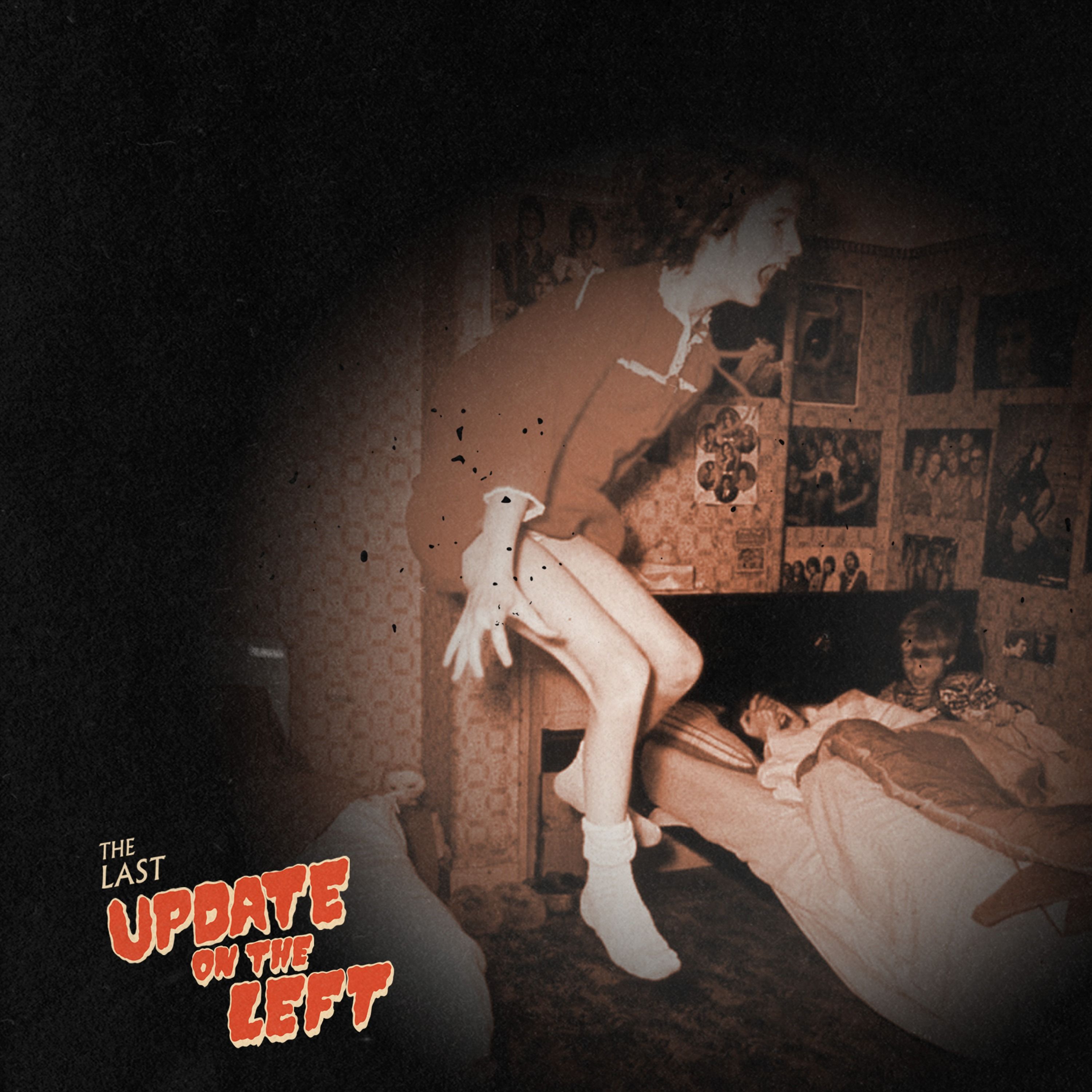
Last Podcast On The Left
Last Update on the Left - Episode 2 - Enfield Poltergeist Strikes Back
00:52:47
In a council house in London, horrifying things were happening to a mother and her two daughters between the years of 1977 and 1979… But was it GHOSTS? Or just a very bored, very clever little girl? In this episode of the Last Update on the Left, Marcus, Henry, and Ed revisit the Enfield Poltergeist, originally discussed in Episode 279 of Last Podcast on the Left.
Loading summary
Transcript374 lines
- [00:03]
Marcus Parks
That's when the cannibalism started. Last update on the left. You about to. Gonna get. We're gonna get ready. We gonna get a bit ready then we're gonna get ready to. We bet we get ready to cut to call then.
- [00:24]
Ben Kissel
14 years still hasn't improved.
- [00:26]
Marcus Parks
What do you mean? It's not wrong with.
- [00:28]
Henry Zebrowski
It's been his whole life. I know he had theater TR sat down and they were like, Henry, this is a British accent.
- [00:35]
Marcus Parks
He's a British accent.
- [00:36]
Ben Kissel
Was it like this in Murder Fist? Like, would you ask him like, hey, Henry, we need a British character for this. This sketch and still better than mine.
- [00:45]
Marcus Parks
It is.
- [00:45]
Henry Zebrowski
Yeah. O. I got.
- [00:48]
Marcus Parks
I did. That's what you want to hear.
- [00:50]
Henry Zebrowski
That's. That's the thing. So he gets the part.
- [00:52]
Marcus Parks
Yeah, yeah, Legitimately. Just a British man with a head injury and ibs.
- [00:59]
Ben Kissel
Look at the last update on the left, ladies and gentlemen. Last update on the left. I change it. I put a different word in there. It's not like we haven't done that before with two other things.
- [01:11]
Marcus Parks
Hey, it is an extremely original name for a brand new show.
- [01:15]
Ben Kissel
Yeah. Yeah. It's not last comic book on the left. It's not last dream on the left.
- [01:18]
Marcus Parks
It isn't.
- [01:19]
Ben Kissel
It's not last book cast on the left or last book on the left.
- [01:23]
Marcus Parks
Yes. Or maybe hopefully one day. Last TV show on the left.
- [01:26]
Ben Kissel
Yeah. Or last pornography on the left.
- [01:29]
Marcus Parks
Oh, finally. We made that.
- [01:32]
Ben Kissel
Hmm.
- [01:32]
Marcus Parks
Have we made that?
- [01:33]
Henry Zebrowski
Not publicly.
- [01:35]
Marcus Parks
Well, you. You guys, we all got. You know, I can't tape me having sex.
- [01:40]
Ben Kissel
I mean, I do truly. One day I. I somewhat pray for the porno parody. Remember the trans metropolitan porno parody? I somewhat.
- [01:49]
Marcus Parks
This ain't last podcast on the left. Triple X would be. Can someone do it?
- [01:53]
Henry Zebrowski
I bet it exists.
- [01:55]
Ben Kissel
And someone's private collection just between him and two other.
- [02:00]
Marcus Parks
A very questionable man.
- [02:02]
Ben Kissel
Ed, have you ever been privy to any of the slash fic. The last podcast slash fic people have written?
- [02:08]
Marcus Parks
I'll send you some.
- [02:09]
Ben Kissel
Disgusting.
- [02:10]
Marcus Parks
Yeah, good.
- [02:11]
Ben Kissel
Yeah.
- [02:11]
Henry Zebrowski
All right. I'll read it just for fun.
- [02:13]
Ben Kissel
Do you want to read a detailed description of Henry and I making love.
- [02:17]
Marcus Parks
And like romantic love?
- [02:18]
Ben Kissel
Yeah, like. Like making love. Not. Or it's nothing.
- [02:22]
Marcus Parks
I wish it was dirty.
- [02:23]
Henry Zebrowski
It's really weird. Like, I don't. But I do.
- [02:25]
Marcus Parks
Yeah, sure. I'll send you some in your name. Now. This is not the only haunting thing we're going to talk about today. No, we are coming back to a subject. When did we cover the Enfield Poltergeist.
- [02:36]
Ben Kissel
Back in the day, I would. I think it's 2016, 2026.
- [02:40]
Marcus Parks
I know I was in LA. I was already in LA. And we've decided to revisit this topic for our new series because a series came out for Apple plus was, I believe it just called the Enfield Poltergeist. Yeah, right. Is it doesn't have any sir titles. It's not like Enfield Poltergeist when Raglon goes viral. Also, thank you. Big shout out. The Loserville animation guys that animated a bit the. The rag. Long bit from the original Enfield Poltergeist series in which I portrayed the mother of the family as a woman with crooked back and broken ankles and a big bucket filled with dirty wash water. And. And that's mostly what she did. She said, oh, wash and grind. Every day I'll get up and make a bane. I'm like a bane for my daughter. And then like, you know. But then when you watch the documentary, you realize she did sound quite a bit like that. Yeah, she was very close to that. So Loserville animation, our, our, our how we exhibition of this woman's behavior was actually quite accurate.
- [03:44]
Ben Kissel
Yeah, it's quite accurate. I like you saying that with a straight face and you're staring at me like I told you that it wasn't quite accurate.
- [03:50]
Marcus Parks
I feel that there are again, there are bigger truths inside of fiction and.
- [03:55]
Ben Kissel
That'S somewhat not, I wouldn't say the point of this series, but there is, you know, with the infield Poltergeist documentary, it's definitely talking a lot about how there is much more to, I guess, paranormal investigation than we can really understand as far as going through and like figuring out what exactly happens with these investigations and what the proper way to do these investigations are.
- [04:22]
Marcus Parks
What do you want to do? Give them a quick run up?
- [04:25]
Ben Kissel
Sure.
- [04:25]
Marcus Parks
Just to remind everybody what the Enfield Poltergeist is and kind of why again. And then we'll get to why this reason for the season.
- [04:34]
Henry Zebrowski
This is everyone's favorite barking ghost.
- [04:38]
Marcus Parks
Oh, I thought it was Oliver, Angie Harmon's dog. Really sad. Really sad story we covered this week.
- [04:44]
Ben Kissel
Well, the Enfield Poltergeist case was in 1977 in Enfield, which is, I think a suburb of London. You know, it's a part of London in which this family, a mother and her two daughters and their son briefly, but mostly centered around a mother.
- [04:59]
Marcus Parks
The Hodgkin family.
- [05:01]
Ben Kissel
Yeah, the Hodgkin family.
- [05:02]
Marcus Parks
The Hodgkin family. We moved into 284 Green Street.
- [05:05]
Ben Kissel
Yeah, 284 Green Street. And it's like your classic poltergeist haunting, where it starts very slow with furniture moving around, and then shit starts flying around the room with credible witnesses.
- [05:18]
Henry Zebrowski
Cop saw a chair fly, you know.
- [05:20]
Marcus Parks
So it's, you know, Monarch is everywhere. Yeah.
- [05:23]
Ben Kissel
There's minarche. Hasn't started yet.
- [05:25]
Marcus Parks
It hasn't?
- [05:26]
Ben Kissel
No.
- [05:26]
Marcus Parks
Menarche is the first period. Woman. Oh, gives out.
- [05:31]
Ben Kissel
Yeah. It did not start with the menards. The menarshe came about halfway through, actually.
- [05:35]
Marcus Parks
Cool.
- [05:36]
Ben Kissel
Yeah. But rock and roll.
- [05:39]
Henry Zebrowski
Bill, is that you?
- [05:42]
Marcus Parks
Let me see the tempen. Oh, I wish I was your tempen.
- [05:47]
Ben Kissel
But as the haunting went on, the mother called up the Daily Mirror, one of the newspapers, one of the tabloids in London, in England, and asked like, hey, do you guys know anybody that might know something about this?
- [06:02]
Marcus Parks
Yeah.
- [06:02]
Ben Kissel
Of course, the Daily Mirror did not help them. Inst sent out a reporter to talk about the case, to talk to the family about the case. And one of the big things before they came was that a lot of Lego pieces and toys and marbles and.
- [06:15]
Marcus Parks
Shit were flying around.
- [06:17]
Henry Zebrowski
Yeah.
- [06:18]
Ben Kissel
And when the reporter was there, apparently they were hit with a Lego piece. Yes. And it could have only come from the other reporter. So either the other reporter was throwing a Lego piece and with this guy, or something paranormal had happened.
- [06:35]
Marcus Parks
It really. This is one of the. Now with the documentary, this new documentary that has been released, like, we are seeing something like 200 hours, over 200 of recorded activity. Now, this came from the. So after the reporters came and did this story, which I do find really interesting, because even the reporters in the documentary talk about how freaked out they were when they arrived. At first, like they thought it was a bullshit assignment.
- [07:02]
Ben Kissel
Yeah.
- [07:02]
Marcus Parks
And then when they got there, they were like, oh, this is kind of crazy. Things are flying around here. They. The way that the word that keeps getting used is tension. They said they walk into this house and it feels tense and it feels crazy. The energy feels crazy in there. They keep talking about like that. And that. That got the attention of a paranormal investigator, brand new on the scene by the name of Maurice Gross. Now, Maurice Gross is pro. I actually now with the redo of the documentary.
- [07:30]
Henry Zebrowski
I love him.
- [07:30]
Marcus Parks
He' hero.
- [07:31]
Ben Kissel
Yeah.
- [07:32]
Henry Zebrowski
Oh, yeah.
- [07:32]
Marcus Parks
Paranormal research.
- [07:33]
Henry Zebrowski
He was a skeptic.
- [07:35]
Marcus Parks
Well, not. Well, he was interested. He was not a skeptic. I was not. He was not a skeptic.
- [07:40]
Ben Kissel
Okay.
- [07:40]
Marcus Parks
His daughter died, so. His daughter, Janet Gross, died in. I believe it was a car.
- [07:45]
Ben Kissel
Motorcycle.
- [07:46]
Marcus Parks
Motorcycle accident.
- [07:47]
Ben Kissel
And it was like a year before this case. It's like 1976.
- [07:50]
Marcus Parks
Yes. And so his daughter, when she died, it was like, you know, obviously very tragic for him. But then there was an unopened birthday card that his daughter I'd sent. It wasn't to him. I believe it was to his brother.
- [08:01]
Ben Kissel
Brother, yeah.
- [08:02]
Marcus Parks
And it's in it. It's like when she died, her body, when they found it, she had two giant black eyes because her face had hit the pavement. It was like a part of like the head injury that killed her. But on the birthday card that she had sent to her, our family member that was unopened on the front had a person in a hospital gown with bandages around their head and two black eyes that had read, I was going to send you a bottle of toilet water, but the lid fell on my head. Happy birthday. But it was a super strange coincidence and it made Maurice gr. He was like, maybe there's something more to life.
- [08:37]
Ben Kissel
Right? It wasn't just that. I mean, it was also the fact that, you know, when they went and saw her in the hospital, she had two black eyes, she had the bandages on her head. And then she had written like a little postscript. She had pointed in the birthday card. She put an arrow towards the word head and wrote, and soon there won't be much of that left either. And there were all. And that wasn't just the only coincidence or not a coincidence. Synchronous.
- [09:01]
Marcus Parks
Synchronous.
- [09:01]
Henry Zebrowski
Do you think the motorcycle accident could have been suicide?
- [09:04]
Ben Kissel
No, no, no, no, no, no, no. She was a very happy, like, you know, loving, you know, she was. She was a very up and up girl. Okay. And the other one was like, there was a huge drought that year. It didn't rain all summer. But like, right after she died, the roof above her room was completely wet, although nothing else was wet. There was, you know, the fact that at the time that she had the motorcycle accident, it was like 4:20pm.
- [09:34]
Marcus Parks
Coincidence, man. Clouds, man.
- [09:42]
Ben Kissel
But her mother felt like so sick at the beach. She felt so sick that Maurice almost called an ambulance. And a clock at their home that had always worked perfectly stopped at 4:20pm.
- [09:55]
Henry Zebrowski
And always 420 somewhere, man.
- [09:59]
Ben Kissel
That got. But that got Maurice very like, he needed to know at that point. He's like, I need to know if there's something going on here. Like, he. Because he was a very curious man. He was an inventor, he was a businessman. He just had a curious mind. Yeah. So he went to the. The Society for Psychical Research just to.
- [10:15]
Marcus Parks
Kind of figure out what else was going on just in the Universe. He was super curious. And then he was at a meeting, like they were talking about they. I guess it was like a big discussion. Is that they. It came up this story. Yeah. The infield came up at a meeting. He was like, probably his first or second meeting at the psychical Research meetup group, whatever.
- [10:35]
Henry Zebrowski
Yeah.
- [10:35]
Marcus Parks
And they're like, we got this crazy case. Does someone want to cover it? And he was like, I'll fucking go do it. And then this guy is a baller. We've covered him. He's fucking, you know, looks great.
- [10:46]
Ben Kissel
Big mustache.
- [10:48]
Marcus Parks
Looks great.
- [10:48]
Henry Zebrowski
He's got exactly what you'd want him to look like.
- [10:52]
Marcus Parks
Cherry red sports car, which they always kind of said was like a pop of color. Because they went in like it's all brown. Yeah.
- [10:58]
Henry Zebrowski
It looks like he's about to find the Jewel of the Nile.
- [11:02]
Marcus Parks
You've discovered so much of the UK is when you're driving between major cities is just brown. It's brown bricks mixed with weird bogs mixed with like an old lady going, morning, sausage. Then mind it. It's drawing. Don't put your feet on it. You know, I mean, it's a lot of that.
- [11:20]
Henry Zebrowski
No wonder they wanted to conquer the entire world just to get the out.
- [11:27]
Marcus Parks
You know, all here is nausea. Yeah. We go down to Africa, you know. But they. So that he embedded himself. So Maria Gross just started taping everything. And then I guess like, you know, then Guy Playfair is a very interesting character. He was. They called him ethereally pale. Like he was like very, very mystical. Like where I will pull out. I honestly, truly believe Maurice Gross brought the sex. Guy Playfair brought the mystics. Yeah.
- [11:57]
Henry Zebrowski
Yeah. He seems strong too. He's a big guy.
- [12:01]
Ben Kissel
Yeah. Yeah. And Guy Playfair wrote the book that really brought this thing into the world of like, you know, serious paranormal research. It's called this House is Haunted. It's really fucking good.
- [12:12]
Marcus Parks
It's great book.
- [12:12]
Ben Kissel
You know, actually this case, you'll find this interesting. This is a fun little factoid is that this case was where Dan Aykroyd got the name Gozer. Oh, yeah. During one of the wind. Guy Playfair, or I think it was either Guy play for or Maurice Gross was talking to the entity that. You know, we'll get into here in a second.
- [12:32]
Henry Zebrowski
Yeah.
- [12:33]
Ben Kissel
He was like, my name is Goza. And Dan Aykroyd was reading this House is Hannah. He's like, that's the. That's the name.
- [12:40]
Marcus Parks
That's awesome.
- [12:41]
Ben Kissel
That's the name of my fucking Demon in Ghostbusters though.
- [12:44]
Henry Zebrowski
The demon had a lot of names though, right?
- [12:46]
Ben Kissel
Yeah, because it. Well, as Maurice Gross, the haunting developed. The haunting developed over time. Like, it just kept getting like worse and worse and worse and more people just kept coming in and out of the house.
- [12:57]
Marcus Parks
A lot of Brazilian psychics.
- [12:59]
Ben Kissel
Yeah, two Brazilian. A pair of Brazilian psychs.
- [13:03]
Marcus Parks
I suppose it's because Guy Playfair, he wrote a book, I think it was called the Flying Cow.
- [13:07]
Ben Kissel
Yeah, it's called the Flying Cow.
- [13:08]
Marcus Parks
That was all about the how Brazil. Brazil is the most psychic country. Yeah, he loved Brazil.
- [13:13]
Ben Kissel
He really did.
- [13:14]
Marcus Parks
Hey, man. I think he just. He's just like. What's a good British word for beautiful butt? Crazy psychic can look at a can.
- [13:26]
Henry Zebrowski
Hiney, maybe? No, that's a little too oiny.
- [13:30]
Marcus Parks
No, I saw neither.
- [13:32]
Henry Zebrowski
Well, yeah, they had like ventriloquists come in and magicians come in. They were really trying to figure out if this. If Janet was lying or not.
- [13:38]
Ben Kissel
Yeah, they really were. But they were also bringing in other psychical researchers.
- [13:43]
Marcus Parks
And the main thing was that Bill. So now they believe, believed that there was a connection to this man by the name of William Bill Wilkinson. That was a guy who died of a coronary thrombosis at 284 Green street and then he was buried on the street. And there's some people that believe that that might have been the representative of this kind of like this energy. Because then Bill started arriving and Bill started talking.
- [14:06]
Ben Kissel
Yeah, and Bill was talking through Janet, who was an 11 year old girl. And it was this very deep voice.
- [14:12]
Marcus Parks
Like off.
- [14:13]
Ben Kissel
Like it sounded like that. It sounded very. It was scary. It's a scary voice.
- [14:18]
Marcus Parks
It's a good ghost voice.
- [14:19]
Ben Kissel
It's a great ghost voice.
- [14:20]
Henry Zebrowski
It's very deep, though. It definitely doesn't seem like something a little girl could recreate.
- [14:25]
Ben Kissel
Well, they did bring in a speech therapist to study how this little girl could possibly do it. And she may have been able to do it if she would have been speaking from like the very back of her throat. I mean, it's like expert ventriloquist yet. Yeah, very, very difficult. And, and also impossible for her to do for hours on end because she would talk in this voice for hours on end. And she used to say that it felt as if the voice was speaking from the back of her neck. Okay. He said, you know, his name is Bill Wilkinson. You know, he's. He was a bit of a. He was a little dirty sometimes. He liked to say off. Yeah.
- [15:01]
Marcus Parks
And he wrote the word. He wrote the Word in the wall in shit. And then he did a bunch of other weird stuff in the guise of through the body, quote unquote. If that is true, I find it very interesting because now, like. So I guess we can yada, yada, yada a little bit. Is that the, the whole case got debunked in a way. Well, that by this ventriloquist says. Okay, that this is a part of the, the. The debunking of the story was that they believe that the girls faked it and that it was the use of voice throwing and characters and about the diabolical nature of Menashes. Right. You know, cause a lot of chaos in homes. Yeah. And now though, we have this footage. So one thing I was looking for that I couldn't find is that apparently there was some footage the guy Playfair had that did totally disprove. Disprove everything. But I can't find everything. I can't find it.
- [16:00]
Ben Kissel
Talking about. I haven't heard about this.
- [16:01]
Marcus Parks
There was this video that said that there was. I think it was a rumor that there was a video of Janet bending spoons doing some stuff. Because they did one reaction because in the poltergeist activity, one was one at a lot of classic stuff. So in poltergeist activity you have things like dematerialization stuff that falls from the ceiling, stuff that comes out of nowhere. Like, like that. That is like a weird thing that was like with the Legos.
- [16:24]
Ben Kissel
Yeah. In this case they also had coins fall from the ceiling. And there was also an instance in which like they actually asked the, the poltergeist to make it a red pillow, a red cushion disappear. And you know, they went out of the room, came back in, the red cushion was gone. And there was some people outside, like a crossing guard and a tradesman that said, like, we were looking at the house because we had heard there was a lot of weird shit going on there. And then suddenly a red cushion appeared on the roof of the house without the window opening.
- [16:52]
Henry Zebrowski
Yeah. People with no reason to lie.
- [16:54]
Ben Kissel
Yeah.
- [16:54]
Henry Zebrowski
People who don't want a ghost in their neighborhood.
- [16:56]
Ben Kissel
Nobody wants like. Like you. That's the great thing about watching this documentary series is because all of these people, all these interviews were recorded and all of them, as they're talking about it, they're not talking about like, bro, this fucking. I was outside and this fucking cushion was on top of the house. Like it was fucking great. No, they're all very quiet. No, I was outside and I saw it was this cushion out there. And I don't ever want to see anything like that again. It's so a bunch of, dude.
- [17:24]
Marcus Parks
Yes. Very haunted British people. Like, again, you know why ghosts feel comfortable there by the British people that were in this documentary. But.
- [17:33]
Ben Kissel
But the guy, the ventriloquist who supposedly debunked like that was this guy. He was a famous television ventriloquist. And the Daily Mirror had sent him out there to get another story. Like, basically, this infield poltergeist thing has gone on long enough. Let's put an end to it. Let's get one big story where you say this thing is over because now.
- [17:52]
Marcus Parks
The BBC had sent somebody it already at this time who had said that they. She believed. The BBC reporter is straight up says that a chair flew across the room without the child getting out of bed. They are all like. They're all watching, and you hear them talking. You hear her be frightened in that. In the documentary.
- [18:07]
Ben Kissel
Yeah.
- [18:08]
Marcus Parks
When the BBC reporter does a thing of being like. I don't know if you can hear my end shaking the microphone right now. It's like, it's great. It's really creepy.
- [18:15]
Henry Zebrowski
But Daily Mirror, they're not really credible, right?
- [18:18]
Ben Kissel
No, no, no. It's a tabloid. But they sent out this ventriloquist, this TV ventriloquist who just shows up, like, pulls up to this, like, council house in this poor neighborhood in a limousine.
- [18:30]
Marcus Parks
Yeah.
- [18:31]
Ben Kissel
Like, pops out, like.
- [18:34]
Marcus Parks
The man who.
- [18:35]
Henry Zebrowski
Doesn'T talk, but he's also.
- [18:38]
Marcus Parks
I'm a lawyer, professionally.
- [18:39]
Ben Kissel
And so he takes the two girls into the room, Margaret and Janet. Janet is the one who the entire activity is kind of centered around. She's 11 years old. Margaret's a little older. I can't remember exactly how old she is. I think 14, 15. And he closes the doors and he talked to them for a while. Nobody knows what exactly was said in that room. And he comes out and he's like, okay, I talked to him. I'm getting out of here. And then the next day, the Daily Mirror runs a story in which this ventriloquist claims that the girls told him explicitly. Yeah, it was us this whole time.
- [19:13]
Marcus Parks
And what if he was doing ventriloquist voice in the room, making them say their thing to him?
- [19:18]
Ben Kissel
What is reality?
- [19:19]
Marcus Parks
I don't know, dude.
- [19:21]
Ben Kissel
Because technically, if he did make it look as if they were saying it, then he could say with truthfulness in his mind that maybe they said it.
- [19:28]
Marcus Parks
Do you pay to see Jeff Dunham, or do you pay to see the puppet?
- [19:31]
Henry Zebrowski
I'm a Terry Fader. Man.
- [19:33]
Marcus Parks
Okay.
- [19:35]
Ben Kissel
But they brought the girl, like, that same day, you know, Guy Playfair and Maurice Gross, like, talk to the girls and like, hey, what the fuck? Like, what happened here? And in the documentary, you actually. They record this conversation and the girls are like, no, we didn't say that at all. Margaret especially. She was like, I didn't know what he was talking about. He was just talking. He was talking about a bunch of things that I didn't understand. He was probably talking about ventriloquism techniques. Yeah. And asking them about, like, what they knew. And she said, I was thinking about what I had to go. What I had to do in school the next day. I was nodding off. Literally nodding.
- [20:08]
Marcus Parks
Yeah.
- [20:09]
Ben Kissel
And he took that as them saying, yes, we did fake everything.
- [20:13]
Henry Zebrowski
Yeah. And why would they say it to the stranger and nobody else?
- [20:17]
Ben Kissel
Yeah. Why would they choose that moment?
- [20:19]
Henry Zebrowski
That fucking grease ball showing up in a goddamn limousine.
- [20:23]
Ben Kissel
Yeah. You know, I mean, they'd seen him on tv. That probably impressed him a little bit. But why would they choose that moment out of all moments, like, when they know this man is here to debunk them? Why choose that moment to just completely change their entire Persona, their entire attitude? Like, they. Because he said they were giggling. Yeah, we did it. Like, it was just a couple of girls, like, just casually confessing to a prank. It doesn't make any sense at all.
- [20:53]
Marcus Parks
I think the Enfield Poltergeist is the. Because. Because of now, the footage that's been released, like, it is extremely compelling about the. The concept of the psychic nature of the poltergeist mixed with. What if something from the outside, like an outside intelligence hijacks the latent psychic ability of a little girl? Like, I do actually think that there's something along those lines when you watch this. Because. So when they were experimenting, like, they did all these different experiments on Genesis Janet to try to figure out kind of more so like, how is she involved? And one experiment they did was that they took a bunch of spoons because there were obviously bent spoons in this scenario. Another very common poltergeist technique.
- [21:38]
Ben Kissel
Yeah.
- [21:38]
Marcus Parks
And why do they eat spoons? I don't know. Because.
- [21:41]
Ben Kissel
Well, the whole thing.
- [21:42]
Marcus Parks
It's a whole thing. It kind of. I honestly think it started with Yuri Geller, who is way more of the. The most. The. I'm. That's my opinion. I'm certain that bending spoons has been around for a long fucking time. But Yuri Geller was the guy that, like. Like, made it a common trope of people faking Psychic activity by bending spoons.
- [22:00]
Ben Kissel
Quick side note on Yuri Geller at the end of the documentary they show like kind of what Maurice Gross like his paranormal life after Enfield. And he, it shows a video of him going to visit Uri Geller at his house. And Yuri Geller had a Cadillac that was covered in 2,000 bent spoons.
- [22:19]
Henry Zebrowski
That's all dude.
- [22:22]
Ben Kissel
Fucking glued or welded tooth. He's like, yes, and these are spoons. I bet many of these spoons.
- [22:30]
Marcus Parks
It.
- [22:30]
Ben Kissel
Made you smile, right? It's a fun car. It's a spoon.
- [22:34]
Henry Zebrowski
You should see my jacket.
- [22:40]
Marcus Parks
He can't go to the airport, but so they asked her, they went and they put out a bunch of spoons and they, you know, they put sensors on her head and they, they asked her to bend the spoons.
- [22:51]
Ben Kissel
They said, hey, come bend these with her mind.
- [22:53]
Marcus Parks
With her mind mind. And they said according to these tests her like however they, they decide that your psychic energy is like fluxing. I forget some kind of like beta wave, alpha wave. And they're like. She has very strong indications of. When we see like this type of like she is. Her brain is subconsciously trying to psychically bend the spoon.
- [23:18]
Ben Kissel
Well, she broke the machine.
- [23:19]
Marcus Parks
Yes. And she's trying to bend this. But it is happening. There is something happening. She is a sensitive and we don't know if it's just because of that fucking crazy ass menage and the stuff it brings with it or if it's just you have this kind of weird latent psychic ability and something happened in this house because the. It shows. When you were saying at the very top about what it reveals about haunting research and investigations. They are boring. The key for patience.
- [23:48]
Ben Kissel
Yes, it's a lot of patience.
- [23:50]
Marcus Parks
The key for psychic research and any form of ghost hunting and stuff is patience is that you do have to end is boring. Psychic activity is extremely subtle. There's a lot obviously we all want the thing. We all want the full on librarian ghost from Ghostbusters. Yeah, we all want that. But that's just not how it really works. There was a documentary called the House in Between that I loved. That is a group of guys that were, they were going, they were researching this. They were doing a full on crazy, what they called same thing, full embed investigation where they are staying there for days and they have cameras all over the house. And it's an extremely boring documentary except it has a piece of the most convincing ghost activity I have ever seen in a documentary. And it is boring. It is a ball sitting on a step and you watch this ball jump off the step and go down the stairs. It is not fucking around. It is. It jumps. Yeah. Off the step. It makes no sense. And so that's ghost activity. It is about. It's embedding yourself in a psychic scenario. It's 50% happening outside of this room. It is something. There's something. Now there's one more research showing about how consciousness is. Is remote. It's. It's piped in. So this. This is about this. This is. Again, I feel like it's in the realm of science that we just don't understand. Yeah. And that Bill, whatever Bill was, was probably just a. An extension of Janet's mind. Like, it's. It's. I don't know how to kind of put it otherwise, but it's like it's not fully Janet, but Bill is still sort of made up.
- [25:27]
Ben Kissel
Well, that's what guy Playfair thought. He thought. He thought that Bill was a part of Janet's subconscious. But in 1996, Bill Wilkins, his son, got a hold of Maurice Gross. And Maurice Gross went over to this guy's house and played him the tape of him saying, my name's Bill Wilkins. And he's like, that's my father. Like, because he said, my name's Bill Wilkins. I died of a hemorrhage. Yeah.
- [25:57]
Marcus Parks
In the living room.
- [25:58]
Ben Kissel
Yeah.
- [25:59]
Henry Zebrowski
It seems weird that a ghost would know all that.
- [26:02]
Ben Kissel
Yeah. I don't know that's how he died, but he said that he died of a hemorrhage in a chair downstairs. And this guy was like, yep. My father was named Bill Wilkins. He died of a hemorrhage in a chair at 284 Green Street. My mother had gone out to the store. She was gone 10 minutes. She came back, and he was dead. And then they showed the fucking death certificate that showed 284 Green Street street cause of death. A man named Bill Wilkins did die in that house.
- [26:30]
Marcus Parks
She had no idea.
- [26:31]
Ben Kissel
Yeah, she had no idea.
- [26:33]
Henry Zebrowski
How would she. But is there a chance, like a neighbor told her or something? She was like a little girl still getting his mail.
- [26:39]
Marcus Parks
It's like, you know, I mean, that's a good question.
- [26:43]
Ben Kissel
But he died in. He died 15 or 13. He died in 63.
- [26:47]
Marcus Parks
Okay.
- [26:48]
Henry Zebrowski
Oh, that's far enough.
- [26:49]
Ben Kissel
Yeah. It was far enough away. She wasn't even alive 14 years later.
- [26:53]
Marcus Parks
There was nothing nefarious about him necessarily.
- [26:55]
Ben Kissel
No, not really. And the other cool thing about it is that one of the big poltergeist activities that they had in the house was like, consistently, like three knocks on the wall. And the son told Maurice Gross that his father was an air raid warden during World War II. Because, you know, aid war wardens when, you know, the Germans would come and start bombing the. Yeah, no, that's just the bullets.
- [27:17]
Marcus Parks
That was Africa.
- [27:18]
Ben Kissel
Yeah. Oh, yeah. And France.
- [27:20]
Marcus Parks
Oh, wow.
- [27:21]
Ben Kissel
Yeah, the blitzkrieg. Lightning war.
- [27:23]
Marcus Parks
That's tanks and planes.
- [27:24]
Ben Kissel
Yeah, tanks and planes. This is just the blitz. The London blitz. Gotcha. So when, you know, the Germans would come bomb the fuck out of London, they'd turn on the air raid. And then the wardens would go outside and they tell everybody to get inside. Get inside. You know, they were the people that, you know, saved lives. And both Bill Wilkins and his next door neighbor, who he shared a wall with, were both air raid wardens. So when the air raids would go off, they wouldn't go over to the door and say, like, hey, let's go. They would knock on the wall three times.
- [27:54]
Marcus Parks
And that is literally exactly what the neighbors were reporting that they were hearing coming from inside of the house. They were saying the other neighbors were hearing knocks of the walls onto their fucking side three times.
- [28:04]
Henry Zebrowski
So the neighbors were. They shared a wall. It was like a townhouse.
- [28:06]
Marcus Parks
Yeah. Or whatever the term is.
- [28:09]
Ben Kissel
Oh, yeah, you just. They just hear that same shit. And the cool thing about poltergeist knocks. Yes. Before you get to that, the cool thing about poltergeist knocks is the sound waves are actually different from regular knocks. In regular knocks, you get like the big pop on the sound wave right up top and it goes down. But in poltergeist knocks, if you look at the sound wave, the sound begins before the knock. So it's sort of the sound wave builds up and the knock happens and then it comes back down again. So it's a.
- [28:40]
Marcus Parks
You fucking high enough for that, dude?
- [28:41]
Henry Zebrowski
Hell yeah, man.
- [28:42]
Marcus Parks
You fucking know where that fucking. It means that.
- [28:44]
Henry Zebrowski
420 on the clock. No, but this is the kind of information you only get from an audio engineer.
- [28:54]
Marcus Parks
But the other one factoid we're also forgetting was the furniture from the child murderer's house, which I also forgot about is that they got a bunch of furniture from the child murderer down the street.
- [29:01]
Ben Kissel
Oh. A guy had suffocated his young daughter and the father, her ex husband. Yeah, the woman's ex husband.
- [29:09]
Marcus Parks
Denied.
- [29:10]
Ben Kissel
Yeah, well, the woman's ex husband just got bought all of the fucking furniture from the little girl, the murder girl's house, and just filled the house with.
- [29:20]
Marcus Parks
It's very David Co. It's like very David Copperfield. It feels very Charles Dickens. They ain't needing it. They don't need these dresses no more. They don't outfeed these curtains. Yeah, this fabric is cheap, just like I expected.
- [29:34]
Henry Zebrowski
Get all their spoons and fuck them up.
- [29:38]
Ben Kissel
Yeah. But Maurice Gross, when he came into the house and they told him about this, he's like, like, I believe it would be in your best interest to get rid of this furniture immediately. Immediately. They did. But it wasn't. They didn't do anything. It didn't do anything.
- [29:50]
Marcus Parks
And more. More on the patience that it's required is that that's ghosts and par. Psychic activity require silence and space. And also because it's intimate, though only someone like Maurice Gross and the way he embedded himself within the family. Can you really see the patterns.
- [30:09]
Henry Zebrowski
Yeah.
- [30:09]
Marcus Parks
And also, you know, what's beautiful about the documentary is hearing the emotion that Maurice Gross grew towards the Hodgson family and how much affection he had for the kids. And I'm not, you know, like, not.
- [30:23]
Henry Zebrowski
Became a member of the family.
- [30:25]
Marcus Parks
He really did.
- [30:26]
Ben Kissel
And after the hauntings, after the poltergeist activity ended, he didn't stop. He'd go over there, like, once a month. He'd, like, bring the kids Maltesers. He'd bring the mom flowers, and he'd just be like, like, hey, so how's. How's everything going? You guys doing all right? Catch up. He became a family friend.
- [30:40]
Marcus Parks
But a part of that is. I think that's what it takes to experience what everybody else is experiencing. Because mom and daughter were sharing dreams. People were. They were all kind of sharing phenomena. And it is in some way, I think, that it's. There is a concrete group psychology thing that is happening. I'm not saying mass hallucination, but I do believe that everybody syncs up in a way that you're all in this area, so you kind of all get on the same wave, like, frequency, as David Ike would put it more adroitly. And we all know how right he is. We all love his stuff. And then. But something like that, where you got to get in there, you can't just show up. So it's like. But it is also this. This case is also specifically interesting because of how many times people arrived and experienced something that weren't a member of the family.
- [31:26]
Ben Kissel
But that's the paradox of the way that Maurice Gross did it. Because what you're describing as being necessary in order to investigate these cases was the exact thing that skeptics would say is the reason why none of this is true. Well, it's because Maurice Gross becomes it. Because he. He embeds himself in the family and he becomes too attached to it. Because the skeptics, specifically this woman, Anita Gregory, who is like the biggest one. She's the one biggest opponent against this. This entire study.
- [31:54]
Marcus Parks
She's the one that said that there was the video saying that Janet, that. I think that all this is conflating. I think that she conflated that with the. Whatever. Whatever happened with the ventricles. Real question.
- [32:03]
Henry Zebrowski
The thing that make makes me a skeptic about this is also what makes me believe it in a weird way is that the fact that no one really would see it happen. You know, like whenever. Like when his son came in and had to like look at the wall while talking to Bill and stuff like that. And like. Or like, you know, it would go in and like as soon as Janet went in the room, she'd fly around and no one was in there and they couldn't open the door and stuff. That makes me think, oh, this isn't true. But then the other side of me is like, if this is a fucking poltergeist torturing this girl, what a better way to torture somebody.
- [32:36]
Ben Kissel
Yeah.
- [32:36]
Henry Zebrowski
Than to only do it when no one else is around.
- [32:38]
Marcus Parks
It's called the trickster phenomena. I'll give you a whole book, Eddie.
- [32:41]
Henry Zebrowski
Yeah.
- [32:42]
Marcus Parks
If you want to read about why the quote unquote, have other people thought of my brilliant idea. But the capital P phenomenon specifically does not want to be measured, does not want to be quantified. It does not want you to get your empirical evidence. The whole point is to show that you can't catch it in a goddamn net.
- [33:02]
Ben Kissel
But that's what the skeptics always point towards because Anita, people like Anita Gregory say that you have to go into this thing as a complete skeptic. You have to get objective scientific evidence, completely objective scientific evidence in order to convince people like her. She looked at the case, she listened to the tapes. She visited the house like multiple times. She heard the voice, you know, she, like when she was there, like Janet, you know, the whole thing where the door was closed and you could hear like around the room. And Janet described how she gets pulled around. And Anita Gregory came to the conclusion at the very end. She said that this case is like, yes, there is a highly interesting and compelling case here. But she said that it withers on the vine on closer inspection due to lack of concrete evidence. Because the evidence that they have is eyewitness reports and audio recordings. They don't have photographs and photographs. And speaking of the photographs, that's one of the most interesting and famous things about the infield poltergeist case. Because if you've ever looked into ghost stories, if you ever looked at anything like this, you've seen the picture of Janet. Of Janet Hodgkin. Hodgkin or Hodkins.
- [34:14]
Marcus Parks
Hodgson.
- [34:15]
Ben Kissel
Hodgson.
- [34:16]
Henry Zebrowski
Is it Bill Wilkinson?
- [34:17]
Ben Kissel
Yeah, it's Bill Wilkinson. Yeah.
- [34:19]
Henry Zebrowski
Or you said Wilkins a bunch.
- [34:20]
Ben Kissel
It's his real name is Wilkins. But in the. When he talks through Janet, it's Wilkinson.
- [34:25]
Henry Zebrowski
Okay.
- [34:25]
Ben Kissel
Yeah, yeah. It's a whole thing. You've seen the picture of Janet Hodgson, like floating in the room, like floating above the bed, screaming, looking terrified.
- [34:35]
Henry Zebrowski
Yeah, I seen it. It looks like she jumped it.
- [34:37]
Ben Kissel
Does she? Like she jumped.
- [34:38]
Marcus Parks
But.
- [34:39]
Ben Kissel
But the person who was taking the pictures downstairs, he had the camera attached to a little, you know, one of those things like the clickers, the thumb clickers. And he said that the first photo in which Janet is still laying down on the bed under the covers. Under the covers. And the photo in which she is floating in the air is 1/6 of a second between those two photos.
- [35:01]
Henry Zebrowski
Fucking impossible. I don't care how athletic she is.
- [35:04]
Ben Kissel
Yeah.
- [35:04]
Henry Zebrowski
And she was athletic.
- [35:05]
Ben Kissel
She was. She was a super athletic little girl.
- [35:06]
Henry Zebrowski
Yeah, but that's impossible.
- [35:08]
Ben Kissel
Absolutely impossible. Yeah.
- [35:10]
Marcus Parks
That's why it's like. Is there something to be said about. There are some. This is. The issue is that I think that there's a world in which all of these things are real. I think that there's a way that all of this stuff comes together and that it's. But it's impossible. It is just going to be impossible to prove. It is just going to be. And it.
- [35:28]
Ben Kissel
In a way that's. In a way that's going to satisfy people. Skeptics. Yeah.
- [35:32]
Marcus Parks
I think that this is the opposite where it's like watching the Enfield documentary, the Anfield Poltergeist documentary made me realize, like the actual. All of that footage, it's gets you closer to the center of what it's really to be like in that. In one of these investigations. And I. I still feel like it's the reactions from everybody around the family that still convinces me that something happened in the house.
- [35:59]
Ben Kissel
Yeah.
- [35:59]
Marcus Parks
Because they're all haunted. No one wants to talk about it to this day. And like there's a lot of. It's like, yes, they got attention for it. And this is always across the board. We hear this from everybody who talks about any. Any either alien abduction or ghost taunting kind of stuff. Like this idea that they were going to get some big thing out of this monetarily, it did not help them.
- [36:21]
Ben Kissel
They never. Well, they never asked for money. The mother never asked for money once. And at the very beginning they thought that this was going to be. Be a thing where a lot of people apparently in England, how they get. Move houses. If they're in a council house, they say that it's haunted.
- [36:34]
Marcus Parks
Yes.
- [36:35]
Ben Kissel
And so they say it's on. And they asked her like, do you want to move? That was the first question the Daily Mirror asked her on the first day. And she said, no, I've been here 12 years, I don't want to move. I want this thing out of here.
- [36:44]
Marcus Parks
Yes.
- [36:44]
Henry Zebrowski
See, that was what I was kept thinking, like, move.
- [36:47]
Marcus Parks
Well, it's hard. They're broke as.
- [36:49]
Ben Kissel
Yeah, they're broke as early broke.
- [36:51]
Marcus Parks
Yeah. And they're not. Yeah, they weren't going anywhere and. But it's. Yeah, I also. But I then will also add the caveat that I do understand people do things solely for attention. I know that they do things solely for attention. But this is when you have the whole family united on a thing. I still feel like when you look at the footage of the little girls, they're just not that sophisticated.
- [37:14]
Henry Zebrowski
Yeah.
- [37:14]
Marcus Parks
And not. And I don't mean it's not an insult. Not an insult. If you look at the mother, she's a. When she starts talking like. Yeah. I mean, yeah, I've seen some body cam footage that would mystify you because like old ladies, they firmly believe that they don't get arrested. Right. Like old women. No, they don't. They do will not. They oftentimes are like you coming for the fucking brethren. You accuse her of the brethren. But like, old ladies for some reason thinks that police officers are just not going to arrest system.
- [37:49]
Ben Kissel
Yeah.
- [37:49]
Marcus Parks
But guess what, man, Sometimes they even tase them. Yeah, right. They even. I've seen a couple where it's just like. Because also old ladies surprisingly strong, you know, because all the years of nothing to lose, I guess hitting people with spoons and pushing your cart and going.
- [38:05]
Henry Zebrowski
Like.
- [38:08]
Marcus Parks
Like, you know, making yoki, like making your hands strong or whatever. I don't know.
- [38:12]
Henry Zebrowski
No, it's true. You got to do a lot of stuff by yourself.
- [38:14]
Marcus Parks
But. Yeah, so I'm more physically afraid of the mother in this. Like, I know that she's physically capable of quite a bit.
- [38:21]
Henry Zebrowski
Yeah.
- [38:21]
Marcus Parks
But I don't think she's as cunning.
- [38:24]
Ben Kissel
No, no, they're not cunning. They're not cunning people. No, they're. I don't think that they have that sort of. I don't think they have that sort of imagination in order to, like, completely, like, create this entire story. And I don't think they're gonna outsmart Maurice Gross and Guy Playfair. And they're living in the house. They're living in the house. Like, they. They did 21, like, full overnight vigils or just Guy Playfair alone did 21 overnight vigils. I don't even know how many Maurice Gross did, but he was in that house constantly. I mean, he was in there all the time.
- [38:57]
Henry Zebrowski
He would just show up at like, 7pm and then sit around to the morning, Right?
- [39:01]
Ben Kissel
Yeah. And he did have. Like, there was one time that he did see that. To him, like, it was sort of the exception that proved the rule where he saw Janet. Like, he caught Janet, like, moving one of the recorders, like he did Cat, but he was like. The ease at which I caught her and how fast she confessed shows me that this is real, because she is not very good at it. Like, she tried to do it and she wasn't very good at it. And she's a terrible liar, you know, so.
- [39:33]
Marcus Parks
But, you know, there's also no account for how deep the well of human desperation goes. So you never know the amount of that. People could go, like, I like holding nine ideas in my head at once.
- [39:46]
Henry Zebrowski
Yeah.
- [39:47]
Marcus Parks
I do understand that there's a world where the family could just be faking this and just be like, a feature of them being maybe not so bright is the fact that they got nothing out of it.
- [39:58]
Henry Zebrowski
You know, I mean, like, she could be schizophrenic.
- [39:59]
Marcus Parks
Yeah. I mean, well, or just the idea of just being lonely and lost. But when you watch that documentary and then it's like we talked about with her. If you see clips of her now. Now Janet, now she's. She was up.
- [40:12]
Ben Kissel
Yeah, she is.
- [40:13]
Marcus Parks
This whole thing is, like, her up.
- [40:15]
Ben Kissel
Well, she wasn't schizophrenic because they eventually took her out of the home.
- [40:19]
Marcus Parks
Yes.
- [40:20]
Ben Kissel
Once it got bad enough and because she was having just. I mean, just horrible nights where she was convulsing. You know, she was just, like, in obvious, like, mental and emotional anguish. So they took her out of the home and they put her in a hospital where a neurologist, like, looked at her. Looked at her brain waves, you know, checked her for epilepsy. And they kept her under observation for six weeks. And they're like, this is a Normal teenage girl. There's nothing. There's nothing wrong with her. And when she was away from the house, like, she. There was a recording of her talking to Maurice Gross. And she's like, I feel so much better. She's like, I do not want to go back there.
- [40:58]
Henry Zebrowski
I got my own room.
- [40:59]
Ben Kissel
Yeah, exactly. That is exactly what she said. She's like, I've got my own room. You know, like, the radio can keep. I don't want to go back to sharing a room. I. I want to stay like, this is nice. I don't want to go back there. Things are terrible back there. And they said that she was a completely different girl away from the house. But once she came back, it started up again and it continued for a little while until it just sort of tapered off. And she didn't really talk about, like, Janet did not talk about what happened to her very often throughout the year. She didn't give many interviews. She didn't do many documentaries. I think the longest one she did was in the DVD extras for the Conjuring 2, in which I think she was paid to say that the Warrens were there for longer than they actually were.
- [41:45]
Marcus Parks
Yeah, she must have been, because Ed.
- [41:47]
Ben Kissel
And Lorraine Warren, we talked about this in the episode. Ed Lorraine Warren did show up like, you know, the con. You've seen the Conjuring too, right?
- [41:54]
Henry Zebrowski
Yeah, yeah. It's been a while though, so give me a refresher.
- [41:56]
Ben Kissel
It's the infield poltergeist case.
- [41:57]
Henry Zebrowski
Okay, great.
- [41:58]
Ben Kissel
It is the, like they travel to England and, you know, it makes sense. It seem like the Warrens were the ones that were a part of this thing the whole time. There is a Maurice Gross character, there is a guy Playfair character, but it's framed as like the Warren saved this little girl.
- [42:11]
Marcus Parks
Oh, yeah, dude. And have you ever seen the real Warrens? We're going to be working on a series on the Warrens this year. And you're. You see that the main Warren. It's his.
- [42:22]
Ben Kissel
Ed.
- [42:23]
Marcus Parks
Ed La Warren.
- [42:23]
Henry Zebrowski
Yeah.
- [42:24]
Marcus Parks
He looks like a permanent sandwich come to life. Yeah, like he looks like a sandwich. It has French fries on it. But that's a man. And he is. But then he's played by Patrick Wilson.
- [42:35]
Ben Kissel
Yeah, yeah, yeah.
- [42:36]
Marcus Parks
And then Ver. Vera Farmiglia playing Lorraine Warren is the. One of the biggest pop culture crimes. Like, that's a white. That is a Stalin level whitewashing of history like I've ever seen because she looks like she should be on a pancake batter box.
- [42:56]
Ben Kissel
Yeah. Lorraine Warren. Yeah. Very pinch faced. But these people are grifters. Yeah. And they just, they showed up for a day, they were there for a day and they were asked to leave. Yeah, like you need to, you need to get out of here.
- [43:09]
Henry Zebrowski
Getting in our way.
- [43:09]
Ben Kissel
Yeah, you're getting it. What do you mean?
- [43:11]
Marcus Parks
You guys don't got football. You guys never heard of the Pittsburgh Stellars?
- [43:15]
Henry Zebrowski
That's what they flew all the way to England for a day.
- [43:18]
Ben Kissel
Well, that's what they do, you know.
- [43:19]
Marcus Parks
Like that's their entire lives. We'll get to that. We're gonna cover that more.
- [43:22]
Ben Kissel
Yeah, they're in their entire lives. Were like, they hear, tell us something, something, and they'd go straight for it and see if they could insert themselves into it, see how much money they could make off of it, because they were grifters.
- [43:33]
Marcus Parks
Lorraine. Let's go down there, let's go out that day, uk and we'll go out there and we'll, we'll tell all them about the ghosts and stuff like that. We'll do a little prayer, get all these guys all ready to go back. Just Detroit river sleeping.
- [43:45]
Henry Zebrowski
I got so many questions about them, but I'm just gonna wait.
- [43:47]
Ben Kissel
Yeah, we'll tell you, we'll tell you all about them. But you know, Janet, they bring her into this documentary series about three quarters of the way through episode three. Okay. And she is a haunted individual and. Absolutely. She is still a haunted individual. And the way she talks about it is like it sent chills down my spine. She said that you do not feel like you are entirely yourself.
- [44:15]
Marcus Parks
Oh, yes.
- [44:16]
Ben Kissel
And she was like, whatever myself is, she's like, you do not, when this is happening, you do not feel entirely yourself. There's a part, something else in there with you. And she says, and this killed me, you know, she's in her, you know, 60s now. She said, it's never left me. Says it's still there. It's. It's never left.
- [44:36]
Henry Zebrowski
And so what, she just knows how to suppress it now?
- [44:39]
Ben Kissel
She just lives with it. She just deals with it.
- [44:41]
Henry Zebrowski
So Bill Wilkinson's followed her. Or is it like, or the, like the weird entity.
- [44:46]
Marcus Parks
Whatever it is, whatever it is, it's side. Essentially, things masquerade as things from the other side using data that they have accumulated. Like, imagine if there is, if that is true, that there's another intelligence. They are using frames that exist in real life and then they're applying themselves to those frames. So that's what we always like one of those, like, dumb, funny things where you're like in alien abductions and shit. You're like, there's a, like a level where like you believe you've been abducted by aliens so much you do believe that it's real. But then the aliens will like, tell you a certain amount of things. And then if you're so deep in the world, you can eventually start asking the questions, but what if these aliens are lying to me? And so you can like, be like this idea of like, so what if ghosts are real, but also they're not what you think they are. It's like this Bill thing is a framework. It is a personality framework that was somehow something from the back of Janet's mind connected to some form of other. Maybe if we want to get super woo wee woo interdimensional thing or just residual energy that it takes on a bunch of different sizes, then you have the. The added fuel of the furniture from the child murderer's house that sort of amplifies that sort of nasty edge to the. The phenomena. And then you got a super productive menardsh and it's gushing and flowing and that's making you super psychic and. And then you got your rag woman. Mom. Yeah, she's just coming in every day being like you not blimey yet.
- [46:15]
Ben Kissel
She is. No, the mother did come in every day and like, and was. Would get angry with Janet. And also there was the fact that their father had left just a few, like a couple the father left for. And the father was also. The father was also like, very abusive while he was in the home. And he was an absolute bad energy. But as far as it being, you know, this being something that she carried with her, like, it could very well. Like, I personally, I believe that a lot of this stuff has to do with the collective unconsciousness. And it could be that something like you could maybe look at it as like, say like an infection where this big ball of energy, like Henry was talking about all this stuff coming together, you know, it infects Janet, you know, and you could kind of look at this thing, if it's strong enough, as like sort of a chronic illness that she has to deal with for the rest of her life. There's something in Janet's consciousness that has embedded itself there, some sort of infection that just will not leave, that she can't. She can no longer separate herself from that. I like the word infection. I think infection is a good way to put it because I don't necessarily believe that it's a consciousness per se. It's more like the Program of a consciousness, you know, like, where you had. Like, if you look at the brain as a sort of, like, programmer. If you look at, like, the mind is a sort of program, like, that program has been installed into Janet's consciousness. Yeah.
- [47:40]
Marcus Parks
It's from remote.
- [47:41]
Ben Kissel
Like a computer. Like a computer virus. And now she just has to fucking. You can't uninstall it, you know, and she just has to deal with it. And that the reason why she knew things about Bill Wilkinson, the reason why she knew how he died, the reason why, you know, she knew, like, kind of his mannerisms, you know, his ways of thinking, is because she had the Bill Wilkinson program, the framework, installed into her consciousness. So that's. That's kind of how I look at this.
- [48:07]
Marcus Parks
I find it interesting. And. But this documentary series, again, not getting paid, Apple plus, has not reached out. They do actually don't like that we're mentioning it. But what's nice is that we're actually pro. This document.
- [48:22]
Ben Kissel
This is a great. This is.
- [48:23]
Henry Zebrowski
I saw the first two episodes. I was like, even force. I go into all these things as a total skeptic.
- [48:28]
Ben Kissel
Sure.
- [48:28]
Henry Zebrowski
And now I'm, like, 75. Sure it happened now.
- [48:31]
Marcus Parks
Something happened in that house. I think the documentary is a really good example of an expansion of a paranormal investigation. I think that if you want to do an investigation, the stuff that, like, you know, I've. I've sang the praises of Hellier and the new Kirks for forever, but if they have a new case, it's all about, like, haunted objects. And you watch, like, what a real paranormal investigation is. It's not a long weekend. It's not you arriving as a big McGilla reporter and putting up. You're like, you know, hanging out for 48 hours and be like, all right, whatever. And summing it up, you're looking at a phenomenon that is as old as consciousness, and it is a part of the human story. So it does. Sometimes I think it takes the extra mile. Yeah. I think you got to be in it. And then maybe it does convince you more, but, you know, then color me convinced.
- [49:24]
Ben Kissel
Yeah. In this documentary, the way they do it is they take Maury Reese Gross's actual tapes, the 200 hours of tapes, and they rebuilt the poltergeist house exactly as it was. Completely.
- [49:36]
Marcus Parks
That was crazy.
- [49:37]
Ben Kissel
They built sets exactly as it was. And like, Janet, at one point, she walks into the set and she's like, yeah, just, like, so freaked out. Yeah. And they. What they do is they have actors lip sync along with Maurice Gross. It's extraordinary.
- [49:53]
Marcus Parks
It's very good.
- [49:54]
Ben Kissel
The way they put it together is. So put him on Drag Race.
- [49:57]
Marcus Parks
I said. Eddie said before. Yeah, Drag Race. Now it's time for you to lip sync for your life.
- [50:08]
Ben Kissel
But.
- [50:08]
Marcus Parks
No, but, yeah. So jury's out. Obviously, technically there's a. If you want to be a skeptic, there's plenty of weighted evidence for you to say that. That it's not real. Of course. But I think that if you look at the material that is there, that is shown in this documentary and you have an open mind.
- [50:27]
Ben Kissel
Yeah.
- [50:27]
Marcus Parks
It might convince you otherwise.
- [50:29]
Ben Kissel
And that video, like, I think it might prove that she wasn't bending spoons, but it does not negate in any way whatsoever. So, like the thousands of incidents that Maurice Gross record.
- [50:40]
Henry Zebrowski
Yeah, it's not just that. I feel like Janet herself, if she was out to make money off of this shit, would have become a ghost hunter.
- [50:47]
Ben Kissel
Oh, yeah.
- [50:48]
Henry Zebrowski
You know, like.
- [50:48]
Ben Kissel
No, she. She. The way she put it is that she moved out of that house as soon as she. She said she moved out as soon as she possibly could and never looked back. And that has been our episode.
- [51:01]
Marcus Parks
Last update on the left, you are currently on the Serious app. I believe that you will also be able to see us visually on the Serious app. And won't that be incredible for you? So you go, click that. Or you've been doing it the whole time.
- [51:17]
Ben Kissel
Maybe, maybe.
- [51:18]
Henry Zebrowski
I don't know. I don't know.
- [51:19]
Marcus Parks
I don't know. I don't know about. But then go check all the other bullshit out. Go to LastPodcastLeft.com See us live on tour. We are going to various North American cities and also some Australian cities as well. Come and see us. It's on the website. You can check it out all there. Go to Stupid ass Tik Tok. For some reason, at LP on the left, we went viral, which again, it didn't. I don't know what it did.
- [51:42]
Henry Zebrowski
Doesn't matter.
- [51:43]
Marcus Parks
Every time we go viral, I feel like we just get in trouble.
- [51:45]
Ben Kissel
Yeah.
- [51:46]
Marcus Parks
So I don't really know what's good. I don't know if it's good or not, but it's nice that it's out there.
- [51:50]
Ben Kissel
Instagram @lp on the left as well.
- [51:52]
Marcus Parks
Yeah, that's fine. And then go. Yeah. Patreon.com podcast on the left. That's where you can see the other main Hub episodes and watch us flap our big chins.
- [52:05]
Ben Kissel
Thank you all very much for listening. Hell Satan.
- [52:08]
Henry Zebrowski
Hail Maurice.
- [52:10]
Marcus Parks
Yeah, bye. More. I miss Maurice.
- [52:12]
Ben Kissel
I miss Maurice.
- [52:13]
Marcus Parks
I wish she was my dad.
- [52:14]
Ben Kissel
I heard he lived. He lived a very nice life. He was even on Ali Jeff G once.
- [52:18]
Marcus Parks
Oh, really?
- [52:18]
Ben Kissel
Yeah.
- [52:19]
Marcus Parks
That's cool. Get to me. Well, that's nice.
- [52:21]
Ben Kissel
Good for him. Bye.
- [52:22]
Marcus Parks
Bye. Thank you for enjoying the last update on the left. You can find other shows that you'll enjoy from the last Podcast network on Last podcast on the Left dot com. See you there.