← Last Podcast On The Left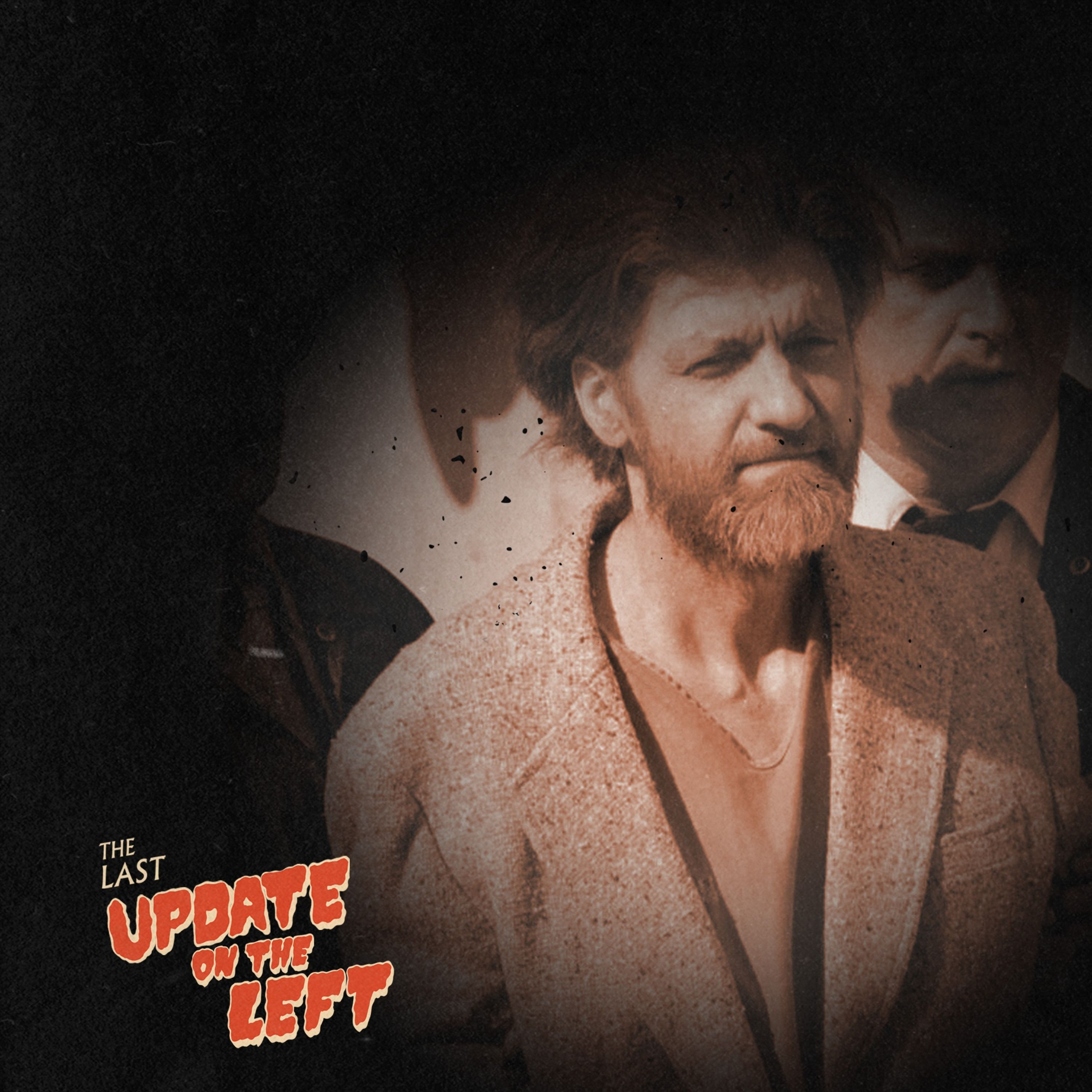
Last Podcast On The Left
Last Update on the Left - Episode 9 - The Unabomber
00:51:58
UNLEASH THE UPDATES! This week, the boys bring you an epilogue on infamous killer Ted Kacynzski - recapping the crimes that landed the hooded villain in jail, the story behind his iconic hooded outfit, his time behind bars, and the mysterious demise of the infamous Unabomber.
Loading summary
Transcript670 lines
- [00:01]
Ed
What's wrong with Ben? In Primate, a beloved family chimp suddenly turns everything they taught him, he's now using against them. Primate is smart, intense, and packed with jaw dropping moments. Ben is calculating, powerful, and disturbingly human. This is the kind of horror film that shocks you when you least expect it. It's already sitting at 92% on rotten tomatoes and premiered to reviews at festivals worldwide. Go see Primate in theaters January 9th when it hits theaters. Do not wait. Grab a seat and bring someone you can squeeze during the scary parts.
- [00:47]
Ad Host
Looking for a last minute gift for your people? You know, your people, that weird bunch of friends and family that you love dearly. Well, here's an easy idea. Oregon Lottery Holiday Scratchets. Because your people, they're the ones that, amidst all the holiday crowds and endless notifications, help you find the fun. Which calls for a little gift that brings big cheer. Oregon Lottery Holiday Scratchets. You know where to find them. Grab some today. Must be 18 or older to play lottery Games are based on chance and should be played for entertainment only.
- [01:17]
Nick
Considering earning a degree but haven't made your move? Missing the chance in 2026 would be, well, criminal. With over 200 online degree programs, Southern New Hampshire University could be the tip you've been waiting for. Classes are career focused with no set times, and tuition rates are some of the lowest in the U.S. don't let this lead go cold. Visit SNHU. Edu Lastpodcast to learn more. That's SNHU. Edu Lastpodcast. That's when the cannibalism started. Last update on the left. Ready?
- [02:06]
Marcus
Ready.
- [02:07]
Ed
I have three more pretzels to eat.
- [02:09]
Marcus
Go ahead.
- [02:12]
Nick
Throat thick duty. Dookie filled throat. You piece of. Not a piece of.
- [02:24]
Ed
I'm a problem with my mom longer.
- [02:27]
Nick
You're a good man. You're a good man.
- [02:29]
Ed
Oh, I can start. This is all part of the show.
- [02:32]
Nick
You're a good man. It's just. You don't have to do this.
- [02:35]
Ed
I was Terry Fam.
- [02:41]
Marcus
Yeah, that's Ed Larson.
- [02:42]
Nick
Yeah, it is.
- [02:42]
Marcus
He started it.
- [02:45]
Nick
And he said before we began, he was like, I've got three more pretzels. They're going to eat.
- [02:50]
Ed
You got to eat my pretzels than me my pretzels. Talk about the Unabomber.
- [02:54]
Nick
Ted Kaczynski would want me to have have these pretzels. No, he wouldn't.
- [02:58]
Marcus
No, he absolutely would not. Because those pretzels are a product of industrial society, man.
- [03:04]
Nick
What do you eat?
- [03:05]
Marcus
Rocks. Yes, Rocks and sticks and frogs and birds.
- [03:12]
Ed
Birds.
- [03:13]
Nick
What did he eat? Though, you know, he's a vegetarian.
- [03:16]
Marcus
He. Whatever he found, he was a forager.
- [03:18]
Nick
Oh, he was a. Largely a vegetarian, actually. Was just reading about this because of his time in prison. He was a vegetarian. He would go and he would source roots and stuff. He wasn't eating well. Well, he'd also go into town.
- [03:29]
Ed
He didn't look great.
- [03:30]
Nick
No, he would go into town, I think once every couple months, and he would get stuff like rice and stuff like. That's what he mostly ate. Yeah, he wasn't a big eater. He was very, very skinny. This is the last update in the left. And we came together today to talk into microphones.
- [03:50]
Ed
Yeah. About never trust your in laws, man. Your brother's gonna sell you out.
- [03:59]
Nick
He know dumb phrases, man. But we wanted to cover an update on. I've always been fascinated with the life of serial killers in jail.
- [04:13]
Marcus
Yeah.
- [04:13]
Nick
Because I don't. I don't know what it is. I think it's because, like, the more you get into a true crime, I think I am to true crime what you are to music now, Marcus.
- [04:21]
Marcus
Okay.
- [04:22]
Nick
Where you're like, you like music so much that now the music you listen to is. Is stuff like, huh?
- [04:31]
Ed
Cluck, cluck, cluck, cluck.
- [04:32]
Nick
Like a man making the words of the sound of a chicken.
- [04:36]
Marcus
I need to. I need to introduce you to Carl Heinz Stockhausen. There's this piece called Hymn, and it's only like, you know, 54 minutes long.
- [04:42]
Nick
Yeah. And it's like. And then you're gonna hear that they've left the microphones on for a while. They've left. They've gone to lunch. You hear them all, like, they're all like, doing and speaking in German. You hear them like, clinking.
- [04:54]
Marcus
Actually, that did happen on a Cannes song called See where a child wandered in to the room while they're recording and she screams and there's a dog barking at one point.
- [05:04]
Nick
But again, can makes it funky. That's what they do.
- [05:06]
Marcus
They. They do it well.
- [05:07]
Nick
But I am now into the true crime sphere, where I'm not. It's not bored just by the crimes themselves. I love the crimes. Love the crimes. And I love researching about the criminals. But I'm fascinated about the fact that like one, serial killers go into the closet once they're in jail. We largely don't pay attention to them.
- [05:27]
Ad Host
We.
- [05:28]
Nick
And I think that, like, as people that are consumers of true crime, you kind of forget that they even exist because they went away. And you're like, oh, the part that was interesting is over. But no, that's not true. Because I think it's actually fascinating what a lot of these guys do behind bars. Because Richard Ramirez, perfect example. Once he got knitting and knitting and knitting and knitting. Well, Robert Richard Ramirez, he would go and he created sort of like a loose sort of cult following after his time in jail where he gets.
- [06:00]
Ed
Let me tell you about this. Got an idea. Day stalking.
- [06:04]
Nick
During the day. It takes place from 9 to 5. I day stalk an office each day. I have to be there at 8:45. I have an hour where I'm allowed to lunch, stock some salad.
- [06:16]
Marcus
You'd be surprised. After you don't have access to intravenous cocaine anymore. Just how exhausting night stocking is.
- [06:21]
Nick
You wouldn't even believe I could. The coffee is not doing it. Five hour energy drink isn't doing it. But he, I love a matinee. He talked about. He created like a little cult where he had these little incel dudes where they would write letters, they would fantasize about what they would all wish they could do to women together. He would. They would send him like pornography. But he kind of had this like crew. John Wayne Gacy.
- [06:46]
Marcus
Yeah.
- [06:46]
Nick
He used people like Herbert Mullen. Like he used fellow lower level serial killers to do his grunt work from inside of prison. John Wayne Gacy would have them paint his paintings for him. He had a whole production system where he had like other famous serial killers. When I believe one of the Chicago Rippers was another one of them, that they would paint his paintings for him. But today we wanted to hit upon a guy that we lost too soon. Ted Kaczynski. We lost him. God, I miss him.
- [07:16]
Marcus
I believe we lost him at the young, young age of 81.
- [07:21]
Ed
Wow.
- [07:22]
Nick
I don't. I. My compass. He was. Is it my North Star? Yeah.
- [07:29]
Marcus
If you have stage four rectal cancer, is it suicide? I don't know.
- [07:33]
Nick
So let's talk about it.
- [07:35]
Marcus
Let's talk. I mean, ted Kaczynski killed three people, injured 23 over the course of. God, what, 30 years. 20 years, something like that.
- [07:44]
Nick
Let me look over this season of crimes. He's also known as the. You love him, you miss him. The Unabomber wasn't entirely incorrect. Domestic terrorists, now this is. He is. He's fine.
- [07:59]
Marcus
That's the problem with him is that like you read Industrial society and its future now and you're like, well, you.
- [08:05]
Nick
Know there's a bad stuff in there. The span of crimes, it was 17 years from 1978 to 1995.
- [08:11]
Marcus
Wow, you did that math in your head like that. You can look at 78 to 95 and you can just be like, that's 17.
- [08:17]
Nick
What I do is I subtract back. I subtract back. I take five away from 90, I get to 90, and then I go to the number right, I get to a zero, and then I add back the old number. Wow.
- [08:27]
Ed
You know, Ted Kaczynski hated math.
- [08:30]
Nick
No, it's the opposite.
- [08:31]
Ed
No, he was good at it, but he hated it. He said it was boring.
- [08:34]
Nick
Well, he was.
- [08:34]
Ed
He said, I'm not going to stay in college playing games.
- [08:37]
Nick
Well, it's because he got his mind destroyed by MK Ultra.
- [08:39]
Marcus
But what's incredible is that one of his papers that he published while he was studying math is still used today. It's still cited.
- [08:46]
Nick
Yeah.
- [08:46]
Marcus
Like, it's. It was a revolutionary paper. The man was an absolute genius.
- [08:50]
Nick
And so, you know, we're gonna. We did an entire series, and Ted Kaczynski. You can go watch the television series where.
- [08:57]
Marcus
I bet.
- [08:58]
Nick
I believe Paul Bettany played him. Paul.
- [09:00]
Marcus
Betty, did you watch it?
- [09:02]
Nick
Yes, I did a little bit. For when? The last time we were doing some update. I think it was when he died. I was watching that series. It's bad.
- [09:10]
Marcus
I liked it.
- [09:11]
Nick
He's too sexy.
- [09:13]
Marcus
I know.
- [09:13]
Nick
It was Paul Betton.
- [09:15]
Ed
He's definitely skinny.
- [09:16]
Marcus
Yes, he's definitely skinny.
- [09:17]
Nick
He's not skinny enough. Ted Kazinski. Paul bettany's obviously eating 100 milligrams of protein every day. He has abs. Ted Kaczynski should be. He's shaped like a rigatoni, like Ted Kaczynski is not supposed. It has no muscle definition. Paul Bettany's out there. He's got the cum gutters. He's got fucking. He looks good with the scraggle beard.
- [09:41]
Ed
Yeah, he does play a robot.
- [09:43]
Nick
He does.
- [09:43]
Marcus
Yeah.
- [09:44]
Nick
But, yeah, there was that movie. I made him look kind of sexy.
- [09:47]
Marcus
It made him look. I mean, it definitely didn't do. It made him look far sexier and far more appealing than he really was, because he was, as far as a TV show goes, manhunt, pretty good.
- [09:58]
Nick
Yeah, it was good. So he got pulled out of a shed in Montana because I saw the shed.
- [10:03]
Ed
You ever see the shed?
- [10:03]
Nick
Yes. We'll talk about it. Let's get there. Yeah, look at there. He got pulled out of his shed in Montana largely because his brother caught him, because I believe that he had used the phrase, you could have your cake and eat it, too.
- [10:17]
Marcus
He said, you can eat your cake and have it too.
- [10:19]
Nick
And it was a mistake. Right. Like, he fucked up the phrase, which is how his brother recognized him from his letters to the police and his manifesto because he said this phrase. And so he got picked up. So now, like, we know that he was arrested. One thing that when he was picked up is that he was so smelly that some of the officers vomited. Wow, he's a smelly. Impressive smelly boy. And now we pick up for update episode while he's fucking sitting his keister ass in fucking supermax prison.
- [10:48]
Marcus
Yeah, supermax. United States Penitentiary Administrative maximum facility in Florence, Colorado, affectionately known as the Alcatraz of the Rockies.
- [10:58]
Nick
Oh, wow. And he had a lot of buddies there.
- [11:01]
Marcus
Yep. Got Dozar Czarnaev, the Boston Bomber.
- [11:05]
Nick
The guy looks like Nick Turner.
- [11:06]
Marcus
Yeah. 911 conspirator Zacharias Musao. Terry Nichols is still there.
- [11:14]
Nick
Oh, wow.
- [11:15]
Marcus
Yeah. From the Oklahoma City bombing.
- [11:17]
Nick
Wow, what a fun cast.
- [11:19]
Marcus
Yeah. Robert Hansen, the FBI agent turned Soviet spy. He's still there.
- [11:23]
Nick
Ooh, that could be interesting.
- [11:24]
Marcus
Rami Youssef.
- [11:25]
Nick
Ramzi Yousef.
- [11:28]
Ed
Yeah, yeah. Rami's great.
- [11:29]
Nick
Yeah, Rami's a nice guy. I like Rami. I don't think he's in death row with.
- [11:35]
Ed
Yeah.
- [11:35]
Marcus
Ramzi Yousef. Yeah. The guy that was behind the first World Trade center bombing. Allegedly. That's. What. Because Tim. Because that's the thing.
- [11:42]
Ed
Tried to get his money back.
- [11:43]
Marcus
Yeah. Because, like, Ted. No, not that. Yes, yes, the guy who tried to get his money back.
- [11:49]
Ed
Yeah.
- [11:49]
Marcus
Because. Yeah. Ted Kaczynski did get to know all these guys, including Timothy McVeigh. Until Timothy McVeigh was executed in Oklahoma. All these guys knew each other. They all hung out together.
- [12:01]
Nick
Oh, yeah.
- [12:02]
Marcus
Kaczynski, he always made sure to say, like, allegedly the mastermind behind the world trades the first World Trade center, because he believed him.
- [12:10]
Nick
He also was really, really close to Timothy McVeigh.
- [12:13]
Marcus
Yeah.
- [12:13]
Nick
And they would. They would send writings back and forth, and they got to be very friendly with each other. And I forgot one of the things that he sent him that was, like, wild to me.
- [12:26]
Marcus
Was it the books that they sent?
- [12:27]
Nick
Oh, yeah. The books that they sent back and forth.
- [12:30]
Ed
Would they talk bombs?
- [12:33]
Marcus
I'm sure it came up.
- [12:34]
Nick
Oh, yeah, yeah.
- [12:35]
Marcus
I'm sure they. Because Ted was all about the small bombs and Tim was about all the big ones.
- [12:39]
Ed
Yeah. Now these letters are all read before they reach the other person.
- [12:44]
Marcus
Not always.
- [12:45]
Ed
No.
- [12:45]
Marcus
Actually, these letters were smuggled in between like they were, you know, privately between, you know, attorneys or other inmates or paid off prison guards, you know, like, yeah, these letters between these guys were definitely not read by other people. They were only discovered later. Or Jack Kaczynski saying, like, yeah, I got this letter from Timothy. This is what we discussed here. It is.
- [13:05]
Nick
Yes. The book that they got was. He gave him a book. Timothy McVeigh gave Ted Kaczynski a book called Tainting Evidence Inside the Scandals at the FBI Crime Lab. And he was like, it was incredible, because it was all about problems inside of the FBI and corruption inside of the FBI. He loved it. Because Ted Kaczynski fucking hates the FBI. And then. But he said when the one he was really touched was right before Timothy McVeigh got fucking offed by the state, he fucking gave him a copy and smuggled in a copy of into the Wild for Ted Kaczynski.
- [13:36]
Ed
Oh, really?
- [13:36]
Nick
Yeah. Ted Kaczynski just loved it.
- [13:39]
Ed
Well, I guess it makes sense, right?
- [13:40]
Nick
He would love it because he spent.
- [13:42]
Ed
Most of his time living in the woods.
- [13:44]
Nick
And so it is interesting. So he's in this supermax prison 23 hours a day. There's only one slit of light that goes in the ceiling where they have a little patch in the ceiling that they're allowed to look out because they can't even see the mountains. He's in the mountains of the Rockies. They're not allowed to see any of the Rockies. Just in case you can triangulate your position.
- [14:04]
Ed
Okay.
- [14:04]
Nick
And communicate to people. They've never had anybody escape from the super max prison. And. But they said that Ted Kaczynski absolutely loves it. He doesn't like the. He said the food's not bad. He said some of the problems mostly been getting vegetables. And he said largely it was because he went from living in the shack to moving into the supermax prison. And he loves his cell.
- [14:28]
Ed
Yeah, the cell was bigger than the shack.
- [14:30]
Nick
He loves it. You saw the shack?
- [14:31]
Ed
I saw the shack. It was at the newseum. They had it, which is now gone, unfortunately. Yeah. Which great museum you went? Did you go?
- [14:39]
Marcus
I wasn't able to go, but no. I heard it was two. It was $300 million in debt, and they had to shut it down.
- [14:44]
Ed
Yeah. Yeah. They didn't have a chance.
- [14:45]
Nick
You got to stop betting against the museum.
- [14:47]
Ed
No one was there but the. But they did have the shack downstairs. But oddly enough, when I went there the same day, you can, like, look in it and stuff, it was pretty cool. But on the same day, I was bored and had nothing to do in D.C. and I just, like, Walked into the post office museum and they had a huge Ted Kaczynski exhibit.
- [15:08]
Nick
Like, the post office uses the Ted Kaczynski, like the Unabomber story. Been like, yeah, we do too. Yeah, we fucking got this piece of shit.
- [15:16]
Ed
They're like, this is the postmaster's badge that was there on the day of the arrest.
- [15:21]
Nick
It's dangerous to be a mailman too. Yeah, yeah.
- [15:24]
Ed
It's like the first crime they saw. So we killed a horse during the pony express.
- [15:29]
Nick
Do you know they use the cabin? The reason why was that they airlifted the cabin up and out during the trial. It's because his defense team wanted to use the physical cabin as his. Like the evidence that Ted Kaczynski was completely insane because he was literally just. He was collecting his scat. He was doing all this because he didn't want anybody to know that he was out there. So he was just like. He was literally just sitting on buckets of his own fetid, rotting duke. And it was bad in there. And then no toilet. Yeah, dude.
- [16:02]
Marcus
Well, he had a hole.
- [16:03]
Ed
Oh.
- [16:03]
Marcus
That he opened up and pissed. And. And 2. And then closed it back up again. And I'm sure that took care of the smell.
- [16:08]
Ed
Someone who's so smart, how did he not get plumbing?
- [16:12]
Nick
He wasn't. It's very difficult to do plumbing. Ask Rob. You could be an expert on a lot of things and being a plumber is extremely difficult.
- [16:19]
Ed
Oh, man. So that guy was surrounded by two types of logs.
- [16:25]
Marcus
Eddytunes.com yeah, the cabin where he lived for 23 years. Like, it was. He would just sit there in silence, so still that there was an outline of his body on the wall from the soot that came from his wood burning stove.
- [16:44]
Ed
Damn.
- [16:45]
Marcus
And they could even find, like, where he like, sat because the oils in his body had seeped into the wood so much.
- [16:54]
Ed
Wow.
- [16:55]
Marcus
Like footprints.
- [16:57]
Ed
Did he not even have a chair?
- [16:59]
Marcus
No, he had a chair. But, you know, you're sitting on the chair and you're sitting. Your feet are down on the ground, your feet coming. Yeah, but no, his oils, his very essence, it's still in that cabinet.
- [17:09]
Nick
Can you imagine that? Just the oil from your feet, skin staining the wood. That's how much your feet, your dirty feet have been in one place for so long. Like that one girl they found when. The one that was. When it was attached to the couch.
- [17:25]
Marcus
They found a lot of people like that.
- [17:27]
Ed
Oh, yeah, the person attached to the toilet. Remember that? Yeah, they cut the toilet off her. Now the. Oh, yeah.
- [17:37]
Nick
This Podcast is brought to you by Squarespace. Whether you're just starting out or scaling your business, Squarespace is the all in one website platform designed to help your business stand out and succeed online. Squarespace gives you everything you need to offer services and get paid all in one place. From consultations to events and experiences. Showcase your offerings with a customizable website designed to attract clients and grow your business. The best part about it is it can help you design a funnel in which you can very quickly record commercials so that you can get it done while you were desperately trying to get on break. That's the best part about Squarespace. It can really shorten up the time you spend doing things. You got to get in there. You got to get in there. Use Squarespace. Man, is it fast. It is absolutely incredible. You're gonna love your experience at Squarespace. Head to squarespace.com left for a free trial and when you're ready to launch, use offer code left to save 10% off your first purchase of a website or domain. This is an ad by BetterHelp. Can you feel the ticking clock of the holidays? Tick tock, tick tock. What are you gonna buy me, Daddy? Oh, I want this locket. And if I don't get it, I'll leave you. Trevor. What am I gonna do to get off of work? They said they need me. They need me at the bullet factory. I can't get off for Christmas. Oh, I hate the days. That's why Better Help is encouraging you to rewrite your traditions this season by making time for you. Incorporating therapy into your new or existing traditions can help you slow down and take care of yourself during what can be a joyful but sometimes hectic and lonely time of the year. I know. I always invite my psychiatrist to Christmas morning. I want to see him get yelled at by my mother. The holidays look different for everyone. Maybe it's baking your great aunt sweet potato pie. Nice. Or starting something new like a quiet night in with friends. Yeah, that's fun. They're becoming one of the first new traditions too, right? BetterHelp gives you space to pause, reflect, and feel more grounded. And there's nothing that would make somebody happier than giving them a gift for the holidays. Of a gift certificate. To Better Help this December, start a new tradition by taking care of you. Our listeners get 10 off at betterhelp.com lastpod that's better help. H E L p.com/lastpod don't let the overpriced phone bill suck the joy out of the holidays this year. Right now, all of Mint Mobile's Unlimited plans are 50% off. You can get 3, 6 or 12 months of unlimited premium wireless for 15 bucks a month. Isn't that nice to look forward to? Normally with the holidays, there's so many bad things that happen, so much bad news. Everything bad happens. It snows, it's the worst weather. But you know what's nice is Mint Mobile's looking out for you. And at least someone is. Because other than that, you were completely and utterly alone. The only person that can help you now is Mint Mobile. So turn off your expensive wireless present into a huge wireless savings future by switching to Mint Shop. Mint unlimited plans@mintmobile.com LPOTL that's mintmobile.com LPOTL Limited Time Offer Upfront payment of $45 for 3 month, $90 for 6 months or $180 for 12 month Plan required $50 per month equivalent taxes and fees Extra initial plan term only over 35 gigabytes. May slow when network is busy. Capable device required availability, speed and coverage varies. See Mint mobile.com I'm surprised he never.
- [21:12]
Ed
Blew himself up because one of the things that was interesting to me is he wasn't really a great bomb maker.
- [21:17]
Marcus
He wasn't great at having them go off. Or at least he wasn't great at having to make as big of a boom as he wanted.
- [21:23]
Ed
Yeah.
- [21:23]
Marcus
And I think that's why he never blew himself up, because he was so careful. He knew what he didn't know and he would rather risk the bomb not going off as big as he wanted it to rather than experiment with bigger and bigger bombs.
- [21:39]
Nick
Yeah.
- [21:40]
Marcus
So that's why it's 23 maimed and three killed instead of 28 killed.
- [21:45]
Nick
But he had a piece that none of us will ever understand. I love this quote from him when he talked about when he was living in the woods and what that time like was like for him. When I was living in the woods, there was an underlying feeling that things were basically right with my life. That is I might have a bad day, might screw something up, but I was a free man in the mountains, surrounded by forests and wild animals. Here it's the other way around. I'm not depressed or downcast and I have things I can do that I consider productive, like getting on, working on my book. And yet knowledge that I'm locked up here and likely to remain so for the rest of my life, it ruins it. I don't want to live long. I'd rather get the death penalty than spend the Rest of my life in prison. Oh, well, it really turns. It really goes on a dime there.
- [22:33]
Ed
This is great. You don't always talk about how peaceful the woods were, but it's like you're sitting there trying to kill people.
- [22:40]
Nick
That's what was peaceful. What was peaceful. It's like all the birds, like building your bomb, like just sitting there being like, oh, I like to. I normally like to pile my gasoline near the river so I can hear it babble like as he's like building a pipe bomb while two squirrel. Like he's feeding squirrels. Yeah.
- [23:02]
Marcus
I mean, in the supermax prison, the biggest complaint that he had was that the cam burgers were overcooked.
- [23:08]
Nick
Yeah.
- [23:09]
Marcus
Today again, I received an undercooked hamburger. Like some other inmates. I refuse to eat undercooked hamburgers. Undercooked meat can transmit diseases, for example, salmonella and tapeworm. Yet we often get undercooked hamburgers.
- [23:22]
Nick
Shut up, Ted. Shut the living up before I bash your head against the wall.
- [23:26]
Ed
Ted.
- [23:27]
Nick
You're gonna get what you get. You're the uni bobber.
- [23:30]
Marcus
Yeah.
- [23:30]
Ed
How good are the hamburgers in the woods?
- [23:32]
Nick
Shut up, Ted. Yeah, exactly. When the last time you hand him back. When was the last time you ran across a hamburger to the Taco Bell Ravine? What are you talking about?
- [23:44]
Marcus
No, I love what a former inmate at the supermax said about him. He called him just a weird little guy he is that he wouldn't even go outside even when he was.
- [23:54]
Nick
He had an hour long. But he has hour long of recess every day and he wouldn't take.
- [23:57]
Marcus
Yeah, all of them have an hour long. And it's like it's outside. And the fact that you're just not in your cell anymore, like there's no grass. It's just another concrete room with sky. You know, a concrete room with no roof and a pull up bar and that's it.
- [24:12]
Ed
Yeah, but you got to. Who you got to hang out with, you know, Nichols, like, he was having.
- [24:19]
Nick
A great time with Ramsey Yousef. He was having a great time with Timothy McVeigh. He would play. I believe he played chess with Sirhan Sirhan as well.
- [24:29]
Marcus
Sirhan.
- [24:30]
Ed
He was with Manson.
- [24:31]
Nick
He was with Manson. But I believe they did male chess. Oh, I believe they would do like the most boring set off.
- [24:38]
Ed
Bishops.
- [24:43]
Nick
Yeah.
- [24:43]
Marcus
Kaczynski. I mean, his time in supermax. Like, it's kind of incredible to think that, like, because, you know, solitary confinement is torture.
- [24:51]
Nick
Yeah.
- [24:51]
Marcus
You know, it's absolute 100% torture. And it's incredible to think that somebody could actually thrive in those conditions. He was just so. Every interview that he gave when he was in supermax, so serene, so calm.
- [25:06]
Nick
Yeah.
- [25:06]
Marcus
So confident.
- [25:08]
Ed
Well, he was in isolation the entire time.
- [25:10]
Marcus
Better.
- [25:11]
Ed
They should have put him in gen pop.
- [25:13]
Marcus
Now. That would have been absolute torture for him.
- [25:15]
Nick
He would have been done. Well, it's. It's funny. Yeah. Because it's like, in prison, I feel, as an extrovert, prison would be hard for me.
- [25:23]
Ed
Because they don't like funny guys.
- [25:24]
Nick
Well, yeah, because I feel that my natural.
- [25:28]
Marcus
Because that's what he's always said. Like, if I ever go to prison, like, I'm just gonna be the funny.
- [25:31]
Nick
No, I've learned. I've learned that that is not. Not a good person to be. Yeah. In prison, a lot of times, it makes you. It's. You're calling for attention that maybe you don't want to get.
- [25:42]
Ed
And you're so stabbable, too. Yeah.
- [25:45]
Nick
Oh, extremely. I'm just like. I'm just being like. I just want. It's. Don't we want to be. I'm like, the personality hire for the prison. Don't we just want to have fun with it? Guys, Come on, guys. Let's think about the vibe. You know, it's scheduled Fridays, but the.
- [25:57]
Marcus
Great thing is that he's got so much loose skin is if he got slashed and they probably wouldn't hit any organs.
- [26:01]
Nick
They would go for the organs. They'd know. They know how to kill. I'm not worried about them finding my organs, but I feel that, yes, it was an extrovert. It would be difficult. But also activities, direct. Oh, absolutely.
- [26:13]
Ed
Not my ball.
- [26:16]
Nick
But I. You know. But also, as a person that does need to recharge, I would find that prison would be sort of difficult for me mentally.
- [26:24]
Marcus
Yeah.
- [26:25]
Nick
Because it'd be so hard to have your private time, too. Or like Ted Kaczynski, at least he gets a lot of that. That's got to be because they don't. Funny guy. He's not funny.
- [26:32]
Marcus
Yeah.
- [26:33]
Nick
So he must get along great. It's like how I was reading about how Bernie Madoff, people loved him in jail. They call him the Don.
- [26:39]
Marcus
Yeah.
- [26:40]
Nick
You know what I mean? Like, he goes around like, they give him.
- [26:42]
Ed
Because he robbed a bunch of rich.
- [26:43]
Nick
People, and then he does everybody's taxes.
- [26:45]
Marcus
Yeah. And speaking of which, Bernie Madoff and Ted Kaczynski died in the same prison hospital within a month of each other.
- [26:51]
Ed
Whoa.
- [26:52]
Nick
Yeah. Isn't that nice? Just two ships that pass. But it's like Ted Kaczynski must really look like. Like he was perfectly suited for this. He's far away from everybody. He's not allowed to build his bombs anymore. I mean, I feel like it's also be nice to kind of give him a couple of things where he could fake build some bombs.
- [27:11]
Ed
Legos.
- [27:12]
Marcus
Yeah, yeah, that'd be fun.
- [27:13]
Nick
I feel like he'd do something dangerous with Legos.
- [27:16]
Marcus
So, Ed, you said that funny guys don't do well in prison. No, like, I mean, you. You spent a little. A tiny bit of time in jail, but for prison, you spent a lot of time with Jeff Ross for the prison roast.
- [27:25]
Ed
Yeah, but that was a jail.
- [27:26]
Marcus
That was.
- [27:27]
Ed
That was a jail. That also was Brazos County Jail.
- [27:29]
Marcus
Okay.
- [27:30]
Nick
Right.
- [27:30]
Ed
Yeah. Yeah. So that's why some of the people are murderers, because they hadn't finished their trials yet. Yes, and so they were, but. Yes, so they have soon be. They've since been convicted.
- [27:39]
Marcus
All right.
- [27:39]
Nick
Yeah.
- [27:40]
Marcus
Do funny guys do well in jail?
- [27:41]
Ed
I feel like jail's fine because everyone's getting out. Like, when my time in jail, I only got, like, one joke off. But that was also very depressed.
- [27:48]
Nick
Yeah, yeah, yeah, yeah. You shouldn't be.
- [27:50]
Ed
So it was like. It was. I think if I was there another week, I probably would have been funnier.
- [27:54]
Nick
But, yeah, if you really knew the may of a land, you could find out what all the guys like, what impressions everybody got.
- [28:00]
Ed
Yeah. I definitely didn't shower the whole time I was there. I want to hold off as long as possible on this one. Yeah, I was able to get out without one, so that was nice.
- [28:08]
Nick
I do feel. Email me to know this for certain side stories. Lpotlmail.com But I do think that. Well. Well, we know about Ted Kaczynski, that he's a stinky boy.
- [28:18]
Ed
Yeah.
- [28:19]
Nick
Right. You know, I know that he. He does shower twice a week. He says he has sensitive skin, so they allow him to shower more, I believe.
- [28:27]
Marcus
Well, he actually showered less.
- [28:29]
Nick
Is it less?
- [28:30]
Marcus
He showered less than he was allowed. He didn't like showering.
- [28:33]
Ed
Wow.
- [28:34]
Nick
Wow. No way.
- [28:35]
Marcus
I don't really like it either, but.
- [28:37]
Nick
Yeah, but you shower.
- [28:38]
Ed
Yeah.
- [28:39]
Marcus
I have to.
- [28:39]
Nick
Yes. Because you're a functioning member of society.
- [28:41]
Marcus
Yeah.
- [28:42]
Ed
Afterwards.
- [28:43]
Nick
Yeah. I love showering.
- [28:44]
Ed
It's like stretching. It sucks while you're doing it, but as soon as you're done, you're like.
- [28:47]
Nick
I love showering and stretching. I love. I love showering and stretching. I wish I could do it all at once.
- [28:51]
Marcus
Massive inconveniences is all three.
- [28:53]
Nick
I wish I Could and shower at the same time.
- [28:55]
Ed
I definitely stretch and my. That is.
- [29:00]
Nick
But he was like. But I do think that there is a prison etiquette when it comes to smell.
- [29:07]
Ed
Yeah. Well, if you stink too much, he'll beat the out.
- [29:09]
Nick
That's what I'm thinking is that if you don't like. I think that he probably must be in solitary confinement. I mean he's dead now.
- [29:16]
Ed
At least isolation.
- [29:17]
Nick
Yes. He would have to be away from everybody. Cuz he's smelly.
- [29:20]
Marcus
Yeah. Well, he's. But he might also be a naturally smelly person.
- [29:23]
Nick
Oh yeah.
- [29:23]
Marcus
Or just have a musk that's baked in.
- [29:26]
Nick
Yeah, absolutely. You imagine what his balls were like.
- [29:30]
Ed
But they're fun the now.
- [29:32]
Nick
Did he ever kiss anybody?
- [29:34]
Ed
Because.
- [29:34]
Marcus
Yeah, yeah. Remember he was working with his brother. Like he got out of college.
- [29:39]
Nick
Can you imagine Ted Kaczynski practicing kissing on his hand? Mr. Amy. Mrs. Angela Bassett Kaczynski.
- [29:52]
Marcus
Because he was working with his brothers at his brother's company and he went on a couple of dates with this girl and she broke it off. And so he retaliated by leaving all of these very mean notes about her all over the company. Thankfully, his brother came in early that day and was able to remove all the notes before everyone saw him. And then he fired Ted. And that was I think the last time that he saw him. Them until. And they communicated through letters like here and there.
- [30:19]
Nick
So Mom's so happy.
- [30:21]
Marcus
Yeah.
- [30:21]
Nick
Oh yeah. He must have been so happy to fire his brother.
- [30:24]
Ed
Oh man.
- [30:25]
Marcus
It had to have been horrible.
- [30:26]
Nick
Ted's a problem. I go, you know, I've been re watching the Jinx season two.
- [30:29]
Ed
Yeah.
- [30:30]
Nick
And I feel like in that scenario it's like what the rest of the family. But the rest of the Durst family has to deal with with Robert. Well, obviously they've been trying to help him recover up. Mostly they just wish he. He'd disappear. You know, like just being like, we are really sick of dealing with Robert.
- [30:47]
Marcus
Ted's a problem.
- [30:48]
Nick
I think Ted's a problem.
- [30:49]
Marcus
Yeah. Ted's all, yeah. Because that's. You say never trust your in laws. Is that like Ted was definitely a problem to his brother's wife?
- [30:55]
Ed
Yeah.
- [30:55]
Nick
24 7. Yeah. Always being like, does Ted have to come to Christmas? Yeah.
- [31:00]
Ed
Well, because he hated her without them meeting. And like for some reason. Well, because he was probably in love with his brother.
- [31:05]
Nick
I think it's. He's active. I just think he liked the ladies all too much.
- [31:09]
Marcus
There's like that butthole surfer song. I am not impressed with my brother's wife.
- [31:14]
Nick
Yeah, it's not. And I'm not saying that he was like, not that he didn't like them sexually. I just don't think he enjoyed. Probably in the asexual spectrum. And I don't think he enjoyed a lady.
- [31:26]
Ed
I don't think he enjoyed anybody.
- [31:28]
Nick
No, he was not.
- [31:29]
Ed
Well, no, he liked. He liked environmental terrorists.
- [31:32]
Nick
I think he loved Timothy McVeigh. Yeah, him and Timothy McVeigh got along famously.
- [31:37]
Marcus
Really did get along well. Like, we're not joking about that. Like, him and Timothy McVeigh really got.
- [31:42]
Nick
Along well, but genuine friends. Because, again, you know, like, it's like, I like to talk to comedians because they get me.
- [31:47]
Ed
They are the two most famous bombers, I guess.
- [31:50]
Nick
I don't know. If I put it that way, I'd say Osama bin Laden still number one.
- [31:53]
Ed
Yeah.
- [31:53]
Marcus
But would you really consider him a bomber?
- [31:55]
Nick
I would.
- [31:56]
Marcus
I wouldn't.
- [31:56]
Nick
Why. Consider him a friend and. And a family member, and it's somebody I really look up to. But. But I also view him as a bomber. Yeah, yeah, yeah.
- [32:05]
Ed
I would.
- [32:05]
Marcus
I wouldn't say he's a bomber, Ed.
- [32:07]
Ed
I mean, I mean, he definitely set off. He had people set off bombs, but I don't think he ever built one.
- [32:13]
Nick
He's an exact. He's an executive producer.
- [32:16]
Ed
Yeah, yeah, exactly. But, yeah, he's not in the act. He's not. He's not sitting there with the screwdriver and the sand and the.
- [32:22]
Nick
Came up with the idea.
- [32:23]
Marcus
So you consider 911 to be a bombing?
- [32:26]
Ed
There was a lot of gasoline.
- [32:28]
Nick
I would say it's a bombing by plane. They use the plane as if it was a bomb.
- [32:32]
Marcus
Yeah, I would say they used it more as a missile.
- [32:35]
Nick
That is a bomb.
- [32:36]
Marcus
Nope.
- [32:36]
Nick
Yep.
- [32:37]
Marcus
Nope.
- [32:37]
Nick
Yes. Ooh.
- [32:38]
Ed
This could go on for hours.
- [32:43]
Nick
I'm typing that into Google.
- [32:44]
Marcus
A missile is not a bomb.
- [32:45]
Ed
I think we need to ask King Koopa because he had these.
- [32:50]
Nick
Okay. All right. This is missile bombs. This is only correct because this is the most pedantic fucking condescending thing. But the only reason why it's correct is because, yes, bombs are considered stationary. Missiles do travel. They both blow up. So fucking. If you throw a bomb, it's a missile.
- [33:06]
Ed
Yeah, but no one leaves a missile on the subway.
- [33:09]
Nick
Not yet. Not one that we don't. You don't think that they haven't tried.
- [33:15]
Ed
Excuse me, I have missile shaped bags.
- [33:19]
Nick
This is my emotional support missile.
- [33:23]
Marcus
Actually, Tekaczinski did have. He had some feelings about 9 11. Oh, he had opinions.
- [33:29]
Ed
Oh yeah.
- [33:29]
Nick
Well, he was mad that I guess partially that he did.
- [33:31]
Marcus
Didn't do it most well. It was more like he had opinions about the invasion of Iraq. The 2003 invasion of Iraq.
- [33:38]
Ed
Yeah.
- [33:38]
Marcus
You know.
- [33:41]
Nick
He said Saddam Hussein could not go around willy nilly making nuclear weapons.
- [33:46]
Marcus
I don't think all these petty little dictators around the world should be allowed to develop nuclear weapons.
- [33:51]
Nick
Yes. So he was anti Saddam Hussein.
- [33:53]
Ed
He is a bomb expert.
- [33:55]
Nick
Yes, he's.
- [33:56]
Ed
So we have to like listen to it?
- [33:57]
Marcus
Unfortunately, yeah.
- [33:59]
Nick
Yes. He felt reasonably sure that the politicians motivations for invading Iraq had more to do with their own egos and their own drive for power than any unselfish desire to prevent the harm that Saddam might do with his weapons program.
- [34:11]
Marcus
See, again, oddly correct.
- [34:12]
Nick
But then he also said, though, which is also funny, is that he offered to vote. He wanted to vote for Bush because he said, apart from. He said that one thing that Bush was doing was he is opposed to stem cell research, which he supported.
- [34:27]
Ed
It was all the environment.
- [34:28]
Nick
He hated it.
- [34:29]
Ed
His whole thing.
- [34:30]
Nick
He didn't want it. Well, he said that he wanted to vote for Bush simply because he figured the reelection of an incompetent president and his irresponsible gang will help weaken the American system.
- [34:42]
Ed
Oh, okay. So he's talking Bush.
- [34:45]
Nick
He's doing the first carry. Yeah, dude, he's doing dirt bag left. Yeah, I'll teach Biden a lesson.
- [34:50]
Ed
Yeah, yeah, yeah.
- [34:51]
Marcus
He's doing that whole bullshit.
- [34:53]
Ed
So he probably voted for Gordon. No, he wasn't. He was already in prison.
- [34:56]
Marcus
Yeah, I don't think he voted. I think the last time he voted was like 1972.
- [35:00]
Nick
I don't think he's a big voter.
- [35:01]
Ed
Yeah, yeah.
- [35:02]
Nick
I feel like, you know, walking down.
- [35:04]
Ed
The dirt road stinking a mile away.
- [35:08]
Marcus
No, he's not registered to vote.
- [35:10]
Nick
Yeah, dude, the idea of like he doesn't have a driver's license. He doesn't fucking. To be honest, I don't think he's allowed inside of like a, like a domestic government building.
- [35:20]
Ed
But he was a professor at Berkeley.
- [35:23]
Nick
For a short period of time.
- [35:24]
Marcus
For a very short period.
- [35:25]
Nick
He's the Unabomber. He's not anything he was before. The Unabomber doesn't count anymore. Yeah, he's the Unabomber.
- [35:33]
Marcus
Yeah, he's a Unabomber.
- [35:34]
Ed
Yeah.
- [35:34]
Marcus
I mean his biggest thing was when he was at the University of Michigan, which they still hold his papers to this day. There's like a Ted Kaczynski archive at the University of Michigan.
- [35:43]
Nick
Talk about not separating the art, the artist. So I gotta go break my Annie hall dvd, but all these mathematicians are all fucking using Ted Kaczynski's work. I hate any hall. I don't even like any hall, but still.
- [35:56]
Ed
Yeah, but you know, you got all the, you know, all the Nazi guys came over. Oh, he used all that shit, you.
- [36:02]
Nick
Know, but we rebranded it. That's the difference is that we took it. We took the Nazis names off of it and then we put it. We whitewashed it through American systems. That's why we're allowed to use it. This has Ted's name on it. It says Theodore Kaczynski on the paper. And you still have to go K for Kaczynski. You have to go down to the fucking library and choose that.
- [36:23]
Ed
Usc still has OJ's Heisman.
- [36:27]
Nick
I still feel like OJ is less OJ. Wow.
- [36:31]
Ed
He only killed one less person.
- [36:32]
Nick
How do you say it?
- [36:33]
Marcus
Yeah, but the maimings were pretty bad with Unabomber. If you talk to. They were pretty badly made.
- [36:38]
Ed
See those poor that tried to tackle oj. That is true.
- [36:43]
Marcus
They got juked. They got juked and didn't. And isn't a maiming a type of Jew?
- [36:50]
Nick
That is true.
- [36:50]
Ad Host
True.
- [36:51]
Nick
It is a type of juke, man.
- [36:53]
Ed
So the, the people who got maimed by them, like, what's their. Like? I mean, obviously, what's going on with all them? I know there's 23 of them. Is there anything notable about any of them?
- [37:02]
Marcus
I mean. Well, you know, they were professors. Some of them were airline executives. Airline executives. They actually, Tekosinski actually owed them a lot of money. They were owed, I think like $15 million in restitution. And in order to pay that. That back, like, I mean, it's not like Ted had like socks.
- [37:20]
Ed
Yeah, nothing.
- [37:22]
Marcus
They held an auction, like there was a full on auction of all of Ted Gazinski's like, various personal effects.
- [37:29]
Nick
God, I wish I could.
- [37:30]
Ed
They got $15.
- [37:32]
Marcus
Oh, no, no, dude.
- [37:33]
Nick
I wish I could have gotten that hoodie in the glass. Yes.
- [37:36]
Marcus
Let's go. Let's go through the items here.
- [37:37]
Ed
Okay.
- [37:38]
Marcus
This is Wild Kaczynski's hoodie, sunglasses, and the other items that he wore as disguises. The one, the big, like the. I didn't realize. Yeah, it was real. No, no, it was real. They saw $20,000. 20,000. 20.
- [37:52]
Ed
He only had one hoodie? I guess so. Yeah.
- [37:56]
Marcus
He was minimalist.
- [37:57]
Ed
Yeah, yeah, yeah. 20 grand. Okay. That's not bad. 16 million 900.
- [38:04]
Marcus
His Harvard undergrad diploma and University of Michigan PhD diploma. That was sold. I don't have a price for that one. Wow. But the handwritten rough draft of his manifesto sold for just slightly more than the hoodie. That was 20,053.
- [38:19]
Nick
That's it. It.
- [38:21]
Ed
I mean. I mean, like, what. How much do you think it's going to get?
- [38:24]
Nick
You see, what I would do with the first draft is I put a couple of gay sex scenes in there to see if people were really reading it.
- [38:32]
Marcus
The hot one of the big ones. And. And I get this one selling for $22,000. Because this is a hell of a display piece. His typewriter.
- [38:40]
Nick
Oh, yeah, that's. That's got Tom Hanks written all over. We would love that you give that to chat just to sort of, like, connect with him on. On something.
- [38:51]
Marcus
A copy of his handwritten autobiography where he wrote about his decision to become a serial killer. That was 17,780.
- [38:58]
Nick
Whoa.
- [38:59]
Ed
So did he write that in prison?
- [39:01]
Marcus
No, this is all stuff that was found in his shack.
- [39:04]
Ed
He wrote an autobiography before he got caught.
- [39:07]
Marcus
Yeah, dude.
- [39:07]
Nick
Yeah. He knew.
- [39:08]
Marcus
What else is he gonna do?
- [39:09]
Nick
He's got nothing but time else to do.
- [39:11]
Marcus
Yeah.
- [39:12]
Ed
Yeah.
- [39:12]
Marcus
His personal journals. This is an Interesting. Highest one, highest selling item. 46. 76.
- [39:20]
Ed
For all the journals.
- [39:21]
Marcus
For all of his personal journals to be on individually.
- [39:23]
Nick
Oh, dude, I. Yeah, I. There's a part of me that thinks that, like, obviously I'm not going to spend that. I mean, that's an obscene amount of money. No one should be spending that amount of money on anything that you can't drive or live inside of. But it's like, my. My estimation is, like, I'd spend some good change for the BTK journals.
- [39:40]
Marcus
Yeah.
- [39:40]
Nick
Those are the type of stuff. I've been pricing some stuff.
- [39:43]
Marcus
Stuff because I've been looking through some murder billiard.
- [39:45]
Nick
Some. Well, not. I don't do murder, Billia, but I do stuff. Like, I was, like, bidding on LRH's personal Scientology handbook, but once it gets. Literally like, once it got past, like, two grand. Oh, like, what am I? What am I? What am I Spend this money on here? And it's like, what is Natalie gonna do?
- [40:04]
Ed
Yeah.
- [40:05]
Nick
When she finds out that I'm spending multiple thousands.
- [40:07]
Ed
I think I just met.
- [40:08]
Nick
Yeah. I'm not going to do this.
- [40:10]
Marcus
I'd also get, like, some. A little bit peeved. Yeah.
- [40:13]
Nick
I just love it. I mean, I'm Want some more LRH stuff. I've been looking for LRH stuff, but it's very expensive.
- [40:19]
Marcus
Yeah.
- [40:20]
Nick
Extremely Expensive.
- [40:20]
Ed
It's got to all be fake.
- [40:22]
Nick
No and no.
- [40:23]
Ed
And you're giving the money to Scientologists.
- [40:25]
Nick
No, you wouldn't give it to. Well, you give it somebody who's outside, you'd be giving it to a squirrel.
- [40:28]
Marcus
The only thing that I actually thought about like, that was like, this level of price and like, this lot. But they were selling the. The Moog synthesizer that they use that David Bowie used on ziggy Stardust for $20,000.
- [40:44]
Nick
I mean, that's great. That's.
- [40:45]
Marcus
That makes sense to me like, that yet, right?
- [40:47]
Ed
Yeah, that's an investment.
- [40:48]
Nick
No, yeah, that's true art.
- [40:50]
Ed
That'll be worth something that you could sell to a museum.
- [40:53]
Nick
But I still feel like you in value over there. But I feel like I would get something like that just to play like Hot Cross Buns on it once a time. Like once a week. Like, dude, been like, oh, man, I should have. I should have got Ozempic or something for this money.
- [41:12]
Marcus
No, I didn't do it. I didn't do it.
- [41:14]
Nick
It's good to do it because. But that, to me, that's not murabilia.
- [41:17]
Marcus
No, no. I'm just saying, like an artifact. Yeah, like a really cool artifact.
- [41:21]
Nick
I buy the shed. I actually did want to bring up, too, about the guy called the unit trucker. The unit. The guy that was forced to move the cabin.
- [41:28]
Ed
What are you talking about?
- [41:29]
Nick
Oh, so the guy that moved it was this guy that was a truck driver. He got pulled over twice with the shack on the back of it as he was driving across the country. And then. Then they let it go.
- [41:39]
Ed
Take it apart and put it back together.
- [41:41]
Marcus
No, no, they had to do. It got, like, whole.
- [41:43]
Nick
They had to dig it out of the ground and then. But this guy, they. Afterwards, they got him a. They got him a little license plate that said Unit Trucker.
- [41:50]
Ed
Oh, good.
- [41:51]
Nick
Yes.
- [41:52]
Marcus
That's what he drove around the country in his family. His kids got it for him.
- [41:57]
Nick
It's fun.
- [41:58]
Ed
That's.
- [41:58]
Nick
That'd be cool. I'd do that.
- [41:59]
Marcus
Well, in all the auction, out of the $15 million that was owed to the family. 190 grand.
- [42:06]
Nick
There you go.
- [42:06]
Marcus
How much they got?
- [42:07]
Nick
That's almost like $15 million.
- [42:09]
Marcus
Yeah, $190,000. It's. Yeah, I get that. They probably got a couple of mortgage payments out of that.
- [42:14]
Nick
Not much.
- [42:18]
Ed
Man. Holidays are coming up. They call it stress miss. Right. Because you're just looking at your bank account and it's getting smaller. It's getting smaller and you're looking at your credit cards and it's getting higher, and it's getting higher. And not only do you gotta buy gifts, you got to get, like, a new sweater for a party. You gotta make sure you're, like, buying a bunch of food for people. You got to get the ham for Christmas dinner. You're spending money out the wazoo at the end of the year. You're making your donations. You're going crazy, all right? You got to find some extra coin. And you know it's going to help you find some extra coin. Not even find extra coin, but make you realize that you're spending money on things you don't even use or need. Rocket Money, all right? They're coming to help you out. This holiday season, Rocket Money has saved users over $2.5 billion, including over 880 million in cancel subscriptions alone. Okay? They can help you. They're on your side. Their 10 million members save up to $740 a year when they use up the app's premium features. That's enough. Enough to buy everyone gifts. That's enough to throw a party. All right? A 740 party ain't a bad party, okay? Let Rocket Money help you out this Christmas. Otherwise, we're all gonna be flailing. We're all gonna be drowning an eggnog, okay? If you don't get Rocket Money to help you get through this holiday, cancel your unwanted subscriptions and reach your financial goals faster with Rockin Money Money, go to RocketMoney.com LPOTL today. That's RocketMoney.com LPOTL RocketMoney.com LPOTL get on top of the holidays. Don't let them kill you.
- [44:08]
Nick
One in cinco. Americans have learned a new language on their bucket list. If that's you, make 2025 the year you finally check it off with Babel, the language app that makes grammar fun and is actually worth your time. Babel lets you practice real life conversation step by step, without the stress. Stuff like, which I think is really important. You can learn in Mandarin like give me back my son and you can learn and stuff like in. In Russian. I think it's important to learn stuff like, who do you work for? Bring me to the president of Russia. Right? You could say that to a bunch of people. That's super crucial with Babel. Right? You can do a lot of kind of stuff with Babel. And here's a special limited time deal for our listeners right now. Get up to 55 off your Babel subscription at babel. Dot com, forward slash left. Get up to 55 off at babel.com forward slash left, spelled B-A-B-B-E-L.com forward slash left. Rules and restrictions may apply. Traditions are a game changer. Traditions have the power to turn a simple moment into a memory, bring a whole city together, and they're even what inspires us at Tostitos to make our masa the traditional way, starting with whole corn kernels. No artificial flavors, colors, or preservatives. We craft our chips for whatever your tradition is, Tosti. Tradition matters. Official chip and dip sponsor of the NFL.
- [45:44]
Ed
What a piece of Ted Kaczynski memorabilia would you be interested in buying?
- [45:48]
Nick
I am not interested in his legacy or any of his stuff. I personally like wine paper, to be honest. I said it was the hoodies and the glasses. Yeah, the hoodie and the glasses. Would you wear it? Yeah, everywhere. You've got to try on Charles Manson's Jackson jacket.
- [46:06]
Marcus
Yeah, I forgot I got to try on Charles Manson.
- [46:09]
Ed
It fit you. I didn't realize you're.
- [46:11]
Nick
That it's so small. Yeah, he had a big jacket.
- [46:13]
Ed
Yeah, that's right. Yeah, yeah, yeah. It's not that it's a big army jacket.
- [46:17]
Marcus
Yeah, it's not that it fit me well. It's that it fit him poorly.
- [46:21]
Nick
Yes, he was very, very small. Yeah, he was very small. But Ted Kaczynski, I find him to be mostly boring. I think that what's interesting about him is the fact that there. The fact that we helped create him, much like my actual favorite bomber, Osama bin Laden, where we helped him get this way because we get. We put him through the MK Ultra programming. Yeah, he was all jacked up. And I. I don't know. Because you know what it is, too, is that, like, you still use the mail, which takes technology.
- [46:53]
Ed
I don't know. Yeah.
- [46:54]
Nick
If you really wanted to do that. I don't know. I've always kind of viewed him as kind of a. A hypocrite.
- [46:59]
Ed
I think it's fucked up. We get one Polish professor, and it becomes the un.
- [47:05]
Nick
There's a George Zabrowski.
- [47:07]
Marcus
Professor George Zabrowski. What's he? Professor in pierogies.
- [47:12]
Nick
You. You Pierogies.
- [47:15]
Ed
Professor of pierogies. Studies at fucking asshole.
- [47:18]
Nick
Dumb Universitys have a rich history, But.
- [47:27]
Marcus
Yeah, all this sold through heritage auctions. This guy John Hickey said that the collector, he said, guys certainly over 40 and maybe 50 and fairly affluent, they're gonna want.
- [47:39]
Nick
All right. I feel like there's racism there. How Dare you think that just a bunch of 40 year old men are gonna buy and spend a bunch of money that they're trying to spend instead of giving to their wife during their divorce settlement by murderabilia from Ted Kaczynski. Yeah.
- [47:57]
Ed
How much did Kevin Costner again?
- [48:02]
Marcus
But Hickey is also a collector. He sold Bonnie and Clyde wanted posters, sold John Dillinger's wooden gun. That's a cool artifact.
- [48:10]
Ed
Okay.
- [48:10]
Marcus
And letters from Lee Harvey Oswald.
- [48:12]
Nick
Oh, very interesting. But no, I still don't like him. I'm just glad he's dead. So now we know Ted Kaczynski. He died 2023. We've been. You know I was interesting is that they have a new. Have you seen the Ted Kaczynski flashlight that they've made of his butthole? It's like horrible, horrible.
- [48:31]
Marcus
Like ant filled butthole riddled with rectal cancer.
- [48:34]
Nick
Yeah, yeah, yeah, he did. Yeah, he was riddled with rectal cancer. But he saw himself. Yeah, yeah, he did. But he. He did. He wanted to take it into his own hands.
- [48:43]
Marcus
Well, that's the thing, is that some people suspect that he may have been murdered.
- [48:47]
Nick
Well, that's what they said. He may.
- [48:49]
Ed
After all these years.
- [48:50]
Marcus
After all these years that someone finally took into their own hands because he died from suicide by hanging himself with a shoelace from the handicap rail. And his death brought upon questions of how he was able to have access to shoelaces. Especially because this was right after Jeffrey Epstein suicide and security was ramped up considerably. And if he was depressed as they said he was, he would have been monitored 24 7. They would have removed dangerous items, but most likely just no one gave a fuck about an 81 year old serial killer who had stage 4 rectal cancer.
- [49:24]
Nick
I legitimately think that. Let's, let's. I'm gonna say generously that they were not watching him with as much attention as they were before.
- [49:33]
Ed
Yeah, he's got to be boring as fuck. And people are sneaking him letters from the. The Oklahoma City bomber. I'm sure they can get him a shoelace.
- [49:40]
Nick
He obviously was planning this for a little. For a while. He got the. I mean, I imagine. And that having normal not only is rectal cancer not fun.
- [49:51]
Marcus
Yeah.
- [49:51]
Nick
Right. I think that having it in prison is worse.
- [49:57]
Marcus
Yeah.
- [49:57]
Nick
And it's right.
- [49:58]
Marcus
Yeah. Well, he did spend the last year and a half of his life. He did not spend it in the supermax prison.
- [50:04]
Nick
No, he was in a hospital.
- [50:05]
Marcus
He was the Federal Medical Center Butner in Butner, North Carolina.
- [50:10]
Ed
Of course they're like, he's got rectal cancer. Let's send him the butner.
- [50:14]
Nick
That's where all our top butt face officers are. We've got Mr. Dr. Reginald Heiney. He's mostly trying to see if your poo poo is brown enough.
- [50:26]
Marcus
Oh, man. Emergency responders perform CPR.
- [50:31]
Ed
On him.
- [50:32]
Nick
On him? Yeah, they have. They have just gone, can we tube or something?
- [50:38]
Ed
You're not supposed to do the breaths is what I heard when I took my CPR classes. So, like, the breaths are kind of a waste of time if you're going to get them restarted. Just keep hitting the trip chest.
- [50:46]
Nick
Hey, man, don't tell all our horny ass lifeguards. Dude, I do lips first. Dude. Blowing my dick, man. See if the air can get in my balls. You Ted Kazinski?
- [51:05]
Ed
Yeah. Why are you trying to resuscitate him?
- [51:07]
Nick
Pushing his beard away to get to his lips and having him like, if I was him, I. If I had any left inside of me. I do one last like.
- [51:15]
Ed
Yeah.
- [51:16]
Nick
Oh, you want to. Oh, I see what it out is, Mr. EMT man, you're horning for the Unabomber. Yeah. Get it. You want it for the unb. He's going in there, dude. Woo. Tongue kissing him. And then the. I. I'd be mad.
- [51:37]
Marcus
Complained about rectal bleeding. In 2021, got transferred to. To Butner. And then he got bi weekly rounds of chemotherapy. And in 2023, decided that the chemotherapy was too much and he decided he would rather bleed out of his asshole to death.
- [51:54]
Ed
He got chemo for two and a half years.
- [51:56]
Nick
Yeah.
- [51:58]
Ed
Why?
- [51:59]
Marcus
Because, you know, five weeks. It was about a year and a half.
- [52:01]
Nick
It was because he. It was available.
- [52:03]
Marcus
Yeah, it's available. I mean, yeah, we did, you know, prisoners, no matter how bad. We kind of talked. We touched on this a little bit with Katherine Ramserve. You have to. What you give one, you must give all. Oh, yeah.
- [52:14]
Nick
Bill Cosby's personal trainer in jail has made him look incredible. And he got out of jail like all of a sudden, Bill, he's hot up.
- [52:23]
Ed
Because there's people out of jail that can't afford chemo.
- [52:26]
Marcus
Oh, no, no.
- [52:27]
Nick
It's all, you know, it's. But I, I do believe that we do need to treat prisons prisoners fairly. We know this. We. That is the last.
- [52:33]
Ed
Then they shouldn't get help.
- [52:36]
Nick
You know, that we should treat them fairly. And it, it's, it's important for them to be taken care of in that way. But yeah, Ted Kaczynski, he Might not have deserved it.
- [52:45]
Ed
Yeah, yeah, no, no.
- [52:46]
Nick
I think that we could give. I feel like, you know, who's a jail that doesn't necessarily deserve to be jail? Like back in the day, like Rosa Parks. Right.
- [52:53]
Marcus
I don't know. If she didn't go to prison, you know, I mean.
- [52:56]
Ed
Yeah.
- [52:57]
Nick
Who's in jail that, like, we're sad about that they're in jail.
- [53:00]
Ed
I mean, Nelson Mandela was.
- [53:02]
Nick
He's fine.
- [53:02]
Ed
That was a tough one.
- [53:03]
Nick
He's fine.
- [53:04]
Ed
I mean, he's dead now.
- [53:05]
Marcus
Wasn't Mahmoud Abdul Jabbar. Jabbar.
- [53:09]
Nick
Who's that? Kareem Abdul Jabbar's.
- [53:11]
Marcus
No, no. Chef Mumaya. Boo Jamal.
- [53:14]
Nick
Who's that?
- [53:15]
Marcus
He was a cab driver that was convicted of murder, but he was innocent. Wow. Yeah. I learned about him from Rage against the Machine.
- [53:22]
Ed
Wow.
- [53:22]
Nick
Yeah. Tom Morello, man.
- [53:23]
Marcus
Yeah, I read about. I read the book in Cal in high school and was like, man, man.
- [53:28]
Nick
System'S Tommy Chong shouldn't have been in jail. No, no.
- [53:32]
Ed
Yeah, that was a up one.
- [53:33]
Nick
Not sure I want anybody get anybody's serves. Leaf.
- [53:37]
Ed
Yeah, man.
- [53:38]
Nick
Should be free, dude.
- [53:39]
Ed
Amen. Last Prisoner Project.
- [53:41]
Nick
Yeah, we're still with Last Prisoner Project. And do great. But they didn't do anything for Ted Kaczynski.
- [53:46]
Ed
Well, he didn't smoke enough weed.
- [53:47]
Nick
No, dog. Because if he did, dude. Did, dude, he'd be chill, dude, you.
- [53:52]
Ed
Definitely would have blown himself up.
- [53:56]
Nick
And that's also what's really important for weed. Yeah, I think that's an important point to make about weed is that it does make our soon to be serial bombers lazy.
- [54:05]
Ed
Any serial killers get stoned?
- [54:07]
Nick
Yeah. Richard Ramirez.
- [54:08]
Marcus
Yeah.
- [54:09]
Nick
Jeffrey Dahmer, John Wayne Gacy. Loved it. Yeah, A lot of them did. Yeah. We didn't help them. No.
- [54:15]
Marcus
Yeah. No.
- [54:16]
Ed
Well, there goes that argument.
- [54:17]
Nick
Yep.
- [54:17]
Marcus
Yeah. I do wonder sometimes if Ted Kaczynski had gotten the acid experiments of MK ULTRA instead of the straight psychological torture, if it would have turned out differently. I don't know, because. Do you know Ted Kaczynski's MK Ultra experience?
- [54:31]
Ed
I had no idea.
- [54:32]
Marcus
Yeah, he. Well, he was a part. Because he, you know, MK Ultra had a lot of different arms, a lot of different tentacles. There were a lot of people that were doing MK ULTRA experiments that didn't even know that they were a part of MK ultra.
- [54:44]
Nick
They were put up. They were basically taking money from the US Government. That was MK Ultra money, but it was hidden, essentially.
- [54:52]
Marcus
Yeah.
- [54:52]
Ed
So what happened to him in like, University of Michigan or something?
- [54:54]
Marcus
It's University of Michigan, because remember he went to university when he was 16, 15, something like that.
- [55:00]
Nick
Yeah, Harvard.
- [55:01]
Marcus
Yeah, Harvard. Yeah. And so he participated in this psychological study where he told this professor his deepest fears, his darkest thoughts, you know, everything, like everything that you know made him feel bad. Every single little thing. And then that professor, as a test, took everything that Ted told him and then mercilessly mocked him with it and just made. Made fun of him and just. Absolutely. Because the idea was like, we want to just destroy someone's ego. We want to destroy someone.
- [55:35]
Nick
Yes.
- [55:35]
Ed
This is 16 year old genius. And ruin him.
- [55:37]
Marcus
Yes, yeah, exactly. Yeah.
- [55:39]
Ed
It's so fucking aggravating.
- [55:40]
Marcus
And they did it. And, and this is. And so many people point towards. This is why Ted Kaczynski ended up being such an anti social personality. Because he was absolutely destroyed as a child.
- [55:51]
Nick
And that's why you're only supposed to roast the ones you love, because you should be out of love.
- [55:56]
Marcus
Yeah, it was.
- [55:56]
Nick
Yeah.
- [55:57]
Marcus
Actually think of it like that. Think of it as the most psychologically devastating roast you could possibly think of, but without jokes.
- [56:04]
Nick
Yeah. Yeah. Just insulting you.
- [56:06]
Ed
Did he know he was a part of NK Ultra?
- [56:08]
Marcus
No, no, he didn't know that. This was the experiment.
- [56:12]
Ed
When did he find out?
- [56:13]
Marcus
When they started insulting him.
- [56:14]
Nick
Yeah. Years after the fact. But he never knew it was an experiment. We know as a society that he went through that. He had no idea till weigh out after. Yeah. Or even did, probably.
- [56:24]
Marcus
Yeah. If he ever. He. If he found out, he found out.
- [56:26]
Nick
In prison, because I'm pretty certain that did not come out until the 2000s.
- [56:29]
Marcus
Yeah, that was a fairly recent discovery.
- [56:31]
Ed
God, what's that like just sitting in prison because you're a piece of. And you're like, oh, it's not my fault.
- [56:37]
Nick
It's not. Yes. That's what I would do. I'd be like, yes. Like, yeah, get my lawyers on the goddamn phone.
- [56:43]
Marcus
Yeah. But man's dead and that's it.
- [56:48]
Nick
I hate him. I hate him and I never liked him. No, I want that on the record.
- [56:53]
Ed
Yeah.
- [56:53]
Nick
That if he could be dead twice. I like that as well.
- [56:56]
Ed
It's hard enough being a goddamn mailman.
- [56:58]
Nick
It's hard enough to be Polish.
- [56:59]
Ed
Yeah.
- [57:00]
Marcus
Well, the last thing they tried sticking to Ted Kaczynski was the Chicago Tylenol murder.
- [57:05]
Nick
Yeah. That's what they were trying to. In the very end, he thought that they. Because the Chicago Tylenol murders in which I forgot how many people.
- [57:11]
Marcus
Seven people.
- [57:12]
Nick
And it was the, the basically.
- [57:14]
Ed
Yeah. They poisoned a bunch of Tylenol with the Tylenol factory. They never figured out who did it.
- [57:17]
Nick
And we still don't know who did it.
- [57:19]
Marcus
Well, they don't know if they did the. The factory. They don't know if people just opened up the bottle.
- [57:22]
Nick
Well, there's a guy that. It's obviously who it probably is. Yeah, but they don't. They. They have no actual proof.
- [57:28]
Marcus
Yeah, but. Yeah, he provided a sample and he said. He said he never had any potassium cyanide, which, you know, you had to have.
- [57:37]
Nick
You had to have that.
- [57:38]
Marcus
Yeah. But the FBI never confirmed if Kaczynski was or was not involved, but probably more not.
- [57:43]
Ed
No. He would have to talk to people.
- [57:45]
Nick
Yeah, yeah, yeah, yeah. He couldn't hold on to a job like that.
- [57:49]
Ed
He work at the Tylenol factory.
- [57:51]
Nick
He would be terrible in a factory.
- [57:52]
Ed
He worked at a Tylenol factory. Then I, you know, we could talk about it.
- [57:55]
Nick
He's not a good employee. No. Ted Kazinski would not be. I would not want him on staff.
- [57:59]
Ed
Well, apparently he was. They were trying to keep him when he quit Berkeley.
- [58:04]
Nick
Yeah, he was a teacher. Yeah, but even that. They said he wasn't a very good teacher. They said he would monologue at everyone. And he was just. He was not a personable man. He was not a charming man. He didn't have like that way about him.
- [58:17]
Ed
Kind of feel so mad if he was my teacher.
- [58:19]
Nick
Oh, yeah. He'd be really angry. Yeah.
- [58:21]
Ed
I just put. God damn it. I just gotta throw that whole semester out.
- [58:24]
Nick
No, because they still haven't thrown away any of his papers and stuff. He was actually very good at his mathematician job. He's actually was poor at being the Unabomber.
- [58:33]
Marcus
Yeah. Actually he was better at being a mathematician than he was being the Unabomber.
- [58:37]
Nick
Yeah. Yeah. He was actually bad at being the Unabomber. If you look at ratio of. Of hits to non hits.
- [58:42]
Ed
Oh. I mean. But yeah, we got away with it.
- [58:43]
Nick
For so long, but. Yeah, but that doesn't matter if it's. It took a long time for him to make the bombs.
- [58:48]
Ed
Yeah. If you just would have not talked.
- [58:50]
Nick
To his brother, that's all he would have had to have done. Well.
- [58:53]
Ed
And he sent his mom a practice manifesto.
- [58:57]
Nick
I forgot about that. I actually did forget about that. But, you know, that's why we. Our audience. Audience. If you can go out there and you're gonna be a mass bomber number one. Don't. Don't. But if you were. Ah, I probably can't even joke.
- [59:13]
Marcus
No, I don't think you can.
- [59:14]
Nick
Well, let's take it back.
- [59:17]
Ed
Let's take it back.
- [59:18]
Marcus
I think we're gonna go ahead and say none of our listeners should be bombers. Any kind.
- [59:23]
Nick
I agree.
- [59:23]
Ed
Even if you work for the government.
- [59:25]
Nick
Especially I say if you're a bomber for the. The government. Fucking quit, dude.
- [59:30]
Ed
Yeah, man, fucking quit.
- [59:32]
Nick
Fucking get in a. Making spaghetti.
- [59:34]
Ed
Got you in those drone huts, man. Timothy McVeigh's house was bigger than your goddamn Drone hut.
- [59:39]
Nick
Yeah, dude.
- [59:40]
Marcus
Yeah. And, yeah, if you want to make bombs, go watch. There's this Instagram woman that I love, that she makes medieval food. Oh, yeah, and it's. She makes, like, really nice.
- [59:51]
Nick
That's what I like.
- [59:52]
Marcus
Soups and pies and. And she's got a very nice, calm, soothing voice. Like, go do that.
- [59:57]
Nick
I watched a thing that was a lot of people making food from Roman times.
- [60:01]
Ed
That's nice. I love spaghetti.
- [60:03]
Marcus
I think she calls it, like, the Hungry Tavern or something.
- [60:05]
Nick
Yeah, something like that.
- [60:07]
Marcus
It's really fun. But. Yeah.
- [60:08]
Nick
Or just do a bunch of whippets and choke yourself a masturbate. You can do that.
- [60:12]
Marcus
Yeah, you can also do that, too.
- [60:13]
Nick
I actually think that's a really good way to, you know, get. Get some steam.
- [60:17]
Ed
Stone your shoelaces. Yeah, that's right.
- [60:19]
Nick
Thank you. Well, another incredible episode. Thank you guys for being here.
- [60:25]
Marcus
Thank you so much.
- [60:26]
Nick
Hail Satan.
- [60:27]
Marcus
Hel.
- [60:28]
Nick
Continue just to subscribe to this app.
- [60:31]
Ed
Hail the mailman.
- [60:32]
Nick
Yeah, yeah, sure.
- [60:33]
Marcus
Hail the mailman.
- [60:34]
Nick
Hail the mailman. Hail the mailman. Hail the mailman. Steps. Steps. Steps. Hi, I'm Jenny Slate, and believe it or not, someone is allowing us to have a podcast.
- [60:53]
Marcus
I'm Gabe Wiedman.
- [60:54]
Nick
I'm Max Silvestri, and we've been friends for 20 years. And we like to reach out to kind of get advice on how to live our lives. It's called I need you guys. Should I give my baby fresh vegetables? Can I drink the water at the hospital?
- [61:07]
Marcus
My landlord plays the trombone, and I.
- [61:10]
Nick
Can'T help ask him to stop. You should make sure that you subscribe so that you never miss an episode.
- [61:25]
Marcus
Tyler redick here from 2311 Racing. You think racing's tough, try getting your friends to agree on dinner plans.
- [61:32]
Nick
I'm in.
- [61:33]
Marcus
Wait, maybe what time again? While they figure that out, I rev up Chumba Casino play on your browser. No downloads necessary. No need to negotiate. Why wait on them when you can spin for yourself? Play now at chumbacasino. Com. Let's Chumba.
- [61:50]
Ed
No purchase necessary vgw group void where prohibited by law. CT&C's 21+ sponsored by Chumba Casino.