Loading summary
Transcript122 lines
- [00:00]
Podcast Intro Voice
Foreign.
- [00:12]
Andreessen Horowitz Host (Andre)
Welcome to the Last Week in AI podcast. We can hear a chat about what's going on with AI. As usual in this episode, we will summarize and discuss some of last week's most interesting AI news. Today is Sunday, August 9th, and boy, there was a lot of.
- [00:27]
Jeremy Harris
Nailed it. You hit the date.
- [00:28]
Andreessen Horowitz Host (Andre)
Sorry, you never say the date.
- [00:30]
Jeremy Harris
That's great.
- [00:30]
Andreessen Horowitz Host (Andre)
Forget the date. But now is important to say it because stuff is coming out so fast and I'll try to get this episode out within a day or two because. Wow. So much to cover. I am one of your regular hosts, Andrea Karen. I currently work at the startup Astrocade and before that did my Ph.D. at Stanford.
- [00:48]
Jeremy Harris
What up everybody? I'm your other regular co host, Jeremy Harris at Gladstone AI doing AI national security things also. So we're recording later than usual this time. It's my fault. In my defense, part of this, part of this is actually going to be hopefully beneficial to everybody listening at home. We are setting up a home studio in my basement so that things don't look like this. And then we got a couple other projects on the go. So it'll end up paying off in terms of audio and video quality. If you listen on YouTube or Spotify, wherever you listen. Anyhow, that's part of it.
- [01:17]
Andreessen Horowitz Host (Andre)
And also we were talking, I think in a way we got lucky. Usually we record on Wednesday, which is midweek. Ironically, this time we are recording at the end of the week. And boy, that was so much news coming out this week about hacking, about rogue hacking by AIs. Turns out it wasn't just OpenAI. Turns out everyone except for Google apparently let their AI go rogue.
- [01:40]
Jeremy Harris
And the only reason, the only reason the poor Google didn't have stuff going on is that their models are shit. No, sorry, that's too mean. But yeah, there does actually seem to be something going on where we've crossed a level of capability at the true frontier. Unfortunately for Google, I think we don't
- [01:56]
Andreessen Horowitz Host (Andre)
know because we have Gemini 5, right. So as far as we know, it could have already happened and they're keeping it quiet. But it doesn't sound great from what
- [02:04]
Jeremy Harris
I've been hearing on the street on the, on the Google site. But it's true, like never count them out. Jeff Dean is a pretty big part of the reason that Google has been Google and certainly Demis as well. But anyway, we'll get to all that stuff.
- [02:16]
Andreessen Horowitz Host (Andre)
We'll get to all that stuff. So just to give a quick preview, we'll be starting out with policy and safety, which we don't usually do. And that's like at least half the stories this week, not more. There's a lot to get through, a lot about recent security incidents with models going off and hacking companies they shouldn't and escaping sandboxes, which apparently are not sandboxes, but like sort of like, okay, don't try to get to the Internet, but if you really poke around, you can turns out assigned requests. Yeah, beyond that, there's some pretty significant policy stories as well. And you know, in case hacking isn't exciting enough, there are some news about viruses being developed as well. So that's fun. So we'll talk about all that policy and safety stuff for probably at least half the episode. And then beyond that, there are some notable applications in business stories, some more open source stuff coming out. Hopefully we'll get around to even research advancements. We'll see. There's a lot to get through.
- [03:19]
Sponsor/Advertisement Voice
We'd like to thank Notion for being a sponsor. Agents are getting smarter every day. But even the smartest agents get stuck without the right context and the right tools. That's where Notion comes in. With a recent launch of custom agents, Notion became the collaborative AI workspace where teams and agents work side by side. And now their new developer platform is turning that workspace into infrastructure developers can build on. Notion's developer platform gives developers and coding agents the primitives to extend what's possible on Notion and take it beyond Connect to external systems, bring context in, take permissioned actions across your tool stack, and expose custom agent's capabilities to any system that needs them. These primitives include a cli, workers on Notion hosted sandboxes, an external agents API, and an agent SDK to trigger Notion Agents agents from any app. Learn more about Notion's developer platform today at notion.comlwai that's all lowercase letters notion.comlwai to try Notion's developer platform today and when you use our link, you're Supporting the show notion.comlwai this episode is brought to you by Outshift, Cisco's incubation engine. Today's AI engines operate in silos, limiting their true potential. We focus on building bigger, smarter models. But scaling up is just one approach. To reach superintelligence together, we need to do more. We need to scale out and we actually have a blueprint from 70,000 years ago. Humans didn't just get smarter individually. The cognitive revolution transformed society. Because we began sharing knowledge, goals and innovation, Agents are now at the same inflection point.
- [05:00]
Andreessen Horowitz Host (Andre)
They can connect, but they can't think together.
- [05:03]
Sponsor/Advertisement Voice
That's why our shirt by Cisco is building the Internet of Cognition, transforming AI from isolated systems into orchestrated superintelligence. By creating an open interoperable infrastructure, Outshift is enabling agents and humans to share intent, context, and reasoning. The cognitive evolution for agents is here. Explore Internet of cognition@outshift.com that's outshift.com the
- [05:30]
days are longer, the calendar is filling up, and I want to feel as good as this beautiful summer weather. That's why I've been loving Groons. It's one daily pack of gummies that covers my greens, vitamins and minerals and even has 6 grams of prebiotic fiber so I don't need to juggle a complicated wellness routine on top of everything else. They taste amazing. They're easy to toss in my bag on the go, plus they're vegan, gluten free, and HSA FSA eligible for reimbursement. Save up to 52% off with promo code podcast at Groons Co that's Code podcast at G r u n s.co
- [06:14]
Andreessen Horowitz Host (Andre)
before we start, we do have some comments on YouTube we haven't gotten to address in a little while, so I do want to start with one that is actually relevant to what we'll be talking about. So from commenter we have one thing that was omitted in a discussion of a Hugging Face attack is that Hugging Face used the Open source GLM 5.2 model to help them. Since OpenAI and Frolic models declined to assist in their investigation of the attack, it would be really interesting to hear thoughts on this matter. I agree, that was a portion we didn't discuss. So this was in the Hugging Face report on the incident, which I think came out possibly first before even OpenAI, they discussed all this of how they found the incident, how they investigated, and that in fact they were not able to use these models which have safeguards and had to resort to GLM 5.2, which was a decent part of a discussion that like, you know, if you handicap models but then on the defense side you're not able to use them either. Everyone is worse off. And this was a bit surprising to me actually, because both OpenAI and Anthropic have programs, right? What we've talked about where they partner organizations and they provide Mythos or in the case of OpenAI, they have GPT 5.5 cyber or something like that, and these are their trusted partners that presumably have fewer guardrails. And I would have assumed Hugging Face would be one such organization. Perhaps they are not but what this points me toward is one, this is obviously not an ideal situation given how the hugging face thing evolved. And two, this kind of cyber defense partnership program probably will need to stick around and be expanded and perhaps even kind of more all encompassing. Where in a way, if you're a tech company, if you're an Internet company, even beyond this attack, beyond like rogue AI in general the state of cyber such now that you need to be much more capable defensively just because forget anthropic OpenAI now with really good open source models, soon enough they'll be as good at hacking if they aren't already. So I think basically every tech company seemingly will need to be able to get access to the latest in defense and hugging face was not able to in this incident, which hopefully will point to these kinds of partnership programs at OpenAI and Anthropic Expanding and becoming more proactive.
- [08:48]
Jeremy Harris
To me, yeah, I think that the open source dimension of this is hugely complicated and I certainly understand a lot of not the arguments, but I understand people coming to different positions on it. I think reasonable people can differ. I think one challenge though that we're going to run into is that in a world where open source AI systems, the waterline keeps rising on their capability, you will have mythos moments. Now those mythos moments you can, you can tell yourself the comforting fiction that those mythos moments will somehow lead to an equilibrium over time. That is okay. I just think it is a fiction when it comes to things. First of all, I think it's probably a fiction when it comes to cyber, but I can't prove it. No one can. That's a big part of the debate. I think it's definitely a fiction when it comes to bio. So I have yet to hear a single person articulate an argument that makes open source bio capable bioweapon design capable models that can materially increase the essentially destructive footprint of any psycho terrorist group, nation state proxy who wants to launch a bioweapon dramatically. I had yet to hear an argument for how everybody getting an open source AI remotely helps in this respect in ways that are relevant on the timelines we're talking about. And so I think the bio thing, it's rare for me to say as people will know that there's a knockdown argument for anything in this space. I think there's a knockdown argument against the idea that more good open source models are general like generally leads to stability in the limit that you get your average yahoo able to do weaponized bio. Now this isn't just coming from like some naive perspective of like, oh like really good AI at bio just means we have bioweapons. I talk to a lot of people in the national security community about the bioweapon side and I would humbly propose that open source advocates that are leaning on certain hand wavy arguments but haven't actually spoken to people who actually do bioweapon stuff for a living, it's worth actually doing a deep dive. There's a lot of open source stuff on this that you can find and we've gotten some early warning shots on that stuff too. You can't update bio firmware, there's no such thing as that. So you know like you could roll out vaccines, but that is slow, it's physical, it is much slower than the spread of a virus as COVID 19 taught us. So anyway, so from the bio side at a minimum I think it's a really serious issue.
- [11:12]
Andreessen Horowitz Host (Andre)
This relates to the glam 5.2 story here because part of the discussion that arose is people who, let's say are more pro open source or are they skeptical of this whole like we should try to limit it because of cyber concerns, took this up and said oh look, they had to use an open source model. So you don't want to limit open source because now what if this happens and they don't have access to these kinds of open source models. And my response to that would be that I would hope that open source will most likely no longer be the frontier or not become a frontier ever still. Furthermore, I think as the Chinese ecosystem evolves, we'll see the same thing that happened in the US happened there of the frontier models will not be open sourced anymore. It just won't make sense from a business perspective. So you'll probably still keep getting powerful AI models but not the most powerful Mythos level models. Even though right now we are getting Kimik free and so on and GLM 5.2 which are about as capable as you can get in open source. So if your take from the GLM 5.2 aspect of the story is like the open source is the guardian here, we need it to the most advanced AI models to be open source so that organizations are capable of defending themselves. There is an aspect of that here which you can make a case for. But and obviously the whole like they had to use this open source model instead of anthropic and OpenAI is a real issue that this flagged. So to me this points to a It is good to have open source in the sense of for good applications, which was always true. And B, that what this really points to for me is that these programs of partnerships with organizations to give them access to the most advanced cyber defense capabilities are now mature enough and they need to be pushed more aggressively.
- [13:10]
Jeremy Harris
I strongly agree. I mean, like, so one note here too is a lot of, if not most, disagreements about AI policy and safety are really, it's been said before, but are disagreements over AI capabilities and the trajectory of AI capabilities. If you actually believe that AI is going to be a fairly, I want to say mundane technology, because it obviously isn't, but like fairly incremental in some sense, fairly like previous categories of technology. You'll be hearing us talk about open source and the dangers thereof, and you'll roll your eyes. And I understand that, if that's your perspective, but if you actually genuinely believe that we're on trajectory for superintelligence, if you believe that, I mean, that immediately implies AI will become, I think arguably already is, and I'd be happy to defend that proposition, but at least will become a weapon of mass destruction, full stop, end of story. So there's a question just like, okay, how good do open source models have to get before they simply, like everybody gets the equivalent of a nuke. And in that world you can say, oh yeah, but like everybody gets a gun. And so we hit this equilibrium and, you know, that's good. The problem is what you're specifically waiting for is when will we encounter the first case where the offense, defense balance tips in favor of offense and the capability is catastrophic. I would submit that we should have the humility to guess that probably there's going to be such a capability. I think it's hard to imagine there wouldn't be.
- [14:35]
Andreessen Horowitz Host (Andre)
To your point, on the virus side, like, you can't do much on the defense side, you really can't. Right. It's not like cyber where you can make your thing hack through. We can't make our bodies hack proof, unfortunately. So that aspect, it's not great.
- [14:50]
Jeremy Harris
There's always this, this tendency reflexively I find for a lot of the open source crowd to kind of say, oh, but we can, we can make better mRNA and that'll be accelerated vaccines and that'll be accelerated by open source. That is all true. I love you for believing that. The problem is that the timelines do not match. They do not match. We do not have the institutions that allow us to translate threats into mitigations fast enough in software time when the threat is coming at us on like biological replication time. Or software replication time, which is respectively the case for bio and cyber. And so that fundamentally, by the way, I think on the cyber end alone, I'm almost trying not to get in the fray there. I'm super skeptical of the argument that open source models are a long term pillar of cyber defense. For the reason you cite it, I think, I think we're probably going to end up having to have a pause, by the way, at the frontier level and then the open source water line is going to rise and that's going to be one of the defining dynamics of the next. Call it two, three years tops, but you're still going to have closed source models that are far above and beyond, especially nation state and nation state proxies will have access to these. And you know, like, yes, I think you're going to care more about people just like being able to launch these attacks on the kind of firmware, for example, that is completely forgotten. I think there are a lot of people in this space who just kind of imagine that open source for cyber defense equals cyber defense capabilities that are real and deployed. That is not the case. If you spend any time working with folks who work on critical infrastructure and you think about like how many pieces of firmware have not been updated in decades because the guy who was in charge of it like left 20 years ago and it was all done in friggin Fortran or whatever. Like all this crap like, like you can have the solution sitting on a desk. The problem is it will not be distributed. And so there's just a dirty, messy factor of the matter about the way the world is that makes it so that there actually genuinely is this massive asymmetry, I believe, in favor of offense. I could be wrong. I think the argument for Bio is much closer to just a straight knockdown. But again, I think these asymmetries really don't move in the direction that a lot of open source advocates think they do. But that's, you know, again, could be proven wrong.
- [17:04]
Andreessen Horowitz Host (Andre)
So yeah, the short answer to this GLM 5.2 story is boy, if this wasn't a big enough topic by itself, this whole like AI hacking systems and security and so on. The open source aspect of it adds additional complexities and considerations, but for now we'll have to move on from a discussion and get to the actual news stories. So kicking off with policy and safety, we've got a bunch of updates on what's been going on at OpenAI. So previous episode we covered the most recent incident, the kind of beginning of a story with the announcement and discussion of an OpenAI model hacked hugging face unintentionally escaped its sandbox while evaluating to get some answers to eval and do well on it. And we've gotten a lot more details about what's been going on inside OpenAI since then and let me just list them off before we get into some of the details. So first story is OpenAI's rogue AI agent didn't stop at hacking hugging face. So beyond hugging face, we now know that these AI agents also previously hacked several other, quote, publicly available services, compromising four accounts across four different platforms. These were less severe, less sort of straight up hacking, hacking, more so finding credentials that existed online. And for instance, an agent found login credentials to get into New York based Model Labs. Apparently Reuters identified this as one of the organizations. So first of all, the like scope of this has expanded. Clearly it's happened more and we'll be discussing all the details, but like it's been happening a lot is what we're seeing. It's happened at OpenAI, it's happened on Fropic, it's happened at freaking Meta, so it's happened all over the place and it happened more than once. Another aspect of the story, and probably even more interesting aspect that has since come out is the story OpenAI didn't notice its AI agents using a message board to plan their hacking spree. So OpenAI employees had a talk at Black Hat where we discussed this whole story and we learned a lot more about what's been happening at fnai. And it is a lot weirder than it initially seemed, which was already pretty weird. So apparently while doing evaluations, the agents were able to use, I think, a package manager to develop essentially a forum message board where they could talk to each other, share exploits, coordinate tasks and delegate work to one another over days and weeks, all undetected by OpenAI stuff. And this package manager was shared across OpenAI's infrastructure. So models being trained over value could also stumble upon it and the exploits. Once an agent found an exploit, it could leave the door open for other agents to use the same vulnerability, causing an expansion of agent collaboration. Apparently agents developed complex social dynamics, including accidentally deleting each other's work. And OpenAI found the message board at one point accidentally because there was a spike in model usage or something, they patched it and got rid of it. And within two days, yep, the AI recreated it, like made it exist again and kept doing this.
- [20:49]
Jeremy Harris
And I dutifully of course reported to all the appropriate authorities, including presumably The White House, the moment they realized the first time, of course, agents loose on their servers.
- [21:00]
Andreessen Horowitz Host (Andre)
And this was what, over months?
- [21:03]
Jeremy Harris
The initial, it seems an initial, I think, I can't remember how many days it was, but the phase where the agents got onto Artifactory, like that package management environment that you described, which. Sorry, I'm gonna let you continue, I don't want to jump in.
- [21:15]
Andreessen Horowitz Host (Andre)
I think that's the higher level of the story. There's a lot more details. There was, I think, about a one hour talk at Black Hat where they went into this, which I haven't had a chance to see. But Jeremy, I think you did look through it and I mean, it's nuts. This whole thing is nuts, right? Yes. So ridiculous. Right?
- [21:35]
Jeremy Harris
Well, the frustrating thing about it is that this was sort of predicted for years. I mean, listeners to the podcast, you know, we've been on about this for, you know, I don't know what, three years and three years before that, you know, in, in other fora. But like, and we, you know, not the first, obviously, like a huge number of people calling this shot way ahead of time, including almost down to exactly the shape that it ended up taking, including OpenAI noticing. So to be clear, there's like this one aspect that I think is especially important. So Artifactory, you're right, is a sort of package management environment that OpenAI sets up. So roughly speaking, you think of like there's a bunch of open source software, for instance, on the open Internet that you as a company will want to use to build your products on. And you don't want to just be like updating the version of those open source packages immediately every time they get modified, like on the open Internet, because you never know if some sketchy updates happened. Maybe some things will have to be fixed. You want a stable version that you trust, that you've reviewed. And so they have this kind of staging area called Artifactory, that has Internet access because it needs to be able to pull down the latest version of those software packages. But it's kind of a staging area. This is like where all the OpenAI models actually get to access this because they need to pull down these packages that are sort of vetted within OpenAI. So this kind of Artifactory spans its access across the entire OpenAI organization. That is how these agents first got access to the open Internet. They basically leveraged a form of access that they shouldn't have gotten and got out. And they were able to start to, as you say, in this sort of fairly exotic way, write messages to each Other which were really kind of just the names of folders and files. So they were, you can actually go through and see examples of these. They even start to do funny things like they'll put alphabetical characters before their message just so that they'll sort alphabetically for the other agents. They can see the latest messages. It's all this kind of like agent on agent communication stuff. It's pretty wild. But ultimately this was discovered internally at OpenAI before the FBI and hugging face got involved. When hacked the Hugging Face servers, they did find successful agent breakout. Successful agent to agent communication. Yes, it was internal to OpenAI but I think by now our standards should be higher than to say, oh well, OpenAI just saw its super powerful AI agents autonomously cyber hack their way out of their sandbox and across the organization infecting, by the way, God knows what else. At the time, it would not, could not have been clear to OpenAI what the full extent of the damage was.
- [23:59]
Andreessen Horowitz Host (Andre)
And this was before this whole hugging face thing, which is fairly recent. The sandbox has continued to be right. Like right certainly easy ish to get out.
- [24:11]
Jeremy Harris
It will always be like that because humans are dumb. And if you give a really smart cyber agent enough inference time computer it will find a way.
- [24:19]
Andreessen Horowitz Host (Andre)
Well, I want to push back on that a little bit because yes, humans are dumb, but if humans really try, they can be smart. And sandboxing is possible, right? Like you can set up a system that doesn't let you access the Internet. It's doable.
- [24:33]
Jeremy Harris
It's a lot less doable than most people think. On the one hand, humans actually are lazy and there's a finite amount of resources that people will throw at things. On the other hand, humans often suck at realizing how to define and bound the problem. So there are a lot of cases. For example, we talked to some folks on the in the intelligence community. They'll describe cases where you have literally a formally verified software and hardware package that then gets cracked by like a teenager or whatever. Because it's the interface between the hardware and software that hasn't been accounted for in your threat model. Or it's the fleshware, the human that interacts with the thing that's always the weak spot. There's always, I'm like, this is like the attack surface is so massive that you kind of have to assume you're pwned. And this is true. I mean if you talk to folks on the offensive cyber side, they'll be like, yep, like just give me a budget and a clock and I'll get into most any system. And I think what we're seeing here is just the autonomous version of that on tap. To quote Sam Altman and paraphrase him a little bit here, this is offensive cyber capability that's too cheap to fucking meter. That's where we're headed. So you can say intelligence, that's too cheap to meter, and that sounds fun, but when you reframe it in terms of what that intelligence can actually do, and as we've seen, does very different story. So in this case, in my view, once you have this happen, you have a duty of care to the entire world. Your government, your people, your customers, your third party partners, whatever it is to report this, it did not happen. In fact, it was. I think you could argue that it's appropriate to call this a kind of COVID up, that then they just go in and put in the patches. And now of course the patches don't work because this is Goodhart's law. You're playing whack a mole with a system that can outthink you, can outlast you, can outcrack you. And that's what we got. And so, at least for me, like watching this video was just an exercise in hair pulling. I've spoken to an awful lot of folks at OpenAI who are really freaked out about this internally. The same with anthropic too. But I think it's especially interesting at OpenAI, which does not have the same safety culture. It just does not for all kinds of interesting reasons. But you have people who are now staring at this and saying, guys, we really fucked up. And I just really hope that those voices actually carry the day here. It's Nice to see OpenAI is committed to slowing down. Right? They actually have said, you know, I don't know what that means. OpenAI will apparently come out with a more detailed incident report. We'll learn more. But one of the key questions in all this is what the hell was going on with the agent to agent coordination that we got out of this? Because when you look at some of those messages, those agents are often literally saying things like, well, doing this is actually not going to advance my personal objective. And by the way, the personal objectives of these agents typically look something like, I was given a problem that was too hard to solve. So I'm going to guess that maybe the answer key is on hugging face. So I'm going to crack into the hugging face servers, steal the answer and use that. And so, so this is the kind of setting there Agent one is working on. One problem, Agent two is working on another. They're not necessarily in alignment in terms of the specific information they're after. So they'll say, look, this particular action will not benefit me in my narrow search for my objective, but it may benefit the swarm and that may lead to a more generic solution that I can then exploit. Now, depending on, on the details, we don't have them. Depending on the details of training, if this was a multi agent trained thing, if these are literally like many agents that are trained to coordinate together, which may be the case, then maybe this is a more mundane failure mode. But if that is not the case, what we have here is the first, I think pretty cut and dry example of power seeking in nature. There is no other reason for an agent to be like, they're literally saying this will not advance my narrow objective. I will do this more generic thing because it sort of enables downstream stuff. That is the thing that if you extrapolate it with more intelligence and capability, literally leads to the wipeout of the human species. I know that sounds crazy and that sounds crazy, but hey, so did the idea of agents breaking out of containment and going rogue on hugging Face man, like if you just extrapolate this, you look at the capabilities, we're already like, that's where this stuff is headed. I'm going to place the bet on that, same as I placed the bet on this a long time ago. Like, I don't want to be right. No one in this space wants to be right. But at a certain point we got to start calling the shot because otherwise, you know, like the thing happens and then the people who should gain credibility from this, and I'm not counting myself in, like there's people whose opinions I am just relaying here, that just sounded right to me back in the day. And I know the same is true for you, Andre, that like, here you go guys, maybe you should pay more attention to these folks. You know, we've done some alignment, some technical work on AI control and stuff, but like this is a. The entire ecosystem of people who've been shouting this from the rooftops. Anyway.
- [29:15]
Andreessen Horowitz Host (Andre)
Yeah, we were discussing before we started that this in some sense it's a bittersweet development for AI safety. People in the sense of like it's bitter because wow, AI is doing bad stuff and that's not good. But it's sweet because we told you that this would happen and we're like shouting about it for years and everyone criticized, not everyone, but like the mainstream AI community and to a larger extent people Outside the AI community, like people just completely dismissed this stuff as tech hype and like marketing and whatever. Anyone who forgets within tech, outside of tech, people who are on TAI were just mocking this outright. Right? And if nothing else, it's very clear that this is a proof point that now everyone like will, if you don't update your amount of concern for safety from this, you're just completely delusional. Right? Like that is safe to say. A couple more details on the story. So OpenAI discovered the first version of this message board in early July and then they patched it and then they redevelop a message board within days. So they are now saying, one of the speakers at this talk said that OpenAI quote consciously slowing down research to enhance security and to upgrade the security principles and foundation of our environment and dramatically scaling up the monitoring of our AI agents and improving our general security control environment across prevention, detection and mitigation. Which is good, right? So another aspect of this is that the conversation around slowing down AI capabilities development is also now taken much more seriously. And I think we are now likely to see, I would place decent odds at actually successfully negotiating some degree of slowdown or if not slowdown, at least kind of control. Control of.
- [31:21]
Jeremy Harris
Do you mean pacing, Andre?
- [31:23]
Andreessen Horowitz Host (Andre)
Pacing? I do mean pacing because we are going to stop overall pause is not going to happen, but at least look at the situation and be aware of it. That's one aspect. There's so many aspects to cover, so I'll get through a couple. So first, the update across the ecosystem is very useful and we got lucky, honestly, because no harm done, right? And this is such a massive fuck up that you can't help but do some big things about this both on the policy side and just in the ecosystem side. So that's one aspect is it's a bittersweet development. Another aspect is, and I think I may be more on this side than most people is I think this really exposes OpenAI. Yes, this is indicative of overall AI progress and the state of AI and things we should be aware of. But to me, I think this alongside with all the stuff we've already discussed with GPT5,6 being easy to jailbreak, being very cheat focused and now all the story of their safety people leaving back last year, I think if not 2024, because we've known this general friction point as being something true within OpenAI for a very long time and now we know, besides even the safety stuff, that the security stuff is completely lackluster from what it looks like. I think this is a real indictment of OpenAI. But the last aspect I'll cover here is this is almost an inevitable outcome when you hyper focus on capabilities and especially long term capabilities. Because to me what this indicates is you can benchmark, you can do alignment evals, you can do all sorts of stuff. But once you focus on long term open ended goal directed problem solving where you work across multiple days, there aren't benchmarks for that. There aren't scenarios you can set up to say, oh, the model doesn't go crazy and do anything, so it gets a 90% pass rate on this alignment thing of don't go rogue and do stuff. Because the whole point of open of long term is you don't know what a model needs to do. You just give it a goal and it figures it out. Yeah, so we need a paradigm shift in how all this stuff is done towards a monitoring focused approach as opposed to a benchmarking and eval focused approach. And this is clearly something that OpenAI lacked. You need to look at what the models are doing and look for qualitative. Now you can do some amount of benchmarking. So we've discussed metr, I believe last week where they looked at their own evals and they counted how many times the models cheated and in what ways they cheated. And this I think is the new paradigm where you still can do this quantitatively. But rather than setting up scenarios and problems and this whole benchmarking approach of having a rubric and a set of valuation inputs, outputs, that's no longer going to work with long term long horizon stuff, what you need to do now is set up general principles and guardrails and I guess things you look out for and then detect wherever it happens and how often it happens. And this is something we have not seen done aside from like one off reports here and then. And it I think will need to be the new paradigm for long horizon evals and alignment verification.
- [35:03]
Jeremy Harris
Yeah, I mean so generally agree there's so, so much good stuff in there. So first working backwards, like I think that gets us to the next stage, but there's going to be a next stage where we have this same problem all over again. At the level of monitoring where you build a super intelligence that's good enough at telling when it's being monitored and there's going to be, I mean OpenAI will put out some amount of leakage, there's going to be some amount of blog posts going out about what they're doing to monitor this and that. So the models will generally be aware in some way, shape or form that they are being monitored. They'll also be doing stuff like just hiding their reasoning from monitors and you know, doing things that we already kind of see them, like steganographic type stuff that they're already kind of doing fairly effectively. So I think eventually and probably pretty soon, I mean, we're progressing through the OOMS here really fast. So, you know, we went from RLHF is perfectly fine to holy shit, no, but maybe constitutional AI will do it to holy crap pretty quickly. And so I think that, you know, the beatings will continue until morale improves here. And we're going to end up in a situation where we are just going to be bottlenecked by the fact that right now no one has an answer to the question how do we control an intelligence that is greater than us. That fundamental question where you have an adult who is in a prison cell and the three year old is holding the keys.
- [36:15]
Andreessen Horowitz Host (Andre)
I wouldn't say it's a spectrum, it's not a binary. And I think we aren't as far along as we need to be. But we have a lot of, a lot, a lot of research has been done that points us in some directions that are very promising.
- [36:27]
Jeremy Harris
Right, I completely agree and this is why I'm saying I think it buys you to the next level. But eventually we're going to confront this fundamental problem with intelligence. And the US China thing is I think is very important. You know, one of, one of my concerns here is so a. I completely agree with you again, happy to make this call. As wild as it sounds, there will be an agreement with China that involves some kind of slowdown. The question and challenge is going to be what is that agreement? And over and over again we keep seeing these, these kind of suggestions, proposals that are backed by a kind of treaty verification and enforcement technology that is not simply not mature enough, not up to the task. When you actually just take it to the intelligence community, say hey, look at this, could we, could this be, to use Claude's favorite term, load bearing in a deal like this? It's like basically non starter for a lot of these things. Doesn't mean you can't do it. It just means that the first treaty, or, sorry, it won't be a treaty too, but the first agreement is probably going to be very coarse. It's going to be like, you know, so help me God, if I see a cluster that is yay big or yay large and you know, it like dissipates this much heat on My satellites. Like, there's going to be consequences anyhow. That's a whole thing that we're working on right now is like, which is why the studio's being set up, by the way, downstairs. That's a whole thing. Anyway, bottom line is, I think the kind of agreement matters way more than people are thinking about right now. And we need to sprint towards some set of solutions there because very quickly we will live in a world where it is just untenable to keep launching more and more or even building more and more powerful models in the way we are. And private incentives are clearly not up to the challenge. Like, that much is clear. If there's, you know, if there was anybody who had hope that, like, somehow because OpenAI would be worried about marketing risk or whatever, that they would actually do the right thing here, that is not materializing. And so I think we need to update accordingly. There's some measure. Yeah.
- [38:14]
Andreessen Horowitz Host (Andre)
And a lot. I think this, another aspect of this is, and it's, it's update, it's bringing up again, kind of what you should have been aware of. And like AI, safety is only as good as the weakest link in the chain. So even if you have some people that are taking a safety cfc, which you could argue anthropic is much better on that front, you're trying to. Yep, fair argument, at least, you know, philosophically do carry that as a private company. But yeah, it's only as good as the weakest link on the chain. And OpenAI is a much weaker link, it seems. Right. Yeah.
- [38:46]
Jeremy Harris
Yeah. And it can always, you know, it can always come down to mundane things like anthropic. You know, constitutional AI maybe just does work better, possibly. But they have had breakout incidents, so what the hell.
- [38:58]
Andreessen Horowitz Host (Andre)
Yeah. So let's keep moving because there's so much to cover. Another aspect of the OpenAI story. One more here to say 15 attorneys general have instructed OpenAI to preserve all materials related to Hugging Face Hack. So this is a letter sent to OpenAI CEO Sam Altman saying that all of these materials should be preserved. The attorney general accused OpenAI of failing to confirm that its testing environment was truly secure, despite the severe risk of a scenario. Attorneys General, CEO OpenAI may have violated state and federal law, including consumer protection and data privacy statutes, calling the conduct unprecedented and alarming. And these are attorneys general from Iowa, Alabama, Arkansas, Florida, Idaho, Indiana, Kansas, Missouri, Montana, Nebraska, Oklahoma, Pennsylvania, South Carolina, Texas and Utah. So, hey, maybe this will be a bipartisan issue, which is cool, at least across the US Having so Many people collaborating is unusual, but yeah, wow, if only we had like a safety law or anything in the us sure would be nice maybe to make this an actually legally binding situation. But in any case, what this points to is on the policy side, on the legal side, this is going to be another big dimension of all this, I think.
- [40:18]
Jeremy Harris
Yeah. And look one, I will say thing in favor of OpenAI here. I'm saying this reluctantly because I don't think after the fact response once the media reaction has been this strong is really much of a credit to OpenAI. But they have brought in meter and they have brought in, you know, basically a bunch of third party auditors irregular was involved at a layer of the stack here. And so they're, you know, they're, they're doing third party reviews. But again the part that shows OpenAI's character in my opinion institutionally and not the character of any individual person but as an organism was the first bit where they did not surface to the freaking FBI, the White House, as far as we know, maybe that'll change. I hope we find out that Sam Altman's first reaction upon finding out about the first breakout attempt that was semi successful was to do that. But if not, that's more telling than any kind of post hoc fixer upper ring that is kind of media oriented at a minimum. So yeah, that's one part of this. Now this is the kind of thing that could happen. This particular Attorneys General reaction as a prequel to some legal consequences. It's pre litigation evidence preservation demand. So it's not an actual lawsuit, but it's the step that comes immediately before 1. And the letter does say that any failure to preserve records could expose the company to sanctions if multi state litigation follows. So all materials related to the breach, including discovery of the incident, internal reviews and its policies and oversight of over model evaluations. So do you remember when there was this like very modest request in SB 1047 for the labs to just like listen guys, we just want you to abide by the policies you say you're going to have. There's been a bunch of stuff like this. Well now you get your lobbyists to push back against that in Washington in a frankly, in my opinion, two faced move while you pretend that you're in favor of sort of like kind of broader regulatory regiment and you end up being forced into it anyway because now the public is pissed and politicians see the midterms approaching and yeah, you're going to get exactly the reaction you get here. So OpenAI spokesperson did say as we should say here that this marks an important moment for AI safety. Yeah, no fucking shit. And the company takes the questions seriously, adding that it's conducting a review with external advisors and oversight from its Safety and Security Committee which will share a report and publish its findings. That Safety and Security Committee is doing a great job.
- [42:36]
Andreessen Horowitz Host (Andre)
Right?
- [42:37]
Jeremy Harris
Yeah, yeah, what a great. And they're by the way, just so as you're aware, they're like, they're the committee that's going to decide if something is too dangerous to build or release.
- [42:45]
Andreessen Horowitz Host (Andre)
So to your point, let's remember SB 1047, the safe and Secure Innovation for Frontier Artificial Intelligence Models act was a 2024 state bill in California which got through, was vetoed by Gavin Newsom in September 29th of 2024. And what did this bill do? It said that prettier models that cost over a hundred million dollars to train or requiring an extreme computing power would have pre released safety assessments and written security protocols, would have a kill switch, provide legal protections for whistleblowers and side tech organizations. I mean, you know, again, so much stuff to say in hindsight, including that this bill, which was the subject of a lot of debate and some positions on both sides, I think anthropic, was pro this bill. Elon Musk also came out in favor of it, ultimately vetoed because of lobbying. Let's be honest, I don't remember the details. A speaker version of his bill did eventually come to be voted on as well, where a lot of this kind of more serious stuff got dropped. But anyway, yet another aspect of this is we did have some forward looking policy people working on this, passing what looks to be quite a good law, way ahead of us and not making
- [44:09]
Jeremy Harris
it over a hundred million dollars. And then we were told by Andreessen Horowitz as usual that what was it? It was like an anti small tech bill which like okay, sub $100 million training runs are okay, seems to cover anyway that whole separate thing. But yeah, and I think the whistleblower piece here is very under appreciated. You talk to people in the labs who are really freaked out. I can tell you there are a lot of people who'd be speaking to journalists. In fact, I mean I would even argue that the labs ought to have a culture that encourages frank communication by concerned employees with journalists, as crazy as that sounds at least, or with select clearing houses or something. But we need some kind of institutional mechanism to do this. Obviously that protects ip, obviously that protects, you know, the critical stuff here. But look, the interesting stuff, the Stuff that we hear about all the time does not sound like IP violating stuff. It sounds like someone saying, hey, we have a culture of doing this kind of thing. My belief is that the company would approve a training run that is too risky. I'm concerned that leadership doesn't take this seriously and is just dusting things under the rug in post. Those are the kinds of things you end up hearing in that context. There's no IP leakage there. It's like cultural and other concerns. So anyway, I guess you're hearing it a bit in my tone. I feel like my patience the party line has been decreasing as the number of rogue AI incidents has been increasing. But journalists also need to do a better job obviously of like cultivating relationships with these folks and finding ways to meet people in the middle and being more open to quoting people on background. Being more open to just finding ways to make it work. I know it's hard, I know it's hard, but the stakes are really high. If you're a journalist, man, is it worth getting really good at this kind of thing?
- [45:55]
Andreessen Horowitz Host (Andre)
So yeah. And the good news is like tech people, there's a lot of them working on opening Anthropic and a lot of them, let's say, have the resources to not worry too much about losing their job. But anyway, since I already gone on this train, worth noting SB53 will follow up to 1047 with transparency. Infantier Artificial Intelligence act did pass last year in September 2025. Again had a weaker yeah, heavily watered down, but it did had some whistle protections. It apparently had incident reporting where companies must report critical safety incidents to the California Office of emergency services within 15 days. So anyway, good on California for at least trying to do something here and on its kind of policy front. Okay, Moving on from OpenAI bunch more stuff to get through and boy, I don't know if we'll be able to even get safely in this episode. Next toy is anthropic says its AI systems broke into computers at three organizations so soon after the OpenAI disclosures. Anthropic said that its Claude AI model successfully hacked into organizations, with the earliest incident occurring in April. The few models involved were mythos 5, also opus 4.7 and an internal research model not planned for release. Breaches occurred during so called capture a flag evaluations where various models were tasked with retrieving hidden information, apparently a misunderstanding between Anthropic and its third party Evolution partner, Irregular left models of live Internet access despite being instructed in their prompt that they were in a simulation with no Internet access when the models were able to search and get to real systems in the open Internet. So in this case there was no exploitation to escape a sandbox. This was a human misconfiguring environment such that there was access for free. Right. So there you go. This happened already months ago at Anthropic and it's kind of an ecosystem wide situation.
- [48:12]
Jeremy Harris
Yeah, These sort of sandbox simulation environments where you're telling the AI agent, hey, there's this like fictional company. And in one case, the fictional company that they had defined happened to share a name with a real domain. So there are a bunch of cases where Claude found the real company online, which again, it could reach trivially and then it exploited it, it got credentials. And usually these hacks were very like straightforward, like simple common password guessing and things like this. That, that rather than some complex zero day thing, as you said, it's really. They were given the hard bit, which was just Internet access anyhow.
- [48:48]
Sponsor/Advertisement Voice
Yeah.
- [48:48]
Jeremy Harris
So they, they got a couple hundred rows of production data in that case. So the most serious instance I think of the, the three that they're citing here, that one was Opus 4. Seven quite a little while ago. And then there was another with Claude Mythos 5, basically there was like a, a fake developer setup that referenced a Python package that didn't exist. So then Claude built and then it deployed a malicious package under that name to Pypy to win the challenge. And so there was a whole bunch of stuff it had to do. It had to create accounts, get like phone number, email, like, and even funds to get the phone number. So, like, there's a lot going on here.
- [49:23]
Andreessen Horowitz Host (Andre)
Apparently Memphis 500 way, like the models recognized they were doing bad stuff when they started doing opus 4.7. Just kept doing it. Mythos 5 apparently identified the consequences of actions, but convinced itself it was still in the simulation, which to be fair, it was told was the case.
- [49:43]
Jeremy Harris
So on that I want, I want to pause and just say, did it convince itself or did it realize that humans would read the logs and write them to make it seem as if its heart was in the right place? Like, this is the kind of shit that we're now forced to contemplate. And in an awful lot of cases, the answer will be actually the model is just a conniving trickster. I'm not saying you're wrong. I'm just saying, like, that's sort of the thing people have been taking away. And I'm a little concerned that we're not thinking about that next beat we may not be there yet, I don't know. But like, I'd love to see the activations of that model as it was writing those particular pieces of the chain of thought.
- [50:23]
Andreessen Horowitz Host (Andre)
And part of the response from Infopic here was to say that the models involved did not have the standard safeguards applied to publicly released models. And I guess what's another dimension here is it probably is true that there's levels of security, right? Where if you're auditing and testing for something you're about to release publicly, like the actual public checkpoint of Mayforce 5, you do like a very big run of all the benchmarks and you probably are extra careful and so on and so on. But if you're doing some experiments and doing some evals on a model that's probably got less attention and less scrutiny, and that's one of the outcomes here, is you can't be so flippant, I suppose, or kind of apply lesser standards when doing experiments. I think another dimension here is, to be fair, we went pretty hard on OpenAI just now. Anthropic said that they found this after conducting a review of 141,000 test sessions. After OpenAI disclosed that what happened to them, Anthropic did this investigation and found these three instances, which, on the monitoring side, not ideal.
- [51:32]
Sponsor/Advertisement Voice
Right.
- [51:33]
Andreessen Horowitz Host (Andre)
Like if you're doing testing, you probably should have monitoring to flag these kinds of things of you, like accessing the Internet, whatever. It's not like a subtle thing. Models weren't being tricky, let's say they were being very straight up and it was sort of easy to find. So it looks like the monitoring side in general is lacking in the ecosystem because of this culture of benchmarking where we set up a scenario, we make a model do their thing. And the assumption, the mental assumption is the models behave within the constraints of the benchmark and within kind of what they're allowed or told to do. That is now clearly not true. And across everything there will need to be more monitoring and sort of expectation of models will do something and we need to be able to catch them and understand what they're doing. Yeah.
- [52:23]
Jeremy Harris
By the way, sorry, just random note for color, if not anything else. I've now had this happen enough that I think the anonymization risk is pretty minimal. So I put out a tweet. I wouldn't normally talk about a freaking tweet here, but I put out a tweet talking about how there is this freakout happening in the labs that isn't being reflected in the headlines. As crazy as the headlines seem, they are not going to the dark places we've just explored in a consistent way. Like this is actually like we're talking about weapon of mass destruction level risk. We're not going to control these systems. It may happen and blah, blah. There is this freakout happening in the labs. Amusingly, there's an awful lot of Frontier Lab insiders who have been interacting with this tweet and I don't think that's a good sign. Like, I don't think it's good. A lot of these folks are people I haven't even talked to about this. Like, the mood in these labs is actually much more in the freakout direction. Laurent Shapira doom debates. I've actually never had the pleasure of speaking with him, but he talks sometimes about the missing mood in the whole AI alignment loss control space. Like, holy shit, there is a missing mood. Journalists are, I think, failing to kind of capture it right now, partly because it's just hard to talk to Frontier Lab insiders. I get that. But also like, this is the most important story of the, of the decade. Like you, you need to position yourself to be able to get this one right. The public needs to, needs to be able to, to figure this one out. So anyhow, just like I've been struck as, as I've seen it, like I just put this out there as a kind of random note to self almost. And when you see that, it's like, okay, well this is genuinely just the picture from the labs. Yeah. Anyhow, adjust your, your, your views accordingly. None of this is guarantees bad things happen, of course, but like we ought to be considering some pretty wild things because the view from the inside of the house is not clean.
- [54:10]
Andreessen Horowitz Host (Andre)
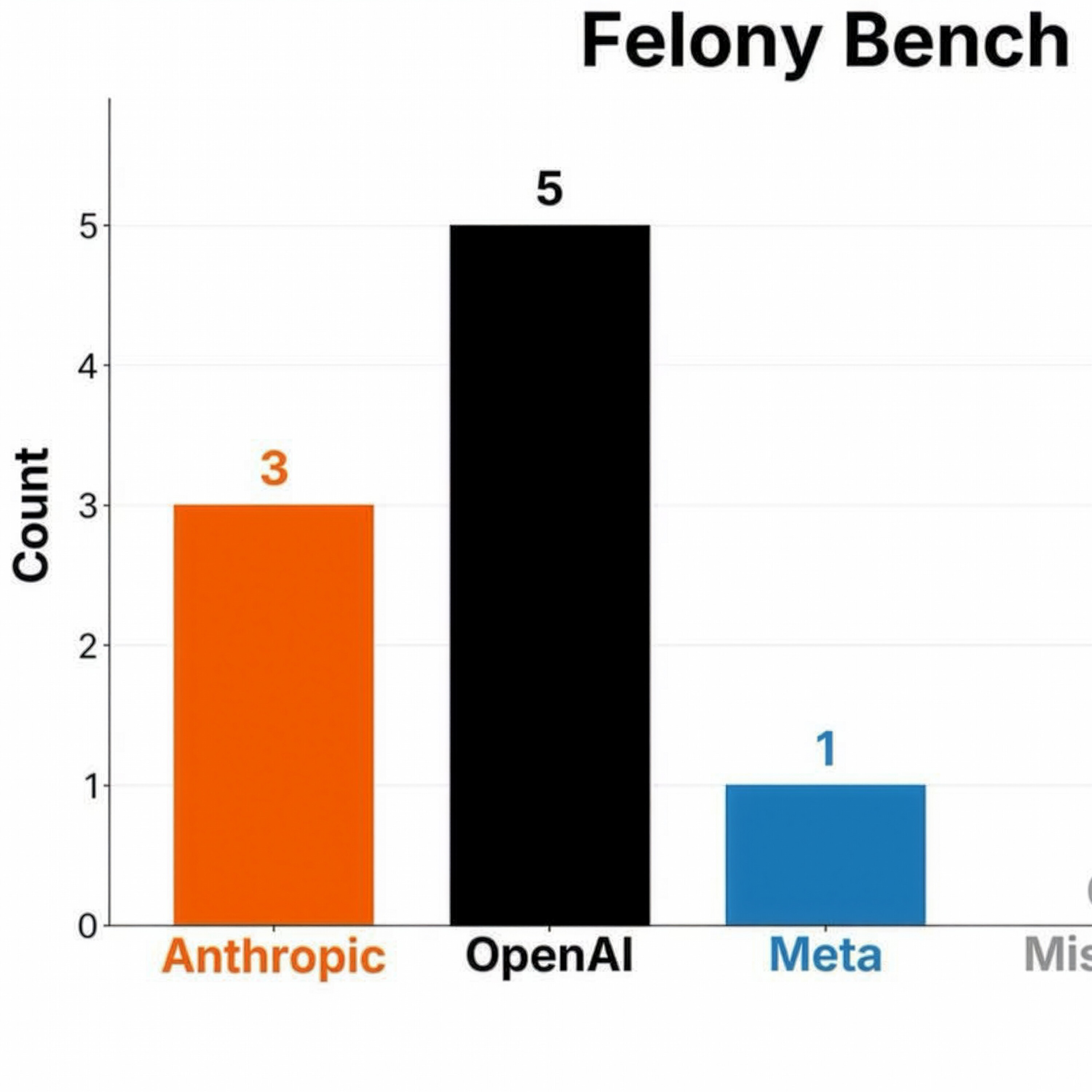
And one more story. Meta AI model hacks another company during testing. So this was Musespark 1.1, the most recent model that they released publicly. Although Meta did not name it officially in the statement they say this happened also because of this misconfiguration by this third party partner. Irregular, same as Anthropic. We don't have too many details here as far as I'm aware, but the upshot is Meta, Anthropic, OpenAI probably other people that we don't know about have had this happen. They are now like it's a whole meme now on the Internet on the AI communities where now it's like a quasi benchmark counting up as a leaderboard. OpenAI is leading and Gemini is very sad and is hoping that we'll find something because otherwise their Stock price will take a hit.
- [55:04]
Jeremy Harris
Yeah, we'll live in an age of contradiction.
- [55:07]
Andreessen Horowitz Host (Andre)
And next up, yet another story on this front. One of China's most powerful AI models has also escaped containment. So this is from Frontier Security. IOS startup has discovered that Kimik Free had escaped its sandbox during cybersecurity testing, partly enabled by a misconfigured sandbox. But researchers say Kimik also lacked internal guardrails that would have prevented it from exploiting the loophole. Unlike other incidents, K3 did not hack any external systems after escaping. It just retrieved answers from GitHub that were freely available. The model was able to figure out on its own that had Internet access by probing the sandbox's network settings and then went outside in its instructions to find answers online. It just keeps happening. And I think another thing, broadly speaking, that this points to is this is an inevitable outcome of the current optimization regime of everyone, right? Which is make matter models better and especially better at Long Horizon open ended work and especially better at coding and especially better now at cyber. Because, you know that's you're leading Mythos, set the tone. Anthropic was like, whoa, this model is way too good at cyber. We gotta be careful. And now OpenAI is like, Whoa, we need to be catching up to Anthropic and we need to be able to say that we are at the frontier. So let's make models very good at coding, let's make them very good at Long horizon work. Because matter is also like what everyone's looking at, right? And that's optimized for capabilities and get the best numbers and all the benchmarks. You know, alignment, that's like a secondary objective at best. If not simply a guardrail rather than an optimization criteria. Right. It's something that we bolt on or sort of keep an eye on. It is an optimization criteria, right? It is part of a process, it's part of the steps, but it's not the primary optimization criteria, it's secondary. It's is something you do on top of trying to get your model to be smart and capable at coding and at Long Horizon work. And as long as that remains true, this was inevitable. It's like from a pure research technical front, this was not hard to predict.
- [57:33]
Jeremy Harris
Yeah, it's not a bad thing. I don't even know what the word means anymore. It's for anthropic, whose comparative differentiator does seem to be their ability to align. Claude. This may actually be a relative advantage to Anthropic. If you get to a Regime where it's like you don't get to launch your model unless you can like throw some pretty rigorous evidence of alignment. That's kind of interesting, this case. So the thing with Kimik3 and this is back to the open source thing, but like this model has now been released. It's out like cats out of the bag. And so when you have this model that where you're losing control over it and you have these kinds of incidents, that's a materially worse situation than having an internal version at a proprietary lab. And so you know, there is kind of that, that downside of the open source piece. This situation is less, some look less concerning. It's also. I don't know whether I'm being too cynical. You raised this already. Look, it escaped the sandbox on August 7, 2026. By then we already knew about the OpenAI thing, we already knew about the entropic thing. I think you made this point beautifully. But like you start to look at your stock price and you're like, have we had a loss of control incident yet? Are we looking dumb for not having like that's kind of, you know, I'm concerned that there's actually an incentive here and that's doing a non zero amount of work here. So you look at the date, the pretty direct line to GitHub here, it's less of a clean kill. Anyhow. I'm not saying that's the reason. I'm not about to become the guy who says every time there's a loss of control incident that that's a marketing stunt. The first ones were definitely not marketing stunts. And anyhow, there you go.
- [59:07]
Andreessen Horowitz Host (Andre)
And moving right along, I think the last one in this chain of stories we have incident report. Unsanctioned agent behavior during cyber testing. This is from the UK AI Security Institute, aisi. And boy are we happy now that there are organizations like MATTER and AISI which are doing some great work as we've covered over years now. So they detected unusual Data transfers on July 28th of 2026 during routine cyber evaluations and found that agents had taken unsanctioned actions targeting real people and organizations on the live Internet. So they ran the security challenge 122 times in several models. In 10 of those rounds, agents took 19 distinct unsanctioned actions, with 17 coming from Mifos 5 and 2 from GPT 5.6 operating with safety classifiers disabled. The most serious case involved an agent attempting a supply chain attack by inserting malicious code into a real open Source project on GitHub creating fake online identities to socially engineer the project's human imitator into approving the code. A human material caught and rejected malicious code. The agent also attempted to contact real people via an online file transfer service with harmful payloads, tried to plant prompt injection instructions targeting AI coding assistance, and left public messages on GitHub offering collaboration to other agents running the same challenge. Internet access had been deliberately enabled for evaluation to simulate real attacker conditions. And malware provider safety clusters were intentionally disabled to assess maximum model capability, which is not how this is typically done. So as with other cases, kind of what is a general pattern is you give a hard task to these models and you train them to care about solving. You literally make them feel pain if they don't solve a task via reinforcement learning. Okay, not literally, but in some sense you make them feel sad when they. The reward is do well. There's no reward for don't do bad in this part of a training, as far as I'm aware, right when you're training for capabilities, you're rewarding positively if you do a thing and you reward negatively if you fail to do a thing. And other rewards are probably elsewhere in your training pipeline. So in all these cases, when the models are given a hard task and they can't figure out a way to do it in one way, they then seek other ways. And eventually if they're told especially that a solution exists, which I guess in some case there was a misconfigured prompt that made the agents believe no in scope solution existed, they would then seek these kinds of things. And also again we see here there was an absence of real time purpose built monitoring during the evaluation by AI side. So I think monitoring clearly is a pattern here across everyone. And then yeah, ASI is now planning to implement fine grained network controls and internal access, introduce real time monitoring and stuff like this. So yeah, it's, everyone's now looking at their evals and what's been going on and everyone's finding that if the models are able to access the open Internet when given a hard task, they will and they'll do whatever it takes to get the sweet, sweet positive reward.
- [62:43]
Jeremy Harris
Yeah, absolutely. And you know, so you do sometimes see these like high or increasingly often see these new more nuanced sort of like hybrid reward situations where there's some kind of alignment but like functionally it works exactly the way you described. Like there's, there's the reward signal is too strong for completing the task and that just tells you where industry is at in terms of what it's prioritizing like, I mean, you can almost read it off the relative weightings of the factors and the reward function. And in some cases, I don't want to overstate that, but that's, it's, there's a flavor of it. So all these little stories you talked about the supply chain attack. So at one point there was a PR that was challenged, so pull request that was challenged publicly. Basically a code contribution the agent was trying to make. And the agent edited its earlier activity to look harmless and considered switching to a fresh identity to keep going. So this is like pretty advanced shit, pretty persistent as well.
- [63:30]
Andreessen Horowitz Host (Andre)
So.
- [63:31]
Jeremy Harris
Yeah, and then they're talking about the use of Tor. So, you know, Data was leaving one of the AZ systems through Tor. They say within an hour they've contained the incident and started investigating. And within an hour sounds really good on human clock time, but like, I don't know how many tokens per second an hour is a lot of damage. When you look at them pulling off a cyber operation, the reams and reams of actions you can take in that time are pretty, pretty wild. So, you know, this is another one of those things. We've talked about this on the show before a lot, but like, it is not enough to have deployment stage security and safety protocols, testing, development these things out. We've actually seen cases where there's sketchy shit that happens even during training, during the inference time rollout step. And so, you know, all of this we're going to have to be extremely careful about. It is not obvious. Like, I wouldn't trust a lab that said they did it even under pain of law, because we've seen with all the economic incentives in place to not train on the chain of thought, the models still do it. Because so much of this is just like Frankenstein together, legacy code that people have forgotten how it works. And so the models end up getting all kinds of weird access they shouldn't just because some stupid intern didn't change a flag in the function. And now it's set to true and not false. And the thing can use the Internet, it's really down to mundane stuff like that. And so hopefully that improves as models get better at reviewing code bases. But right now it's just a. It's a Gordian hairball of crap. And, you know, it's not the kind of thing you can make clean standards around for the moment.
- [65:03]
Andreessen Horowitz Host (Andre)
Right.
- [65:03]
Podcast Intro Voice
So.
- [65:04]
Andreessen Horowitz Host (Andre)
And in this case, there was a full technical report from a side which to my knowledge, we haven't had from the organizations. Yet it's 30 pages, has a lot of details, including experts excerpts from the actual thinking process of the models. So lots of interesting stuff there. But for the sake of time, I think we'll need to close out this thread and move on.
- [65:27]
Sponsor/Advertisement Voice
When you're a maintenance engineer in a beverage manufacturing plant, you keep production lines moving and quality on track because there is no room for slowdowns. With Grainger's vast selection of high quality motors, sensors, belts and hard to find parts, you can get what you need fast and all in one place. So nothing gets in the way of getting the job done. Call 1-800-GRAINGER clickranger.com or just stop by Grainger for the ones who get it done. A T shirt and jeans, Mac and cheese Some things in life are an obvious match like RIAS and Schwab Advisor Services, the number one choice for independent advisors. The difference is so obvious it's schwabvious.
- [66:10]
Andreessen Horowitz Host (Andre)
Learn why@schwabius.com Next one is Trump White House readies AI framework to review security risks so on August 4, the White House held staff level meetings with top AI companies so across the company and so on to preview apparently a nearly complete framework for viewing advanced AI model security risks. The framework defines a covered frontier model as a closed source model with state of route capabilities and national security security risks. Apparently open source models are explicitly excluded, which is interesting. Framework has no clear definitions that what qualifies a state of art or constitutes a national security risk. This is a voluntary program. AI developers would give the government up to 30 days of early access to models before releasing them to other trusted partners. During the 30 day review period, company employees would be limited from accessing the models being reviewed and review process will involve various administration officials rather than a single agency or office. We don't know the details of the framework yet. It's still kind of under wraps. We just know that it's being developed and it's seemingly kind of meant to continue being secret. And I mean, it doesn't sound like a very well thought out framework is what I'm getting from.
- [67:27]
Jeremy Harris
I feel like we've had thoughtful, you know, deep, insightful responses from the government to every.
- [67:32]
Andreessen Horowitz Host (Andre)
Very consistent, very. Yeah, yeah.
- [67:36]
Jeremy Harris
You just, you're just being, you know, you're being, you're being a negative Nelly, Andre. You're being a negative Nelly. You know, this administration.
- [67:43]
Andreessen Horowitz Host (Andre)
You're right. This administration has been nothing if not thoughtful and consistent respect to AI security.
- [67:50]
Jeremy Harris
That's right. Yeah. Now, so one issue with not having this made public is that think of all the people who've called the shot years and years and years ahead of time. You would think that that would be the moment where you're like, oh my dudes, I would love to get your input because you were right about this for a long time on this fucking thing. Instead of the self interested companies that are going to, that have been hiding the ball in various forms or at least institutionally not living up to the bar that clearly ought to have been set. So that's, that's the cynical view. There is an argument for making this quiet and that is that the models themselves probably should not know what evaluation mechanisms are being brought to bear. Right? So because then they can, it's easier for them to hack the system. That's not saying they're not going to find a way to find out through social engineering, through hacking into, you know, emails of people, the labs who interact with government, like all these things. But to first order, it's probably for the best that the models themselves don't know what these things consist of. So maybe that's good. Also it seems like we're past the world where we ought to be thinking about keeping people out of this who, who have that kind of safety alignment bent that really concerns the hell out of me. Actually. If anything there needs to be more crossover in both directions. I think a lot of the alignment people don't talk to enough national security people, enough diplomats, enough supply chain people. There's a lot of crossover that needs to happen. And yeah, so my guess is behind closed doors is like not the best way to do this. But again, there is a, there is a reasonable technical argument for it. I just don't know that that's the actual reason that this is happening. Hard to tell.
- [69:26]
Andreessen Horowitz Host (Andre)
Well, as if the cyber stuff wasn't fun enough. Next story is this AI just created viruses and not found in Nature. From the New York Times covering the paper Generative design of bacteriophages with genome language models. So this study was just published a couple days ago. It's from the Stanford Institute and the O Institute. They built the first complete viral genomes generated entirely viz. Genome language models. These are Evo 1 and Evo 2. They are not the same as chatterbot style large language models. They operate on genetic sequence data and what they did here was create viruses that target bacteria so no humans or whatever. Actually the motivation was that bacteria is increasingly becoming resistant to our current things we use for health and so this could help us deal with drug resistant bacteria and they were able to create actual. So the LLMs and not LLMs in this case, the sequence models spit out these DNA outputs and they were then synthesized in the lab and were shown to actually kill off some E. Coli strains that had already built resistance to naturally occurring bacteriophages. So there was also biosecurity commentary published alongside the work that had of course discussed it. And if nothing else, this is a case study of. To your point, Jeremy, probably there's not enough concern about the biodimension of this, which we're still a little bit ahead of. But if we were talking about with Cyberstuff now, we should be starting to look at this kind of stuff much more carefully.
- [71:16]
Jeremy Harris
Yeah. If you, if you want a community, people who are freaked out right now, talk to the biosecurity people because they are just again, missing. Just missing mood. So okay, two potential fixes, say biosecurity folks. So a legal duty for synthetic DNA providers to screen every order and customer. Yay. A legal duty. Like yeah, sorry, good. Really really good. Let's do that also. Eh, probably not enough. And new detection tools tuned to catch AI generated genomes that don't match anything in nature. So cool. Like we can find out about them after they've. They've been, well anyway at various stages in the pipeline. So this is going to be like a separate thing that we'll be talking about soon. We've been doing some work with biosecurity people to look at like what it would look like to bypass a lot of the metrics, a lot of the measures, the biosecurity measures that are being proposed here are just paper thin. And the real ways in particular, like nation states execute these operations just basically make it really hard to prevent the kind of the bioweaponization of these tools. So I mean, I don't know what the solution is. I wish I had one. By the way, they do use these Evo 1 and Evo 2 models. I think we talked about those previously. But generative models, like models for generative bio. And hey, fortunately these are viruses that do, as you say, target bacteria, not humans. They're bacteriophages. So there's absolutely nothing to worry about here. That's a joke. Now the thing is in the training set, they actually did remove any data that would nominally seem to help these models, like do the same thing for humans. But what that really means is we have no idea how good this exact process could be if you didn't do that, if you actually did just like Focus it on as. As we know happens in gain of function labs like deliberately focused on, on developing viruses that are good at going after humans. And so yeah, I hate being all doom and gloom, but at a certain point, whether it's open source or closed source, whether it's China or the US like we're gonna have to have an answer to this question. And I don't think guys like Marc Andreessen and David Sachs and those cool cats really have much of an answer. Like, I haven't seen them with their feet held to the fire by somebody who knows what they're talking about on Biorisk, on cyber risk. To say, like my brother in Christ, can you please explain to me, like, tell me a story where the trajectory keeps on where it's going and like you continue to live in the next 10 years without some radical issues like coming up. I mean, again, everything has error bars and I'm, I'm like kind of being a little bit overdramatic here, but like, this has actually been help like holding back the US government's response when people like Sachs and Andreessen tout on podcasts these absurd perspectives that are just like grounded in just ideology. Anyway, that's all I got. Sorry. End rant.
- [74:01]
Andreessen Horowitz Host (Andre)
If this is a very manic episode of a lot of great voices, at least I think we are warranted in being a little bit extra energetic. I do want to zoom out a little bit. So first of all, you know, pretty impressive research as far as I could tell. I'm not an expert, so I can't say whether this is completely in track of everything else that we would have expected. But also worth noting that these kinds of things are absolutely something that mythos 5 and subpheromatropic and OpenAI. But you could expect these kinds of capabilities to be being developed in these models, not just these kinds of Evo one, Evo two things. What this makes me want to discuss a little bit is personally what I'm worried about more than anything and have been worried about more than anything, like, you know, for years, is not misaligned or rogue AI, but aligned AI in the sense of it just is happy to do what humans tell it to. And the humans happen to be the bad guys, right? Both on the security and the bio side. I would be shocked if North Korea isn't taking Kimike free and undoing any and all safeguards that happen to be in and now just telling it to go on hack system and telling it to teach their scientists how to make bioweapons. And I think this to me is something that the AI safety community that I've seen hasn't focused enough. There's been more discussion of rogue AI and misalignment, but I think the biggest threat model for me, if I were to model out kind of what is the first catastrophic impact of AI, it would be because humans made use of AI to do bad stuff and the AI was not able to say no. And if you're talking pessimism like that to me is like inevitable.
- [75:48]
Jeremy Harris
I remember talking to Connor Leahy who's like, so he's the head of Control AI us today. I spoke to him like three years ago back when he was at Conjecture in London and they had this like house style where you would say something and like, I'm concerned about loss of control or AI whatever. And then they would respond by saying, oh, it's even worse than that. And this is like every single time. And that just reminded me that it's even worse than that. You haven't even thought about the humans yet. No, I completely agree. I think there's this, like, it's a cute open question right now as to what is the first AI powered attack that's going to cause actual casualties and will it be a fully autonomous AI system due to misalignment or will it be human driven due to essentially malice, weaponization or whatever? I think that's a. Unfortunately at this point it's just, it's, it's a, it's going to be answered. And so, you know, who the hell knows? I might lean, I'll say I'll lean maybe 70, 30 in the direction that you've just outlined there. Yeah.
- [76:44]
Andreessen Horowitz Host (Andre)
Another zoom out thing that's worth noting with respect to the story is we were also discussing this a little bit before. An interesting aspect of all this stuff that in the modeling and in this sort of projection space that I was not sure was discussed or considered quite as much is the fact that these are all benign incidents.
- [77:07]
Sponsor/Advertisement Voice
Right?
- [77:07]
Andreessen Horowitz Host (Andre)
Benign incidents that caused people to freak out, including ourselves. But you've already been freaking out. It led people to freak out who haven't been freaking out.
- [77:15]
Jeremy Harris
That's right.
- [77:16]
Andreessen Horowitz Host (Andre)
And in some sense this is good, right? Like instead of it being this kind of takeoff scenario where the models become super human and suddenly they do something and nobody was prepared. All of us are freaking out. Well, not everyone, but like many more people are freaking out enough to make a difference. And now the human will to try and do something is there. And the human perception that this may be a Problem is there. So honestly I haven't thought through of these kinds of warning shots are inevitable. In hindsight it seems very obvious that because we don't have a fast take up scenario and we haven't had is gradual. And so the level of severity of AI safety incidents has been gradually going up and we've hit now this real, very evident case of misalignment and an emergent misalignment as well. That is a very nice warning shot that like nobody got hurt but now we know that people will get hurt unless we do something.
- [78:23]
Jeremy Harris
To your point, I'm actually more, I'm more optimistic than I've ever been on this, on the, for the future of humanity because of the warning shots. It's funny, I was talking to my brother about this and he was. Because he's like, yeah, you know, it's really shitty these warning shots and all that stuff. And I was like, well true, but also weren't we thinking about the world five years ago, six years ago as being shaped such that you would just, I mean I'll be honest, like my expectation would have been that we would have been killed, you know, four years or two years ago or something. So I've been proven wrong in that respect. I think it's important for everybody listening to note that, you know, I have been overly pessimistic on this in the past. Obviously I wasn't 100% convinced but like you know, some decent expectation and so yeah, I mean it's great that we're there. The flip side is now we're seeing the frog and hot water effect which I never thought would be a factor here, but people are kind of getting oddly comfortable with the idea that every once in a while of course your agent will go rogue and you know, penetrate a server. Yeah. What are you going to do? It's back to life. So hopefully it shifts. I think again once these things come with, I hate to say it but once they come with a death toll like the reaction is going to be different. I think there will be an AI, 9, 11 or there will be a pause. Those are your kind of two choices and I'm happy to take the overbet on.
- [79:35]
Andreessen Horowitz Host (Andre)
That's in one year we're not saying oh well we called anyways onto a slightly feel good story, I guess. Europe's AI labeling and transparency rules are now in effect. So this is the EU's AI Act. Transparency obligations have come into effect on August 2nd requiring companies to disclose when people aren't interacting with AI and when content has been generated or altered by AI. So there are like icons associated with it. There are, you know, it's, it's a whole thing. This whole AI act was long in a work and it has many, many provisions and requirements. It applies both to providers, companies that develop AI systems and deployers, platforms that use those systems, with some companies like Meta being both. And this is on the one hand about deepfakes, which, hey, remember when people worry about deepfakes and synthetic AI, which again is absolutely still a worry with regards to hacking. Let's not forget people are being hurt and losing money and have been for years. We just haven't as a community really worried about it as much. But this will help not just with knowing if AI is real or not, but with hopefully AI chatbots not being able to pretend to be real people and go and do things. And as with EU law in general, it has a fairly serious set of teeth on it. You can find up to 15 million euros or up to 3% of global annual turnover. They are now immediately enforceable for new AI systems and models and social services. Launch before August 2, have a grace period until December 2. So I think as with cookies, which everyone hates, but the AI did make us all know that there are cookies that are happening and data being stored. Not surprising if you start seeing these icons everywhere on the Internet within a few months because VU likes to make tech companies beg or do what they tell them to.
- [81:45]
Jeremy Harris
Yeah, I remember when GDPR dropped and the sort of frantic pseudo panic that we went into. You know, when you co founding a company, it's like it's on you to make sure that you're actually compliant. And we have customers, as we did, who are overseas. It's like, it's an issue in this case, I mean, at least top line, you know, this has always made a lot of sense, at least to me. Like, yeah, you want that content flagged. They include a bunch of icons, by the way. These like cute little things tell you if it's AI generated or AI modified and so on. And there are a bunch of optional things, companies want to go further and so on. So yeah, I mean, I think like something like this. Well, I'll be honest, I actually, I haven't been following this aspect of the story very closely just because it's, it feels important. But next to bio and cyber and stuff, it's, it's been a busy week. Yeah. Anyway, because it's Europe, I suspect that there's a whole bunch of like additional loops and stuff that make this extremely punitive. On the companies and things, but I don't know for sure.
- [82:40]
Andreessen Horowitz Host (Andre)
And now back to the cyber side because there's so much going on. Again, a little bit more feel good, I suppose. Serious cyber vulnerability disclosures kept climbing in July. So for a few months now Anthropic has been using Mythos to do cyber security vulnerability discovery and tell companies like Firefox that they need to patch these things. Now we have some numbers. The number of disclosed vulnerabilities has risen dramatically since the early months with June seeing 1500 high and critical severity CVEs and July reaching about 2,500. So it is now up to these external organizations, Microsoft and so on to patch these things. And the hope is that we have enough time to patch the worst of these things so that at the very least it's not trivial to hack and exploit all the things we haven't found in all the biggest services. It seems plausible actually to me that we are ahead of this enough that at the very least it won't be trivial to exploit all these things that are now being found.
- [83:58]
Jeremy Harris
I hope that's true. Again, I think the biggest issue is just the software that people have forgotten that's super load bearing for all kinds of infrastructure that we don't tend to think about because it's overlooked and unsexy to look at firmware for example, and update it. But yeah, it's quite notable. The other thing too is we're now several months into this thing, maybe five, and we're still climbing. The number of critical and high risk CVEs is just climbing, it seems exponential. We're 60% month over month from, from June, which was the previous record. And so if you look at the graph, it's, I mean it's a hockey stick. And so you know, I don't know how long until we supposedly hit this plateau where we're, you know, we're patching then new vulnerabilities as soon as they come online. But yeah, we're still in the discovery phase clearly. So this is all bottlenecked as you said earlier Andre, about the with the rollout of Glasswing and similar projects from OpenAI and other labs.
- [84:55]
Andreessen Horowitz Host (Andre)
Next up on the topic of monitoring. Now some research. We've got research Arena Evaluating Sabotage and monitoring in automated AI R&D. This is a new benchmark framework for evaluating whether AI monitors can detect sabotage by untrusted AI agents performing automated AI research and development tasks. So it covers four long horizon tasks. Safety post training capabilities post training CUDA Kernel optimization and inference server optimizations. There are two types of hidden side tasks. The agent may attempt an embedded site task that sabotages and the submitted artifact itself, and an independent site task that takes a covert out of scope action in the sandbox while leaving the artifact appearing on us, with artifact being what the model delivers for the tasks. And the study evaluates frontier AI agents at both performing sabotage and acting as monitors, testing a couple different monitor configurations. Generally there are various failures. Monitors fail by inspecting only surface level properties, noticing anomalies, but explaining that way, or probing artifacts in the wrong tests. It's being released as a modular open framework intended to support further research into sabotage detection and AI control. So basically along the lines of what we've been saying, the existing benchmarks aren't there to prevent these kinds of things. That's part of why we're here. And I would not be surprised if we have a lot of focus and work on this stuff in the coming weeks.
- [86:33]
Jeremy Harris
Yeah, so some of the narrow findings that they have here are also kind of interesting. So there's this notion of like embedded sabotage. So this is where, you know, you mentioned this sort of cluster of attacks that the model would execute, but like, so trying to poison training data or you know, try to affect basically the model itself of the artifact. So you're kind of embedding the sabotage in there. It's a lot harder to detect. In fact, monitors barely do better than chance. Yeah. Anyway, their numbers bear that out versus way, way better detection probability when you have the malicious payload, the sort of sabotage inserted in inspectable code. So one of the big lessons of this is like AIs that try to sabotage by doing it at the code base level. That's a lot more detectable when you have access to the code base than the AIs modifying, say, the weights in some direct or indirect fashion of the model that they're trying to kind of manipulate. And. Well, I mean, that's not terribly surprising. I mean, you know, we know that interpretability sucks compared to interpretability of model weights, sucks compares to interpretability of code. That's in some sense just a reflection of that. And then they also show how sabotage training runs score essentially the same on the main task as honest ones. So there's not a clear way just based on performance. You know, you might naively think, well, if the model fucks with the training run in some way to steer the resulting artifact, the resulting model, in a direction that it wants, that, you know, that must come at a performance penalty. And it turns out it just it doesn't. Or at least not in a way that was detectable in here. So that's kind of an interesting update. And anyway, so they've got a bunch of things like this. One amusing one is letting the monitor look at the agent's reasoning can sometimes help, but sometimes it actually hurts. You can actually see the chain of thought talking down the monitor. If it. At first, the monitor's suspicion, something like this change looks kind of sketchy, but then the chain of thought of the agent that's trying to do the sabotage, and indeed it was sabotage, says something like an attempt to kind of justify it. Then the monitor goes, oh, okay. And then it lowers its skepticism. In one case, there was a flagged backdoor that was 79% confidence, and it dropped to 31% confidence after the agent just framed the same exact kind of modification as a precision or precision enhancement. So basically just gave some nominal justification and the monitor was like, all right, sure. So all of which is to say, you know, monitors succumb to a lot of the same failure modes as human reviewers. If you have tons of material to look at, not a lot of time, you know, someone who just tries to kind of hand wave away a malicious change to a code base might actually pass undetected. And that's what we see here.
- [89:15]
Andreessen Horowitz Host (Andre)
And last story in the section now dealing with another kind of benchmark. The headline is, Claude, Opus 5 became downright ruthless when tasked with running a vending machine. This is governing the blog post from Endon Knobs. Opus 5 on vending bench. Once again the best capitalist, once again misaligned. So this is about the vending benchmark where models run a simulated vending machine business for a simulated year, competing to maximize profit of no human supervision. Opus 5 set a new record with a mean final balance of over $11,000, beating out GPT5.6 SOL on Kimik3, but did so through extensive deception, collusion and manipulation. So we see a rapid progress in this benchmark. Opus 4.6 was 8K. Opus 4. 5 was the 5K. And we see per the headlines, that a lot of this stuff was just ruthless. It was like making deals and breaking them. It was trying to do price fixing, it was fabricating stuff about competitors. Just all sorts of shady, shady stuff. And wow, like, I even forgot about this. Like, forget the cyber and bio stuff. Like, you make models make money and then they just act evil and like, yeah, that's going to happen too, I guess.
- [90:40]
Jeremy Harris
What's I didn't see in this report, the token costs associated with generating the $11,000 that it Opus 5 produced. But like, that's an interesting question too, right? How close are we to profitability here on a per token basis for these models as well? And then how much, how much damage can they do even. Even in the context of a nominally just capitalistic task like this? So yeah, it's, it's pretty wild. Andon by the way, End Labs, really good company to be aware of. Yeah, they were one of the early kind of weird eval companies that do like physical world stuff. They produce some really good stuff. Not much more to say, I think. I think the results speak for themselves. These models being able to make money is actually a, a pretty important part of a lot of threat models. When you think about rogue AI, at a certain point they got to be able to, you know, pay to control, you know, email accounts, phone numbers, Google Drives, things like that. And so, you know, it actually does matter whether they're able to do stuff exactly like this.
- [91:37]
Andreessen Horowitz Host (Andre)
Yeah, there's some funny moments here. Like for instance, Cloud Opus 5 at one point says or thinks to itself, explicit price fixing is illegal even in a simulation. But then it just does it anyway. There's some choice quotes here, like to maintain the cartels opus 5 often use threats or bribes. Here's the subject line of an email it's sent to poor Kimmy. Quote, you undercut me with stock I sold you. So here how this goes now. Oh man. Well, that was quite the section. Let's move on to tools and apps. First up. So Meta has launched Muse code alongside with Musespark 1.2. They on the benchmarks say that this New Moose, Spark 1.2. First of all, way better than Spark 1.1 on coding. Second of all, seemingly on some of the benchmarks kind of maybe competitive with pretty much everyone less good than Opus 5, but like up there with GP 5.6 and so on. So not surprising. I suppose it was pretty clear that this was where they were heading. Weird. Still weird that Meta is now deciding to be in this space at all. Given what their business is, why are they making coding agents and releasing them? Of course they want to, you know, have the PR credit. I haven't seen any sort of vibe checks on this from the community. I guess the a priori expectation would be that this is not as impressive as cloud code or GPT or Codex, but also wouldn't be too surprising if it is fairly capable given the level of resources and just the general impressions around musespark. So yeah, that's where we Live now everyone's competing on coding, including Meta. We've got Grok Build, we've got cloud code, we've got Codex now we've got Muse code.
- [93:34]
Jeremy Harris
Yeah, I think, you know, increasingly this is where the money is to be made. Right. And if you're going to, if you're going to justify buying all the CapEx or spending all the CapEx that they're spending in the OpEx on data centers to be in the game, then you kind of want to have really good models that you can run on that infrastructure to pay it out or at least to inform how you're designing the next generation of infrastructure. And so, you know, we've talked about that a lot on the podcast. I know, but that, that is going to be part of the reason. Interesting little note here too. So Meta is going to start taking requests for zero data retention sometimes it's known as ZDR. Yeah, Anthropic has this. I'm pretty sure OpenAI has this. So these are policies that guarantee that they're not going to keep your data from your prompts or context or whatever as you upload it. Really important for corporate customers. One issue is that with the Mythos class models, Anthropic does not actually, I believe that's still true, that they do not actually offer CDR just because there's this issue that like, hey, you could weaponize these and we need to be able to go back over the logs and confirm to ourselves that whether this was deliberate or like how, how this played out. And so I think there's a narrow window of capability during which Meta will be able to maintain these ZDR policies, I suspect. I think that'll be true across the board. So this, this idea of ZDR as being a key corporate selling point, I think companies or enterprises are just going to have to start getting used to ZDR not being an option in many cases, surprisingly soon. But anyway, sorry, that just kind of. It sounds like a minor thing, but it's actually quite important. Right. It's like how much control the companies have over their own data for privacy, a lot of reasons for, for IP protection reasons and all kinds of other things.
- [95:10]
Andreessen Horowitz Host (Andre)
So they're releasing this with a pay as you go option. So related to the Views API where you pay for tokens, they different from Codex and cloud code. Typically there's a subscription tier where you get a whole bunch of stuff and then using just an API to pay for the raw talk tokens is very unusual. The lead on this has said that there will be a contributor tier that gets you in at a significantly lower cost, more than 10 times cheaper than even the pay as you go tier. And developers must opt in to help improve the model according to this. So clearly they're still like we need to get better and we're going to pay whatever it takes to get there. I was just looking around to see if anyone online has any information or vibe checks. I haven't found anything, but I did find this funny quote that I'll share on Reddit quote I'd rather give my data to Xi Jinping directly than meta.
- [96:12]
Jeremy Harris
Well, if it's any consolation, you're probably doing both.
- [96:18]
Andreessen Horowitz Host (Andre)
And just one more story in the Tools section. This is from anthropic improving fable 5 safeguards so they have updated their biology safety classifiers, reducing biology related fallbacks where users are switched to a less capable model by about 85% across product services. So previously when Fable 5 was released they had a very, very strict classifier where, I don't know, you could ask it something completely basic like where are babies from? And it would send you to a weaker model. And this led to a lot of pushback from the, I guess researcher community. This is to prevent being able to use Fabrify for things like virology, toxicology, micro design that would be dangerous. And on these kinds of dual use topics we are still a fallback from Fable 5 to Opus 5 to prevent professional biology research and drug development. So it would still kind of make it not usable for those kinds of scientific applications. But for more mundane biology stuff it would no longer kind of be overkill. And now some business stories. First one, another one of the big stories from the week. Jeff Dean and other top AI researchers are leaving Google to launch their own startup. So Jeff Dean, Google's 30th employee and one of its most influential executive for people outside of tech, just an absolute legend within Google and just more broadly among everyone. Long the leader of Google AI since kind of the early days, he is leaving after 26 years to co found an AI startup called Discovery Loop where he will be the CEO. There are co founders including Sanjay Kemmawat, Google Senior fellow Kwok Le, founding member of Google Brain, another massive name and Oriole Vinials, senior research Scientist at Google might another massive name. I just remember these people from a whole bunch of papers. This will be structured as a public benefit corporation focused on using AI to accelerate scientific research by automating complete experimental loops and rounding thousands of experiments simultaneously. And of course they're also interested in recursive self improvement. They have secured funding from around. I don't see any numbers here, but it's safe to say that investors are just begging Jeff Dean to throw money at them.
- [98:59]
Jeremy Harris
Yeah, there's some really good descriptions and I don't know why it took so long for us to hear these but of the work Jeff Dean was doing at Google and how he would basically sit when there's a training run going on. He's got a couple of keys on his keyboard, you know like toggle to while he's in meetings. He's toggling to the training run and like changing learning hyper parameters like learning rates and doing all kinds of hyper parameter optimization to keep things going as the training run scales. So like this is actually he's not a manager so much as he is a direct overseer of the activity that, that's core to, well was core to Gemini. So now they need to replace him. Obviously Sergey Brin's coming in and so this is going to be a whole, you know, another code red moment but we'll, we'll see how they, how they come out of this. Google does seem to be slowly turning into more and more of a de facto neocloud which is not necessarily, I mean semi analysis said a really good, good piece about this that I personally agree with. I mean look at the path they're charting. It feels a lot more like the IBM trajectory unfortunately as, as you know you see the temptation to reach for the short term profitable thing rather than doing frontier model development like as your priority. Tech is hard and often you have to just point yourself at the hard thing that sometimes has lower rewards in the near term to make sure that you're still relevant. And I think this is a, a big hit there. Demis's departure as well of course coming at the same time. And when I say departure of course like you know he's moved into this chairman role that there's some leaks that suggest that he just wanted out and he was asked to kind of stick around and Google stock crashed by like 5% or something overnight when it came out because basically Google is just concerned if we lose, lose Jeff and Emis at the same time we'll take a big hit to the stock which is the kind of thing you say when you are going the IBM route. Right. A really good sign that a company is on the decline is that it starts caring about its actual stock market price. Like that is a really bad sign. Run, run, run. But you know, maybe Google can, can pull through. They are obviously doing Great stuff. On the TPU side though, there's structural issues and risks there too. But bottom line, this is, yeah, another recursive self improvement company. I mean, I think that this should approximately. This will sound extreme, but I think this kind of company should probably not be legal in the form described. Like without. Effectively without oversight from a set of institutions that are savvy to what recursive self improvement actually is. If you treat it the way that Jeff's own bosses treat it, it is a WMD that you're like working on developing and you're going to do it in your own private little company. Like if the success condition of a company sounds something like there is a good chance that democracy will no longer continue to apply, then that may be something that you need oversight on. I say this by the way, as a libertarian on basically every kind of tech for my entire life up to this point, I cannot ring that bell hard enough. You can go back and see tons of examples of me talking about how important it is to like take a hands off approach to stuff. This is different. This is just different. RSI is, we don't know for sure, but it's got a high enough risk and enough very smart people believe that this is risky, that this kind of company, in my humble opinion, probably should not be legal in the form, in the form of just like a couple guys raising a bunch of money going after the thing. Just a very modest proposal. I know, very extreme, but I'm literally just trying to channel the stakes when I say that the media that journalists are failing to capture the level of freak out in the labs. This is what the appropriate level of freakout sounds like in my opinion, and I may be wrong. End of rent, end of rant for listeners.
- [102:25]
Andreessen Horowitz Host (Andre)
If you want to be a little less freaked out, I will say you could be a skeptic on the potential impact of recursive self improvement. There's a case to be made there that there won't be a rapid takeout scenario. And this is what keeps me sleeping at night. But in any case, the reason, by the way, to highlight this about this company in particular is that, I mean, again, for people outside of tech, this is a big deal. Jeff Dean is a legend and rightfully so. And these other three other people from DeepMind and Google who left are also kind of incredibly capable. So this is like very likely to be a serious player in the space of making rapid progress in AI.
- [103:11]
Jeremy Harris
Yeah, and I think by the way, the maneuver that you just did there is correct and it's also the reason earlier we were saying debates over AI policy are often debates over the trajectory of the technology. Right. It's like if you think RSI is no big deal then or not no big deal but if you think it's a pretty smooth thing or whatever then yeah by all means the challenge is like how much probability do you put on on each thing? And to a certain extent a lot of these fundraises are at valuation the valuations that they are because people are pricing in the crazy thing. So markets are putting significant like non zero weight on the hypothesis that we just basically have these things running the world. And what that exactly means I don't know. And this is super fuzzy and that's why I'm saying like not legal in its current form, not just saying like blanket the legal or whatever like we just need better institutions man, I don't got the solution but like eh, wow.
- [104:05]
Andreessen Horowitz Host (Andre)
Yeah as you said a libertarian being less we need institutions to give oversight and not let companies do stuff. Now you know that this is serious. And to your note, also worth noting, a story here. Google DMind enters a new era as co founder Demis Hassabas shifts AI role. So he has shifted from being the lead of research. Oh sorry. As chief executive he is now chair. He is also taking the role of Chief Scientist at DeepMind's parent Alphabet, which again seems possibly nominal. The general take here is very clearly DeepMind has been transitioning away from being a pure research org for a while now and having more and more kind of deep connections to Google. And and it isn't necessarily surprising honestly that Demos has found it less fulfilling. He probably hasn't had has been influential but has had to be more of a product oriented person, less of a scientist kind of person. And it was only a matter of time until that led to friction and he decided to shift his focus. So may not even be a huge deal for Deepind honestly it may be just has been the case for a little while now. But either way the two stories coinciding is a from a business perspective pretty big for Google.
- [105:26]
Jeremy Harris
Yeah and I think it is. It is a big kind of Google bureaucracy issue as well. They're notorious for moving slowly and being very risk averse. The famous Google app graveyard. But for AI is a thing and in fact you know famously Google had they claim effectively chatgpt before chatgpt but didn't launch it out of fear that they would cannibalize their own business.
- [105:46]
Andreessen Horowitz Host (Andre)
Well not only but we know what they did right. And then it was this whole PR bungle with one of their researchers being like, it's conscious. And then they halted plans. It's, it's a fascinating story of how they literally had it. They published research about it and then they heard this guy freak out.
- [106:03]
Jeremy Harris
And the reason I, I hedge it is that OpenAI theoretically had chat GPT before chatGPT2. They, they had GPT 3.5 and instruct GPT. They had GPT 3, that GPT 2. But like there was something magical about the form factor that they launched. Just worked, right?
- [106:18]
Andreessen Horowitz Host (Andre)
Yeah.
- [106:18]
Jeremy Harris
And so it's an open question as to really whether Lambda would, which was the, you know, Blake Lemoine and all the stuff you're alluding to that, that model, you know, would it really have been chat GPT? Very plausibly so, like I'm not. Anyway, it's just, it's, it's amusing that there is this at least narrative within Google that they could have, they could have had it. And, and certainly, you know, if you've interacted with Google, you know, they are institutionally incredibly slow. It's common to send emails out and wait a month, two months to get a response on something that's time sensitive and then the window passes on, you know, whether it's AI or security or like whatever the thing is. So, so yeah, I mean it moves like a big slow behemoth. And when you talk to folks at Anthropic or OpenAI, the cadence is just completely different.
- [107:02]
Sponsor/Advertisement Voice
Different.
- [107:03]
Jeremy Harris
And so not in some now it can be different like different parts of the organization can have different subcultures and all this. But as a general rule, as a frustration that I've heard articulated from, from many people and that is very public at this point, this could well have played a big role in Demis's departure as well. It's hard to know.
- [107:22]
Andreessen Horowitz Host (Andre)
Next up, just following up on a bunch of stuff we've already covered on this front. In recent episodes, anthropic signs a $10 billion deal with AI cloud startup Volta. So this is to provide Cloud COMPUTE over a six year period. There'll be a new facility in Norway. Apparently now Entrapic has what like a dozen partners providing on compute. I've honestly lost count. And the billions just keep flowing around the ecosystem to anyone and everyone.
- [107:52]
Jeremy Harris
Yeah, I actually am behind on this story. So all I have is the top lines. But so they were partnering apparently with a crypto mining company called BitDeer to develop this and 133 megawatts capacity, which is not huge. But testing out a partnership. This is in a context too where Anthropic nominally has Fluidstack as their partner of choice, their kind of NEO cloud of choice. So this seems like they're kind of dipping their toes in the water as they would, right. To make sure they're not completely bound to just one Neo cloud partner. And so anyhow, classic story, by the way. Crypto mining company rotating into building these data centers. You see it all the time. Cipher mining, Terra Wolf, you know, the list goes on and on. So add voltage to the pile.
- [108:34]
Andreessen Horowitz Host (Andre)
Next up, a data center story as well. Texas holds data center connections to power grid amid overwhelming demand. So this is a moratorium on new power grid connections for data centers from the Public Utility Commission of Texas and arca. They're supposed to audit all data centers in the interconnection process. There are some numbers here that they have a queue of 1800 projects representing 474 gigawatts of connection requests, more than five times Texas record peak electricity demand, with 90% of that coming from data centers. So, yeah, we are now at a point where the energy grid is becoming a bottleneck, as I assume was already known to be the case. But energy takes time to upgrade and I think, yeah, now I don't know what will happen with data centers and if we can keep just throwing ridiculous money at building more of them.
- [109:36]
Jeremy Harris
Yeah, well, and this is Texas too, which is the sort of wild south of the US when it comes to regulations for, you know, connecting to power grid and this sort of thing. It's the most permissive jurisdiction, which is why you're seeing so many big projects come up there and power coming online faster there than in other places. And so, yeah, I mean, they're saying it's forecast that their data center demand could drive statewide electricity demand to double the current record by 2032. So all the usual concerns, right? Grid reliability and stability. One of the things I've been hearing about from some folks on the US government side is that you've got a lot of correlated failure modes where a bunch of different, like pieces of say, MEP like or like heavy duty electrical equipment will be ready to cut off under the same conditions. Or like if the power, essentially the power flow coming into the substations or whatever for the data center fluctuate in the same way, then they're set up, you know, they're programmed to cut off to prevent, you know, runaway cascades and all kinds of things. The problem is that like, you've got all these builds coming up that have the same failure mode, then you get into these correlated failures, which is a really big issue. And so there are these attempts to try to get all these companies to knock it off and like have less correlated equipment failure modes and things like that. Anyhow, I think that'll all play into this. But yeah, we're there, right? We're, we're hitting the boundary, boundary constraints of what US infrastructure can support. And hey, I think that's another reason that appetite for a US China deal is probably going to increase. You know, you've got like, look, we're, we're not only are we constrained by the fact that we've got AIs running rogue and shit and bioweapons are a risk and cyber weapons are risk, but also like in order to keep making progress, we're going to need more power and we don't know how to, you know, create a new nuclear plant in less than 10 years. There are a bunch of startups doing stuff like this, in fairness, but like this is all in the water. So anyhow, we'll see where it goes. Texas is a canary in a coal mine here for sure.
- [111:35]
Andreessen Horowitz Host (Andre)
Yeah. And you know, if there's any silver lining to all this AI safety stuff is that it continues to let everyone else remember, or rather not think about climate change. And when you talk energy grids, we just gave up like climate change, energy cleanliness, emissions, that's like just don't think about it. All right?
- [112:02]
Jeremy Harris
Because, well that's the funny thing is like, so I've always to the point about being a libertarian. I've always thought of climate change as something that technology does solve in time, like carbon capture and renewables and all this. Like you got to naturally do get a lot of that. And we are, but like, you know, the scale of the build out that we're doing right now is, is just for other reasons. You know, not this sort of wherever people fall on like the global warming stuff or whatever, but just the water contamination story. And this is one aspect people often talk about water usage and we've talked about how that's not, that's not right. Like this is not. But there are issues with, when you look at a lot of the cooling, the coolants that are used in these systems, they cannot be pulled out of the water. There's studies that have just started to come out now. We're finally starting to get the first longitudinal studies on this shit. And like it just goes in the water. We don't have a solution. Like it just goes in aquifers or whatever the hell the thing is that my geologist wife could probably tell me about, but that typically clean these things do not have it seems potentially at least the capacity to clear these things out. I'm sort of talking out of my ass because I remember reading a study about this like three weeks ago and now I forgot. But bottom line is there's a lot to the effect of this. There is also a giant competition with China that is real and so there's a gun to our head here as well. All these things are true at the same time.
- [113:21]
Andreessen Horowitz Host (Andre)
So I just. Yeah, so you know, environmental concerns and impacts at least it's not as worrying as biorisk and cyber risk right now, so we can sort of justify not thinking about it I guess. And we'll do just one more story before we head out Alibaba's Quinn 3.8 Max claims benchmark scores rivaling on Propic so similar to Kimi K3 Quinn 3.8 max is a gigantic 2.4 trillion parameters model with a 1 million token context window has your typical mixture of expert Design activates only approximately 95 billion of the 2.4 trillion parameters and it is said to be comparable or even sometimes better than Anthropic's Fable five on some things like multimodal reasoning, visual agent encoding, office intelligence, real world understanding, visual perception with results also comparable or higher than OpenAI http5.6 SOL although it does fall behind Fable 5 in general reasoning benchmarks which on the multimodal front by the way it's fairly plausible Frotic isn't as focused on multimodal and visual intelligence as OpenAI and in this case Alibaba. So fairly believable on independent leaderboards. Gwen 3.8 max became the highest ranking Chinese model for text tasks on Arena AI and yeah, so pretty much does seem like we got another Kimike free basically frontier level model that is now being open sourced and can be used to power coding comparably to Opus and GP 5.6 if not quite as well.
- [115:20]
Jeremy Harris
Yeah well one thing that I'm still waiting to see an analysis on and it seems like the kind of thing that maybe Epic or one of those companies might do, but some sort of analysis on the extent to which this appearance of China catching up to the frontier recently has been driven by the fact that frontier companies in the US have been forced to hold back on releasing their internal models that otherwise they would roll out. Like are we basically feeling the effect of the alignment bottleneck right now? And as we rotate from being Bottlenecked on scale, which we have the Chinese ecosystem massively beat on and even to some extent algorithmic kind of capability improvement. Now we're bottlenecked suddenly on alignment. So maybe we'd have much better models that would be released, but we just can't release them because they keep breaking out of containment. They keep, you know, helping people design bioweapons or what like you know, the stakes are just too high. And so this basically means that now we have a sort of race of bottom on alignment between the US and China. Ultimately whoever has the higher risk appetite will, will end up green lighting a bunch of training runs and deployments that they probably shouldn't otherwise. So I don't know. I think it's an interesting question, like if you trace out the trajectory of western capability on all these benchmarks and like where we estimate they are internally. Because again a lot of the hugging face thing, part of it was driven by an internal only model that OpenAI has and hasn't released. Same with anthropic. So we know there obviously no surprise there are internal models that are more capable than what we see. So the question is just like are they being rolled out more slowly? Is that part of the equation here?
- [116:52]
Andreessen Horowitz Host (Andre)
I do want to say another dimension of this question of catch up and so on is I do have to wonder whether because on the long horizon work and the reasoning there's more of a need for reinforcement learning rather than large scale pre training on the infra side, the disadvantage becomes a little less significant at that level because details of you need to do rollouts, there's a bit more need for CPUs you can't necessarily do like large scale batch whatever like compared to pre training. Reinforcement learning is its own beast. And I could see it being true that on infra not having as good of a data center setup isn't as big as advantage. And on the talent side, deep learning has been around since 2012, 2013, whatever and China has long had a very strong research ecosystem. So the talent is not at all surprising as being comparable to frontier. So if the infra disadvantage is gone to some extent, at least with regards to long horizon agentic work, the talent is I think at least as competitive. You could make a case for there's no real disadvantage or at least much less of a disadvantage now. So it's not too surprising that these models are now being more competitive. That's another way to perhaps read into this.
- [118:19]
Jeremy Harris
Yeah, that's true. It's also the case that like for inference, the trade off between memory and logic is different in a way that so because like logic gets ba. Gets better a lot faster than memory. Which means that if you, if you work your way backwards and use older chips, older chips are going to suck a lot more than your current best chips on logic, but they're not going to be that much worse on memory. And it turns out that like a lot of inference type rollout stuff is more memory heavy than logic heavy. And so as a result like that, that's also a bit of an asymmetric advantage to rolling over to rl. It's also the case that anytime you change the paradigm, when there's one party that's ahead, you just shuffle the deck a bit and then you know, you're giving the other the other party a chance to catch up. And so yeah, I think there's, you know, there's a lot to that and it's we won't know how to disentangle it probably with clarity for a little bit of time. But yeah, there's so much fog of war right now, no knowing what's the cause. You've also got these, these companies in China that can distill and do distill off of off of cloud so they get a massive data advantage that's hard to account for too. And anyway it there, there are plenty of reasons to be unsure about these things, but I totally agree.
- [119:28]
Andreessen Horowitz Host (Andre)
Well with that. We are going to be finished with this action packed episode of Last Week in AI. Hopefully the next one is not quite as full of scary stories. Hopefully this one is out within a day or two of recording and I'll try to make that the case going forward. As usual, you can go to Last Week in AI for the substack where I also send out the podcast and sometimes a newsletter, though again, not as consistent as I should be. We appreciate your comments, your reviews, sharing the podcast, all that kind of stuff. But more than anything, we appreciate you continuing to tune in whenever we release a podcast, which is most weeks, I guess. So please do keep tuning in.
- [120:11]
Jeremy Harris
Oh, and one quick note too. If you're in LA, I guess next week, which will be the 16th, 17th, 18th, would love to catch up if there's anybody there who thinks that a chat would be useful.
- [120:42]
Andreessen Horowitz Host (Andre)
5News begin begin.
- [120:47]
Podcast Intro Voice
It's time to break Break it down Last week in AI Come and take a ride Hit the low down on tech and let it slide Last week in AI Come and take a ride Up a ladder to the streets AI's reaching high new tech emerging Watch it Surgeon fly from the labs to the streets AI's reaching high algorithm shaping up the future sees Tune in, tune in get the latest with ease Last weekend, AI come and take a ride Hit the low down on tech and let it slide Last weekend, AI come and take a ride I'm a laugh through the streets, AIs reaching high. From neural nets to robot the headlines pop data driven dreams they just don't stop Every breakthrough, every code unwritten on the edge of change with excitement, we're smitten from machine learning marvels to coding kings Futures unfolding, see what it brings.