← Laugh Lines with Kim & Penn Holderness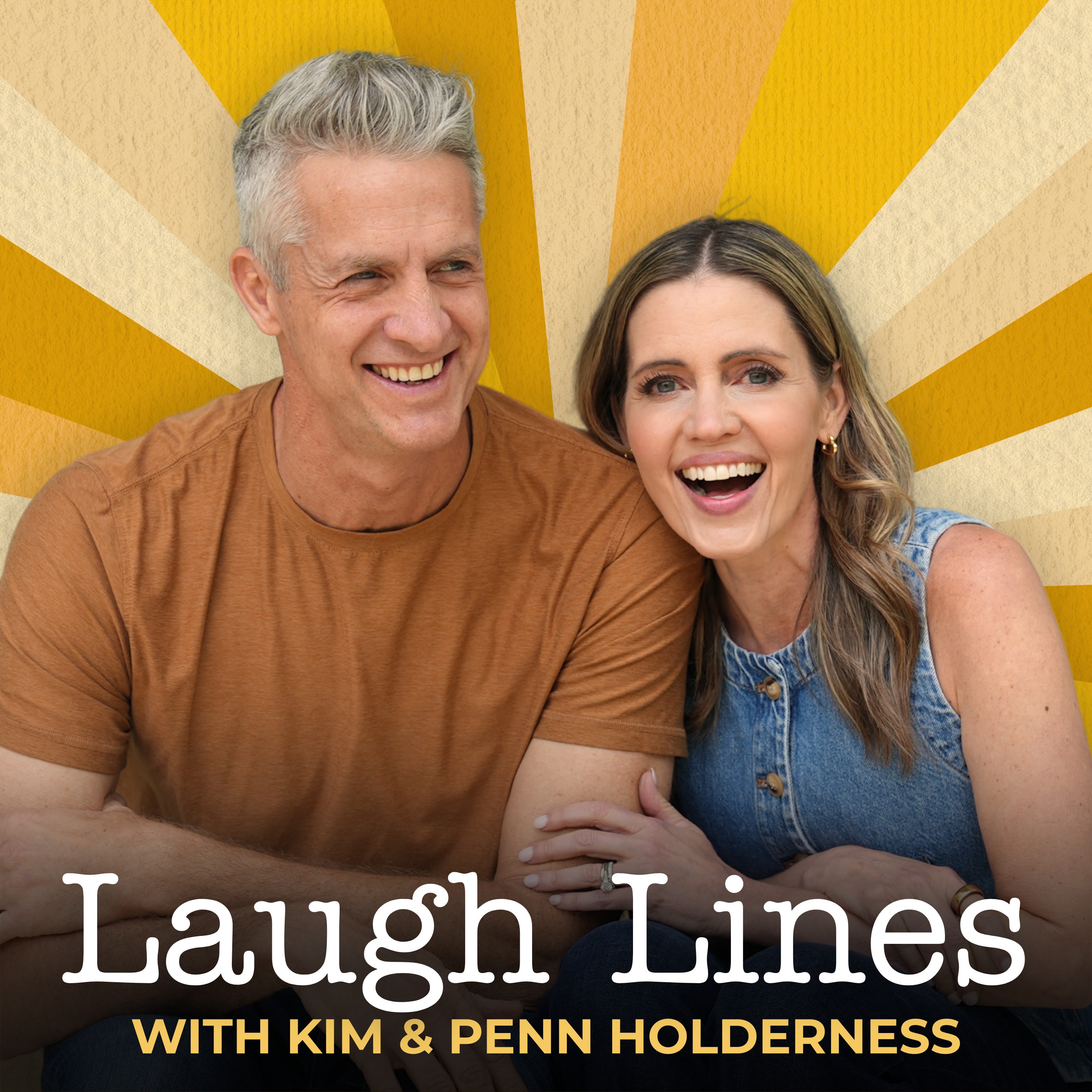
Laugh Lines with Kim & Penn Holderness
The Truth About Longevity with Dr. Eric Topol
01:02:53
We may have been wrong about protein & weighted vests.
Loading summary
Transcript371 lines
- [00:00]
A
Hey, it's Marc Maron from WTF here to let you know that this podcast is brought to you by Progressive Insurance. And I'm sure the reason you're listening to this podcast right now is because you chose it well.
- [00:11]
B
Choose progressives.
- [00:12]
A
Name your price tool and you could find insurance options that fit your budget. So you can pick the best one for your situation. Who doesn't like choice? Try it@progressive.com and now some legal info broke progressive casualty insurance company and affiliates price and coverage match limited by state law. Not available in all states.
- [00:36]
C
This show is sponsored by MIDI Health.
- [00:39]
B
Are you in midlife? Feeling dismissed, unheard, or just plain tired of the old healthcare system? Well, ladies, I'm here to tell you you're not alone.
- [00:49]
C
It's. It's super. It's wonderful when you do the creepy movie trailer voice.
- [00:53]
B
It's my serious announcer voice to talk about how, you know, for. For women's serious midlife health issues have been trivialized, ignored and met with. Just deal with it as an attitude, okay?
- [01:06]
C
I know you're being silly, but stats don't lie. In fact, even today 75% of women seeking care for perimenopause and menopause issues are left entirely untreated.
- [01:16]
B
That sure is a lot of women not being heard.
- [01:18]
C
But here's the powerful truth. It's time for change. It's time for midi. MIDI is not just a healthcare provider. It's a women's telehealth clinic founded and supported by world class leaders in women's health.
- [01:30]
B
What sets MIDI apart is that they are the only women's telehealth brand covered by major insurance companies. Making high quality expert care accessible and affordable for all women everywhere.
- [01:41]
C
MIDI clinicians provide one on one face to face consultations where they truly listen to your unique needs.
- [01:47]
B
And MIDI offers a full range of holistic data driven solutions from hormonal therapies and weight loss protocols to lifestyle coaching and preventative health guidance.
- [01:56]
C
This isn't one size fits all care. This is care uniquely tailored for you.
- [02:01]
B
All right ladies, ready to feel your best and write your second act script?
- [02:06]
C
Okay.
- [02:07]
B
Visit join Midi.com today to book your personalized insurance covered virtual Visit.
- [02:13]
C
That's join MIDI.com MIDI the Care Women deserve.
- [02:17]
B
Okay. Hello there mom and dad. Or mom and mom or dad and dad or parents. Are you about to spend five hours in the car with your beloved kids this holiday season driving to old granny's house?
- [02:29]
C
Let us set the scene. I'm picturing screaming, fighting back to back hours of K Pop Demon Hunter soundtrack on repeat.
- [02:36]
B
I mean, that movie does have some bangers, but anyway, when your ears start to bleed, we have the perfect thing to keep you from rolling out of that moving vehicle. Something for the whole family.
- [02:43]
C
He's filled with laughs. He's filled with rage. The OG green. Give it up for the Grinch, voiced by SNL's James Austin Johnson in Tis the Grinch Holiday Podcast.
- [02:57]
B
And like any insufferable influencer these days, he's bringing his crew of of lesser talented friends along for the ride. With a listers like Gronk, Mark Hamill and the Jonas Brothers, there's a little bit of something for everyone.
- [03:08]
C
Listen to Tis the Grinch Holiday Podcast wherever you get your podcasts.
- [03:13]
A
Oh, gosh. Yeah. This is ridiculous. This is totally ridiculous.
- [03:18]
B
So you're not talking about a landline, you're talking about a bat phone.
- [03:22]
C
I will say it is the first time we have left a discussion with a doctor when we've talked about Alzheimer's with smiles on our faces that I feel hopeful.
- [03:30]
B
Yeah, we get older every day. Got more wrinkles.
- [03:33]
C
That's okay.
- [03:34]
B
Yeah, we're laughing. When we age, life is like a comedy stage. And that's why we got laugh lines.
- [03:46]
C
Hey, everybody, I'm Kim Holderness.
- [03:47]
B
And I'm Penn Holderness. We are so thrilled that you are joining us for this episode of Laugh Lines.
- [03:53]
C
This one is going to be so good. Right? We'll let you know that if you know who Max Headroom is. Welcome to the show. We are your people.
- [04:01]
B
Yeah.
- [04:02]
C
We have also received many notes recently that your haircut pen holderness looks like Max Hedrom. Yeah. Yeah. So I think we should. You know, Sam, her favorite thing to do, our producer is to do more editing.
- [04:16]
B
So a superimposition with him next to me. Like a split screen.
- [04:19]
C
Yeah. So if you're watching on YouTube, do you know who Max Hedrom is? No. Okay. She is saying no. So if you know, it's like our little secret.
- [04:26]
B
He was the first like, AI, a robotic human being on mtv. And he had glitches when he talked. And I'm pretty sure he was part of a massive campaign for either Coke or Pepsi.
- [04:37]
C
And he's like our first AI personality.
- [04:41]
B
Yeah, he was. He. And he was very boxy suit, if I remember correctly.
- [04:47]
C
He really just. Just really rocked our generation.
- [04:51]
A
Yeah.
- [04:51]
B
I thought you were gonna say like, really handsome or something to try to make me feel better, but.
- [04:54]
C
Oh, no. Yeah, handsome.
- [04:55]
B
Can I also say something?
- [04:57]
C
Yes.
- [04:57]
B
Like, here's how. Here's how you know that you're our. If you're old enough that you find a sweater that you really like it and you wear it for three straight weeks without realizing it for a podcast. We're your people too.
- [05:08]
C
Oh, my gosh.
- [05:09]
B
This is the third straight week. I really do like this sweater.
- [05:12]
C
But I'm not wearing this for the third week.
- [05:13]
B
It's not like I'm just wearing it every day. I just like this sweater.
- [05:18]
C
So I have to say, I am one for a uniform. I'm trying to change that up a little bit. We are very excited about this podcast. We're, we've left the conversation very hopeful, but we do have some housekeeping. Um, we'd love to, to hear from you. And what do you want us to talk about here in the laugh line? So we love hearing from you because it's a comedy and B, therapy. So you can email us at podcast the holdernessfamily.com or leave us a voicemail on our answering machine. 323-364-3929. Our answering machine. Remember an answering machine. I have to say, though, but I.
- [05:52]
B
Love when people call in because we like getting, just getting a text from you, it's one thing, but then hearing you and all of your wonderful idiosyncrasies and imperfections and, you know, like, you can take as much time as you want to. I really like, I love that we're bringing back voicemails.
- [06:08]
C
I will also say this. Speaking of bringing back, I read an actual article, but it was a, I think it was like a Today showpiece. I didn't see this on TikTok where families are buying their tweens instead of giving them cell phones. Landlines. Like old fashioned landlines.
- [06:25]
B
I love this.
- [06:25]
C
I know. So they, they can stay in touch because they were like, how do we do this? How do we give them a phone where they stay in touch? But there's no social media and it's really just at home.
- [06:35]
B
Landline.
- [06:35]
C
A landline.
- [06:36]
B
Yeah.
- [06:37]
C
So I, I, I would love a landline.
- [06:40]
B
True. I would not trade it for what we have now because I, I can't tell you how amazing it is to have a daughter who will, like, FaceTime. You from college.
- [06:47]
C
Yes. So here's my issue, though.
- [06:49]
B
Yeah.
- [06:49]
C
Okay. I feel like, and parents who have kids in college. I feel like I carry my cell phone around. Like, she called us while we were recording this interview and of course we stopped. I know, I didn't. No, we didn't stop the interview. She did call us, but we didn't stop the interview. But the whole time I was like, oh, my God, my baby's calling. You know, if we had a landline, she could call and I would know that's an emergency, but she was probably just calling us on her way to class. So I feel like I could put the phone down a little bit.
- [07:17]
B
I get it. So you're not talking about a landline. You're talking about a bat phone. That's the term for, like, the special. And when it rings, you know that you have to pick it up. Remember the bat. Like, the bat phone you always answered.
- [07:31]
C
Okay, but this number would only go to certain people, and if you called it, you have to answer anyway. That is. We just got off on a tangent there. Also, previously, I'd asked for a lot of sleep tips because I am at my wit's end about sleeping.
- [07:49]
B
And we're going to talk about that in this.
- [07:51]
C
And we're going to talk about this in this podcast as well. We got a lot of tips from you, and I'm going to kick off this podcast by heading to the laugh line.
- [08:01]
A
Fine.
- [08:04]
B
Tell us what's on your mind.
- [08:06]
C
This is a voicemail from Katie.
- [08:09]
B
Hi, Katie.
- [08:09]
C
Hi, my name's Katie and I'm from California. And, Kim, this is in response to your question of what has helped with insomnia due to perimenopause. And the thing that worked was I went to a sleep therapist. Yes. I was desperate. And he said something that changed everything. He said, if you don't sleep in the morning, don't talk about it, stop talking about it, stop thinking about it, go about your day as if you did sleep, and tell your family and friends to stop asking you every single day, did you sleep? Because my kids were asking me. My husband was asking me, my sister and my mom were calling me every morning to find out if I slept. And it was perpetuating the anxiety that comes with not sleeping. And I think that really, really helped me. I love that.
- [09:01]
B
Do you find yourself. I mean, you do talk about it.
- [09:03]
C
I obsess over it. Yeah, I. And our son is so sweet, and he's so empathetic. He will ask me. He'll ask you, like, did you sleep? Okay, so you are going to Hear me ask Dr. Eric Topol about my sleep, but that's the last time you're gonna hear from me about that. But somebody named Megasaurus sent a really funny suggestion. Okay, Kim, if you can't sleep, bring a pillow with you and lay down on your kitchen floor like Taylor Tomlinson So that's a comedian. Taylor Tomlinson. She has a bit that if you can't sleep, go on your lay on your kitchen floor for 10 minutes and then go back to bed to sleep. And it's weird, but Taylor says it works.
- [09:40]
B
All right, so that's maybe it works because it's so uncomfortable on the kitchen floor that once you get back to your bed, there's a sense of relief and ease that like, puts you to, puts you to bed.
- [09:50]
C
I am going to try all of these things and if it does work, I'm not going to tell you about it.
- [09:56]
B
Something that you'll learn is that Kim will, will try anything. And that's one of her greatest traits, is her sense of adventure. Okay, this is perfect segue because we are going to talk about sleep and a lot of other things with one of our new favorite people favorite. We like to call him our new dad.
- [10:10]
C
His name.
- [10:11]
B
His name is Dr. Eric Topol. I want to tell just really quickly before we give you his incredibly impressive bio, how we met him. Right. So Kim and I were at a very cool sort of summit, like a thought summit, a few weeks ago, and they had these breakout rooms and you could pick which room to go into. And for the two of us, we were interested in two very similar sounding things. One of them was called Longevity. The other one was called the year 2075. They're both about the future, right, and what's going to happen. But Kim, of course, is fascinated with longevity, with longevity. She has plenty of wellness theories and thoughts and she's gone down several extensive rabbit holes and even, and even used her purchasing power to follow that up. When it comes to longevity, I obviously care about it. With my Alzheimer's family background, I felt like, you know, but, but I felt like I'd heard enough about that. So I went to the year 2075 because I wanted to know if I was going to take over the world. So this just goes to show, like, if we have to choose between like alien invasions and AI or taking care of yourself, that's the way we're gonna go. Right? So I'm in this room. It's fascinating, but my phone will not stop dinging. It was me while I'm in there. And Kim is like, this guy's amazing. This guy's my new favorite.
- [11:28]
C
Get over here right now.
- [11:28]
B
Get over here right now. Leave right now. I'm putting you on a glp. That one. I was like, what?
- [11:35]
C
I'm like, you're going on a GLP1 right now. Come over here right now. And so he like sneaks into the back of the room. And this discussion was led by Dr. Eric Topol. His newest book is called Superagers. Let's give his full bio so you realize what a rock star he is.
- [11:50]
B
He's earned it.
- [11:51]
C
Dr. Eric Topol is a world renowned cardiologist, scientist and New York Times bestselling author whose work is changing how we understand health, aging and the power of technology to make care more human.
- [12:05]
B
Dr. Topol is the founder and director of the Scripps Research Translational Institute where he leads groundbreaking research in genetics, digital health and artificial intelligence. Time magazine named him one of the most influential people in health care. And his insights have been featured on the New York Times, the Atlantic, The Washington Post, 60 Minutes, and TED Talks.
- [12:25]
C
Dr. Topol has authored several acclaimed books including Deep Medicine and most recently Super Agers An Evidence Based Approach to Longevity where he explores how innovation can help us live longer, healthier and more connected lives. And he's not just studying the future of medicine, he's helping create it. He's amazing. Please welcome Dr. Eric Topol.
- [12:45]
A
Well, great to be with you, Kim and Penn. This is, this is going to be fun.
- [12:49]
B
Your smiling face is impressive, especially knowing that you were in Munich, Germany last night.
- [12:55]
A
Like not too long ago I got back from there. A long flight from Munich to San Diego, the only way you can go non stop to Europe. So, yeah, I just got back last night and I was so pleased that we have the chance to get together.
- [13:08]
C
Oh, I just. You guys, this man is like sunshine and unicorns and rainbows. And one of the things I love most about Dr. Eric Topol is he shoots it straight.
- [13:18]
B
That's right.
- [13:18]
C
He is going to tell us very researched answers to our very many questions. Your most recent book, Superagers, I just finished it. I loved it. Like, bottom line for us are there things we talk a lot about how aging is awesome and there's so many benefits with aging. You know, what's the biggest thing you've discovered that does get better as we age?
- [13:38]
A
Yeah. So I think we have to accept that aging is inevitable, but we don't have to accept that you can't stay healthy most of your life and even extend your health span. And so there are several ways in general, we know how to do that, but certainly our functionality with respect to physical activity, we can do all this stuff. You know, we can be very active and of course that promotes healthspan. So that's one of the things that a lot of people they get, as they get older, they think, ah, you know, I'm lost some of my mojo. Ability to do stuff. No, if you keep working at it, you can really get that activity to a high level and sustain it. And that's going to be a very positive way to promote healthspan.
- [14:24]
B
What a great way to think of things. So I would say for the majority of people like myself and like a lot of our listeners, we are social media facing. We have Instagram, we have TikTok, we check it probably more than once a day, something has happened. I don't know if like the overlord that runs social media knows that I'm thinking about this. I'm thinking about the fountain of youth. It's this great elusive thing that will allow me to make the most out of the back nine of my life in golfing terms. And so they're serving me a lot of stuff. A lot. And I kind of want to go through some of these things with you and get your take on them. And we can spend as much or as little time on these as possible. But I've gotten a million advertisements about saunas causing longevity in brain health.
- [15:15]
A
Yeah, this is really sad because there's so much bunk out there. That's not. That was really one of the main reasons I did the book was because we got to get this straight. We got to get what are the truths, the things we do know, the things that we will eventually get straight. But as you're pointing out, and this is a fixation out there on this topic and so much of it is off track.
- [15:37]
C
Okay, tell me some of the wellness trends that make you cringe. I'm going to go through them. More on this after these words.
- [15:46]
B
This episode is brought to you by IQ Bar, our exclusive snack and hydration sponsor. IQ Bar is the better for you. Plant protein based snack made with brain boosting nutrients to refuel, nourish and satisfy hunger without the sugar crash.
- [16:01]
C
The ultimate Sampler pack is a great way to try all IQ Bar products and flavors. You get nine IQ Bars, eight IQ Mix sticks and four IQ Joe Sticks.
- [16:11]
B
IQ Bars. Plant protein bars are the smarter snack choice with more fiber and less sugar and carbs than the alternatives.
- [16:18]
C
There are so many flavor combinations to choose from across all IQ Bar products. From mint chocolate chip protein bars to blueberry pomegranate hydration mixes to toasted hazelnut coffee.
- [16:29]
B
With over 20,000 5 star reviews and counting, more people than ever are fueling their busy lifestyles with IQ Bars. Brain and Body Boosting Bars Hydration mixes and mushroom coffees. Their ultimate Sampler Pack includes all all.
- [16:43]
C
Three IQ Bar has been part of my daily routine. I love to grab an IQ Bar to refuel after a workout. Plus I love that all IQ Bar products are entirely free from gluten, dairy, soy, GMOs and artificial sweeteners.
- [16:56]
B
Right now IQ Bar is offering you our Special podcast listener 20% off all IQ bar products including the Sampler Pack plus free shipping. So to get your 20% off, just text Holderness to 64,000.
- [17:10]
C
Text Holderness to 64,000. That's Holderness to 64,000. Message and data rates may apply. See Terms for details.
- [17:19]
B
You know the holidays are the season for upgrading from new appliances or luggage to the latest phone and computer models. This year upgrade your home and sleep with the highest quality bedding from Boll and branch.
- [17:32]
C
Boll and Branch's best sale of the year is happening now with 25% off site wide. Their best selling signature sheets are made with the perfect balance of softness and breathability for your best sleep.
- [17:43]
B
Yeah, seriously. They get softer with every wash and they are made with the highest quality 100% organic cotton and they come with a 30 night guarantee so you can shop worry free.
- [17:53]
C
We are proud Bowland Branch users and can confirm they are made with exceptional quality and durability.
- [17:59]
B
Give yourself and your loved ones the most extraordinary sleep with 25% off site wide plus free shipping and extended returns during Boland Branch's best sale of the year.
- [18:09]
C
Shop now at bolandbranch.com Holderness with code holderness.
- [18:13]
B
That's Boland Branch. B O L L A N D branch.com/holderness code holderness for 25% off. Exclusions apply. This episode is brought to you by Gab.
- [18:25]
C
It's that time of year again. The holidays are coming fast and if your little kids are anything like mine were, that list is already getting pretty long.
- [18:33]
B
Kim let's be honest, some of the things on their list made us stop and think like a smartphone.
- [18:38]
C
I remember when our kids were starting to show interest in smartphones. Hey, we love being on the Internet, but it didn't mean we wanted our little ones to have access to the Internet.
- [18:47]
B
So that's why we were so relieved when we heard about Gab. Gab offers phones and watches made just for kids. So no Internet, no social media and just the right features for their age.
- [19:00]
C
Honestly, I think I need this as an adult. Kids want phones to feel independent and connected and as parents we want to know they're safe with Gab you can have both and protect them from the scary stuff.
- [19:11]
B
With Gab's tech in steps approach, kids get the right tech at the right time. From watches with GPS tracking for the youngest explorers to the perfect first phone with no Internet or social media to the teen phone with parent approved apps.
- [19:26]
C
So get ready for a Christmas tree morning. They'll never forget the one where they get their first phone. And really it's a gift for you too because these kids safe phones will give you peace of mind.
- [19:36]
B
Visit gab.com holderness and use the code Holderness for a special holiday offer.
- [19:42]
C
That's G-A B B.com Holderness Gab Tekken.
- [19:48]
B
Steps independence for them. Peace of mind for you.
- [19:55]
C
How much protein should we actually be eating? Because as a woman a in perimenopause they're saying like I should be eating like my body weight in grams of protein or something like that. How much should I actually be eating?
- [20:08]
A
Yeah, you know, it's totally absurd this promotion of very high protein with bars and powder and all sorts of things. This is, you know, not at all substantiated. So if you go to the 1 gram per pound per day you're getting so much protein, the extra you're excreting or it will also promote inflammation. So you might want to go to twice the recommended daily allowance which is 0.8 grams per kilogram. That's per kilogram and so double that would be 1.6. That's the absolute max. And that's still way different than one gram per pound. So we, we have this craze right now that has no good evidence to support it except that it's making some people who are these protein products extremely wealthy.
- [21:03]
C
I love to hear that because I would have to quit my job to get the amount of protein that people need me to eat.
- [21:10]
B
Dr. Topol, if you go to the grocery store now there's protein popcorn which I learned is they just sprinkle some powder on it, right? There's protein waffles, there's pro. And we're, I mean before I'm glad we're talking to you because we're buying all this stuff because we go on TikTok how like how is this, how is this happening? How are more doctors not saying what you're saying?
- [21:30]
A
It's actually kind of amazing Penn, because you know, just this week there was a paper in one of the leading science journals cell and it showed how low protein was enhancing healthy aging, low protein and in humans, not just in mice. And so this is it's actually really interesting because when I was in Germany the last few days, they don't have any of this protein craze they have in their grocery store. And they took me into showing because I was so surprised. All their products are to have anti inflammation in their diet. So they're on track, you know, but very high levels of protein have been shown to promote inflammation in the body. The last thing you'd want.
- [22:11]
B
Okay, all right, that's protein. Okay, so like a big red X in front of it after each one of them.
- [22:19]
A
Oh, by the way, and all that protein, you're getting a lot of calories and you know, that's not going to help you if you want to, you know, have a good weight, you know, the kind of appropriate weight. And if you're taking an animal protein like from red meat and things that are really promote inflammation, that's like the worst thing you could do.
- [22:36]
C
What about daily cold plunges or sauna to promote longevity and brain health?
- [22:42]
B
He's already shaking his head.
- [22:44]
A
This, this is really gets me. I mean you got all these, you know, people that are going out and getting, you know, either going to a place where they're actually buying their own for their, their cold plunges. This is dangerous. Okay. As you get older, you know, you're getting into not your 60s and 70s and beyond. The last thing you want to do is hit a cold plunge. That's a stress test for your heart and then to go from there to a sauna. There are no data zero to support these things to promote healthspan. And it's really sad because there are people out there that are pushing it. Just like the protein and you know, things like rapamycin and various other things you're probably going to ask me about.
- [23:27]
B
Okay, that was the sauna. Any benefits to a sauna? Like maybe like a little bit of meditation time. Like is it, is it dangerous?
- [23:33]
A
Yeah, yeah. No, I mean if you, if it makes you feel good and it gives you, you know, relaxation. I don't know how your cold plunge makes you relax, but let me know if you figure that one out.
- [23:44]
B
So cold plunge releases like these, these crazy, I don't know, endorphins or adrenaline. For me, if I stay in for longer than like two, if I get to three minutes and I get out, I feel so awake for the rest of the day. So it's, it's awful for the first minute.
- [24:00]
A
The only other thing it does though, it's called a cold presser test. Really. Vasoconstricts Your blood vessels, you know, tight constriction, it really increase your blood pressure. It could also stimulate your vagal nerve, nerve to do things. So there are a lot of mixed effects with, you know, a cold plunge. So I, I don't recommend it. Now you're young, you guys are young folks, so, you know, maybe you could get away with it.
- [24:24]
B
Not that young.
- [24:25]
A
As a cardiologist, I wouldn't, I would not advise it at all.
- [24:29]
C
Okay. Erythromycin. You just brought that up. There are some well known authors and influencers promoting this. What are they, what are they alleging? And what do you know about it?
- [24:39]
A
Yeah, so rapamycin. I'm sorry?
- [24:41]
C
Rapamycin, Sorry.
- [24:42]
A
Yeah, no, that's okay. Rapamycin potential, it has good data in mice and rats for promoting longevity. Not necessarily health span. And remember, there's a difference. If you look for a model organism like a mouse, you're looking for youthful organs when you, when you. Not just that they live longer. So there's some evidence that rapamycin can do this. There's no good evidence in people. Now here's the problem with rapamycin. It's advocated by some of these longevity writers, influencers. But it suppresses the immune system. And we don't know how to measure, we don't have a way to measure the immune system. So some people will have marked suppression at very low doses. No one knows the right dose, no one knows if it even works. And one of the leading proponents ever for rapamycin was Peter Attia. And what's interesting is, you know, he's just on 60 Minutes admitting that he had to stop it because it was causing all these mouth sores just this past week. So he is, along with so many others, promote this without the safety of having your immune system knocked down and, you know, being susceptible. Even Brian Johnson, the most extreme guy, don't die guy, he had to stop taking rapamycin because he was getting all these infections. So no one knows if it works in people. But we do know it suppresses the immune system.
- [26:14]
B
Okay, so we're keeping score here. We've got sauna, cold plunge, protein, too much protein. Rapamycin, no.
- [26:24]
C
In mice, yes. But humans, no.
- [26:26]
B
No, probably, yeah. So yeah, yeah, don't mess with it.
- [26:29]
A
We don't know the dose. We're waiting for real data.
- [26:32]
B
All right, so here's a big one. GLP1s.
- [26:35]
A
Yeah, that's big. Okay, because the GLP ones, as far as everyone knows that they've been such a big hit in weight loss but what we learned is that a lot of the benefits for the heart, the kidney, the liver, people with rheumatoid arthritis, migraines, addiction, like whether it's alcohol or drugs or even gambling and nail biting, all these things are not related to weight loss, that they are dissociated. Right. So what's fascinating is we've had to invoke another explanation for this. And it appears that the best way to explain this is that there's this profound anti inflammatory effect in the brain and also throughout the body. So it looks as though these family of drugs, it's not just Ozempic and Mounjaro, there's going to be a whole lot more coming. They're going to be in pill form. There's another eight more of these hormones that we're going to mimic with, with these drugs. So this is a big exciting area. And there is, there are two trials that are going to be out very soon to prevent progression in people with mild Alzheimer's.
- [27:52]
B
Yeah.
- [27:52]
A
If they work. My goodness. So it's possible that we'll all be taking these family of drugs at some point in the future. It's too early for that. But in contrast to a lot of things that you have been asking me about, this one has lots of promise. Okay. So, but you know, it's, it's expensive still, it's injectable, it's not covered by insurance unless you're diabetic or you have to, you know, obese and have heart issues. So we don't, we don't have the justification. And one last thing. And this micro dosing of these GLP1s, we don't have any data for that.
- [28:29]
C
Okay. So I, I will say I trust it when Dr. Topol says yes. We need to learn more. We need this because he, he is so quick. His barrier.
- [28:39]
B
Yeah, for a.
- [28:40]
C
Yes. Is really high.
- [28:41]
B
Listen to what we just went through. I also, I want to make something really clear. I hope this isn't necessary to explain, but I'm do it just in case. We have no stock in a GLP company. We have no, we have no partnership with the GLP company. We are just curious and I assume that you are the same Dr. Topol.
- [28:57]
A
Absolutely. I have no connection. In fact, I've become an anti pharma throughout most of my career. And this one, I had to say they really hit it big here.
- [29:05]
B
Okay.
- [29:06]
A
I think the, the emphasis point is we've never had a drug class that is this broad a benefit for every organ that we've seen. And the only one that's really waiting is the brain. And we're actually starting this week the first large scale trial in people with long COVID testing, tirzepatide, mounjaro in over a thousand people. And you know, this, this has a lot of potential to make a difference for some people with long covet for which there's no treatment.
- [29:36]
B
And one more quick question. When it goes into pill form, does that democratize the ability to get it? Does it make it cheaper?
- [29:43]
A
Yes, it should. Because it's the injectables, the peptides are so much more expensive to make. And then the, the auto injectors, this should take it down to, you know, much, much less expensive and then eventually generic. So yeah, that'll help get the distribution much more evenly and wider.
- [30:02]
C
Hear me out. Okay. I love that you have such an evidence based approach. I love that we have your phone number so we can call you and ask you these things. But by design, the approval process for these medicines works so slowly. Right. So I can see how, I mean, GLP is one example, but I mean, other things, people are taking and injecting, hoping to live a longer life. They see the beginnings of evidence and they think, I can't wait long enough for our government to catch up with this.
- [30:39]
A
Right, right, right.
- [30:41]
C
So you're saying, let's go to GLP1 because that seems a little more benign. Why shouldn't somebody try if they, if they have a family history of heart disease, Alzheimer's, why shouldn't they jump on the microdose bandwagon if they have a doctor who's willing to prescribe it?
- [31:00]
A
Yeah, no, you can get it. That's not the problem. There's all these teleconnects you can make and get it. And it can be compounded, which is suspect of course too, not from the manufacturers and all that. But the problem is a really good question, Kim. We don't really know the dose that would work for these different indications or likely benefits. So there are a lot of people right now that are doing just what you said, but they're putting out a significant amount of money because it's not reimbursed for these things, for some of these things we're talking about. So part of it is lack of reimbursement or coverage by insurance. Part of it is not knowing the dose. Part of it, we're just waiting to see these effects. Now, the benefits that is. This is a very unusual class of medicines because like unlike every other drug class, the side effects here, which are largely, you know, gastrointestinal. They go away after a couple few weeks, but the benefits, the efficacy just, just stays on indefinitely. And you know, it's interesting, on my recent trip, I, I spoke to one of the pioneers in this field and they're working on a drug to help people wean and not gain the weight back and not lose the efficacy. Wouldn't that be great? Because that's another problem we're talking about here right now. These are forever drugs.
- [32:26]
B
Right. You take them and you got to keep taking them.
- [32:28]
A
Yeah. If you, if you're using them to lose weight or all these other possible benefits. Yeah. There's a rebound after you stop. So we have to find a way to keep the benefits without having to take the drug for the rest of your life, Especially if you're, you're paying a lot to get to take this on a monthly basis. So I mean, I know that a lot of people out there, a lot of your listeners are taking these drugs right now. They're kind of jumping the gun. I don't know, think it's a, it's a danger. Unlike a lot of these peptides, these stack of peptides that are t being taken that have all these fancy names like BPC157 and what. But the least this have had trials of tens of thousands of people with placebo with long term follow up. So at least here we have some terra firma, we have some real data to work with.
- [33:18]
C
Your book Super Agers, you tell the stories of people who are chronologically older and have very different health spans. What, what can you tell us about the people and the people you interviewed and the patients you saw who had really amazing health spans? Was it genetic? Was it luck? What, what, what were they doing that the rest of us aren't?
- [33:47]
A
Yeah, no, you're. This is something I thought was so really shocking. Okay. That we've always assumed that people that live a long life or live long healthily, that they must have some kind of genetic endowment. Right, Right. But as I presented with the Lee Russell, the patient that I featured in the book came back to many times. All of her relatives, her parents, her brothers, they died very young. And here she is 98 and totally, I mean totally intact. So when we did 1400 people like Lee, we did whole genome sequencing, we found very little in their DNA sequence. You know, 3 billion letters that are paired, they didn't show much compared to the people who are usual 65 and older that multiple chronic diseases. So yes, there's a little bit genetic A little bit luck. But most of it turns out to be an intact immune system. It's fascinating because, you know, we didn't zoom in on that and you don't see that when you look at a genome sequence. But now all the data points to the immune system and that's why things like an anti inflammatory diet and exercise and sleep health and all these things really promote your immune system function. And so I was liberated because I have the worst family history you can imagine. But I thought I'm gonna, you know, not, I'm not going to get there in terms of healthy aging. But now we can really go, go into the data and say it's not your genetic pre programmed story. It's something you have a lot of control over.
- [35:30]
B
That's really good to hear as someone who also has the genetics of, of a, of an Alzheimer's profile, like a pretty, pretty heavy one.
- [35:38]
A
We're going to be able to prevent Alzheimer's. That's what's so exciting.
- [35:41]
B
That's amazing to hear a trial in.
- [35:43]
A
January to, to do just that. We've never done that, never even tried before. Everybody was afraid to know if they were at higher risk because there wasn't anything we could do. And now that's totally changing.
- [35:55]
C
You said something that was so profound that I kind of took my breath away. You said we are going to. Did you say cure Alzheimer's? Did you say prevent Alzheimer's in our family? This is Daily Talk. As you know, when we met we told you about this. Anybody who listens to this podcast knows that Penn has like a real, he's, he's in line.
- [36:15]
B
I got both the fours, I got the twin APOE4 genes. I think a lot of people in my family do.
- [36:21]
C
Yeah. Mom's at end stages Alzheimer's, dad passed from dementia. So when you said that I was like, so can you, can you give me a baseline, like what's being done?
- [36:31]
A
Yeah. So this, I think it was a really why I have so much optimism and why we're starting that trial to prevent capital P prevention, Alzheimer's. So curing that's a problem. Once you got the problem, it's much harder to deal. But prevention is the key. Now I'm an APOE 4 carrier, so I know I have increased risk. So the trial we're doing is taking people who have either APOE 4:1 or two copies of that gene. They have a risk family history of Alzheimer's and they also have what we call a polygenic risk score, which is very inexpensive to get I go put into 10 companies that have that now and more coming that in the book. Now if you have a high risk, there's been a huge breakthrough in this field. And that's what's called, well, two breakthroughs. But one is called P Tau217. This test which has been available for a couple of years, a blood test. This tells you if you have in the next 15 years, do you have any risk of Alzheimer's and that comes back really low. You know, you can celebrate because that's a really, that we never had a test like this. Okay. And the next thing is we also have what we call organ clocks. We can get from a blood test the clock of each organ of your body, including the brain and the immune system. Now this is exciting because that clock says is one of your organs like your brain, does it have a fast pace of aging that goes beyond your actual age? So let's say your brain clock is eight years faster than your rest of your organs. That's not good. So what we want to do, this PTAU217 not only tells us about advance warning of risk and timing, even tells you the year that you might start seeing cognitive deficit, but it also is modifiable by lifestyle. And we're now testing of course whether GLP1 family of drugs, supplements like lithium, orotate, various things will even Further lower this P Tau217 and slow the pace of aging of the brain. So for the first time we have a marker, markers that can help us guide that we are going to prevent or defer Alzheimer's for many, many years. So this is something we never had before and it's one of the biggest breakthroughs in neuroscience or even in medicine.
- [39:09]
C
I'm really trying hard not to cry right now because you never hear any sign of hope when it comes to this. And this is so deeply impacted every cell of our family. Just this sort of shadow that has always been, been present. And so when I hear stuff like that, I have so many follow up questions. I'm like oh, GLP1. I know it's not tested but I like get on it, get on. So that's why I think people, they, they hit fast forward because by the time you do your study and it's peer reviewed and all this stuff like I want to make sure that my, you know, my husband is, you know.
- [39:45]
B
On it and I've, I've got my P Tau 217 results. They, I shared them with Dr. Topol. He said they're excellent for my age. That's Good news. So I understand this is going to help diagnose it. Right, But. Yes, but, but you said you're gonna prevent it. Like if, if I come back in two years and it's gone way up there, something needs to be done. Right. So.
- [40:09]
C
So maybe that's the lithium something he said and maybe that's GLP1.
- [40:13]
A
Yeah. So it would be very unlikely with your test being so low. I was thrilled when I got my test also, you know, very low, that, you know, I'm good for many years. I told all my colleagues I'm not going down so quick. No, but you see the. Here's when you see that, is that low? That's very reassuring because it is so predictive of the time. Yeah, Arc. Right. So you know, if it was high, that's why. Those are the people that we're testing in the trial, you know, with a GLP1 drug, which has a lot of promise. There's been a lot of recent data on lithium. We don't know the dose. That's another tricky part of the supplement, which is very pretty inexpensive. So it would be a very attractive way to bring down this as well. So it looks really good that we have some interventions besides a lifestyle that will help bring this down. But when it's really low, there's not much to do. Yeah, I mean, that's like the best case scenario. I mean, I had, I had ordered some lithium supplement when I got my value, said I'm putting that aside and give it to somebody else, you know, because it's a safe thing to take. But why, why even bother if you're, if your level's so low?
- [41:33]
C
Okay, next question. And I've heard you talk about this in person and other times I've heard you speak about the body clock test.
- [41:42]
A
Yeah.
- [41:43]
C
Okay. Is it a blood test? Like what.
- [41:45]
A
It will be out next year.
- [41:47]
C
Okay.
- [41:47]
A
There's been several like pivotal papers into your point, Kim, about, you know, get all these big top journal republications. Why isn't there a test now? Right. So finally, the group at Stanford who starts, who pioneered this work, they are, they have a spin out company that's going to be making these available low cost next year. And so what this does, I think it'll be a routine part of checkups. Is it every year or so you just check. It's like taking your car in and you know, can do an electronic survey of all the different parts. Right. It will say, oh, well, you know, all your organs are intact. In fact, they're slow aging or oh, there's one here which could be the alert for a possible risk of cancer, for example, or for your arteries and your heart. So that's what that's going to give us. New power of prevention like we've never had before. And that's why we're entering the era of primary prevention, whether it's Alzheimer's, cancer, heart disease. That's what's so novel here.
- [42:52]
C
Okay. And so we're going to next year we're going to walk into our doctor's office and we're going to say, I want the body clock. Blood test. Like what is it? What's it going to?
- [43:02]
A
Organ clock. We already have a body clock, but it doesn't do that much good.
- [43:07]
C
Okay.
- [43:08]
A
You know what your doctor will say, Kim?
- [43:10]
C
What?
- [43:10]
A
What's that?
- [43:10]
C
Exactly. So that's, that's. I'm like, oh, I heard it on a podcast. So it just takes time to get into these offices.
- [43:18]
B
And where are they going to hear about that podcast? On social media. And what else are they hearing about on social media?
- [43:22]
C
Protein.
- [43:23]
B
Protein. Saunas, cold plunges, full body scans. Like, oh, yeah.
- [43:28]
A
Oh gosh. So the whole body.
- [43:30]
B
Did I touch a nerve here? Did I touch a nerve with a full body scan?
- [43:33]
C
Okay. Dr. Topol and I, we're gonna have a healthy debate here.
- [43:36]
B
Okay.
- [43:36]
C
Full body scans, they are on social media. They've been advertised. I so desperately want one.
- [43:43]
B
I don't.
- [43:44]
C
It's really expensive.
- [43:44]
A
Well, I'm sure they'd be happy to have give you one for free and help promote it. Yeah.
- [43:49]
C
So what's your beef with the full body scan? What don't you like about it?
- [43:53]
A
Well, the problem is there's never been a study to show net benefit and there's so many patients who are then pursue a rabbit hole of all these kind of this nodule or mass. They get a. Eventually get a biopsy. In the book I wrote about a friend of mine who is a faculty at Cornell and he's also a New Yorker author. So he did this just to. To write an article. Then he finds out he's got this prostate thing. Goomba. And now he's like mentally incapacitated. You know about. He has to go away for biopsies. How did you keep going for biopsies every six months of your prostate? No, that's not fun. And I've had patients who. They had to get. They got this. They got it was. It's promoted by celebrities and these, some of these longevity peddlers. And what happens is then they go through this Biopsy stuff. I have had one who almost died of a liver biopsy from hemorrhaging, another who had a lung collapse from the lung biopsy, and it turned out they had nothing, nothing wrong with them. Now, the other thing just to point out, if you do find cancer, which is the whole putative reason to get this, the real deal, cancer. Well, you've got a mass now in order to see on a mri, it's already got billions of cells. That's not preventing cancer. That's detecting cancer. And, you know, it's not like you're getting it so early. It's a mass now, so we don't know the net benefit of the harm versus the help, even though we have these testimonials that saved my life and all this stuff. And I've told Pronovo and also the company Ezra, that now has been absorbed by function. You know, do the darn trial to prove it. And then if it's proven, I'll. I'll be the first one to advise people to get it.
- [45:50]
B
There are. So I'm just gonna tell you about my wife. One of her. One of her greatest traits is her passion for everything, for her children, for her marriage, but she also has this passion for this sort of preventative health.
- [46:04]
C
Tell me, like, you should try something. I'll be like, okay, I'll try it. Yeah. And.
- [46:08]
B
Yeah, yeah. But, yeah, our house has some really fun wellness trends that I'd love to kind of run by. No, no, no, you don't want to.
- [46:15]
C
No, no, no. I have, like, one of those vibration plates I just got.
- [46:18]
B
Have you heard of those?
- [46:19]
C
But it's fine. Hurting anything?
- [46:21]
B
Yeah, that's fine.
- [46:22]
C
That's fine.
- [46:23]
B
I know, I'm.
- [46:23]
A
More vibration plate.
- [46:25]
C
You stand on it and you like, oh, okay.
- [46:27]
A
Okay. Yeah, so, yeah, it doesn't hurt anything.
- [46:30]
B
But going back.
- [46:32]
A
This is the. Getting a total body MRI isn't preventing anything.
- [46:36]
B
Yeah.
- [46:37]
A
All right. The best it could do if you're lucky, is that it would find a cancer. And that's not preventing it. You know, it's already. If it shows up on an mri, it's. It's not a trivial cancer. It's got billions and billions of cells already there. So, you know, that's one of the things that people have this idea that they're going to prevent cancer with this mri. No, it doesn't do that. We do have a blood test and many others coming that will pick up microscopic cancer before it could be seen on a scan. Those actually have more promise than a total body mri and they'll eventually be much less expensive too.
- [47:21]
C
Okay, first of all, is there a name of that blood test that's already on the.
- [47:24]
A
Well, the only one that's widely available is called the Gallery test by Grail and it's being used too broadly. Age 50 and older and nothing else. But if you have a high risk of cancer from family history and other markers, it could be very helpful. I rather pick up a cancer where you can't see it on a scan.
- [47:47]
C
Yeah.
- [47:48]
A
And it's still about preventing it, but wow, that's a whole lot earlier than you would get it as a, as an mri.
- [47:56]
C
All I will say is somebody in my family was diagnosed with stage four cancer at age 52. And so I'm like, oh, if this person had access to this at 45, you know, that have like changed. So that is what. That is the only thing. Fair argument, but I hear you because.
- [48:11]
A
I, you touched on another thing. So this person at age 52, when you think this cancer got started probably at age 42, or how about 32, 20 years. Cancers take generally 20 years, some longer, of course, and people think, oh, well, it's just happened in the last couple few years. No, no, it's been going on for a long time. And it's because the immune system didn't hold up to squash this cancer as it was, you know, get getting into not just its local area, but, you know, spreading. So that's why we have to keep the immune system intact. But here's the thing. For Alzheimer's, for cancer, for heart disease, we've got 20 year runways. Why don't we get smart enough to prevent them during the course? So if that fellow age 52, if we knew he was high risk of cancer by genetic tests, by organ clocks, by markers, we would have been ahead of it. No one should get stage 3, 4 advanced metastatic cancer if we are doing our job right in the future.
- [49:17]
C
In the future. So there's currently. No, because I'm thinking, okay, if it starts 20 years before I do a, a yearly blood test with my physical. So none of those are preventative.
- [49:29]
B
Well, they are preventative, but none of them are picking up that.
- [49:31]
C
None of them are picking up a potential cancer diagnosis if it's. Even if there's like that that's in my body.
- [49:38]
A
Right. But here's. Look, let's say, Kim, you had an immune clock, right. And your immune system was, you know, 10 years faster aging than you. That would say, ah, this person now high risk for cancer. Right. And what are we going to do to get your immune system to be functioning at, at your age or even younger than your age. So can we use vaccines to do that? Can we. Are there lifestyle things? Not you, but obviously in general, are there things, things we can do to get your immune system so that you don't allow cancer to get rooted, anchored and grow and spread in your body. So that's the kind of future that we are looking to with a lot of excitement really.
- [50:23]
B
All right, so I want to get this trade. So let's, let's just go to the near future five years from now because all these things you're talking about. So five years from now you go to get your blood test, you know, for your annual physical. We already check for cholesterol, we check for lipids, and we check for, you know, like, you know, depending on what bank it is you ideally would say we could have in five years included in that test a P. Tau.
- [50:46]
A
Oh yeah. Now. Yeah, now, yeah.
- [50:50]
B
No, I mean just like in your regular doctors, like they can do this P. Tau organ clock and then potentially something that's screening for specific types of very early cancer.
- [51:00]
A
Absolutely.
- [51:00]
B
That's.
- [51:01]
C
And a lot more more on this after these words.
- [51:06]
B
Are you always searching for that one hoodie you'll actually like live in? You know, the one that feels just right on the couch on a plane or out on a hike? Well, I found mine with Pakka and now it is the only one I reach for.
- [51:18]
C
Pakka makes performance apparel from alpaca fiber, one of the most sustainable natural fibers. Their best selling hoodie is, is softer than cashmere, warmer than wool and breathable.
- [51:29]
B
Yeah, this hoodie is built for real life. It is thermoregulating, it's odor resistant, durable and made to last.
- [51:35]
C
Each one is handcrafted in Peru by artisans who stitch their name into the tag. A personal signature of quality and care.
- [51:43]
B
I have a pack of hoodie I can confirm. It is lightweight but still cozy. It doesn't stretch out, doesn't pill and somehow keeps me warm when it's cold, cold and cool when it's hot.
- [51:53]
C
Right now, when you order your pack a hoodie, they'll throw in a free pair of their alpaca crew socks, which might be the only thing better than the hoodie.
- [51:59]
B
These are seriously next level. They keep your feet dry, they never smell and on top of that, they are just insanely cozy. Plus, have you ever had socks that come with a lifetime guarantee? Pakka dares you to wear these out. And if you can, they'll replace them.
- [52:13]
C
If you've been thinking about leveling up your hoodie game and this is your sign to do it, do it now.
- [52:17]
B
To grab your pack a hoodie and free pair of Alpaca crew socks. Head to go.pakaapparel.com laughlines and use that.
- [52:26]
C
Code laughlines that's go P A K A apparel.com laughlines and enter code laughlines.
- [52:35]
B
You know the holiday season means traveling, snacking and disrupted habits. Luckily having AG1 means that I'm going to say stay one scoop ahead to support my immune resilience and micronutrition.
- [52:48]
C
AG1 Next Gen is a daily health drink clinically shown to support gut health and fill in common nutrient gaps.
- [52:54]
B
One scoop in the morning with 8 to 12 ounces of cold water adds up to whole body health support from 75/ vitamins, minerals and probiotics and whole foods sourced ingredients.
- [53:05]
C
Millions of people are recognizing the value of investing in yourself and your wealth well being by starting their morning with AG1.
- [53:12]
B
I use AG1 every day. I love it. I can confirm I have increased energy and I have better digestion. I also love that AG1 is helping raise the standard with multiple gold standard clinical trials.
- [53:23]
C
Head to drink ag1.com laughlines to get a free welcome kit with an AG1 flavor sampler and a bottle of vitamin D3 plus K2 when you first subscribe.
- [53:34]
B
That's drink AG1.
- [53:40]
A
Primary prevention. You know today what do you get? You go to the state of the art physician for primary prevention. You'll get some vaccines, some blood work, maybe they'll talk to you about nutrition, most likely not. And exercise. That's basically primary prevention. Today the future is what you're saying. Pan and there's other tests that we're not using that we have the knowledge for, but certainly we're going to be tracking people's immune system very closely and the immunome, which is what is the the ultimate secret to our health span our long life living healthy. That is going to be centered in our approach. And so for example, we now are discovering new ways to amp up our immune system to make it functional at a much younger age. If you have a risk of Alzheimer's, we learned through three huge natural experiments in Wales, the US and Australia. And there's two more coming in the weeks ahead. You get a shingles vaccine age 50 and older, you get a 20, 25% protection from Alzheimer's.
- [54:57]
B
I'm supposed to get that this.
- [54:58]
A
Who would have guessed that right? What is that doing? Is it against the Herpes zoster virus? No, it's just because you're bringing up your immune system. So that's the kinds of things we're learning now that we, we didn't anticipate.
- [55:13]
B
Okay. So this is incredible. Like I and I. And I'm enjoying this because we're going back and forth from this incredibly hopeful future where we've got some great stuff going on and we're sprinkling in these things that are also going on in life that are complete hogwash. Right.
- [55:29]
C
Or not.
- [55:29]
B
Or not.
- [55:30]
A
Some of these things, like you go back to the MRI or the rapamycin.
- [55:34]
B
Yeah.
- [55:35]
A
Some of the things we discussed, maybe they'll work, but they have to prove it.
- [55:39]
B
Okay.
- [55:40]
A
Otherwise they could be dangerous.
- [55:41]
C
I have an aura ring and it measures my sleep and deep sleep. And I know it's not enough, and especially the time in life I'm in. What, I mean, how do I get in bed? I do my whole thing. I have my whole, like, nighttime routine. Like, how do people get more sleep?
- [55:56]
A
Yeah, well, the biggest thing that people don't do is regularity. A very consistent schedule. And you know, I, I was terrible with respect to deep sleep and not having a regular schedule. My wife is a, you know, night owl and all that. So anyway, I started a campaign to go from my horrible less than 15 minutes of deep sleep to getting it up to beyond 45 minutes on average. And the first thing was getting into a regular in the groove time. And, you know, maybe on some weekend night I might deviate from that, but really stuck with it. And so you can with various things like again, not eating late, not exercising late in the day. Certain if you eat rich foods, they're going to have an effect on your sleep. Alcohol can have, in many people, disrupt deep sleep. If you're, if you're going to the void a lot during the night, that's not good. Interrupted sleep. So you want to hydrate in the morning, early in the day, not in the evening. Lots of tricks that we've learned. And so that's what I did. And so I think for people who are poor sleepers, who are not worry warts, you know, not totally because, you know, if you've monitored your sleep and you're a worry word, it can make things worse.
- [57:18]
C
Yeah.
- [57:19]
A
But as, as soon as you are open to tracking data, the ring is perhaps the most accurate. There's also smartwatches and mattress sensors. But deep sleep high is helps against Alzheimer's, it helps against heart disease and even cancer. So that's what you're striving for. It's that time usually in the early part of the night that it's the so called slow wave sleep. It reflects that your brain is getting rid of all these toxic chemicals out of your brain through this glymphatic system. And you know, it's, it's something that is modifiable. Everyone can do better with their deep sleep pretty much unless you're just you know, phenomenally good at this. And so I think it's for some people, even if it's just for a month, it's worth tracking. And if it's great, if it's an hour plus, terrific. But if it's like what I was. You want to get it, you want to really improve it.
- [58:22]
C
Okay. So we, we know lack, lack of sleep. You, you mentioned all these things could harm your immune system. Things that could. Can you boost your immune system? You just mentioned the challenging your immune system with a vaccine. Anything else on the day to day we could be use doing to kind of boost it.
- [58:39]
A
Yeah. I mean really healthy foods like a Mediterranean diet is exceptional for keeping your immune system so it's not triggering so called inflammation. The aging related inflammation throughout the body and in the brain. So a healthy diet that, that Mediterranean diet has just been iced with unequivocal data. And why we're seeing all these other diets out there, I don't. Because that's the only one that has the goods in terms of evidence.
- [59:13]
B
Mediterranean diet. Okay. And I think I feel like we like Mediterranean food. So that's a wonderful add on. I know it's not just specifically like go to a Mediterranean restaurant, but it is.
- [59:24]
A
No, no, you don't have to. It's not like just having hummus. Hummus. But you know, fresh produce and vegetables.
- [59:33]
B
Nuts.
- [59:33]
A
Nuts are great. I mean I'm not free same.
- [59:36]
C
You're a nut.
- [59:36]
A
Nut and you know, plant derived primarily. But certainly salmon fish. I mean it's all good stuff for a Mediterranean diet.
- [59:48]
B
This is also great. And so another, another hit is the Mediterranean diet. I thank you by the way. I, I, we've. Your time's super valuable and thank you so much for giving so much of it to us. There is one last trend I had to ask you about and I'm saving it for last because I'm scared.
- [60:04]
C
Oh gosh.
- [60:05]
B
Because, because we use it and we talk about it a lot and sometimes we joke about it and we made a whole video about it and it's like part and like everyone in our neighborhood is doing it. I'M just making. I don't know if this is good or bad, but weighted vests.
- [60:18]
A
Oh, gosh. Yeah. Yeah. This is another one of them.
- [60:22]
B
This is why I was scared.
- [60:24]
A
Rock.
- [60:25]
B
What is it called?
- [60:25]
A
Rocking or something?
- [60:28]
B
R U C K. Yeah.
- [60:30]
A
This is ridiculous. This is totally ridiculous. Okay, Now, I, I don't say it's going to harm you. It's not going to harm you.
- [60:38]
B
Sorry. Go ahead. Yep. All right.
- [60:40]
A
But here's the point. I mean, aerobic exercise doesn't cut it by itself.
- [60:45]
C
Right?
- [60:45]
A
Right. So if you go bike and bike, treadmill, stair climbing, elliptical, swimming, that's great. But you got to do some resistance training. Right. Now if you want to put a heavy backpack and go for your hikes with that, that. But that's not any better than bands and plunges and, you know, things like that or some weights. Dead deadlifts. I mean, deadlifts are great. You don't have to go rucking if you have, you know, hexa hex bar and, you know, do some lifts. But this is crazy stuff, you know, I mean, if you're, if you're doing that, it's not going to hurt you. It's not like getting some test. It's, you know, have downsides or taking a drug. But the fixation about this, I mean, I was watching that 60 Minutes on Sunday with Peter Atia and he and Nora o' Donnell going rucking on a hike. I said, this is this promoting this stuff with no evidence. You know, it's like, I don't feel.
- [61:50]
C
Like it would work because it's, like, heavy. And they told me, you know, Dr. Chopal, like, I, I am a perimenopausal woman. And, like, bone density is another, you know, word they throw out. And so, like, I put on weight, and if I'm walking in with weight, that helps my bones. And so, like that. It makes sense.
- [62:06]
A
Yeah, but so does doing bands and doing any resistance training or any strength training will help your bone density. Right. And back. Let's go back to one other thing regarding the immune system. That one of the greatest tragedies in American medicine with this cockamamie trial, the Women's health initiative, that 2000, and it led to the lack of hormone replacement for generations of women you talk about now. Now we know the greatest way to keep an immune system intact in women is hormone replacement. Right? And so this is the thing. I mean, I, I have women coming, me as the cardiologist, say they can't get hormone replacement from their gynecologist because they're still stuck in time from this ridiculous study. Right. So. Okay. And as far as the rucking and the heavy. Fine, fine. But that should be, this shouldn't be like centered. That, that's the only way to keep up your bone density. Any, anything that you do for core activity, strength, for balance training.
- [63:14]
C
Yeah.
- [63:15]
A
They're all good for you. There's not like just one thing that is so special. Right. That is distinct from anything else.
- [63:22]
C
Okay, okay.
- [63:24]
A
It's fine to do it, but not like, like this is the only thing. Yeah.
- [63:28]
B
It has become very trendy and it does sometimes sound like, okay, you're 50, here's your vest. Enjoy the next 40 years of your life.
- [63:39]
A
Yeah, you know, I, I, I've tried it. I mean, I, you know, just for fun.
- [63:43]
C
Yeah.
- [63:43]
A
But I don't know that there's any difference in doing that versus all the other things you can do do that are actually a very low cost things like push ups.
- [63:52]
C
Yeah.
- [63:53]
A
Sit ups.
- [63:53]
B
Those are free, y'.
- [63:55]
C
All.
- [63:55]
B
Push ups are free.
- [63:56]
C
I think I feel like we need to have monthly calls with Dr. Topol just so I can run by, I just run it by, just run it by him before I invest in a fitness trend.
- [64:06]
B
I mean, when I make a suggestion that doesn't have the same effect.
- [64:09]
C
No, because he's, he's a doctor. Yes, yes.
- [64:12]
B
And vice versa. Like if, you know, if you were to suggest it to me also, it's just kind of fun.
- [64:17]
C
I know.
- [64:19]
B
Just to hear it.
- [64:20]
C
I will just say this. Why I appreciated Superagers, your book and prioritizing Health Span. I mean, I could live a long time, but I only want to live a long time if I'm living well. So I appreciate the sentiment here and I hope that people can find you information in your books because to your point, there are a lot of doctors and they're doing the best they can. They're working full days. But to keep up with stuff like this, it is often it's going to be years before some of this stuff makes into the office. So you have to be an advocate for yourself.
- [64:54]
A
Yeah, you're right. As a patient, too long to get into the mainstream of medicine. Yeah, you're absolutely right. So being, tracking the, the latest developments and being ahead of physicians generally is going to be a good idea because if a lot of these things that we've talked about today are going to be things that are kind of bottom up, grassroots story and eventually when enough doctors get prompted, they'll get on it. But the, the slowness of the medical profession to adopt changes is it's almost like it's ossified. You know, it's very difficult, takes many more years than it should. So you're absolutely right about that.
- [65:34]
C
I think we're just going to have to do our monthly check in with Dr. Topol.
- [65:38]
A
I'm happy to join you. You, oh my gosh, are phenomenal. And it's fun to have this, this chat and to kind of do an alignment of some of the things that are out there that are necessarily, you know, have solid backing. Yeah, maybe. And not that they're so wrong, but you know, the, here's one other thing is, yeah, us, this is such a big field. There's a lot of predators out there. Yeah, there are a lot of predators. There's longevity clinics that you can go to $250,000 or certain doctors that are charging 150, 200,000 doctors who claim that, you know, there's all this stuff, these aging, anti aging supplements. No, there is no such thing as a true anti aging supplement. So it's really good to have this discussion because, you know, this is, there's lots of people that are making, making tremendous amounts of revenue off the backs of people who don't know better, who believe what they're, what they're pitching.
- [66:42]
B
His name is Dr. Eric Topol. His book is Super Agers. And all I can say after that, after joining us after flying in from Germany is Duncan Shane. For your time and we will see you very soon.
- [66:55]
C
And yes, maybe listeners send us questions for Dr. Topol. Maybe we'll do like a whole like listener session segment next time if he's open to it.
- [67:03]
A
Oh, I'll be more than happy to. What a great treat for me to get to join you two.
- [67:08]
C
You are the best.
- [67:11]
B
I love that we're coming out of this both with grins on our faces. Part of it is humor and just hearing, just hearing, needing knowing it but needing to hear it about some of these trends. And he's not a curmudgeon or anything but he's, he's, he believes in science data and testing and it's, it has to be a lot for someone like that who's dedicated their entire life to that sort of scientific research to see like TikTok just kind of turning these things out. Yeah. Like really, really quickly.
- [67:39]
C
I will say it is the first time we have left a discussion with a doctor when we've talked about Alzheimer's.
- [67:44]
B
With smiles on our faces that I.
- [67:46]
C
Feel hopeful and mostly because he's so. And Dr. Richard Isaacson, who we've talked to as well. They so deeply and truly care for human beings in a way that's very special. That I do believe that with people like that, I'm like, I am going to cry again. That, that they are going to work to have to prevent Alzheimer's to where, like, hopefully it. It benefits my husband, but my kids.
- [68:11]
B
Yeah.
- [68:12]
C
It's just not going to be something that my kids are going to have to worry about.
- [68:15]
B
That. That was amazing to hear. I had heard some of that before. The cancer thing.
- [68:20]
C
Yeah, the.
- [68:21]
B
The. These, like, micro screening tests, these blood tests that could change the entire world. You know, like, that's like, medicine is in such a. A fascinatingly good place right now that, that these leaders, and I'm referring to Dr. Topol as a leader, are really popularizing and working to democratize prevention in the. In the right way.
- [68:44]
C
Because you're so right.
- [68:45]
B
Yeah.
- [68:46]
C
I mean, listen to, like, I pay a functional medicine doctor. It's. He was saying, like a hundred thousand dollars. That is not what I pay. No, but that's. That's incredible privilege to be able to pay for stuff like that. And that's not fair.
- [68:57]
A
Yeah.
- [68:57]
C
It should be accessible to everybody. Okay. Do you have a three piece nugget for us?
- [69:03]
B
Nuggets. We could do nuggets.
- [69:04]
C
Okay. So if you're new to this podcast, welcome. Penn, at the end of most shows, will have his three takeaways, his favorite thing. And we started calling him a three piece nugget. It's been a long story and it's been a long journey. And then we had Sam make Pen's face a chicken nugget. And really, I think what we're missing now is a sponsor.
- [69:24]
B
Right. So nugget number one. I'm pausing for the chicken sound Sam put in there. Blood tests are getting good, y'. All. They are. Remember when they just tested for a couple things, like the fact that we could be detecting cancer earlier than ever. The fact that, like, you could put a clock on each individual organ. And most importantly, like, he. Basically, it's the blood test that made Dr. Topol say we're gonna stop Alzheimer's. Unbelievable, right? Nugget number two. GLPs are the real deal, y'.
- [69:54]
A
All.
- [69:55]
C
Everything is.
- [69:56]
A
Y' all meow.
- [69:58]
C
And you know, if Dr. Topol is positive on something.
- [70:02]
B
You heard.
- [70:04]
C
You. You heard. It takes a lot.
- [70:06]
B
Yeah.
- [70:06]
C
For him to say, yes, this is a good class of medicine. Yes. We should be looking at this.
- [70:12]
B
Yeah.
- [70:13]
C
Because he is a quick with a no.
- [70:14]
B
Yeah. So Interesting. Like who? Who knows? He said it's possible that we're all on some sort of drug like this sometime soon. So we'll see nugget number three before buying something on TikTok that promotes wellness. I'm gonna call Dr. Topal just to get his opinion.
- [70:36]
C
Maybe so. I don't. So here's the thing about the weight of vest. Maybe there's no evidence.
- [70:41]
B
I knew you were gonna wait until he got off the phone with us.
- [70:43]
C
But I don't think it's hurting anything. And yes, it may not be as bad. I don't. I don't think it's hurting anything.
- [70:51]
B
That's. Yeah, that's not his point. His point is, isn't that it's hurting. Isn't that it's hurting something. His point is that it's not delivering some of the promises that people who are selling it are promising.
- [71:00]
C
And also, I think that what he was trying to say is that it's not a substitute for push ups and resistance bands and, like, resistance. So it just shouldn't be your only. And I have to say I'm a little guilty of that. On a certain week, if I haven't gone to the gym and lifted anything, I'm like, oh, but I walked with my weighted vest. He's saying that that's not a good substitute.
- [71:24]
B
Yeah.
- [71:25]
C
And we're treating it as if it is. Okay. Well, I love that man.
- [71:30]
B
He's great.
- [71:30]
C
He.
- [71:31]
B
He and a lot of other people like him are going to not only extend life because. But honestly, like, do we want to extend life or do we want to improve the quality of our later years? I think it's the second one.
- [71:42]
C
Yeah, it's Health Span.
- [71:43]
B
It's the second one. He's. Yeah, he's extending our health span, and that's that. Y' all know, y', all. Y'.
- [71:49]
C
All.
- [71:50]
B
That means a lot to me, y'.
- [71:51]
C
All. Okay. Doing the credits as Dr. Eric Topol.
- [71:56]
B
Our new favorite person, specifically Dr. Eric Topol. Reviewing any health trends on TikTok. Oh, God, don't get me started on laugh lines. I mean, yeah, sure. It's written and produced by Kim Holderness, Pen Holderness, and Amber Etapke, with original music by Pen Holderness. But it's filmed, edited, and live produced by Sam Allen, and it's hosted by acast.
- [72:17]
A
I don't know who they are.
- [72:17]
B
I don't know what's going on. I don't know what everyone's talking about acast, but they're the ones who are hosting it. We'd love to hear from you. Science proves that. If you write to us@podcastheholdernessfamily.com or you leave a voicemail at 323.364.3929, we'll set you straight on what works and what doesn't and what's Talk to you soon on the laugh lines.
- [72:39]
C
Okay, Love you, doctor. Love you those who are listening. Okay, bye.
- [72:43]
B
Saunas Group health insurance can challenge company budgets, but now a new form of.
- [72:52]
A
Employer coverage called an ichra can help.
- [72:54]
B
Unlike group insurance, ichras offer predictable costs and stable employer contributions. Learn more@ambetterhealth.com ICRA hey guys, let me.
- [73:04]
C
Let you in on a little secret. I've obviously turned staying into bed into an art form. It's my happy place. It's my shopping sanctuary. And honestly, it's the perfect place to hang out with all my favorite people. So join me and some of the most interesting people I know for shopping, some laughs, and maybe a few secrets. All from the comfort of my bed. The best part? You can watch from your bed. My show in bed with Paige Desorbo returns Monday, November 17th at 8:00pm Eastern Standard Time on Amazon Live. Just open Prime Video on your TV and search Amazon Live to cozy up. Because why get out of bed if you don't have to this holiday, give the gift that says let's cancel plans and just lounge. Meundies has dropped their new holiday collection and it's made from Mac Maximum Cozy. We're talking soft as snow, ultra modal fabric, festive prints and loungewear so comfy your couch might get jealous. Onesies, hoodies, joggers, even delightfully quirky holiday designs. You're welcome. Knock out all your holiday gifting needs with deals up to 60% off@meundies.com acast enter promo code acast that's meundies.com acast code acast we all love our pets, but we love to travel too, and sadly, they can't always come along for the ride. Don't stress. Trusted House Sitters connects you with verified sitters who will stay in your home and care for your pets, all in exchange for a place to stay on their travels. So while you're off exploring, your pets get to stay safe and happy at home, right where they belong. Find a loving in Home Pet sitter today@trustedhousesitters.com.