← Law Enforcement Talk: True Crime and Trauma Stories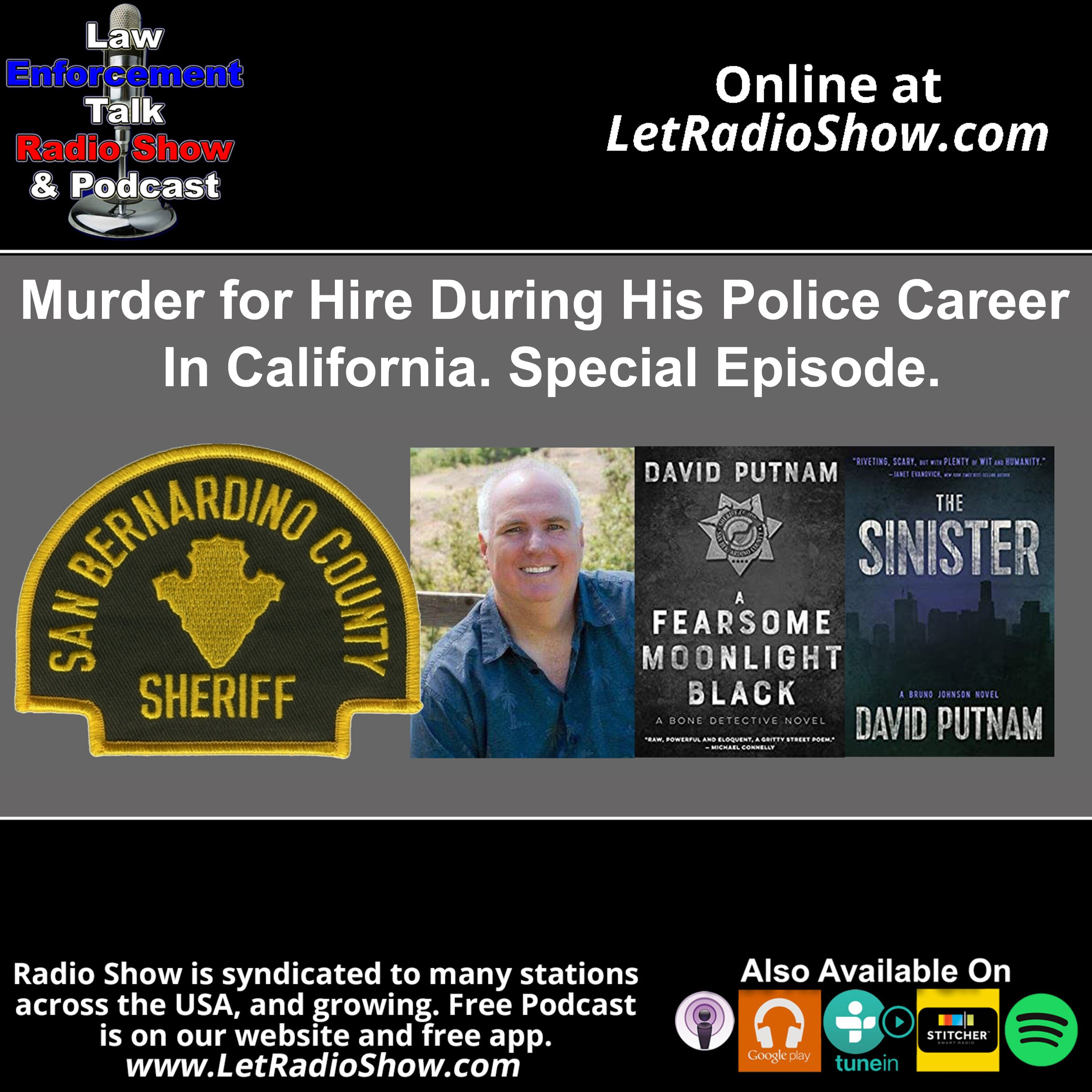
Law Enforcement Talk: True Crime and Trauma Stories
Murder for Hire During His Police Career
00:37:37
Murder for Hire During His Police Career In California. Murder, betrayal, and violence entered his life long before he became a decorated law enforcement officer. Special Episode.
Loading summary
Transcript96 lines
- [00:00]
Kachava Announcer
When maintaining your daily wellness rituals is important to you, the change in routine during the summer can feel daunting. Kachava's new travel packs help you stick to your daily ritual even when you're on the go. Just one packet of Cachava's all in One Nutrition Shake provides complete nutrition with 25 grams of protein, 6 grams of fiber, greens, adaptogens and much more. So you'll be fueled and ready for wherever life or your summer adventures take you. No fillers, no nonsense, just the good stuff your body craves. Plus, it actually tastes delicious. But you can try it for yourself because the Variety pack includes all six delicious fan favorites Chocolate, vanilla, chai, matcha, coconut, acai and strawberry. So instead of worrying about sticking to your daily ritual, simplify it with Cachava. Go to kachava.com and use code news for 15% off. That's K A C-H-A V A.com code news.
- [01:01]
Weight Watchers Announcer
You're on a GLP1. Your appetite is changing, your cravings quiet down, and food noise is finally fading. But now you're wondering, how do I manage my side effects? What do I eat to stay strong? How do I break through a plateau? Because reaching your weight loss goals can take more than meds. That's where Weight Watchers Med plus comes in. The support designed to help you navigate what comes next with trusted experts who guide you. Food plans that work with your body support to help manage side effects, plus access to GLP1 medication. Weight Watchers Med plus is designed to help you lose more weight. Watch it work. Get started today@weightwatchers.com all medical services are provided through our affiliated medical group, Weight Watchers Clinic. Medications require eligibility and prescription. Individual results may vary. See site for more details.
- [02:00]
John J. Wiley
He's a retired law enforcement officer. While serving as a law enforcement cadet, he had a family member that was brutally murdered and he talks about his own officer involved shooting. Welcome to the Law Enforcement Talk Radio Show. In the Law Enforcement Talk Radio show, we are joined by special guests talking about their experiences, their realities, investigating crimes, plus those who have experienced horrendous trauma. Police, first responders, military and victims of crime share their stories. Hi, I'm John J. Wiley. In addition to being a broadcaster, I'm also a retired police sergeant. Be sure to check out our website, letradio.com, and also like us on Facebook. Search for the Law Enforcement Talk Radio Show. Of all the radio stations in the United States, there are no other shows like the Law Enforcement Talk Radio Show. And on Facebook, there's only one official page. Do a search on Facebook for the law enforcement talk radio show and be sure to like the law enforcement talk radio show Facebook page. Kaitlyn is from Southern California. We retired law enforcement officer and award winning novelist David Putnam on the phone. David, thanks so much for being a guest on a law enforcement show. Very much appreciated.
- [03:15]
David Putnam
Thank you very much for having me.
- [03:16]
John J. Wiley
And by the way, you've got so many agencies you work for, I don't want to slight them. I'll let you say that because I'll get them wrong. You were in law enforcement for a very, very long time?
- [03:26]
David Putnam
Yes, I started off as a Sheriff's Explorer. Then I went to police cadet with a cadet for two years and then I started in law enforcement as a police officer at 20 for Ontario Police Department. Then I transferred to LA County Sheriff's for four years worked south Central Los Angeles and I transferred to San Bernardino County Sheriff's where I did 22 years. At the end of 28 years in Southern California, I retired and went to work as a special agent for the state of Hawaii. For the real Hawaii five Olympic.
- [03:56]
John J. Wiley
For the real Hawaii Five O. Not the book and Dano TV type
- [03:59]
David Putnam
we're used to, right? It was the real Hawaii Five O.
- [04:03]
John J. Wiley
And here's a little bit trivia for those. And I gotta admit, I wasn't sure where they got the name from. Hawaii Five O. The nickname for Police five o came from that series Hawaii Five O. And I never knew that until a few years ago. Where have I been all these years?
- [04:21]
David Putnam
And 5o comes from the 50th state of Hawaii is the 50th state. Right. I would come to work in the fake Hawaii car would be parked in my slot.
- [04:30]
John J. Wiley
Even fake Hawaii 5o. I remember, correct me if I'm wrong and may change since you were there or before you got there, but there was a time I was looking at going to Hawaii to be a police officer and I was already working in Baltimore. My sister was a travel nurse and she said, hey, come to Hawaii. The only thing is you got to buy your own police car. You have to provide your own equipment. I'm like, what? Did you ever hear?
- [04:54]
David Putnam
No, there's, there's, there's a, I didn't learn this till I got there. There's a footman which back, back in the day walked a beat and you promoted up to a motorman which is driving a car and a lot of the cars now the footman drives a marked police car and a motorman is a promotion to a Plane, ramp, car. And I. I think that they give you a stipend now for those cars.
- [05:23]
John J. Wiley
They do things differently out there. All I know is this.
- [05:25]
David Putnam
Yeah, they definitely.
- [05:26]
John J. Wiley
Everybody tells me it's a wonderful place to live. I had a sister was. Her husband was assigned there in the Navy. I had a sister was there as the traveling nurse. And she said it's a great place to visit, but so expensive. Just a food cost alone would be enough to bankrupt just about anybody. So how people can live on a police officer's budget out there and earnings, I just don't know.
- [05:47]
David Putnam
Yeah, you couldn't live along the coast. You have to live inland where it's less expensive to live. And then you have to know the places where to go to buy food. And it's not that bad, really.
- [05:58]
John J. Wiley
Well, so now you're back stateside, and we talked preparing for the interview when you were a police cadet, which for a lot of people, they don't understand, that's where you enter into, like, it's almost like Boy Scouts or Girl Scouts for law enforcement as a teenager. And there's a certain assignments. But you had a situation when you were a cadet where a family member was murdered. Can you talk about that?
- [06:25]
David Putnam
Yeah, it kind of started before that, way back when my mom was. Grew up in Thermal, California, which is the second hottest place in the world next to Death Valley. And she lived in a travel trailer with her two sisters, Virginia and Carol. And all three sisters had different fathers. My Aunt Virginia and my mom turned out okay, but my Aunt Carol went. Went the wrong way. So my mom, I had six. I had five brothers and sisters, six of us. And my mom had to sell toys on a party plan to support us. So she would ship me off in the summertime because she couldn't handle all the kids and work at the same time. So I'd spend a month out in Redondo beach with my Aunt Virginia, then a month in Indio, where my Aunt Carol landed my first memory. My mom put me on a Greyhound bus to go visit Aunt Carol. And I was sitting up front by the driver with a paper grocery bag full of my clothes. And we're driving, nine years old, we're driving to Indio. And I remember distinctly because this seagull hit the front of this windshield and splattered all over the windshield. And it startled me. And the driver turned on the windshield wipers and just made a bigger mess of the thing. And it was startling for that age. So my aunt picks me up at the Greyhound station and this all comes later on. It'll come. It'll understand. And she says, I'm gonna take you kids to the movies. And we stopped and got candy at the store. I remember it's a chicken on a stick. And she dropped us off, bought beer tickets. And we went in and sat down. And I'm sitting there watching. And the movie comes on. Is In Cold Blood in black and white. And I'm nine years old. It took me to. And Cold Blood. So fast forward to I'm a cadet. I was an explorer first, which is the Boy Scout thing like you're talking about. But a cadet is like an intern for the police department. It's like a gopher. And he works the front desk and he fingerprints the sex registrants, the. The teachers and the druggies. So what happened was my aunt and my cousin Danny, Little Danny called, we called him. He was 17 years old, and they were selling Tar Hero for the Mexican Mafia. And my uncle, he's my favorite uncle, he was just a great guy. He worked for the Metropolitan Water District out there, which was important because it's the Coachella Valley. So he was, he was well known. He found out my. My aunt was selling tar heroin and said, you stop it or I'm gonna call the cops. And my aunt, I, I don't know. I don't know this part about it, but she put a double life insurance policy on him. And then she hired a hitman named Cornelius out of Orange county and Google all this. It's all. It's a whole nother public record. And they stiffed in a call to the Metropolitan from saying that there was an emergency at the Metropolitan Water District. My uncle drives out there, gets out to unlock the gate, and they walk up behind him and they assassinate him.
- [09:35]
John J. Wiley
Wow. We're talking with David Putnam. We got so much more to talk about this case and the ramifications because with his law enforcement career and how it inspired him to continue his career in law enforcement, his books and more. This is Law Enforcement Show. We're taking a short break. I promise you we'll be right back. Be sure to follow me on the Clubhouse app. It's like having your own talk radio station on your phone. And best of all, it is free. Be sure to follow me, John J. Wiley, ET Radio show, and look for major announcements. That's right, the Clubhouse app is free. And be sure to follow me, John J. Wiley, or ET Radio show for major announcements. That's John J. Wiley or Let Radio show on the Clubhouse app. Did I mention that it is free.
- [10:25]
Kachava Announcer
Keep your wellness routine going strong all summer. Kachava's new travel packs help you stick to your daily ritual even when you're on the go. Just one packet of Kachava's all in One Nutrition Shake provides complete nutrition wherever you are. With 25 grams of protein, 6 grams of fiber. Greens, adaptogens and more. Simplify your daily ritual. Go to cachava.com and use code NEWS for 15% off. That's K A C-H-A-V A.com code NEWS.
- [10:55]
Weight Watchers Announcer
This is the new Weight Watchers built for real life and real results no matter what mode you're in. Maddie went all in for her big day and lost 33 pounds. Emily lost 85 pounds and hit her goal while still living her life.
- [11:09]
Kachava Announcer
Weight Watchers gave me the tools and I feel amazing.
- [11:13]
Weight Watchers Announcer
Join the millions of members and lose weight with the number one doctor recommended weight loss program. Lose more@weight watchers.com at six months, participants
- [11:22]
Kachava Announcer
in the clinical trial of Weight Watchers program lost an average of £12.
- [11:32]
John J. Wiley
This is the Law Enforcement show. Joining us from California, we have David Putnam as a guest. David is a retired law enforcement officer and he is also author of multiple books. His website is Daniel David Putnam books dot com. We'll talk about his books later on. Before we end the break, David, you're talking about the murder of your uncle. This was your mother's sister's husband, am I correct?
- [11:58]
David Putnam
That's correct. That's correct.
- [11:59]
John J. Wiley
And before the story is a police cadet. In my agency we had police cadets and they served like in the hot desk. They do reports, they did a lot of other things, clerical type work as they aged. And it gave them a head start with the retirement. And then they went in the academy. One of the things is you couldn't have anything that sullied your reputation in our department. So to be in a situation where you're a cadet and you have an aunt, before we get into details of the murder, you have an aunt that's involved in selling tar heroin. That puts an inordinate amount of pressure on you, doesn't it?
- [12:39]
David Putnam
Yes. Yes, it does.
- [12:41]
John J. Wiley
Yeah. As a young, what were you, 17?
- [12:44]
David Putnam
Oh, I was, I think I was 18. Yeah, I just turned 18.
- [12:49]
John J. Wiley
That's still a lot to do in law enforcement or anybody. So your aunt was dealing heroin, her husband, your uncle, you liked him. She had a double life insurance. And then four of the break you talked about, they made a stage call that there's some sort of water emergency. So he showed up or he responded,
- [13:09]
David Putnam
right, and so they killed him. And the police investigated it, but they didn't have any leads because they used a middleman, this hitman, Cornelius. So they ended up wiring my cousin's girlfriend. They wired her for sound, and they sent her in for conversation. And they got my cousin, the cop, out to killing my uncle. So they arrested my aunt Carol and my cousin, and they were pending trial in jail. And through attorneys, my aunt talked my cousin into taking the whole rap, saying that Aunt Carol had nothing to do with it. And she promised that when she got out, she would do everything she could to get him out. And then he did that, and she just walked away. And he went. He got lwop, which is life without the possibility of parole. He did 48 years before just recently, the governor let him out. But anyway, my aunt gets. Why my aunt's in. In jail working through this before she's let out. My mom takes Ronald and Julie, that my other two niece and nephew, and takes them back home to Ontario. This happened in the murder happened in Coachella. And so my mom is watching over her niece and nephew while my aunt is going through investigation. So my mom was going out to visit, and somehow she got sideways with my aunt and got into an argument. And they pulled the same stunt in my mom's house. This is. This is in Ontario. When I was in a cadet in Ontario, they called my mom and pulled her away for some kind of quasi emergency. And then my aunt had the Mexican mafia kick my mom's door in and kidnapped Julie and Ronald from my house in Ontario, the house I grew up in in Ontario.
- [15:03]
John J. Wiley
If someone else told you this story, David, you'd be going, what the heck are you talking about?
- [15:10]
David Putnam
I know, I know. It was a crazy time.
- [15:13]
John J. Wiley
It sounds like we're watching an episode of one of those Discovery Channel shows where who did I marry? Or my neighbor next door? It's like, this is insanity, right?
- [15:24]
David Putnam
So all of this background kind of informed my writing. I write from, you know, true life experiences. And I put a lot of my real life incidents in the. In the. In the books. And I had a pretty wild career, too.
- [15:42]
John J. Wiley
Before we get into your career, I gotta ask you a question.
- [15:45]
David Putnam
Okay.
- [15:46]
John J. Wiley
Do you ever feel like I don't want to tell people this story because they're gonna look at me like there's something wrong with me, like this guy's in outer space, like a mental case.
- [15:55]
David Putnam
You know, People would ask me that, that same question. I'd say it felt like it was. Everybody was going through the Same thing to me. You know, all families had. Had their skeletons. And you know, you watch television, you see that stuff on television too. So it just, for some reason I just thought, yeah, this is just like what everybody goes through, really.
- [16:17]
John J. Wiley
The reason I bring that up, there's parts of my, my story and the reason I don't talk about them on my radio show is it's not just my story. It's my daughter's story, it's my ex wife's story, it's my current wife, my mother, my sisters.
- [16:30]
David Putnam
Right.
- [16:31]
John J. Wiley
Because they all have the same last name and I have to be respectful of that. But the other reason is some of them are so bizarre that normal people, this, this goes back to. And I'm gonna ask you this. Normal people, like at the cookout, when you start telling them. Oh yeah, what it's really like, they're like, you can stop anytime now because I don't want to hear this.
- [16:52]
David Putnam
Yeah, yeah. I had a story that in. I was working low desert. I was a supervisor up in low desert. And it's a. Simeon county is 20,000 square miles. It's the largest county in the contiguous United States. It's huge. And this one station out in Morongo, Joshua Tree, covered 2,200 square miles. Just the one station. And all these fringe people from society go out there to live. And the story, I tell a story, nobody believes it, but I kept the call history on. Was on Halloween and this guy was a drug add. He was into muscle relaxers. And he took, I think we figured he took 30 to 35 that day because his tolerance had built up. And he was walking across his front yard when his body decided to shut down and he just died. He dropped dead right in his front yard. And these trick or treaters were coming and trick or treating and they thought that he was a prop and so they were stepping over him and going to the house to get the trick or treat some candy. So long. About midnight, the wife, she's in there watching. She's a speed freak. She's watching the big screen television with the door open. It's cold, it's a low desert. And she looks out at her husband's dfo, that's what they call it. And he done fell out. So like he's done before. So she goes out and picks him up by the ankle and drags him into the house. And he's banging his head and tearing his shirt. Gets him in the house. She feels his face and he's cold. So she gets a temp gets a thermometer and tries to stick in his mouth, but he's got a rigor mortis and his jaws locked tight. So she flips him over, pulls his pants down, sticks a thermometer in his butt and pulls it out. Always cold, takes all his clothes off and she's using that dryer to heat him, to warm him up, warm his body up. And as it happened, it was a well patrolled area because it was a high crime area. Deputy's driving by real slow and she looks out the door and she sees him. She runs out, deputy, Deputy, my husband's sick and if they call medical aid, he comes running in and there's a naked dead guy on his stomach with a thermometer in his butt and a lady with a hairdryer trying to warm him up. Oh my God. I tell that story. That's the weirdest story that I had in my 31 years of my career.
- [19:13]
John J. Wiley
We could talk about extremely bizarre stories and police. And I say police. That means sheriff's deputies, all former law have some of the most bizarre stories ever. This is the Law Enforcement Show. We're turning our conversation with David Putnam and talk about his police career, his law enforcement career and then go into how all this motivates him to write his award winning novels. This is the Law Enforcement Show. Don't go anywhere. We will be right back.
- [19:42]
Weight Watchers Announcer
They say that it's not about how much you earn, it's about how much you save.
- [19:46]
Kachava Announcer
And that is partially true.
- [19:48]
Weight Watchers Announcer
If you can take some of that savings and turn it into high yield investments, you are way ahead of the game. Get more details on how you can get started at let savings.com l etsavings.com
- [20:00]
Kachava Announcer
Again, that's let's when maintaining your daily wellness rituals is important to you, the change in routine during the summer can feel daunting. Kachava's new travel packs help you stick to your daily ritual even when you're on the go. Just one packet of Kachava's all in One Nutrition Shake provides complete nutrition with 25 grams of protein, 6 grams of fiber, greens, adaptogens and much more. So you'll be fueled and ready for wherever life or your summer adventures take you. No fillers, no nonsense, just the good stuff your body craves. Plus, it actually tastes delicious. But you can try it for yourself because the variety pack includes all six delicious fan favorites. Chocolate, vanilla, chai, matcha, coconut, acai and strawberry. So instead of worrying about sticking to your daily ritual, simplify it with kachava go to kachava.com and use code news for 15% off. That's K A C-H-A V A.com code
- [21:02]
Grainger Announcer
news if you work in university maintenance, Grainger considers you an MVP because your playbook ensures your arena is always ready for tip off. And Grainger is your trusted partner, offering the products you need all in one place, from H Vac and plumbing supplies to lighting and more. And all delivered with plenty of time left on the clock. So your team always gets the win. Call 1-800-GRAINGER visit grainger.com or just stop by Grainger for the ones who get it done.
- [21:33]
Weight Watchers Announcer
You're on a GLP1. Your appetite is changing, your cravings quiet down, and food noise is finally fading. But now you're wondering, how do I manage my side effects? What do I eat to stay strong? How do I break through a plateau? Because reaching your weight loss goals can take more than men's. That's where Weight Watchers Med plus comes in. The support designed to help you navigate what comes next with trusted experts who guide you. Food plans that work with your body support to help manage side effects. Plus access to GLP1 medication. Weight Watchers Med plus is designed to help you lose more weight. Watch it work. Get started today@weightwatchers.com all medical services are provided through our affiliated medical group, Weight Watchers Clinic. Medications require eligibility and prescription. Individual results may vary. See site for more details.
- [22:39]
John J. Wiley
During a conversation with David Putnam Law Enforcement David is a retired law enforcement officer. Like 28, 29 years in law enforcement. He's also an award winning novelist and writer. His books are available. Get more information about him and his website. David Putnambooks.com David, you've got some bizarre, phenomenal stories and sadly they're all true. That's the part that people seem to miss out on. And one of the things they miss out on is the realities of working in law enforcement. For example, how much trauma law enforcement officers are exposed to, how much violence they see. And sometimes how much violence is where they're the victim, they're the target. You went through a situation during your police career where you had to use deadly force. Am I correct?
- [23:31]
David Putnam
Yes.
- [23:32]
John J. Wiley
And the reason I say that is because so many, and here's a misconception, a lot of people have so many law enforcement officers go their entire career and they say, I never pulled my gun except at a range. I always said this David, where did they work? Because it wasn't like that in Baltimore. I was in four shootings in a little more than 10 years. And fortunately everybody survived. The first two I never even fired back at. Which goes contrary to what the news media says about police or officer involved shootings. Back then, we didn't call them officer involved. They're just shootings.
- [24:02]
David Putnam
Yeah, that's true. I think I was in total of 16, I think was. I counted where I was either shooting. I was standing there when shots were being fired and people were going down.
- [24:13]
John J. Wiley
And if you told people that, they say right away that you got a propensity towards violence or something wrong with you.
- [24:20]
David Putnam
That's true. But I was working on a violent crimes team. They did two tours on swat and you know, we were put into those situations chasing the bad guys.
- [24:29]
John J. Wiley
That's exactly what I would say too. I didn't, you know, I didn't make this happen. I responded to a call or someone shot at me. And here's the thing. Before we get into your, your, your office involved shooting, we talk about in depth. When people shot at me, I was shocked. My first reaction was, you don't even know me. Why are you shooting at me?
- [24:50]
David Putnam
Right. Yeah.
- [24:52]
John J. Wiley
I since now realize it's because of what the uniform I wore. That's why.
- [24:58]
David Putnam
All right. The first, the first time I was. I was brand new, young, and I started early. I started. They hired me at 20 because I was a cadet, went to the academy, went through training. When I got off on my. I went to an armed robbery of a fotomat. And that's back when they had those kiosks in the parking lot. So they don't have them anymore. You drive up and put the. Drop your film off and come pick it up. A few days later, two people robbed this kiosk. And I want to shorten the story a little bit because it gets a little long. And the look on that woman's face and the fear. I wanted to chase the people that caused that. And so I started chasing violence very early in my career. And as a patrol officer, I did a detective job. I kept, I would answer my calls, but on the side, I would be working these armed robberies. I pulled the reports. I'd have my own pen maps. And I was arresting armed robbers after the fact. As it happened. I counted back. When I looked back on it, it happened to be the 13th one that I went after. And I was making $600 a month straight time as a patrol officer. And I had to pay rent and my car insurance. So I would go home for dinner and eat macaroni and cheese and hot dogs. And I didn't care because I was having a great time. I was having time my life. And armed robbery clock was out and I knew the officer was going, he was going to go slow and get there after the fact because it came out as an in progress robbery. So I cleared my lunch and I just turned 21. So I, you know, they gave me a fast car, a gun and told me to chase bad guys. And it was just. I was in heaven. So I break lunch and I'm driving up to the call. Driving up to the call, tell dispatch. And she tells, she advises over the radio that the suspects are two white males in denim jackets, they're armed with handguns and they're running from the location. It's the Market Basket grocery store that I went to as a kid with my mom for years we went there. So I knew the area. And dispatch said that the box boys are chasing the two suspects. So I asked on the radio, I said, are the box boys armed? And she says no. And that's when she catches on that this is, this is a damn normal situation. Market Basket is on mountain and there are side streets in the back are perpendicular to Market Basket. So I just picked one because I knew the area. I had to choose a choice of five streets. I picked one, drove down the street and a car was blocking. Car was blocking the street and a guy was standing outside the car pointing toward the house. So I stopped. I advised dispatch I was in pursuit of an armed suspect. Even though I hadn't seen him yet, I knew I was going to be engaging this guy.
- [27:43]
John J. Wiley
You can just tell.
- [27:45]
David Putnam
Yeah, because I'm right on him. I mean, this guy had just tried to carjack this guy because he's running from the Market Basket. So as it turns out, the sergeant who was responding was setting a perimeter and he had stepped on my radio transmission, so nobody knew where I was. Nobody heard the call go out, my call go out. So I ran up to the house and there's a man that comes out the front door, very elderly. And I. And he says he's in my backyard. So I said, can I go through your house? And he turns around too slow. But I think I was just probably too pumped up and too young, so I couldn't follow him. I went to the side, I just vaulted his fence and his dog attacks me, comes at me and I shoo the dog off. He calls the dog and I run to the fence. And I could hear the guy yard jumping. He's going over fences. And if this is at dusk, it's Low light just after sunset. And it's got that sparkly, you know, that grayness in the air kind of thing. And so I keep jumping yards until I don't hear him anymore. And I do a quick peek, look over, move down, do a quick peek. And I go over the fence and I'm looking in the backyard and all the shrubs sticking out. He's laying in wait. And I look up and through the sliding glass door, he'd gone in the house. And this white guy with a, with a Levi jacket has a kid in a headlock holding his feet up off the ground and has a gun to his head. And he yells, quit chasing me, I'm gonna kill you. So I line up on him. I don't know what to do because this is my first violent encounter. And I give a talk on anatomy of violence and what it takes to shoot somebody. And after analyzing it, I had the legal right, the moral right, but at that point, I didn't have the emotional ability to pull that trigger, right. I aimed at him. And my thoughts were, is it the old sheer glass or is it the safety glass? Because it's the old sheer glass, it's going to deflect my round. And I was confident. I was number two in the academy with a handgun. I could hit the guy from where I was. It was about a 25 foot shot, but I didn't know about the glass. So I said, you shoot the kid, I'm going to shoot you. He sees me lying up on him with my sight, so he pushed the kid down. He runs out the front door. I go to the side and jump the fence. And as I'm jumping the fence, I hear, there he is, there he is, get him. And that was the street the box boys were on. And as I, as I come over the fence into the yard, the boss boys go, there's the police. Get him there, that's the guy. And so they're off about a half a block down to my right. And a crook is off to my left running through the front yard of this, of this block. So I start chasing him. I could clearly see he had a chrome.38 in his hand. And still I had the legal right, the moral right, but I still did not have the emotional ability to pull the trigger. And he was yelling the whole time, I'm going to kill you. Keep chasing me, I'm going to kill you. And I continue to chase him. He cuts up between some houses and he's going to go over into the fence. And I know he's going to lay in wait for me. So I stop at the sidewalk and I yell, stop. I'm going to shoot. And this is a long shot. It's a technical shot because it's low light, he's moving and it's a long distance and he keeps going. He gets up on the fence, he's about to go over and I yell, last chance because I didn't want to shoot. And I actually pulled the hammer back because in my mind by training, it told me that I had to go single action or I wasn't going to hit him. Not even. It wasn't like a conscious thought. And just before he went over, I, I tugged the hammer and it popped and he goes up in the air, flips around and lands on his back and he's teetering on his back on his fence and he's yelling, oh my God, he shot me. He shot me.
- [31:41]
John J. Wiley
We're talking with David Putnam and I really want to return this conversation. This is law Enforcement show. So much more to talk about. Don't go anywhere. We'll be right back. If you do any business on social media, creating content is one thing. The trick is how do you turn those people that comment on your social media into consumers? It's a great tool and you can get more information@letpops.com that's L E T P O P S.com best of all, you can start it for free. Letpops.com check it out today.
- [32:20]
Grainger Announcer
If you work in university maintenance, Grainger considers you an MVP because your playbook ensures your arena is always ready for tip off. And Grainger is your trusted partner offering the products you need all in one place, from H Vac and plumbing supplies to lighting and more. And all delivered with plenty of time left on the clock. So your team always gets the win. Call 1-800-GRAINGER visit grainger.com or just stop by Grainger for the ones who get it done.
- [32:50]
Weight Watchers Announcer
The new Wegovy pill is now available through weight watchers. Powerful GLP1 results in a simple pill at the lowest price available and with Weight Watchers you can get doctor support and personalized nutrition programs. See if you qualify@weightwatchers.com ad not reviewed or approved by Novo Nordisk.
- [33:11]
John J. Wiley
Return a conversation with David Putnam, retired law enforcement force, an officer, also author of multiple award winning books. Get more details at his website. David Putnam books.com David, before we went to break, we're talking about this incident where you're chasing a guy and I gotta tell you, I'm like adrenaline is going And I'm visualizing the stuff I went through. And you're telling in detail, specific detail, your thought process, all these things. And. And I just want people to understand something from my experience. And I'm sure it's the same with you. These things happen in a flash, and we have more time to think about it afterwards. But what's going on, it's quick reaction. You resort to your training, all those things. So you talked about you fired a shot, and the guy was kind of like balancing on top of the fence. I'm like, was he hit?
- [34:00]
David Putnam
Yeah. So I start moving up on him about halfway to him, and I'm yelling, him dropped a gun. Because I can still see the gun in his hand. I start thinking that he's trying to draw me in because there's no way I hit him. Like I said, it was a long shot, long distance. It was low light and moving, and there was just no way that I hit the guy. So I'm yelling, drop the gun. Drop the gun. I stop halfway because I think he's trying to lure me in for a closer shot. And he realizes I stay came at him again. I'm going to shoot him. And he realizes I'm going to shoot him. And he throws the gun down and he flips over. When he does, he loses his balance. He flips over out of my side on the inside of the fence. And when I fired the shot, the buzz, it all of a sudden turned too real for the box boys, and they turned around, they were running the other direction. So I'm all by myself. I go up to this cedar plank fence gate, and I look over, do a quick peek, and he had fallen on his stomach, and the money from the market basket was in a paper bag and had fluffed out and was all over the patio. And underneath him was this widening puddle of blood. So I get up on. I climb up on the cedar plant fence. I look down on him, and I can't see his hands. So I say, show me your hands. And he won't show me. And I'm all pumped up with adrenaline. So I drop on him, I knee drop him, I break his leg and his hip, and I landed on him. And I start handcuffing. No, don't handcuff me. I'm shot. I'm shot. So I get him cuffed and search him. I can't find the gun. The guns happened to fall in the. On the adjoining yard on the inside of the fence. We find it later, but I call on the radio and ask for help. And they don't know where I am. I don't know where I am. I go to the sliding glass door of that house, and a woman. I see a woman, she's wearing a night robe. I guess she got ready for bed early, and she ran to her bedroom, closed the door, and she didn't call the police. And this helped me later on in my career because I had a similar situation where I just commandeered the house. I was smart enough to go in and commandeered house and barricade and use the phone. So in this incident, they put a person, a copper, at each end of the street, and they walked him down, yelling my name. And that's how they found me. The first guy that. The guy that found me was guy named Art bills. He was 6 foot 3, 250 pounds, and he was a black belt and karate. One of the baddest dudes I ever, ever met. And he looked over the fence, he saw me, and he was so pumped up that he just pushed the whole cedar gate everything down and walked over and shook my hand, said, good job. You did a good job. Which really, really helped me a lot. I was hyperventilating, sitting on that picnic bench.
- [36:47]
John J. Wiley
I gotta tell you, the last shooting I was involved in, first and last, were totally different, but I was the third one, actually. I was vomiting afterwards and that. That I was a experienced officer. So the emotions that come with that. Earlier you said something a couple times, you know, having the moral right, the legal right, everything's right, but not having the emotional ability to do that. And a lot of people, after you're forced to use deadly force, the results, the emotional impact can be devastating. How were you after?
- [37:20]
David Putnam
Well, there's a little bit more to the story. It turns out that these guys were serial robbers, and they had robbed the farmers market and a pharmacy that day, and they had shot the pharmacist. And I'd hit him as he's going over, and it went through just under his tailbone and just went right through him. His prostate, upper, his colon, his upper, lower intestine and lodged in his chest. And the paramedics got there and saved him. He had four balloons of heroin in a keister stash in his rectum. And the doctor said if I had been an inch lower, he would have overdosed on heroin, which would have been poetic justice. But the pharmacist that he shot that day was a nurse at the hospital that he took him to. So there was a little bit of irony in that. And I Lost my train of thought.
- [38:11]
John J. Wiley
What we're getting at is all things being righteous, a justified shoot, all those things. Quite often it doesn't take away the experience for especially a young officer. And you said, you're hyperventilating. And I'm just curious, did it take you a while to process that? Because back in the day we didn't have all we have nowadays. We didn't have crisis intervention teams and peer support. We had to suck it up. Buttercup Police. Your police attitude on the next call.
- [38:40]
David Putnam
Yeah, yeah. And back then they said there was a. They gave you like two weeks off to recalibrate. But back then that had just. The thinking had just shifted and they said it better to get him right back on the horse. So they gave me the time off. And then one captain decided, no, that wasn't right. So the next day I was off, I was supposed to be at work, but they, I took it off and they called me and said, no, you're coming back to work. I came back into work the very next day. Yeah. Got back in the car and started driving around as if nothing happened. Yeah, as if nothing happened.
- [39:17]
John J. Wiley
Yeah, that's right. I'm gonna handle calls like nothing happened. Look, you and I can joke and laugh about that, but here's the reality, and before we get into your novels and your life after is I tell people I cried quite often in a patrol car. You never saw me cry in public. Except maybe police funerals. However, you go from a life and death really traumatic incident to a parking complaint or a neighborhood dispute or some other routine call and act as if nothing had happened. And I can just see you going from a life and death situation like this to handling routine calls the next day as if nothing happened.
- [39:57]
David Putnam
And you go to a domestic dispute and people are arguing and it's so insignificant in comparison to what just happened. You know what I mean? It's like, why are you people even arguing about something so petty when the real world is out there?
- [40:11]
John J. Wiley
Well, the he said, she said, I have no tolerance for police rule. Me for that. And I tell my wife all the time, we'll turn on the television, it'll be these shows where they have so called pundits arguing about stuff like, I can't, I can't listen to that. It reminds me of domestic disputes. I can't do it, David. So you retired from police work and began a career as an author. Before we get into specifics, did your police career, was that a motivator for you writing your books?
- [40:43]
David Putnam
Well, I was. I Was an avid reader before I was involved in law enforcement. And I read everything from a very young age. So I think Adam 12 and Joseph Dwamba kind of pushed me into law enforcement. So when I was a cop, I was on a narcotics. I was on a surveillance of a meth lab out in Lucerne Valley, which is Mojave Desert. Nothing out there. And it's not like in the movies where all the cops are watching the same house. When you're on a surveillance, one guy has the eye and everybody else is laid off.
- [41:13]
John J. Wiley
Right.
- [41:13]
David Putnam
So now they gave me a fast car, a gun, and a badge to chase bad guys. And I got to read books, which was the number one thing that I used to love. I love to do. So I was down to my last book in the backseat of my car that I stored in the backseat of my car. The first one was an international bestseller, so I bought the second one. But what happens so often is an author will write for 10 years on one book, finally get it published, then he has one year to write the next book. So I read. I was a captive audience. I'd read this whole book and it was just a dog of a book. And when I got done, I thought, I could be better than this. So this is 1989, and I wrote my first four novels on the front seat of my cop car during surveillances.
- [41:51]
John J. Wiley
That's amazing.
- [41:52]
David Putnam
And each book was. Each book was four legal pads long. And so that started my career. I started writing when I was at. When I was still a copper. And I would get up at 4 o' clock in the morning, I'd write for three hours and go to work. And I would do that every day.
- [42:07]
John J. Wiley
And how many books do you have to your credit now?
- [42:11]
David Putnam
Well, I was on my 38th manuscript. I wrote 38 books before I sold my first one. And so I'm on book. That was in 2014 when I sold my first book, which was called the Disposables. And it's a continuing series with a character named Bruno Johnson. He's an African American detective. Well, he's an ex cop, ex con who rescues children from toxic homes. He couldn't do it when he was a cop, so now he goes outside the law to rescue these children. And he has a makeshift orphanage down in Costa Rica where he takes the children. And Number Nine came out in February and it got a starred review on Publishers Weekly, which is the industry standard for the. For publishing. And I was really proud that it's the first time I got a star review and That's a killer book.
- [42:54]
John J. Wiley
We are almost out of time. Where can people find out information about you in all your books? Because you got lots of them.
- [43:02]
David Putnam
Yeah, yeah. David David@DavidPutnamBooks.com is my website and I just had a new one come out. It's called the Fearsome Moonlight Black and it's a second series and the first part is all memoir. True stories of everything that happened in my career in the first year.
- [43:18]
John J. Wiley
I'd like to thank our guests. We're coming on the Law Enforcement Talk Radio Show. The Law Enforcement Talk Radio show is a nationally syndicated weekly radio show broadcast on numerous AM&FM radio stations across the country. We're always adding more affiliate stations. If you enjoyed the podcast version of the show, which is always free, please do me a favor and tell a friend or two or three. I'll be back in just a few days with another episode of the Law Enforcement Talk Radio show and Podcast. Until then. Until then, this is John J. Wiley. See ya.
- [43:54]
Weight Watchers Announcer
When you manage procurement for multiple facilities, every order matters. But when it's for a hospital system,
- [43:59]
David Putnam
they matter even more.
- [44:01]
Weight Watchers Announcer
Grainger gets it and knows there's no time for managing multiple suppliers and no room for shipping delays.
- [44:06]
Kachava Announcer
That's why Grainger offers millions of products in fast, dependable delivery so you can
- [44:12]
Weight Watchers Announcer
keep your facility stocked, safe and running smoothly.
- [44:15]
Kachava Announcer
Call 1-800-GRAINGER, click grainger.com or just stop
- [44:18]
Weight Watchers Announcer
by Grainger for the ones who get it done. The new Wegovy pill is now available through weight watchers. Powerful GLP1 results in a simple pill at the lowest price available. And with Weight Watchers, you can get doctor support and personalized nutrition programs. See if you qualify@weightwatchers.com add not reviewed or approved by Novo Nordisk.
- [44:40]
David Putnam
If you like the show, please take
- [44:41]
Grainger Announcer
a moment to rate, review and subscribe.
- [44:44]
David Putnam
It really does help the show to grow.
- [44:47]
Grainger Announcer
Thank you for listening.