Podcast
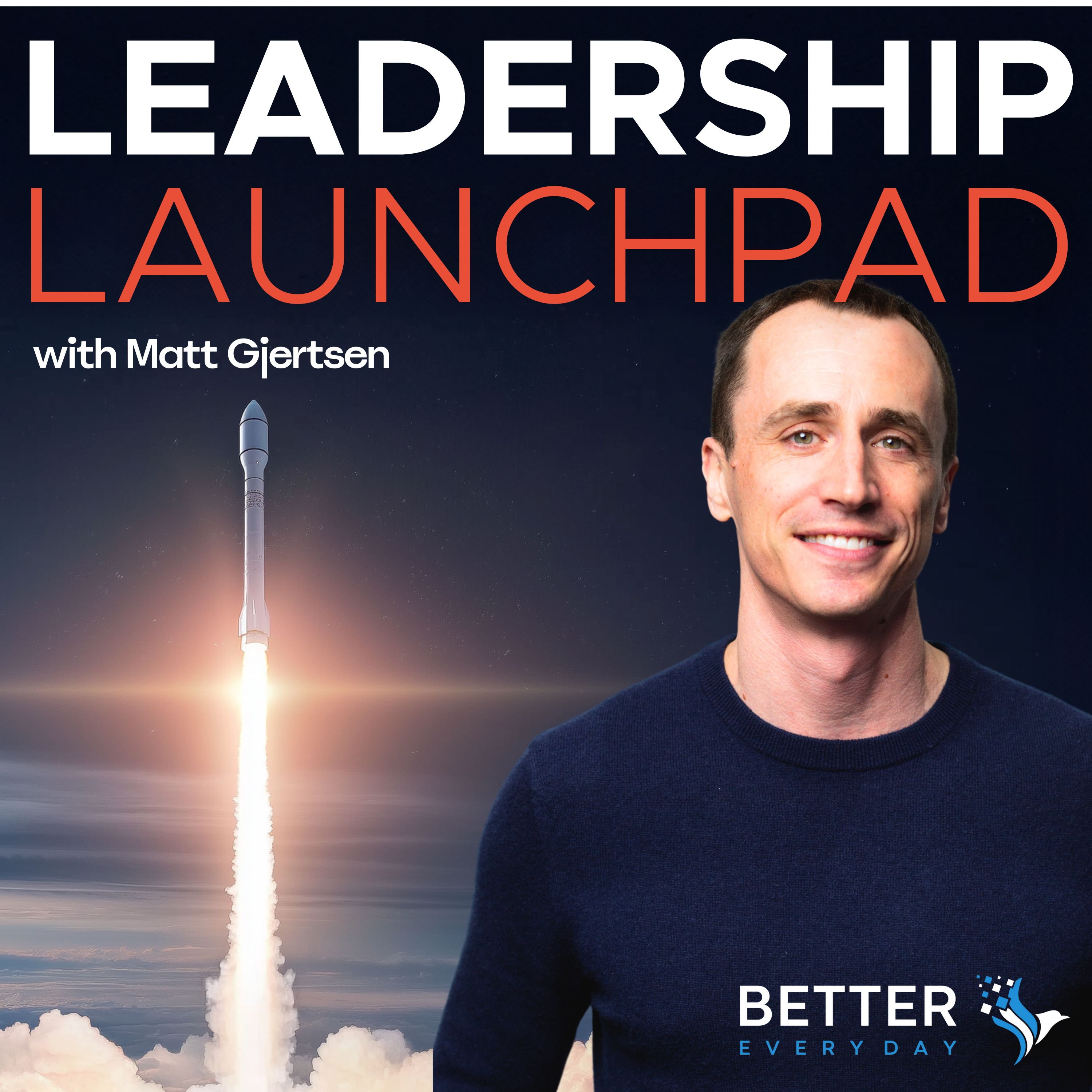
Leadership Launchpad
Hosted by Matt Gjertsen - Better Every Day Studios · EN
Welcome to the Leadership Launchpad where we help technical managers improve themselves, their teams, and their organizations. Host Matt Gjertsen — former Air Force instructor pilot and head of training and development at SpaceX — brings hard-won lessons from the world's most demanding organizations to help new managers lead with clarity and confidence. Each episode cuts through the noise with practical frameworks, real stories, and straight talk on what it actually takes to build high-performing teams in aerospace, defense, and beyond. Whether you're managing engineers, navigating organizational chaos, or just trying not to let your team down, Leadership Launchpad gives you the tools to get better every day.
26episodes
Episodes
Newest firstAll episodes
Why Ownership Is the Foundation of Great Engineering w/ Seth Kovnat
1w ago00:31:30Tap to summarizeEveryone talks about ownership.Very few people can actually explain what it looks like.Seth Kovnat spent six years at SpaceX helping scale Falcon launches from 24 to 148 missions a year before joining Impulse Space as Director of Vehicle Engineering. Along the way, he developed a way of thinking about engineering that goes far beyond technical ability.At the center of that mindset is the Responsible Engineer.Not someone who owns a part.Someone who owns the outcome.We get into why ownership isn't about protecting your work. It's about bringing in the right people, inviting criticism early, and doing whatever gives the mission the best chance of succeeding. That sounds simple, but it's a very different way of leading technical teams than most organizations practice.We also talk about what changes when engineers become leaders, why letting go of technical control is one of the hardest transitions to make, and how great engineering organizations create cultures where responsibility grows with every level of the organization instead of getting bottlenecked at the top.If you lead engineers, build products, or care about creating teams that move fast without sacrificing quality, this conversation is packed with practical lessons from someone who's helped build at the highest level.EPISODE HIGHLIGHTS[00:00] Introduction[00:03:13] Why Seth wrote an engineering children's book[00:08:00] Building vehicles at Impulse Space[00:10:10] The responsible engineer mindset[00:12:18] What SpaceX got right about ownership[00:18:16] Building a culture of ownership[00:21:19] Why planning beats reacting[00:23:00] Failing smart instead of failing busy[00:26:20] The hardest transition from engineer to leader[00:27:28] Scaling ownership across an organizationKEY TAKEAWAYSOwnership means owning outcomes, not just completing tasksGreat engineering requires collaboration, not individual heroicsThe best engineers actively seek feedback earlyStrong engineering cultures remove ego from decision-makingResponsible engineers orchestrate people as much as technical workBuilding without clear intent creates the illusion of progressAttack the biggest risks first, not the easiest problemsLeadership requires letting go of technical controlAccountability should grow as organizations scaleHigh-performing engineering teams succeed because ownership exists at every levelIf this episode resonates with you, subscribe to the show, share it with someone building engineering teams, and leave a review so more technical leaders can discover the conversation.Links & ResourcesSeth KovnatLinkedIn: https://www.linkedin.com/in/sethkovnat/Website: https://pragmatist.tech/Matt GjertsenWebsite: https://www.bettereverydaystudios.com/LinkedIn: https://www.linkedin.com/in/matthewgjertsen/YouTube: https://www.youtube.com/@BetterEveryDayStudios
Transcribe →The Leadership Shift Every Engineer Has to Make w/ Ashley Chang
2w ago00:29:44Tap to summarizeMost engineers become leaders because they're great at solving problems.Then they get promoted... and suddenly the thing that made them successful starts getting in the way.If you've ever struggled to delegate, found yourself jumping in to fix everything, or wondered why your team keeps bringing every problem back to you, this conversation will probably hit close to home.Ashley Chang started her career as an engineer and now leads training and development at Anduril. She talks about what really changes when you move from individual contributor to leader, and why leading isn't about having all the answers anymore. It's about asking better questions, setting clear expectations, and creating an environment where your team can solve problems without depending on you.We also get into why so many companies confuse "don't micromanage" with "don't lead," why coaching is a skill that has to be developed, and why technical experts don't automatically become great teachers just because they're the best at the job.If you're leading engineers, manufacturing teams, or any technical organization, this episode is a practical conversation about what actually changes when your job shifts from doing the work to helping other people do it well.EPISODE HIGHLIGHTS[00:00] Introduction[00:02:38] Why engineers struggle when they become managers[00:05:48] Finding the right balance between delegation and micromanagement[00:09:16] What makes technical training different[00:11:32] Breaking old habits and creating new standards[00:14:00] Why great performers don't always make great trainers[00:17:12] Asking better questions instead of giving answers[00:22:28] Why training should be treated like a product[00:25:57] Overcommunication beats undercommunication[00:26:56] Knowing what should and shouldn't be trainedKEY TAKEAWAYSGreat engineers don't automatically become great leadersLeadership starts when you stop trying to solve every problem yourselfDelegation changes based on each person's experience and maturityClear expectations are different from micromanagementThe best coaches ask questions before offering solutionsTechnical experts need coaching skills to become effective trainersGood onboarding teaches both the work and the cultureTraining only works when leaders reinforce it every dayOvercommunication is usually better than undercommunicationTeach principles that stay the same, even when processes changeIf this episode resonated with you, subscribe to the show, share it with someone leading a technical team, and leave a review so more engineering leaders can find these conversations.Links & ResourcesAshley ChangLinkedIn: https://www.linkedin.com/in/ashleylchang/Matt GjertsenWebsite: https://www.bettereverydaystudios.com/LinkedIn: https://www.linkedin.com/in/matthewgjertsen/YouTube: https://www.youtube.com/@BetterEveryDayStudios
Transcribe →Why Most Leadership Training Doesn’t Translate to the Floor w/ Craig Coyle
Jun 2300:44:37Tap to summarizeMost companies say they’re developing leaders.But when you look at what actually happens on the floor, or inside a new manager’s first real team, it doesn’t line up.Craig Coyle spent years as an Army aviator and now works with frontline leaders in manufacturing and defense environments. What he saw in both worlds is the same gap, people are promoted into leadership, then left to figure it out in real time, without the structure they were used to as operators.In aviation, that doesn’t happen. You don’t just become a pilot in command and get told to figure it out. There’s progression, there’s repetition, there’s instructor pilots inside the mission, not outside of it.That contrast is what drives this conversation.We talk through what changes when leadership is treated like a skill that needs structured training instead of something people just “grow into.” And why most development programs fall short, not because the content is wrong, but because it’s removed from the environment where the work actually happens.There’s also a deeper problem underneath it all, most organizations don’t have a clear definition of what “good” looks like for a manager. So people default to whatever worked for them personally, or whatever their last boss did. That inconsistency is what creates the gap between intent and execution.Craig breaks down what he’s building now, a model that treats leadership development less like theory and more like progression inside a system, similar to how pilots are trained over time, not in isolated workshops.If you lead people, or you’re responsible for people who lead people, this episode is really about one thing, what it would take to make leadership actually show up on the floor, not just in training materials.EPISODE HIGHLIGHTS[00:00] Introduction[00:01:00] Most people don’t know what training actually is[00:02:33] Military vs corporate leadership development gap[00:06:46] “Figure it out” leadership in the Army[00:09:35] Learning leadership the hard way after promotion[00:10:05] Why pilot training builds a different standard[00:15:28] Procedure vs technique in decision making[00:17:00] Science vs art of leadership[00:22:20] Why classroom training fails on the floor[00:29:00] The bandwidth problem in leadership roles[00:32:00] Why prioritization decides everything in leadership[00:35:03] Why most leadership training doesn’t move the needle[00:37:00] Closing the “back door” in workforce development[00:39:00] Minimum Viable Manager conceptKEY TAKEAWAYSMost leadership training fails because it’s removed from the environment where work actually happens“Figure it out” is not a leadership system, it’s a gap in oneAviation builds leadership through progression, not one-off trainingGood management requires structure, not just experienceInstruction needs to exist inside operations, not outside themProcedure creates consistency, technique creates flexibilityMost organizations don’t define what “good manager” actually meansContext is what makes training stick, not content aloneBandwidth is one of the biggest hidden limits in leadershipYou don’t fix leadership by adding content, you fix it by changing the systemIf this episode resonates with you, subscribe to the show, share it with someone who leads a team, and leave a review so more people building in complex environments can find it.Links & ResourcesCraig CoyleLinkedIn: https://www.linkedin.com/in/craig-coyle/Website: https://operationlead.com/YouTube: https://www.youtube.com/@OperationLeadMatt GjertsenWebsite: https://www.bettereverydaystudios.com/LinkedIn: https://www.linkedin.com/in/matthewgjertsen/YouTube: https://www.youtube.com/@BetterEveryDayStudios
Transcribe →Building a Training Program for a Technical Team with Roy Samson
Jun 1600:49:59Tap to summarizeMost technical training programs fail before the first technician ever sets foot in the room. Not because the content is wrong. Because the entire design is wrong.Traditional training asks: did they understand it? Technical training asks something harder: can they actually do it? And in aerospace, where it takes a million things to go right and one thing to go wrong.In this first ever live episode of the Leadership Launchpad, Matt sits down with Roy Samson, a technical training veteran from the aerospace industry. Together they break down what it actually takes to build a training program for a technical team.What you'll learn:Why "passing the course" isn't the same as being ready — and how to handle the gapHow to decide how much theory a technician actually needs (and when to skip it entirely)What "building an OS for quality" means and why it matters more than any curriculumHow to build credibility with subject matter experts when you don't have a technical backgroundWhy training will happen in your org whether you plan it or not — and why that should scare youFor engineering managers, technical leads, and L&D professionals trying to build real capability in hard tech environments.New episodes weekly. Subscribe and drop a comment if you want us to go deeper on any of these topics.Learn more at BuiltLeaders.com
Transcribe →How Great Leaders Build Alignment Without Slowing Down Execution
Jun 900:35:50Tap to summarizeMost leaders talk about speed. Ian Walsh doesn’t.In this conversation, he separates speed from what actually matters in leadership: velocity, meaning speed with direction. Ian has spent his career in aerospace and defense, from flying Marine Cobra attack helicopters to leading companies through scale and transformation. Now as CEO of FDH Aero, he is operating inside an industry that is growing fast and getting more complex.He starts every new role in listen and learn mode. No immediate changes, no playbook, just understanding how the business actually works. That mindset carries through how he thinks about scaling. Fixing a business is about rebuilding capability. Scaling is about making sure the core can support growth without breaking when conditions change.A big part of his approach is how decisions move through an organization. Push them closer to the work, but keep clear guardrails and one accountable owner for each outcome. He also focuses on a few simple questions: do people know where they are going and how fast, are decisions stuck at the top, and do people actually feel accountable.At the center of it all is communication. When people are guessing, alignment breaks. And when alignment breaks, everything slows down, even if it looks like progress. This episode is a grounded look at leadership inside complex environments where clarity and ownership matter more than anything else.If you are early in your career, this is a blueprint for how leaders think. If you are more experienced, it is a check on whether you are still getting the basics right.EPISODE HIGHLIGHTS[00:00] Speed is dangerous, velocity requires direction[00:02:49] Aerospace as a constantly evolving global industry[00:06:36] Starting any new role in listen and learn mode[00:10:24] The difference between fixing and scaling a business[00:14:45] Speed versus velocity in decision making[00:18:22] Communication as the foundation of alignment[00:22:53] Why delegation fails without training and support[00:27:13] Values versus performance in leadership decisions[00:28:53] Lessons on risk and judgment from aviation[00:31:27] Building better risk awareness through experience[00:32:54] Sustaining a high performance culture over timeKEY TAKEAWAYSSpeed without direction creates risk rather than progressEvery new organization requires time spent listening and understandingLeadership playbooks rarely transfer cleanly between companiesScaling requires leveraging fixed systems, not only adding resourcesDecentralization only works when paired with clear guardrailsAccountability breaks down when ownership is unclearMost bottlenecks are caused by misalignment, not lack of effortCommunication needs to match the pace of change in the organizationValues can be identified, performance can be developedHigh performance cultures are built through consistent behavior over timeIf this episode resonates with you, subscribe to the show, share it with someone who leads a team, and leave a review so more people building in complex environments can find it.Links & ResourcesIan WalshLinkedIn: https://www.linkedin.com/in/ian-walsh-76864a2b/Website: https://fdhaero.com/YouTube: https://www.youtube.com/@FDHAeroMatt GjertsenWebsite: https://www.bettereverydaystudios.com/LinkedIn: https://www.linkedin.com/in/matthewgjertsen/YouTube: https://www.youtube.com/@BetterEveryDayStudios
Transcribe →Stop Waiting for Permission to Lead w/ Keith Ferrazzi
Jun 200:31:16Tap to summarizeMost people think leadership starts when someone gives them authority.I don't think that's true.One of the ideas that kept coming up in my conversation with Keith Ferrazzi is that leadership is rarely granted before it's demonstrated. The people who create outsized impact inside organizations aren't waiting for the title, the promotion, or the perfect moment. They're already acting like leaders long before anyone officially calls them one.That matters more today than ever.The pace of change is accelerating. Industries are being reshaped by AI, supply chain volatility, shifting markets, and entirely new ways of working. In that environment, technical expertise alone isn't enough. The people who continue to grow are the ones who know how to learn faster, build stronger relationships, challenge ideas constructively, and bring others with them.Keith has spent decades studying high-performing teams and advising some of the world's largest organizations. What stood out to me most wasn't a complicated leadership framework. It was how much of great leadership comes down to simple, repeatable practices that most teams never adopt.The uncomfortable reality is that most teams are mediocre. They avoid conflict. They don't challenge each other when it matters. They don't hold each other accountable. They don't create the kind of trust that allows great work to happen.The good news is that you don't need permission to change that.This conversation explores what it means to lead without authority, how high-performing teams are built through practice rather than personality, and why taking responsibility for your own growth is still one of the highest leverage decisions you can make.If you're early in your leadership journey, this episode is a blueprint. If you've been leading for years, it's a reminder that the fundamentals still matter.EPISODE HIGHLIGHTS[00:00] Intro[04:28] Is the MBA Still Worth It in an AI-Driven World?[07:48] Why Relationships Drive Opportunity, Learning, and Execution[12:08] Why Most Teams Never Reach High Performance[15:09] The Stress Test Framework for Better Team Decisions[19:58] Building Teams That Care About Each Other's Energy[21:53] The Three Types of Trust Every Leader Must Understand[26:00] Why Most Leaders Are Still Mediocre[29:37] Building a Peer Group That Won't Let You FailKEY TAKEAWAYSLeadership begins before you receive a title or formal authorityThe fastest learners build relationships with people already doing what they aspire to doEverything meaningful in your career happens with and through other peopleHigh-performing teams are built through practice, not personalityMost teams avoid the difficult conversations that create trust and accountabilityTrust is not one thing; it includes personal, professional, and structural trustChanging behavior is often easier than changing mindsetSimple collaboration practices can dramatically improve team performanceThe bar for exceptional leadership is lower than most people realizeTaking responsibility for your own development is a competitive advantageLinks & ResourcesKeith FerrazziLinkedIn: linkedin.com/in/keithferrazziWebsite: https://ferrazzigreenlight.com/Book: https://shop.givingtons.com/products/never-lead-aloneMatt GjertsenWebsite: https://www.bettereverydaystudios.com/LinkedIn: https://www.linkedin.com/in/matthewgjertsen/YouTube: https://www.youtube.com/@BetterEveryDayStudios
Transcribe →Why High Performers Learn to Stay Uncomfortable
May 2600:17:50Tap to summarizeMost teams don’t fail because they lack talent. They fail because they lose their ability to operate under discomfort.In this solo episode of Leadership Launchpad, I look at why the ability to stay effective when things get uncomfortable has become a defining factor in how modern teams perform.I draw a distinction between pressure that sharpens performance and pressure that overwhelms it, and why the difference between the two shows up in how teams are built, led, and developed over time.This matters because most organizations are operating in environments where change is constant, expectations shift quickly, and comfort is no longer a reliable indicator of stability or success.The real question for leaders is not whether their teams can avoid pressure, but whether they can function inside it without losing clarity or speed.That is what this episode is ultimately about.Episode Highlights: [00:00] Why uncomfortable teams outperform comfortable ones [03:19] Why the Body Only Grows Under Pressure [06:48] What Discomfort Looks Like Inside Organizations [07:50] Accountability vs Committee Culture [10:50] The Leadership Challenge of Pushing People [12:12] Why AI and Rapid Change Are Increasing Organizational Stress [15:08] Building Trust Before Raising Standards [17:31] The Key Question Every Manager Should AskKey Takeaways:High-performing teams expand their capacity for discomfort over timeNot all pressure reduces performance, some of it improves itGrowth comes from exposure, not avoidanceFeedback and accountability shape how teams respond under stressFast-changing environments reward adaptability over stabilityLeadership is often about deciding what level of pressure a team can sustainThe future belongs to teams that can stay clear and effective under uncertaintyIf this resonates with how you think about leadership and performance, subscribe for more conversations on building teams that operate well in complex environments.Links & ResourcesWebsite: https://www.bettereverydaystudios.com/LinkedIn: https://www.linkedin.com/in/matthewgjertsen/YouTube: https://www.youtube.com/@BetterEveryDayStudios
Transcribe →How to Scale Chaos Without Losing Control w/AstroForge COO Chapman Snowden
May 1900:35:51Tap to summarizeMost companies don’t fail because they lack process. They fail because they keep the wrong ones alive for too long.Process starts as a survival tool. It reduces chaos, aligns people, and turns scattered effort into repeatable execution. But at scale, the same systems that create clarity slowly become the thing that blocks it. The real challenge isn’t building structure, it’s knowing when it stops serving the work.Chap Snowden, COO of AstroForge, has had to live inside that tension in one of the most extreme environments possible: building a company trying to mine asteroids. When your timeline is measured in mission cycles and your risks are existential, there’s no room for process that exists “just because it used to work.”What emerges instead is a different operating principle: processes are temporary hypotheses. They exist to solve problems inside a specific window of time, sometimes 60 days, sometimes 180. After that, they either prove their value or they get removed without hesitation.This episode explores what it actually takes to build that kind of operating system in practice. Not in theory, not in frameworks, but in real organizational decision-making where speed, alignment, and clarity constantly collide.It’s a conversation about how companies scale without calcifying, how leaders stay aligned when they don’t always agree, and why the most dangerous thing in any growing organization is an unexamined process that no one remembers the origin of.Episode Highlights:[00:00] When processes quietly become the problem (and why most teams miss it) [03:53] From Banking to Building: The Search for Meaningful Systems[08:35] Choosing High-Binary Bets and Aligning Under Uncertainty [14:57] Disagree Fast, Design Light: The Minimum Viable Process Mindset[20:56] Minimum Viable Process: Killing Tribal Knowledge and Friction[24:16] Instructional Design and Respecting User Attention[27:06] Communication Speed Over Perfection[31:27] Bad Process Starts With Unclear ProblemKey TakeawaysProcess is temporary and should expire when the problem changesThe real failure in scaling is keeping outdated process too longMisalignment in mental models is a bigger problem than lack of effortMinimum viable process means only what is necessary for repeatabilitySpeed forces clarity and exposes weak assumptions earlyTribal knowledge does not scale and eventually breaks systemsOperations should be designed like product experiencesThe hardest skill in leadership is removing process not adding itIf this resonates with how you are thinking about leadership and scaling teams, subscribe for more conversations like this.Links & ResourcesChapman SnowdenLinkedIn: https://www.linkedin.com/in/chapmansnowdenWebsite: https://www.astroforge.com/Matt GjertsenWebsite: https://www.bettereverydaystudios.com/LinkedIn: https://www.linkedin.com/in/matthewgjertsen/YouTube: https://www.youtube.com/@BetterEveryDayStudios
Transcribe →The Real Job of Leadership in Technical Teams with Nancy Cable
May 1200:33:33Tap to summarizeMost people think leadership in technical companies is about being the most knowledgeable person in the room. Knowing the answers, setting the direction, and solving the hardest problems yourself. But the longer you spend actually doing the job, the more obvious it becomes that this is almost never what matters.The real challenge is much simpler to describe and much harder to execute. Getting people aligned on what actually matters, making sure they’re working on the right problems, and then building the environment where they can keep improving how they do it. Most teams don’t fail because they lack talent, they fail because they slowly drift away from focus without realizing it.In this episode, I sit down with Nancy Cable, Senior Director of Manufacturing at Ursa Major, to talk about what leadership actually looks like inside a fast-scaling aerospace company. We get into how she thinks about building and scaling manufacturing systems, why hiring for attitude and initiative matters more than pure technical skill in her world, and how she thinks about managing teams that are growing quickly in both size and complexity.A big theme in this conversation is the tension between chaos and structure. In an environment where teams are building real hardware fast, it’s easy to get pulled into constant tactical firefighting. The real leadership challenge is knowing when to step into that chaos, and when to step back and make sure the system is actually scaling in the right direction.Episode Highlights00:00 Setting the stage for leadership in aerospace01:00 From Propulsion to Scalable Aerospace Manufacturing 04:24 Inside Manufacturing at Ursa Major07:10 How Leaders Show Up, Not What They Represent09:54 Building teams with emotional and technical diversity13:14 The mistake of treating everyone the same18:05 Hiring for initiative over pure technical ability20:59 Why Hiring Isn’t About Finding Perfect People24:06 Culture screening and the ‘airport test28:57 Balancing chaos vs structure in fast-moving teams30:57 Staying grounded when everything feels tacticalKey TakeawaysLeadership is not about having all the answers, it is about making sure the team is working on the right things.Most teams do not fail from lack of talent, they fail from lack of focus and alignment.Hiring for initiative and attitude matters more than purely technical skill in fast moving environments.Scaling is not just doing more work, it is building systems that can handle growth without losing speed or clarity.Great leaders do not create answers, they create environments where better answers surface and get used.Culture is not a one time screen, it is reinforced through every hire, decision, and interaction.The real challenge of leadership is balancing chaos and structure without losing direction.Links & ResourcesNancy CableLinkedIn: linkedin.com/in/nancy-cable-583929b Matt GjertsenWebsite: https://www.bettereverydaystudios.com/LinkedIn: https://www.linkedin.com/in/matthewgjertsen/YouTube: https://www.youtube.com/@BetterEveryDayStudios
Transcribe →The Real Job of a CEO with Matt Gialich
May 500:35:37Tap to summarizeMost leaders think their job is complicated. It’s not. I tend to break it down into three things: get people working together, get them working on the right things, and improve the work over time. The problem is that second one. Getting people focused on the right things sounds simple, but in practice, it’s where most teams fall apart.In this episode, I sit down with Matt Gialich, CEO of AstroForge, to talk about what that actually looks like inside a company trying to do something insanely hard, mining asteroids in deep space. We get into how he unexpectedly became CEO, why the job is less about vision and more about doing whatever needs to get done, and how easy it is for teams to drift even when everyone is talented and working hard.A big theme throughout this conversation is focus vs overengineering. Engineers naturally want to go beyond the requirement, make things stronger, better, more robust. But that almost always comes at the cost of speed. And in environments like space or startups, speed is not optional, it is the advantage. Learning faster, iterating faster, and actually shipping matters more than building something “perfect.”We also talk about fear, how it shows up in teams, how it leads to overthinking and unnecessary work, and why staying close to the actual mission is the only real way to fight it. No frameworks, no hacks. Just being in the room, talking to people, and constantly reinforcing what actually matters.If you are leading a team, especially in a fast moving or technical environment, this is really a conversation about what the job actually is and what it is not.Episode Highlights00:00 What it actually means to be a CEO03:40 AstroForge Didn’t Start in Space, It Started as a Submarine Company07:54 Building Somebody Else’s Company15:30 The “overengineering problem” in technical teams13:42 Monthly Calendar Audit for Cutting Out Noise18:49 Why Small Teams Overbuild Instead of Staying Focused23:12 Speed, Fear, and Why Iteration Beats Perfection 27:28 Flight Cadence, Failure, and Why Speed Beats Perfection in Space 31:45 Execution, Auditing Reality, and the First Deep Space MissionsKey TakeawaysA CEO’s job is not abstract vision, it is execution on whatever increases enterprise valueSmall teams don’t fail from lack of talent, they fail from lack of focusEngineers naturally optimize beyond requirements, but that often slows down learning and iterationSpeed is not just execution, it is a way to reduce risk over timeFear inside teams often shows up as overthinking or overbuildingThe real job of leadership is constantly reinforcing what matters and removing noiseYou do not scale alignment with frameworks, you scale it with repetition and presenceMost organizational problems are actually prioritization problems in disguiseLinks & ResourcesMatt GialichLinkedIn: https://www.linkedin.com/in/matthew-gialichAstroForgeWebsite: https://www.astroforge.com/about-usMatt GjertsenWebsite: https://www.bettereverydaystudios.com/LinkedIn: https://www.linkedin.com/in/matthewgjertsen/YouTube: https://www.youtube.com/@BetterEveryDayStudios
Transcribe →