← Leap Academy with Ilana Golan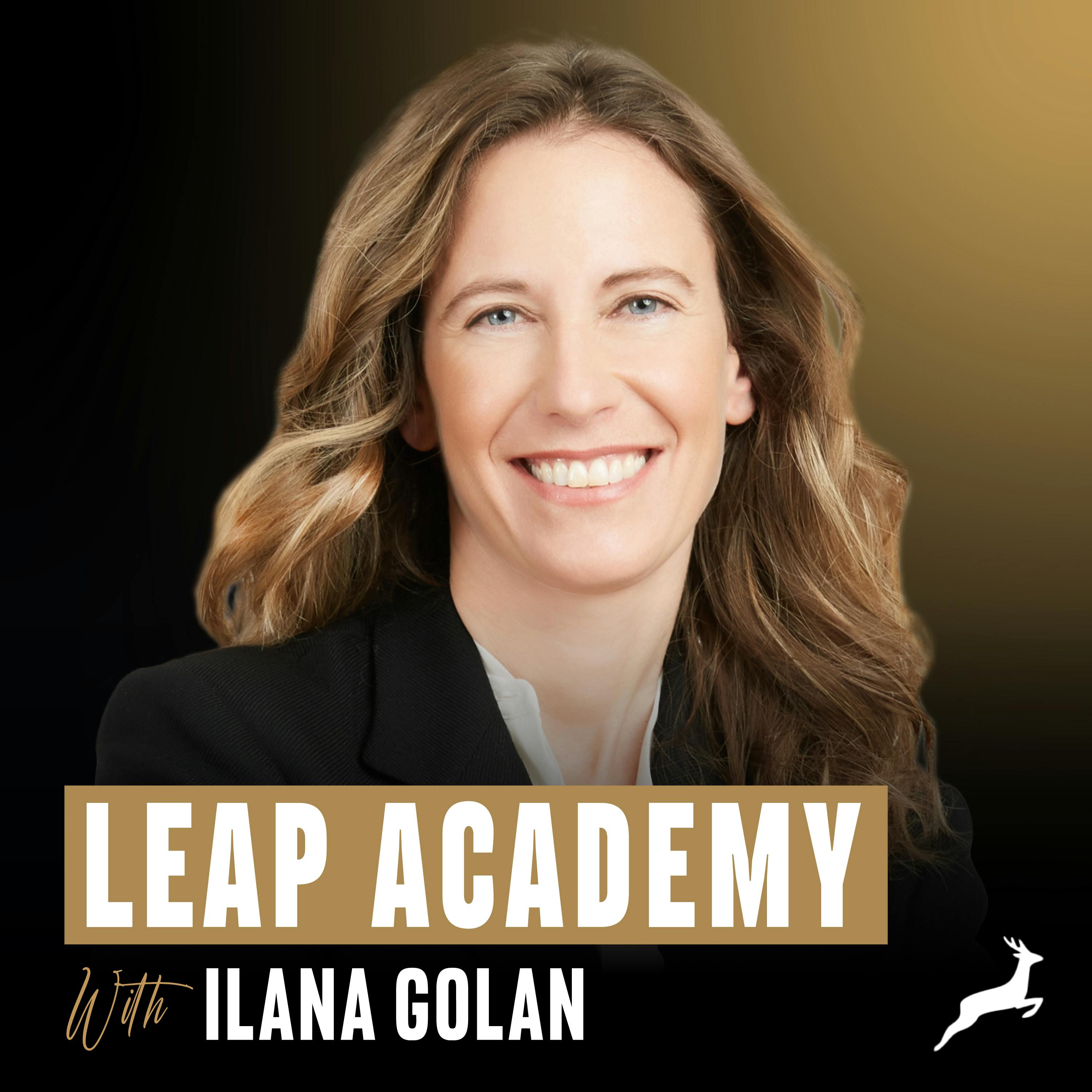
Leap Academy with Ilana Golan
How Reebok’s Co-Founder Joe Foster and Ben Weiss Are Revolutionizing the Footwear Industry | E132
00:50:28
Loading summary
Transcript87 lines
- [00:00]
Ben Wise
Wow.
- [00:00]
Zelana Gulan
This show is going to be incredible. So buckle up and I'm sure you're going to enjoy it. But before we get started, I want to ask you for a favor. See, it's really, really important for me to help millions of people elevate their career, fast track to leadership land, dream roles, jump to entrepreneurship, or create portfolio careers. And this podcast is all about enabling this for millions of people to see a map of what it actually takes for big leaders to reach success. So subscribe and download so you never miss it. Plus, it really, really helps me continue to bring amazing guests. Okay, so let's dive in.
- [00:36]
Ben Wise
You have all these categories in the world, whether it's watches becoming smarter. Phones are incredible. Certain categories we haven't made smarter. And apparel and footwear are definitely one of those.
- [00:44]
Joe Foster
I love the idea of chasing down the rabbit hole and trying to find something different.
- [00:49]
Zelana Gulan
Joe Foster, the co founder of Reebok, he's partnering now with Ben Wise, collaborating on Scintillate, where they're creating the first AI design 3D printed shoes in the world.
- [01:03]
Ben Wise
Earlier, we saw that AI had the capability of doing incredible image generation. So we're like, well, if AI can design great concept artwork, why can't we use it for real shoot making?
- [01:12]
Joe Foster
I do quite a lot of speaking. People say, what are the three most important things about running a business? And I said, well, the first thing.
- [01:19]
Zelana Gulan
Is, what are some of those moments that shake you?
- [01:23]
Joe Foster
We have to decide, what are you? Are you a pessimist? Are you an optimist? If you're in your 20s or your 30s and you feel you're stuck and you're not enjoying what you're doing, if you're not having fun.
- [01:48]
Zelana Gulan
Folks, today we're doing something we've never done before, and we're actually welcoming two builders that are now collaborating on a new venture. Okay, so Joe Foster, the co founder of Reebok, you all heard of Reebok before he took it from a small workshop to a global icon. It's going to be an incredible story. And he's partnering now with Ben Wise, and they're basically collaborating and Scintillate, where they're creating the first AI design 3D printed shoes and in the world. So, Joe and Ben, first of all, such an honor to have you on the Leap Academy show. Thanks for joining.
- [02:29]
Joe Foster
Pleased to be here.
- [02:30]
Ben Wise
Thanks for having us.
- [02:31]
Zelana Gulan
So, so, so fun. So, Joe, I have to start with you because everybody knows Reebok, but I want to take you back in time. I think your grandfather actually had A huge impact on you and how you started Reebok. Can you take us back in time? What made you and Jeff actually jump into the shoe business?
- [02:50]
Joe Foster
We were born into the shoe business, really, because my grandfather set up his company, J.W. foster, in 1895 when he invented the spike running shoe. He was a runner, and he used to go see his grandfather because his grandfather was a cobbler. And as a cobbler, he used to repair cricket boots, and cricket boots had spikes in the bottom. So it occurred to my grandfather, why don't I put spikes in my running shoes and maybe that will help? And they did. So that's where we start in 1895. And he had a lot of success. He became world famous, really. But in those days, we didn't have the media that we have today, so you'd have to be reading the sort of the local sports magazines and things like that. But Chariots of Fire, I imagine you've heard of Chariots of Fire. Of course. The athletes, yeah. Harold Abrahams and Eric Liddell, they both won gold medals in 1924 Paris, which is just over 100 years ago now. And they both wore my grandfather's shoes to get their gold medals. So he had a lot of world records, a lot of gold medals. Unfortunately, he died in 1933. I was born 15 months later in 1935, but I was born on his birthday. So we have a good story there. Yeah. He was called Joseph William. And so I am called Joseph William. Or for short, Joe. So that was my grandfather. When he died, his sons took over. That's my father and uncle, unfortunately. I don't know if you know the story of Adolf Rudolph, the Dasler story. Yeah, the DASA story. They didn't get on, just like my father James and his brother John. They just did not. They couldn't work together, but they did work together, but they worked as separate parts of the business. Whereas the Dasslers had a bit of sense. Rudy got out and set up Puma. And Adi, of course, was Adidas. So my father and uncle ran two companies in one, and that didn't work. And when Jeff and myself became part of the company, we could see this wasn't working. The company was failing. And I told my father the company was failing. But he said, look, when I'm gone and when your uncle's gone, this company's yours. You can do what you like with the company. Unfortunately, I said to my father, really, we don't want you to go. That's not the plan. It's not the plan, you know, but this company will be gone long before you're gone. It didn't make any difference. So Jeff and myself, we had to come to a decision. What do we do? Because we needed a future. So we decided at that point that we would leave the company and set up our own company, which we called Mercury, right? Mercury Sports.
- [05:51]
Zelana Gulan
Mercury Sport Footwear.
- [05:54]
Ben Wise
Yeah, that's the one.
- [05:56]
Joe Foster
Mercury Sports Footwear. And from there on, it was a question of, okay, we're on our own. Now what do we do?
- [06:03]
Zelana Gulan
Yeah, and take me there, Joe, for a second, because you're starting. I mean, first of all, it's scary to go kind of against your father and uncle. Like, there's a little bit of that. And also, you don't have a lot of money in the beginning. Tell us a little bit about the early days. I mean, that was an interesting ride.
- [06:23]
Joe Foster
Yes. Yeah. As far as leaving the company was concerned. Both Jeff and myself had just done two years of national service, so we'd been away from the family. We learned an awful lot with national service. You have to look after yourself and you become more capable. So when we made the decision, we didn't think it was scary. It was just an adventure. So off we went. But we had no money. I had to sell my house to get a little bit of money. Jeff had a little bit there. But we. We bootstrapped it, as Ben knows all about. And that was. That was okay. But it did take us a while. And it was tough in those early days. It was really tough.
- [07:01]
Zelana Gulan
What is tough, Joe? Like, what did you need to do to get resourceful, share a little bit of a story? Because everybody's afraid of it. Everybody wants the dream, but they don't want to go through what you went through.
- [07:13]
Joe Foster
Yeah, well, the first thing we did, we decided to go to college and learn a bit more about shoemaking. Because what we knew was what we learned in the family business that's on the factory floor and bits and pieces. But we. We went to college and we learned a lot more about shoes. Plus, the best thing about going to the college was that we made a lot of friends. We were actually talking to people in the industry. So when we left and we wanted machines, we went to the college and said, do you know anybody who's got this machine and this machine know anyway? And we managed to put together a factory for £250, which is no money today, but for £250. And every time we got a question or a problem, we went to the source. We went to the college. And the college would point us in the direction and say, look, go and see some. So they were very helpful, very useful. And that. And that got us on our way. But of course, the first problem we come across is that we're called Mercury. And. And our accountant. Our accountant said, oh, Joe, you're doing well. You're making money. You're doing all right. You better register your name. And of course, we're 23, 25, very naive. Registered. Why do we need to register the name? We soon learned why we had to register the name. Yes. And we found that we couldn't register the name. It was already pre. Registered by British Shoe Corporation. Were massive, a big corporation. And they would sell it to us for £1,000. But a thousand pounds. We'd done our factory for 250. The bank wouldn't lend you £250. No, we can't do that. They wouldn't lend us £250. So we had to find a new name. And of course, in my book Shoemaker, there's a full story. I'd send you to sleep if I tell you the whole story about that. But we did.
- [09:06]
Zelana Gulan
But you did call it Reebok?
- [09:08]
Joe Foster
Yes, because I found it in an American dictionary. An American dictionary. I won in 1943, during World War II, when we had. They used to call them stay at home, stay at home events. And I won a race and I won the dictionary. And it's only in 1960 when we had to find a new name. My dictionary was there and I'm looking through my dictionary. I. I like the letter R. I don't know why, but I like the letter R. And I started with R and I just thumped through and came across R. B. Okay, Reebok. That's good. We eventually managed to register Reebok.
- [09:53]
Zelana Gulan
That's incredible. Take me there. Like. I think you also needed to live in the factory a little bit. Like you. You needed to hustle a little bit. Like, am I right?
- [10:01]
Joe Foster
Well, that's right. In the factory they did. There was some accommodation. So we managed to sort of move him and use the accommodation and. Which is. I guess that was handy because you just roll out to bed in the morning and you're off to work.
- [10:20]
Zelana Gulan
At least there's no commute. But that sounds pretty crazy.
- [10:24]
Ben Wise
Yes.
- [10:25]
Joe Foster
We actually lived on the factual premises.
- [10:28]
Ben Wise
Yes.
- [10:29]
Joe Foster
Eventually we made enough money to move out, of course, but that's where we started.
- [10:35]
Zelana Gulan
And take me there, like you and you start building Reebok. But it takes you. I think you said 11 years to actually get to America. And I think people usually see kind of the, you know, an overnight success and they don't realize that it took a decade to get there. Can you walk us through just a little bit? What did you need to do in order to compete with Adidas and Puma and what, what was your strategy?
- [11:00]
Joe Foster
Just to answer that last question, we didn't want to compete with them. We wanted to do something different so that we didn't have to go head to head. You know, it's go around the edge, go around the side, go, go anyway. But competing with them would have been a disaster because Adidas owned soccer, as it's known in America. In the uk, they, they own the soccer market. So we had to think, we had to think, what do we do? So we, we thought of white space. This is what we, we decided, let's look for white space was where can we be the Adidas or not? And that was in, in the north of England. We had cross country running, we had fell running, we had orienteering, we had also rugby. Rugby league was something that was just in north of England. So we, we built on that and we were in athletics. And it was a question, how do we build our athletics? And we, we did that by going direct. We went direct to the athletes and we figured a way. In every town in the UK was at least one athletics club. And all these athletics clubs are together in a handbook. Let's say it was the three A's. The Amateur Athletic association produced this handbook and in that handbook was the name and address of every secretary of every club in the country. So we decided our best way was to go direct, make somebody an agent. My first letter got us 100 agents. And eventually after two or three letters, I was about 300 agents. So our business just grew, really grew. Then it was a matter of what do we do? Are we strong enough to go into soccer or do we add more product or do we go into different space? Now from 1958 to 1968, we've got to this point of being quite big in the UK. We're now 1968 and what happens, what do we do? We decided we'd either go to Europe or go to USA. However, Europe had Adidas and Puma and 25 languages and so many different countries. So I suggested we go to America, which the family said, you can't afford that. We can't afford to go to America. However, in a magazine called Eurosport, the British government were advertising they want sports companies to export to America and They would pay for a stand at the NSGA show in Chicago. That's the national sporting goods of America. They pay for the stand, they pay for return airfare, and they pay 50% of the expenses whilst we were there. So it was much cheaper for me to go to America than to stay at home for that week. So I had no objections. Enough. I went to America. I went with a friend. We were making a climbing boot, a lightweight climbing boot for the friend. So we went together. He sold some of his boots, which was good because we made the boots. But I. I couldn't sell any shoes. And nobody, nobody would buy the shoes. And the reason was a lot of them said, oh, lovely shoes. Where do we, where do we buy them? And I'm saying England. They're saying New England. No, not New England.
- [14:23]
Zelana Gulan
England.
- [14:26]
Joe Foster
Near London. Near London, you're right. They just didn't want to import the product. They didn't want to do that. It was, when you've got somewhere where we can buy them, we'll take your product. Okay, So I needed a distributor.
- [14:42]
Zelana Gulan
And for 10 years before that, before that. What makes you not give up? What makes you decide, you know what? You immediately jumped into the solution, like, I need a distributor versus, you know what? This is not going to work.
- [14:56]
Joe Foster
I mean, the answer is, you don't give up. You keep going. But I'm having fun. I'm meeting a lot of people. I got six distributors in those 10 years. I had six failed attempts. Six people who got in there and yeah, they were willing to be my distributor, but it didn't work. So I had six failed attempts from California to somebody in Massachusetts, all over the place. It didn't work. However, in 1977, seven. Whilst we've been trying this, I don't know if you've heard of Runner's World. Runner's World is a magazine, a magazine that grew with running because running started in the late 60s and became massive, became a massive sport. People going out, just buy a pair of shoes and go out training. Millions of Americans were going out running. And Nike started to grow at that time because that was their home market. So we get. I think we got to about 75 and this magazine so big Bob Anderson, who was the editor, he decided he could tell everybody which were the best shoes to wear. And of course, his first choice was Nike. And so in that, in that year, and he said, nike is number one shoe problem. Problem is that Phil Knight was buying his shoes from Asia and millions when once, once he said that he had the best Shoe. Millions of people wanted Nike shoes. They couldn't get them because the production couldn't lift to the, to what was required. So for that year, it was a failure. The next year, Bob Anson tried again. I think it might have been New Balance again. Everybody's buying from Asia. A failure. On the third year, he decided, instead of saying this, this is the number one shoe, he decided to have star ratings. So he would rate the shoes five stars, four stars, three stars, two stars, one star. And that was a time when we realized we knew how to make shoes. Why couldn't we make a five star shoe? So we presented our shoes to Bob Anderson. They did whatever they did. And in 1979, of course, this was coming out early. 1979 was the NSGA show. The shoe editions never came out till about August. So the 1979, this is when Kmart, Kmart came along and wanted to buy 20,000 pairs of shoes offers. They wanted to get into the running market. And at that time we had a couple of years of knowledge of knowing that the shoes needed to come out of Asia, Korea, South Korea was mainly because the price was right. Because Kmart said, yeah, we'd love 20,000, but we need a better price. So I said, okay, yeah, we can do that. I had been talking with people and careers, so we've been working towards that. But also a guy called Paul Fireman came onto the stand. He ran a company called Boston Camping, obviously in Boston. He ran it with his brother and his brother in law. And he was obviously very tired of doing what they were doing within the outdoor business, selling fishing rods and tents and other things. And he said, joe, if you get a five star, I'll be your distributor.
- [18:35]
Ben Wise
Wow.
- [18:35]
Joe Foster
And okay, I've had six failures. So I thought, okay, why not? We'll try again. We'll try with Paul as it happened when the when the 557 that runs world edition came out. It was late July when it came out and I phoned Paul, I said, paul, can you get down to the kiosk and see how we did? Because Runner's World is not available in the uk. He came back about an hour later and said, Joe, you've got five stars. Not only you got Aztec, which is our trainer, you got three five stars. That was it. We were in America.
- [19:14]
Zelana Gulan
Wow.
- [19:15]
Joe Foster
The difference was people wanted our shoes now because we got five stars, we got credibility. And that's what made the difference. Yeah. And if you read the book, there's a few stories about that. Yeah. The things that went wrong. And there Were lots of things that went wrong and the things that went right and the luck that we had. But we talk about white space. We'd been going for two years as a small running company when we came across aerobics. And there was a guy in Los Angeles called Arnold Martinez. His wife was going to these classes and coming back with her friends, and they were full of it. And Arnold said, frankie, what are you doing? And she said, we're doing aerobics. What's aerobics? Nobody knew anything about aerobics. What's aerobics? So she said, well, we're exercising to music. Oh, right. Arnold went to the next class, saw what they were doing. Half the class were in sneakers. Half the class didn't have any shoes on. That's when he had this great idea. Why don't we make a shoe specifically for aerobics for women? So really, Reebok is all about women because women took us from 9 million once we got the shoes right. From 9 million to 900 million in four years.
- [20:35]
Zelana Gulan
Incredible.
- [20:35]
Joe Foster
It was. So that's what really, really made the Reebok brand. Then we went into all the other sports.
- [20:42]
Zelana Gulan
If you're feeling stuck, underpaid, or unappreciated, or you're simply ready to take your career in life to the next level, I have the perfect solution for you. We have a program that helps you fast track and leap your reputation and career. Become the best version of yourself. Get the dream role you deserve, move up to leadership, jump to entrepreneurship, or even build a portfolio career. This program helps hundreds a year, and it will help you gain the income, influence, and impact that will transform the second part of your life. Watch our free training today@leapacademy.com free training. The link is in the show notes. Now back to the show. I love that you mentioned white space, right? Keep looking for that white space. Where. Where is the. The difference? But I think also just realizing that you're continuing when it's really, really, really hard. Because I think this is where a lot of most founders. This is where they stop. And right before we gonna move to Ben as well. Like, were there moments that. Because I know you talk about Jeff when he's passing and like, what are some of those moments that shake you to say, I don't. I don't know, like, you lose your footing a little bit.
- [21:57]
Joe Foster
I think that we. We have to decide what are you? Are you a pessimist or are you an optimist? And the optimist has that. Never give up. Why? Why do you give up? We're doing okay. Okay. We had at least. At least two events that would take us out of business. And that's where your luck comes in. I met a very good lawyer who got us off the first one. And so. And things happen that our distributor, by this time we had a distributor in the uk, he went out of business. And that nearly took us out of business because 90% of our production were going through them. So we had to think of different ways. And we just went around to all the schools, went to the PE teachers, the physical. And they became agents as well. So we were selling through those. So we had a number of those initial problems where. And of course, having six distributors in America that didn't work. You know, each one was like a failure. But I think that gives you a bit more sort of strength. It's surprising the strength he got. And we had a lot of top American runners even before we got into American distribution with a lot of top American runners wearing Reebok. And there was an English runner called Ron Hill, which I think is in about 1968, 90, about that time when he won the Boston Marathon in Reebok and brought the record, he brought the song. It was a lot of good things going on in America. It's just that we getting into the trade, selling direct. If we'd have been all the. A bit like Nike, he was selling direct out of his garage. That's how we started. And that's how we started in the uk. We were selling direct from our factory to the consumer, to our runners. And I guess if we'd have been in America, we'd have done it the same way that Nike were doing it, maybe a different story. But we got into America and we did move. And in fact, we grew bigger than Nike, we grew bigger than Adidas, and we became the number one global sports footwear brand, which was incredible.
- [24:16]
Zelana Gulan
Incredible.
- [24:17]
Joe Foster
Yeah. Those are the moments when.
- [24:18]
Ben Wise
Wow.
- [24:20]
Joe Foster
Incredible. You know, I haven't seen this happen.
- [24:22]
Zelana Gulan
Ah, goosebumps. Joe, I think I'm hearing two things that I want the listeners to pay attention. Like when your back is against the wall, you're actually getting more creat about finding solutions, which I think, you know, it's. It's pretty interesting. And how do you build the conviction to continue, Joe? How do you build the evidence? And I get what you're saying. I like being an optimist. I'm an optimist, by the way, but sometimes too much.
- [24:50]
Joe Foster
Right.
- [24:50]
Zelana Gulan
Like, my husband is like, sometimes, like, are you sure you still want To. I'm like, yeah, but how do you build that evidence, that conviction, when you are looking at a failure or a disposition that didn't work out.
- [25:08]
Joe Foster
As you know, we changed our name. We also changed our silhouette because four years into our business, our silhouette was two stripes and a T bar. And Adidas wrote a letter. Well, the lawyers wrote a letter and said that we were infringing the three. Three stripes. We. We thought. Well, we. We don't think it infringes, Mark. But why. Why do we want to fight Adidas? Why do we want to go into that? We don't. So at that time, what we learned is that problems, challenges are actually opportunities. They're opportunities. And so every challenge became an opportunity. What. What can we do? How can we change this? And. And I think having that challenge and gets you to the point where, Come on, challenges, bring them on. We love challenges. We love these problems because we can do something about it. It allows us to change. And so if you consider that they say you've got so many opportunities coming at you, if nobody challenges us, I don't know, maybe we'd never have been a big company. But, you know, those challenges of changing your name, changing your silhouette, and the many other challenges that we had. And this is where the optimist comes in, right? The optimist said, we can do something here, and we come up with better ideas. It was great fun. Plus the fact that once we got into Hollywood and we got a lot of the stars were in our product, that became another wonderful thing that happened to Reebok.
- [26:41]
Zelana Gulan
Huge milestones. I love the story. I can probably talk to you for hours, but Ben, I want to bring you into the discussion. And Ben, speaking of being resourceful, he, you know, if you are on YouTube, you'll see that he's in a park and, like, he got really resourceful about how to join us today. So, first of all, Ben, thank you for being here.
- [27:02]
Ben Wise
Yeah, thanks for having me. It's great to be a part of this.
- [27:05]
Zelana Gulan
Take us a little bit back in time. Who is Ben, and why do you decide to go into the shoe business? And how do you find Joe?
- [27:14]
Ben Wise
I believe for a long time that there is this really big opportunity in the world, Alana, to back content creators with their own shoes, like athletes, and also to shift footwear category to a technology category. You know, you have all these categories in the world, whether it's watches becoming smarter. We now have, you know, phones that are incredible. But we haven't certain categories. We haven't made smarter and apparel and footwear are definitely one of those. So this idea, I think putting that together is what I was thinking about for some time. And I want to figure out how do I back content creators with their own shoes, like athletes, and make it more affordable and accessible? So I wanted to go the traditional shoemaking route and figure out, you know, what can we do there? How can we make that possible, make it much lower cost to be able to do, and also much quicker to put shoe designs out. And I really need somebody on my team that's been there before, understands that and, you know, is world class in this space. And there's nobody better than, you know, Joe Foster, the founder of Reebok, who took it from, as you mentioned earlier, and he discussed, you know, from a factory that he was sleeping in to the bestselling shoe brand in the world. I mean, there's pretty much nobody else in the world, barely anybody that's ever achieved something like that in a category. And to have Joe's, you know, advice and advisory and just bringing his insight and wisdom to this is incredible. I've read his book Shoemaker. I really enjoyed it, and I thought, you know, I've got to get him on my team. So I just reached out to him online, you know, cold reached out and said, hey, I would appreciate you, you know, taking the time to look into this. And he and Julie, you know, I've been supportive. After a couple of conversations, they. They said, we'll jump in and take me there.
- [28:41]
Zelana Gulan
Because again, a lot of people want to reach their idols or their role models, but first of all, they don't know how and they won't do it, or they have no clue what to say. And also for Joe, why did you say yes? So I kind of want to hear about that moment because again, this is. This is very pivotal, and I think most people will stop before even trying because they. They assume that they can't get Joe to help him out.
- [29:08]
Joe Foster
Right.
- [29:09]
Zelana Gulan
Like, so, Ben, first of all, what made you reach out, do it, and how exactly what did you say? You think that actually made a difference for Joe?
- [29:19]
Ben Wise
First of all, I mean, it has to make sense when you're reaching out to somebody. I was aware that Joe created Reebok, built it to the bestselling shoe brand in the world. I wore Reebok growing up. I still wear Reebok today. It's an amazing brand, and I saw that he sold it, right? So he wasn't a part of it anymore, so he could be able to even advise me. So it had to make sense for him to. I saw he was speaking about what his book and, you know, his journey. So I thought he was. Would be more open to giving back advice. So it had to make sense from that standpoint. And then just about persistence and, you know, and just, just shooting your shot. What do you have to lose if you, if you reach out and someone says no, so you try something else, you know, I mean, or you could potentially have someone say yes and, and it could change the trajectory of what you're doing. So I thought it was worthwhile to reach out. So.
- [30:00]
Zelana Gulan
So tell me for a second, because I also want to hear Joe on this because there's a huge people's pile. Like, I'm sure you're not the only one reaching out to Joe. So how, first of all, do you find a way to differentiate yourself? And then I want to hear Joe, what did you see in Ben that made you say, I want to give this a shot or at least listen, right, Ben, take me there for a second. How did you structure it?
- [30:25]
Ben Wise
Yeah, well, I mean, I wrote to Joe, explained to him the size of the opportunity. Alana, you know, like, I believe in the content creator market of backing social media influencers, YouTube stars, TikTok influencers, Twitch streamers with their own shoes, like athletes. No, I think that's bigger than the athlete market. Those people today have just as much influence, if not more. They're more engaged with, they're getting engaged with every single day. And their growth is a byproduct of their direct relationship with people who watch them. Very different from some of the athletes. You know, their following is a, is a byproduct of how they perform. And it's not the same way when you're communicating with people. So, you know, I just didn't understand why this category wasn't getting athlete level treatment from apparel standpoint, from a footwear standpoint. And so it's Joe on that. And Joe is, like you mentioned earlier, it's about doing something different when you ask him the question around, you know, Puma and Adidas and copying these brands. And so this is white space. We found a white space. And Joe's all about white space.
- [31:17]
Joe Foster
Absolutely.
- [31:18]
Zelana Gulan
Oh, I love that. And by the way, when I heard about the idea, I was like, oh, my God, like, this makes so much sense. Maybe we should have one for Leap Academy. Anyway, so I love the idea. So Joe, what made you listen to that and say, this is a good idea? Like, I might want to give it a shot, or maybe it's Ben that you liked, how you reached out? What was it that caught your attention?
- [31:39]
Joe Foster
It really is a combination. But certainly what Ben was talking about was, for me, white space was so important. For me, I love the idea of chasing down the rabbit hole and trying to find something different. And this was, oh, why not? It was good. And as you know, with Ben, he persists, he keeps going. Ben can get where Walter can get. Yeah, that's the thing with Ben. It's their enthusiasm. So you mix the enthusiasm with an idea, and the idea is in white space for footwear, it's compelling. And for me, that's it. And I think we're having fun. I think that now we're having an awful lot of fun. And that's also so important because I do quite a lot of speaking, and people say one of the three most important things about running a business. And I said, well, the first thing is fun. You've got to have fun. And the second thing is you got to have more fun. And the third one is it's got to be a hoot. It really has to be. So for me, this is what Ben is. It's like enthusiasm. It's that fun. And, you know, if you're a pessimist, if you come up and say, oh, I don't want to. You don't know what to do, then get out of it, move as it. Don't do it. But if you can come against the blank wall and say, oh, okay, now do we go around? Do we go under? How do we. How do we change this? And that is half of being in business. The product itself has to have a. Has to have an influence, has to have somewhere to go. But the people driving it must have that energy. And Ben came to us with that energy, and we've been going at it ever since.
- [33:19]
Zelana Gulan
When was it, Ben, that you reached out the first time?
- [33:22]
Ben Wise
I reached out to Joe, I don't know, like, almost two years ago. It feels like now it's been a while. And then he said he was. He was visiting Fort Lauderdale shortly after. So I was like, for Lauderdale and Boca Raton. We've definitely got to meet up and try to present the plan as best as I could there. Yeah. And it's just, you know, it's incredible to have Joe and Julie advising us and helping. I think it just accelerated us so much more. You know, obviously there's the media opportunities, but it's also just the wisdom and insight into footwear making, you know, and how to design stuff better. And Joe has This principle about vis tech that I really like and we have a new product coming out soon with that. But we've also kept this in everything we do. Where you want to show the technology innovation visibly to the consumer so they don't have to understand, oh, this foam is different from that one. When it looks the same, needs to be visible. And I think there's so many great principles like that that I've been able to learn from Joe and apply to Scintillate.
- [34:13]
Zelana Gulan
So take me there like you guys are trying to or actually disrupting a really big market. You're using all the latest and greatest technology with AI for design and the 3D printing and like, take me there. Like how do you even chew on something so big? Like, how do you break it down to little pieces?
- [34:35]
Ben Wise
Well, earlier we saw that AI had the capability of doing incredible image generation. You can make all these images with ChatGPT or different AIs that you're using. There was a lot of capabilities. So the three biggest problems in footwear today, Alana, for content creators getting their own shoes or for brands making original designs from scratch and why so few people even get that opportunity is because you have a very expensive design cost. It can take many months of sketches and you have to really hire the right person. Then you have to turn that, you know, generally into some form of 3D. You have a tech pack that's required of all these specifications. You also have molds. You have a mold cost of 2 to $4,000amold for size 6, 7, 8, 9, 10, 11, 12, 13 and every half size in between per one of them. And then you've got your minimum order quantity of how many shoes you have to produce. You could be a couple of thousand pairs to commit to you with the manufacturer. You're looking at potentially hundreds of thousands of dollars, if not second seven figures plus it's an 18 month time frame generally industry wide to make a new shoe. So there had to be a different way to back content careers, which there isn't any case study necessarily for these people. Yes, they can sell hat, shirts, shorts, hoodies and everything under the sun, merch wise. But you know, we need to build that out. So we're like, well, if I can design great concept artwork, why can't we use it for real shoot making? And we applied this to real shoe making. We are able to use AI to create a 3D model instead of doing it by hand to create patterns and textures, to generate them, you know, and to create a lot of really high quality Concept artwork that we can base our design on. Then we decided, let's 3D print. No molds required with 3D printing. And we can print on demand. So when somebody orders a scintillay shoe, it's made for them. And you can do some cool stuff with 3D printing, like making custom fitted shoes. You can get the perfect fitted shoes from a scan of your feed, online or in person. Our new store experience in Times Square. So it's a whole revolution, man.
- [36:13]
Zelana Gulan
I love it. I'm a techie right here in Silicon Valley, and I really appreciate the tech and the ideas and the innovation behind it. So for those who are listening, we have senior leaders, executives, you know, in some of the biggest corporations. We have founders in, you know, various. We have venture capital, we have private equity. What are some of the biggest things that you want them to know about Scintillay?
- [36:37]
Ben Wise
Scintillay is a brand that has this type of DNA that Joe was using when he was building Reebok. It's all about something different, this white space. So we're not trying to compete with, you know, Puma, Nike, Reebok, Adidas, any of them. You know, they have their own lane. We're trying to carve out an entirely different lane of taking the essence of lots of these really talented people and putting them in these shoes. You know, if you want to be like your favorite Twitch streamer, which half the youth today wants to be, like, content creators, they need to be able to feel like they can walk in their shoes and feel that type of greatness in the same way that you want to play like an athlete in their shoes. So that's what we're channeling over to this area and we want. That's what Scintillate is all about. That's why it's called Scintillate. It's based off the word scintillate. To shine, you know, to go in that direction, to. To be able to have shining bright in whatever direction you want in life. That's what we represent as a company. We're backing these creators now. We've signed 17 different collaborations which will come out soon, and more of them we're working on, and now we're expanding into. Into retail, you know, much more. But we think there's an opportunity for something much different in this space, and that's what we're all about.
- [37:34]
Zelana Gulan
And Joe, you continue to enjoy this ride, it sounds like.
- [37:39]
Joe Foster
Well, absolutely, because Ben is not stuck in a rut. He's looking for something different, and he's willing to push that envelope. Whether it will work in its present form, we don't know. We're happy to take the next step. The problem with 3D is that you can't do tremendous volumes. And the footwear industry, great volumes. Okay, so we're looking for the 3D manufacturers, the manufacturers machinery. Come on, you know, get. Get those machines working quicker. Get them a bit different. Can we. Can we now develop machines which will use more than one material that you go into? How can we develop that area? Because if we do this, we can actually manufacture in America. It's as simple as that. A million machines in somewhere in America just turning out scintillated shoes. Think about it. You know, this is different because right now, everything comes out of Asia. And at this moment of time, to take footwear and apparel and put it somewhere else is difficult because of making. Building the factories and having the workers, having people to Mando Station. It's not in Europe anymore. It's not in America. More technology. That's where people work in America. It's on technology. It's on something. Not just sitting down repetitively doing something. Even the car industry now uses robots. They've got to the point where so many robots in the car industry, I think the footwear industry has a few robotics in there, but mainly not. And if you want performance, performance shoes will remain difficult to make outside of Asia because they do require a lot of people. But we look at the street, and when we started, Jeff and I started in the late 50s, we were just performance. Now that performance has influenced street so much that you look around us street now, and they're all wearing a sneaker or a sneaker derivative. Something that's been driven by sneakers. And that has gone to clogs. We've gone to clogs and slides. So it's moving slightly away from sneaker manufacture into a more, we'll say into a product which can be molded as against. Just made and put together with say, 50 components to make a shoe. Now we're looking at, how can we do this with less? How can we do it with one? And it's moving that way. So what Ben is working on now, we're coming together with the fashion movement. We're coming together. People are looking more. So this is a white space, and Ben's pushing that, and we're happy to go. He has friends in the. In the rocket industry who are sending rockets into space. And, you know, they come across with, why don't we send a computer in space? That's because of the CO. The computers require so much electricity, and so much CO2 is sort of the result of using that much electricity. So we have that, and we want to reduce CO2. Well, it's just a question. Will design an issue in space not produce CO2? And as you can see. Is that fun?
- [40:50]
Zelana Gulan
It is fun. It sounds like you're having a ton of fun. And I think you also mentioned in some conversation, maybe even in your book, is that sneakers never had recession, which is kind of an interesting observation that, you know, like, we're only needing more and more sneakers. We only want to move around with more and more comfortable shoes, if you will. And you're right, Ben, that we also want to follow other people's shoes, you know, as we see them on stages or on TikTok or on YouTube. And it sounds like you're basically jumping on the same wagon. The fact that there is no slump there, if I understand correctly, right? Like, you're basically like, if everybody's still going to use comfortable shoes, let's. Let's take advantage of it.
- [41:39]
Ben Wise
Yeah. I mean, we. We want to build shoes that take the essence of these people and put it into them in the same way that, you know, there was the. You wanted to be like Mike. You wanted to wear Michael Jordan shoes because you felt like you could play like him in those shoes, you know, And Reebok's done so many incredible collaborations around a concept like this in different categories that weren't thought about. I mean, they did a 50 cent shoe a while back that was really interesting, you know, and it's like, how do you go and put the essence of these people? But the youth want to be like. They don't necessarily only want to be like the athletes today. Most of them want to be these content creators. So we think that's an area. But also the space needs to, you know, adapt to how people are interacting, like, socially. You have video games that are becoming the future of how people communicate after school. These young individuals, these young kids, why aren't there isn't their fashion in games prioritized as much as it is, you know, in real life? When if they spend three or four hours there, I mean, that's a serious social hub. So there's a lot of really great white space that we're exploring that we haven't seen other brands go into in our own way, you know, and we want to continue to go down that path as we continue to create. But now we're onboarding creators. We've. We've proven Out a system. We made the first AI design slide in the world. It was a breaking news story on the front page of USA Today, was mentioned in all different papers around. And our process there now makes content creator shoes accessible. It's 3 months to make a new shoe. It's not 18 months, it's 1 100th of the cost. We can put out a shoe and test it without the same kind of inventory.
- [42:57]
Zelana Gulan
I love that some of our listeners are feeling stuck in their career. Maybe they were laid off or maybe they're trying to figure out what's next for them. What are some advice that you would say to them or maybe an advice to your younger self? What would that be?
- [43:14]
Joe Foster
Well, all I can say now is there's never been a better time in generations for people to be doing something that they want to do, working for themselves, having the satisfaction of creating something. There's so much creativity, technology. For me, it maybe happened 70 years ago, but right now I don't take technology that easy. But now the youngsters, they're so much into technology and technology is there. We had Julia a seminar on AI yesterday by somebody again who is a leading AI expert in America. And okay, so she knows a bit, she learned a bit more. And I think if youngsters today, they're dissatisfied, they can't see a future, they should start to think optimistically, well, what could I do? How can I design a taxi which is really, it's going to fly? What can I do to change this world? And they have the medium now it is a question of look at yourself. And I'm sorry to say, if you're a pessimist, it's going to be difficult. You've got to be an optimist. You've got to look in the area that it won't work. Oh yes it will. You've got to have that determination. And what you'll probably find is it doesn't work, but if I just tweak it a bit, it will work. So you've gone down the path which, okay, I need to take a left turn now and I need to do that just because I've learned an awful lot, but I need to change. It's like if you're in a job and you're not enjoying what you're doing, if you're not having fun, change, go somewhere else, you're not having fun, move, don't. You've only got one life. I mean now at 90, I've had a very enjoyable life. But if you're in your 20s, or your 30s and you feel you're stuck, get out, move, do things. And we meet an awful lot of people through the book, and we're actually writing other books now and meeting people and people who survive, and then they find a way to thrive. And that's what we're doing now, surviving and thriving. So don't stay with something that doesn't work. Get out there, you know, try something different.
- [45:39]
Zelana Gulan
I love the optimism and I love your curious questions. Like, I think the way you're positioning the questions forced you to think creative and answer yourself in a creative way. Ben, I would love to hear you too. Like, what would be your advice to these people? That they know they're meant for more and they're trying to figure out, how can I achieve more? What can I do? I'm scared of no money. Or I'm scared of, like, what if it fails? And, you know, what if I look dumb?
- [46:07]
Ben Wise
I think it's just about, like, you live one life, you know, and if you want to go after your dreams, it's either you go after them or you don't. You know, it's not going to happen if you don't. If you do, you have a shot of it happening. So I think it just comes down to that. Like, that's how I look at it. Like, I want to get my dream. I want to build something that could have a big amount of impact, greater than just me talking to one person. It's, you know, a platform level. And the only way to do that is to just try to take one step at a time forward in that direction. You know, what do I have to lose? Like, I'm going to learn from the experience. I'm going to learn from the failure, learn from the success. As long as I analyze, you know, and I'm just going to try to keep those, take those lessons and apply them to myself and get better every step of the way. So every. Everything I do, regardless of success or not, as long as I'm internalizing and analyzing, you know, analyzing what I. I've done there, you know, to try to get better, I'm going to get better. So I think if people look at it like, from that perspective, like, let me just try something. Let's see how far it goes, have the confidence in themselves to go after it, I think you're getting it a lot further than. Than you're. Than not. And maybe you'll have a success and, you know, and your journey is going to be great because you're actually doing something in the path of, of what you love so that I would just say, gotta go for it. That's it.
- [47:18]
Joe Foster
You can be too old. However, it's better when you're young.
- [47:24]
Zelana Gulan
I love that and I love the optimism and I love the vibe and the energy that I'm hearing. Thank you, Joe. Ben, I'm wishing you so much luck. Continue of happiness, like let's, you know, disrupt this incredible market. And I can't wait to have you back on the show sharing that success story.
- [47:42]
Ben Wise
Thanks for having us.
- [47:44]
Joe Foster
Yes, Alana, thank you, thank you. We'd love to come back when Ben gets to his first billion. Maybe.
- [47:49]
Ben Wise
Okay.
- [47:50]
Zelana Gulan
Well, yeah, 100 million is cool too, next year. I love it. If there's anything that we can do to help, let us know. Thank you so much for coming to the show.
- [48:01]
Joe Foster
It's been an absolute pleasure. Thank you. Valana.
- [48:15]
Zelana Gulan
I hope you enjoyed this as much as I did. If you did, please share it with friends now. Also, if you're feeling stuck or simply want more from your own career, watch this 30 minute free training@leapacademy.com training. That's leapacademy.com training. See you in the next episode of the Leap Academy with Zelana Gulan show.