← Leap Academy with Ilana Golan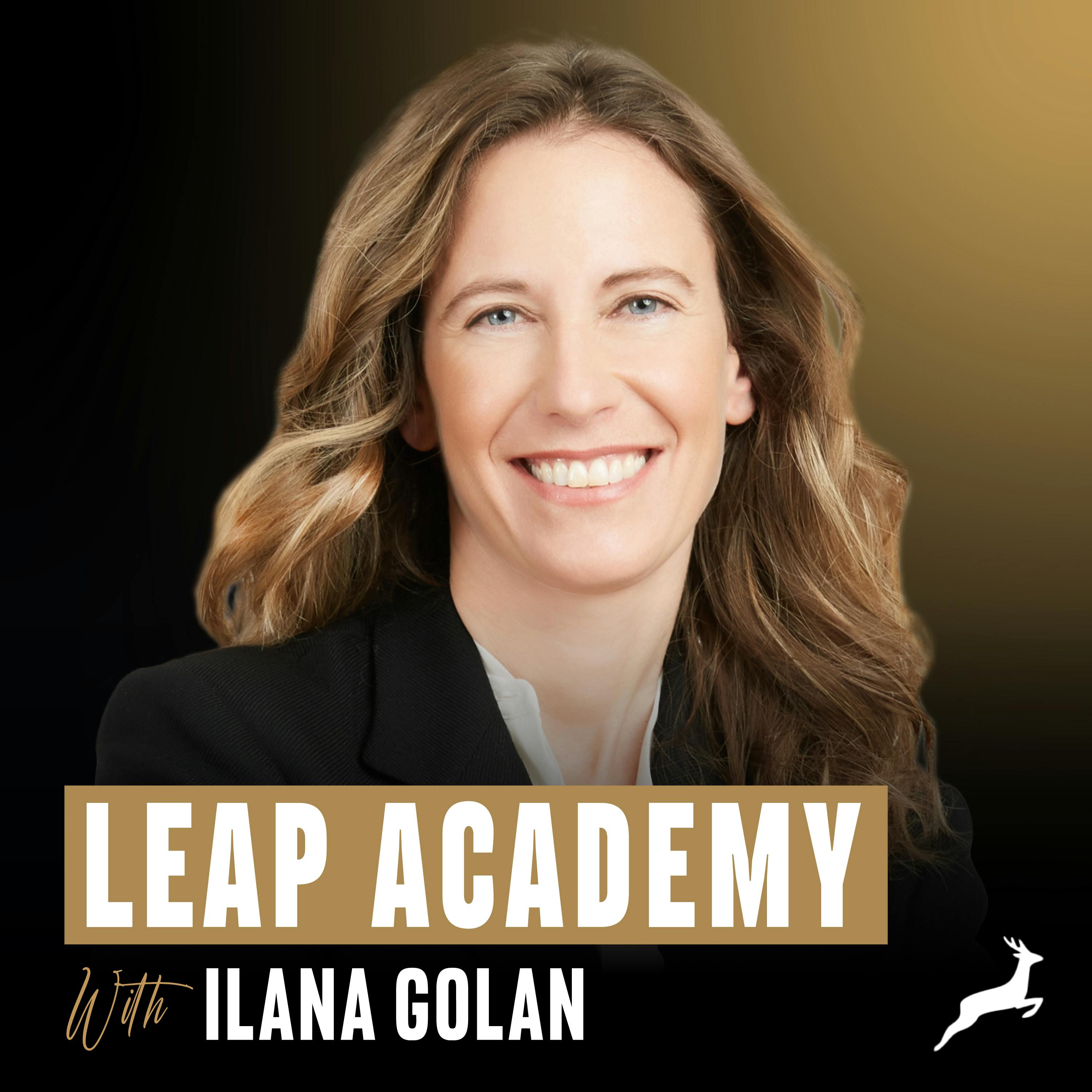
Leap Academy with Ilana Golan
Inc. & Fast Company CEO: How Stephanie Mehta Redefined the Path from Editor to CEO | E144
01:01:14
Loading summary
Transcript64 lines
- [00:00]
A
The thing about journalism that I love is that it is a big tent and it requires all different kinds of talents. I loved every minute of it until I didn't. I took what I think most people would look at on paper as, you know, a lateral move or a step back. At that point, I was confident enough in my abilities to believe that the promotions would come.
- [00:23]
B
How do you move from journalism to writing in prominent publications like Bloomberg Media, Fortune Wars, Teeth Journal, and then to leaping to C suite of global media powerhouses? I am so, so excited to have Stephanie Mehta with us today.
- [00:40]
A
I had a little bit of imposter syndrome when I first found myself at the Wall Street Journal in particular. But once I had been there for a few years, it was very clear that if I wanted to thrive and succeed there, I needed to raise my hand for a different kind of opportunity. I would say to young Stephanie, relax, enjoy the work. Enjoy what you're learning. You will get there.
- [01:03]
B
The world is how do people rise above the noise?
- [01:07]
A
Now it's really important to know what your priorities are.
- [01:11]
B
How, as a CEO, do you prioritize?
- [01:13]
A
A couple of things I would say.
- [01:17]
B
Welcome to the Leap Academy with Ilana Golan show. I'm so glad you're here. In the Leap Academy podcast, I get to speak to the biggest leaders of our time about their career, how they got where they are today, the challenges, the failures, and countless lessons. So lean in. This episode is going to be amazing. I'm on a mission to help millions reinvent their career and leap into their full potential, land their dream roles, fast track to leadership, jump to entrepreneurship, or build portfolio careers. This is what we do in our Leap Academy programs for individuals and teams. And with this podcast, we can give this career blueprint for free to tens of millions. So please help my mission by sharing this with every single person you know by because this show has the power to change countless of lives. Dio. Okay, so let's dive in. I am so, so, so excited to have Stephanie Mehta with us today. Throughout her career, Stephanie literally mastered the art of leaping. And we're going to talk about knowing when to leap and how to leap and the challenges that come with it. And in this episode, I love to just jump into these pivotal career moments and those big bets that she has taken. And the advice that you are going to get is going to be so incredible. So lean in. Buckle up. Stephanie, so great to have you with us.
- [02:50]
A
Thank you. Alana, thank you so much for having me.
- [02:53]
B
You studied English and journalism. When did you know in your childhood or afterwards? Like when did you know that this is it, this is what you want to study?
- [03:04]
A
It's interesting. I went to college thinking I was going to get a degree in English and maybe go into book publishing. So I was interested in the written arts, but I thought maybe I might get a law degree. I really didn't quite know what career path I was going to take, but I went to a university that had a really strong journalism program. And the woman who lived across the hall from me at my dorm freshman year came back into the dorm one day and she had a copy of the school paper and she had the front page story. As a first year student at university and having not worked for my high school newspaper or had any experience with media at all, I just thought this was the most miraculous thing in the world. And again, this is the days of print journalism. This was pre digital. So the fact that you could walk into the newspaper at 5 o' clock on a Monday evening and by 6am the next morning your name was on the front page of the college paper. I just thought it was magical and I wanted to know more. And she let me tag along and follow her into the paper and they let me join the new reporters bureau and I was hooked. I just thought it was a combination of all of the things I loved it was writing. But it was instant gratification because you weren't working on a five page term paper. You got to go and ask people impertinent questions which who doesn't want to do that and to get rewarded for it. But it did feed my curiosity. And so from that point on, as I said, I was hooked and began to pursue summer internships in journalism to really ensure that it was what I wanted to dedicate my life to. And had so many amazing mentors and experiences along the way that just solidified my passion for the profession.
- [04:58]
B
And I want to go there for a second because you did write for the college newspaper. But I think what I'm hearing is also those internship allowed you to experiment and test different things because this is how you learn. Every time you want to reinvent yourself, there's a little bit of a testing that you could actually do. So talk to me a little bit about when you are starting to write for the newspaper and then you go to become a reporter in the Wall Street Journal. Talk to me about those early days.
- [05:27]
A
We didn't use this term back then, but I felt I had a little bit of imposter syndrome. When I first found myself at the Wall Street Journal in particular, because it was pretty early in my career. I had been working for a local newspaper for two years. I got recruited to come up to the Wall Street Journal. I was working in the Small Business Bureau, which turned out to be amazing foreshadowing because I now dedicate a lot of my time thinking about entrepreneurs and founders. But back in the early 90s, writing about small business for a publication like the Wall Street Journal was not the place to be. It was a small bureau. It was never the stories that were getting on the front page. The Wall Street Journal at the time was completely focused on covering justifiably, the world's largest publicly traded companies. And so I was in a small bureau that was not at the center of attention. I was relatively young in my career, and so I really felt every day that I didn't belong there, that I was not part of the cool kids club at the Journal. And at the time I was there, it was also a very competitive place. So there were a lot of people who did not want to share resources, share bylines, a lot of sharp elbows. I learned a lot, and I don't blame people for being sharp elbowed. But it was not a particularly nurturing time.
- [07:01]
B
What do you think you got out of it, though? I do want to reflect on that for a second.
- [07:06]
A
It reinforced to me that at a place like the Journal at that time, I really needed to change jobs, to be in a place that was getting the plum assignments, where I was getting the kind of visibility as a journalist that would ultimately pave the path for my career. I'm still in touch with my first boss there. We exchange holiday cards every year. I'm grateful for the nurturing, and I didn't realize it at the time, but I probably wasn't ready for one of those more ambitious jobs. I needed a little bit of a gentle entry into the Journal. But once I had been there for a few years, it was very clear that if I wanted to thrive and succeed there, I needed to raise my hand for a different kind of opportunity. I did need to cover those big publicly traded companies. I did need to write about mergers and acquisitions. I did need to write about big strategic changes going on in business. So I had the presence, and I think some people probably around me were encouraging me to raise my hand for opportunities that would get me that kind of experience.
- [08:21]
B
You mentioned at some point I heard you say that there's a difference between a good reporter and a featured writer. What is the difference? Like, if somebody is, like, ignorant like me, like I'm sure some of our listeners are not coming from this world. What is the path and what are the differences?
- [08:40]
A
The thing about journalism that I love is that it is a big tent and it requires all different kinds of talents. So when I was at the Journal, there were a lot of people who were great reporters. They could talk to sources, get information that nobody else had, confirm that information. It's very important to say that all the places I've ever worked, we don't publish things that we don't confirm from multiple sources. But just on the strength of their ability to gather information, they were able to have really successful careers without ever having to be masterful writers. And then there were people when I worked in magazines where they could take the thinnest of information but turn it into a beautifully written story. And that was also rewarding for readers, just in a different way. And then I think there's a third camp that I really didn't figure out until much later that I fall into, which is I'm neither a brilliant reporter nor a brilliant writer, but I can edit. I can see the information in a story, and I sometimes liken it to A Beautiful Mind, where there's all of that information on the whiteboard, and then the scientist can see how it all comes together. And so sometimes for me, I can see disparate information on a page. But I have that ability, and that's probably my strong suit, is the ability to say, here's how we need to organize the material. Here's what's missing, and here's how we can turn this into something that is useful for readers, but also easy to consume. That's a third path, and journalism needs all of those things.
- [10:31]
B
Well, first of all, thanks for explaining. Like, I didn't even think about that, but. So at some point, you jump to Fortune magazine. Take me, first of all to why. Because I think for a lot of our listeners, maybe they know that they want to make a change, but sometimes you don't know when you want to make a change, Right? Like sometimes circumstances force you, and sometimes you deliberately decide that this is your time.
- [10:56]
A
I felt going back to the buckets of skills you need to be a successful journalist, I was learning how to be a really great reporter at the Journal. I had been in the same. We call them Beats. You have an area of expertise. I had been covering telecommunications for about three years. I had really good instincts on who to call to get information. I knew how to advance a story or advance a theme. But the Journal is a place where it's less so today. But at the time, it was pretty formulaic. There was a house style, There was a way of communicating information. And so I started to feel like I was stagnating a little bit, and I wanted to learn the art of magazine writing. And this was a time when, in the late 1990s, early 2000s, magazines were going through this major, major renaissance. There were a bunch of magazines being created. There was a lot of advertising being fueled largely by your old friends in the tech world. This was Oracle and Cisco, and all of these Silicon Valley tech giants were really, for the first time, starting to advertise in magazines. And so as a result, there was just a ton of advertising available to magazines. And they were looking for writers to fill the pages. And so I was lucky enough to be one of those folks, so made the leap to Fortune, where I was really able to work with some amazing editors. That helped me understand how you write a magazine story.
- [12:34]
B
You know, when I look at your journey, sometimes it is all about more, more, more. I gonna learn more. But I think sometimes, and some of the best moves, and I talk to a lot of leaders, sometimes the best moves are actually the lateral moves, or even you need to sometimes take a step back in order to grow in a tree that is more relevant for you or climb a ladder that is more relevant for you. Right. So take me a little bit to some of these moves that you made and how do you differentiate for them? And maybe give me an example.
- [13:06]
A
I think my move from the Journal to Fortune was very much a lateral move. I was actually a deputy bureau chief. That's what they called them at the Journal back in those days. There was an editor of our section and I was one of the deputies. So I had a nice career path at the Journal. I was editing and writing. I had opportunities to interact with the top people in the organization. But as I said, I felt like it was stagnating from a skills perspective, maybe not professionally, but from a skills perspective, I didn't think I was growing. And so Fortune really did offer me an opportunity to try something new. And Elana, I say this all the time. I'm coming from a place of incredible privilege. I had the opportunity to make a lateral move. The money was comparable. So I didn't feel like I was going to have to take a step back from a lifestyle perspective. At the time, I was just getting married, but didn't have kids. So there were a lot of advantages I had that allowed me to make a move that was the right thing for Me, from a skills perspective, I know that it's not always that easy for people to make those kinds of moves because there are financial considerations, because they have obligations that require them to stay where they are. So I want to be really, really self aware in saying that I had the benefit of being able to make this move. But yes, I took what I think most people would look at on paper as a lateral move or a step back. But I also felt like two things. One, I knew I would learn a lot. And two, at that point, I was confident enough in my abilities to believe that the promotions would come. And they did.
- [14:55]
B
Exactly. But the beautiful thing, and I think I want the listeners to hear this because sometimes it's only about the title or it's only about the pay. And it's true. Sometimes something is really important for you and you just need the pay or you just need the title. It's okay no matter what your criteria of success is. But sometimes it is about what is eventually the outcome or what am I trying to create? What kind of life am I trying to create beyond just a paycheck? And I think sometimes you need to go sideways to go on the right area. And I love that you did that. So. But you've been in fortune, what, like 14 years?
- [15:32]
A
Yeah, I was there for 14 years. And this is another life lesson. I loved every minute of it until I didn't. And I remember right before I made the decision to leave, and I left Fortune without a game plan, really. The media industry in general had experienced seven straight years of decline. I, at that point, had been a manager for seven years and had laid off my friends for seven straight years. And I just didn't see it getting any better. And the thing I remember is I turned to my husband one day and I said, I'm sick of hearing myself complain. You must be really sick of hearing me complain. And when you're kind of sick of hearing the sound of your own voice, that's when you really need to make a move because you're driving your friends and family crazy. And as I said, I was so lucky because I really, for 13 years and probably seven months, even in spite of all of the challenges and the layoffs and the downsizings in the industry, I still loved going to work every day. But it did hit a point where I just, for me, I couldn't see the path forward and I was frustrated. And so it just made sense to take a beat. And at the time, I think my daughters were seven and nine, so it felt like a really good time to just take the summer off and hang out with them and look for my next thing and go in and have lunches with people and figure out what else I could do. And what I learned very quickly was that going back to that thing about being the person who likes to ask impertinent questions, I realized I'm probably not well suited to. At least at the time, I was not well suited to be a consultant or to work in strategic comms. I think I realized I needed another shot at media. So that was the lesson for my short sabbatical.
- [17:38]
B
We need to pause for a super brief break and while we do, take a moment and share this episode with every single person who may be inspired by this. Because this information can truly change your life and theirs. Now I want to check in with you. Yes, you are you driven but maybe feeling stuck in your career or a fraction of who you know you could be? Do you secretly feel you should have been further along in your income, influence or impact? Do you ever wonder how to create not just a paycheck, but the life you want with a paycheck? The thought leadership, the legacy, the freedom. Because that was me. And that's exactly why I created the LEAP Academy program, which already changed the thousands of careers and lives. Look, getting intentional and strategic with your career is now more important than ever. The skills for success have changed. Aq, adaptability, reinventing and leaping are today the most important skills for the future of work. Building portfolio careers, multiple streams of income and ventures are no longer a nice to have. It's a must have. But no one is teaching this except for us in Leap Academy. So if you want more from your career in Life, go to leapacademy.com training check out this completely free training about ways to fast track your career and you'll even be able to book a completely free strategy call with my team. That's leapacademy.com training so tell me for a second about the 13 or 14 years. I'll take you there and then we'll jump back to that time because that could be really really scary. But in that 14 years you're in a very competitive place. You climb up the organization in different capacities and it sounds like there are a lot of challenges. What do you think are some of the biggest learning from that time in 4chan?
- [19:32]
A
Well, what I will say is that in sharp contrast to the journal when I left and again, this is another era, I think that all of these publications have changed dramatically and they're all under new leadership but when I left the Journal, I still felt like it was a very competitive place. I got to Fortune, and I just could not believe how collaborative and collegial people were. There was a voicemail message on my phone before I even knew how to access voicemail from a person who was ostensibly a competitor. Another tech writer saying, we heard you were coming. We are so glad you're here. When can we have lunch? I mean, I was just blown away by that kind of welcome. Some of your listeners may know there's this legendary writer from Fortune, Carol Loomis. She has long been called sort of the dean of American business journalism. She wrote all of Fortune's major stories about Warren Buffett. For years, you would go into her office and ask for the phone number for somebody at Berkshire Hathaway, and she would gladly hand it over. It was a kind of cooperation that I had not previously experienced. And so for me, one of the things that Carol always used to say that has stuck with me and I think about every day in my work is that it is a privilege to do what we do. She was one of the most preeminent journalists of her era, of many eras to come. And yet she instilled in me and in many people around her that what we get to do every day is truly a privilege. And so that's an important lesson that I don't want to gloss over from my time at Fortune, because I think if you approach work with that humility and that kind of appreciation, it changes the dynamic for me. This is not a chore. This is truly something that I feel grateful to be able to.
- [21:26]
B
I choose every day.
- [21:27]
A
Yes, exactly. Exactly.
- [21:30]
B
First of all, it sounds like she was a very special person to have around. And I think some of these mentors, whether they work close to you or you can just watch them, I think that makes a big difference. Did you have such mentors?
- [21:46]
A
Oh, yeah. Throughout my career, the thing that people. And this has changed a little bit as the profession has evolved and, frankly, downsized. But for the first 10 to 15 years of my career, not only are you observing your peers and people who are a little bit ahead of you in their career and just learning by osmosis, but also, as a young writer, you're sitting down side by side, often with the person who is editing your story. And so, again, there's not as much of that in this day and age because we've downsized and the news cycle is so fast. But from my earliest career, you'd write a story, and maybe they'd send it back to you with some notes. But then when you were in, especially if it was something complicated or somewhat controversial, I would sit down my seat next to the seat of the editor and we would go through line by line. And so that kind of learning by doing and very tactile. I just benefited from probably a dozen editors who provided me with that kind of guidance. And then, as I said, Carol was incredibly special just because you got to observe the way that she operated. She often would do these lunch and learns with reporters of, frankly, I was not a baby reporter at the time I arrived at Fortune, but I still would sit in on the lunches she would do with the interns and would learn so much. And every one of her stories that she wrote was essentially a master class in how to report it, because she had a way of writing that was very easy to read, but also because she was showing her work, she was showing how she arrived at certain pieces of information or certain conclusions. And so that was also super instructive. But mentors are incredibly important. I think this is a theme that your listeners have probably heard from many a guest. There's no substitute for having somebody, whether it's a boss or somebody inside your organization take an interest in you. And it's not just about supporting you and giving you words of encouragement, but it's also oftentimes giving you a little bit of tough love and telling you the real feedback.
- [24:07]
B
Yeah, yeah, yeah, I agree. So we're in this era where you decide to leave this place and again, yes, there were issues, but it was safe. So suddenly you don't have a parachute, you decide to just leave. Was there fear of losing relevance or what if I can't find? Or you just had confidence?
- [24:31]
A
There was fear for sure. I think the fear was about whether or not I could find a profession or an industry where I could have as much impact, but also, frankly, personal fulfillment as I had had in journalism for the previous, at that point, 17 years. I don't want to sound like I'm being super high minded about it, but journalism is a little bit of a calling. And so to think about leaving journalism and moving into another profession, I think my fear was that I would never have that sense of purpose and mission that had fueled me for so much of my career. So that was the real fear. And I think there was a little bit of fear about the profession more broadly. I was worried that I wouldn't find a place in another profession. But I was also sad because it just felt like. And some of this is just Being in my own head, but having lived through year after year after year of downsizing, I was just really afraid for whether some of these institutions that I had grown up in would themselves have a future.
- [25:44]
B
So you take this break, you have your kids and then you, at some point you land Bloomberg and Vanity Fair. But talk to us a little bit about how do you make some of these leaps, how do you land some of these opportunities and how are you deciding to leap to these.
- [26:02]
A
Yeah, and this is another example of networking and mentor is coming into the picture. It had been about a month and a half after I left Fortune and I was doing informal lunches with people and taking my kids to museums. And I got a call from a gentleman who had been a mentor of mine at Fortune. He was a former editor of Time magazine and had been sort of assigned to be my mentor, but was a terrific sounding board and advocate. And he gave me a call and he said, I'm sitting here talking with the editor of Bloomberg businessweek. They have a conference that is, he's not happy with the progress they're making. Would you be willing to come in and do a little consulting for them? Basically come in and do a project, help them get the conference back on track. And at that point I didn't have anything else going on. And I thought, well, I give go in three or four days a week and help out. And so he connected me with the Bloomberg businessweek editor whom I had known a little bit from my old Time Inc. Days. And that project turned into a full time job. They were, I think, looking to reinvent that part of the business. And they asked me after the short term project had finished if I would come in and basically be the editor of the media company's conference business. And so that was another really interesting adventure. Bloomberg is an incredible organization. And it was the first time because of the way that Bloomberg is set up, in many ways it's a very hierarchical organization, but in many other ways it's a very flat organization. And so they are very structured. You have teams and you report to a team leader and the team leader reports up to another layer of management, which reports up to another layer of management. And because of the size of the organization, you really do have to be organized in this way. But at the same time, I was sitting five desks away from Michael Bloomberg. And to have that opportunity, very, very, very smart, and I don't mean this in a pejorative way, a very shrewd business person. So for me to just listen in on that and Most of my, again, learning by listening and learning by walking around in journalism had been from other journalists. And so to find myself sitting within earshot of the business people who make Bloomberg what it is. I probably didn't realize it at the time, but it was such an education.
- [28:38]
B
And I'm sure you're taking a lot of this to what you do today, which we probably gonna. We have to go there because I think again, in like 2022, you made that ultimate leap to editor in chief of Fast Company to CEO of. So talk to me about that move, because I think to be a CEO of anything is very different. Like, I think the difference between number one and number anything else is light years away, which took me time to realize. But can you share that journey a little bit? And what is it like to step into a role like this?
- [29:17]
A
I want to start by saying that I don't think I am the kind of person who could be the CEO of just any company. There are plenty of people out there, I think about. I was just reading Lou Gerstner's obituary. The former CEO of IBM who had previously been the CEO of RJR and had been at McKinsey. Like, there are people who are just CEOs from central casting, which is what my dear friend Rebecca Blumenstein, who's now president of NBC News, used to always say. There are just these people who know how to be CEOs. I am somebody who is well equipped to be the CEO of a news media company that I grew up in. So I'm very clear eyed about the circumstances that led to me becoming the CEO of our company. But again, I feel like I'm repeating myself a little bit here. I had been editor in chief of Fast Company for four years. It was the greatest job in the world. It is the greatest job in the world. I think our editors here at Fast Company and Inc. They have incredible remits. And these are jobs that have impact, but also are incredibly joyous. And we laugh every day here, which I think is important. But I had gotten to a point where it was feeling a little like Groundhog Day. You know, I had been doing it for four years. Even though news is exciting because there's always a different story, the mechanics of running a magazine were starting to just feel a little repetitive. And so when the opportunity came to step into the CEO role, for me, it was just a joke chance to grow and learn and do something new while still retaining that sense of mission and purpose that you get from being in and around and adjacent to Newsrooms.
- [31:02]
B
So walk me through for a second that day or time when you become a CEO, because that's not that straightforward. Obviously, you build that reputation and experience for a few decades, right? But ultimately, somebody needs to say, hey, you are going to become that CEO. So walk me through how did that even happen? And again, these things happen in the hidden market. These things don't happen on job boards. They don't happen. You know, it's like somebody needed to ask Stephanie specifically, like, how did that happen?
- [31:36]
A
When I got the job as editor of Fast Company, I had the great opportunity to spend some time with our owner. Joe Mansueto is the founder of Morningstar, the financial information company he has owned now Fast Company and Inc. It's 20 years now that he's been our owner, and we had many good conversations about our journalism. He is a very, very staunch supporter of media and understands the role that media can play. He is a founder who credits a lot of his success as a founder to reading Inc. Magazine. It was something that he read aspirationally when he was thinking about starting his company. So we had good conversations, and he said, if you were ever interested in a different role here at Mansueto Ventures, that I should let him know. And in my mind, I always thought I would only change my job if I thought I could make a difference in. In the new role. And so when I hit that mark at about four years into my job, thinking it's time to try something different, I did think long and hard about what my contribution could be and what I could potentially do to help the company. And for me, I felt I could be a bit of a culture change agent. I felt that there was an opportunity, particularly in 2022, we were still reeling from the impact of COVID on not only the US Economy and US Business and global business, but also on companies and company culture and trying to figure out how we could bring people back into the office in a way that was safe, in a way that would both benefit employees when we needed everybody to be together, but also create an environment that would allow people to work from home part of the time. Because we have a lot of people that really like that kind of lifestyle. And so all of that balancing act, it felt like an area where I could be particularly helpful in addition to, you know, really just trying to, I think, make some of the decisions that we needed to make to move business forward.
- [33:54]
B
But for you personally to move from maybe journalists or writing mentality or editing or et cetera, to a CEO is a big shift, like There's a lot of unlearning that needs to happen. There's probably some imposter syndrome that is going to happen. What do you feel are some of the biggest shifts that you needed to go through in order to become that CEO?
- [34:17]
A
And it's interesting, Alana, because I feel like I'm still learning. I feel like you always do. The CEO I was in 2022is different than the CEO I am coming into 2026. I think some of the things that I had to unlearn are that for the most part, not always, but for the most part, in journalism, you very rarely have to kill a project. Every project is salvageable. If you've invested a certain amount of time in it, maybe it doesn't become the COVID story, but maybe you can use the reporting to build a smaller story or, you know, you'll put your notes away and you'll revisit them another time. Your hit rate in journalism is, call it 75%. You can make something out of most of your raw material. You know, on the business side, your batting average is not that high, especially in the sales, ad sales business. We lose as much business as we win. And you can pour your heart and soul into something, but if the client isn't buying, the client isn't buying. And so for me, trying to get comfortable with not winning all the time was something that, as a competitive person, I had to sort of get used to that. So that was certainly a big mindset adjustment. I think when you're the CEO, you deal with very different personalities. People in the newsroom, we have all sorts of types of personalities in newsrooms. Don't get me wrong, you have super aggressive people. You have people who are really quiet on the outside, but then they turn in a story that is just going to tear somebody to pieces, and then you have to walk them back a little bit. I thought I had dealt with every kind of personality, but then when you're the CEO now, I don't manage these people directly, but my interactions with salespeople are much greater than they used to be when I was just editor. Engineering teams, product teams, consumer marketing facilities, finance. Even at a relatively small company like ours, it really is the gamut of personalities and things that motivate people. And the things that the people who feel like they want to bring their whole selves to work and the people who don't want to bring their whole selves to work, it's a much different range of responsibilities and of management. And so that was something that I had to get comfortable with as well.
- [36:47]
B
We need to pause for a super brief break. And while we do, take a moment and share this episode with every single person who may be inspired by this, because this information can truly change your life and theirs. Now, every core opportunity you will ever find is most likely from a hidden market. It's the people who think about you when you're not in the room and bring the right opportunities to you. This means that the people you hang out with truly matter. That's why we created our flagship live event in San Jose, California in the heart of Silicon Valley. It's February 26th to 28th and is the number one conference for reinvention leadership and careers in the United States. It has speakers like the former president of Starbucks and many other leaders, including yours truly, myself and I'd love to personally welcome you, give you a hug, and hear what you think about the podcast. We'll have many networking opportunities, photo opportunities, and we already know every single person after this event will go supersonic on their reputation and career. So grab your tickets quickly because this event always sells out. So go to leapacademy.com leapcon or you can search on Google Leapcon2026. It's L, E A P C O N. Don't miss out where the most impactful leaders hang out in February. So go to leapacademy.com leapcon I will see you there. And I love that you talked about rejection and failures as high achievers as competitive people. That's a big one that we need to go through. I think I scraped my knees in the Air Force to learn about some of this. Otherwise, I definitely see that as a big factor. But you talked about stories for a second and I think for our listeners it will be also really, really interesting because you basically lead Massive brands, right? Inc. And Fast Company, et cetera. I think for a lot of people are like, so how do I get a story out into these medias, right? Like, I'm sure that comes into their minds. So is it pr? Is it pitching? Is it what would make a story better?
- [38:57]
A
It's all of the above. I mean, certainly we get a lot of inbound inquiries from public relations firms and those folks can definitely cut through the clutter and they can craft a pitch that'll get an editor's attention and oftentimes they'll help us get access. A lot of times they can facilitate a conversation with a founder or an executive. But some of the best stories that our editors are surfacing come from increasingly social media when people have a presence on social media and they're starting to get followers and they're starting to gain steam, that gets people's attention. We are consumers as much as we are journalists. And so if we see somebody who's really compelling and who's doing something really interesting and who has a lot of followers, that's certainly a way to catch a journalist's attention. Our journalists are out in the world and our events are great places. We have a lot of networking events. Inc has what's called the Inc. Founders House at South by Southwest. And if you're a founder, you can register to attend. Fast Company has the Fast Company Grill. Anybody can register to attend and come. And many of our journalists and editors are there and we're not there to talk to each other, we're there to meet new people and hear stories and figure out what we should be covering. And so I always encourage executives and entrepreneurs and even people who are mid career who are just really interested in connecting with journalists, come find us where we are, whether it's at an event or we have some executives of our company who are members of groups like Chief. And those are great networking opportunities. So I know it's hard because a lot of people are not natural networkers. A lot of people don't love that. But I would also say I get requests to connect on LinkedIn a lot. And I do really try to be responsive and to just at least acknowledge when somebody reaches out. We are in the economy of telling stories. And I used to say when I was a reporter, like, if people don't respond to my calls and people don't get back to me, I don't have a story to write. So I feel I owe other people the courtesy of at least responding because Whether it's a PR person or maybe just someone reaching out on LinkedIn, we're all humans. We owe each other the decency of a. Thanks for reaching out. No, thank you. This is not for me.
- [41:30]
B
But I love that you said that because I think in the show we talk a lot about building that personal brand. And in the trust economy, like a trust economy, if you will, your brand is your currency. So you have to build that brand. That's what gets your attention. But also you need a good narrative and you need the networking because at the end of the day, again, these are all these opportunities that yes, maybe you can pitch and maybe you can rent a PR firm, but at the end of the day, you're going to need to build that relationship with the editor or with Somebody in the media in order to get their attention. Right? So speaking of the world is changing, I know you talk a lot about the new rules of business and you have your own hashtag modern CEO that we can talk about. Because again, the pace right now is mind blowing, Stephanie. And I'm sure you feel it. Everybody feels it. Cultures are changing, that level of careers are changing, like everything is changing. So take me a little bit. First of all, how do people rise above the noise?
- [42:31]
A
Now that's a great question. I have two answers. One is people just need to prioritize. And that's something that I had to learn as a CEO and probably as an editor beforehand. And I don't pretend to be great at it, but it's really important to know what your priorities are on any given day, on any given week, in a month, in a year. And then just in life, if family is a priority, you have to make it a priority. This is taking you back many, many years. But after my first daughter was born, I was working as a reporter at Fortune and I was living in the suburbs, so I had to commute. And when I got back from my maternity leave, I just started leaving at 5:30. I was back online in the evenings and answering emails and things like that. But I had to set the expectation that I would leave my desk at 5:30, because at that point in time especially, you're still not sleeping a whole lot when you've got a. I think at the time she was six months old, that was my priority. My priority was getting home to give her a bath and give her something to eat and put her to bed every day. And so I think the most important thing that we can all do as individuals to rise above the noise is make sure that we set our priorities and communicate those priorities to those around us. And then in terms of on a practical sort of everyday basis, I do think it's establishing an information routine. And so what are the sources you trust to help you synthesize and understand the news of the day, the hour, the minute? For me, it's going back to my old favorites. It's the Wall Street Journal and the New York Times. I'm dating myself. I don't use social media a lot for information. I view it more for stay in touch with friends and for entertainment. If I need to know what are the headlines of the day that are most important, I go to my trusted news sources. And so those are the two things that I recommend for sort of rising above the noise, because it's really easy to Go down rabbit holes. And it's really easy to look up and realize that it's three hours later and I still haven't gotten anything done.
- [44:49]
B
And what have I done? And I think this is so, so, so important, but also the priorities. And I think this priorities are really important as individuals, but also as companies, because even to decide which direction the company should go to, I mean, there's so many trends, there's so many noises. Everything is possible, but you can't chase everything. So the question is, how, as a CEO, do you prioritize? How do you decide which directions you want to try or try to go to? How do you operate at this pace?
- [45:23]
A
I look at it as a benefit. We have the benefit of being a very small organization. We are 200 employees full time, we have lots of freelancers and contractors. But the core of our business is not huge. And so that by definition forces you to prioritize. We cannot do a ton of skunk works experimentation. Which is not to say that we don't want to unleash innovation, that we don't want our people to feel like they can innovate. We're in the process of finalizing our 2026 goals and we have to be single mindedly focused on our financial goals. And our financial goals can't be achieved without editorial excellence and great ideas for our sponsors and our underwriters and our readers. So there's intellectual property excellence that we have to prioritize. And then underneath that, any innovation that we do has to support the financial goals or the intellectual property goals. And so would I like to go out and create a whole new business that, that serves innovators in a different part of the world? Sure, that would be great. But I can't monetize that right now. Would I love to create my own social media platform? Wouldn't that be fun? I mean, there's all kinds of fun things that we could do, but if we cannot, especially in this super, super competitive and disruptive environment, it really does help to be fairly narrowly focused. And when we think about innovation, when we think about experimentation, when we think about piloting things, it all needs to roll up. I'm also really privileged and I'm so lucky that my executive leadership team, we are very seasoned crew. Many of these people have been doing what they do for many years. And so when my chief operating officer, who comes from a really strong consumer marketing background, comes to me and says I have an idea for generating subscription revenue and generating more consumer revenue, and she comes to me with a plan. I know it's vetted because she has incredibly good instincts and incredibly good operations experience. And so it makes it really easy to say yes. So I think that's the other lesson as a CEO is you just, you have to have people you trust and who have a proven track record of executing on creative ideas.
- [47:50]
B
So the delegation is key, otherwise you can never scale. And I think one of the things that you also talk a lot about is, and we talk a lot about the future of careers and the future of work. And actually we have here in Silicon Valley a huge event in end of February and it's going to have leapcon and it's going to have the president of Starbucks and the founder of Syria and Change.org and executive from AWS and IBM and film directors, et cetera. But one of the things that we always talk about is what is happening to careers in Leap Academy. We see a lot of what we call portfolio careers, like people creating multiple ventures and multiple experiments and creating not just a paycheck, but the life that they want with that paycheck. What are you seeing in terms of careers around you or around Inc or Fast Company and how should leaders adapt?
- [48:41]
A
I'll say two things about that. One, and you've probably had other guests who've talked about this. I do worry that we are hollowing out the entry level at a lot of our organizations because so much of that work could be done by AI or automation. And I think it's really shortsighted because if you're not bringing in those entry.
- [49:06]
B
Level folks, who's going to grow with you?
- [49:08]
A
Exactly. You know, we're starting to hear more and more companies. You mentioned aws. Matt Garman has talked about this. A lot of the tech companies are saying, no, no, hold the phone. We are going to hire recent college graduates or early career folks because we do know that that's our pipeline. But I do think if there's a correction or a retrenchment, that it's just going to be really easy to say we're going to freeze all hiring of entry level. So that's one thing I worry about in terms of careers at the base of the organization. I would concur with what you're talking about in terms of building portfolios of careers. It's not unusual for me to meet people who are executives of organizations saying that I also have a greeting cards business on the side or somebody saying that I'm actually working on my side hustle, because that's the career I want to grow into. When I decide to eventually sunset my corporate world. So it's people of our generation who you don't often think of being part of the side hustle culture. They're all thinking about second act and maybe building or laying the foundation for what that could look like now. So portfolio careers for sure. I also think that because we're in a world where we do see more freelancers and consultants, and not just in my world, but in every world, everyone is doing some combination of trying to.
- [50:40]
B
Know of something.
- [50:43]
A
People are more willing to take a chance on. People with slightly different experience sets just as a little example in our world. When I came up in journalism again, I'm dating myself because I'm 112 years old. But you would never ask someone, a comms professional, to write a news article. You would say, that's pr, we're journalism. But we've had a couple of people who are comms professionals who can write really well, who have submitted really interesting thought leadership pieces for us that have done incredibly well. And again, I think maybe even seven or eight years ago, we would have said, nah, I don't know if I want a comms strategist writing for an editorial platform. But now, you know, if they have something really interesting to say, any content that resonates with people, we're open to hearing what people have to say. And so I think that is a change and it goes back to something, Elana, you and I were talking about earlier. Oftentimes people don't want to hear from journalists. They want to hear from the practitioners. They want to hear a CEO's first person experiences. They want to hear a founder's first person experiences. So I think there's less gatekeeping, and as a result, that opens the door to, I think, a much more varied set of experiences finding their way into, whether it's an editorial organization or it could be a consulting firm or even a tech company.
- [52:13]
B
We definitely see a lot of these movements, if you will, because these are the same transferable skills that you can do as advisor and board seats and public speaking and hustles, and there's all these phosphorus skills. Do you think there's something that maybe people don't necessarily know that you went through that created the Stephanie that we see today?
- [52:34]
A
Again, this is probably a story that feels familiar to many of your listeners. I'm the kid of immigrants, and I feel like that is so ingrained in my identity, more so than being a woman or being a journalist, probably as much as being a parent. My mother is from the Philippines. My father is from India. They met here in the United states in the 1960s, which was a really interesting time, I think, to be an immigrant in the United States, because they predated a lot of the big immigrant waves from Asia. I think because they came from such different cultures, they kind of met in the middle in America. And that's why I have a very. Stephanie is not a traditional Indian or Filipino name, but I think, you know, growing up in the 70s, it was immigrants were really trying to assimilate. And I think very different from a subsequent generation of immigrants who really felt like they wanted to stay more close to their home cultures. But my work ethic, my views around family, I think it all just comes from being the kid of immigrants and watching my parents both struggle, but also feel like education was the ultimate path and they would make sacrifices on a lot of things so that my brother and I could go to good schools and have lessons and all those good things.
- [54:00]
B
Do you feel this was ever in your head when you were trying to get into places? Like, did that ever hold you back or helped you or.
- [54:09]
A
I think it contributed a little bit to my feeling a bit like an outsider when I got started because, as I said, I didn't write for the school paper, but my parents didn't really have an understanding of journalism like a lot of immigrant families. We had Time and Newsweek on the coffee table and that was sort of a badge of assimilation and being a middle class American family. But I remember when I got my job at the. And my parents were really supportive of me becoming a journalist, even though I think in my heart of hearts my father would have loved it if I had become a mechanical engineer like he was. But I think that they didn't understand how one got a job in journalism. They didn't understand the mechanics. When I got my job at the Wall Street Journal, my father didn't quite. He was like, so does that mean that it's like a publicity arm for Wall Street? Like, and it wasn't that he was ignorant or didn't know what the Wall Street Journal was, but he didn't understand what it was that I was doing every day other than, like seeing my byline and reading my stories. So I think that in some ways, not having, you know, now you, you run into people. In my career, I've run into many people who are, you know, second or third generation journalists. Like, they grew up in this tradition or they grew up with intelligentsia all around them, which I did not. And so I would say that on on some level it sort of contributed to. We were talking about earlier that, like that slight feeling of maybe I don't.
- [55:39]
B
Belong here, which is so common for everybody, I feel. But I don't know, at least I as a kid had only two options. One a doctor, one is a lawyer, and that's it. So Stephanie, just to kind of summarize, if you would beat Stephanie from many decades ago, what would you say to her?
- [55:57]
A
A couple of things. I would say, don't feel like you need to always be looking over your shoulder. I think going back to what we had said earlier, we're all pretty competitive, high performing people. In my earliest days in journalism, I always felt like I wasn't moving fast enough, that I wasn't progressing fast enough. I was always looking to my left and to my right to see what the other people who were from my cohort were doing and always feeling like I didn't measure up. And I would say to young Stephanie, relax, enjoy the work. Enjoy what you're learning. You will get there. And maybe the path isn't exactly the path you want, but I think that I spent so much time, mental energy really comparing myself to others and whether you're 21 or 14 or 41, I don't think it's really healthy to compare yourself to other people. And that's part of the reason why I think I try not to spend that time, much time on social media. I'm not trying to see if my house is as nice as Anne Hathaway's or I don't know why I thought of her that, but you know what I mean, like, it's just, it's a losing game to try to hold yourself up to other people that are doing completely different things.
- [57:10]
B
I love it. And I think again, there's a difference between using it for motivation and to do more and to kick yourself to do do more but also not be hard on yourself. So I think the balance is actually really hard to do. We tend to compare ourselves to somebody else's middle or success, et cetera, and that it's hard.
- [57:31]
A
Well, and again, going back to what we were talking about earlier, I think that's why when Inc does events for founders, we find that founders really love hearing from a founder who's three or four steps ahead of them and because what they're trying to achieve feels attainable. Listening to advice from Elon Musk, there's almost nothing that he can say that is relatable to a founder who's maybe even raising their first round of financing, it's so far removed, it doesn't feel resonant and practical. And so I think if you are benchmarking yourself and benchmarking professionally is certainly important and healthy and companies do it all the time. It's important to benchmark yourself against a realistic comp, not an unrealistic one.
- [58:20]
B
And I think what you said really helped us in Leap Academy because I think we were able because I went through all the different, you know, like I think I could basically I scraped my knees a little bit before you so that we can help you versus come from an entirely different place that just doesn't resonate. So I think you're absolutely right. So where did they find you, Stephanie? And how do they reach out or how do they help if somebody's listening?
- [58:46]
A
Yeah. Well, first of all, I would encourage everybody to subscribe to Modern CEO. It's a free newsletter. If you go to fastcompany.com or inc.com and just search for Modern CEO, click on my newsletter and there's a link to subscribe. And if you subscribe, you can find my reader inbox in there and you can send me a note. It's Stephanie Mehtaansuido.com I'm always doing call outs asking for people to share their experiences. So send me a note and I would love to connect.
- [59:18]
B
Oh, that's so cool, Stephanie. This is so fun. I can probably talk to you for hours, but thank you for being on the show.
- [59:25]
A
No, this was so much fun. Thank you. Alana.
- [59:33]
B
Foreign. Remember, this episode is not just for you and me. You never know whose life you're meant to change by sharing this episode with them. And if you love today's episode, please click the subscribe or Download button for the show and give it a five star review. This really means the world. Join me in helping tens of millions of individuals reinvent their career and leap into their full potential. Look, getting intentional and strategic with your career is now more important than ever. The skills for success have changed. Aq, adaptability, reinventing and leaping are today the most important skills for the future of work. Building portfolio careers, multiple streams of income and ventures are no longer a nice to have. It's a must have. But no one is teaching this except for us in Leap Academy. So if you want more from your career in life, go to leapacademy. Com Training Check out our completely free training about ways to fast track your career. You'll even be able to book a completely free career strategy call with my team. So go to leapacademy com training.