Loading summary
Transcript60 lines
- [00:02]
Peter Frankopan
ACAST powers the world's best podcasts. Here's a show that we recommend we all have bad days and sometimes bad weeks and maybe even bad years. But the good news is we don't have to figure out life all alone. I'm comedian Chris Duffy, host of ted's how to Be a Better Human podcast, and our show is about the little ways that you can improve your life. Actual practical tips that you can put into place that will make your day to day better. Whether it is setting boundaries at work or rethinking how you clean your house, each episode has conversations with experts who share tips on how to navigate life's ups and downs. Find how to be a better human wherever you're listening to this ACAST helps creators launch, grow and monetize their podcasts everywhere. Acast.com. Hello and welcome to a special Legacy encore episode.
- [01:08]
AFWA Hersh
While we take a short break, we're dipping back into the archive to revisit some of our favorite episodes. And this is one of Peter's greatest hits.
- [01:17]
Peter Frankopan
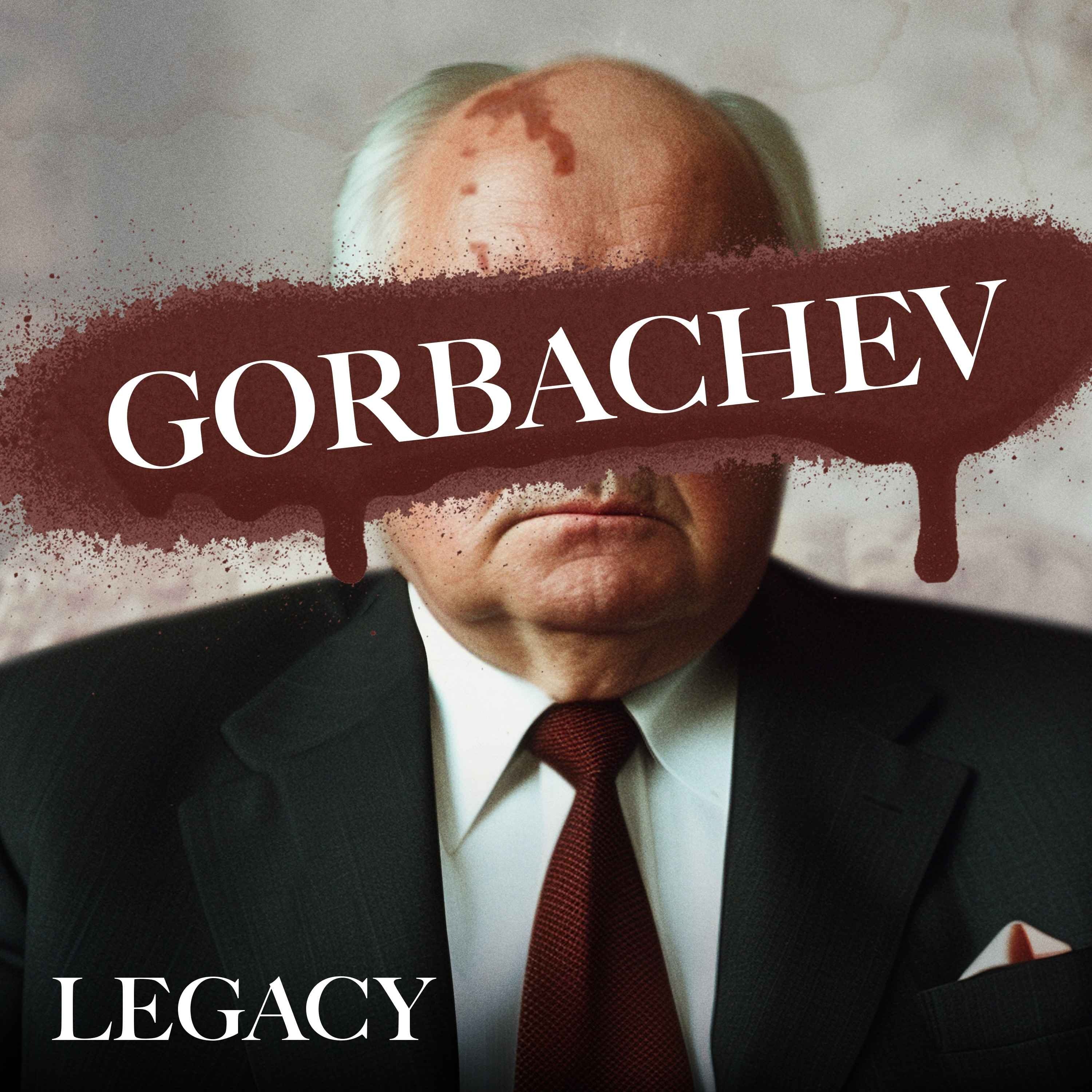
So here we go then. The Life and the Legacy of Mikhail Gorbachev.
- [01:21]
AFWA Hersh
We'll let the episode speak speak for itself, but before we do, here's a quick reminder that the full back catalogue is always there for you to explore. Welcome to Legacy and our third episode on Mikhail Gorbachev.
- [01:36]
Peter Frankopan
When we left you at the end of episode two, Gorbachev had forged his reputation on the international stage. A series of summits with President Reagan had been key in suggesting there might be an end to the Cold War and the threat of nuclear Armageddon might be receding.
- [01:50]
AFWA Hersh
But at home, Gorbachev's popularity is slumping. His perestroika reforms intended to revive the ailing Soviet economy have brought about economic chaos and a decline in the standard of living.
- [02:03]
Peter Frankopan
Even the two relative success stories of the Soviet economy have been badly hit. A worldwide slump in the price of oil affects exports, and Gorbachev's curb on the sale of alcohol, no matter how well intentioned, has cost much needed revenues as well as damaging national morale.
- [02:20]
AFWA Hersh
The last thing Gorbachev needs is a crisis out of his control. But the Unthinkable happens at 1:23am One spring weekend.
- [02:37]
Peter Frankopan
26Th of April 1986. Chernobyl nuclear power Plant, Pripyat in front of a wide bank of glowing buttons, Sasha Akimov rotates a large silver dial. Here's the whir of the control panel, the distant vibration of the reactor responding. Beside him, Toptunov's eyes dart between rows of gauges. Nervously, he flips pages of the procedure manual. I don't understand why the power has slipped. Akimov isn't sure either, but as Unit 4's shift supervisor, he's not about to admit it. Without looking up, he says, disengage more control. We need at least 200 megawatts to run the test. As Toptunov brings up the power, Akimov glances around the control room. Other engineers are either busy or pretending not to notice. He's learnt through experience not to indulge concerns or to report them. They watch the gauge's agonizingly slow climb at 200 megawatts. Akimov lowers his voice. Now turn off the reactor. Press button AZ5, please. He sees Toptunov hesitate for a second. Then his finger reaches for the kill switch. Instantly the reading jumps, first to 500, then to 700 megawatts. Adrenaline burns through Akimov's body as his mind races to understand. The reactor should be shutting down, but it's speeding up, frozen to the spot. He watches the numbers climb. 2,000 megawatts. 6. Getting faster. Somewhere, an alarm blares. Heavy, dull thuds ripple through the building, each louder than than the last. People swarm around him, shouting questions, but his wide eyes are fixed on the reader, fast approaching 33,000 megawatts. The Roar of an explosion tears through the control room. Sirens erupt. Flames burst into the dark sky, and moments later, a vast invisible cloud of radioactive particles begins its slow drift westwards.
- [04:58]
AFWA Hersh
From Wondery and Goal Hanger. I'm AFWA Hersh. I'm Peter Frankipan, and this is Legacy, the show that tells the stories of the most extraordinary men and women to have ever lived, and asks if they have the reputation they deserve.
- [05:23]
Peter Frankopan
Mikhail gorbachev episode 3 meltdown. The fire in the Soviet reactor is apparently burning out of control. The Soviets have asked for foreign help, suggesting they have no idea how to deal with it. Simply pouring water onto it could make matters worse. After three days, what sort of condition will they be in now? Well, the people exposed to enormous doses will be dead by now. Soviet television has made little of the disaster, hardly reporting it at all. As the world becomes aware of the scale of the Chernobyl disaster, it's clear this is going to have a massive effect on Gorbachev's legacy and on the future of the Soviet Union. Because nuclear power is really one area where the Soviets are genuinely thought to be world leaders before Chernobyl, its scientists and technicians are beyond scrutiny or criticism, even by the Politburo.
- [06:25]
AFWA Hersh
When the full facts emerge, the incompetence the secrecy, the utter disregard for safety. It opens Gorbachev's eyes to the failings of the Soviet system. It's days before he even finds out the scale of the disaster. May 10, 1986. The Kremlin, Moscow. Mikhail Gorbachev lowers the phone and staggers to his feet. Through the window, he sees the evening sun glinting off the Cathedral of the Dormition's golden domes. Distant figures cast long shadows across Red Skull Square. But a cold anger is creeping through his body. It's the second call from Sweden's Prime Minister, Ingvar Carlson. Forsmark power plant is detecting alarming levels of radiation, and Carlson wants to know what the hell is going on. Gorbachev reassured him that there was nothing to worry about. But the news flies in the face of his party's own narrative. Rifling in his desk, he retrieves a report sent to him on the day of the explosion at Chernobyl. Again, he reads the final paragraph. No special measures, including evacuation of the population, are needed. In the hours after the explosion, he'd assigned a Politburo task force to manage the situation. Considered the matter in hand. In truth, he wanted to believe Chernobyl posed no threat. But Carlson's call feels like proof he's not being told the full story. Gorbachev leafs through memos from the atomic agency. Amid the fog of doubt, the advice now sounds delusional. Such things happen at civilian reactors. A couple of glasses of vodka and a rest should be enough to overcome any sickness. At the bottom of each report is a Efim Slavsky. Slavsky, whose control over Russia's prized atomic energy program makes him almost untouchable, even to Gorbachev. Gorbachev feels fury erupting inside him. With pounding feet, he thuds along the corridor to Slavsky's office. Slamming open the door, he thunders, what else are you keeping from me?
- [08:48]
Peter Frankopan
Writing himself on the 20th anniversary of the disaster in 2006, Gorbachev says that Chernobyl was perhaps the biggest cause of the breakup of the Soviet Union. The COVID up by the nuclear establishment is completely contrary to the policies of glasnost or openness that he'd been trying to introduce. I mean, and obviously the disaster is one of the most depressing environmental and ecological and human catastrophes of the 20th century.
- [09:13]
AFWA Hersh
Objectively a really, really big deal. But it's also a metaphor, I think, for everything that was toxic in the Soviet system. I sometimes have to just sit back and digest the fact that the leader did not know what had actually happened at Chernobyl, that something of that magnitude, putting that many lives at risk, not just within the Soviet Union, but in the whole of Europe and further afield in the world, could be hidden from him in that way. And it's just astonishing. And of course, it had such real consequences for the people affected, because all of the safety measures that needed to be taken to contain the disaster and protect lives also weren't taken.
- [09:49]
Peter Frankopan
So if you're Gorbachev and you're the leader of the Soviet Union, the idea that this is what opens your eyes to reality, shows how far removed from it you are in the first place, because this is how the system works. It's not just the nuclear accident that is needed to wake you up, it's that that's the sand on which the whole edifice is built. And I think that it's interesting, the sort of contrition that he talked about afterwards was that, you know, also about avoiding being blamed for it. So he said, I didn't know. People couldn't get me information quickly enough. Nobody knew what was happening. But, you know, as we heard the Swedish Prime Minister ringing up saying, what's happening? And the Swedes and their detections of radiation are going through the roof at this point. So the idea that, well, you know, it was somebody else's fault and definitely not the boss, I think speaks to the way in which authoritarian systems are quite good at allowing leaders to cover up their legacies, rather than confronting the fact that Korbasov should have known that every part of every industry worked this way.
- [10:43]
AFWA Hersh
It was also humiliating for him and for the Soviet leadership because this concerned everyone in the world. I mean, I was five when Chernobyl happened. And I remember my mum wouldn't let us play outside for a few weeks. People were so scared. Nobody knew what this meant for global health, let alone people closer to the accident. And the idea that people were personally thinking about, talking about affected concern for their safety because of something that had gone wrong in part of the Soviet Union and that everybody else knew about it before the leader was personally very humiliating to him to have to take these phone calls from Sweden and other world leaders, to have misled, whether knowingly or not the world, about what had happened within his own backyard. The embarrassment of that must also have been a wake up call.
- [11:32]
Peter Frankopan
I think that's what did the damage, the embarrassment. But above all, not that he didn't know what was going on, is that the Soviet authorities lied and they said nothing had gone wrong. And it was a Minor malfunction and there was no risk to anybody. The sin was not owning up and you couldn't get away with it. In the multimedia age where photos, images and reports would come out and, you know, the news traveled in the Soviet Union too. I mean, it wasn't just outside the credibility of the leadership, already crippled by the fact that there had been protests by mothers whose sons had been killed in Afghanistan, asking for reasons why the war was going on or why Soviet troops were fighting, why young men were being lost. Chernobyl served as an extra reinforcement that the state did things for its own benefits and to protect the leaders and their reputations and the things that the leaders were worried about with how they were perceived rather than good outcomes. So Chernobyl, it was hugely damaging for the local populations in what's now Ukraine, but for the peoples who lived to the west as the winds blew, radiation everywhere, like you said here in the United Kingdom and all over Scandinavia, all over Europe, people were really worried about what they'd eat because of contamination. And it took everybody by surprise that an accident like this could happen. It made people worried about nuclear power, full stop. But how could you ever do a deal with people you can't trust? And any self respecting Communist Party member, any citizen is going to be asking how competent are our authorities and are they able to tell us internally in the Soviet Union the truth? And if this all powerful group of scientists who are supposed to be the best in the world can be not just incompetent, but can lie, then there must be different futures that could open up for the Soviet Union and for the different republics.
- [13:10]
AFWA Hersh
In the aftermath of Chernobyl, Gorbachev sets about trying to change every aspect of Soviet culture, issuing a series of damning reports to the Politburo on everything from the poor quality of fruit and vegetables being produced, to the fact that Soviet combine harvesters don't work, to the lack of availability of children's clothing, to the quality of soldiers being drafted into the army, to the laziness of professors and students at universities. Nothing escapes his criticism.
- [13:36]
Peter Frankopan
None of that's new. But it's just come to his attention for the first time, because the simple fact is that Soviet society is failing. Gorbachev blames the system, his enemies blame him, and those enemies are now growing in number and they're out to get him. The longer you stay alive, the longer you can enjoy Boost Mobile's unlimited plan with a price that never goes up. So here are some tips. Do not parallel park on a cliff if you want to enjoy an unlimited plan with a price that never goes up. Do not mistake a wasp nest for a pinata. If you want to enjoy an unlimited plan with a price that never goes up. Do not microwave a hard boiled egg if you want to enjoy an unlimited plan with the price that never goes up. Stay alive and enjoy Unlimited Wireless for $25 a month Forever with Boost Mobile after 30 gigs, customers may experience lower speeds. Customers will pay $25 a month as long as they remain active on the Boost Mobile Unlimited plan. Boost Mobile is now sending experts nationwide to deliver and set up customers new phones. Wait, we're going on tour? We're delivering and setting up customers phones. It's not a tour, not with that attitude. Introducing store to door switch and get.
- [14:39]
AFWA Hersh
A new device with expert setup and.
- [14:41]
Peter Frankopan
Delivery Delivery available for select devices purchased@boostmobile.com.
- [14:57]
AFWA Hersh
Cast your mind back to the first episode of this series and we mentioned how after being appointed General Secretary of the Communist Party, Mikhail Gorbachev clears out a lot of the dead wood from the Politburo and promotes some younger men to replace them. One of those is Boris Yeltsin.
- [15:13]
Peter Frankopan
Yeltsin's born just a month before Gorbachev in 1931 and also comes from a provincial background. But that's just about where the similarities end. Gorbachev is famously a prohibitionist, Yeltsin a hard drinker. Gorbachev is a diplomat, Yeltsin an out and out populist. Gorbachev is cultured, Yeltsin is crude.
- [15:35]
AFWA Hersh
Right from the start, Yeltsin is jealous of Gorbachev's success in rising to the leadership of the Communist Party. But Yeltsin is moving through the ranks too, becoming first secretary of the Moscow Communist Party in 1985.
- [15:48]
Peter Frankopan
In 1987, Yeltsin delivers a 20 point criticism of pierostroika at the Politburo, saying that the leader's economic reforms aren't going far enough. His theories are backed up by a series of disastrous economic figures and forecasts. Yeltsin even resigns from the Politburo, a move unheard of in the Soviet Union, and apparently tries to take his own life at the end of 1987. Because he's so depressed about his clashes with the leadership, Gorbachev fires him, a move that Yeltsin describes as immoral and inhuman.
- [16:19]
AFWA Hersh
I think this is actually quite a significant development for the relationship between Gorbachev and Yeltsin and its deterioration over time, because whatever the circumstances of Yeltsin's accident, whether it really was a suicide attempt, I don't think anyone knows for sure, but what happened next is well documented. And Gorbachev essentially exposed Yeltsin at a time when he was clearly vulnerable to total humiliation. You know, he was hauled before the party, he was interrogated about what he'd done. He was condemned to a psychiatric institution. He was kind of bolted down and injected with drugs. I mean, it was really humiliating, really cruel. And Yeltsin harboured a deep resentment towards Gorbachev for the rest of his life for having done that to him.
- [17:02]
Peter Frankopan
But Communist parties and authoritarian regimes are not known for their empathy and their sympathy. So Yeltsin, by saying he can't cope, is obviously going to get shuttled out by Gorbachev, because that's the way that these kinds of things work. If you've shown yourself to be unreliable and a threat, then you've just got to be got rid of. And this is the context of a Soviet Union where, you know, Stalin did it to millions of his own citizens, signed their death warrants, had them shot in the back of the head. So maybe this is also a product of the brutality of what reality looks like in a system like this.
- [17:28]
AFWA Hersh
I think it's a good corrective as well, for those who have experienced Gorbachev through the kind of friendly prism of the Western perception of him as this cuddly grandfather. I mean, he was versed in these methods, and the fact that he was using this against his colleague in the party really gives a little window into what ordinary people who fell on the wrong side of power must have been going through in the Soviet Union under Gorbachev. So he's known for abhorring the use of force, as you said. That's not necessarily strictly fair. And I think this shows that he's not afraid of playing dirty if it suits him.
- [18:02]
Peter Frankopan
Yeah, I think Gorbachev in many ways is a classic wolf in sheep's clothing that, you know, he is down to his bones a Communist apparatchik and a believer, and believes that the means justifies the ends. And if someone gets in your way, always problematic, you deal with them in whichever way you need to.
- [18:19]
AFWA Hersh
Now they are open enemies, with both sides briefing against the other. Gorbachev accuses Yeltsin of being drunk on a trip to the usa, an accusation backed up by an article in an official newspaper, Pravda and TV coverage of a speech where he's slurring his words. But Yeltsin sees something in the States which may help him topple his enemy.
- [18:46]
Peter Frankopan
September 16, 1989. Randall's Grocery Store Clear Lake, Texas. Through the late afternoon sun, Boris Yeltsin squints across a wide parking lot, marvels at the rows of cars in every style and color imaginable. A figure in a short sleeve shirt approaches and Yeltsin feels a tingle of excitement run through him. I'm Paul, manager here at Randalls. It would be a pleasure to show you around. Yeltsin returns Paul's wide grin and follows him through a set of automatic doors. Notices of blast of warm air, caresses shoulders and the smell of freshly baked bread hanging in the air. As they move through the store, Yeltsin feels his heart beginning to pound. He swivels his head, trying to take everything in gleaming mounds of fresh fruit and vegetables, glittering towers of brightly colored cans. At a deli counter, his eyes rove across thick cuts of ham, bulging beef joints and slabs of cheese. He hears Paul pointing out developments in marketing and customer convenience. Did he really say they have 30,000 different items? Not even Gorbachev has access to this. He thinks of the supermarkets back home, little more than warehouses. The lines, the waiting, the indignity of substandard produce by the automated checkout conveyor. Yeltsin steadies himself under the bright lights of Randalls. A truth has been laid bare, one that Gorbachev can no longer ignore. The Bolshevik dream is dead.
- [20:20]
AFWA Hersh
I find it so fascinating that something as mundane as a trip to a supermarket is the thing that reinforces Yeltsin's view that Gorbachev's reforms aren't going to achieve what he wants for the Russian people. And in his biography of Gorbachev, the Pulitzer Prize winning author William Taubman describes Gorbachev and Yeltsin as two scorpions in a bottle.
- [20:40]
Peter Frankopan
I think they come to see themselves as competitors and enemies, but you know, I guess that's sort of quite natural in politics. People have an antithesis and someone out there and a nemesis who's out to come and get them. I mean, they are absolutely cut from completely different cloth. And in some ways Yeltsin is a more obvious kind of Politburo member. That kind of thuggish crudeness. You know, you don't get rewarded for reading books and writing PhDs in the communist system. You get it through loyalty and being able to get people to do what you want and what you need them to do. But it's interesting, the supermarket. The CIA, interestingly in the 1950s onwards, is acutely aware that the standards living in America are much greater than they are in the Soviet Union and supermarkets and food is one of the great set pieces to show the abundance of American life. Choice, consumerism, capitalism, efficiency. And in fact, Khrushchev has taken around display supermarkets both when he visits the United States, but also at a fair in zagreb in the 1950s. And he has exchanges with Richard Nixon about whether the American way of life is better. And Nixon shows Khrushchev sort of kettles and blenders. And Khrushchev said, well, women in the Soviet Union have equality. They don't need this stuff. But then there are discussions behind the scenes about how can you keep up, how can you offer a quality of life that matches this? And it's obvious if you've got substandard produce, if you've got long queues, no customer service. I mean, sort of famously in the Soviet Union, you know, if you wanted to get something done, if the person behind the till didn't want to serve you, always painting the nails or talking to their friend, he or she just wouldn't bother to look up and you'd have to wait. You know, you were all told, you're all equal, so why should you, as the customer, work differently? So that world of plenty versus the world of scarcity was a real fault line.
- [22:21]
AFWA Hersh
This clash of ideas never ceases to be relevant to us, because I think we're living in a time now where communism failed. If capitalism was trying to win the Cold War, it won. And in a way, I think we're now all living with the fact that we are seduced by consumer goods. We want nice things, we want plentiful things, we want total choice. But we are also uncomfortable with the things that go alongside that, which is huge excess, totally unsustainable extraction and accumulation of goods to the detriment of the planet, massive social inequality where some have excess, extreme, obscene plenty, and others have absolutely nothing, not even the basics of life. And it feels like almost that moment with Yeltsin in a supermarket is encapsulating the way this would unfold, that he abandoned the ideology of Bolshevism in favor of all of the shiny things in the supermarket. And I can completely relate to why that was appealing. And I would never defend the Soviet ideology or system, but at the same time, I think many of us in some ways are uncomfortable with the idea that that's all our dream has been reduced to, just this total abundance of canned goods.
- [23:35]
Peter Frankopan
I don't think the conclusion was a Bolshevism doesn't work or communism doesn't work. It's just that it's currently inefficient and needs to be reformed. And you've got two choices when Gorbachev is doing perestroika. One is to say he's abandoning traditions. We should go back to basics, back to the true meaning of Bolshevism, where goods don't mean anything. You should be lucky to have anything at all. Yeltsin takes the different line, which is that Gorbachev's not going far enough and all these reforms are cosmetic. And in fact, he is part of the problem. He's stopping the Soviet Union evolving into something that is going to deliver the abundance of goods. That is the socialist dream, the communist dream is that everybody has everything they need and avoids the excesses. So when he attacks Gorbachev, when he goes for him, it's as much as saying, I have a different vision. But both of those visions, I think we shouldn't have any illusion, are both to say there's a better way where socialism and communism can be more efficient. Really what Yeltsin is saying is it's the wrong people at the top and the first target is to get rid of Gorbachev. And that is an extremely aggressive move.
- [24:33]
AFWA Hersh
And Gorbachev's personal position is coming under threat. And it's not just his future in doubt. The future of communism across Europe is on the brink of collapse. This is the new Weight Watchers. It works for members like Jojo, who's learning simple, healthy habits, Sharia, who's making progress with meds, and Kim, who still gets to eat what she loves. For over 60 years, we've helped millions of members find what works for them. Now it's your turn.
- [25:13]
Peter Frankopan
Watch your life.
- [25:14]
AFWA Hersh
Open up. Watch your story shift. Watch what you're capable of. Watch it work. Get started today@weightwatchers.com. The policy of glasnost, or openness allowing criticism of the state is one of Mikhail Gorbachev's big ideas to reform the Communist Party and the Soviet system. So he can hardly complain when he himself is the target of criticism.
- [25:52]
Peter Frankopan
And now it's coming from all directions. As we've heard, Boris Yeltsin is leading the charge. But he's not the only one. Enter nina Andreeva, a 49 year old chemistry teacher from Leningrad and a supposed rank and file party member.
- [26:05]
AFWA Hersh
On 13 March 1988, the newspaper Saviatska Rossiya publishes her essay I Cannot Forsake My A Forthright Defense of Stalin and Old Style Communism. She writes, it is the champions of liberal socialism who shape the tendency towards falsifying the history of socialism. They try to make us believe that the country's past was nothing but mistakes and crimes, keeping silent about our greatest achievements. I would very much like to know who needed to ensure and why that every prominent former leader of the Soviet government, once they were out of office, was compromised and discredited because of the alleged mistakes and errors committed when solving the most complex of problems in the course of historical trailblazing.
- [26:54]
Peter Frankopan
Well, it's clear that Mikhail Gorbachev is, in her view, the man who's undermining that glorious past of the Soviet Union. And Gorbachev certainly sees it as a direct attack. Andreeva's essay is remarkable because Soviet leaders are simply never criticized openly in the press. Andreeova claims to have written every word, although it's suspected that Gorbachev's hardline opponents may have done more than lend a helping hand.
- [27:18]
AFWA Hersh
Gorbachev is abroad when the article is published and it's taken so seriously that a two day meeting of the Politburo is convened to discuss a response which is eventually published in Pravda three weeks later, dismissing Andreyeva as a backward looking dogmatist. So how damaging is this sort of criticism in Soviet society in the 1980s, particularly the defence of Stalin, who Gorbachev had tried to discredit?
- [27:43]
Peter Frankopan
What do you think, afwa? You know, at this point Gorbachev has been encouraging everyone to be open to criticise, so he can't complain that he's now the victim of those criticisms.
- [27:53]
AFWA Hersh
I mean, it's just another example of his questionable thinking. Because it seems that it almost did not occur to him that opening up the system for critique would result in him being the target. And I wonder if that does reflect how sheltered he was that the Soviet world was so normalized for him that he felt comfortable dismantling it without fully understanding what the alternative looked like. Because as you said, he's never actually experienced it before.
- [28:18]
Peter Frankopan
It was thrilling as well. In the late 80s, you know, all the counterculture in Russia who'd been kept under wraps, having to speak to each other in code, effectively, now realizing that actually you could recognize what Stalin had done wrong, you could recognize the faults of other previous leaders and in fact you could recognize the faults of current officials and you were encouraged to report them. And so suddenly those rules are all kind of changing. So the editorial board at Sovietska Garcia, the question is, should you publish something like this? It's going to be dangerous. But on the other hand, you're being told, why shouldn't you publish? You should be able to say and critique whoever. And we don't live in a one party system just for nothing to have one leader at the top. So you can see the tensions and Pravda, which is the main organ of the Communist Party in Russia, then sort of fires in with a sort of brick wall, saying that Andreeva doesn't know what she's talking about and a dogmatist. But you're right, Gorbatov should have realized that this was inevitably going to happen. But you can imagine people reading this, you know, they used to race to the newsstands to find out what was next, who'd been denounced. And that was really exciting at a certain point. But because people realized at some point the music is going to stop, probably because it's either liberalization or hardline repression. And that tension was, you know, marked the late 1980s very dramatically.
- [29:33]
AFWA Hersh
But it's now events outside of Moscow that are posing the most immediate threat to the future of Gorbachev and the Soviet Union.
- [29:40]
Peter Frankopan
By 1989, Mikhail Gorbachev has been leading the Soviet Union for four years amid glasnost, perestroika, Chernobyl and summits with the Americans. One issue is being somewhat overlooked. The Soviet republics themselves and their union Union and the communist states of Eastern Europe.
- [29:58]
AFWA Hersh
In Poland, the trade union Solidarity and its leader, Lech Waentsa, had been rebelling against the communist government long before Gorbachev came to power. And other Warsaw Pact states like Hungary and Romania are looking as if they'll go the same way. Gorbachev takes a relaxed view in what becomes known as the Sinatra Doctrine. That is, the communist states can decide their own independent internal affairs. Frank Sinatra, of course, famously singing the song My Way.
- [30:27]
Peter Frankopan
In the Soviet Union itself, there are also rumblings of discontent with the likes of Ukraine, Lithuania, Azerbaijan and Kazakhstan, all angling for some sort of independence. But it's in East Germany where the lid is finally blown off.
- [30:46]
AFWA Hersh
November 9, 1989. Moscow. In his large presidential suite, Mikhail Gorbachev lays blinking in the dark. After a night of fitful sleep, he emerges from a troubling dream. In it, he was trying to free a bear from a hunter's trap, knowing that as soon as he did, it would eat him. Pale light seeps through the blinds, stinging his bloodshot eyes. He doesn't remember the last time he slept through the night. Careful not to to wake Raisa, he slips out of bed. But exiting the bedroom, a nervous aide intercepts him. There's been an uprising in the gdr. The border has been breached. Half awake, Gorbachev stumbles into his study and turns on the television, watches crowds of ecstatic people overrunning Checkpoint Charlie under the gaze of bewildered soldiers, listens as incredulous newsreaders describe the shock announcement by the East German Central Committee with immediate effect. Only a month earlier, at the GDR's 40th anniversary celebrations, he'd encouraged leader Erich Honecker to enact perestroika. He recalls how the crowd had repeatedly called out to him for help. As the footage cuts to a man striking a graffiti strewn section of the Wall with a sledgehammer, Racer enters with a cup of coffee. Her face quickly clouds with worry, but he shoots her a reassuring glance. They did the right thing. Reaching forward, he turns off the tv, gathers notes from his desk. He needs to prepare for the day's Politburo meeting and he can't afford to be sidetracked. Failing crop yields, mounting national debt and circling political enemies. The push for democratization of the GDR is at least one thing he doesn't need to worry about.
- [32:38]
Peter Frankopan
By dawn, they were on communist soil, laying symbols of peace, thousands of them looking east and chanting down with the Wall. On top, West Berliners who hadn't been born when the Wall was built led crowds in singing. Hansiank was 14 when it went up. Today, he says, has changed everything. And I was thinking, the Wall will never fall. What are you thinking now? The Wall will fall.
- [33:08]
AFWA Hersh
This is one of the main reasons that Gorbachev's legacy is regarded as one that has an element of anti violence. Because I think it's the only way that anyone can understand why he wouldn't have intervened to prevent the events that would ultimately be accelerating force in the complete collapse of the Soviet Union.
- [33:26]
Peter Frankopan
Well, the best way to look at it is that he decided not to use force. The more cynical one was that he was caught completely by surprise. And in fact the breach of the Wall was because at a single press conference, an East German government spokesman gave a slightly nebulous, badly phrased, answer that was interpreted to mean that nothing would happen if his Germans went through the gates to join up with the West. And it was again Gorbachev being naive and asleep on the job of not trying to understand what was about to happen. Because the consequences were not just the reunification of Germany, but the fall of all of the Warsaw Pact world in Eastern Europe, in the Baltics, in places like Poland, et cetera, that cascaded as a result. And for the populations who lived there and for us in the west, that was a great benefit and a moment of real Hope. And the fact that that world collapsed peacefully, as you say, was a miracle because no one would have thought that would happen with the exception of the former Yugoslavia where it descended into bloodshed. But Gorbachev, I think it wasn't because he took the decision that this wouldn't be suitable thing to do. It was that he was convinced that what East Germany needed was perestroika. He was convinced that a bit more openness, bit of rebuilding could reinforce the communist message across all of Eastern Europe. So it was a chronic miscalculation rather than an act of kindness or of attempting to defuse the situation.
- [34:46]
AFWA Hersh
Can you trace that miscalculation back to an earlier one which was at one point he was advised in his perestroika reforms that you could either have a strong centre in the Soviet command and a weak periphery, where the republics that formed constituent parts of the Soviet Union at the time had to remain weak, subdued by force and controlled by Moscow, or you could have strong periphery and a weak center, which would mean reducing the central power of Gorbachev and the Soviet system and allowing the parts of the Soviet Union to develop in the way that we're now seeing they were. And that Gorbachev rejected that. And he said no, you can have a strong centre and a strong periphery, which is ludicrous and doesn't make sense and ultimately proved to be as disastrous as anyone with hindsight could see it would be. And this is the GDR showing its strength. This is the people of the GDR showing that the more they were given the promise of reform and the more they were given choice and the more the threat of that oppressive violent security was being removed, they were going to vote with their feet and they were going to self determine what they wanted their future to be.
- [35:52]
Peter Frankopan
I think part of it is also we don't really think about that or talk about that enough, is that there was a very strong imperialist and cultural imperialism out of Moscow, that the Russians, Russian part of the Soviet Union felt that Moscow was the heart of the communist world very obviously and that the people's in the surrounding peripheries were, you know, they were incompetent, that they were stupid, they weren't as smart as the Russians, they always needed leadership and by this point they also needed money. So the Soviet Union was propping up Eastern Germany, it was propping up Central Asian republics, was propping up everybody, it was money out. And the Russian elements of the Soviet Union had no time for the leaders in countries that they didn't respect the Cultures of Czechoslovakia, of Hungary and so on. They thought that these were guys who were never going to quite get it. And they were always reliant on coming to Moscow for handouts and for instruction. So it was also sort of, these are the bits that we don't really need. They're not really central to the message. The idea of global revolution had long gone and the sort of Marxist interpretations. So I think it was also that they were seen as disposable because they were problematic. It was a pain in the ass when German workers went on strike in Dresden or in East Berlin. But how that was seen in parts of the Soviet Union, the Russian parts of the Soviet Union, was that this is what the Germans always do. They create problems because they're not the real deal, whereas we are. So those imperialisms and those sort of strengths of nationalisms, they played a role here too, of thinking about which was the most important part. And Russia and the Russian Republic as the largest element, but also the cultural, intellectual, financial, economic center that I think played a role too in allowing these limbs to fall off.
- [37:25]
AFWA Hersh
It's just fascinating to me that at this stage in the late 80s, Gorbachev was willing to just let it go. You know, it's just dead wood. It's just flab holding us back.
- [37:36]
Peter Frankopan
So funny, you know, now if we'd been talking a couple of years ago, we'd have said, you know, one of the great miracles of the late 20th century was that the collapse of the Soviet world happened without massive bloodshed notwithstanding. Some of the things happened in the Baltics and the collapse of Yugoslavia. But you know, by and large the transition was a peaceful one. But now because of what's happened in Ukraine, we can see that those violent dismemberment of the Soviet Union is now in the process of old debts being settled. You know, a lot of the discussions around Moscow's invasion of Ukraine has been about what does Ukraine's debt to Russia mean, which is Russia's sovereign territory, should these states that were once part of the Soviet Union have been allowed to get away. And Putin famously saying that the solution of the Soviet Union was the greatest tragedy of the 20th century. So those legacies have changed now. Now NATO has expanded into places like Finland because of the very real threat that maybe Russia is in the process of trying to reconstitute the so called Russky Mir tried to put a greater Russia back together where the Baltic states are understandably anxious too about whether they will be forcibly reincorporated or attacked. So I think that that moment of Gorbachev's weakness and of the folding away looks very different now, 30 years on, where one of the questions is, did the Soviet Union really properly disappear? Did the Eastern Bloc really go? And we've talked about that before, you and I, AFWA about the rise of populisms in some parts of Eastern Europe. Although some have different names, some are ostensibly very right wing organizations rather than left. But those rises of polarized extremes is also a legacy of how that world came to an end and of what are perceived and fair inequalities that have stemmed over the last 30 years. So it's moving targets, wouldn't you say?
- [39:11]
AFWA Hersh
I agree. And I think this always happens with empires, that the decline of a once strong imperial heartland always eventually leads to a backlash where the members of that society begin to lament the loss of standing on the world stage, the loss of imperial pride. It's an addictive substance, this imperial might. It allows a population to bolster itself with ideas of superiority. They start to seek that sense of pride and standing and might again. And I think that's what's happening with Russia. And if you look at the rhetoric around Ukraine, it is so imperialist and it reminds me in some ways of European former imperial heartlands. You know, for me, Brexit in Britain really was so tinged with that imperial nostalgia, this idea that we can be great again. We're not just this island in the North Atlantic that's part of Europe. We're something else. We're special. We're different from our European neighbors because we used to have the biggest empire in the world. It always bites back. And I think that Gorbachev was not thinking about the long term consequences of just letting go of Eastern Europe. He wasn't thinking about the role that that empire played in the Russian imagination.
- [40:29]
Peter Frankopan
And in fact, he wasn't even thinking short term. So when the Berlin Wall came down, as far as he was concerned, that was still business as usual for the Soviet Union. That was something that was containable freedoms, the direction that Germany and East Germany might go, that was, you know, slightly unfortunate. But that wouldn't affect the Soviet Union, certainly wouldn't affect Communist Party rule in the Soviet Union. In fact, there was an idea that maybe this was a moment of reconsolidating them. It was a chance that by getting rid of these peripheries, that there could be a strengthening. And Gorbachev didn't even read those runes correctly because as we'll see with this episode ending with communism collapsing across Eastern Europe, Mikhail Gorbachev is coming under increasing pressure from his critics at home. But those question marks about what the Soviet Union will look like, will it survive? Aren't even being asked by Gorbachev.
- [41:14]
AFWA Hersh
His critics are plotting his downfall, and it won't be long now before they make their move. That's next time on Legacy. This is Paige desorbo from Gigli Squad. Boost Mobile gives you the same network coverage, speed and service you're used to, just at a more affordable price. Why pay more if you don't have to? Offering reliable nationwide coverage backed by a 30 day money back guarantee. Love your service or get your money back, no questions asked. Visit your nearest Boost Mobile store or head to boostmobile.com to learn more. After 30 gigabytes, customers may experience slower speeds. Customers who cancel within 30 days of activation will have Boost service fees refunded, activation fees, if applicable, and phone payments will not be refunded.