Loading summary
Transcript84 lines
- [00:00]
A
Knock knock. Ooh, who's there? A boost mobile expert here to deliver and set up your all new iPhone 17 Pro, designed to be the most powerful iPhone ever.
- [00:08]
B
You called that a knock knock joke? This isn't a joke.
- [00:11]
A
Boost mobile really sends experts to deliver and set up your phone at home or work.
- [00:14]
B
Okay.
- [00:15]
A
It's just that when people say knock knock, there's usually a joke to go with it.
- [00:18]
B
Like I said, this isn't a joke.
- [00:19]
A
So the knock knock was just you knocking? Yeah, that's how doors work. Get the new iPhone 17 Pro delivered and set up by an expert wherever you are. Delivery available for select devices purchased@boostmobile.com terms apply.
- [00:33]
B
Today we're going to talk about a writer who was unique in combining his storytelling with some of the most dramatic moments of the whole of the 20th century and taking part in some of those himself. When he was part of the action, from the front lines of the first World war to the literary salons of Paris in the 1920s, to the bloody front lines of the Spanish Civil War, the beaches of Normandy, and the revolution in Cuba, he was there for all of it.
- [00:57]
C
He's also someone who's been credited as having created the ultimate blueprint for modern American masculinity. The stoic, rugged individual who hunts lions, fights bulls, and catches giant marlins with his bare hands.
- [01:14]
B
The master of the iceberg theory, the idea that if you strip language down to its absolute bar, bare bones, that's where power lies, in what you don't say. He revolutionized English literature. He was a Nobel laureate, and yet he actually used the fishing boat to hunt Nazi submarines of the Caribbean. And he was secretly investigated by our old friend J. Edgar Hoover, who we covered in a previous series of Legacy.
- [01:38]
C
And then there are the women, the marriages, the affairs, the breakups, fallouts, scandals, rows, and a lot, a lot of drinking. To call this person accident prone would be an understatement. He survived being blown up in the first World war, attempting espionage. In the second, a car crash, boat accidents, and two. Two plane crashes.
- [02:06]
B
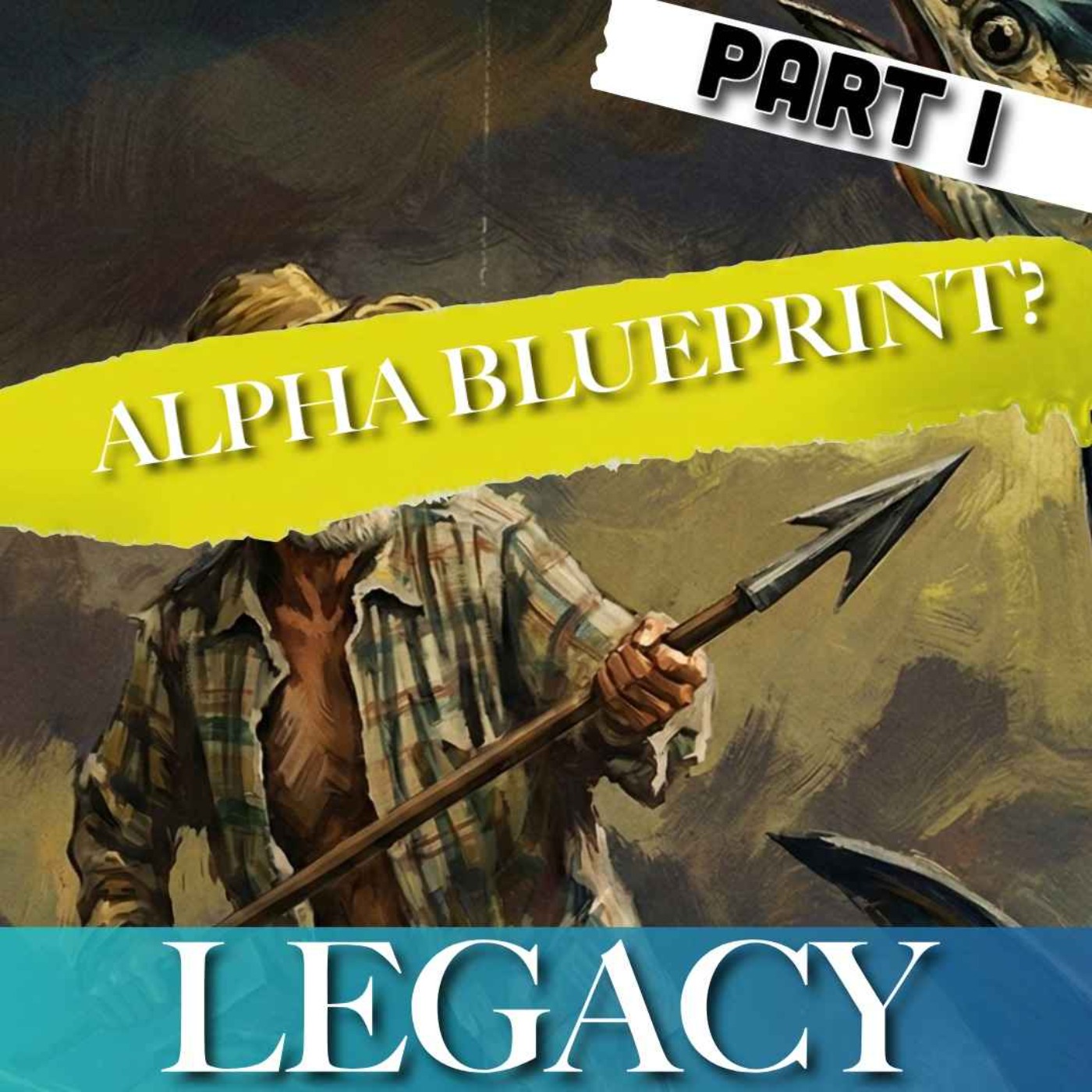
We are, of course, talking about Ernest Hemingway. Hello, and welcome to a new episode of Legacy. I'm Peter Frankenbern.
- [02:22]
C
I'm Afua Hirsch.
- [02:23]
B
And this is Legacy, the show that explores the lives, events and ideas that have shaped our world and asks whether they have the reputations that they truly deserve. This is part one. Ernest Hemingway, the Lost Generation. Okay, afwa. Look, last time we did Gertrude Stein, and she told us that genius involved sitting around and doing nothing for a lot of your life. And that's not how Hemingway lived.
- [03:00]
C
You can kind of see how the two would come into conflict when you look at it like that. But they are starting life in not totally dissimilar places. Ernest Hemingway is born in 1899 in Oak Park, Illinois, just outside Chicago. And while it sounds like quite a small town, suburban place, it was a very cultured household. His mother, Grace Hemingway, had been an opera singer. She loved the arts and worked as a music teacher.
- [03:25]
B
His father, Clarence, was a doctor and a real naturalist. He was knowledgeable about nature, loved plants, and he taught Ernest to shoot, to fish, and to hunt. So the family would often go into the great outdoors. They'd go camping, they'd sleep in tents. They'd go swimming, hiking over long distances, cooking over open fires, if you'd like that kind of thing. It sounds idyllic. I don't know. Are you an outdoors person, afraid? Do you love getting a tent and going to go to explore how nature looks up mountains and in cliffs and dark dales?
- [03:57]
C
The second bit, I love being outdoors. I love hiking. I love being in nature. I especially love then going and sleeping in a really nice indoors place with heating and running water. I cannot enjoy the outdoors if I'm sleeping in it. That's my. I love the idea of it. I find it so romantic, like sleeping under the stars and building an open fire and, I don't know, digging a pit tree. I mean, I don't find that bit romantic, but it's not. That bit's not me. Peter, what about you?
- [04:26]
B
It's different. I mean, Hemingway, the bit that he's doing is not just going hiking, though. He wants to go find animals, kill them and eat them. And there's something in that kind of the ruggedness of not being squeamish, I guess. Also that line about, are you doing it for pleasure or for necessity? I think that those are tricky ones. But he's brought up to be this kind of man who loves to box, or rather is told that that's what real men. Men do. That kind of the love of the outside, the love of being put under pressure, of being challenged by the elements. But so he's not. He's not someone who has. Doesn't have his own share of the love of luxury. But he's also been brought up in a world that's connecting him to hardship and to things like the Civil War in America.
- [05:05]
C
He feels this sense of connection to his ancestors who fought in the Civil War. And there's a lifelong preoccupation with war that we'll see throughout his lived experiences and also throughout his work. But at this stage, as a young man, he just feels this calling to do two things. When at high school, he's asked about what he wants to do with his life, he says, I want to travel and write. And that is pretty prophetic. I can't think of really a better two verbs to sum up what Ernest Hemingway does.
- [05:34]
B
Well, I mean, you know, aphwa, we've traveled together before to distant climbs, and travel and writing seems not a bad combination if you ask me. But I'm not sure we're quite following in Hemingway's tracks. I mean, unlike Hemingway, I didn't become a journalist to do that. But you did as well, right? So I did. So you're closer to Hemingway and you like the outdoors. So there are already two bits that you have in common.
- [05:57]
C
I feel strongly that's where the comparison is likely to end. But yes, he did start his career as a journalist, and I think his journalism is actually really important, sometimes underestimated in its importance to understanding. So he became not just his kind of really glamorous feature in travel writing later, but his early days as a jobbing newsroom reporter. Because, and I teach journalism, so I can say this from personal experience. To master the art of being a newsroom reporter is a real discipline with language. You have to learn how to get straight to the newsline, the news values of a story, to kind of boil it down to its basic ingredients. It's no space for fluff and allowance, elaborate, flowery descriptions. It's very to the point, very pared back. It's actually more like assembling facts in the right order than really very creative writing, being a news reporter. And that's his beginnings. He, after graduating high school, gets a job at the Kansas City Star, which is then quite an important newspaper in America. And he learns that craft of writing in a certain way, but it also exposes him to events going on in the world in a way that have real consequences. So just a few months after he starts at the Kansas City Star, the newspaper's front page reports on the Austro Hungarian attack in northeastern Italy and the retreat of the Italian forces at Caporetto. And that inspires the Hemingway, as we'll see in a moment. But even later on when he becomes a novelist, his novel, for example, A Farewell to Arms, is framed around that specific historical moment that he first encountered as a journalist in Kansas.
- [07:32]
B
So that's a really interesting point, Afra, you make about the journalistic style of learning how to get to the point, I guess, also about learning how to produce to a deadline, to not sort of overwork things. You know, Hemingway is a quite a clinical writer. He kind of gets on with it. I wonder whether you think how much of that is influenced by this kind of critical stage of starting as a young journalist and then then carrying on whether that shapes his literary style as well as his discipline, because he's quite prolific.
- [07:57]
C
He is prolific, and he already wants to be a writer, and people are spotting this talent in him. T. Norman Williams, who helps train Hemingway at the Star, writing from a new job in St. Louis, encourages him to take a typewriter when he decides to go and volunteer in the war and send back dispatches to the newspaper. And this is what he says about the young Hemingway. You see things, you know, things you read. People like a book, and above all, you can tell it pretty good. It's pretty good. And so when Hemingway does this quite bold act of volunteering to go and serve on the front line in Italy as an ambulance driver for the Red Cross, he's going partly to be part of the action, to see war close up, but he's also going with this in mind that he is a storyteller, too, that he wants to document what he sees and turn it into something more.
- [08:49]
B
And he's gone to volunteer with somebody called Theodore Ted Brumbach, who just returned from his hometown back to the US Having served nearly five months in the ambulance service in war zones of France. And the two men become friends. And a few months later, Hemingway catches hold of a story about recruitment of Red Cross ambulance drivers for services in Italy. And the two men go together to volunteer. But age 18, having done some time in the ambulance service on the front lines, he is himself severely wounded by mortar fire while handing out chocolate to Italian soldiers. It's not the. You know, these things, they happen. But he carries another wounded soldier to safety, despite being hit by machine gun fire. So that shows his personal bravery. That shows that there are consequences if you go and do something for romantic ideals, that you're in a war zone, people get killed. But also, there is an idea, afw, that he gets some form of PTSD because of the serious wounding.
- [09:43]
C
Yeah, it's a really serious accident. He gets his leg blown up, essentially, and he is in really critical condition. He takes a long time to heal. And like many people who see action in the First World War, there's what's at the time described as shell shock, he even recognizes in himself. And actually, scholars at Hemingway believe that this Kind of begun a lifelong battle with trauma that he would self medicate through alcohol. But at this time, he's only 18, he's got this injury, he, he's got these incredible stories of having seen action. And you would think as a storyteller, that would be enough, Peter. But this is Hemingway, and somehow the truth is never quite enough for him.
- [10:22]
B
Go on, tell us about that. Because it's so interesting about Hemingway's negotiation of fiction and non fiction, how those overlap, so interesting.
- [10:31]
C
As a journalist, I find it fascinating. So Hemingway loves to tell a story, which is something I think any writer or journalist can relate to. But in one biography by Carlos Baker, there's really interesting exploration of how he's creative in his storytelling and I would add, has a very fluid relationship with fact. So he tells these stories of things he has objectively seen, but then he embellishes them, and he embellishes them in a way that makes the character that resembles him more interesting, more brave. And it's like he is kind of creating fiction in which he is the narrator, but also the protagonist.
- [11:13]
B
God, give us an example, Aphra, give us an example.
- [11:15]
C
So, for example, he is in the First World War. He does see action, he is wounded, but he decides that he's had this wartime tryst with the infamous exotic dancer who turned out to be a German spy, Mata Hari. Now, I can see why that's an attractive story, because she was basically the most glamorous woman of the age, and, you know, such a complex and fascinating figure. But the inconvenient reality is she was executed by firing squad a year before he even arrived in Italy in the First World War. So there's no way the story could be true. And it's just one of so many examples of him taking something, you know, he was in Europe during the war, but he embellishes it. He invents stories on top of the real story. And as a result, some historians say that the greatest fictional character Hemingway ever created was himself.
- [12:08]
B
So when we come back, we're gonna try and dig into some of this and to think about his personal relationships. I mean, I think with those stories, maybe he just got played in the bar one evening by someone who said they were Mata Hari and he had the best night of his life. And maybe he was taken for a sucker.
- [12:21]
C
That makes him not a great journalist. And so this is the thing, you know, as a writer and a fiction writer, I mean, embellishing real life experiences is basically what you do as a journalist. It's a lot more problematic, and we'll find out more about that after the break.
- [12:48]
D
Let's be completely honest. Are you happy with your job? The fact is, a huge number of people can't say yes to that. Too many of us are stuck in a job we've outgrown or one we never really wanted in the first place. But we stick it out and we give reasons like what if the next move is worse? And I've put years into this place and maybe the most common one. Isn't everyone miserable at work? But there's a difference between reasons for staying and excuses for not leaving. It's time to get unstuck. It's time for Strawberry Me. They match you with a certified career coach who helps you get from where you are to where you want to be, either at your existing job or by helping you find a new one. Your coach helps clarify your goals, creates a plan, and keeps you accountable along the way. Go to Strawberry Me Career and get 50% off your first coaching session. That's Strawberry Me Career.
- [13:42]
A
With endless scroll algorithms and AI flooding feeds, podcasting stands out. They're sought, not served. Audiences actively choose to hear trusted voices on on topics they care about. In fact, 72% of listeners say podcasts shape cultural conversations for marketers. That means podcasts shift brand perception like no other channel. Acast's Podcast Pulse 2025 report has the proof. Get all the insights at podcastpulse2025.com.
- [14:24]
B
So Hemingway's mother, Grace, had wanted twins. It's a very interesting psychology, the whole story about twins, et cetera. But when her daughter Marceline and her son Ernest were born, they were very close in age and end up in the same year at school. So she treats them like twins, and slightly with a funny twist, she treats them like twin daughters, dressing them up in gingham dresses, in crotcheted bonnets, pink bows, page boy haircuts. And Ernest didn't have a haircut till he was six. So you mentioned at the top aphwa about Hemingway being sort of poster boy for the manosphere and for masculine toxicity. But there's a kind of. There's a deep root to some of this stuff.
- [15:02]
C
There really is. I mean, just to give you an insight into how much gender anxiety he had as this little boy being dressed as a little girl, not through his own choice, but by his mother. His mother writes in Ernest Hemingway's Baby book that he was very upset and worried that when Santa came to visit, he wouldn't be able to tell that Ernest was a boy and would kind of get him muddled up for another child. So that's kind of, I think, such an interesting insight into, you know, the way small children process these kind of stresses and anxieties. And there is a lot of gender ambiguity in the family that continues after Hemingway. For example, he later, when he has a son of his own, finds his then 12 year old son Gregory trying on a pair of his mother's nylon stockings. And he says to his son, when we come from a strange tribe, you and I and Gregory will later have gender reassignment surgery and rename himself Gloria. So transition to being a woman. There's a biography by the feminist historian Mary Dearborn that really centers these early gender identity issues and says that as a result of them, Hemingway has a lifelong tendency towards androgyny and a lifelong ambivalence about and fascination with gender roles and sexuality. So we'll come later to kind of the way he's perceived as this masculine icon. But it's hard not to think he may be slightly overcompensating for these insecurities about whether he's man enough.
- [16:32]
B
And there are all sorts of other sort of odd complications. He seems to have a sort of very serious fetish about hair. You know, his long suffering wives, of whom there are multiple ones, are forced into endless rounds of cutting and dyeing and styling to suit his whims. And there were lots of other traumas from his upbringing. We heard about his, his war wounds as well. But he also found his mother was very overbearing. He had lots of resentments about her, including the allegation that he wasn't allowed to go to college because she spent all the money that would have been spent on it funding a lesbian affair with a family nanny. And where the truth and where the fiction is in all of this is always very gray. But certainly the ambiguity, the strangeness around Hemingway's ecosystem, I think it's very interesting because you might have thought that Hemingway has been brought up shooting pigeons and then killing bulls, as we're going to hear about later, and reveling in the role that patriarchal men play. But his whole upbringing looks like it's built on moving sands all the time.
- [17:31]
C
And there's a lot of tragedy. And he's much fonder of his father Clarence, than this as he sees her overbearing mother, Grace. But Clarence's not exactly the affectionate father. He's very strict. He's a religious disciplinarian. He makes the entire family, all six children, kneel down every Morning to pray. And then when Hemingway's 29, Clarence takes his own life and his mother, who's now been left a widow, sends Ernest the gun that Clarence had used to kill himself as a keepsake, which is a really strange thing to do. And chillingly, Hemingway says after receiving the gun, about his father's death, I'll probably go the same way.
- [18:13]
B
Yeah, there's paging a good therapist, I think, with all of that. I mean, there's so much going on. And this is before we talked about Hemingway as an author, too. His relationship with women is a. Is a tricky and a complicated one as well. I mean, when he's recuperating in a military hospital in Italy, Hemingway, who's a good looking young man, falls in love with a beautiful American nurse called Agnes von Karowski. And he proposes to her. She rebuffs him and creates, according to some biographers, a lifelong fear of rejection and the determination that in future relationships, if anyone's going to be doing the jilting, it's going to be him.
- [18:52]
C
That also turns out to be a recurring theme.
- [18:55]
B
Yes.
- [18:56]
C
He marries his first wife, Hadley, in 1921. She's essentially an heiress.
- [19:01]
B
She.
- [19:01]
C
She's wealthy American. And when he's 22, they move to Paris with their small son Jack. And Hadley is a sensitive woman and she's kind of dragged around by Hemingway, who's increasingly becoming interested in Spanish bullfighting. And there are these stories about her going to these bloodthirsty bull fights with Hemingway with her knitting so that she's got something to distract herself because she finds it pretty difficult to watch. But there's one thing that happens in their marriage, Peter, which seems to kind of preface demise. Go on. As a writer, I have to express a little sympathy with Hemingway as this is in what's quite difficult about this episode. So this is how Hemingway tells it in his book A Moveable feast, that in 1922, he and Hadley are traveling back from Switzerland and he has this suitcase with him that has all his unpublished work in it.
- [19:53]
B
Now, of course, you don't need to finish the sentence.
- [19:56]
C
This is the era before flash drives, before cloud files and data backups. You know, when you have something that you've typewritten or handwritten on a piece of paper, that's the only copy. And Hadley, you know what's going to come next?
- [20:12]
B
Oh, God.
- [20:13]
C
Dentally leaves the suitcase with his life's work in it in a Paris train station.
- [20:20]
B
I mean, note to self, carry the suitcase yourself. It's got your work in It.
- [20:25]
C
Right.
- [20:26]
B
But do you have that recurring dream about your laptop being nicked or crashing and taking everything with it?
- [20:30]
C
Well, I'll never forget one of my mum's oldest friends never finished her PhD because her thesis, which was finished, she'd basically typewritten it. Finished it? No, left it on the seat of her car. And her car got stolen.
- [20:44]
B
Oh, my God. Somebody else has got. Somebody else has got a PhD.
- [20:47]
C
I know, right? Somebody else out there with the doctorate
- [20:49]
B
to change the front page and you're done. Oh, my God.
- [20:52]
C
I've known that story from a very young age. It instilled a very deep fear in me from a very young age of ever losing my. And I've got handwritten diaries, you know, decades of them, and I'm really, really careful about, because that really is my nightmare. And I never check in, like, handwritten stuff on a plane. I'll always put it in my hand luggage.
- [21:11]
B
And we're definitely giving. We're definitely giving. Heavy with the benefit of the doubt here. Rather than Mata Hari, rather than. It's just quite convenient that two years of work is gone.
- [21:18]
C
I mean, that story seems to be kind of accepted by historians, but we do have to remember that Hemingway is an embellisher in chief. And also, even if it is true, I don't think we should spend too long feeling that sorry for him. And he did okay, Hadley as the criminal in this, because he eventually, and I suspect strongly he would have done this anyway, trades Hadley in anyway for an even richer and more glamorous women called poor Pauline Pfeiffer. And even worse than dumping your wife and going off with someone richer and prettier, Pauline Pfeiffer is Hadley's friend, and they've actually hung out together as a trio. They've gone on holiday together. And there are all these stories about kind of, you know, Ernest and Hadley sitting at breakfast and Pauline coming down with basically like just some sexy knickers on and a T shirt, you know, so it was definitely like an ambiguous kind of trio. But when Hemingway starts having an affair with Pauline, he doesn't accept that that was wrong or that he's cheated on his wife. He blames Hadley and he accuses her of ruining a perfect setup because he was so enjoying this threesome that she has the temerity to decide to leave because her husband's unfaithful. I mean, it's not a nice way to break up with your wife, but
- [22:39]
B
it's so 2026, isn't it? I mean, the. The throuple you can't open a magazine at the moment without hearing about these complex relationships and so on and you know, the kind of the chaos of this world. You know, we talked about about Gertrude Stein again in a, in a long term lesbian relationship with her lover in, in living in Paris. And you know, sometimes I think you think about the past as being unable to cope with permissiveness or people being making things up as they go along. But you know, for Hemingway this all just felt completely normal and in fact, sitting with two beautiful women at breakfast and then started to blame them for the fact that he couldn't decide which one he loved most or for breaking up his relationships. You know, it obviously speaks to Hemingway's selfishness. But, you know, I think again, we sometimes think of a past as being upright people or always doing the right thing and being very repressed. But that doesn't seem to be something that Hemingway or his wives seem to worry too much about.
- [23:30]
C
Yeah, this Belle Epoque in Paris is the perfect antidote to any society suspicion that people in the past behaved more respectably than we do because they were all over the place. And even after Hemingway has left Hadley for Pauline, Hadley says, I will give you your divorce on the condition that we have a 100 day separation. If at the end of the hundred days you still feel the same about Pauline, you can have her. But guess what? By the time the hundred days is up, Pauline's actually thinking about leaving Hemingway. She feels really guilty for breaking up her friend Hadley's marriage with her husband. She's not sure about starting a family with him. And so she threatens to leave and Hemingway threatens suicide if she leaves him. And that's basically why they stay together. So there is no planet on which this is a healthy dynamic, Peter.
- [24:27]
B
No. And then on top of that, we've already mentioned his hair fetish. He makes Pauline get her hair redyed and dyed again and again and again in different colours. And he talks about his erotic excitement about seeing this. So he's quite demanding, I think it's fair to say. He has two more sons with Pauline who seems to get on with things rather than leaving him or complaining. They're called Patrick and Gregory and Pauline in again calling the nearest good therapist, rather calling him Ernest, starts to call him Papa. And the domineering Hemingway loves it. I mean, that does happen, you know, with kids. You call each other Mummy and Daddy, I get, or Mum and Dad, but that's, it's more, it means more to Hemingway. He likes to be positioned as the patriarch within the family, because it makes him feel he's got all of the power.
- [25:11]
C
But unlike maybe most people who have that dynamic in their relationship, this becomes quite a defining name for Hemingway. I mean, till now, people refer to him as Papa. And it seems to capture not just the fact that he is literally a father, obviously, and, you know, the kind of head of this household, but he is this patriarchal figure. He is Papa. That it defines him in some way that's more than just that family. It speaks to his masculinity and his sense of being this kind of, like, leading man in the world. But that doesn't mean that it's a happy marriage that will last. Peter.
- [25:44]
B
He's never happy. Hemingway. I mean, literally. So, you know, he's the next. Next along the conveyor belt is Martha Gellhorn, who I know Afro you think we should do an episode on her on her own. So, please, if you'd like us to do Martha Gellhorn or anybody else, come and join us for one of our Q and A sessions or put some notes on our Instagram or our socials of who you'd like us to cover, because it's fantastic to open up the light on people who are perhaps not quite so well known. Martha's in a pretty impressive and amazing woman. She's not one of these lay down and take it women who Hemingway has been attracted to before. She's a gutsy journalist. She's a war correspondent who's made her name during the Spanish Civil War. And Hemingway is now trying, trying it with somebody who's on his kind of level. And he marries her in 1940. Again, he blames his previous wife, saying it's her fault that the relationship was broken down. And he tells friends that Pauline is a practicing Catholic, so she's kind of getting what she deserves because she's killed off the first marriage. So this is the comeuppance of causing adultery, which, of course, got nothing to do with him.
- [26:45]
C
I mean, the audacity. But it's an interesting match, him and Martha Gellhorn. She's not the woman to take her knitting to the bullfight. She's the one to cover the bullfight herself, because she's this incredibly courageous, daring foreign correspondent, famous journalist in her day, and she is interesting. They have this kind of affair, you know, relationship for years. By the time they get married, though, in 1940, the relationship's kind of already on the rocks at this point. Martha's got major issues with Hemingway's personal hygiene. She calls him the pig Substandard, suboptimal. I don't even want to know the details of what's going on there. And then obviously 1940, the Second World War is now in full swing. Martha's a war correspondent, so guess what she does? She goes and covers the war. This infuriates Hemingway because much as he's fallen in love with the war correspondent, he doesn't actually want her to be a war correspondent while they're married. He wants her to stay at home and look after him. And then they do this crazy thing of kind of trying to out war correspondent each other in the Second World War. So it becomes this fierce rivalry and Martha manages to get the scoop on D day while Hemingway is stuck somewhere else on a landing craft. And he never forgives her for beating him at his own game. That's the end of that marriage. Peter.
- [28:09]
B
I don't know whether it's out trying to out Scooby chat. I mean, she's just doing her job, right? And so if she finds a way to get the story, that's what, that's what a good journalist should do. I think it's that the problem isn't out scooping him, it's that he thinks of it that way. You know, he's ultra competitive and can't cope with being put in his place. So that that sense of insecurity, envy, whatever it might be, is the kind of the death knell. I think the fact that she called him the pig and had, you know, was dismissive of his personal hygiene probably says it wasn't going to last anyway. But he divorces Martha and then he goes yet again. This time he marries another journalist called Mary Welch, who worked for Time magazine and had spent the whole war in London. And she, as his fourth wife, is the one who's going to outlive him. But first, before we get onto that, I'd like to talk AFWA about that lost generation from Paris that we talked about with Gertrude Sign. So when we come back after the break, let's take a step back and see what's happening in the belle epoch in the 1920s in Paris.
- [29:14]
A
Your new home is now ready. Dr. Horton, America's builder, has new homes that are ready today with new construction communities throughout the Puget Sound and Central Washington areas and more coming. Dr. Horton has the right home for you at Dr. Horton. We're still building with more construction, more communities and more homes available every day. Tap your screen now or visit drhorton.com to find your new home now. Ready, Dr. Horton. America's Builder and equal housing opportunity builder.
- [29:56]
C
Peter we talked about Gertrude Stein and how if she hadn't gone to Paris, so much would have been different. Picasso might never have become the artist he did. There's a similar kind of sliding doors situation with Hemingway because he's married to this trust fund woman, Hadley Richardson, in 1921, and they'd been thinking about moving to Italy. The whole of Europe is quite attractive to Americans at this time because the dollar is strong and European currencies are weak. But Sherwood Anderson, who's much less well known now, but was a really respected author at the time, suggests that Hemingway go to Paris. And not only does he suggest that, but he writes letters of introduction to Hemingway introducing him to. If you listen to our last few episodes, she'll be a familiar figure, Gertrude Stein.
- [30:44]
B
And it is a sliding doors moment. So, I mean, the choice between the hills of Umbria or Rome or Paris, you know, they're all pretty nice choices if you're young and if you don't have to worry about money. And the Hemingway is in the process of trying to work out exactly who he is. You know, is he a man who's supported by his rich wife? Is he a wounded war correspondent? Is he someone who wants to write? Does he need to get a job? What's his connection with his family back in the United States? Should he go to live there one day? But I think Hemingway is in the process of trying to figure out that world around them. So when he gets to Paris, he carries on being a foreign correspondent for North American papers like the Toronto Star. And he covers big events like the Greco Turkish War, the occupation of Smyrna and the massacres of 1922, 23, and the resulting peace treaties that take place in Lausanne. And he's traveling around the world meeting big figures like Gabriel d' Annunzio and Mussolini as the rise of a new dark force of fascism happens in Europe. This is a time where there are a lot of people trying to anticipate what the future is going to look like. Europe has been ravaged and brought to its knees. So Hemingway is very aware that he's seeing history being made and that process of the balance between fact and fiction. We've already talked about those blurred lines, but I think it's a thrilling time if you're able to do. What Hemingway has had since he's a young man, is to see things for what they really are. That's a supremely important skill at this time in Europe.
- [32:10]
C
It's an incredible opportunity for a journalist really having this front seat at these great moments in history. And I think you're right, Peter. I think they were aware of that at the time. But Hemingway is not content with that. He wants to be a novelist. He knows that he wants to. To be this fictional storyteller as well. And that's why this introduction from Sherwood Anderson to Gertrude Stein really elevates his opportunities to a next level. He gets invited to the salon at 27 Rue de Fleurus. And he will become, as a result of attending those salons, a key member of what Stein calls the Lost Generation, along with F. Scott Fitzgerald, Sherwood Anson, of course, who introduced him, Pablo Picard, Picasso. And the reason they're called the Lost Generation is because, as Stein sees it, these are the people who have come of age between the two world wars. I mean, they don't know another one's coming yet, but they have suffered the consequences of global war already. In the First World War, they've lost so many people who were killed in fighting. And these survivors, and Hemingway is absolutely one of these people, are traumatized and trying to kind of remake the future in the bloody aftermath. And, you know, just taking a moment to think about who Hemingway is at this moment, he's this incredibly successful journalist now, but he is still very traumatized from his wounding in Italy. In fact, he told Malcolm Cowley later, in the First World War, I was hurt very badly in the mind, body and spirit, and also morally. And he says that when he came out of the war, he awoke to a world gone to hell. World War I had destroyed belief in the goodness of national governments. The Depression has isolated man from his natural brotherhood. Institutions, concepts, and insidious groups of friends and ways of life are, when accurately seen, a tyranny, a sentimental or propagandistic rationalization. And I say that because it's important to understanding Hemingway. There's something deeply pessimistic, in my opinion, anyway, about his writing. You know, that there's an incredible amount of beauty. There is this transcendence of his storytelling, but there's the deep melancholy to it, I find. And I think that a lot of that is coming out of this sense of the Lost Generation, that what they've seen is already almost apocalyptic, and they're trying to make sense of it in a world that's continuing to change rapidly around them.
- [34:32]
B
Look, I don't think it's always helpful to compare past and the present, but, you know, everybody listening to this today is aware that we're in a process of transition, of a new world Order. And in Europe at this time, it wasn't just that there'd been a catastrophic war, but that'll be followed by revolutions of new ideas that were bloody and violent. In the creation, for example, the Soviet Union, you saw settlements in the Middle east where the dismemberment of the Ottoman Empire, as it happened, seeded problems that were going to carry on for many, many decades, including to the present day. And you could see that people were being promised ideas of how they might be able to have their own views of the present and the future articulated and then thwarted. So I think all this generation are aware that they're living through something that feels different and it feels dangerous. And that creates, as you said, afw, that kind of sense of worry, of anxiety and of apocalypse that probably feels a little bit familiar to people today, where the kind of old order just felt that we understood it. And now this new world, to quote Gramsci, who's alive exactly this time, writing this time, Antonio Gramsci in a jail in Italy, about the old order dying and the new one not yet being born. And so Hemingway, when he connects with the salon, around Gertrude Stein and with other writers, finds an audience that take it very seriously because he's trying to navigate those changes and try to explain them. And one of Hemingway's first great champions is F. Scott Fitzgerald, who loves what he's doing. When Hemingway begins writing a novel with the working title of Fiesta on his birthday in 1925, he completes the draft eventually, about eight weeks later. So he's writing really fast and then goes on to revise it in 1926. But he finds that there's an outlet and I guess a bit of confidence to not just think of himself as a war correspondent, but to be writing fiction, too.
- [36:21]
C
And in 1924, he and his wife, then wife Hadley, had gone on a trip to Pamplona in Spain, and that had inspired another novel, which he then writes, the Sun Also Rises. And this will be the first published work. An F16. Scott Fitzgerald is absolutely instrumental to that. Now, remember, F. Scott Fitzgerald has just published the Great Gatsby. It's a literary sensation. He is absolutely at the height of his success, and he is now championing Hemingway, so you can't really think of a more heavyweight advocate. And Fitzgerald convinces Scribner, which is the leading literary house at the time, to publish the Sun Also Rises. So now he's got his first novel published. And I think I slightly relate to this, Peter. You know, as a journalist, when you're living through times that are really Overwhelming fiction sometimes feels like a more appropriate way to tell the story. In a way. I think it's a way of slightly protecting yourself. But also when events seem so extreme, it's almost like you can tell the truth better in fiction than you can in nonfiction. And I think that's exactly why, what Hemingway's doing, he's using the things he sees and experiences, not just the wars and the peace conferences, but also the love affairs and the relationships and the traumas, and he's turning them into works of fiction. It's almost a more appropriate form of writing for him as somebody who is always embellishing facts, even when it's not supposed to be made up. So this is the beginning of a new era for him. But it's also not just the content, but the form. Peter. And he's now developing the iceberg theory, which is really come to define his contribution to literature.
- [37:56]
B
Well, just before we do that, I thought, you know, I also think just when you're talking, when you. As a journalist, having been a lawyer, when we write our scripts for these episodes, sometimes the process of writing helps forces you to clarify what you think. So sometimes you can have lots of views and opinions and putting it down on the page. It's not just the execution. It's not just how you write. It's the fact you have to order things in the right way. And Hemingway, because I. Maybe because he's young, maybe because he's interesting, maybe he's clever. He's willing to take advice, including pretty scathing advice, by the way, from Gertrude Stein, who reads his early flowery work and tells him it's rubbish and you should start all over again. And rather than going off in a huff, he listens to her. And so he. He starts to think quite carefully about what he's doing. But. Yeah. So tell us about iceberg theory. What. What is that? What's that got to do with Hemingway?
- [38:42]
C
It's this theory that there is more emotional power in the story that's left unsaid. So, like an iceberg, where one eighth of the iceberg is visible, the seven eighths underwater are where the real power and impact are. And so it's this restraint in writing that when you tell a story, you omit more even than you actually tell. And it's the idea that this understatement reaches the reader almost as an author. By withholding these details, you're collaborating with the reader so that what you're putting on the page is a prompt to the full description rather than the full Description itself. And if you ever think about a film or visual art, you know, I think we can all recognize that sometimes the most powerful, poignant scenes are the ones that hint at something rather than going full on. And that's what Hemingway is doing as his writing. And he's really inspired by visual art as well, by the way. And this is another way that Gertrude Stein is created this incredibly febrile atmosphere for him at her salons, because he's mixing with Picasso, he's mixing with Matisse. He's hugely inspired by Cezanne. Cezanne's actually his favorite painter. And he loves the way that a Cezanne scene is built up with these great effects, but with this economy in the way it's painted, this simplicity. And he's really interested in how you can pair something back to make it more impactful.
- [40:12]
B
So it's such a good word economy. And I sort of, you know, I think that that's right. If you are the master of something, if you really know it, then your command of what you should include and what you leave out is really important. So that iceberg theory, it's so interesting. So when he writes Death in the Afternoon, for example, which is published in 1932, about bullfighting, he explains that as if a writer of prose knows enough about what he's writing, then he can leave things out. And then the reader, if the writer is writing well enough and truly enough, will have the feeling of those things anyway, because it's all being communicated. And I've got some good friends who are novelists, and I remember one of them a couple of years ago said he's stopping to describe what people look like when he writes novels, because you don't necessarily need to add something. You don't necessarily need to guide the reader. And why intervene anyway? Just explain what the character is doing. You don't need to explain what somebody looks like, what their nose is like or their eyebrows or their hair color. And in fact, by imprisoning, you sort of lock things down rather than allow the imagination to run. So Hemingway. It's very compelling, I think, this stuff,
- [41:17]
C
it actually reminds me of the difference. I mean, this is the era before tv, but it reminds me of the difference sometimes between reading a book and then watching it as an adaptation for film on tv. Sometimes it's really disappointing when you see a TV adaptation, because when you've read it on the page, your imagination has colored in the lines, and you have created the world for yourself. And that's actually more enriching than when someone else has created that visual world for you. And I think Hemingway is taking that to an extra level where even on the page, he's giving you the outline and you're filling it in. And what I love about the way he's describing that is this, like, this trust between the writer and the reader, that if the writer does that masterfully enough, the reader is getting the seven, eight of the iceberg under the water anyway, because the writer is holding them with such skill that they can fill it in for themselves. And there's this symbiotic experience. It's almost like a kind of transcendental exchange. And I think that's just an incredible idea. As a writer, I think it's very hard to do. And it's one of the reasons that Hemingway is rightly regarded as a genius of English literature.
- [42:24]
B
Well, it's why I think authors in today's world, people like Sebastian Faulks, you know, he takes you on that journey too, where the unspoken and the spoken or the written, they're working in tandem. And, you know, when you read things that are written by someone who really writes so well, sometimes it's quite hard to put your finger on it. But I think it's that sense of power and control, actually, about the release of details, the release of plot lines, the release of characterizations. And, you know, and Hemingway's not the only person who, of course, does that, but he articulates it in a way that sort of makes it easy to understand. But, I mean, he hasn't completely forgotten his war correspondence and commenting on politics because he's fascinated by the rise of fascism that starts to sweep across Europe from the 1920s onwards. How does fascism fit into how we think about Hemingway?
- [43:15]
C
He is staunchly anti fascist his whole Life, and in 1936, he's still writing for newspapers. He's a correspondent for the Kansas City City Times, and he is following events in the world. He's now actually based in Key west in Florida, which he turns into a literary mecca. There's still tributes to Hemingway. Have you been to Key West, Peter? I have as well. And it's still haunted by the ghost.
- [43:40]
B
It's haunted by him, yeah.
- [43:41]
C
Hemingway. In 1937, he decides to go to Spain to cover the Civil War, and. And not only does he cover it as a journalist, but that's where he writes possibly his most famous novel, for Whom the Bell Tolls, famous story about the Spanish Civil War. The observers described it as one of the greatest novels which our troubled age will produce. And the Telegraph and I think this is an interesting description, described it as a sparse, masculine, world weary meditation on death, ideology and, and the savagery of war in general and the Spanish Civil War in particular. So when we come back in the next episode, we're gonna look more at Hemingway, his relationship with war, his rise as a novelist, and those themes of meditating on death, on violence and also masculinity and how that shaped the legacy of the man we think of today.
- [44:37]
B
Thank you for listening to Legacy.
- [44:38]
C
Don't forget to hit subscribe on your favorite podcast player. You can also watch all all our episodes on YouTube, so make sure you're subscribed there too.
- [44:46]
B
And of course we're on all the socials. The links are all in the show notes of this episode or just search for us on Legacy podcasts. And if there's one person you can think of who might enjoy listening to this episode, do please ping them and tell them they'll enjoy it. I'm Peter Frankopen.
- [45:00]
C
I'm Afwa Haysh.
- [45:01]
B
And we'll see you on the next episode of Legacy.
- [45:23]
A
Your new home is now ready. Dr. Horton, America's builder, has new homes that are ready today with new construction communities in Ellensburg and throughout the Greater Seattle area. Dr. Horton has the right home for you. At Dr. Horton, we're still building with flexible living spaces, smart home technology and two and three car garages. More communities and more homes available every day. Find your new home in Ellensburg now ready at drhorton.com. Dr. Horton, America's builder, an equal housing opportunity builder.