Loading summary
Transcript31 lines
- [00:00]
Farnoosh Tarabi
Hi, this is Farnoosh Tarabi from so Money with Farnoosh Tarabi and today I want to talk to you about Boost Mobile Quick Money Tip Stop paying a carrier tax if your phone bill feels trapped in a pricey plan, this is your sign to unlock savings. Boost Mobile helps you reset your spending. With the $25 Unlimited Forever plan, you can bring your own phone, pay $25 and get unlimited wireless forever. And that simple switch can unlock up to $600 in savings a year. That's money you could put towards debt investing or something that actually brings you joy. Those savings are based on average annual single line payment of AT and T Verizon and T Mobile customers, compared to 12 months on the Boost Mobile Unlimited plan as of January 2026. For full offer details, visit boostmobile.com
- [00:52]
Peter
hello. Today we are joined by Christopher Debalague, one of the most elegant and perceptive writers on the modern Middle East. Christopher is a journalist, historian and author whose work has consistently challenged easy narratives about the region. His books that include Rebel Land and Patriot of Persia combine deep archival research with the intimacy of lived experience, bringing readers inside the texture of Iranian and Turkish political life in ways that very few writers that I know can manage. Most provocatively, Christopher wrote the Islamic Enlightenment, in which he asks us to rethink one of the most important persistent assumptions in modern history that the Muslim world somehow missed out on the Enlightenment. Instead, he shows how reformers, thinkers and activists in Cairo, in Constantinople or Istanbul and Tehran wrestled with modern ideas of reason, of science, of constitutionalism, and of rights on their own terms. It's a book that I can't recommend highly enough. It refuses both Western condescension and regional fatalism, insisting instead on a more complicated and more human story. Afra and I wanted to get Christopher to come and talk to us about the deep history of Iran, about the prelude to the bombing attacks that started on the 28th of February, and to think about what Iran looks like from the inside. Thank you for listening. I'm sure you're going to enjoy this.
- [02:24]
Christopher DeBalague
Foreign.
- [02:33]
Peter
That you've joined us. Chris, thank you so much for giving up your time. I know you've thought deeply about Iran and worked on it for a long time, both with your books, but also try to analyze the world of today. But take us back to the 19th century and towards Iranian intellectual traditions. There's a lot of people here, I think, in in the west who listen to this, who see Iran and the Islamic world as kind of yet to go through a set of enlightenments And a set of intellectual revolutions talk us through ideas about how intellectual thought in Iran, how sophisticated it is, and how it's evolved over the last century or two.
- [03:06]
Christopher DeBalague
Yeah, I think this misapprehension is very widespread that the Islamic world was somehow exempt from various absolutely indispensable rites of passage that are necessary for the development of a functioning modern and democratic polity. Iran came into the 19th century extremely isolated, extremely poor, but it had this tremendous collision with the west, albeit at a distance. It was never colonized formally, but it came under the sphere of influence, particularly of the Brits and of the Russians. The French tried to muscle in. They were quickly dispatched. And essentially what happened is that the Brits and the Russians started to use Iran as a chessboard, particularly with regard to their ambitions to India. Now, that left Iran in the middle, but it also left Iran exposed to patterns of thought and patterns of trade with which it had been unfamiliar. And the way that the Iranians adapted themselves and adopted many of these ideas was really, in some ways, I would say, spectacular. Over the 19th century, there was a growing movement to trammel and constrict the role of the monarch, the Shah, who was an absolute monarch. At the same time, a large section of the clergy, the Shia clergy, who were traditionally based in Iraq and Iran, started to come down on the side of what we might now call democracy, or certainly a more democratic approach to government. And this led all the while the Brits and the Russians were working on the Shah, doing what they always did in countries that they hadn't formally colonized, which was to attach themselves to the elites, to use preferment and favors and corruption, and also quiet coercion, and also less quiet military tinged coercion to get them to do what they wanted. And for some time, there were a series of shahs who were quite willing to play that game. And the Shahs tended to get themselves horribly in debt to foreign financial interests, which of course, left them exposed to political pressure. And the Brits and the Russians were very good at undermining and indeed composing Iranian governments. They were good at toppling Iranian dynasties that they didn't like putting in ones that they thought would be more amenable to their interests. Now, all of this led to a kind of extraordinary reaction. And the tradition of political pluralism in Iran under a very different guise goes back an extraordinarily long way. The Iranians have never been just simply lapping up what the Shah or what the mullahs say without any questioning. And those two traditions came together. The new from the west and the old indigenous tradition. And they produced an extraordinary, at times very radical movement. Shah Nasser Din Shah was assassinated. Subsequent Shahs came under enormous pressure to yield to democratic yearnings which culminated in the constitutional revolution of the early years of the 20th century. And that involved the setting up of a parliament, absolutely revolutionary, the holding of elections. And so the stage was set for what would continue to be a standoff between those forces in the country that wanted top down government, which we might call despotism, and democratic government much more responsive to the needs of the people. And that dichotomy, that division has never been resolved. And we see it even today.
- [07:00]
Paylocity Announcer
When everything is moving all at once. Your workforce, your tech stack, your business. You don't need more tools. You need one solution. That's why Paylocity built a single platform to connect Internet, hr, finance and IT with AI driven insights and automated workflows that simplify the complex and power what's next? Because when everything comes together in one place, growth comes easy experience. One place for all your HCM needs. Start now at paylocity.com1.it's tax season.
- [07:30]
LifeLock Announcer
And at Lifelock. We know you're tired of numbers, but here's a big one you need to hear. Billions. That's the amount of money in refunds the IRS has flagged for possible identity fraud. Now here's another big number. 100 million. That's how many data points LifeLock monitors every second. If your identity is stolen, we'll fix it, guaranteed. One last big number. Save up to 40% your first year. Visit lifelock.com specialoffer for the threats you can't control. Terms apply.
- [08:12]
Peter
Chris Just before we get to the early 20th century, I mean the Constitutional Revolution in 1906 within a context of despots in other parts of the world being forced to give up powers. The idea about high levels of of representation and voices to be heard but but just explains I know how much work you've done the Ottoman world too to the west of Persia or Iran. You know how how different and why Persia is different to other parts of or Iran is different to other parts of the Middle east because again, you will know this as well as I, if not more so. The way in which we don't make distinctions between different population groups, between different ethnicities, Shiism, Sunnism and so on. Just paint us a picture too about how Persia and Iran sit alongside its neighborhood and whether there's Persian exceptionalism before the 20th century and why the there
- [09:02]
Christopher DeBalague
are two things that make or three things that make Iran or Persian. Persia was the name, of course, that we used traditionally. It was used in Western chanceries, but that was abandoned in the 1930s. The Iranian exceptionalism, which is very real, is based on three things. The first is that the Persian plateau is geographically a very coherent unit. It is ringed by mountains and seas. And so what happens within it is generally has a coherence. The second is the hegemony of the Persian language, despite the existence of many other cultural and linguistic groups within Iran, most importantly those who speak Turkic languages. The Persian language has always been, since for a very, very long time, has been the instrument of government, has been the instrument of culture and the instrument of a national identity. And the third one, as you alluded to, is the importance of Shia Islam. I mean, Shia Islam within an Iranian context is highly exceptional. If you go around much of the Sunni Middle east now, you will find a great many people who barely regard the Iranians as being Muslim because many of their practices and beliefs are at variance with those of mainstream, far less radical Sunni Islam. That's very important in the relationship with the Ottomans. And the division between the hard and fast. Division between the Ottomans and the Persians goes back really to the 16th century. It coincided with the Reformation in Europe. But at that precise same time, what was happening was the codification, if you like, of a Sunni and a Shia form of Islam that would henceforth divide the two nations and make them politically rivals, cohabitants of the same geography, but at the same time never fully trusting each other. Now, I wrote a book called the Islamic Enlightened, which brings those two strands together, the Ottoman and the Iranian strand, in the 19th and 20th century. And the third component of that very important story and neglected story is the Egyptian one. The Egyptian Enlightenment, as I call it, started with Napoleon's invasion of 1798 and the collision of the most modern society in the world with really one of the most retrograde and backward in many, many ways. And this is not me talking, it is many Egyptian commentators at that time. And what happened over the subsequent century is that ideas fermenting in Egypt, in Cairo, but also in Istanbul and ultimately in Tehran, came together, and they formed a movement that stopped respecting national boundaries. There was an extraordinary transference of ideas between the three kind of major nodes of Islamic thought and political thought and political development at the end of the 19th century and the beginning of the 20th. So Iran, yes, is very separate, and yet at the same time, Iran is buffeted by the same winds, is the beneficiary of the same sunlight and the same excitement that greeted new ideas. What I haven't mentioned so far, which I think is hugely important, particularly in the context of what we're seeing now, is that as Iran developed politically, as people started to learn the lexicon of parliaments, of representation, of sovereignty, all of those things within society, there were enormous changes. And so at the end of the 19th century, you see the beginning of this transformation, particularly in women's rights, women coming to the fore, women asserting themselves under the roof of their, of the family home, but also outside in the street, in public spaces. And also another very important element is the ethnic element, the spread of nationalism. Of course, Iran was not immune to that, but also the groups within Iran were not immune to that. Particularly important here are the Kurds and the Baluchis to the far east of the country, and also the Arabs, who constitute a minority down in the southwest. And of course, these Turkic groups that have been very important within Iran since the first Turkic invasions. So those I'd say are the three other major elements.
- [13:23]
Peter
But Chris, I guess one of the questions is that the posture that Iran has had with its own neighborhood, in terms of sponsoring proxies, in terms of keeping an eye on Shia populations outside Iran, these have really deep roots. And I don't just mean back to the origins of Islam in the seventh century. I mean in the kind of course of the last hundred years, those are still very overwhelmingly dominant in the way in which Tehran, the regime, not just the supreme leader, but the ways in which Iran sees itself as a. As a separate culture to the Arabic speaking world, as a separate culture because of these three different strands you talk about. I wonder whether those legacies, those shadows of the past, provide a kind of prison that traps Iranian thinking today, or whether you think that those are just the waves of history that are the ways in which you could just explore differences. And they are quite pragmatic. They can be useful if you want to pick fights with your neighbors, but they can also be things that you overlook if you want to create relationships with them. How do you see those kind of rhythms and underpinnings of history, whether they are fundamental and you can't move past them, or whether they're just part of the narrative of negotiation with diplomacy, trade, et cetera?
- [14:32]
Christopher DeBalague
We've got very used to thinking, perhaps this is truer of a decade or two ago. We got very used to the idea that history is driven by impersonal movements and impersonal kind of tectonic plates that we need to understand we're now, whether we're being corrected or guilty of a misapprehension, we are now coming to realise, or coming to, we think, to realize the importance of individuals. You mentioned the Supreme Leader, and I don't want to trivialize this discussion, but I think that the formation of the Supreme Leader, the way he. The cultural background in which he grew up, the extent to which he is representative of all those things that you just mentioned, is highly important here. You use the word prison, and I think the prison analogy is quite a good one. The Shah, so representative of this modernizing, authoritarian, rather embarrassed Persian identity that existed until the revolution of 1979, was trying to break out of that prison. He did so ineptly and unsuccessful successfully, but he was trying to break out of this idea that the Shia identity was all important and that religion was the primary determinant of what constituted Iran. He wanted development to be that single most important determinant of the Iranian identity. And that didn't work. And it came crashing down around him. The reaction was the reaction of many different groups in 1979, from died in the Wall, Communists all the way through to Liberal Democrats. And Khamenei sat in that rainbow, that coalition. And then the strain that he represents came to power, eliminated all the other groups and said, okay, here are the primary determinants of Iranian identity. The first is Shia Islam. It is opposition to the West. Why is that opposition to the west so important? Because going back to the 19th century, the west has always been interfering, it has always been toppling governments, it's been launching coup d' etat, and it hasn't been respecting the sovereignty of the Iranian people. And those things translated also into this visceral. And again, the word prison is highly, highly appropriate here. This visceral hatred for Israel, this inability to get out of that corner into which they painted themselves, which is never to acknowledge or never even to tacitly recognize the right of Israel to exist. And we now find a lot of Western commentators kind of saying, well, when's Khamenei going to do an Assad? When's he going to flee? When's he going to go off to his dacha in Russia? And he's never going to do that. The reason is that he feels utterly at home within the walls of this prison.
- [17:17]
Peter
It's a revolutionary certainty, right?
- [17:19]
Christopher DeBalague
It's a revolutionary certainty. Yeah.
- [17:21]
Peter
And I guess on that one, I mean, you've talked about. I mean, you've written about mosaddegh in the 1950s, and you've mentioned interference A couple of times. But again, just explain to people who perhaps are not so familiar with the history of Iran about what those interventions look like. I mean, they're primarily driven by oil. But I think in seeing the current state of affairs and the pressure that's been put on Iran from outside, you can see how from Tehran's point of view, this is a familiar story happening all over again, which is sovereignty wings being. Being threatened, demands being made, and Iran being used as somebody else's chess piece on a board that doesn't reflect the interests of people in Iran itself. But start us with Mosaddegh and. Because that's the kind of, I guess, the highlight of the 20th century, before the revolution.
- [18:05]
Christopher DeBalague
Yeah, we'd probably call it the low light. I think we'd even go back before Mossadegh and the Shah's dynasty, the Pahavi dynasty, was essentially brought to power by the Brits. His father was chafing against this idea that he'd been brought to power by the Brits. He himself chafed against this idea, wanted to break free from this tainted idea that he was the plaything of foreign powers, but at the same time, he was dependent on Britain, who controlled the oil fields. I said earlier that India was the great driver of foreign intervention. With the end of the British Empire and India no longer being a factor, that was indeed replaced by oil. Mossadat was in many ways an anomaly. He was a nobleman, he was an eccentric. He had very, very important personal qualities that made him a great demagogic leader. One of these was his integrity. The other was his absolute insistence on the sovereignty of the nation. And the third, which made him something of an outlier, was his idea that Iran could somehow become a constitutional monarchy. And so what he did was he nationalized oil in the teeth of British opposition, teeth also of American opposition, because the Americans feared that Mossadegh was a stalking horse for communism in Iran. And there was this tremendous fear that Iran would, in quotes, fall. That was never going to happen. The Iranians were never sufficiently. The Communists were never sufficiently powerful. And the Shia religion was always the greatest bulwark against communism in Iran.
- [19:36]
Peter
But it is in the context of the start of the Cold War, where the fears of Reds under the bed in the late 1940s, early 1950s, that there were concerns. And I mean, just sketch out, because, again, the importance of the discovery of oil in 1907 in Iran often gets overlooked. I mean, what would Iran have looked like if oil hadn't been found? I mean, because that's Such an important turning point. I mean, Persia is a kind of gateway to India is one thing, and looking south from Russia. But suddenly that discovery of vast quantities of oil in the early 20th century suddenly prioritizes that there's a lot more to play for. And therefore those interventions tell us about the importance of oil and the story of Iran before the end of the Second World War.
- [20:14]
Christopher DeBalague
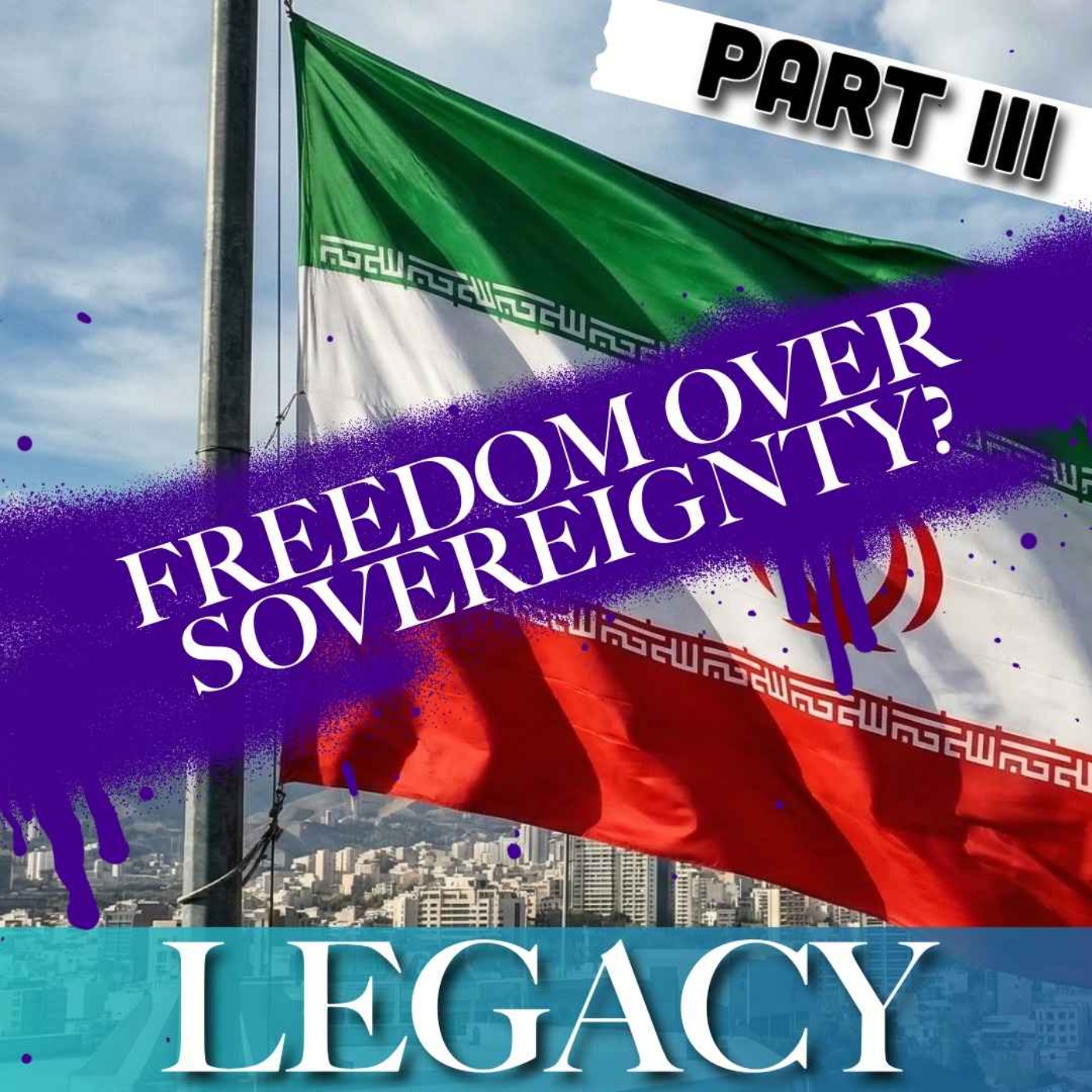
We have to bring in the C word here because Churchill, when he was First Lord of the Admiralty in the First World War, took a very, very consequential decision. He said that from now henceforth, the Royal Navy needs to be burning fuel made from crude oil rather than coal. And that would make our ships much faster than our adversaries. But it did mean that we no longer had. We could no longer support supply ourselves using County Durham. We had to go into the Middle East. So this was the context for the setting up of the Anglo Persian Oil Company, which then became the Anglo Iranian, which was essentially, it was a private company, but essentially it was an arm of the British government operating with a fair amount of impunity on Iranian soil. And the Iranians, as nationalism took hold, as they saw national movements of national liberation take hold elsewhere, that became increasingly irritating to the Iranians. The Russians were very interested in Iran, both from an oil perspective, but also for ideological reasons, because they did think that Iran could be turned. And there was a vocal, if not, we now realize, ultimately all powerful Communist party in the country. So that's the scene for the rise of Mosaddegh, who wanted to come between the two. He wanted to assert sovereignty, he wanted a constitutional monarchy, and he wanted oil to be above all, Iranian. And a very convoluted series of events. The Brits, the Americans and elements within the Iranian elite came together to topple Mossadegh and essentially entrench the Shah's one man rule, which then lasted until 1979 and the toppling of his dynasty and its replacement with the Islamic Republic. That we now see something that's very important. All of this context is very important. But it's also important not to miss inflection points and not to miss points where there is a cutting or a cesura in history. And one of these things that is happening right now, if you are following what's happening on the Iranian streets, in the Iranian universities, the reasons why upward of 7,000 people were killed in two days, which is far more than the Shah killed in security operations throughout his entire reign, why this bloodshed has happened. One of the important things that has changed is that the youth of Iran who are in full scale rebellion, not simply against their current government, but also against their parents, against their schoolteachers. The place is a nbulliant kind of cauldron of different rebellions, many of them social. The youth are now starting to say, well, Mossadegh isn't actually that important to us. Sovereignty is less important than freedom. And they are now, many of them are openly calling for Trump to attack, for as much damage to be done by outside forces to the Islamic Republic so that they can then rise and topple their leaders. It's not for me to say whether this is a wise course of action. This is the course of action of young people who have known nothing but the iron fist of the Islamic Republic and have been brought to a position of complete helplessness and a willingness to entertain the worst, the second worst eventuality, the worst being the perpetuation of the Islamic Republic. I think that's a very important moment.
- [23:56]
Paylocity Announcer
When everything is moving all at once. Your workforce, your tech stack, your business. You don't need more tools, you need one solution. That's why Paylocity built a single platform to connect hr, finance and IT with AI driven insights and automated workflows that simplify the complex and power. What's next? Because when everything comes together in one place, growth comes easy experience, one place for all your HCM needs. Start now@palocity.com 1.
- [24:37]
Peter
Would you see this, Chris, as a new, new wave of enlightenment in its own right? Is it an enlightenment without Islam? Is it all secularism? Is it all secular movements? Of course, there are many, many different voices. But I'd be interested in whether you see it as a new form of enlightenment, those demands for freedoms that reflect other things that you've written about. That's the first question. But the second, I also wonder whether the young people taking to the streets because they're digitally highly sophisticated, very well connected, they can see what's going on other parts of the world, how much of their own ideas are influenced from outside.
- [25:07]
Christopher DeBalague
Yes, I think this is the important thing. And it goes back to what we were saying about the 19th century. The division and the dichotomy between internally generated ideas and externally provoked ones. This dynamic continues to be very, very visible in Iran. The calls for freedom, for people to lead an ordinary life unmolested, for the country to no longer be robbed blind by its rulers. I mean people in parentheses. I'd say people talk that. The idea of many commentators is that if the Islamic Republic were to fall tomorrow, then day One of the new regime would see this extraordinary efflorescence of this enormous potential. What institutions are going to be running that? Because the institutions have been utterly eviscerated. There is no such thing as a solvent bank in Iran. There is no such thing as a government department that's running without enormous ideological interference. I mean, you would start from tabula Rasa and you'd have an enormous reconstruction to think about with Iran in terms of whether this is a part of a kind of extension of the Enlightenment or something like that. I think part of it does conform to that description. I would think that if you look at the way that Iranian history has played out, it has always done so slightly off beam with respect to other parts of the world. It was really an outlier or a forerunner of the Islamic radicalism. In 1979. It came like a bolt from the blue for the rest of the world. And it was something of an outlier. The idea now that the Iranians should be militating for liberal democracy at precisely the time when in many other parts of the world that has been declared dead and buried and we have a new, much more authoritarian form of, of populism or demagoguery taking over. That's also extremely interesting. And I think there are arguments in favor of that.
- [27:04]
Peter
When you say people want freedom, so they don't want people telling them what to do. It's where those influences are coming from. Is it freedom just as an abstract concept, or they can see how other people are living in other parts of the world?
- [27:14]
Christopher DeBalague
I think a lot of it has to do with the latter. Iranians, despite the fact that they live in one of the most isolated countries in the world, do have access to information. There's a massive diaspora. The diaspora is not kind of sundered from the homeland. People come and go all the time. They have done ever since the revolution and we've now seen in parts of the world for Toronto, Los Angeles, Munich, enormous great rallies in favor of a change of regime and also a restoration of the Pahlavi monarchy. That's something else that we can also get into. An important thing to think about. There's a great deal of influence coming from, particularly in questions of lifestyle. I think now on a political level, the old infatuation with Western liberal democracy that I knew and witnessed very, very strongly when I was living in Iran in the early 2000s, the era of the end of history, was also very seductive to Iranians. Well, we know what the destination is. It looks something like Germany, well known now. It's much more convoluted and confused. But on the level of a life style, that idea of personal autonomy, I think that is still extremely influenced by what they know of and what they see in the outside world.
- [28:34]
Peter
You mentioned, Chris, the chance in favor of the restoration of either of the monarchy or perhaps as Reza Paglavi has said himself, a sort of constitutional role that perhaps has even has an elected element or is non hereditary. I mean, here in the west people get very excited because he's the sort of, I guess, the face of the opposition because for the, for, for lack of anybody else, diasporas all over the world are often extremely heterogeneous and have lots of different opinions. And I don't know, a single diaspora that's perhaps got more voices than Iranians, where you put 10 people in a room and you come out with 15 different viewpoints. You know, how serious is part of lively as an individual? How serious are ideas of some form of restoration of leadership? Is that just to do with royalist groups outside Iran trying to make a noise? And obviously we see some of that on the streets in Tehran and other cities, Masjid, et cetera. How serious should we be taking that? This is a movement.
- [29:30]
Christopher DeBalague
Ten years ago, the movement for restored monarchy in Iran was a joke. It was a joke. It had no traction inside the country. Outside the country, it was fronted by septuagenarian, octogenarian, sort of former minor courtiers around a youngish prince who had never really seemed particularly committed to a political career, who was living quite an ordinary life in the United States, had a nice wholesome family. All of that has changed and the Islamic Republic has played a big part in that because the Islamic Republic has systematically eliminated all alternatives. And it's really important to recognize that because of that great political maturity and that long fermenting movement in favor of a more pluralistic political system that goes back to the 19th century. Iran was very well endowed with many, many different options, many, many different alternatives. Some of them were splintered from the Islamic Republic. Some of them were disaffected from former revolutionaries. Others never really got on board of the revolution, but offered a much more nuanced and a much more sophisticated appraisal diagnosis of Iranian society. Suddenly we have the prince propelled to the center of the stage. And this is partly, as I say, because the Islamic Republic eliminated all other alternatives. And it's also because within the country a form of nostalgia has taken hold that again is part of this rebellion against parents and grandparents. You raised this revolution, you were out on the streets, you applauded the Shah's departure and look what you've landed us in. So what we're going to do is we're going to take the most logical step is to bring back the son of that guy. And he's making all the nice noises. We also realized, and this is also a measure of the sophistication of what's happening in Iran, is that they realize that if he has the important power brokers in the world who currently at the moment seem to constitute to be composed of Donald Trump and Benjamin Netanyahu on their side, at least we might have a chance to get some investment. At least we might have some money to come in and repair our infrastructure. You've done a lot of work on Iranian water management and how the country just is poised, is always functioning. Yeah, yeah, it's poised on almost, as you say, inability to function. Part of this is obviously climate change, but much of it is to do with just ridiculous mismanagement, the embarrassment and the shame that Iranians feel at just simply the inability of this enormous civilization to run itself. So a little bit of competence would be really, really welcome. And a little bit of welcome, a little bit of freedom in the lifestyle.
- [32:27]
Peter
Chris, I'm conscious of time. You'll be very generous with your expertise. It's fascinating talking to you as always. I guess the last question is that the picture that we have painted is that Iran is sort of agitating for change from outside. Inside. There's a young groups who are wanting forms of different kinds of reform, perhaps for different outcomes. But there's a big spine in Iran that is non progressive. I mean, when the presidential election, 2024, the hardline, the hardliner who possession defeated Jalili Sai Jalili got 12 million votes. So we shouldn't forget the fact that there are lots of people who benefit from the architecture, the skeleton of power that exists in Iran today. I mean, they don't just melt away and disappear and take things in their stride. If there are changes, how do we understand hardliners in the past who tried to resist change under the Shah, under, before, before the Pahlavi dynasty too. What happens to them in this sequence of events that's going to unfold in the coming months?
- [33:24]
Christopher DeBalague
The hardliners, as you say, they have a significant presence. Their power is obviously disproportionate to their numerical value of those 12 million people. You know, let's break that down into smaller components. Those who, as you say, benefit from the system, those who are ideologically wedded to the system, those who cling to the system because they think it's probably going to survive, and they want to end up on the winning side. You end up with, to my mind, the most salient component would be those men and women who have the guns and who believe that they are doing God's work in killing godless protesters. And really, the fault line now is between those with the guns, and they're not sophisticated guns. They're automatic rifles and they're machine guns. You can't take on the might of Israel and you can't take on the might of the United States with this stuff, but you can kill a lot of people. And what I am apprehensive about is that when the end game comes, and it will come regardless of what happens in these negotiations that are going on now, regardless of whether Trump cuts what he will no doubt call the deal of the century or not, this end time will come. And when it does, there's a huge imbalance of force. And there is a number of people who will never give up their adherence to the Islamic Republic. They are filled with the millenarian zeal. They think in ways that other people do not think. They think in terms of the return of the 12th Imam, who is the great millenarian hope for Shia Muslims. They think in terms of wiping out a cancerous tumor within society that is the agent of diabolical forces. And they also cleave to the old ideas about Western attacks on the Iranian sovereignty. So Khamenei is, so far as we know, he is very much part of that mode of thinking. And he has enough, hundreds of thousands of people behind him who are very happy to go out and kill. And now that they've already killed, they cannot stop killing because they have blood on their hands. And it is well known who they are, so that if the regime falls, they will not survive. So what you do is you polarize society completely. You get rid of the opposition. You polarize society between those who want change fervently but have no guns and those who want the status quo and do have the guns. And that is the ominous scene that we are now facing.
- [36:13]
Peter
Chris, absolute pleasure talking to you. Thank you so much for giving up your time and talking with great eloquence, a lot to think about there, about the past and the present and the future. But let's all hope that things, as you say, end up better than they, than they might do, because the downside looks pretty bleak at the moment. But let's see how the following days, weeks and months turn out. But thank you so much for joining us.
- [36:34]
Christopher DeBalague
Thanks a lot, Peter. Foreign.
- [36:53]
Ayo Akemolere
This is Ayo Akemolere from the Athletic FC podcast. Buying a car should be exciting, not exhausting. And if you're looking for a gleaming SUV to replace your old banger, or you're taking the plunge and going electric, the good news is you can buy your car completely online on Autotrader.
- [37:10]
Paylocity Announcer
Really?
- [37:10]
Ayo Akemolere
Just go to autotrader.com and get picky. Search through dealer listings for the make, model, color, and the features that matter to you. Then just drop in your info and you'll see all the cars that fit your budget. Really? Once you've found the car of your dreams, you can have it delivered to your driveway, or you can pick it up at the dealership. Really? So buy your next car entirely online on autotrader. Head to autotrader.com or search the Autotrader app.