Loading summary
Transcript71 lines
- [00:00]
Rubrik Advertiser
AI agents are everywhere, automating tasks and making decisions at machine speed. But agents make mistakes. Just one rogue agent can do big damage before you even notice. Rubrik Agent Cloud is the only platform that helps you monitor agents, set guardrails and rewind mistakes so you can unleash agents, not risk. Accelerate your AI transformation@rubrik.com that's R U B R-I K.com.
- [00:33]
Afua Haas
Hello and welcome to part two in our series on the legacy of Martin Luther.
- [00:39]
Peter Frankopan
Last time we looked at Luther's life and times and at the turbulence that was started to be unleashed by the ambitious, argumentative and chaotic Martin Luther.
- [00:48]
Afua Haas
He was a man who didn't take no for an answer, who was completely convinced that his way of doing things was right and and that everyone else was wrong. That probably sounds pretty familiar to most of us living in this age, and that the ends justified the means. He thrived on controversy and on division. What a shame that he lived before the age of social media. Peter he would have loved it.
- [01:13]
Peter Frankopan
That was a real takeaway. I've heard from last time about I've been picturing Luther. I can see him on Twitter arguing with people. I'm not sure what his Instagram feed would be like.
- [01:21]
Afua Haas
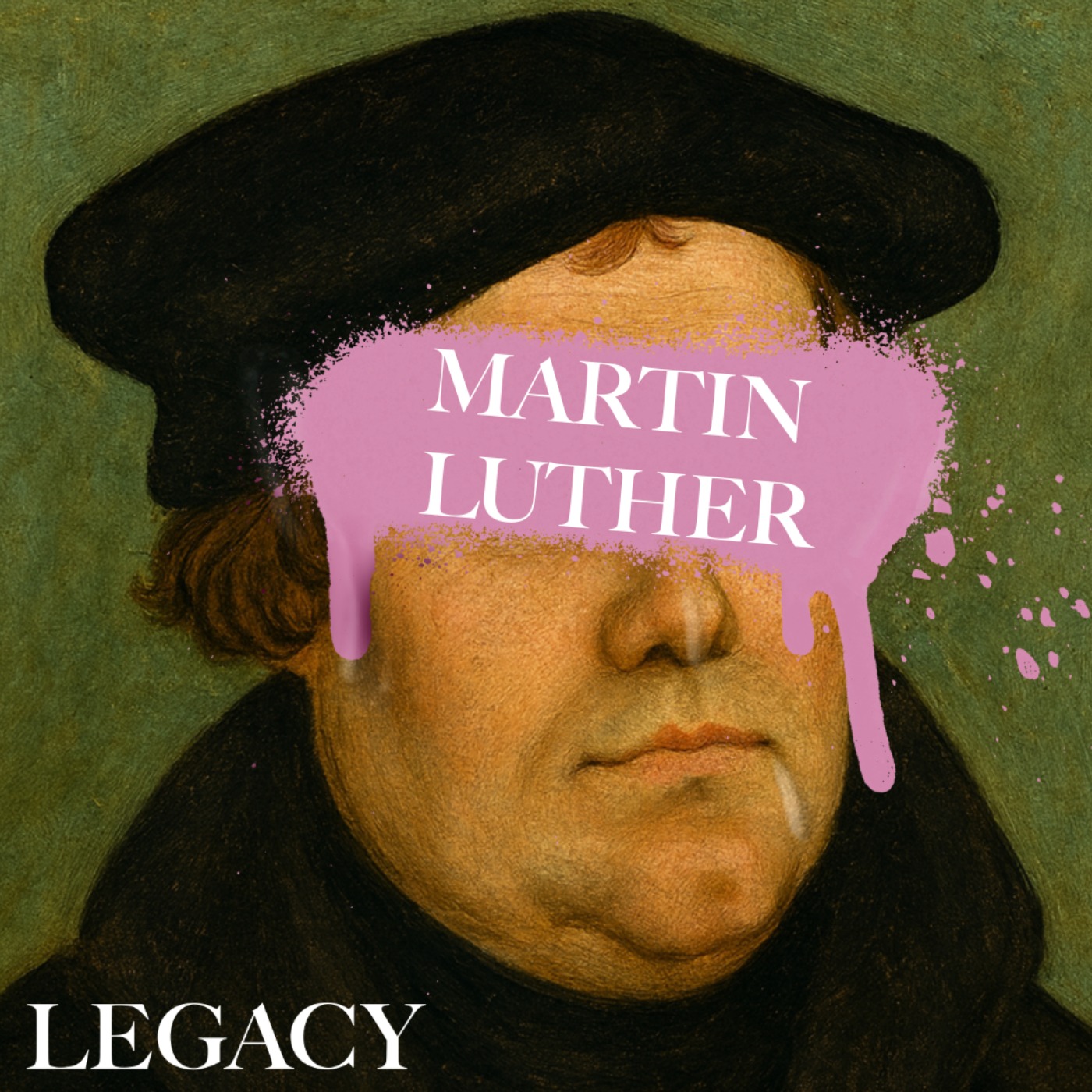
No, we didn't actually talk about this, but there are a lot of iconic images of Martin Luther, mainly because of the work of one artist, Cranach, who painted him over and over again. So I think he would have had a strong brand on Instagram. He would have used those portraits and then kind of blasted people with reels. He would have put hymns on there. He would have been firing shots at his enemies. He would have had a massive following. And then he would have rejected all the endorsement deals from the indulgences brands because it wasn't aligned with his values. And that would have got him even more followers. Anyway, we digress.
- [01:57]
Peter Frankopan
Washing up liquids. He'd have been seen to be selling household products. He'd have turned down the indulgences. But this time we're going to look beyond Wittenberg and beyond Germany in the 16th century and to look at the legacy of Martin Luther and of Lutheranism and some of the things he set in motion. Because it is a completely extraordinary story that takes in everything from migration to the United States, the rise of Hitler, and that explains who can and can't sit on the throne of the United Kingdom to how Europe didn't fall to the Ottoman Turks. It's an amazing. So thank you for listening to the first episode. But a lot of these things I think are going to be really fun to explore.
- [02:33]
Afua Haas
Some of it is fun, Peter. Some of it is quite dark, and we will be unflinchingly looking at the whole picture. And I actually have a sneaky feeling that Luther would have been quite pleased that we're giving him the airtime, whether it's credit or blame for his role in changing the world. So buckle up and prepare to learn a lot about how much the world you're living in was influenced by one of the most interesting figures we've covered, Martin Luther.
- [03:08]
Peter Frankopan
From Legacy. I'm Peter Frankopan.
- [03:10]
Afua Haas
I'm Afua Haas.
- [03:11]
Peter Frankopan
And this is Legacy, the show that explores the lives, events, and ideas that have shaped our world and asks whether they have the reputations that they truly deserve.
- [03:30]
Afua Haas
This is Martin Luther Part 2, a man who Changed the World.
- [03:40]
Peter Frankopan
Okay, Aphwa, I've been so looking forward to doing this, having got through Luther his life and times. The fact that you're smiling and you've sort of shouted out about Luther's Instagram. Do you reckon he would come to your fantasy dinner party? He's one of the people who'd arrive first and leave last. Do you think he'd sit there complaining about what he's being served? How would you imagine Luther if he joined us for dinner today?
- [04:00]
Afua Haas
This doesn't answer your question, but do you know who I can imagine having dinner together is Martin Luther and Kanye West. Because I think they have a lot in common. You know, these kind of like evangelical zeal that makes a lot of sense to them. That kind of has the tendency to descend into insane anti Semitism, but they think is based on this, like, very profound religious faith and this kind of creative genius, undeniable, no matter how problematic you think their ideas are, this capacity to just reach people, people just can't look away, you know. So that is a fantasy dinner party that I would not be at, but I can imagine taking place.
- [04:37]
Peter Frankopan
Right. Well, let's start to widen that circle out from Wittenberg and Germany and even from Rome and about in particular, what Luther does in England. So Luther's 95 theses from 1517 attack the sale of indulgences very quickly get translated into English. And despite the initial efforts of English bishops to suppress the text, they start to circulate through academic and court circles, especially at that troublesome institution, Cambridge, where there are lots of scholars who start to read and discuss them. But Henry VIII takes a very defensive position to start with. Doesn't he offer? Because Henry VIII at this time is the kind of the golden boy of Europe. He's devoted to the Pope and can do no wrong.
- [05:20]
Afua Haas
Spoiler alert. That's a story that takes a few unexpected turns. But yes, for now. Henry VIII is, ironically, the person who a refutation of Luther entitled defense of the seven sacraments against Martin Luther in 15.
- [05:35]
Peter Frankopan
You're not going to do the Latin title? No, no, no, don't. No, go on, go on. Come on, Afra.
- [05:40]
Afua Haas
Well, I mean, you know, like, we don't learn to speak Latin. We learn to translate Latin into English. So I'm gonna let you do it because you probably speak Italian.
- [05:49]
Peter Frankopan
Oh, well, I think. Assertio septem Sacramentorum adversus Martinum Lutherum, which all of you will know. Adversus takes the accusative. Yeah, thought you would.
- [05:59]
Afua Haas
Bit of an Italian flair on it, Peter.
- [06:01]
Peter Frankopan
Well, I'm a bit shy for him. That's too early in the day. But it's the defense of the seven sacraments against Martin Luther. Tell us about that text, Safra.
- [06:09]
Afua Haas
So this text was basically Henry VIII sucking up to the church, affirming its authority. And it's a political move as well as a theological one, because the church and religious and political power are all inextricably linked in this era. And that's one of the things that Martin Luther is railing against. And again, in one of his kind of ang threads that you can imagine playing out on socials, Luther replies to Henry VIII calling him king of lies. You are not a king, but a liar. Your blasphemies stink in God's nostrils. I would rather be ruled by a Turk than by you. Do you think that's fewer than 140 characters? I think it might be.
- [06:48]
Peter Frankopan
I wonder whether he'd put a gif with it as well to sort of show. But I mean, that's pretty aggressive, pretty inflammatory. And it's also not the way in which monks or in fact, anybody speaks to a ruling monarch. So, you know, the fact that Luther is willing to double down and take on doesn't just provoke a deep hostility between Luther and Henry viii, but it creates the fracture of what's acceptable to do for anybody who wants to take on royal power. And that's one of the reasons why we start to see in the Reformation, in all sorts of parts of Europe, problems that we've already talked about. The German Peasants War. But we'll start to see the ways in which religion starts to become a way in which political battles start to get fought. And I mean liter literally. But Luther has a huge influence on early English reformers, because some of these he's talking about maybe self evident is too strong, but about how the Bible needs to be inter, it could be understood by everybody about how the Church is stepping over the line to abuse its authority. There's lots of people who get influenced by what Luther's saying, aren't they?
- [07:49]
Afua Haas
One of whom is William Tyndale, who translates the Bible into English and is profoundly influenced by Lutheran principles. Faith only justifieth before God the belief in Christ's blood, writes Tyndall, which is very similar to Luther's formulation. Man is justified by faith alone, without the works of the law. Again, this idea that you go directly to Scripture and you find truth in your own faith rather than for appealing to some higher authority that has the power to tell you whether you are or not functioning in a holy way.
- [08:22]
Peter Frankopan
But that is very, it's interpreted in a very aggressive way. So in 1521, Cardinal Woolsey orders a burning of Lutheran books. So not just by Luther, but the translations by Tyndall and others. And he does that at St. Paul's Cathedral in London. And people who have been persuaded by Luther and his ideas get arrested and in fact they get put to death. Like Thomas Billney, a Cambridge scholar who's arrested in 1527. And Billney's confession reflects Luther's influence. He said, I read the New Testament, says Billney, and I found that a man is justified by faith without works. This I learned from the works of Luther. So Luther is encouraging people and scholars to readdress faith in a different kinds of way. And you know, people are very sympathetic. So another scholar, Robert Barnes, preaches openly about Luther's doctrines at St. Edward's Church in Cambridge. And he says, I saw with my own eyes that Luther, when he meets him, he flees to Wittenberg. And he says, I saw in my own eyes that Luther was a humble godly man, full of scripture, not of pride. So Luther's personal characteristic, people think that he's doing that, they recognise he's doing this from his beliefs.
- [09:31]
Afua Haas
Can you tell us anything about why Cambridge is such a hotbed of Lutheran appreciation at this time, Peter? Because it feels very much like Cambridge scholars are overrepresented in this new wave of dissent.
- [09:43]
Peter Frankopan
That's a very good question. I think you sometimes you get circles of dissent or you get circles of brilliance as well where like minded people start to push each other in different kinds of ways. So there's a happenstance of where you, you get challenged. Some of it's to do about Royal authority and about where challenges to the church of the king might come from. But it's also because what Luther is trying to say has so many different kinds of strands that there's a bit of pick and mix element to it about which bit you're really trying to get to. Is it about sale of indulgences? Is it about personal identity? Is it about language? Is it about disseminating the word of God? Is it about living a more pure life? I think in that there are so many different kinds of challenges to the Church that all of that together starts to spark the Reformation in England. So even though Luther's very much not aligned with Henry viii, as you mentioned, therefore Henry VIII takes him on and defends the Church, that framework starts to fall on very fertile ground.
- [10:39]
Afua Haas
Yeah, this is very confusing and it'd be great to clear it up because we all know that Henry VIII broke with Rome and founded the Anglican Church. This is around the same time that Luther's ideas are spreading in popularity. Luther and Henry are, as my daughter's generation call it, ops are not aligned, they're enemies. But there's undeniably a Lutheran influence in the moves that Henry is making to break away. So can you explain how we square that circle of Henry not really following Luther, but Luther's ideas nevertheless, helping him in his own endeavor, motivated primarily by wanting to divorce his wife, Catherine of Aragon, and start his own church?
- [11:17]
Peter Frankopan
Yeah, look, it's a complicated one. So when I was taught about the Tudors and the Reformation when I was a boy, I was told, well, the church was obviously corrupt. And then Henry VIII wanted to marry somebody different and the church wouldn't let him. But things look a little bit different as I've got a bit older first. One of the things that's strange is that, or maybe unexpected, is that when Henry announces he wants to divorce Catherine of Aragon, Luther stands against him and opposes it. He says that the king just wants his way, not God's will.
- [11:43]
Afua Haas
And, I mean, there's some truth in that.
- [11:46]
Peter Frankopan
No doubt he should keep his wife. So that's a complicated one. I mean, part of the issue is that again, it's easy to forget Henry VIII is the son of a usurper or a man who takes the throne. Henry VII after the Battle of Bosworth in 1485. And the Tudor dynasty doesn't have enormous amounts of wealth, so it's highly incentivized to try to find new sources of capital. We say that in an age today where lots of balancing of the books in established States mean that you're raiding pots and you want to take cash from the source of least resistance. And although the Church is an important institution and can defend itself in lots of different ways, Henry VIII gambles that the Church, as a fat target, might be able to find a way of dislodging money that will help him become more powerful. But Luther's theology of royal supremacy, funny enough, starts to legitimate Henry VIII's actions, because Luther's teaching that people like kings and princes have a divine mandate to govern all aspects of society, including the Church, so actually allows Henry VIII to say, well, if that's the case, then I should be the supreme head of the Church to be able to tell priests what to do, rather than the other way around. So there are lots of things that are folding into themselves that make it difficult to work out exactly how Luther blends in. But the lack of obedience to the Pope is one of the things that is most important for the Reformation in England.
- [13:08]
Afua Haas
And we learned in the last episode how disillusioned Luther became with his period as a monk. And that now finds itself kind of being weaponized in Henry VIII's attack on the Church and the monasteries, which, you know, any schoolchild of English history learns about how Henry VIII stripped the Church of wealth and land and sacked monasteries. You know, wherever you go in England, you can see the ruins of monasteries that were destroyed during Henry VIII's reign. And, you know, this is a kind of perversion of the Lutheran idea that monastic vows are harmful to salvation, that monasteries are not fair representation of the message of God. And, you know, he's not actually advocating violence and plundering of monasteries, but you can see how in Henry's own agenda, it kind of becomes a convenient idea that can legitimize what he wants to do for his own reasons.
- [14:02]
Peter Frankopan
And I guess what's interesting is why it needs to be legitimized in the first place. But. But it does. And Luther's ideas, they all get weaponized. So, for example, his lecture on the Romans that we spoke about last episode, they get used to justify stripping assets from the Church, not just silver and precious objects, but land as well. They get used to justify undermining of the authority of bishops and monasteries, and even to dissolve things like the vows of celibacy and obedience, too. So you find Luther attacking monastic life, even though he's been part of it and has been brought up in the. The Augustinian order, but saying monastic vows are not only unnecessary, but they are harmful to salvation. So you find lots of People not just in England, but elsewhere, like Zwingli or Martin Bucker, adopting and expanding on these ideas, all of them leading to regional ruptures with Rome. People taking on the brain of the Church and saying, we don't need to do what you tell us. And in fact, what you're telling us to do is dangerous, too.
- [15:01]
Afua Haas
But there's a school of thought where you can question someone's legacy by asking who their actions benefited. And I'm not saying that's the only way of assessing legacy, but it's an interesting one if you apply that to Luther, who ostensibly was driven by wanting to give access to ordinary people, not educated, not literate, not rich, to the word of God. Nevertheless, those who benefit most from the ideas he spread are secular rulers like Henry viii, who wants to break from the Church, like Frederick the Wise, his protector, who stopp stopped him being arrested and killed after the diet of worms. Scandinavian monarchs such as Gustav Vassa of Sweden, who established Lutheran churches in Nordic countries, Love Gustavus.
- [15:46]
Peter Frankopan
Oh, yeah, love Gustavus. We got to do him, by the way. He's great. I don't think anybody in England has even heard of Gustavus. He's an absolute legend. I mean, he's so interesting.
- [15:55]
Afua Haas
I think we need to pay some tribute to your Swedish heritage as well, Peter. We haven't.
- [15:59]
Peter Frankopan
If you're Norwegian, we can do the scandies. Yes. For all Scandinavian listeners and others. Yeah.
- [16:03]
Afua Haas
And then we've got these urban elites and merchants. Cities like Strasbourg, Zurich, Geneva are rushing to embrace Lutheran reform because it helps them escape episcopal taxation and gain religious autonomy. Again, questionable whether that's driven by spiritual devotion or whether it's simply a capitalist calculation that this is a way that they can preserve their assets. And then you've got the educated middle class who can read, who benefit from vernacular Bibles and the pamphlets that are spreading like wildfire due to the printing press. But are the masses, the working people, the underdogs, the peasants? Are those at the lower end of the socioeconomic order really benefiting from Lutheran reforms as well? That's the question. A genuine question. What do you think?
- [16:50]
Peter Frankopan
I think that it's all in the eye of the beholder. So what unleashes? We already mentioned the German peasants war. But there start to be major breakdowns between regions, peoples, princes, as sides start to get taken, leading to, course a loss of life, but also to rupture lines that still are there today. So we find persecutions in England, where hundreds of people are executed, first under Henry viii, but then under Mary and then under Queen Elizabeth too, that that break from Rome, the establishment of the Church of England in 1534 wasn't inspired by Luther, but it uses Luther's theological arguments. And I think what then starts to happen is that you see these similar arguments being played out all over Europe. So you have the French wars of religion from the early 1560s until 1590 or so, and the estimates vary, but the number of people who are killed in primarily battles between French Catholics and Calvinist Huguenots, whose roots trace back to the Lutheran, it's between 2 and 4 million. You know, these are really apocalyptic times and the language is apocalyptic. Luther has written saying that the papacy is the kingdom of the Antichrist. You know, that's not an easy one to put back in the locker.
- [18:04]
Afua Haas
He really has a knack for extremist rhetoric. You know, we heard earlier how he said that Rome was built over hell. I mean, now he's going even a step further than that to say the papacy is the kingdom of Antichrist. But in an era where people are so religious and fear the devil and Antichrist and the apocalypse, this is really incendiary language. And given that he's also somebody who believes that the ends justify the means, you do wonder whether the fact that millions of people are dying in wars unleashed by these new religious ideas, whether we can put some of the blame at his feet for really fanning those flames and, and not standing with the ideas of the sanctity of life or the need to protect the ordinary, less affluent person, because he is unashamedly in favour of preserving the kind of class and aristocratic power structure. And we saw, you know, when he had a chance to stand with the peasants in the German Peasants War, he didn't. So I don't think he set out to unleash wars in which millions would die. But he certainly seemed comfortable with the idea that if there was suffering in pursuit of what he believed was completely the truth, then he could live with it.
- [19:23]
Peter Frankopan
Well, that's where I think these legacies become really sharp. Because when Luther has said things like, a Christian is a perfectly free lord of all, subject to none, he's also saying, your loyalty to your sovereign, to your bishop, to your mayor, it's all in your own hands. And that can be weaponized. So we had the French wars of religion. We find revolts in the Dutch republics, over a hundred thousand civilian and military deaths. Calvinism starts to become dominant later in the Netherlands. But Luther's initial influence has laid the groundwork for rejecting papal control and Habsburg control And so the things that Luther has said and written become sort of rallying calls, no matter where. And the worst of all, of course, is in the Thirty Years War that begins in 1618 and has roots in the Reformation.
- [20:10]
Afua Haas
Okay, I just. Peter, I'm going to need you to just give us a minute on these wars, because it's a lot. So we've had the French wars of religion, 1562-1598. So that's Catholics versus mainly Calvinist Huguenots. Then we've got the Dutch revolts, 1568-1648, about 100,000 dead through this battle over Calvinism, with Luther's influence very visible there. So now we're moving on to the Thirty Years War, which is beginning later, 1618. Can you just explain that and why so many people, 4 million, died in that war?
- [20:47]
Peter Frankopan
Well, if you're cynical, which, you know, maybe we are, one of the most important things about war allows for centralization of power. So although Luther and people might be fighting thinking it means they can be free, you have to have armies that call up resources, that take people away from fields and from cities. They then serve underneath generals that serve typically under rulers. And those wars that happen in Europe between essentially a Catholic, what's now Spain, Italy, France, Austria, Poland against a Protestant Northern Germany, Scandinavia, England, Netherlands, parts of Switzerland, are absolutely seminal in putting some of these fault lines into Europe today. So the Thirty Years War begins in Bohemia, in Central Europe in 1618, when Protestant nobles revolt against the Catholic Habsburg Emperor Frederick ii, who'd been trying to reimpose Catholicism. And the immediate spark had kicked off in Prague. But that confrontation produces mass warfare, constitutional crisis, dynastic ambitions about whose family's marrying, whose foreign intervention. And although Luther had died, you know, 60, 70 years beforehand in 1546, his theological and political context for all of this is absolutely crucial. So the secular sword, he said, is God's instrument. Rulers must govern both spiritual and civil life, and it leads to the territorialization of religion. So that means where rulers impose their beliefs on their subjects, and that is accident waiting to happen and trouble all built up there. So you have mass mortalities where the depopulation in Europe is measured in the millions as a result.
- [22:25]
Afua Haas
So this catastrophic war, I mean, really unprecedented in its scale in Europe at that time, is that fair to say, Peter? We've had events like the Black Death, but this is a war that is.
- [22:34]
Peter Frankopan
4 million, 6 million deaths. Yeah.
- [22:37]
Afua Haas
Numbers that are hard to compute. This ends finally in 1648 with the Peace of Westphalia, with treaties signed at Munster and Osnabruck. And those treaties legalize Calvinism in addition to Lutheranism and Catholicism. So now, for the first time in Europe, we have this multiplicity of Christian churches that are formally recognized. And that is a huge legacy of Luther.
- [23:05]
Peter Frankopan
PETER yeah, and that Westphalian settlement, as it's called, you know, it's alive and well today in the world of international relations as a kind of shorthand for the beginning of the point where the modern nation state is created. And it affirms the sovereignty of states, but also the principles of non intervention. So the Westphalian treaty marks the decline of papal and imperial authority in European politics.
- [23:29]
Afua Haas
And it's a really, you know, if you study international law, it's a huge deal because as a result of European colonialism in, you know, beginning around this time, this idea of the sovereign nation state was then exported globally. So that we now live in a world where boundaries have been drawn and nation states have a bunch of protections in international status and representation in international fora. And that all stem back to the concept of what a nation is that was drawn up in this treaty.
- [23:59]
Peter Frankopan
And what about gender? Rafa? We mentioned that a little bit last time in relation to Luther's marriage. His theology affirms traditional patriarchal norms while reshaping ideas about women's roles and the importance of domestic roles that they play. Tell us a bit about that.
- [24:15]
Afua Haas
This is another area where it's very important not to overstate the revolutionary impact of Luther's ideas, because on patriarchal norms, on the roles of women, on the ideas about femininity, he was extremely conservative. He stressed the domestic role of women. He aligned femininity with these ideas about obedience, silence, motherhood, that women who step outside their, quote, natural role are threatening, you know, into. That feeds this idea of women who aren't so easily controlled by those not norms, as witches or somehow aligned with the forces of evil. And that's really important in Europe because it shores up these institutions that give property and legal rights to men, to fathers, husbands, brothers, rather than women. But it's also really important globally because, you know, at the beginning of the first episode, I was talking about how my Ghanaian family are Presbyterian. These Protestant norms that have their roots in Lutheran thinking were transported around the world and taken to places that had completely different relationships to gender. And if you look at Western Africa, you know, there was no concept of men owning property rights over women. You know, property rights were held in commune. Women had their own areas of political and economic life they controlled. And so European colonists attempted to assimilate these completely different cultures that actually had what we might now call much more progressive ideas in some of these areas into the straits of Lutheran patriarchy. And, you know, we can still see the effect of that today. If you look at what African women experience within their own nation states, if you look at Latin America, if you look at indigenous cultures who've all been forced into this very specific worldview that has its origins basically in kind of southeastern Germany in the 1500s. So these ideas are replicated, they're embedded into legal and national ideas as well as the church. And these are influences that continue right up to today.
- [26:16]
Peter Frankopan
And one of the things I'd like to do, another episode about Afro is about witch trials in general, but also the role that Luther and demonology have in the execution of women in this period. You know, there's lots of interesting things we can say about climate too, but that the way in which Luther is liberating socioeconomic structures in one way, but also reinforcing them across gender lines is a really interesting question I think deserves its own episode. But one of the things I think is fascinating about Luther is his views about education, particularly about children's education in this period in early modern Europe. He has this idea of a priesthood of all believers that requires all Christians, including children, to be able to read and understand scripture. And that leads him to advocate universal schooling, ironically, also for girls, which is a pretty radical idea, despite you have to tune in for a separate episode about Lutheran witches, but also to push for responsibility in education. So he instigates a set of reforms that are seen as being the foundation for state supported school systems in Protestant territories that has a really important influence on the way in which children are brought up and what they learn.
- [27:30]
Afua Haas
And you know, we talk about Luther's impact in Germany. Actually it's part of what is now Germany, the Kingdom of Prussia, where these ideas about mass education are actually embedded in a way that's now seen as the template for the modern public education system everywhere. Because it was Prussian schools that first implemented these reforms that really focused on raising literacy, on educating boys and girls with this Lutheran idea that you couldn't have a responsible relationship with scripture if you weren't literate and able to think for yourself. So if you're going to a school in the UK or in America, or in an African country that was colonized by a European country, which almost all of them were, you have also been influenced by these German education reforms that took place in a way that's directly linked to Luther.
- [28:36]
Instacart Advertiser
A PSA from Instacart. It's Sunday 5pm you had a non stop weekend. You're running on empty and so is your fridge. You're in the trenches of the Sunday scaries. You don't have it in you to go to the store, but this is your reminder. You don't have to. You can get everything you need delivered through Instacart so that you can get what you really need. More time to do whatever you want. Instacart for one less Sunday. Scary. We're here.
- [29:06]
Rubrik Advertiser
AI agents are everywhere, automating tasks and making decisions at machine speed. But agents make mistakes. Just one rogue agent can do big damage before you even notice. Rubrik Agent Cloud is the only platform that helps you monitor agents, set guards, guardrails and rewind mistakes so you can unleash agents, not risk. Accelerate your AI transformation at rubrik.com that's R U-B-R-I-K.com.
- [29:47]
Peter Frankopan
One of the reasons I wanted to do Luther is that when I wrote about Lutheranism in Earth Transformed, those long range legacies were kind of mind blowing. So countries that became Protestant or places, cities and countries that became Protestant and adopted Lutheran policies for educating children had majorities where there was almost universal literacy for their populations by 1900 where none that were Catholic did. And that pattern is replicated. This is amazing research done by some colleagues of mine. Patterns replicated between 1910 and 1938 in the United States, where educational outcomes were much higher in areas where there were lots of Protestants than other Christian denominations, particularly Catholics too. So that's one of the things why the white Anglo Saxon Protestant thing became a thing in the United States. The WASPy idea, the ideas about Anglo Saxon tribes from the distance past the fetishized mythologies of history, the idea that the Germanic peoples had overthrown Rome and replaced it with something better. I think it's probably not at all historically right, but I think these ideas about being more literate, more educated, being better to understand science was something that was very closely linked to Protestantism and.
- [30:58]
Afua Haas
To Luther and Germany. Actually, you know, as a country at the center of that idea. I mean, you know, in Anglo Saxon, we in the UK tend to emphasize the Anglo element, but the Saxon bit there is this idea that Germany has been a harbor of what many people regard as Western civilization. You know, this idea of Protestantism, this relationship with art, this relationship with science and rational inquiry. When we later get into the Enlightenment, so many of the origins are taking place as a result of this Lutheran influence on Germany, which now becomes a center as a result of the revolution he unleashed on intellectualism, which at the time was still so bound up up in Christianity. And of course he's doing it in his classic Lutheran way. It's not diplomatic. I mean, on the education issue, he argued in a sermon on keeping children in school that parents who took their children out of school were selfish, stupid and unchristian and taking them out of school they were serving the devil, you know, and this is again, it's just so resonant.
- [31:59]
Peter Frankopan
Bit harsh. Yes.
- [32:00]
Afua Haas
The people who cut through are so often the ones who are really sensational, you know, they're sensationalist if they're clickbaity and, and you know, I think we can look at that from both angles because we remember Luther and what he said. It's not necessarily an ideal way of saying it, it's not very diplomatic and it's not very open minded to the possibilities of other worldviews, but it definitely gets through.
- [32:24]
Peter Frankopan
So I'm also really interested in those long term legacies when it comes to the Ottomans, who we mentioned briefly last time. So the Ottomans start to move into Europe from the late 1300s onwards and there's a direct correlation between the amount of Ottoman pressure and the consolidation of religious identities in Europe and those military battles. So the Ottoman pressure on Europe inadvertently helps foster religious pluralism and political transformation because it draws Catholic powers, their attention away from fighting Protestant dissenters and making them compromise. So ironically, the more the Ottomans push, the more the Catholics have to defend themselves against the Turks. And that allows for splinterings and allows for the Protestantism in northern Europe to take shape. So that has a long term impact too. The fact that those dividing lines of northern Europe basically becoming very Protestant and southern Europe staying Catholic is helped by military attacks by coming from southeastern Europe, from the Turks. The amazing thing, more than the Ottomans afwa, is the extraordinary link between Luther, Lutheranism and the Nazis. How does that all fit together?
- [33:29]
Afua Haas
Well, Luther was hailed by the Nazis as a proto German nationalist who broke with foreign authority and spoke for the soul of the German Volk. And that is based in his having broken away from the Catholic Church, which was based in Rome, on his having really centered Germany, as we were saying, this kind of hub of Western civilization, which is an idea that the Nazis loved, obviously this was the kind of center of the white race and its great achievements. And then there's more specifically the antisemitism that accompanied those achievements of Luther, which was a cornerstone of Nazi ideology. And I think it's worth just spending a minute on Luther's antisemitism. Because, you know, we so often, when we talk about these figures from history, have to kind of work out whether we're judging them by a very modern standard, whether we're applying the norms of the time, you know, which is the correct approach. But I think, well, a little bit helped in that, in Luther's case, because obviously, from a modern lens, his anti Semitism is abhorrent. But even by the standards of his contemporaries, he was definitely out on a limb. He had really extreme and provocative and violent criticisms of Jews that far exceeded many of his peers and actually made some of them uncomfortable.
- [34:52]
Peter Frankopan
Peter well, he wrote, for example, in on the Jews and Their Lives, but the title tells you probably what's coming next. He says, first, their synagogues should be set on fire. Second, their houses should be razed and destroyed. They're full of the devil's feces. And this horrific text becomes a cornerstone, like you said, Afro, of Nazi religious anti Semitism. And, you know, people like Hitler read Luther with great admiration and joy. So Mein Kampf, Hitler says, in the historical fight against Jewry, I see Luther as a great warrior. He was a giant. We can only now complete what he began. So those processes of trying to find people who you want to blame, victimize, stigmatize, and use action against and violence plays a really important part of how Luther's legacies flow forward. So to the point that on the celebration of Luther's birthday in November 1933, just after Hitler's come to pass, an official German press statement says, on Luther's birthday, we honor the man who gave the German people the language, their Bible, and their courage to resist alien rule. And those aliens. And that Bible is not just about thinking about people outside Germany. It's about enemies within, too. So Luther's really important in the configuration of Nazi ideology.
- [36:07]
Afua Haas
On Kristallnacht in 1938, which, you know, for my Jewish family was really the moment that they realized they had to leave, that there was no safe way for them to remain in Berlin, where they lived. It's very literal. The Nazis were actually handing out and distributing Luther's text as they raised and burned Jewish properties and murdered Jewish people. So it's not just a kind of academic or philosophical alliance with Luther's ideas. It was literally in their hands. You know, one hand you had a Lutheran pamphlet, and in the other hand you had a torch you were using to set Jewish property alight. So the Nazis embrace Lutheranism in this very physical, violent way. And I Think that's not an extreme Nazi interpretation? You know, there is enough in the text, as you just read of what Luther said to fuel that. And he combined this virulent antisemitism with this very pro German Christian idea. And you know, that's why scholars have sometimes talked about the way that Luther was used by the Nazis to Nazify Christianity, because the ingredients were there to make that possible.
- [37:19]
Peter Frankopan
It's horrific reading the material that's being pumped out again and again and again. But you know, you find Goebbels saying, I love Luther. He was a true German, a man of the people, a preacher of freedom, and above all an enemy of the Jews. And I think you, you start to see how important Luther is in creating an idea of Germany that is ethically pure resistant to the idea of the king where the Germans had lost their emperor at the end of the First World War. But the rise of Hitler as someone who could unite Germany and connect it to its past, connect it to the models and ideas of not having authority from outside, it's completely chilling. And you find Hitler invoking Luther by name again and again and again and often connecting it with Jewish demonization of Jews and Jewish populations. So that's maybe not blood that you could put on Luther's hands, but it's critical to the ideology that Hitler and the Nazis can claim to have a pedigree of one of the great sort of religious thinkers and revolutionaries of the early modern period.
- [38:24]
Afua Haas
With this kind of hate. It's often impossible to really get into the mindset of the person who holding those views. But you know, one thing I think you can say about Martin Luther is that at the time he was living and with this Ottoman threat and this sense of end of days, people including him, really believed that Jews were going to begin converting en masse to Christianity. Something that I just, you know, it's quite hard to work out why they thought that was going to happen. But Luther in particular had this real frustration when that didn't happen. And it manifested in this like fury towards Jews because believing that his ideas were true and that his faith was the one true faith, faith, you can see how that kind of fuels this intolerance and how intolerance can sour into hatred. And, you know, and then that person becomes a scapegoat into which you pour all your frustrations about everything that you believe is wrong in society. What I find fascinating about it is that it was only after the Second World War and after widespread awareness of the Holocaust that Lutherans started to have to confront the history of antisemitism in their church because for the four centuries before that, these things were kind of seemingly quite comfortably coexisting. You know, there was the knowledge that Luther had these incredibly anti Semitic ideas and nobody really dealt with it. But then in the 20th century, it was something that could no longer be ignored. And it's interesting that it took that, Peter, for evangelical churches, Protestant churches, Lutheran churches, the Lutheran World foundation, for example, only in 1994, acknowledging the anti Judaic motifs in Luther's writings and then expressing regret for their consequences. Why did it take so long for Lutherans to renounce this aspect of Lutheranism, or have they renounced it?
- [40:15]
Peter Frankopan
Well, I think it's. It's been complicated. I mean, we live in a world where we're more aware of those fault lines and their complicated problems that they've caused. But I mean, you know, Alf, you and I have spoken about civil rights many times and, you know, there's a role there too. So. So in the 1930s, for example, a man called Michael King went to Germany, visited where Martin Luther had been born and the context of the birth of Protestantism, and changed his name to Martin Luther King Senior. And obviously his son was the most famous member of the family. But when King himself used to draw on Luther's example of moral courage, it meant something very different in the 1940s, 1950s and 60s to what it does today. So those journeys of reconciliation, recognizing the damage that's been, they really are quite recent. But tell us about Martin Luther in the context of civil rights. Afwa.
- [41:06]
Afua Haas
I mean, it's a whole complicated subject. I think the one with which I'm fascinated, the relationship between black people, African Americans, Africans, people in the Caribbean, and the Christian church, especially the Protestant and evangelical churches. Because, like, on the one hand, you could say, and it's historically a fact that Christianity was brought to black people mainly through the institutions of slavery and colonialism, where missionaries came, bringing Christianity to continents like Africa, and where people who were enslaved were in many cases forced to adopt Christianity as their religion, it was seen as a way of pacifying and controlling enslaved people. However, in a world in which they weren't allowed to read and write and they were denied freedom, these enslaved people then went to find great inspiration for their freedom struggle in the scripture, which is a very Lutheran thing to do, actually, to have a direct relationship with scripture, ignore what the institution of the church church is telling you, and find this liberation theology, and liberation theology is a huge part of black Christian spirituality today in many places. So it's really complicated and in some ways uncomfortable. You know, you think of Martin Luther King senior going to Nazi Germany in 1934 as a black man. Actually, there were quite a lot of African Americans in Germany in the 1930s. And, you know, it was again, a complicated thing. They were leaving the Jim Crow south of the United States, which in many ways wasn't that different from Nazi ideology, especially towards black people going to Europe where there wasn't the same strict regime of segregation for black people. But there was this growing Nazi ideology that was virulently anti Semitic. And then on, you know, in the broader scale, kind of really finding a connection to these Lutheran Protestant Christian ideas, even though those can be traced to their enslavers and colonizers. So it's a big complicated picture. And I think, you know, like all churches, I think modern Christian populations, communities, congregations, are still working through the baggage in how that faith came to them, in the ideas that the institutions of that faith have propagated in the past, while also owning unapologetically their personal and communal spirituality that has, in many cases, helped free them from that oppression. So maybe that is also a subject for a whole nother series of legacy.
- [43:37]
Peter Frankopan
Peter I think what's interesting is, you know, that Martin Luther King Jr. Saw in Luther someone who was a revolutionary who overturned existing orders and attacked elites. So, you know, one of the, you know, Martin Luther King Jr. For example, spoke about wanting to go back to, to in time to visit ancient Egypt and Greece and so on in the heyday of the Roman Empire, before witnessing the day of the Renaissance. And he said, I would even go further, by the way, for the man for whom I'm named had his habitat. And I would watch Martin Luther as he taxes 95 theses onto the door of the Church of Wittenberg. And so you have civil rights, you have lots of dissenters in Eastern Europe under the Soviet Union, under communism, using Lutheran as someone who is a precursor to revolution, either because they are dissenters, but also you have Luther being used as an enforcer of revolutionary ideas because Luther is the man who frees the working classes. So that malleability of Luther means so many different things. And then, of course, we have the most famous way in which Luther's, I think, invoked on a regular day today is what Max Weber famously called the Protestant work ethic. The idea that industry and thrift and stewardship are what's important. You know, so Luther saying God doesn't need your good works, but your neighbour does is something that has that caught the kind of the way of explaining why people should work hard, too. So, I mean, there's so many of these different strands where Luther's legacies run so unbelievably deep. So it's an extraordinary life and an extraordinary set of legacies, I should say.
- [45:13]
Afua Haas
I think as well, these things can coexist. And this is, you know, sometimes my frustration with why institutions are very slow to acknowledge the really toxic ideas in their past. Because you can acknowledge Luther's antisemitism and be unequivocal about condemning it and curious about understanding why it was allowed to thrive while also acknowledging that. And, you know, this is something people continue to feel inspired by about him. He was just a monk, monk who spoke truth to power. And, you know, that's something that said the courage of the Wittenberg monk lives on wherever truth is spoken. To power. You know, that's also a fact. He had incredible courage standing up to the institution of the church. He wasn't motivated by personal gain or material wealth. He was operating on the courage of his convictions. You know, to say he was a flawed man is, I think, quite a significant understatement. Peter.
- [46:04]
Peter Frankopan
What an amazing person to have looked at. So I hope you've all enjoyed it as much as we have, and thank you for listening to Legacy and see you next time.
- [46:13]
Afua Haas
Bye.
- [46:31]
Rubrik Advertiser
AI agents are everywhere, automating tasks and making decisions at machine speed. But agents make mistakes. Just one rogue agent can do big damage before you even notice. Rubrik Agent Cloud is the only platform that helps you monitor agents, set guardrails, and rewind mistakes so you can unleash agents, not risk. Accelerate your AI transformation@rubrik.com that's R U B R-I K.com.