Loading summary
Transcript474 lines
- [00:00]
Aiden
Okay.
- [00:01]
Brandon
All right, all right, all right, all right. You hit it. Yeah, hit it.
- [00:05]
Aiden
Shut up. For this show comes from Rocket Money.
- [00:09]
Brandon
You know what? I was using Rocket Money last week, and I found a whole bunch of subscriptions that I am paying for that I had forgotten about. Not only were there, like five that I was, there were some new ones I wasn't even aware of. It turns out I've been funding the production software for this show on my credit card, and I didn't realize that. So now Aiden is finally going to get a company credit card. So I'm not paying for this. I literally did not realize this was going on until Rocket Money showed me my subscription.
- [00:33]
Aiden
Aiden. Classic Aiden.
- [00:35]
Doug
I liked things better before Rocket Money, when Doug paid for everything and I.
- [00:39]
Brandon
Didn'T have to literally try Rocket Money for free@rocketmoney.com Lemonade. Figure out all those subscriptions, save some money. It's great.
- [00:47]
Aiden
What if you could monitor the health of your career? For most people, it starts strong. A new job where anything's possible. But somewhere along the line, your career flatlines. You need to get to Strawberry Me, where a certified career coach will bring it back to life by putting together a plan for you to get ahead, either at your current job or a new one. Go to Strawberry Me Unstuck and get 50% off your first coaching session.
- [01:17]
Brandon
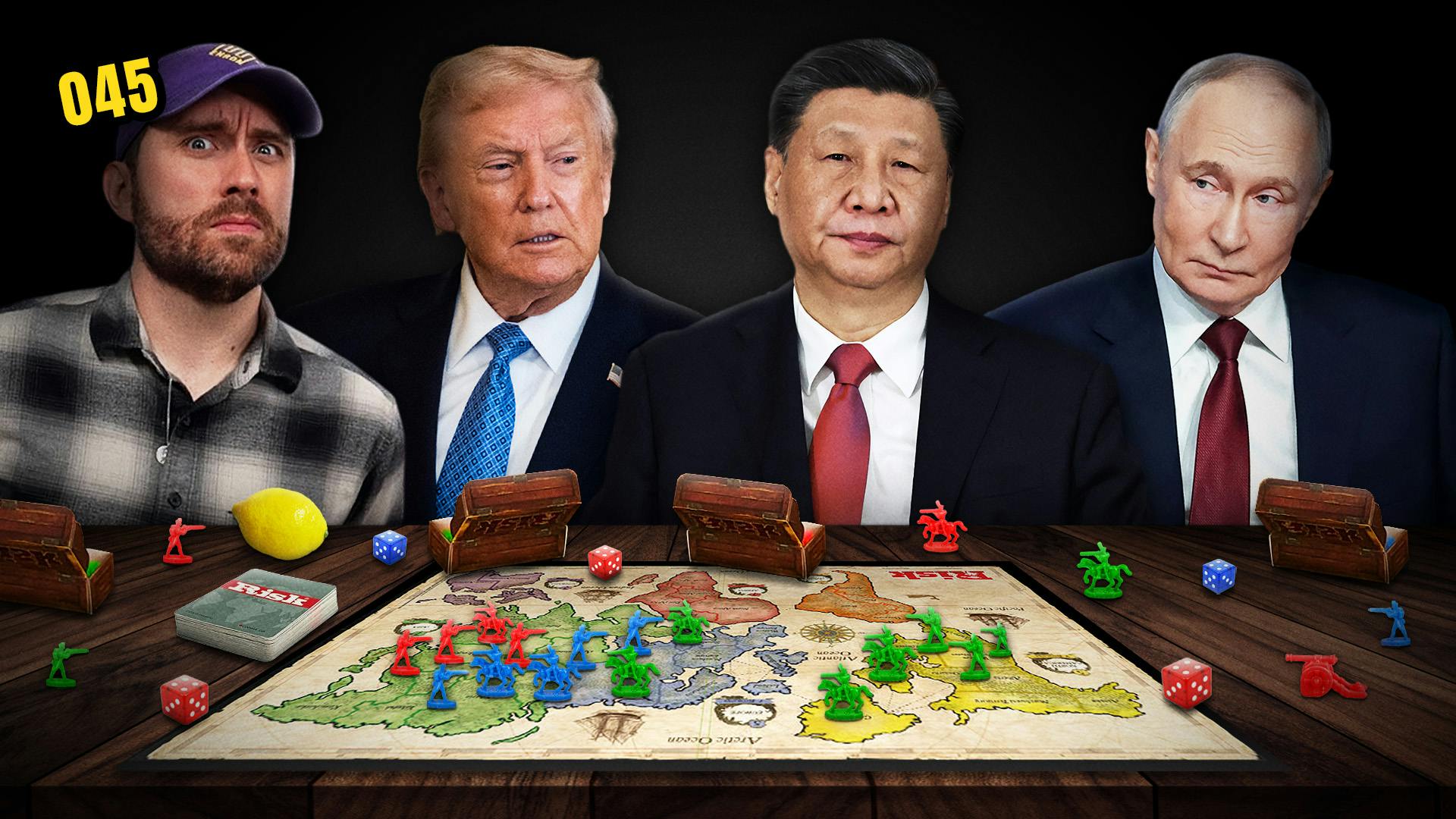
We've got a theory. Every world leader is actually a psycho who's playing a big game of risk.
- [01:22]
Aiden
Psycho Risk.
- [01:23]
Brandon
Psycho Risk started.
- [01:25]
Aiden
It's the game of Psycho Risk.
- [01:27]
Brandon
Last year was just a little slow. So like this year, 2026, let's all start a new game on this board, starting with Trump and his favorite territory, Venezuela, apparently.
- [01:37]
Doug
Lemonade stands goal for 2026. Capture all the world leaders, kidnap them and then put them in a room with this game. And then we'll turn everything and then.
- [01:46]
Aiden
We get all the cards and we can get a unit bonus.
- [01:48]
Brandon
Why don't we. Why doesn't the world solve things with a champion? You elect a champion like the movie Troy.
- [01:54]
Doug
Whatever happened to champions?
- [01:56]
Aiden
I do think that would solve a lot of things. Everybody just had one champion.
- [02:01]
Brandon
There's more serious things to talk about. But France quietly moved the G Summit date to not conflict with the UFC event happening at the White House. Unironically, they're like, fuck, we got to move this. Like, UFC events in the White House are taking precedent over major world. So in theory, you say every country sends a champion.
- [02:20]
Aiden
Oh, to the ufc.
- [02:21]
Brandon
To the UFC event. And that's how we solve the Problems.
- [02:23]
Aiden
I just think that would reshuffle the world in a way. We don't necessarily want the world's best UFC fighters and the governments that I want to own the most land.
- [02:31]
Doug
Wait, Russia. Russia's on top. The hierarchy of the world is like Russia, but actually like Dagestan is Russia.
- [02:38]
Aiden
On top of us.
- [02:39]
Doug
And then.
- [02:39]
Brandon
And then no, Iceland comes out because they have the huge guy, right? Yeah. From Game of Thrones.
- [02:44]
Doug
Iceland is punching way above its weight. And then it's. And then Brazil's in there. It's.
- [02:50]
Brandon
This would be a sick shuffling of the world.
- [02:52]
Doug
It's a way different world.
- [02:54]
Aiden
It would be. It would be a shuffling. I don't know how good it would be.
- [02:56]
Brandon
Yes, Sick in the more literal sense, by the way. It would be sick kind of psycho.
- [03:02]
Aiden
But yeah, I mean, I do think. Okay, even we're going to talk about the geopolitics stuff, I think first because it's like, it's kind of the. The big issue. But you're talking about this UFC thing there. I just. As you guys fully understand, this is probably one of the most insane two week periods of the year of. Give me.
- [03:21]
Doug
You don't need it, bro.
- [03:23]
Aiden
That I. That. I feel like we've been through it a long time. Like last January was insane, but it was mostly the LA fires and I don't remember like this many things every single day being a major, major event, especially worldwide. So we're talking about that, but there's like, there's a lot of domestic stuff we can discuss. And there's the UFC event. We're spend 40 minutes on talking about who's going to win.
- [03:41]
Brandon
Yeah, yeah.
- [03:42]
Doug
And Jerome Powell versus Trump at the White House.
- [03:45]
Aiden
Dude, Honestly, the best.
- [03:47]
Doug
Honestly, they put the card up. It was on X. Jerome Powell height.
- [03:53]
Brandon
How is.
- [03:53]
Aiden
I think Jerome Powell's fiercer. He doesn't have the weight.
- [03:57]
Brandon
The benefit to Jerome Powell, he's a lot younger than trump. He's only 72.
- [04:01]
Aiden
Hey, sore fox.
- [04:03]
Doug
He'll get him with his speed.
- [04:05]
Brandon
All right, let's follow up with Venezuela. I have a theory. It's been one week and I don't think anybody else has said it. Correct me if I'm wrong because you're covering it more. I think this is actually about oil and so here's a couple of dozen articles that reinforce that idea. Ok, so this is a particular angle with the Venezuela thing. I wanted to look into that I think is interesting. Obviously huge development right now. According to the Venezuelan government. As of the past few days, they're in control. There is no external party that is in control of Venezuela. At the same time, Trump and the.
- [04:37]
Aiden
United States, the right hand woman of.
- [04:39]
Brandon
Maduro vice president who replaced. Everything is the same except that she came in as vice president and now.
- [04:46]
Aiden
She is in control.
- [04:47]
Brandon
She is in control.
- [04:47]
Aiden
Same party's in control.
- [04:49]
Brandon
And but in quote, we are here governing alongside the people and no one else. There is no external agent governing Venezuela. That is from the now President Rodriguez of Venezuela. At the same time, Trump and our military is stating we are going to control all exports out of the country. And so particularly with oil. And that seems to be the big play that is happening right now where you might have heard that we've seized oil tankers. The whole thing is any oil tankers that try to get to Venezuela to deliver oil to anywhere else, regardless of country, basically, we are literally seizing. There was this, like, crazy. There is a website called Trap, like tanker traffic that tracks or tanker Tracker that tracks this. And you can watch these, like live drama chases around the Atlantic.
- [05:34]
Aiden
One of them. Yeah, the Russian one. Yeah, yeah. They chased it around. It was like looping and looping for days.
- [05:40]
Brandon
And then it changed its flag to be like, no, we're Russian now. That's cool. And turns out that doesn't help, actually, we don't like that.
- [05:45]
Aiden
Yeah, they were Venezuelan flagged and they changed to Russia halfway through the voyage to be like, you're not going to get it now.
- [05:52]
Doug
Cycling flags on the back to see what gets them to stop.
- [05:55]
Brandon
Apparently they painted the side of the tanker as Russia, like from the movie.
- [05:59]
Aiden
Like Lord of War. Like they do that in a movie where they, like change it. The flags mid.
- [06:03]
Brandon
Yeah. So the justification for this is the US Is saying, venezuela sanctioned, you can't come in if you are Russia or China or Iran or whatever, you cannot come in and transport oil. So the big, you know, player here, the big key chip that is being played is the oil side. So what has actually happened with oil? Like, we all. It's pretty obvious. Oil is a big part of it. So on Friday, Trump had a meeting with 20 oil executives at the White House this past Friday. And the whole thing was he's gonna try to convince them to invest in Venezuela. And it pretty much went exactly the way you would think with Trump, where he makes a lot of promises that are vague. Everybody in the meeting makes a lot of promises that are vague. He comes out of the meeting and says, everybody's down. We've got this locked in and nothing has actually happened. Or there's no clarity after this, dude.
- [06:52]
Aiden
The best part of that meeting was when Rubio hands him a little note. Did you see that?
- [06:56]
Brandon
No.
- [06:56]
Aiden
Rubio hands him a little note that says, like, go back to Chevron and like, ask this thing. And then Trump looks. It's supposed to be a secret. He looks at it and reads it out loud. Fire, gas, dude.
- [07:10]
Brandon
So he. Trump's doing all sorts of Trumpy things. There's a couple funny notes from it that I think. So he tells the executives when he gets them all in a room, if you don't want to go in to Venezuela, just let me know because I've got 25 people that aren't here today that are willing to take your place. So they start talking and he says, we need $100 billion of investment in Venezuela. Again, the Venezuela oil infrastructure is in shambles.
- [07:32]
Aiden
Right.
- [07:33]
Brandon
It hasn't been well maintained. So the idea is not we go in and like take the oil, it's we go in with American companies and invest a giant amount of money to rebuild it. Right. Exxon Chief Executive Officer Darren woods expresses strongest reservations. He says if you look at the legal and commercial constructs and frameworks in place in Venezuela today, it's uninvestable. He brings up the fact that Exxon stuff was just taken by the government twice before. Like, Exxon has tried to operate in Venezuela, and in the early 2010 or 22 thousands, when Hugo Chavez was still in charge, he just took all their stuff. So he said, how durable are the protections from a financial standpoint? What will the returns look like? What are the commercial arrangements, the legal frameworks? All of those things have to be put in place in order to make a decision to understand what your return would be over the next several decades.
- [08:23]
Doug
It's interesting. I wanted to jump on that point because I saw there's two reasons here. Because I saw that quote and then I also saw a reaction on Twitter that was pretty popular, which is they took part of this quote and was like, see, they don't even. The oil companies don't even want to go. So this doesn't. It did. That's another reason, like, none of this even made any sense, which I can understand the, a sense of frustration, especially if you're frustrated by the broader issue of us taking this action to begin with. Right. And there was a follow up to, though, where Darren woods said he did say today it's on investable, but he said after he said, we're confident that this administration and President Trump working hand in hand with the Venezuelan government that those changes can be put in place, the changes that would get us to invest there. It's funny also, though. So it's like there's this expression from him that the quote isn't simply like, oh, we're not going because you didn't open the door for us. It's like, provided the right steps are taken, we will invest money in Venezuela or we will set up some sort of operation there. But Trump still didn't like that response. And the next day, like, even that, like, slight nod in the direction of, like, it's not investable right now, Trump was like, didn't like what the Exxon guy had to say, even though he totally acknowledged that they would take that step forward in the future.
- [09:44]
Brandon
I didn't like their response. They're playing too cute. It's just a fucking wild thing to say.
- [09:50]
Doug
And okay, so. And there was a bit of the, the history around the, like, nationalization of oil that I wanted to touch on here, because there's a bunch of steps here in history. I forgive me, I can't say it in the, you know, in the way that they call it, like, locally, but the PDVSA is like the national oil company in Venezuela, right? And this was in. Came to be, I think, in the, like, mid-70s after.
- [10:19]
Brandon
Give it a shot. There it is.
- [10:23]
Doug
No, I wasn't thinking of this. They have a. I think it's PD Avesa. PD Avesa or something like that.
- [10:29]
Brandon
Leave a comment on how good his pronunciation was.
- [10:34]
Doug
But this is like the national oil company in Venezuela that was created in, I believe, the 70s to overtake the ownership or operations from the American companies that had originally been there to build up the oil industry starting back in the 20s in Venezuela. So. But when they nationalized initially, they still kept all of the American companies involved in pretty significant capacities. It ebbed and flowed over time, and as we got further into the 20th century, they increased the American company's involvement. And also as a result, over that time period, output in Venezuela increased greatly through that time period as well. If you look like pushing, pushing to 2,000, that is when, like, oil production is the highest. But I think what happened over the.
- [11:30]
Brandon
Course of, like, the graph up, it's, it's exactly that, you see. So this is a graph of the amount of imports of Venezuela oil to the US and you can see in, like, 70s and 80s, it's, it's getting there. And then from 90 to, like 97, it just skyrockets and we are just getting a ton of oil from Venezuela starts plummeting in 2005 when the nationalization starts and then, you know, becomes zero.
- [11:52]
Doug
Yeah, this is. The US imports the.
- [11:54]
Brandon
Right.
- [11:55]
Doug
But. And then. And total, like total production in Venezuela is skyrocketing towards the 20th century. But. But that isn't the only marker for success. Right. The original intentions of nationalization is to like take more firm control of your resource and have those benefits like passed down more concretely to the country. But as the American company involvement in the national oil production became more significant, less and less of the benefit from the average person was, was being seen from that oil. That's the argument at the time. And why Chavez was able to step up and make this argument for full nationalization again, where he. Unless you meet these really strict terms, we're kicking you guys out and we're not buying out your equipment, we're not buying out the resources that you had invested here. And one thing I didn't know is that ExxonMobil, one of the other companies, all of these companies leave because they don't want to take Chavez's version of the deal. And except Chevron.
- [12:59]
Aiden
Chevron still Chev.
- [13:01]
Doug
Chevron still operates in Venezuela now, which I did not know until like a few days.
- [13:06]
Brandon
They're like Goldfinger. Like they somehow survive through each change in Venezuela.
- [13:10]
Doug
Yes.
- [13:11]
Brandon
Like apparently they're just like really politically adept in Venezuela. The only American company that got to stay.
- [13:16]
Doug
So they were willing to take this deal where they don't have any direct ownership over the oil fields. They don't have any direct ownership over the oil. They don't even necessarily get paid in cash.
- [13:25]
Brandon
Little figure. Sorry.
- [13:26]
Doug
They get paid. They cold finger. I was like, I was trying. They don't even get paid in cash necessarily. A lot of the time they just get comped in product of crude oil after like taxes and crude oil are accounted for and all these things. Chevron basically saw it as like we'll meet all these terms for like a long term holdout of eventually more normal operations will return to Venezuela at some point. So we're willing to maintain this like little foot in the door that we have and accommodate you guys in whatever way we can because eventually we see there will be opportunity in the future. And I under this pretty much this whole time thought all of the oil companies had been like kicked out, but they had agreed to this like really stringent version of the deal. And so what ends up happening, right, is all of these American companies and their infrastructure basically get. Get kicked out or don't accept that deal at the time the oil revenue that's coming in, there's this surge in oil spending under Chavez towards things like social programs and things that like, benefit the average person. Right. But this leaves behind. They don't reinvest back into PDVESA anymore. They're not investing in that infrastructure. They're like losing production, knowledge. And there's also this huge internal worker strike in 2002 or 2003 where like 18,000 National Oil Company workers in Venezuela go on strike and reduce production in the country to basically nothing at the time. And then they all get fired and replaced by people more sympathetic to the Chavez, like, government that's in charge at the time. So what remaining expertise that they have from like their own Venezuelan citizens at the time gets pushed, pushed out through the firing of all of these striking employees. And so they're left with like, very little knowledge and investment to maintain what remains of the oil industry after that. And their oil production within the country just slumps. Like, it's gone down very consistently since that sort of 2002, 2003 period. And I, you know, I vaguely understood these things like, going into us us like making these decisions, but little, little niche things like, oh, well, Chevron managed to hang on and like found its way in still somehow hoping basically for a moment like this where they get to be in the room with Trump and like, the, the doors to investment are back open. I didn't know things like that.
- [16:07]
Aiden
I mean, Doug, are you seeing like, my takeaway was Trump? It's funny because, you know, we all watched the press conference after Maduro and he said oil a million times and he said it's about oil. He just did this long 20,000 word interview with the New York Times and they asked him directly, was it the oil that made a big difference to you? He's like, no, oil happened to be there.
- [16:28]
Doug
Yeah.
- [16:29]
Aiden
He said that's a nice story and that's fine. He said, we didn't even know about all the oil that was there. Which is like, I guess based on who he's talking to, he changes his mind. But my takeaway is like, okay, he would like to have a bunch of American companies. You just did this. Can you show my screen? He just had a executive order blocking courts from seizing is. Again, that's the wrong one again. Damn. Anyway, Trump had an executive order that blocked courts from seizing Venezuelan oil revenue that is now in US Accounts. So all the oil that currently exists that we're getting on tankers, we are seizing it and we are selling it. And the money's going to American accounts to. To be used either in whatever their plans are for Venezuela or for reimbursing or whatever.
- [17:11]
Brandon
UFC fight, maybe.
- [17:12]
Aiden
UFC fight. And Venezuelan courts can't seize it. American courts can't seize it. No one can use it for anything that is owed. He gets to have it for his. Whatever, slush fund. So my understanding is he would like them to come in and start pumping oil. But all the oil companies, except for maybe Chevron are saying this is too risky.
- [17:29]
Brandon
Yes.
- [17:29]
Aiden
Like, because, number one, the government hasn't changed. They could seize it again. Number two, the political situation on the ground is like, more. There's more crackdowns this week than there was the week before Maduro was gone. Like, they're to keep order. Like, they're doing more crackdowns.
- [17:44]
Brandon
Yeah, yeah, yeah.
- [17:45]
Aiden
And there's a chance that, like, if we try to build there, there could be. I mean, there's like these roaming gangs of colectivos that are like a. It's like there's like a. My understanding is there's a Game of Thrones power struggle going on in Venezuela right now between Delsey Rodriguez and the guy that's backed by Alex Saab that has, like, these colectivos, and, like, he's kind of angling for more power. And that guy could make your life hell if you're trying to build there. Like, all this stuff is still happening.
- [18:08]
Doug
And, like, Trump tried to wave this off to the concerns.
- [18:12]
Brandon
Right.
- [18:12]
Doug
He said that they'll all have, quote, total safety, and that these are some people that drill oil in some pretty rough places. I could say a couple of those places make Venezuela look like a picnic.
- [18:22]
Aiden
Yeah. But my understanding is, like, ExxonMobil's POV is like, we're actually drilling where there's a picnic. Like, they're drilling in the Permian Basin right now to do shale, and it's easy as hell. And the oil is already, like, doesn't need to be refined and it's great and they're loving it. And that's where they're at. Big expansion plans. So if they're going to spend 100 billion to build in Venezuela, they need to have more guarantees that might require. And this is why. This is why this Venezuela thing, regardless of how you feel about Maduro, I. I'm negative on. Is because those guarantees require, like, more from the US like boots on the ground or like. Okay, yeah, okay, I want to hear. So this is.
- [19:00]
Brandon
This is so. First off, there's a funny thing again, all the oil companies, the big ones were in Venezuela and they had all their shit just taken, just straight up taken. And they're in Exxon's case twice. They like went in again. They're like, ah, we trust you this time.
- [19:13]
Doug
Yeah, yeah. It was that first nationalization in like the 70s where they, they did it and then they, and then they took it again in, like in, in.
- [19:21]
Aiden
That's why China, by the way. The smart. I mean, listen, if you're going to nationalize the way China does it is the smartest one because they do like these, they do these, I don't know what they're called.
- [19:29]
Brandon
It's loan for oil, you mean?
- [19:31]
Aiden
No, it's like they force you into a joint subsidiary company thing. Like, like when Disney built Disney in Shanghai, they own 49% of it. Chinese local company gets 51%. They learn the expertise. You know, that is how they did it. They made it so that the outside company come in and make money, but the ownership is always 51% the local Chinese company. And they, it's part of the rules. They have to like share the expertise.
- [19:55]
Brandon
Okay, two counterpoints to the hesitation from oil companies. So the first off, there's a quote here from Bloomberg. At one point, Trump asked Ryan Lance, one of the oil CEOs, how much the company had lost in Venezuela, prompting the Conoco Phillips CEO to say it had taken a 12 billion doll dollar loss. Trump says it's a good write off tax. Write off. Yeah.
- [20:20]
Aiden
He's gonna change the tax code or something.
- [20:22]
Brandon
No, just look, if your company. Look. So it's quite obvious if I make whatever, $500,000 this year on YouTube, but somebody comes in, robs 500,000, I don't have to pay taxes now. It's great, right? So first off, obviously, wonderful strategy, but that was clearly a joke.
- [20:37]
Doug
And then when Venezuela nationalizes Doug's YouTube channel, and it does beg the question, if Doug's YouTube channel is under the ground in Venez, who, who is the rights to said, I can't wait to.
- [20:48]
Aiden
See Delsey Rodriguez playing Skyrim.
- [20:51]
Brandon
I don't know if you guys know this. Like, the first couple of videos I did on my channel were pre edited and I found them in a mine in Latin America.
- [20:59]
Aiden
Oh yeah, I remember I got there first.
- [21:01]
Brandon
I deserve.
- [21:02]
Aiden
You deserve it.
- [21:02]
Brandon
I deserve it. Yeah.
- [21:04]
Doug
Now that makes sense. And you gave a bunch of people smallpox along the way, which I thought was fucked up.
- [21:08]
Brandon
So here, here's the, here's the counterargument. On the one side, you're like, look, the oil companies don't want to go in. The existing government hasn't changed very much. So what is the US Doing to exert control and to potentially convince the oil companies to invest? The big thing is this blockade. They are saying, I mean, we are explicitly, the military said, like, you cannot get tankers in and out of Venezuela. The US Is going to be the only one that determines where the oil goes. So even though the US has no longer had oil presence in Venezuela over the last decade or two, Right. Russia and China have.
- [21:42]
Aiden
Right.
- [21:42]
Brandon
Venezuela has still been selling oil. That is still their national lifeline. That's where they make most of the money to even function at a baseline as a government. Right? Like that's still critical to their country. And up until now, past couple of years in particular, Russia and China have been partnering with them for oil. There's a crazy stat I didn't realize between 2000 and 2023. So like for 23 years, Venezuela was the fourth largest recipient of China's official credit, receiving $106 billion worth of loans from Chinese official sector creditors. That's crazy. So you have two of these countries that in the wake of America pulling out and doing these sanctions with Venezuela, have been going in and filling that gap, right? And what the military, the US Military is doing right now is saying, you guys can't do that. So not only is it, you know, fuck you to China and Russia who, who want oil, and there's various cascading effects. In fact, let me move the cannon and the horse into the middle of the Atlantic Ocean. If the US Says you cannot get oil tankers, here are the only ones that are going to allow oil in and out. Even if American troops aren't in Venezuela on the ground. Venezuela as a country cannot fund almost anything unless they agree to go through what the US Government wants. And if Trump goes to them and says, we will only allow oil to be sold out of your country, if you make sure that Exxon and Chevron and X and Y and Z get to operate there, that is a type of pressure that isn't military, but the government there is like, we, we cannot do anything. If we put ships fucking outside the Atlantic and stop anyone else from taking oil, Venezuela can't really do anything. That would be the argument. And that's explicitly what the US Military and Trump have been saying.
- [23:19]
Aiden
Right? But the argument there is that the escalating internal chaos within Venezuela is. Then they can just figure it out, resolve it, and do what he's asking. But really if they're cut off from resources and all of the little oil that currently exists has been seized and put in a US Account. Like, it's just the expectation is that things just get worse there. Like, it just gets worse, it gets more chaotic, then nothing gets done. Like, it gets more fractured, that Delsey Rodriguez's tenuous grip on power falls apart. Which, by the way, from a moral pov, the only way this is even remotely acceptable is when you were saying that Maduro stole an election. We're going to get rid of him and change things so they could have elections in democratic place in Venezuela. If you're doing it from a pure, like, we are stealing the oil and we're going to blockade this country until you do exactly what we say. Not only is there not a single out of morality there, but I don't think it's going to work. Yes, Delta Rodriguez is probably going to try and do what Trump says, but what is her capability? Well, how is she going to get this over the line?
- [24:27]
Brandon
Oh, you don't think a strong, powerful woman can make change?
- [24:31]
Aiden
I just, I think, I think the situation in Venezuela is really bad. Like, it's there. My understanding is that even in this past week, they've had to ramp up the amount of crackdowns, not only on journalists, but on, like, in the city streets of Caracas, because people are. They're still poor, they're still, like, nothing has gotten better in Venezuela. It was only held together by the strong man Maduro. And, you know, like, I guess I, I guess I just don't see it, like, just turning out magically. Well, but. But maybe, maybe. Well, part of it depends on how the oil revenue is shared back with Venezuela. And part of it is, you know, I, I'll steal med. I'll do my best. Steel man, which is like Marco Rubio, who I think is much smarter than Trump, has a plan here. It's like, okay, we, we can't give it to Machado yet because she doesn't.
- [25:22]
Brandon
Have the support of the military, meaning the country.
- [25:24]
Aiden
Country. Okay, she, like, she won the election, but we cannot give her the power because.
- [25:28]
Brandon
Because her party won the election.
- [25:30]
Aiden
Her party won the election, and she does not have the support of the military, which is what we need to make sure this doesn't become another Iraq. So we're going to seize the oil, we're going to put the pressure on, and we're going to use this money essentially as almost like bribes to slowly but surely change the behavior of those in power in Venezuela to be Amenable to elections.
- [25:52]
Brandon
Yes, that is their goal.
- [25:53]
Aiden
Right. And so that is a, you know, there's like 10 question marks from here to there that we have now inherited as a country because of this gamble. But yes, theoretically, I see that plan.
- [26:03]
Brandon
Another counterpoint. So after this meeting on Friday where Trump meets all the oil executives and his goal is to get them to firmly commit to $100 billion collectively of investment to get this thing going, right. They come out of the deal. Only Chevron has a specific pledge to do anything. None of the other ones do, none of the other 19 who are there. But Trump says in quote, we sort of formed a deal.
- [26:27]
Aiden
So, well, think about, they're oil companies, right? If Chevron gets in there and it starts working, then everyone will fucking jump on board.
- [26:34]
Doug
But it also makes sense that Chevron was the only one that said, yes, that's their gamble. They're like they were hoping, they were waiting.
- [26:41]
Aiden
What?
- [26:41]
Brandon
They were hoping they're the only ones who. Yeah, they've been doing it. They're there, built up, ready to go and they can expand. And that's very different than Exxon, who's been broken up with twice by Venezuela, going in for a third round at the relationship. I mean, you know, for, for what it's worth, I agree with everything Trump does and I think this is going to work.
- [26:58]
Aiden
Right. Can I do a broader. I heard, I heard this guy, Brian Winter, he's a, he's a American journalist who did two or three decades in Latin America and he wrote, he ghost wrote the biographies of two Latin American presidents and Pele, the greatest soccer player. So he's like deep involved and he was right. He wrote this long piece about what's going on in Latin America and a couple of things were eye opening for me and I want to kind of share them.
- [27:21]
Doug
Yeah.
- [27:21]
Aiden
Which is one is that Latin America for the 70s till now, massive wave of like mostly left leaning politics. Right. That's like that, that's. It's the key celebrity figure would be like Castro and a lot of things were similar to that.
- [27:38]
Doug
And I feel like Chavez is up there.
- [27:40]
Brandon
Chavez, right.
- [27:42]
Aiden
But he's saying he's just noticing the trend. There has been a big rightward surge in Latin America in recent years and he pointed to one specific thing which is causing a lot of change.
- [27:53]
Brandon
Illegal American migrants.
- [27:54]
Aiden
That's the one. They're searching over the. They're coming from the asylums. No, he said and this tracks with other things I've seen from different, like putting web of stories together. The Cocaine trade in the past 10 years has become gargantuan. Like Europe, Brazil and America are all consuming like, like 5, 6, 7x amount of cocaine they used to. Like the cocaine trade has gotten absurd. It's so profitable and it has become such a blight on Latin America that's caused so much crime that people are like at their wit's end and trying to go for like more mm, strongman authority, whatever, whatever. The crackdown, like, it. That is his big takeaway. That's like one of the big things.
- [28:36]
Doug
I mean, I could see that isn't that, that's kind of the rationalization from like people who are local in El Salvador.
- [28:42]
Brandon
Right.
- [28:42]
Doug
Because I think we look at the, the prison system there that was put into place and it's, you know, it's incredibly harsh. Tons of human rights groups have come to basically criticize and complain about it. That insane 60 Minutes piece that came out recently, the one that was not broadcast in the US showing the conditions that people are put into there, like, it's absolutely absurd. Right? But the argument when you listen to people who lived in El, who have lived in El Salvador or fled El Salvador, from their perspective, is that now it's safe. Like, I don't, I was willing to tolerate this crackdown because the amount of violence was so bad that they don't like these people who were killing people, like these murderers in the streets, like need to be put away at whatever cost necessary because like life was untenable before.
- [29:35]
Aiden
That is the exact argument he made. He said El Salvador is the new, like Bukele of El Salvador and maybe Malay of Argentina are like the new celebrity leaders of South America in a way that Castro and Chavez might have been in the past. And people are saying, I don't like the, the violations in El Salvador, but, but he's getting results like that, that he's just, he's just, this is just a mental report. He's like, this is the boots on the ground reality is what this trend is going. And so you can see a world where more. Not Brazil, Brazil's still Lula, but you can see a world where a lot of these economies are flipping to more Trump friendly regimes as. And it's fitting into his larger Don Road doctrine, North and South America. Like I can see some of that.
- [30:22]
Doug
And I. Yeah, yeah, sorry, continue.
- [30:25]
Aiden
Well, I was gonna say, you know, we could use this as a translator to other parts of the world, because I do think so.
- [30:31]
Doug
My last note I wanted to put on this is the thing that I think really Ties into maybe some of the other parts we will talk about which is it's not just about oil in the sense that we need more of this resource that goes into cars and plastics. It's not just about that. It's the idea of controlling your like political sphere of influence and constraining the influence of Russia and China and putting pressure on them. It's not just about having the oil, more oil so we can make the companies happy and do more with it because there's, you know, there's a bunch of places in the world that have oil. So why is it, why is it Venezuela specifically that these actions are getting taken against? Right.
- [31:15]
Aiden
One thing about that, we've all heard the stat that Venezuela has the largest proven oil reserves in the world. You've seen the chart where it's like, well it's, it's being called into question in this week after the, the Maduro's capture where people looked into the stat or where it came from and it's like that stat did not exist until Chavez and it's only reported self reported by pdvsa. So like, like people got the stat from OPEC and they asked opec, where'd you get it from? Like we just asked PDVSA and they asked them. They're like we just sort of had a mandate to say that during like they have a lot of oil. To get me wrong.
- [31:50]
Doug
Yeah.
- [31:50]
Aiden
But the idea that Venezuela has more than Saudi Arabia is now, it's like.
- [31:53]
Doug
It'S probably not brought in a question or something.
- [31:55]
Aiden
It's brought to question. Like it might have been a bit of an exaggeration for political purposes. Like that is just stuck around.
- [32:03]
Doug
You guys always say I'm the chaotic.
- [32:04]
Aiden
Yeah.
- [32:05]
Doug
I'm run motorbikes around, I'm tossing lemons. Okay. I get a little out of pocket sometimes. Think about what Brandon does. He walks in here with his hulking body. Surely we're breaking some sort of code. We're breaking, we're breaking some sort of code in this building. This great place is out of whack and we need something to keep it in ordered.
- [32:27]
Aiden
Security expert that scales with you. Is that about how my large body.
- [32:31]
Brandon
Is where Vanta comes in and it.
- [32:33]
Doug
Couldn'T scale with you?
- [32:34]
Brandon
Brandon, whether you're a fast growing startup like Cursor or an enterprise like Snowflake, Vanta fits easily into your existing workflows. No matter whether you're a huge.
- [32:42]
Aiden
Don't call me a Snowflake.
- [32:43]
Brandon
You company like Atriok, you can keep growing a company Your customers trust. Get started@vanta.com lemonade that is V A N T A dot com lemonade lemonade lemonade.
- [32:55]
Doug
I'm working out but maybe drink a little more water.
- [32:57]
Aiden
But I am doing that water Fanta. Can you give me security?
- [33:02]
Doug
They can't do that. They can't keep me away. Here's the deal. You can look at AG1 and you can think, wow, one scoop of this 75 plus ingredients, pre probiotics, all those healthy things. I don't care. I don't care about that. I saw the word citrus on the packet. I poured it into my water. I tried to smoke it. They said not to do that. So I said at home you just.
- [33:25]
Brandon
Eat bland oatmeal and water and this is the first time you've seen flavor in a year.
- [33:29]
Doug
Right? And I added that into my water and I'm pretty happy with the taste. I've just been drinking it. I know that it's like a whole like ah, it's healthy for you. I, I got to be honest with you. Just love the delicious. I just kind of like the taste.
- [33:43]
Aiden
Well, there's 50,000 verified five star reviews that agree with you. It comes with a 90 day money back guarantee. Go to drink ag1.com lemonade to get their best offer for a limited time only.
- [33:55]
Brandon
Keep going.
- [33:57]
Aiden
Get you keep going.
- [33:59]
Brandon
Get a free AG1 duffel bag and a free AG1 welcome kit with your first subscription order only while supplies last. That's drink ag1.com lemonade drakeag1.com I've heard it's the year of health for you, Mr. Brandon.
- [34:13]
Aiden
Not every ad reads me by how I'm fat.
- [34:15]
Brandon
I didn't say that. But you implied it. I did not say that. Lots of people are trying to be healthy with 75.
- [34:22]
Doug
Do you think if they run out of the duffel bags. But you have a lot of conviction. You could still get one.
- [34:31]
Brandon
Rapid fire question. What is the most embarrassing subscription you accidentally paid for that? You didn't realize the embarrassing thing is.
- [34:38]
Aiden
The amount I have six. This is not a joke. I have like $600 a month in new subscriptions.
- [34:43]
Doug
Dude. What is wrong with it?
- [34:44]
Aiden
It is absurd. And like some of them are like Nikkei Asia that I have not read an article from in two years. So rocket money is the only thing that helps me out in these situations. I can't track them down.
- [34:53]
Doug
I don't think you're using it. $600.
- [34:57]
Aiden
The truth is I use it. Every time I use it I end up adding Three more.
- [35:02]
Brandon
What is. What are you doing?
- [35:03]
Doug
Here's a. I, I got. I was using YouTube TV for a long time, which is a pretty expensive subscription. Finally got rid of it because of Rocket Money. I was like, oh, I'm just pitching $90 away for a service I don't use. Huge savings. Or you could be like a track. You could get Rocket Money, have everything.
- [35:23]
Brandon
Hungry and realize how much.
- [35:25]
Aiden
Like, I have more money to spend on news than subscribe to 10 More Things, then cancel them.
- [35:30]
Doug
If you want to use Rocket Money, you can try Rocket Money for free@rocket money.com lemonade so, I mean, let's transition this.
- [35:37]
Brandon
We're talking about psycho risk. This is Trump's strat, right? So not only does he get oil from Venezuela, what are you specifically doing to harm Russia and China? Like, why does this matter?
- [35:46]
Doug
Right.
- [35:46]
Brandon
Which is what we're getting at, which is over the past 10ish years, as American companies have stopped buying the oil and it has stopped flowing to America and these sanctions have done damage, Russia and China can then go to Venezuela and buy oil for cheaper. Right? Because by definition, Venezuela has less people to sell to. So it's been great for them. And they've invested a ton. They don't. I looked into this. Neither China nor Russia have actual, like, fully owned companies in Venezuela, but it's part ownership, like you said. They go in and they do joint ventures and they put a bunch of ventures.
- [36:16]
Aiden
That's the word.
- [36:16]
Brandon
Yeah, joint ventures. And now they just can't, like those joint ventures can't send oil out anymore. And so this is a big hit. So if you're. Well, okay, if you're Russia, what are you doing in this game of psycho Risk? How do you respond?
- [36:27]
Aiden
Okay, I think it's a good question about Russia. So, yeah, again, I'm, I'm. I think it's a good exercise here, if you're listening, to try and think about this from the different players on the board's thing without having to be like, taking a side. Yeah, I don't. I'm not pro Putin and I'm not really pro Trump here. I'm not. No, no. I just, I wanna. So here's the thing. It is worth saying that all. We're gonna talk about Iran in a second. We're talking about Greenland and a couple other things. It is worth saying that what has been happening in the past, I don't know, few months, maybe a year, has been provably bad from the Russia pov. Russia and their focus on Ukraine, which by the way, as of today is now longer than the Eastern front of World War II. Russia has been spent more time fighting in Ukraine than they did fighting the Nazis in World War II. It's fucking crazy how long this special military operation has lasted, how many people they've lost, how much damage done to their economy. However it breaks down, it's been pretty disastrous.
- [37:25]
Brandon
Doesn't Russia say, like, they have to go and eradicate Nazism from Ukraine? It's crazy that there's apparently more Nazis now.
- [37:31]
Aiden
Apparently they could beat the German Nazi.
- [37:33]
Brandon
Party, not the German Nazi party, more.
- [37:35]
Aiden
Than they could beat the fictional Nazis they created in Ukraine. But. But Russia has had, like, if you put blue pieces or whatever for Russian.
- [37:44]
Brandon
Pieces, we got black ones here.
- [37:45]
Aiden
Yeah. And you spread them out over, like, Syria and all of these in Venezuela and these. These bases that they've had, these. Iran. These are all places where Russia has invested money, weapons, investment, training. And every one of them, like Domino's has been, like, weakening or falling as they've focused all of their energy on Ukraine. They have not been able to supply the support that they used to provide.
- [38:12]
Brandon
Yeah, their Venezuela piece has been booted.
- [38:15]
Aiden
Out by the US that's at the same time.
- [38:17]
Brandon
That's like a big. That's the oil tankers. We're taking their oil by tankers, by force. They can't even get to Venezuela now.
- [38:24]
Aiden
Right. Yeah. I mean, at the end of the day, like, what actually hurts Russia is if the Venezuela oil is pumped and sold anyway. It doesn't matter. It's like, the whole point is, like, if the oil price is low, countries like Russia are screwed because they make all their money on a high oil price.
- [38:38]
Doug
So, yeah, you don't want the US to have that point of. Of leverage.
- [38:43]
Aiden
Right.
- [38:44]
Doug
The.
- [38:45]
Aiden
Yeah, the ability to just flood the market with oil. Which, again, this is like, this is a unique thing in history because until the shale boom and possibly this Venezuela thing, America was always a massive net importer. They were always, like, at the mercy of essentially opec. And so only in recent years has it been like, they can kind of stand on their own.
- [39:03]
Doug
Wasn't that from an American pov? There was another. That was another part to the oil, too. Right. It's that. So Venezuela has all of this heavy crude oil that we happen to have the facilities in the US to refine. A lot of the refineries in the US Are built to refine that type of heavy crude oil. The shale oil that we produce kind of in recent history is like a lighter, like a Lighter crude oil that gets refined elsewhere in the world.
- [39:28]
Aiden
Yeah.
- [39:28]
Doug
There's different supply chain to refine. That type of stuff is in other countries, notably in China, in Japan, in other parts of Asia. So, like you, you don't have full control over the supply chain of, like, how the oil is refined and created.
- [39:46]
Aiden
Right.
- [39:46]
Doug
And it's also, to a degree, some of the places that refine it are within other spheres of influence. Right. So either within China's like, sphere of influence or directly in China, physically closer to it, I mean, or literally closer to Russia in places like Estonia, for example. So the US gets control of. It's not just like access to the oil itself, but it's like you're removing the pieces of leverage that the other players have to influence you.
- [40:16]
Aiden
100. So you can see, again, I think the big picture. I can see the argument and that's why this is made. I always have a problem with the chaos in the details and the. Where it breaks down.
- [40:28]
Doug
What you're getting weird because it's never backfired. I don't understand. He keeps bringing that up and it's like, I can't think of one time.
- [40:35]
Aiden
Let's just do an example where I did get.
- [40:38]
Doug
It didn't work.
- [40:39]
Brandon
I got to like, one time. I don't remember thing past, I don't know, January of 2024. I can't think of a single time this has backfired.
- [40:49]
Aiden
Let's go to where it almost certainly will backfire, and that's Greenland. Because again, like, every day he's saying more and more concretely, we will take Greenland no matter what, whether it's paying them, which I think is what they're hoping to do, which is do a big ten hundred thousand per person, get the Greenlanders to vote on it. Patriot dividend, Patriot dividend. And then they all just go into America. But whether he's like really concrete about it, and Europe is more and more getting forceful about what the fuck are you saying? Like, France came out and said something, Germany said something, the UK said something, and the uk, Keir Starmer of the UK has bent over backwards for Trump on almost everything. Like, he has done his best to keep this uk, US special relationship alive. And even he was like, that's a line. Like, the Greenland thing's a line because it's, it's European territory, it's part of the eu, is part of NATO. So here's I'll say is like, if you think about America in this great game of the risk, of the world, of the Risk. There's three superpowers it has, right? Number one, it's got like the best geography probably in the world. Like, it has incredible natural oceans, tons of resources, yada yada. Number two is there's this incredible network of allies and systems that it set up after World War II that just puts it on top of, like, most things. Trump just left 80 different organizations in the past six days that were all, like, international organizations. And if we break NATO, like this entire sphere of connection, I think that whole superpower is gone. And then the third one is just the economy and the military, which is, like, still intact. So I guess what I'm saying is, like, I would like to hear a steel man on why Greenland, especially? Because if you look into it more, there's already US Military bases there and Denmark has already agreed if you want to add more, we're chill. Like what? Every. The national security doesn't make sense. The. If you want to mine it or put resources there, they're totally down for that, too. Like, you can invest in Greenland. Why does it have to be an American flag on it? Why does it have to be owned? And I think Trump answered this in this interview.
- [42:54]
Doug
This is the really long New York Times one, right?
- [42:56]
Aiden
Yes.
- [42:56]
Doug
Yeah.
- [42:57]
Aiden
Okay. So I want to show you this. This is from that New York Times interview. They asked him why he needs Greenland. Because I want to do it properly. Really. To me, it's ownership. Ownership is very important. They asked him the question that I just asked, which is like, why don't you just mine it and put military troops there for everything you need? And he's like, because that's what I feel is psychologically needed for success. I think that ownership gives you a thing you can't do, whether you're talking about a lease or a treaty. Ownership gives you things and elements you can't get from just signing a document that you can have a base psychologically important to you or to the United States psychologically important for me. So maybe another president would feel differently. But so far I've been right about everything. That's that I think Greenland's fucking crazy, man. I don't get it. I don't get it.
- [43:38]
Brandon
I love the follow up. And would you use military force to get that, Trump? I didn't say that. You said that.
- [43:45]
Aiden
I'm asking you, would you? Yeah, I wouldn't comment on that. I don't think it'll be necessary.
- [43:51]
Brandon
Yeah, I don't know, man. It doesn't. It doesn't seem necessary. I would get it. It would make a little more sense if Greenland was Alaska. And you're like, we want something that's right next to Russia. Alaska and Russia are. We are right next to Russia. And like, that I would kind of get of, like, wanting to make sure you have control of, you know, bases that are right next to Russia at the.
- [44:14]
Doug
But this is right next to Russia too, right? It's all at the top of the world.
- [44:17]
Brandon
Yeah, I guess so.
- [44:18]
Doug
Yeah, it literally is. That's what I think. That's. I think that's the big question is this is all packed in at the top of the world. There is. There are military reasons for. For doing this. There's ship like, reasons to control these, like, shipping lanes in the Arctic that are going to open up as, like, more and more of the ice melts. You know, shout outs, climate change, shout out to aerosol shout outs to opening the shipping lanes out there.
- [44:41]
Brandon
Just look, there is a lot of. Lot more space between Greenland and Russia than Alaska and Russia. And Russia is like.
- [44:50]
Doug
But it is all. There's a really good. I've watched it twice, actually. It's funny. I watched it last year and I watched it again recently. But there's a really good Wendover video about this. Yeah, about like the. Basically the scale of, like, military capabilities in the area from Russia and what the US has available to them and, like, why the US Wants to build military capabilities in Greenland. I think what you're saying is that a lot of the ways they would want to compete militarily or develop things militarily could just be done by saying, hey, Denmark, could we build this out in Greenland?
- [45:25]
Aiden
Which is what they did in, like, after or around World War II with NATO. Like, Denmark's already said they're open to it. We could go to them and say, hey, we're allies. This thing with Russia and China, who. Especially Russia. You don't like Russia? Denmark, we don't like Russia. Let's increase our capabilities in Greenland. We already have a military base there that's staffed with soldiers right now. We could add another one or we could expand it. Denmark will be down, but there's like a need from this president to, like, put a flag on it and make it. He wants the big. I mean, he keeps posting the image of the America that's like extra big.
- [45:56]
Doug
And I think it's going. I think this is doing this insane that you're talking about. It's like you're slowly losing one of your superpowers, which is these deep ties and alliances to like, the rest of the world that you've developed over so long. And now we're in a place where in December, Denmark officially labeled the US as like a potential security threat. Like, as a.
- [46:17]
Aiden
It's like you say NATO. They're both in NATO.
- [46:21]
Doug
And I also just. So I really wanted to talk to people who live in Greenland before this episode. And unfortunately, the ways I was trying to contact people, I hadn't get ahold of anybody in time. I was able to contact a handful of Danish people that I'm friends with, one of whom has, like, closer ties to green family in Greenland. But I haven't interviewed anybody who lives in Greenland yet. But it's interesting hearing, like, the Danish perspective on this, which is that there's this increasing, like, there's always been like a ha ha, funny, like, look what America is up to attitude, especially from young people, but from Danes, broadly there. And I've experienced that firsthand, just like visiting and talking to like, people, whether they be young or old or whatever. Right? But it's turning into this, like more this, like, haha. But it's like, maybe not that funny now between people when they talk about it, this uncomfortable feeling that something is coming to a head. And also Danish people confronting a history with Greenland that they never really had to before. I think one thing interesting one of my close friends mentioned was he felt like in school in Denmark, you never really learn much about Greenland, even though it's a part of the kingdom of Denmark. But he even learned about things in the US like the ramifications of Jim Crow laws, but he barely learned about Greenland. And he was remarking on how insane that is, but how that's a very shared Danish experience of feeling like you don't actually know that much. And while Greenlanders are caught in the middle, who generally have this feeling of we don't want to be fucked with by the US but they're also going through a time period where they kind of want independence from Denmark with some asterisks on it. People broadly want independence from Denmark. Like, I think over 80% do. But. But a huge chunk of that 80% only want independence if it comes with, like, no large economic ramifications, which there are most certainly going to be because the amount of like, funding and support that comes from, like, Danish tax dollars. So there's. There's a bit more of a controversy to it. And it also puts Greenlanders in a weird spot, right? Where like, this outside force is constantly threatening you and you have to, like, play nice with like, the defense from Denmark that you're actually trying to space yourself away from. And you want, you probably want independence from in the long run. And also like economically supports you. You just want to like, live your own life, develop your own economy, have your own sense of like, national identity, like you largely already do in so many respects. And you're caught between, you know, the world's number one superpower probably, and you're, you know, effectively colonizer in a, in a historical context. And you have to like, pick a side because everybody's like fighting over you. It sounds from the loose description of Greenlandic feelings that I got through these people, from the people that they know in Denmark. I understand that this is a chain of like, hearsay. It's that people feel very like trapped and want everybody to fuck off.
- [49:42]
Aiden
Right.
- [49:43]
Doug
But there's no way of having that happen. And you're caught at the center point of this giant political battle.
- [49:49]
Brandon
Real quick, do you guys know. So I hear about the importance of like the Northwest Passage in the Arctic Circle, particularly in the context of global warming causing more of it to be accessible. But why would that be such an important route anyway? Like we, you know, if you think about it from the American or Canadian perspective, you can sail from the east coast of America to Europe. You can sell from the west coast of America. My understanding is there's some pretty Asia.
- [50:16]
Aiden
Open or once that melts a little more, there's some pretty insane faster trade routes, especially to rising places in Asia through the Arctic Circle. Secondly, the, the lowering ice levels is revealing like massive amounts of rare earth minerals. So it's like just becoming like a, the Arctic is like a race right now because it's an area nobody cared about. And now it's like, oh, this is actually really valuable, the routes are valuable, the, the minerals are valuable, etc.
- [50:44]
Doug
A bunch of stuff is like a bunch of the minerals or like resources available in Greenland right now are financially difficult to access. Like you couldn't even necessarily profitably take a lot of the resources that are available in Greenland, but presumably at some point in the future you'll be able to. Yeah, I, I will say one thing that. Do you ever. You talk to the friends that from around the world who like it kind of sucks for the last like 10 plus years? I feel like they're always like, what the fuck are you guys doing over there? It's kind of a bad feeling to have everybody feel that way all the time. It doesn't mean like they're always right, you know, But I do get that Sense of. It's, you know, even having these conversations with Danish friends. They're like, you guys are psychos right now. Like, what is happening? My. My friend. So the, the contact that's trying to introduce me to somebody in Greenland, his, like, screening question was like, what side is he on? Like, is he like a normal guy? Because if he's, you know, if he's on the, on the Trump, in the Trump camp, like, he doesn't want to talk to me, which I totally.
- [51:56]
Aiden
So you took off your maga hat.
- [51:58]
Doug
And I took off my Maga hat.
- [51:59]
Aiden
I don't know how you.
- [52:00]
Doug
I took a selfie And I said, Kamala 2028. That's what I said.
- [52:05]
Aiden
But I.
- [52:07]
Doug
And it is a frustrating feeling.
- [52:09]
Brandon
What if he's a Trumper? Did you ask whether he's in support of this or not?
- [52:13]
Doug
Actually, I picked it and I guessed wrong.
- [52:14]
Brandon
Coincidentally, you didn't get the interview.
- [52:16]
Doug
He's a green lighter who wants the US to come in.
- [52:19]
Aiden
I get that and I do. That's. That's a. I mean, you have a lot of European friends. That's a very European thing. I will say. Like, I feel like if you, you know, I'm reading a lot of European sources that are saying, like, some of this stuff is like a little time delayed. Like, you know, the AfD is about to be the biggest party in Germany. RN is about to be the biggest party in France. Maloney just wanted it. Like, it's not like, maybe they're not as crazy as mockup, but it's. There's a trend that's happening in Europe as well that I think is being. I think they're like, willfully ignoring it to just focus on America.
- [52:51]
Doug
I think I get what you're saying. It's not that they're. And maybe this isn't a great example, but it's kind of like how like, like Boris Johnson was leading the UK for a long time and he was seen as like, the UK is Trump or whatever. Yeah, but Boris Johnson talked about how he didn't like Trump all the time. It's like, I think there's this collective idea that, like, it's not just that we're doing right wing or like left wing politics. Everybody's like, you guys have a psycho.
- [53:18]
Aiden
But Boris Johnson is like a. He's not really a Trump, right?
- [53:23]
Doug
No, I don't think he is. I don't. I'm not saying that.
- [53:26]
Aiden
Yeah.
- [53:26]
Doug
I'm just saying that I think like.
- [53:27]
Aiden
A Nigel Farage might, like, there's like there's like these parties that are coming up that are way more like, I don't know what the word is, but like, they're maga. Like, they're more like nationalistic. They're more. And so I don't. I think Borishante was more of like the center. Left. Center right. Back and forth.
- [53:43]
Doug
Yeah.
- [53:44]
Aiden
Kamala Mitt Romney.
- [53:46]
Doug
I mean, maybe they're on a trajectory too, but it's like even talking to my. Even talking to the one Venezuela friend last week, right. Who had very pro. Things to say about the US and even Trump in the specific instance of his progress, as he's seen, or the hope of progress for his country. That was off the back of him complaining about Trump in a bunch of different ways for the way that, you know, immigration is being managed and the consequences that Venezuelans and many other people across Latin America like, face in the United States. Right. And. Or even when I people, the more limited number of friends in, like, Asia or like Australia, like, they're. Maybe you're right. Maybe we're just on a trajectory of them to, like, catching up with the chaos at some point. It just, it feels like I've slogged through a decade of the world collectively pointing their finger at me.
- [54:41]
Brandon
I mean, the last two weeks are crazy. Like, he captured the president of a country we're not at war with, and now he's threatening. I mean, this is going way beyond what the normal. I feel like Trump chaos can large, in many ways be defined as like, a lot of crazy talk and then not always backed up by action, probably more often than not.
- [55:00]
Aiden
And this term has been.
- [55:01]
Brandon
And then this term's been crazy. And then this year is nuts. Like, this is the two. This in Greenland and Venezuela in the span of a week is fucking crazy. And now he's talk. I mean, we'll get to Iran, but he's talking about how the military will intervene if they keep cracking down on protesters. Like, are we about to get into, like, three different conflict anyway?
- [55:21]
Aiden
Uh.
- [55:22]
Doug
Oh, look who's doubling up. It's Aiden doing two quo ad reads in a couple weeks. And you know why? It's because everybody that he works with in his life needs to use this software. It thankfully congregates a bunch of different communication in one platform. So you don't miss things like calls, messages from different platforms, like maybe WhatsApp, like your text, like Slack. And it's interesting in that I work. I work. I'm surrounded by people who use all of these messaging platforms and don't check any of them.
- [55:51]
Aiden
Have you ever heard a thing where.
- [55:54]
Doug
They say none of these? They had one place to check. Maybe they they would respond to me. Maybe they would if they used quo. Q U O.
- [56:02]
Aiden
Maybe it's not everybody around who I'm the problem. Maybe he's the problem. Maybe they respond to everybody.
- [56:07]
Brandon
Yeah, there's a, there's a common denominator.
- [56:10]
Doug
Make this year where no opportunity and no customer slips away. Try quo for free. Plus get 20% off your first six months when you go to quo.comlemonade that's q u o.comlemonade quo no missed calls, no missed customers.
- [56:27]
Aiden
Ludwig's not gonna call you whether or not he is quo.
- [56:29]
Brandon
He will.
- [56:30]
Doug
But if he may call you, you'll call me. A I.
- [56:36]
Aiden
Had the time of my.
- [56:38]
Doug
Life A I never felt this way before. From building timelines to assigning the right people and even spotting risks across dozens of projects, Monday Sidekick knows your business.
- [56:50]
Aiden
Thinks ahead and takes action.
- [56:52]
Doug
One click on the star and consider it done.
- [56:54]
Aiden
And I owe it all to you.
- [56:58]
Doug
Try Monday Sidekick. AI you'll love to use on Monday.com some of this video coming out of Minneapolis is telling a story about the surge of ICE agents that started last week after Renee Goode was killed.
- [57:12]
Aiden
Another controversial video has emerged of ice. It turns out the people being arrested were US Citizens.
- [57:18]
Doug
These are observers making sure that kids can walk home from school without being.
- [57:24]
Aiden
Taken apart by the horrible Gestapo that we have here. A group of men approached a woman at a bus stop, pulled her aside.
- [57:32]
Doug
And then walked her into a vehicle. The polling is also telling a story. Support for ICE is dropping and more Americans than ever before. 46% told economist YouGov pollsters they want ICE abolished. Meanwhile, the messaging from the White House is that ICE has immunity. So what does that mean for the people, some of them citizens, that ICE agents are dragging out of cars and workplaces and off of streets around Minneapolis? That's on Today explained We air every weekday.
- [58:04]
Aiden
Let's go to Iran because it reminds me. Your what you just said about your friend in Venezuela reminds me. I've been talking to two people in Iran during what's going on right now and a couple of people who live here who have family there. And I'll just give the broad overview here, which is that, you know, we talked about the whole history of Iran on this podcast before and how we, you know, with the US Doing almost Great Britain's bidding to cause the initial revolt that took out Mohamed Mossadegh and led to the Ayatollahs taking over. Okay, so the Ayatollahs have ruled Iran for a long time. And I'll just say, much like Venezuela, it's been horrible. It's been. It's been a very badly run country. All right? Economically, it's done very poorly, very repressive. People aren't generally happy. The average person is very happy. And what. And they've had a lot of protests and riots and many revolutions over the escalating over the past few years. The most recent one in 2022 and 2023 was because a woman got executed in police custody for not wearing the face covering correctly. And there was a massive nationwide protest that got pretty big. People thought it was going to be a thing. But this, as my friend told me, every single time they try, the reality of the ground is that the ayatollahs and the government has the weapons, they have the guns and they win and they wait it out and they use the power they have. And the Protestants, this time around it is a little bit different, primarily because this one kicked off because the economy has gotten to a point of true disaster, which is recently, I guess in the past year, you could say the Iranian real has gone from like, I don't know, 50,000 to a dollar to like 1.5 million. Like the value of the currency has turned to ash. And so this kicked off this protest around, kicked off not from any like massive political movement. It started because all of the people in the center of the city, like the markets just started shuttering their shops and getting angry because they could not profitably, they couldn't sell it. The prices were changing minute to minute. Like they could not sell food. Everything in Iran, especially most things that are do with food, like let's say milk, water, a lot of things are imported. And when your currency collapses, the importing cost goes to the moon. You can't get anything. And so, you know, there's like been political revolutions in a lot of countries and they go one way or another. But usually when you get to the point of financial collapse, like that is the end times for a lot of regimes in history. So this has ended up being a massive, massive protest you could call a revolution. Like, it's, it's become huge. It's spread across to like dozens of cities all over Iran.
- [60:52]
Brandon
When did this start? This has been going on for like a what, a week? Two weeks?
- [60:56]
Aiden
Like around two weeks maybe.
- [60:58]
Brandon
I know it's like ramping up in intensity rapidly, but it feels like it was in the last week that people Started to talk about this and be like, wait, these. These protests are big. This is a big, big thing going on.
- [61:09]
Aiden
They've gotten very big, and it's interesting. So one of the people I talked to, this is the first guy to reach out to me, and I got their passports and everything and to confirm. Why'd you move everything?
- [61:22]
Doug
We can't have the Chinese pieces be.
- [61:24]
Brandon
Oh, I see. Oh, okay.
- [61:25]
Aiden
Fine, fine.
- [61:26]
Brandon
Okay.
- [61:26]
Doug
All right, all right.
- [61:27]
Aiden
Sure.
- [61:27]
Doug
We're gonna change.
- [61:28]
Aiden
Sure, I'm listening. Okay. So I talked to the guy in the country, and he had a very similar thing to what you said on your guy.
- [61:36]
Brandon
No, Russia has a lot of Asian roots, too. I think we gotta. I had to change it.
- [61:41]
Doug
I had to change it.
- [61:44]
Aiden
Sorry.
- [61:44]
Brandon
Go ahead, Go ahead. We'll replace them with blue dice.
- [61:51]
Doug
Here we go.
- [61:52]
Aiden
There we go. We're gonna roll that and see what happens. Because it's like, this is happening live. I just want to say this is happening live. The currency went to shit. People are protesting at the same time, the Iranian government, they were. They used to be doing, like, food subsidies. So, like, if you were gonna buy water or milk or food, they would give you the preferential exchange rate, which is like a fake number they made up to change your dollars to or change your dollars. But they stopped doing that because they couldn't afford to keep doing it because the currency gotten so bad, so they canceled it. Once they canceled it, the riots really kicked off. This has gone crazy. So my guy in the country, he said similar things to your people in Venezuela, which is like, they want Trump insofar as he is useful to them. You know what I'm saying? Like, they don't. They don't. Whatever they feel about America, they're like, in the media term, my greatest enemy is the Ayatollah who is bankrupted my country. And so they would, like. I mean, from his pov, he would like Trump to help in some way or someone to come in and help, because this is where it gets a little more serious. And I don't want to spend too much time on this because I don't want to. I don't have the footage. I need to review it more. But the general idea is that right now, like, in the past three days, it has reached a point where they're now, like, open firing on protesters. And I don't have a body count, and no one has a verified one, but it's like, a lot of people dead. Like, a lot. Like, the latest was minimum hundreds.
- [63:17]
Brandon
Yeah, 500 is.
- [63:18]
Aiden
I've heard it could go into that, like, he is claiming higher and so. And some of the footage he sent me, which again, I have to spend more time verifying, is, like, horrifying. So there's, there's clearly like a brutal crackdown going on to shut down this protest, but they haven't done anything to make the economy better in any way. Like, it, it is a. It is an untenable position. So what happens next? I don't know. Trump. And again, like I said with Venezuela, it's tough for me, even hearing all this, to think it's a good idea for us to get involved in the Middle east again in a military way. It is just so often ended in disaster, so often we don't do it for good reasons. And, like, you know what I'm saying? Like, but this is at the point where Trump has said, help is on its way. He said this an hour ago. Help is on its way. Keep protesting, Iranian patriots. Take over your institutions. This is one hour ago.
- [64:15]
Doug
Oh, my God.
- [64:16]
Aiden
So this is lie. Like, tomorrow we could have a different story. But I will say that 24 hours ago, the guy I know, it's in the country was telling me how. Because he, I saw, I traced his excitement level. He was getting really excited. He was like, things might actually change. And then 24 hours ago, he was getting, like, immensely depressed. He was like, I think this is going to end the way the other ones did. Brutal crackdown. They're going to kill a bunch of people and nothing's going to change. So he is like, desperately asking. So I don't know. I don't have a. I don't know where I stand on this other than that I massively against the Ayatollah of Iran. Like, that's. But that's where we're at. That is where we're at. And so if you did this, if you did, we're going to zoom out and not be on such a local level, on a geopolitical level. Iran is the key to the massive Strait of Hormuz, which is like, where tons of global trade goes through. They can mine it up. And it's where China gets all of its oil from that through that straight. It is incredibly important in this, like Putin G. Trump game of risk. If Iran were to flip or to have a government that is more pro west, it would be drastically different. So I assume, based on what happened in Venezuela, that any extra money in Russia or in China is like, they're. They don't want anything to change.
- [65:30]
Brandon
Yeah, this is what's so baffling to me about the Greenland thing. The Greenland thing is not time sensitive. It's pissing off all of our allies. But at least there's some logic in psycho risk of taking Venezuela and booting Russia and China out. There's logic in supporting Iran so that you can boot China and Russia out and have, like, this massive leverage you control on the oil supply globally. Right. That's that. In theory, if everything goes perfect, it's a huge deal. But, like, why Greenland? But anyway, yeah, this is also just looking at the most recent numbers. Human rights activists. A human rights activist news agency is saying at least 2,000 people have died in the protest so far. And then another group is saying more than 6,000. But obviously you're not going to get completely accurate numbers.
- [66:17]
Doug
I think this is something that could change very quickly after we record this. Like, literally by tomorrow, it could be dramatically different. I think military action, maybe with. To answer your question, this is a guess, right? Because these are difficult questions in, like, as we try to figure them out together and can gain even a semblance of understanding of how this stuff all works. I feel like in Greenland's case, if you're. You're at a time where this feels politically possible as Trump and you think this is beneficial, you know, it could just be the psychological reason that he described. Right. But if Greenland is on this trajectory to kind of become its own independent place, like free of Denmark's oversight, then you're losing your potential line to approval of all the actions that you want to take in Green Mainland. Like, you may no longer get that approval of military bases or the mining you want to do down the line that Denmark might be willing to allow because that place is seeking independence. So you want to grab it for your own before that comes to fruition. That's just a guess.
- [67:35]
Aiden
Yeah, maybe that's pov.
- [67:36]
Doug
Maybe. I think he lit.
- [67:37]
Aiden
Yeah, I think he legitimately wants the map to look.
- [67:39]
Brandon
You know what I'm saying? He legitimately just wants to look at. He probably looked at the wrist board and Greenland is part of America in the wrist board.
- [67:48]
Doug
Little closer. And to be fair, when I was a little. When I was a kid. When I was a kid and I looked at the map, I was like, greenland looks like it's part of North America. Yeah, I did have that thought as.
- [68:01]
Aiden
A child and Trump wrote that down and said, that is my future lawsuit.
- [68:05]
Doug
He locked that in.
- [68:06]
Aiden
And. No, it's crazy. I. I do think it is. Of all three, the most I'm Kind of against, except for maybe. Listen, if I could trust that Trump was not a fucking psycho, I could say like if you were at close ties with, let's say the UN and Europe and you had these institutions we built after World War II, you could have a coalition that's like, hey, I think we all agree what's going on in Iran is a problem and we're going to send some people in to help try and break these protesters or whatever. Like there's like something you could get where it feels like more of a global united front, but because of what he's done in Venezuela and possibly in Greenland, it feels way more self serving. Even though I do think what is happening to the people protesting.
- [68:53]
Doug
I mean, I mean I have kind of a question and more of a feeling about this because I feel like as in my position, that's all I really can do, right? I can try to figure out and understand why these things are happening and then I feel away about it. I do you guys think like when I look at Iran and I look at the way that people are going to suffer and die there in this potential transition of power, I think there is something about, oh, if you have the capacity to help those people, then you should. But my difficulty with this stuff is it's very clear that we're not. The US doesn't intervene because of altruism.
- [69:42]
Aiden
Right.
- [69:42]
Doug
There are reasons that we choose to take actions in specific places to benefit some sort of larger outcomes or gains or whatever. Right. And because of that being the reason we choose to do things, I, I don't have faith in the execution of how that help is brought about. We seem to, in any time where that help is being offered, there seems to be a lot of externalities that often come at the expense of the people that we were supposedly helping in the first place. And I don't have faith in that action being taken in the like, best interests of those people. So I'm scared to be supportive of it being offered even when something like this is happening. I feel like morally conflicted about that because I don't like, dude, like just because you woke up and you were born in Iran and you've lived your life there and you want more freedom around your life. Like you, you know, the government gets to shoot you in a protest, that's fucked up. I don't want that to happen to anybody. How have you guys like weighed that at all? I don't.
- [71:00]
Aiden
Yes. I wonder when I'm talking to this guy, I'm weighing it because he is the guy I'm talking. And I'm from two people and they have different opinions. One of them is more measured. But the guy that I'm talking to the most, he's, he's like explicit, like we just need the help. Like he is. He is desperate for someone from the outside to come in because they have all the weapons. And he is tired of living in deteriorating living standards every. You know what I'm saying? Like, and it's tough for me to weigh how I feel. I don't know exactly how I feel on it because, because of actions in the past. And I've seen how it goes. Like, I've seen how it goes.
- [71:32]
Brandon
Yeah, that's the, that's the problem for me is the intention almost is less relevant, right? Whether it's actually for oil or actually to help people or what the percentage is. It's just that in our lifetime, you know, all three of us, when we were kids, 9, 11 happened and then we were just in Iraq and Afghanistan for 20 years, we blew trillions of dollars on it that we collectively are gonna have to pay in debt and nothing fucking good happened out of it. I'm sure there is some good that happened, but like, man, it just feels so unbelievably wasteful and destructive. Not just to America, but obviously the people there got fucking bombed and died and had everything destroyed around them. And our track record is just so bad that it's so hard to be like, ah, this will be the one. Yeah, Iran, this will be the one. It's not going to be like Syria, it's not going to be like Palestine. It's not going to be like Iraq. It's not going to be like Afghanistan. Don't worry, this one's going to be easy. It's like, dude, I don't know, man.
- [72:26]
Doug
And it's not to say that I'm sure it would. I think it would be naive of me to say that there's probably no learned lesson or shift in approach to like how things are approached back then versus now. Right. It's even shown in something like a minor like Venezuela. It wasn't. We didn't just go and invade. It's like we.
- [72:49]
Aiden
There was.
- [72:51]
Doug
80 people died. 80 people died. Yeah, but, and, but you know, compared to Iraq, very, you know, very different, like start to it or whatever you want to say, right? Or even compared to you know, Panama, like decades before that was like, I think hundreds or a thousand people died. Like when we, when we did that operation in Canada, Panama, I can't remember, I'm not saying this. And that magically makes it a giant ethical step up. I'm just saying I sit in this world of conflict. It's like. It's like me passing by. If I walk just at a very basic. Remove the psycho game of risk from the table. And I walk by somebody who's drowning and they can't swim and I can help them, and I jump in. I jump in with.
- [73:38]
Brandon
And you notice they have oil in their pocket.
- [73:41]
Doug
And then. And then I find that they have oil in their pocket and I say, oh, wow, Chevron's still with you too. That's kind of wild. And then I didn't even know that. But it's the basic idea of, like, you're over there, like, struggling or drowning or whatever. I'm gonna go. I'm go fucking help you. I'm gonna go help you. I feel that I'm reading a book right now that's basically all about this. It's Humankind by Rutger Bregman. It's amazing book. It's one of my favorite books I've read in the past 12 months. And most of us feel that way. It's a book about how most of us feel that way all the time in all of our interactions with other people. That's the reality. But that's not how this works. It's like there's all these other reasons and means, and it's like we're actually leaving. We're willing to leave people behind if it accomplishes certain. Certain ends or like, what somebody deems to be the greater good. And. And then I feel bad for being the person that's like, sorry, friend, in Iran, that's messaging Atrioc. I don't think we can help you figure it out. Like, I feel bad saying that, but I also don't want to be like.
- [74:44]
Aiden
It's also worth noting that none of us are making this choice like this. This is going to be.
- [74:47]
Doug
I know the weight of the world is not on me, but it's this. It's this idea of, like, I'm American. I'm a part of this country. I. In so many ways, I'm still proud to be one. You know, I acquired my citizenship. I'm proud to be American a bunch of different ways. This is hard to. I feel almost obligated to have an opinion about it because it's my country choosing to do it. Even if I didn't vote for the guy, even if I don't want him to be in power, it's I have all of these mixed emotions about it.
- [75:22]
Brandon
Your tax dollars fund the military, which is able to make the decision. Right. Like, we are involved in this weird way. It's weird, man. It's sad.
- [75:32]
Doug
It's weird. Like, it's like. It's like having, like, I'm. I'm standing next to. Maybe I'm a child who can't swim, and I'm holding hands with, like, my dad, who definitely could jump in the save the guy, but my dad's kind of, like, let a bunch of people drown in the past, but I know he definitely could go fish him out. But my dad. My dad has a terrible track record. It's awful.
- [75:57]
Aiden
One for 19.
- [75:58]
Doug
But the guy drowning right now is like, give me the chance.
- [76:01]
Aiden
Give me the chance.
- [76:03]
Brandon
I'll take your dad.
- [76:05]
Aiden
Please.
- [76:06]
Doug
Please.
- [76:06]
Brandon
I know he's gonna rob me, but just come in and.
- [76:09]
Aiden
Yeah, I mean, that's why I would say I. I just like most things, I think the idea is so much less important than the execution. We just. We have a execution is everything, like, doing something right. Yeah, that.
- [76:22]
Brandon
That I think is what I come back to is, like, for the many criticisms you have of Trump, he just does not execute things well. And the oil stuff that I. We started this off with, I think is a great example of that, where there is no fucking plan. The oil, there's nothing. There's conflicting information all the time. It's not clear what's going on. He's saying there's deals, he's telling people to commit, and none of it's concrete. It's just this. It's just talk. And so it's just. It's really hard beyond all the normal, you know, Trumpisms, it's really hard when he right now is showing just an inability to make concrete things happen.
- [76:53]
Doug
Yeah, it is funny that, like, there's. There's all of this baggage with it, just from, like, a country perspective. Right. But then you have a president who I would say, uniquely stands out of someone who gives, like, inconsistent answers to questions, delivers with incredible.
- [77:07]
Brandon
None of the tariffs is, like, his.
- [77:09]
Doug
Biggest thing, has done so many awful things. Like.
- [77:13]
Brandon
Okay, I. I want to bring this to one. So the third player that we haven't talked about China that much is Madagascar. So what are they going to do if Iran falls?
- [77:22]
Aiden
Yes, yes. Well, you told me you never played Risk.
- [77:25]
Brandon
You know, I don't know how this game.
- [77:27]
Aiden
Australia and Madagascar and all the islands are the best because you just cramp up all your troops. Yeah, I think we're not talking about Australia. And I think during all this chaos around the world, they've been biding their time, they've been building.
- [77:39]
Brandon
Oh, you think Australia.
- [77:40]
Aiden
I think Alba over in Australia is setting up for a little bit of a world domination that we're not. We're leaving off the books.
- [77:46]
Doug
Alba. Mm. Alva and Friendly George.
- [77:49]
Brandon
They've been eyeing Madagascar, so keep an eye on Madagascar and Perth, Australia, because we're sent to some stuff there. But Iran, so here's, you know, if you're. If you're the playing 3D chess as Trump and all this works out. And Iran, as you mentioned, if Iran regime is toppled, it is more Western friendly. This part of the world which has been beneficial to and supported by Russia, particularly in China. I'm actually not exactly sure China's involvement with Iran, but Russia very much so. And if that gets pulled off the board and Russia now loses that piece and China loses that piece after losing Venezuela, that does feel like a big fucking deal. What do you feel like China's view of what is happening in the world is right now? There's. I. I tried to look into, like, if there's any real quotes. The only one I could find. Ministry of Commerce from China said on Thursday that no nation has the right to interfere with economic and trade cooperation between China and Venezuela, which he said is between two sovereign states and protected by international and domestic laws. So he's stating like, look, things should be normal. Right, Trump. And I don't think Trump's going to go for that personally. What do you all feel about China?
- [78:53]
Aiden
Yeah, I mean, one thing Trump did say in his press conference is that he will not interrupt the flow of oil from Venezuela to China. China. Because that would have escalated this into a.
- [79:01]
Brandon
Wait, I thought he is explicitly doing that. No, I thought that they were taking the tankers.
- [79:06]
Doug
Is the only. Is Russia. It's just Russia.
- [79:08]
Aiden
So it's Russia. And I think maybe it's like the tankers in the short term are being. We're. We're taking them, we're selling them and putting in a bank account. But the general idea is that Venezuela will be a certain part of China's oil mix that is going to continue. He is not interrupting that.
- [79:22]
Brandon
Okay, yeah, that. That's a big difference then. Because just a. Again, as a reminder, China has invested insane amounts of money in Venezuela. They're still owed a lot of money back. And the way they get paid back is through oil. That has been their. Their deal for two decades.
- [79:35]
Aiden
So, yeah, I think not doing that is a huge World War Three esque escalation.
- [79:42]
Brandon
That's why, that's what I thought it was going to. Okay.
- [79:44]
Aiden
He was explicitly hit.
- [79:45]
Brandon
That's good that it's at least for now.
- [79:47]
Aiden
I think Rubio made sure he said the second time. I think like it was a big.
- [79:50]
Brandon
That's good because yeah, that's still, that's full on war starting stuff.
- [79:53]
Aiden
And the same thing with Iran, I assume same kind of thing. Like, well, you know, the dream outcome is that like it's a regime change into a real election into a, a country that is working with China and the way, you know what I'm saying, it's just like a country that is working for its own interests.
- [80:10]
Brandon
Yeah.
- [80:10]
Aiden
And not so we don't know. But, but I think from China's pov and I was reading a lot about this because they are very, they don't say anything like they, they, they, their actions have been zero on all of this stuff. They've been doing nothing other than, you know, put out a condemn. They put out like a we condemn this message. They just talk. But I think they're just like, their strategy has always been like do nothing, win.
- [80:37]
Doug
Right.
- [80:37]
Aiden
They would wait and see. I think China's waiting and see. And maybe this stuff goes badly and it's, you know, like, like I'll give you an example is one of the things that took down the Soviet Union was Afghanistan. They invade Soviet Union invaded Afghanistan and got stuck there for a decade, decade plus. They lost a ton of money and time, much like we did and it bled them dry. And it's one of the big reasons led to the collapse of the Soviet Union. And there's a real thought, I think in some of these circles on China, like the Venezuela is going to end up being not a good thing. Like it's going to be a quagmire. We're going to have to do a lot of, we're going to throw money and time and effort interest at it while they get to condense their like, I think the idea of regional spheres, even though Trump is saying it in the stupid Donald doctrine, is like agreed upon by Putin and Xi and him. They all see it the same way. China's way more concerned with like putting more pressure on Japan, getting more control over East Asia, like feeling like they're the, the regional hegemon. Putin is way more concerned with Ukraine and Europe. And it remains to be seen because it's kind of, I thought it seemed like Trump was retreating to this side of the board, but it kind of feels like he still wants everything. Like he still is, like, saying, you can't do shit about Taiwan. We're going to take, we're going to intervene in Iran. We're going to be in Greenland. We're going to like. It feels like he kind of still wants the whole board, but also is like, definitely this. Yeah, that's, that's the vibe I'm getting. So I don't know, but I don't think that China is, is incredibly pressed.
- [82:01]
Brandon
Yeah, they, I mean, they haven't, they haven't said anything official that I could find. But, but if you ask the question of does every. Is all this involvement, these changes, does it affect whether China would want to go and take Taiwan? And I think most people would agree that China is probably more cautious about taking Taiwan because Trump has shown he's willing to do stuff like he's willing to do things. I mean, this Venezuela thing is crazy. Talking about taking Greenland by force from NATO is fucking crazy. Right. And so in theory, I think there's a lot more danger to the Taiwan situation where it's never been clear if the US Would actually put boots on the ground, defend Taiwan. Right. Or put more boots on the ground.
- [82:42]
Doug
Yeah, we still haven't said that either, right? We've never said that.
- [82:45]
Brandon
Oh, man.
- [82:46]
Aiden
It's all, it's always implied. It's all the double speak.
- [82:49]
Brandon
Yeah, it's all double speak.
- [82:51]
Doug
I don't know.
- [82:51]
Aiden
I guess I might say the opposite, which is like from China's pov, it feels like the US Might be overstretched. You know, I'm saying. And then without, especially if the Greenland thing happens or in any form way.
- [83:03]
Brandon
Yeah.
- [83:03]
Aiden
Like without the European backing. I don't know. Is Trump really going to send U.S. troops to defend Taiwan? If there was a.
- [83:10]
Brandon
You know what that leads to. A great news story from this past week. Right now, we spend $900 billion on our military. This is up from $600 billion about a decade ago. Yeah, we spend a lot of money on the military. We spend more than the next nine biggest countries combined. And so Trump has requested that right now, up until this October, in 2026, $900 billion is what's been allocated and approved by Congress. Trump is saying that for next year, starting in October, 1.5 trillion. So we just increase it by about 60%.
- [83:47]
Aiden
Rim tanks.
- [83:49]
Brandon
And this will allow us to build the, in quotes, dream military that we have long been entitled to. And more importantly, that will keep us safe and secure, regardless of. Trump said that the quote Tremendous income brought in by tariffs would allow for this spending while paying down the national debt and giving a substantial dividend to moderate income patriots. The tariffs, just as a side note, have brought in about $200 billion in revenue through 30th of September, according to the U.S. treasury.
- [84:18]
Doug
I think you missed the carry to zero. I think you missed a zero because there's not been 2 trillion. Might have been too, because like you.
- [84:25]
Aiden
Said, I mean this is part of that New York Times interview too. They asked them like, all right, you said we're going to cut the national deficit tariffs.
- [84:31]
Brandon
So that's.
- [84:31]
Aiden
We're going to.
- [84:32]
Brandon
The deficit is about 2 trillion, although maybe it's only going to be 1.6. So. Okay.
- [84:37]
Aiden
And he said 1.6 trillion. Give $2,000 checks to every American.
- [84:41]
Brandon
How much is that?
- [84:43]
Aiden
Quite a bit. 300 million times 2000.
- [84:46]
Brandon
I opened up chat GPT to multiply. I'm so brain rotted. Jesus Christ.
- [84:53]
Aiden
So that's quite a bit of chunk of change right there. He said there's a, there's actually blanking, but there's like five other things. Basically the point of this interview is like we're going to list all these.
- [85:02]
Brandon
Things you said are paid only 600 billion to give everybody a $2,000 check.
- [85:06]
Doug
It'll be lower than 300 million.
- [85:08]
Brandon
600 billion we pay off that. So we're talking just with that in deficit, we're talking like two point, let's say three trillion.
- [85:14]
Aiden
Okay. Then we're going to up our military.
- [85:17]
Brandon
Budget by 600 billion. So we're looking at about 6, $3 trillion.
- [85:20]
Aiden
Yeah. And remember that the idea of the tariffs when originally proposed is that they will cause manufacturing to move here. So eventually people shouldn't be paying them. It's like they shouldn't be. If they're getting paid. It's just a tax. Right. The idea is that it's supposed to encourage people to not pay them. So they go. So I just, I'm getting the sense that this tariff cookie jar is not only long empty, but he keeps pretending to reach in there and pulling out every new policy idea.
- [85:48]
Brandon
I mean if this year we get 15 times the tariff revenue of last year.
- [85:53]
Aiden
Right.
- [85:53]
Brandon
The math works.
- [85:54]
Aiden
You're right. God willing. God willing.
- [85:58]
Brandon
And I imported a lot of dug dug mug mugs. Yes.
- [86:02]
Aiden
And I remember that I forgot my part, but I think you bought one destroyer.
- [86:10]
Brandon
I got lucky. I dodged the 100% tariff. For those who don't remember, I bought $100,000 of mugs to sell as merchant and then right afterwards, Trump announced a 100% tariff from China. And I was like, oh, shit. Because they're made in China, because there's the customized things in this specialized factory. And I thought I was gonna.
- [86:29]
Doug
What happened?
- [86:30]
Brandon
Well, so they remember, so they canceled it. Xi and Trump met in, I believe, October 31st. My mugs were arriving.
- [86:38]
Aiden
The mugs was top of the agenda.
- [86:40]
Brandon
Yeah, mugs were arriving. This is in Seoul. This is during the apac, I believe, summit. So. And this. This was one week before my mugs were coming into the country. And if he didn't lower the tariffs, I was fucked. And they lowered it to 30%.
- [86:54]
Aiden
Big chunk of change.
- [86:55]
Brandon
Yeah, no, I unironically, I had to pay a bunch of money for tariffs. I believe the amount I paid was something like 195 billion.
- [87:04]
Doug
Oh, my God.
- [87:05]
Brandon
Yeah.
- [87:06]
Doug
You were most of it miserable.
- [87:07]
Aiden
Yeah, it was a big.
- [87:09]
Doug
That's crazy.
- [87:11]
Aiden
Trump saw that.
- [87:12]
Brandon
He was like, let's increase the military. Let's give out checks.
- [87:15]
Doug
We just need a few more YouTubers to pay to buy merch.
- [87:18]
Aiden
I think if Logan Paul finally put his money where his mouth is on those Maverick shirts.
- [87:25]
Doug
Did. Has anybody checked on Logan Paul and if he paid the tariff on the Maverick shirts last year?
- [87:29]
Aiden
That's. I think that's a lot of things. There was. I mean. Well, you got. You got anything?
- [87:36]
Doug
I got a question.
- [87:37]
Aiden
Okay, tell me.
- [87:38]
Doug
Maybe it's what you're going to. Yeah, I want you to tell them. Tell us about jp. Was what jp. From my understanding, JP did something monumental. He hit the timeline. He posted on.
- [87:50]
Aiden
Did hit the timeline.
- [87:51]
Doug
He's like, it's. These are dire times and I'm posting a Twitter video to explain to the broader public that I'm being politically attacked.
- [88:01]
Aiden
I thought it was pretty fire, but also it is unprecedented. It's never happened. We've never had a sitting Fed chair make a message direct to the public saying the President is trying to indict me to get me to lower interest rates. Which is. Which is crazy. Yeah. That is what's happening. You know, I kind of did a big. I don't go too into it, but I'll just say the. That the takeaway, since even that clip I recorded is every central banker in the world basically has come out and signed a letter condemning this. I'm talking about everywhere, like, all over. And the general sense is that if, you know, so much of the world economy is underpinned on trust in the US dollar and if. And that is trust in the institution, the federal Reserve. If it is felt that he has kicked out Jerome Powell and put in a toady that'll do whatever he says, it's going to have serious consequences. In fact, a lot of people were saying in the central bank community that nobody should accept the nomination to replace him in May until this is dropped and figured out. Because anyone who takes the job now would tacitly be saying that they are 100% under his thumb on raising, lowering insurance rates. And again, you know, the examples of other countries have done this are like a who's who of destroyed currencies. It is Venezuela, it is Zimbabwe, it is Turkey, oh, we're coming back to.
- [89:21]
Doug
Madagascar, you're hitting the hall of fame. I was like, is he going to say Zimbabwe?
- [89:26]
Aiden
These are the all time goats of currencies going to shit. And it is where they take over independent central bank and they make them do whatever they want. And so I don't know. I think it's, I think it's like a under discussed story because it's like finance or whatever, but I think it's, it's spooky. But there's some pushback I got on this clip which is about like the Federal Reserve is a fucking institutional cabal of the banks and we should get rid of it. And it's like that's sort of like the Rand Paul, Ron Paul kind of angle. I just want to say if that is your stance and you are intellectually honest and want to go with that, that's fine. But what we're talking about, Trump is not saying, I'm going to prosecute Jerome Powell to save you from the Federal Reserve. He is saying, I would like to get rid of Jerome Powell so I can keep the Federal Reserve exactly the same, but I own it. He is not, you know what I'm saying? Nobody. It is so intellectually dishonest to be like, wow, a shock. You're supporting the, everything the Federal Reserve's ever done. It's like it, whatever you're saying is not what we're talking about. We're talking about a person trying to put personal control which every time it's been done as ended in economic disaster. So I don't need to be like, you can make a great argument that maybe interest rates should free float based on market demand and we don't need a Federal Reserve. You can make that argument. But that is not what Trump is doing. People like put words in his mouth to do whatever fudgeing idea they're talking about. It's like he, he's being so clear about what he wants to do, which is replace it with a different Kevin. Kevin Hassett or Kevin Wash, who will do what he says and lower them.
- [90:53]
Doug
Kevin James is also just a. Kevin is.
- [90:57]
Aiden
So wait, what's that mall movie? The Mall Cop movie, but set in.
- [91:01]
Doug
The Federal Reserve would be actually going to segue around.
- [91:04]
Aiden
Yeah. Defend the Federal.
- [91:06]
Doug
Better than Communist Jerome Powell.
- [91:09]
Brandon
Like, what was.
- [91:10]
Aiden
I had a comment calling Jerome Powell a communist. He's like, you support this communist Jerome Powell? Mike bro.
- [91:16]
Doug
Like the opposite.
- [91:17]
Aiden
Yes.
- [91:17]
Brandon
He's my.
- [91:18]
Doug
He spent his entire. Even, even, even if you think. Even if you were like the type that says American Democrats are communists.
- [91:27]
Aiden
Yeah.
- [91:28]
Doug
He's voted. He's donated to Republicans entire life. He's a lifelong Republican.
- [91:34]
Brandon
That's why. Okay. The statement on the Federal Reserve from all of these previous Fed governors and chairman like I gen is beautiful. It's a wonderful thing. Every single one across, like, completely bipartisan coming out saying this is a disaster. So I feel like there's real pressure to like make this happen.
- [91:51]
Aiden
Yeah, that's what I was saying. It's like this is one of the first things where I've seen even Senate Republicans grow a little bit of a spine on Trump. Like Thom Tillis and Murkowski from Alaska. They're all saying they will not vote to confirm any of Trump's nominees until this is dropped. Like this. Because this is like, it's so. It's so obviously baseless. And I kind of covered in the clip. But the idea that like the cost overruns. The treasury building is some big scheme by Jerome Powell to. And like you're building a ballroom that has had massive cost overrun.
- [92:22]
Brandon
It's just, this is such a.
- [92:23]
Doug
It was always 400 million. I've been, I've been saying. He keeps bringing this up. He said they keep changing the cost. It was always 400 million.
- [92:30]
Aiden
It's like, no, I haven't.
- [92:31]
Doug
I KNEW it was 400 million. Doug knew his 400 million.
- [92:36]
Aiden
I don't know.
- [92:37]
Brandon
I would let Jerome Powell spank me.
- [92:40]
Aiden
That's probably. You've seen young Jerome Powell, silver fox.
- [92:44]
Brandon
Young Jerome.
- [92:45]
Aiden
Young.
- [92:45]
Doug
Jerome Powell was a silver fox.
- [92:47]
Aiden
Young as in like 20 years ago. He's 50.
- [92:50]
Doug
OK, fair enough.
- [92:51]
Aiden
But he's got.
- [92:52]
Doug
Fair enough.
- [92:53]
Aiden
Let's pull it up.
- [92:54]
Brandon
Fair enough. This is such a throw by Trump, though, this whole thing. Like, he could have gotten away with putting in somebody who's basically going to follow his orders and now everybody's going to be massively critical of it. This is a huge Throw.
- [93:07]
Aiden
Yeah, I do think. And by the way, just to be clear, you know, we've talked about the whole.
- [93:11]
Brandon
Are we really we're pulling? Okay.
- [93:12]
Doug
Are we.
- [93:13]
Brandon
I'm sorry, audio listeners, lemonade on screen.
- [93:17]
Aiden
I'm sorry, but hot or not.
- [93:19]
Doug
Yeah, he's pretty handsome.
- [93:21]
Aiden
Okay, the behind this is the not cover of the behind the scenes of why this happened. Have you guys heard of Bill Pulte? Can I pull him up? Bill Pulte is the guy. He's got one of those punchable faces, bro. Bill Pulte is the guy Trump put in charge of housing. And he has like this almost like a comic, like a Tom and Jerry thing with Scott Besant because Scott Besant is kind of like the adult in the room for this stuff. And Bill Pulte basically jumps the fence and sneaks into the White House whenever Scott Besant is not looking and brings posters. He's done this like four different times. He brings posters, he convinces Trump of something and it always goes wrong. And Scott Benson gets furious. I'm not kidding. The first example was like the 50 year mortgage where Bill Pulte comes in with a big thing that says 30 year mortgage, great president, 50 year mortgage, greater president or whatever. Like that's what he showed Trump and he got him to fucking do it.
- [94:12]
Doug
Why are you.
- [94:12]
Aiden
Scott Bessant was furious.
- [94:13]
Doug
This is sounds like a Tom and Jerry car.
- [94:15]
Aiden
That's what I'm saying. So this time around, Bill Pulte somehow finds time with Trump outside of Scott Besson's schedule out of his eyes and convinces him you need to attack Trump Powell directly using the legal system. That is the understanding. And now my understanding is internal leaks or whatever is that Scott Best is fucking furious because this shakes what little credibility the Fed is going to have with their new appointee. It's like, you know, and what I want to say is the markets did not collapse or anything, but in dollar terms, since this happened, this drone Powell thing, dollars down, gold is up. And every time something like this has happened, that's the same story. Dollar goes down, gold is up. And it's been a long term trend which is like people, whether or not fucking the market goes down or up, people are pulling out, they're finding a risk off from US assets and we need them to buy us Treasuries to keep our fucking debt going. So I will just say like, I think this seems like a small event, but it's actually incredibly fucking stupid and I think has long running effects and they should drop it immediately. Like they should. They should listen to every voice that's coming out against it from both sides of the aisle and let Jerome Powell finish out his term, which is ending in May. Yeah, that's what I think anyway.
- [95:25]
Doug
All right.
- [95:26]
Brandon
Do you feel like this might, before we wrap it out, might force Trump to like renominate Jerome Powell? Like he's now potentially going to receive so much pushback if he does not leave this guy.
- [95:36]
Aiden
That would be insane.
- [95:38]
Brandon
I mean, that would be.
- [95:39]
Aiden
There's an incredible set. I don't think he'll do it. I did hear a theory that Jerome Powell might not. He'll not be the. The head of the Federal Reserve, but he'll be one of the Fed governors that can vote or he can step down to that position and he will be what's called a shadow Fed chair, where everyone else voting listens to him instead of the actual Fed chair and he can keep them from lowering interest rates. That is like a possibility outcome that could happen that hasn't really happened.
- [96:04]
Doug
The shadow government.
- [96:06]
Aiden
Like, what are we getting to a.
- [96:08]
Brandon
Fucking crazy is going to hear this.
- [96:09]
Doug
He's going to make fucking crazy. Do. Do not say this in front of Nick one day.
- [96:14]
Aiden
Yeah, yeah. He might actually say something crazy. Yeah. I don't know. We didn't even get to get a lot to a lot of things that we didn't get to cover today, but we might cover them on our Patreon in our next episode.
- [96:27]
Doug
You could go to patreon.com lemonade sam where we do an extra hour of the show every week and we also do a book club special tier two things. But we did want to cap off this episode with something quick.
- [96:38]
Aiden
Yeah. Guys, we got your feedback about the sponsor last week. In the short term, I want you know that we dropped that sponsor and in the long term, we owe you a deeper explanation of our policies and what we're trying to like actually do with sponsors we're doing here. So we're working on a video that we're going to put up, I think publicly on Patreon where you can sort of see our full thought process, the rules and guidelines that we have and why we take or don't do certain sponsors.
- [97:00]
Doug
Yeah, because we do have thing we have a bunch of categories that we said no to going into this. And I think people from last week have this idea that there are no rules or things that we look at when it comes to this. So we want to take the time to talk more about it and know that we keep your guys' that your guys's feedback in mind, and we weighed it pretty heavily last week, so that'll be in the near future. But in the meantime, we really appreciate your guys interest and support in the show and we'll see you guys in next week's episode.
- [97:31]
Brandon
Thanks, everybody. Appreciate you.