
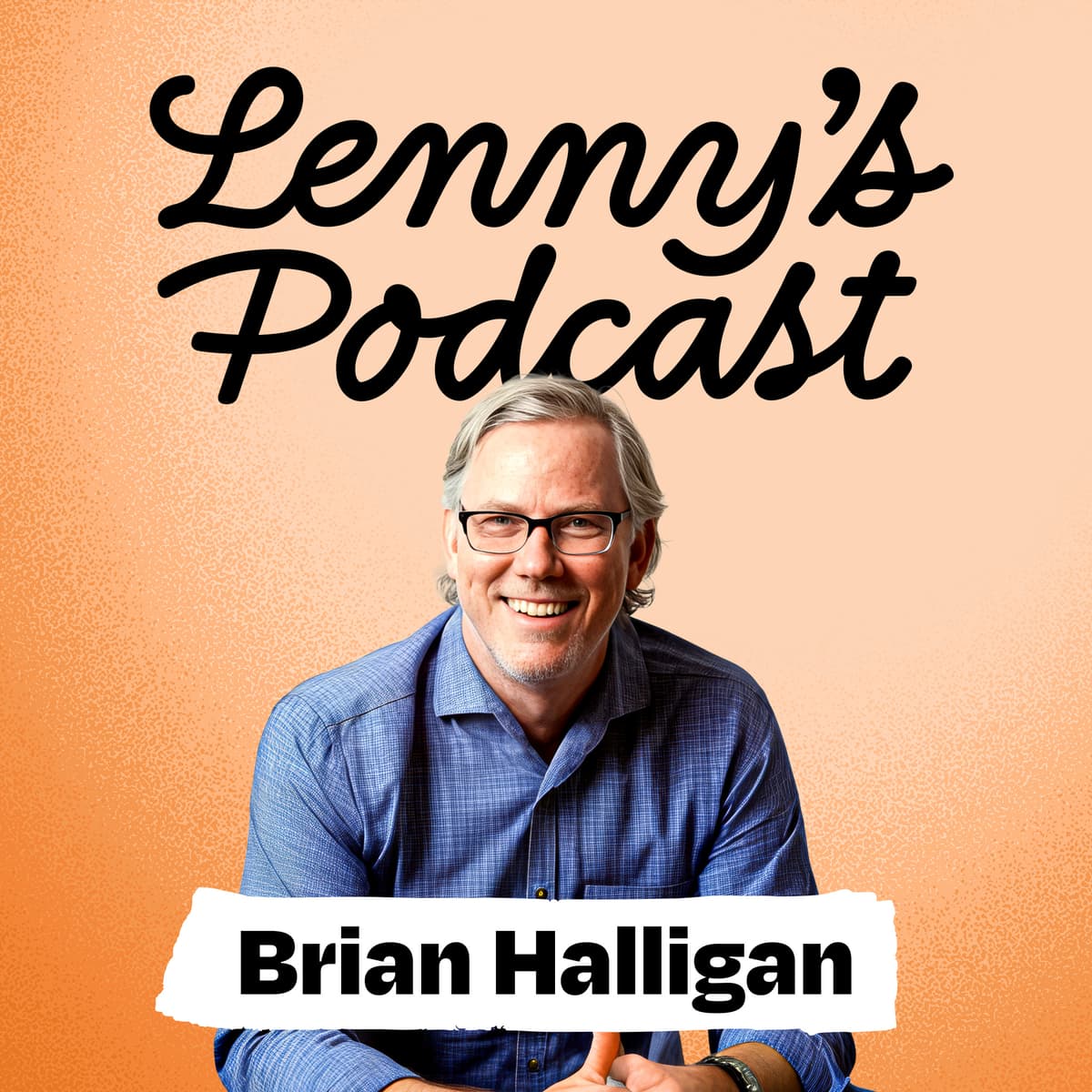

Podcast Summary: Sequoia CEO Coach Brian Halligan on "Why It’s Never Been Easier to Start a Company, and Never Been Harder to Scale One"
Podcast: Lenny's Podcast: Product | Career | Growth
Host: Lenny Rachitsky
Guest: Brian Halligan (Co-founder, HubSpot; CEO Coach, Sequoia)
Date: February 15, 2026
Overview
In this episode of Lenny's Podcast, Lenny Rachitsky sits down with Brian Halligan, legendary co-founder and longtime CEO of HubSpot, now the in-house CEO coach at Sequoia Capital. They explore the evolving challenges of founding and scaling startups, the traits of great CEOs, recruitment tactics, culture-shifting “Halliganisms,” and the impact of AI on go-to-market strategies. Halligan shares his unique perspective and actionable advice, drawing on his decades of experience and close work with dozens of cutting-edge startup leaders.
Main Themes and Discussion Highlights
The New Startup Landscape: Easy to Start, Hard to Scale
[00:08] Lenny: "Starting a company has never been easier. Scaling one into a durable, high impact organization has never been harder."
- The explosion of new company formation is making differentiation and sustainable growth increasingly difficult amidst a sea of competition.
- Halligan points out massive increases in competition, new technologies (AWS, AI), and distribution challenges as core reasons why scaling has become so hard.
[13:10] Brian Halligan: "Number of companies formed is going to mushroom over the next 10 years relative to last 10 years. It’s just going to be hard to stand out and really accelerate."
[26:12] Halligan on Scaling:
"Has it ever been easier to start a company?... But now there’s so much noise and competition, it’s just going to be hard to stand out and really accelerate and scale. That’s why I say it’s never been easier to start. There’s never been more competition, it’s never been harder to scale."
The Evolution and Traits of Successful CEOs
Halligan's "LOCK(S)" Criteria for CEOs
[17:02, 21:43] Brian Halligan:
He outlines the "LOCKS" framework when assessing founders/CEOs:
- L – Lovable (Are they someone you would follow? Inspiring?)
- O – Obsession (Deep, almost irrational obsession with the problem they're solving)
- C – Chip on the Shoulder (A need to prove something, drive)
- K – Knowledge (Deep domain knowledge)
- S – Student (A relentless, ongoing learner, “like an LLM”)
Quote:
[17:02] Brian Halligan: "I call it my lock algorithm. L is for lovable... two is just obsession... the C is chip on the shoulder... and the K is just for deeply knowledgeable about the domain... If I were to stick an S on it, I would say student."
Can Anyone Be a Great CEO?
- Halligan: Not everyone can do it; requires rare combination of traits.
- Notes emergence of “five-tool” CEOs who combine technical prowess, vision, ability to sell, and inspire—the likes of Brett Taylor.
- Many must evolve and develop new skills rapidly, including giving feedback, detecting BS, and inspiring teams.
The Shift from "Startup" to "Scaleup" Leadership
- Early stage: CEO does everything; focus is on perspiration.
- Growth stage: CEO’s job becomes 90% inspiration, 10% perspiration.
- Building and retaining a great exec team becomes the primary concern as complexity scales.
- Trust and delegating authority become limiting factors for scaling.
Recruitment, Team Building, and Talent Decisions
The Kids Table vs. Adults Table
[05:25-07:49]
- At startups with <100 employees (“kids table”), founders focus on product, finding product-market fit.
- At scale (>100 employees, “adults table”), CEOs spend most time recruiting, building, structuring and constantly reshaping the exec team/org design.
Quote:
[06:11] Brian Halligan: "On average, I would say the adults are spending half their time just recruiting and interviewing. It's pretty all consuming."
Better Hiring and Firing
- Most overestimate their ability to interview; blind references and concrete exercises with candidates are much more predictive.
- “Hire slow, fire fast”—most do the opposite.
- Internal, “homegrown” talent is often undervalued vs. flashy big-company hires, who frequently don’t work out at startups due to “impedance mismatch.”
- Sports metaphors: Build teams like the 2004 Red Sox—a mix of homegrown talent and selected experienced players.
Quotes:
[07:59] Brian Halligan: "My other piece of advice, and no one listens to me on this, is hire slow and fire fast."
[14:03] Brian Halligan: "People underrate their homegrown talent almost across the board."
Cultural Lessons: Halliganisms
Halligan shares several “Halliganisms”—memorable, practical nuggets from his years as CEO.
1. "When you have to eat a shit sandwich, don’t nibble" [38:29]
- Tackle hard decisions (layoffs, bad news, failures) head on. Avoid “death by a thousand cuts.”
- Example: Major outage at HubSpot led to an emotional all-company meeting and triggered deep process change.
Quote:
[38:29] Brian Halligan: "Tell everyone the bad news. They're adults; they can handle it. And get it done."
2. "Never waste a good crisis" [41:53]
- Crises spur transformational improvements.
- Most pivotal changes at HubSpot came after major crises.
3. "If you want to kill a plant, have two people water it" [45:55]
- Only one person (DRI - Directly Responsible Individual) should own each key outcome. Committees kill accountability.
4. "Silver bullets don’t exist; it’s all lead bullets" [46:24]
- Success comes from continuous, incremental progress (“two steps forward, one step back”)—not breakthroughs or magic hires.
5. Deciding What to Optimize For: EV > TV > MeV
[50:42]
- EV (Enterprise Value) > TV (Team Value) > MEV (My Value)
- As companies scale, leaders must prioritize what’s best for the company over their own team or personal interests.
6. Cultures: Customer, Employee, or Investor Centric
- HubSpot started employee-centric, then learned to shift center of gravity to customers for lasting success.
- Changed comp plans, brought customers into meetings, publicly rewarded customer-centric behaviors.
The Journey and Identity of a Founder/CEO
Permanent Constructive Dissatisfaction
- Successful CEOs live in a state of “perpetual constructive dissatisfaction”—never content, always seeking improvement, yet remaining humble.
Quote:
[04:21] Brian Halligan: "They're all in kind of a state of perpetual dissatisfaction, but in a positive way..."
The Toll and Sacrifice
- It’s not glamorous; obsession and relentless work are prerequisites.
- Balance is rare among highly successful founders.
- Many reconsider or wouldn’t repeat their path if given the choice.
Quote:
[47:44] Brian Halligan: "The obsession is real... You have to be deeply obsessed... The founders are seven days a week. They're always on... It's full contact."
Life Is Short: The Impact of a Near-Fatal Accident
- Halligan had a serious snowmobile accident that made him re-evaluate what matters.
- Stepped down as CEO to focus on work that brought him more joy.
Quote:
[69:52] Brian Halligan: "Life’s short. Don’t waste it... I made some decisions at the bottom of that cliff..."
AI and the Changing Go-to-Market Playbook
Distribution and Go-to-Market Evolution
- Top-of-funnel will shift from Google to AI agent-driven discovery (“AEO”: Agent Engine Optimization).
- Envisions a future where both buyers and sellers bring AI agents to the sales process.
- Human trust and relationship-building remain essential; enterprise sales roles haven’t fundamentally changed yet, but the “top of the funnel” is primed for disruption.
Quote:
[27:53] Brian Halligan: "Sales is maybe the last job AI will replace... I think the go to market is going to get turned on its head..."
Memorable Insights & Quotes
-
On the illusion of “silver bullets”:
"The thing about being a founder CEO is no one, especially if you’re in your 20s, there’s no one there to rescue you."
— Brian Halligan [00:00, 46:24] -
On culture:
"You work for HubSpot first, and then you work for your boss."
— Brian Halligan [53:41] -
On innovative teams:
"Spikiest of spiky teams came together and made a new genre. They created a new category of music... Spiky teams and creating categories, underrated."
— Brian Halligan (on the Grateful Dead model) [64:48] -
On CEO communication:
"As it gets bigger, you have to say the same thing over and over and over and over and over again. It just doesn’t sink into people’s heads."
— Brian Halligan [58:15]
Notable Moments & Timestamps
- [00:08] – The new challenge: Starting easy, scaling hard
- [05:25] – Kids table vs. adults table; team-building at scale
- [07:59] – Tricks for hiring execs, pitfalls of “shiny” big-company hires
- [13:10, 26:12] – The explosion of startups and competition
- [17:02, 21:43] – The “LOCKS” framework for assessing CEO potential
- [24:00] – Most common CEO skill to learn: giving real feedback, layering teams
- [38:29] – The “eat the shit sandwich” principle
- [46:24] – No silver bullets, only lead bullets
- [50:42] – Enterprise value > team value > individual value
- [55:35] – Employee- vs. customer-centric cultures (HubSpot’s journey)
- [69:52] – Surviving an accident; “life’s short”
- [64:48] – Startup lessons from the Grateful Dead
Resources & Recommendations Shared
- Brian Halligan’s CEO-focused podcast: Long Strange Trip
- Book: Marketing Lessons from the Grateful Dead by Brian Halligan
- Halligan’s Delphi AI clone (personal knowledge bot)
- Halligan’s list of "Halliganisms" (shared on his blog & referenced in the episode)
Final Words & Takeaways
- The game of startups is entering a new era: abundance of supply, scarcity of standout winners.
- Truly durable companies are “lead bullet” machines, run by CEOs who are learners, obsessives, and “constructively dissatisfied.”
- Culture, team, accountability, and decisive action are more crucial than ever for scale.
- Halligan’s lessons and frameworks are born from hard-won experience—and are offered to founders so that “you don’t have to make the mistakes I did.”
- Above all, as Halligan’s accident underscored: “Life’s short—don’t waste it. Work on things that bring you joy.”
Listen and connect:
- Long Strange Trip podcast
- Brian Halligan on Delphi
- Connect via LinkedIn / X (Twitter)
Lenny’s Podcast: Actionable insights for product, growth, and leadership. Find more episodes at [lennys podcast.com](https://lennys podcast.com).