← Les Clés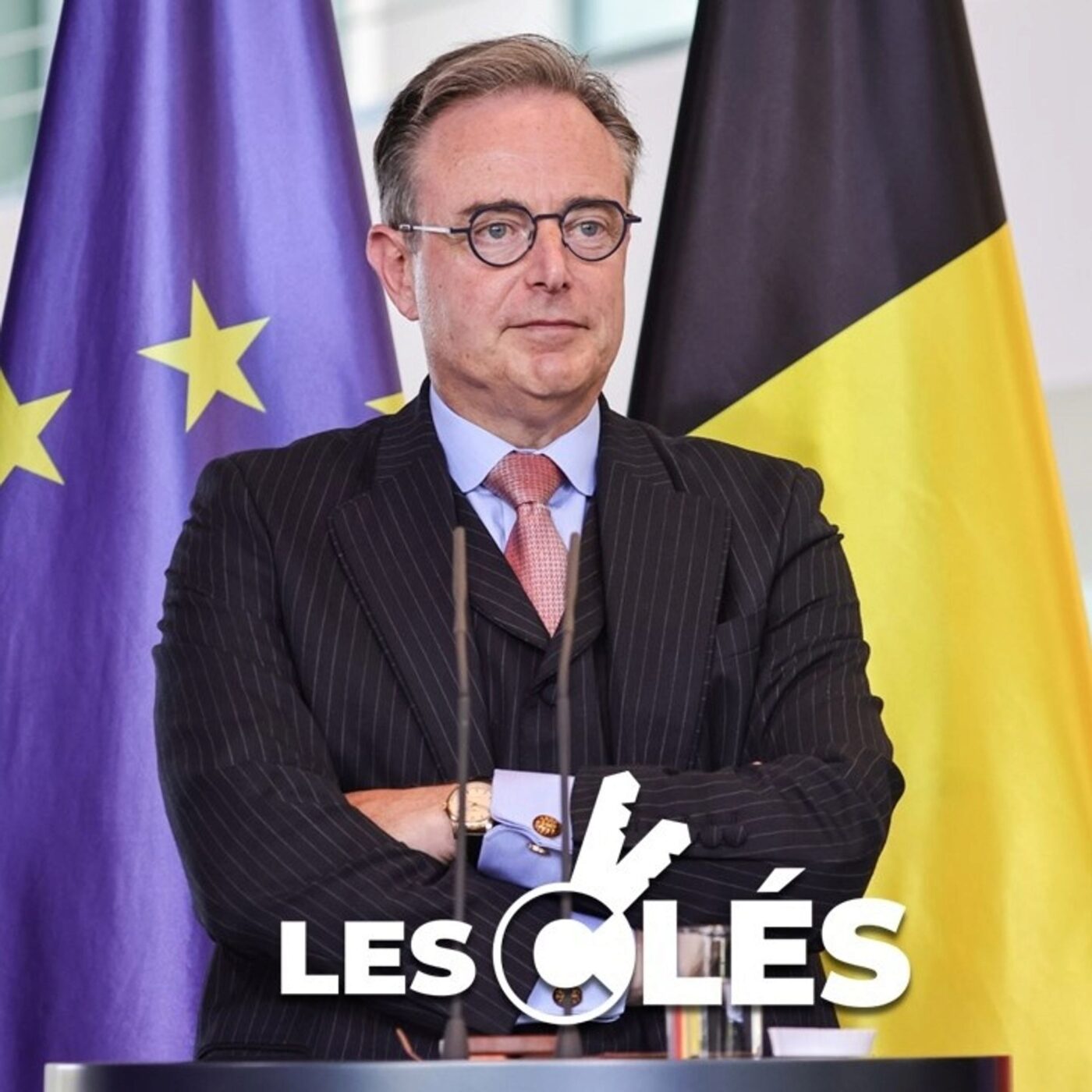
Les Clés
1 an d'Arizona : Bart de Wever est-il devenu Belgicain ? (5/5)
00:28:10
À l'occasion de l'anniversaire du gouvernement Arizona, nous réalisons une semaine spéciale dans "Les Clés" pour analyser l'état de santé et la stratégie des différents partis composant la majorité et l'opposition. Notre cinquième épisode est consacré à Bart de Wev...
Loading summary
Transcript87 lines
- [00:00]
Narrator/Host
Oui, Bardo Heaver est premier ministre de.
- [00:02]
Karl Verhoeven
La Belgique, mais oui, il souhaitera toujours.
- [00:05]
Narrator/Host
Un peu plus de Flandre indépendante.
- [00:07]
Political Analyst/Commentator
Je crois qu'à un moment donné, Bardo.
- [00:09]
Narrator/Host
Heaver a dû se rendre compte du.
- [00:11]
Political Analyst/Commentator
Caractère un peu illusoire, chimérique, de ses rêves d'indépendance pour la Flandre.
- [00:15]
Karl Verhoeven
La Belgique est pour lui un choix.
- [00:16]
Narrator/Host
Rationnel subi, mais ce n'est pas un choix de gueule. Bonjour à toutes, bonjour à tous et bienvenue dans Les Clés. Pour compléter notre série radioscopie du paysage politique belge, un an après la mise en place du gouvernement Arizona, on a décidé de vous reposter cet épisode des Clés réalisé en décembre dernier et consacré à Bart de Wever, le nationaliste flamand, l'homme fort de la N-VA, parti indépendantiste, Devenu aujourd'hui Premier ministre de tous les Belges. Alors dans ce numéro, on s'interroge sur cette question. Bart De Wever a-t-il changé? A-t-il tourné le dos à ses rêves de construire une république flamande? Ou bien le passage par le 16 rue de la Loire n'est-il qu'une étape dans ce projet? Eh bien on a 27 minutes pour tenter d'y voir clair.
- [01:06]
Narrator/Reporter
« La première, les.
- [01:08]
Bart De Wever
Clés. » « Bon tout d'abord je tiens à vous remercier pour votre présence ici nombreuse. Ce n'est pas la première fois que je m'exprime devant des milliers de personnes, mais c'est la première fois que je le fais en français, ce qui n'est pas mon point fort. Oui, merci. Je dois avouer que ce n'est pas mon point fort. J'ai honte de ne pas être parfaitement bilingue. En fait, la Flandre est en train de perdre cette capacité et.
- [01:40]
Narrator/Host
C'Est vraiment dommage. C'étaient les premiers mots de Bardo Heaver, le 1er décembre dernier, à Beaux-Arts, lors des grandes conférences catholiques. Devant une salle comble, remplie pour l'essentiel de spectateurs et spectatrices francophones, le Premier ministre est venu surtout faire un état des lieux de la Belgique et expliquer, Slide a l'appui, pourquoi, selon lui, il y a lieu de réformer pour s'attaquer au déficit très important que connaît notre pays et à la croissance continue.
- [02:16]
Bart De Wever
De sa dette. La politique a changé, la dette augmenterait pour dépasser 120% du PIB en 2030. Cette évolution n'est donc pas soutenable.
- [02:31]
Narrator/Host
À moyen terme. En tout, 50 minutes d'exposé, puis une heure d'échange avec le rédacteur en chef du quotidien La Libre d'Orient de Béus, jalonné de petites saillies dans le style caractéristique.
- [02:46]
Bart De Wever
Pince-Sans-Rire qu'affectionne Bardo-Weaver. Je suis content de ce que je peux faire et je suis, comme vous le savez, un peu stoïque. Donc montrer des émotions ouvertement, ce n'est pas vraiment ma tasse de thé. Mais franchement, est-ce que vous avez vu de Gaulle? Est-ce que vous avez des photos de Gaulle où il éclate de rire? Je n'en ai.
- [03:09]
Political Analyst/Commentator
Pas vu.
- [03:09]
Narrator/Host
Beaucoup. Merci beaucoup. La conférence s'est ponctuée carrément par une standing ovation. Et à la sortie, les francophones conquis étaient nombreux, comme ces spectateurs interrogés par nos collègues de la VRT. Vous.
- [03:29]
Political Analyst/Commentator
Êtes.
- [03:30]
Narrator/Host
Très impressionnant. Pourquoi? Parce que c'est un monsieur intelligent et qu'il ne fait pas d'esbouffe. Il appelle un chat.
- [03:37]
Narrator/Reporter
Un chat, quoi. La Belgique est en de bonnes.
- [03:40]
Narrator/Host
Mains avec Bartlevivre? Je pense. Je pense. Je pense qu'il n'y aura en ce moment pas une meilleure personne qui oserait faire des.
- [03:50]
Political Analyst/Commentator
Choses comme lui. Il y a 10.
- [03:52]
Narrator/Reporter
Ou 20 ans, on n'aurait jamais pensé qu'on aurait.
- [03:54]
Political Analyst/Commentator
Pu dire ça. Non.
- [03:56]
Narrator/Host
Non, c'est vrai. Il n'y a que les imbéciles qui ne changent jamais d'avis. Effectivement, ces réactions ont de quoi surprendre. Surtout si l'on s'en réfère à l'image de Bardo Heaver chez nous ces 20 dernières années. Le Bardo-Ever qui débarquait devant les ascenseurs pour bateaux de Strépitieux avec plusieurs semi-remorques remplies de billets de banque pour symboliser les milliards de transferts de la Flandre vers la Wallonie. Le Bardo-Ever qui, pendant les négociations d'une coalition orange-bleu en 2007 à Val d'Uchès, se félicitait du blocage.
- [04:41]
Bart De Wever
Politique au fédéral. On ne peut plus arriver à former.
- [04:45]
Narrator/Host
Un gouvernement belge. Pour moi, pas de problème, pas de.
- [04:48]
Bart De Wever
Problème du tout. C'est une période bonne.
- [04:50]
Narrator/Host
Pour moi, parce que chaque jour, il.
- [04:52]
Bart De Wever
N'Y a plus de.
- [04:52]
Narrator/Host
Séparatistes en Flandre. Le même Bardewever, qui traitait aussi les wallons de junkies drogués à l'argent public, vivant au crochet de la Flandre, et qui laissait planer le doute sur une possible alliance un jour avec le Vlaamsbelang. Mais voilà, Aux dernières élections, Bardewaever a claqué la porte au nez du Belang. Il a pris le costume du gestionnaire raisonnable et rigoureux pour négocier un accord de gouvernement et endosser le rôle de Premier ministre, ce qui l'a conduit à même jurer fidélité aux rois et aux lois du peuple belge. Alors, Bardewaever a-t-il tourné le dos à son nationalisme? Non, il explique que ça reste son ADN politique, Et quand notre confrère Dorian De Meus le questionne sur le sujet, il explique que c'est le résultat des dernières élections qui l'a conduit à jouer la carte de.
- [05:50]
Bart De Wever
La Belgique fédérale. En 2024, on a bien vu un résultat étonnant. Et tout à coup, au fédéral, c'est possible de mener une politique de redressement économique. Donc il faut saisir cette opportunité. C'est Bismarck qui a dit que la politique c'est l'art du possible et non du souhaitable. Donc il faut faire le faisable et ne pas attendre le souhaitable. J'ai toujours dit que je ne suis pas un énergumène, je ne suis pas quelqu'un qui pense que.
- [06:25]
Narrator/Host
La Flandre est un.
- [06:26]
Bart De Wever
But en soi. Ce n'est qu'un instrument pour servir à la démocratie, à la souveraineté du peuple. Et si on est capable de servir son peuple au niveau fédéral, il.
- [06:35]
Narrator/Host
Faut le faire. L'actuel premier ministre belge garde donc bien les intérêts de la Flandre dans le viseur. Quand il parle de son peuple, on entend bien que c'est de la Flandre qu'il parle. Alors jusqu'à quel point Bardo-Weaver a-t-il changé? Est-il le premier ministre de tous les Belges? C'est la question que l'on va explorer à présent. Une bravanson que n'aurait pas fredonnée Bardewever sans doute si on la lui avait diffusée à la fin de sa récente conférence.
- [07:16]
Bart De Wever
Bonjour.
- [07:16]
Narrator/Host
Karl Verhoeven. Bonjour. Merci d'être avec nous. Vous êtes le rédacteur en chef du grand quotidien flamand The Standard qui vient tout juste d'ailleurs de lancer une édition numérique en français donc accessible aussi. aux francophones. Une petite question d'abord sur ce qu'on vient d'entendre. Ça vous a surpris, vous, une standing ovation de la part d'un public entièrement francophone pour Bardo Heaver et tous ses échos positifs à la sortie.
- [07:42]
Karl Verhoeven
De cette conférence? Oui, ça a été quand même étonnant. C'est difficile de trouver une audience qui est plus éloignée du nationalisme flamand. Si on devrait chercher une audience en Belgique qui était l'opposant pour les nationalistes flamands, c'est bien la bourgeoisie francophone à Bruxelles qui tenait tout le pouvoir national. Et le voilà, à l'aise, comme il était chez lui, un peu nerveux au début. Mais comme l'audience lui a pris dans les bras, c'est quand même étonnant. Aussi pour eux, pour lui.
- [08:15]
Narrator/Host
Et pour eux. Dès le début de cette conférence, on sent bien que la salle est acquise. Vous expliquez ça, comment? Qu'est-ce qui fait qu'aujourd'hui, chez ce public-là en particulier, parce que vous faites bien de le dire, c'est sans doute pas tous les francophones, c'est une certaine catégorie de population, C'est à Bruxelles. Mais qu'est-ce que Bardo Heaver parvient à toucher, à rassurer, à votre avis, chez ces gens-là, pour qu'aujourd'hui ils estiment, sans doute pas tous, mais quand même certains qu'on a entendu, que c'est l'homme de la situation, que c'est le premier ministre qu'il faut pour.
- [08:43]
Karl Verhoeven
La Belgique aujourd'hui? Je crois qu'il a pu dire au grand public, pas seulement aux Flamands, mais aussi aux francophones, qu'il est un homme sérieux. C'est ça. Et il a changé. Il ne faut pas sous-estimer le changement qu'il a subi. même avant les dernières élections. Et au nuit de cette élection, il a dit, moi, j'ai une autre position maintenant. Mon parti a changé. Nous sommes dans un autre Dieu. Et je crois que les citoyens de la Belgique, pas seulement de la Flandre, ont bien compris que oui, en effet, on avait besoin d'un tel homme politique dans la situation.
- [09:22]
Narrator/Host
Où on est. Conquis par son sérieux, par son franc-parler aussi, on l'a entendu plusieurs fois. On a entendu, il appelle un chat à un chat. Ça, c'est le style Bardeweever, j'imagine, depuis longtemps en Flandre, mais que.
- [09:34]
Karl Verhoeven
Les francophones découvrent. En Flandre, il était encore plus cassant. et.
- [09:39]
Narrator/Host
Parfois plus amer. Il arrondit un peu.
- [09:42]
Karl Verhoeven
Les angles aujourd'hui. Ah oui, certainement, certainement. Il était en Flandre aussi toujours le Carlimero. Il avait toujours... Il y avait une opposition, il.
- [09:51]
Narrator/Host
N'Était jamais compris. Un peu en victime aussi, qui ne peut pas faire la situation.
- [09:56]
Karl Verhoeven
Qu'Il voudrait faire. Ses adversaires. Il a jeté tout ça. Il joue maintenant dans un niveau de Dahan, grand homme d'État. Et il s'est libéré de beaucoup de ses complexes. Il est maintenant le vainqueur. Il est un homme et un premier ministre avec du pouvoir. Et on n'a pas vu ça en Belgique.
- [10:19]
Narrator/Host
Depuis beaucoup d'années. Vous citez Jean-Luc Dehaene, c'est une référence qui est faite depuis quelques temps maintenant. C'est une vraie référence pour Bardeweever lui-même, Jean-Luc Dehaene, ancien Premier ministre du CVP à l'époque, un parti devenu le CDNV, donc les chrétiens démocrates flamands. La presse utilise de plus en plus ce positionnement un peu dans une forme de filiation de Jean-Luc Dehaene. Est-ce que lui-même se.
- [10:40]
Karl Verhoeven
Réclame de ça? Oui, il fait les allusions là-dessus. Pour lui, c'est très utile. D'abord, ce n'est pas l'idéologie de Dahan qu'il réclame. C'est plutôt la place dans le panthéon.
- [10:51]
Narrator/Host
Belge, politique belge. La.
- [10:53]
Karl Verhoeven
Statue d'homme d'État. La statue de grand homme d'État qui a fait des travaux herculéens, qui a pris l'intérêt du pays en main et a fait avancer l'histoire. Donc, c'est sa place dans l'histoire qui est importante pour Bart de Wever. C'est ça, pour le moment.
- [11:09]
Narrator/Host
Qui le guide. Et c'est à cet aspect-là de Jean-Luc Dehaene qu'il veut se référer. Quand vous dites les grands travaux, c'est le moment où on a fait rentrer la Belgique dans la monnaie unique, notamment ce qui a été aussi un grand travail sur les finances publiques à l'époque. Et on est un peu dans un contexte aussi où on doit faire beaucoup de boulot de ce côté-là aujourd'hui. Avec nous, Baptiste Tupin.
- [11:26]
Karl Verhoeven
Aussi.
- [11:26]
Narrator/Host
Bonjour Baptiste. Bonjour. Vous êtes journaliste politique ici à la rédaction. Vous suivez la politique nationale, la politique flamande aussi. Vous l'expliquez comment, vous, le fait qu'aujourd'hui, une partie en tout cas, on ne peut pas dire que ce soit tout le public francophone, on n'a pas vraiment de sondage là-dessus, mais que quand même, une partie importante des francophones semblent donner un vrai crédit aujourd'hui à Bardo Weaver, à le reconnaître comme leur vrai Premier ministre, en étant beaucoup moins inquiet, on a l'impression qu'on ne l'était il y a quelques années par rapport au.
- [11:52]
Political Analyst/Commentator
Profil du personnage. Alors, si on reprend ce public en particulier, celui des grandes conférences catholiques, oui, c'est un public francophone, oui, c'est un public belgiquin, mais c'est aussi, et je ne veux pas faire de la sociologie de comptoir, mais probablement l'électorat du MR ou des engagés. Il ne devait pas y avoir beaucoup d'électeurs du PS dans la salle. Et donc, c'est aussi un public qui adhère au discours socio-économique de Bardewever. Et là, il y a eu une grosse différence aussi lors des dernières élections, c'est qu'aujourd'hui, il y a quand même une majorité de francophones qui soutient cette majorité fédérale. Et donc forcément, si une partie des francophones qui est représentée majoritairement à la Chambre soutient ce gouvernement, il devient beaucoup plus difficile aussi de critiquer les positions socio-économiques, qui sont celles de la N-VA et de Bardwever, là où c'était peut-être plus facile au moment de la suédoise, première expérience où la N-VA est montée dans un gouvernement fédéral et où là, il n'y avait qu'un seul parti francophone à la table qui était minoritaire. Aujourd'hui, ce n'est plus le cas. Ils disposent d'une majorité francophone à la Chambre. Et puis, il y a effectivement ce changement de Bardwever. Il a changé plusieurs fois au cours de sa carrière. Vous citiez le mot de « mue » tout à l'heure et je crois que c'est le bon terme. Bart de Wever est capable de réinventer son personnage très régulièrement. Il y a eu le Bart de Wever que vous avez cité de strépitieux jusqu'en 2012, un Bart de Wever volontairement provocateur. Et puis, il y a un Bart de Wever après 2012 qui, là, change même physiquement, puisque c'est le moment où il maigrit très, très fort. Il va utiliser d'ailleurs ce régime politiquement. Il devient bourgmestre d'Anvers. À ce moment-là, c'est le bar de Wever qui va accepter que son parti aille au fédéral lors de la suédoise. Mais à ce moment-là, il y avait toujours cette ambiguïté par rapport au Vlaams Belang qui faisait très peur côté francophone. Et à la veille des élections, cette ambiguïté-là par rapport au Vlaams Belang, il la casse entièrement. Il dit en fait, moi idéalement, s'il y a moyen de me passer du Vlaams Belang, je le ferai. Et je pense que c'est ça la dernière mue de Bardo Wever, le Bardo Wever d'aujourd'hui qui est devenu Premier ministre, qui endosse cette responsabilité, cette figure d'homme d'État comme vous l'avez dit, et ça probablement que ça participe aussi au.
- [14:21]
Narrator/Host
Fait de rassurer les francophones. Et puis, il y a un élément qu'évoquait Carol Verhoeven. On a un premier ministre qui a du pouvoir dans le sens où c'est le chef de file du plus grand parti du pays, du plus grand parti forcément, du coup, de la coalition au fédéral. C'est un homme qui pèse dans un moment en plus où le contexte international est extrêmement chahuté. On voit ce qui se passe notamment à propos des avoirs russes qui sont en Belgique. Et c'est le moment d'ailleurs où il est le plus applaudi quand il fait cette grande conférence et quand il s'exprime pour défendre les intérêts de la Belgique sur ce dossier des fonds russes. Ça, ça doit jouer aussi. On a un homme fort qui décide dans un gouvernement relativement homogène après une législature un peu compliquée, chahutée.
- [15:06]
Political Analyst/Commentator
Chaotique avec la Vivaldi aussi. Il a effectivement une vraie légitimité, certainement en Flandre. Je pense que Bardewaever a adopté une posture rationnelle au lendemain des élections. Lorsqu'il dit la Flandre n'est pas un but en soi, et si je peux servir la Flandre à partir du fédéral, pourquoi ne pas le faire? C'est cette posture rationnelle que cela incarne. Qu'est-ce qu'il se.
- [15:26]
Narrator/Host
Dit.
- [15:26]
Political Analyst/Commentator
Au lendemain des élections? 1. Je ne dois pas gouverner avec le Vlaams Belang. Ce n'est pas nécessaire puisqu'on ne forme pas de majorité côté flamand, donc ça ne sert à rien. je n'ai pas de majorité des deux tiers faciles pour faire une réforme de l'État, puisqu'il aurait fallu associer le PS et l'Open VLD qui sont à ce moment-là les grands perdants. Et 3, il se rend compte qu'il a en plus la possibilité de former un gouvernement avec les engagés et l'EMR, Ce qui rend les choses beaucoup plus simples pour lui, parce qu'il va pouvoir mettre en oeuvre plus facilement son programme socio-économique, qui est finalement le programme socio-économique que réclament les Flamands depuis de nombreuses années. Et donc il va pouvoir servir cette Flandre depuis le fédéral, comme il l'a affirmé.
- [16:14]
Narrator/Host
Lors des.
- [16:14]
Karl Verhoeven
Grandes conférences catholiques. Karl Verhoeven. La relation avec Vlaams Belang est quand même très importante. Et juste la semaine passée, au VRT, il y a eu une émission importante là-dessus. Émission intitulée 5 ans. Donc, ils ont fait une interview avec Bart Weber fin 2020. Et on lui a demandé qu'est-ce qui va se passer dans les prochains 5 ans avec vous, avec votre parti, avec Vlaams Belang. Et là, il a dit moi, je ne vais jamais gouverner avec Vlaams Belang. Je ne vais jamais faire une coalition avec Vlaams Belang à 2020. Donc, il savait tout le temps. Alors, on l'a demandé pourquoi vous avez attendu cinq ans jusqu'aux élections pour dire au public que vous n'allez pas faire ça. Et là, il avoue que dans la N-VA, il y a des tendances différentes. Et là, On a toujours su que c'était le cas, que l'NVA n'allait pas survivre une coalition avec Vlaams Belang. Cette partie allait se déchirer, sans doute. Mais pour lui, c'était un très grand soulagement que dans les élections de juin dernier, il a pu être le premier, le plus grand, battre le Vlaams Belang. Pour lui, c'est très important. C'est une.
- [17:35]
Narrator/Host
Mission historique pour lui aussi. Ça, c'est super intéressant, effectivement. Donc c'est que, dans sa tête, selon vous, Bardo-Weaver a toujours pensé qu'il ne fallait pas et qu'il ne voulait pas faire une alliance avec le Vlaams Belang, mais que pour des intérêts même internes à la cohésion de son parti, il devait laisser planer le doute jusqu'à ce moment où il a pu vraiment clarifier la donne. Pour autant, maintenant, est-ce que Bardo-Weaver, selon vous, a tourné le dos au rêve d'une Flandre indépendante, d'une République flamande, demain.
- [18:05]
Karl Verhoeven
Après-Demain, plus tard dans l'histoire? Avec Bartheuven, il ne dit toujours jamais, c'est qu'un million politique. Donc si les circonstances changent, lui, il va changer. Mais il a bien changé le but, son but politique, le but de son parti a fondamentalement changé. Il faut voir dans quatre ans quelles seront les circonstances et quelles seront les opportunités. Pour lui, il avait, il était encore en juin de l'année passée, il croyait en début de mai qu'il allait perdre les élections, que c'était fini, sa carrière politique au niveau national était finie, qu'il allait se retirer à Anvers. Il a trouvé des circonstances, de nouvelles circonstances, de nouvelles opportunités. Et voilà, il est là, premier ministre, menant un programme de réforme qui convient.
- [18:56]
Narrator/Host
Bien aux souhaits des Flamands. Et c'est ça, évidemment, qui est l'enjeu. On a aujourd'hui, à la barre de la Belgique, un premier ministre qui peut mener une politique qui convient aux attentes des Flamands. Maintenant, il a les manettes en main et les partenaires francophones pour pouvoir mener cette politique-là. Ceci dit, Baptiste Tupin, est-ce qu'il n'y a pas là quand même, de manière plus larvée, une forme de possibilité pour lui de réformer l'État, non pas en faisant un grand pow-wow institutionnel, mais par certaines mesures.
- [19:26]
Political Analyst/Commentator
Économiques, socio-économiques qui sont prises? Oui, alors bon, déjà, il y a certaines mesures vraiment communautaires dans l'accord de gouvernement. Je pense à la suppression du Sénat, par exemple. Je pense aussi à un mécanisme que j'ai découvert ce matin, la suppression d'une sonnette d'alarme idéologique, un mécanisme de protection très ancien du fédéralisme belge et qui va probablement être supprimé. Et puis, il y a des réformes socio-économiques. qui sont très favorables à la Flandre et qui le sont peut-être un peu moins à la Wallonie et à Bruxelles. Je pense singulièrement à la réforme des allocations de chômage. C'est une réforme qui était aussi souhaitée par l'EMR et les engagés, mais quand on regarde les chiffres, Force est de constater que les Wallons seront plus touchés par cette réforme, les Bruxellois également. J'ai été revoir les chiffres, on estime qu'il y a 180 000 à 190 000 personnes qui vont être exclues du chômage. Là-dedans, il y a 90 000 Wallons, 40 000 Bruxellois et 60 000 Flamands. Mais quand on rapporte ça à la taille de la population, on se rend bien compte que.
- [20:35]
Narrator/Host
La Flandre est moins touchée. Il y a eu.
- [20:37]
Political Analyst/Commentator
Une étude... Beaucoup moins touchée! Il y a une étude de l'AFGTB qui a rapporté justement ce nombre de chômeurs à la taille des communes. Sur les 100 communes les plus touchées par cette réforme, 100 sont wallonnes et bruxelloises. Pour trouver la première commune après ça, c'est Anvers qui arrive à la 140e place de ce classement. Et si on prend les 250 communes les plus touchées, 225 sont wallonnes. 19 sont bruxelloises et seulement 6 sont flamandes. Avec ces chiffres-là, on se rend bien compte que la Flandre sera moins touchée. Or, on sait que les CPS qui vont récupérer une partie de ces chômeurs exclus, ils ne sont pas entièrement compensés financièrement. Il y a donc là une vraie responsabilisation des régions, des communes par rapport à cet enjeu-là. C'est une forme de transfert d'argent de la Wallonie vers la Flandre ou alors la fin plutôt d'un transfert de la Flandre vers la Wallonie. Or, ça, ça fait partie du cœur.
- [21:37]
Narrator/Host
Du programme de la N-VA. Carol Verhoeven.
- [21:39]
Karl Verhoeven
C'Est d'accord avec cette analyse? C'est bien intéressant que dans son premier... Il a donné deux interviews au début de son gouvernement, l'année passée. Francophone, nirlandophone. Et dans l'interview nirlandophone, il a admis que cette réforme est une réforme.
- [21:54]
Narrator/Host
Communautaire. C'est une mesure communautaire. Il n'a pas.
- [21:58]
Political Analyst/Commentator
Des.
- [21:58]
Karl Verhoeven
Côtés francophones, ça, justement. Intéressant. Non, pas à côté francophone. Il ne l'a pas répété après. Donc, il a bien compris que ce n'est pas la manière de mener un gouvernement. Maintenant, dans l'accord du gouvernement d'il y a deux semaines, il y avait cette mesure de gaz, par exemple, qui était moins favorable pour Bruxelles, pour la Flandre. Il y a certaines femmes politiques qui ont dit c'est communautaire.
- [22:22]
Narrator/Host
Lui, il n'a pas dit. Maintenant, il ne le présente plus comme tel dans son discours. Il y a quand même des propos sur lesquels il a été assez clair et ça a pu surprendre en particulier côté francophone. C'est sur sa relation avec les Pays-Bas, son orangisme, comme on l'appelle. Et ça, on va l'explorer tout de suite.
- [22:39]
Narrator/Reporter
En compagnie de Sarah Poussey. La fascination de Bart De Wever pour les Pays-Bas n'est pas nouvelle. Au début des années 90, il avait déjà participé à l'organisation d'un congrès sur les grands Pays-Bas pour discuter d'un rattachement de la Belgique. Depuis, il s'est aussi exprimé à plusieurs reprises dans les médias à ce sujet. Au magazine Trends Tendance, il avait par exemple expliqué en 2021 qu'il était marié à une Irlandaise et que son rêve serait de reproduire cette union mixte à l'échelle du pays. En concluant, je cite « si je pouvais mourir en tant que néerlandais du sud, je mourrais plus heureux qu'en tant que belge ». Le ton est donné, Bart de Hever y voit aussi des avantages économiques. Il rêve par exemple d'une fusion entre les ports de Rotterdam et d'Anvers pour en faire une grande porte d'entrée pour le nord de l'Europe. Ses propos, il les a tenus avant d'entrer aux 16 rues de la loi. Mais comme il l'a expliqué en juin à la chaîne hollandaise NPO.
- [23:44]
Narrator/Host
La fonction ne change pas ses convictions. Je ne changerai jamais de conviction. J'ai seulement changé de fonction. Et je dois donc faire attention à ce que je dis. En tant que Premier ministre, je ne peux plus m'exprimer de la sorte. Mais en tant que politique, je pense toujours que la scission des Pays-Bas au XVIe siècle est la.
- [24:02]
Narrator/Reporter
Plus grande catastrophe qui nous soit arrivée. Cette déclaration, il l'a accompagnée d'une autre preuve de son orangisme, laissée cette fois dans le livre d'or de la famille royale néerlandaise. Le Premier ministre belge a en effet cité en auteur flaminguant « Ici et là, ce sont les Pays-Bas », une phrase qui est aussi utilisée par Wurpost, un groupe d'action nationaliste d'extrême droite qui revendique l'union des.
- [24:29]
Narrator/Host
Pays-Bas, de la France et de l'Afrique du Sud. Mathis Tupin, comment est-ce qu'on peut expliquer ce positionnement orangiste de Bardo Weaver qui peut surprendre? Parce que là on ne.
- [24:41]
Political Analyst/Commentator
Parle pas d'indépendance de la Flandre pour le coup. Alors, je pense que cet orangisme, c'est aussi une posture intellectuelle qui est assez fréquente au sein du mouvement flamand traditionnel. Maintenant, c'est sans doute un sujet sur lequel Karl Ruven pourra mieux s'exprimer. Mais la volonté de Bart De Wever aujourd'hui, c'est de tenter de dire que le nationalisme a changé. Il veut montrer un nationalisme plus mature, un nationalisme plus centré sur l'économie. Et pour moi, cet orangisme qu'il affiche volontiers, ça reste le.
- [25:17]
Narrator/Host
Seul paradoxe par rapport à cette volonté de montrer... On dégage.
- [25:19]
Political Analyst/Commentator
Donner peut-être à une vision plus romantique ou historique. Exactement. Et donc c'est à travers cet orangisme que je vois un paradoxe important dans le personnage de Bardewever. Mais il me semble que c'est une posture.
- [25:32]
Narrator/Host
Qui n'est pas nécessairement le signe d'un.
- [25:35]
Karl Verhoeven
Nationalisme radical. Mais peut-être qu'à un moment... Ça je suis tout à fait d'accord avec vous. C'est l'historien Bardewever qui parle.
- [25:43]
Political Analyst/Commentator
Ici. C'est le bourgmestre.
- [25:45]
Karl Verhoeven
D'Anvers aussi qui parle ici. Très orangiste, les Anversois. Voilà. Et c'était le grand âge, l'âge d'or de l'Anvers qui a été cassé. Donc, c'est plutôt un désir intellectuel plutôt que politique. En termes réels, il n'y a.
- [26:01]
Narrator/Host
Pas de partenaire aux Pays-Bas. Il n'y a personne. Il n'y a.
- [26:05]
Karl Verhoeven
Pas de projet politique pour reconstruire les grands Pays-Bas. Il n'y a pas de partenaire aux Pays-Bas pour discuter là. Ils disent mais c'est quoi ce rêve orangiste? En Amsterdam, ils ne savent pas ce qu'ils entendent. Donc c'est plutôt un désir européen aussi. Il a.
- [26:20]
Narrator/Host
Refait cet orangisme dans Benelux, le rêve de Benelux. C'est un peu les bourguignons aussi.
- [26:26]
Karl Verhoeven
Quelque part, reconstruire le royaume des ducs de Bourgogne. Bourgogne, mais Benilux en termes de powerhouse européen. C'est le nœud central de l'Europe. Et pourquoi ne travailler pas ensemble? C'est alors inverse en termes de port avec.
- [26:39]
Narrator/Host
Rotterdam. Et on a cet axe économique, culturel ensemble. Ce qui transparaît, en tout cas, de ces analyses croisées, c'est que Bardo-Weaver est un animal politique à la fois très doué et très difficile à déchiffrer, qui a connu plusieurs muts pour épouser des circonstances politiques qui évoluent, mais sans jamais renier son ADN politique originel forgé dans le nationalisme flamand. Alors, Bardo Heaver sera-t-il un nouveau Jean-Luc Dehaene, un homme d'État pour la Belgique? Ou bien n'est-ce qu'une phase transitoire? Parce qu'aujourd'hui, la Belgique est le meilleur véhicule qu'il a trouvé pour servir les intérêts des Flamands. L'avenir le dira sans doute. En attendant, on a essayé de vous donner quelques clés pour vous faire votre propre opinion sur le sujet. Merci à Carol Verhoeven, rédacteure en chef du Standard, dont on rappellera cette belle initiative de proposer désormais chaque jour en ligne une sélection d'articles du quotidien en français. Merci à Baptiste Tupin de la RTBF, à Guillaume De Smet pour la réalisation sonore de cet épisode. A la préparation, il y avait Sarah Poussey et Arnaud Reussen. Et comme d'habitude, si cet épisode vous a.