← Les Clés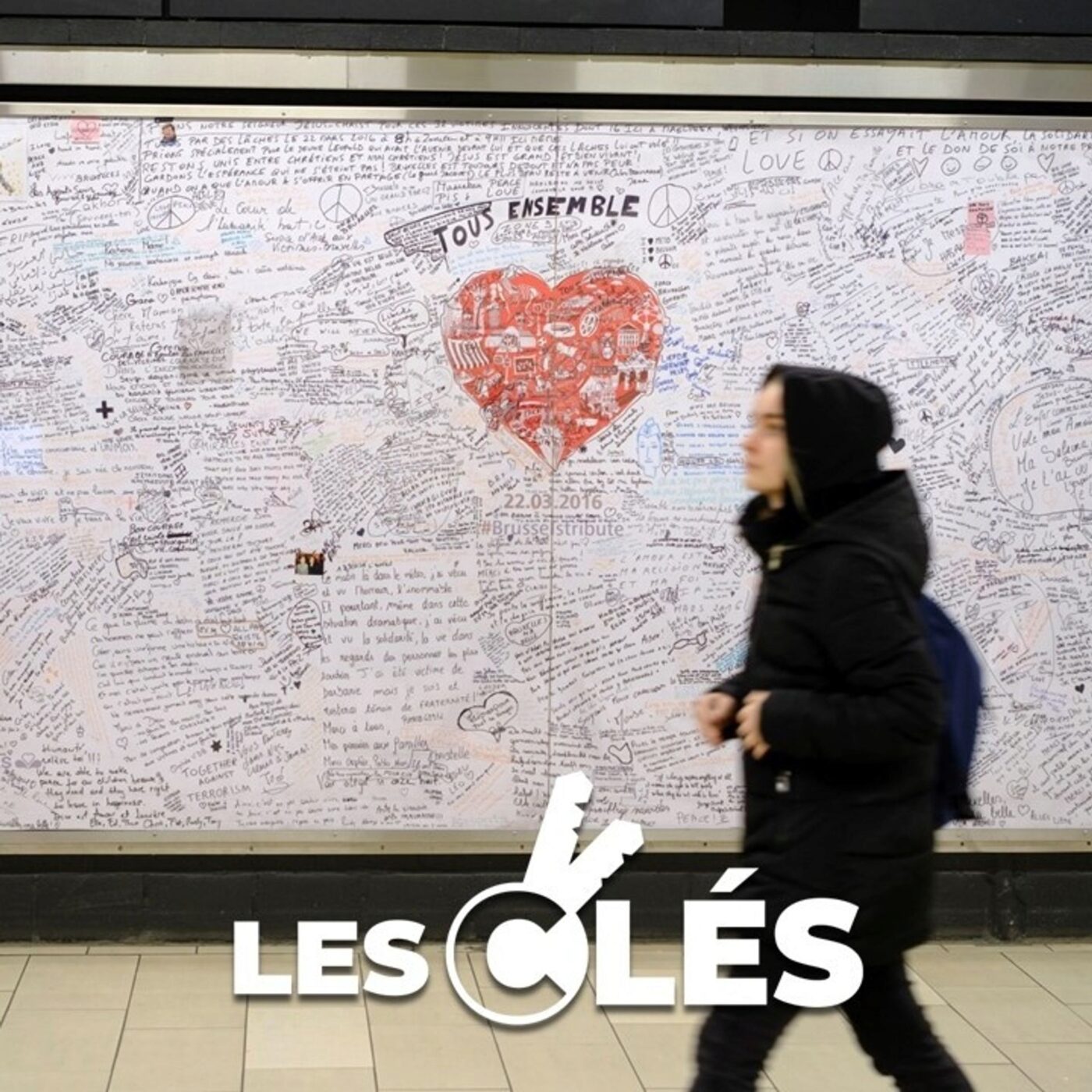
Les Clés
Aux sources des attentats de Bruxelles, avec Frédéric Van Leeuw
00:42:38
Le 22 mars 2016, la Belgique est frappée par deux attentats : l’un à l’aéroport de Zaventem, l’autre dans la station de métro Maelbeek. Le bilan est très lourd : 35 morts et 350 blessés. 10 ans après ce traumatisme, nous revenons aux sources de cette violence et à ...
Loading summary
Transcript63 lines
- [00:01]
Frédéric Van Leeuw
Ce 22 mars 2016, Bruxelles est attaquée.
- [00:05]
Journalist 1
Des lieux choisis pour frapper le maximum de personnes. Le scénario des attentats est de plus en plus précis.
- [00:11]
Journalist 2
C'était encore l'heure de pointe lorsque l'explosion a retenti dans la station métro Malbec.
- [00:16]
Narrator / Host
Bonjour à toutes, bonjour à tous et bienvenue dans les clés pour un épisode où l'on vous propose de revenir aux sources des attentats de Bruxelles. Des attentats qui, il y a 10 ans, le 22 mars 2016, ont fait 35 morts et 350 blessés et ont traumatisé des milliers d'autres personnes. Dix ans plus tard, avec le recul du temps et à la lumière de ce qu'a révélé l'enquête et le procès, on a fait le choix dans les clés d'essayer de comprendre la mécanique qui a amené à ces attentats et de le faire par la voie d'un acteur qui avait une place centrale dans la gestion de cette situation de crise, dans toute l'enquête aussi, en amont et en aval, le procureur fédéral de l'époque, Frédéric Vanneleu, qui a accepté de retracer avec nous le fil de cette histoire très douloureuse.
- [01:04]
Frédéric Van Leeuw
La première,
- [01:07]
News Reporter
les clés.
- [01:09]
Voice Actor / Reenactment
...
- [01:29]
Narrator / Host
Cette naissance, on peut la relier à la chute du régime de Saddam Hussein suite à l'intervention des États-Unis et de leurs alliés en 2003 en Irak. À l'époque, l'armée irakienne est dissoute. La police et l'administration s'effondrent et des régions entières vont échapper au contrôle de l'État. Des groupes armés vont alors se former et occuper ce vide sécuritaire, notamment le groupe Al-Qaïda en Irak, dirigé par un certain Abu Bakr al-Baghdadi. Il sera rejoint progressivement par des milliers de militaires désœuvrés, des militaires sunnites qui s'élèvent contre le nouveau pouvoir dominé par les chiites et contre l'occupation américaine. On assiste donc alors à la combinaison du projet djihadiste d'une part et de l'expérience des militaires d'autre part. Alliance renforcée par le fait que d'anciens officiers de l'armée irakienne vont passer beaucoup de temps dans les mêmes prisons que des combattants djihadistes. Ce cocktail explosif va alors aboutir à la création d'un mouvement très puissant. Al Qaïda en Irak va se muer en état islamique. Il va profiter de la guerre civile en Syrie pour s'étendre. plus qu'une organisation terroriste, c'est un Etat terroriste qui est en train de naître. En juin 2014, Abu Bakr al-Baghdadi se proclame calife de l'Etat islamique d'Irak et du Levant, appelé aussi Daesh, et il appelle les musulmans du monde entier à le rejoindre dans sa guerre sainte.
- [03:25]
Voice Actor / Reenactment
Et
- [03:32]
Narrator / Host
certains musulmans en Europe vont répondre à cet appel et prendre la route de la Syrie. Frédéric Van Leeuw, qui travaille déjà au parquet fédéral à l'époque, se souvient très bien de ce moment, Je lui ai demandé comment il expliquait que des milliers de jeunes européens, des centaines de Belges, avaient choisi, à ce moment-là, de rejoindre cet État islamique.
- [04:02]
Frédéric Van Leeuw
Il y a plusieurs éléments. Il y a un élément que j'appellerais globalisation. Les départs vers la Syrie, par exemple, ont été facilités par le fait qu'il était très facile de prendre un billet d'avion pour entaler en Turquie et de là se rendre en Syrie. On est au début des médias sociaux, plus ou moins. On est quelque part cinq ans après l'invention de l'iPhone. Et c'est à ce moment là que les réseaux sociaux commencent à avoir une implication et commencent à toucher directement les personnes sans filtre. Il n'y a plus de transmission, en tout cas c'est le début du manque dans certaines familles de transmission du savoir par les différentes générations où on se retourne vers une autre génération, on se retourne vers l'imam, on se retourne vers le prêtre pour avoir un peu de sens à sa vie ou vers d'autres personnes qui sont des personnes ressources. Mais on va faire du shopping sur internet et malheureusement sur internet 30% de toute la production sur internet est faite par 1% de personnes très radicalisées ou très radicales en tout cas et qui ont touché nos jeunes. Donc ça c'est une première chose. L'autre chose J'aime bien cette phrase de Vaclav Havel qui dit le problème des hommes d'aujourd'hui n'est pas qu'ils ne trouvent pas de sens à leur vie mais que ça les dérange de moins en moins. Et on est confronté à toute une série de jeunesses et c'est normal. C'est un âge de la vie où on est à la recherche de sens et je trouve que là ça pose une question aux adultes que nous sommes. Quelles sont les réponses que l'on donne à ces questions? J'ai fort été interpellé par toute une série d'explications de jeunes à la recherche de sens, à la recherche d'un sentiment de groupe, de sentiment de famille qu'ils ne trouvaient visiblement pas chez nous et qu'ils ont cherché dans des organisations de type sectaire comme était l'État islamique.
- [05:48]
Narrator / Host
Une organisation islamiste va d'ailleurs jouer un rôle clé dans le recrutement de jeunes pour aller mener le djihad en Syrie. C'est le groupe Sharia for Belgium et à l'époque en Belgique, nous dit Frédéric Van Leeuw, on ne savait pas trop quelle attitude adopter vis-à-vis de cette organisation.
- [06:08]
Frédéric Van Leeuw
À l'époque, quand on a poursuivi Sharia for Belgium, au début, on disait mais enfin, est-ce que le parquet fédéral n'a pas d'autres choses à faire? L'OCAM a commencé, entre guillemets, avec sa fameuse liste OCAM et on disait, on fichait presque les musulmans, c'est ce qu'on nous disait. Ça s'est révélé après que c'était vraiment quelque chose d'important. Mais ce n'était pas seulement la Belgique. La Belgique a pris conscience de Sharia for Belgium. Sharia for England, par exemple, qui est un peu à l'origine. Najib Choudhary, qui était le leader de Sharia for England, est à l'origine qui a inspiré Sharia for Belgium. Nous avions posé des questions à l'époque, en 2012, 2014, 2015, aux Britanniques, et il n'a été arrêté que bien plus tard, parce que les Britanniques trouvaient qu'il y avait la liberté d'expression, la liberté de religion, et qu'on n'avait rien à reprocher à cette personne.
- [06:58]
Narrator / Host
À l'époque donc, beaucoup d'États européens ne savent pas trop quoi faire par rapport à ces jeunes qui partent en Syrie, car on n'a jamais connu jusque-là un phénomène d'une telle ampleur.
- [07:11]
Frédéric Van Leeuw
Lors de la décennie précédente, il y a eu des personnes qui sont parties. On sait par exemple que les premiers combattants étrangers, c'est avec la guerre de l'ex-Yougoslavie. Et puis après, il y en a eu quelques-uns qui sont partis à Al-Shabaab ou en Afghanistan. Mais ils étaient très, très peu. Et tout d'un coup, on est confronté à des centaines de jeunes qui partent. Et là, c'était un phénomène totalement nouveau. Peut-être parce que la destination était plus facile, mais aussi parce que la circulation de l'information, ce que Gilles De Kerckhove a appelé le GIAD 2.0, avait totalement changé. C'était presque un reformatage du disque dur, et peut-être qu'on ne l'avait pas perçu à temps.
- [07:47]
Narrator / Host
On n'avait peut-être pas perçu jusque-là la portée de ce qui était en train de se jouer, et on n'avait pas perçu non plus que ça allait être un problème gigantesque pour la sécurité nationale des États européens. Mais voilà, le 24 mai 2014, à Bruxelles, il va se passer ceci.
- [08:11]
News Reporter
Peu avant 16h, au musée juif de Belgique, dans le quartier du Sablon, à Bruxelles, un homme, arrivé en voiture, serait rentré dans le musée avant d'ouvrir le feu. Il a tué trois personnes et en a blessé une autre. A priori, une fusillade à l'aveugle. Il a ensuite pris la fuite en voiture. À nouveau, un attentat immédiatement qualifié d'antisémite, y compris par la ministre de l'Intérieur, Joël Milquet.
- [08:43]
Narrator / Host
L'homme, qui au final fera quatre morts ce samedi-là et qui sera arrêté quelques jours plus tard, s'appelle Médine Mouche. C'est un Français et l'on va rapidement découvrir qu'avant de perpétrer son geste, il est passé par la Syrie. C'est à ce moment-là qu'on va prendre conscience de tout le danger lié à ceux que l'on appellera les «returnees », les Européens passés par la Syrie et qui reviennent ensuite en Europe.
- [09:15]
Frédéric Van Leeuw
Oui, c'est à ce moment-là qu'on en prend vraiment conscience parce qu'on se rend compte que cette personne, il est passé par la Syrie. D'ailleurs, il a été reconnu comme étant un des geôliers de toute une série de personnes qui étaient en otage, entre autres des journalistes français. Et on se rend compte finalement que ces jeunes qui partent, ils ne restent pas là-bas. Ils pourraient revenir et surtout, ils reviennent complètement déstructurés par la guerre. parce que certains sont partis avec peut-être un idéal qui était d'aller aider les sunnites là-bas qui étaient opprimés. Et c'était des images qu'il y avait sur certains canaux de TV qui étaient opprimés par les chiites ou les alaouites du gouvernement Assad. et certains sont partis vraiment avec, on va dire, un motif humanitaire. La seule chose qu'une fois là-bas, la guerre vous amène à commettre des choses totalement inhumaines et on en devient totalement inhumain à ce moment-là. C'est ça la problématique de la guerre.
- [10:07]
Narrator / Host
Pour illustrer ça, Je me souviens d'une vidéo glaçante qui tournera beaucoup quelques mois plus tard. On y voit Abdelhamid Abawoud, dont on ne sait pas encore à ce moment-là qu'il sera, quelques mois plus tard, l'un des organisateurs des attentats de Paris. Abdelhamid Abawoud, donc, qui crâne au volant d'un pick-up en Syrie.
- [10:27]
Voice Actor / Reenactment
Avant, on traquait des jet-skis, des motocross. On le
- [10:47]
Narrator / Host
voit, tout sourire, démarré en trombe, alors que derrière son pick-up, il tire plusieurs corps sans vie jusqu'à une fosse commune.
- [10:59]
Voice Actor / Reenactment
Et la tombe, elle se trouve à 50 mètres, normalement, bien-dûr.
- [11:03]
News Announcer
On a fait des morts parmi les ados d'Allah.
- [11:08]
Voice Actor / Reenactment
Takbir! Allahu akbar!
- [11:16]
Narrator / Host
Abdelhamid Abaoud, qui a grandi à Molenbeek en Belgique, sera un de ces jeunes qui reviendra quelques mois plus tard de Syrie mener le djihad sur le sol européen. Au départ d'un projet très clair de djihad global que nous détaille le procureur Frédéric Van Leeuw.
- [11:37]
Frédéric Van Leeuw
Il y a un compagnon de Ben Laden qui s'appelle Al-Souri, qui a écrit un livre de plus de 1000 pages sur le djihad. Je ne l'ai pas lu, mais dans lequel une partie fait référence au fait qu'un des plans pour le djihad mondial serait de dresser les musulmans qui se trouvent dans les pays occidentaux, contre les institutions et de provoquer en fait une polarisation extrême entre les musulmans qui se trouvent ici et le restant des institutions et d'arriver ainsi à une espèce de révolution, de déstabilisation des pays occidentaux. Et on voit petit à petit, il y a un autre personnage assez important qui s'appelle Al-Adnani qui lui, à un certain moment, fait un appel à ça. Donc aux musulmans qui sont dans les pays occidentaux à se révolter, à attaquer avec des couteaux, avec des marteaux, enfin je ne sais plus comment... ce qu'il cite exactement. Et on se retrouve alors face à toute une propagande qui est non seulement on agit sur le territoire irako-syrien et on consolide les bases d'un État, mais en même temps on devient extrêmement agressif et on agit au niveau mondial, et spécialement dans les pays occidentaux, et spécialement avec comme cible, par exemple la France, la Belgique, servant de base arrière, en tout cas pour les attentats planifiés en France.
- [12:54]
Narrator / Host
L'attentat du musée juif de Bruxelles n'est donc que le début d'une longue série d'attaques qui vont profondément meurtrir l'Europe.
- [13:06]
Journalist 1
Le 7
- [13:20]
Narrator / Host
janvier 2015, les frères Kouachi pénètrent dans la rédaction de Charlie Hebdo à Paris et assassinent 11 personnes. Deux jours plus tard, c'est la prise d'otage de l'hyper cachère qui fera quatre morts à nouveau en plein Paris. Et au même moment, même si le grand public ne le sait pas encore, en Belgique, des enquêteurs découvrent qu'à Verviers, dans un appartement, un projet d'attentat est aussi en train de s'élaborer.
- [13:50]
Security Official
On a les premières informations du dossier Verviers qui arrive le vendredi. où on a une cellule, peut-être deux, qui doivent ou qui vont commettre des attentats sur le territoire belge, probablement à Bruxelles. Et donc à partir de là, on a dû, en collaboration avec différents services, Sûreté de l'État, services d'enquête, monter l'opération, collecter un maximum d'informations pour arriver et déboucher finalement à l'intervention rue La Colline le jeudi fin d'après-midi.
- [14:30]
Narrator / Host
Une intervention qui déclenchera du côté des terroristes un déchaînement de violence. Deux d'entre eux seront tués. Le troisième sera blessé. Mais avant cette opération. Les policiers et les enquêteurs ont donc pu écouter longuement les terroristes. Et Frédéric Vanley le raconte, ils n'en reviennent pas de ce qu'ils découvrent à l'époque sur l'organisation de Daech en Europe et sur le danger constitué par les returnees, ceux qui reviennent de Syrie.
- [15:03]
Frédéric Van Leeuw
On est un peu tombés des nus de voir que non seulement on avait des gens qui revenaient, d'ailleurs avec des faux passeports, au début on pensait que c'était d'autres personnes qui étaient là parce qu'ils étaient revenus avec des faux passeports, mais de façon extrêmement organisée. Et aussi, ce qui faisait qu'on ait tombé des nues, c'est qu'il y avait un soutien dans la population locale, qui était importante, dans la petite délinquance. Tout d'un coup, on voyait apparaître des noms qu'on connaissait. autrement et qui arrivaient en soutien un peu de ces terroristes qu'ils voyaient un petit peu comme des héros, comme les guerriers qui se dressaient contre les institutions. Et donc, c'est à partir de ce moment-là qu'on se rend véritablement compte du caractère organisé. On a déjà un about qui se trouve en Grèce, qu'on rate malheureusement parce qu'à un certain moment, on a cette conjugaison de Charlie Hebdo et de l'hyper cachère qui a évidemment une influence directe sur les terroristes à Verviers qu'on était déjà en train de surveiller. Deux ou trois fois on a donné d'ailleurs le signal de l'assaut et puis deux ou trois fois on est revenus parce qu'ils suivaient évidemment tout ça à la TV donc nous ce qu'on voulait absolument éviter c'est qu'ils sortent et qu'ils fassent des victimes. Et à un certain moment on a été obligés d'intervenir parce qu'on voulait éviter qu'ils sortent, ils avaient reçu des armes et on était intervenus à ce moment-là. Et donc, oui, c'est véritablement ça. La problématique qu'il y a à l'époque, c'est ce côté organisé avec aussi un changement de paradigme. C'est-à-dire que les tout premiers passent longtemps en Syrie, ils restent longtemps, ils sont repérés, ils sont sur une liste. Et la Belgique, effectivement, a eu un nombre de djihadistes assez important, mais la Belgique était aussi un des pays. qui avait la meilleure vue sur le nombre de djihadistes. Les français ont découvert des djihadistes encore des années après, alors que nous on avait quand même une vue sur plus ou moins 90% des djihadistes avec cette fameuse liste Ockham qu'on avait commencé déjà très très tôt. Et on se rend compte, à Verviers, justement parce que les deux qu'on pensait dans la maison sont identifiés après via les autopsies, comme étant deux autres personnes, on se rend compte que l'État islamique a changé de paradigme. Donc ceux qui l'envoient ne sont plus des gens qui sont formés pendant des années, mais ce sont des gens qui restent une semaine, deux semaines, trois semaines et passent totalement inaperçus, peuvent revenir avec leur propre passeport ou bien donnent leur passeport pour pouvoir revenir. Et ce qui fait que c'était très difficile de repérer à ce moment-là ceux qui étaient partis, ceux qui avaient été. On a découvert après les attentats que, par exemple, le Bakraoui, par exemple, était passé par l'État islamique et a été passé par la Syrie. et d'autres aussi, parce qu'ils étaient restés d'une façon très très courte. Alors, le désavantage aussi pour l'État islamique, c'est qu'ils n'étaient pas très bien fermés. Donc plusieurs fois, on a eu, heureusement d'ailleurs, entre autres à Montrouge, malheureusement il y a une policière qui est tuée, mais le terroriste se tire lui-même dans la jambe. El Khazani dans le Thalys ne parvient pas à remonter son arme convenablement. et se ratent également. Donc voilà, ça c'était le désavantage. L'avantage pour l'État islamique, c'est qu'il revenait et circulait de façon beaucoup plus discrète, d'autant plus que l'Europe était à ce moment-là confrontée à une vague de réfugiés énormes et qu'ils ont malheureusement instrumentalisé et utilisé. On a vu qu'il y avait eu plusieurs voyages de Salah Abdeslam pour aller chercher différents membres de la cellule terroriste, même jusqu'en Hongrie ou en tout cas jusqu'en Allemagne.
- [18:14]
Narrator / Host
après Charlie Hebdo, après Verviers. Les enquêteurs et services de renseignement savent donc qu'ils ont face à eux une situation extrêmement complexe à gérer. Il y a une menace, conduite par un proto-Etat terroriste puissant, avec des réseaux de propagande et de recrutement très efficaces, mais qui passent sous le radar. Il remarque aussi que de nombreux jeunes passent par la Syrie sans qu'on le sache toujours, et donc, tracés les éléments radicaux, les potentiels terroristes deviennent de plus en plus compliqués, même en étant pleinement conscients de la menace. Cette traque sur tous les fronts s'apparente de plus en plus à chercher des aiguilles dans une botte de foin.
- [18:58]
Frédéric Van Leeuw
On est face aux premières communications cryptées. Donc, entre autres, ils communiquaient avec des clés USB, avec un réseau crypté, etc. C'est très compliqué. On travaille un petit peu sur toutes les informations. Le problème, c'est qu'il y a tellement d'informations qu'on est un peu confronté à un sapin de Noël avec des lumières qui s'allument et qui s'éteignent partout. Et il faut aller sur tout le monde, d'autant plus qu'après Paris. plus personne n'ose à ce moment-là mettre une information sur le côté. Et le résultat, c'est qu'on est noyé dans les informations. Ce que Paul van Tickelt, qui était à l'époque directeur de l'OCAM, appellera un faux Besitas. Et ça, il n'y a rien de pire, puisque à ce moment-là, toutes les informations doivent être vérifiées. Plus personne n'ose mettre une information comme cela sur le côté. Et le résultat est que tant les services de renseignement que les services de police sont noyés.
- [19:48]
Narrator / Host
La stratégie du choc sur tous les fronts fonctionne donc en quelque sorte pour les terroristes. La société prend peur et cette peur, elle va être démultipliée encore le 13 novembre à Paris.
- [20:12]
Journalist 2
La France a donc été frappée au coeur des attaques terroristes sans précédent dans l'histoire de notre pays. Le bilan, sans doute encore provisoire, est effroyable. Au moins 128 morts et 250 blessés, dont 80 sont dans un état très grave. 8 terroristes qui agissaient de manière coordonnée et planifiée sont morts, 7 d'entre eux se faisant exploser.
- [20:31]
Narrator / Host
Ce que les terroristes veulent, c'est nous faire peur, nous saisir d'effroi. Et cet effroi, il sera terrible. Les terroristes ont criblé de balles des terrasses de café. Ils ont tiré à la Kalachnikov dans la foule d'une salle de concert, le Bataclan, et se sont fait exploser aux abords du Stade de France. Au final, ces attaques coordonnées feront plus de 130 morts dans la capitale française et des centaines de blessés. Rapidement, il s'avère que ces attentats ont une connexion avec la Belgique, puisqu'ils ont été en partie préparés chez nous, à Molenbeek. Quelle est votre réaction, vous, quand vous découvrez ça? Parce que vous savez, en fait, si je comprends bien, qu'il y a un péril qui est là. Vous travaillez là-dessus depuis des mois. C'est plus comme au début où on n'avait peut-être pas vu venir le truc jusqu'à Médine et Mouche, ou en tout cas ce péril-là. Là, on le sait, on cherche, mais on n'a pas trouvé, on n'a pas pu empêcher ça. Comment vous vivez, vous, ce moment-là?
- [21:41]
Frédéric Van Leeuw
C'est dramatique. Deux jours avant, j'étais avec les services français. On était à une réunion, ce qu'on appelait la quadripartite, avec les responsables antiterroristes français, marocains, espagnols et belges. On était à Marrakech et on avait échangé, d'ailleurs je te souviens, sur Abaout et sur les positions d'information qu'on avait les uns des autres. Personne ne s'attendait véritablement à un tel drame comme on l'a eu à Paris. Mais au moment où ça se passe, On n'est pas nécessairement étonné que ça se passe, mais que ça se passe avec une telle ampleur, oui.
- [22:14]
Narrator / Host
Et si l'on n'est pas vraiment étonné au parquet fédéral, c'est parce que depuis Verviers, on sait qu'il y a un vaste projet terroriste en Europe avec des cellules qui se préparent. Mais il ne suffit pas de le savoir, car en Belgique, on a des centaines de jeunes passés par la Syrie sans qu'on ait pu tous les identifier. En France, ils sont des milliers. Et le modus operandi des terroristes lui-même rend la mise au jour de leurs plans très difficile. Notamment parce que le but n'est pas de viser certaines institutions bien précises, non, leur champ de cibles potentiel est beaucoup, beaucoup plus vaste.
- [22:55]
Frédéric Van Leeuw
ce qu'on appelait à l'époque dans le jargon les soft target. Et pourquoi soft target? Parce qu'on avait quand même compris que l'idée du terroriste est d'avoir un impact médiatique assez important. Et donc c'est surtout ça qui ne veut pas rater. Ce qui explique que moi je dis toujours que Verviers ça a été quelque part réussi parce qu'on les a empêchés de commettre quelque chose. La seule chose c'est que comme quelqu'un a filmé les images d'une violence incroyable et que c'est passé sur toutes les TV, le résultat cherché était atteint. L'idée principale c'est de provoquer un choc médiatique. La cible peut changer en fonction des opportunités. Et c'est ça qui rend très très difficile d'ailleurs de lutter contre ça. Si vous luttez contre la criminalité organisée et que vous savez qu'il y a un magistrat, un policier, etc., qui est dans le chemin, eh bien, ils feront tout pour éliminer cette personne-là. Ça ne les intéresse pas de faire autre chose. Tandis qu'en matière de terrorisme, le soft target, ça veut dire qu'on va changer de cible en fonction de l'opportunité, l'important étant de choquer la population.
- [23:52]
Narrator / Host
Et tout cela sera à nouveau particulièrement vrai le 22 mars, au moment des attentats de Bruxelles. Alors, essayons justement de retracer ce fil entre les attentats du 13 novembre à Paris et ceux du 22 mars 2016 à Bruxelles. Il y a d'abord le fait que l'un des terroristes de Paris, le seul survivant du commando, en l'occurrence Salah Abdeslam, va parvenir après les attentats du 13 novembre à rentrer en Belgique. Et ce, en raison d'un problème de transmission d'informations liée à des cultures différentes en matière de renseignements entre la Belgique et la France, Salah Abdeslam va parvenir à passer la frontière et même à rentrer à Molenbeek. Molenbeek, qui va être largement stigmatisé à l'époque, considéré comme la base arrière des terroristes qui ont agi à Paris. Alors forcément, on se pose toujours la question, dix ans après, y avait-il un problème particulier avec cette commune bruxelloise, avec certains quartiers, qui explique une partie de ce qui s'est joué à Paris puis à Bruxelles? Réponse là-dessus de Frédéric van Leeuwen.
- [25:18]
Frédéric Van Leeuw
Alors, je pense qu'il y a d'autres personnes qui ont mieux étudié la question, mais je pense qu'il y avait effectivement pas mal de jeunes désœuvrés, pas mal de jeunes qui se sentaient isolés. Quand vous faites un ghetto, il y a le regard extérieur, le regard intérieur. Donc ça, c'est vraiment quelque chose d'important. Ce n'était pas uniquement Molenbeek. On a fait le plan canal sur la zone du canal. Il y avait quand même des zones où on investissait assez peu dans les jeunes, où on investissait assez peu avec une problématique sociale qui, malheureusement, est encore le cas à Bruxelles pour le moment. Il y a quand même pas mal de jeunes qui sont un peu largués à Bruxelles, à qui on ne tend pas vraiment la main. Et donc, peut-être que ça, effectivement, c'était un terreau important. Maintenant, aller stigmatiser Molenbeek et toute une population, je veux dire, il y a des gens extraordinaires qui habitent à Molenbeek. J'ai toujours dit, Molenbeek c'est 100 000 habitants, c'est ce que j'expliquais aux journalistes français. Je veux dire, heureusement que ce n'est pas 100 000 terroristes, sinon véritablement, ce n'est pas uniquement la Belgique qui aurait un problème, c'est l'Europe entière qui aurait un problème. Donc, je pense qu'il a fallu nuancer les choses, mais malheureusement, quand on est dans une situation comme ça, il y a des analyses peu nuancées.
- [26:32]
Narrator / Host
Il faut dire que Molenbeek va rester au cœur de l'actualité quasiment en permanence jusqu'au 22 mars, notamment autour de la traque de Salah Abdeslam qui va durer des mois. Un Salah Abdeslam sur lequel les enquêteurs vont finalement tomber un peu par hasard lors d'une opération antiterroriste menée à Forêt à la mi-mars 2016.
- [26:57]
Frédéric Van Leeuw
Le 15, quand on fait la perquisition à la rue Dudry-Safforet, on ne sait pas que Salah Abdeslam se trouve là. Comment est-ce qu'on trouve cette adresse? Ce qui a été un élément extrêmement important dans l'enquête, c'est qu'à un certain moment, les enquêteurs ont fait le rapprochement avec le dossier d'un faussaire qui fait des faux papiers. et se rendre compte que pas mal des terroristes qui sont connus pour le 13 novembre se trouvent dans les faux papiers, dans les profils qui sont saisis, dans les rotatifs qui sont saisis, dans le dossier de ce faussaire. Et c'est particulièrement important. Pourquoi? Parce que ça nous permet, et ça permet surtout aux services d'enquête, de détecter des appartements conspiratifs. Et c'est comme ça qu'on arrive à la rue Dudrys. parce qu'avec une fausse identité, avec la photo à peine masquée avec une perruque d'un des frères Elba Craoui, on sait qu'un contrat de gaz ou d'électricité a été conclu pour la rue du Driss. C'est comme ça qu'on a trouvé un certain nombre d'adresses d'ailleurs. Les gens se rendent à la rue Dudry, c'est pourquoi ils ne s'attendent pas à trouver quelqu'un, parce qu'on est à la fin de l'hiver, mais le contrat de gaz ou d'électricité a été coupé déjà depuis un certain temps, donc on pense qu'ils sont partis. Et au moment où ils arrivent là-bas, éclate directement une fusillade. Et dans la première fusillade, il y a Mohamed Belkaïd qui est blessé, qui reste sur place, qui échange des coups de feu avec les unités spéciales après. Et pendant ce temps-là, ceux qu'on identifiera plus tard juste après comme étant Salah Abdeslam et Ayari, Soufiane, quittent par les jardins derrière et abandonnent d'ailleurs une arme dans une maison qui se trouve de l'autre côté du pâté de maison et parviennent à s'enfuir. À ce moment-là, assez rapidement, on se rend compte que c'était Salah Abdeslam. celui qu'on cherche depuis des mois, pour lequel on est évidemment beaucoup sous pression, parce que tout le monde se regarde vers nous. Je me souviens qu'on avait eu une réunion à Val Duchesne avec les autorités françaises, et avec Bernard Cazeneuve, avec le chef des services de renseignement français, qui me disait d'un air, mais vous pensez toujours qu'il est en Belgique? Avec un peu l'impression de dire, bon ben... Et je dis, ben voilà, il y a quand même beaucoup de chance qu'il soit en Belgique, et puis finalement on le retrouve un peu plus tard là-bas. Mais donc, C'est une surprise de trouver Salah Abdeslam, mais à partir du 15 mars commence à ce moment-là une phase avec des moments, une espèce de roller-coaster, avec des moments d'espoir, avec des moments très très très tendus. On est un peu dans cette phase-là.
- [29:28]
Narrator / Host
Salah Abdeslam, lui, passe encore une fois entre les mailles du filet, mais plus pour longtemps. Quelques heures plus tard, il sera finalement repéré dans une maison de la rue des Quatre Vents, à Molenbeek, et les policiers et enquêteurs mettent au point une opération qui doit conduire à son arrestation.
- [29:52]
Frédéric Van Leeuw
On prévoit une intervention le samedi, donc le 19, puisque, entre-temps, on peut faire des perquisitions la nuit, ce qui a été un des problèmes au début du dossier, puisqu'on avait une législation qui ne permettait pas de faire des perquisitions. On peut faire des perquisitions la nuit, malheureusement, alors que certains journalistes, dont des journalistes de la RTBF, avaient l'information mais ont accepté de ne pas la donner tout de suite pour des raisons de sécurité. Malheureusement, cette information est diffusée par un média français, Nouvelle Ops, le vendredi en pleine journée. et nous forcent à faire une intervention dans des conditions apocalyptiques très dangereuses pour la population, avec une rue qui est pleine de personnes, avec un camion de la TV flamande qui se trouve non loin de l'intervention, avec des jeunes qui sortent de l'école, d'autres qui se rendent à la mosquée. On voit ces images des unités spéciales qui avancent avec des gens qui font leurs courses à côté. Ça a été une intervention remarquable des unités spéciales parce qu'ils sont arrivés à intervenir sans blesser personne. Et c'est à ce moment-là que Salah Abdeslam et Sofiane Ayari sont arrêtés.
- [30:55]
Narrator / Host
À ce moment-là, le 18 mars, c'est un soulagement. Beaucoup sans doute pensent que l'on est au bout de quelque chose. Sauf que les enquêteurs, eux, savent bien qu'ils ne sont pas au bout, qu'ils restent dans la nature des individus dangereux, et notamment ceux qui s'avéreront être les kamikazes du 22 mars à Bruxelles. Frédéric Vanley se souvient très bien de ce sentiment ambigu à ce moment-là, soulagement d'avoir capturé Salah Abdeslam et parfaite conscience que le péril reste très grand.
- [31:35]
Frédéric Van Leeuw
On est, à ce moment-là, effectivement, dans une phase où on dit, finalement, on les a. Mais on sait très bien qu'il y en a encore d'autres. Parce que depuis l'enquête de Paris, on a identifié les deux frères Elbakraoui. Même si on ne l'a pas dit dans les communiqués de presse, etc., on les a identifiés. On a identifié celui qui était connu comme étant Sofiane Kayal, qui, en fait, est l'Ashraoui. Sur base, évidemment, des faux papiers, etc. Et le lendemain, malheureusement, un média sans nous consulter publie la photo des deux frères El-Bakraoui en se basant sur des avis de recherche qu'on avait faits ou qu'on avait transmis aux autorités espagnoles, une notice rouge d'Interpol. Et on a trouvé malheureusement aussi sur les audios que ça a été le moment où il décide de dire, et il s'excuse d'ailleurs face au commanditaire qui se trouve à Raqqa en disant On a vu nos photos dans les journaux. Je suis désolé, nous n'allons pas faire le but initial. Nous ne voulons pas terminer comme Mohamed Bakali, qui a été arrêté juste après les attentats du 13 novembre. Et nous allons intervenir ici. Et c'est le début de la phase qui va nous amener au 22 mars. Et c'est un week-end très intense. Je me souviens évidemment, quand on arrête Salah Abdeslam et Sofiane Ayari, on a des félicitations de tout le monde. Il y a encore une photo de moi dans le bureau de Charles Michel avec François Hollande qui est venu à ce moment-là. Il y a un tweet d'Obama. Enfin, il y a toute une série de choses qui se passent, mais on se rend assez vite compte, ce week-end-là, qu'il y a un problème, qu'on n'a pas tout le monde et qu'il y a un gros danger. Et on se pose aussi, nous, la question. Les identités des deux frérèles Bakraoui sont publiées, mais on a encore l'identité de la Shraoui. Qu'est-ce qu'on fait? Et je me souviens que le lundi avant les attentats du 22 mars, on a encore une discussion avec la juge d'instruction. Qu'est-ce qu'on fait? Est-ce qu'on publie un avis de recherche pour l'Achraoui ou pas? Et finalement, le lundi soir, on décide de publier l'avis de recherche. Et je pense qu'on a bien fait. Malheureusement, ça n'a servi à rien, mais on aurait probablement pu nous reprocher d'avoir gardé cette identité secrète et de ne pas avoir permis aux services de sécurité de le reconnaître si jamais il l'avait vu.
- [33:47]
Narrator / Host
Mais sur ce point, cela ne changera plus rien. De crainte d'être découverts parce qu'ils se savent recherchés, les deux frères al-Bakraoui, Najim Lachraoui et Mohamed Abrini, décident de mettre à exécution leur projet de mort.
- [34:05]
News Announcer
Bonjour, la Belgique frappée, choquante série d'explosions depuis ce matin. La Belgique frappée, l'aéroport de Zaventem tout d'abord, l'une ou l'autre station du métro en ce moment dans le quartier européen. 22 mars 2016, Bruxelles, journée noire.
- [34:20]
Frédéric Van Leeuw
Un grave incident à l'aéroport de Zaventem. L'aéroport de Bruxelles nationale est fermé depuis
- [34:25]
Narrator / Host
une quinzaine de minutes.
- [34:26]
Journalist 1
Double explosion située aux alentours du hall des départs. On a des images de l'intérieur de ce hall des départs qui nous montrent des panneaux effondrés, des vitres brisées. Des attaques qui ont été revendiquées il y a une trentaine de minutes par le groupe terroriste Etat islamique.
- [34:48]
Narrator / Host
Les attentats à l'aéroport de Zaventem et dans le métro Malbec feront 35 morts, des centaines de blessés, dans une journée chaotique sur tous les fronts. Une journée durant laquelle Frédéric Van Leeuw et ses équipes tentent, tant bien que mal, d'encore gérer ce qui peut l'être.
- [35:09]
Frédéric Van Leeuw
Écoutez, c'est une journée où, je vais dire entre guillemets, ça va peut-être vous choquer, mais on arrête de réfléchir aux conséquences. Il faut se focaliser sur la gestion du chaos qui est créé, puisqu'à ce moment-là, à un certain moment, je ne vais pas dire que c'est la panique, mais il y a toute une série d'éléments qui s'enchaînent. Il y a l'attentat à l'aéroport, Puis une heure plus tard, il y a l'attentat à Malbec. Le téléphone est complètement coupé à un certain moment parce que tout le monde commence à se téléphoner les uns aux autres, etc. Il y a des alertes un petit peu partout. Il faut gérer tout ça. Et en même temps, on se rend assez vite compte qu'il y a encore des personnes qui ont participé aux attentats qui sont dans la nature. Donc on n'a pas vraiment le temps de s'apitoyer sur ce qui s'est passé. C'est quelque chose qui va revenir après. Assez rapidement la question des victimes vient puisque malheureusement il faut procéder à des identifications. Il y a des gens qui sont encore en vie mais qui ne savent pas s'identifier eux-mêmes. Et malheureusement aussi il y a des victimes dont les corps ne sont malheureusement pas en très bon état qui doivent aussi être identifiés. Et donc on doit faire des choix par rapport à ça. On voit les familles qui affluent vers Bruxelles Et assez rapidement, on décide à ce moment-là d'avoir des magistrats qui ne s'occupent que des victimes et d'autres qui ne s'occupent que de l'enquête avec les juges d'instruction. Moi, je me souviendrai toujours, lors de l'arrestation de Mohamed Tabrini, d'un policier qui me racontait que sa femme qui mettait ses deux enfants au lit, ou sa fille au lit, lui avait dit... Sa fille lui avait dit, tu sais, tu peux me dire que papa est décédé. Et alors je lui dis, enfin maintenant papa n'est pas décédé. Si, si je ne l'ai plus vu depuis les attentats, je suis sûr que... Donc quand il m'a raconté ça, j'ai dit maintenant tu laisses tomber, tu vas embrasser ta fille et puis tu reviens. Mais ça montre l'impact que ça a eu aussi sur... C'est une histoire qui montre l'impact que ça a eu sur tout le monde. Personne n'a sorti intact de cette période-là. Et je constate quand même encore aujourd'hui, et c'était une des recommandations malheureusement de la commission parlementaire qui n'a pas beaucoup été suivie, que les intervenants sur les lieux n'ont pas beaucoup été aidés non plus. Alors avec cette pudeur évidemment que l'on a de dire que les vraies victimes sont celles qui ont vraiment été touchées, elles et leurs familles. Mais il y a des intervenants, des ambulanciers, des policiers, des magistrats qui ne s'en remettent pas de tout ça. Et c'est quelque chose qui reste. Et ça je pense que c'est quelque chose d'important à dire aussi.
- [38:17]
Narrator / Host
10 ans après, ce traumatisme est donc toujours bien là pour les victimes, en particulier renforcées par un accompagnement qui n'a pas toujours été à la hauteur, c'est aujourd'hui démontré, mais aussi pour tous ceux qui ont dû intervenir, soigner, enquêter, accompagner. Et pour la société, alors? On se souvient que le projet des terroristes, à l'initial, c'était de diviser profondément nos sociétés, en particulier entre les musulmans et les non-musulmans. Ne sont-ils pas parvenus, en partie, à leur objectif sur ce point? Réponse du procureur Frédéric van Leeuwen.
- [39:09]
Frédéric Van Leeuw
Quelques dix ans après, mon analyse personnelle est que la Belgique a été beaucoup moins polarisée que la France par rapport au clivage voulu par El Adnani entre populations musulmanes et les autres puisqu'on veut casser le «nous» et on veut créer un «moi» et l'autre. Je trouve que la Belgique a été beaucoup moins sensible à ce discours que, par exemple, en France, où il y a eu une véritable polarisation, il y a eu des attaques contre les mosquées, etc. Donc là, je pense aussi qu'il faut dire les choses qu'on a réussies, en tout cas, à garder une cohésion dans notre population.
- [39:46]
Narrator / Host
-"Mais on aurait tort, pour autant, de se dire que le péril est passé." parce que le risque de la polarisation, il est toujours bien là dans notre société, peut-être plus fort encore, et se matérialise aussi sur d'autres fronts, autour d'autres clivages.
- [40:11]
Frédéric Van Leeuw
Il y a toute l'évolution encore, comme je l'ai dit, évidemment, de la propagande sur Internet, qui malheureusement a beaucoup de succès et génère d'autres formes de radicalisation. Ici, on a parlé du terrorisme de Daesh. Malheureusement, on a eu quelques années plus tard un militaire qui est parti dans la forêt du Limbourg avec un arsenal et voulait s'attaquer à un virologue. Là aussi, il y a d'autres formes de radicalisation. Il faut rester très très attentif par rapport à ces formes-là, je trouve. Je trouve qu'on n'a pas encore trouvé véritablement la solution ou même perçu le danger des choses que ce qu'est cette radicalisation sur internet et ce que les algorithmes servent à nos jeunes mais aussi à nos moins jeunes. Je trouve qu'on n'en est pas encore assez conscient.
- [40:57]
Narrator / Host
Et s'il y avait une leçon plus générale à tirer pour Frédéric van Leeuwen, une conclusion qui peut nouer un fil entre les causes profondes de ces attentats et leurs effets pour notre société, ce serait peut-être en particulier celle-ci.
- [41:13]
Frédéric Van Leeuw
Ces attentats nous ont appris à peut-être être plus attentifs à la fragilité. Et dans une société, quand on est plus attentif aux personnes vraiment fragiles, on est plus humain. Et c'est ce que rappellent les victimes maintenant, aujourd'hui, après dix ans. Il faut non seulement faire la mémoire pour ceux qui s'en souviennent, mais il y a aussi plein de jeunes qui n'ont pas connu ou qui n'ont pas été conscients de ça. Leur parler de ça, ce n'est pas uniquement par goût de morbidité, mais c'est pour leur rappeler, à un certain moment, qu'il faut faire attention aux personnes les plus fragiles et être là pour elles, et que si on est là pour les personnes les plus fragiles, pour les victimes, à ce moment-là, on peut avancer et éviter justement la polarisation.
- [41:58]
Narrator / Host
C'était donc le regard de Frédéric Vanley, aujourd'hui procureur général de Bruxelles et qui entre 2014 et 2024 était procureur fédéral en charge notamment des questions de terrorisme. Merci à lui pour le temps consacré. Merci à Vincent van der Venen pour la prise de son. À Guillaume de Smet pour la réalisation sonore de ce long épisode. à Sarah Poussey pour la recherche des archives. Les clés, je vous le rappelle, c'est un podcast de la première. Et si le contenu vous a intéressé, n'hésitez pas évidemment à le partager autour de vous.