← Les Clés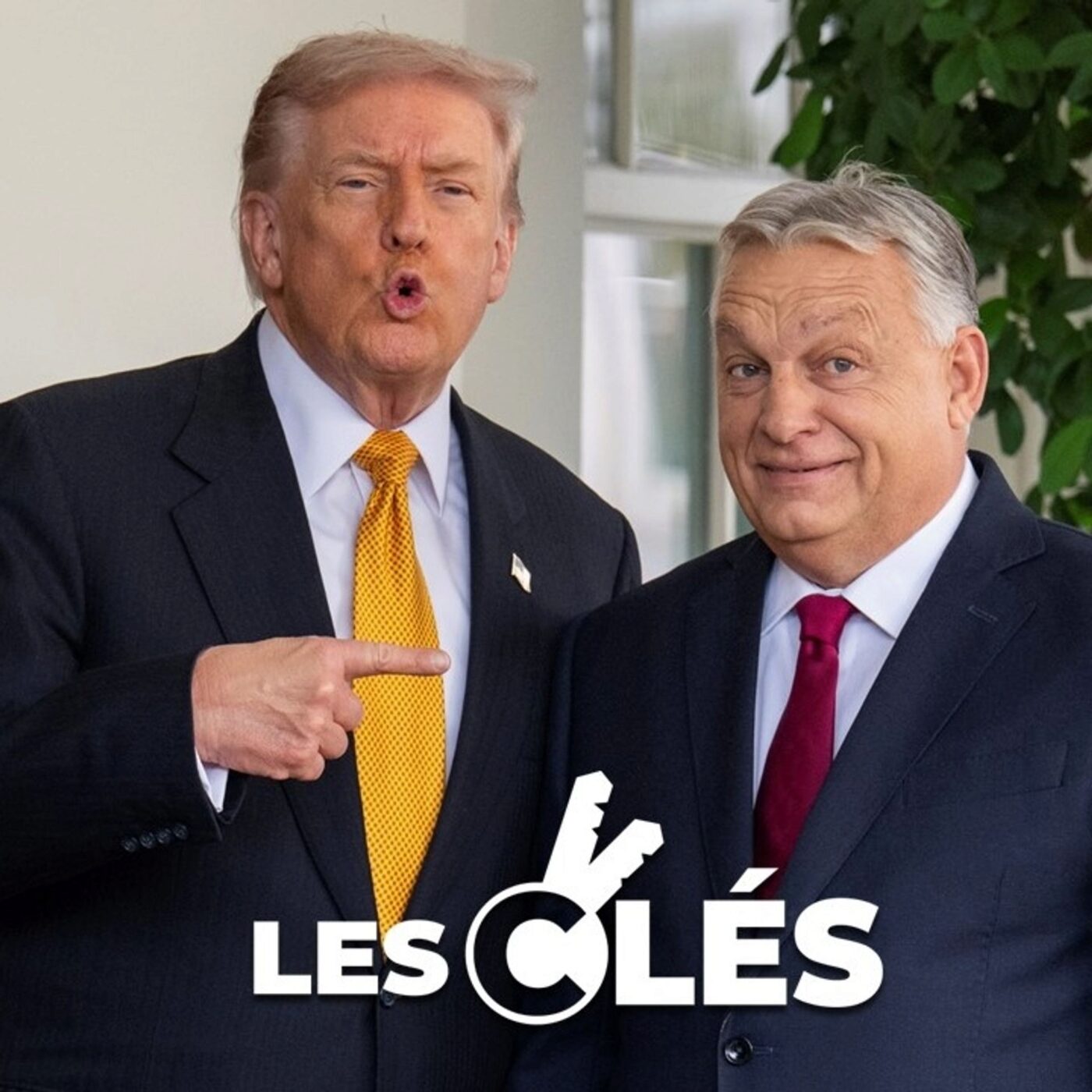
Les Clés
Comment Trump veut modeler l'Europe
00:25:48
Le gouvernement de Donald Trump a partagé sa note stratégique en matière de sécurité nationale. Dans ce document, la politique étrangère américaine est détaillée et on y découvre un vrai projet d’ingérence dans la politique européenne. Analyse du futur de la relati...
Loading summary
Transcript48 lines
- [00:01]
Arnaud Ruyssen
Les Etats-Unis publient une nouvelle doctrine de.
- [00:03]
Peter Lagroux
Sécurité stratégique, et le moins qu'on puisse.
- [00:05]
Arnaud Ruyssen
Dire, c'est que c'est une rupture totale.
- [00:07]
Peter Lagroux
Avec ce que l'on connaissait.
- [00:09]
Arnaud Ruyssen
Une des explications de cette stupéfaction européenne.
- [00:14]
Peter Lagroux
C'Est que c'est aussi un document d'ingérence. Les clés, Arnaud Ruyssen.
- [00:18]
Arnaud Ruyssen
Bonjour à toutes, bonjour à tous et bienvenue dans cet épisode des clés où nous allons nous plonger dans le détail de la stratégie américaine de sécurité nationale. Un texte transmis début décembre par l'administration Trump au congrès américain et qui détaille les grandes lignes de la politique étrangère qu'il compte mener. Une sorte de manifeste idéologique du Make America Great Again qui flingue la politique étrangère des Etats-Unis de ces 30 dernières années et assume une ingérence dans la politique européenne, notamment pour faire triompher des idées nationalistes et conservatrices. Alors on s'est dit que ça valait la peine de parcourir et d'analyser ce texte. C'est ce qu'on va faire durant 27 minutes.
- [01:00]
Peter Lagroux
La première, les clés.
- [01:13]
Donald Trump (quoted)
Au cours des 9 derniers mois, nous avons sauvé notre nation et le monde entier qui se trouvait au bord du gouffre et de la catastrophe. Après 4 années de faiblesse, d'extrémisme et d'échecs désastreux, mon administration a agi avec une rapidité historique pour restaurer la puissance américaine sur le plan intérieur et à l'étranger et ramener la paix et la stabilité dans notre monde. aucune administration dans l'histoire n'a accompli un revirement aussi spectaculaire en si peu de temps.
- [01:44]
Arnaud Ruyssen
Dès l'entame de ce texte, officiellement signé de la main de Donald Trump, le ton est donc donné. Trump et son administration sont venues sauver et libérer des Etats-Unis en perdition à cause des mauvais choix posés ces 30 dernières années par les élites au pouvoir à Washington.
- [02:10]
Donald Trump (quoted)
Après la fin de la guerre froide, les élites de la politique étrangère américaine se sont convaincus que la domination permanente des Etats-Unis sur le reste du monde était dans le meilleur intérêt de notre pays. Pourtant, les affaires des autres pays ne nous concernent que si leurs activités menacent directement nos intérêts.
- [02:29]
Arnaud Ruyssen
Ce n'est pas une surprise. Pour Trump, ce sont les intérêts de l'Amérique qu'il faut remettre au centre. Et il ajoute ses autres reproches formulées aux élites politiques qui ont gouverné jusque-là.
- [02:41]
Donald Trump (quoted)
Elles ont choisi, de façon extrêmement erronée et destructrice, de parier sur le mondialisme et le soi-disant libre-échange. Elles ont lié la politique américaine à un réseau d'institutions internationales, dont certaines sont animées par un anti-américanisme pur et simple, et beaucoup par un transnationalisme qui cherche explicitement à dissoudre la souveraineté des États individuels.
- [03:08]
Arnaud Ruyssen
Mais, heureusement, explique le document, Donald Trump est maintenant là pour inverser tout ça. revenir à l'Amérique d'abord. Car pour l'actuel locataire de la Maison Blanche, l'idée n'est plus que les Etats-Unis devraient influencer moralement le monde vers un modèle de société démocratique et libérale avec des relations fondées sur les principes du droit international. Non, les Etats-Unis sont appelés à dominer le monde en étant et parce qu'ils sont les plus forts. et s'ensuit tout un cortège d'objectifs superlatifs, l'armée la plus puissante et la plus létale, la force de dissuasion nucléaire la plus robuste, l'économie la plus forte, le secteur énergétique le plus important et le plus innovant au monde, etc. Un peu plus loin, le texte détaille les objectifs régionaux des Etats-Unis et notamment ce qu'ils comptent faire dans l'hémisphère occidental, présenté comme la priorité stratégique absolue. Les Etats-Unis veulent être et rester le centre de gravité de l'Occident. Renforcer, développer les partenariats, s'assurer que ses voisins et alliés contrôlent les flux de migration, achètent américains, contribuent à une défense commune, luttent ensemble contre la criminalité internationale, etc. Mais l'idée aussi, c'est que les Etats-Unis s'arrogent explicitement un droit d'ingérence idéologique dans le bloc occidental afin de favoriser des dirigeants qui partagent la même vision idéologique que Trump et son mouvement MAGA. Et ce texte précise à quel point l'administration Trump entend peser sur la politique européenne. L'Europe, selon ce document, serait face à un effacement civilisationnel, perte d'identité, faible taux de natalité, immigration et réglementation jugées destructrices pour la société européenne. Le texte estime que si ces tendances continuent, le continent européen pourrait devenir méconnaissable d'ici 20 ans. Face à quoi, l'administration Trump se fixe le cap d'inverser les politiques européennes actuelles, c'est très explicitement dit.
- [05:48]
Donald Trump (quoted)
Notre politique générale pour l'Europe devrait prioritairement cultiver la résistance à la trajectoire actuelle de l'Europe.
- [05:56]
Arnaud Ruyssen
Et ce notamment en soutenant les partis de droite conservatrice et d'extrême droite Trump se réjouit d'ailleurs du succès déjà actuel de certains d'entre eux.
- [06:06]
Donald Trump (quoted)
Le rôle croissant des partis patriotiques européens donne lieu à un grand optimisme.
- [06:11]
Arnaud Ruyssen
Un peu plus loin encore, il explique comment il compte favoriser les dirigeants européens qui suivent sa ligne politique, puisqu'il parle.
- [06:19]
Donald Trump (quoted)
De « renforcer les nations saines d'Europe centrale, orientale et méridionale grâce à des liens commerciaux, des ventes d'armes, une collaboration politique et des échanges culturels et éducatifs.
- [06:31]
Arnaud Ruyssen
». Bref, même si on n'est pas complètement surpris par cette ligne, conforme à ce que l'on voit de la politique de Trump ces derniers mois, voir tout cela explicitement détaillé, officiellement affirmé comme ligne politique, fait frémir nombre de démocrates en Europe. Et c'est pourquoi on va prendre le temps d'analyser tout.
- [06:51]
Peter Lagroux
Ça.
- [06:55]
Arnaud Ruyssen
Bonjour. Bonjour. Merci d'être avec nous. Vous êtes professeur d'histoire contemporaine à l'ULB et vous avez pris le temps, vous aussi, de lire dans le détail ce texte et de l'analyser. Peut-être d'abord un petit élément sur le statut de ce document, parce que d'habitude on ne parle pas de ce document qui est transmis par chaque nouvelle administration américaine au Congrès. pour expliquer sa ligne politique sur la sécurité nationale et en gros sa politique étrangère. Dans ce cas-ci, on en parle beaucoup. Ça sert à quoi, en fait, un document comme celui-là qu'un nouveau président doit transmettre au Congrès, donc au.
- [07:31]
Peter Lagroux
Parlement américain ? Donc c'est ce que chaque administration fait. On sait bien, dès que Donald Trump est arrivé, première chose, il a viré à peu près tous les membres du Conseil National de Sécurité. C'est-à-dire ce conseil même qui doit pondre ce document. Donc première étape, Trump se méfie du Deep State, de tous ces experts qui pondent des documents très doctes, très exhaustifs, très informés. Et ici il y a une rupture totale. Donc d'abord on s'est débarrassé de ces experts, on a engagé de nouveaux idéologues qui d'emblée disent voilà d'habitude ce document il vise à l'exhaustivité, ils veulent parler de tous les problèmes de tous les pays, nous on fait pas du tout ça. Une stratégie c'est de faire des choix et voilà on y va. Et donc c'est évidemment le ton très brutal et à plein d'endroits.
- [08:24]
Arnaud Ruyssen
Extrémiste qui surprend. Mais donc, d'habitude, c'est quelque chose qui va émaner de l'administration avec des experts de tous ces dossiers dans les différents domaines de la politique internationale. Et c'est une espèce de feuille de route un peu pratique de comment les États-Unis comptent se comporter sur toute une série de dossiers en cours en s'appuyant assez fortement quand même sur l'expertise de l'administration. Ici, Trump y balaye tout ça et il en fait en quelque sorte un manifeste idéologique.
- [08:54]
Peter Lagroux
Envoyé au Congrès. Oui, je suis allé lire le texte de 2022 qui parle du réchauffement climatique, des dispositifs de lutte contre une pandémie mondiale, de la lutte contre le terrorisme. Rien de tout ça est retenu ici. Et ce qui frappe surtout, c'est qu'à longueur de page, ce document essaye de flatter le président comme le plus fort, le plus intelligent, le plus efficace. Et c'est là aussi, évidemment, que ça tranche. Sur la taille, je suis allé regarder, finalement celui de 22, il faisait une cinquantaine de pages. Là, on a 25-28 pages tout assez. C'est plus court, mais ce n'est pas non plus une rupture quantitative à ce point. C'est plutôt en effet dans le ton que ça tranche totalement avec ce qu'on.
- [09:46]
Arnaud Ruyssen
A connu auparavant. Oui, on a entendu, dès le début, cette idée d'un Donald Trump présenté comme le grand sauveur de l'Amérique, avec toute la modestie qu'on lui connaît, où il estime qu'il a déjà fait mieux que tous les autres en seulement quelques mois du début de sa présidence. On imagine que ce n'est pas Donald Trump lui-même, en fait, qui écrit ce texte. Est-ce qu'on sait qui tient la plume d'un texte comme celui-là, qui sonne, on l'a dit, comme une.
- [10:10]
Peter Lagroux
Sorte de manifeste idéologique ? D'abord tous les observateurs disent évidemment que ce n'est pas Trump qui l'a écrit. Tout le monde est à peu près convaincu que Trump ne l'a pas lu et ne le lira pas. Parce que ce n'est pas du tout dans son habitude de lire un texte qui fait plus de 25 pages. Lui c'est plutôt 240 caractères, sa limite d'attention. Donc non, ce texte a été écrit par ses conseillers. Comme je viens de dire, il a viré tous les experts du National Security Council, donc de son Conseil National de Sécurité, et ça a été confié à un idéologue que l'on connaît, c'est Michael Anton. Michael Anton qui faisait partie de son Conseil de Sécurité lors de son premier mandat. qui a démissionné il y a quelques semaines parce qu'il estimait que ses vues n'étaient pas suivies, que finalement l'administration n'était pas assez radicale. Michael Anton vient des milieux conservateurs chrétiens, notamment du Claremont Institute en Californie, et c'est quelqu'un qui enseigne, c'est quelqu'un qui écrit des articles très érudits et qui est notamment obsédé par la chute de l'Empire romain. Et donc il a produit plein de textes où il s'inspire de cette chute de l'Empire romain pour comprendre l'état du monde et évidemment pour se poser la question écuite de l'Empire américain. Est-ce que la chute est proche ? Et bien évidemment parmi les explications, depuis la fin du XVIIIe siècle, la chute de l'Empire romain c'est les invasions barbares. Et donc le ton est tout de suite donné et ça revient de façon totalement obsessionnelle. Le problème majeur de.
- [11:48]
Arnaud Ruyssen
La planète aujourd'hui, c'est l'immigration. Ça, c'est ce qui transparaît effectivement à plein de reprises dans ce texte. Mais donc vous, avec votre regard d'historien, justement, vous voyez une filiation assez directe entre les obsessions de celui qui a tenu la plume pour le déclin de l'Empire romain et ce texte et la façon dont il est construit sur l'enjeu d'éviter le déclin de l'Empire américain. En gros, c'est comme ça que.
- [12:10]
Peter Lagroux
C'Est présenté dans le texte. Oui, et on voit très bien que l'auteur, le vrai souci stratégique, c'est de plaire au président. Et donc c'est en cela, quelque part, la présidence Trump et la stratégie, c'est deux choses qui ne vont pas du tout ensemble. C'est un président impulsif, un président qui croit en une chose, c'est le deal-making, c'est on agit dans l'instant. D'ailleurs, il y a un mot qui revient sans cesse dans ce rapport, expeditious. Donc comment est-ce qu'il faut résoudre, par exemple, la guerre en Ukraine ? Rapidement. vite fait, il faut expédier le problème. Donc le texte lui-même dit, ben non, la stratégie en gros, ça ne sert à rien. Il faut saisir l'instant et il faut surtout utiliser les rapports de force. Et puisque nous sommes les plus.
- [12:52]
Arnaud Ruyssen
Forts, on arrivera à tout obtenir. Et donc, pour vous, il y a, au-delà de la stratégie, surtout un texte qui est pensé pour plaire à Trump, sans être vraiment une vision pragmatique stratégique d'experts, qui sont quand même là pour certains autour du président. Le premier souci quand on écrit un texte comme celui-là, c'est de se dire, il faut que Trump soit content plutôt que d'avoir une politique rationnelle, crédible. C'est comme ça.
- [13:17]
Peter Lagroux
Vraiment que vous le présentez ? Absolument. Du coup, ce texte, trahit bien cette alliance de milieu d'idéologue de la droite chrétienne extrême avec un président qui lui-même n'est pas de ce bord, n'a pas d'idéologie, est un opportuniste complet. Il y a cette espèce de très étrange alliance entre un homme qui n'est en rien ne représente en rien les valeurs de cette droite chrétienne américaine et quand même un mouvement très structuré. Il navigue clairement entre cela. Il voit en Trump, de leur côté, de façon très opportuniste, l'outil de politique à long terme. Et donc, dans le texte, il y a un peu des deux. On essaye d'introduire des objectifs à long terme, mais le premier objectif, c'est que Trump soit content Le texte rédigé par une personne bien identifiée m'a quand même passé toutes les étapes de validation. Et c'est aussi là qu'on voit la grande faiblesse de l'administration Trump. Un bon gouvernant a besoin de conseillers qui parfois ont le courage de le contredire. Là, Trump a fait le vide, il n'y a plus personne. Dès que quelqu'un le contredit, ils le virent. Donc c'est là aussi qu'on est dans quelque chose d'assez dangereux quand on n'a que des personnes dont l'objectif principal est de flatter le président, y compris dans ses aberrations. Voilà, il y.
- [14:41]
Arnaud Ruyssen
A quelque chose d'assez alarmant en effet. Mais venons-en alors à ce qui nous a beaucoup interpellés, nous, Européens, à la lecture de ce texte. En l'occurrence, ce droit d'ingérence que semblent s'accorder désormais les Etats-Unis de Trump en Europe. Dans un texte qui parle, au fond, assez peu de la Russie, si ce n'est pour dire qu'il faut très vite résoudre la guerre en Ukraine, notamment, l'administration Trump s'inquiète surtout de pouvoir modeler à l'avenir la politique européenne dans sa vision nationaliste, conservatrice et xénophobe. Et ça, pour Peter Lagroux.
- [15:24]
Peter Lagroux
C'Est un changement majeur pour les Européens. Là, on a la confirmation écrite d'un changement radical. En gros, depuis l'émergence du bolchevisme en Russie, il y avait un triangle où les pays européens et les Etats-Unis s'alliaient contre la Russie. On a toujours ce triangle, sauf que maintenant, clairement, les Etats-Unis et la Russie partagent la même vision. les mêmes objectifs et soutiennent les mêmes partis politiques. Donc aujourd'hui, ce document dit qu'en effet, c'est les partis d'extrême droite qui sont soutenus, on le sait, par la Russie, financièrement, par des opérations sur les réseaux sociaux, etc. Pour l'instant, on n'a pas de preuves que les États-Unis pratiquent ce genre de choses activement. Mais maintenant ils affirment que c'est ce qu'ils souhaitent. Donc c'est notamment AFD en Allemagne, l'extrême droite en Allemagne, l'extrême droite en France sont les partis qui sont soutenus à la fois.
- [16:32]
Arnaud Ruyssen
Par Donald Trump et par Vladimir Poutine. C'est quand même interpellant ce que vous dites là, c'est que vraiment les Etats-Unis sont en train de se comporter comme la Russie, en tout cas dans la façon de soutenir tous les mouvements nationalistes, en tout cas toutes ces forces qui visent à déstabiliser les démocraties européennes. Là, on a les indices dans ce texte que les Etats-Unis voient.
- [16:54]
Peter Lagroux
Les choses un peu comme la Russie. Les Etats-Unis, par ce document qui est produit par des courtisans de Donald Trump qui cherchent principalement à le flatter, est-ce que ça va se traduire dans une politique durable ? Il y a les élections du midterm qui arrivent. Son mandat, il a encore trois ans devant lui. Est-ce que cela deviendra une politique des États-Unis ? Pour l'instant, on voit surtout dans cette première année cette stratégie du choc. Un président qui fait tout dans tous les sens. On l'a vu dans sa politique des tarifs douaniers. En gros, c'est du n'importe quoi. On va du 140 à du 40, on change en permanence. Le Brésil a été un exemple extrêmement fort. D'abord, il a déclaré le Brésil de Lula comme son ennemi principal, son allié étant Bolsonaro, avec des tarifs douaniers extrêmement punitifs. Au moment où ça a commencé à coûter aux ménages américains, il a changé son fusil d'épaule. Il a rencontré Lula maintenant. Lula est son meilleur ami. Il a laissé tomber Bolsonaro et qui se trouve aujourd'hui en prison. Le Brésil a gagné sur tous les plans. Cette offensive des tarifs douaniers semble aujourd'hui aboutir à à peu près rien. La même chose finalement, ces grands architectes d'accords de paix, ils multiplient les accords de paix, c'est des accords de paix qui n'en sont pas. Le cessez-le-feu à Gaza n'étant rien un cessez-le-feu, on a cessé de l'appeler une guerre, mais en gros la situation continue. Avec Poutine à chaque rencontre, ça n'aboutit absolument à rien du tout. Donc on a quand même une impression d'une extrême faiblesse. Et donc quel est le pouvoir de Trump de mettre en œuvre ce genre de grande déclaration ? La source d'inquiétude c'est qu'il ne fera rien. Et donc pour les.
- [19:01]
Arnaud Ruyssen
Européens, compter sur les États-Unis, ça en effet c'est fini. Donc il y a le déclaratif d'un côté, qu'on peut retrouver dans un document comme celui-là, qui était créé aussi pour le flatter, comme vous nous l'avez dit. Et puis il y a la réalité politique, et si dans le déclaratif on peut se rapprocher de certains éléments qui peuvent faire penser à la stratégie d'un Vladimir Poutine, la réalité politique d'un Trump n'a rien à voir avec la.
- [19:25]
Peter Lagroux
Réalité d'un Vladimir Poutine à la tête de la Russie. Oui, c'est là, je pense qu'il faut prendre Vladimir Poutine très au sérieux. Tout ce qu'il dit depuis une dizaine, une quinzaine d'années est extrêmement cohérent. S'il dit l'Ukraine n'a aucune raison d'existence, d'ailleurs les pays baltes non plus, la Moldavie non plus, il n'en a jamais des mordus, donc si aujourd'hui on lui concède la Crimée et Luhansk et Donetsk, on sait très bien que dans sa logique il ira plus loin. C'est très différent d'un Donald Trump qui peut changer trois fois d'idée dans la journée. Et c'est là, je pense, la très grande illusion trumpiste d'un pays très fort. Finalement, les États-Unis, aujourd'hui, sont un pays, quelque part, à ce jeu très faible. Ils sortent d'une défaite humiliante. 20 ans de présence militaire, 2 trilliards d'investissements en Afghanistan se sont soldés par une retraite humiliante. Quelle est la différence entre Trump et Poutine ? C'est que Poutine peut se permettre, on dit maintenant, plus de 200 000 soldats morts au front sans que ça lui coûte quelque chose politiquement. Trump sait très bien qu'il ne peut pas se permettre de son bodybag parce que c'est complètement incompatible avec son programme. Donc c'est cela aussi qui encourage Poutine parce qu'il sait que Trump ne fera rien. L'arme nucléaire, évidemment qu'il ne l'utilisera pas. Et c'est son renoncement à l'intervention militaire qui encourage finalement des politiques de voyous. Et les Etats-Unis, à cet égard, sont un pays faible. Et ils n'interviendront pas. Et c'est cela aussi qui est.
- [21:03]
Arnaud Ruyssen
Préoccupant. C'est de cela que les Européens doivent tirer leur conclusion. Pour vous, ce qui est préoccupant pour l'Europe, c'est plutôt qu'on a un Trump faible qui ne viendra pas en aide aux Européens face à la Russie qui, elle, est très claire encore sur ses objectifs. Peut-être écoutons quand même quelques-unes des réactions européennes, notamment au niveau des institutions européennes, suite à la publication de ce document sur la sécurité nationale, puisque.
- [21:26]
Sarah Poussey
Sarah Poussey est allée répertorier pour nous quelques-unes de ses déclarations. Les réactions européennes sont mesurées suite à la publication de cette note. La chef de la diplomatie européenne Kayakala s'est ainsi soulignée que dans ce document, l'Union Européenne est quand même toujours pointée comme l'alliée des Etats-Unis et que cette relation devait perdurer. Nous n'avons pas toujours été d'accord sur différents sujets, mais je pense que le principe général reste le même. Nous sommes les plus grands alliés et nous devons rester unis. Elle a aussi ajouté que les Européens sous-estimaient leur propre pouvoir et devaient davantage se faire confiance, notamment face à la Russie. Une phrase qui sonne comme un écho aux souhaits américains formulés dans cette note stratégique. À savoir que l'Europe reste européenne, qu'elle retrouve sa confiance civilisationnelle et qu'elle abandonne, je cite, « son obsession stérile pour l'étouffement réglementaire ». Antonio Costa, le.
- [22:29]
Peter Lagroux
Président du Conseil européen, a lui tout.
- [22:32]
Arnaud Ruyssen
De même dénoncé l'ingérence des Etats-Unis. On ne peut pas accepter cette menace d'intéférence.
- [22:39]
Peter Lagroux
Dans la vie politique de l'Europe. Les Etats-Unis ne peuvent pas remplacer les.
- [22:46]
Sarah Poussey
Citoyens européens pour choisir quels sont les bons partis et les mauvais partis. Quelques réactions aussi côté allemand avec le ministre des affaires étrangères qui a répliqué par un merci mais non merci, pas besoin de conseils venant de l'extérieur. Le chancelier, lui, voit dans cette note américaine la confirmation que l'Union.
- [23:07]
Arnaud Ruyssen
Européenne doit devenir plus indépendante des Etats-Unis en matière de politique de sécurité. Peter Lagrou, un mot sur ces réactions un peu en ordre dispersé au niveau européen. Le moins qu'on puisse dire quand on entend ça, c'est qu'on n'a pas une Europe qui fait bloc face à Donald Trump. On a même entendu chez nous le président du MR, Georges-Louis Boucher, disant qu'il aurait pu l'écrire lui-même ce document à pas mal d'égards. Comment.
- [23:36]
Peter Lagroux
L'Europe doit réagir pour vous face à une stratégie explicitée comme elle l'est là ? D'abord, en effet, l'Europe doit prendre ses responsabilités, prendre acte du fait qu'on ne peut plus compter sur les États-Unis. La principale menace, pourtant, aujourd'hui, est une menace de contagion. C'est que des acteurs politiques européens arrivent à la conclusion que la recette trumpiste paye et qu'ils peuvent suivre la voie de Trump et obtenir le pouvoir. On a eu ce qui s'est passé au Chili, où un trumpiste a gagné les élections présidentielles. On voit clairement la tentation dans l'ensemble des pays européens de partis politiques et d'acteurs politiques qui parient sur la stratégie trumpiste. Vous avez cité Georges Louis Boucher, j'aurais pu l'écrire, Voilà, c'est sans doute ça le plus inquiétant aujourd'hui, que le trumpisme devienne une gangrène qui atteint la politique européenne elle-même. Et là, en effet, c'est la fin de l'Union Européenne, et c'est une Europe qui sera livrée non seulement à Trump, mais aussi à Poutine.
- [24:41]
Arnaud Ruyssen
Et à des acteurs xénophobes, intolérants, populistes, comme ce qu'on a vu aux Etats-Unis. Donc pour vous, en un mot, la principale menace, ce n'est pas la politique que les Etats-Unis pourraient mener à notre égard, parce que tout ça pourrait encore évoluer, c'est que nos démocraties évoluent de.
- [24:55]
Peter Lagroux
La même manière qu'a évoluée la démocratie américaine ces dernières années ? Absolument, et c'est des conclusions qu'il faut tirer de toute urgence, notamment au.
- [25:03]
Arnaud Ruyssen
Niveau du paysage médiatique, parce que c'est là que se joue l'avenir de la démocratie. Et c'est donc surtout à cela qu'il convient d'être attentif, selon Peter Lagrou, professeur d'histoire contemporaine à l'ULB, le risque d'un détricotage de nos démocraties et d'une trumpisation complète de nos espaces publics. Des sujets sur lesquels on aura évidemment, j'ai l'impression malheureusement, l'occasion de revenir encore dans les mois qui viennent. Merci à Peter Lagroux pour cet éclairage précieux. Merci à Guillaume Desmet pour la réalisation sonore de cet épisode. A la prépa, il y avait Arnaud.